Universal Credit childcare element statistics to November 2025
Published 17 February 2026
Applies to England, Scotland and Wales

© Crown copyright 2026
This publication is licensed under the terms of the Open Government Licence v3.0 except where otherwise stated. To view this licence, visit nationalarchives.gov.uk/doc/open-government-licence/version/3 or write to the Information Policy Team, The National Archives, Kew, London TW9 4DU, or email: psi@nationalarchives.gov.uk.
Where we have identified any third party copyright information you will need to obtain permission from the copyright holders concerned.
This publication is available at https://www.gov.uk/government/statistics/universal-credit-statistics-29-april-2013-to-8-january-2026/universal-credit-childcare-element-statistics-to-november-2025
1. Main stories
- In November 2025, 161,000 households received the Universal Credit (UC) childcare element. The number of UC households receiving childcare element has decreased by 11% when comparing November 2024 and November 2025. This is equivalent to an approximately 1ppt fall in the proportion of households with children in which all claimants had earnings who were in receipt of UC childcare element. Figures for the latest recorded month are generally lower since households may report childcare later.
- Since July 2025, there has been a steady decline in the number of households receiving childcare element. Since September 2025, The Department for Education (DfE) has expanded its childcare offer so eligible households can access 30 hours of free childcare per week for children aged 9 months up to school age. We don’t know for certain whether this expansion is linked to the decline in households receiving UC childcare element, however the drop is driven by households with a youngest child aged four or less.
- In November 2025, of the 161,000 households receiving childcare element, 131,000 were single households and 30,000 were couple households.
- The average amount of childcare element received was £390 in November 2025, a 1% decrease from November 2024. This was higher in London (£670).
- In November 2025, 2% of childcare element households received the maximum amount of childcare element available.
- In November 2025, 26% of households on Universal Credit with pre-school children and in which all claimants had earnings received the childcare element. For households on UC whose youngest child was primary school age, the proportion was lower (11%), and for households whose youngest child was secondary school age, it was lower still (1%). Overall, 13% of households with children and in which all claimants had earnings received the UC childcare element in November 2025
2. What you need to know
To qualify for the childcare element, the claimant (or, where a couple is claiming, both claimants), must usually be in paid work or have accepted an offer of paid work and pay for childcare for the relevant child or young person.
UC households can also make use of other types of childcare, which do not require the childcare element. These include the wider government offer of free childcare for pre-school children.
UC childcare maximum amounts
Universal Credit (UC) reimburses up to 85% of eligible childcare costs, up to a maximum amount. In November 2025, the maximum was £1,031.88 for one child and £1,768.94 for two or more children.
The maximum amount of childcare has changed over time and is shown in the following table.
| One child in childcare | Two or more children in childcare | |
|---|---|---|
| before June 2023 | £646.35 | £1,108.04 |
| from June 2023 | £950.92 | £1,630.15 |
| from April 2024 | £1,014.63 | £1,739.37 |
| from April 2025 | £1,031.88 | £1,768.94 |
Further information on the childcare offer for UC claimants can be found here: Universal Credit: childcare guide - GOV.UK (www.gov.uk)
3. Households receiving the childcare element
Chart 1: Universal Credit households receiving childcare element, November 2023 to November 2025
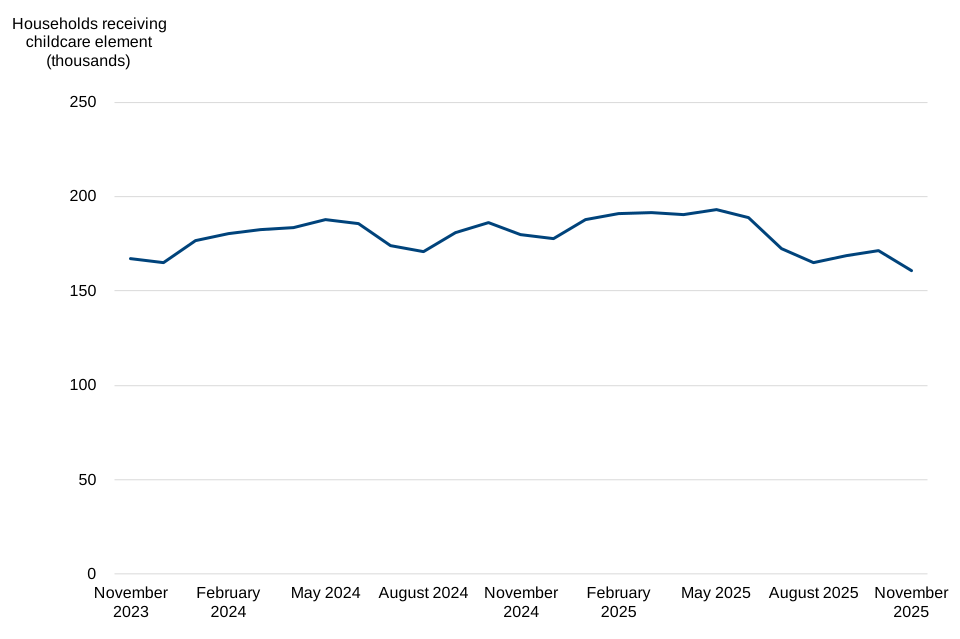
In November 2025, 161,000 households received the childcare element, of which 131,000 were single households and 30,000 were couples. The number of UC households receiving childcare element has decreased by 11% when comparing November 2024 and November 2025.
The number of households receiving the childcare element appears to have fallen over the course of the last year, with the steepest drop among households with a youngest child aged four or under. This is unlikely to be a seasonal effect as the same period a year earlier shows no similar pattern.
Figures for the latest recorded month are generally lower than for previous months, since households may report childcare later. In summer and winter holiday periods, the number of households receiving the childcare element falls slightly, which is likely because households use childcare less during these periods.
Chart 2: Universal Credit households receiving childcare element, by age of youngest child, November 2025
| Age of youngest child | Households receiving childcare element |
|---|---|
| 0 | 6,870 |
| 1 | 19,040 |
| 2 | 25,420 |
| 3 | 26,360 |
| 4 | 16,070 |
| 5 | 11,190 |
| 6 | 11,400 |
| 7 | 11,400 |
| 8 | 10,740 |
| 9 | 9,360 |
| 10 | 6,780 |
| 11 | 2,740 |
| 12 | 1,160 |
| 13 | 1,000 |
| 14 | 720 |
| 15 | 600 |
| 16 | 130 |
About half of households (48%) receiving the childcare element have a youngest child aged 3 years or younger.
For households where the youngest child is over 3 years old, the number of households receiving the childcare element tends to decrease as the age of the youngest child increases.
In November 2025, households with a youngest child aged 3 were the largest group receiving the UC childcare element, marking a shift from previous months when those with a youngest child aged 2 were the largest group.
4. Average amount of childcare element
Chart 3: Mean amount of Universal Credit childcare element, November 2023 to November 2025
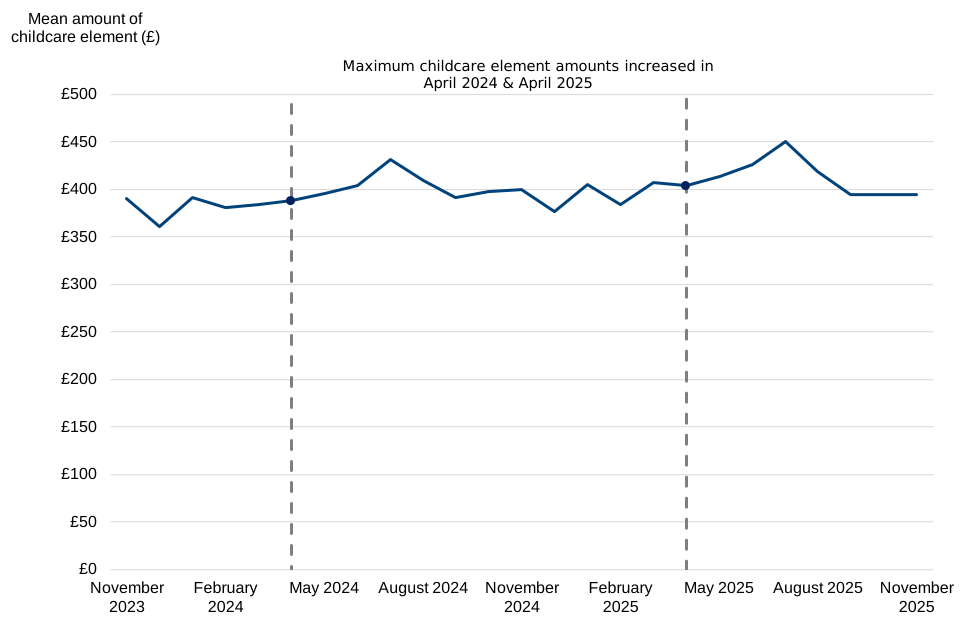
In November 2025, the average (mean) amount of childcare element was £390, a 1% decrease when compared to November 2024.
Chart 4: Distribution of Universal Credit childcare element amounts, November 2025
| Childcare element band | Number of households receiving childcare element |
|---|---|
| £1 to £100 | 38,790 |
| £101 to £200 | 32,370 |
| £201 to £300 | 21,500 |
| £301 to £400 | 14,060 |
| £401 to £500 | 10,240 |
| £501 to £600 | 8,070 |
| £601 to £700 | 6,320 |
| £701 to £800 | 4,900 |
| £801 to £900 | 4,500 |
| £901 to £1000 | 3,210 |
| £1001 to £1100 | 4,770 |
| £1101 to £1200 | 1,970 |
| £1201 to £1300 | 1,460 |
| £1301 to £1400 | 1,600 |
| £1401 to £1500 | 1,420 |
| £1501 to £1600 | 1,420 |
| £1601 to £1700 | 2,210 |
| £1701 to £1800 | 2,160 |
In November 2025, over half of households (58%) receiving the childcare element received £300 or less.
Chart 5: Mean Universal Credit childcare element amount by age of youngest child, November 2025
| Age of youngest child | Mean amount of childcare element (£) |
|---|---|
| 0 | £529 |
| 1 | £495 |
| 2 | £450 |
| 3 | £410 |
| 4 | £368 |
| 5 | £320 |
| 6 | £304 |
| 7 | £293 |
| 8 | £300 |
| 9 | £294 |
| 10 | £307 |
| 11 | £495 |
| 12 | £769 |
| 13 | £745 |
| 14 | £648 |
| 15 | £571 |
| 16 | £514 |
The average amount of childcare element varied with the age of the youngest child in the household. In November 2025, the average amount was higher for households with children who were 3 or younger and also those with children who were 11 or older.
Chart 6: Mean Universal Credit childcare element amount by region, November 2025, percent increases since November 2024
| Region | Mean amount of childcare element (£) | % increase compared to November 2024 |
|---|---|---|
| East Midlands | £270 | -13% |
| East of England | £320 | -7% |
| London | £670 | 3% |
| North East | £330 | -8% |
| North West | £360 | -6% |
| Scotland | £380 | 4% |
| South East | £310 | -8% |
| South West | £230 | -13% |
| Wales | £390 | 2% |
| West Midlands | £360 | -4% |
| Yorkshire and The Humber | £320 | -5% |
The average amount of childcare element was lowest for households in South West England (£230) and highest for households in London (£670). Compared to November 2024, the average amount of childcare element slightly increased in London (by 3%), Scotland (by 4%) and Wales (by 2%).
The average amount of childcare element decreased in all other regions, particularly in South West England (by 13%) and East Midlands (by 13%). In Great Britain as a whole, the average amount of childcare element decreased by 1%. The average amount of childcare element for Great Britain excluding London decreased by 6%.
There is more variation at a lower geographical level. For example, the mean amount of childcare element in the parliamentary constituency of Salford is over twice as much (£890, see Table 13, supplementary table) as the North West region as a whole (£360) and almost six times as much as the parliamentary constituency in the North West receiving the least amount, Westmorland and Lonsdale (£150).
5. Households receiving maximum childcare element amounts
Chart 7: Universal Credit households receiving the maximum amount of childcare element as a proportion of households receiving childcare element, by month, November 2023 to November 2025
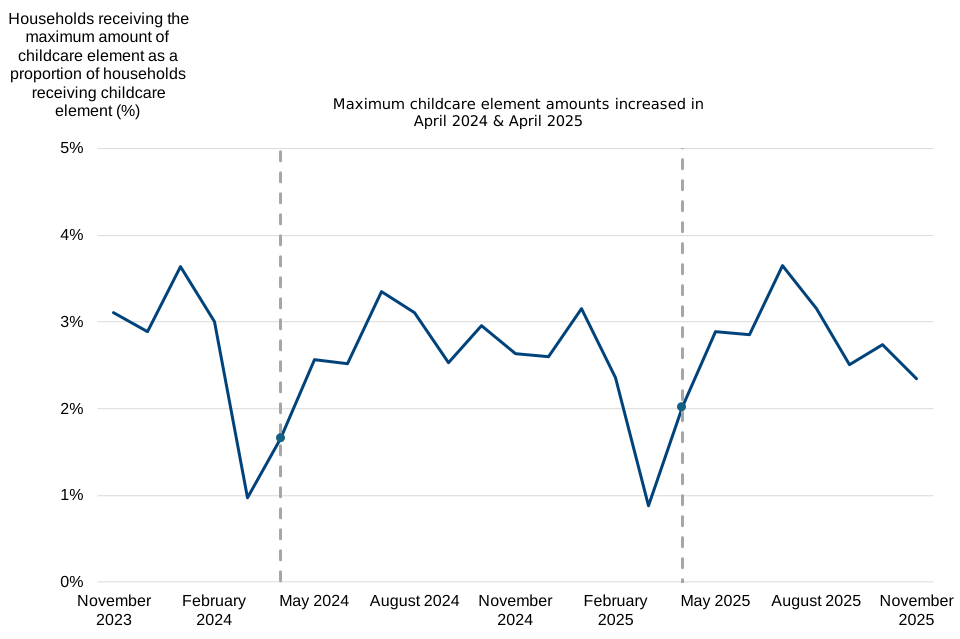
In November 2025, 2% of households receiving the childcare element received the maximum amount. This compares to 3% in November 2024. In London, 6% of households receiving the childcare element received the maximum amount (see table 12, supplementary data). This compares to 8% in November 2024.
6. Usage of the childcare element
We can compare the number of households receiving the childcare element to an estimate of the number who might be able to claim it. This estimate is the number of Universal Credit households with children aged 16 or younger in which all claimants are earning.
Chart 8: Universal Credit households receiving childcare element as a proportion of households where everyone is earning with a child aged up to and including age 16, November 2023 to November 2025
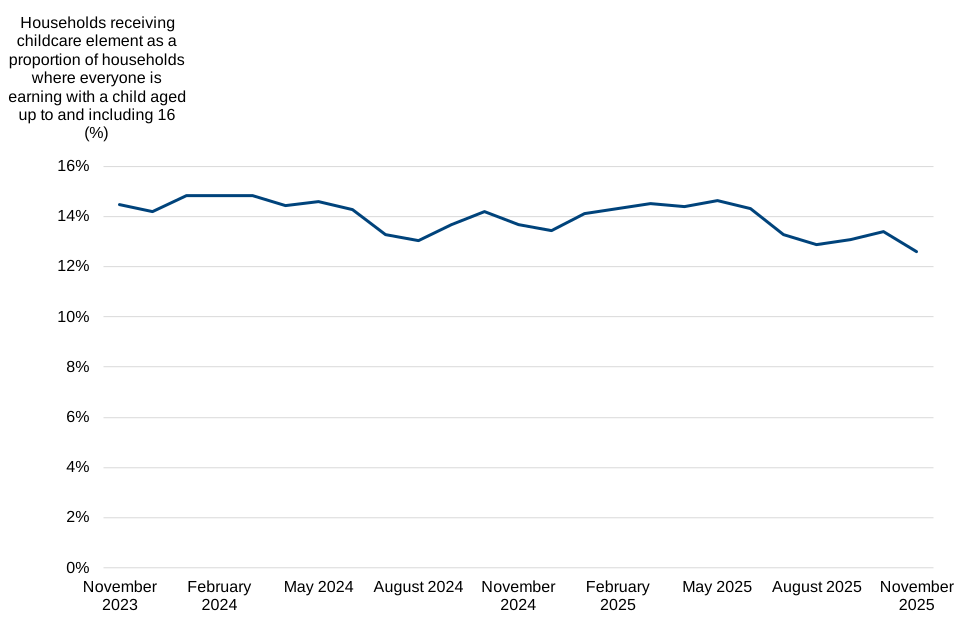
In November 2025, 13% of UC households with children and in which all claimants were earning received the childcare element.
This figure was similar for single households and couples (13% and 11% respectively) and varies across regions of GB, with a minimum of 9% in the North East, and a maximum of 16% in London (see table 11, supplementary data).
It is likely that some households make use of other forms of childcare that do not require the childcare element. These include the wider government offer of free childcare for pre-school children and friends and family helping with childcare.
Chart 9: Universal Credit households receiving childcare element as a proportion of households where everyone is earning with a child aged up to and including age 16, banded by age of youngest child, November 2025
| Childcare element band | Households receiving childcare element as a proportion of households where everyone is earning with a child aged up to and including 16 (%) |
|---|---|
| 0 to 4 | 26% |
| 5 to 11 | 11% |
| 12 to 16 | 1% |
In UC households with children of pre-school age (aged 4 or younger), 26% of households with everyone earning received the childcare element. For households whose youngest child was of primary school age (5 to 11), the proportion was lower (11%). For households whose youngest child was of secondary school age (12+), the proportion was lower still (1%).
Chart 10: Universal Credit households receiving childcare element as a proportion of households where everyone is earning with a child aged up to and including age 16, by age of youngest child, November 2025
| Age of youngest child | Earning single households receiving childcare element as a proportion of earning single households with a child aged up to and including 16 (%) |
|---|---|
| 0 | 11% |
| 1 | 30% |
| 2 | 36% |
| 3 | 34% |
| 4 | 21% |
| 5 | 16% |
| 6 | 15% |
| 7 | 15% |
| 8 | 14% |
| 9 | 12% |
| 10 | 9% |
| 11 | 4% |
| 12 | 2% |
| 13 | 1% |
| 14 | 1% |
| 15 | 1% |
| 16 | 0% |
The proportion receiving the childcare element was highest for households whose youngest child was two years old. For households with older children, the proportion was progressively lower as the age of the youngest child increased.
7. About these statistics
These statistics have been released as official statistics.
All figures in this publication are derived from Universal Credit administrative data.
Figures are provisional and may be subject to minor change. This is partly because a household may claim childcare for previous months. This means that a household could still claim childcare for any of the months listed in this publication, so that the number of recipients for any given month may increase slightly when revised in subsequent releases. For the same reason, the figures listed in this publication have changed slightly (and usually increased) compared to those in previous publications.
All figures are for Great Britain (GB) only and include only households where Universal Credit was in payment.
Figures are rounded according to the following convention: numbers between 0 to 1,000 are rounded to the nearest 10, numbers between 1,001 to 10,000 are rounded to the nearest 100, numbers between 10,001 to 100,000 are rounded to the nearest 1,000 and numbers between 100,001 to 1,000,000 are rounded to the nearest 10,000. In the case of broad ranges, a single convention may be used. Percentages are rounded to the nearest 1% where appropriate. For this reason, totals may not add up exactly.
Childcare element is paid for childcare for children aged up to and including 16. It is theoretically possible for the childcare element to be received for a 17-year-old: this happens when the child turns 17 in the last assessment period for which they are eligible. We expect this number of cases to be very small and we have excluded any such cases from our data.
For each month, the number of households receiving the childcare element is defined as the number of households who were in payment of Universal Credit and with childcare element entitlement for an assessment period that began in that month. An assessment period is one calendar month in duration starting from the date of which a UC claim is made. By counting households this way, rather than counting when a household is paid, the statistics more closely reflect when childcare is used.
When the maximum amount of childcare element has increased it applies to assessment periods starting on or after the date that the increase began.
When information is given for regions of Great Britain, this is derived from the claimants’ residential address. Not all claimants have a valid address listed, which means that a small number of households have “Unknown” region information.
We plan to add two data tables to the May 2026 set of statistics. These will capture the number of children using childcare paid for by UC childcare element, and the number of UC households receiving the childcare element by the ethnicity of any claimant.
For the full data, see: Supplementary data tables
8. Further information and feedback
Lead Statistician: G Walmsley
Analyst: A Abbas
Email: ucad.briefinganalysis@dwp.gov.uk