UK regional trade in goods statistics, first quarter, January to March 2026: commentary
Published 11 June 2026

© Crown copyright 2026
This publication is licensed under the terms of the Open Government Licence v3.0 except where otherwise stated. To view this licence, visit nationalarchives.gov.uk/doc/open-government-licence/version/3 or write to the Information Policy Team, The National Archives, Kew, London TW9 4DU, or email: psi@nationalarchives.gov.uk.
Where we have identified any third party copyright information you will need to obtain permission from the copyright holders concerned.
This publication is available at https://www.gov.uk/government/statistics/uk-regional-trade-in-goods-statistics-first-quarter-january-to-march-2026/uk-regional-trade-in-goods-statistics-first-quarter-january-to-march-2026-commentary
UK regional trade in goods summary
This commentary reports the UK’s regional trade in goods statistics by broad area (EU and non-EU), Country and Standard International Trade Classification (SITC) Revision 4. Users must refer to the explanatory notes accompanying this commentary, covering data sources and compilation methodology. Aggregated data can be found in our accompanying tables.
Trade in goods values (£) are reported in current prices. Values are not adjusted for inflation or seasonality, so please take caution when making comparisons with historic data.
In the year ending March 2026, the overall value of UK trade in goods decreased by 1.2% for exports and increased by 3.9% for imports, when compared with the previous year. At a regional level:
- England and Northern Ireland experienced an increase in the value of exports, while Wales and Scotland saw decreases
- Wales experienced a decrease in the value of imports, while all other UK countries experienced increases
- export values for Yorkshire and The Humber, West Midlands, and London decreased, while all other English regions experienced increases
- import values for the North East and Yorkshire and The Humber decreased while all other English regions experienced increases
England’s trade in goods
In the year ending March 2026, compared with the year ending March 2025:
England’s exports of goods to EU countries were £125 billion, an increase of £2.5 billion or 2.0%. The commodity with the largest value increase in EU exports was SITC 71 - Power generating machinery & equipment, an increase of £1.5 billion or 14%. The country with the largest value increase in EU exports was Germany, an increase of £1.9 billion or 8.1%.
England’s exports of goods to non-EU countries were £139 billion, a reduction of £1.9 billion or 1.4%. The commodity with the largest value decrease in non-EU exports was SITC 78 - Road vehicles (including air cushion vehicles), a reduction of £5.5 billion or 29%. The country with the largest value decrease in non-EU exports was the USA, a reduction of £8.6 billion or 18%.
In the year ending March 2026, the largest English export region by value was the South East, accounting for 11% of the UK’s total exports of goods. The smallest was the North East, accounting for 4.0%.
England’s imports of goods from EU countries were £243 billion, an increase of £4.7 billion or 2.0%. The commodity with the largest value increase in EU imports was SITC 78 - Road vehicles (including air cushion vehicles), an increase of £1.5 billion or 3.2%. The country with the largest value increase in EU imports was Germany, an increase of £2.3 billion or 3.9%.
England’s imports of goods from non-EU countries were £213 billion, an increase of £11.2 billion or 5.5%. The commodity with the largest value increase in non-EU imports was SITC 68 - Non-ferrous metals, an increase of £11.4 billion or more than 2.5 times the value. The country with the largest value increase in non-EU imports was the USA, an increase of £6.2 billion or 15%.
In the year ending March 2026, the largest English import region by value was the South East, accounting for 18% of the UK’s total imports of goods. The smallest was the North East, accounting for 2.5%.
Figure 1: England’s trade in goods, first quarter, January to March 2021 onwards
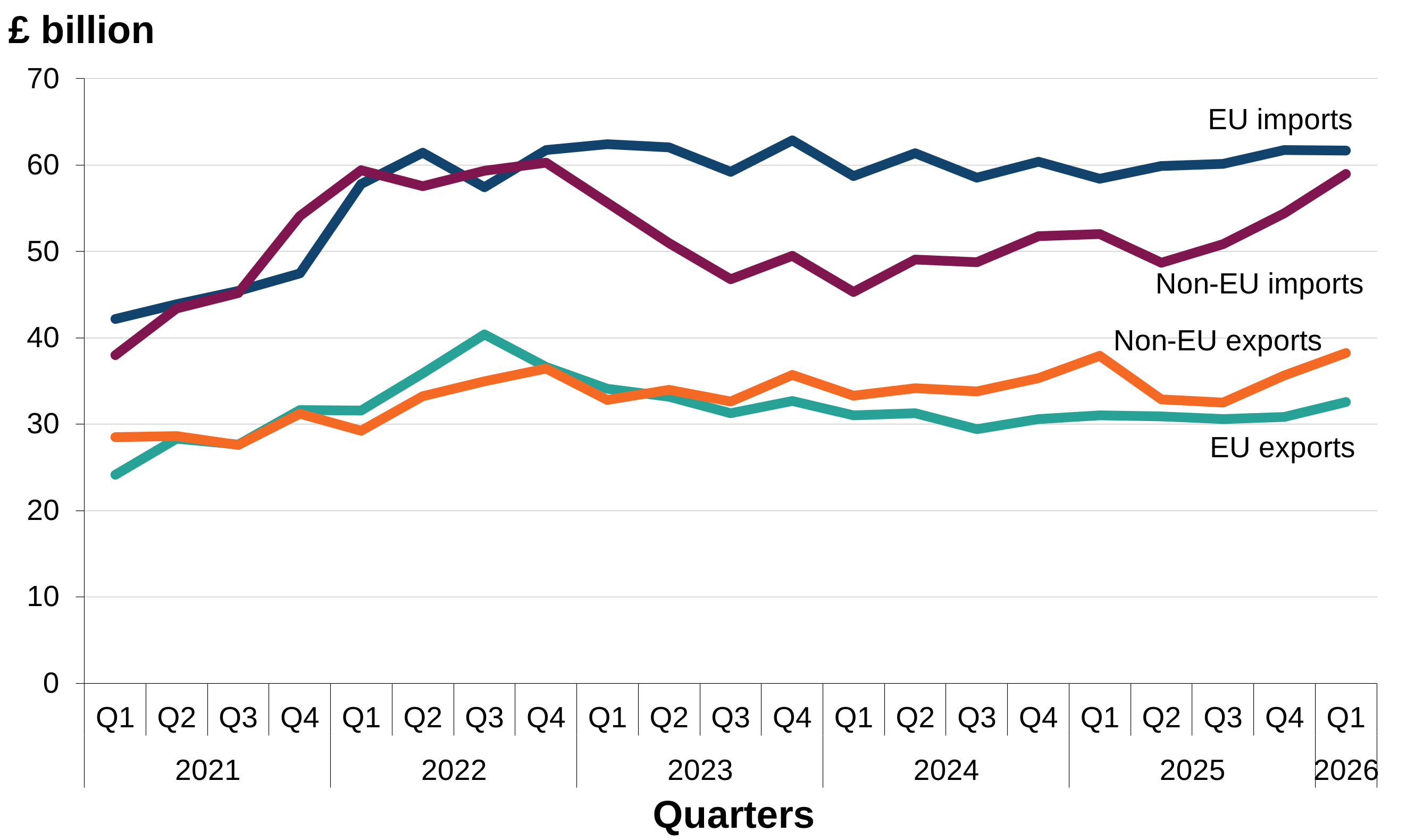
Figure 1 shows a time series of England’s trade in goods with EU and non-EU countries, for both exports and imports.
Source: UK regional trade in goods statistics from HM Revenue & Customs
Note: 2025 and 2026 data is provisional.
Wales’ trade in goods
In the year ending March 2026, compared with the year ending March 2025:
Wales’ exports of goods to EU countries were £11.0 billion, an increase of £0.2 billion or 2.0%. The commodity with the largest value increase in EU exports was SITC 35 - Electric current, an increase of £0.2 billion or 2 times the value. The country with the largest value increase in EU exports was Luxembourg, an increase of £0.1 billion or 76%.
Wales’ exports of goods to non-EU countries were £8.2 billion, a reduction of £0.3 billion or 3.7%. The commodity with the largest value decrease in non-EU exports was SITC 33 - Petroleum, petroleum products & related materials, a reduction of £0.2 billion or 17%. The country with the largest value decrease in non-EU exports was India, a reduction of £0.1 billion or 37%.
Wales’ imports of goods from EU countries were £7.8 billion, a reduction of £0.2 billion or 2.7%. The commodity with the largest value decrease in EU imports was SITC 79 - Other transport equipment, a decrease of £0.3 billion or 35%. The country with the largest value decrease in EU imports was the Netherlands, a decrease of £0.3 billion or 18%.
Wales’ imports of goods from non-EU countries were £12.6 billion, a reduction of £0.7 billion or 5.4%. The commodity with the largest value decrease in non-EU imports was SITC 33 - Petroleum, petroleum products & related materials, a reduction of £0.4 billion or 7.8%. The country with the largest value decrease in non-EU imports was Turkey, a reduction of £0.3 billion or 36%.
Figure 2: Wales’ trade in goods, first quarter, January to March 2021 onwards
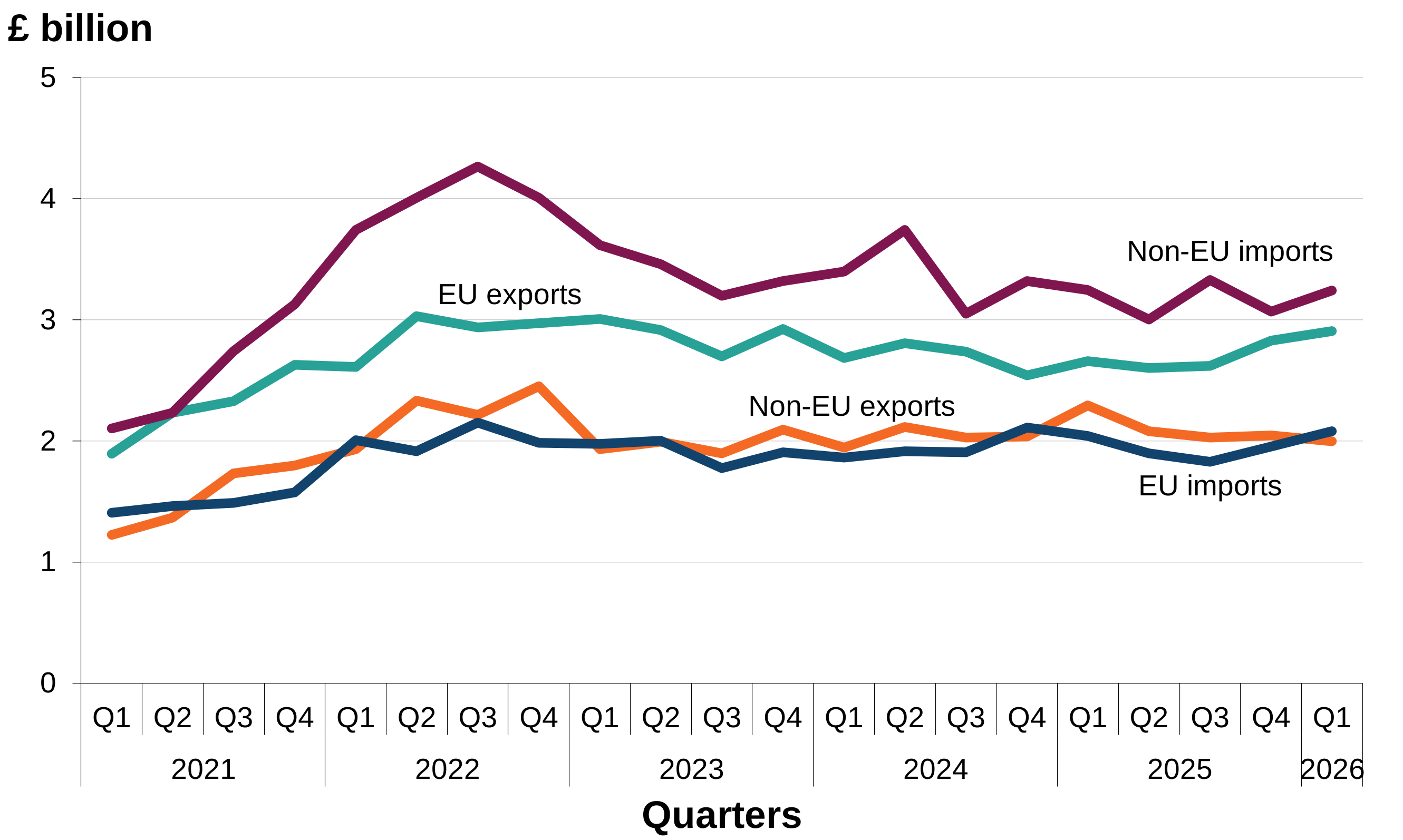
Figure 2 shows a time series of Wales’ trade in goods with EU and non-EU countries, for both exports and imports.
Source: UK regional trade in goods statistics from HM Revenue & Customs
Note: 2025 and 2026 data is provisional.
Scotland’s trade in goods
In the year ending March 2026, compared with the year ending March 2025:
Scotland’s exports of goods to EU countries were £15.5 billion, a reduction of £3.1 billion or 17%. The commodity with the largest value decrease in EU exports was SITC 33 - Petroleum, petroleum products & related materials, a reduction of £3.4 billion or 42%. The country with the largest value decrease in EU exports was the Netherlands, a reduction of £2.1 billion or 36%.
Scotland’s exports of goods to non-EU countries were £15.4 billion, a reduction of £0.5 billion or 3.1%. The commodity with the largest value decrease in non-EU exports was SITC 33 - Petroleum, petroleum products & related materials, a reduction of £0.4 billion or 38%. The country with the largest value decrease in non-EU exports was the USA, a reduction of £0.5 billion or 12%.
Scotland’s imports of goods from EU countries were £12.4 billion, an increase of £0.8 billion or 6.7%. The commodity with the largest value increase in EU imports was SITC 75 - Office machines & automatic data processing machines, an increase of £0.3 billion or 26%. The country with the largest value increase in EU imports was the Netherlands, an increase of £0.2 billion or 10%.
Scotland’s imports of goods from non-EU countries were £17.7 billion, an increase of £0.6 billion or 3.8%. The commodity with the largest value increase in non-EU imports was SITC 68 - Non-ferrous metals, an increase of £0.8 billion or 3.5 times the value. The country with the largest value increase in non-EU imports was the USA, an increase of £0.8 billion or 19%.
Figure 3: Scotland’s trade in goods, first quarter, January to March 2021 onwards
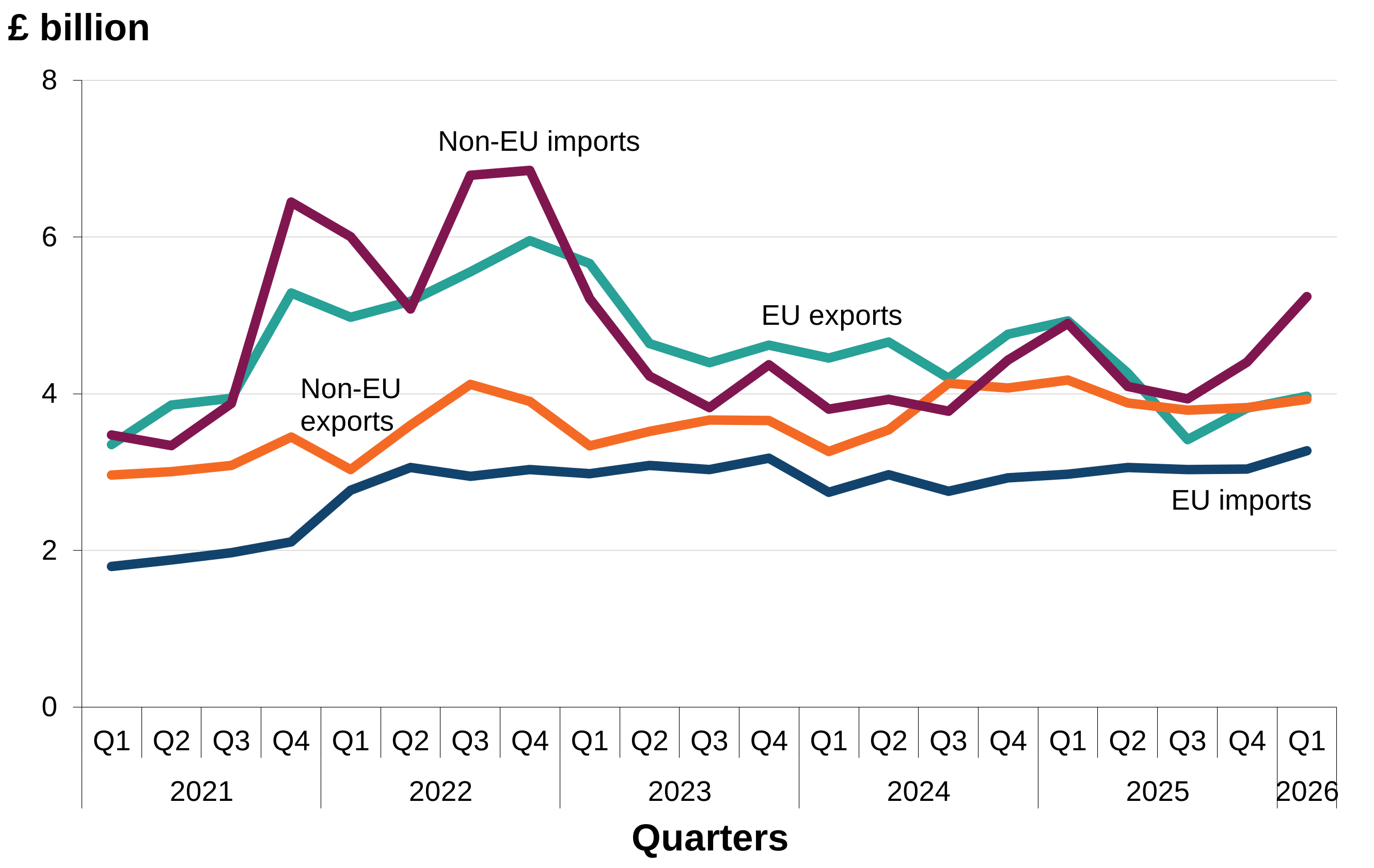
Figure 3 shows a time series of Scotland’s trade in goods with EU and non-EU countries, for both exports and imports.
Source: UK regional trade in goods statistics from HM Revenue & Customs
Note: 2025 and 2026 data is provisional.
Northern Ireland’s trade in goods
In the year ending March 2026, compared with the year ending March 2025:
Northern Ireland’s exports of goods to EU countries were £7.1 billion, an increase of £0.3 billion or 4.9%. The commodity with the largest value increase in EU exports was SITC 77 - Electric machinery, apparatus, appliances, and electrical parts thereof, an increase of £0.2 billion or more than 2 times the value. The country with the largest value increase in EU exports was Ireland, an increase of £0.2 billion or 4.3%.
Northern Ireland’s exports of goods to non-EU countries were £3.7 billion, a reduction of £0.2 billion or 5.5%. The commodity with the largest value decrease in non-EU exports was SITC 77 - Electric machinery, apparatus, appliances, and electrical parts thereof, a reduction of £0.1 billion or 45%. The country with the largest value decrease in non-EU exports was the USA, a reduction of £0.2 billion or 14%.
Northern Ireland’s imports of goods from EU countries were £7.0 billion, a small value decrease, down 0.7%. The commodity with the largest value decrease in EU imports was SITC 77 - Electric machinery, apparatus, appliances, and electrical parts thereof, a small value decrease, down 21%. The country with the largest value decrease in EU imports was Ireland, a reduction of £0.1 billion or 2.2%.
Northern Ireland’s imports of goods from non-EU countries were £3.3 billion, an increase of £0.3 billion or 8.4%. The commodity with the largest value increase in non-EU imports was SITC 77 - Electric machinery, apparatus, appliances, and electrical parts thereof, an increase of £0.1 billion or 49%. The country with the largest value increase in non-EU imports was China, an increase of £0.1 billion or 7.9%.
Figure 4: Northern Ireland’s trade in goods, first quarter, January to March 2021 onwards
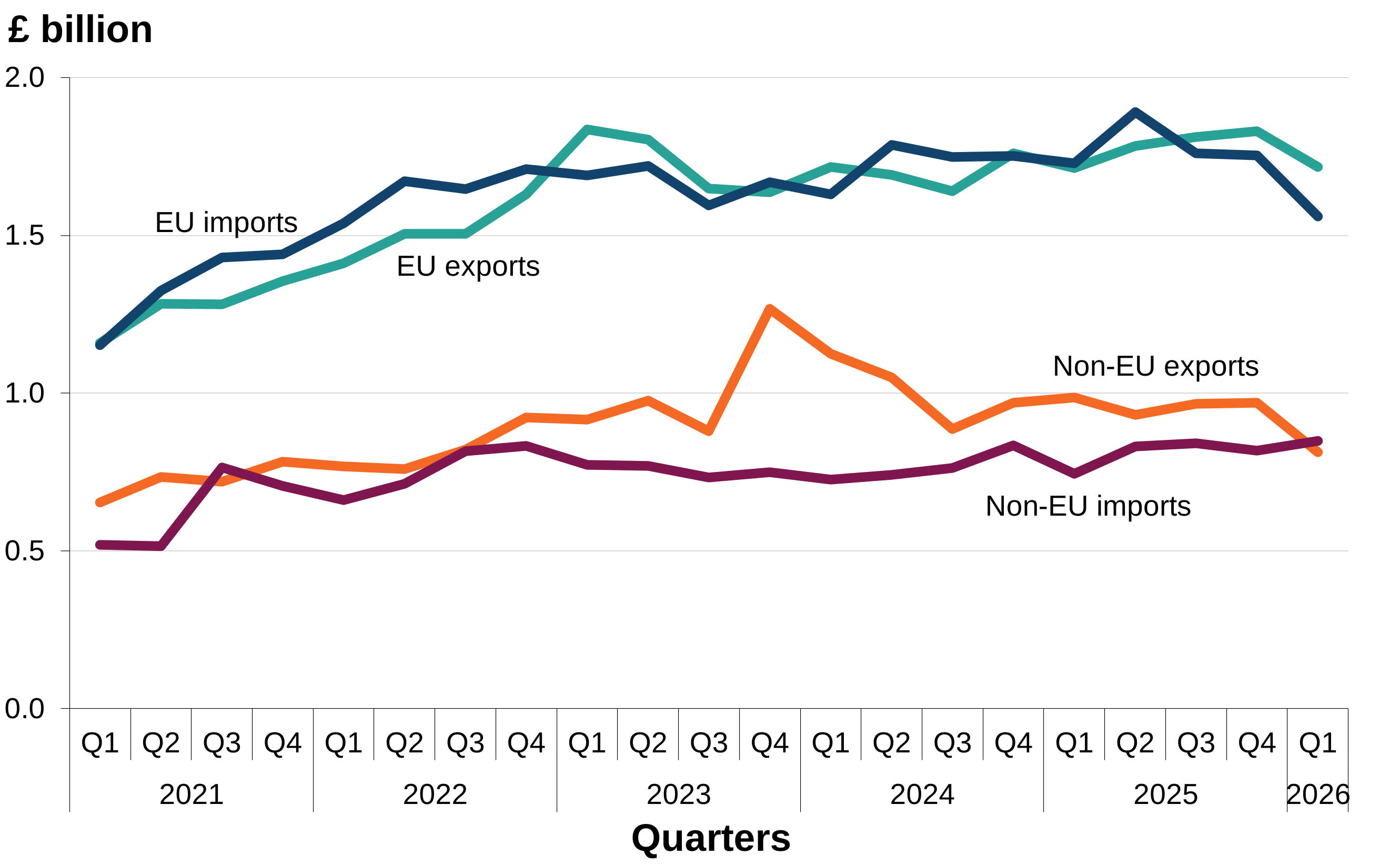
Figure 4 shows a time series of Northern Ireland’s trade in goods with EU and non-EU countries, for both exports and imports.
Source: UK regional trade in goods statistics from HM Revenue & Customs
Note: 2025 and 2026 data is provisional.