Tribunal Statistics Quarterly: April to June 2026
Updated 20 October 2026

© Crown copyright 2026
This publication is licensed under the terms of the Open Government Licence v3.0 except where otherwise stated. To view this licence, visit nationalarchives.gov.uk/doc/open-government-licence/version/3 or write to the Information Policy Team, The National Archives, Kew, London TW9 4DU, or email: psi@nationalarchives.gov.uk.
Where we have identified any third party copyright information you will need to obtain permission from the copyright holders concerned.
This publication is available at https://www.gov.uk/government/statistics/tribunals-statistics-quarterly-april-to-june-2026/tribunal-statistics-quarterly-april-to-june-2026
1. Main Points
This publication presents tribunals statistics for the latest quarter (April to June, Q1 2026/27), compared to the same quarter of the previous year. The collection page with links to the accompanying documents for this publication can be found here.
This publication does not include all the tribunals – figures for Upper Tribunal Immigration and Asylum (UTIAC), except for UTIAC judicial reviews, are excluded. The total of the remaining jurisdictions is referred to in the accompanying tables as the ‘Interim Total’ and has been provided to allow like-for-like comparisons over time.
Data from the missing tribunals will be published as soon as they become available and are quality assured.
The Renters Rights Act received royal assent on the 27th October 2025, and key changes were implemented on 1st May 2026. The Act gives tenants new rights and introduces new rules for private landlords in England. As it was implemented at the beginning of May, the first full quarter of operation covering July to September 2026 will be published in December 2026 within the summary tables. We also intend to add more granular data on this tribunal to this publication going forward.
| The interim[footnote 1] overall volumes of receipts, disposals and open cases have increased | In April to June 2026 His Majesty’s Courts & Tribunals Service (HMCTS) recorded a 12% increase in the interim[footnote 1] total for receipts, and a 3% increase in the total for disposals, compared to the same quarter in 2025. Receipts have exceeded disposals over the last year, resulting in a 16% increase in open caseload to 887,000 at the end of June 2026. |
| SSCS receipts, disposals and open caseload all increased | Compared to the same period in 2025, Social Security and Child Support (SSCS) receipts increased by 55% and disposals increased by 9%. Receipts have exceeded disposals over the last year, resulting in a 63% increase in open cases. |
| FTTIAC disposals and open cases increased, and receipts decreased | FTTIAC receipts decreased by 21%, while disposals increased by 30% in April to June 2026 compared to the same period in 2025. Over the last year, receipts have continued to exceed cases disposed of, leading to an increase in open caseload of 48%. |
| Employment Tribunal receipts and open caseload increased, while disposals decreased [footnote 2] | Single Employment Tribunal (ET) receipts increased by 28%, while disposals decreased by 6% in Q1 2026/27, compared to the same period a year ago. Open caseload also increased by 51% over the same period as receipts have continued to exceed disposals over the last year. In Q1 2026/27 multiple ET claim receipts decreased by 19%, while disposals decreased by 29% compared to the same period a year ago. Open claims increased by 3% over the same period, as receipts have outweighed disposals over the last year. |
| Gender Recognition Certificates receipts and open caseload decreased, while disposals increased | This quarter there were 430 Gender Recognition Panel (GRP) applications received, 590 disposals and an open caseload of 1,100. GRP receipts decreased by 41%, while disposals increased by 132% in Q1 2026, compared to the same period in 2025. There have been more disposals over the last year than receipts, resulting in a decrease in open caseload of 32%. |
For feedback related to the content of this publication, please contact us at CAJS@justice.gov.uk
2. Statistician’s Comment
Overall, tribunal receipts rose in Q1 2026/27 compared to the previous year, although this is a slight decrease compared to the volume in Q4 2025/26. Disposal volumes continue to be below receipts, as they have been for the last two years, meaning the open caseload has risen and stands at its highest level since Q2 2013/14.
The rise in receipts compared to the same quarter in 2025/26 is driven by increases in both Social Security and Child Support (SSCS) - to the highest level since 2019/20 - and Single Employment claims, although these have reduced slightly compared to the previous quarter. Whilst disposals for SSCS have also risen over this period; disposals of single Employment Tribunal claims have declined.
The number of applications to the Gender Recognition Panel stabilised over the latest four quarters, following a peak in Q1 2025/26. In response, disposals for the panel have risen over this period leading to consecutive decreases in open caseload over the latest four quarters, reaching the same level as Q4 2024/25 in the latest quarter.
3. Overview of Tribunals
The interim receipts total was 120,000 and the interim disposals total was 84,000 in Q1 2026/27
In April to June 2026, HMCTS recorded 12% increase in the interim total for receipts, and a 3% increase in the total for disposals, when compared to the same quarter in 2025. Over the year, receipts exceeded disposals and the open caseload total increased by 16%, to 887,000, at the end of the period.
This publication does not include Upper Tribunal (Immigration and Asylum Chamber) data from Q2 of 2021/22 (except for UTIAC judicial reviews) and Employment Tribunals data for Q1 2021/22, due to database migration. It also does not include Criminal Injuries Compensation tribunal data from Q3 2025/26 due to an issue identified in collecting this data from the pipeline. The total of the remaining jurisdictions is referred to in this publication and accompanying tables as the ‘Interim Total’ and has been provided to allow consistent year-on-year comparisons over time.
This summary bulletin focuses mainly on the Social Security and Child Support (SSCS) Tribunal, the First-tier Tribunal Immigration and Asylum Chamber (FTTIAC), and the Employment Tribunal as they made up the majority (77%) of tribunal receipts in April to June 2026:
- Social Security and Child Support (SSCS) - 39% of receipts
- Employment Tribunal (ET) - 21% of receipts
- First-tier tribunal Immigration and Asylum Chamber (FTTIAC) - 18% of receipts
Figure 3.1: Receipts and disposals interim totals, Q1 2022/23 to Q1 2026/27 (Source: Tables S_2 and S_3)
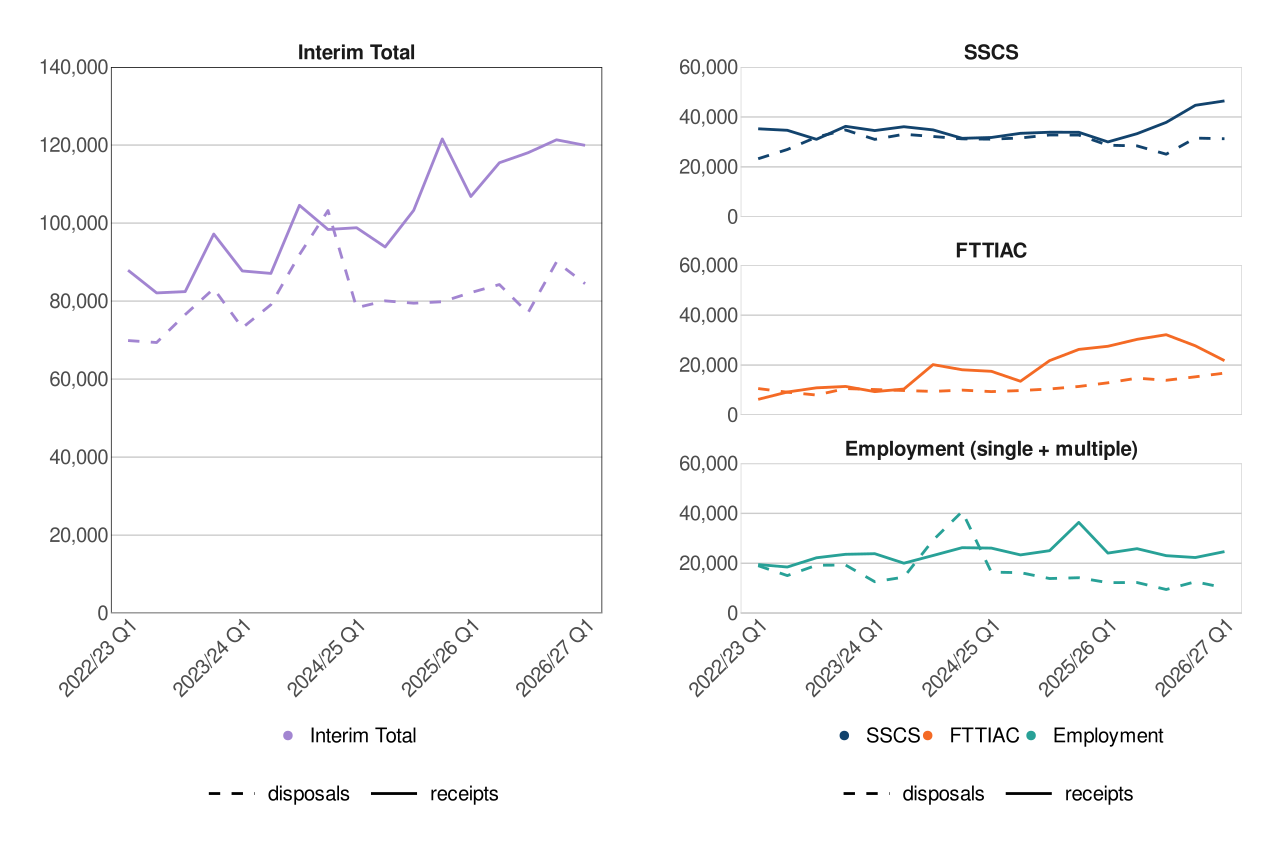
Figure 3.2: Open caseload[footnote 3] interim totals, Q1 2022/23 to Q1 2026/27 (Source: Table S_4)
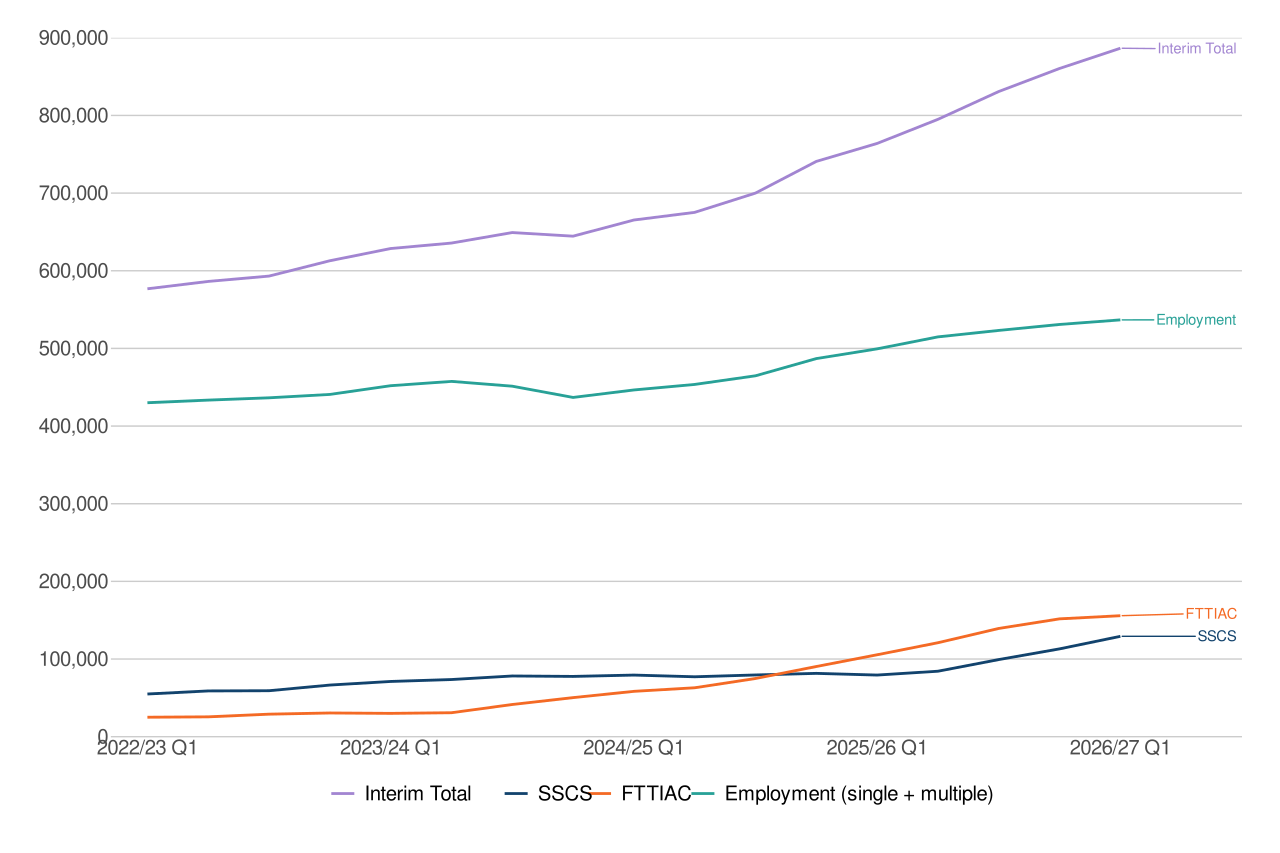
The charts above show the trends in receipts, disposals and open caseload over the last five years for SSCS, FTTIAC, ET (single + multiple claims), and all tribunals (using the Interim Total measure).
In April to June 2026, overall receipts increased by 12% compared to April to June 2025. The increase was driven by increases in SSCS and Employment Tribunal single claims (by 55% and 28% respectively).
Overall disposals increased by 3% in April to June 2026 (to 84,000) compared to Q1 2025/26. The rise was driven by increases in FTTIAC and SSCS (by 30% and 9% respectively). However, this was offset by decreases in disposals for Employment Tribunal multiple claims and the First-tier Tax Chamber (down 29% and 62% respectively).
Over the last 12 months, total receipts have exceeded disposals, resulting in an overall increase in the open caseload. This is at its highest level since Q2 2013/14.
HMCTS are currently reviewing the Employment Appeal Tribunals, Upper Tribunal (Administrative Appeals Chamber), Upper Tribunal (Lands) and Upper Tribunal (Tax & Chancery) figures as part of their broader data quality program. This review may lead to revisions in the future and so users should treat these figures with some caution at this stage.
4. Social Security and Child Support
Compared to the same period in 2025, Social Security and Child Support (SSCS) receipts increased by 55% and disposals increased by 9%. Open cases increased by 63%, as receipts have exceeded disposals over the last year.
Of the 31,000 disposals in Q1 2026/27, 65% were cleared at a hearing and of these, 60% had the initial decision revised in favour of the claimant (compared to 69% and 60% in the same period in 2025/26 respectively).
In Q1 2026/27 the SSCS disposal figures were revised to include Integrated List Assist (ILA) disposals from the SSCS Cardiff region. The revised data has been applied from the start of ILA implementation in April 2023. As a result, these revised disposal figures are higher than those published previously.
As part of this work, changes have been made to the processing of withdrawn and struck out cases, with data revised from Q1 2023/24. Previously, cases recorded as withdrawn or struck out on the day of a hearing could be classified as having been disposed of prior to a hearing, whereas the updated methodology classifies these cases as disposals at hearing. As a result, some cases previously recorded as non-hearing disposals have been reclassified as hearing disposals. Therefore, caution should be used when comparing hearing and non-hearing disposal volumes across this methodology change.
We are currently investigating data in the venue level CSV for the Social Security and Child Support Tribunal and this CSV has been removed from the publication whilst this work is ongoing. This data will be made available as soon as possible when this work is complete, and quality assurance checks have been undertaken. This CSV is still available for previous quarters (prior to Q3 2025/26), but caution should be used when comparing venue level data whilst this work is ongoing.
In January 2026, a data quality issue was identified affecting open caseload for SSCS, with caseload being potentially over-reported by ~5k cases. This is currently being investigated and may lead to some revisions when this process is complete.
Figure 4.1: Social Security and Child Support receipts and disposals, Q1 2022/23 to Q1 2026/27 (Source: Tables SSCS_1 and SSCS_2)

Figure 4.2: Social Security and Child Support open caseload, Q1 2022/23 to Q1 2026/27 (Source: Table SSCS_4)
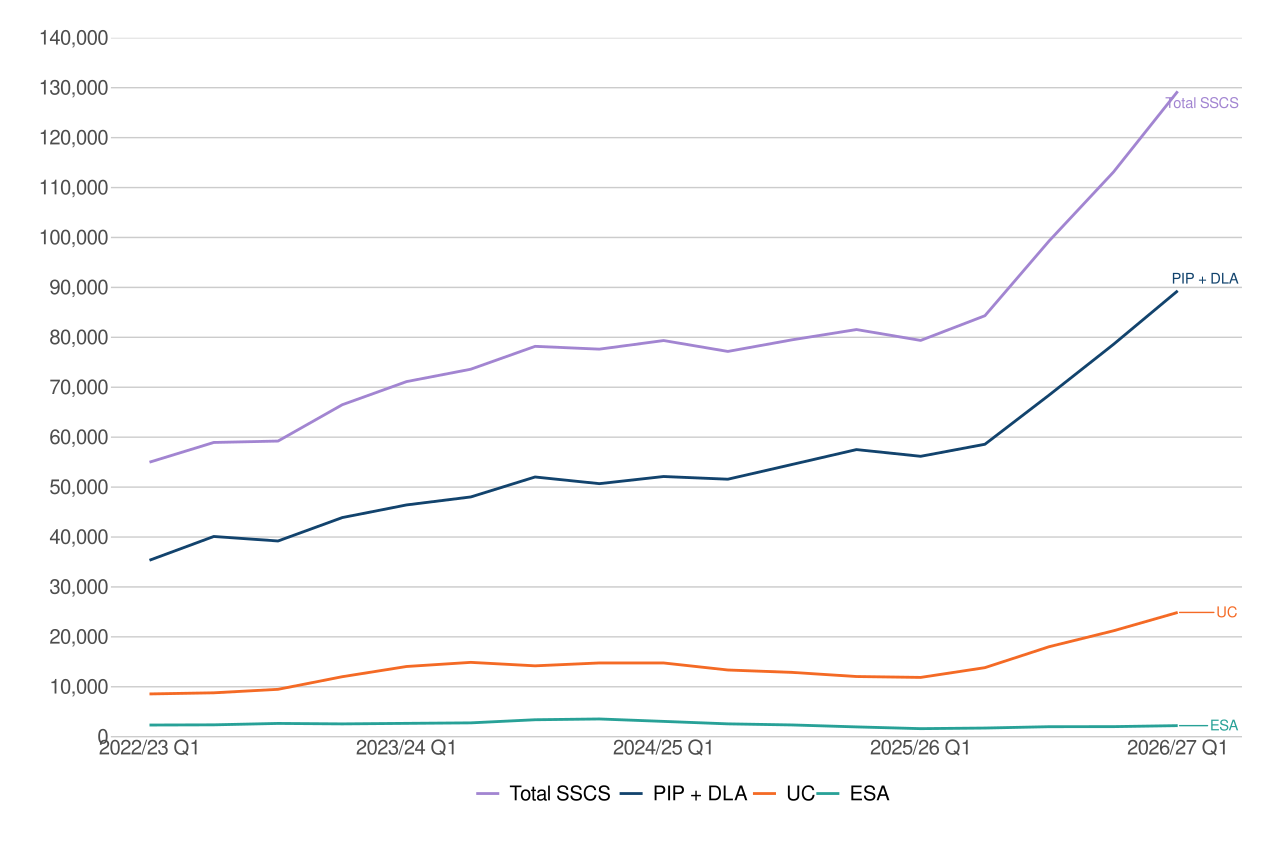
Following a drop due to the impact of the COVID-19 pandemic, SSCS receipts increased significantly from Q2 2021/22 and remained relatively stable between Q1 2022/23 and Q2 2025/26. Receipts have risen in the latest quarters to their highest level since Q3 2019/20 in the current quarter, but it is too early to determine if this trend will continue.
SSCS receipts increased by 55% this quarter, to 46,000, compared to 30,000 in April to June 2025. This was driven by increases in Personal Independence Payment, Disability Living Allowance and Universal Credit, by 52%, 187% and 48% respectively. The biggest contributors in terms of receipt volumes are PIP and UC appeals, which accounted for 59% and 20% respectively of all SSCS receipts in April to June 2026.
In April to June 2026, SSCS disposals increased by 9% when compared to the same period in 2025, at 31,000. PIP made up nearly two thirds (65%), and UC, around a fifth (18%) of SSCS disposal volumes.
Of the disposals made by the SSCS tribunal, 20,000 (65%) were cleared at hearing, and of these, 60% were overturned in favour of the claimant (down from 69% and no change from 60% on the same period in 2025 respectively). This overturn rate varied by benefit type, with PIP at 67%, DLA 59%, Employment Support Allowance (ESA) 46%, and UC 45%. The PIP, DLA, ESA and UC overturn rates mostly increased compared with April to June 2025 (PIP up 1, DLA down 1, ESA up 1 and UC down 3 percentage points).
There were 129,000 SSCS cases in the open caseload at the end of June 2026, an increase of 63% compared to the same period in 2025. SSCS open caseload decreased gradually between Q4 2017/18 and Q2 2021/22 (from a peak of 125,000 to 32,000), only rising in Q3 2019/20. However, since Q2 2021/22, SSCS open caseload has shown a generally increasing trend, with this accelerating over the latest 4 quarters.
Of those cases disposed of by the SSCS tribunal in April to June 2026, the mean age of a case at disposal was 37 weeks, an increase of 3 weeks compared to the same period in 2025 (see table T_2). Please note SSCS timeliness figures do not yet include Integrated List Assist (ILA) disposals from the SSCS Cardiff region and are therefore not directly comparable to the disposals published this quarter. These will be included as soon as work to integrate this data for this measure is complete and quality assurance checks have been carried out.
5. Immigration and Asylum
First-tier Tribunal Immigration and Asylum Chamber (FTTIAC)
In April to June 2026, FTTIAC receipts decreased by 21% to 22,000, compared to the same quarter last year. Disposals increased by 30% (to 17,000), over the same period.
In the same period, open caseload increased by 48% (to 156,000).
Figure 5.1: First-tier Tribunal Immigration and Asylum Chamber receipts and disposals, Q1 2022/23 to Q1 2026/27 (Source: Tables FIA_1 and FIA_2)
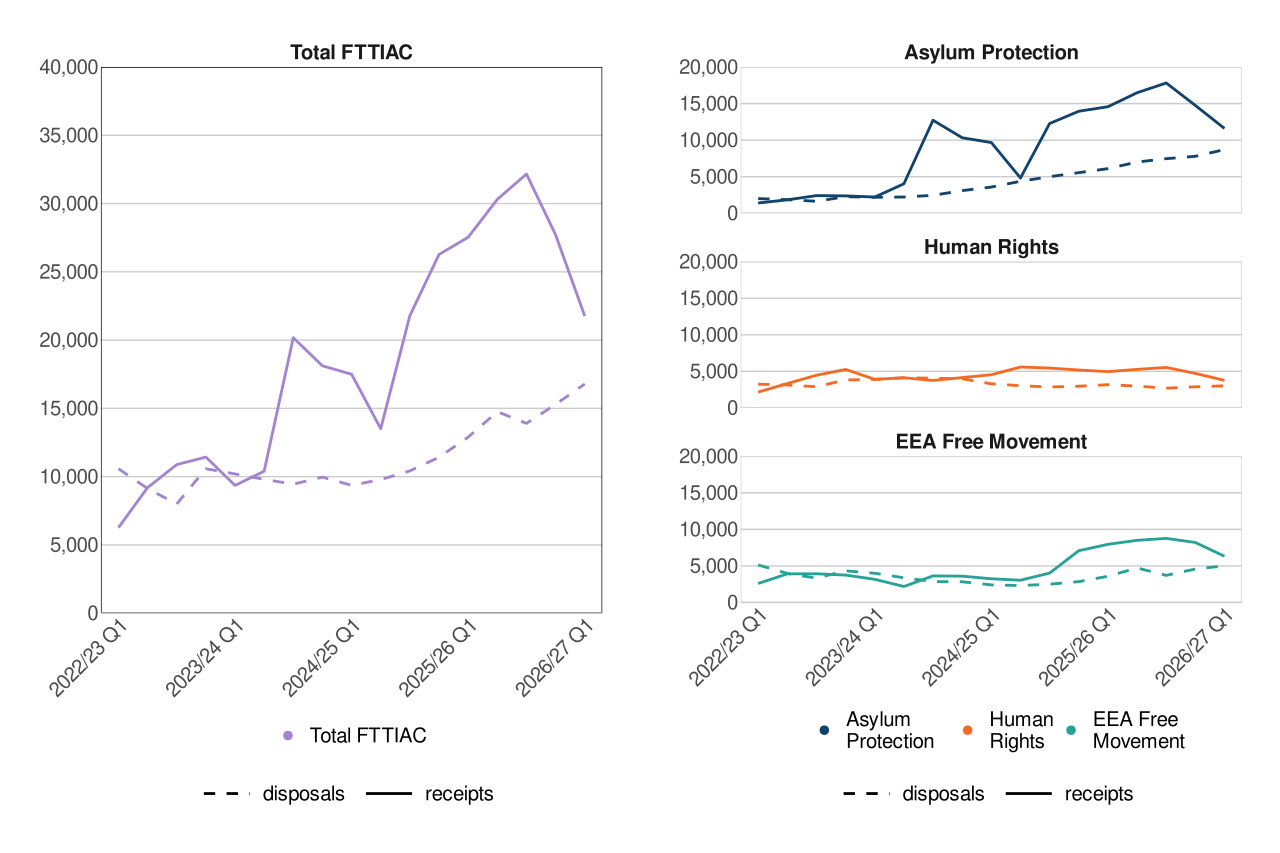
Figure 5.2: First-tier Tribunal Immigration and Asylum Chamber open caseload, Q1 2022/23 to Q1 2026/27 (Source: Table FIA_4)
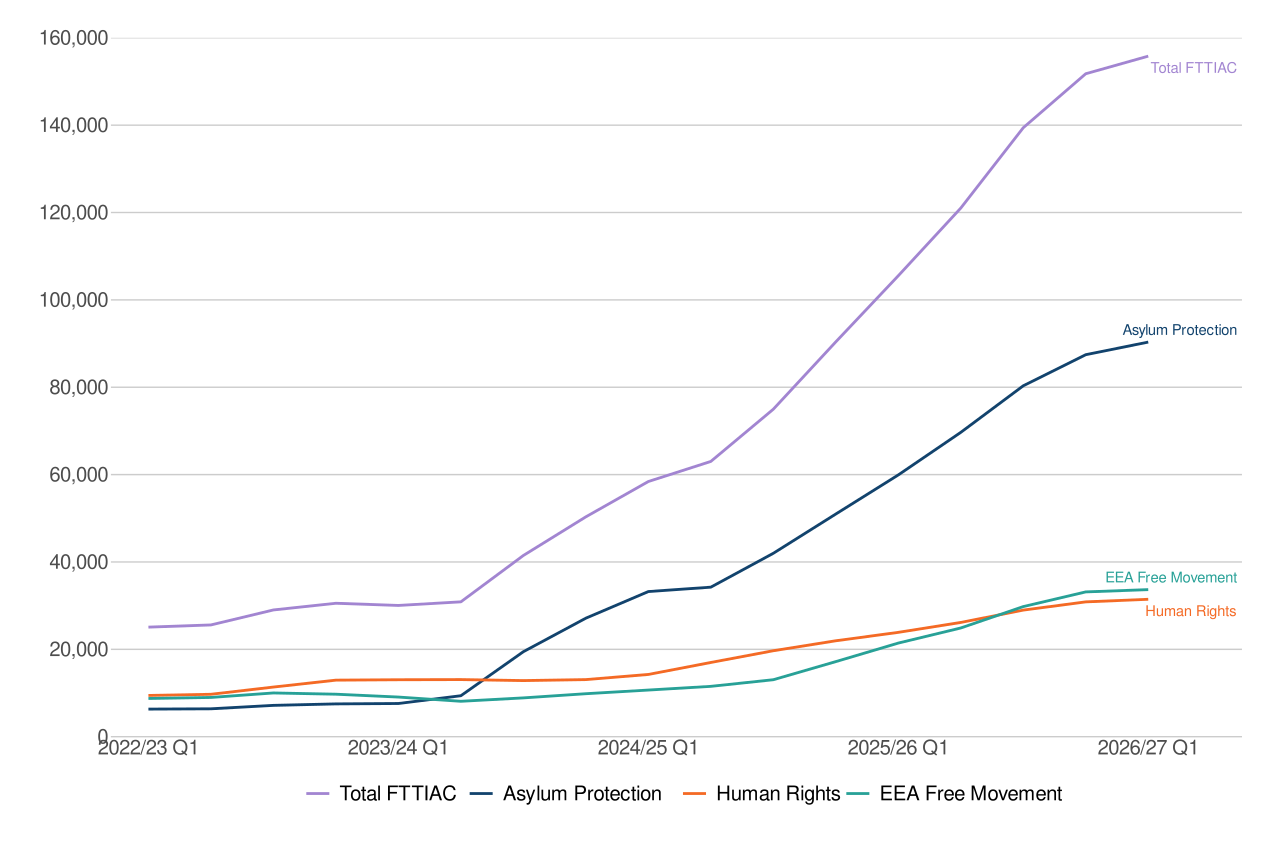
This quarter, receipts decreased by 21% (to 22,000) compared to the same period last year, predominantly driven by decreases in Asylum/Protection/Revocation of Protection, EEA Free Movement and Human Rights, by 20%, 20% and 24% respectively. After a period of stability in 2022/23 following recovery from the COVID-19 pandemic, receipts rose steeply from Q3 2023/24 driven by increases in Asylum/Protection/Revocation of Protection (AP), due to the Home Office’s work to tackle the backlog of legacy asylum claims. However, receipts have shown early signs of falling again in the latest two quarters.
Human Rights (HR) receipts decreased by 24% to 3,800 over the same period. HR, AP and EEA accounted for 17%, 53% and 29% of all FTTIAC receipts respectively. Compared to the same quarter in 2025/26, the proportion of receipts that were HR went down 1 percentage point, while AP and EEA remained unchanged.
In Q1 2026/27, FTTIAC disposals increased by 30% to 17,000. This rise in disposals was driven by increases in Asylum/Protection/Revocation of Protection, EEA Free Movement and Deprivation of Citizenship, by 43%, 40% and 256% respectively. Asylum/Protection/Revocation of Protection disposals made up the largest proportion (52%) of all FTTIAC disposals in April to June 2026, up from 47% a year ago.
Of the disposals made in the FTTIAC this quarter, 45% were determined i.e. a decision was made by a judge at a hearing or on the papers (compared to 50% in Q1 2025/26); 29% were withdrawn (compared to 27% in Q1 2025/26); 17% were struck out for non-payment of the appeal fee (compared to 9% in Q1 2025/26), and 9% were invalid or out of time (compared to 10% in Q1 2025/26). Around two fifths (38%) of the 7,500 cases determined at a hearing or on the papers were allowed/granted, although this varied by case type (39% of Asylum/Protection, 42% of Human Rights and 26% of EEA Free Movement appeals were allowed/granted).
In the FTTIAC, the mean time taken to clear appeals across all categories was at 65 weeks in the latest quarter, 13 weeks longer compared to the same period a year ago. The mean time for Asylum/Protection was 72 weeks, Human Rights was 74 weeks and EEA Free Movement was 48 weeks.
Upper Tribunal Immigration and Asylum Chamber Judicial Reviews (UTIAC JRs)
Receipts and disposals for UTIAC JR’s do not include urgent cases. Therefore, caution should be used when comparing the open caseload to these flows as there may be small differences.
In April to June 2026, there were 840 Immigration and Asylum Judicial Review receipts and 1,400 disposals, a decrease of 33% and an increase of 15% respectively compared to April to June 2025.
Of the 1,400 Immigration and Asylum Judicial Reviews disposed of, 65% were determined and 2% were transferred to the Administrative Court. The remaining 32% were in the ‘Other’ category, which includes cases that were withdrawn or not served.
During April to June 2026, 1,200 UTIAC Judicial Review applications were determined by hearing/papers, of which 14% were allowed to continue to the substantive hearing stage. A further 64 were reconsidered at an oral renewal, of which 100% were allowed to continue to the substantive hearing stage. There were 34 substantive hearings which were determined in April to June 2026 of which 47% were granted in favour of the appellant (see table UIA_3).
6. Employment Tribunals
Employment Tribunal single cases
In Q1 2026, the Employment Tribunal received 14,000 single claim receipts and disposed of 6,100 single claim cases. There were 70,000 single claim cases in the open caseload at the end of June.
These figures can be found in the summary (S1, S2, S3 and S4) tables of the main tables and include data from both legacy and Reform case management systems. Numbers in ET_R tables include only Reform single claim cases and so will not match figures in the summary tables.
Employment Tribunal lead multiple cases
There were 500 lead multiple cases received, and 380 cases disposed of in Q1 2026/27. The number of open lead cases stood at 7,600 at the end of June. These lead multiples cover 11,000 Multiple claim receipts, 4,100 disposals, and an open caseload of 467,000 multiple claims at the end of June.
Multiple claims can represent many individual cases linked to a single employer, which is why their volumes can change sharply from quarter to quarter.
Employment Tribunals transitioned to a new database (Employment Case Management) during March to May 2021. It has not been possible to provide full results from both databases during this migration period on a consistent basis. Therefore, Employment Tribunal (ET) data is not available for Q1 2021/22, and as a result we are unable to present data for the full financial year of 2021/22.
The total figures reported here and in the summary tables are produced from a combination of systems (ECM Reform and ECM Legacy) which have been amalgamated from Q2 2025/26 to provide combined totals for Receipts, Disposals and Open Caseload, resulting in revisions to these data series. Previously, this data was provided via a temporary tactical solution, which resulted in overcounting of receipts and open caseload. This issue has now been resolved, however, a data quality review is in progress. We estimate the open caseload may still include approximate 3% overcount for Singles and Lead Multiples.
The Jurisdictional breakdown for receipts, disposals, open caseload, and timeliness is available for Single Employment Tribunals (ET) on the Reform system only. Further data will be added to these tables when work to amalgamate the ECM Reform and ECM Legacy data is complete and quality assurance checks have been carried out.
In Q1 2026/27, there were 25,000 Employment Tribunals (ET) receipts, 57% (14,000) of which were single claims receipts, and the remaining 43% (11,000) were multiple claims receipts, within 500 lead multiple cases. The ET disposed of 10,000 claims in Q1 2026/27. At the end of Q1 2026/27, there were 537,000 open claims in total, covering single and multiple claims.
Figure 6.1: Employment Tribunals single and multiple claims receipts and disposals, Q1 2022/23 to Q1 2026/27 (Source: Tables S_2 and S_3)
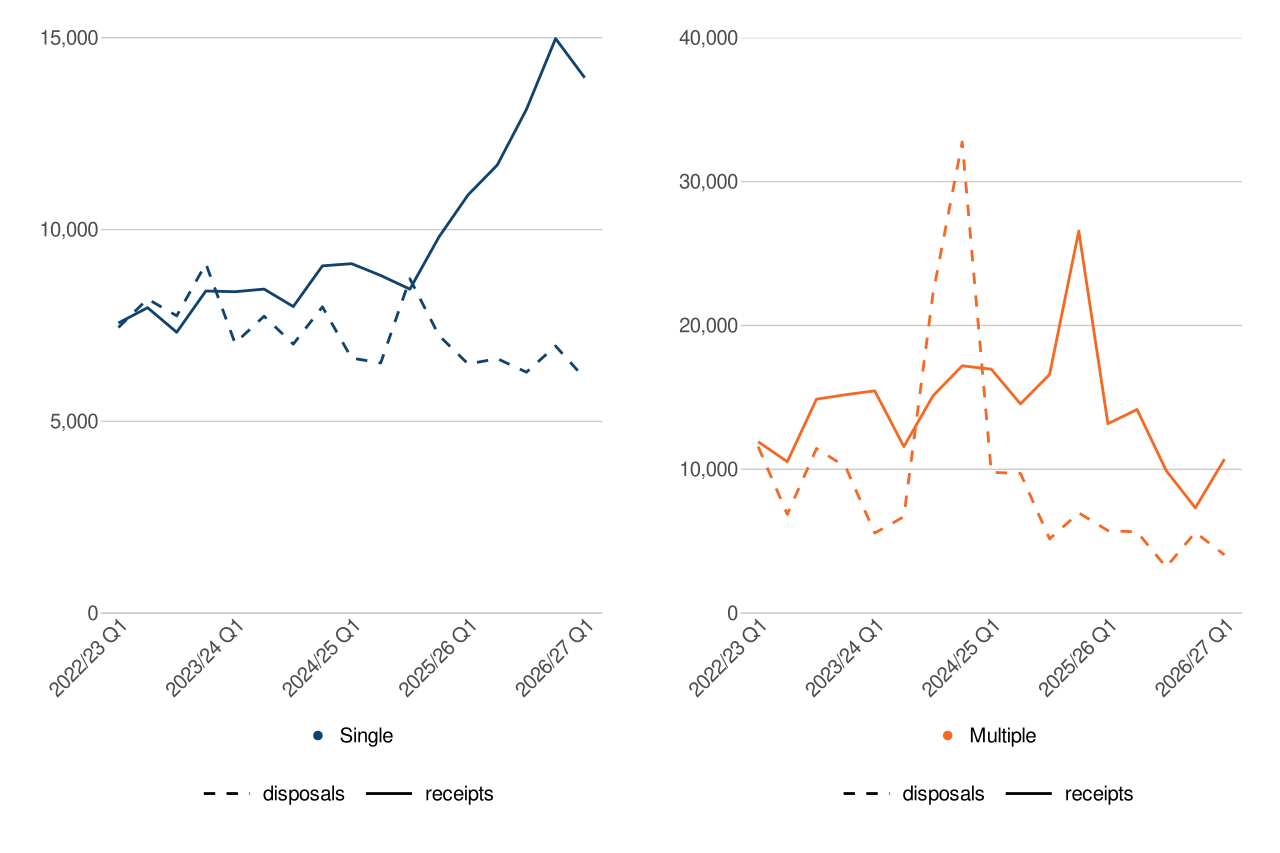
- Note that the axes for single and multiple claims use different scales
Figure 6.2: Employment Tribunals single and multiple claims open caseload, Q1 2022/23 to Q1 2026/27 (Source: Table S_4)
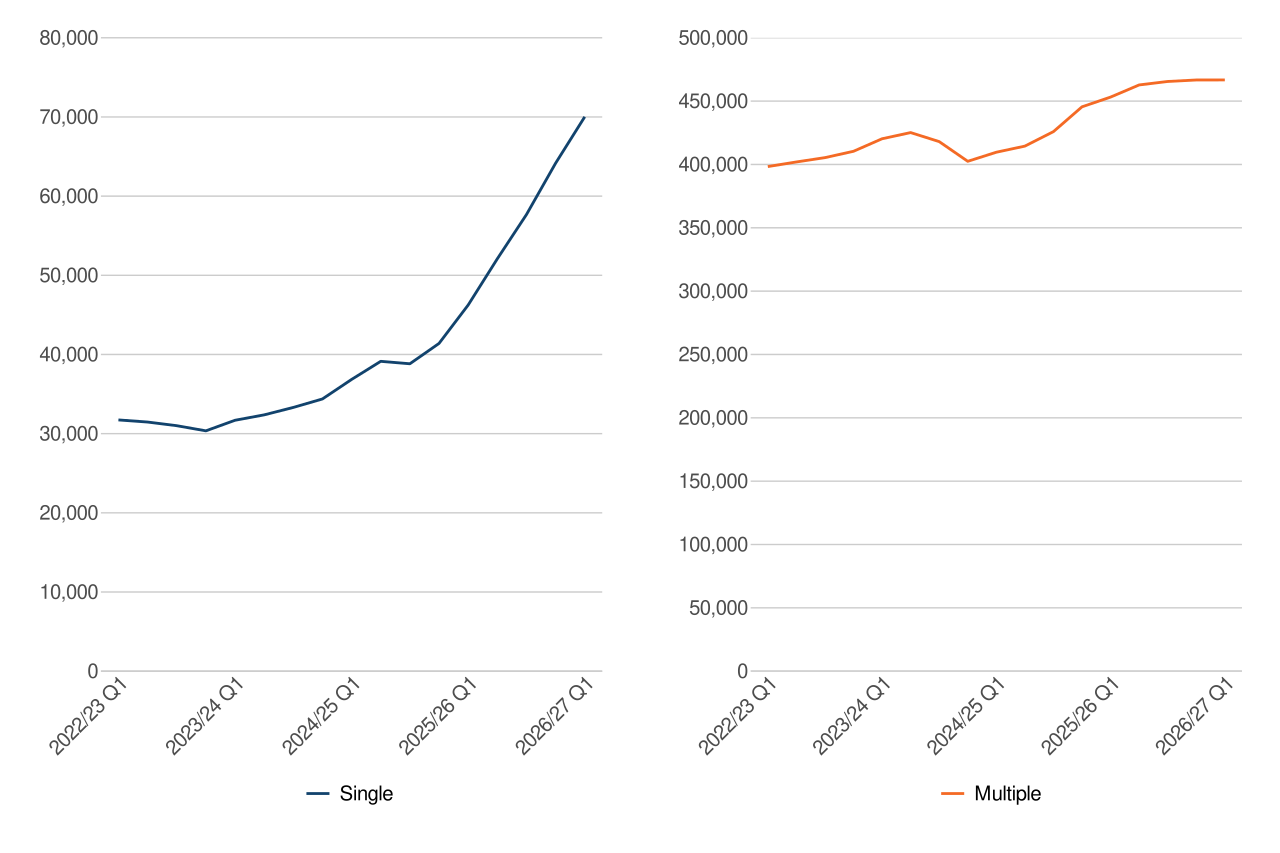
- Note that the axes for single and multiple claims use different scales
Single claim open caseload (at 70,000) has reached its highest level in the timeseries in Q1 2026/27, up 51% compared to the same period in 2025/26.
There were 11,000 multiple claims received this quarter. Multiple claims tend to be more volatile as they can be skewed by a high number of claims against a single employer.
The peak seen in the disposals chart for multiple claims in Q3 2023/24 and Q4 2023/24 is due to a large spike in multiple claims. Between November 2023 and March 2024 a bulk case of multiple claims for equal pay against Glasgow City Council was settled and subsequently withdrawn, resulting in the spike in disposals over these quarters.
7. Employment Appeal Tribunal, 2025/26
Annual data on Representation, and Compensation and Costs awarded for the Employment Tribunal has been suspended in this publication. From July 2022, the Employment Tribunal (ET) migrated to a new case management system (ECM Reform) for Single cases only. Due to the migration process, work is ongoing to establish amalgamated data on Representation, and Compensation and Costs awarded (tables E_1 to E_10) and therefore, this is not included in the publication. The data will be made available as soon as possible when the data is extracted and quality assured.
HMCTS are currently reviewing the Employment Appeal Tribunals figures as part of their broader data quality programme. This review may lead to revisions in the future and so users should treat these figures with some caution at this stage.
Employment Appeal Tribunals (EAT)
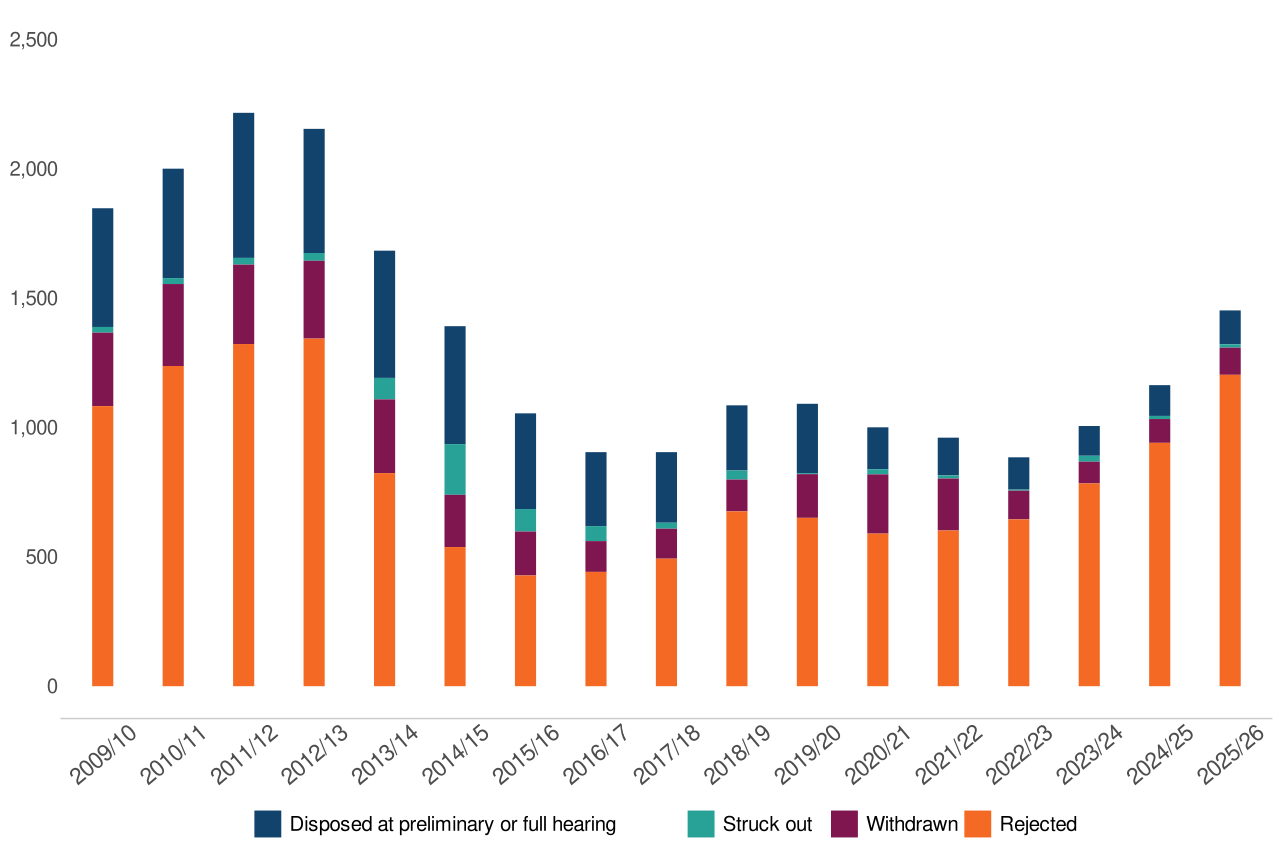
In 2025/26, the Employment Appeal Tribunal received 1,800 appeals (an increase of 4% compared to 2024/25) and disposed of 1,500 appeals (an increase of 25% compared to 2024/25).
In 2025/26, 27% of appeals which were dealt with at a preliminary hearing were dismissed (23 of 86 appeals). This proportion is higher for appeals brought by employees, where 29% of appeals were dismissed, compared to none of the appeals brought by employers.
Of those appeals that reached an EAT final hearing, 47% were dismissed at full hearing. This proportion is higher for appeals brought by employers, where 53% of appeals were dismissed compared to 46% of appeals brought by employees.
Figure 7.1: Outcome of EAT Disposals, 2009/10 to 2025/26 (Source: Table E_11)
8. Gender Recognition Certificates
430 Gender Recognition Panel (GRP) applications were received and 590 were disposed of between April to June 2026; 1,100 applications were pending by the end of June 2026
The GRP received 430 applications this quarter, a decrease of 41% compared to April to June 2025. In Q1 2026/27, disposals continued to rise, an increase of 132% compared to the same period in 2025. This follows the spike in receipts in Q1 2025/26. Of the 590 applications disposed of, a full Gender Recognition Certificate (GRC) was granted in 87% of cases (520 full GRCs), up 2 percentage points compared to the same period in 2025 (where 220 full GRCs were granted out of 260 disposals).
The open caseload reached 1,100 in Q1 2026/27, a decrease of 32% compared to 1,500 in the same period of 2025. The decrease in the open caseload has been driven by a steep increase in disposals from Q2 2025/26 in response to a spike in receipts in the previous quarter. As a result, disposals have outweighed receipts over the latest four quarters, leading to the reduction in open caseload.
Since April 2005/06, when the Gender Recognition Act 2004 came into effect, 59% of interim certificates (170 of the 290 interim GRCs granted) have been converted to a full GRC, 52% of which were converted within 30 weeks. No interim certificates were converted to a full GRC between April to June 2026. The Divorce, Dissolution and Separation Act (2020), which took effect from 6th April 2022, changed the process for no fault divorces, reducing the need for interim certificates; we therefore expect to see a considerable drop in these.
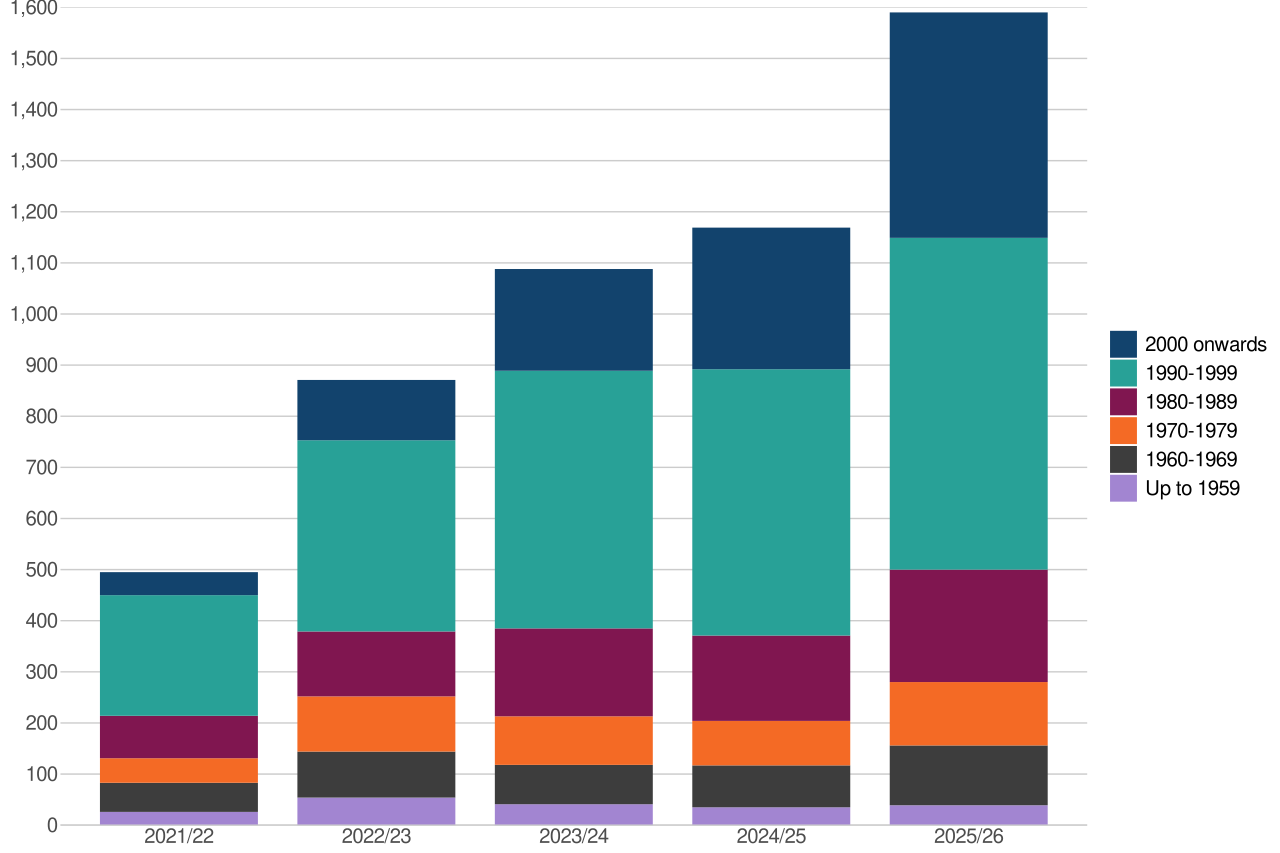
Of the 520 full certificates granted in April to June 2026, 44 were for married applicants and 460 for single applicants. 290 (57%) of the individuals granted full certificates were registered male at birth while 220 (43%) were registered female at birth.
Figure 8.1: Applications for Gender Recognition Certificates received, disposed of and pending, Q1 2022/23 to Q1 2026/27 (Source: Tables GRP_1 and GRP_2)
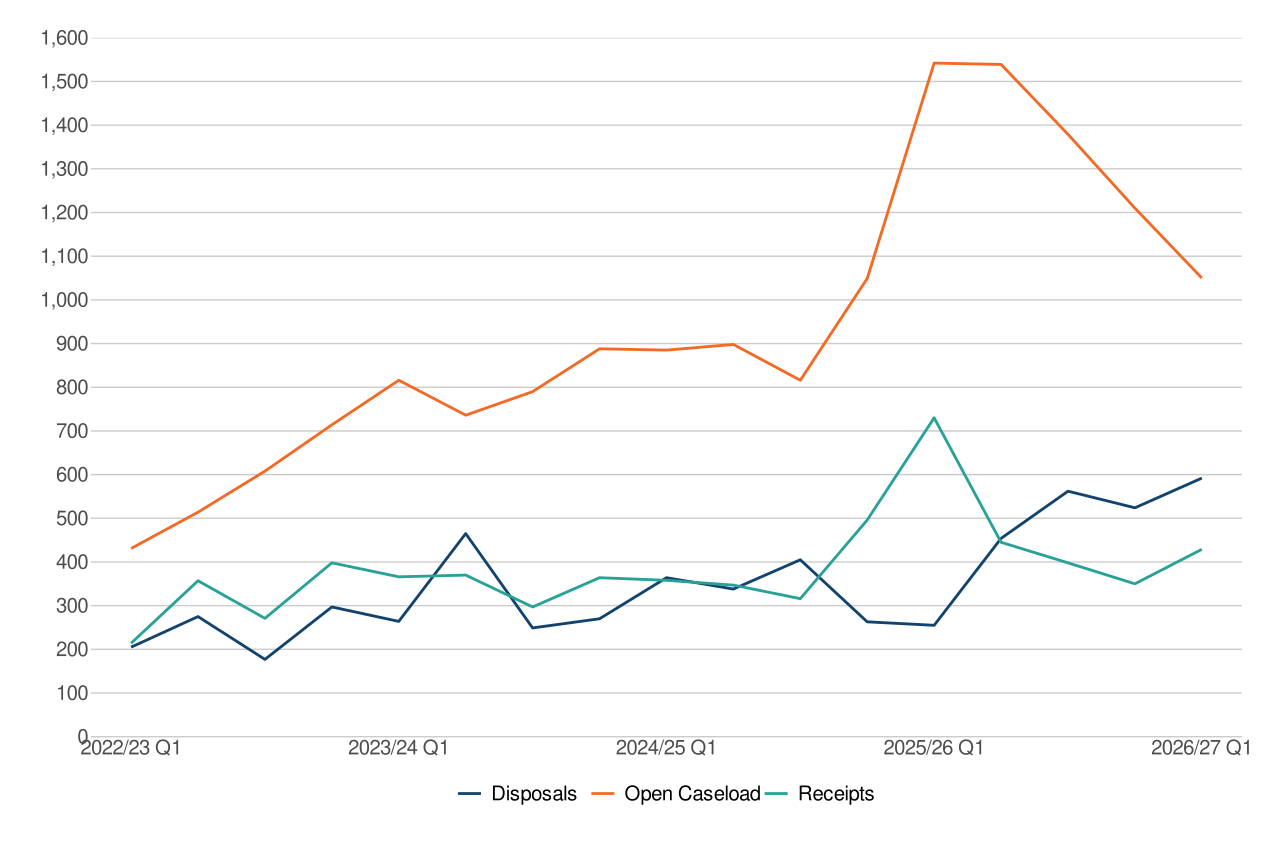
Figure 8.2: Full Gender Recognition Certificates granted by year of birth, 2018/19 to 2025/26 (Source: Table GRP_4)
9. Adjournments and Postponements
From 2021/22 First-tier Tribunal (Immigration and Asylum Chamber) data for adjournments and postponements is taken from the old case management system (ARIA) only as data from Core Case Data (CCD) is not yet available. As cases have moved to CCD, ARIA only covers 10% of these cases in 2024/25, therefore, caution should be taken when making comparisons between years. From 2025/26 this data has been removed from the publication as data engineers continue work to amalgamate this data. This data will be reintroduced in our reporting as soon as possible when this work is complete and quality assurance checks have been finalised.
From 2025/26, data for the Criminal Injuries Compensation tribunal is not available due to an issue identified in collecting this data from the Criminal Injuries Compensation tribunal pipeline. Work is ongoing to resolve this issue, and this data will be reintroduced as soon as this work is complete and quality assurance checks have been completed.
From April 2023 the SSCS Tribunal started to list cases using a new Scheduling and Listing solution. This, alongside HMCTS migrating to a new Strategic Data Platform, has resulted in some cases heard and decided using this new listing solution not currently being included in the SSCS adjournments and postponements data. Revised data will be published as soon as they are available. Only venues associated with Cardiff Processing Centre are impacted.
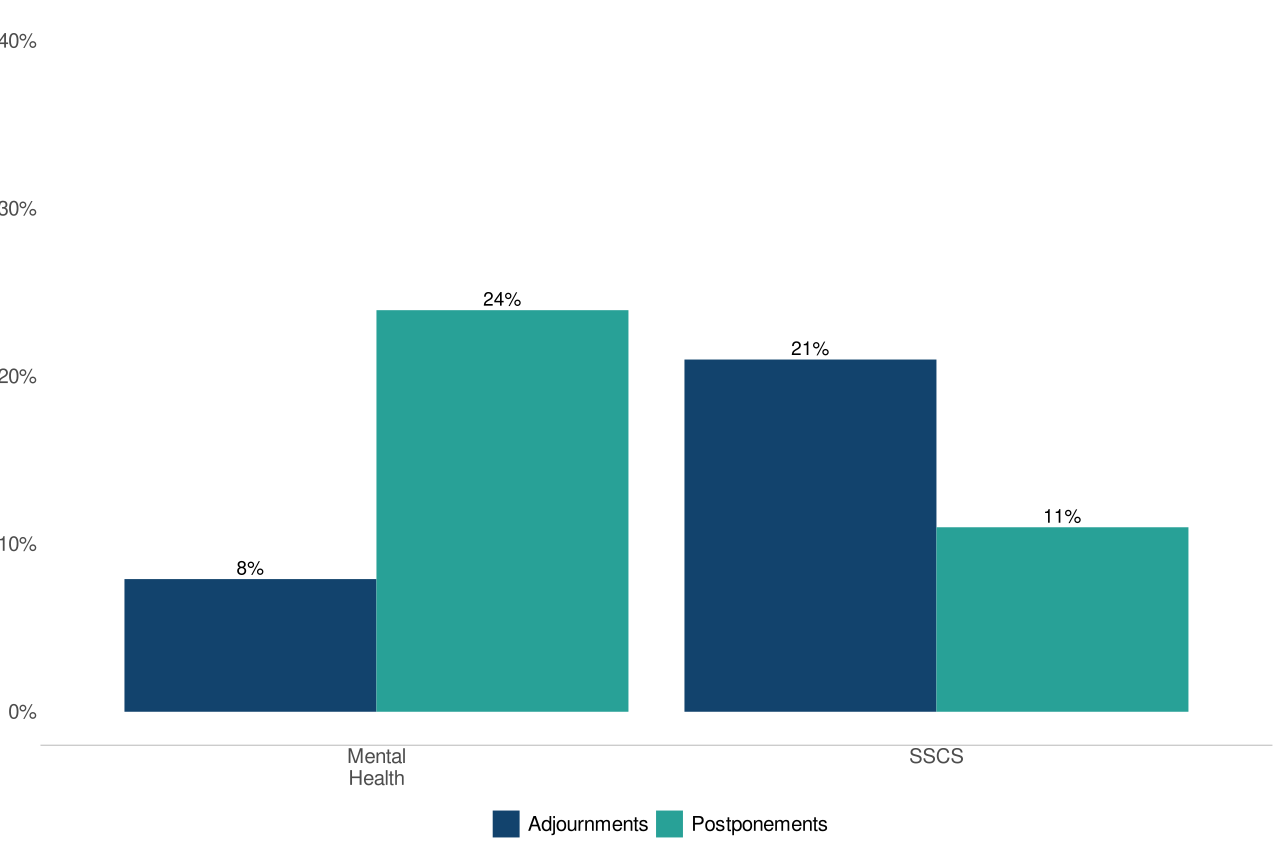
Social Security and Child Support tribunals had the largest number of adjournments (17,000) which accounted for 21% of SSCS listed hearings (up 1 percentage point on 2024/25). Special Educational Needs and Disability (SEND) tribunals had the smallest proportion of listed hearings that were adjourned, accounting for 7% of all SEND hearings listed in 2025/26, down 3 percentage points on 2024/25.
The postponement process is different for each tribunal, as such, care must be taken when comparing the postponement figures. As an example, in the SEND tribunal, the case is listed for hearing when the appeal is registered without confirming availability of the parties to attend on that date, whereas in SSCS the date is only set when the parties agree a date. This results in a high number of postponements for the SEND tribunals as the parties may not be able to attend on the scheduled date. This can be for various reasons. These may include holidays; illness; key witnesses unavailable on the date of the hearing; the case simply not ready for hearing or where the tribunal is able to hear an appeal sooner with parties’ consent.
Figure 9.1: Percentage of listed hearings Adjourned and Postponed – SEND, 2024/25 to 2025/26 (Source: Table APJ_1)
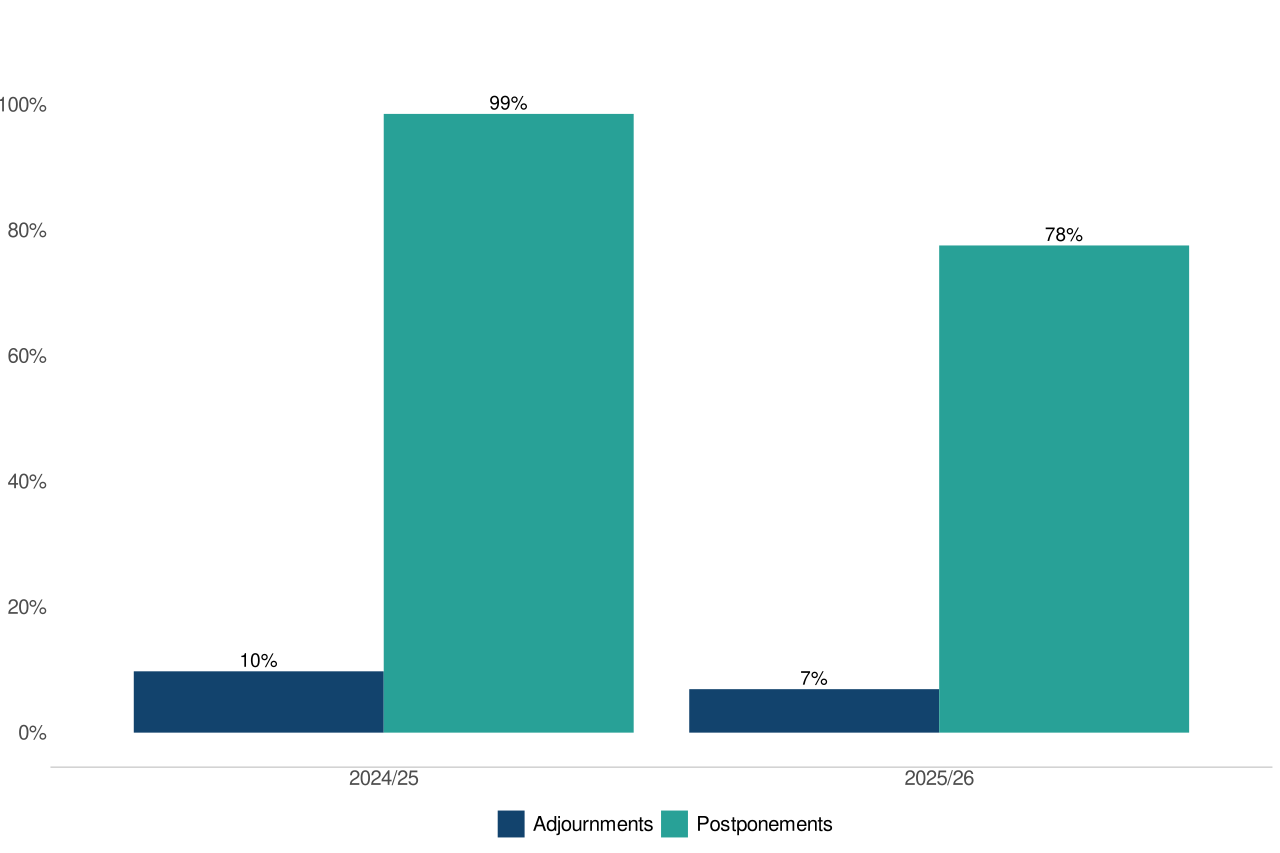
This difference in the process of scheduling involved in the SEND tribunals leads to a relatively large proportion of its listed hearings being postponed - 78% in 2025/26. The number of SEND postponements increased year-on-year, from 620 in 2013/14 to 4,500 in 2019/20. In 2020/21 this number fell to 3,200. This decline is due to the use of remote hearings during the pandemic making attending hearings easier for participants. However, following this decrease the number of SEND postponements has increased each year to 13,000 in 2025/26.
Figure 9.2: Percentage of listed hearings Adjourned and Postponed – by jurisdiction, 2025/26 (Source: Table APJ_1)
10. Tribunal Judicial Salaried and Fee-Paid sittings by Jurisdiction
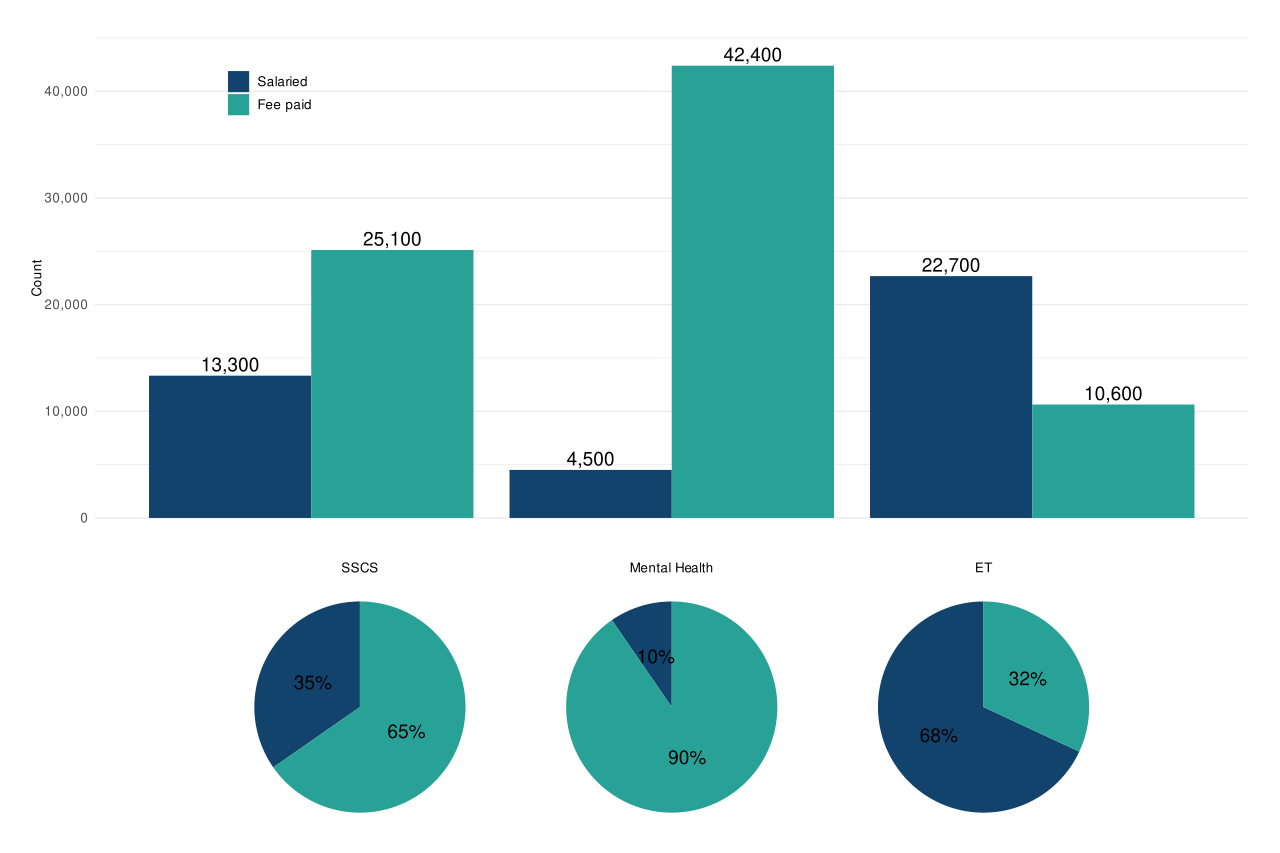
Fee Paid sittings accounted for 62% of all tribunal judicial sittings in 2025/26, while salaried sittings accounted for 38%[footnote 4]. Of the 95,000 fee-paid judicial sittings in 2025/26, 71% were for the Mental Health and SSCS tribunals.
The recording of Sitting days varies greatly across Tribunals:
- Interlocutory (Chambers) days are not included within the sitting days calculations for the Immigration and Asylum Chamber, SSCS or ET tribunals but these are included for the Mental Health tribunal.
- For SSCS, judicial sittings relate to half-day sessions and therefore the SSCS figures are not comparable to the other tribunal sitting days.
Mental Health (28%), SSCS (23%) and Employment (20%) judicial sittings continue to make up almost three quarters of all sittings.
The vast majority of sittings in the Mental Health and SSCS tribunals were fee-paid, whilst the majority of Employment sitting days were salaried.
Judicial sitting days at the SSCS continued their downward trend seen since 2018/19, with 38,000 sittings, a decrease of 3% (from 40,000) compared to 2024/25. The majority of these sittings were fee-paid (65%).
Mental health sittings decreased this year by 1% (to 47,000), of which 90% were fee-paid.
The number of judicial sitting days at the FTTIAC increased by 3% to 17,000 in 2025/26.
Figure 10.1: Judicial Salaried and Fee-paid Judicial Sittings, 2025/26 (Source: Tables JSFP_1 & JSFP_2)
11. Other Tribunals
Special Educational Needs and Disability (SEND)
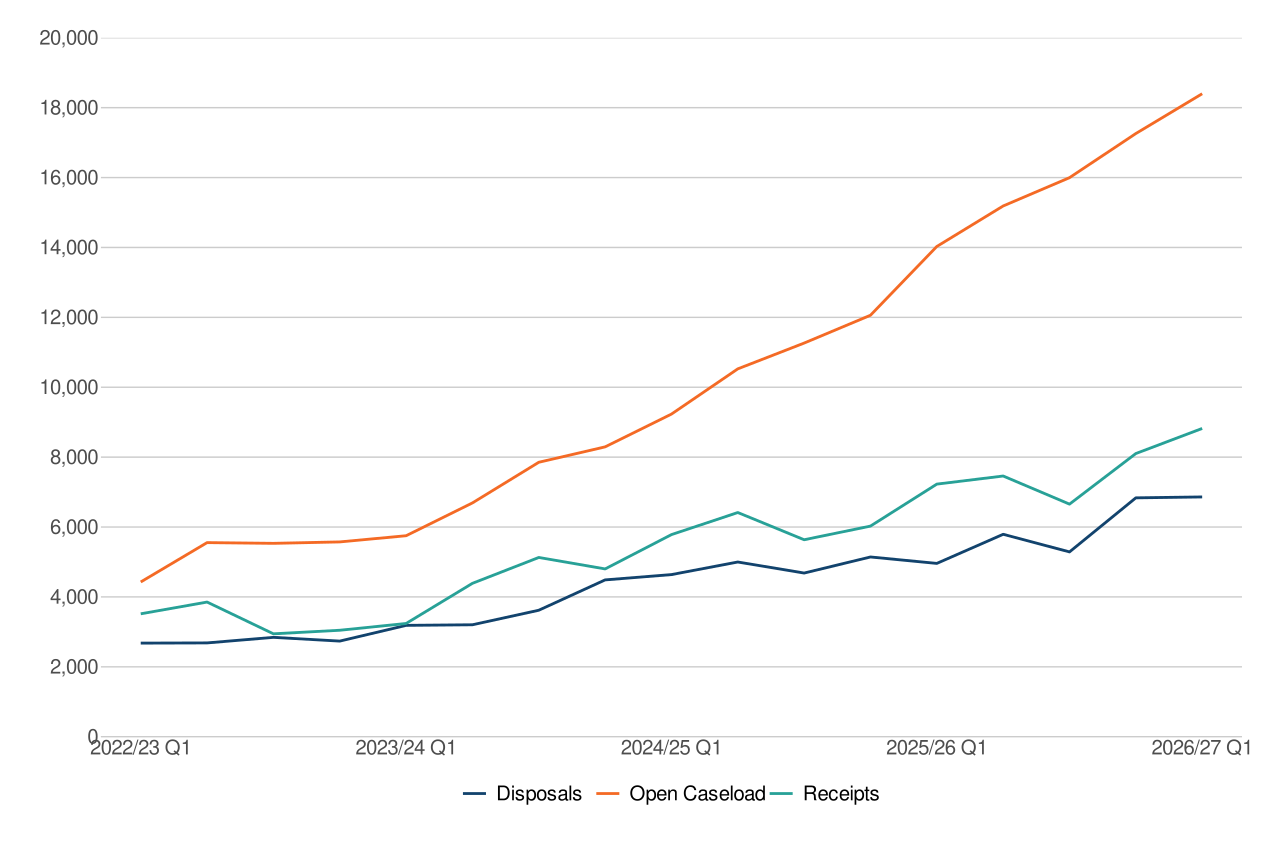
Increase in Special Educational Needs and Disability (SEND) receipts by 22% compared to the same quarter last year.
Special Educational Needs and Disability (SEND) recorded 8,800 receipts this quarter, the highest amount in any quarter in the time series and an increase of 22% compared to the same quarter last year. In the same period, 6,900 appeals were disposed of, and open caseload rose to 18,000 increases of 38% and 31% respectively.
SEN reforms in 2014 introduced Education Health and Care plans (EHCPs) and extended the provision of support from birth to 25 years of age. In addition, the National Trial which began in April 2018 enabled the Tribunal to make non-binding recommendations on the health and social care elements of the EHC plan. Those provisions were mainstreamed with effect from 1 September 2021.
Figure 11.1: Special Educational Needs and Disability (SEND) receipts, disposals and open caseload Q1 2022/23 to Q1 2026/27 (Source: Tables S_2, S_3, and S_4)
12. Further information
Rounding convention
Figures greater than 10,000 are rounded to the nearest 1,000, those between 1,000 and 10,000 are rounded to the nearest 100 and those between 100 to 1,000 are rounded to the nearest 10. Less than 100 are given as the actual number.
Accompanying files
As well as this bulletin, the following products are published as part of this release and can be accessed through the collection page here:
-
A supporting document providing further information on how the data is collected and processed, as well as information on the revisions policy and legislation relevant to trends and background on the functioning of the tribunal system.
-
The quality statement published with this guide sets out our policies for producing quality statistical outputs for the information we provide to maintain our users’ understanding and trust.
-
A set of overview tables, covering each section of this bulletin. This publication also includes annual data for the Employment Appeal Tribunals (EAT) for 2025/26.
-
Tables detailing Employment Tribunal receipts by quarter and region. These tables contain only single claims registered on the new Reform case management system.
-
A set of CSV files including data on overall receipts and disposals, covering all tribunal types and venue level data for FTTIAC.
-
Additional releases this quarter:
- Update to the statistical notice on Immigration and Asylum (I&A) Detained Immigration Appeals (DIA) to include data to Q1 2026/27.
Future publications
Our statisticians regularly review the content of publications. Development of new and improved statistical outputs is usually dependent on reallocating existing resources. As part of our continual review and prioritisation, we welcome user feedback on existing outputs including content, breadth, frequency and methodology. Please send any comments you have on this publication including suggestions for further developments or reductions in content.
Official Statistics
Our statistical practice is regulated by the Office for Statistics Regulation (OSR).
OSR sets the standards of trustworthiness, quality and value in the Code of Practice for Statistics that all producers of official statistics should adhere to.
You are welcome to contact us directly with any comments about how we meet these standards.
Alternatively, you can contact OSR by emailing regulation@statistics.gov.uk or via the OSR website.
Contact
Press office - email: pressofficecourtslaw@justice.gov.uk
Other enquiries and feedback on these statistics should be directed to the Courts and People division of the Ministry of Justice:
Laura Davis or Daisy Slade - email: CAJS@justice.gov.uk
Next update: 10 December 2026 (URL: www.gov.uk/government/collections/tribunals-statistics)
© Crown copyright Produced by the Ministry of Justice
For any feedback on the layout or content of this publication or requests for alternative formats, please contact CAJS@justice.gov.uk
-
The interim totals for the overall volumes of tribunal receipts, disposals and open caseload exclude the Upper Tribunal (Immigration and Asylum Chamber) for which the data is currently not available. See the main tables S_2, S_3 and S_4 for more information. ↩ ↩2
-
Includes single and multiple Employment Tribunal claims. ↩
-
Open caseload is based on a snapshot in time based on the last day of each quarter. ↩
-
First tier (Immigration and Asylum Chamber) has transitioned to the new Integrated List Assist (ILA) platform. Currently it is not possible to provide a breakdown of judicial sitting days between salaried and fee-paid judges in 2025/26 so this tribunal has been excluded from this calculation. ↩