
The use of diversionary outcomes with youth justice service involvement
Published 18 June 2026
Applies to England and Wales

© Crown copyright 2026
This publication is licensed under the terms of the Open Government Licence v3.0 except where otherwise stated. To view this licence, visit nationalarchives.gov.uk/doc/open-government-licence/version/3 or write to the Information Policy Team, The National Archives, Kew, London TW9 4DU, or email: psi@nationalarchives.gov.uk.
Where we have identified any third party copyright information you will need to obtain permission from the copyright holders concerned.
This publication is available at https://www.gov.uk/government/statistics/the-use-of-diversionary-outcomes-in-england-and-wales-2025/the-use-of-diversionary-outcomes-with-youth-justice-service-involvement
Introduction
Diversionary outcomes with youth justice service (YJS) involvement January 2025 to December 2025
Diversionary outcomes are interventions intended to address children’s behaviour without the need for formal statutory measures such as cautions or court sentences. This may involve the YJS delivering interventions that may or may not be voluntary and/or signposting children into relevant services. All support should be proportionate, focused on addressing unmet needs, and supporting children to build on their strengths and make positive, sustainable changes.
The publication provides information on:
- the volume and types of diversionary outcomes involving YJS
- the demographic characteristics of children receiving these outcomes
- the types of offences associated with diversionary outcomes
These statistics cover diversionary outcomes where there is involvement from a YJS and not those that have been facilitated by the police or other partners. While some YJSs routinely receive and record this data on their case management systems, others may not always receive this information from the police and the YJB does not mandate the recording of diversionary outcomes facilitated by the police or other agencies.
Data are currently available for the year ending December 2025 only, and therefore trends over time cannot yet be assessed. However, comparisons are provided across regions and in relation to the volume of cautions and sentences.
Diversionary outcomes with YJS involvement by type of outcome
In 2025, there were four types of diversionary outcome with YJS involvement, which include Community Resolutions and No Further Action (NFA) outcomes:
Community Resolution (Outcome 8) with YJS involvement
An informal disposal where the child accepts responsibility and engages in proportionate voluntary restorative or supportive activity, often delivered or coordinated by the YJS to address behaviour and prevent reoffending.
NFA (Outcome 20/21) with YJS involvement
Cases where the police take no further action on the offence, but the child is referred to or engaged by the YJS for voluntary support or intervention to address underlying needs.
NFA (Outcome 22) Deferred Prosecution/Caution with YJS involvement
A diversionary outcome where a caution or prosecution is conditionally suspended while the child completes a structured YJS led intervention; successful completion results in NFA, while non-compliance may lead to formal criminal justice action.
NFA (Outcome 22) with YJS involvement
A diversionary outcome where the child completes intervention or support often delivered by the YJS and, following this activity, no further formal action is taken because prosecution is not considered in the public interest.
A new diversionary outcome, NFA (Outcome 23) Deferred Prosecution, came into force in April 2026 but was not in scope for these statistics.
Within this publication, all diversionary outcomes referred to are with YJS involvement, so we don’t always explicitly say “with YJS involvement” when referring to individual outcome types.
Official Statistics in Development
Official Statistics in Development are official statistics that are undergoing development; they may be new or existing statistics and will be tested with users, in line with the standards of trustworthiness, quality, and value in the Code of Practice for Statistics. Official statistics in development were previously referred to as ‘experimental statistics’. Users should be aware that official statistics in development may have a wider degree of uncertainty and require extra caution when interpreting results.
Data on diversions with YJS involvement have never been published before. A significant amount of YJS workloads are prevention and diversion and the data in this publication helps to highlight this.
Methodology and data quality
The data in this publication comes from YJS case level data submitted to the Youth Justice Board each quarter as part of statutory data returns and in accordance with the Data Recording Requirements for youth justice services in England and Wales.
A small number of youth justice services have been recording diversion data with YJS involvement on separate case management systems, (for example where integrated local authority Early Help teams deliver diversionary interventions with the YJS). Data for these services are therefore not counted within these statistics.
The diversionary outcomes counted are based on those listed above and do not count any other diversionary outcomes. Some YJSs use outcomes that do not align with Case Management Guidance or Data Recording Requirements, including ‘Triage’ and ‘Youth Restorative Disposals’. During the development of these official statistics in development, we have engaged with services where this is happening and have been able to correctly map these to valid outcomes in some cases. We will continue to work with YJSs to improve data quality around recorded outcomes.
Outcomes are counted if the outcome date was between 1 January 2025 and 31 December 2025 inclusive. To be included in the count, the child must have been aged between 10 and 17 on the date of offence or arrest for diversionary outcomes, aged between 10 and 17 on the date of offence or arrest for youth cautions (where comparisons are made) and aged between 10 and 17 on the date of the first court hearing for court sentences (where comparisons are made). Children with a residence of OTHER (i.e. not LOCAL) are not counted. Outcomes that were changed on appeal are not counted.
Within this publication, comparisons are made across the number of outcomes, children and offences associated with cautions and sentences. Proportions are calculated against the combined total of diversionary outcomes (with YJS involvement), cautions and court sentences. These are referred to throughout as total outcomes, total children or total offences, depending on the measure. They do not include diversionary outcomes facilitated by the police or partner agencies or outcomes where the case was dismissed or the child was found not guilty.
A child may receive a diversionary outcome with YJS involvement and a caution or court sentence. Where this is the case, they will appear in both counts.
Statistician’s comment
This is the first release of statistics on diversionary outcomes with YJS involvement. While these data do not provide a complete picture of diversionary activity across all agencies, including the police and other partners, they offer new insight into the volume of children YJSs are working with in a diversionary capacity. Diversionary outcomes aim to address children’s needs and behaviours and may help to prevent further offending and progression into the formal criminal justice system.
The figures show significant variation in the types and volumes of diversionary outcomes with YJS involvement across different geographies, with London having a comparatively low volume of diversionary outcomes with YJS involvement compared to Wales and the other English regions and against the number of cautions or court sentences. The opposite is true for Wales, which has high volumes of diversionary outcomes with YJS involvement compared to the number of youth cautions and court sentences.
The data show that a lower proportion of children from ethnic minority backgrounds received diversionary outcomes with YJS involvement compared to children from a White ethnic background. This finding should be interpreted with caution. In part, it may reflect regional variation in the use of diversionary outcomes with YJS involvement, including relatively low volumes in London, where a higher proportion of children in the population are from ethnic minority backgrounds. Further exploration is needed to better understand these patterns.
Main points
This publication looks at data around diversions with YJS involvement in the youth justice system in England and Wales for the year ending December 2025. It considers the number of outcomes, the number of children receiving an outcome (those aged 10 to 17), their demographics, the offences that led to the outcome and compares them to outcomes of cautions and court sentences and the children who received them.
| There were around 13,500 diversionary outcomes with YJS involvement | Almost half (45%) were Community Resolutions, while 36% were NFA Outcome 22 (Deferred Prosecution/Caution) outcomes, 15% were NFA Outcome 22 outcomes, and 4% were NFA Outcome 20/21 outcomes. |
| There was significant regional variation in the number and proportion of diversionary outcomes with YJS involvement | Nationally, diversionary outcomes with YJS involvement accounted for 43% of total outcomes. This varied across Wales and the English regions, from 63% in Wales to 17% in London. |
| White children were more likely to be given diversionary outcomes with YJS involvement | A higher proportion of White children received diversionary outcomes with YJS involvement (53%) than cautions or court sentences (47%), while the proportion of children from ethnic minority backgrounds receiving diversionary outcomes with YJS involvement was lower than those receiving cautions or court sentences with only 27% of Black children receiving a diversionary outcome with YJS involvement and 73% receiving a caution or court sentence. |
| Diversionary outcomes with YJS involvement were more common among girls than boys | A higher proportion of girls received diversionary outcomes with YJS involvement (65%) than cautions or court sentences (35%). In contrast, a higher proportion of boys received cautions or court sentences (56%) than diversionary outcomes with YJS involvement (44%). |
| Younger children were more likely to receive diversionary outcomes with YJS involvement | A higher proportion of children aged 10 to 14 received diversionary outcomes with YJS involvement (66%) than cautions or court sentences (34%). In contrast, a higher proportion of those aged 15 to 17 received cautions or court sentences (61%) than diversionary outcomes with YJS involvement (39%). |
| Violence against the person was the most common offence type leading to diversionary outcomes with YJS involvement | Violence against the person offences accounted for a third (33%) of offences leading to diversionary outcomes with YJS involvement, compared with just under a quarter (23%) of offences leading to cautions and court sentences. |
1. Diversionary outcomes with YJS involvement
In the year ending December 2025:
-
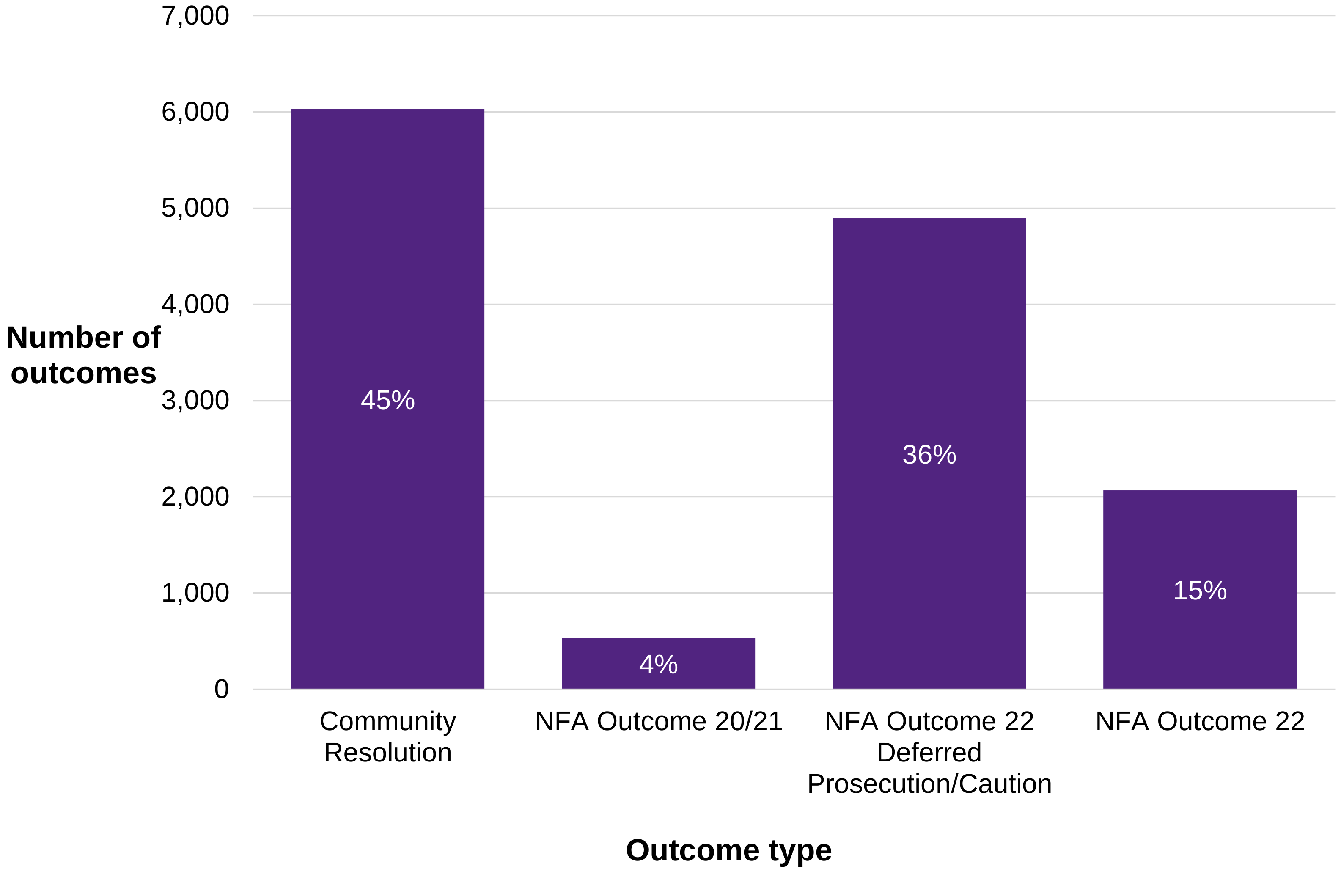
There were around 13,500 diversionary outcomes with YJS involvement in England and Wales. Almost half (45%) were Community Resolutions, while 36% were NFA Outcome 22 (Deferred Prosecution/Caution) outcomes.
-
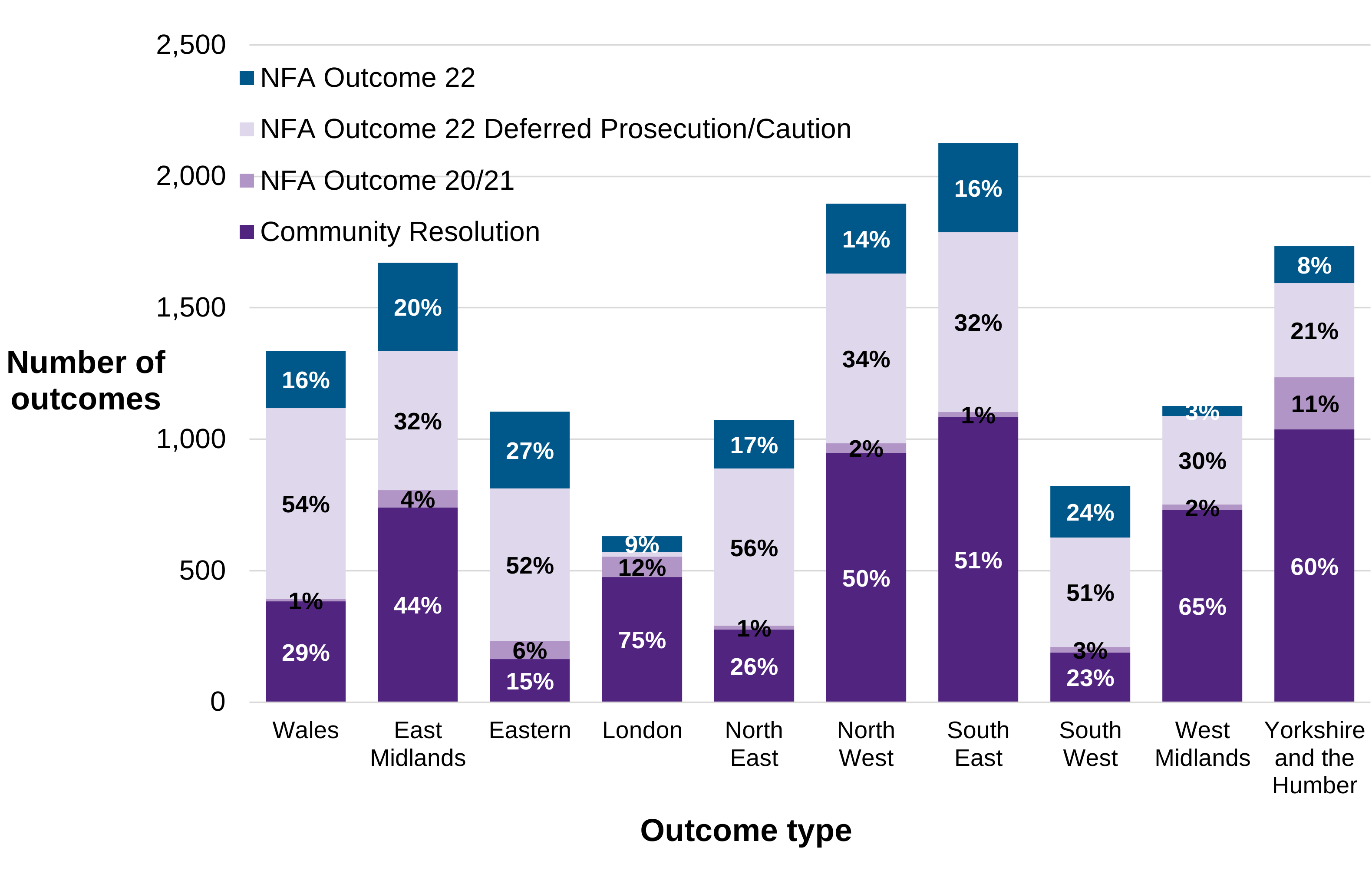
The distribution of the different types of diversionary outcomes with YJS involvement varied by region geography. Community Resolutions accounted for 15% of diversionary outcomes in the Eastern region and 23% in the South West, compared with 75% in London and 65% in the West Midlands.
-
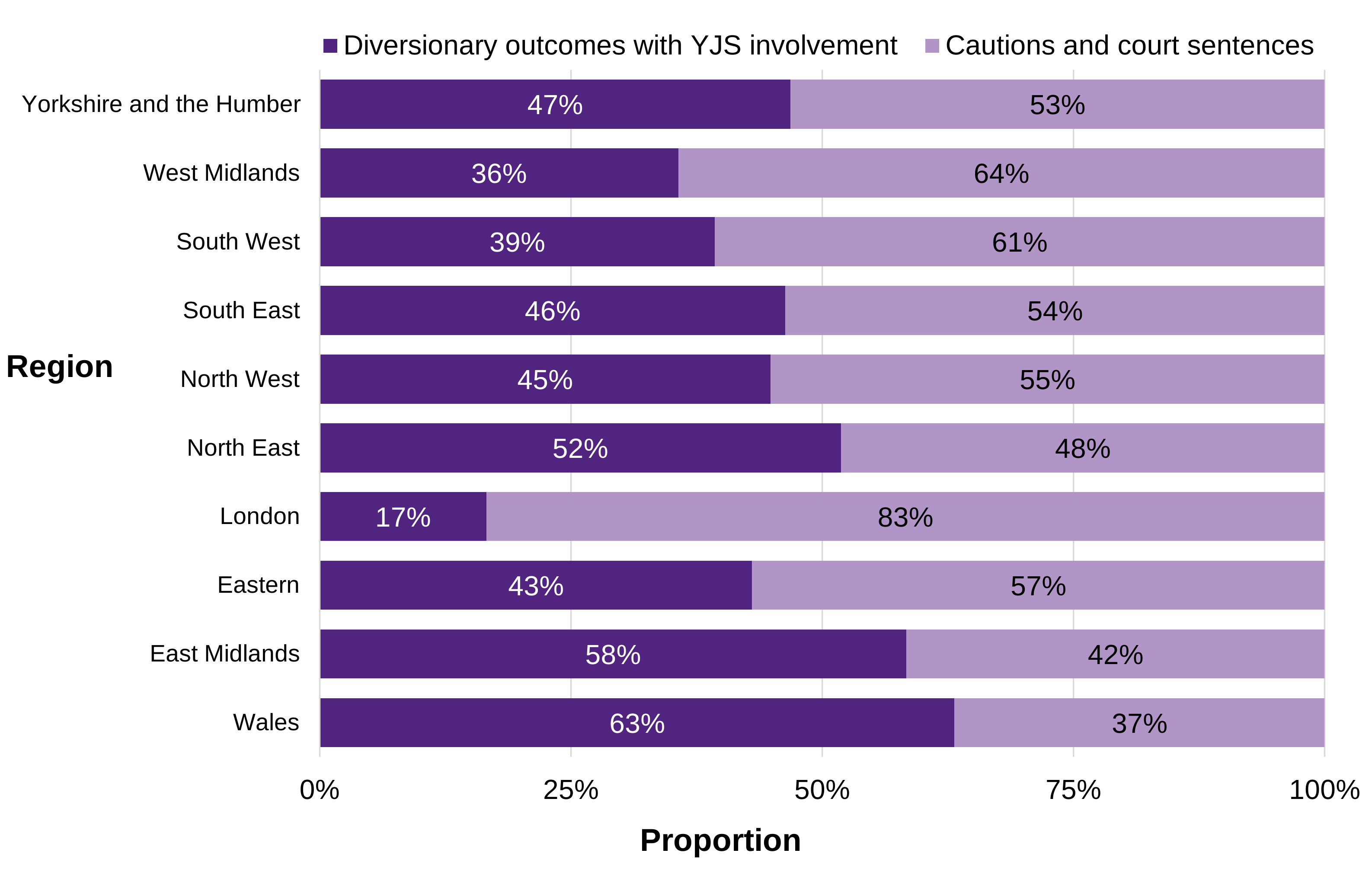
Across all outcomes involving YJS (diversionary outcomes with YJS involvement, cautions and court sentences), 43% were diversionary outcomes with YJS involvement and 57% were cautions or court sentences.
-
Almost two thirds (63%) of total outcomes in Wales were diversionary outcomes with YJS involvement, compared with 17% in London.
This section looks at the types and volume of diversionary outcomes with YJS involvement, with comparisons by Wales and English regions and against cautions and court sentences.
Figure 1.1: Number and proportion of diversionary outcomes with YJS involvement by type of outcome, England and Wales, year ending December 2025
Supplementary Tables: Table ST.1
In the year ending December 2025, there were around 13,500 diversionary outcomes with YJS involvement in England and Wales. Of these, there were around:
-
6,000 (45%) Community Resolutions;
-
4,900 (36%) NFA Outcome 22 Deferred Prosecution/Caution outcomes;
-
2,100 (15%) NFA Outcome 22 outcomes and
-
500 NFA Outcome 20/21 outcomes.
Figure 1.2: Number and proportion of diversionary outcomes with YJS involvement by type of outcome by Wales and English regions, England and Wales, year ending December 2025
Supplementary Tables: Table ST.2
As shown in Figure 1.2, the volume and distribution of diversionary outcomes involving youth justice services (YJS) varies across regions. This may reflect differences in local practices and the use of diversionary approaches across police forces in England and Wales.
The South East had the highest volume of diversionary outcomes with YJS involvement in the year ending December 2025 (around 2,100), followed by the North West (just under 2,000), Yorkshire and the Humber and the East Midlands (both just under 1,700). London had the lowest volume, at around 600.
The types of diversionary outcome used also varied considerably by region. In London, 75% of diversionary outcomes with YJS involvement were community resolutions, compared with 15% in the Eastern region. In contrast, in Wales 54% of outcomes were recorded as NFA Outcome 22 Deferred Prosecution/Caution, compared with 3% in London.
Figure 1.3: Proportions of outcomes which are diversionary with YJS involvement, or which are cautions and court sentences by Wales and English regions, year ending December 2025
Supplementary Tables: Table ST.4
In England and Wales, diversionary outcomes with YJS involvement accounted for 43% of the combined total of diversionary outcomes with YJS involvement, cautions and court sentences (referred to hereafter as total outcomes).
In Wales, two thirds (63%) of total outcomes were diversionary outcomes with YJS involvement compared with 17% in London. In the East Midlands, over half (58%) of total outcomes were diversionary with YJS involvement, compared with just over a third (36%) in the West Midlands.
These differences highlight variation in the use of diversionary outcomes with YJS involvement across regions. This may reflect differences in local approaches to diversion, including the extent to which diversionary outcomes are delivered by YJS, police or other agencies, as well as differences in the types of offences being committed.
2. Demographic characteristics of children given diversionary outcomes with YJS involvement
In the year ending December 2025:
-
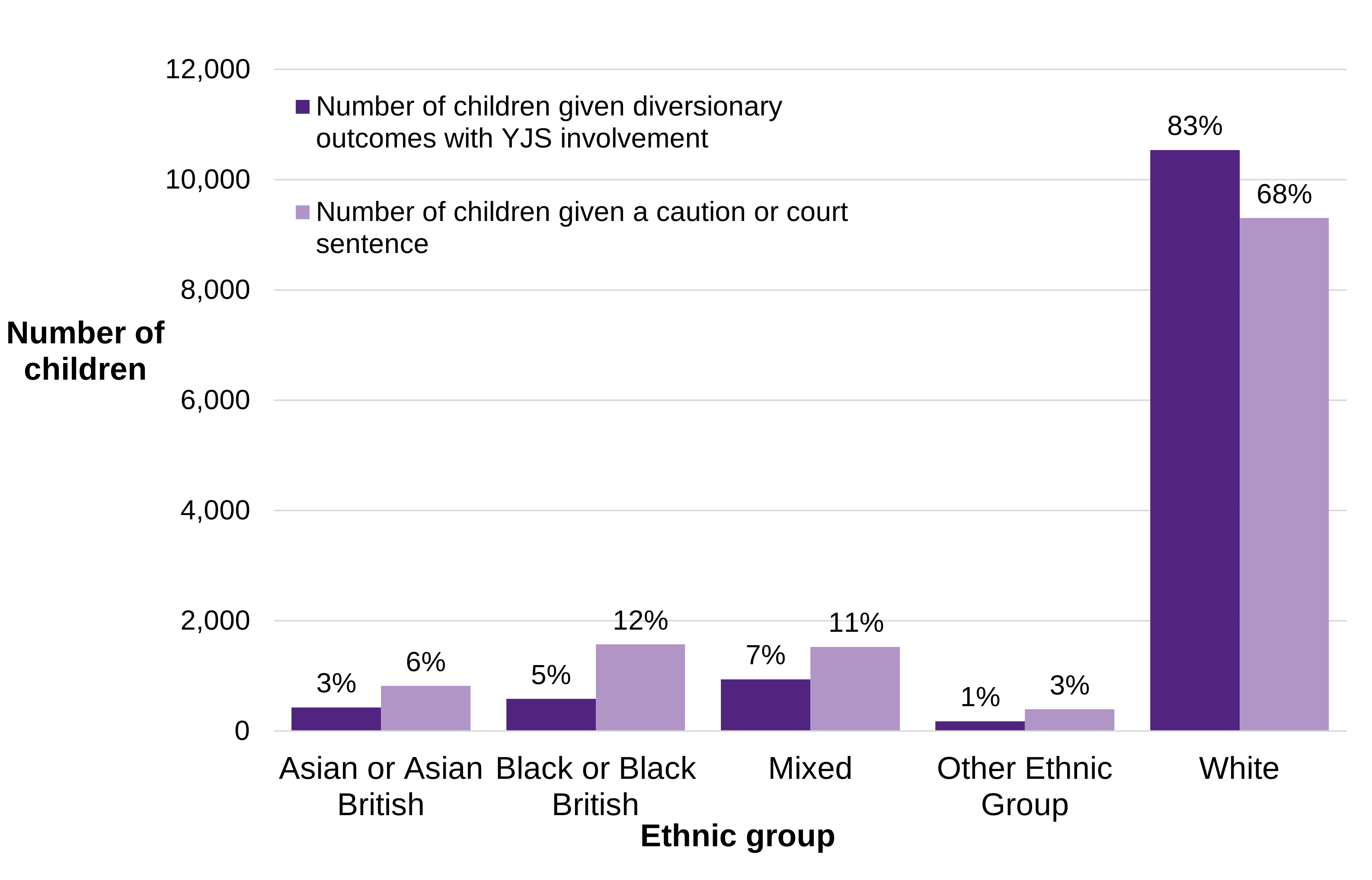
A higher proportion of White children received diversionary outcomes with YJS involvement (53%) than cautions or court sentences (47%), compared with a lower proportion for all other ethnic groups.
-
For girls, a higher proportion received diversionary outcomes with YJS involvement (65%) than cautions or court sentences (35%) while for boys a higher proportion received cautions or court sentences (56%) than diversionary outcomes with YJS involvement (44%).
-
A higher proportion of 10- to 14-year-olds received a diversionary outcome with YJS involvement (66%) than a caution or court sentence (34%) while for 15- to 17-year-olds, a higher proportion received a caution or court sentence (61%) than a diversionary outcome with YJS involvement (39%).
This section looks at the number of children given diversionary outcomes with YJS involvement by ethnic group, sex and age group and involvement and provides a comparison against those given a caution or court sentence.
Figure 2.1: Number and proportion of children given diversionary outcomes with YJS involvement against number and proportion of children given cautions and court sentences by ethnicity, England and Wales, year ending December 2025 [footnote 1]
Supplementary Tables: Table ST.7a
White children accounted for 83% of those receiving a diversionary outcome with YJS involvement. This was 15 percentage points higher than the proportion of White children receiving a caution or court sentence (just over two thirds). Black children accounted for 5% of those receiving a diversionary outcome with YJS involvement compared with 12% of those receiving a caution or court sentence. Similar differences were seen for Asian and Mixed children.
Supplementary table ST.7a shows that a higher proportion (53%) of White children received a diversionary outcome with YJS involvement than received a caution or court sentence (47%). The proportion of children from ethnic minority backgrounds receiving diversionary outcomes with YJS involvement was lower than the proportion receiving cautions or court sentences. For example, 27% of Black children received diversionary outcomes with YJS involvement, compared with 73% of those receiving a caution or court sentence. Similarly, 34% Asian children received diversionary outcomes with YJS involvement, compared with 66% of those receiving a caution or court sentence.[footnote 2]
This pattern does not consider differences in offence types and may partly reflect regional differences in the use of diversionary outcomes with YJS involvement. For example, London has relatively low volumes of diversionary outcomes with YJS involvement and a higher proportion of children from ethnic minority backgrounds in the population aged 10 to 17. However, as shown in Supplementary Table ST.8a, a similar pattern is observed across a number of regions. Further exploration is needed to better understand these differences.
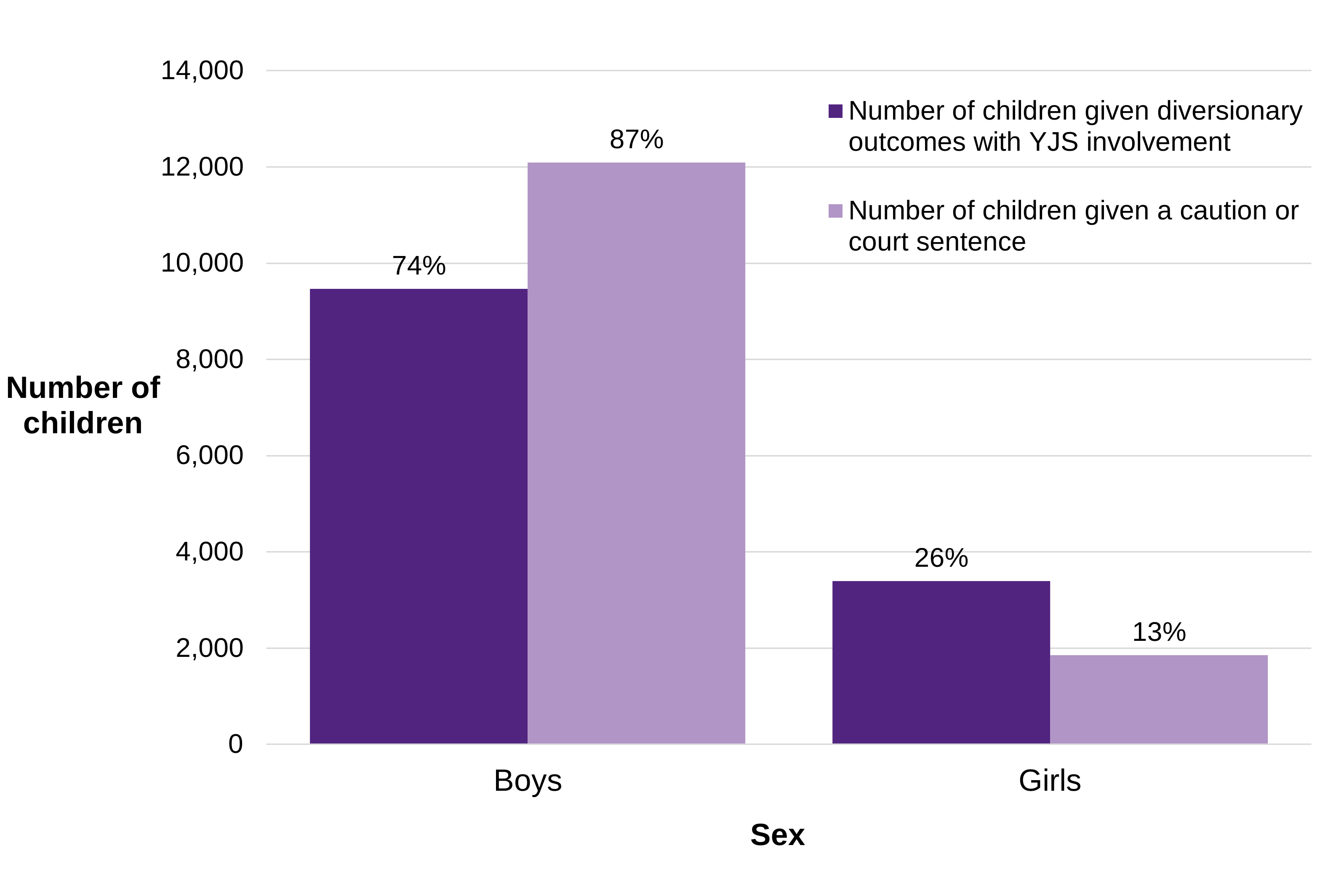
Figure 2.2: Number and proportion of children given diversionary outcomes with YJS involvement against number and proportion of children given cautions and court sentences by sex, England and Wales, year ending December 2025 [footnote 3]
Supplementary Tables: Table ST.7b
In 2025, a higher proportion of girls received diversionary outcomes with YJS involvement than cautions or court sentences (65% compared with 35%). In contrast, a higher proportion of boys received cautions or court sentences than diversionary outcomes with YJS involvement (56% compared with 44%).
Despite this, boys accounted for the majority of children in both groups. Boys made up 74% of those receiving diversionary outcomes with YJS involvement, compared with 26% for girls. This increased to 87% of those receiving a caution or court sentence, compared with 13% for girls. This is due to higher numbers of boys in the system.
In Wales, the East Midlands and the North East, a higher proportion of boys received diversionary outcomes with YJS involvement (65%, 59% and 54% respectively) than cautions or court sentences (35%, 41% and 46% respectively). In all other English regions, a higher proportion of boys received cautions or court sentences than diversionary outcomes with YJS involvement.
For girls, the pattern was similar across most geographic areas, with a higher proportion receiving diversionary outcomes with YJS involvement than cautions or court sentences. London was the exception, where a lower proportion of girls received diversionary outcomes with YJS involvement (31%) than cautions or court sentences (69%).
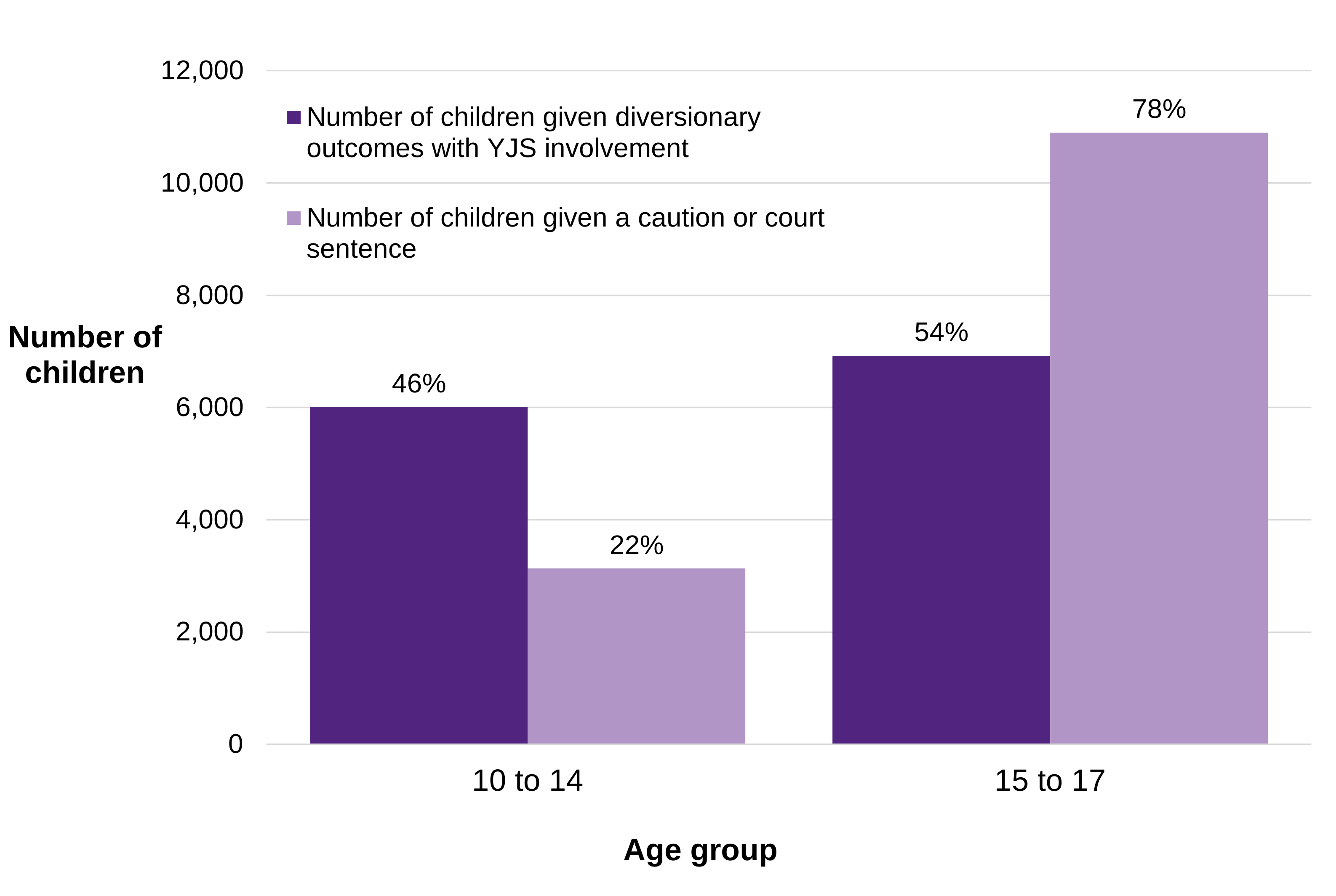
Figure 2.3: Number and proportion of children given diversionary outcomes with YJS involvement against number and proportion of children given cautions and court sentences by age group, England and Wales, year ending December 2025
Supplementary Tables: Table ST.7c
In 2025, a higher proportion of children aged 10 to 14 received diversionary outcomes with YJS involvement than cautions or court sentences (66% compared with 34%). In contrast, a higher proportion of those aged 15 to 17 received cautions or court sentences than diversionary outcomes with YJS involvement (61% compared with 39%).
Overall, the age distribution of children receiving diversionary outcomes with YJS involvement was relatively even, with 46% aged 10 to 14 and 54% aged 15 to 17.
In London, a higher proportion of children aged 10 to 14 received cautions or court sentences than diversionary outcomes with YJS involvement (73% compared with 27%). However, this was the exception; in Wales and all other English regions, a higher proportion of children aged 10 to 14 received diversionary outcomes with YJS involvement than cautions or court sentences.
For those aged 15 to 17, only Wales and the East Midlands had a higher proportion receiving diversionary outcomes with YJS involvement (60% and 54% respectively) than cautions or court sentences (40% and 46% respectively).
3. Offence types leading to diversionary outcomes with YJS involvement
In the year ending December 2025:
-
Around 19,500 offences resulted in approximately 13,500 diversionary outcomes with YJS involvement. This compares with just under 33,800 offences resulting in around 17,700 cautions and court sentences.
-
Violence against the person offences accounted for a third (33%) of offences leading to diversionary outcomes with YJS involvement, compared with just under a quarter (23%) of offences leading to cautions and court sentences.
-
In London, 49% of offences leading to diversionary outcomes with YJS involvement were drug offences, compared with 12% nationally.
This section looks at the number and types of offences that led to diversionary outcomes with YJS involvement compared with those that led to cautions or court sentences.
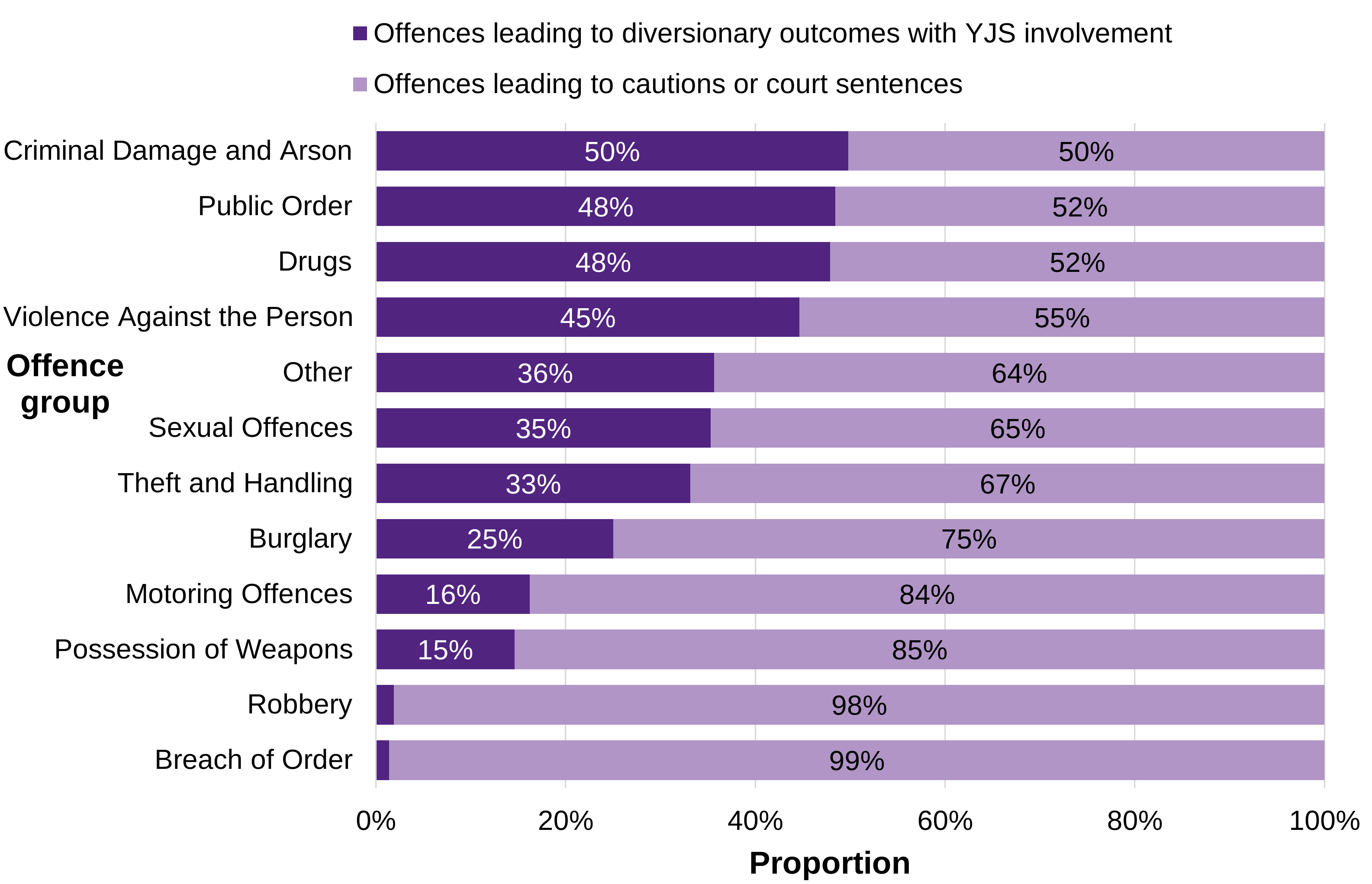
Figure 3.1: Proportion of offences leading to an outcome by type of outcome and offence group, England and Wales, year ending December 2025
Supplementary Tables: Table ST.9
In the year ending December 2025, around 19,500 offences resulted in approximately 13,500 diversionary outcomes with YJS involvement. This compares with just under 33,800 offences resulting in around 17,700 cautions and court sentences.
As shown in Figure 3.1, criminal damage and arson, public order and drugs offences showed a relatively even split between diversionary outcomes with YJS involvement and cautions or court sentences. All other offence types were more likely to result in a caution or court sentence.
Looking at the proportion of each type of outcome with YJS involvement by offence type, violence against the person offences accounted for a third (33%) of offences resulting in diversionary outcomes with YJS involvement, compared with just under a quarter (23%) of offences resulting in cautions and court sentences.
Theft and handling offences made up a similar proportion of diversionary outcomes with YJS involvement (13%) and cautions and court sentences (15%). However, the number of theft and handling offences resulting in cautions and court sentences was more than double those resulting in diversionary outcomes with YJS involvement. Sexual offences accounted for the same proportion of the offence types within both diversionary outcomes with YJS involvement, and cautions and court sentences (4%).
There was also regional variation in the types of offences resulting in diversionary outcomes with YJS involvement. The largest difference was observed in London, where drug offences accounted for 49% of diversionary outcomes with YJS involvement, compared with 12% nationally. In contrast, violence against the person offences accounted for 16% of diversionary outcomes with YJS involvement in London, compared with 33% nationally.
Further information
The figures in this report have been drawn from administrative IT systems, which, as with any large-scale recording system, are subject to possible errors with data entry and processing and may be subject to change over time. Steps are taken to improve the completeness and accuracy of this information each year.
Contacts
Press enquiries should be directed to the Youth Justice Board Communications Team
Email: Comms@yjb.gov.uk
Other enquiries or feedback around these statistics should be directed to the Youth Justice Board Statistics and Analysis Team
Email: Statistics@yjb.gov.uk
General information about the official statistics system of the UK is available from: www.statisticsauthority.gov.uk
Next update: 27 May 2027
URL: www.gov.uk/government/collections/youth-justice-statistics
© Crown copyright
Produced by the Youth Justice Board for England and Wales
-
Excluding those where ethnicity was unknown. Ethnicity was unknown for 1% of children given diversionary outcomes with YJS involvement and 1% of children given cautions or court sentences. ↩
-
Some children will have received a diversionary outcome with YJS involvement as well as a caution or court sentence and will be counted twice where this is the case. ↩
-
Excluding those where sex was unknown. Sex was unknown for 2% of children given diversionary outcomes with YJS involvement and 4% of children given cautions or court sentences. ↩