Student support for higher education in Northern Ireland 2025
Published 27 November 2025
Applies to Northern Ireland

© Crown copyright 2025
This publication is licensed under the terms of the Open Government Licence v3.0 except where otherwise stated. To view this licence, visit nationalarchives.gov.uk/doc/open-government-licence/version/3 or write to the Information Policy Team, The National Archives, Kew, London TW9 4DU, or email: psi@nationalarchives.gov.uk.
Where we have identified any third party copyright information you will need to obtain permission from the copyright holders concerned.
This publication is available at https://www.gov.uk/government/statistics/student-support-for-higher-education-in-northern-ireland-2025/student-support-for-higher-education-in-northern-ireland-2025
Download a pdf version of this document.
If you wish to print the document, we’d suggest printing the pdf.
Introduction
This statistics publication presents figures and observations on the student support awarded to applicants and paid to students or their higher education provider. Figures are shown for the twelve academic years up to and including 2024/25. Section 7 gives a high-level early indication of academic year 2025/26 figures, along with emerging trends of any new policy products.
This publication covers applicants and students domiciled in Northern Ireland taking a designated higher education (HE) course at a university or further education (FE) college in the UK, as well as EU (outside UK) applicants and students taking a designated course in Northern Ireland.
3.3% decrease in higher education student support in academic year 2024/25, at £410.7 million
Figure 1: Number of students domiciled in Northern Ireland and EU (outside UK) receiving higher education support and amount awarded/paid
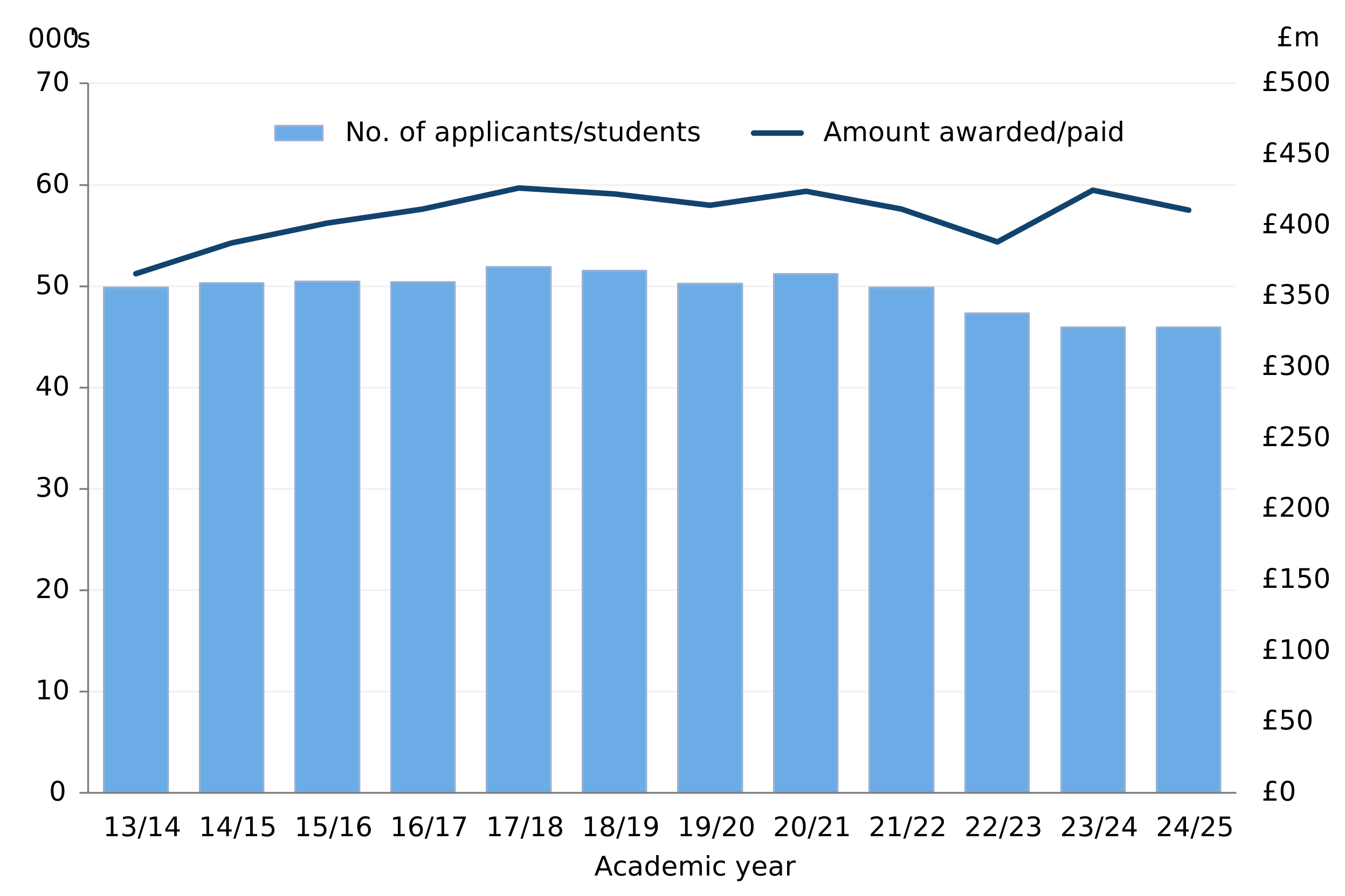
The columns in this chart depict the number of students against the left-hand axis, and the line illustrates the amount awarded/paid against the right-hand axis.
Source: Table 2
Download the data for Figure 1 (ODS, 6KB)
Figure 1 shows that 49,900 full-time, part-time and postgraduate applicants/students were awarded/paid student finance in academic year 2013/14. Numbers averaged at 50,400 until 2017/18 when a 2.9% increase was reported to peak at 51,900. This was followed by two years of decreases (of 0.7% and 2.4% respectively).
In 2020/21, an outlying increase of 1.9% was reported, lifting numbers to 51,200. This was likely a result of the perceived reduced employment opportunity due to the COVID-19 pandemic, encouraging new students to pursue higher education and current students to continue their education. This was made up of a 0.9% increase in undergraduates and a significant 20.4% increase in postgraduates receiving funding.
In 2021/22, the reducing trend resumed, with numbers awarded/paid falling to 45,900 by 2023/24.
Numbers remained relatively stable in 2024/25, at a rounded 45,900. A 0.2% increase in undergraduates, offset by a 3.3% decrease in postgraduates receiving funding.
Figure 1 also shows that the total amount awarded/paid in student support across full-time, part-time and postgraduate students in academic year 2013/14 was £366.1 million. This increased steadily until 2017/18 to peak at £426.2 million. 2018/19 reported the first decrease albeit by just 0.9% with a further, more significant reduction in the following year, by 1.9% to £414.4 million.
In 2020/21 the amount awarded/paid increased by 2.4% to £424.1 million. This was made up of a 1.7% increase in undergraduate funding and a significant 29.1% increase in postgraduate funding. As previously mentioned, this was likely a result of the perceived reduced employment opportunity due to the COVID-19 pandemic, encouraging new students to pursue higher education and current students to continue their education.
Following a similar trend to that of the number of applicants/students, the downward trend in the amount awarded/paid resumed in 2021/22, decreasing to £388.3 million by 2022/23. Academic year 2023/24 however reported a significant 9.4% increase, up to £424.6 million. This can be attributed to a 40.0% increase in the maximum Maintenance Loan available (to £6,776 (‘Elsewhere’ rate)).
Academic year 2024/25 reported a 3.3% decrease in the amount paid out, to £410.7 million as figures normalise against an outlying increase.
The average full-time Maintenance Loan paid to a Northern Ireland-domiciled student in academic year 2013/14 was £3,120. There was minimal change to this average between then and 2022/23. In 2023/24 this increased considerably, by 44.7% to £4,530 due to the notable increase in the maximum loan made available for that academic year. The 2024/25 average was £40 lower.
For more information on Maintenance Loans, please refer to the relevant section later in this publication.
The average full-time Tuition Fee Loan paid on behalf of a Northern Ireland-domiciled student in 2013/14 was £3,940. Following a 10.9% increase in the following year, increases slowed to just 0.2% by 2023/24 (omitting the outlying increase of 2.6% to £5,440 in 2020/21 due to effects of the pandemic). In 2024/25, the average Tuition Fee Loan paid again increased by 0.2%, to £5,510.
For more information on Tuition Fee Loans, please refer to the relevant section later in this publication.
Accessibility
Public Sector Accessibility Regulations mean that all public sector organisations have a legal duty to make their websites accessible for everyone, including those with disabilities. In 2023, we made notable improvements to the way in which we provide visual information within this publication series including:
- adding descriptive information of the full time-series for each graph within the main body of the statistics publication.
- providing data used to form each graph in accessible/downloadable tables.
- changing the way in which we present charts and graphs to be more accessible, including changes to colour, labels and legends.
As part of SLC’s ongoing commitment, we will continue to improve the accessibility of our websites and content, whilst maintaining the statistical needs of our users.
What can you use these statistics for?
These statistics can be used as a reference to the number of students awarded/paid and the amount awarded/paid out by the Student Loans Company for students studying in higher education between academic years 2013/14 and 2024/25, along with an early view of academic year 2025/26.
The data used in this publication is from Student Loans Company’s administrative systems. These systems only hold information on students who have applied for and/or receive funding. Due to this, these statistics cannot be used to analyse trends or to draw conclusions regarding the full UK student population.
Things you need to know
Payments vs. awards
The main aim of this publication is to measure payments to student support recipients funded by England over the course of each academic year. This is effectively what is paid regarding Maintenance Loans, Tuition Fee Loans, postgraduate loans, Childcare Grant and Disabled Students’ Allowance (DSA).
‘Awards’ differ from ‘payments’ as they refer to the amount which will be paid if the applicant’s attendance is confirmed for the full academic year. As ‘payments’ refer to the actual amounts received by students, they can be lower if the student is not in attendance for the full academic year, if the applicant does not attend at all, or if they do not draw down the full amount which was awarded (e.g., they drop out mid-year).
In addition, there are data reporting limitations in regard to separating out grant product payments by individual product. For this reason, the breakdowns of spend allocations of Maintenance Grants and other targeted support products e.g. Adult Dependants Grant and Travel Grants etc. are reported as ‘awards’.
As a result, some figures within the most recent academic year are provisional. Although most payments /awards are captured by this point, these are finalised a year later and updated in the following years’ publication. This is necessary for some grant products and DSA. This may result in changes to sub and grand totals.
Changes to the accompanying excel tables
Due to the discontinuation of student loan eligibility estimates previously supplied to SLC by Northern Ireland Government resulting from data limitations introduced by the HESA Data Futures model, from the November 2025 version of this publication SLC is no longer able to calculate or publish estimated take-up rates within this series.
Consequently, the associated table has been removed from the publication:
- Table 3A (ii): Maintenance Loan take-up by the estimated full-time undergraduate eligible population
For more information, please refer to the user consultation on GOV.UK.
Please note that some existing table numbers have changed to accommodate this change.
Executive summary – 2024/25 full year and 2025/26 early in year
For more detail, please click on the individual headline….
-
3.3% decrease in higher education student support in academic year 2024/25, at £410.7 million
-
4.7% decrease in total paid out in full-time Maintenance Loans in academic year 2024/25 due to freeze in the maximum loan available
-
Continuing decline in take-up of full-time Tuition Fee Loans in academic year 2024/25, down to 36,500
-
Further 5.3% reduction in the number of students taking full-time Tuition Fee Loans to study outside of Northern Ireland in academic year 2024/25
-
Small reduction in the proportion of students taking full-time Tuition Fee Loans to study outside of Northern Ireland, down to 28% in 2024/25
-
Small increase in the average full-time Tuition Fee Loan paid to study within Northern Ireland in 2024/25, whilst support for those studying outside remains stable
-
Third year of notable increase in the number of full-time Tuition Fee Loans paid on behalf of EU (outside UK) students in 2024/25
-
3.4% decrease in the number of Tuition Fee Loans on behalf of part-time students in academic year 2024/25
-
Take-up in Tuition Fee Loans paid on behalf of postgraduate students remains stable in 2024/25
-
Finalised figures confirm a 9.7% increase in the number of full-time students claiming Disabled Students’ Allowance for academic year 2023/24
-
By end-October 2025, a total of 40,300 undergraduates and postgraduates have been awarded/paid a total of £123.6 million for academic year 2025/26
-
Early look at academic year 2025/26 shows a continuing increase in the number of EU (outside UK) students awarded/paid
-
Early view of academic year 2025/26 indicates a 0.6% increase in ‘new’ students, offset by a 1.4% decrease in ‘returning’ students
Undergraduate Maintenance Loans
An undergraduate Maintenance Loan is funding to help with day-to-day costs, such as rent or food, whilst studying. These loans are available to those studying an eligible undergraduate, initial teacher training or Postgraduate Certificate of Education course, at an eligible higher education provider on a full-time basis. The amount awarded depends on household income.
4.7% decrease in total paid out in full-time Maintenance Loans in academic year 2024/25 due to freeze in the maximum loan available
Figure 2: Number of students domiciled in Northern Ireland receiving full-time Maintenance Loans and amount paid
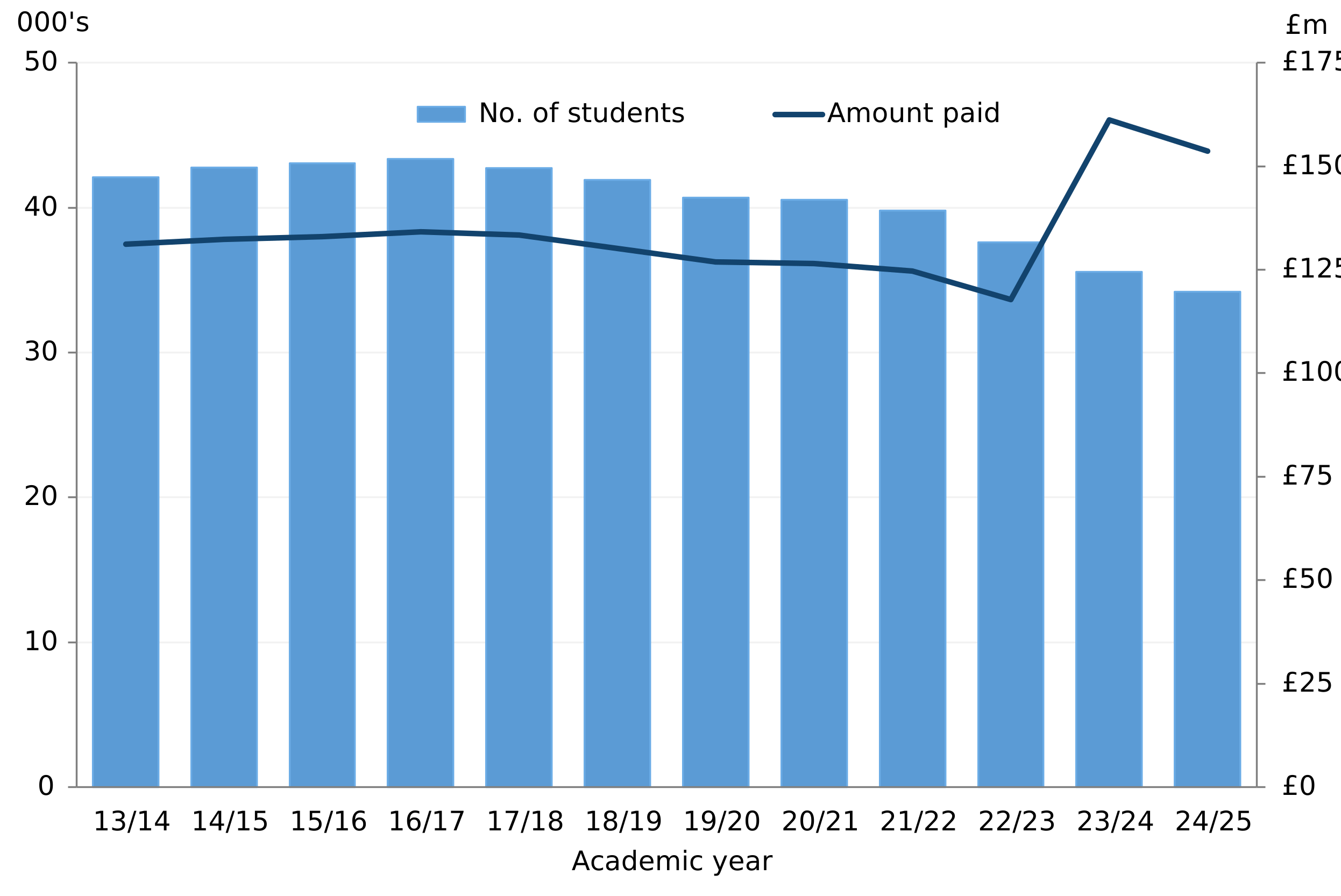
The columns in this chart depict the number of students against the left-hand axis, and the line illustrates the amount paid against the right-hand axis.
Source: Table 3A (i)
Download the data for Figure 2 (ODS, 6KB)
Figure 2 indicates that in academic year 2013/14, Maintenance Loans were paid out to 42,100 full-time students.
Following small annual increases until academic year 2016/17, numbers peaked at 43,400. Since, numbers have gradually decreased over the subsequent eight years.
In the most recent year, 34,200 Maintenance Loans were paid. When compared to the previous year this is a 3.9% decrease, less significant than the 5.4% decrease reported in 2023/24.
Mirroring the trend in the number of Maintenance Loan borrowers, the amount paid out in 2013/14 was £131.2 million, slowly increasing to first peak at £134.2 million in 2016/17. Amounts paid out then began to gradually decline, down to £117.8 million by 2022/23.
The maximum Maintenance Loan available for academic year 2013/14 was £4,840. This remained unchanged until 2023/4 when this increased by a significant 40% to £6,776 (‘Elsewhere’ rate). As a result, in 2023/24 the total amount paid out for that academic year notably increased, by 36.8%, to £161.2 million.
In 2024/25, this maximum loan remined unchanged causing figures normalise, with a 4.7% reduction in the total amount paid out, at £153.6 million.
Undergraduate Tuition Fee Loans
An undergraduate Tuition Fee Loan covers the cost of the tuition fees charged by the university or college. These loans are available to those studying an eligible undergraduate, initial teacher training or Postgraduate Certificate of Education course, at an eligible higher education provider on a full or part-time basis. Tuition Fee Loans are not dependent on household income.
Continuing decline in take-up of full-time Tuition Fee Loans in academic year 2024/25, down to 36,500
Figure 3: Number of Tuition Fee Loans paid on behalf of full-time Northern Ireland and EU (outside UK) domiciled students and amount paid
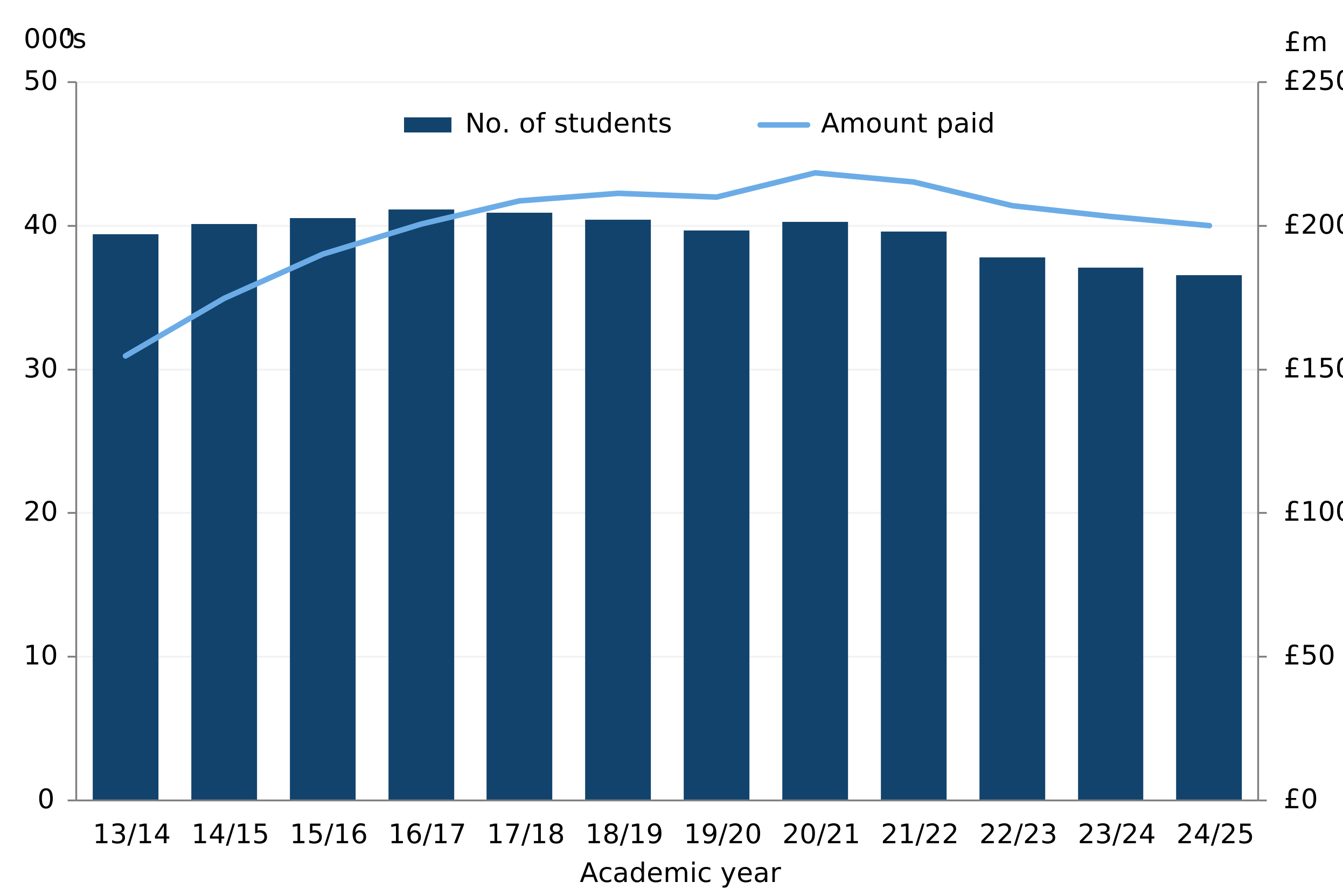
The columns in this chart depict the number of students against the left-hand axis, and the line illustrates the amount paid against the right-hand axis.
Source: Table 3B
Download the data for Figure 3 (ODS, 6KB)
Figure 3 indicates that in academic year 2013/14 Tuition Fee Loans were paid out on behalf of 39,400 full-time students. Numbers increased gradually to peak at 41,200 in 2016/17. Since, decreases have been reported in all but one academic year (a small 1.5% increase in 2020/21).
In 2024/25, 36,500 Tuition Fee Loans were paid out, a 1.5% decrease on the previous year.
The amount paid out on behalf of full-time students in 2013/14 was £154.8 million. Somewhat contrary to the trend in borrower numbers, this increased significantly in the following year, up 12.9% to £174.8 million. This can be attributed to a 10.9% increase in the average Tuition Fee Loan paid out, up from £3,940 to £4,370.
Further increases were noted up until 2018/19 likely as a result of the growing proportion of students studying outside of Northern Ireland, where Tuition Fees are much higher. For example, between 2015/16 and 2018/19, the maximum full-time tuition fee to study at a Northern Ireland provider averaged at £3,980, compared to an average of £9,125 at an England provider. For more information on the maximum loans available by academic year, please refer to Table 1A.
Since 2019/20 the amount paid out has decreased overall, down to £200.1 million by 2024/25, a 1.6% decrease on the previous year.
Further 5.3% reduction in the number of students taking full-time Tuition Fee Loans to study outside of Northern Ireland in academic year 2024/25
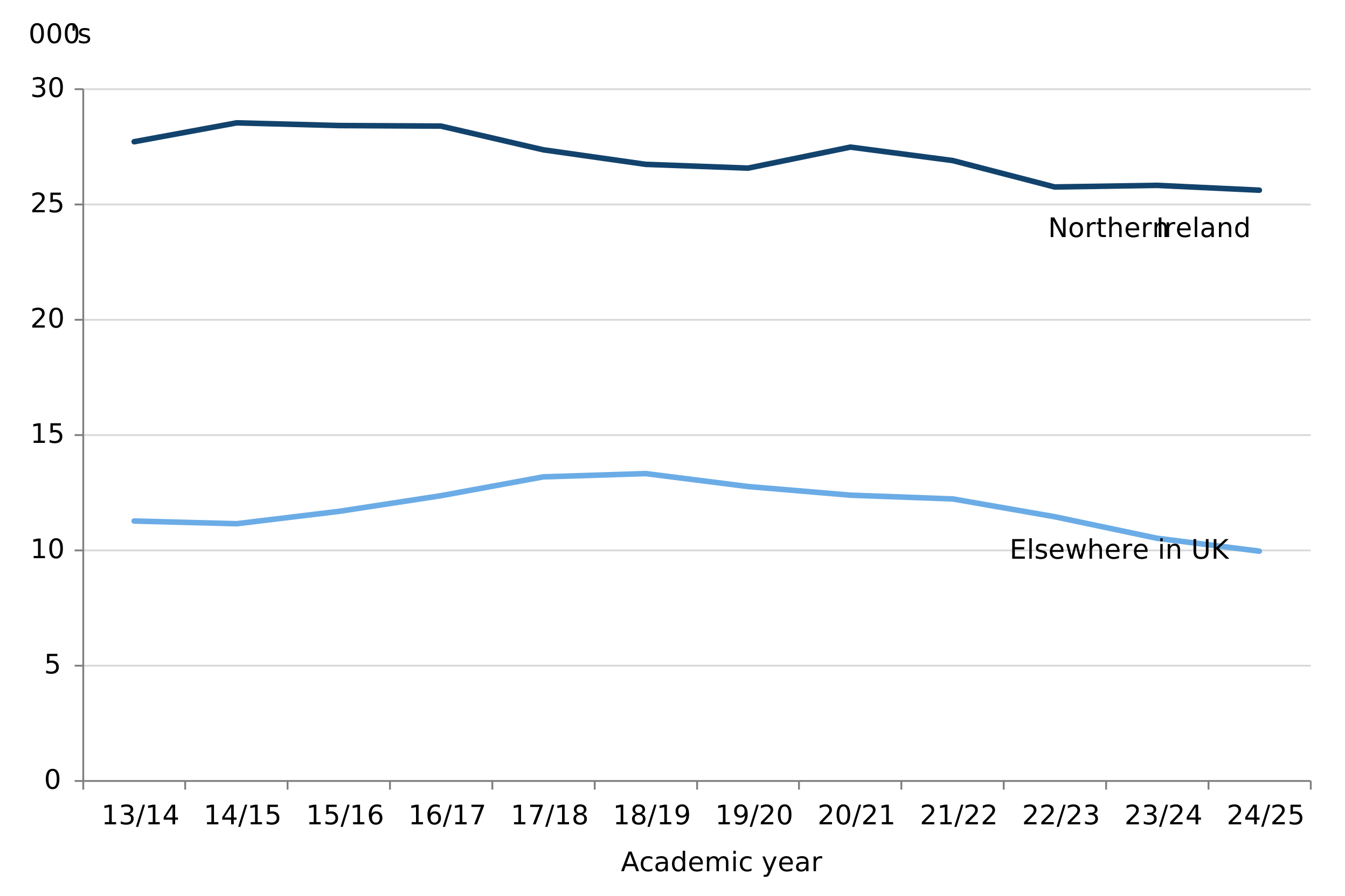
Figure 4: Number of students domiciled in Northern Ireland taking full-time Tuition Fee Loans by country of study
Source: Table 3C
Download the data for Figure 4 (ODS, 6KB)
Figure 4 shows that in academic year 2013/14, the subset of Northern Ireland domiciled students opting to take a Tuition Fee Loan to study within Northern Ireland was 27,700. Following a small increase in the following year, numbers decreased each year down to 26,600 in 2019/20. In academic year 2020/21 an outlying increase of 3.5% was reported, likely attributed to COVID-19 restrictions, temporarily reducing the opportunity to travel / study elsewhere in the UK. In 2021/22, the declining trend resumed, down to 25,600 by the most recent year (0.8% lower than 2023/24).
In 2013/14 the number of students opting to take a Tuition Fee Loan to study outside of Northern Ireland equated to 11,300. Following a small decrease in the following academic year, numbers increased to peak at 13,300 in 2018/19. Since this point numbers have declined, down by 5.3% in the most recent year, to 10,000.
Small reduction in the proportion of students taking full-time Tuition Fee Loans to study outside of Northern Ireland, down to 28% in 2024/25
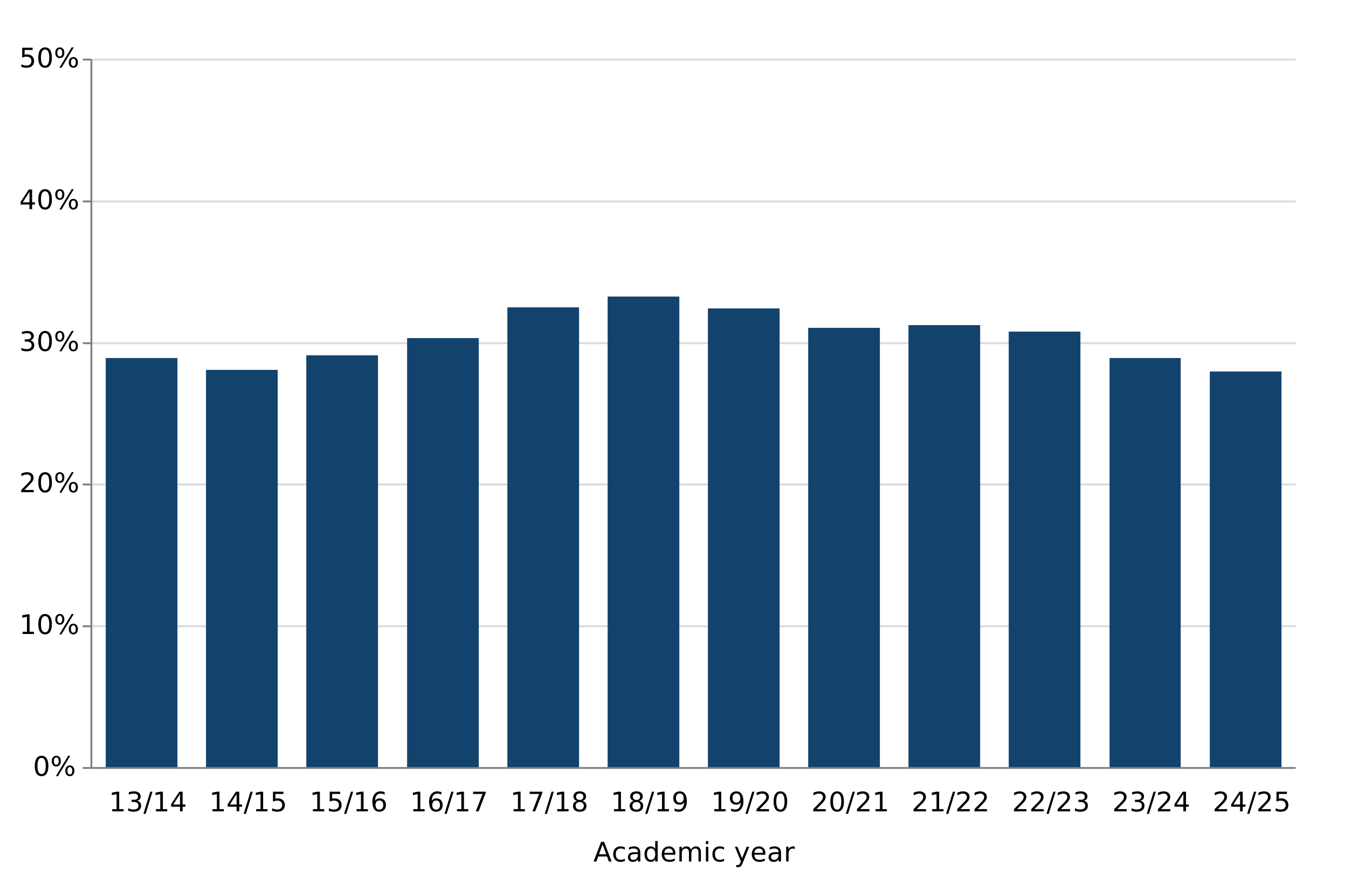
Figure 5: Percentage of students domiciled in Northern Ireland taking full-time Tuition Fee Loans to study elsewhere in UK
Source: Table 3C
Download the data for Figure 5 (ODS, 6KB)
Figure 5 shows the percentage proportion of full-time students taking a Tuition Fee Loan and opting to study outside of Northern Ireland.
In 2013/14, 28.9% of all full-time tuition fee borrowers were enrolled in higher education institutes outside of Northern Ireland. This increased to peak at 33.3% in 2018/19. Since this point the proportion has reduced, down to 28.0% by 2024/25. This is a 1.0% decrease on the previous year.
From 2024/15, the proportion of students taking a loan and opting to study within Northern Ireland was 71.1% in academic year 2013/14. This decreased each year, down to its lowest point of 66.7% in 2018/19. Since then, this has increased overall to 72.0% in 2024/25, near resuming the 2014/15 position.
Small increase in the average full-time Tuition Fee Loan paid to study within Northern Ireland in 2024/25, whilst support for those studying outside remains stable
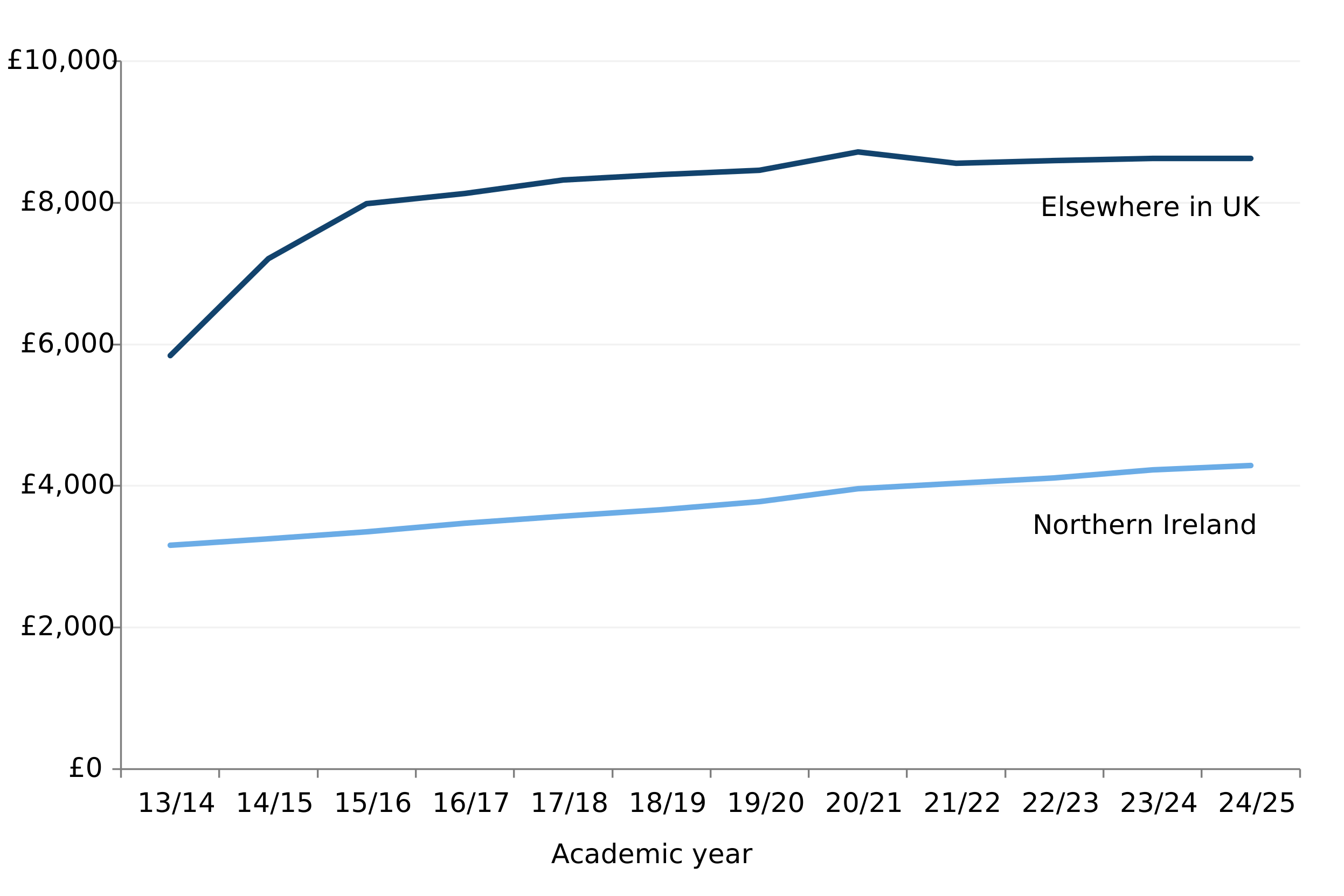
Figure 6: Average full-time Tuition Fee Loan paid out for students domiciled in Northern Ireland by country of study
Source: Table 3C
Download the data for Figure 6 (ODS, 6KB)
The average Tuition Fee Loan paid out on behalf of a full-time student differs depending on the amounts that the country/provider-type in the UK charges for tuition fees.
As tuition fees are much lower in Northern Ireland in comparison to the rest of the UK, (particularly England) since 2014/15 the average full-time Tuition Fee Loan paid for a student studying outside of Northern Ireland has consistently been more than double the average for those studying at providers within Northern Ireland.
The most significant variance was reported in 2015/16 when the average paid to study outside of Northern Ireland was 139% higher. By the most recent year this variance had reduced to 101% .
Figure 6 indicates that in academic year 2013/14, the average loan paid for study outside of Northern Ireland (shown as ‘Elsewhere in the UK’) was £5,840, compared to £3,160 for those choosing to study within Northern Ireland. By 2024/25, these averages have increased to £8,630 and £4,290 respectively.
In the most recent year, the average Tuition Fee Loan paid out on behalf of a full-time student studying within Northern Ireland increased by 1.4% compared to the previous year. For those studying elsewhere in the UK, the average remained unchanged.
Owing to the higher average loan, despite only 28.0% of Tuition Fee Loan borrowers studying outside of Northern Ireland in academic year 2024/25, 43.9% of the total amount paid out in Tuition Fee Loans for that year can be attributed to these students. This means that £86.0 million of the £196.0 million paid out on behalf of Northern Ireland domiciled students was paid to higher education providers in England, Wales and Scotland.
Third year of notable increase in the number of full-time Tuition Fee Loans paid on behalf of EU (outside UK) students in 2024/25
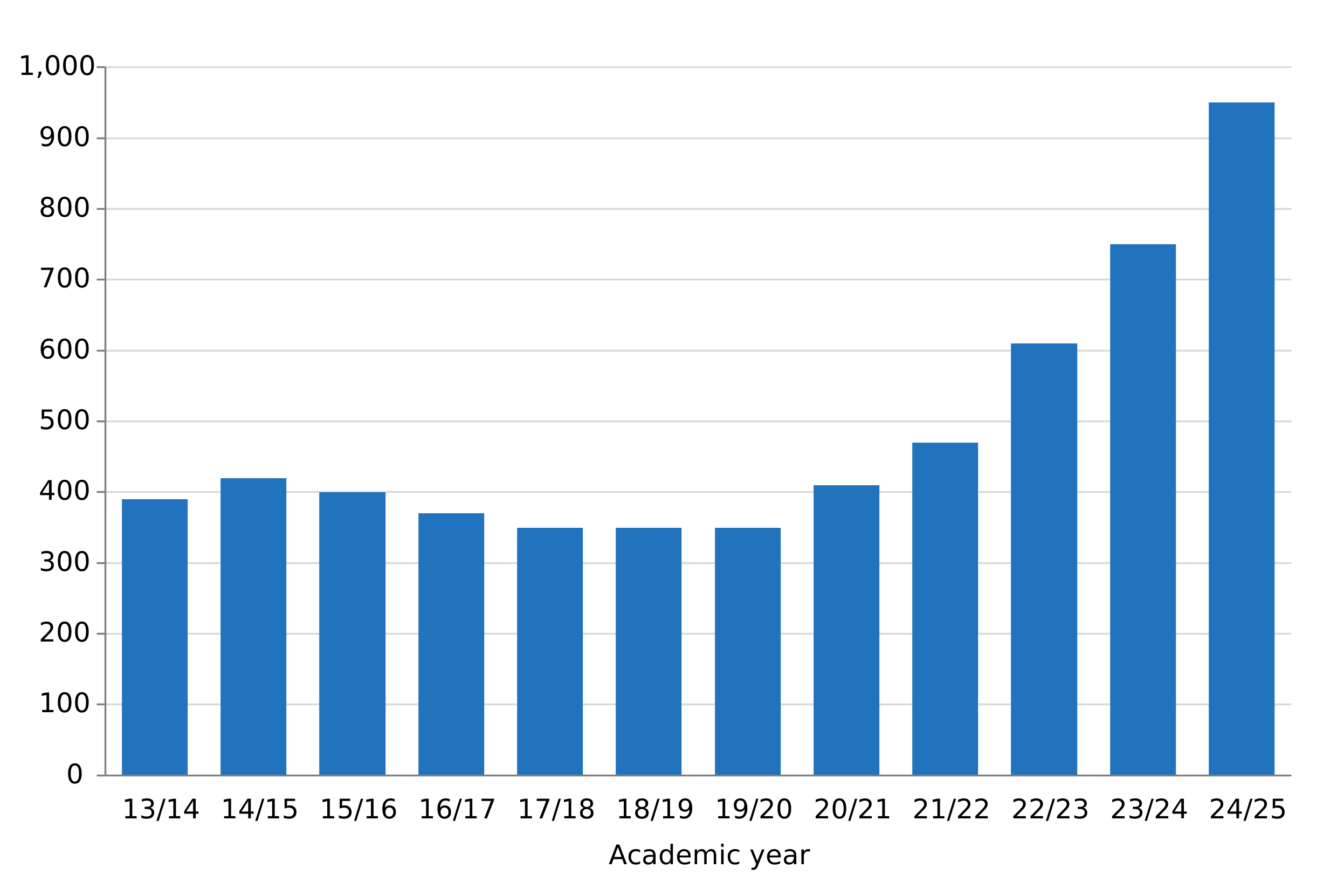
Figure 7: Number of Tuition Fee Loans paid on behalf of full-time EU (outside UK) domiciled students
Source: Table 3B
Download the data for Figure 7 (ODS, 6KB)
Figure 7 shows that in 2013/14, Tuition Fee Loans were paid on behalf of 390 EU (outside UK) students. Following a 7.8% increase in the subsequent year, numbers decreased gradually to the lowest reported point of 350 by 2017/18.
Since 2018/19, increases of varying levels have been reported, becoming more significant since academic year 2020/21.
For academic year 2024/25, loans were paid on behalf of 950 EU (outside UK) students. This is a notable 27.5% higher than in the previous year.
Unlike the figures for students domiciled in England and Wales, the 2021/22 policy change which made new EU (outside UK) students ineligible for student finance has had minimal impact on the figures for Northern Ireland-domiciled borrowers. This is largely because the EU (non-UK) category continues to include a growing proportion of students from the Republic of Ireland, whose eligibility for support remains unchanged. By 2024/25, students from the Republic of Ireland accounted for 98% of this group.
Non-Irish students, from 2021/22 will only include those who are returning/continuing who began their studies prior to the policy change. This proportion will decrease year-on-year as they conclude their courses. In the most recent year, this has reduced from 3% to 2%.
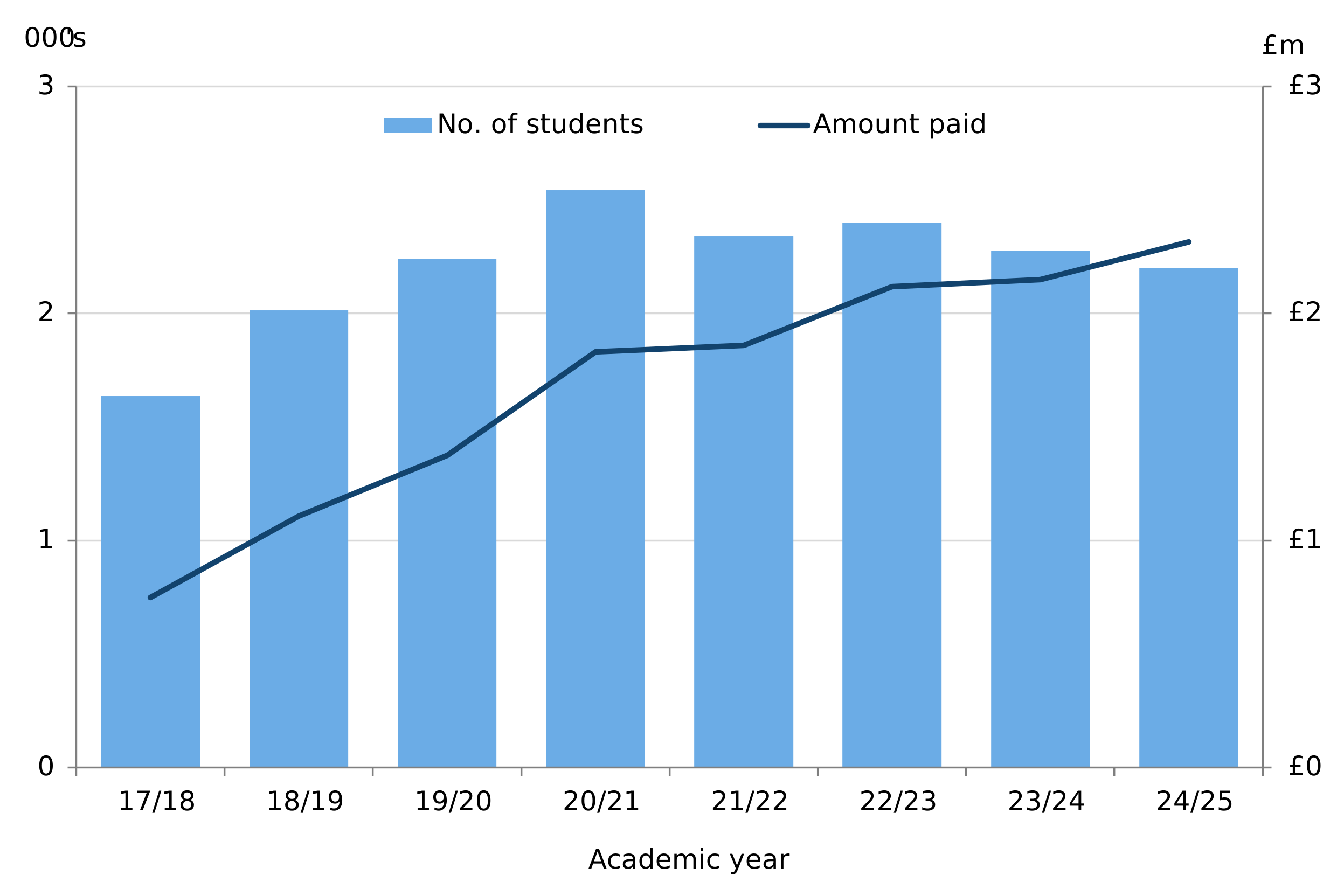
3.4% decrease in the number of Tuition Fee Loans on behalf of part-time students in academic year 2024/25
Figure 8: Number of students domiciled in Northern Ireland & EU (outside UK) receiving part-time Tuition Fee Loans and amount paid
The columns in this chart depict the number of students against the left-hand axis, and the line illustrates the amount paid against the right-hand axis.
Source: Table 5A
Download the data for Figure 8 (ODS, 6KB)
Tuition Fee Loans for part-time study were made available to new students in academic year 2017/18.
Figure 8 shows that in this first year of availability, the number of loans paid out was 1,600. This notably increased over the following three years to peak at 2,500 in 2020/21.
The 13.5% increase in academic year 2020/21 was potentially due to the COVID-19 pandemic affecting some employment sectors, when an additional 300 entrants enrolled in Open University courses.
Academic year 2021/22 reported the first decrease, down 7.9% to 2,300. Numbers have since decreased overall, down to 2,200 in the most recent year, a 3.4% decrease on 2023/24.
The trend in the amount paid out on behalf of part-time students differs from that of the number of loans paid. In academic year 2017/18 £0.7 million was paid out on behalf of part-time students. This was followed by significant increases in the subsequent three academic years, up to £1.8 million.
Despite the fall in the number of loans paid out in 2021/22, the amount paid out increased slightly, followed by a notable 14.5% increase in the following year. This was driven by an 11.7% increase in the average loan taken.
The amount paid increased by 6.8% in academic year 2023/24, followed by an 8.3% increase to £2.3 million in the most recent year. This was again driven by an increase in the average amount taken, 12.1% higher than in the previous year.
Postgraduate Tuition Fee Loans
A postgraduate Tuition Fee Loan is funding to help with course and living costs whilst studying an eligible postgraduate level course. They are paid directly to the student and are not based on their income or the income of their household. Students studying either a Postgraduate Certificate of Education or an initial teacher training course are not eligible for postgraduate funding, they can alternatively apply for undergraduate finance.
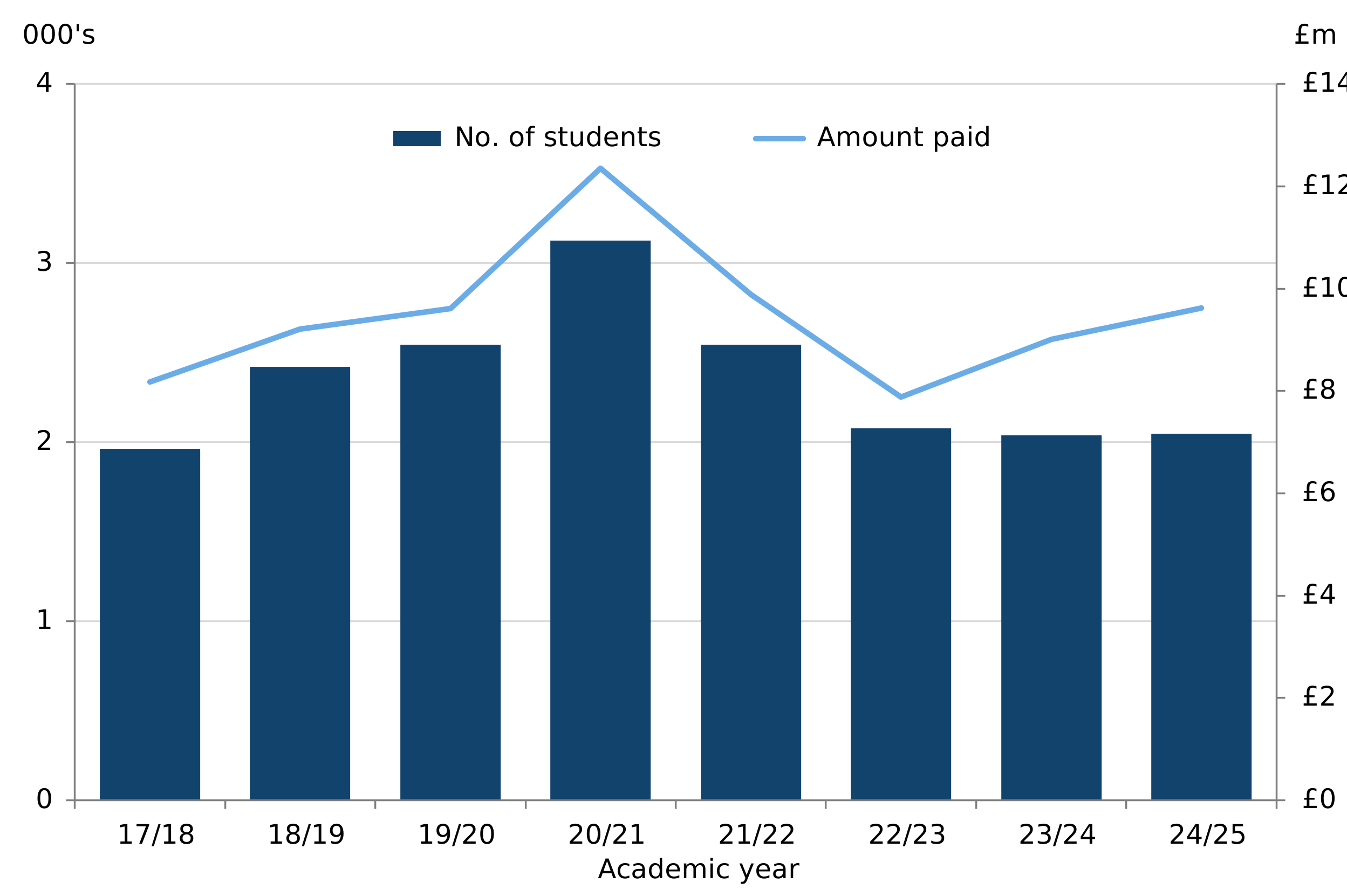
Take-up in Tuition Fee Loans paid on behalf of postgraduate students remains stable in 2024/25
Figure 9: Number of postgraduate students domiciled in Northern Ireland and EU (outside UK) receiving Tuition Fee Loans and the amount paid
The columns in this chart depict the number of students against the left-hand axis, and the line illustrates the amount paid against the right-hand axis.
Source: Table 6A
Download the data for Figure 9 (ODS, 6KB)
Tuition Fee Loans were made available for postgraduate students in academic year 2017/18.
Figure 9 shows that in the first year of availability, the number of Tuition Fee Loans paid on behalf of postgraduate students was 1,960. Numbers increased in the following year, typical for a new loan (up 23.2% to 2,420).
Following a much smaller increase in 2019/20, numbers rose sharply in 2020/21 to peak at 3,130. This could be attributed to a perceived reduced employment opportunity due to the COVID-19 pandemic, either encouraging undergraduates to continue to postgraduate level, or non-students to return to study. It was therefore reasonable to expect a reduction in the following year when take-up normalised against an outlying year; with numbers reducing by 18.6% down to 2,550.
Academic year 2022/23 reported a further, similar decrease bringing take-up back down to near levels reported in the first year of availability, at 2,080. Following a further, but less significant decrease in 2023/24, the most recent year indicates very little movement (up 0.4%) at 2,050.
The amount paid out on behalf of postgraduate students followed a very similar trend, up until 2023/24. In the first year of availability, £8.2 million was paid out, increasing to £12.3 million by 2020/21. The amount then reduced over the two subsequent years, down to its lowest point of £7.9 million. Due to an 18.2% increase in the maximum loan available (from £5,500 to £6,500), the amount paid increased by 14.3% to £9.0 million. In the most recent year, a further 6.8% increase was reported to £9.6 million.
Disabled Students’ Allowance
Disabled Students’ Allowance (DSA) is an additional part of the student finance package and helps pay for extra costs a student might incur in higher education as a direct result of their disability. This includes long-term health conditions, mental health difficulties, specific learning difficulties such as dyslexia or dyspraxia etc. The allowance is non-repayable and does not depend on household income. The individual’s condition must meet the definition of a disability under the Equality Act 2010. Generally, Disabled Students’ Allowance is paid direct to the providers of equipment and services covered by the allowance although students may receive some funding paid directly to them, depending on their circumstances.
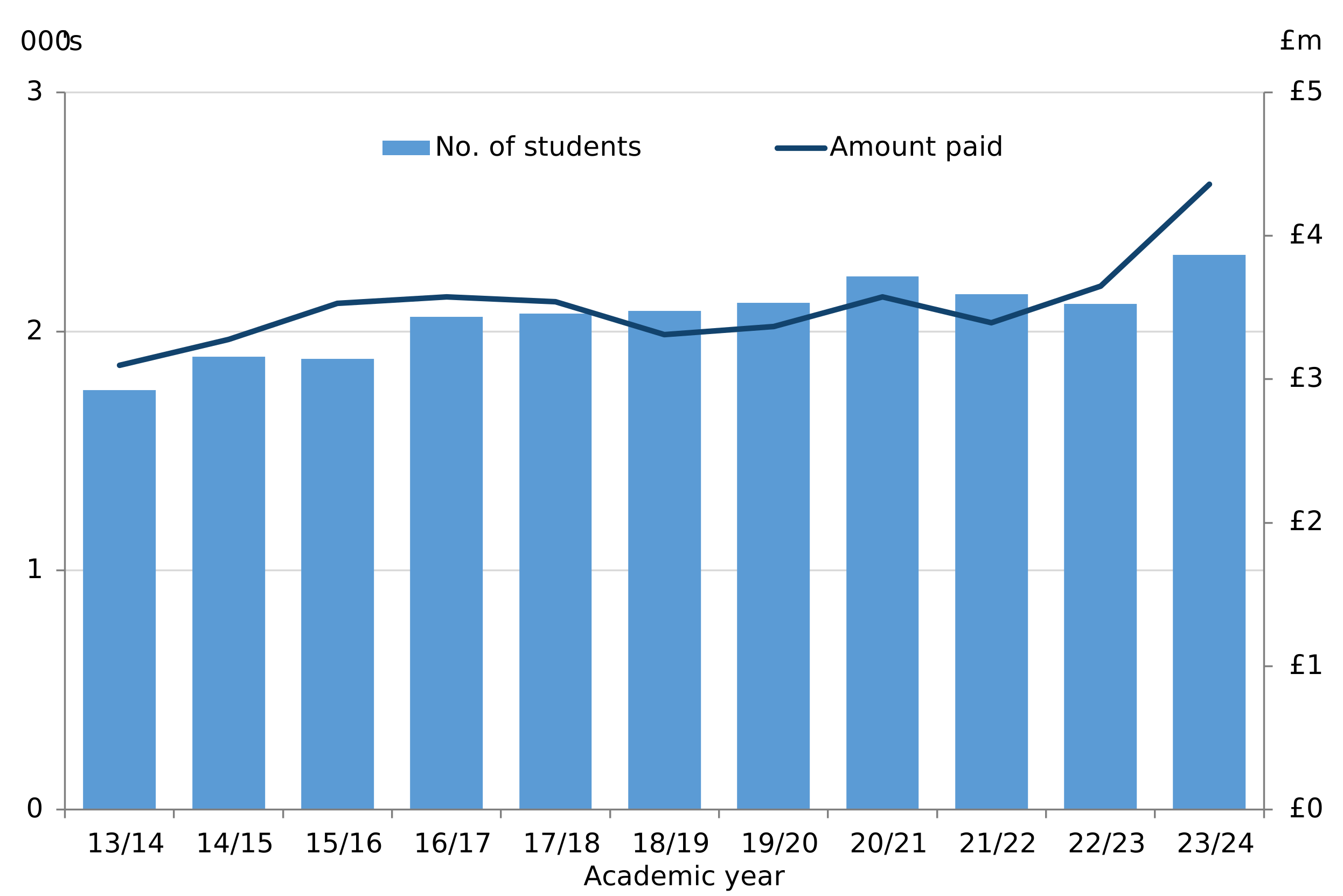
Finalised figures confirm a 9.7% increase in the number of full-time students claiming Disabled Students’ Allowance for academic year 2023/24
Figure 10: Amount of DSA paid on behalf of full-time students by category and academic year (effective one year later)
The columns in this chart depict the number of students against the left-hand axis, and the line illustrates the amount paid against the right-hand axis.
Source: Table 4B
Download the data for Figure 10 (ODS, 6KB)
The vast majority of DSA is paid to suppliers once the Student Loans Company receive the invoices for equipment or services. As invoices continue to be received well after the end of the academic year, we capture a more finalised position by reporting figures one year after the end of the academic year (hence 2023/24 being the most recent figures in Figure 10).
The total number of full-time students in receipt of Disabled Students’ Allowance (DSA) for the 2013/14 academic year was 1,755. This increased overall to first peak at 2,230 for 2020/21. Numbers then marginally reduced over the two subsequent years. The increasing trend resumed in 2023/24, up by a notable 9.7%, back to 2,230.
The amount claimed in full-time DSA equated to £3.1 million for the 2013/14 academic year. This has since fluctuated, averaging at £3.5 million over the subsequent nine years. 2023/24 reported the most significant increase to date, with an additional 19.4% compared to the previous year.
As at 31 August 2025, a total of £4.2 million has been paid for academic year 2024/25 for full-time DSA. This is in line with the amount paid by the same point for the previous year.
Figures in regard to part-time undergraduate and postgraduate DSA can be found in the supporting tables (Table 5B and 6B).
Early in year overview – academic year 2025/26
Table 7C (i) shows an early view of academic year 2025/26 at effective date 31 October 2025. This would be approximately two months into a typical academic year. These figures will be near-finalised in Table 2 of the next update of this publication, due to be released in November 2026.
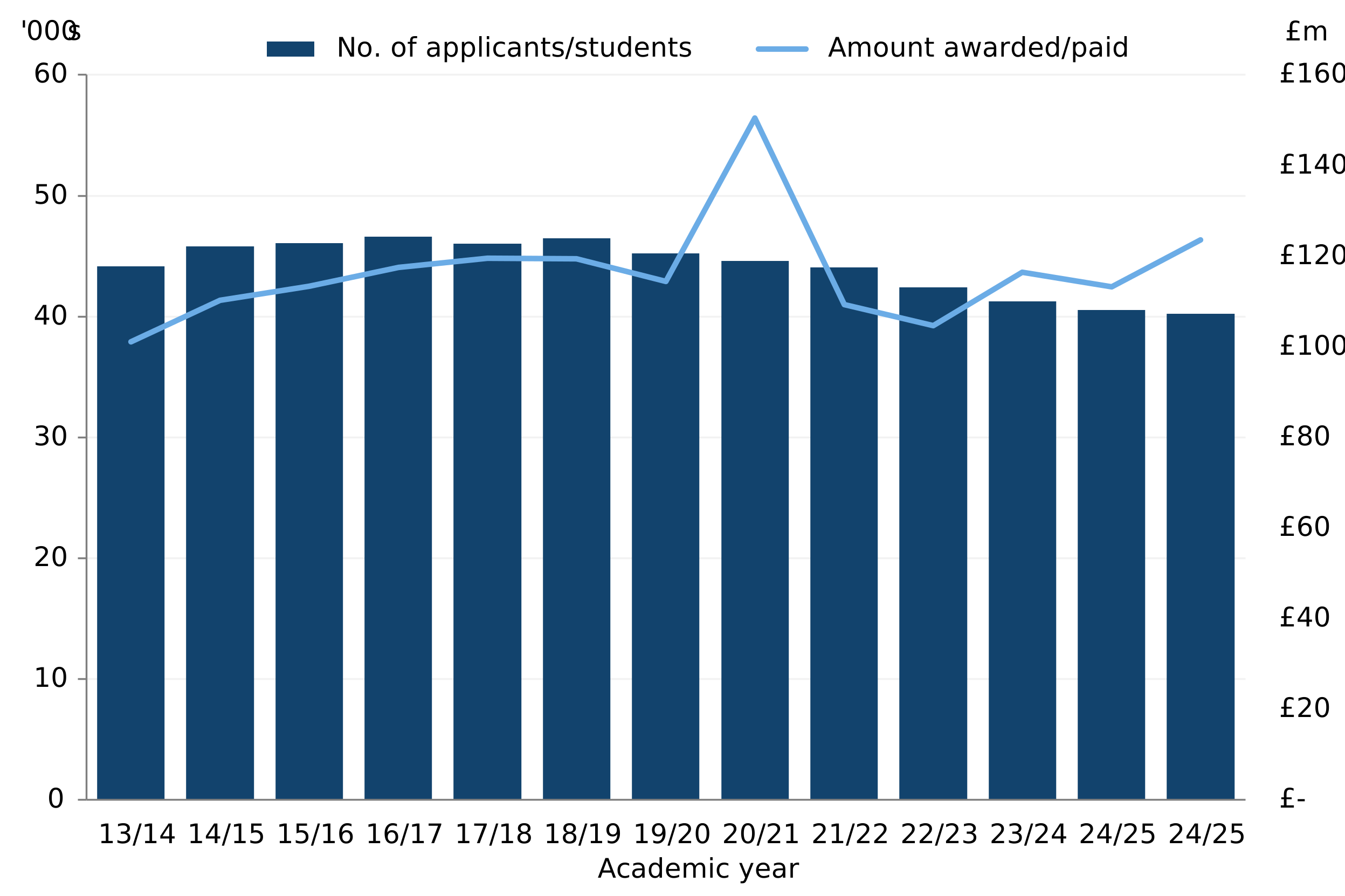
By end-October 2025, a total of 40,300 undergraduates and postgraduates have been awarded/paid a total of £123.6 million for academic year 2025/26
Figure 11. Early-in-year: Number of students domiciled in Northern Ireland and EU (outside UK) receiving higher education support and amount awarded/paid
The columns in this chart depict the number of students against the left-hand axis, and the line illustrates the amount paid against the right-hand axis.
Source: Table 7C (i)
Download the data for Figure 11 (ODS, 6KB)
Figure 11 shows that by end-October in the 2013/14 academic year, a total of 44,200 undergraduates and postgraduates had been awarded/paid. This early position increased over the subsequent five years to 46,500 by 2018/19. The total amount awarded/paid by this early point of the same academic years followed a similar trend, growing from £101.1 million in 2013/14 to £119.4 million by 2018/19. Academic year 2019/20 saw the first reduction in both numbers paid and the amount paid, down by 2.6% and 4.1% respectively.
As at end-October 2020, a total of £150.5 million had been awarded/paid to 44,600 students for the 2020/21 academic year. Despite a 1.4% reduction in the number of students awarded/paid, the amount awarded/paid was 31.4% higher than at the same point in the previous year. This can be predominantly attributed to an early second instalment of undergraduate tuition fee payments made to higher education providers in response to the COVID-19 pandemic (two payments made in October 2020, instead of the typical schedule of one instalment paid in October and one in the following February). For further detail, please refer to our Additional Information section. Figures normalised in the following year with the amount awarded/paid reducing to £109.3 million (down 27.4%).
The early-look at year at the four subsequent academic years saw take-up continue to decrease, albeit at a slowing rate. This was mirrored in the amount awarded/paid, with the exception of 2023/24 when the amount increased by 11.3%. This was attributed to a 40.0% increase in the maximum Maintenance Loan available for academic year 2023/24.
As at 31 October 2025, a total of 40,300 applicants/students have been paid for academic year 2025/26., down by a further 0.7%. Whereas the amount awarded/paid increased, up by a notable 9.1% to £123.6 million.
Of this, £122.0 million has been awarded/paid so far to 39,200 undergraduate students. The number of students awarded/paid is 0.8% lower than the end-October position in the previous year (300 fewer) yet the amount awarded/paid is 9.1% higher, up £6.9 million.
Full-time undergraduate numbers have decreased by 0.7% to 37,800, coupled with a 3.4% fall in part-time undergraduate numbers, to 1,300.
This early look at the 2025/26 academic year also indicates a total of £1.6 million has been paid to 1,100 postgraduate students so far. In comparison to the same point in 2024/25, this is a 5.4% increase in the number of postgraduates paid and an 11.0% increase in the amount paid out.
Early look at academic year 2025/26 shows a continuing increase in the number of EU (outside UK) students awarded/paid
Figure 12: Early-in-year: Number of students domiciled in EU (outside UK) receiving higher education support and amount awarded/paid
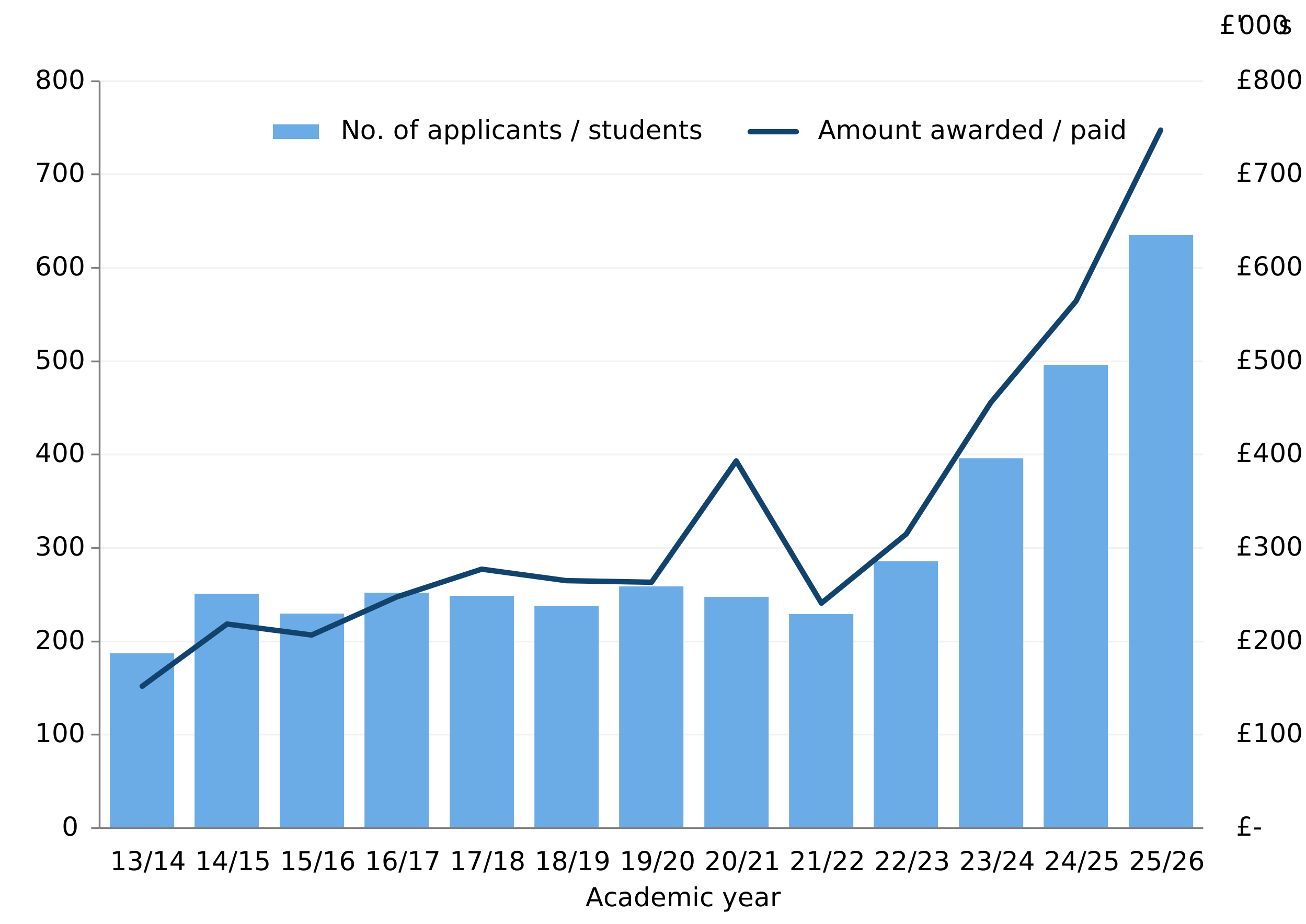
The columns in this chart depict the number of students against the left-hand axis, and the line illustrates the amount paid against the right-hand axis.
Source: Table 7C(i)
Download the data for Figure 12 (ODS, 6KB)
Figure 12 shows that the number of EU (outside UK) undergraduate and postgraduate students paid by end-October for academic year 2013/14 was 190. This has fluctuated over the years, up to 260 by 2019/20. The amount paid out has shown a similar trend over the same period, from £152,100 to £263,500.
The early look at 2020/21 reported a decrease in the number of EU (outside UK) students paid, down 4.2% to 250. However, due to the previously mentioned early second instalment of undergraduate tuition fee payments made to higher education providers, the amount paid out by this point in academic year 2020/21 was 49.3% higher than in the previous year at £393,300.
In academic year 2021/22, new EU (outside UK) students in Northern Ireland (without a ‘settled’ or ‘pre-settled status’) were no longer eligible for tuition fee support. However, as the significant majority of these students were from the Republic of Ireland (whose eligibility remains unchanged), there was not a significant decrease in the number of EU (outside UK) students paid (down by 7.7%). The amount paid out in the same year was 38.7% (down to £241,100), more likely due to figures normalising against an outlying year.
Notable increases have continued through 2024/25. As at end-October 2025, 640 EU (outside UK) undergraduate and postgraduate students have been paid. This is 28.0% higher than at the same point in academic year 2024/25. £747,800 has been paid out so far for the 2025/26 academic year. This is 32.4% more than paid out at the same point for 2024/25.
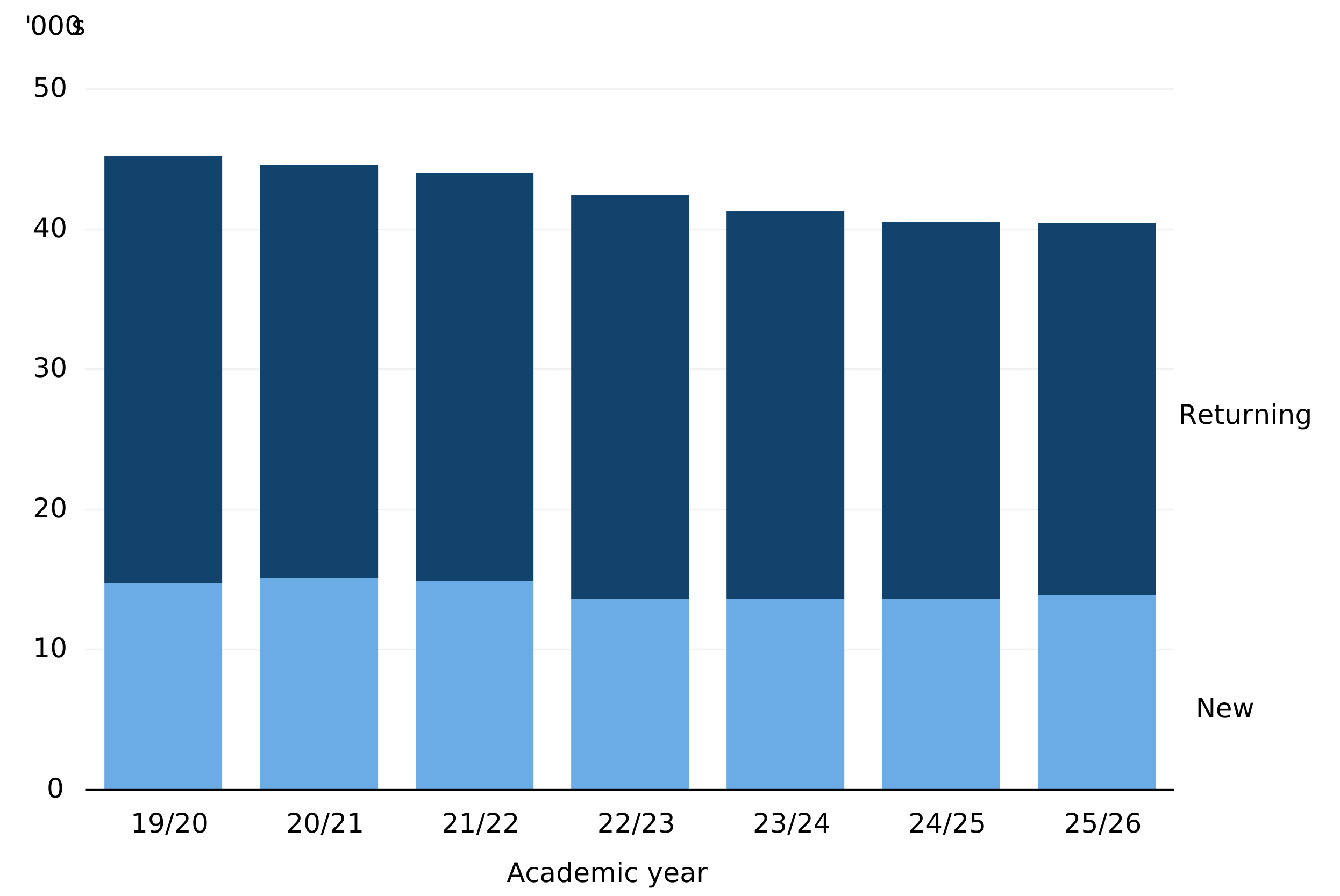
Early view of academic year 2025/26 indicates a 0.6% increase in ‘new’ students, offset by a 1.4% decrease in ‘returning’ students
Figure 13: Early-in-year: Number of new and returning students domiciled in Northern Ireland and EU (outside UK) awarded/paid student support
Source: Table 7C(ii)
Download the data for Figure 13 (ODS, 6KB)
Within this publication, ‘new’ students are defined as those who have not previously received student support from the Student Loans Company (SLC). ‘Returning’ students are defined as those who have.
Figure 13 indicates that the number of ‘new’ students awarded/paid student support by the end-October position for academic year 2019/20 was 14,700. This increased to peak at 15,100 (up 2.5%) by the same point in the following year. In 2021/22 numbers began to decline, first by 1.5%, then by a further and more significant 8.7% in 2022/23. At this early position of the academic year, the number of ‘new’ students awarded/paid the remained relatively constant until 2024/25, at 13,600.
As at 31 October 2025, 13,900 ‘new’ students had been paid / awarded for the 2025/26 academic year. This is 0.6% higher when compared to the previous year.
The trend in ‘returning’ students differs in that it has declined each year. In 2019/20 there were 30,500 ‘returning’ students. By 2025/26, this had reduced to 26,600, down a further 1.4%.
As a proportion of all awarded/paid students at this early point in the academic year, ‘new’ students have fluctuated between 32.0% (in 2022/23) and 34.0% (in 2025/26) and ‘returning’ students have fluctuated between 68.0% and 66.0% in the same years noted.
Additional Information
Available student financial support
Details on student support available in academic years 2024/25 and 2025/26 can be found on the Student Finance Northern Ireland website.
Factors affecting early in year figures academic year 2020/21
In response to the COVID-19 pandemic, the Department of Education and devolved administrations of Wales and Northern Ireland requested that the Student Loans Company revised the schedule of undergraduate tuition fee payments to higher education providers for the 2020/21 academic year. This revision enabled providers to access the second instalment of tuition fee payments early (two paid in October 2020, instead of first paid October 2020 and second in February 2021), while ensuring that students were not impacted by the change. This is evident on Table 7C (i) and (ii). The normal schedule resumed in academic year 2021/22.
These early in year figures for academic year 2020/21 may also have been affected by the Ofqual standardisation of grades, allowing students whose exams were cancelled in the summer of 2020 to receive calculated grades enabling them to progress to further study. For more information please refer to GOV.UK.
Definitions
For definitions of terms used in our publication, please refer to our Definitions page.
Data Sources
This publication uses data from Student Loans Company (SLC)’s administrative systems. For details of the administrative data sources used in our publications please refer to our Statement of Administrative Sources.
Data Quality
Student Loans Company has published the quality guidelines that it follows. As per those guidelines a quality plan is produced for each publication. The quality plan stipulates two stages of quality assurance. Data is extracted from the administrative systems then reviewed using a standard quality assurance checklist. The statistical tables created using that data are quality assured using the statistical quality guidelines. Please refer to our Quality Guidelines for further information.
Related Statistics Publications
Student Loans Company publish statistics on higher education funding for England and Wales as part of the same series this publication belongs to. These are published at the same time as part of the series Student Support for Higher Education.
In December 2020, owing to the significant public interest, SLC took the decision to publish data on the withdrawal notifications it receives from higher education providers (HEPs) in order to contribute towards an understanding of how the COVID-19 pandemic may be impacting students. Due to ongoing interest, SLC continues to publish this series. These publications are housed within our ‘Other Statistics’ section of GOV.UK.
Student Loans Company also publish statistics on the repayment of student loans for higher education in the series ‘Student Loans in Northern Ireland’. The latest release of this series, covering financial year 2023-24 was published on 19 June 2025.
The Student Awards Agency for Scotland publish details of higher education funding in Scotland in their publication ‘Higher Education Student Support in Scotland’. The latest release of this series was published on 28 August 2025 covering academic session 2024/25.
National Statistics
This is a National Statistics publication. National Statistics are produced to high professional standards set out in the National Statistics Code of Practice. They undergo regular quality assurance reviews to ensure they meet customer needs. They are produced free from any political interference.
This publication series (publications for England, Wales & Northern Ireland) was awarded National Statistics status in October 2011 following a full assessment against their Code of Practice.
Since the assessments by the Office for Statistics Regulation we have continued to comply with the Code of Practice for Statistics and have made several improvements. For more information, please refer to our National Statistics page.
Contact details
- Issued by: The Student Loans Company, 10 Clyde Place, Buchanan Wharf, Glasgow, G5 8AQ
- Press Office: press_office@slc.co.uk
- Public Enquiries: 0141 306 2000
- Lead Official for Statistics: enterprise_data_analytics@slc.co.uk
- Online: SLC Statistics.
SLC SP07/2025