Statutory homelessness in England: October to December 2025
Published 30 April 2026
Applies to England

© Crown copyright 2026
This publication is licensed under the terms of the Open Government Licence v3.0 except where otherwise stated. To view this licence, visit nationalarchives.gov.uk/doc/open-government-licence/version/3 or write to the Information Policy Team, The National Archives, Kew, London TW9 4DU, or email: psi@nationalarchives.gov.uk.
Where we have identified any third party copyright information you will need to obtain permission from the copyright holders concerned.
This publication is available at https://www.gov.uk/government/statistics/statutory-homelessness-in-england-october-to-december-2025/statutory-homelessness-in-england-october-to-december-2025
1. About our statistics
This is the quarterly statistics release for statutory homelessness assessments and activities in England between 1 October and 31 December 2025, and households in temporary accommodation under the statutory homelessness duty in England on 31 December 2025. Statutory homelessness concerns duties placed on local authorities to take reasonable steps to prevent and relieve homelessness to eligible households.
Short definitions for technical terms can be found in the glossary section of this release. The full definitions are provided in the technical note.
Key statistics information
- Trends described in this release focus on England level totals. Additional data to compare England trends over time can be found in our England level time series published on Tables on homelessness.
- We also publish regional and local authority level data. Quarterly detailed local authority level datafiles can be found alongside the statistics release, and all latest revised datasets are available on Tables on homelessness.
- We typically describe changes in the number of households in the current period compared to the same time the previous year, i.e. percentage increases or decreases. For some sections of data we also describe whether the outcomes or characteristics of households have changed as a proportion of all households, compared to the previous year, i.e. percentage point increases for groups who now represent a larger proportion of all households and percentage decreases for groups representing a lower proportion of households than the previous year.
- Most comparisons are made to the previous year, rather than the previous quarter because of seasonal changes in our data. For example, the number of new prevention and relief duties typically falls in October to December, followed by increases in January to March. However, some figures, such as the households in temporary accommodation at the end of a quarter are “stock figures” and less impacted by seasonal change. For these, we compare to the previous quarter as well as to the previous year.
- Data are provisional when first published. Original provision data remain available on each statistics release page (e.g. Statutory homelessness in England: July to September 2025) so that they match the corresponding written release.
- Data are revised in the following quarter, and at the end of each financial year to incorporate details for late updated cases. Our latest and revised data files are available from Tables on homelessness. Any further corrections or revisions are described in each release, accompanying tables, and technical notes.
Uses and limitations
These statistics can be used:
- To count the number of homelessness duties accepted by local authorities for this quarter and to compare local authorities and regions in England.
- To assess changes in the number of homelessness duties since 2018.
- To understand the causes, circumstances, and characteristics of households owed a duty for this quarter.
- To understand the number of households and the characteristics of Temporary Accommodation.
These statistics are not suitable:
- To estimate the total number of people sleeping rough.
- To estimate the total number of people sofa surfing, those in recreational or organised protest, those in squats, or traveller campsites.
- To estimate the households that have yet to make a homelessness application and those who aren’t eligible.
- To compare with other countries in the UK.
- To compare to figures before 2018 recorded via the P1E collection.
2. Main findings
Narrative summary for October to December 2025
The latest October to December 2025 statistics show that the number of households owed a homelessness duty has fallen since the same time the previous year. This indicates fewer households are approaching their local council and receiving support because they are at risk or have recently become homeless.
The number of households with a prevention duty ending in the quarter has fallen compared to the previous year. While the number of households securing accommodation at the end of prevention duties have fallen slightly, the proportion of households securing accommodation at this stage has risen compared to the previous year. This shows that as the households requiring support to prevent homelessness has decreased in recent quarters, we are now seeing a reduction in the number of households reaching the end of these duties. The data is showing that local councils have been able to help relatively more of the households who have required support because they were at risk of becoming homeless.
The number of households with a relief duty ending in the quarter has fallen compared to the previous year. Both the number of households securing accommodation at the end of relief duties and the proportion of households securing accommodation at this stage has risen compared to the previous year. Like with prevention duties, this shows that as the number of households requiring support due to becoming homeless has fallen in recent quarters, we are now seeing a reduction in the number of households reaching the end of this stage of support from their local councils. Increases in proportions securing accommodation show that councils have been able to help relatively more of the homeless households needing support.
If households have been unable to secure accommodation and are homeless after initial prevention and relief duty support, local councils have to assess whether the household qualifies for additional support – referred to as main duties. In line with the number of relief duties ending, there have also been reductions in the number of households owed a main duty decision in October to December compared to the previous year. Of these, there were also a smaller number and proportion of households accepted as owed a main duty. These households typically receive support and temporary accommodation through the main duty until they can be offered suitable longer-term accommodation in the social or private rented sector
The number of households where a main duty has ended is up compared to the same period the previous year. This also included an increase in the number of households whose main duty ended due to accepting an offer of settled accommodation. Although overall, the proportion of households ending a main duty because they accepted an offer of settled accommodation has dropped compared to the previous year.
The number of households in temporary accommodation on the 31 December 2025, has dropped slightly below the record levels the previous quarter, but still remains higher than the same time the previous year. While this shift is small, this is the first quarter that the number of households in temporary accommodation has fallen since 2022.
The number of families, and the total children in temporary accommodation, have continued to increase from both the previous quarter and the same period in the previous year. The number of families in B&Bs, and families in B&Bs for more than 6-weeks have reduced since the previous year and previous quarter. These have been falling each quarter since 30 June 2024
Key statistics
- 84,250 households had an initial assessment, down 1.3% from October to December 2024. From these initial assessments, 76,270 were assessed as owed a duty to prevent or relieve homelessness.
- 33,630 households were assessed as being threatened with homelessness and therefore owed a prevention duty which is down 3.1% from the same quarter last year. This includes 4,960 households threatened with homelessness due to service of a Section 21 notice to end an Assured Shorthold Tenancy – a decrease of 15.8% from the same quarter last year.
- 42,640 households were initially assessed as homeless and therefore owed a relief duty, down 2.3% from the same quarter last year. Households with children owed a relief duty decreased 8.1% from the same quarter last year to 9,910 households in October to December 2025.
- 16,290 households were accepted as owed a main homelessness duty, down 11.3% from October to December 2024.
- On 31 December 2025, 134,210 households were in temporary accommodation, which is an increase of 5.0% from 31 December 2024, but down 0.4% from the previous quarter.
- There were 85,800 households with children in temporary accommodation, an increase of 5.9% from last year and up 0.1% from the previous quarter. There were 48,410 adult only households in temporary accommodation, up 3.5% from last year, but down 1.2% compared to the previous quarter.
Metrics on government homelessness priorities
Several key metrics are used from quarterly published statutory homelessness data to show progress against government targets in the homelessness strategy, or for monitoring in relation to the Local Outcomes Framework.
On 31 December 2025 there were:
- 85,800 households with children in temporary accommodation. Up 5.9% from 31 December 2024.
- 1,190 families in B&B over 6 weeks. Down 63.2% from 31 December 2024.
Between October to December 2025:
- 49.1% duties owed where homelessness was prevented or relieved. Up 2.5 percentage points from October to December 2024.
- 39.7% duties owed where homelessness was prevented or relieved for households experiencing multiple disadvantage.
Note that this is the first time this data has been published for household experiencing multiple disadvantage. Detailed local authority tables are available published alongside this release, see Statutory homelessness in England: October to December 2025. Further comparisons to previous time periods will be available in future releases.
3. Statutory homelessness initial assessments and outcomes
Initial assessments
At the beginning of 2024, the number of households owed duties to prevent or relieve homelessness reached record levels. Levels in October to December 2025 are now lower than this peak and have reduced compared to the same time last year.
Chart 1: Number of households owed a prevention or relief duty, April to June 2019 to October to December 2025
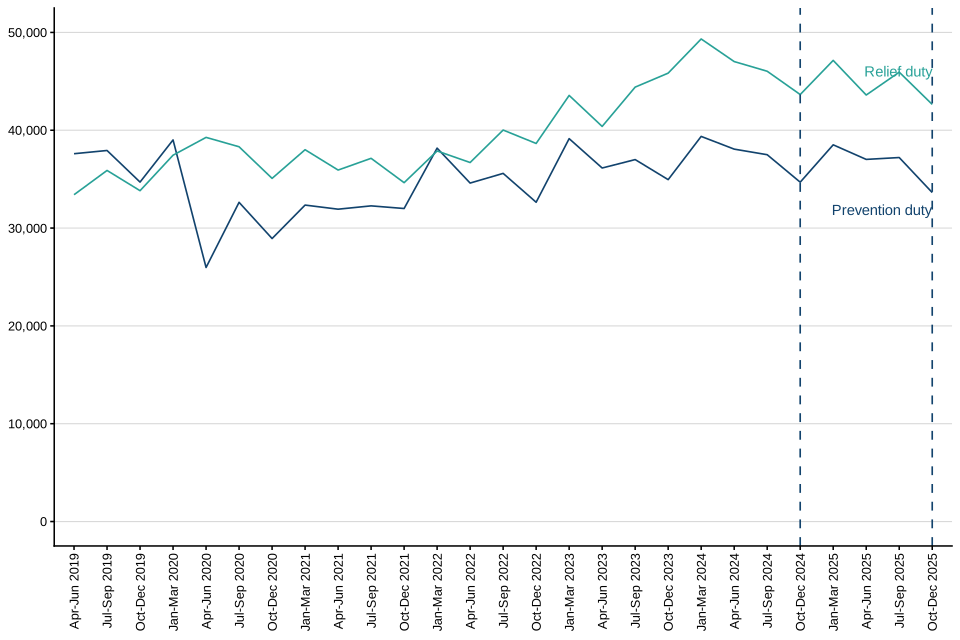
84,250 households were initially assessed by their local authority to determine if they were owed a statutory homelessness duty, down 1.3% from October to December 2024. From these initial assessments, 76,270 were assessed as owed a duty to prevent or relieve homelessness.
The number of households assessed as at risk of becoming homelessness and therefore owed a prevention duty is down 3.1% compared to the same quarter last year to 33,630. This includes 4,960 households threatened with homelessness due to service of a Section 21 notice to end an Assured Shorthold Tenancy – a decrease of 15.8% from the same quarter last year.
42,640 households were initially assessed as homeless and therefore owed a relief duty, down 2.3% from the same quarter last year. Households with children owed a relief duty decreased 8.1% from the same quarter last year to 9,910 households in October to December 2025.
Prevention and Relief Duty Outcomes
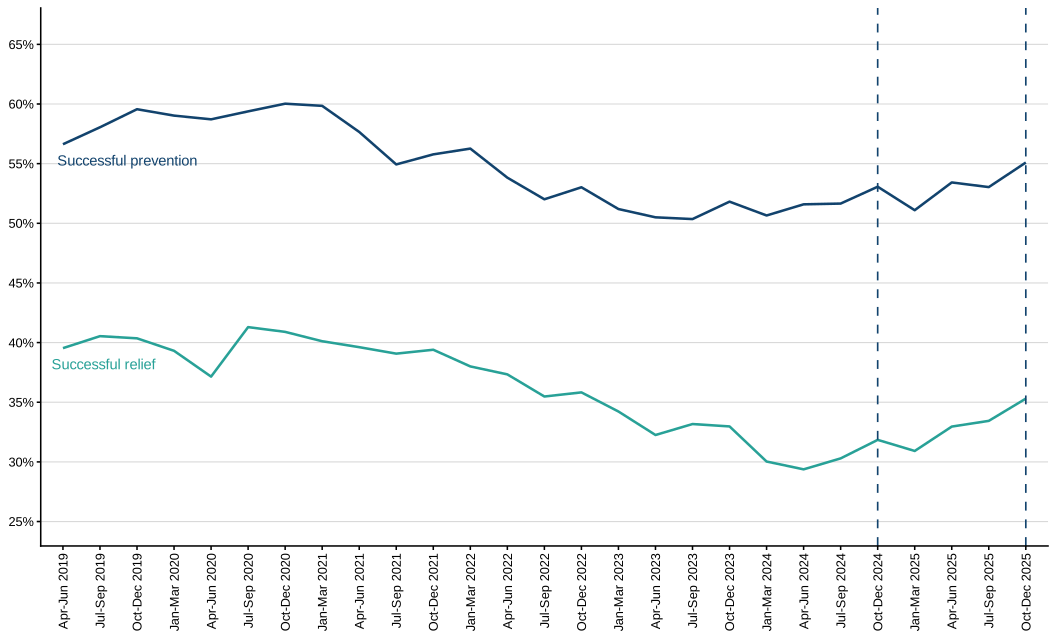
Over half of the prevention duties ending in October to December 2025 ended because the household was able to secure accommodation for 6 months or more. This is a higher proportion compared to the same periods in 2022, 2023 and 2024, however remains lower than the same period across 2018 to 2021 when the homelessness reduction act (HRA) was first introduced.
Over a third of households secured accommodation at the end of relief duty, this is a higher proportion compared to the same periods in 2023 and 2024. However, it remains lower than the same period across 2018 to 2022,
Chart 2: Percentage of households for which prevention or relief duty ended by outcome in October to December 2025
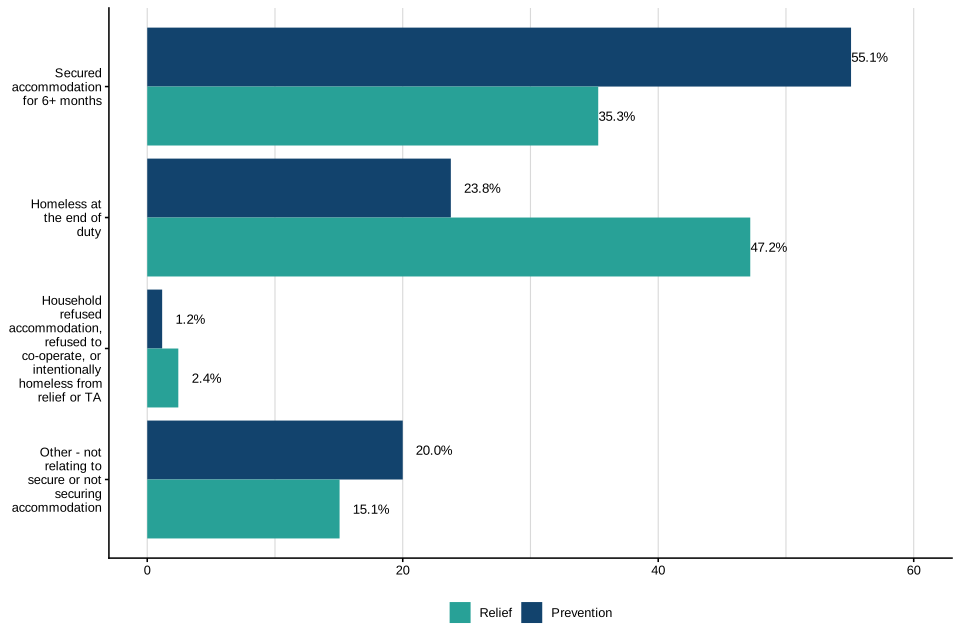
Chart 3: Percentage of prevention and relief duties ending with accommodation secured, April to June 2019 to October to December 2025
Prevention Duty Outcomes
In October to December 2025, prevention duty ended for 34,250 households, down 4.5% from the same quarter last year. 18,870 or 55.1% ended this quarter because the household secured accommodation for 6 months or more and their homelessness had been prevented. This is up 2.0 percentage points than last year.
Prevention activity e.g. negotiation work to allow the household to remain in their existing accommodation, or help with financial payments to reduce arrears, resulted in 6,120 households being able to remain in their existing home. This is 32.4% of those securing accommodation for six or more months, down 4.4 percentage points from this time last year.
Just less than a quarter (23.8% or 8140) of households whose prevention duty ended were homeless at the end of the prevention duty and were subsequently owed relief duty. This is down 1.3 percentage points than the same quarter last year.
Relief Duty Outcomes
In October to December 2025, relief duties ended for 52,600 households, which is down 4.2% from the same quarter last year.
24,830, or 47.2% of households had their relief duty end because their homelessness had not been relieved within 56 days, meaning their local authority would need to assess whether a main duty would have to be owed, down 3.6 percentage points from the same quarter last year.
This outcome was followed by 18,570 or 35.3% of households whose relief duty ended because they had secured accommodation for at least 6 months, up 3.5 percentage points from the same quarter last year. Of these, 76.8% (14,260) were adult only households, up 2.1 percentage points from the same quarter last year.
Main Duty Decisions and Outcomes
Main Duty Decisions
The number of households owed a main duty fell by 11.3% compared to October to December 2024, mirroring the decrease in main duty assessments in the same period. However, the proportion households being accepted after a main duty assessment has fallen slightly compared to the previous year.
Chart 4: Number of households by decision of main duty assessment from October to December 2024 to October to December 2025
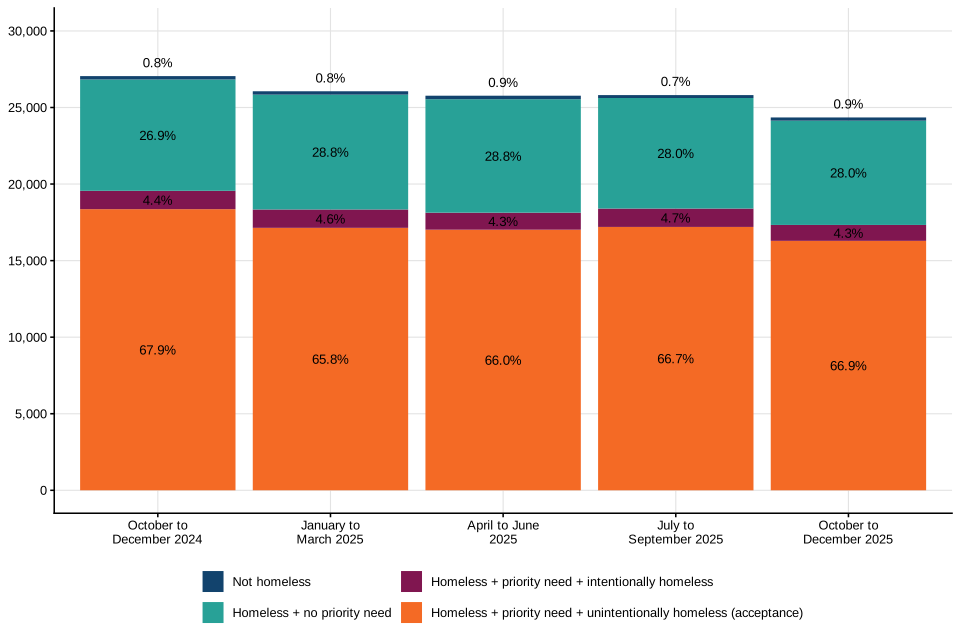
In October to December 2025, local authorities made 24,350 main duty decisions for eligible households:
- 16,290 (or 66.9%) were accepted as owed a main homelessness duty, as the household was judged to be homeless, with priority need, and unintentionally homeless. This is down 1.0 percentage points compared to October to December 2024.
- 1,040 decisions were that a main duty was not owed, as the household was assessed to be homeless and have priority need, but judged as intentionally homeless. The proportion of decisions these represented is largely the same compared to the same quarter last year (down 0.2 percentage points).
- 6,810 were not owed a main duty as the household was assessed as homeless but with no priority need, representing 28.0% of all main duty decisions in the quarter. This is up 1.1 percentage points, reflecting that a higher proportion of households are being assessed as homeless with no priority need compared to the same period last year.
- 210 were not owed a main duty as the household was assessed as not homeless. These decisions represented 0.9% of all main duty decisions in the quarter. This proportion is the same compared to the same quarter last year (0.0 percentage points).
The number of households with children owed a main duty fell by 15.9% from the same quarter last year to 8,140 households. This reflects the decrease in households with children owed a relief duty this quarter (down 8.1%) and last quarter (down 3.0%) compared to the same period of the previous year.
The number of households owed a main duty who were homeless and have priority need due to domestic abuse had increased by 3.6% to 1,450 from October to December 2024.
Main Duty Outcomes
More households had a main duty come to an end in October to December 2025 compared to the same period in the previous year. This was also true for the number of households securing accommodation at the end of the duty.
In October to December 2025, 14,290 households had their main homelessness duty come to an end, up 5.2% from October to December 2024. Of these households, 11,020 accepted an offer of settled accommodation, up 2.2% from the same quarter last year. Households accepting an accommodation offer represented 77.1% of all main duties ending in the quarter, down 2.3 percentage points compared to the same period last year.
4. Temporary accommodation
The number of households in temporary accommodation on the 31 December 2025, has dropped slightly below the record levels the previous quarter, but still remains higher than the same time the previous year. While this shift is small, this is the first quarter that the number of households in temporary accommodation has fallen since 2022.
The number of families, and the total children in temporary accommodation, have continued to increase. However, the number of families in B&Bs, and families in B&Bs for more than 6-weeks have been falling each quarter since 30 June 2024.
Chart 5: Number of households in temporary accommodation since 30 June 2019 to 31 December 2025 by household composition
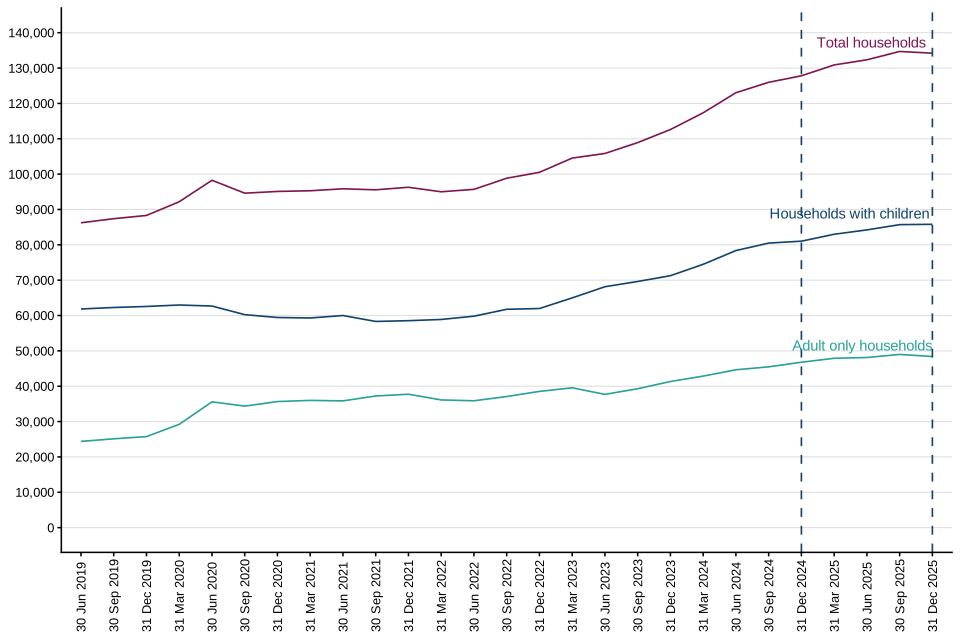
134,210 households were in temporary accommodation on 31 December 2025, down 0.4% from the previous quarter but up 5.0% from the same time last year.
Overall, 85,800 households or 63.9% of households in temporary accommodation included dependent children, with 176,130 dependent children living in temporary accommodation. Households with children increased 0.1% from the previous quarter and increased 5.9% from 31 December 2024.
The number of adult only households in temporary accommodation fell 1.2% from the previous quarter and rose 3.5% from the same time last year to 48,410.
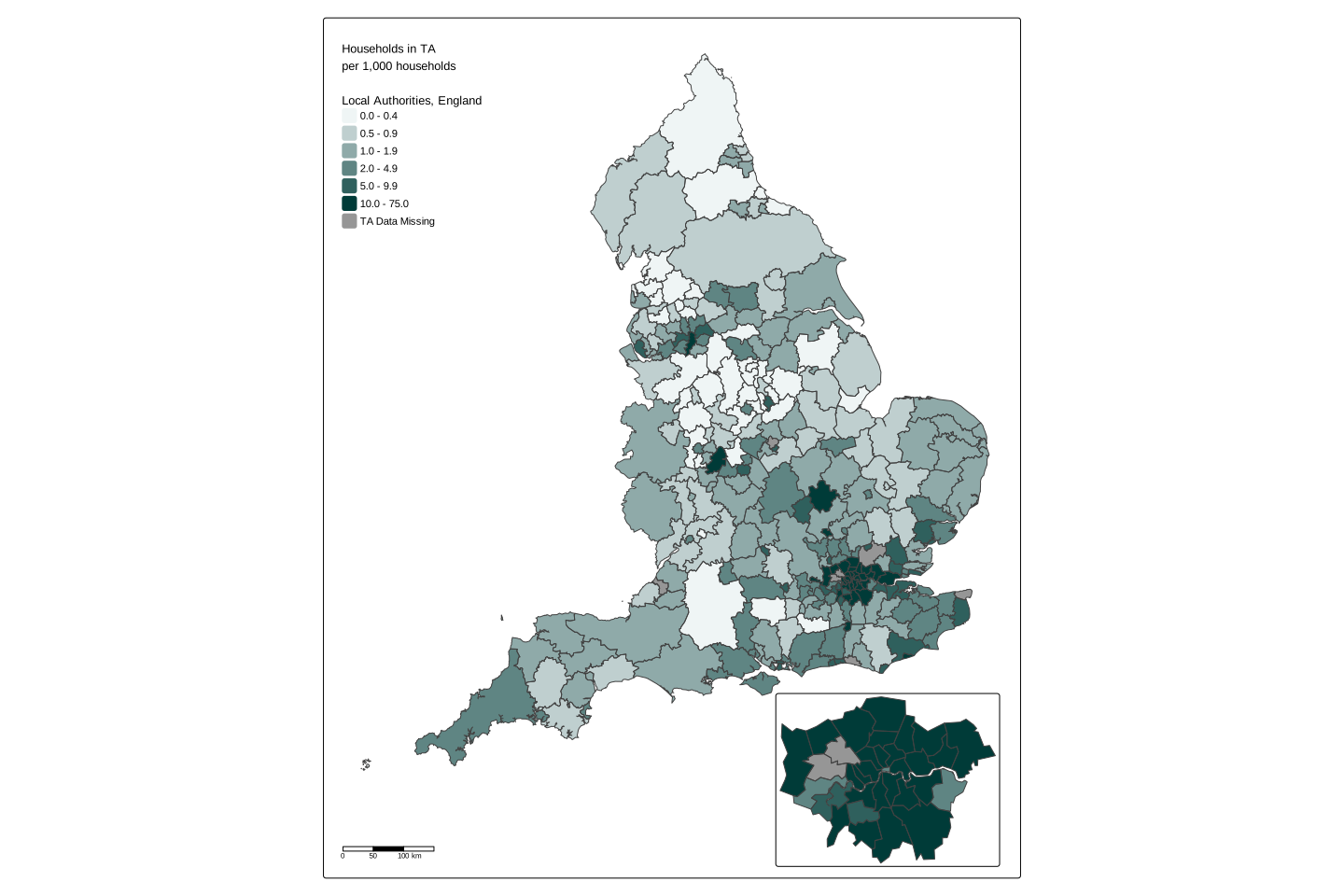
On 31 December 2025, there were 21.1 households living in temporary accommodation per 1,000 households in London, compared with 2.8 households per 1,000 in the Rest of England. Newham London Borough had the highest rate of temporary accommodation in London with 59.0 households per 1,000 households, followed by Westminster with 45.9 households per 1,000 households.
Slough Borough Council had the highest rate outside London with 27.3 households per 1,000 households, the seventh highest local authority overall. Followed by Hastings with 15.4 households per 1,000 households.
Map 1: The number of households in temporary accommodation per thousand households across England. This map shows that the highest rates of temporary accommodation are in London and other urban hotspots.
Types of temporary accommodation
Chart 6: Number of households in temporary accommodation from 31 March 2021 to 31 December 2025 by temporary accommodation type
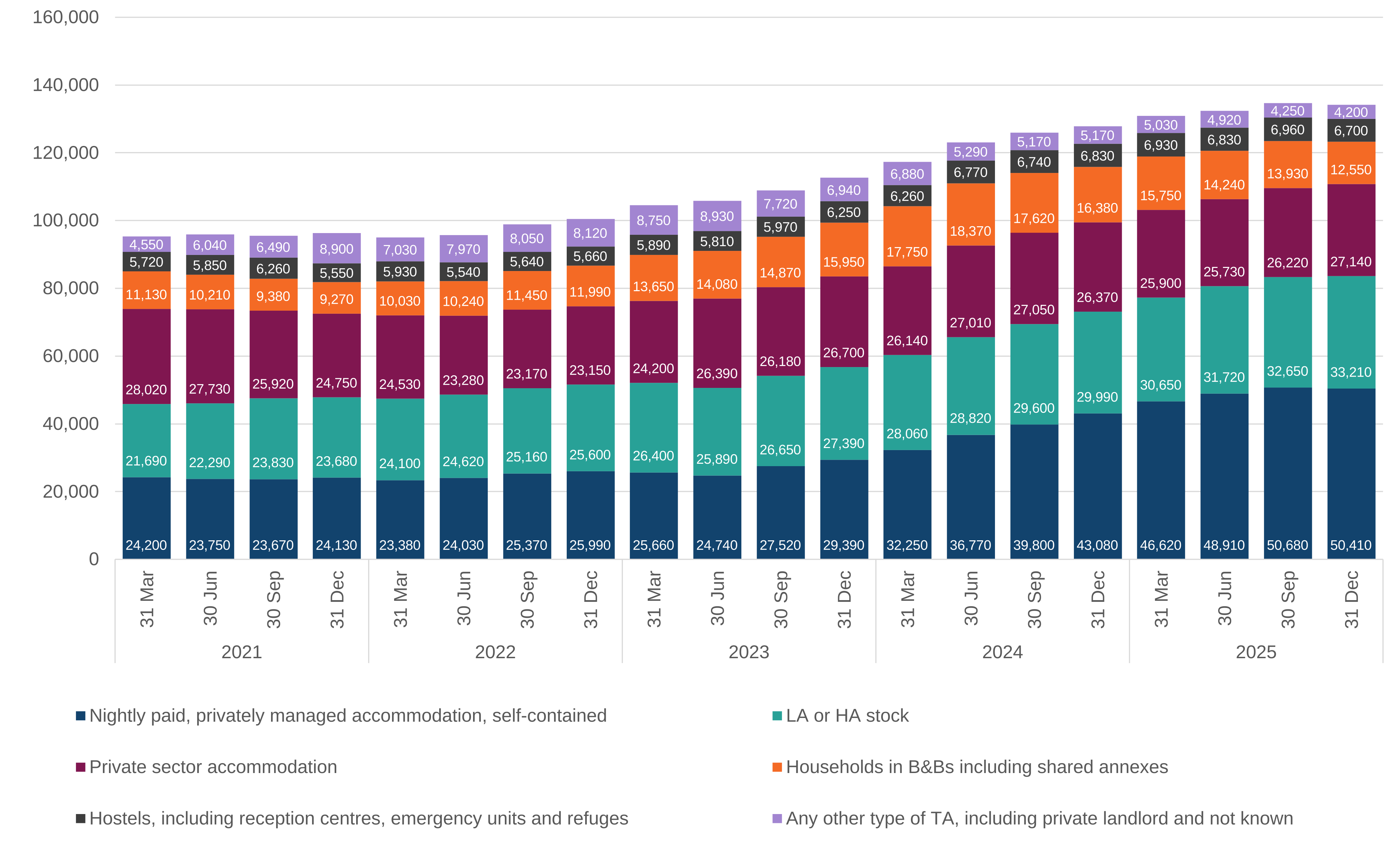
Of the households in temporary accommodation on 31 December 2025, 12,550 were living in bed and breakfast (B&B) accommodation, down 23.4% from the same time last year. These accounted for 9.4% of all households in temporary accommodation, down 3.5 percentage points. Of these households in B&B, 10,640 (84.8%) were adult only households, down 11.7% from the same time last year. The number of households in B&B accommodation with dependent children decreased 55.9% from the same time last year to 1,910 households or 15.2% of households in B&B; this proportion is down 11.2 percentage points compared to this time last year.
Chart 7: Number of households with children in B&B temporary accommodation on 30 June 2019 to 31 December 2025
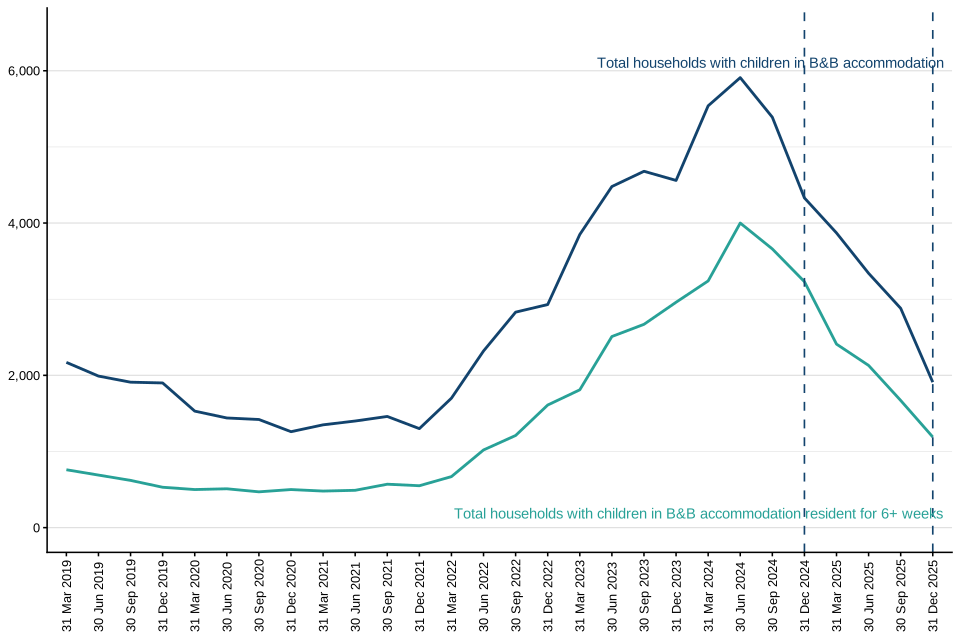
1,190 households with children in B&B accommodation had been resident for more than the statutory limit of 6 weeks. This is down 63.2% from 3,230 on 31 December 2024, and down 28.7% from 1,670 in the previous quarter.
50,410 households were in nightly paid self-contained accommodation, accounting for 37.6% of all households in temporary accommodation on the 31 December 2025. The number of households in nightly paid self -contained temporary accommodation is up 17.0% from the same time last year, but down slightly compared to the previous quarter (down 0.5%).
Length of Time in TA
Chart 8: Overall length of time in temporary accommodation for households in temporary accommodation on 31 December 2025, by type of accommodation and household type
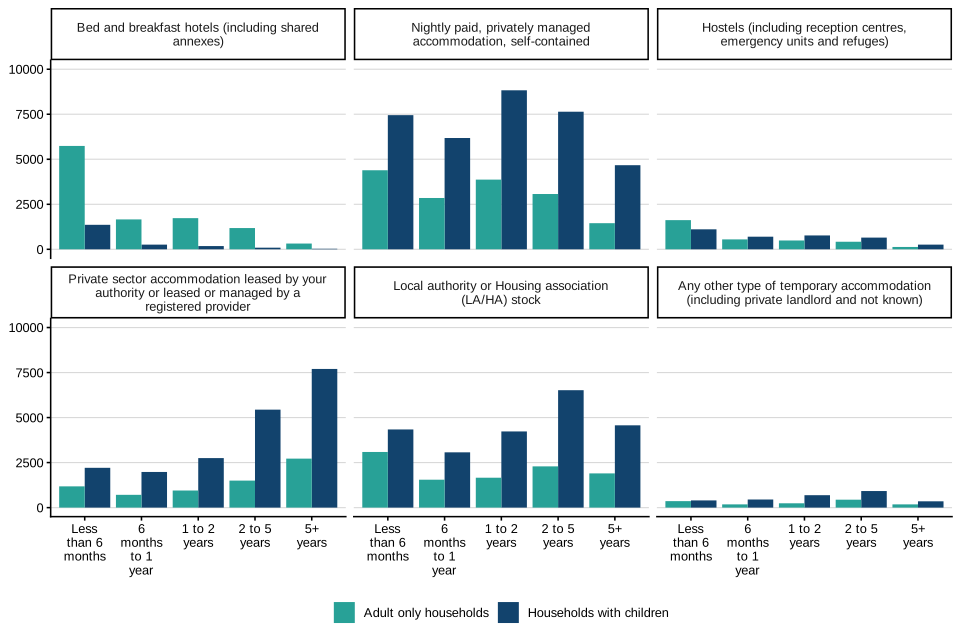
Data on the length of time households spend in temporary accommodation show there are differences between households with and without children in duration and type of TA placements. The most common length of time for households with children to have spent in TA is 2 to 5 years (21,260 households or 24.8%). Of these 35.9% were in nightly paid accommodation. The most common length of time for adult only households to remain in TA is less than 6 months (16,380 households or 33.8%). Of these 35.0% were in bed and breakfast accommodation.
Out of area temporary accommodation
43,040 households owed a temporary accommodation duty were in accommodation in a different local authority (also referred to as out of area temporary accommodation), an increase of 4.8% compared to the same time last year and an increase of 4.4% from the previous quarter. Households classed as out of area could also include those where a duty is owed but no accommodation has been secured, where this has been recorded as being in another local authority.
Households owed a temporary accommodation duty but in another local authority account for 1.8 out of every thousand households living in England. 82.3% of these out of area placements were from London authorities.
In London, the areas with the highest rate of households owed a temporary accommodation duty but in another local authority area were Westminster City Council (29.7 households per thousand household in the area), Newham London Borough (24.5), and Lambeth London Borough (19.9). Outside of London, the highest were Oadby & Wigston Borough Council (4.7), Manchester City Council (4.6), and Adur District Council (4.1).
Destinations of out of area temporary accommodation, as reported by the sending local authority
86.4% out of area temporary accommodation were recorded as being in a local authority within the same region as the original authority. A regional breakdown is shown in Table 1.
Table 1: Percentage of Households owed a temporary accommodation duty, who were in another local authority within the same region.
| Region | Households owed a temporary accommodation duty in another local authority | Households owed a temporary accommodation duty in another local authority within the same region (%) |
|---|---|---|
| North East | 100 | 100.0% |
| North West | 1,970 | 99.0% |
| Yorkshire and The Humber | 40 | 75.0% |
| East Midlands | 310 | 90.3% |
| West Midlands | 810 | 96.3% |
| East of England | 1,210 | 85.1% |
| London | 35,410 | 85.8% |
| South East | 2,740 | 81.0% |
| South West | 450 | 95.6% |
Out of area households are most often in the same or neighbouring regions. For example, most households owed a temporary accommodation in another local authority from London were to other London authorities (85.8%), the South East (8.7%) or the East of England (5.0%).
Household types and types of temporary accommodation for households out of area
Of the 43,040 households owed a duty out of area on the 31 of December 2025 the most common type of temporary accommodation placement was in nightly paid accommodation, 28,960 households or 67.3% of all out of area households. This was followed by private sector accommodation (7,860 households or 18.3%)
Compared to households in temporary accommodation overall, households owed a duty but in another local authority were more likely to be in nightly paid self-contained accommodation (67.3% vs 37.6%)
Of the households with a duty owed who were out of area on the 31 of December 2025 28,230 (65.6%) had dependent children, while 14,810 (34.4%) were adult only households. These represent similar proportions to temporary accommodation, 63.9% of households in temporary accommodation were households with children.
5. Causes and circumstances of homelessness
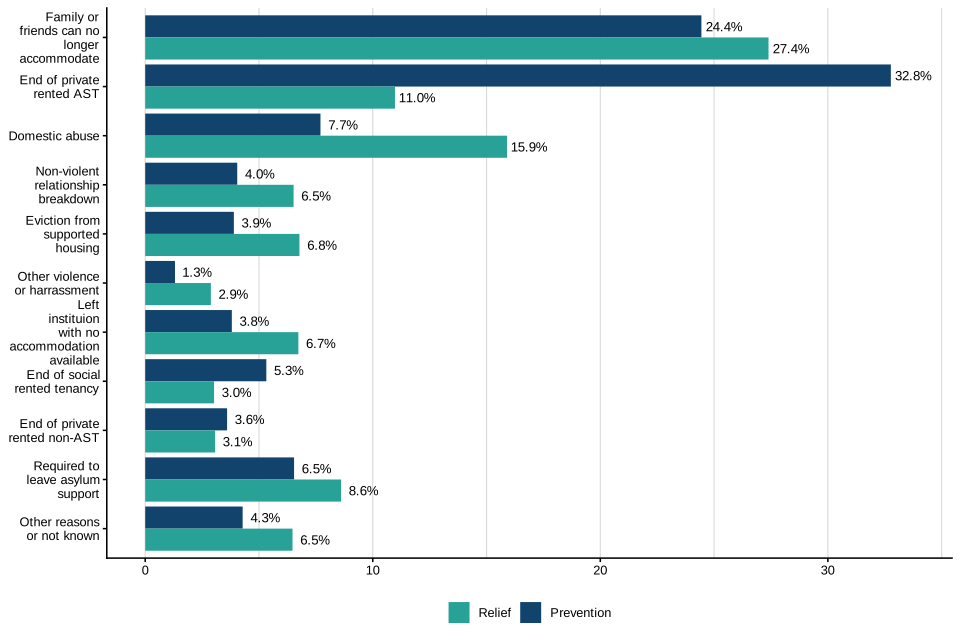
Chart 9: Percentage of households owed a prevention or relief duty by their reason for loss of last settled home in October to December 2025
Reasons for homelessness for households assessed as owed a prevention duty
In October to December 2025, End of private rented Assured Shorthold Tenancy was the most common reason for households being owed a prevention duty, accounting for just under a third of these households.
In October to December 2025, ‘end of private rented assured shorthold tenancy (AST)’ accounted for 11,020 or 32.8% of households owed a prevention duty, down 12.7% than the same period last year. This proportion is down 3.6 percentage points compared to October to December 2024.
The most common recorded reasons households were owed a prevention duty due to the end of an AST were: landlord wishing to sell the property (4,760), landlord wishing relet the property (1,790 households), and other reasons/not known (2,150).
The second most common reason for those owed a prevention duty was family or friends no longer willing or able to accommodate, accounting for 8,220 or 24.4% of households owed a prevention duty, down 0.5% from the same quarter last year.
One notable change includes an increase of 57.1% from the previous year in households owed a prevention duty due to requirement to leave accommodation provided by the Home Office as asylum support to 2,200 households.
Reasons for homelessness for households assessed as owed a relief duty
For those owed a relief duty, family or friends no longer willing or able to accommodate was the most common reason for homelessness, accounting for over a quarter of households owed a relief duty.
For those owed a relief duty, family or friends no longer willing or able to accommodate was the most common reason for homelessness, accounting for 11,680 or 27.4% of households owed a relief duty, down 6.8% from the same quarter last year.
The second most common reason for those owed a relief duty was domestic abuse, accounting for 6,780 or 15.9% of households owed a relief duty. Households owed a relief duty due to domestic abuse represent a similar number (up 0.1%) and proportion (up 0.4 percentage points) of relief duty households compared to the same time the previous year.
There was an increase of 0.5% in households owed relief duty due to ‘requirement to leave accommodation provided by the Home Office as asylum support’ compared to October to December 2024 to 3,670 households.
One notable change from the same quarter last year in reasons why households were owed a relief duty included a decrease of 11.7% in end of private rented Assured Shorthold Tenancy to 4,680 households.
Current accommodation
Those assessed as owed a prevention duty were most commonly in private rented sector accommodation at the time of application, households initially owed a relief duty were most commonly living with family.
Chart 10: Percentage of households owed a prevention or relief duty by their accommodation at the time of approach in October to December 2025
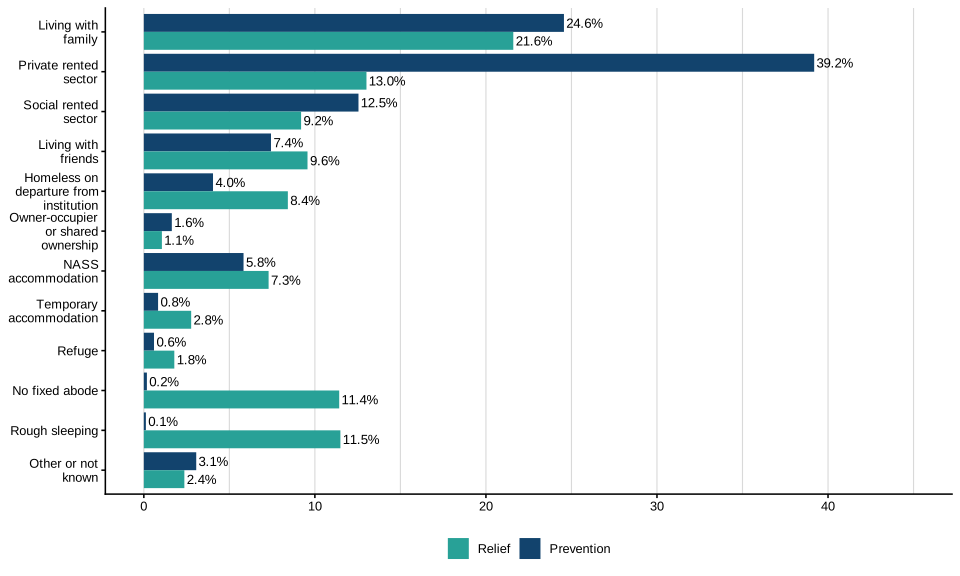
The most common type of accommodation at the time of application for those owed a prevention duty was in the private rented sector (39.2%), down 12.1% from October to December 2024 to 13,180 households. This is down 4.0 percentage points compared to October to December 2024. This is consistent with the decreases of end of private rented AST as reasons for threat of homelessness for those owed prevention duties.
The most common type of accommodation for households owed a relief duty was living with family (21.6%), which fell by 6.7% from October to December 2024 to 9,210 households. This is down 1 percentage points compared to October to December 2024.
The number of households owed a relief duty who were ‘rough sleeping’ on approach increased by 5.4% from October to December 2024 to 4,900 households, while those reporting ‘no fixed abode’ fell 7.6% to 4,870 households.
The percentage reported as ‘Other/not known’ accommodation at the time of application has risen by 3.0% for prevention duties and reduced by 1.9% for relief duties.
Duty to refer
9.7% or 8,200 of the 84,250 assessments made were as a result of referrals from public bodies under the duty to refer.
Of the assessments carried out from a duty to refer referral, 92.4% resulted in a homelessness duty. Criminal justice system organisations made the most assessments due to referrals to homelessness services under the duty to refer with 3,700 assessments (45.1% of total assessments from a duty to refer referral), an increase of 9.1% from October to December 2024.
Demographics
Household composition
During this quarter, adult only households were more likely to have homeless applications taken when already homeless and so are owed a relief duty (60.3%), whereas households with children are more likely to have an application taken when threatened with homelessness and so owed a prevention duty (55.0%).
In October to December 2025, 54,270 adult only households were owed a prevention or relief duty, up 0.9% from October to December 2024. The number of households with children owed a prevention or relief duty decreased 10.1% from October to December 2024 to 22,010.
Age of lead applicants
For households owed a prevention or relief duty the most common age of lead applicants was 25-34, continuing the pattern since the introduction of the Homelessness Reduction Act (2017). These households accounted for 28.5% or 21,720 households owed a duty in October to December 2025.
Chart 11: The percentage of households owed a prevention or relief duty by age group in October to December 2025 compared to the England population
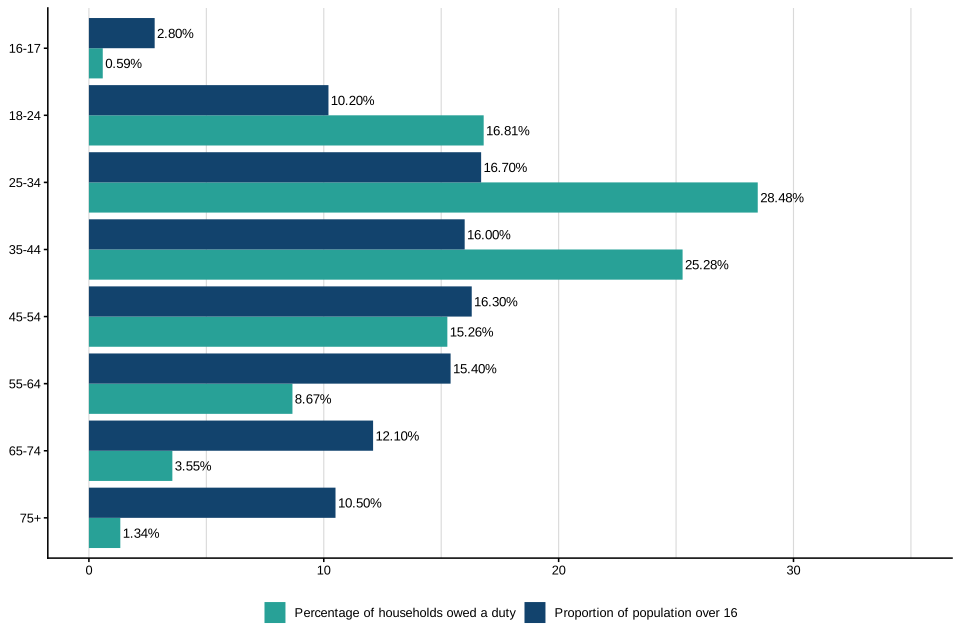
Overall, the age distribution of main applicants for households owed a homelessness duty has remained stable compared to the previous year (overall group proportions shifting by less than 1%).
While the number of households where the main applicant is aged 75 or over changed the most (up 9.7%), it still remains a small overall proportion of the population at 1.3% (compared to 1.2% the previous year).
Age comparison for households owed a duty, households in temporary accommodation, and the England population
Compared to the England population, lead applicants who were aged:
- 16 to 17 were underrepresented among households newly owed a duty as well as those in temporary accommodation
- 18-24 were overrepresented among households newly owed a duty but underrepresented among households in temporary accommodation
- 25-44 were overrepresented among households newly owed a duty as well as those in temporary accommodation
- 45-54 were underrepresented among households owed a duty but overrepresented in households in temporary accommodation
- 55 and over were underrepresented among households newly owed a duty as well as those in temporary accommodation
Table 2: Age breakdowns for lead applicants of households owed a homelessness duty, households in temporary accommodation with comparison to population age estimates (in percentages)
| Age | Households owed a duty | Households in temporary accommodation | Population % |
|---|---|---|---|
| 16 to 17 | 0.6% | 0.0% | 2.8% |
| 18 to 24 | 16.8% | 9.0% | 10.2% |
| 25 to 34 | 28.5% | 26.0% | 16.7% |
| 35 to 44 | 25.3% | 31.6% | 16.0% |
| 45 to 54 | 15.3% | 21.0% | 16.3% |
| 55 to 64 | 8.7% | 8.9% | 15.4% |
| 65 to 74 | 3.6% | 2.7% | 12.1% |
| 75 and over | 1.3% | 0.9% | 10.5% |
| Not known | 0.0% | 0.0% | 0.0% |
| Total | 100.0% | 100.0% | 100.0% |
Ethnicity of lead applicants
Households with white lead applicants are most common among those owed a homelessness duty in England. However, these applicants are underrepresented compared to the England population, while households with black lead applicants or those from an other ethnic group represent a smaller proportion, but are typically overrepresented among households owed a statutory homelessness duty.
Chart 12: The percentage of households owed a prevention or relief duty by ethnicity in October to December 2025 compared to the England population
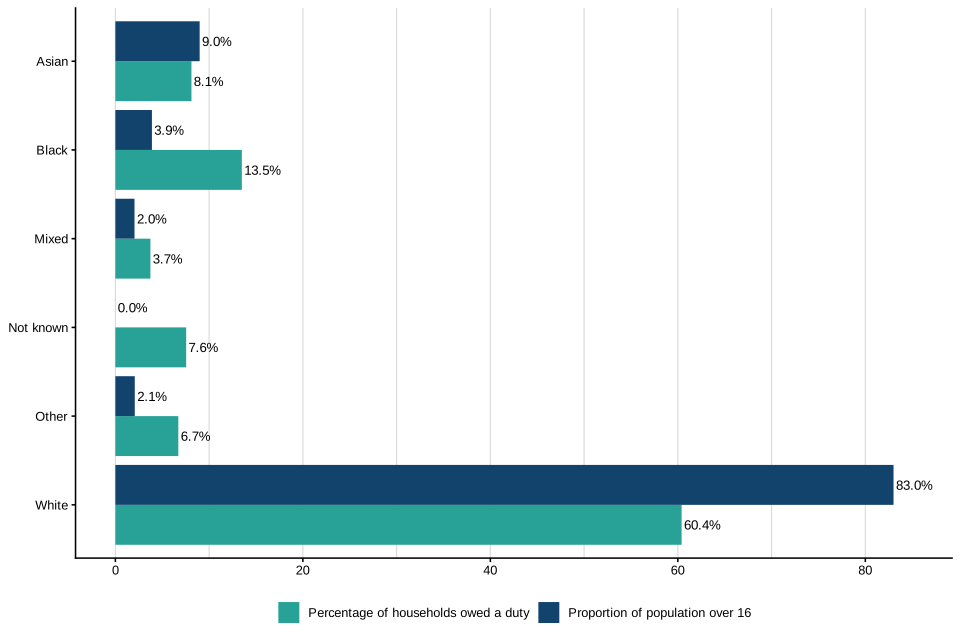
The majority of households owed a prevention or relief duty were where the lead applicant was White (60.4%), followed by households where the lead applicant was Black (13.5%) or Asian (8.1%). The number of households owed a prevention or relief duty where the lead applicant was Black increased by 3.8%, White fell by 2.3%, Mixed fell by 3.7% and Asian fell by 10.7%.
Compared to the England population, lead applicants who identified as:
- Asian, or Asian British were underrepresented among households newly owed a duty but overrepresented among households in temporary accommodation
- Black, Black British, Caribbean or African or from an Other ethnic group were overrepresented among households newly owed a duty as well as those in temporary accommodation
- Mixed/Multiple Ethnic Groups were slightly overrepresented among households newly owed a duty and more so for those in temporary accommodation
- White were underrepresented among households newly owed a duty as well as those in temporary accommodation
However, lead applicants where ethnicity was ‘Not known’ represents a relatively high proportion of households owed a duty and in temporary accommodation and meaning some groups may be more or less representative of the England population than the data suggests.
Table 3: Ethnicity breakdowns for lead applicants of households owed a homelessness duty, households in temporary accommodation with comparison to population ethnicity estimates (in percentages)
| Ethnicity | Households owed a duty | Households in temporary accommodation | Population % |
|---|---|---|---|
| Asian, or Asian British | 8.1% | 13.8% | 9.0% |
| Black, Black British, Caribbean or African | 13.5% | 22.8% | 3.9% |
| Mixed / Multiple Ethnic Groups | 3.7% | 4.6% | 2.0% |
| White | 60.4% | 36.2% | 83.0% |
| Other | 6.7% | 8.9% | 2.1% |
| Not known | 7.6% | 13.7% | 0.0% |
| Total | 100.0% | 100.0% | 100.0% |
Table note:
- Population estimates used in this release are reproduced with reference to Census 2021 data, from Office for National Statistics. These comparison data are on the ethnicity of individuals aged 16 and over, who would be eligible to be owed a statutory homelessness duty.
- Ethnicity is reported at lead applicant level for households owed a homelessness duty and those in temporary accommodation whereas census population data is reported on an individual level. From these data it is unclear whether there is more than one person in the household and if people that identify as a particular ethnicity are more likely to live in larger households than others.
Employment status of lead applicants
The most common employment status of lead applicants for households owed prevention or relief duties was ‘Registered unemployed’, accounting for 38.6% or 29,470 households in October to December 2025.
Chart 13: The percentage of households owed a prevention or relief duty by employment status of the main applicant in October to December 2025
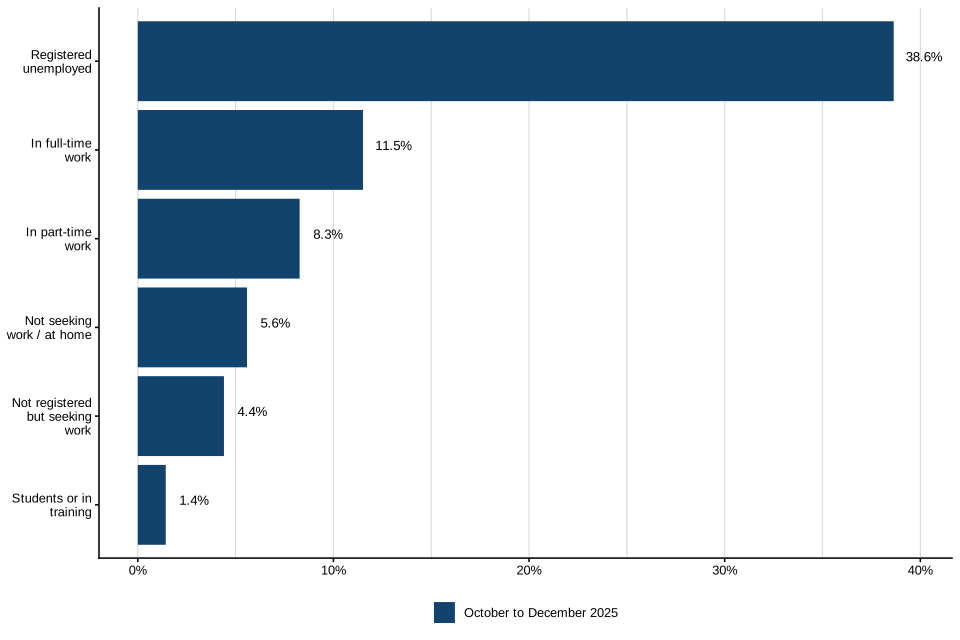
Note: Percentages in this chart do not add to 100% as this chart covers the most common employment statuses of main applicants owed a new homelessness duty in the quarter. Further categories are reported in Table A10 of our accompanying detailed local authority data and England level time series.
The employment status that saw the largest increases in lead applicants of homelessness duty were those who were retired up 10.1% to 2,610, not registered but seeking work up 8.7% to 3,360, working irregular hours up 5.6% to 1,890, registered unemployed up 3.0% to 29,470 and not working due to long-term illness/disability up 1.2% to 11,650. Whilst those who were not seeking work / at home fell 14.5% to 4,260, in part-time work fell 13.0% to 6,310 and in full-time work fell 10.1% to 8,780.
Household support needs
Over half, 62.3%, of all households owed a duty to prevent or relieve homelessness in October to December 2025 were recorded as having one or more additional support needs. This is a higher proportion compared to the previous year (up 4.4 percentage points).
Chart 14: The percentage of households owed a prevention or relief duty by the top six support needs of households in October to December 2025 compared to October to December 2024
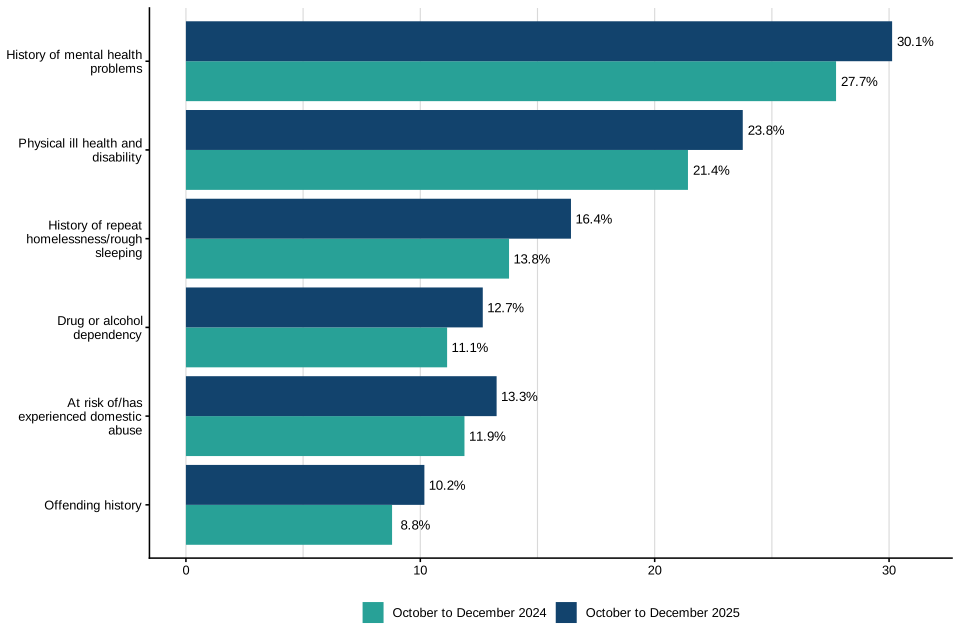
Of all households owed either a prevention or relief duty, 47,520 or 62.3% of households identified as having one or more support needs. The most common support need was for those with history of mental health problems, accounting for 22,980 or 30.1% of households owed a homelessness duty. The second most common was for those with physical ill health and disability, accounting for 18,120 or 23.8% of households owed a duty.
Notable changes this quarter include among households with support needs due to: those with experience of modern slavery up 34.6% from the same quarter last year, to 350 households., those who have served in HM Forces up 30.6% from the same quarter last year, to 640 households. and former asylum seekers up 28.8% from the same quarter last year, to 4650 households .
6. Glossary
Prevention duty: Local authorities may deliver their prevention duty through any activities aimed at preventing a household threatened with homelessness within 56 days from becoming homeless. This would involve activities to enable an applicant to remain in their current home or find alternative accommodation in order to prevent them from becoming homeless. The duty lasts for up to 56 days but may be extended if the local authority is continuing with efforts to prevent homelessness.
Relief duty: The relief duty is owed to households that are already homeless on approaching a local authority and so require help to secure settled accommodation. The duty lasts 56 days and can only be extended by a local authority if the household is not owed the main homelessness duty.
Section 21 notice: A Section 21 notice is the form a landlord must give a tenant to start the process to end an Assured Shorthold Tenancy. This is recorded alongside initial assessments.
Main Duty: The ‘main’ homelessness duty describes the duty a local authority has towards an applicant who is unintentionally homeless, eligible for assistance and has priority need. These households are only owed a main duty if they did not secure accommodation in the prevention or relief stage, and so is not owed to those ‘threatened with homelessness’. In addition, a minimum of 56 days of assistance must have elapsed from a household approaching the local authority to being owed a main duty.
Priority need: The legislation states that some categories of applicants have a priority need for accommodation if homeless, whereas others do not. Applicants who have priority need include households with dependent children or a pregnant woman; those who are homeless due to fire, flood or other emergency; those who are particularly vulnerable due to ill health, disability or old age; those having been in custody or care; or those who have become homeless due to violence or the threat of violence. A full explanation of priority need groups and assessments is contained in Chapter 8 of the Homelessness Code of Guidance.
Temporary Accommodation: Temporary Accommodation is the term used to describe accommodation secured by a local housing authority under their statutory homelessness functions. The majority of households in temporary accommodation have been placed under the main homelessness duty, but temporary accommodation is also provided during the relief stage to households who the local authority has reason to believe may have priority need, or on an interim basis in other circumstances such as pending the outcome of a review on a homelessness decision.
Rough sleeping: People sleeping in the open air (such as on the streets, in tents, doorways, parks, bus shelters or encampments) or other places not designed for habitation (such as stairwells, barns, sheds, car parks, cars, derelict boats, stations, or ‘bashes’ which are makeshift shelters, often comprised of cardboard boxes). Rough sleepers in this publication may have slept rough one night or across several nights.
Rough sleeping at the time of Local Authority Approach: Rough sleepers are defined as those who were, in the judgement of the assessor, rough sleeping when they approached a local authority for help.
History of Rough Sleeping: This is a support need based on a history of sleeping rough and does not mean that the household was sleeping rough at the time of approach to the local authority.
Duty to Refer: Since 1 October 2018, duty to refer has required specified public bodies to refer, with consent, users of their service who they think may be homeless or threatened with homelessness to a local housing authority of the individual’s choice.
Adult only households: A term used for households without children, which will include couples and households with two or more adults.
Support needs: areas of additional needs that mean the household requires support to acquire and sustain accommodation, giving an indication of the additional services local authorities need to provide to prevent an individual becoming homeless or to stop the cycle of repeat homelessness. Local authorities report as many support needs that apply to each household.
Multiple Disadvantage: Households experiencing three or more of the following five disadvantages: repeat homelessness/rough sleeping; substance dependence; mental health issues; domestic abuse; and contact with the criminal justice system.
7. Technical information
This release reports on data that is collected quarterly from local authorities in England via the Homelessness Case Level Information Collection. This method of collection was introduced in 2018 alongside significant homelessness legislation; before this statutory homelessness was recorded in a previous collection called the P1E.
Most of our figures are an aggregate count of households who reached different stages of homelessness duties during the reported quarter. Temporary accommodation is different and is a snapshot of the last day of the quarter.
Our published outputs
On the Statutory homelessness in England October to December 2025 webpage, we also publish:
- A Technical note: which provides key definitions and information on our statistics methodology
- Detailed local-authority level data tables
- Statistics use, improvements and user engagement note
- Accessible versions of our detailed local-authority level data tables and our time series- which are currently in development
- Additional tables on percentage of duties owed where homelessness was prevented or relived, for households experiencing multiple disadvantage
An England level data time series and revised tables from previous quarters are available on our Tables on homelessness page
8. Assessment of compliance with the Code of Practice for Statistics
These accredited official statistics were independently reviewed by the Office for Statistics Regulation in October 2023. They comply with the standards of trustworthiness, quality and value in the Code of Practice for Statistics and should be labelled ‘accredited official statistics’.
Please note that Accredited official statistics are called National Statistics in the Statistics and Registration Service Act 2007.
More information on the UK statistical system is available via the UK Statistics Authority.
Information about statistics at MHCLG is available via the Department’s website
9. Release information and contact
Release date: 30 April 2026
Date of next release: 30 July 2026 (Provisional)
The date will be pre-announced and confirmed via the GOV.UK publication release calendar
Contact: 0303 444 8433 / homelessnessstats@communities.gov.uk (Responsible Statistician: Madeha Asim)
Media enquiries: 0303 444 1209 / NewsDesk@communities.gov.uk
Feedback: Please complete our user engagement survey.