Statutory homelessness in England: financial year 2024-25
Published 27 November 2025
Applies to England

© Crown copyright 2025
This publication is licensed under the terms of the Open Government Licence v3.0 except where otherwise stated. To view this licence, visit nationalarchives.gov.uk/doc/open-government-licence/version/3 or write to the Information Policy Team, The National Archives, Kew, London TW9 4DU, or email: psi@nationalarchives.gov.uk.
Where we have identified any third party copyright information you will need to obtain permission from the copyright holders concerned.
This publication is available at https://www.gov.uk/government/statistics/statutory-homelessness-in-england-financial-year-2024-25/statutory-homelessness-in-england-financial-year-2024-25
This is the annual statistics release for statutory homelessness assessments and activities in England between 1 April 2024 and 31 March 2025 (referred to as 2024-25).The release provides a narrative of the high-level picture of statutory homelessness in England and includes information on statutory homelessness assessments, and activities under different duties to combat homelessness, and use of temporary accommodation (TA).
This annual release provides a detailed look back over the 2024-25 financial year, including additional breakdowns of previously published data. More up to date quarterly data has already been published covering Statutory homelessness in England April to June 2025
1. Main findings
Our financial year annual publications provide more detailed insight into statutory homelessness in England between April 2024 and March 2025.
- Compared to the previous year, in 2024-25 there were small decreases in the number of households who had initial assessments from their local authorities, while there were small increases in numbers owed new duties in the year. This contrasts to the larger increases in assessments and new duties each year between 2021-22 and 2023-24.
- Households who are eligible for assistance and are assessed by their local authority when they are threatened with homelessness, are owed a prevention duty. While households who are already homeless when assessed are owed a relief duty.
- The most common reasons for homelessness or threat of homelessness have remained consistent since the previous year. End of assured shorthold tenancies continued to be the common reason for threat of homelessness among households owed a prevention duty, while family or friends no longer able to accommodate remained the most common reason for homelessness among households owed a relief duty.
- There were increases in the number of households ending duties to prevent or relieve homelessness in 2024-25, as well as increases in the overall number of households helped to secure accommodation through these duties. However, these have increased at different rates for prevention and relief duties. For prevention duties ending larger increases in the number of households securing accommodation mean that the likelihood of successful outcomes at prevention are higher than the previous year. But the opposite is true for relief duties, the likelihood of successful outcomes is lower than the previous year.
Households with children:
- Over half of households with children owed a prevention duty were threatened with homelessness due to the end of an assured shorthold tenancy. This remains the most common reason, similar to previous years.
- The most common reason for households with children to be owed a relief duty was family and friends no longer able to accommodate. Similar to previous years, this and domestic abuse each accounted for just over a quarter of relief duties owed to households with children.
Adult only households:
- While end of assured shorthold tenancy was also the most common reason for adult only households owed a prevention duty. This was closely followed by family and friends no longer able to accommodate. These two reasons for threat of homelessness each accounted for over a quarter of adult only households owed a prevention duty similar to the previous year.
- Similar to the previous year, nearly a third of relief duties owed to adult only households were due to family or friends no longer able to accommodate, which remains the most common reason for homelessness among these households.
Households in temporary accommodation on 31 March 2025
- This release provides more detail on the characteristics and circumstances of households in temporary accommodation at the end of the financial year. This includes further information on the households in temporary accommodation who were in another local authority area.
- Compared to all households in temporary accommodation, a greater proportion of those placed in another local authority area were in nightly paid self-contained accommodation. Other types of temporary accommodation placements were less common among households placed out of area, with the exception of placements in bed and breakfast style accommodation which were used similarly for households in another area compared all households in temporary accommodation.
- Compared to all households in temporary accommodation a similar proportion of households in another local authority area were households with dependent children.
Homelessness flows 2023 to 2025:
- Homelessness flows data are only published with our annual releases and outline how households progress through different homelessness duties and what outcomes are reached. Flows data considers household over a two year period, so is typically used to compare outcomes between households with different characteristics (called “cohorts”) rather than to explore the latest data trends or changes over time.
- The flows data shows that majority of households initially assessed as owed a duty in 2023-24, had reported outcomes up to a main duty decision by the end 2024-25. A higher proportion of these households were initially assessed when they were homeless and therefore owed a relief , compared to those initially assessed when threatened with homelessness.
- Just under half of these households had their duty end due to securing accommodation, while just under a quarter had a duty end for other reasons (such as loss of contact). The remaining households were owed a main duty decision to establish whether they would be owed further support to secure accommodation.
- Adult only households in general were more likely to have secured accommodation compared to other groups considered. However, overall households with children were still more likely to secure accommodation than cohorts with specific support needs (e.g. care leavers) or circumstances related to their homelessness (e.g. departing from custody).
Release date: 27 November 2025
Date of next release: February 2026 (Statutory Homelessness in England: July to September 2025)
Contact: homelessnessstatistics@communities.gov.uk (Responsible Statistician: Madeha Asim)
Media enquiries: 0303 444 1209 / NewsDesk@communities.gov.uk
2. Between 1 April 2024 and 31 March 2025
- Initial assessments were made for 360,050 households in England in 2024-25, staying consistent with the previous financial year (down 0.3%). Of these, 330,410 households were assessed as owed a homelessness duty, due to being threatened with homelessness or already being homeless in 2024-25. This remains very similar to duties owed in 2023-24 (up 0.9%).
- 147,870 households were assessed as being threatened with homelessness and therefore owed a prevention duty in 2024-25. This is a 0.3% increase from 2023-24. This represents 44.8% of all duties owed, a similar proportion to 2023-24.
- 38.7% or 57,190 of those owed a prevention duty were threatened with homelessness due to the end of an assured shorthold tenancy, a decrease of 1.0% from 2023-24. This remains the leading reason for households owed a prevention duty. Departure from an institution showed the biggest increase compared to the previous financial year, 4,510 households, an increase of 26.3% compared to the previous financial year. This includes households departing from custody, those leaving looked after child placements, and those leaving general or psychiatric hospital settings.
- 182,540 households were assessed as homeless and therefore owed a relief duty in 2024-25. This is up 1.4% from 2023-24.
- Of these, 29.7% or 54,300 of these households were owed a relief duty due to friends or family no longer willing to accommodate, an increase of 1.3% compared to 2023-24. Similar to increases in prevention duties, there was also a notable 13.1% rise in households becoming homeless after leaving institutions, reaching 10,860.
3. About our statistics
This is the annual statistics release for statutory homelessness assessments and activities in England between 1 April 2024 and 31 March 2025. Statutory homelessness concerns duties placed on local authorities to take reasonable steps to prevent and relieve homelessness to eligible households.
Short definitions for technical terms can be found in the glossary section of this release.
The full definitions are provided in the technical note.
3.1 Uses and limitations
These statistics can be used:
- To count the number of homelessness duties accepted by local authorities for this financial year and to compare local authorities and regions in England.
- To assess changes in the number of homelessness duties since 2018.
- To understand the causes, circumstances, and characteristics of households owed a duty for this financial year.
These statistics are not suitable:
- To estimate the total number of people sleeping rough.
- To estimate the total number of people sofa surfing, those in recreational or organised protest, those in squats, or traveller campsites.
- To estimate the households that have yet to make a homelessness application and those who aren’t eligible.
- To compare with other countries in the UK.
- To compare to figures before 2018 recorded via the P1E collection.
3.2 Changes in this release
In 2024-25 we have made a number of changes to the data we publish on a quarterly and annual basis. This includes publication of additional data as well as more frequent publication of some of our data. The changes that affect this annual release are:
- We now include a short glossary section with key terms in the written release, to make our annual and quarterly releases more accessible, Full definitions are still also published in our accompanying technical note.
- We are continuing to review wording used across all of our published outputs. In this annual publication this includes describing households as with children or adult only households. Previously adult only households were referred to as single households.
- Several additional data breakdowns on households in temporary accommodation are now published every quarter. This includes data on length of time in temporary accommodation, age and ethnicity of main applicants in temporary accommodation, and destination of households in another local authority area. As these are now published on a quarterly basis, this additional information is not covered in this annual release.
- Additional data breakdowns on the type of temporary accommodation placements and the household composition of households in another local authority area are now included.
4. Overview of homelessness in 2024-25
Compared to the previous financial year, 2024-25 remained consistent with regards to the number of households owed homelessness support by their local authority. There were small increases in the number of households reaching the end of prevention and relief duties. There were also small increases in the number of households securing accommodation at the end of prevention and relief, although the proportion of households securing accommodation remains largely the same as the previous year.
Figure 1: Number of households initially assessed as owed prevention or relief duties, and households in temporary accommodation on the last day of the quarter since 2019 Q2.
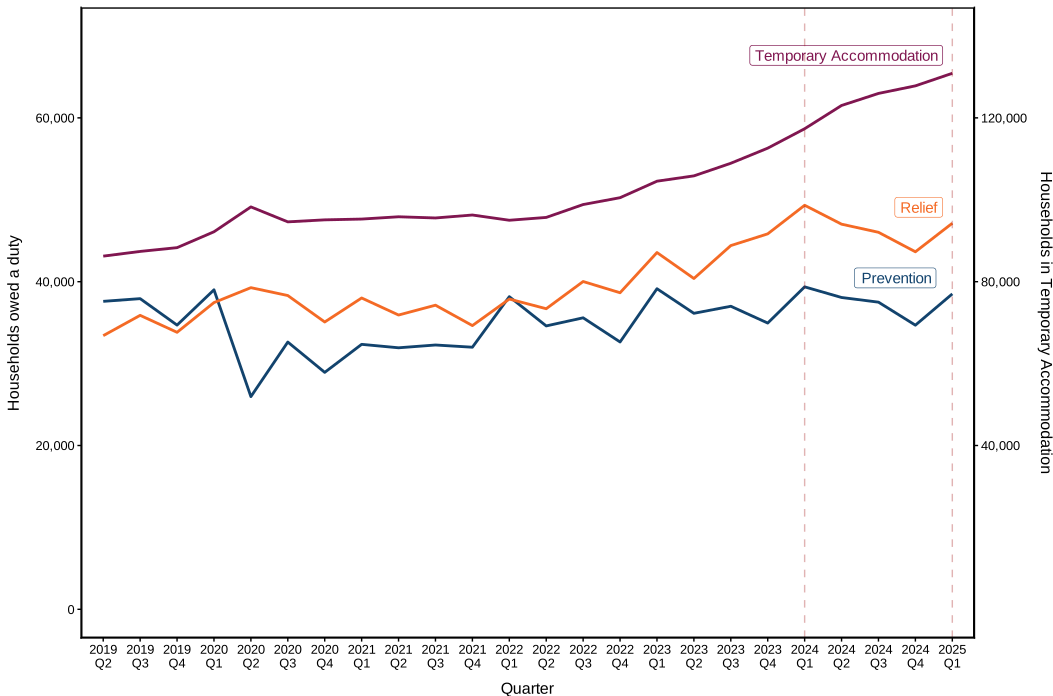
Figure Note: Q refers to calendar year quarters not financial year quarters (i.e. Q1 refers to January to March). Prevention and relief duties owed are over the course of the quarter, while temporary accommodation is a snapshot at the end of each quarter (e.g. 31 March).
In total, 147,870 households were assessed as being threatened with homelessness and therefore owed a prevention duty in 2024-25, which is consistent with 2023-24 (0.3% increase). Households with children have reduced by 3.4% to 60,510 from the previous financial year whereas adult only households have increased by 3.1% to 87,190.
The number of households whose prevention duty ended in 2024-25 was 143,710, an increase of 5.8% compared to the previous year. The number of prevention duties ending increased 2.8% for households with children and increased by 8.1% for adult only households, compared to 2023-24.
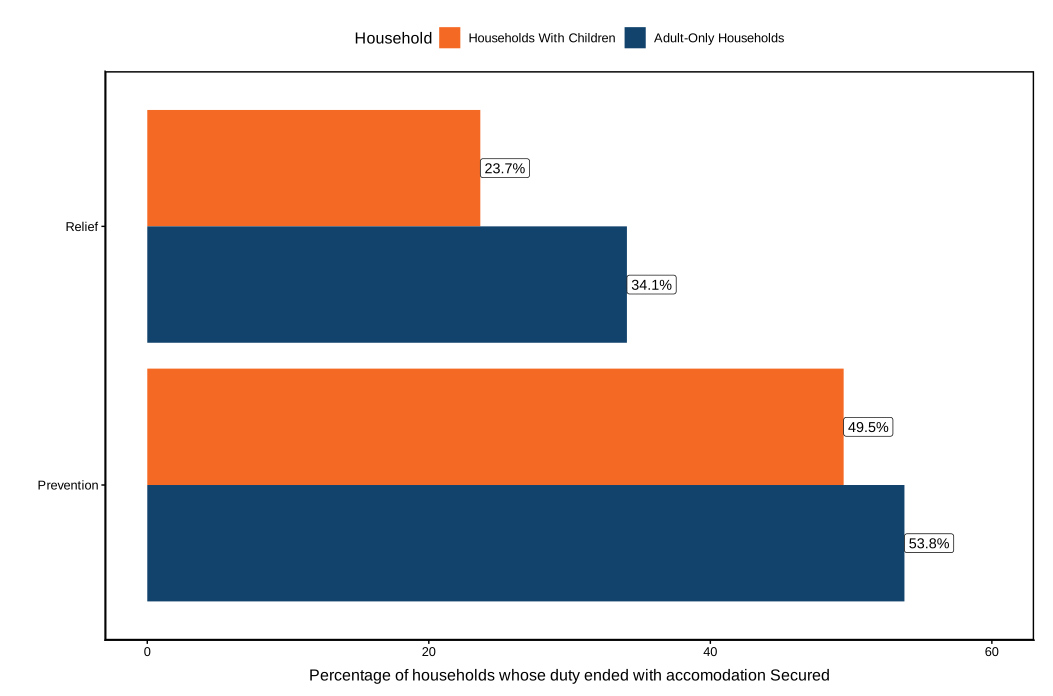
While the number of households securing accommodation at this stage has also increased, the proportion of households securing accommodation has shown a small increase. In 2024-25 49.5% of households with children (30,370 households), and 53.8% of adult only households (44,220 households), secured accommodation for 6 months or more at the end of their prevention duty.
In total 182,540 households were initially assessed as being homeless and therefore owed a relief duty in 2024-25. This is an increase of 1.4% from 2023-24. This increase from 2023-24 to 2024-25 is mirrored in adult only households, where there has been an increase of 2.2% to 134,940. A small decrease has been seen in households with children owed a relief duty, down 0.6% to 47,460.
The number of households whose relief duty ended in 2024-25 was 219,450, an increase of 9.7% compared to the previous year. The number of relief duties ending increased 6.9% for households with children, and increased by 11.0% for adult only households compared to 2023-24.
The number of households with relief duties ending has risen at a greater rate (9.7%) than the number securing accommodation (5.1%), meaning the proportion of households securing accommodation has dropped slightly (32.1% from 30.7%).
In 2024-25 23.7% of households with children (16,760 households), and 34.1% of adult only households (50,590 households), secured accommodation for 6 months or more at the end of their relief duty. This represents a drop of 1.4 percentage points in the proportion of successful outcomes at the end of relief duties for both households with and without children, compared to the previous year.
Figure 2: Percentage of duties that ended with accommodation secured split by household type and duty type.
5. Households with children
In 2024-25, the number of households with children who were either threatened with homelessness or already homeless decreased by 2.1% compared to 2023-24. 60,510 households with children were owed a prevention duty in 2024-25, a 3.4% decrease from 2023-24. 47,460 households with children were owed a relief duty in 2024-25, a 0.6% decrease from 2023-24.
5.1 Causes and circumstances of homelessness for households with children
The reason for loss of last settled home is a good indication of the cause of homelessness for households assessed as being owed a duty; and current accommodation is used to identify the accommodation types of households who are homeless or threatened with homelessness, at the point at which they make an application to a local authority for help.
5.2 Reason for loss or threat of loss of last settled accommodation
Tables A2Pc and A2Rc
Figure 3: Proportion of households with children owed a prevention or relief duty, by reason for loss of last settled home.
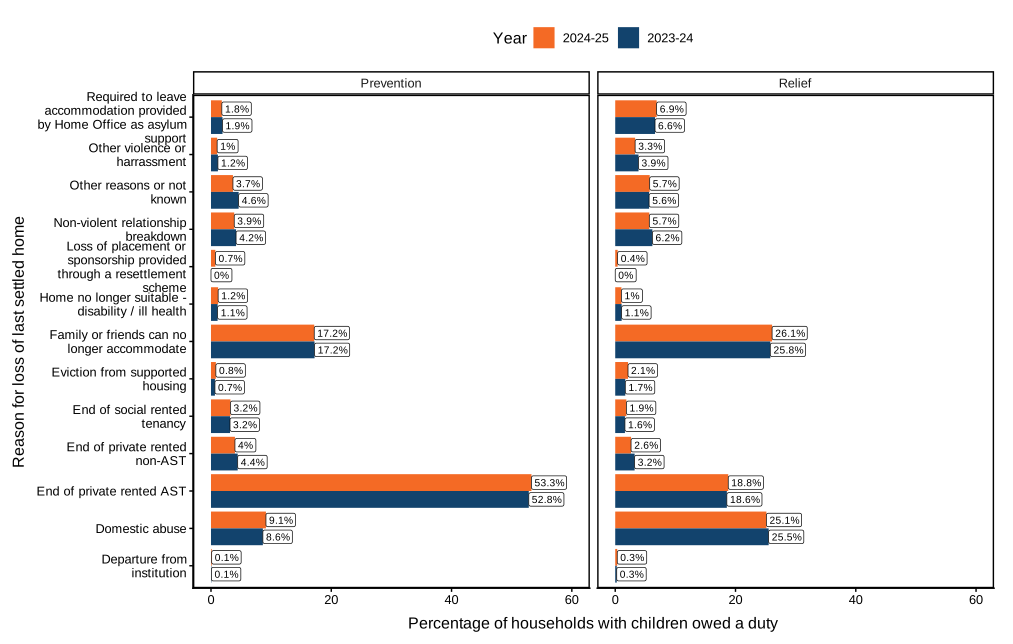
For those owed a prevention duty, the most common reason for the threatened loss of last settled home was due to the end of their private rented assured shorthold tenancy (AST) at 32,250 households or 53.3% of households with children owed a prevention duty. The majority of the households owed a prevention duty due to private rented ASTs ending were due to the landlord wishing to sell or re-let the property at 68.0% (21,920 households), a decrease of 2.6% compared to 2023-24.
Other notable trends from 2024-25 for those owed a prevention duty include an increase in number of households with children owed a prevention duty due to changes in benefit entitlement to 320 households (39.1% increase). There were also changes in the following reasons for loss of last settled home: end of non-AST private rented tenancy (down 13.3% compared to 2023-24), domestic abuse (up 2.4% to 5,530 compared to 2023-24).
The most common reason for loss of last settled home for those owed a relief duty was due to family or friends no longer willing to accommodate at 12,380 or 26.1% of households with children owed a relief duty. This is a 0.6% increase from 2023-24. The second most common reason was domestic abuse, representing 25.1% or 11,930 of households with children owed a relief duty, a decrease of 2.1% compared to 2023-24.
Other notable trends from 2024-25 for households with children owed a relief duty, required to leave accommodation provided by Home Office as asylum support rose to 3,270 (up 3.5% compared to 2023-24), non-violent relationship breakdown with partner fell 8.8% in comparison to 2023-24 to 2,690.
5.3 Accommodation at the time of application
Tables A4Pc and A4PR
Figure 4: Proportion of households with children owed a prevention or relief duty, by accommodation at time of application.
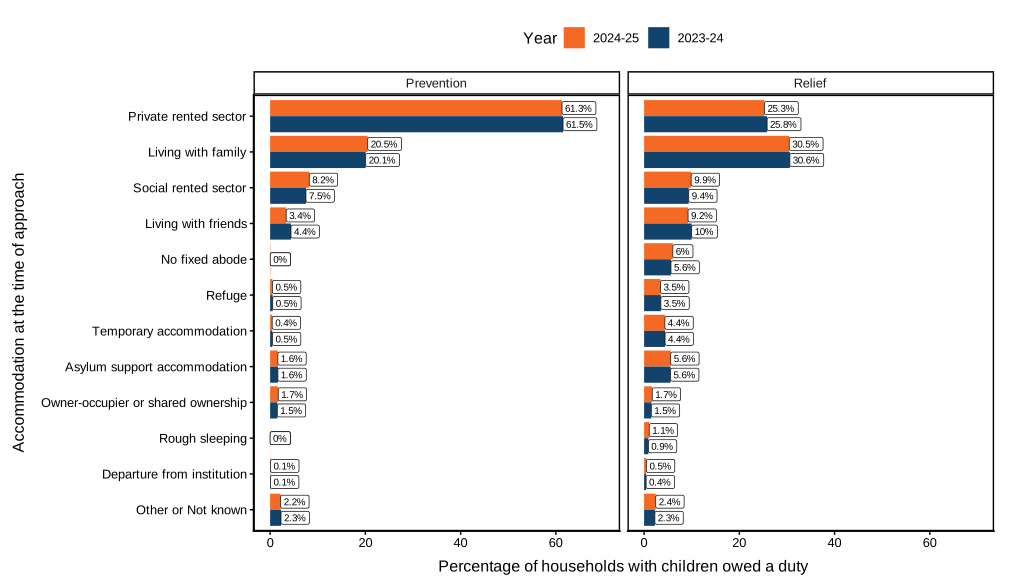
For those owed a prevention duty, the most common accommodation at application was the private rented sector, reflecting the most common reason for threat of homelessness was the end to an assured shorthold tenancy.
Those in the private rented sector at the time of application accounted for 37,100 households (61.3%) of households with children owed a prevention duty. This represents a similar proportion to 2023-24 of households with children owed a prevention duty, but the number of households is down 3.7% from 2023-24. There were decreases in the number of households with children in all types of private rented accommodation at the time of their application (i.e. self-contained accommodation, in houses of multiple occupation, or lodging).
Living with family was the second most common type of accommodation at the time of application for households with children owed a prevention duty(12,400 or 20.5%). The number of households with children living with family have decreased by 1.3% from 2023-24.
For households with children owed a relief duty, the most common accommodation at time of application is living with family (30.5%) at 14,460 households. This represents a similar proportion to 2023-24 of households with children owed a relief duty, but the number of households is down 1.0% from 2023-24.
The private rented sector was the second most common type of accommodation at the time of application for households with children owed a relief duty(11,990 or 25.3%). The number of households accommodated in the private rented sector when assessed as owed a relief duty have decreased by 2.8 % from 2023-24.
5.4 Comparing reason for homelessness or threat of homelessness and accommodation at the time of application
Across prevention and relief duties 49,090 of the households with children were living in the private rented sector at time of application. This is higher than the 41,170 households with children citing the end of a private rented assured shorthold tenancy as their reason for homelessness or threat of homelessness. This indicates that there may often be other reasons for leaving their private sector accommodation, such as family exclusions, domestic abuse, relationship breakdowns etc.
5.5 Support needs for households with children
Tables A3c
Support needs: areas of additional needs that mean the household requires support to acquire and sustain accommodation, giving an indication of the additional services local authorities need to provide to prevent an individual becoming homeless or to stop the cycle of repeat homelessness. Local authorities report as many support needs or relevant life experiences that apply to each household.
Figure 5: Proportion of households with children owed a prevention or relief duty, by support need.
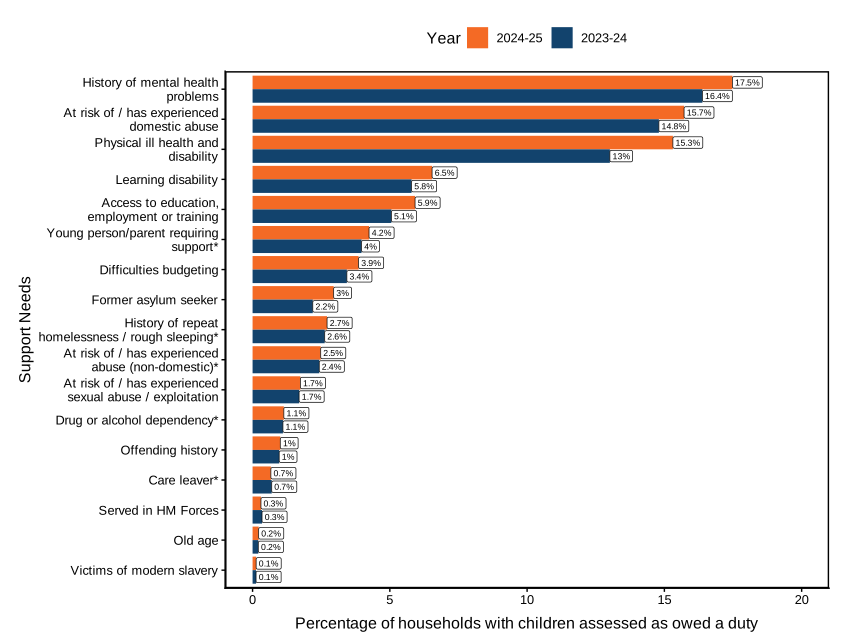
Figure note: Categories in Figure 5 marked with “*” have been created using multiple related support needs. This means some households may be counted more than once in these categories.
Of the 107,970 households with children owed a prevention or relief duty in 2024-25, 45.5% of households (49,140) had at least one support need, a higher proportion than in 2023-24 (41.9%). Of the households who had a support need, most households (55.6%) had one support need, 24.0% had two support needs, and 20.4% had three or more.
The most common support need for households with children in 2024-25 was those with a history of mental health problems, recorded for 18,870 households, or 17.5% of all households with children owed a duty. This is a 4.4% increase in the number of households with support needs due to a history of mental health problems, and also a slight increase in the proportion of households with this support need since 2023-24 (up 1.0 percentage points).
Risk of/experience of domestic abuse was also a common support need among households with children, recorded for 16,970 households, or 15.7%. This is an increase 3.9% in the number of households with children with a domestic abuse support need, and a slight increase in the proportion of households with this support need compared to 2023-24 (up 0.9 percentage points).
Another common support need was physical ill health and disability, which accounted for 16,530 households, or 15.3% of all households with children owed a duty. This has also increased in terms of the number of households (15.1%), and in the proportion of households with this support need compared to 2023-24 (up 2.3 percentage points).
There is a separate annual support needs dashboard published alongside this release which shows the co-occurrence of different support needs in different types of households owed homelessness duties.
5.6 Prevention and relief duty outcomes for households with children
Tables P1c and R1c
Prevention and Relief duties: The homelessness legislation requires local authorities to take reasonable steps to try to prevent or relieve a household’s homelessness by helping them to secure accommodation that will be available to them for at least 6 months. These duties usually last for up to 56 days each, although may be extended in some circumstances. The reasons for duties ending indicate the likely outcomes for these applicants.
Figure 6: Proportion of households with children whose duty ended by outcome.
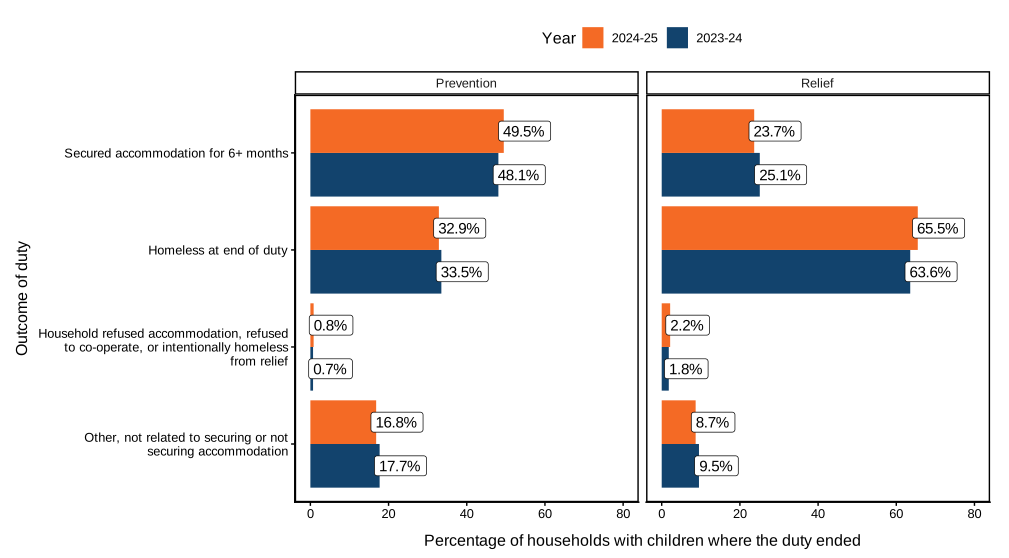
Figure note: the categories in this figure are variables collapsed from tables P1c and R1c. Homeless at the end of the duty includes those intentionally homeless for prevention duties. Other, not related to securing or not securing accommodation includes: Application withdrawn or applicant deceased, contact lost, 56 days elapsed and no further action, local referral accepted by other LA, and no longer eligible. Households where the outcome is not known are not included.
Figure 6 shows the outcomes for the 61,390 prevention duties that ended for households with children in 2024-25, and the outcomes for the 70,840 relief duties ended in the same period.
The number of prevention duties that ended for households with children increased 2.8% from 2023-24, converse to decreases in prevention duties owed. Approximately half of households with children whose prevention duty ended secured accommodation for 6 months or more and were no longer threatened with homelessness (30,370 households or 49.5%), a rise of 1.4 percentage points compared to 2023-24, and an increase of 5.7% in the absolute number of households whose prevention duty ended successfully. Of those who secured accommodation 41.2% were supported to stay in their existing accommodation in 2024-25 – this equates to 12,520 households with children. This is a slightly higher proportion of those who could remain in their property compared to 2023-24 (up 2.7 percentage points).
For 20,180 or 32.9% of households with children whose prevention duty ended in 2024-25, their duty ended because the household became homeless, and were therefore owed a relief duty. This is a 0.6 percentage point decrease from 2023-24.
There are several further reasons why a prevention duty may end that do not relate to securing accommodation for 6+ months or the household becoming homeless. 16.8% of prevention duties ended for other reasons, including losing contact, or the application being withdrawn; and 0.8% ended due to the household refusing accommodation or refusing to co-operate.
70,840 households with children had their relief duties end in 2024-25, up 6.9% from 2023-24. The majority of these households(46,400 or 65.5%) had their relief duty end because their homelessness had not been relieved within 56 days and at this point the local authority would need to assess whether a main duty is owed to them. Less than a quarter (16,760 or 23.7%) of households with children owed a relief duty had accommodation secured for at least 6 months. This represents a drop in 1.4 percentage points from 2023-24 but a slight increase of 0.8% in absolute number of households whose relief duty ended successfully.
2.2% of households with children had their relief duty end due to the household refusing accommodation, refusing to co-operate, or becoming intentionally homeless from accommodation provided under the duty. While 8.7% had their relief duty end due to other reasons including losing contact, or the application being withdrawn.
5.7 Type of accommodation secured for households with children
Tables P2c and R2c
Figure 7: Proportion of households with children who secured accommodation by type.
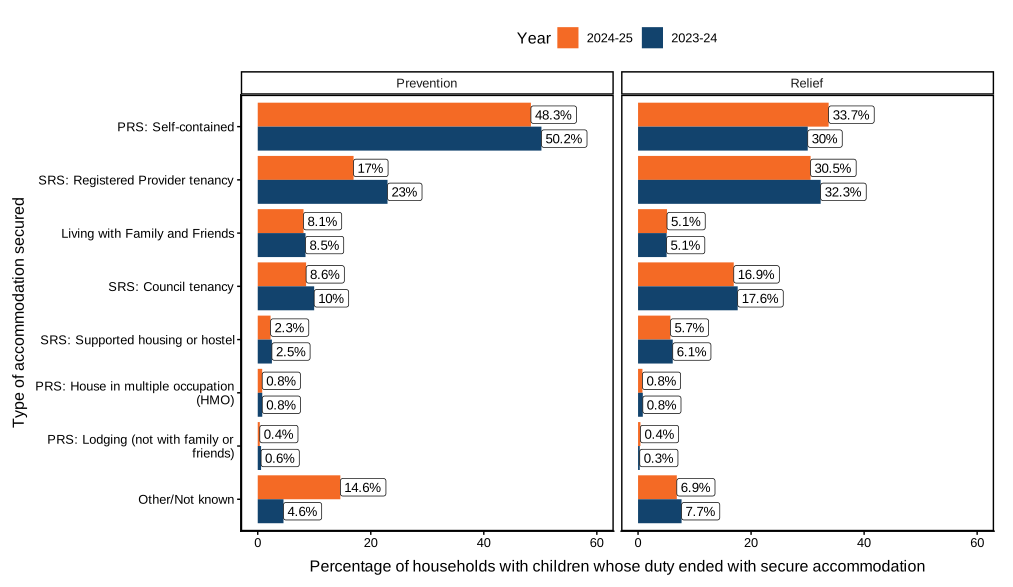
30,370 households with children whose prevention duty ended were able to secure accommodation for 6 months or more. Of these, the most common accommodation secured was self-contained accommodation in the private rented sector (48.3%).
To note there were large increases in the number of “not known” accommodation outcomes reported for households with children securing accommodation at the end of prevention duties. Up 441.7% to 3,900 households in 2024-25. The increase in unclassified accommodation outcomes may mean changes seen in other named categories are less reliable.
For those whose relief duty ended, 16,760 households with children secured accommodation for 6 months or more. Of these, the most common accommodation secured was either registered provider tenancy in the social rented sector (30.5%) or self-contained accommodation in the private rented sector (33.7%).
6. Adult only households
Adult only households: Used to describe households without children, which will include couples and households with one or more adults.
Single/one adult households: Adult only households comprising just one individual.
In 2024-25, the number of adult only households who were either threatened with homelessness or already homeless increased by 2.6% compared to 2023-24. 87,190 adult only households were owed a prevention duty in 2024-25, a 3.1% increase from 2023-24. Similarly, 134,940 adult only households were owed a relief duty in 2024-25, a 2.2% increase from 2023-24.
6.1 Causes and circumstances of homelessness for adult only households
Reason for loss or threat of loss of last settled accommodation
Tables A2Ps and A2Rs
Figure 8: Proportion of adult only households owed a prevention or relief duty, by reason for loss or threat of loss of last settled accommodation.
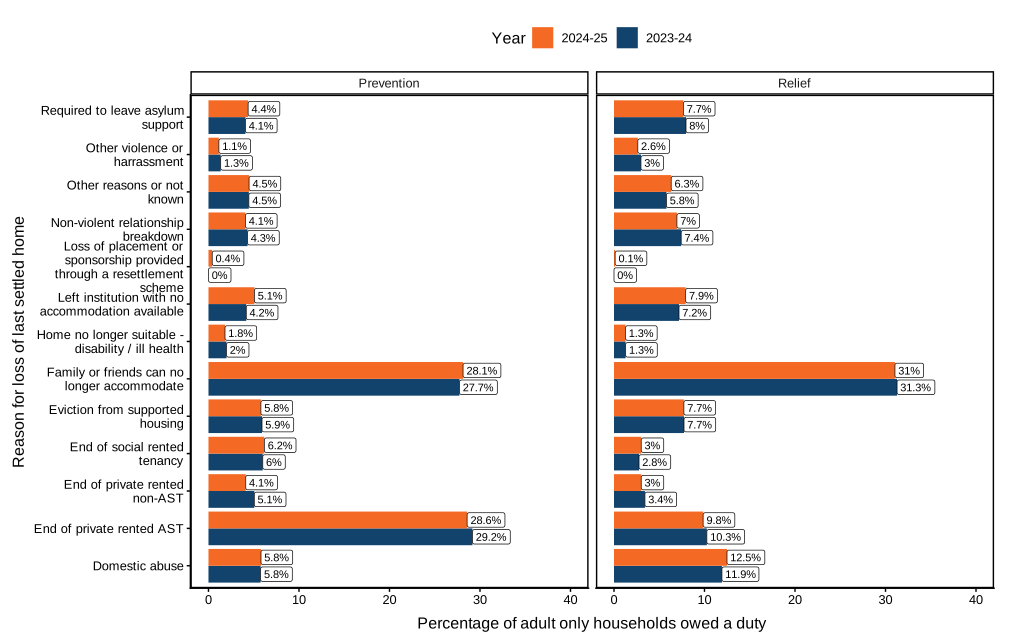
In 2024-25, the loss of last settled home due to end of assured short hold tenancy was the most common reason for adult only households being owed a prevention duty. The number of adult only households citing the end of private rented AST increased by 1.1% to 24,920 for those owed a prevention duty and decreased by 1.8% to 13,290 for those owed a relief duty.
In 2024-25, the loss of last settled home due to family or friends no longer able to accommodate was the most common reason for adult only households being owed a relief duty, and second most common for adult only households owed a prevention duty. This accounted for 24,530 households or 28.1% of adult only households owed a prevention duty, which is a 4.6% increase from 2023-24. For adult only households owed a relief duty, this accounted for 41,890 households or 31.0%, a 1.5% increase from 2023-24.
Some categories of reasons for homelessness or threat of homelessness had increased since 2023-24. There were with particularly high increases in:
- Households owed a prevention duty due to being required to leave accommodation provided by the Home Office as asylum support, up 10.7% to 3,820 households
- Households owed a prevention duty due to departure from institution (including custody, hospitals and looked after child placement) increased 25.5% to 4,430
- End of social tenancy increased 6.1% in 2024-25 to 5,380 households
There were also increases in the number of households owed a relief duty who were homeless due to:
- End of social rented tenancy up 11.2% to 4,060
- Domestic abuse up 7.1% to 16,850
- Departure from institution up 12.8% to 10,690
Increases were not seen in all reasons for homelessness and threat of homelessness. For prevention duties there were decreases in the number of households threatened with homelessness due to:
- End of non-AST private rented tenancy dropped by 16.1% to 3,590 households owed a prevention duty
- End of AST increased for those owed a prevention duty but within that we saw some decreases. Increases in rent as a reason for threat of loss of home dropped by 11.7% to 530 households. Difficulty budgeting dropped to 1,240 households, down 10.1% compared to 2023-24
- Other violence or harassment, down 12.3% to 1,000 households
For relief duties there were decreases in the number of households who were homeless due to:
- End of non-AST private rented tenancy, down 10.0% to 4,060 households
- Other violence or harassment, down 9.7% to 3,550 households
6.2 Accommodation at the time of application
Tables A4Pc and A4PR
Figure 9: Proportion of adult only households owed a prevention or relief duty, by accommodation at time of application.
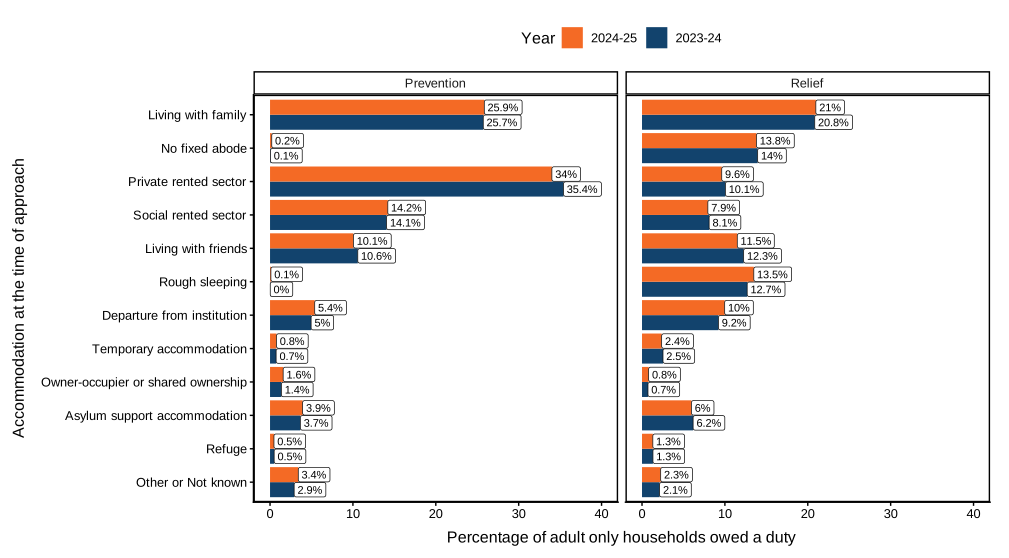
In 2024-25, for applicants owed a prevention duty, the most common accommodation type at the time of application for adult only households was in the private rented sector at 29,650 households or 34.0% of adult only households owed a prevention duty, down 1.0% from 2023-24.
The number of adult only households owed a prevention duty approaching from living with family increased by 3.6% to 22,540. For those living with friends, this figure decreased by 2.0% to 8,770.
The most common accommodation type at the time of application for adult only households owed a relief duty was ‘living with family’. This accounted for 21.0% or 28,300 households, an increase of 2.9% for this type.
Households sleeping rough or with no fixed abode at the time of application
Rough sleeping: People sleeping in the open air (such as on the streets, in tents, doorways, parks, bus shelters or encampments), or other places not designed for habitation (such as stairwells, barns, sheds, car parks, cars, derelict boats, stations, or “bashes” which are makeshift shelters, often comprised of cardboard boxes). These individuals in this publication may have slept rough one night or across several nights.
Rough sleeping at the time of Local Authority Approach: This group are defined as those who were, in the judgement of the assessor, rough sleeping when they approached a local authority for help.
No fixed abode: The applicant has no accommodation that they have the legal right to occupy, and may be staying temporarily at more than one address, but is not currently sleeping rough. Households currently with no fixed abode have sometimes had experiences sleeping rough, recently, or in the past. This is covered in more detail in our data tables.
The number of adult only households assessed as rough sleeping at the time of approach has increased by 8.7% since 2023-24, to 18,200 households in 2024-25. The number of households owed a prevention or relief duty approaching from no fixed abode has increased 1.8% to 18,810.
6.3 Support needs for adult only households
Table A3s
Figure 10: Proportion of adult only households owed a prevention or relief duty, by support need.
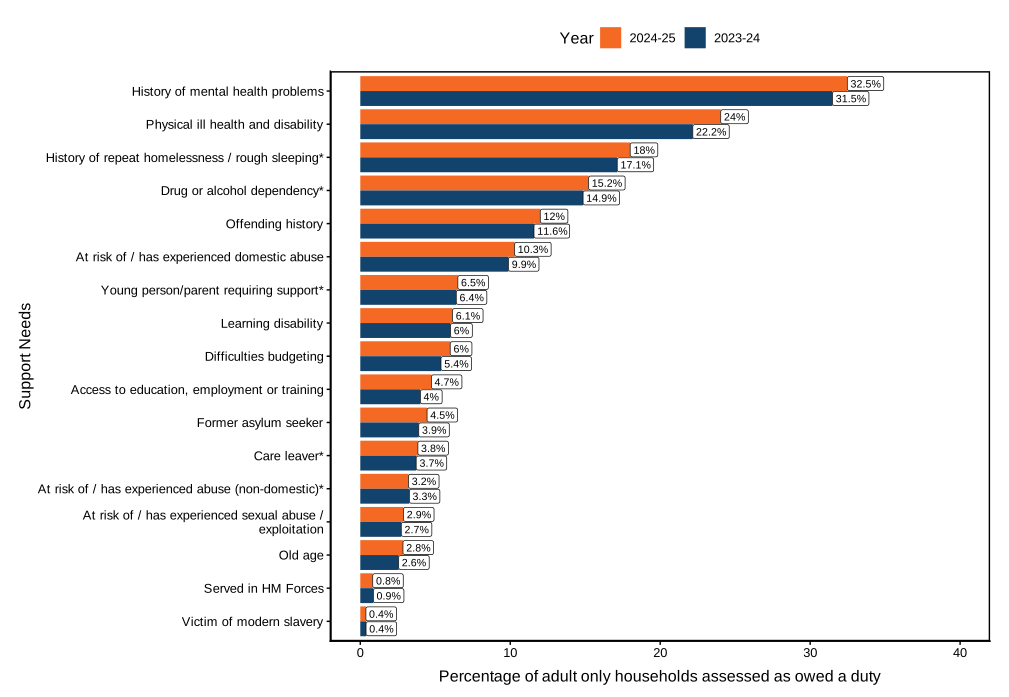
Figure note: Categories in Figure 10 marked with “*” have been created using multiple related support needs. This means some households may be counted more than once in these categories.
Of the 222,130 adult only households owed a prevention or relief duty in 2024-25, 62.7% or 139,270 households had at least one support need, compared with 60.6% in 2023-24.
Among adult only households who had a support need, 40.1% had one support need, 24.1% had 2 support needs, and 35.8% had 3 or more. This is in contrast to households with children, where the majority of those with support needs, had only one support need (55.6%).
The most common support need for adult only households was a history of mental health problems. This equates to 72,140 households or 32.5% of adult only households assessed as owed a duty. The number of households with this support need has risen 5.8% since 2023-24, this support need group represents a slightly larger proportion of all adult only households owed a duty (1.0 percentage point increase).
For a consecutive year, households with a former asylum seeker support need saw the largest increase from 2023-24, up 17.2% to 9,890 households in 2024-25. Despite this increase, these households only represent 4.5% of adult only households owed a prevention or relief duty in 2024-25.
6.4 Prevention and relief duty outcomes for adult only households
Tables P1s and R1s
Figure 11: Proportion of adult only households whose duty ended by outcome.
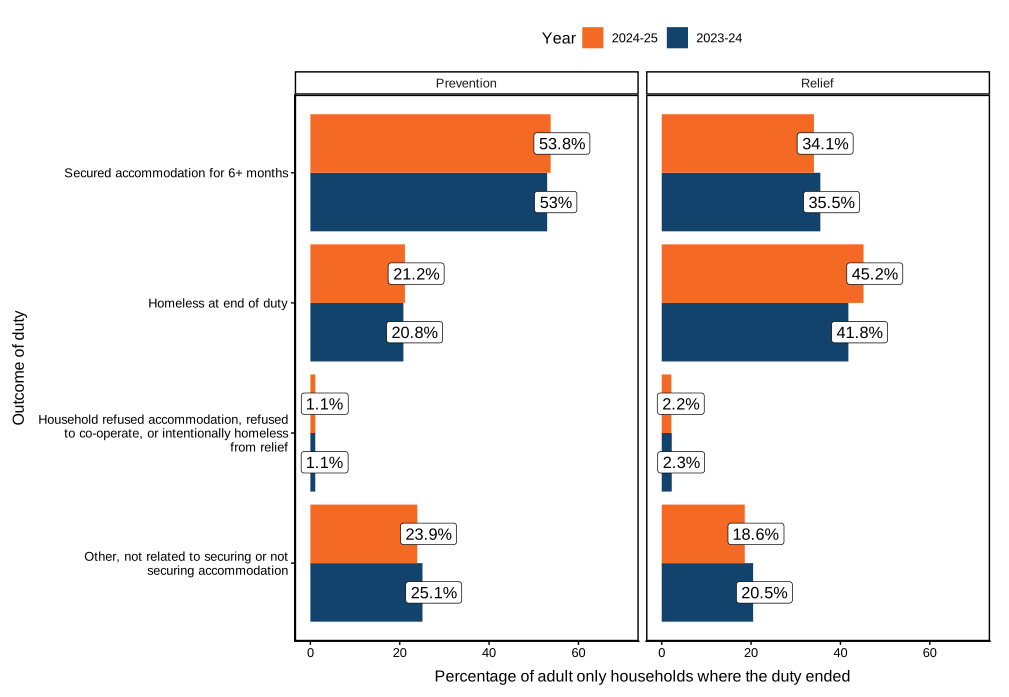
Figure note: the categories in Figure 11 are variables collapsed from tables P1s and R1s. Homeless at the end of the duty includes those intentionally homeless for prevention duties. Other, not related to securing or not securing accommodation includes: Application withdrawn or applicant deceased, contact lost, 56 days elapsed and no further action, local referral accepted by other LA, and no longer eligible. Households where the outcome is not known are not included.
The figure above shows the outcomes for the 82,210 prevention duties that ended for adult only households in 2024-25, and the outcomes for the 148,470 relief duties ended in the same period.
The number of prevention duties that ended for adult only households increased (8.1%) from 2023-24, and in line with the small increase in prevention duties owed to adult only households (3.1%) over the year.
The majority of adult only households whose prevention duty ended (44,220 households or 53.8%) secured accommodation for 6 months or more and were no longer threatened with homelessness. This is a higher number of households securing accommodation to last year (40,300 in 2023-24), however due to the overall increase in prevention duties ending this is a similar proportion (up 0.8 percentage points).
Of those securing accommodation, over two-thirds (67.1%) secured alternative accommodation, while the remaining 33.0% were able to remain in their exiting accommodation as a result of the prevention duty.
For 17,400 or 21.2% of adult only households, the prevention duty ended because the household became homeless, and was therefore owed a relief duty. There are several further reasons why a prevention duty may end that do not relate to securing accommodation for 6+ months or the household becoming homeless. 23.9% of prevention duties ended for other reasons, such as losing contact, or the application being withdrawn. A further 1.1% ended due to the household refusing accommodation or refusing to co-operate.
148,470 adult only households had their relief duties end in 2024-25, an increase of 11.0% from 2023-24. The most common reason for relief duties ending in 2024-25 was due to households’ homelessness not being relieved within 56 days at 67,070 or 45.2%. This is up 20.0% from 2023-24 and represents a larger proportion of those whose relief duties have ended, up 3.4 percentage points. At this point, the local authority would need to assess whether a main duty is owed to them.
In 2024-25, 50,590 (34.1%) adult only households had their relief duty end because they secured accommodation for 6 months or more. The proportion of adult only households securing accommodation at the end of the relief duty has dropped by 1.4 percentage points since 2023-24. 18.6%of households’ relief duty ended for reasons not related to failing to secure or securing accommodation for at least 6 months. A further and 2.2% ended due to the household refusing accommodation, refusing to co-operate, or becoming intentionally homeless from accommodation provided.
6.5 Type of accommodation secured for adult only households
Tables P2s and R2s
Figure 12: Proportion of adult only households who secured accommodation by type.
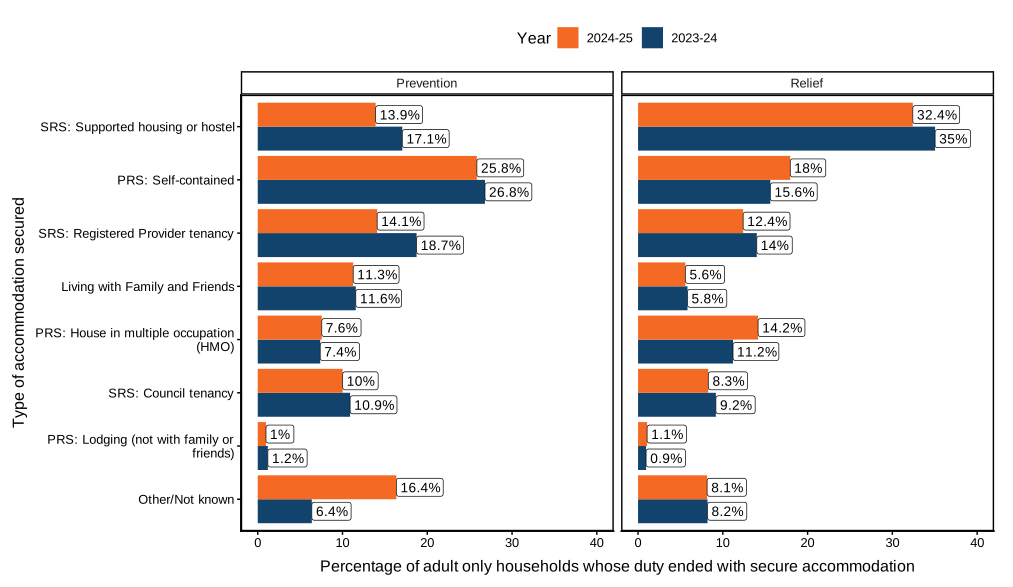
Of the 44,220 adult only households who secured accommodation at the end of the prevention, the most common type of accommodation was in the social rented sector (38.0% or 16,810 households). This represents a 10.6% decrease in the number of adult only households with securing this accommodation type though prevention, and a lower proportion of accommodation outcomes than the same time last year (down 8.7 percentage points).
The second most common type of accommodation secured by adult only households at the end of the prevention duty was in the private rented sector (34.4% or 15,200 households). This is a 6.7% increase in the number of households, and a slightly smaller proportion of accommodation outcomes compared to the previous year (down 1.0 percentage points).
There were also changes in the number of households securing the following types of accommodation:
- Staying with family, up 11.5% to 3,780 households
- Staying with friends, down 5.5% to 1,200 households
To note there were large increases in the number of “not known” accommodation outcomes reported for adult only households securing accommodation at the end of prevention duties. Up 329.5% to 5,970 households in 2024-25. The increase in unclassified accommodation outcomes may mean changes seen in other named categories are less reliable.
For adult only households whose relief duty ended, 50,590 households secured accommodation for 6 months or more. Of these, the most common type of accommodation secured was in supported housing or hostel in the social rented sector at (32.4% or 16,390 households). The number of households securing social rented supported housing or hostel accommodation is down 1.5% and also represents a smaller proportion of accommodation outcomes from 2023-24 (down 2.6 percentage points). Alongside the number of relief duties ending in secured accommodation increasing, the number of adult only households securing accommodation in the social rented sector overall had decreased by 2.9% to 26,850 households in 2024-25. This was due to decreases in the number of households securing accommodation in the following types of social rented sector accommodation:
- a 3.9% decrease in households securing a council tenancy, to 4,190 households
- a 5.7% decrease in households securing a registered provider tenancy, to 6,270 households
- a 1.5% decrease in households securing supported housing or hostel accommodation to 16,390 households
During the relief stage, the number of adult only households securing accommodation in private rented sector rose significantly by 27.4% overall. This is due to increases in the number of households securing accommodation across all of the different types of private sector accommodation, of which:
- a 22.5% increase in households securing self-contained private sector accommodation, to 9,080 households
- a 34.6% increase in those securing accommodation in houses of multiple occupation to 7,160 households
- a 20.0% increase in households securing accommodation as lodgers (not with family or friends), to 540 households
There were other types of accommodation that showed increases in accommodation secured
- the number of adult only households securing accommodation with friends or with family rose 1.8% to 2,820 households
7. Additional demographics
This section concerns the demographics of the lead applicant of a household and applies to all households owed a prevention or relief duty. The lead applicant is the person who makes the homeless application on behalf of the household, which can be one or more people.
7.1 Ethnicity
Table A8
While most main applicants in households owed a duty were white (62.1%), they were underrepresented compared to population estimates. As were households with Asian/Asian British main applicants (8.2% of households). Households with black main applicants (12.0%) as well as those from mixed or multiple ethnic groups (3.7%) were overrepresented among households owed a homelessness duty compared to the England population.
The number of households with white lead applicants decreased slightly from the previous year (down 0.4%), while the number increased for households with main applicants from Asian/Asian British (up 10.5%), black (9.4%) or from mixed or multiple ethnic groups (up 4.4%).
Households with main applicants where ethnicity was ‘Not known’ represents a relatively high proportion of households owed a duty and in temporary accommodation which means some groups may be more or less representative of the England population than the data suggests.
Figure 13: Ethnicity breakdowns for lead applicants of households owed a duty compared to population ethnicity estimates.
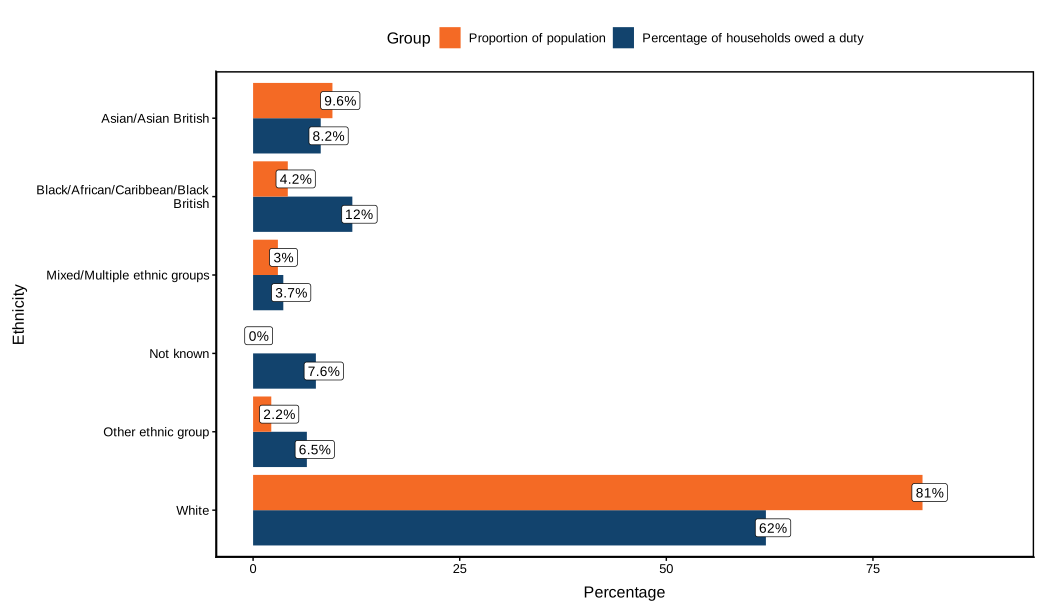
Table 1: Ethnicity breakdowns for lead applicants of households owed a prevention or relief duty (number and percentage of households) in 2024-25, with comparison to population ethnicity estimates (in percentages)
| England | London | Rest of England | ||||
|---|---|---|---|---|---|---|
| Ethnicity | Owed a duty | Population % | Owed a duty | Population % | Owed a duty | Population % |
| Asian, or Asian British | 27,040 (8.2%) | 9.60% | 10,930 (15.5%) | 20.70% | 16,110(6.2%) | 7.60% |
| Black, Black British, Caribbean or African | 39,680 (12.0%) | 4.20% | 21,120 (29.9%) | 13.50% | 18,560 (7.1%) | 2.50% |
| Mixed / Multiple Ethnic Groups | 12,080 (3.7%) | 3.00% | 4,470(6.3%) | 5.70% | 7,610 (2.9%) | 2.40% |
| White | 205,020 (62.1%) | 81.00% | 19,710(27.9%) | 53.80% | 185,310 (71.4%) | 86.10% |
| Other | 21,500 (6.5%) | 2.20% | 8,660 (12.2%) | 6.30% | 12,840 (4.9%) | 1.40% |
| Not known | 25,100 (7.6%) | 0.00% | 5,860 (8.3%) | 0.00% | 19,240(7.4%) | 0.00% |
| Total | 330,410 (100.0%) | 100.00% | 70,740(100.0%) | 100.00% | 259,670 (100.0%) | 100.00% |
Table note:
- Population estimates used in this release are reproduced with reference to Census 2021 data. See section 4. How ethnic composition varied across England and Wales.
- This data shows the ethnicities of main applicants and not the overall numbers in households, which may differ for different ethnicities.
7.2 Age
Table A6
Figure 14: Proportion of households by age of lead applicant compared to proportion of population in the UK over 16.
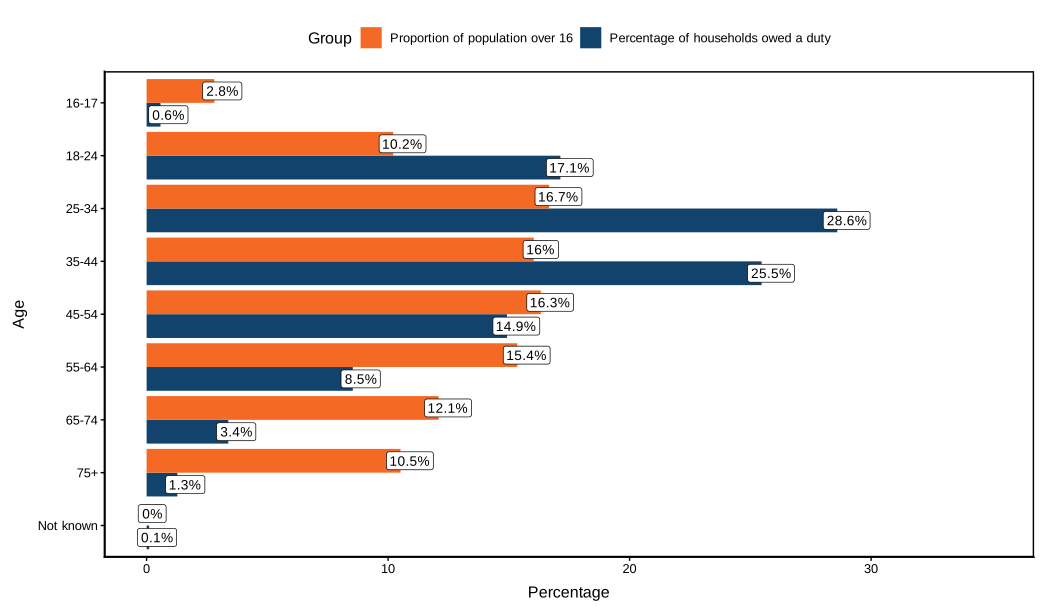
In 2024-25, the most common age group of lead applicants in households owed a prevention or relief duty was those aged between 25 and 34 years old, making up 94,490 households or 28.6% of the total. All groups older than 35 have increased, notably 35-44 has increased 1.0% to 84,140, and makes up 25.5% of lead applicants. The 75+ group increased 11.7% to 4,210 lead applicants. Groups younger than 35 have decreased compared to 2023-24, 25-34 has decreased 1.7% to 94,490 and 18-24 has decreased 1.0% to 56,610.
Compared to the England over 16 population, lead applicants who were in each age group between 18 and 44 were overrepresented among households owed a homelessness duty in 2024-25. Whereas lead applicants aged 16-17 and each age group over 55 were underrepresented.
Table 2: Age breakdowns for lead applicants of households owed a homelessness duty, with comparison to population age estimates (in percentages of population over 16) .
| Age | Households owed a duty | Proportion of population over 16 % |
|---|---|---|
| 16 to 17 | 0.58% | 2.8% |
| 18 to 24 | 17.13% | 10.2% |
| 25 to 34 | 28.60% | 16.7% |
| 35 to 44 | 25.47% | 16.0% |
| 45 to 54 | 14.92% | 16.3% |
| 55 to 64 | 8.54% | 15.4% |
| 65 to 74 | 3.38% | 12.1% |
| 75 and over | 1.27% | 10.5% |
| Not known | 0.11% | 0.00% |
Table note:
- Population estimates used in this release are reproduced with reference to Census 2021 data, from Office for National Statistics.
- Age is reported at lead applicant level for households owed a homelessness duty and those in temporary accommodation, not for all household members, whereas census population data is reported on an individual level.
7.3 Employment status
Table A10
Figure 15: Proportion of households by employment status of lead applicant.
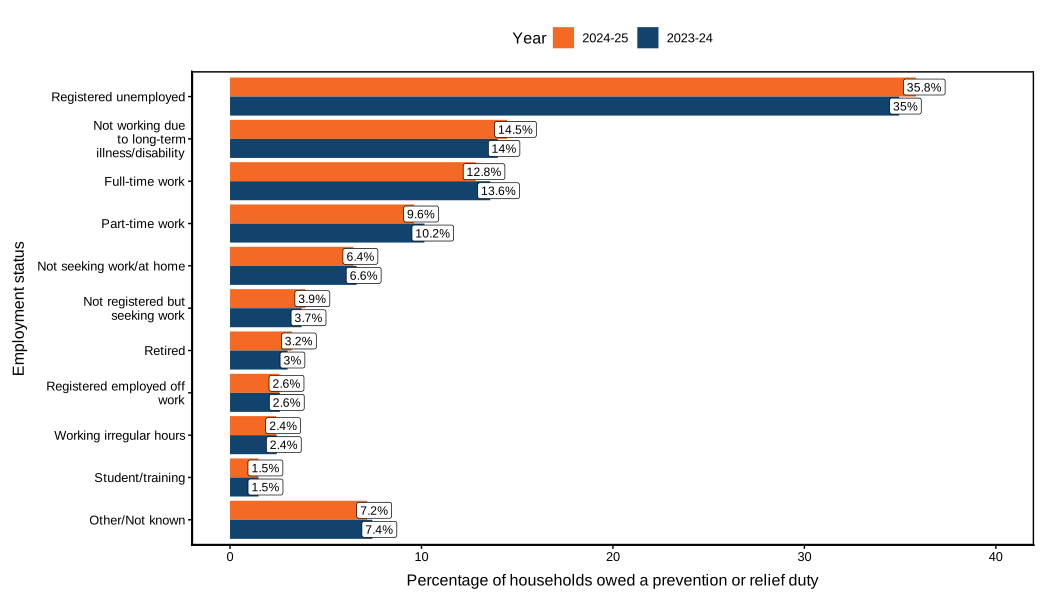
The most common employment status for lead applicants of households owed a prevention or relief duty was registered unemployed, accounting for 118,380 or 35.8% of households in 2024-25, an increase (3.4%) since 2023-24.
The second largest category was households where the lead applicant is not working due to long term illness/disability, accounting for 47,830 or 14.5% of households. There was a slightly lower number of households where the lead applicant was in full time work, accounting for 42,400 households or 12.8% of households owed a duty.
Overall, 27.4% (or 90,670) lead applicants in households owed a homelessness duty in 2024-25 were working (full, part time, or irregular hours) or registered employed but off work. In the overall England population aged 16 and over, 57.4% were either employed or self-employed. Considering this, main applicants of households owed a homelessness duty in 2024-25 were less likely to be in work and more likely to be out of work for a range of reasons.
8. Main duty
Tables MD1 and MD3
Main Duty: The ‘main’ homelessness duty describes the duty a local authority has towards an applicant who is unintentionally homeless, eligible for assistance and has priority need . These households are only owed a main duty if they did not secure accommodation in the prevention or relief stage, and so it is not owed to those ‘threatened with homelessness’. In addition a minimum of 56 days of assistance must have elapsed from a household being accepted as owed a relief duty, and being owed a main duty.
Eligibility and priority need are further defined in the technical note.
Figure 16: Number of households assessed against a main duty decision, by outcome.
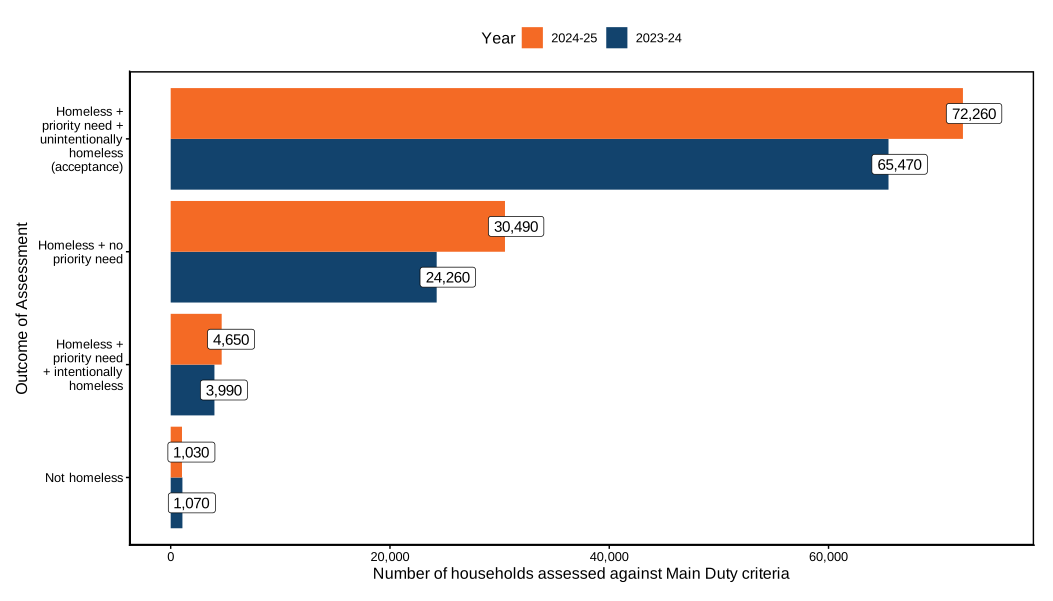
Local authorities made 108,430 main homelessness duty decisions in 2024-25, up 14.4% from 2023-24. Of these, 66.6% (or 72,260 households) were accepted as owed a main homelessness duty in 2024-25. This represents a decrease of 2.4 percentage points compared to the proportion of main duties which were accepted in 2023-24.
In relation to other main duty decisions:
- 4.3% (4,650 households) were homeless and with priority need but considered to be intentionally homeless. This represents an increase of 0.1 percentage points compared to the proportion in 2023-24.
- 28.1% (30,490 households) were homeless but with no priority need. This represents an increase of 2.5 percentage points compared to the previous year.
- 0.9% (1,030 households) were found to be not homeless at main duty decision. This represents a decrease of 0.2 percentage points compared to the proportion in 2023-24.
There were 51,880 households for whom the main duty ended in 2024-25, up 16.3% from the previous year. 78.2% of these (40,590 households) accepted an offer of social rented or private sector accommodation. The number of households accepting an accommodation offer ending the main duty has risen by 13.9% compared to the previous year. However, the overall proportion of main duties ending in accepted accommodation offers has fallen slightly (down 1.7 percentage points).
9. Temporary accommodation
Table TA1
Temporary Accommodation: Temporary Accommodation is the term used to describe accommodation secured by a local housing authority under their statutory homelessness functions. The majority of households in temporary accommodation have been placed under the main homelessness duty, but temporary accommodation is also provided during the relief stage to households who the LA has reason to believe may have priority need, or on interim basis in other circumstances such as pending the outcome of a review on a homelessness decision.
Note: More recent temporary accommodation snapshot figures have already been published for June 2025, this release refers to data for the 31 March to allow comparison with trends from the April 2024 to March 2025 financial year. Our latest data can be found at Tables on homelessness.
At the end of the 2024 to 2025 financial year, on 31 March 2025, 130,890 households were in temporary accommodation, an increase of 11.5% from the same period last year.
Households with children in temporary accommodation increased by 11.4% to 82,990, while adult only households increased by 11.8% to 47,900.
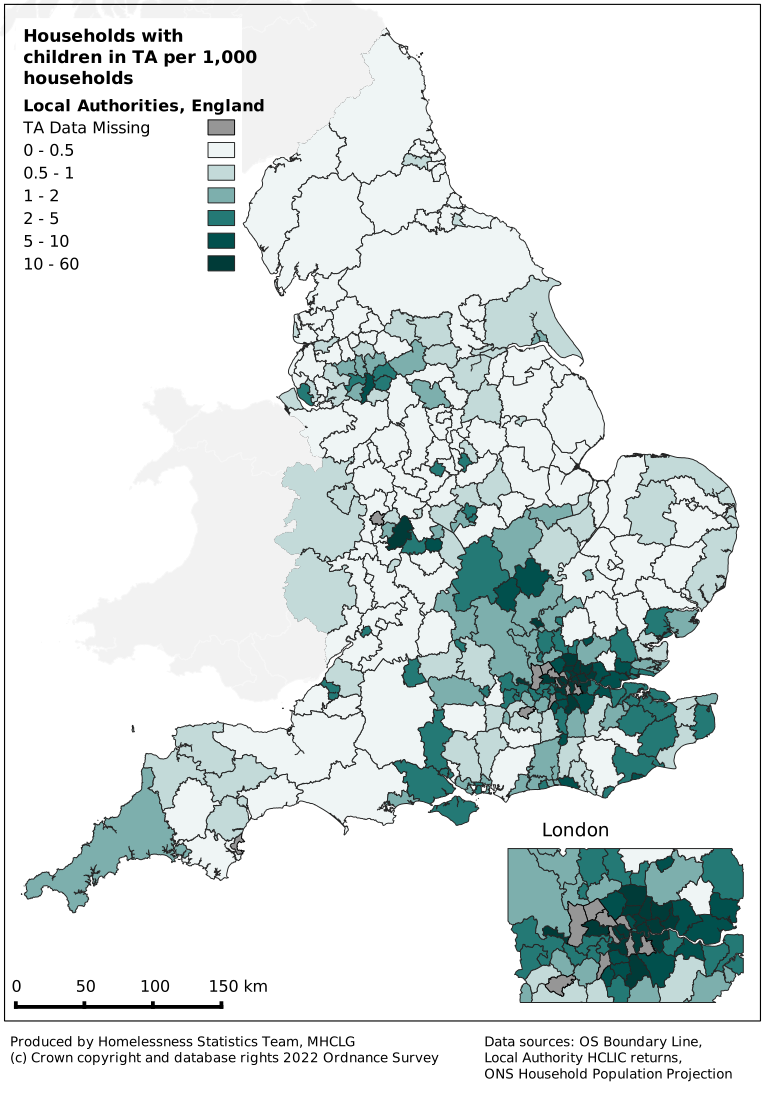
Map 1: Households with children in temporary accommodation per 1000 households, by local authority in England.
Map 2: Adult only households in temporary accommodation per 1000 households, by local authority in England.
Map Notes: The maps above illustrate the regional differences between rates of households with children in temporary accommodation compared to adult only households in temporary accommodation. These show there is a higher concentration of households with children in areas such as London, Birmingham and Manchester. In contrast, the maps show that adult only households are more spread out across England.
9.1 Type of temporary accommodation
Bed and breakfast accommodation: Privately managed temporary accommodation where households lack or share essential facilities such as kitchens and/or bathrooms. Meals may or may not be provided.
This differs from other types of temporary accommodation where the household has sole use of kitchen and bathroom facilities, which could be in properties held by local housing authorities, registered social landlords or private sector landlords.
Other nightly paid, privately managed accommodation, self-contained: A temporary accommodation placement in privately managed, nightly paid accommodation in which households have sole use of essential facilities, including cooking, washing and toilet facilities.
Figure 17: Number of households in temporary accommodation since 30 June 2022, by household type .
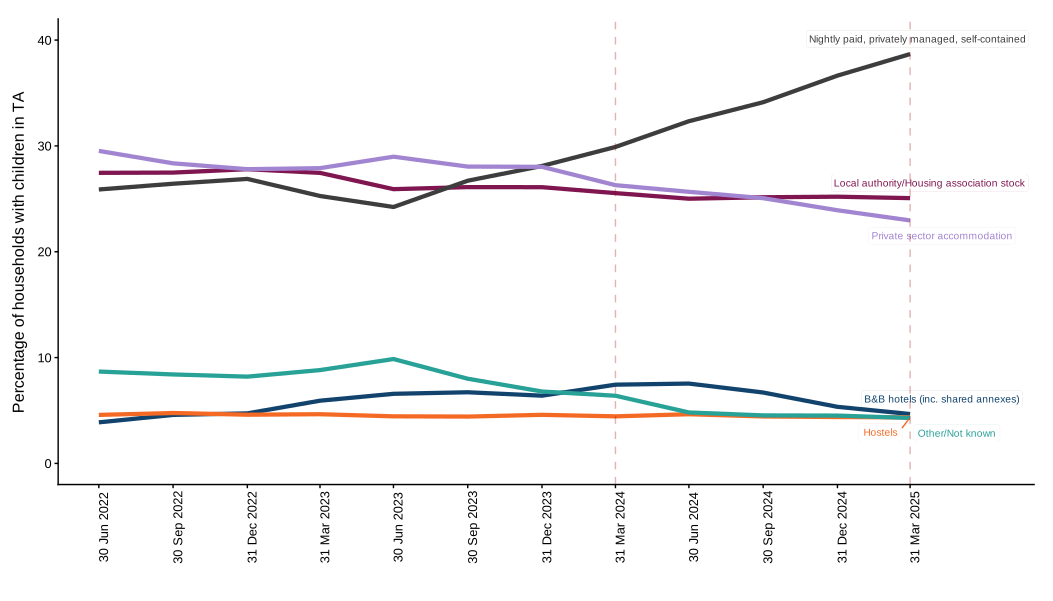
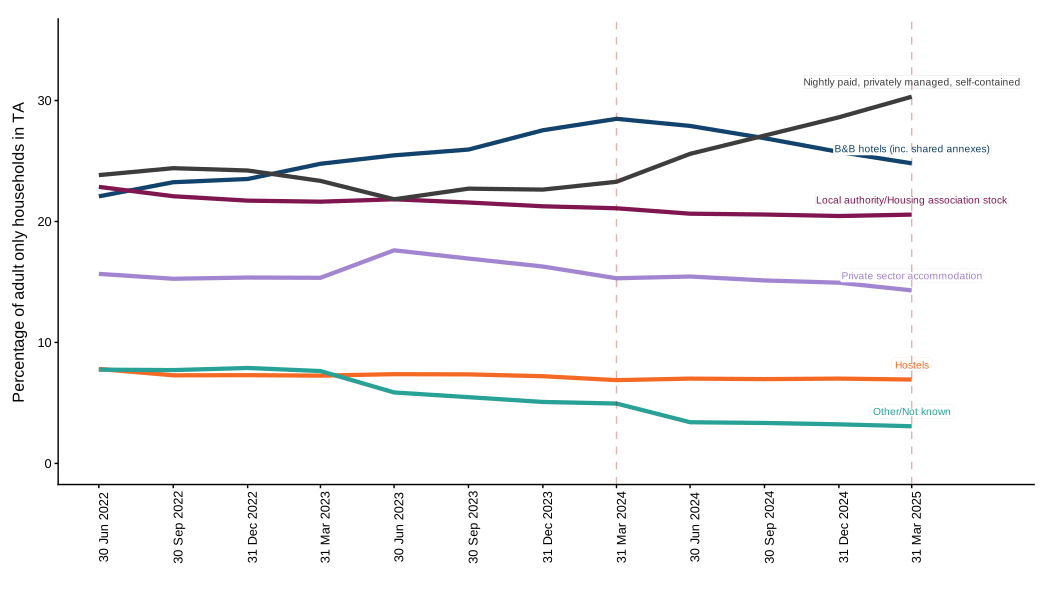
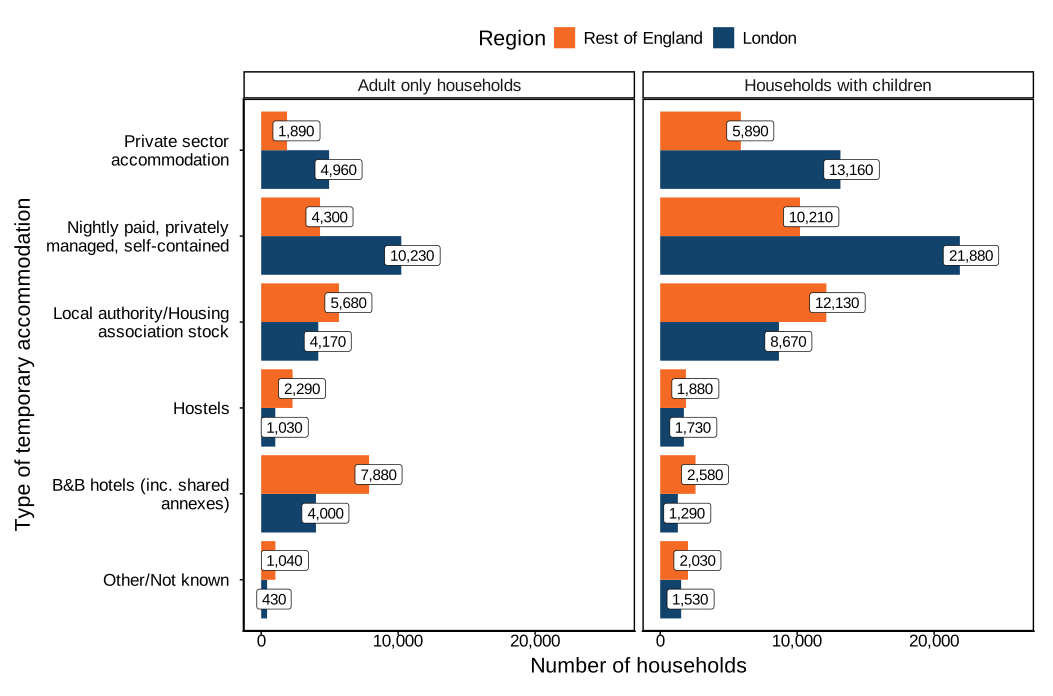
Figure 18: Type of accommodation for households in temporary accommodation on 31 March 2025, by region and household type.
For additional details of different types of temporary accommodation please see the revised January to March 2025 detailed local authority tables relating to temporary accommodation on the 31 March (See Tables on homelessness)
In London, households with children in temporary accommodation are most likely to be in nightly paid self-contained accommodation (45.3% or 21,880 households), followed by private sector accommodation (27.3% or 13,160 households). By contrast, in the rest of England, households with children in temporary accommodation are most likely to be in local authority or housing association provided accommodation (34.9% or 12,130 households), followed by nightly paid self-contained accommodation (29.4% or 10,220 households)
In London, adult only households in temporary accommodation are most likely to be in nightly paid self-contained accommodation (41.2% or 10,230 households), or private sector accommodation (20.0% or 4,960 households). In contrast, in the rest of England, adult only households in temporary accommodation are most likely to be in bed and breakfast accommodation (34.2% or 7,890 households), or local authority or housing association provided accommodation (24.7% or 5,700 households).
9.2 Additional data on households owed temporary accommodation duty and in another local authority area - 31 March 2025
From our January to March 2025 statutory homelessness publication, we began publishing additional data on the destination region of households in temporary accommodation in another local authority area (Statutory homelessness in England: January to March 2025 additional temporary accommodation breakdowns Table TA9). This is often referred to as “Out of area temporary accommodation”. In this annual release we are also producing additional information on the type of temporary accommodation and household composition of those households in another local authority district.
On 31 March 2025, 41,250 households in temporary accommodation had been placed in a different local authority area to where their main duty was owed. A further 230 households were in another local authority area, but had a duty owed but no accommodation secured.
Temporary accommodation type
Of the 41,250 households placed out of area on the 31 March, the most common type of temporary accommodation placement was in nightly paid accommodation with self contained facilities (64.3%, or 26,520 households). This was followed by 17.3% (or 7,120 households) who were in private sector accommodation.
Compared to households in temporary accommodation overall, placements in nightly paid self-contained accommodation were more common for those placed in another local authority area (64.3% of households in another area compared to 35.6% overall). By contrast accommodation in hostels, and local authority or housing association stock were less common for households placed in another local authority area. Private sector accommodation and those with other or not known accommodation types were slightly less common for those placed in another local authority area, whereas there were no differences in the use of Bed and Breakfast type accommodation.
Household composition
Of the 41,490 households with a duty owed who were out of area on the 31 March 2025 64.2% (26,640 households), had dependent children, while 35.8% (14,840) were adult only households. This is broadly similar to the composition of all households in temporary accommodation on 31 March; 63.4% of households contained dependent children.
10. Homelessness duty flows April 2023 to March 2025
Tables F1, F2, and F3 and in the dedicated flows dashboard
This section explores the flow of households through homelessness duties and their outcomes. It concerns cases initially assessed as owed a prevention or relief duty between April 2023 and March 2024, and whose case closed or received a main duty decision as of March 2025.
This information is provided for cases overall at England level, and for separate cohorts with distinct characteristics. This makes the flows data useful for comparing outcomes across different groups. The published tables and dashboard also consider overall outcomes at the local authority level, which makes the data useful for area comparisons. Due to the time span covered by the flows data, these are not typically used to examine latest trends and changes over time.
The flows do not indicate the length of time taken for each case, as this varies with some lasting a day and others the full two-year period.
There are a range of journeys and outcomes for households flowing through the homelessness duties. To ensure the flows are comprehensible, certain outcomes that are usually separate have been grouped together; for example, prevention and relief duties ending for Other reasons, and accommodation outcomes. Please see the flows tables, F1-3, for more information on how these fields have been grouped.
More information on the annual flows analysis available in the technical note.
Overall flows were analysed for 295,510 households who were initially owed a prevention or relief duty between April 2023 and March 2024, and whose case closed or received a main duty decision as of March 2025.
Households included in the flows represent 90.3% of the 327,410 households initially owed a prevention or relief duty in 2023-24. The remaining 9.7% of cases have either not reached a duty outcome or received a main duty decision, alternatively there may be incomplete data on some cases due to missing data or mis-recording.
10.1 Duties owed
45.3% (133,870) were assessed when they were threatened with homelessness and therefore initially owed a prevention duty, while 54.7% (161,640) were assessed when they were already homelessness and therefore initially owed a relief duty.
On initial approach, the proportion of households who were threatened with homelessness and owed a prevention duty was lower compared to those already homeless and owed a relief duty, similar to the previous year. The number of relief duties owed rises further when taking into account all relief duties owed during the period, including those following prevention. 34,320 prevention duties (25.6%) failed to prevent homelessness and consequently moved on to a relief duty, in addition to the 195,960 households initially owed a relief duty.
10.2 Outcomes from prevention and relief duties
Of 295,510 households included in our flows analysis:
- 44.9% secured accommodation for 6+ months
- 22.7% left the system for Other reasons
- 22.6% were owed a main duty
- 9.9% were homeless and not owed a main duty following relief
For the 29,160 who were homelessness at the end of relief and not owed a main duty:
- 84.1% were homeless but with no priority need
- 10.5% were intentionally homeless but had a priority need
- 5.5% were not owed a main duty for other reasons
Figure 19: Flow of all households
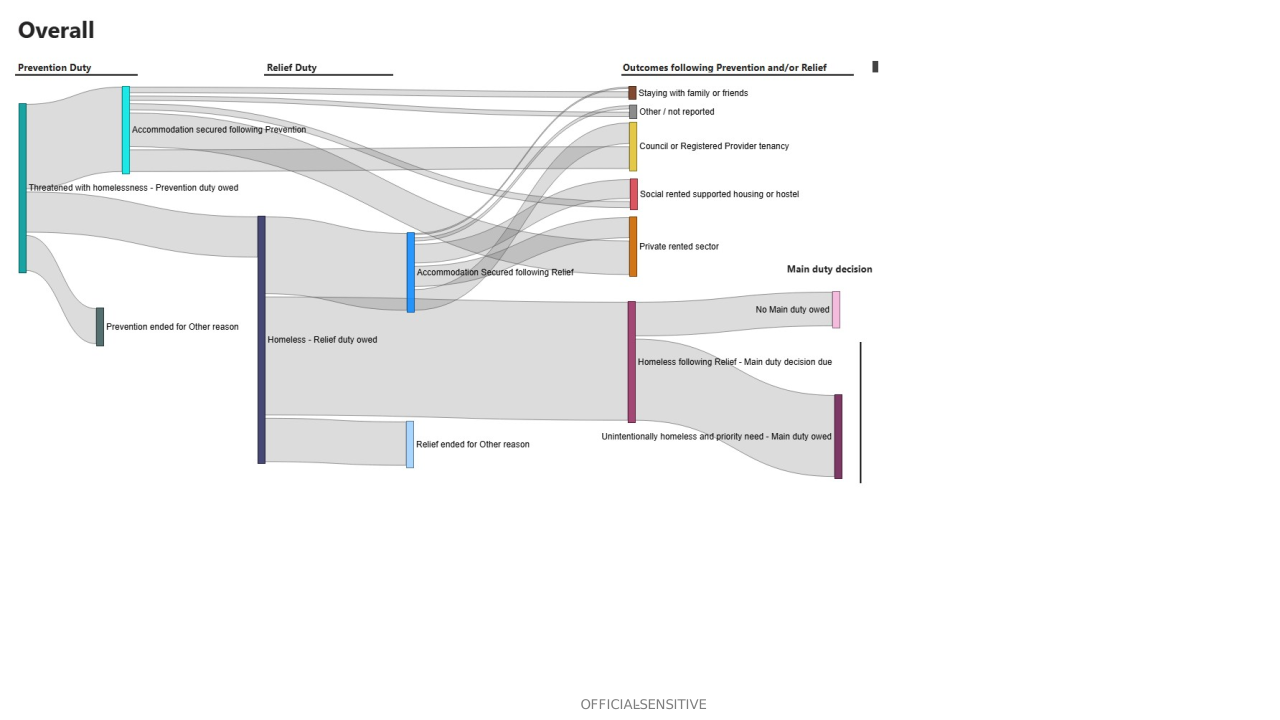
Figure Note: The size of each ‘flow’ in this diagram is proportional to the number of homelessness cases taking that particular route through the system. Each coloured box indicates a stage in a homelessness duty or outcome, and their size is proportional to the number of households reaching that stage. The system has two entry points: households threatened with homelessness and owed a Prevention duty (the leftmost box), and households initially homeless and owed a Relief duty (note that this box also includes where some cases have flowed from Prevention). Succeeding diagrams are subsets, and their comparative size do not indicate a similarity in the number of households to this overall flow.
10.3 Accommodation outcomes
Overall for the 132,560 that secured accommodation through the prevention or relief duty, the types of accommodation secured were:
- Private rented sector at 35.9%
- Council or Registered Provider tenancy at 29.1%
- Social rented supported housing or hostel at 18.7%
- Staying with family or friends at 8.0%
- Other or not reported at 8.4%
However, there are differences in the types of accommodation secured for prevention and relief duties ending. For prevention duties, the most common accommodation outcome is in the private rented sector, accounting for 42.0% of prevention accommodation outcomes. This is followed by another 28.5% of prevention outcomes that are secured as council or registered provider tenancies. Accommodation outcomes for relief duties are more distributed, with 29.2% to the private rented sector, 29.8% to council or registered provider tenancy, and 27.5% to Social rented supported housing or hostels.
Table 3: Accommodation secured for all households following prevention or relief duties between 2023 to 2025, showing number of households and percentage of outcome secured by duty type.
| Prevention Duty | Relief Duty | |||
|---|---|---|---|---|
| Private rented sector | 29,070 | 42.0% | 18,490 | 29.2% |
| Council or Registered Provider tenancy | 19,740 | 28.5% | 18,830 | 29.8% |
| Social rented supported housing or hostel | 7,390 | 10.7% | 17,370 | 27.5% |
| Staying with family or friends | 7,020 | 10.1% | 3,570 | 5.6% |
| Other / not reported | 6,070 | 8.8% | 5,010 | 7.9% |
| Total | 69,290 | 100.0% | 63,270 | 100.0% |
‘Other / not reported’ accommodation outcomes are where local authorities have stated ‘Other’ or have not been able to provide the specific accommodation outcome, and was reported more regularly for prevention outcomes (8.8%) than relief outcomes (7.9%). Overuse of ‘Other / not known’ as a type of accommodation secured is a data quality issue, and we are working with local authorities to improve reporting of accommodation outcomes.
10.4 Homelessness flows for key sub-groups of households
Table F1
The flow of cases through homelessness duties can differ depending on the circumstances and composition of applicant households. This section shows how the flows compared for key sub-groups entering the system in 2023-24, these include:
- Households with children
- Adult only households
- Households rough sleeping at the time of application
- Households on departure from custody
- Households required to leave accommodation provided by the Home Office as asylum support
- Households with one or more care leavers (aged 18 and over)
- Households homeless or threatened with homelessness due to domestic abuse
The households with children and adult only households cohorts are mutually exclusive. However, there may be overlap between other groups as they are based on current accommodation (households rough sleeping), reasons for homelessness (departure from custody, required to leave Home Office asylum support accommodation, domestic abuse), and reported support needs of the household (care leavers). The majority of households rough sleeping at the time of application, and those on departure from custody are made up of adult only households.
The F1 flows table and our flows dashboard also provide figures on additional groups (e.g. households with a 16-17 year old main applicant) which are not covered in the narrative of this release.
In terms of approaches, households with children were more likely to approach at prevention (56.2%), while adult only households are more likely to approach at relief (60.6%). Applications of households in the other groups were also more likely at relief, rather than at prevention stage. Those rough sleeping at the time of application solely approached at relief as they are already homeless.
Adult only households were the most likely to secure accommodation for 6 months or more (45.9% of these households included in the 2023 to 2025 flows analysis). This is followed by households with children (42.9%). Of the groups described in the narrative of this release, those on departure from custody (34.9%), and households homeless or threatened with homelessness due to domestic abuse (36.5%) were the least likely to secure accommodation through prevention or relief duties.
For some households, duties are ended for other reasons (e.g. contact lost) not related to securing accommodation or not. Those on departure from custody (37.8%), and 18-24 year old single adult males (28.6%) were the most likely to have their prevention or relief duties end for other reasons. By comparison, households owed a duty due to leaving asylum support accommodation (15.3%), and households with children (16.9%) were least likely to have a duty end for other reasons.
For those homeless at the end of the relief duty and owed a main duty assessment, households with children (94.2%), and those homeless or threatened with homelessness due to domestic abuse (91.6%) were most likely to be owed a main duty. Of the groups described in the narrative of this release, those on departure from custody (37.2%), and those rough sleeping at the time of application (38.6%) were the least likely to be accepted as owed a main duty at this stage.
While overall outcomes differ for these different cohorts, the type of accommodation secured for those with successful prevention or relief duties also differ. Accommodation in the private rented sector was the most common accommodation outcome for households with children (51.5% from this group who secured accommodation), adult only households (35.2%), and households owed a duty due to leaving asylum support accommodation (41.3%). Social rented supported housing or hostel was the most common accommodation outcome for households rough sleeping at the time of application (50.7%), departing from custody (41.9%), and those with care leavers aged 18 or over (34.1%). Council or registered provider tenancies were the most common accommodation outcome for those owed a duty due to domestic abuse (45.8%).
Households with children
Figure 20: Flow of households with children.
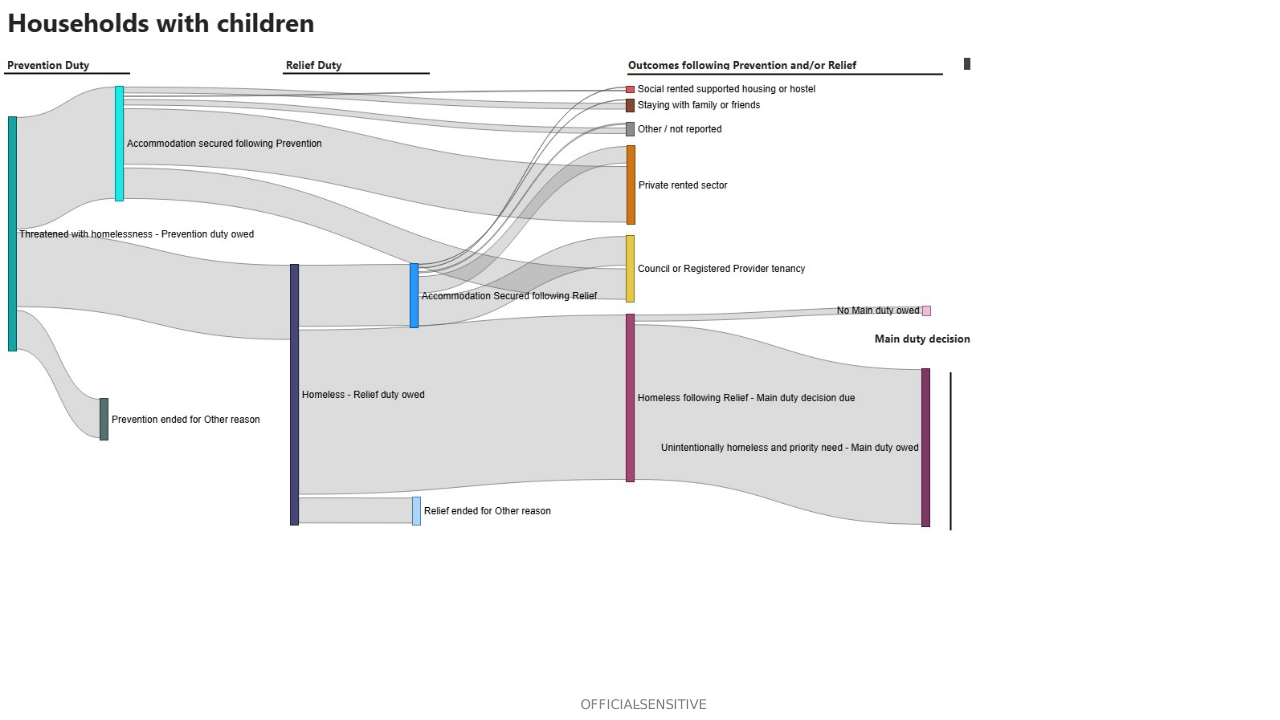
104,320 of all households (35.3%) were households with children. 56.2% were assessed when they were threatened with homelessness and therefore initially owed a prevention duty, while 43.9% were assessed when they were already homelessness and therefore initially owed a relief duty.
Of these:
- 42.9% secured accommodation for 6+ months (compared to 44.9% of all households)
- 16.9% left the system for Other reasons (versus 22.7% overall)
- 37.8% were owed a main duty (versus 22.6% overall)
- 2.3% were homeless and not owed a main duty following relief (versus 9.9% overall)
Of the 2,430 who were homelessness at the end of relief and not owed a main duty:
- 23.9% were homeless but with no priority need (compared to 84.1% for all households)
- 50.6% were intentionally homeless but had a priority need (versus 10.5% overall)
- 25.1% were not owed a main duty for other reasons (versus 5.5% overall)
Of the 44,780 that secured accommodation through the prevention or relief duty, the types of accommodation secured were:
- Private rented sector for 44.2% (compared to 35.9% for all households)
- Council or Registered Provider tenancy for 37.1% (compared to 29.1% overall)
- Social rented supported housing or hostel for 3.8% (compared to 18.7% overall)
- Staying with family or friends for 7.1% (compared to 8.0% overall)
- Other or not reported for 7.8% (compared to 8.4% overall)
Adult only households
Figure 21: Flow of adult only households
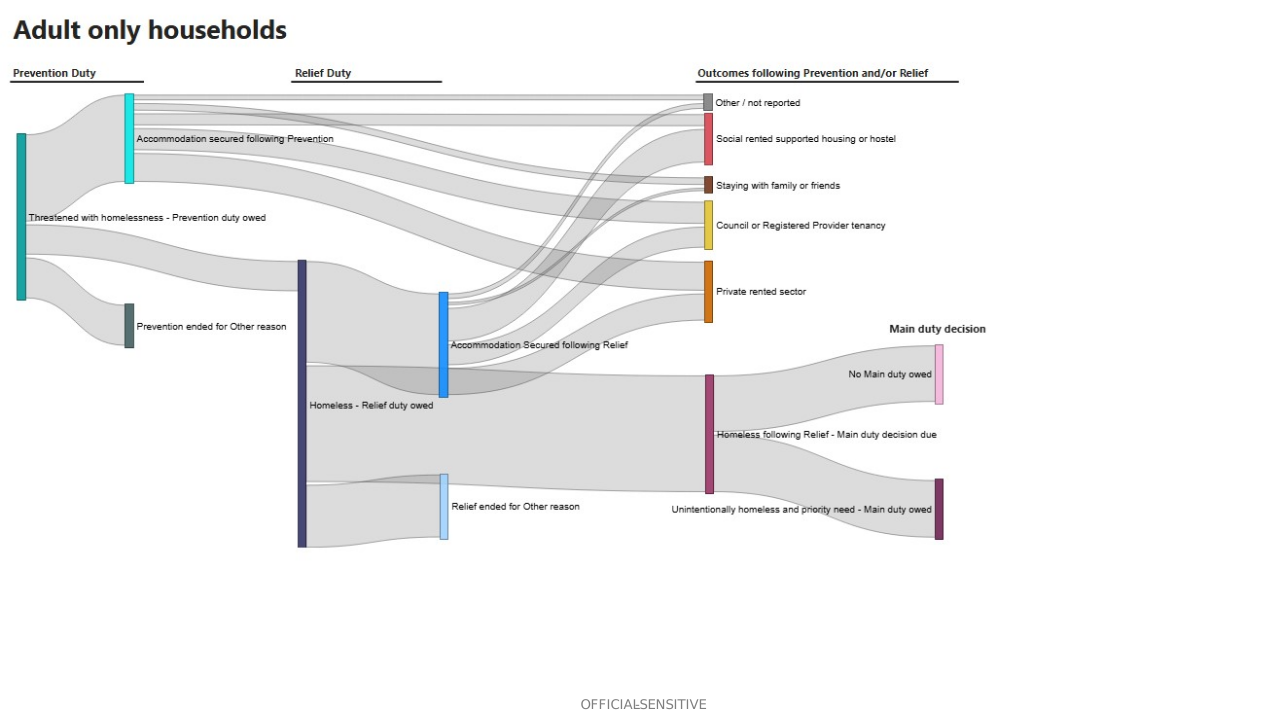
64.7% of all households (191,170) were adult only households. 39.4% were assessed when they were threatened with homelessness and therefore initially owed a prevention duty, while 60.6% were assessed when they were already homelessness and therefore initially owed a relief duty.
Of these:
- 45.9% secured accommodation for 6+ months (compared to 44.9% of all households)
- 25.9% left the system for Other reasons (versus 22.7% overall)
- 14.2% were owed a main duty (versus 22.6% overall)
- 14.0% were homeless and not owed a main duty following relief (versus 9.9% overall)
For the 26,740 who were homelessness at the end of relief and not owed a main duty:
- 89.5% were homeless but with no priority need (compared to 84.1% for all households)
- 6.8% were intentionally homeless but had a priority need (versus 10.5% overall)
- 3.7% were not owed a main duty for other reasons (versus 5.5% overall)
Of the 87,770 that secured accommodation through the prevention or relief duty, the types of accommodation secured were:
- Private rented sector at 31.7% (compared to 35.9% for all households)
- Council or Registered Provider tenancy at 25.0% (compared to 29.1% overall)
- Social rented supported housing or hostel at 26.3% (compared to 18.7% overall)
- Staying with family or friends at 8.4% (compared to 8.0% overall)
- Other or not reported at 8.6% (compared to 8.4% overall)
Households rough sleeping at the time of application
5.1% of all households (15,140) were recorded to be rough sleeping at the time of their homelessness assessment. All were owed a relief duty as they were already homeless at the time of application.
Of these:
- 37.1% secured accommodation for 6+ months (compared to 44.9% of all households)
- 26.6% left the system for Other reasons (versus 22.7% overall)
- 14.0% were owed a main duty (versus 22.6% overall)
- 22.3% were homeless and not owed a main duty following relief (versus 9.9% overall)
For the 3,380 who were homelessness at the end of relief and not owed a main duty:
- 89.3% were homeless but with no priority need (compared to 84.1% for all households)
- 7.4% were intentionally homeless but had a priority need (versus 10.5% overall)
- 3.3% were not owed a main duty for other reasons (versus 5.5% overall)
Of the 5,620 that secured accommodation through the prevention or relief duty, the types of accommodation secured were:
- Private rented sector at 26.9% (compared to 35.9% for all households)
- Council or Registered Provider tenancy at 12.5% (compared to 29.1% overall)
- Social rented supported housing or hostel at 50.7% (compared to 18.7% overall)
- Staying with family or friends at 3.4% (compared to 8.0% overall)
- Other or not reported at 6.8% (compared to 8.4% overall)
Households who were homeless, or threatened with homelessness, on departure from custody
3.2% of all households (9,490) were homeless, or threatened with homelessness, on departure from custody. 29.3% were assessed when they were threatened with homelessness and therefore initially owed a prevention duty, while 70.7% were assessed when they were already homelessness and therefore initially owed a relief duty.
Of these:
- 34.9% secured accommodation for 6+ months (compared to 44.9% of all households)
- 37.8% left the system for Other reasons (versus 22.7% overall)
- 10.1% were owed a main duty (versus 22.6% overall)
- 17.2% were homeless and not owed a main duty following relief (versus 9.9% overall)
For the 1,630 who were homelessness at the end of relief and not owed a main duty:
- 82.8% were homeless but with no priority need (compared to 84.1% for all households)
- 14.1% were intentionally homeless but had a priority need (versus 10.5% overall)
- 3.1% were not owed a main duty for other reasons (versus 5.5% overall)
Of the 3,310 that secured accommodation through the prevention or relief duty, the types of accommodation secured were:
- Private rented sector at 33.8% (compared to 35.9% for all households)
- Council or Registered Provider tenancy at 8.2% (compared to 29.1% overall)
- Social rented supported housing or hostel at 43.8% (compared to 18.7% overall)
- Staying with family or friends at 6.3% (compared to 8.0% overall)
- Other or not reported at 8.5% (compared to 8.4% overall)
Households required to leave accommodation provided by the Home Office as asylum support
5.5% of all households (16,340) were homeless or threatened with homelessness due to being required to leave accommodation provided as asylum support. 26.6% were assessed when they were threatened with homelessness and therefore initially owed a prevention duty, while 73.4% were assessed when they were already homelessness and therefore initially owed a relief duty.
Of these:
- 41.5% secured accommodation for 6+ months (compared to 44.9% of all households)
- 15.3% left the system for Other reasons (versus 22.7% overall)
- 22.9% were owed a main duty (versus 22.6% overall)
- 20.2% were homeless and not owed a main duty following relief (versus 9.9% overall)
For the 3,300 who were homelessness at the end of relief and not owed a main duty:
- 98.2% were homeless but with no priority need (compared to 84.1% for all households)
- 0.3% were intentionally homeless but had a priority need (versus 10.5% overall)
- 1.5% were not owed a main duty for other reasons (versus 5.5% overall)
Of the 6,780 that secured accommodation through the prevention or relief duty, the types of accommodation secured were:
- Private rented sector at 39.2% (compared to 35.9% for all households)
- Council or Registered Provider tenancy at 13.6% (compared to 29.1% overall)
- Social rented supported housing or hostel at 31.3% (compared to 18.7% overall)
- Staying with family or friends at 3.1% (compared to 8.0% overall)
- Other or not reported at 13.0% (compared to 8.4% overall)
Households with one or more care leavers (aged 18 and over):
2.8% of all households (8,370) were recorded as having support needs due to having one or more care leavers 18 or over in the household. 32.6% were assessed when they were threatened with homelessness and therefore initially owed a prevention duty, while 67.4% were assessed when they were already homelessness and therefore initially owed a relief duty.
Of these:
- 41.2% secured accommodation for 6+ months (compared to 44.9% of all households)
- 25.4% left the system for Other reasons (versus 22.7% overall)
- 25.7% were owed a main duty (versus 22.6% overall)
- 7.6% were homeless and not owed a main duty following relief (versus 9.9% overall)
For the 640 who were homelessness at the end of relief and not owed a main duty:
- 62.5% were homeless but with no priority need (compared to 84.1% for all households)
- 29.7% were intentionally homeless but had a priority need (versus 10.5% overall)
- 6.3% were not owed a main duty for other reasons (versus 5.5% overall)
Of the 3,450 that secured accommodation through the prevention or relief duty, the types of accommodation secured were:
- Private rented sector at 16.5% (compared to 35.9% for all households)
- Council or Registered Provider tenancy at 23.2% (compared to 29.1% overall)
- Social rented supported housing or hostel at 41.4% (compared to 18.7% overall)
- Staying with family or friends at 7.5% (compared to 8.0% overall)
- Other or not reported at 10.7% (compared to 8.4% overall)
Households homeless or threatened with homelessness due to domestic abuse
12.0% of all households (35,400) were homeless or threatened with homelessness due to domestic abuse. 26.5% were assessed when they were threatened with homelessness and therefore initially owed a prevention duty, while 73.5% were assessed when they were already homelessness and therefore initially owed a relief duty.
Of these:
- 36.5% secured accommodation for 6+ months (compared to 44.9% of all households)
- 25.1% left the system for Other reasons (versus 22.7% overall)
- 35.2% were owed a main duty (versus 22.6% overall)
- 3.2% were homeless and not owed a main duty following relief (versus 9.9% overall)
For the 1,140 who were homelessness at the end of relief and not owed a main duty:
- 71.1% were homeless but with no priority need (compared to 84.1% for all households)
- 12.3% were intentionally homeless but had a priority need (versus 10.5% overall)
- 16.7% were not owed a main duty for other reasons (versus 5.5% overall)
Of the 12,920 that secured accommodation through the prevention or relief duty, the types of accommodation secured were:
- Private rented sector at 22.8% (compared to 35.9% for all households)
- Council or Registered Provider tenancy at 43.9% (compared to 29.1% overall)
- Social rented supported housing or hostel at 13.5% (compared to 18.7% overall)
- Staying with family or friends at 8.0% (compared to 8.0% overall)
- Other or not reported at 11.8% (compared to 8.4% overall)
11. Glossary
Prevention duty: Local authorities may deliver their prevention duty through any activities aimed at preventing a household threatened with homelessness within 56 days from becoming homeless.
This would involve activities to enable an applicant to remain in their current home or find alternative accommodation in order to prevent them from becoming homeless.
The duty lasts for up to 56 days but may be extended if the local authority is continuing with efforts to prevent homelessness.
Relief duty: The relief duty is owed to households that are already homeless on approaching a local authority, and so require help to secure settled accommodation.
The duty lasts 56 days and can only be extended by a local authority if the household is not owed the main homelessness duty.
Section 21 notice: A Section 21 notice is the form a landlord must give a tenant to start the process to end an Assured Shorthold Tenancy.
This is recorded alongside initial assessments.
Main duty: The ‘main’ homelessness duty describes the duty a local authority has towards an applicant who is unintentionally homeless, eligible for assistance and has priority need.
These households are only owed a main duty if they did not secure accommodation in the prevention or relief stage, and so is not owed to those ‘threatened with homelessness’.
In addition a minimum of 56 days of assistance must have elapsed from a household approaching the local authority to being owed a main duty.
Priority need: The legislation states that some categories of applicants have a priority need for accommodation if homeless, whereas others do not.
Applicants who have priority need include households with dependent children or a pregnant woman; those who are homeless due to fire, flood or other emergency; those who are particularly vulnerable due to ill health, disability or old age; those having been in custody or care; or those who have become homeless due to violence or the threat of violence.
A full explanation of priority need groups and assessments is contained in Chapter 8 of the Homelessness Code of Guidance.
Temporary accommodation: Temporary accommodation is the term used to describe accommodation secured by a local housing authority under their statutory homelessness functions.
The majority of households in temporary accommodation have been placed under the main homelessness duty, but temporary accommodation is also provided during the relief stage to households who the local authority has reason to believe may have priority need, or on an interim basis in other circumstances such as pending the outcome of a review on a homelessness decision.
Rough sleeping: People sleeping in the open air (such as on the streets, in tents, doorways, parks, bus shelters or encampments) or other places not designed for habitation (such as stairwells, barns, sheds, car parks, cars, derelict boats, stations, or ‘bashes’ which are makeshift shelters, often comprised of cardboard boxes).
Rough sleepers in this publication may have slept rough one night or across several nights.
Rough sleeping at the time of local authority approach: Rough sleepers are defined as those who were, in the judgement of the assessor, rough sleeping when they approached a local authority for help.
History of rough sleeping: This is a support need based on a history of sleeping rough and does not mean that the household was sleeping rough at the time of approach to the local authority.
Duty to refer: Since 1 October 2018, duty to refer has required specified public bodies to refer, with consent, users of their service who they think may be homeless or threatened with homelessness to a local housing authority of the individual’s choice.
Adult only households: Used to describe households without children, which will include couples and households with one or more adults.
Single/one adult households: Adult only households comprising just one individual.
Support needs: areas of additional needs that mean the household requires support to acquire and sustain accommodation, giving an indication of the additional services local authorities need to provide to prevent an individual becoming homeless or to stop the cycle of repeat homelessness.
Local authorities report as many support needs that apply to each household.
12. Accompanying tables
Accompanying tables are available to download alongside this release. References to previously published tables are included where comparisons are possible.
Initial assessments of statutory homelessness duties owed
- A1: Number of households assessed and owed a prevention or relief duty
- A2P: Reason for loss of last settled home for households assessed as owed a prevention duty
- A2R: Reason for loss of last settled home for households assessed as owed a relief duty
- A3: Support needs of households assessed as owed a prevention or relief duty
- A4P: Accommodation at time of application for households assessed as owed a prevention duty
- A4R: Accommodation at time of application for households assessed as owed a relief duty
- A5P: Household type at time of application for households assessed as owed a prevention duty
- A5R: Household type at time of application for households assessed as owed a relief duty
- A6: Age of main applicants assessed as owed a prevention or relief duty
- A7: Households referred to a local authority prior to being assessed
- A8: Ethnicity of main applicants assessed as owed a prevention of relief duty
- A9: Nationality of main applicants assessed as owed a prevention or relief duty
- A10: Employment status of main applicants assessed as owed a prevention or relief duty
- A11: Reason for eligibility of main applicants assessed as owed a prevention or relief duty
- A12: Sexual Identity of main applicants assess as owed a prevention or relief duty
- A13: Gender identity of main applicants assessed as owed a prevention or relief duty
Statutory homelessness prevention duty outcomes
- P1: Reason for households’ prevention duty ending
- P2: Type of accommodation secured for households at end of prevention duty
- P3: Main prevention activity that resulted in accommodation secured for households at end of prevention duty
- P4: Destination of households with alternative accommodation secured at end of prevention duty
- P5: Household type of households with accommodation secured at end of prevention duty
Statutory homelessness relief duty outcomes
- R1: Reason for households’ relief duty ending
- R2: Type of accommodation secured for households at end of relief duty
- R3: Main prevention activity that resulted in accommodation secured for households at end of relief duty
- R4: Destination of households with alternative accommodation secured at end of relief duty
- R5: Household type of households with accommodation secured at end of relief duty
Statutory homelessness main duty decisions & outcomes
- MD1: Outcome of main duty decision for eligible households
- MD2: Outcome of households no longer owed a main duty
- MD3: Priority need category of households owed a main duty
Additional breakdowns, below, for 2024-25 can be at found at Statutory homelessness in England financial year 2024-25.
Households with children
- A2Pc: Reason for loss of last settled home for households with children assessed as owed a prevention duty
- A2Rc: Reason for loss of last settled home for households with children assessed as owed a relief duty
- A3c: Support needs of households with children assessed as owed a prevention or relief duty
- A4Pc: Accommodation at time of application for households with children assessed as owed a prevention duty
- A4Rc: Accommodation at time of application for households with children assessed as owed a relief duty
- P1c: Reason for households with children’s prevention duty ending
- P2c: Type of accommodation secured for households with children at end of prevention duty
- R1c: Reason for households with children’s relief duty ending
- R2c: Type of accommodation secured for households with children at end of relief duty
Adult only households
- A2Ps: Reason for loss of last settled home for adult only households assessed as owed a prevention duty
- A2Rs: Reason for loss of last settled home for adult only households assessed as owed a relief duty
- A3s: Support needs of adult only households assessed as owed a prevention or relief duty
- A4Ps: Accommodation at time of application for adult only households assessed as owed a prevention duty
- A4Rs: Accommodation at time of application for adult only households assessed as owed a relief duty
- P1s: Reason for adult only households’ prevention duty ending
- P2s: Type of accommodation secured for adult only households at end of prevention duty
- R1s: Reason for adult only households’ relief duty ending
- R2s: Type of accommodation secured for adult only households at end of relief duty
Additional temporary accommodation breakdowns
- TA9_TATYPE: Number of households owed a temporary accommodation duty who are in another local authority area, by type of temporary accommodation secured
- TA9_HHTYPE: Number of households owed a temporary accommodation duty who are in another local authority area, by households composition
13. Technical information
Further details on H-CLIC, imputation, suppression, response rate, temporary accommodation data, and outputs included with this annual release are available in the dedicated technical note. Further technical information related to our statistics, including information on changes to methodology are included in the relevant quarterly release pages and the respective technical notes.
14. Statistics labelling
These statistics have been labelled Accredited Official Statistics. See information on Accredited Official Statistics is available via the UK Statistics Authority website.
These accredited official statistics were independently reviewed by the Office for Statistics Regulation in October 2024. They comply with the standards of trustworthiness, quality and value in the Code of Practice for Statistics and should be labelled ‘accredited official statistics’
Please note that Accredited official statistics are called National Statistics in the Statistics and Registration Service Act 2007.
More information on the UK statistical system is available via the UK Statistics Authority website.
Information about statistics at MHCLG is available via the Department’s website.