Statistical commentary on non-domiciled taxpayers in the UK
Updated 30 July 2026

© Crown copyright 2026
This publication is licensed under the terms of the Open Government Licence v3.0 except where otherwise stated. To view this licence, visit nationalarchives.gov.uk/doc/open-government-licence/version/3 or write to the Information Policy Team, The National Archives, Kew, London TW9 4DU, or email: psi@nationalarchives.gov.uk.
Where we have identified any third party copyright information you will need to obtain permission from the copyright holders concerned.
This publication is available at https://www.gov.uk/government/statistics/statistics-on-non-domiciled-taxpayers-in-the-uk/statistical-commentary-on-non-domiciled-taxpayers-in-the-uk
1. Summary of key statistics for tax year 2024 to 2025
Key findings from this year’s publication are:
- the combined tax and National Insurance contributions (NICs) liabilities for all non-domiciled and deemed domiciled taxpayers in tax year ending 2025 were £13.6 billion, a 9% increase on tax year ending 2024. Close to three-quarters of liabilities are for Income Tax
- we estimate a combined total of at least 81,900 non-domiciled and deemed domiciled taxpayers as indicated in Self Assessment (SA) tax returns in the year ending 2025. This was 1% lower than in the previous year (83,100), with non-domiciled taxpayers continuing to account for the overwhelming majority of the total. This reflected both lower inflows and lower outflows within the non-domiciled population, alongside around 800 fewer deemed domiciled taxpayers
- fewer taxpayers flowed out of the non-domiciled taxpayer population than in the previous year (around 9,000 compared with 11,200), while the number of newly arrived non-domiciled taxpayers also fell (around 8,600 compared with 10,000)
2. About this release
This publication is the annual update of statistics on individuals who were non-domiciled or deemed domiciled for tax purposes. From 6 April 2025 the remittance basis of taxation, which is based on domicile status, was replaced with a new tax regime based on residence; this release is for tax year ending 2025 which occurred prior to these policy changes being implemented. This is the final publication in its current form.
To qualify as a non-domiciled taxpayer in the years covered by this publication, an individual must have had their permanent home, their ‘domicile’, outside the UK. They must also have claimed non-domiciled status in the UK for tax purposes on their UK SA tax returns. Deemed domiciles are formerly non-domiciled taxpayers indicating on their UK SA tax returns that they are now treated as domiciled in the UK for the purposes of Income and Capital Gains Tax (CGT). This reflects the 2017 change that ended permanent non-domiciled taxpayer status in the UK for the following groups:
- Non-domiciles who were born in the UK and have been UK resident since tax year ending 2018 (Condition A).
- Individuals who have been UK resident for at least 15 of the 20 tax years immediately before the relevant tax year (Condition B).
This means it is important to consider both non-domiciles and deemed domiciles together when looking at trends over time.
Figures for tax years ending 2023, 2024 and 2025 are provisional (subject to future updates). All other figures are final (they will not be further updated).
Data for the tax year ending 2025 are included for figures and tables 1 to 4, and table 13, and data for the three most recent tax years published may be revised in the future. From figure 5 and tables 5 to 12, data will only be included up to tax year 2024. Further breakdowns of the figures for the current year are not included as the data is not yet sufficiently complete and stable for detailed breakdowns (particularly where two successive years’ data points are close together). A final update to this publication series will be published in 2027 and will include these breakdowns.
From 6 April 2020, individuals, trustees and personal representatives of deceased persons who sell or otherwise dispose of UK residential property where CGT is due on all or part of the gain have had to report the disposal to HM Revenue and Customs within 30 days of completing the disposal, for disposals completed between 6 April 2020 and 26 October 2021, and within 60 days of completing the disposal for disposals completed on or after 27 October 2021. At the same time they must make a payment on account of the CGT due. These statistics also include tax liabilities reported using the new CGT on UK property service for tax year ending 2021 onwards. We have found that the inclusion of this data increases annual tax liabilities by less than £10 million per tax year.
The historic data and tables remain available in the Government Web Archive.
3. Non-domiciled and deemed domiciled taxpayers and taxes combined
Figure 1: Aggregated numbers and liabilities for both non-domiciled and deemed domicile taxpayers
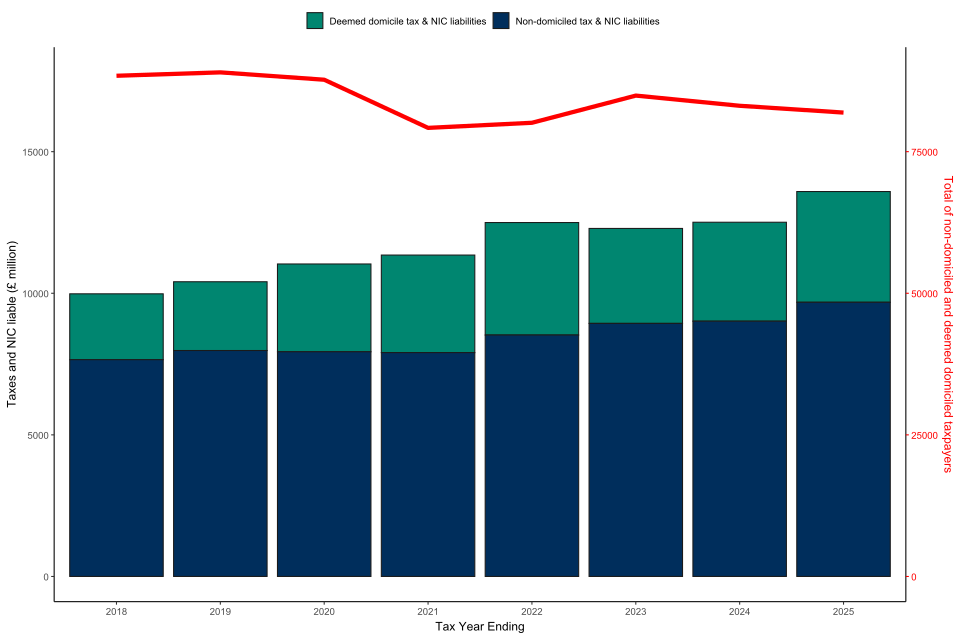
The combined tax and NICs liabilities for all non-domiciled and deemed domiciled taxpayers in tax year ending 2025 were £13.6 billion, a 9% increase on tax year ending 2024.
We estimate a combined total of at least 81,900 non-domiciled and deemed domiciled taxpayers as indicated in SA tax returns in the year ending 2025, a decrease of 1% from 83,100 in the previous year. Despite the small reduction in taxpayer numbers, total liabilities continued to increase.
This net decrease of around 1,200 reflects lower inflows and lower outflows within the non-domiciled population, alongside around 800 fewer deemed domiciled taxpayers. Fewer taxpayers flowed out of the non-domiciled taxpayer population than in the previous year (around 9,000 compared with 11,200), while the number of newly arrived non-domiciled taxpayers also fell (around 8,600 compared with 10,000).
At around £9.7 billion, the Income Tax revenue from non-domiciled and deemed domiciled taxpayers is £556 million (or 6%) higher than in tax year ending 2024 and is at its highest level since tax year ending 2017. NICs and CGT liabilities have also increased from 2024, with NICs rising by £68 million (3%) and CGT liabilities by £460 million (58%). The increase in CGT liabilities was substantial, particularly for deemed domiciled taxpayers, with liabilities returning to levels last seen in 2022.
CGT liabilities for this population can be volatile from year to year, reflecting the timing of disposals and the concentration of gains among a relatively small number of taxpayers. The increase is also consistent with broader trends in UK CGT receipts ahead of changes announced in Autumn Budget 2024.
Noting that it is important to combine the populations of non-domicile and deemed domiciled taxpayers to get the complete picture, we now turn to the separate populations in more detail.
4. Non-domiciled taxpayers and taxes
Figure 2: Non-domiciled taxpayer numbers, Income Tax, CGT and NICs
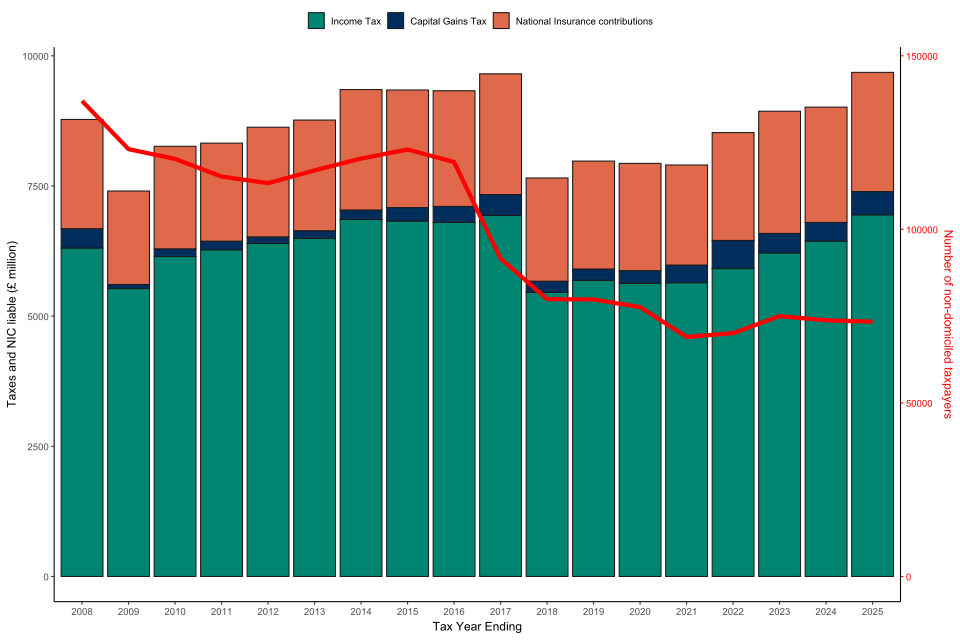
Figure 2 focuses on non-domiciled taxpayers, who accounted for around three-quarters of the combined non-domiciled and deemed domiciled population in tax year ending 2025. We estimate that there were 73,400 individuals claiming non-domiciled taxpayer status in the UK in the tax year ending 2025, a decrease of around 400 (0.5%) from the previous year. Although the population remains below its pre-pandemic level, the year-on-year change was small.
In the tax year ending 2025, the total UK Income Tax, CGT and NICs liabilities by all non-domiciled taxpayers were £9.7 billion, as shown in Figure 2. Despite the slight reduction in the number of non-domiciled taxpayers, the total amount of tax and NICs liabilities has increased by £668 million (7%) compared with the previous year.
This increase reflects higher Income Tax liabilities (up around 8% to their highest level in the series), together with increases in CGT liabilities (up around 25%) and NICs (up around 3%).
Figure 3: Number of non-domiciled taxpayers who have arrived into the UK in the previous five tax years
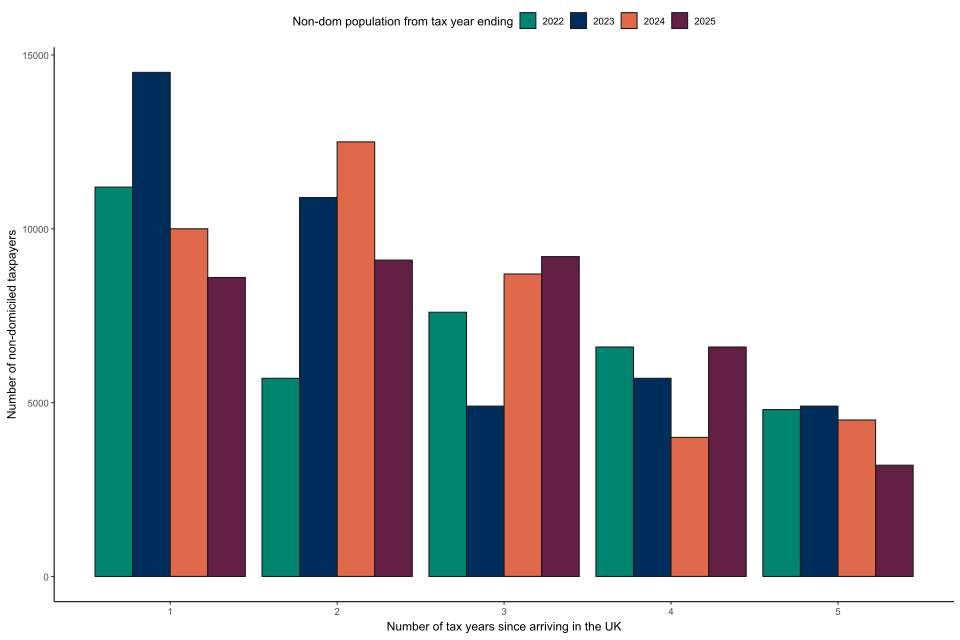
In the tax year ending 2025, there were around 8,600 newly arrived non-domiciled taxpayers, down from 10,000 in the previous year. This was offset by around 9,000 taxpayers flowing out of the non-domiciled population, compared with 11,200 in 2024, as outlined in Figure 3 (and Table 13).
Figure 3 shows that the composition of the non-domiciled population has shifted over time. Compared with tax year ending 2024, there were fewer taxpayers in their first year since arrival in the UK and more taxpayers who had been in the UK for three or four years.
As in previous years, the majority of non-domiciled taxpayers in the tax year ending 2025 indicated UK residence.
5. Deemed domicile reforms
Figure 4: Deemed domiciled taxpayer numbers, Income Tax, CGT and NICs
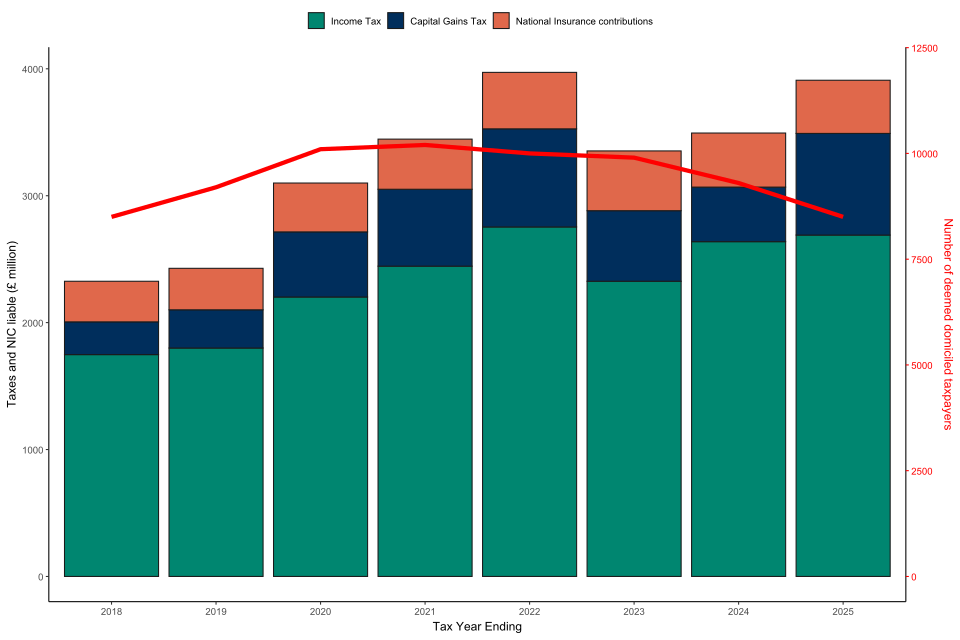
Figure 4 shows 8,500 individuals indicated deemed domiciled taxpayer status in the UK on their SA tax returns in the tax year ending 2025, down around 800 from the previous year.
Despite the reduction in deemed domiciled taxpayer numbers, total UK Income Tax, CGT and NICs on worldwide income and liable gains increased to £3.9 billion in the tax year ending 2025, compared with £3.5 billion in the previous year. While NICs fell from 2024, Income Tax receipts and CGT both increased. CGT liabilities were substantially higher than in the previous year (86% increase). The increase in CGT liabilities among deemed domiciled taxpayers mirrors wider increases in CGT receipts seen across the UK tax system.
6. Non-domiciled UK resident taxpayers, remittance basis and arising basis
Figure 5: Number of non-domiciled UK residents claiming the remittance basis or the arising basis of taxation
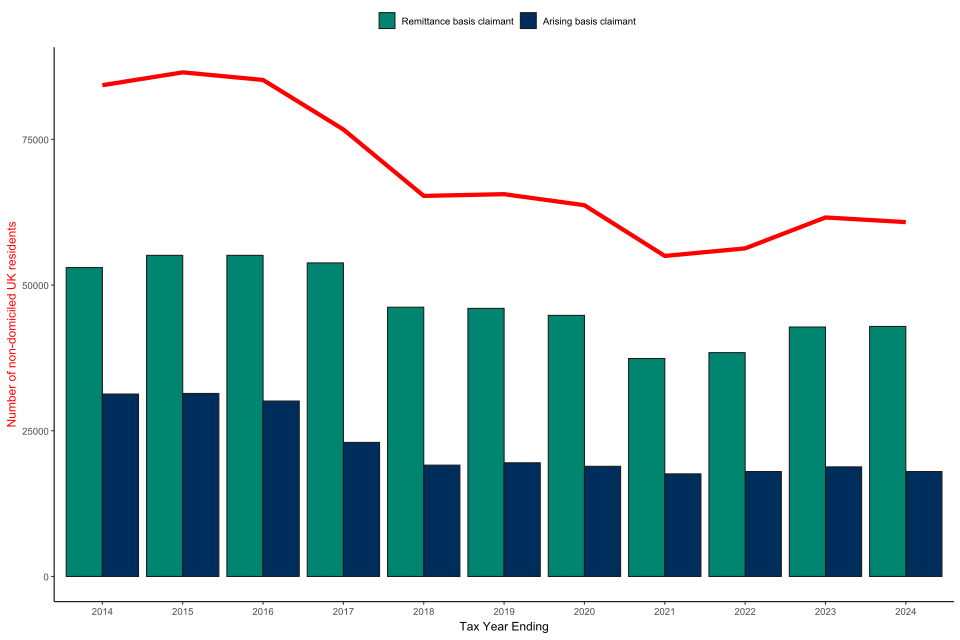
The vast majority of non-domiciled taxpayers are UK-resident. For the tax year ending 2024, the number of UK-resident non-domiciled taxpayers decreased slightly by around 1% from 61,600 to 60,800.
The UK-resident non-domiciled group was taxed on two bases: a remittance basis or an arising basis. Individuals who are UK-resident are normally taxed on the arising basis of taxation, where all of an individual’s worldwide income and gains are taxable in the UK as they arise. Prior to the tax year ending 2026, some non-domiciled taxpayers who were UK-resident could choose to be taxed on the remittance basis, meaning that any foreign income and gains would only be taxed if they are brought, or remitted, into the UK, even if that remittance occurs in a later tax year. For non-domiciled taxpayers who opted to be taxed on the remittance basis, any foreign income and gains that were not remitted to the UK were not subject to UK tax.
The numbers of remittance basis users and their Tax and NIC liabilities were broadly unchanged from the previous year. Of 60,800 UK-resident non-domiciled taxpayers in 2024, 42,900 were taxed on the remittance basis. Tax and NIC liabilities for remittance basis users were £7.1 billion (Table 5). By comparison, 18,000 non-domiciled taxpayers were taxed on the arising basis, down 4% from the previous year, while their total tax and NIC liabilities increased by 3% to around £1.9 billion (Table 6).
7. Remittance basis and the remittance basis charge
The number of non-domiciled taxpayers paying on the remittance basis was 42,900 in the tax year ending 2024. We expect to revise this in future years due to a small number of late filers.
Figure 6 shows that the number of remittance basis claimants increased slightly in tax year ending 2024. The number paying the remittance basis charge (RBC) and the number on the remittance basis without paying the RBC due to residence period have increased, while the number with less than £2,000 of unremitted income has decreased.
Table 7 shows that only a minority of the taxpayers who are using the remittance basis are liable to pay the RBC. This is because the RBC is only levied when a remittance basis user has been UK-resident for at least 7 of the previous 9 tax years immediately before the relevant tax year. It is also not payable where a taxpayer using the remittance basis has less than £2,000 of unremitted non-UK income or gains. We have provided a breakdown for this group in Table 8.
7.1 Remittance basis claimants and taxes
Figure 6: Number of non-domiciled UK resident taxpayers taxed on the remittance basis and their Income Tax, CGT and NICs
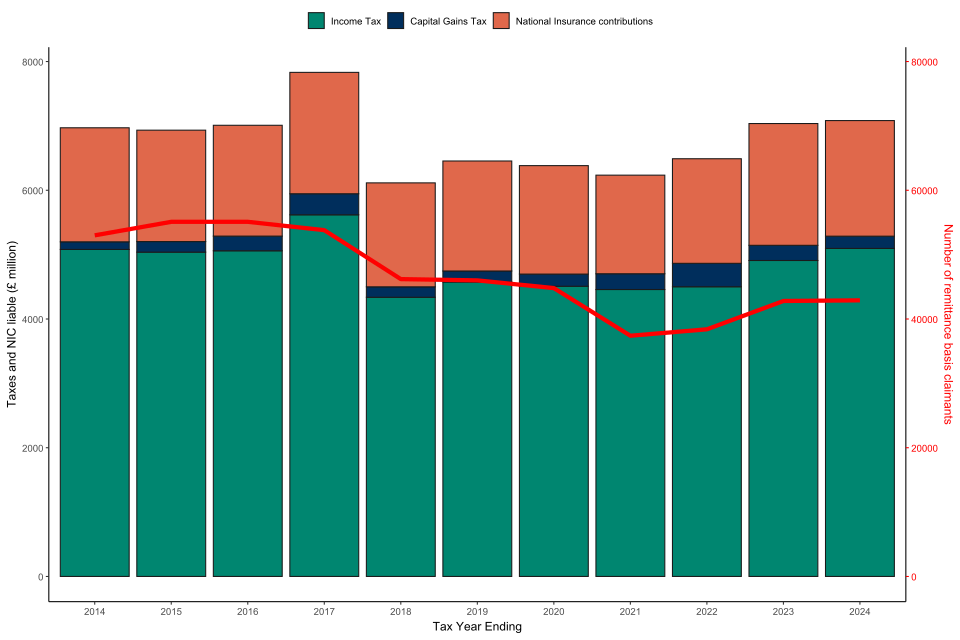
Non-domiciled taxpayers on the remittance basis were liable to pay £7.1 billion in Income Tax, CGT and NICs in the tax year ending 2024 (Table 5), broadly stable with the previous tax year ending 2023. Total tax and NIC liabilities remained at their highest level since 2017.
8. Remittance basis charge revenue
Figure 7: Non-domiciled UK resident taxpayers liable to pay the RBC and UK Income Tax, CGT, NICs and RBC revenue
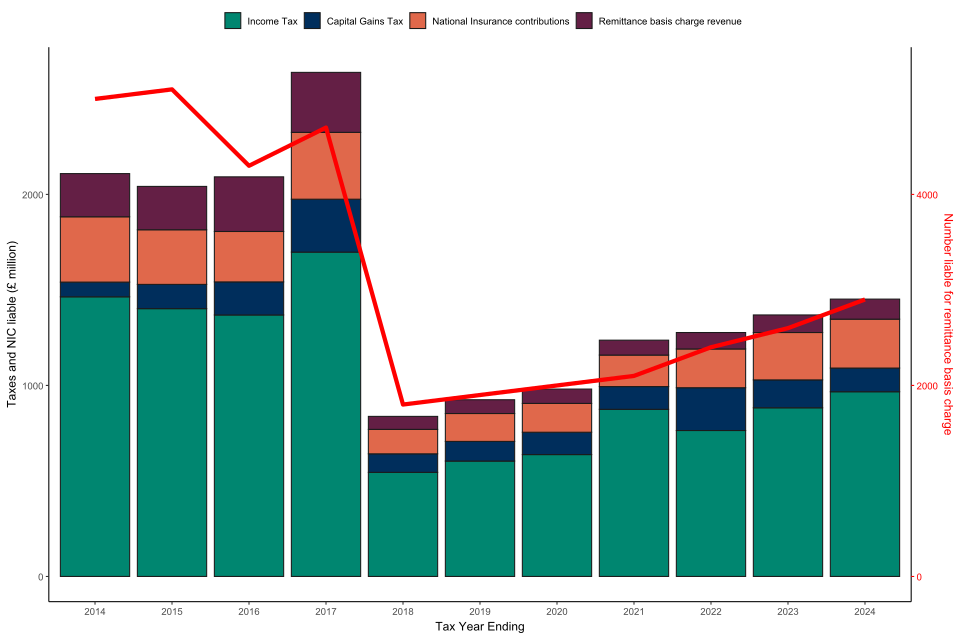
Figure 7 shows the number of taxpayers who were liable to pay the RBC increased from 2,600 in the tax year ending 2023 to 2,900 in the tax year ending 2024. Total liabilities for this group, including Income Tax, CGT, NICs and the RBC, increased from £1.4 billion to £1.5 billion.
The accompanying background quality report provides more details on the RBC and deemed domicile changes.
9. Non-domiciled taxpayers by region
9.1 Regional observations
London continued to have the largest non-domiciled taxpayer population in the tax year ending 2024, with 57% of non-domiciled taxpayers in the UK located in that region and 73% of non-domiciled UK Income Tax, CGT and NICs coming from that region (Table 11). London also had the largest population of UK-resident non-domiciled taxpayers.
10. Business Investment Relief (BIR) in the UK
Figure 8: Value of business investment relief and number of claimants
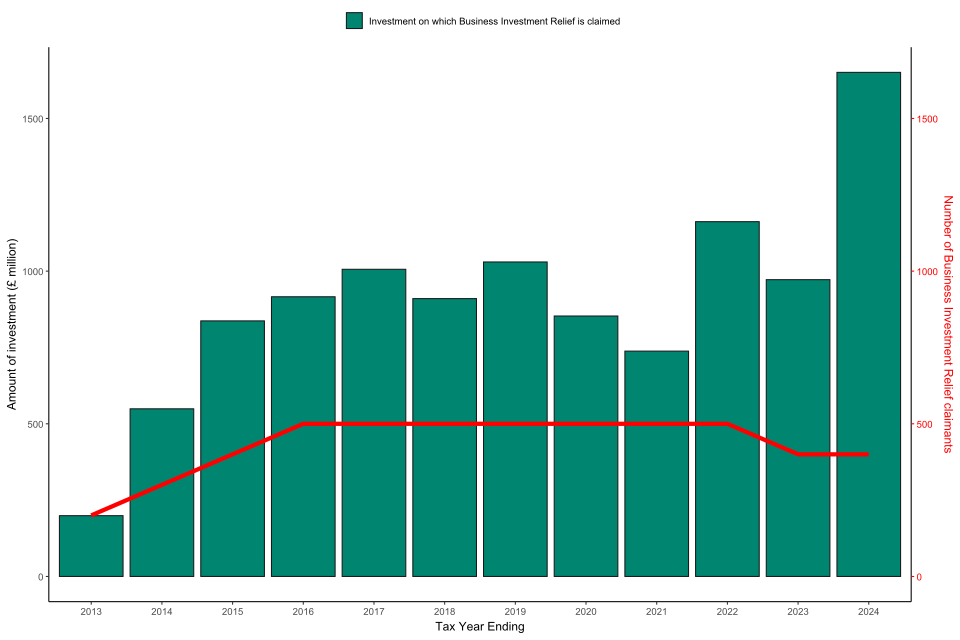
Figure 8 shows that in the tax year ending 2024, around 400 individuals claimed Business Investment Relief (BIR), unchanged from the previous year on a rounded basis. The total amount invested in the UK in tax year ending 2024 was £1.7 billion, an increase of around £679 million from the previous tax year. BIR investment amounts have varied year-on-year, and the 2024 figure is the highest in the series shown. The cumulative value of investments in UK businesses on which BIR has been claimed since BIR began in 2012 is £1.8 billion.