Seizures of drugs in England and Wales, financial year ending 2025
Published 12 February 2026
Applies to England and Wales

© Crown copyright 2026
This publication is licensed under the terms of the Open Government Licence v3.0 except where otherwise stated. To view this licence, visit nationalarchives.gov.uk/doc/open-government-licence/version/3 or write to the Information Policy Team, The National Archives, Kew, London TW9 4DU, or email: psi@nationalarchives.gov.uk.
Where we have identified any third party copyright information you will need to obtain permission from the copyright holders concerned.
This publication is available at https://www.gov.uk/government/statistics/seizures-of-drugs-in-england-and-wales-financial-year-ending-2025/seizures-of-drugs-in-england-and-wales-financial-year-ending-2025
This publication provides an overview of drug seizures made by the 43 territorial police forces, British Transport Police, and Border Force in the year ending 31 March 2025, in England and Wales. The data relates to all drugs controlled under the Misuse of Drugs Act 1971 (MDA) and the Psychoactive Substance Act 2016 (PSA). Statistics on historical seizures of drugs prior to and including the year ending March 2010 can be found in the web archive. Drug seizure statistics from the year ending March 2011 onwards are available on the GOV.UK website.
Please see the user guide for further information on this release, including the imputation applied to previously missing data.
1. Main points
In the year ending March 2025:
- police forces and Border Force made the highest number of drug seizures in England and Wales since the time series began in 1973; there were 269,321 seizures in total, a 24% increase on the previous year (217,633); the rise was caused by a 14% increase in police force seizures and a 65% increase in Border Force seizures
- police forces accounted for the majority (75%) of the 269,321 seizures, with Border Force accounting for remaining 25%
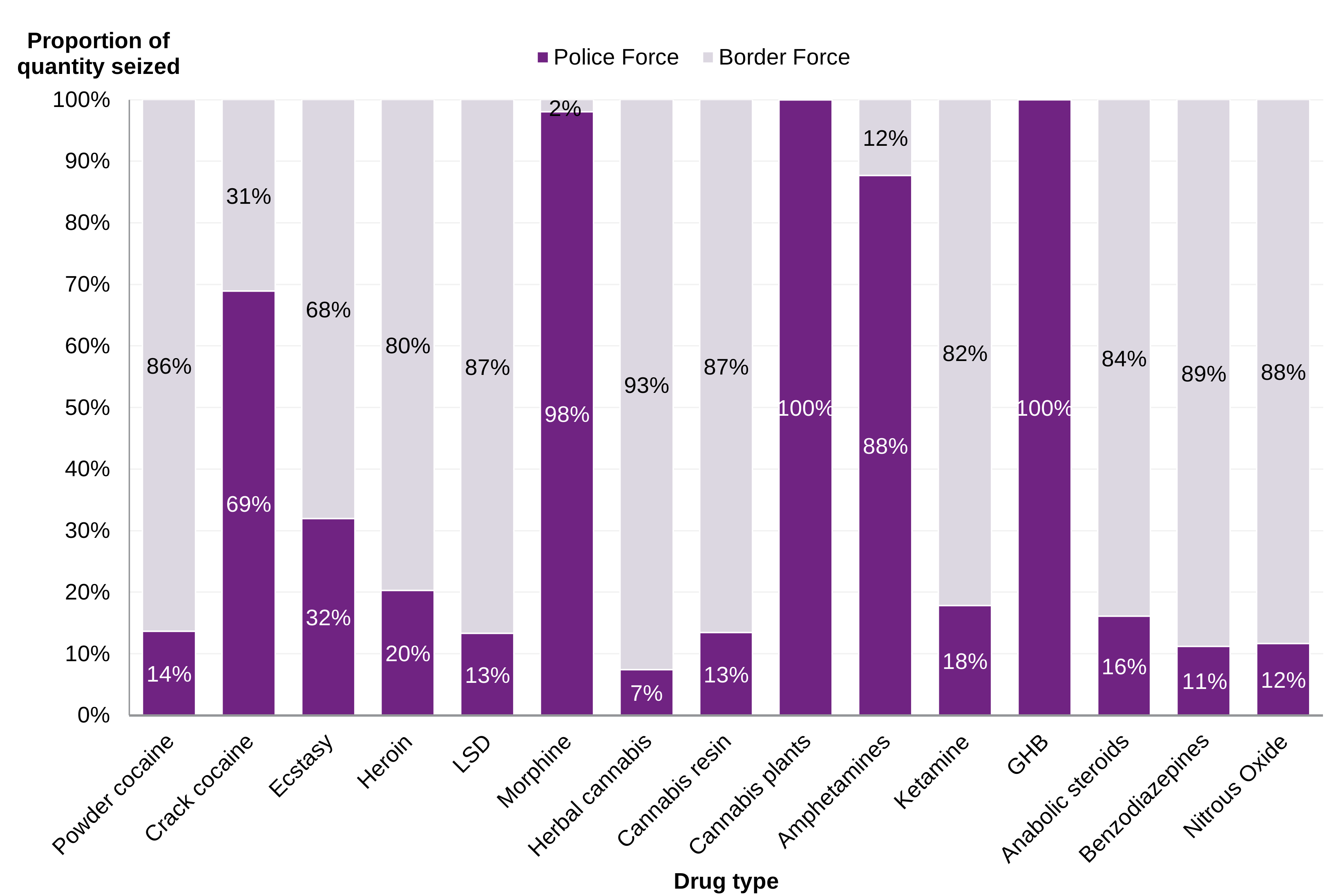
- Border Force accounted for a much larger proportion of the quantity of certain drugs seized; this included 86% of powder cocaine, 93% herbal cannabis and 87% cannabis resin
- Border Force seized a total of 148.19 tonnes of weighed drugs; this is the largest quantity recorded since the time series began in 1973 (95% of Border Force seizures were weight-based); this increase, along with the 65% rise in the number of Border Force seizures, was mainly driven by herbal cannabis seizures
- police forces and Border Force seized the largest quantity of herbal cannabis since the time series began in 1973; this was a 61% increase from the previous year (85.01 to 137.21 tonnes); this was mainly due to Border Force seizing the largest quantity of herbal cannabis since the series began (126.98 tonnes)
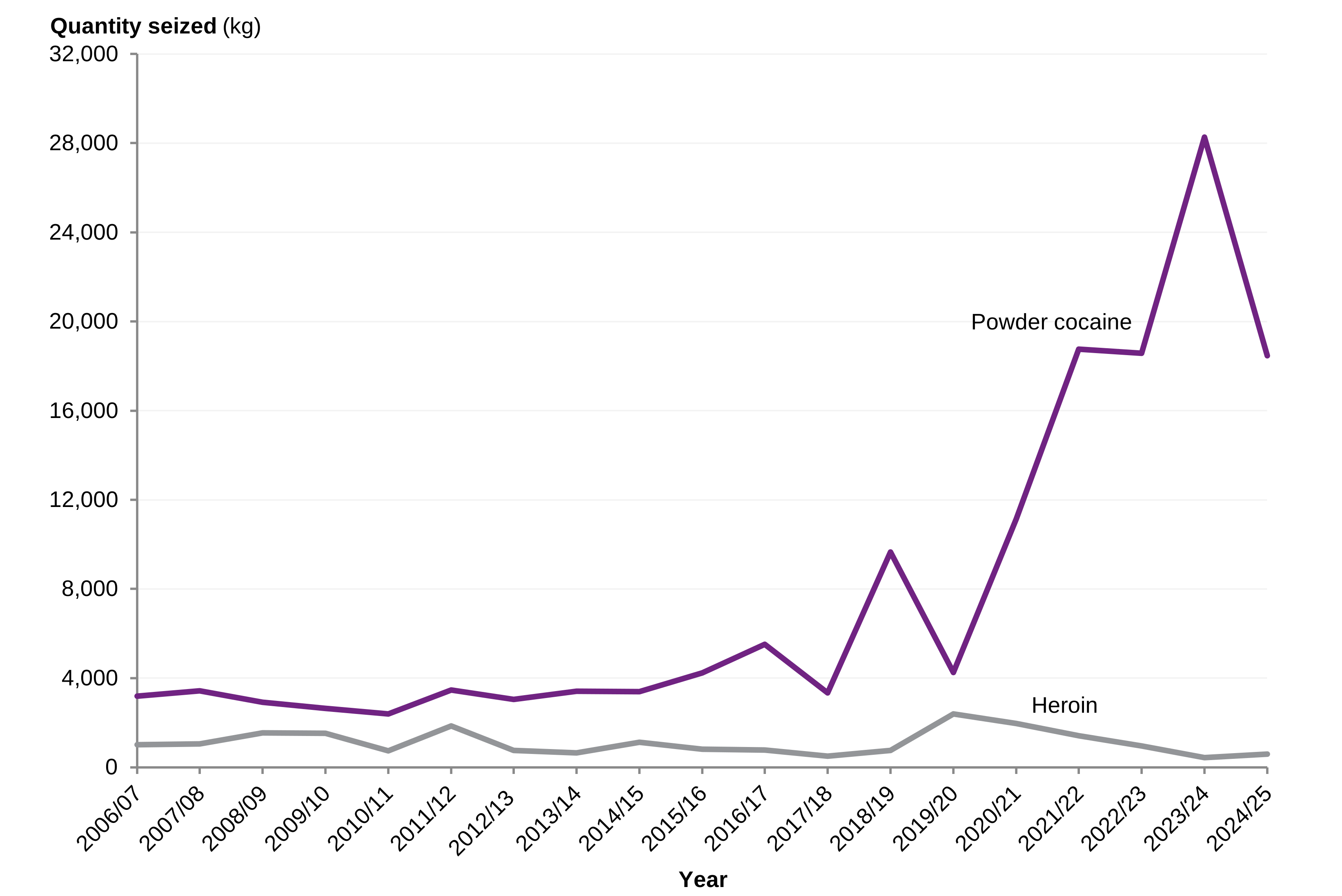
- police forces carried out the highest number of powder cocaine seizures (23,706) since the time series began in 1973, a 13% increase from the previous year (20,900); the total quantity seized by police forces and Border Force decreased by 35% from the previous year (28.27 to 18.46 tonnes); this was driven by a decrease in the quantity seized by Border Force, returning to a level similar to year ending March 2023
- the total number of heroin seizures decreased by 10%, from 6,102 to 5,496 seizures; this is the lowest number of heroin seizures since 1994; however, the quantity of heroin seized by police forces and Border Force increased by 33%, from 441 kilograms (kg) to 589kg, compared to the previous year
- police forces and Border Force carried out the highest number of ketamine seizures since the time series began in year ending March 2007 (3,382); this was a 50% increase on the previous year (2,252)
- police forces and Border Force made the highest number of nitrous oxide seizures since the time series began in year ending March 2018 (6,223); this was a 143% increase on the previous year (2,564); they also seized the highest quantity of nitrous oxide since the time series began (4.19 million doses), representing a 2,185% increase from the previous year (0.18 million doses)
The number of seizures can be heavily affected by factors such as enforcement activity, changes in recording practices and the demand and supply of drugs. For the latest published estimates of drug use see the Crime Survey for England and Wales.
Annual totals of the quantity of drugs seized can be greatly influenced by a small number of large seizures. As with the number of drug seizures, any large quantity of drugs seized should not be taken as an indication of drug use prevalence or availability.
2. Number of seizures
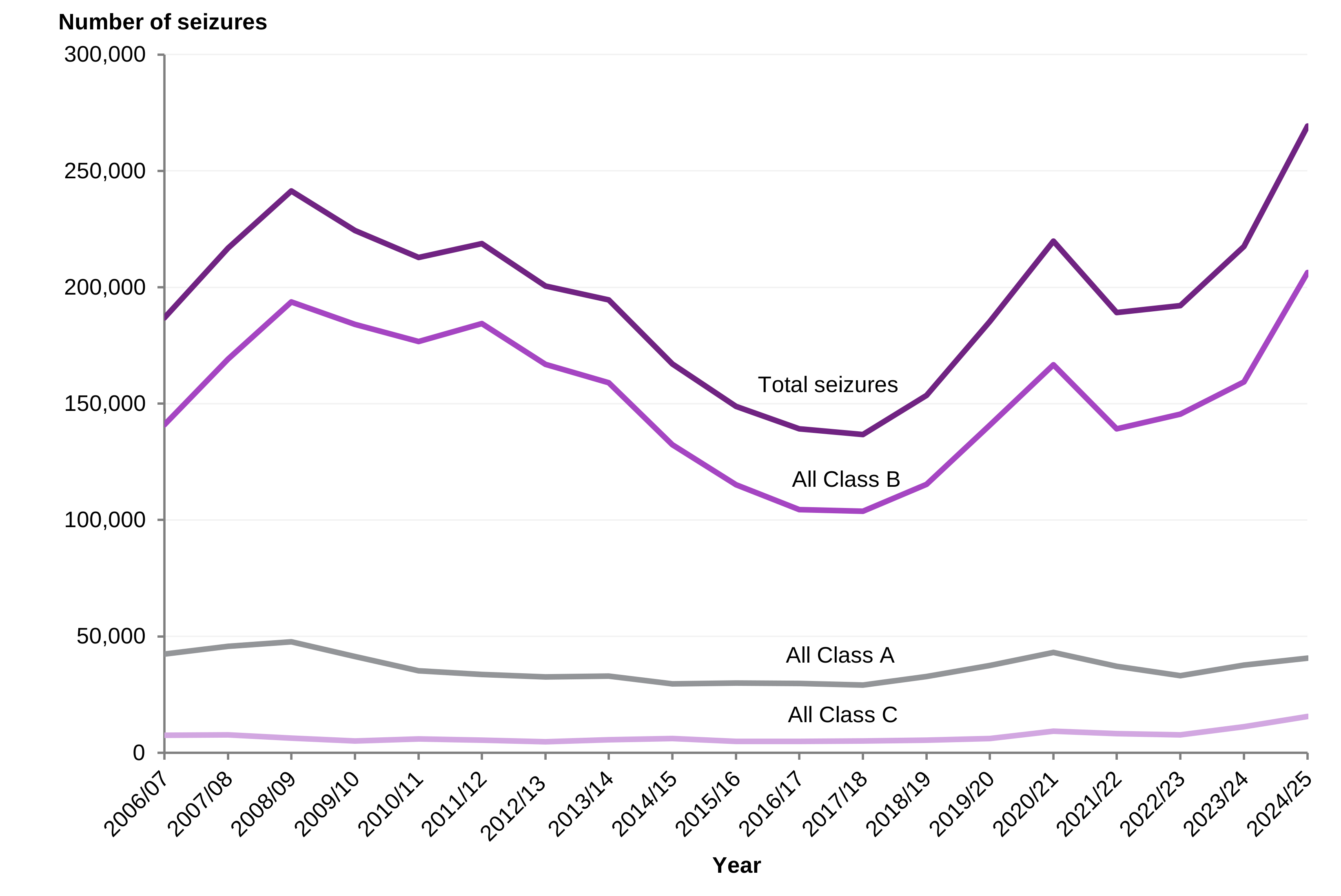
In the year ending March 2025, police forces and Border Force made 269,321 drug seizures in England and Wales. This was a 24% increase on the previous year (217,633). It is also the highest number of seizures recorded since the time series began in 1973.
Other key findings were:
- all classes of drugs saw an increase in the number of seizures, with Class A seizures increasing by 2,926 (+8%), Class B increasing by 46,977 (+29%), and Class C increasing by 4,332 (+39%)
- cannabis (herbal, plant and resin) seizures increased by 28% and cannabis remains the most seized drug, followed by powder cocaine
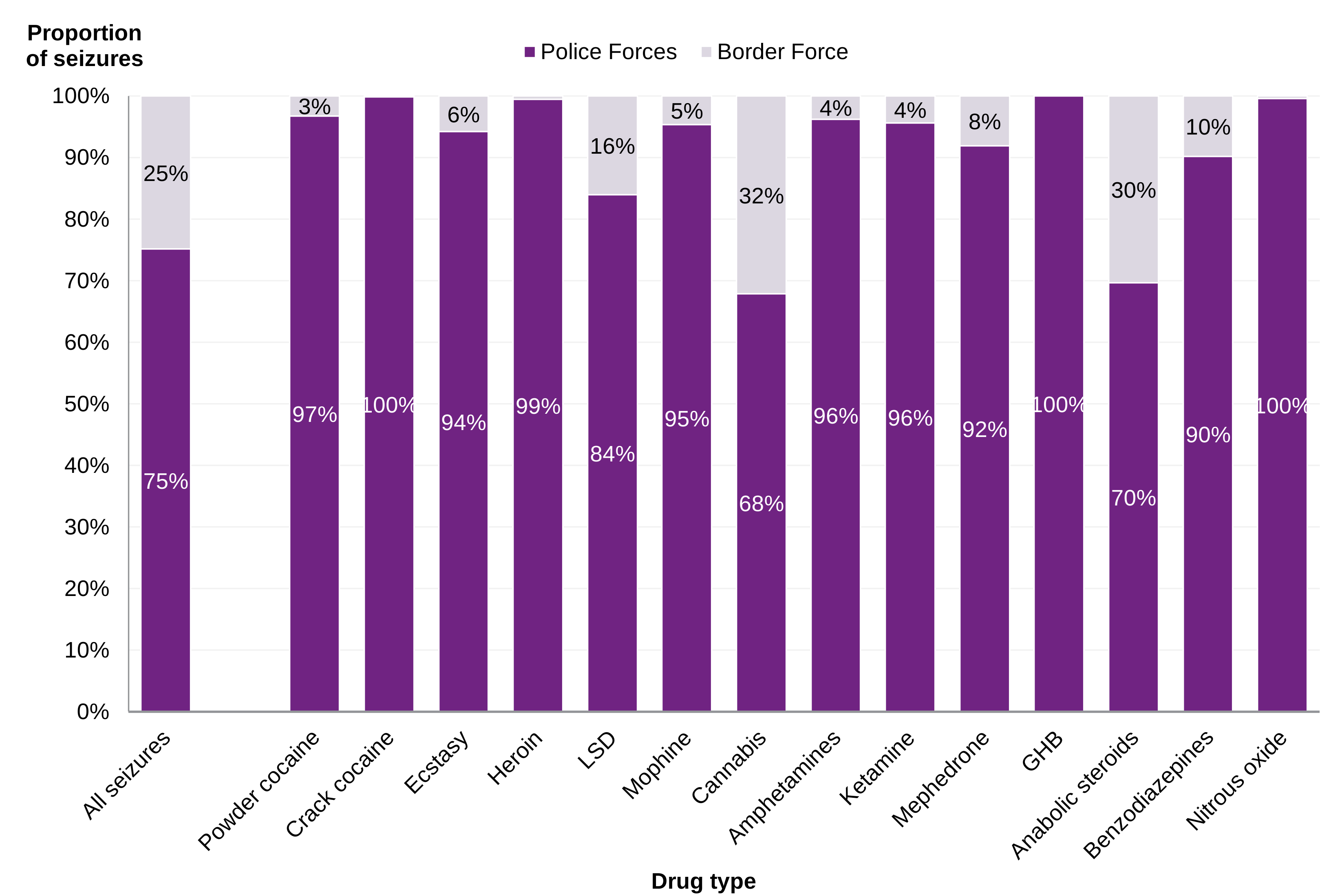
- similar to previous years, police forces accounted for the majority (75%) of the number of seizures compared to Border Force (25%)
Figure 1: Number of seizures of total drugs, Class A, Class B and Class C drugs by police forces and Border Force, years ending March 2007 to 2025
Source: Home Office, Summary Table 1.
The MDA divides drugs into 3 categories: Class A, B and C. These are classed according to the harm caused to the user or to society when they are misused. Class A drugs are considered the most harmful. For more information on drug classifications, please see the user guide.
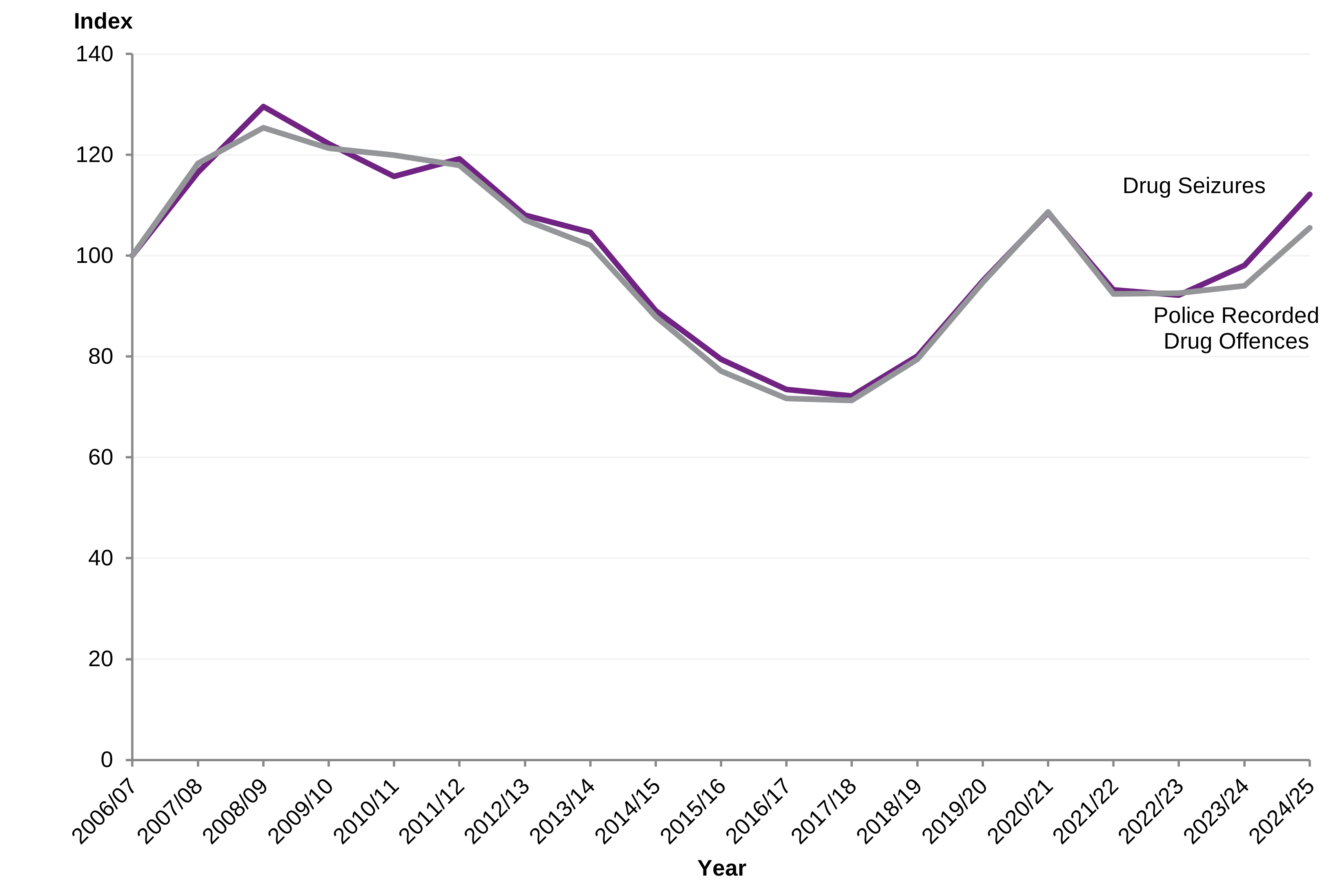
When police forces make a drug seizure, the seizure is recorded, as is the drug offence. Therefore, the total number of drug seizures per year follows a similar trend to the number of police recorded drug offences (shown in Figure 2 below). Statistics on the number of police recorded drug offences are published on a quarterly basis by the Office of National Statistics (ONS) - see Crime in England and Wales - Appendix table. This includes offences for possession of controlled drugs, trafficking in controlled drugs, and other drug offences. These statistics show that during the year ending March 2025, police forces recorded 204,664 drug offences, a 12% increase from the previous year (182,673).
There was a 0.5% increase in the number of stop and searches for drugs in the year ending March 2025 (318,498), compared to the previous year (316,976), as noted in Police powers and procedures statistics. Since the peak in the year ending March 2009 (243,536), the number of drug offences recorded by the police has decreased by 16% from 243,536 to 204,664. Similarly, the number of drug seizures by police forces has decreased in the same time period, by 13% from 233,793 to 202,423.
Figure 2: Index of police recorded drug offences and the total number of drug seizures by police forces, years ending March 2007 to 2025
Source: Home Office, Summary Table 1. Office for National Statistics (ONS), Crime in England and Wales, year ending September 2025, Appendix Table A5a.
Notes:
- Based on an index created by dividing figures for each year by the figure for year ending March 2007, and multiplying by 100.
2.1 Class A drugs
In the year ending March 2025, there were 40,652 seizures of Class A drugs, an 8% increase on the previous year (37,726).
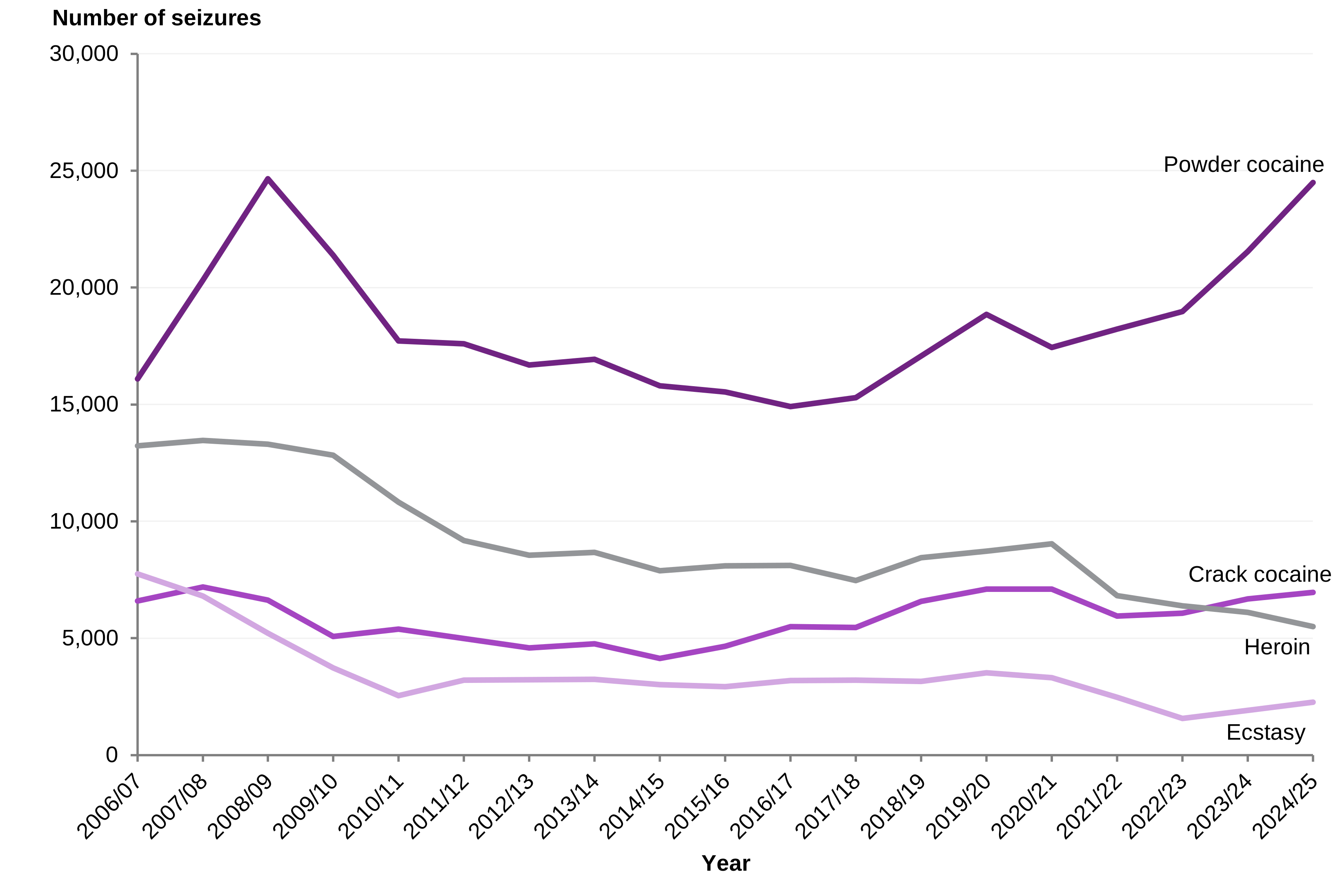
Powder cocaine: the number of powder cocaine seizures increased by 14%, from 21,548 to 24,492, compared to the previous year. Police forces made the highest number of powder cocaine seizures since the time series began in 1992, with 23,706 seizures, a 13% increase from the previous year. Powder cocaine accounted for 60% of all Class A seizures.
Heroin: the number of heroin seizures decreased by 10%, from 6,102 to 5,496, compared to the previous year. This is the lowest number of heroin seizures recorded since 1994, continuing a downward trend since year ending March 2021. Heroin accounted for 14% of all Class A seizures.
Crack cocaine: the number of crack cocaine seizures increased by 4%, from 6,678 to 6,952, compared to the previous year. Crack cocaine accounted for 17% of all Class A seizures.
Ecstasy: the number of ecstasy seizures increased by 18%, from 1,919 to 2,265, compared to the previous year.
Methadone: the number of methadone seizures decreased by 4%, from 500 to 479, compared to the previous year.
LSD: the number of LSD seizures decreased by 11%, from 261 to 231, compared to the previous year.
Morphine: the number of morphine seizures increased by 9%, from 277 to 302, compared to the previous year.
Fentanyl: the number of fentanyl seizures remained low, with 25 seizures of fentanyl and 9 seizures of fentanyl analogues, following a similar trend in previous years.
Figure 3: Number of seizures of the main Class A drug types by police forces and Border Force, years ending March 2007 to March 2025
Source: Home Office, Summary Table 1.
2.2 Class B drugs
In the year ending March 2025, there were 206,383 seizures of Class B drugs, a 29% increase on the previous year (159,406). As in previous years, the majority of Class B seizures involved cannabis, accounting for over 94% (194,682) of all Class B seizures.
2.2.1 Cannabis
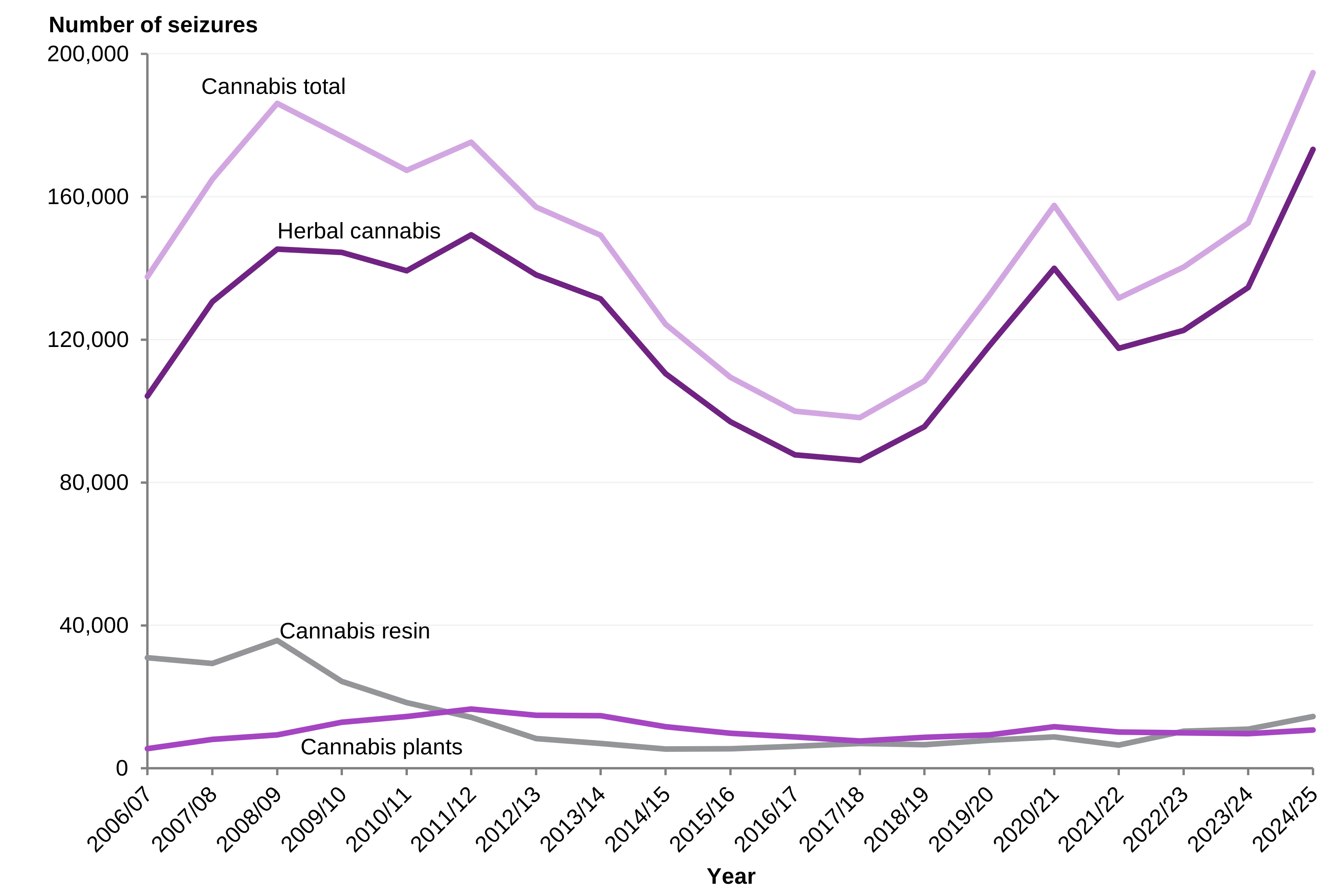
In the year ending March 2025, there were 194,682 seizures of cannabis, a 28% increase from the previous year (152,660). Border force had the highest number of cannabis seizures since the time series began in 1996 (62,534).
Cannabis has consistently accounted for the majority of overall seizures. For example, in the current year cannabis was present in 72% of all seizures made by Border Force and police forces. Therefore, the number of cannabis seizures made in a given year will strongly influence overall trends.
Herbal cannabis: the number of herbal cannabis seizures increased by 29%, from 134,570 to 173,215, compared to the previous year. Border Force made the highest number of herbal cannabis seizures since the series began, with 61,422 seizures, an 86% increase from the previous year. Police forces made 111,793 herbal cannabis seizures, a 10% increase from the previous year. Herbal cannabis accounted for 89% of all cannabis seizures.
Cannabis resin: the number of cannabis resin seizures increased by 32%, from 10,959 to 14,448, compared to the previous year. This is the highest number of cannabis resin seizures since year ending March 2011.
Cannabis plants: the number of cannabis plant seizures increased by 10%, from 9,710 to 10,689, compared to the previous year.
Figure 4: Number of cannabis seizures by police forces and Border Force, years ending March 2007 to 2025
Source: Home Office, Summary Table 1.
2.2.2 Further Class B drugs
‘Other Class B drugs’: the number of seizures of ‘Other Class B’ drugs were the second most common Class B drug seized (behind cannabis). The number of ‘Other Class B’ drug seizures increased by 80%, from 3,823 to 6,886, compared to the previous year. Examples of ‘Other Class B’ drugs include THC cannabis oil and cannabis edibles.
Amphetamines: the number of amphetamines seizures increased by 84%, from 2,337 to 4,294, compared to the previous year.
Ketamine: the number of ketamine seizures increased by 50%, from 2,252 to 3,382, compared to the previous year. This is the highest number of ketamine seizures since the time series began in year ending March 2007.
Synthetic cannabinoids: the number of synthetic cannabinoids seizures increased by 72%, from 1,020 to 1,754, compared to the previous year.
GHB: the number of GHB seizures increased by 26%, from 87 to 110, compared to the previous year.
Mephedrone (non-injection): the number of non-injection mephedrone seizures increased by 82%, from 34 to 62, compared to the previous year.
2.3 Class C drugs
In the year ending March 2025, there were 15,539 seizures of Class C drugs, a 39% increase on the previous year (11,207).
‘Other Class C’: the number of ‘Other Class C’ seizures increased by 10%, from 5,727 to 6,325, compared to the previous year. These seizures accounted for 41% of all Class C seizures, and examples of these drugs include zopiclone and pregabalin.
Nitrous Oxide: the number of nitrous oxide seizures increased by 143%, from 2,564 to 6,223, compared to the previous year. Nitrous oxide accounted for 40% of all Class C drugs. This is the highest number of seizures since the time series began in year ending March 2018.
Anabolic steroids: the number of anabolic steroid seizures increased by 8%, from 784 to 847, compared to the previous year.
Benzodiazepines: the number of benzodiazepine seizures increased by 8%, from 2,587 to 2,796, compared to the previous year.
2.4 Unknown substances
In the year ending March 2025, there were 24,505 seizures of unknown substances, a 3% increase on the previous year (23,724). Unknown substances were present in 9% of all seizures made. Where a drug is described as ‘unknown’ or ‘drug not known’, this generally means that police forces or Border Force have seized a substance which is believed to be an illegal substance but has not been identified by officers or through testing.
3. Quantity of drugs seized
Annual totals of the quantity of drugs seized can be greatly influenced by a small number of large seizures. As with the number of drug seizures, any large quantity of drugs seized should not be taken as an indication of drug use prevalence or availability.
3.1 Class A drugs
In the year ending March 2025:
Powder cocaine: a total of 18.46 tonnes of powder cocaine was seized by police forces and Border Force; representing a 35% decrease compared to the previous year, returning to a level similar to year ending March 2023.
Border Force seized the vast majority (86%) of power cocaine, amounting to 15.94 tonnes. This was a 40% decrease from 26.57 tonnes in the previous year. Police forces seized 2.52 tonnes of powder cocaine, representing a 49% increase compared to the previous year.
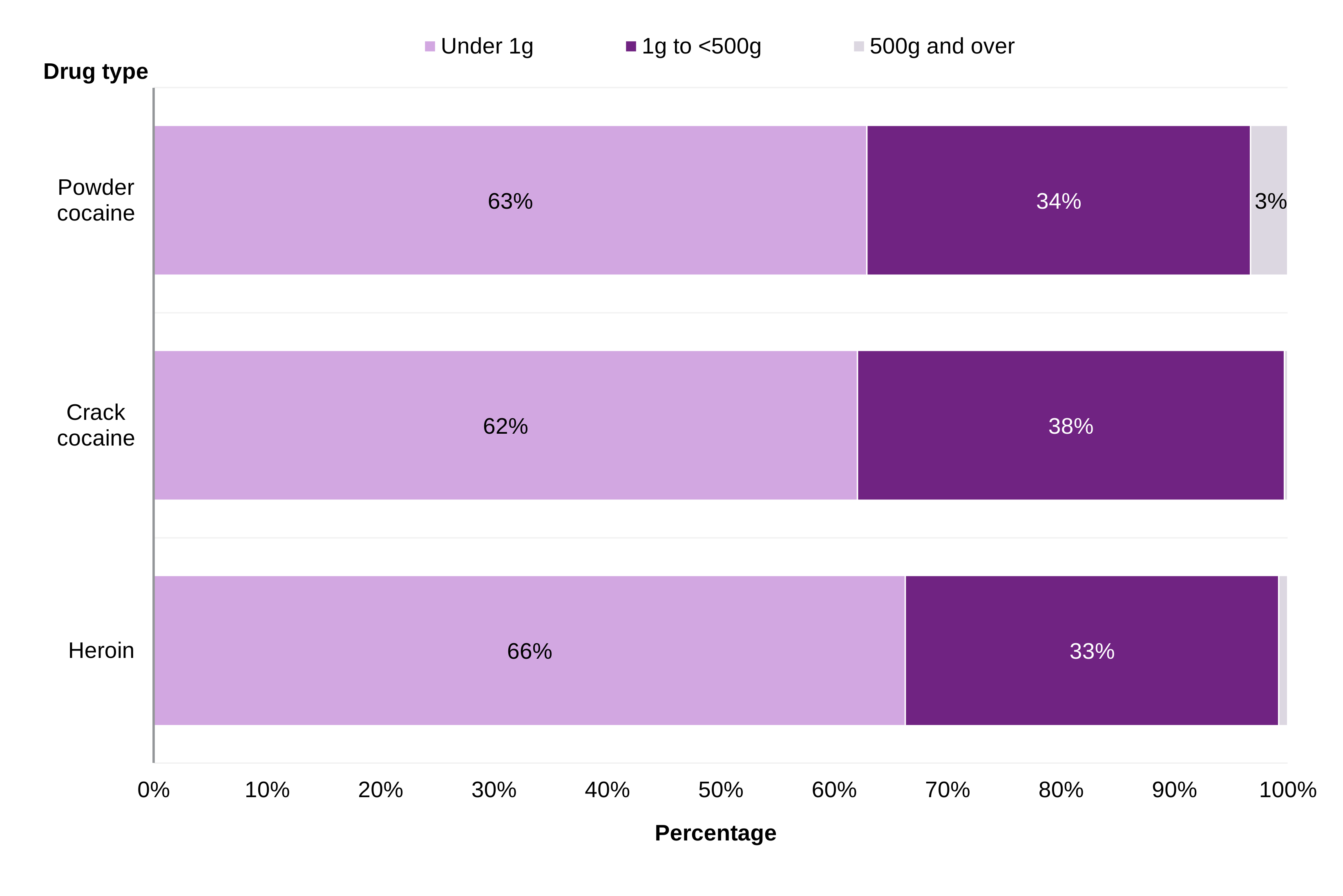
As shown in Figure 6 below, 63% of powder cocaine seizures were under one gram (g), 34% were between 1g to <500g, and the remaining 3% weighed 500g and over. There was a decrease in the number of seizures that contained 100 kilograms (kg) or more, which is likely to have driven the overall decrease in quantity.
Heroin: the total quantity of heroin seized increased by 33%, from 441kg to 589kg, compared to the previous year. As shown in Figure 6, 66% of heroin seizures were under 1g, 33% were between 1g to <500g, and the remaining 1% weighed 500g and over.
Crack cocaine: the total quantity of crack cocaine seized increased by 106%, from 40kg to 81kg, compared to the previous year. As shown in Figure 6, 62% of seizures weighed under 1g and 38% weighed between 1g to <500g.
Seizures of crack cocaine made by Border Force increased by 294%, from 6kg to 25kg, compared to the previous year. The quantity of crack cocaine seized by Border Force tends to be small as most crack cocaine is made in England and Wales from imported powder cocaine. Police forces accounted for the majority of the quantity of crack cocaine seizures (69%), as with previous years.
Figure 5: Quantity of powder cocaine and heroin seized by police forces and Border Force, years ending March 2007 to March 2025
Source: Home Office, Summary Table 2.
Figure 6: Distribution of quantities of Class A drugs measured in grams, seized by police forces and Border Force, year ending March 2025
Source: Home Office, Summary Table 3.
Notes:
- Numbers may not sum to 100% due to rounding.
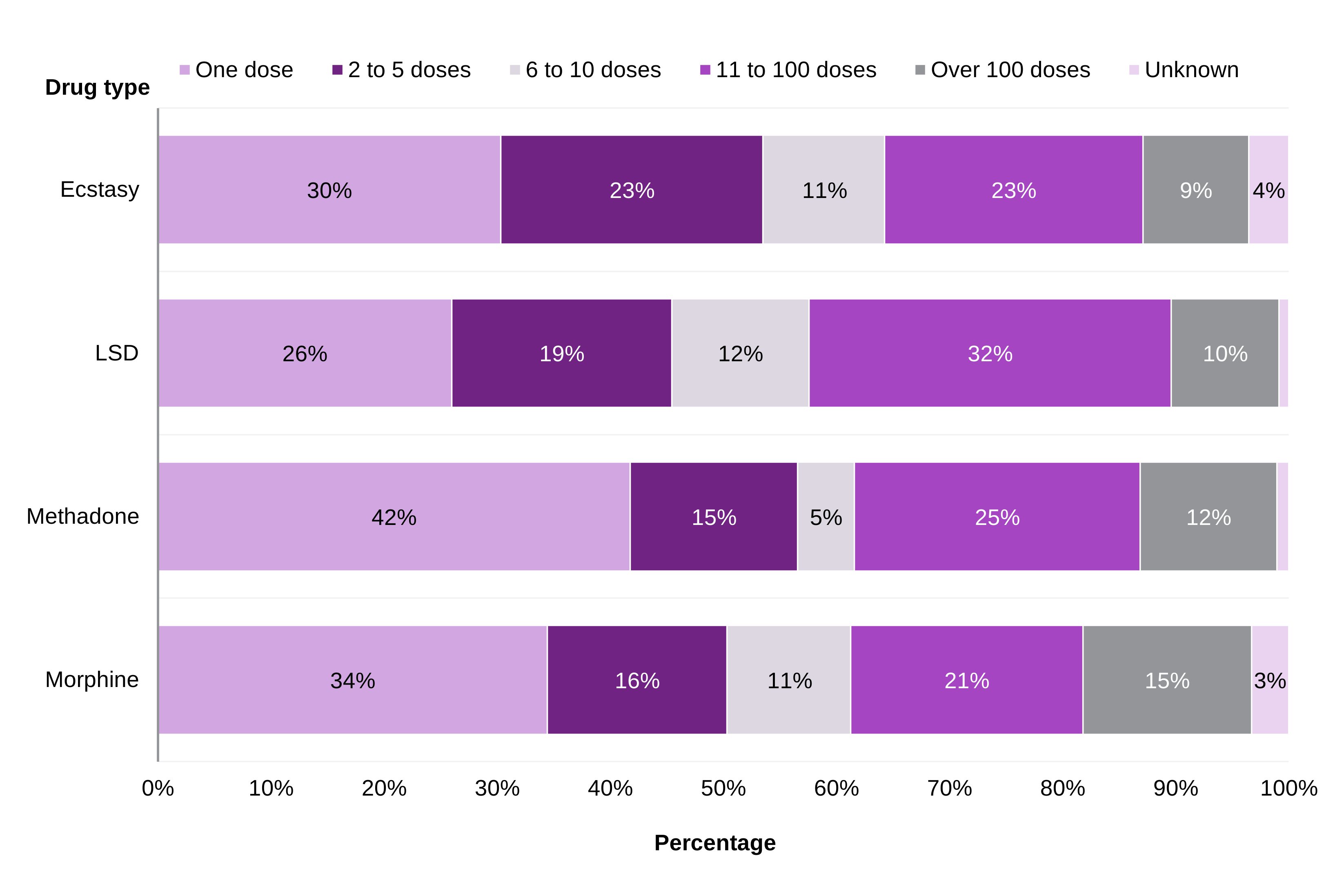
Ecstasy: the total quantity of ecstasy seized decreased by 12%, from 1.62 million doses to 1.42 million doses, compared to the previous year. As shown in Figure 7, 64% of ecstasy seizures involved 10 or fewer doses.
LSD: the total quantity of LSD seized increased by 477%, from 8,990 doses to 51,840 doses, compared to the previous year. This increase was mainly driven by a 905% rise in the quantity of LSD seized from Border Force, from 4,470 doses to 44,940 doses.
Methadone: the total quantity of methadone seized decreased by 67%, from 74,390 doses to 24,570 doses, compared to the previous year.
Morphine: the total quantity of morphine seized increased by 8%, from 24,960 doses to 26,850 doses, compared to the previous year.
Fentanyl: fentanyl and fentanyl analogues are recorded in 3 different preparation types: doses, kilograms and wraps. A total of 154 doses, 0.4kg and 3 wraps of fentanyl and fentanyl analogues were seized by police forces and Border Force.
Figure 7: Distribution of quantities of Class A drugs measured in doses, seized by police forces and Border Force, year ending March 2025
Source: Home Office, Supplementary Table 2.
Notes:
- Numbers may not sum to 100% due to rounding.
3.2 Class B drugs
3.2.1 Cannabis
In the year ending March 2025:
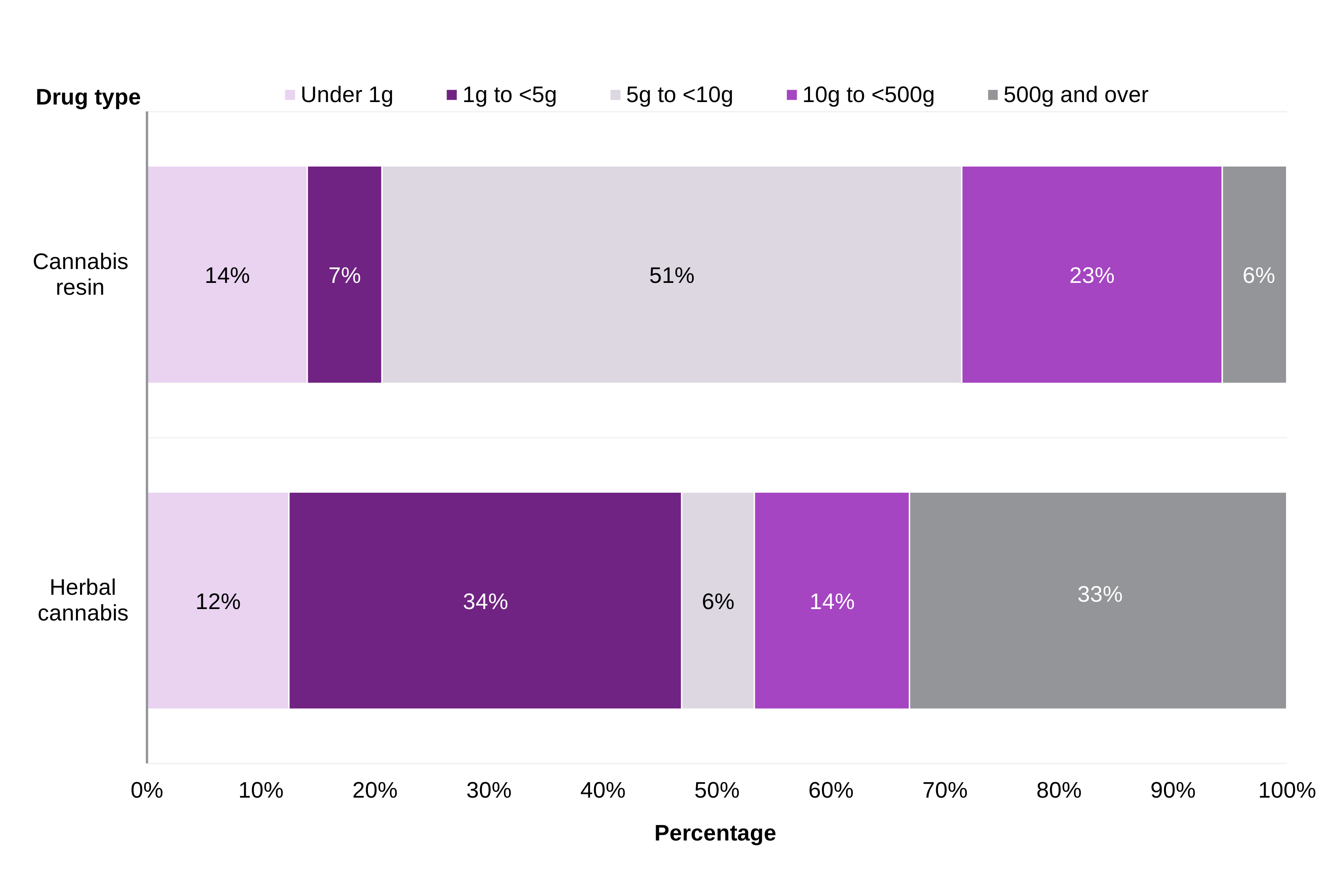
Herbal cannabis: the total quantity of herbal cannabis seized rose by 61%, from 85.01 tonnes to 137.21 tonnes, compared to the previous year. This is the largest recorded quantity of herbal cannabis seized since the time series began in 1973. 12% of herbal cannabis seizures weighed less than 1g and 54% weighed from 1g up to 500g.
This increase was due to Border Force, which seized the largest quantity of herbal cannabis since the time series began, amounting to 126.98 tonnes, a 71% increase from the previous year. Border Force made 65 seizures of herbal cannabis containing 100kg or more, compared to 44 in the previous year. These large seizures drove the increase in the overall quantity seized.
Cannabis resin: the total quantity of cannabis resin seized increased by 2%, from 4.16 tonnes to 4.22 tonnes, compared to the previous year. This rise was driven by a 57% increase in the quantity of cannabis resin seized by police forces, from 0.36 tonnes to 0.57 tonnes, compared to the previous year.
As shown in Figure 10, 14% of cannabis resin seizures weighed less than 1g and 80% weighed from 1g up to 500g. This is similar to the distribution of the quantity of cannabis resin seizures in the previous year.
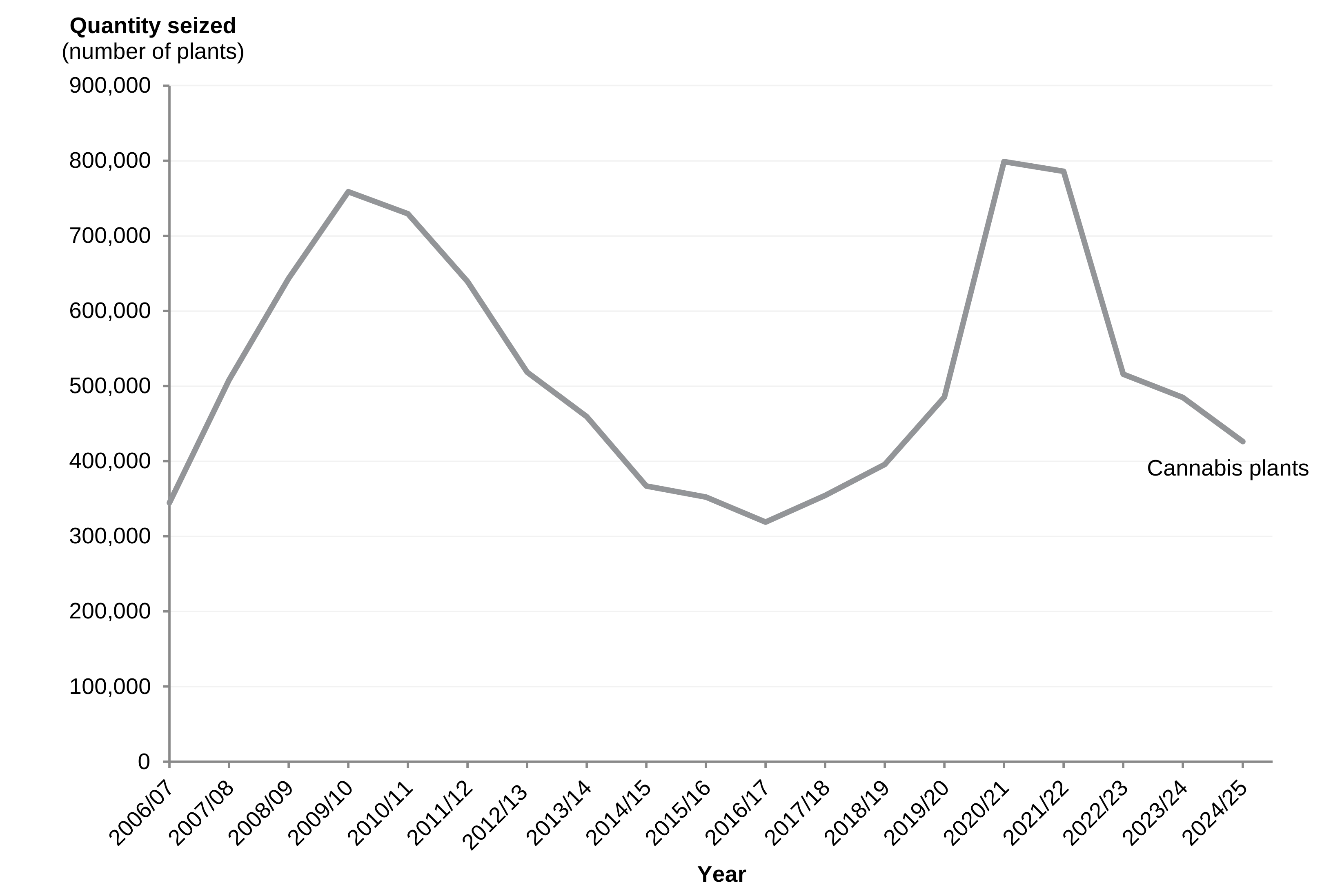
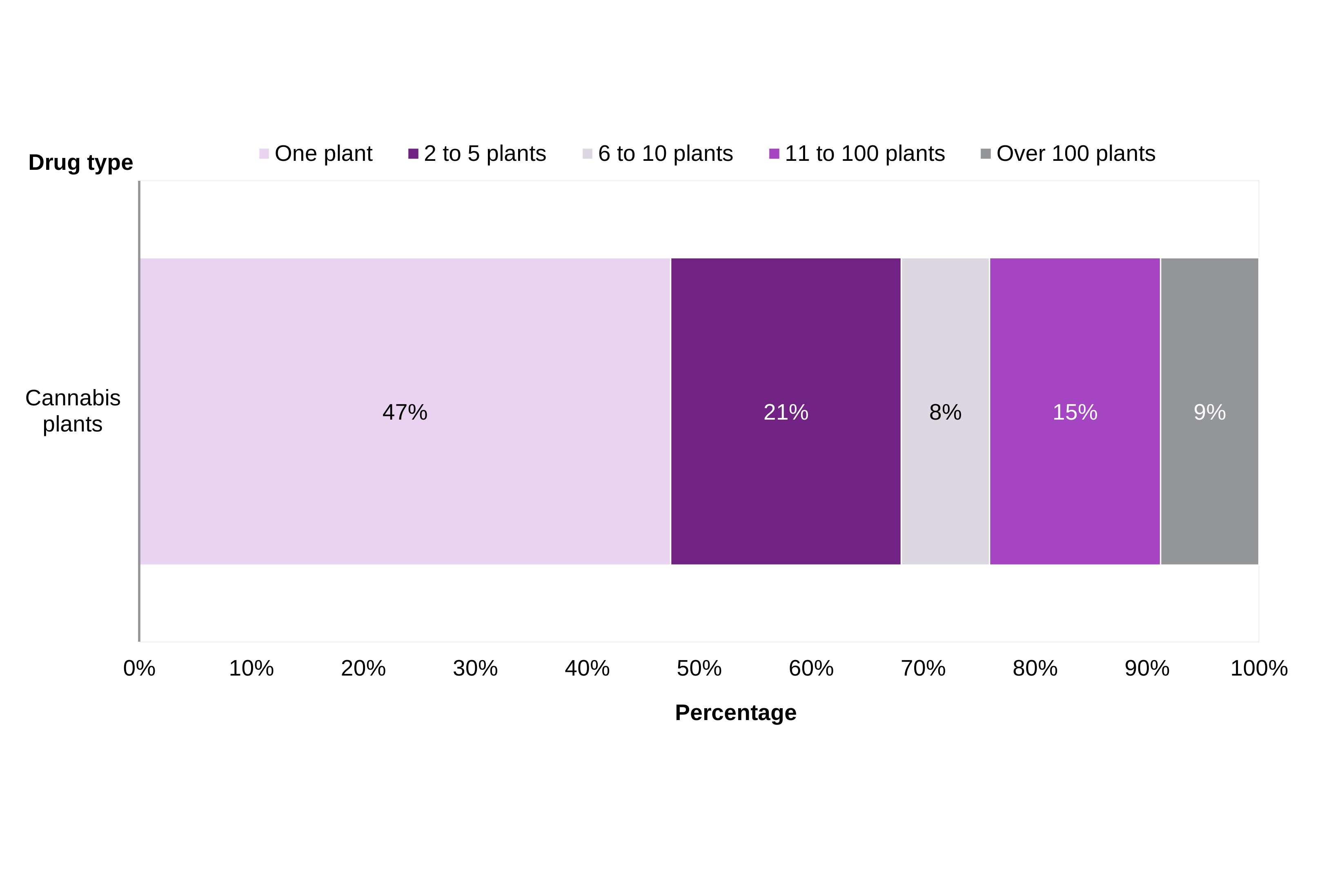
Cannabis plants: a total of 0.43 million cannabis plants were seized, a decrease of 12% from the 0.48 million plants seized in the previous year. Almost all (~100%) of these seizures were made by police forces. As shown in Figure 11, 76% of cannabis plant seizures involved 10 plants or fewer. This may however be a result of limitations to cannabis plant recording systems, which mean in some instances ‘1’ cannabis plant is recorded by default when there were too many plants to count, resulting in under-recording.
Figure 8: Quantity of herbal cannabis and cannabis resin seized by police forces and Border Force, years ending March 2007 to March 2025

Source: Home Office, Summary Table 2.
Figure 9: Quantity of cannabis plants seized by police forces and Border Force, years ending March 2007 to March 2025
Source: Home Office, Supplementary Table 2.
Figure 10: Distribution of quantities of herbal cannabis and cannabis resin seized by police forces and Border Force, year ending March 2025
Source: Home Office, Supplementary Table 2.
Notes:
- Numbers may not sum to 100% due to rounding.
Figure 11: Distribution of quantities of cannabis plants seized by police forces and Border Force, year ending March 2025
Source: Home Office, Supplementary Table 2.
Notes:
- Numbers may not sum to 100% due to rounding.
3.2.2 Other Class B drugs
In the year ending March 2025:
Ketamine: the total quantity of ketamine seized increased by 55%, from 855kg to 1,329kg, compared to the previous year. Police forces seized 237kg, an increase of 176% compared to the previous year, when 86kg were seized. Border Force seized 1,092kg, a 42% increase from 769kg in the previous year.
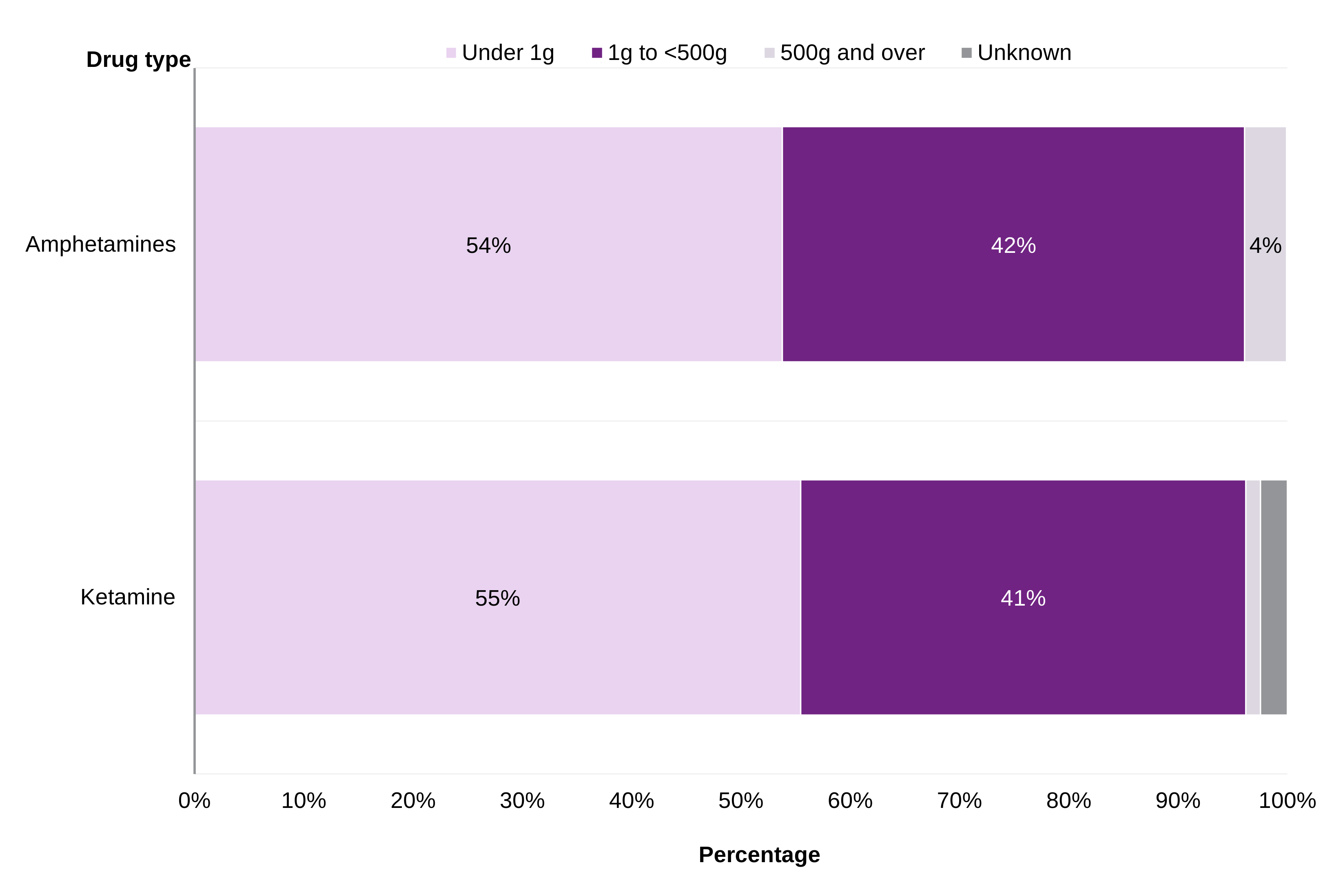
As shown in Figure 12, the vast majority of ketamine seizures contain small quantities of ketamine: 54% of ketamine seizures weighed less than 1g and 42% of seizures weighed from 1g to <500g.
Amphetamines: the total quantity of amphetamines seized increased by 2%, from 285kg to 291kg, compared to the previous year. This rise was driven by a 6% increase in the quantity seized by police forces, from 241kg to 256kg, compared to the previous year.
As with ketamine, the majority of amphetamine seizures contained small quantities: 55% of seizures weighed less than 1g and 41% weighed from 1g to <500g.
Synthetic cannabinoids: the total quantity of synthetic cannabinoids seized increased in weight by 11%, from 27kg to 31kg, while the number of doses decreased by 3%, from 3,652 to 3,548, compared to the previous year.
GHB: the total quantity of GHB seized decreased by 99%, from 60kg to 0kg, compared to the previous year.
Figure 12: Distribution of quantities of amphetamines and ketamine seized by police force and Border Force, year ending March 2025
Source: Home Office, Summary Table 3.
Notes:
- Numbers may not sum to 100% due to rounding.
3.3 Class C drugs
In the year ending March 2025:
Anabolic steroids: the total quantity of anabolic steroids seized decreased by 58%, from 950,480 doses to 395,090 doses, compared to the previous year.
Benzodiazepines: the total quantity of benzodiazepines seized increased by 365%, from 1.97 million doses to 9.15 million doses, compared to the previous year. Police forces seized 1.03 million doses, an increase of 286% on the previous year, when 0.27 million doses were seized. Border Force seized 8.12 million doses, a 378% increase from 1.70 million doses in the previous year.
Temazepam is now included within the benzodiazepines category for all years; this was previously reported as a separate drug type.
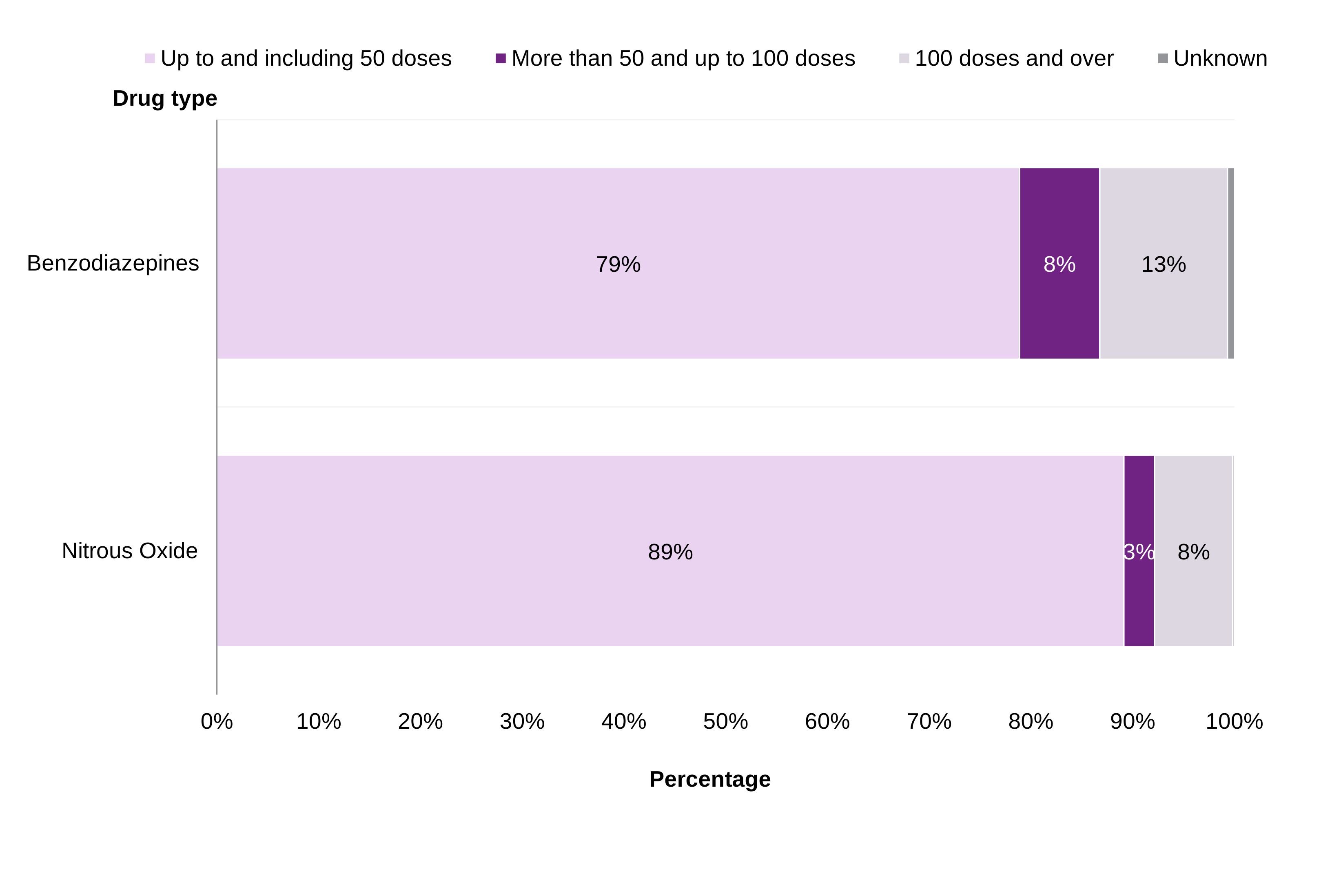
Figure 13 illustrates that most benzodiazepine seizures involve small amounts: 79% contained up to and including 50 doses, while a further 8% involved between 50 and 100 doses.
Nitrous oxide: the total quantity of nitrous oxide seized rose by 2,185%, from 0.18 million doses to 4.19 million doses, compared to the previous year. This is the largest recorded quantity of nitrous oxide seized since the time series began in year ending March 2018. The rise was largely driven by a 6,365% increase in the quantity seized by Border Force, which rose from 0.06 million doses to 3.67 million doses. Police forces seized 0.49 million doses, an increase of 288% on the previous year, when 0.13 million doses were seized.
As presented in Figure 13, nitrous oxide seizures tend to involve small quantities, with 89% comprising up to and including 50 doses, and 3% involving between 50 and 100 doses.
Figure 13: Distribution of quantities of benzodiazepines and nitrous oxide seized by police force and Border Force, year ending March 2025
Source: Home Office, Summary Table 3.
Notes:
- Numbers may not sum to 100% due to rounding.
4. Seizures by authority
4.1 Number of seizures by authority
In the year ending March 2025, the total number of drug seizures made by police forces and Border Force in England and Wales increased by 24%, from 217,633 to 269,321, compared to the previous year. Police forces made 202,423 seizures, a 14% increase from 177,005 in the previous year, accounting for 75% of all seizures. Border Force made 66,898 seizures, a 65% increase from 40,628 in the previous year, accounting for 25% of all seizures.
Recording practices continue to improve across forces. The Metropolitan Police Service (MPS) implemented a new recording system in February 2024, which records more types of seizures than the previous system, including stop and search seizures, drugs found in public places, and substances handed in by the public. This change may have contributed to the increase (42%) in reported seizures for MPS in the year ending March 2025.
Table 1: Number of seizures made by police forces and Border Force, years ending 2024 and 2025
| Police forces year ending March 2024 | Police forces year ending March 2025 | Police forces % change | Border Force year ending March 2024 | Border Force year ending March 2025 | Border Force % change | |
|---|---|---|---|---|---|---|
| Class A | 35,065 | 39,047 | +11% | 2,661 | 1,605 | -40% |
| Class B | 123,998 | 143,107 | +15% | 35,408 | 63,276 | +79% |
| Class C | 8,446 | 13,374 | +58% | 2,761 | 2,165 | -22% |
| All drugs | 177,005 | 202,423 | +14% | 40,628 | 66,898 | +65% |
Source: Home Office, Summary Table 1.
Notes:
- Police forces accounted for 96% of all seizures of Class A drugs, 69% of all seizures of Class B drugs and 86% of all seizures of Class C drugs.
- For Class A seizures, police forces accounted for more than 99.9% of crack cocaine, 99% of heroin, 98% of methadone and 97% of powder cocaine seizures.
- For Class B seizures, police forces accounted for 68% of cannabis seizures, 96% of amphetamine and ketamine seizures and 93% of ‘Other Class B’ seizures.
- For Class C seizures, police forces accounted for 99.6% of nitrous oxide seizures, 90% of benzodiazepine seizures, and 74% of ‘Other Class C’ seizures.
Figure 14: Proportion of drug seizure numbers by drug type and authority, year ending March 2025
Source: Home Office, Summary Table 4.
4.2 Quantity of seizures by authority
In the year ending March 2025, Border Force activity accounted for 25% of the total number of drug seizures, but they were responsible for a substantially larger share of the total quantities seized across most drug types compared to police forces. This is because Border Force is often involved in operations where large quantities of drugs are seized, for example at airports or ferry ports:
- for Class A seizures, Border Force seized 86% (15.94 tonnes) of powder cocaine, 80% (469kg) of heroin and 87% (45,000 doses) of the total quantity of LSD, as shown in Figure 15 below
- for Class B seizures, Border Force seized 93% (126.98 tonnes) of herbal cannabis, 87% (3.70 tonnes) of cannabis resin and 82% (1,092kg) of ketamine
- for Class C seizures, Border Force seized 84% (0.33 million doses) of anabolic steroids, 89% (8.13 million doses) of benzodiazepines and 88% (3.70 million doses) of nitrous oxide
Police forces seized a higher percentage of the quantity of crack cocaine (69%), methadone (100%), morphine (98%), cannabis plants (100%), amphetamines (88%) and GHB (100%) than Border Force in the year ending March 2025.
Police forces made a higher number of small quantity seizures compared to Border Force. For example, 65% of police force seizures of powder cocaine weighed under 1g, compared to 3% of Border Force seizures.
Figure 15: Proportion of drug seizure quantities by drug type and authority, year ending March 2025
Source: Home Office, Summary Table 5.
Figure 16: Distribution of drug seizure quantities of powder cocaine by authority, year ending March 2025
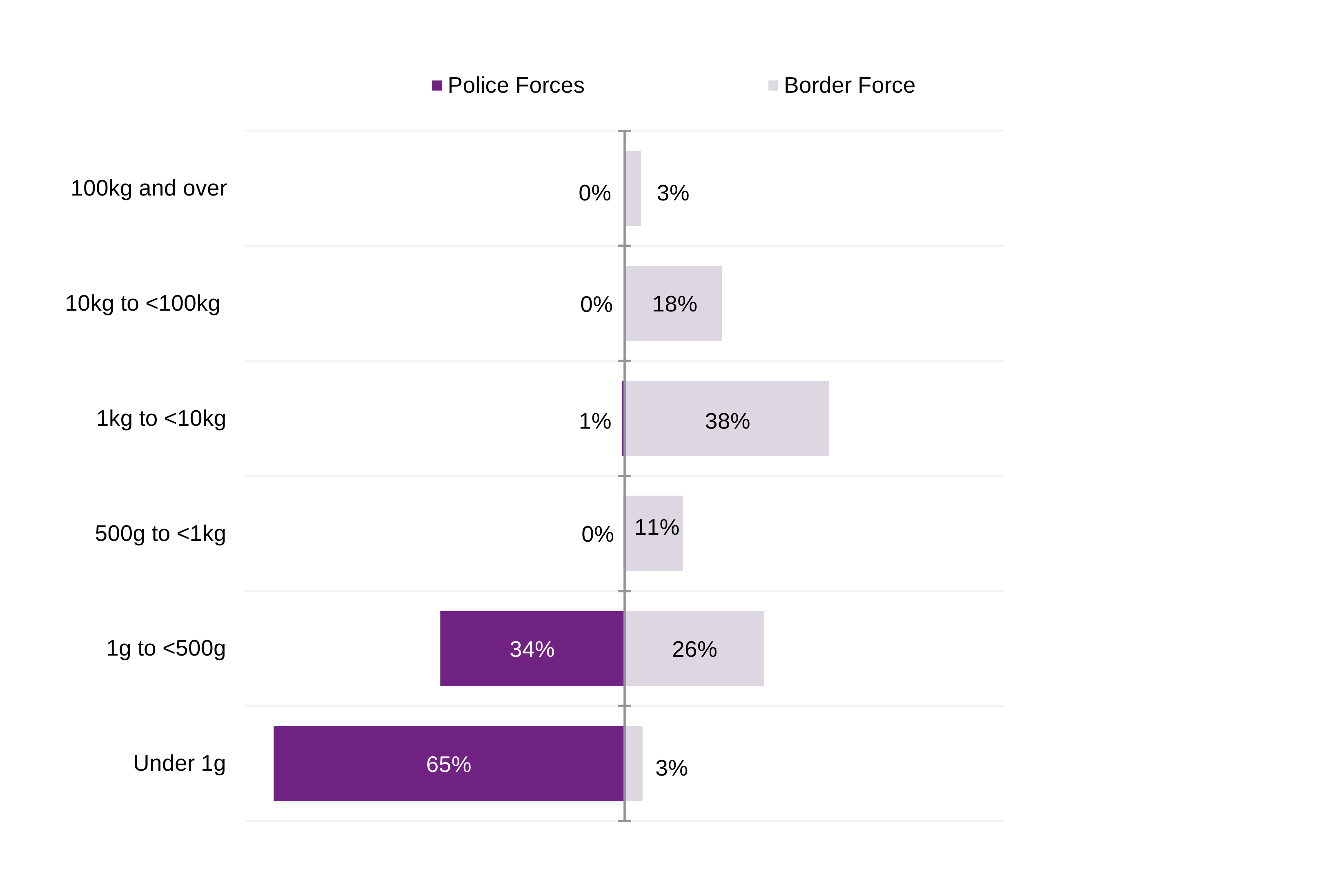
Figure 17: Distribution of drug seizure quantities of heroin by authority, year ending March 2025
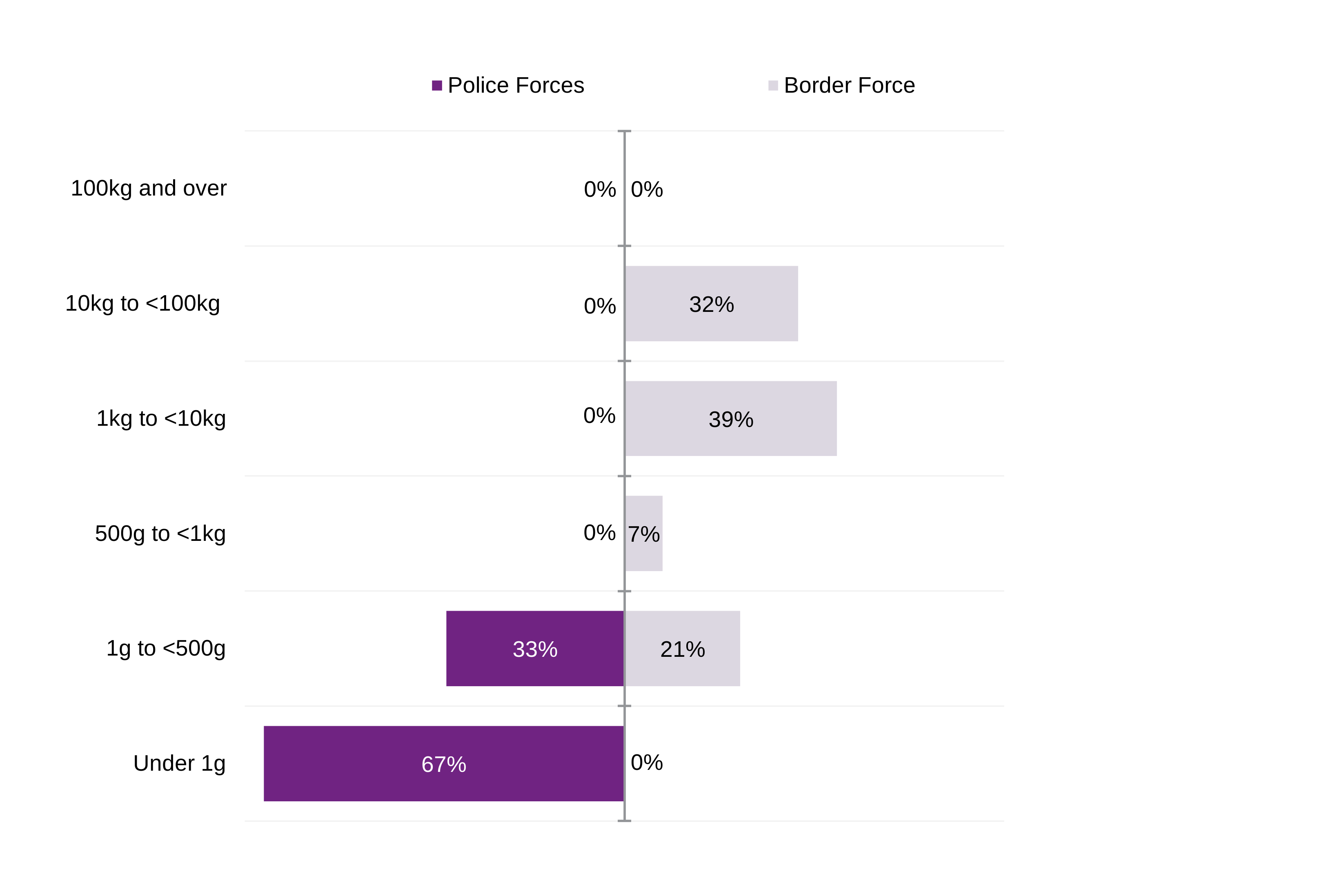
Figure 18: Distribution of drug seizure quantities of herbal cannabis by authority, year ending March 2025
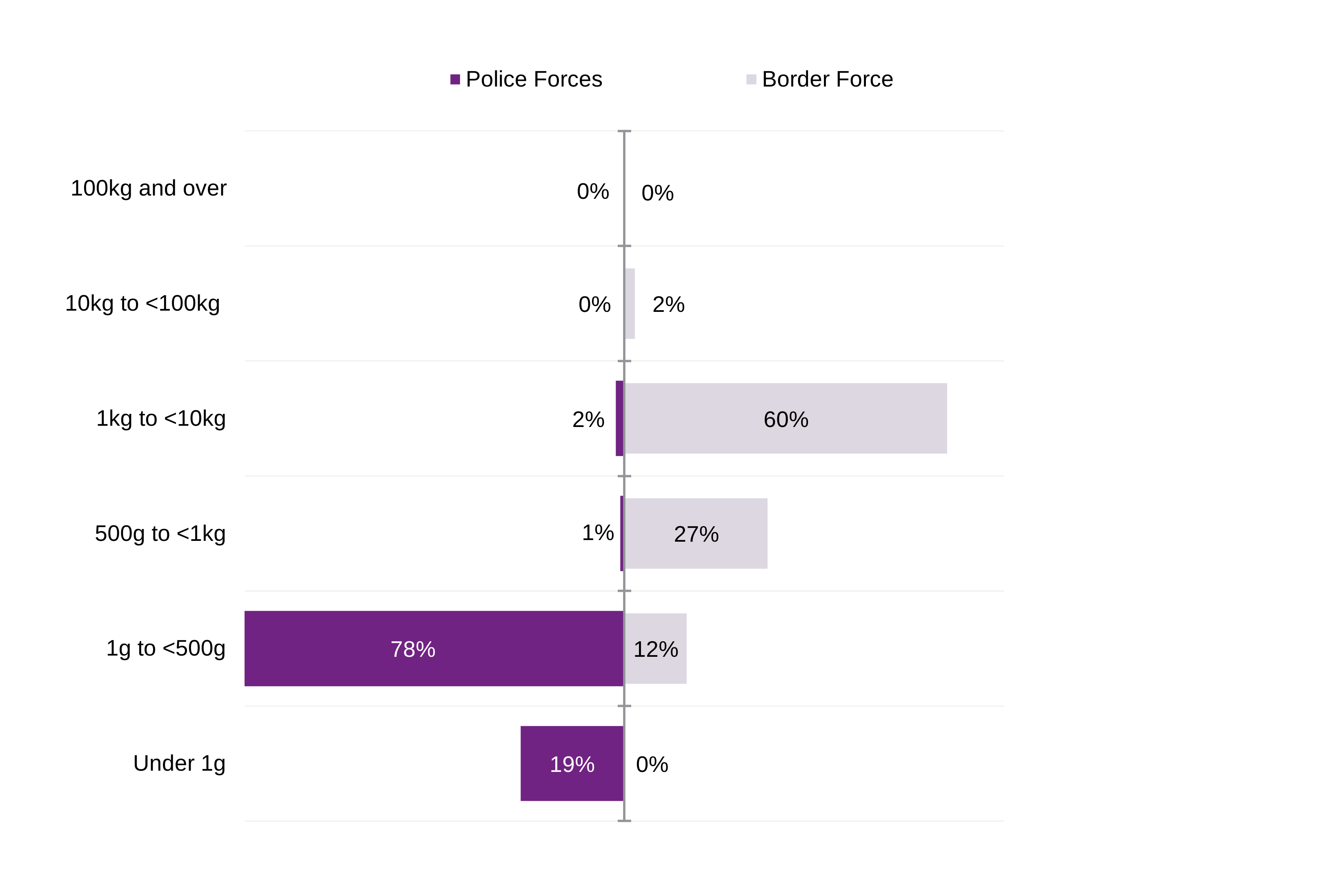
Figure 19: Distribution of drug seizure quantities of ecstasy by authority, year ending March 2025
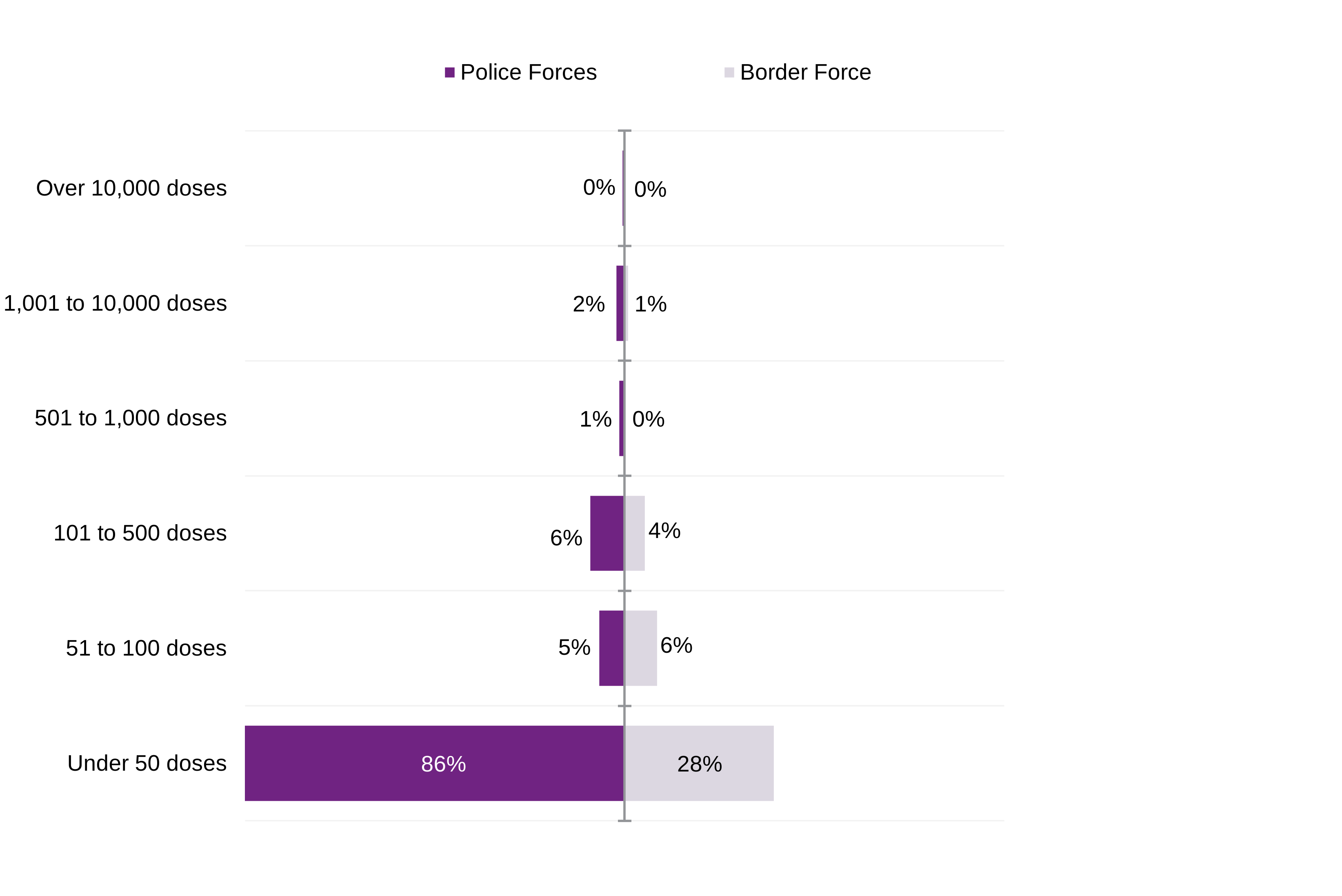
Source: Home Office, Summary Table 3.
Notes:
- Border Force’s numbers do not sum to 100% due to unknown banded quantities.
5. New psychoactive substances (NPS)
From the year ending March 2025, NPS statistics have been classified as official statistics. Prior to this, they were designated as official statistics in development (previously referred to as experimental statistics). More information on official statistics is available in the user guide.
5.1 Number of NPS seizures
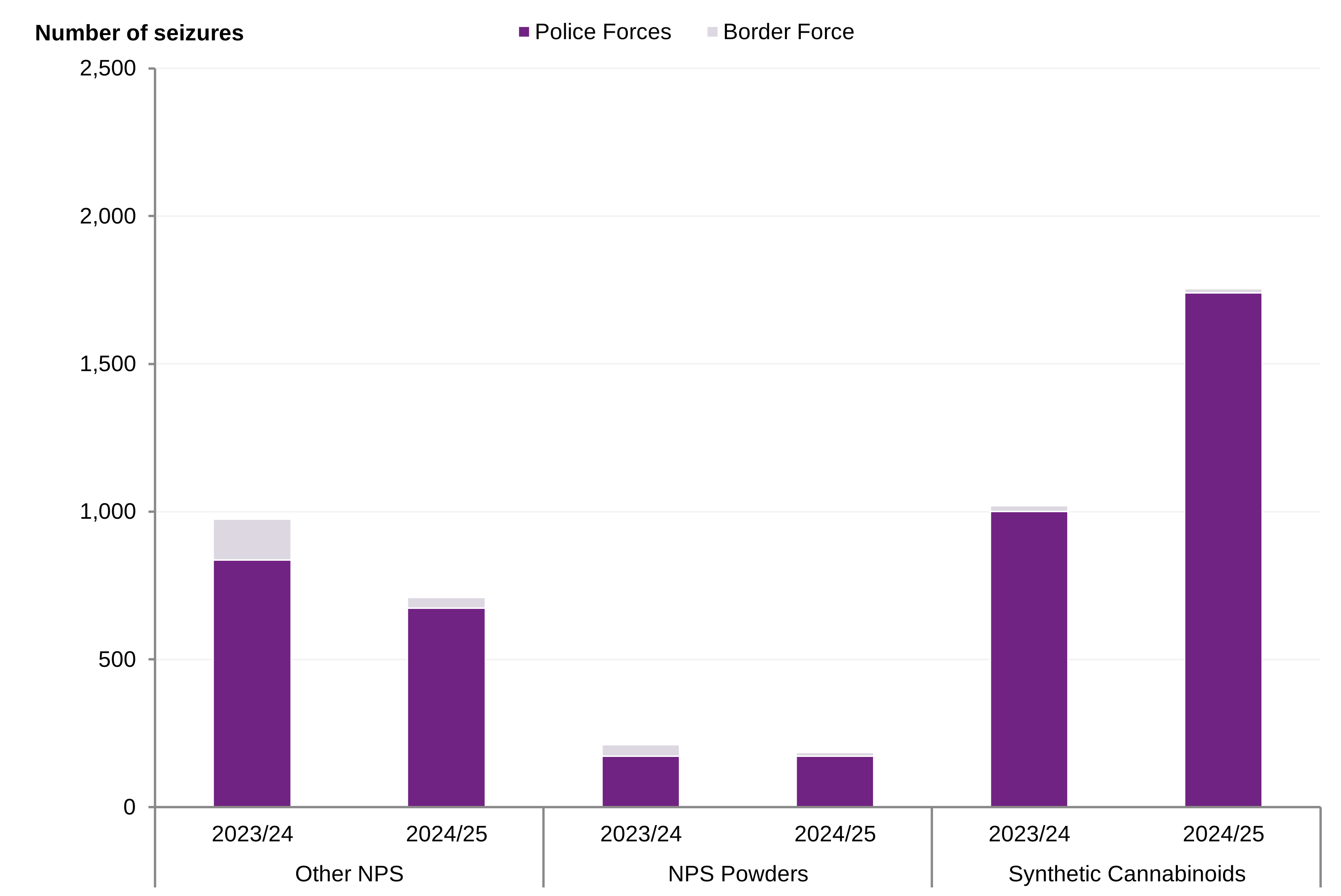
In the year ending March 2025, there were 895 seizures of all NPS drugs, a 25% decrease compared to the previous year (1,186). It is important to note that there are many different types of NPS drugs, some of which are new emerging ones, meaning they can be difficult to identify and record. For this reason, some NPS drugs may be recorded in ‘NPS other’ whilst some may appear in the ‘Unknown’ category.
NPS other: the number of NPS other seizures decreased by 27%, from 975 seizures to 710 seizures, compared to the previous year.
Synthetic cannabinoids: the number of synthetic cannabinoid seizures increased by 72%, from 1,020 seizures to 1,754 seizures, compared to the previous year.
NPS powders: the number of NPS powder seizures decreased by 12%, from 211 seizures to 185 seizures, compared to the previous year.
Figure 20: Number of NPS seizures by drug type and authority, years ending March 2024 and 2025
Source: Home Office, Appendix Table 1
5.2 Quantity of NPS seizures
In the year ending March 2025:
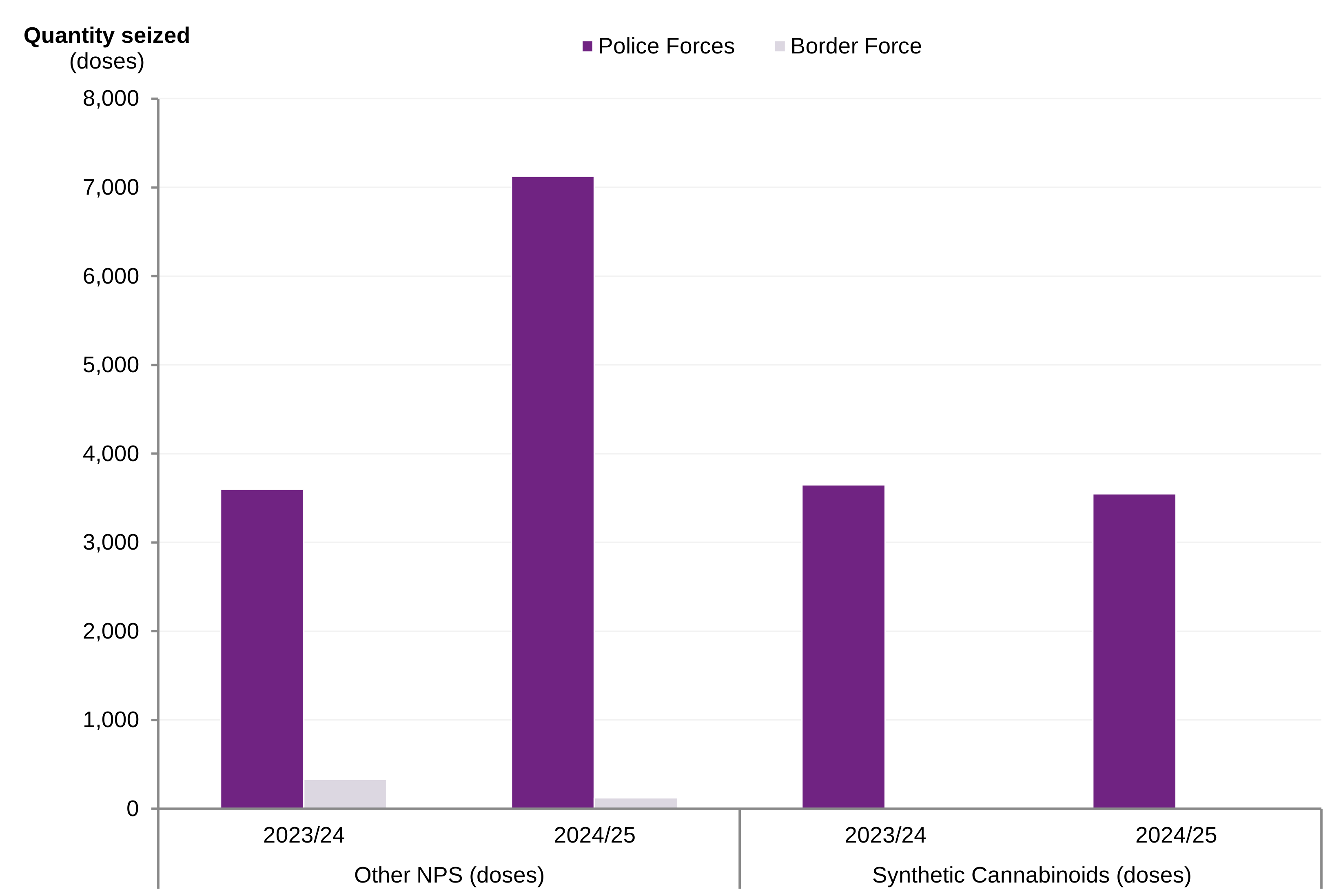
NPS other: as shown in Figure 21 below, the total quantity of NPS other in doses increased by 84%, from 3,933 doses to 7,247 doses, compared to the previous year. Of this total, 2% (123 doses) were seized by Border Force.
The total quantity of NPS other seized by weight decreased by 90%, from 371kg to 38kg, compared to the previous year. As shown in Figure 22, of the 38kg seized, 90% (34kg) was seized by Border Force.
NPS powders: the total quantity of NPS powders seized decreased by 97%, from 333kg to 10kg, compared to the previous year. Border Force accounted for 64% of the total NPS powders seized.
Synthetic cannabinoids: the total quantity of synthetic cannabinoids in doses decreased by 3%, from 3,652 doses to 3,548 doses, compared to the previous year. 100% of these were made by police forces.
The total quantity of synthetic cannabinoids seized by weight increased by 11%, from 27 kg to 31kg, compared to the previous year. 100% of these were also seized by police forces.
Figure 21: Quantities of other NPS and synthetic cannabinoids seized, summarised in doses by authority, years ending March 2024 and 2025
Source: Home Office, Appendix Table 2.
Figure 22: Quantities of NPS drugs seized by drug type and authority, summarised in kilograms, years ending March 2024 and 2025
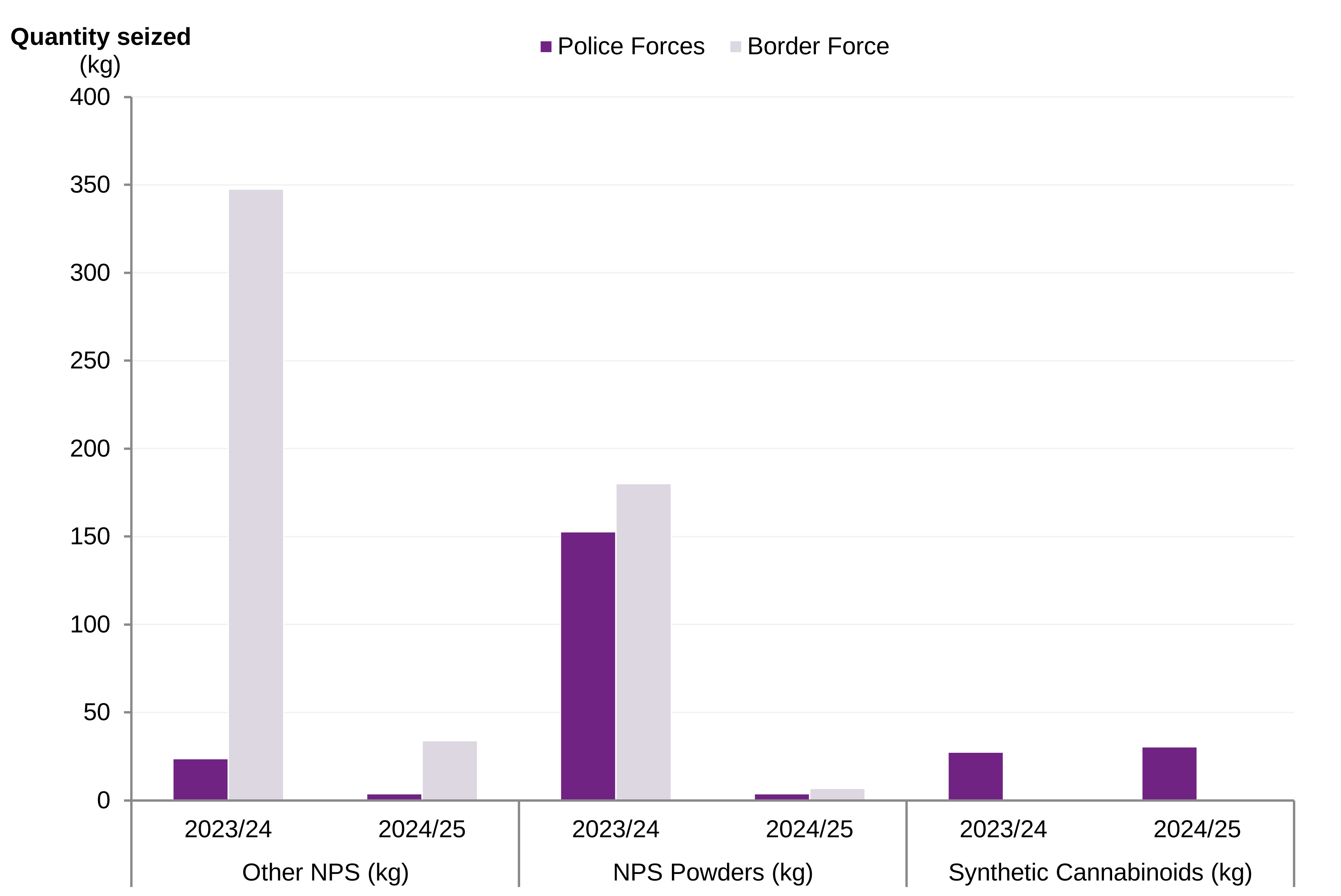
Source: Home Office, Appendix Table 2.
6. Interpreting the figures and related publications
For information related to data quality, please see the user guide.
A quarterly breakdown of Border Force seizures in the UK is available online as part of their regular key performance indicators in their Border Force transparency data
The latest drug seizure statistics for Scotland are available online on the Scottish Government website.
The Police Service of Northern Ireland (PSNI) collects and publishes data on drug seizures by police in Northern Ireland. They are available online on the Police Service of Northern Ireland website.
The extent and trends in illicit drug use among adults aged 16 to 59 is measured by the Crime Survey for England and Wales (CSEW). The latest results covering the period ending March 2025 were published by ONS on 11 December 2025. According to the CSEW for the year ending March 2025, around 2.9 million (8.7%) adults had taken an illicit drug in that year. This was a similar proportion as the previous year. Please see the latest versions of the Drug misuse: Findings from the year ending March 2025 CSEW and the Crime Survey in England and Wales appendix (data) tables for further details.
Since 2021, the Home Office’s Wastewater Analysis for Narcotic Drugs (WAND) Programme has provided robust and timely estimates of drug consumption. WAND utilises wastewater analysis, a method used internationally, where samples are taken from wastewater treatment plants (WWTPs) across England and Scotland. The method is based on the principle that when drugs are consumed, the body breaks them down into by-products called metabolites. These metabolites are passed out in urine and faeces and end up in wastewater, which are the substances we measure (called analytes). For example, cocaine is broken down into a substance called benzoylecgonine, which is then excreted in urine. Measurements of these analytes are used to calculate the quantity consumed of key illicit drugs. Please see the Wastewater analysis: Measuring illicit drug consumption in 2023 and 2024 report for more information and latest findings from the WAND programme.
The Smoking, Drinking and Drug Use among Young People in England is published by NHS Digital and contains results from a survey of school children in years 7 to 11 (mostly aged 11 to 15). Based on the 2023 survey (which was published on 17 October 2024), 13% of pupils in England reported they had ever taken drugs. This was lower than the 18% reported in the 2021 survey.
Frequency of release: Annual
Forthcoming release: Home Office statistics release calendar
Home Office responsible statistician: Jodie Hargreaves
Press enquiries: 0300 123 3535
Public enquiries: drugseizures.datacollection@homeoffice.gov.uk