
Perceptions of A levels, GCSEs and other qualifications: wave 23
Published 14 May 2026
Applies to England

© Crown copyright 2026
This publication is licensed under the terms of the Open Government Licence v3.0 except where otherwise stated. To view this licence, visit nationalarchives.gov.uk/doc/open-government-licence/version/3 or write to the Information Policy Team, The National Archives, Kew, London TW9 4DU, or email: psi@nationalarchives.gov.uk.
Where we have identified any third party copyright information you will need to obtain permission from the copyright holders concerned.
This publication is available at https://www.gov.uk/government/statistics/perceptions-of-a-levels-gcses-and-other-qualifications-wave-23/perceptions-of-a-levels-gcses-and-other-qualifications-wave-23
Executive summary
Ofqual commissions a survey on the Perceptions of General Qualifications. Its aim is to explore perceptions of GCSE, A level, and Applied General qualifications, as well as levels of confidence in aspects of the examination system in England. This report presents the findings of wave 23 of this survey conducted by YouGov in 2025.
To provide contextual information and details on the methodology, a background note is published alongside this report.
A range of stakeholders are involved in this survey:
- young people
- parents
- teachers
- head teachers
- higher education institutions (HEIs)
- employers
- the general public
The full report provides detailed findings on respondents’ perceptions of, and confidence in, qualifications and the examination system in England for the past 5 waves, as well as a breakdown of responses by stakeholder group. The key findings of this survey are reported below.
Perceptions of GCSEs, A levels and Applied General qualifications
Composite confidence
Respondents’ perceptions of the qualifications are collected in relation to a range of criteria: understanding, trust, maintenance of standards, preparation for further study, preparation for work, skills development, accuracy in marking, and value for money. These criteria are combined to generate a measure of overall composite confidence in GCSEs, A levels, and Applied General qualifications.
In wave 23, overall composite confidence in GCSEs increased in comparison to wave 22. No significant differences were seen across individual stakeholder groups, but the cumulative impact of small, non-significant year-on-year increases led to the increase at an overall level.
At an overall level, composite confidence in both A levels and Applied General qualifications remained consistent with wave 22. For A levels, this followed a wave of increases measured in wave 22. Even though there was an overall consistency in confidence levels observed, parents and young people reported declining confidence in A levels in wave 23, bringing their levels back in line with wave 21.
Overall perceptions of GCSEs, A levels and Applied General qualifications
For GCSEs, there was higher agreement in wave 23 compared to wave 22 that GCSEs are trusted, well understood, are marked accurately and that standards are maintained. Increased agreement that GCSEs are trusted and that standards are maintained are driven by increases among teachers and head teachers.
Several key measures remained consistent in wave 23 compared to wave 22, including levels of agreement with the statements: GCSEs are good preparation for further study and work, develop a broad range of skills for students and offer value for money.
For A levels, perceptions in wave 23 were broadly consistent compared to wave 22, apart from an observed increase in the agreement that standards are maintained and that the marking of A levels is accurate. Like previous years, the highest levels of agreement were seen for the following statements: A levels are trusted and are good preparation for further study.
The increase in agreement that A level standards are maintained was driven by teachers and head teachers, with head teachers also reporting increased agreement when asked whether A levels are trusted. Employers also reported increased agreement that A levels are good preparation for further study.
For Applied General qualifications, perceptions in wave 23 were broadly consistent compared to wave 22, apart from an increase in agreement that standards are maintained and that they are good preparation for work. These increases were driven by young people, who also showed increases in agreement for Applied Generals being trusted qualifications, the marking being accurate and them being good preparation for future study.
Qualification standards
In wave 23, a new question was included to further measure public perceptions of standards being maintained in which respondents were asked whether they thought it is getting easier or harder to achieve the same grade each year. For all qualifications, overall agreement was higher that there was no change in how easy or difficult it is compared to agreement that it is getting easier or harder.
When looking at sub-groups, for GCSEs, head teachers and teachers represented the highest proportion who reported there was no difference. Employers and HEIs most commonly reported that it is getting easier, and young people more commonly reported that it is getting harder.
There is a similar pattern for A level standards, in which head teachers, teachers and parents more commonly reported that they believed there is no change in how easy or difficult it is to achieve the same A level grade each year. HEIs and employers showed higher proportions that it is getting easier compared to it being harder or there being no difference, while the general public were relatively split between whether it is getting easier or there is no difference.
For Applied General qualifications, there was a similar pattern in which respondents were more likely to report that there was no difference compared to whether they are getting easier or harder, however, Applied Generals saw higher levels of uncertainty (responding ‘don’t know’) compared to the perceptions for other qualifications.
When looking at sub-groups for Applied General Qualifications, head teachers represented the highest proportion who reported there was no difference, while young people and the general public represented the lowest proportions, however, this was partly driven by them having been more likely to report that they ‘don’t know’.
Reviews of marking and moderation and appeals against results
In wave 23, most respondents reported that they were aware of the process for reviews of marking, moderation and appeals for GCSE and A level results. Approximately half of respondents reported agreement that the reviews of marking and moderation, and appeals process is fair. This was consistent with wave 22 for most stakeholder groups apart from the general public, where agreement decreased in wave 23 when asked about A levels. The proportion of respondents reporting that they were aware that a school or college can appeal to the exam board on the ground of a marking error increased in wave 23, mainly due to the increase in agreement among head teachers and employers.
For Applied General qualifications, the overall proportion of respondents who were aware of the appeals against results process remained in line with recent waves. Most of those teaching Applied General qualifications also felt that they had adequate information about the appeals process and were confident that appeals are dealt with fairly, in line with findings from the previous 4 waves.
Special considerations and reasonable adjustments
Consistent with previous waves, 79% teachers and head teachers reported that they have adequate information about the arrangements available for GCSE or A level students who are eligible for special consideration. There was a decrease in wave 23 compared to wave 22 on reported agreement that special consideration and reasonable adjustments makes the qualification system fairer and that the reasonable adjustments are made for the right students.
In wave 23, 47% of teachers and head teachers agreed that they understand how special consideration tariffs are applied. Overall, 63% of teachers and head teachers reported that modified papers had been requested for any of their students, and 85% said these modified papers met the needs of the learners who use them.
Malpractice
Similar to wave 22, the vast majority of teachers (88%) and head teachers (95%) surveyed reported that they have adequate information about what constitutes malpractice for GCSEs, A levels, and Applied General qualifications. The majority also agreed that they know to whom they should report an incident of malpractice (91%), and that incidents are fairly investigated (78%). While levels of agreement were broadly consistent wave on wave, for GCSEs and A levels, confidence that incidents of malpractice are fairly investigated increased compared to wave 20 (72%).
On-screen examinations
All stakeholder groups were asked if on-screen examinations in GCSE and A level qualifications would be more manageable for schools and colleges than existing pen and paper examinations. Thirty-eight per cent agreed with this statement, consistent with wave 22, although continuing a non-significant sustained decrease since wave 21. When asked if on-screen examinations would be fairer for students than existing pen and paper examinations, respondents were split relatively equally between those who agreed (33%), disagreed (31%) and those who did not agree or disagree (36%), similar to wave 22.
User feedback
Ofqual welcomes your feedback on this publication. If you have any comments on this statistical release, or how to improve it to meet your needs, please complete this short survey or email Ofqual’s statistics team.
Introduction
This report presents the findings of wave 23 of the Perceptions of General Qualifications Survey conducted in 2025. This report should be read alongside the background information report.
The survey was commissioned by Ofqual and conducted by YouGov. The aim of this survey was to investigate young people’s, parents’, teachers’, head teachers’ (for the purposes of this report, the ‘head teachers’ sample refers to school and college leaders (deputy and assistant head teachers) and head teachers), Higher Education Institutions’ (HEIs), employers’, and the general public’s perceptions of, and levels of confidence in, qualifications and the examination system in England.
The survey followed the approach used since wave 13 in 2015 and was conducted online. The fieldwork for this wave was conducted between 11 November and 12 December 2025.
The final achieved samples were structured to be representative of the relevant target populations. However, while the sampling approach aimed to identify groups of participants who were representative, as this is a survey, it only captures the views of those involved. As a result, the data in this report reflects the responses of only those respondents included in the study. Further information on sampling and methodology is available in the accompanying background information report.
Throughout the report, all differences in percentages between waves have been significance tested. Unless specified otherwise, all changes noted throughout the text in this report are statistically significant. If a change is not statistically significant but may appear interesting or indicative of a trend over time, it is also mentioned in the commentary but is noted as not statistically significant. Any non-significant differences or other apparent differences in the data are within the margin of error, possibly due to smaller sample sizes, and so cannot be viewed as a change from the previous wave(s). For further information on the significance testing applied, please refer to the background information report.
Section 1: Composite confidence measure of qualifications
The following section considers respondents’ composite confidence in GCSEs, A levels, and Applied General qualifications. The results in this section relate to general perceptions, not specific to any exam series.
The composite confidence measure was calculated based on levels of agreement with 8 separate questions relating to the following criteria: understanding, trust, maintenance of standards, preparation for further study, preparation for work, skills development, accuracy in marking, and value for money. For more information on how the composite confidence measure is calculated, please see the accompanying background information report.
Key findings
Overall composite confidence in GCSEs increased compared to wave 22 because of small increases across all stakeholder groups. Employers continued to see small increases in confidence wave on wave, leading to composite confidence in wave 23 being significantly higher than in wave 20.
In wave 23, overall composite confidence in A levels remained consistent with wave 22, despite small decreases measured across most stakeholders. Both parents and young people showed declining composite confidence, bringing their levels back in line with wave 21.
Composite confidence in Applied General qualifications in wave 23 was generally consistent with wave 22. Composite confidence in Applied General qualifications increased among young people compared to wave 22, reversing the decline measured for this group last wave.
Composite confidence in GCSEs in general
For Figure 1 the wave 23 base is: All responses (N=3,069); general public (N=1,020); teachers (N=657); head teachers (N=297); HEIs (N=291); young people (N=295); parents (N=259); employers (N=250).
For most stakeholder groups in wave 23, composite confidence in GCSE qualifications was broadly consistent with wave 22 (Figure 1). Small changes wave-on-wave led to an increase of overall composite confidence compared to wave 22.
Although there was no significant change in employers’ composite confidence score between wave 23 and wave 22, small increases in recent waves led to wave 23’s composite confidence score being significantly higher than wave 20.
Figure 1. Composite confidence in GCSEs
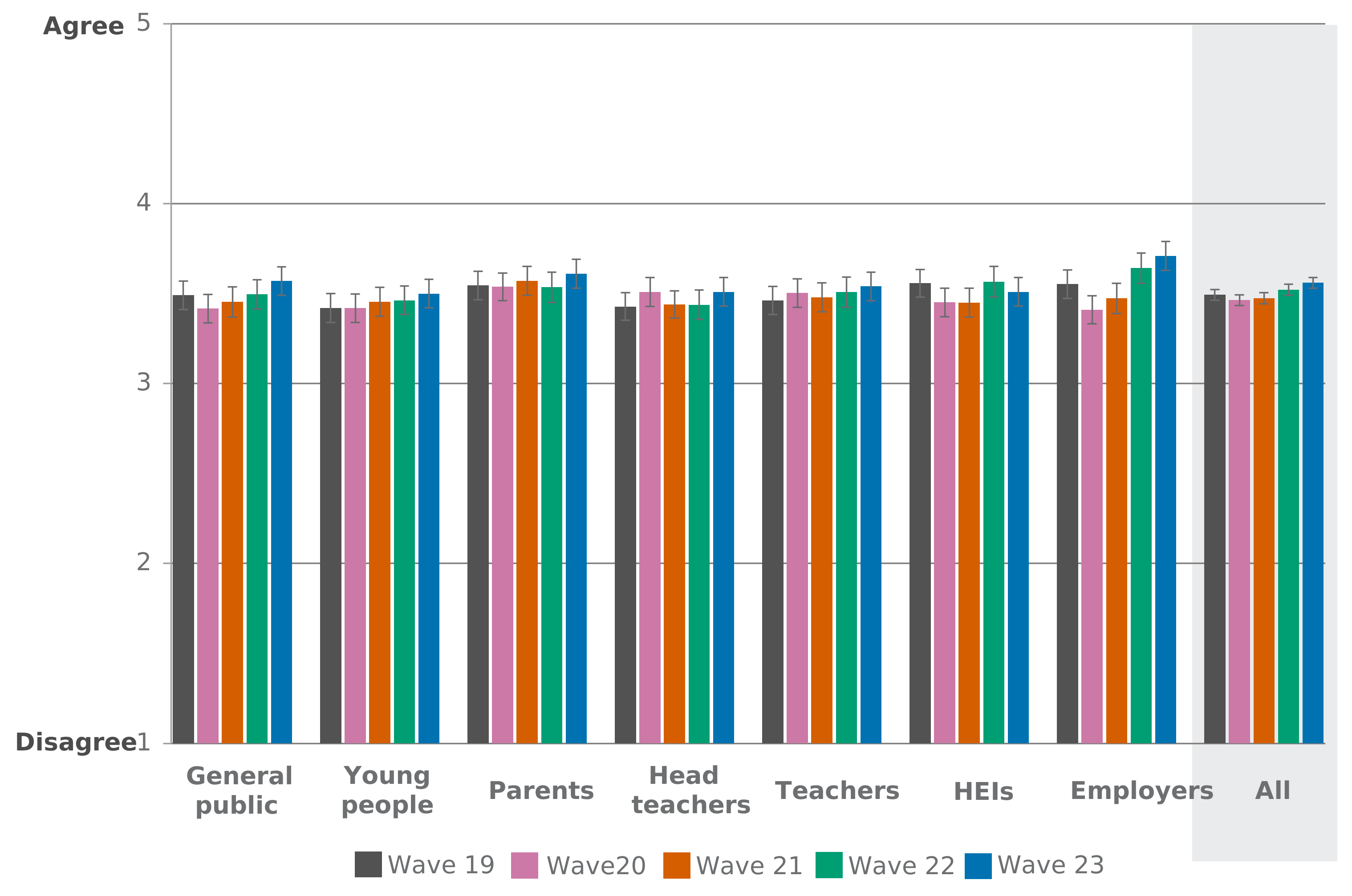
Note: Strongly agree = 5, Agree = 4, Neither agree nor disagree = 3, Disagree = 2, Strongly disagree = 1. ‘Don’t know’ responses have been excluded.
| Respondent type | Wave 19 | Wave 20 | Wave 21 | Wave 22 | Wave 23 | |
|---|---|---|---|---|---|---|
| All | 3.49 | 3.46 | 3.47 | 3.52 | 3.56 | |
| General public | 3.49 | 3.42 | 3.45 | 3.50 | 3.57 | |
| Young people | 3.42 | 3.42 | 3.45 | 3.46 | 3.50 | |
| Parents | 3.55 | 3.54 | 3.57 | 3.54 | 3.61 | |
| Head teachers | 3.43 | 3.51 | 3.44 | 3.44 | 3.51 | |
| Teachers | 3.46 | 3.50 | 3.48 | 3.51 | 3.54 | |
| HEIs | 3.56 | 3.45 | 3.45 | 3.57 | 3.51 | |
| Employers | 3.55 | 3.41 | 3.47 | 3.64 | 3.71 |
Composite confidence in A levels in general
For Figure 2 the wave 23 base is: All responses (N=3,073); general public (N=1,027); teachers (N=656); head teachers (N=292); HEIs (N=293); young people (N=296); parents (N=259); employers (N=250).
At an overall level, composite confidence in wave 23 remained broadly consistent with wave 22, maintaining the increase measured last wave (Figure 2). At an individual stakeholder level, there was some fluctuation; both parents and young people showed declining composite confidence compared to wave 22. This brought composite confidence levels back in line with levels measured in wave 21, continuing the fluctuation year-on-year since Wave 19.
While it appeared that other stakeholders’ confidence decreased compared to wave 22, these changes were not significant.
Figure 2. Composite confidence in A levels
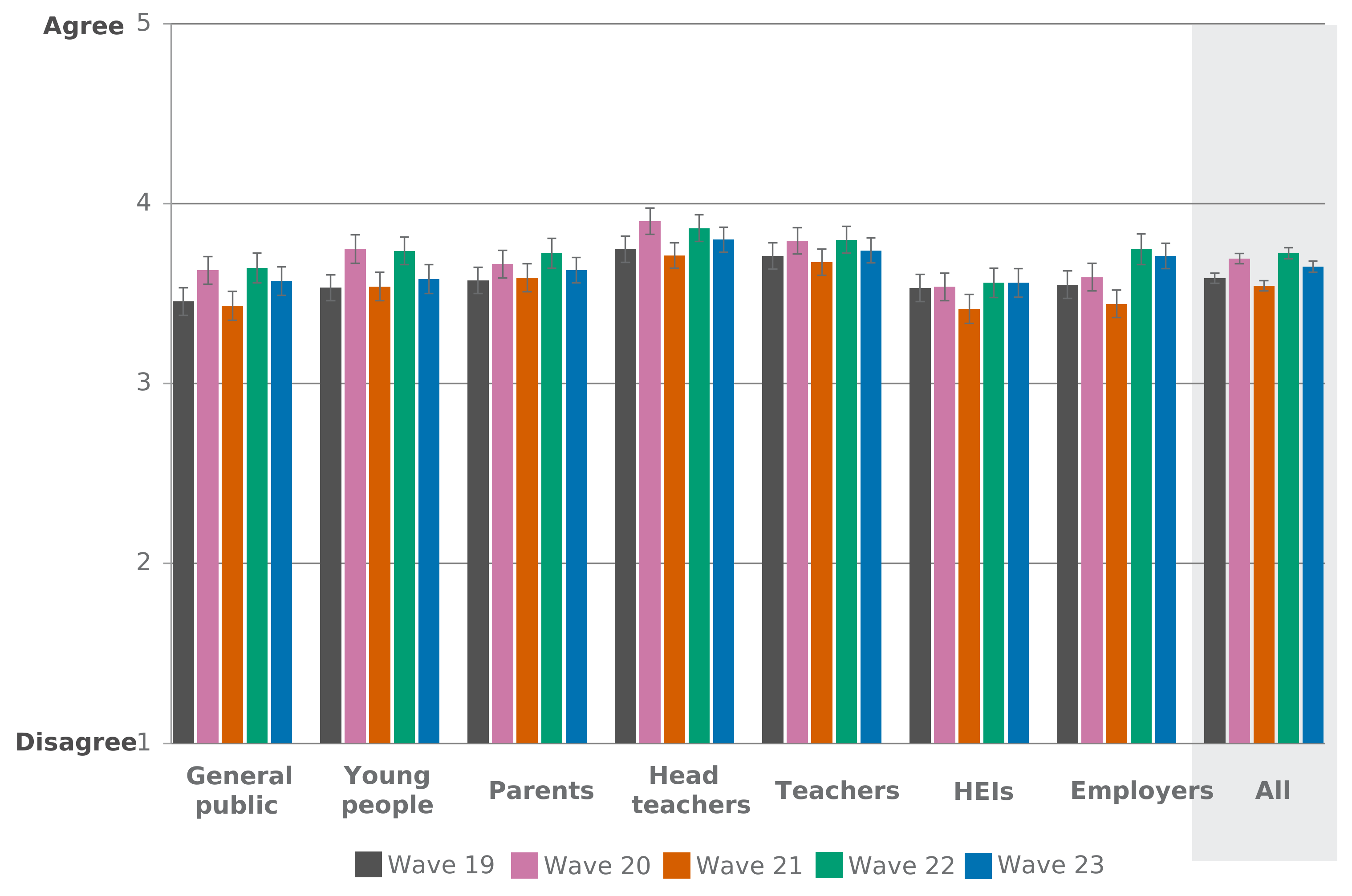
Note: Strongly agree = 5, Agree = 4, Neither agree nor disagree = 3, Disagree = 2, Strongly disagree = 1. ‘Don’t know’ responses have been excluded.
| Respondent type | Wave 19 | Wave 20 | Wave 21 | Wave 22 | Wave 23 |
|---|---|---|---|---|---|
| All | 3.59 | 3.70 | 3.54 | 3.72 | 3.65 |
| General public | 3.46 | 3.63 | 3.43 | 3.64 | 3.57 |
| Young people | 3.53 | 3.75 | 3.54 | 3.74 | 3.58 |
| Parents | 3.57 | 3.66 | 3.59 | 3.72 | 3.63 |
| Head teachers | 3.75 | 3.90 | 3.71 | 3.86 | 3.80 |
| Teachers | 3.71 | 3.79 | 3.68 | 3.80 | 3.74 |
| HEIs | 3.53 | 3.54 | 3.41 | 3.65 | 3.56 |
| Employers | 3.55 | 3.59 | 3.44 | 3.75 | 3.71 |
Composite confidence in Applied General qualifications overall
For Figure 3 the wave 23 base is: All responses (N=2,575); general public (N=849); teachers (N=526); head teachers (N=259); HEIs (N=248); young people (N=251); parents (N=222); employers (N=220).
At an overall level, composite confidence in Applied General qualifications was largely consistent with wave 22; the only group to show a significant change from wave 22 was young people (Figure 3). Young people had shown a decline in composite confidence in wave 22 compared to wave 21. The increase measured among young people in wave 23 brought their composite confidence back in line with levels measured in wave 21.
While there were no other significant changes in wave 23, the composite confidence of employers and head teachers was sustained, following their increases in wave 22.
Figure 3. Composite confidence in Applied General qualifications
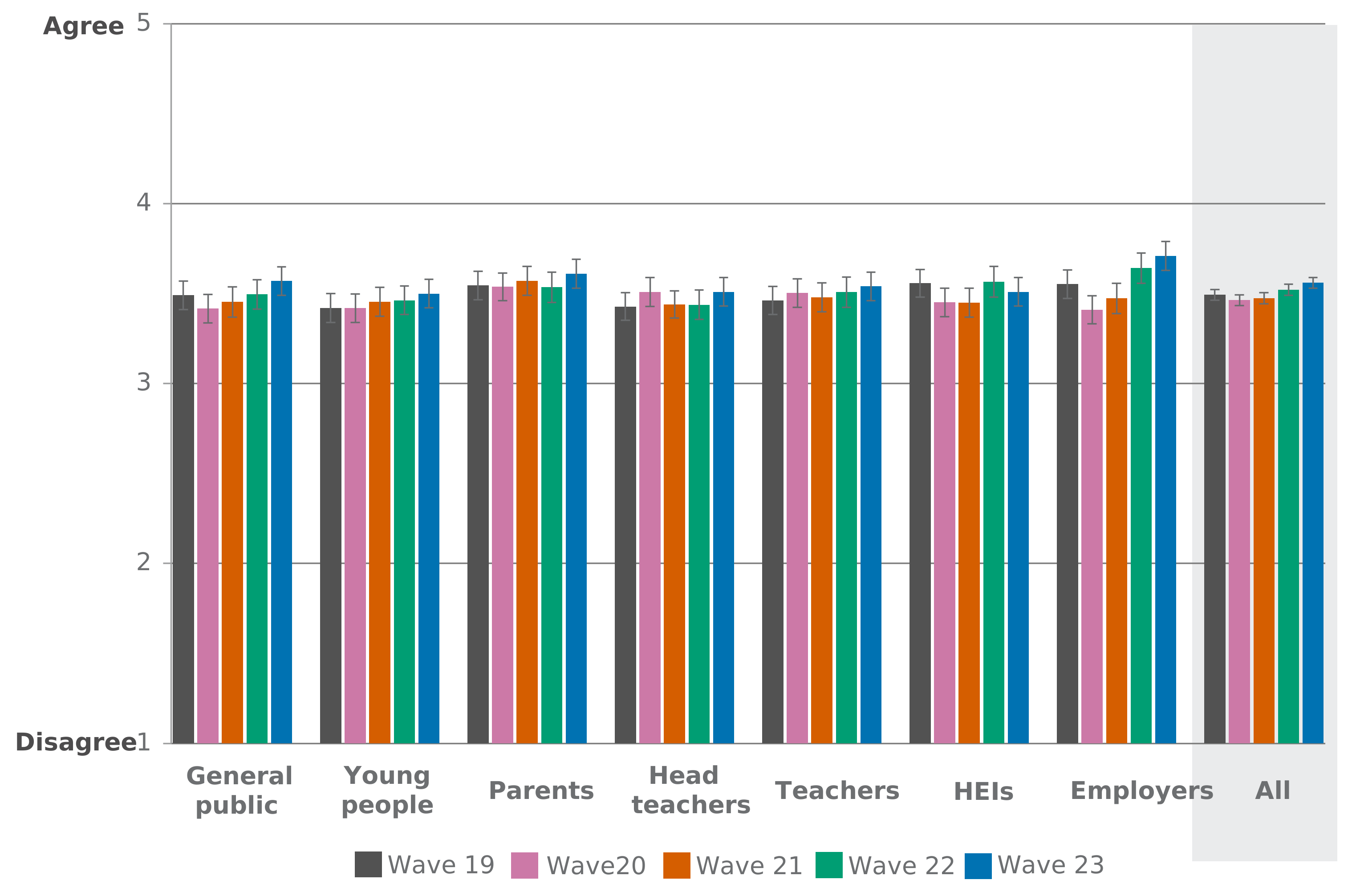
Note: Strongly agree = 5, Agree = 4, Neither agree nor disagree = 3, Disagree = 2, Strongly disagree = 1. ‘Don’t know’ responses have been excluded.
| Respondent type | Wave 19 | Wave 20 | Wave 21 | Wave 22 | Wave 23 |
|---|---|---|---|---|---|
| All | 3.19 | 3.18 | 3.17 | 3.20 | 3.22 |
| General public | 3.11 | 3.16 | 3.20 | 3.15 | 3.22 |
| Young people | 3.24 | 3.22 | 3.29 | 3.16 | 3.29 |
| Parents | 3.16 | 3.25 | 3.20 | 3.28 | 3.27 |
| Head teachers | 3.35 | 3.36 | 3.26 | 3.39 | 3.24 |
| Teachers | 3.18 | 3.08 | 3.07 | 3.10 | 3.12 |
| HEIs | 3.12 | 3.10 | 3.02 | 3.02 | 3.00 |
| Employers | 3.18 | 3.05 | 3.15 | 3.29 | 3.28 |
Section 2: General perceptions of GCSEs
The following section considers respondents’ general perceptions of GCSEs.
For the following 8 survey items the wave 23 effective base was: All responses (N=2,234); general public (N=1,028); teachers (N=610); HEIs (N=271); employers (N=248); parents (N=257); head teachers (N=238); young people (N=285).
Respondents were shown a 5-point agreement scale. Agree is shown in this report as a combination of strongly agree and agree and disagree is a combination of strongly disagree and disagree.
Key findings
Overall, perceptions of agreement for the statements surveyed for GCSEs improved in wave 23 across many of the measures surveyed. For example, levels of agreement that, ‘GCSEs are well understood by people’ (75%) increased compared to wave 22 (72%). There were also increases in levels of agreement that ‘GCSEs are a trusted qualification’ (79% in wave 23, compared to 76% in wave 22), that ‘GCSE standards are maintained year-on-year’ (48% in wave 23, compared to 43% in wave 22), and that ‘the marking of GCSEs is accurate’ (46% in wave 23, compared to 42% in wave 22).
Several key measures remained consistent in wave 23 compared to wave 22, including that GCSEs are ‘good preparation for further study’ (73%), are ‘good preparation for work’ (37%), ‘develop a broad range of skills for students’ (61%), and that they ‘offer value for money’ (61%).
Among employers, perceptions in wave 23 remained broadly consistent with wave 22. However, sustained non-significant increases in levels of agreement over time have resulted in a number of significant shifts over the last five years, including that ‘marking is accurate’ (50% in wave 23 compared to 35% in wave 20), ‘GCSEs are good preparation for further study’ (81% in wave 23 compared to 69% in wave 20), ‘GCSEs develop a broad range of skills for students’ (68% in wave 23 compared to 57% in wave 20), and GCSEs offer value for money’ (70% in wave 23 compared to 57% in wave 20).
Agreement that ‘GCSEs are well understood by people’ increased among parents in wave 23 (75%) compared to wave 22 (67%). Levels of agreement among parents that ‘GCSEs are good preparation for further study’ also increased in wave 23 (82%) compared to wave 22 (73%).
Levels of agreement for the statement ‘GCSEs are a trusted qualification’ increased among both head teachers (85%) and teachers (82%) in wave 23 compared to wave 22 (77% agreement in both groups). In wave 23, levels of agreement among both head teachers and teachers that ‘GCSE standards are maintained year-on-year’ (58% of head teachers, 53% of teachers), increased compared to wave 22 (46% agreement in both groups).
In wave 23, 28% of all participants surveyed said that they thought it is getting easier to achieve the same GCSE grade each year, 23% of all participants said they thought it is getting harder, and over a third (36%) reported there was no difference.
Employers had the highest response rate that achieving the same grade each year is getting easier (48%), and young people had the highest response rate that achieving the same grade each year is getting harder (41%). Head teachers (49%) and teachers (41%) had the highest response rate that there is no difference in the difficulty of achieving GCSE grades each year.
Overall perceptions
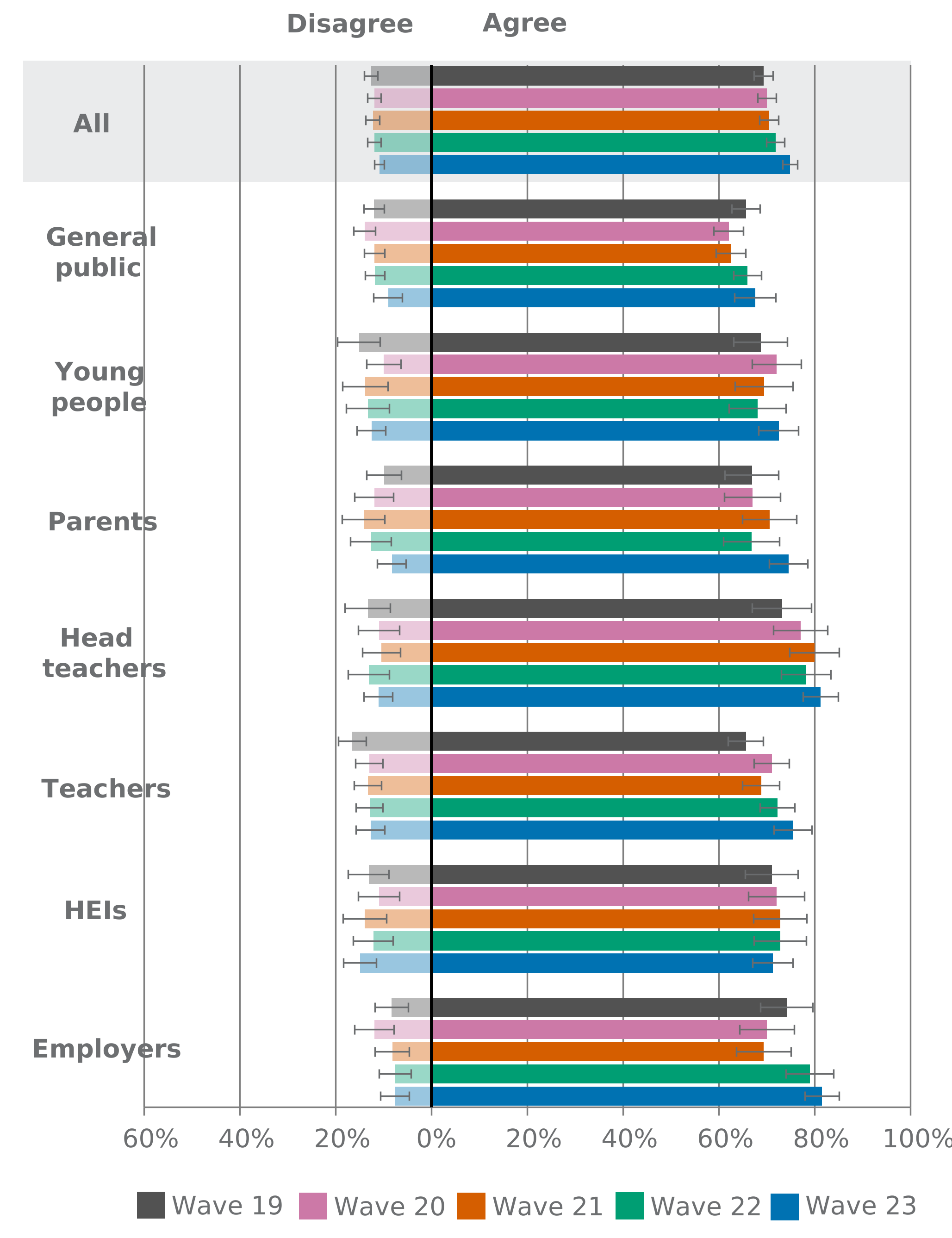
Three quarters (75%) of respondents in wave 23 agreed that ‘GCSEs are well understood by people’ (Figure 4), an increase compared to wave 22 (72%).
When individual stakeholder groups were considered, there was an increase in agreement from parents compared to wave 22 (75% in wave 23 compared to 67% in wave 22). For all other stakeholder groups, although there appeared to be differences compared to wave 22, there were no significant changes.
Despite there being no significant changes compared to wave 22, head teachers display significantly higher levels of agreement in wave 23 compared to wave 19 (81% compared to 73%). Teachers also continued to show significantly higher levels of agreement in wave 23 compared to wave 19 (75% compared to 66%).
Figure 4. Results for “GCSEs are well understood by people.”
| Respondent type | Wave 19 | Wave 20 | Wave 21 | Wave 22 | Wave 23 |
|---|---|---|---|---|---|
| All – agree | 69% | 70% | 70% | 72% | 75% |
| All – disagree | 13% | 12% | 12% | 12% | 11% |
| General public – agree | 66% | 62% | 62% | 66% | 68% |
| General public – disagree | 12% | 14% | 12% | 12% | 9% |
| Young people – agree | 69% | 72% | 69% | 68% | 72% |
| Young people – disagree | 15% | 10% | 14% | 13% | 13% |
| Parents – agree | 67% | 67% | 71% | 67% | 75% |
| Parents – disagree | 10% | 12% | 14% | 13% | 8% |
| Head teachers – agree | 73% | 77% | 80% | 78% | 81% |
| Head teachers – disagree | 13% | 11% | 10% | 13% | 11% |
| Teachers – agree | 66% | 71% | 69% | 72% | 75% |
| Teachers – disagree | 17% | 13% | 13% | 13% | 13% |
| HEIs – agree | 71% | 72% | 73% | 73% | 71% |
| HEIs – disagree | 13% | 11% | 14% | 12% | 15% |
| Employers – agree | 74% | 70% | 69% | 79% | 81% |
| Employers – disagree | 8% | 12% | 8% | 8% | 8% |
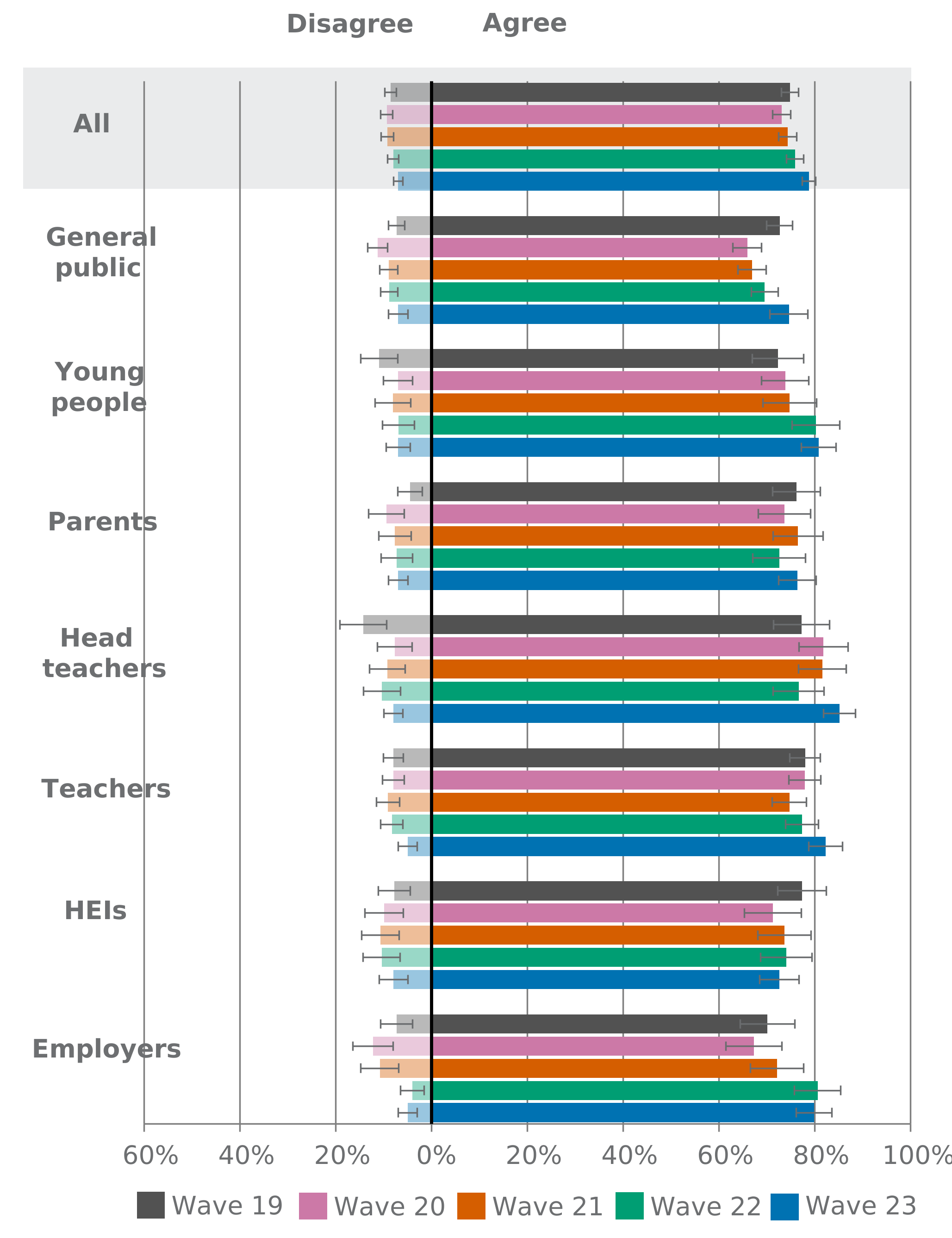
Just under four in five (79%) respondents in wave 23 agreed that ‘GCSEs are a trusted qualification’, an increase compared to wave 22 (76%), and a continuation of a sustained increase since wave 20 (73%).
In wave 23, the proportion of head teachers agreeing with this statement increased to 85% compared to 77% in wave 22. Figure 5 shows that since wave 19, agreement among young people has increased slightly yet not significantly each wave, which has led to agreement in wave 23 being significantly higher compared to wave 19 (81% compared to 72%).
Figure 5. Results for “GCSEs are a trusted qualification”
| Respondent type | Wave 19 | Wave 20 | Wave 21 | Wave 22 | Wave 23 |
|---|---|---|---|---|---|
| All – agree | 75% | 73% | 74% | 76% | 79% |
| All – disagree | 9% | 9% | 9% | 8% | 7% |
| General public – agree | 73% | 66% | 67% | 70% | 75% |
| General public – disagree | 7% | 11% | 9% | 9% | 7% |
| Young people – agree | 72% | 74% | 75% | 80% | 81% |
| Young people – disagree | 11% | 7% | 8% | 7% | 7% |
| Parents – agree | 76% | 74% | 76% | 73% | 76% |
| Parents – disagree | 5% | 9% | 8% | 7% | 7% |
| Head teachers – agree | 77% | 82% | 82% | 77% | 85% |
| Head teachers – disagree | 14% | 8% | 9% | 10% | 8% |
| Teachers – agree | 78% | 78% | 75% | 77% | 82% |
| Teachers – disagree | 8% | 8% | 9% | 8% | 5% |
| HEIs – agree | 77% | 71% | 74% | 74% | 73% |
| HEIs – disagree | 8% | 10% | 11% | 10% | 8% |
| Employers – agree | 70% | 67% | 72% | 81% | 80% |
| Employers – disagree | 7% | 12% | 11% | 4% | 5% |
Confidence in standards and marking
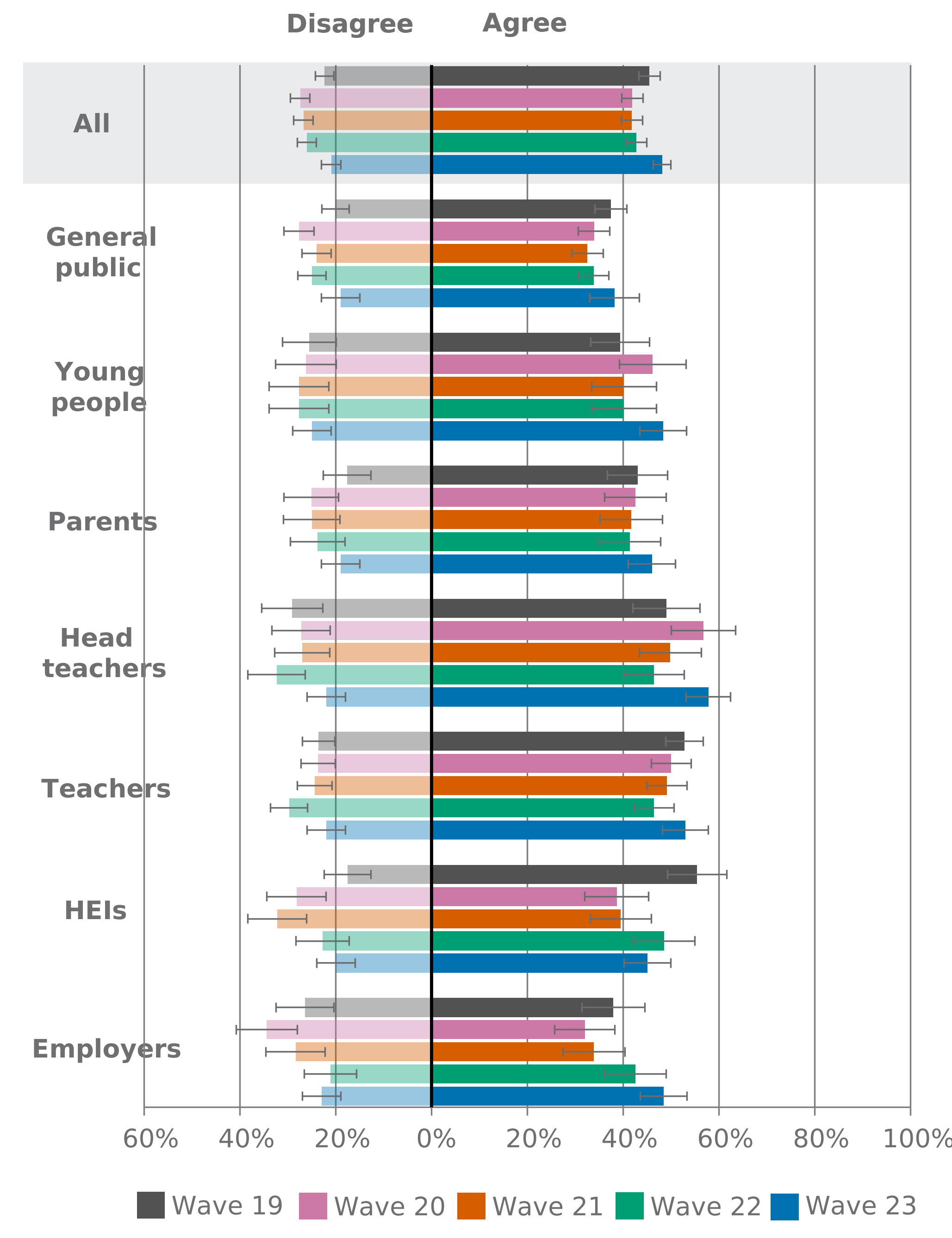
Just under half (48%) of respondents agreed in wave 23 that ‘GCSE standards are maintained year-on-year’, an increase compared to wave 22 (43%) (Figure 6).
As seen from Figure 6, head teachers displayed increased agreement in wave 23 (58%) compared to wave 22 (46%), as did teachers (53% in wave 23, compared to 46% in wave 22). These increases in levels of agreement show a reversal to the trend of gradual decreases in agreement between waves 20 and 22.
Although there appeared to be an increase in agreement among young people between wave 22 and wave 23, this increase was not significant. Among all other groups, there were no significant changes.
Figure 6. Results for “GCSE standards are maintained year-on-year.”
| Respondent type | Wave 19 | Wave 20 | Wave 21 | Wave 22 | Wave 23 |
|---|---|---|---|---|---|
| All – agree | 45% | 42% | 42% | 43% | 48% |
| All – disagree | 22% | 27% | 27% | 26% | 21% |
| General public – agree | 37% | 34% | 33% | 34% | 38% |
| General public – disagree | 20% | 28% | 24% | 25% | 19% |
| Young people – agree | 43% | 39% | 46% | 40% | 48% |
| Young people – disagree | 22% | 26% | 26% | 28% | 25% |
| Parents – agree | 43% | 43% | 42% | 41% | 46% |
| Parents – disagree | 18% | 25% | 25% | 24% | 19% |
| Head teachers – agree | 49% | 57% | 50% | 46% | 58% |
| Head teachers – disagree | 29% | 27% | 27% | 32% | 22% |
| Teachers – agree | 53% | 50% | 49% | 46% | 53% |
| Teachers – disagree | 24% | 24% | 24% | 30% | 22% |
| HEIs – agree | 55% | 39% | 39% | 49% | 45% |
| HEIs – disagree | 18% | 28% | 32% | 23% | 20% |
| Employers – agree | 38% | 32% | 34% | 42% | 48% |
| Employers – disagree | 26% | 34% | 28% | 21% | 23% |
In wave 23, a new question was included to further measure public perceptions of standards being maintained. Respondents were asked “Thinking about GCSEs, on average, to what extent, if at all, do you think it is getting easier or harder to achieve the same grade each year”, and were presented with answer options ranging from “A lot easier” to “A lot harder”, with additional options for those who thought there had been no difference and another for “don’t know”.
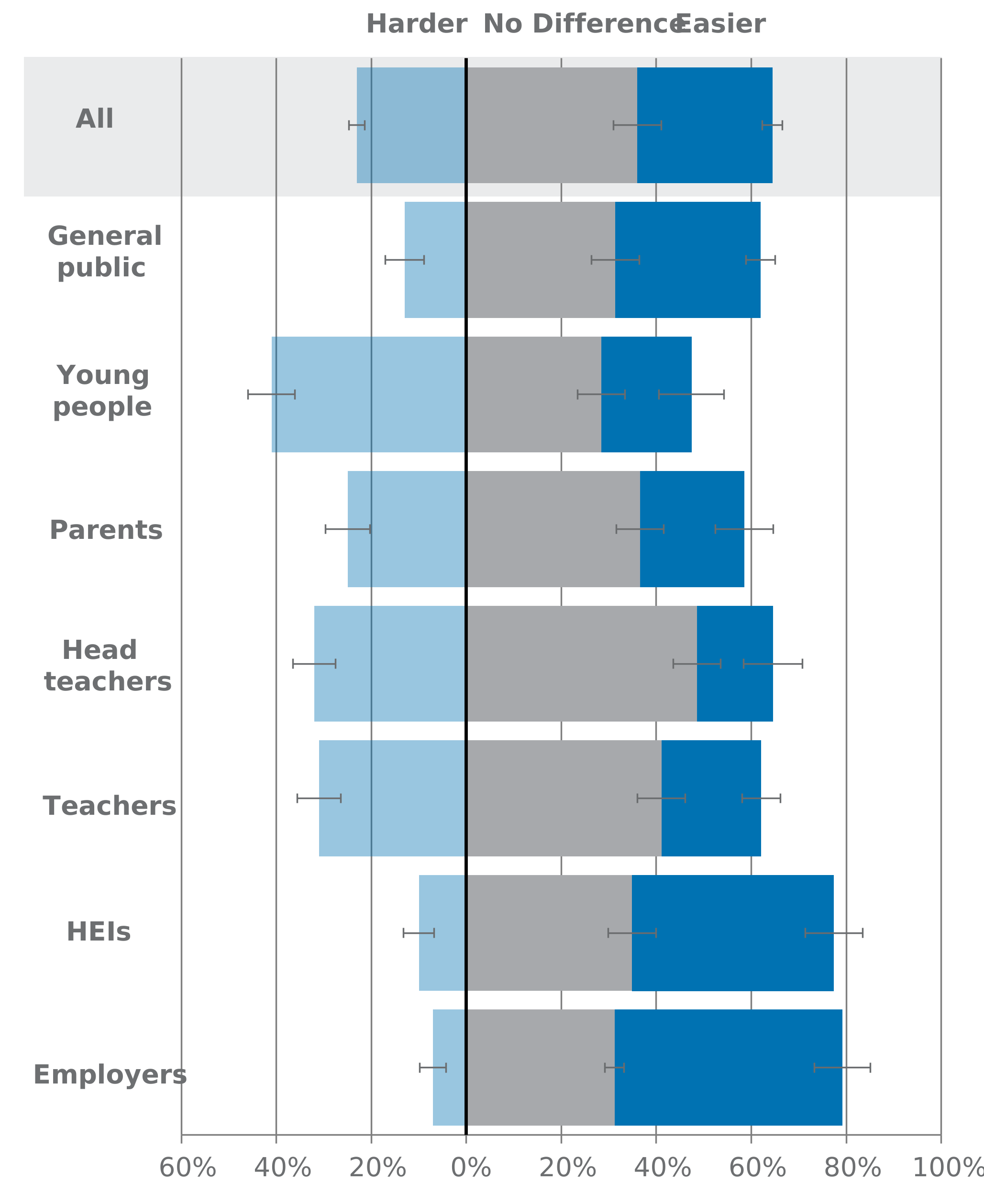
Just under 3 in 10 people surveyed (28%) said that they thought it is getting easier to achieve the same GCSE grade each year, while 23% said they thought achieving the same GCSE grade each year is getting harder (Figure 7). However, just over a third (36%) of respondents reported that there was no difference in whether it is getting easier or harder to achieve the same GCSE grade each year. In comparison, just under half (48%) of respondents in wave 23 agreed that ‘GCSE standards are maintained year-on-year’ (Figure 6). Around one in ten (13%) respondents reported that they don’t know whether it is getting easier or harder to achieve the same GCSE grade each year.
When looking at individual groups, head teachers represented the highest proportion who reported there was no difference in the difficulty of achieving a GCSE grade each year (49%), aligning with previously discussed findings that 58% of head teachers in wave 23 agreed that ‘GCSE standards are maintained year-on-year’. Teachers similarly account for high proportions reporting there is no difference in whether it is getting easier or harder to achieve the same GCSE grade each year (41%), and in reporting agreement that GCSE standards are maintained year-on-year (53%). Parents most commonly reported there is no difference in whether it is easier or harder to achieve the same grade (37%), compared to reporting that it is getting easier (22%) or harder (25%).
Employers (48%) and HEIs (43%) most commonly reported that achieving the same GCSE grade each year is getting easier. These groups less commonly reported that achieving the same GCSE grade each year is getting harder (7% of employers and 10% of HEIs) or there is no difference (31% of employers and 35% of HEIs).
The general public also showed higher levels in reporting that achieving the same GCSE grade each year is getting easier or there is no difference (both 31%) rather than harder (13%).
Among young people, agreement that GCSEs are getting harder (41%) exceeded agreement that it is getting easier (19%) or there is no difference (28%).
Figure 7. Results for “Thinking about GCSEs, on average, to what extent, if at all, do you think it is getting easier or harder to achieve the same grade each year?” Wave 23 displayed only.
| Respondent type | Wave 23 |
|---|---|
| All – easier | 28% |
| All – no difference | 36% |
| All – harder | 23% |
| General public – easier | 31% |
| General public – no difference | 31% |
| General public – harder | 13% |
| Young people – easier | 19% |
| Young people – no difference | 28% |
| Young people – harder | 41% |
| Parents – easier | 22% |
| Parents – no difference | 37% |
| Parents – harder | 25% |
| Head teachers – easier | 16% |
| Head teachers – no difference | 49% |
| Head teachers – harder | 32% |
| Teachers – easier | 21% |
| Teachers – no difference | 41% |
| Teachers – harder | 31% |
| HEIs – easier | 43% |
| HEIs – no difference | 35% |
| HEIs – harder | 10% |
| Employers – easier | 48% |
| Employers – no difference | 31% |
| Employers – harder | 7% |
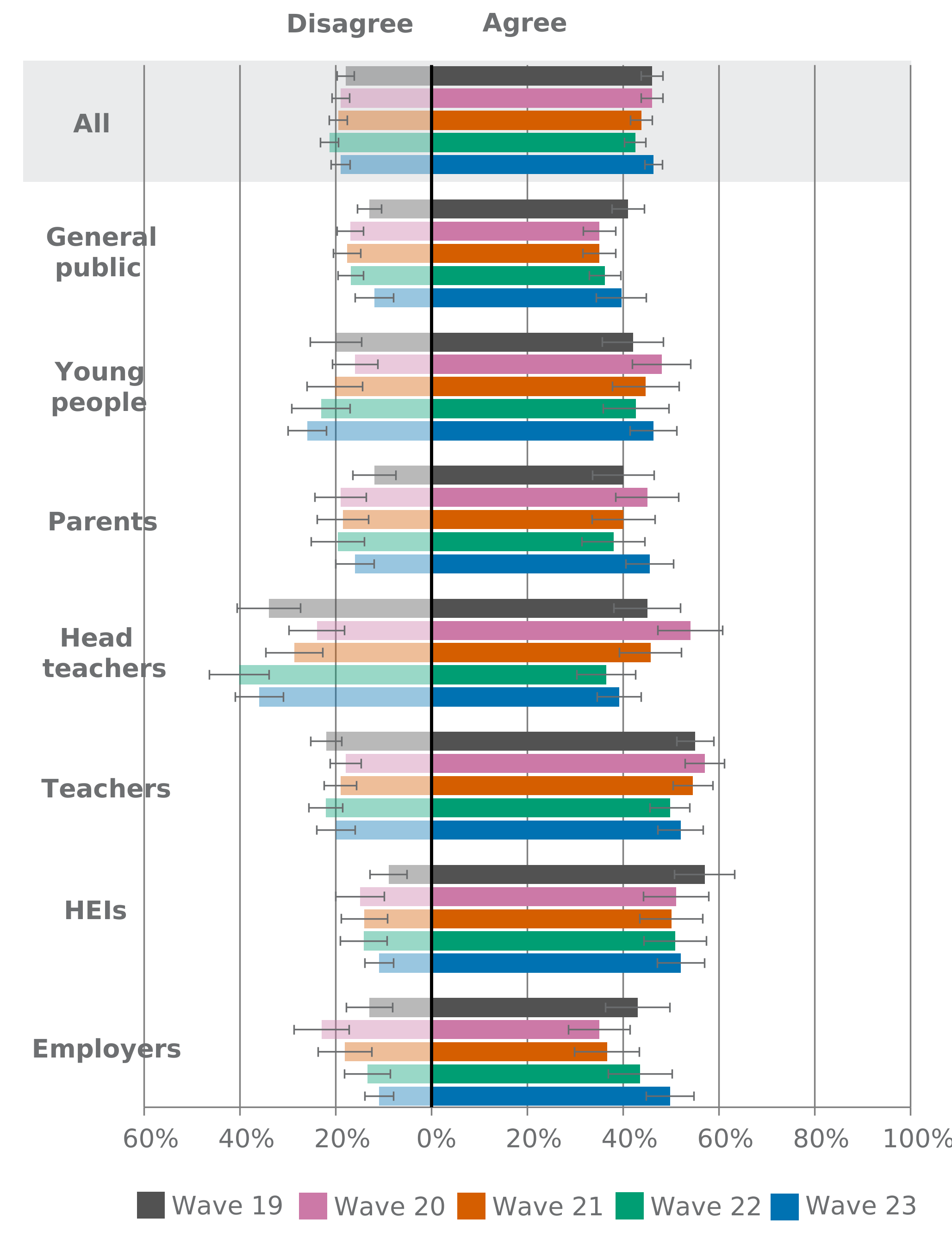
In wave 23, 46% of respondents agreed that ‘the marking of GCSEs is accurate’, an increase compared to wave 22 (42%).
Among all other groups, there were no significant differences in levels of agreement compared to wave 22. Although there appeared to be an increase in agreement among employers, this difference was not significant. However, the trend of slight and non-significant increases in levels of agreement among employers since wave 20 meant that levels of agreement were significantly higher in wave 23 (50%) compared to wave 20 (35%) (Figure 8).
Figure 8. Results for “The marking of GCSEs is accurate.”
| Respondent type | Wave 19 | Wave 20 | Wave 21 | Wave 22 | Wave 23 |
|---|---|---|---|---|---|
| All – agree | 46% | 46% | 44% | 42% | 46% |
| All – disagree | 18% | 19% | 19% | 21% | 19% |
| General public – agree | 41% | 35% | 35% | 36% | 40% |
| General public – disagree | 13% | 17% | 18% | 17% | 12% |
| Young people – agree | 42% | 48% | 45% | 43% | 46% |
| Young people – disagree | 20% | 16% | 20% | 23% | 26% |
| Parents – agree | 40% | 45% | 40% | 38% | 46% |
| Parents – disagree | 12% | 19% | 19% | 20% | 16% |
| Head teachers – agree | 45% | 54% | 46% | 36% | 39% |
| Head teachers – disagree | 34% | 24% | 29% | 40% | 36% |
| Teachers – agree | 55% | 57% | 55% | 50% | 52% |
| Teachers – disagree | 22% | 18% | 19% | 22% | 20% |
| HEIs – agree | 57% | 51% | 50% | 51% | 52% |
| HEIs – disagree | 9% | 15% | 14% | 14% | 11% |
| Employers – agree | 43% | 35% | 37% | 44% | 50% |
| Employers – disagree | 13% | 23% | 18% | 13% | 11% |
Skills and preparation
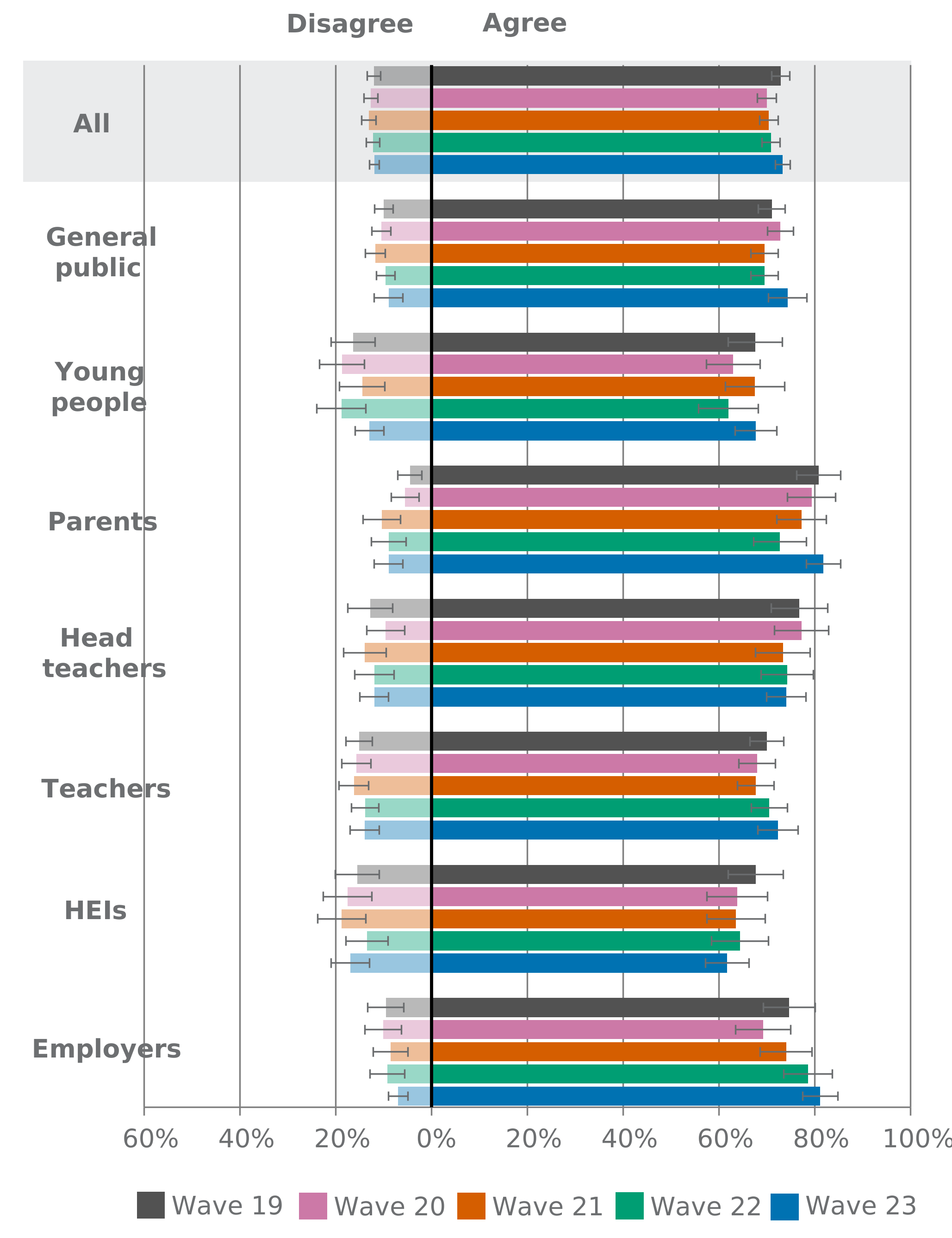
Approximately three quarters (73%) of respondents in wave 23 agreed that ‘GCSEs are good preparation for further study’ (Figure 9), consistent with agreement in wave 22 (71%).
In wave 23, when looking at individual stakeholder groups, agreement increased among parents (82%) following gradual decreases over the past five years between wave 19 (81%) and wave 22 (73%).
The level of agreement among employers has increased gradually and non-significantly every wave since wave 20 (69%), meaning that levels of agreement among employers in wave 23 (81%) were significantly higher than wave 20.
Although there appeared to be an increase in agreement among young people in wave 23 compared to wave 22, this change was non-significant. Among all other groups, there were no significant changes.
Figure 9. Results for “GCSEs are good preparation for further study.”
| Respondent type | Wave 19 | Wave 20 | Wave 21 | Wave 22 | Wave 23 |
|---|---|---|---|---|---|
| All – agree | 73% | 70% | 70% | 71% | 73% |
| All – disagree | 12% | 13% | 13% | 12% | 12% |
| General public – agree | 73% | 69% | 69% | 74% | 74% |
| General public – disagree | 11% | 12% | 10% | 9% | 9% |
| Young people – agree | 68% | 63% | 67% | 62% | 68% |
| Young people – disagree | 16% | 19% | 15% | 19% | 13% |
| Parents – agree | 81% | 79% | 77% | 73% | 82% |
| Parents – disagree | 5% | 6% | 10% | 9% | 9% |
| Head teachers – agree | 77% | 77% | 73% | 74% | 74% |
| Head teachers – disagree | 13% | 10% | 14% | 12% | 12% |
| Teachers – agree | 70% | 68% | 68% | 70% | 72% |
| Teachers – disagree | 15% | 16% | 16% | 14% | 14% |
| HEIs – agree | 68% | 64% | 64% | 64% | 62% |
| HEIs – disagree | 16% | 18% | 19% | 14% | 17% |
| Employers – agree | 75% | 69% | 74% | 79% | 81% |
| Employers – disagree | 10% | 10% | 9% | 9% | 7% |
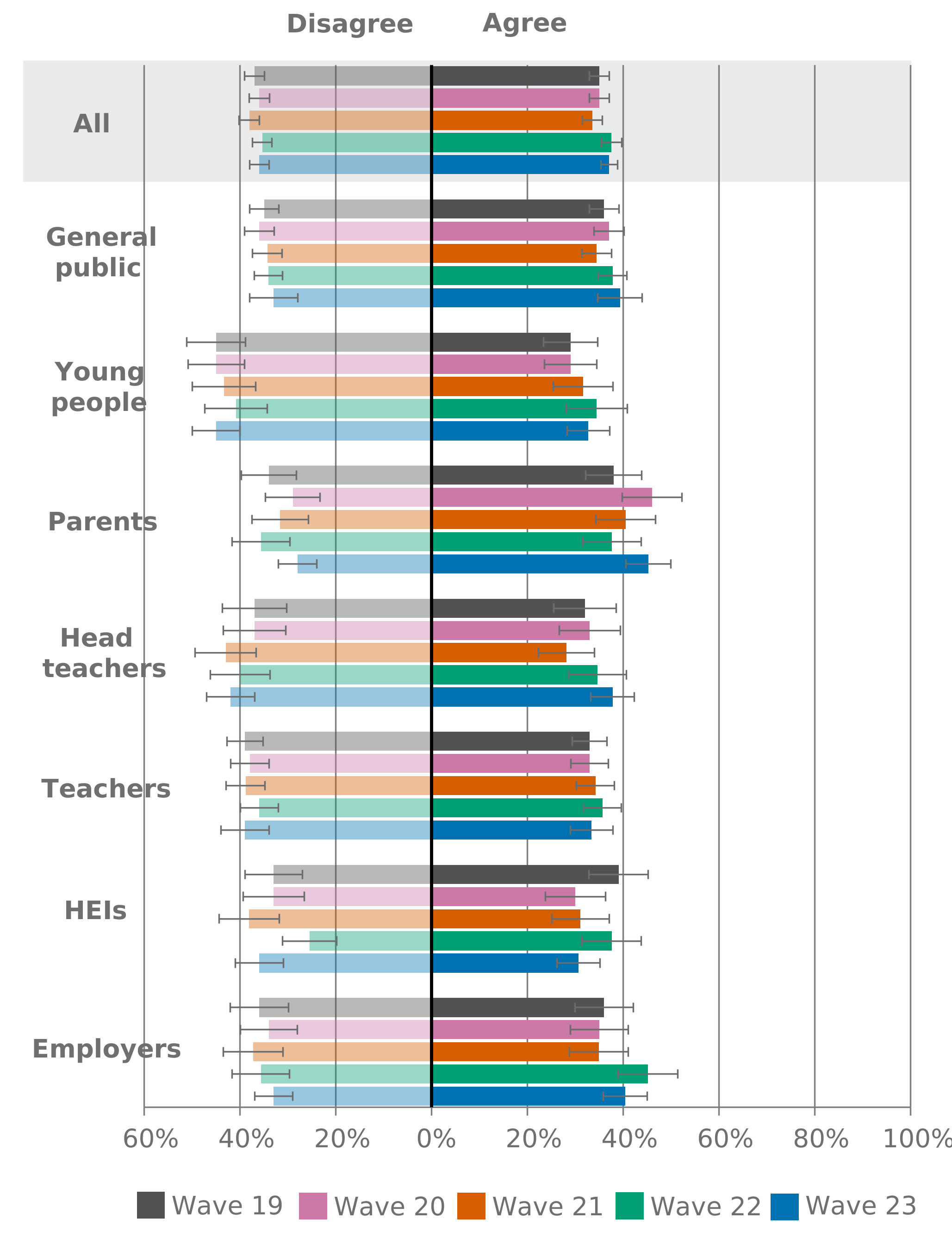
Thirty-seven percent of respondents in wave 23 agreed that ‘GCSEs are good preparation for work’, with a similar proportion in the same wave disagreeing with this statement (36%) (Figure 10).
When looking at individual groups, levels of agreement among head teachers has increased gradually and non-significantly each wave since wave 21 (28%), meaning agreement in wave 23 (38%) was significantly higher than wave 21.
Although, levels of agreement appeared to have decreased among HEIs and employers in the current wave compared to the previous one, these decreases were slight and non-significant. Among all other groups, there were no significant changes.
Figure 10. Results for “GCSEs are good preparation for work.”
| Respondent type | Wave 19 | Wave 20 | Wave 21 | Wave 22 | Wave 23 | |
|---|---|---|---|---|---|---|
| All – agree | 35% | 35% | 34% | 38% | 37% | |
| All – disagree | 37% | 36% | 38% | 35% | 36% | |
| General public – agree | 36% | 37% | 34% | 38% | 39% | |
| General public – disagree | 35% | 36% | 34% | 34% | 33% | |
| Young people – agree | 29% | 29% | 32% | 34% | 33% | |
| Young people – disagree | 45% | 45% | 43% | 41% | 45% | |
| Parents – agree | 38% | 46% | 40% | 38% | 45% | |
| Parents – disagree | 34% | 29% | 32% | 36% | 28% | |
| Head teachers – agree | 32% | 33% | 28% | 35% | 38% | |
| Head teachers – disagree | 37% | 37% | 43% | 40% | 42% | |
| Teachers – agree | 33% | 33% | 34% | 36% | 33% | |
| Teachers – disagree | 39% | 38% | 39% | 36% | 39% | |
| HEIs – agree | 39% | 30% | 31% | 38% | 31% | |
| HEIs – disagree | 33% | 33% | 38% | 26% | 36% | |
| Employers – agree | 36% | 35% | 35% | 45% | 40% | |
| Employers – disagree | 36% | 34% | 37% | 36% | 33% |
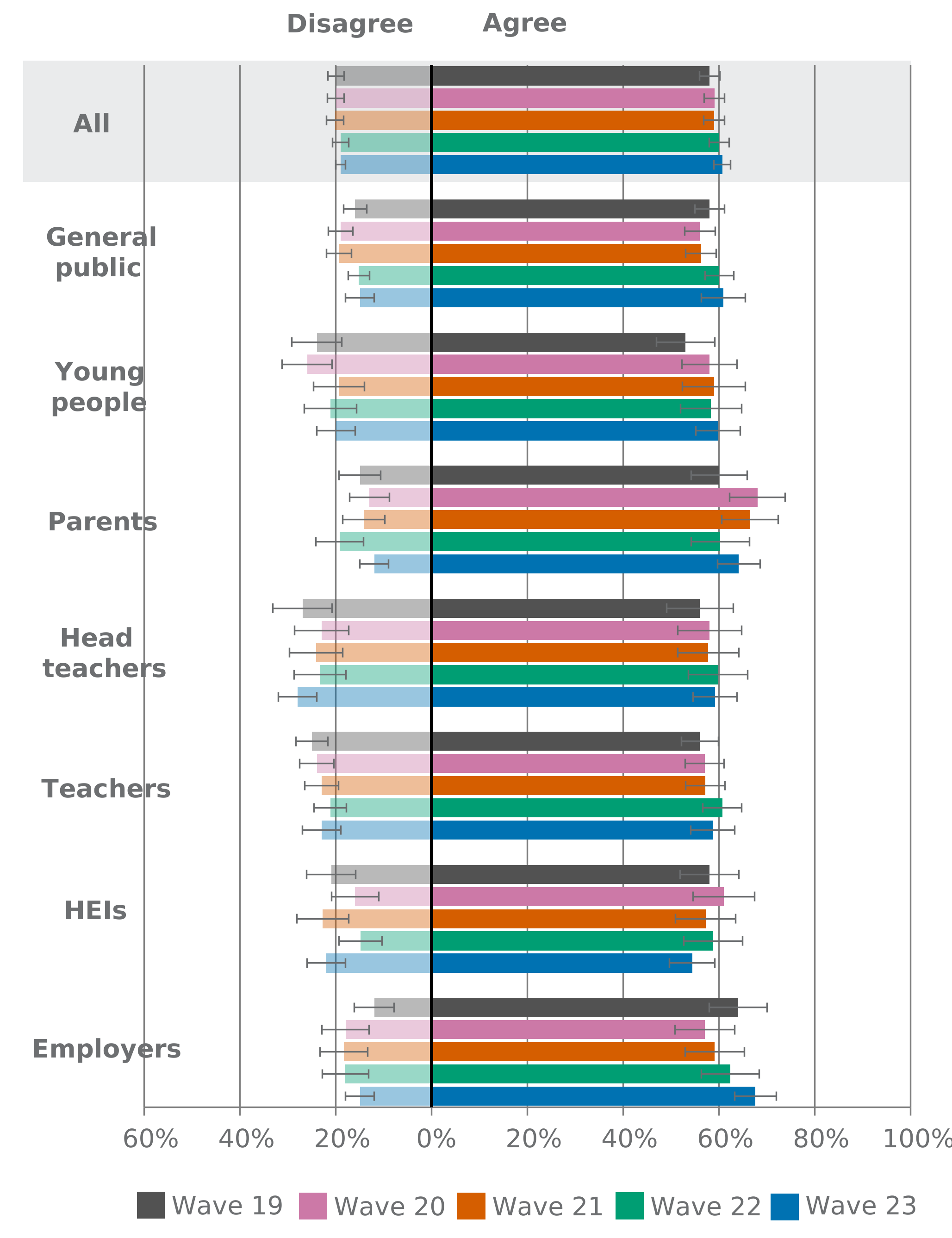
Overall, perceptions that ‘GCSEs develop a broad range of skills for students’ in wave 23 were consistent with previous waves, with 61% of respondents agreeing with the statement (Figure 11).
There were no significant differences for individual groups when comparing wave 23 with wave 22. However, as a result of a sustained increase over time, agreement among employers in wave 23 (68%) was significantly higher than agreement measured in wave 20 (57%).
Figure 11. Results for “GCSEs develop a broad range of skills for students.”
| Respondent type | Wave 19 | Wave 20 | Wave 21 | Wave 22 | Wave 23 |
|---|---|---|---|---|---|
| All – agree | 58% | 59% | 59% | 60% | 61% |
| All – disagree | 20% | 20% | 20% | 19% | 19% |
| General public – agree | 58% | 56% | 56% | 60% | 61% |
| General public – disagree | 16% | 19% | 19% | 15% | 15% |
| Young people – agree | 53% | 58% | 59% | 58% | 60% |
| Young people – disagree | 24% | 26% | 19% | 21% | 20% |
| Parents – agree | 60% | 68% | 66% | 60% | 64% |
| Parents – disagree | 15% | 13% | 14% | 19% | 12% |
| Head teachers – agree | 56% | 58% | 58% | 60% | 59% |
| Head teachers – disagree | 27% | 23% | 24% | 23% | 28% |
| Teachers – agree | 56% | 57% | 57% | 61% | 59% |
| Teachers – disagree | 25% | 24% | 23% | 21% | 23% |
| HEIs – agree | 58% | 61% | 57% | 59% | 54% |
| HEIs – disagree | 21% | 16% | 23% | 15% | 22% |
| Employers – agree | 64% | 57% | 59% | 62% | 68% |
| Employers – disagree | 12% | 18% | 18% | 18% | 15% |
Value for money
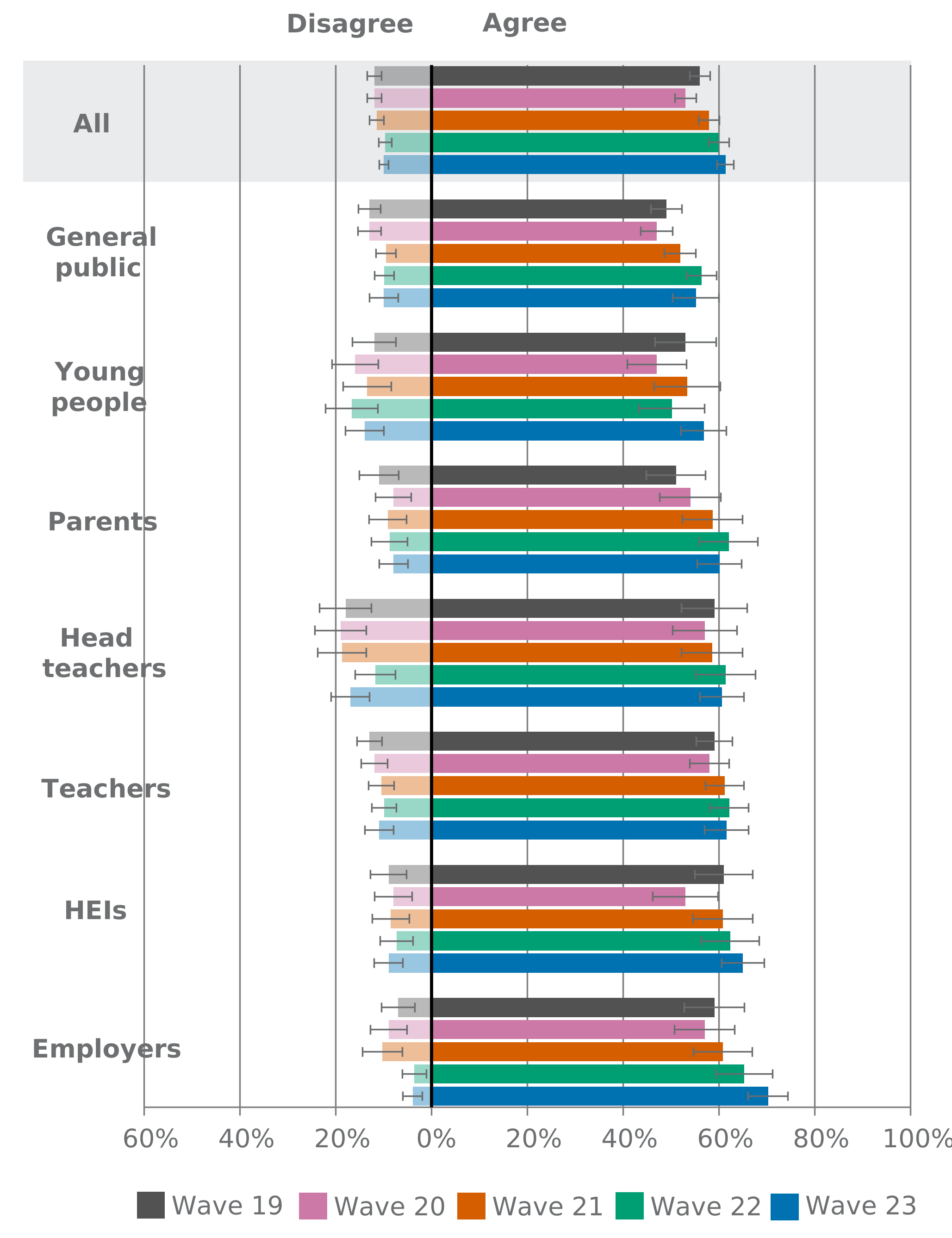
In wave 23, 61% respondents agreed that ‘GCSEs offer value for money’ consistent with wave 22 (60%). This represented a significant increase in agreement from all respondents in wave 23 compared to wave 20 (53%).
There were no significant differences for individual groups for wave 23 compared to wave 22. However, levels of agreement among employers have gradually and non-significantly increased over the last few years, meaning levels of agreement were significantly higher in wave 23 (70%) compared to wave 20 (57%). Similarly, levels of agreement among HEIs have increased gradually over the same period, so that levels of agreement among this group were higher in wave 23 (65%) than wave 20 (53%).
Figure 12. Results for “GCSEs offer value for money.”
| Respondent type | Wave 19 | Wave 20 | Wave 21 | Wave 22 | Wave 23 |
|---|---|---|---|---|---|
| All – agree | 56% | 53% | 58% | 60% | 61% |
| All – disagree | 12% | 12% | 11% | 10% | 10% |
| General public – agree | 49% | 47% | 52% | 56% | 55% |
| General public – disagree | 13% | 13% | 10% | 10% | 10% |
| Young people – agree | 53% | 47% | 53% | 50% | 57% |
| Young people – disagree | 12% | 16% | 14% | 17% | 14% |
| Parents – agree | 51% | 54% | 59% | 62% | 60% |
| Parents – disagree | 11% | 8% | 9% | 9% | 8% |
| Head teachers – agree | 59% | 57% | 59% | 61% | 61% |
| Head teachers – disagree | 18% | 19% | 19% | 12% | 17% |
| Teachers – agree | 59% | 58% | 61% | 62% | 62% |
| Teachers – disagree | 13% | 12% | 10% | 10% | 11% |
| HEIs – agree | 61% | 53% | 61% | 62% | 65% |
| HEIs – disagree | 9% | 8% | 9% | 7% | 9% |
| Employers – agree | 59% | 57% | 61% | 65% | 70% |
| Employers – disagree | 7% | 9% | 10% | 4% | 4% |
Section 3: General perceptions of A levels
The following section considers respondents’ general perceptions of A levels, not specific to any exam series. To account for changes made to the A level qualification system over recent years, in wave 20, the question text changed to remove reference to AS.
For the following 8 survey items the wave 23 effective base was: All responses (N=2,234); general public (N=1,028); teachers (N=610); HEIs (N=271); parents (N=257); employers (N=248); head teachers (N=238); young people (N=285).
Respondents were shown a 5-point scale ranging from strongly disagree to strongly agree. Agree is a combination of strongly agree and agree and disagree a combination of strongly disagree and disagree.
Key findings
Overall, perceptions of A levels were broadly consistent compared to wave 22, apart from agreement that ‘A level standards are maintained year-on-year’ which increased from 48% in wave 22 to 55% in wave 23 and agreement that ‘the marking of A levels is accurate’ from 48% in wave 22 to 51% in wave 23.
Consistent with wave 22, highest levels of agreement in wave 23 were for ‘A levels are trusted qualifications’ (87%) and ‘A levels are good preparation for further study’ (83%).
The increase in agreement that ‘A level standards are maintained year-on-year’ was driven by an increase in agreement among teachers (from 60% in wave 22 to 66% in wave 23) and head teachers (from 57% in wave 22 to 74% in wave 23).
There was also an increase in the proportion of head teachers who agreed that ‘A levels are trusted qualifications’ from 88% in wave 22 to 94% in wave 23.
While agreement that ‘A levels are good preparation for further study’ increased among employers from 81% in wave 22 to 88% in wave 23.
Among other stakeholder groups, perceptions of A levels saw no significant changes in wave 23 in comparison to wave 22.
In wave 23, 26% of all participants surveyed said that they thought it is getting easier to achieve the same A level grade each year, while 23% said they thought it is getting harder.
Just over a third (34%) of respondents reported that there was ‘No difference’ in whether it is getting easier or harder to achieve the same A level grade each year. In comparison, over half (55%) of respondents agreed in wave 23 that ‘A level standards are maintained year-on-year’.
Employers (46%) and HEIs (45%) had the highest response rate that achieving the same grade each year is getting easier, and young people had the highest response rate that achieving the same grade each year is getting harder (51%).
Head teachers (45%) and teachers (43%) represented the highest proportion who reported there was no difference in the difficulty of achieving the same A level grade each year.
Overall perceptions
Seventy-one per cent of respondents in wave 23 agreed that ‘A levels are well understood by people’ (Figure 13). This was consistent with agreement in wave 22 (69%), and shows an increase compared to wave 21 (66%).
In wave 23, there were no significant changes among stakeholder groups compared to wave 22. While there appeared to be an increase in agreement among head teachers and employers compared to wave 22, these differences were not significant. However, the non-significant increase in agreement among employers in wave 23 means agreement was significantly higher compared to wave 21 (78% compared to 64%).
Figure 13. Results for “A levels are well understood by people.”
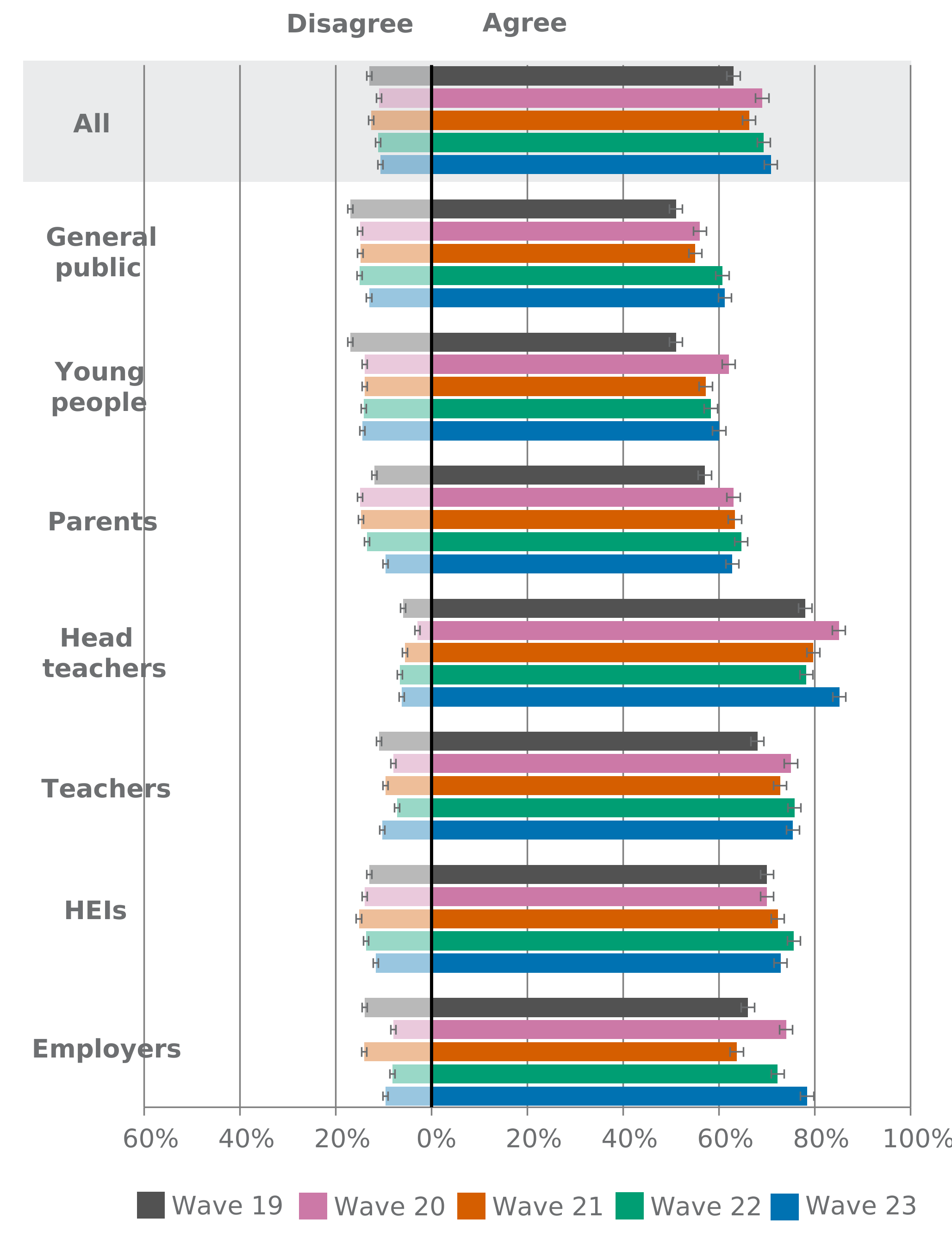
| Respondent type | Wave 19 | Wave 20 | Wave 21 | Wave 22 | Wave 23 |
|---|---|---|---|---|---|
| All – agree | 63% | 69% | 66% | 69% | 71% |
| All – disagree | 13% | 11% | 13% | 11% | 11% |
| General public – agree | 51% | 56% | 55% | 61% | 61% |
| General public – disagree | 17% | 15% | 15% | 15% | 13% |
| Young people – agree | 51% | 62% | 57% | 58% | 60% |
| Young people – disagree | 17% | 14% | 14% | 14% | 14% |
| Parents – agree | 57% | 63% | 63% | 65% | 63% |
| Parents – disagree | 12% | 15% | 15% | 14% | 10% |
| Head teachers – agree | 78% | 85% | 80% | 78% | 85% |
| Head teachers – disagree | 6% | 3% | 6% | 7% | 6% |
| Teachers – agree | 68% | 75% | 73% | 76% | 75% |
| Teachers – disagree | 11% | 8% | 10% | 7% | 10% |
| HEIs – agree | 70% | 70% | 72% | 76% | 73% |
| HEIs – disagree | 13% | 14% | 15% | 14% | 12% |
| Employers – agree | 66% | 74% | 64% | 72% | 78% |
| Employers – disagree | 14% | 8% | 14% | 8% | 10% |
Overall, 87% of respondents agreed that ‘A levels are trusted qualifications’ in wave 23 (Figure 14). While there was no increase in agreement compared to wave 22 (85%), there was a gradual increase in agreement resulting in a significant increase in agreement for wave 23 in comparison to waves 21 and 20 (both 83%).
In wave 23 there was an increase in the proportion of head teachers who agreed that ‘A levels are trusted qualifications’ compared to wave 22 (94% compared to 88%).
While in wave 23 there appeared to be an increase in agreement among employers compared to wave 22, this difference was not significant. This non-significant increase in agreement among employers in wave 23 compared to the previous wave caused agreement to be significantly higher in wave 23 compared to wave 21 (87% compared to 77%).
A series of small and non-significant increases in agreement among young people since wave 20 also meant that agreement among young people in wave 23 (89%) was significantly higher than in wave 20 (81%).
Figure 14. Results for “A levels are trusted qualifications.”
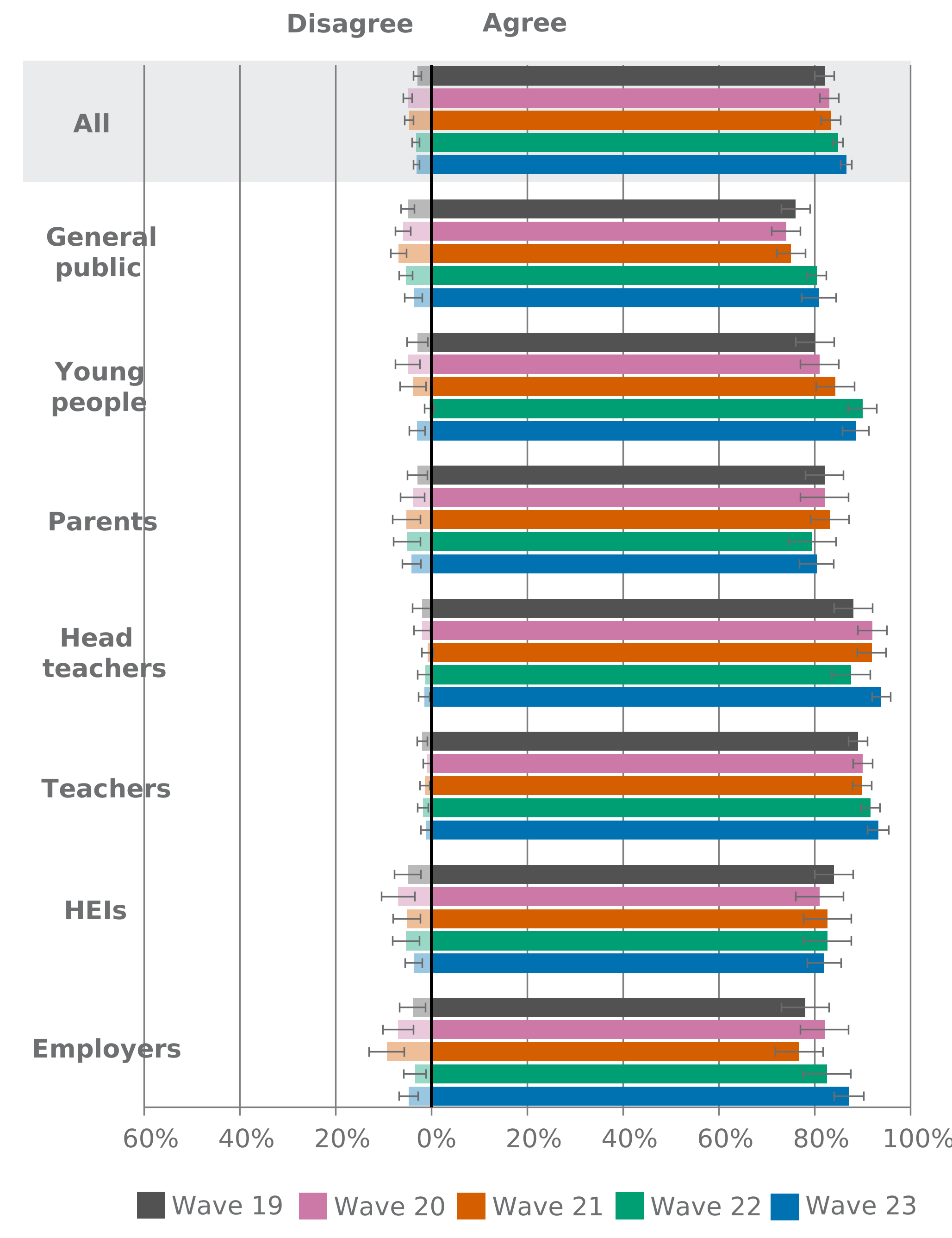
| Respondent type | Wave 19 | Wave 20 | Wave 21 | Wave 22 | Wave 23 | |
|---|---|---|---|---|---|---|
| All – agree | 82% | 83% | 83% | 85% | 87% | |
| All – disagree | 3% | 5% | 5% | 3% | 3% | |
| General public – agree | 76% | 74% | 75% | 80% | 81% | |
| General public – disagree | 5% | 6% | 7% | 5% | 4% | |
| Young people – agree | 80% | 81% | 84% | 90% | 89% | |
| Young people – disagree | 3% | 5% | 4% | 1% | 3% | |
| Parents – agree | 82% | 82% | 83% | 79% | 80% | |
| Parents – disagree | 3% | 4% | 5% | 5% | 4% | |
| Head teachers – agree | 88% | 92% | 92% | 88% | 94% | |
| Head teachers – disagree | 2% | 2% | 1% | 1% | 2% | |
| Teachers – agree | 89% | 90% | 90% | 92% | 93% | |
| Teachers – disagree | 2% | 1% | 1% | 2% | 1% | |
| HEIs – agree | 84% | 81% | 83% | 83% | 82% | |
| HEIs – disagree | 5% | 7% | 5% | 5% | 4% | |
| Employers – agree | 78% | 82% | 77% | 83% | 87% | |
| Employers – disagree | 4% | 7% | 9% | 4% | 5% |
Confidence in standards and marking
More than half (55%) of respondents in wave 23 agreed that ‘A level standards are maintained year-on-year’ (Figure 15), an increase from 48% in wave 22.
This increase in agreement was driven by teachers, in which agreement increased from 60% in wave 22 to 66% in wave 23 and head teachers’ agreement increased from 57% in wave 22 to 74% in wave 23.
Although there appeared to be an increase in agreement among parents and young people, these increases were not significant.
A series of non-significant increases in agreement among the general public since wave 21 also meant that agreement among the general public in wave 23 (41%) was significantly higher than in wave 21 (32%). There was a similar pattern among HEIs, with agreement in wave 23 (51%) being significantly higher than wave 21 (40%).
Figure 15. Results for “A level standards are maintained year-on-year.”
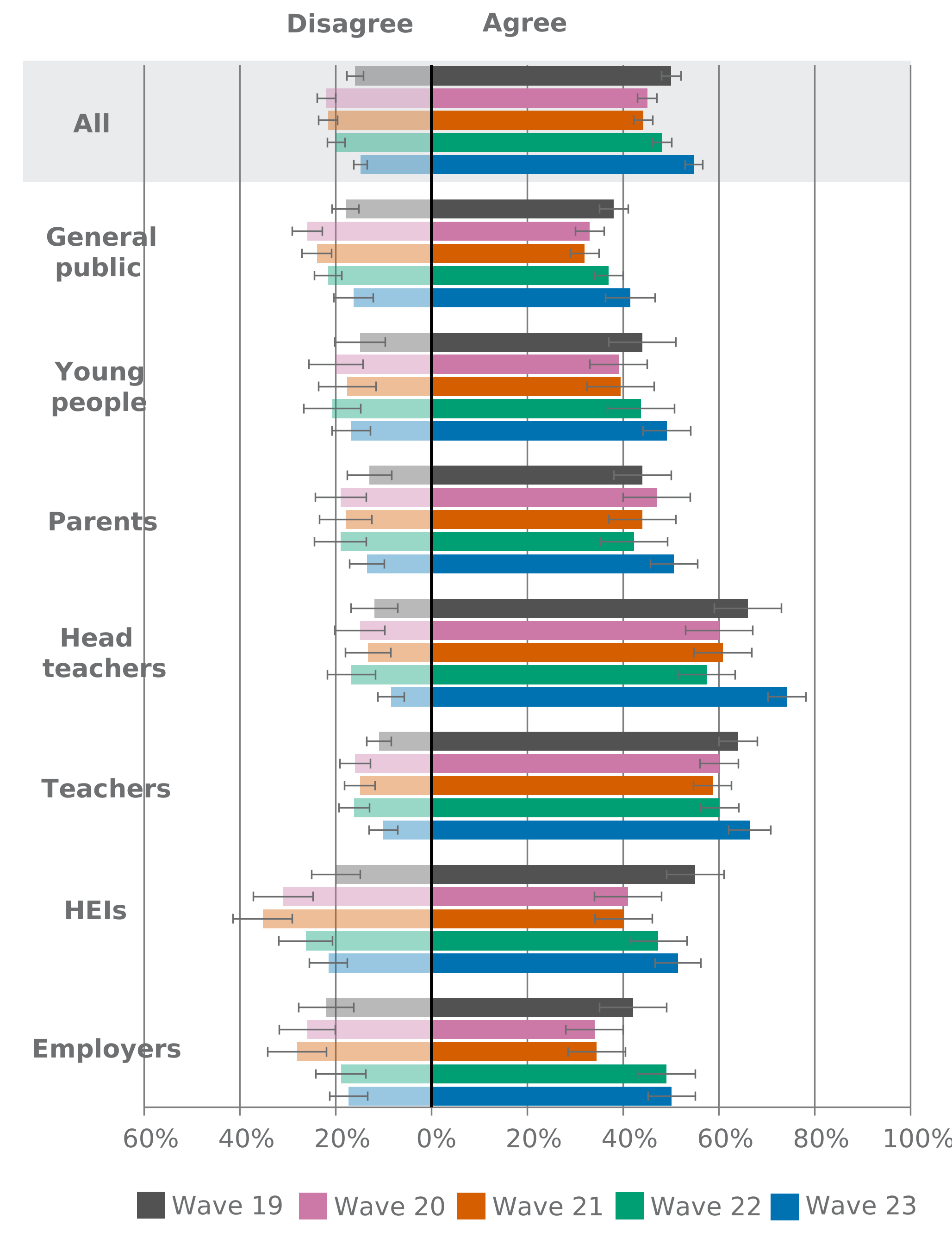
| Respondent type | Wave 19 | Wave 20 | Wave 21 | Wave 22 | Wave 23 |
|---|---|---|---|---|---|
| All – agree | 50% | 45% | 44% | 48% | 55% |
| All – disagree | 16% | 22% | 22% | 20% | 15% |
| General public – agree | 38% | 33% | 32% | 37% | 41% |
| General public – disagree | 18% | 26% | 24% | 22% | 16% |
| Young people – agree | 44% | 39% | 39% | 44% | 49% |
| Young people – disagree | 15% | 20% | 18% | 21% | 17% |
| Parents – agree | 44% | 47% | 44% | 42% | 51% |
| Parents – disagree | 13% | 19% | 18% | 19% | 14% |
| Head teachers – agree | 66% | 60% | 61% | 57% | 74% |
| Head teachers – disagree | 12% | 15% | 13% | 17% | 8% |
| Teachers – agree | 64% | 60% | 59% | 60% | 66% |
| Teachers – disagree | 11% | 16% | 15% | 16% | 10% |
| HEIs – agree | 55% | 41% | 40% | 47% | 51% |
| HEIs – disagree | 20% | 31% | 35% | 26% | 22% |
| Employers – agree | 42% | 34% | 34% | 49% | 50% |
| Employers – disagree | 22% | 26% | 28% | 19% | 17% |
Similar to the perceptions of GCSEs section, in wave 23 a new question was included to further measure public perceptions of standards being maintained. Respondents were asked “Thinking about A levels, on average, to what extent, if at all, do you think it is getting easier or harder to achieve the same grade each year?”.
Approximately one in four (26%) people surveyed said that they thought it is getting easier to achieve the same A level grade each year, while 23% said they thought achieving the same A level grade each year is getting harder (Figure 16).
Just over a third (34%) of respondents reported that there was ‘no difference’ in whether it is getting easier or harder to achieve the same A level grade each year (Figure 16). In comparison, over half (55%) of respondents agreed in wave 23 that ‘A level standards are maintained year-on-year’ from the previous question in Figure 15. Almost 1 in 6 (16%) also reported that they don’t know whether it is getting easier or harder to achieve the same grade.
When looking at individual groups, HEIs showed higher proportions in reporting that achieving the same A level grade each year is getting easier (45%), compared to reporting there is no difference (34%), or it is getting harder (10%). There was a similar pattern for employers (46% easier, 32% no difference, 8% harder). The general public were also relatively split in terms of reporting whether it is getting easier (31%) or there is no difference (28%), while 15% reported that it is getting harder.
Aligned with perceptions of GCSE standards, senior leaders, teachers and parents more commonly reported there is no difference in how easy or difficult it is to achieve the same A level grade each year (45%, 43% and 36% respectively), compared to being easier (15%, 18%, 20% respectively) or harder (28%, 27%, 23% respectively). Students showed higher proportions of reporting that it is getting harder (51%), with 11% who reported it is getting easier and 23% who reported no difference.
Figure 16. Results for “Thinking about A levels, on average, to what extent, if at all, do you think it is getting easier or harder to achieve the same grade each year?” Wave 23 displayed only.
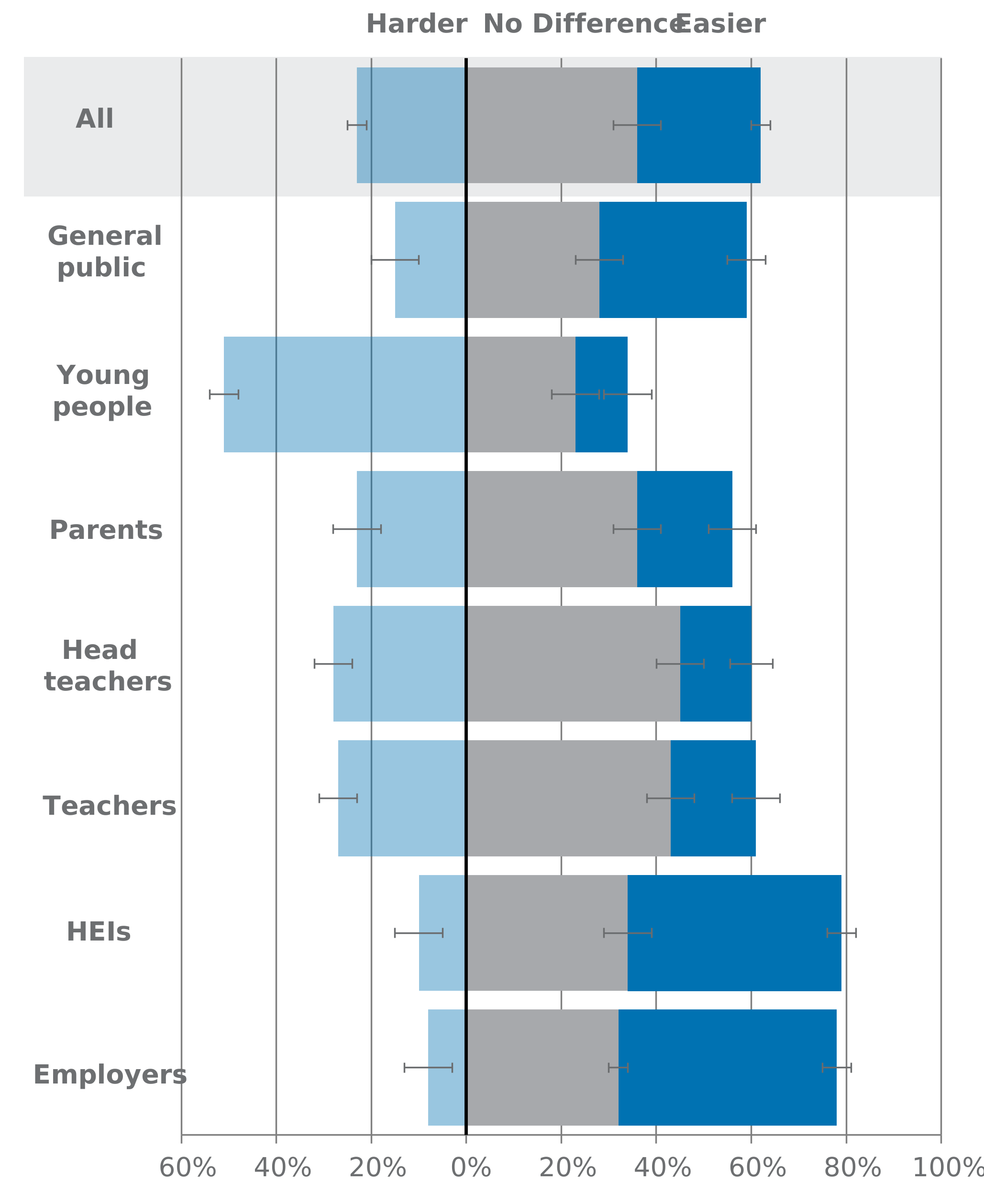
| Respondent type | Wave 23 |
|---|---|
| All – easier | 26% |
| All – no difference | 34% |
| All – harder | 23% |
| General public – easier | 31% |
| General public – no difference | 28% |
| General public – harder | 15% |
| Young people – easier | 11% |
| Young people – no difference | 23% |
| Young people – harder | 51% |
| Parents – easier | 20% |
| Parents – no difference | 36% |
| Parents – harder | 23% |
| Head teachers – easier | 15% |
| Head teachers – no difference | 45% |
| Head teachers – harder | 28% |
| Teachers – easier | 18% |
| Teachers – no difference | 43% |
| Teachers – harder | 27% |
| HEIs – easier | 45% |
| HEIs – no difference | 34% |
| HEIs – harder | 10% |
| Employers – easier | 46% |
| Employers – no difference | 32% |
| Employers – harder | 8% |
In wave 23, 51% of all respondents agreed that ‘the marking of A levels is accurate’ (Figure 17), an increase from 48% in wave 22. This overall increase was driven by small non-significant increases among most stakeholders, apart from HEIs in which agreement stayed consistent.
Figure 17. Results for “The marking of A levels is accurate.”
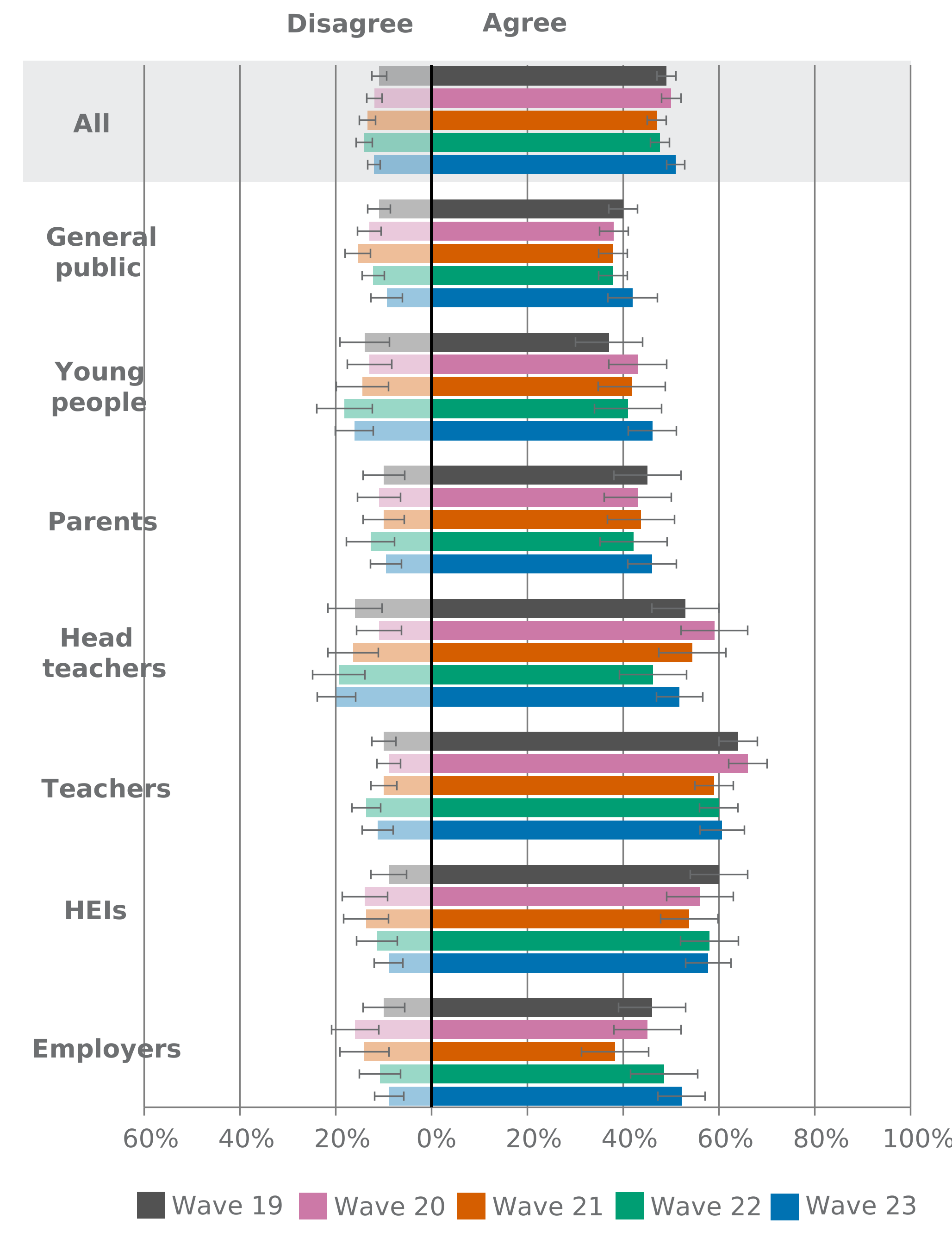
| Respondent type | Wave 19 | Wave 20 | Wave 21 | Wave 22 | Wave 23 | |
|---|---|---|---|---|---|---|
| All – agree | 49% | 50% | 47% | 48% | 51% | |
| All – disagree | 11% | 12% | 13% | 14% | 12% | |
| General public – agree | 40% | 38% | 38% | 38% | 42% | |
| General public – disagree | 11% | 13% | 15% | 12% | 9% | |
| Young people – agree | 37% | 43% | 42% | 41% | 46% | |
| Young people – disagree | 14% | 13% | 14% | 18% | 16% | |
| Parents – agree | 45% | 43% | 44% | 42% | 46% | |
| Parents – disagree | 10% | 11% | 10% | 13% | 10% | |
| Head teachers – agree | 53% | 59% | 54% | 46% | 52% | |
| Head teachers – disagree | 16% | 11% | 16% | 19% | 20% | |
| Teachers – agree | 64% | 66% | 59% | 60% | 61% | |
| Teachers – disagree | 10% | 9% | 10% | 14% | 11% | |
| HEIs – agree | 60% | 56% | 54% | 58% | 58% | |
| HEIs – disagree | 9% | 14% | 14% | 11% | 9% | |
| Employers – agree | 46% | 45% | 38% | 49% | 52% | |
| Employers – disagree | 10% | 16% | 14% | 11% | 9% |
Skills and preparation
Figure 18 shows that 83% of respondents agreed that ‘A levels are good preparation for further study’, consistent with agreement levels in wave 22 (81%).
Agreement among employers increased significantly in wave 23 (88%) compared to wave 22 (81%). In wave 23, there were no other significant changes among stakeholder groups compared to wave 22.
Figure 18. Results for “A levels are good preparation for further study.”
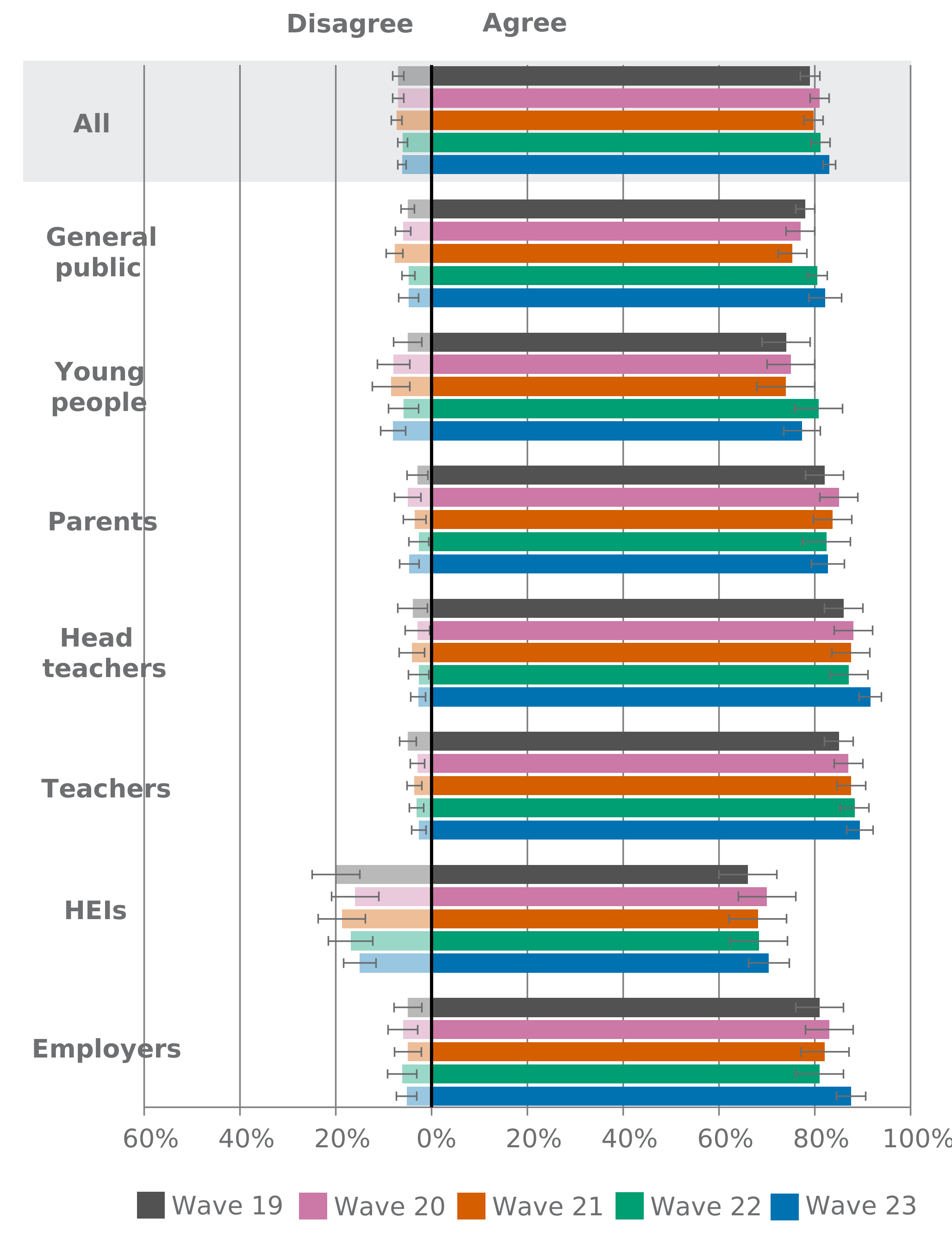
| Respondent type | Wave 19 | Wave 20 | Wave 21 | Wave 22 | Wave 23 | |
|---|---|---|---|---|---|---|
| All – agree | 79% | 81% | 80% | 81% | 83% | |
| All – disagree | 7% | 7% | 7% | 6% | 6% | |
| General public – agree | 78% | 77% | 75% | 81% | 82% | |
| General public – disagree | 5% | 6% | 8% | 5% | 5% | |
| Young people – agree | 74% | 75% | 74% | 81% | 77% | |
| Young people – disagree | 5% | 8% | 9% | 6% | 8% | |
| Parents – agree | 82% | 85% | 84% | 82% | 83% | |
| Parents – disagree | 3% | 5% | 4% | 3% | 5% | |
| Head teachers – agree | 86% | 88% | 88% | 87% | 92% | |
| Head teachers – disagree | 4% | 3% | 4% | 3% | 3% | |
| Teachers – agree | 85% | 87% | 88% | 88% | 89% | |
| Teachers – disagree | 5% | 3% | 4% | 3% | 3% | |
| HEIs – agree | 66% | 70% | 68% | 68% | 70% | |
| HEIs – disagree | 20% | 16% | 19% | 17% | 15% | |
| Employers – agree | 81% | 83% | 82% | 81% | 88% | |
| Employers – disagree | 5% | 6% | 5% | 6% | 5% |
In wave 23, 40% of all respondents agreed that ‘A levels are good preparation for work’ (Figure 19), consistent with wave 22 (39%).
Although there appeared to be a decrease in agreement among HEIs this difference was not significant.
Due to small non-significant increases in agreement since wave 21, overall agreement was significantly higher in wave 23 (40%) compared to wave 21 (35%).
Figure 19. Results for “A levels are good preparation for work.”
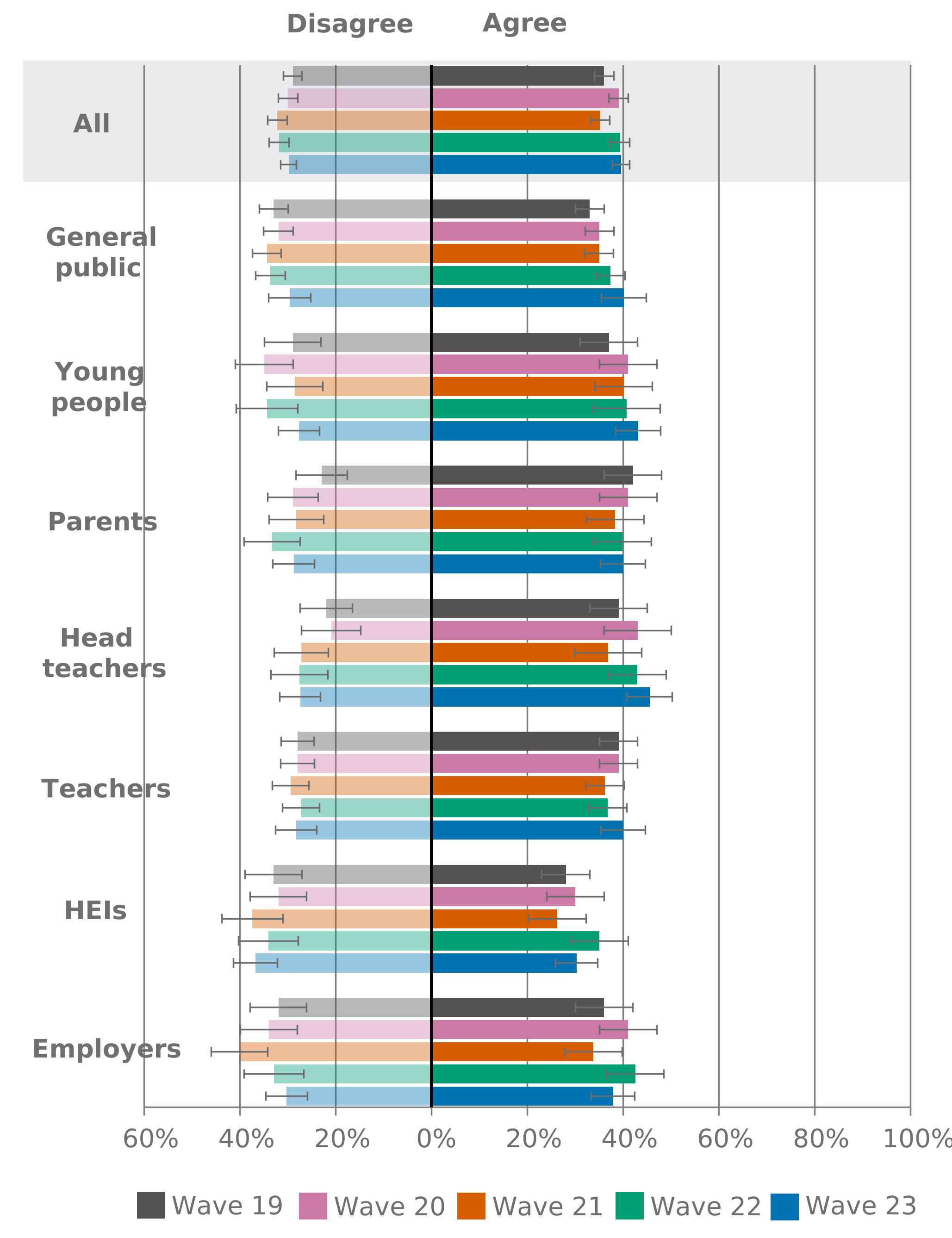
| Respondent type | Wave 19 | Wave 20 | Wave 21 | Wave 22 | Wave 23 |
|---|---|---|---|---|---|
| All – agree | 36% | 39% | 35% | 39% | 40% |
| All – disagree | 29% | 30% | 32% | 32% | 30% |
| General public – agree | 33% | 35% | 35% | 37% | 40% |
| General public – disagree | 33% | 32% | 34% | 34% | 30% |
| Young people – agree | 37% | 41% | 40% | 41% | 43% |
| Young people – disagree | 29% | 35% | 29% | 34% | 28% |
| Parents – agree | 42% | 41% | 38% | 40% | 40% |
| Parents – disagree | 23% | 29% | 28% | 33% | 29% |
| Head teachers – agree | 39% | 43% | 37% | 43% | 45% |
| Head teachers – disagree | 22% | 21% | 27% | 28% | 27% |
| Teachers – agree | 39% | 39% | 36% | 37% | 40% |
| Teachers – disagree | 28% | 28% | 29% | 27% | 28% |
| HEIs – agree | 28% | 30% | 26% | 35% | 30% |
| HEIs – disagree | 33% | 32% | 37% | 34% | 37% |
| Employers – agree | 36% | 41% | 34% | 43% | 38% |
| Employers – disagree | 32% | 34% | 40% | 33% | 30% |
In wave 23, 52% of respondents agreed that ‘A levels develop a broad range of skills for students’ (Figure 20). This was consistent with agreement in wave 22 (50%) and represents an increase compared to wave 21 (47%).
Similar to the trend in agreement shown by respondents overall, small non-significant increases in agreement among the general public each wave meant agreement was higher in wave 23 (49%) compared to wave 21 (43%). With a similar pattern among employers (51% compared to 42%).
Although there appeared to be an increase in agreement among parents and head teachers, these differences were not significant.
Figure 20. Results for “A levels develop a broad range of skills for students.”
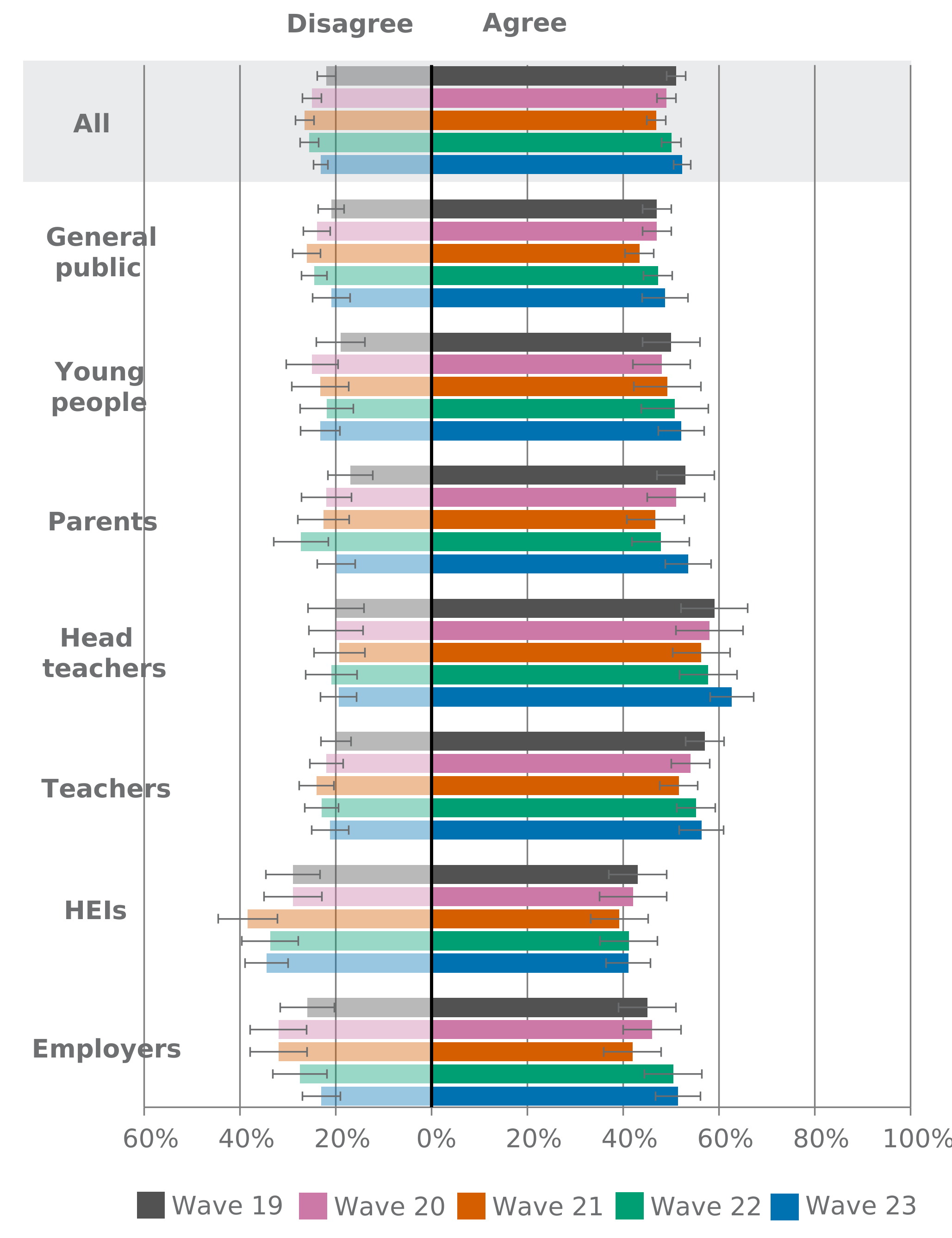
| Respondent type | Wave 19 | Wave 20 | Wave 21 | Wave 22 | Wave 23 |
|---|---|---|---|---|---|
| All – agree | 51% | 49% | 47% | 50% | 52% |
| All – disagree | 22% | 25% | 27% | 26% | 23% |
| General public – agree | 47% | 47% | 43% | 47% | 49% |
| General public – disagree | 21% | 24% | 26% | 25% | 21% |
| Young people – agree | 50% | 48% | 49% | 51% | 52% |
| Young people – disagree | 19% | 25% | 23% | 22% | 23% |
| Parents – agree | 53% | 51% | 47% | 48% | 54% |
| Parents – disagree | 17% | 22% | 23% | 27% | 20% |
| Head teachers – agree | 59% | 58% | 56% | 58% | 63% |
| Head teachers – disagree | 20% | 20% | 19% | 21% | 19% |
| Teachers – agree | 57% | 54% | 52% | 55% | 56% |
| Teachers – disagree | 20% | 22% | 24% | 23% | 21% |
| HEIs – agree | 43% | 42% | 39% | 41% | 41% |
| HEIs – disagree | 29% | 29% | 38% | 34% | 34% |
| Employers – agree | 45% | 46% | 42% | 50% | 51% |
| Employers – disagree | 26% | 32% | 32% | 28% | 23% |
Value for money
In wave 23, 53% of respondents agreed that ‘A levels offer value for money’ (Figure 21), consistent with wave 22 (52%).
Although there appeared to be an increase in agreement among HEIs and a decrease in agreement among teachers these differences were not significant. However, among teachers, there was an increase in those who disagreed with the statement (15% in wave 23 compared to 11% in wave 22).
Small non-significant increases each wave among HEIs means agreement was significantly higher in wave 23 (65%) compared to wave 21 (54%). There was a similar pattern among the general public (46% in wave 23 compared to 41% in wave 21) and employers (64% in wave 23 compared to 49% in wave 21).
Figure 21. Results for “A levels offer value for money.”
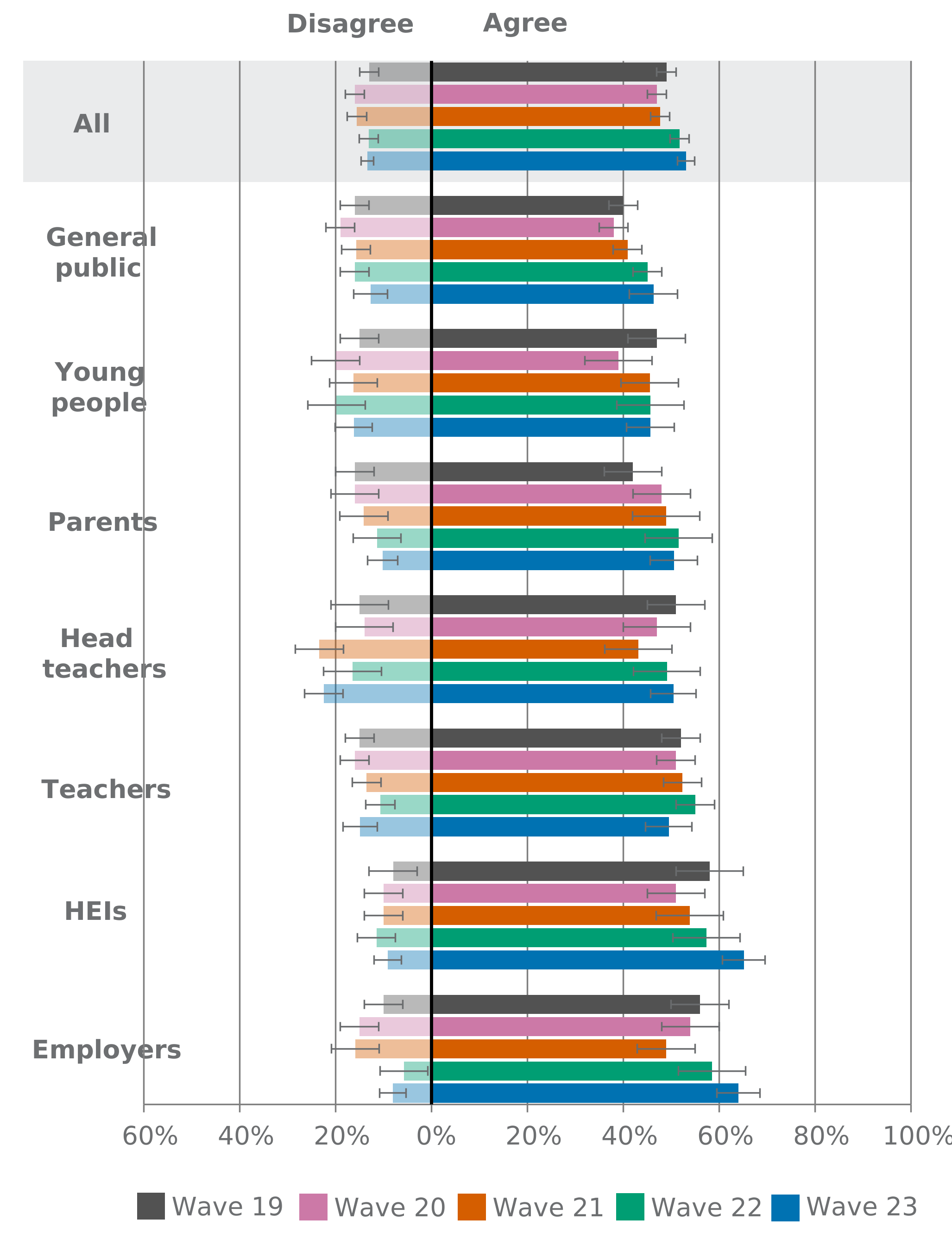
| Respondent type | Wave 19 | Wave 20 | Wave 21 | Wave 22 | Wave 23 |
|---|---|---|---|---|---|
| All – agree | 49% | 47% | 48% | 52% | 53% |
| All – disagree | 13% | 16% | 16% | 13% | 13% |
| General public – agree | 40% | 38% | 41% | 45% | 46% |
| General public – disagree | 16% | 19% | 16% | 16% | 13% |
| Young people – agree | 47% | 39% | 46% | 46% | 46% |
| Young people – disagree | 15% | 20% | 16% | 20% | 16% |
| Parents – agree | 42% | 48% | 49% | 52% | 51% |
| Parents – disagree | 16% | 16% | 14% | 11% | 10% |
| Head teachers – agree | 51% | 47% | 43% | 49% | 50% |
| Head teachers – disagree | 15% | 14% | 23% | 16% | 22% |
| Teachers – agree | 52% | 51% | 52% | 55% | 49% |
| Teachers – disagree | 15% | 16% | 14% | 11% | 15% |
| HEIs – agree | 58% | 51% | 54% | 57% | 65% |
| HEIs – disagree | 8% | 10% | 10% | 12% | 9% |
| Employers – agree | 56% | 54% | 49% | 59% | 64% |
| Employers – disagree | 10% | 15% | 16% | 6% | 8% |
Section 4: Perceptions of Applied General qualifications
The following section considers respondents’ general perceptions of Applied General qualifications, not specific to any exam series.
For the following 8 survey items the wave 23 effective base was: All responses (N=2,234); general public (N=1,028); teachers (N=610); HEIs (N=271); parents (N=257); employers (N=248); head teachers (N=238); young people (N=285).
Respondents were shown a 5-point scale ranging from strongly disagree to strongly agree. Agree is a combination of strongly agree and agree and disagree a combination of strongly disagree and disagree.
Key findings
In wave 23, agreement that ‘Applied General qualification standards are maintained year-on-year’ increased (27% in wave 22 compared to 30% in wave 23). This increase was driven by young people, in which agreement increased from 22% in wave 22 to 32% in wave 23.
Agreement that ‘Applied General qualifications are good preparation for work’ also increased compared to wave 22 from 45% to 48%. This was driven by an increase in agreement among young people from 41% in wave 22 to 51% in wave 23.
There were no changes in overall agreement for all other perceptions of Applied General qualifications measured in comparison to wave 22.
This consistency in in overall agreement for all other perceptions of Applied General qualifications was evident across most stakeholder groups, with the majority reporting broadly consistent levels of agreement compared to wave 22. Young people’s perceptions were the exception to this for ‘Applied General qualifications are trusted qualifications’, where agreement increased from 30% in wave 22 to 38% in wave 23 and ‘the marking of Applied General qualifications is accurate’ from 21% in wave 22 to 32% in wave 23.
Following a decline in agreement among young people in wave 22 that ‘Applied General qualifications are good preparation for further study’ from 37% in wave 21 to 27% in wave 22, this has now increased to return to previous levels from 27% in wave 22 to 43% in wave 23.
In wave 23, approximately one in ten (11%) people surveyed said that they thought it is getting easier to achieve the same Applied General qualification grade each year, while 6% said they thought it is getting harder and, a third (33%) reported there was no difference. This is aligned with the proportion in wave 23 who agreed that ‘Applied General qualification standards are maintained year-on-year’ (30%).
Employers (17%) and HEIs (14%) had the highest response rate that achieving the same grade each year is getting easier, and head teachers had the highest response rate that achieving the same grade each year is getting harder (11%).
Head teachers (49%) represented the highest proportion who reported there was no difference, while young people and the general public (26% for both) represented the lowest proportions, however, they also had the highest levels of uncertainty (56% young people, 58% general public).
Overall perceptions
Nineteen per cent of respondents in wave 23 agreed that ‘Applied General qualifications are well understood by people’ (Figure 22). This was consistent with wave 22 (18%) and represented a sustained increase in levels of agreement in comparison to wave 20 (16%).
Agreement that ‘Applied General qualifications are well understood by people’ was broadly consistent among each stakeholder group in comparison to wave 22.
Figure 22. Results for “Applied General qualifications are well understood by people.”
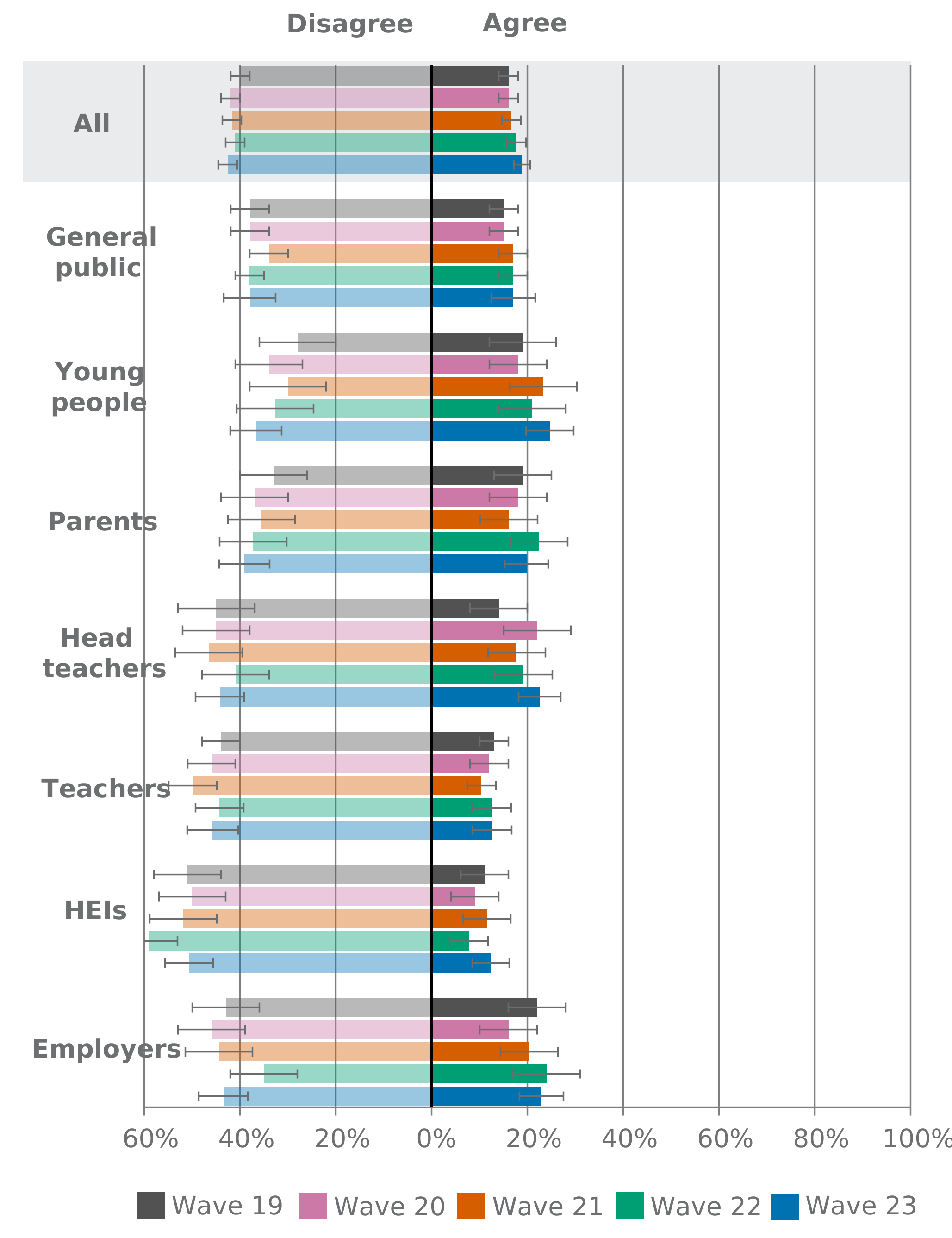
| Respondent type | Wave 19 | Wave 20 | Wave 21 | Wave 22 | Wave 23 | |
|---|---|---|---|---|---|---|
| All – agree | 16% | 16% | 17% | 18% | 19% | |
| All – disagree | 40% | 42% | 42% | 41% | 43% | |
| General public – agree | 15% | 15% | 17% | 17% | 17% | |
| General public – disagree | 38% | 38% | 34% | 38% | 38% | |
| Young people – agree | 19% | 18% | 23% | 21% | 25% | |
| Young people – disagree | 28% | 34% | 30% | 33% | 37% | |
| Parents – agree | 19% | 18% | 16% | 22% | 20% | |
| Parents – disagree | 33% | 37% | 36% | 37% | 39% | |
| Head teachers – agree | 14% | 22% | 18% | 19% | 23% | |
| Head teachers – disagree | 45% | 45% | 47% | 41% | 44% | |
| Teachers – agree | 13% | 12% | 10% | 13% | 13% | |
| Teachers – disagree | 44% | 46% | 50% | 44% | 46% | |
| HEIs – agree | 11% | 9% | 12% | 8% | 12% | |
| HEIs – disagree | 51% | 50% | 52% | 59% | 51% | |
| Employers – agree | 22% | 16% | 20% | 24% | 23% | |
| Employers – disagree | 43% | 46% | 44% | 35% | 44% |
One third (34%) of respondents in wave 23 agreed that ‘Applied General qualifications are trusted qualifications’ (Figure 23). This was consistent with wave 22 (33%) and represented a sustained increase in comparison to wave 21 (30%).
In wave 23, agreement among young people has increased in comparison to wave 22 (38% compared to 30%). Due to small, non-significant increases in agreement each wave, agreement among employers was higher in wave 23 (39%) compared to wave 20 (28%). There was a similar pattern among HEIs, in which non-significant increases in disagreement each wave has led to the level of disagreement being higher in wave 23 (22%) compared to wave 20 (14%).
Figure 23. Results for “Applied General qualifications are trusted qualifications.”
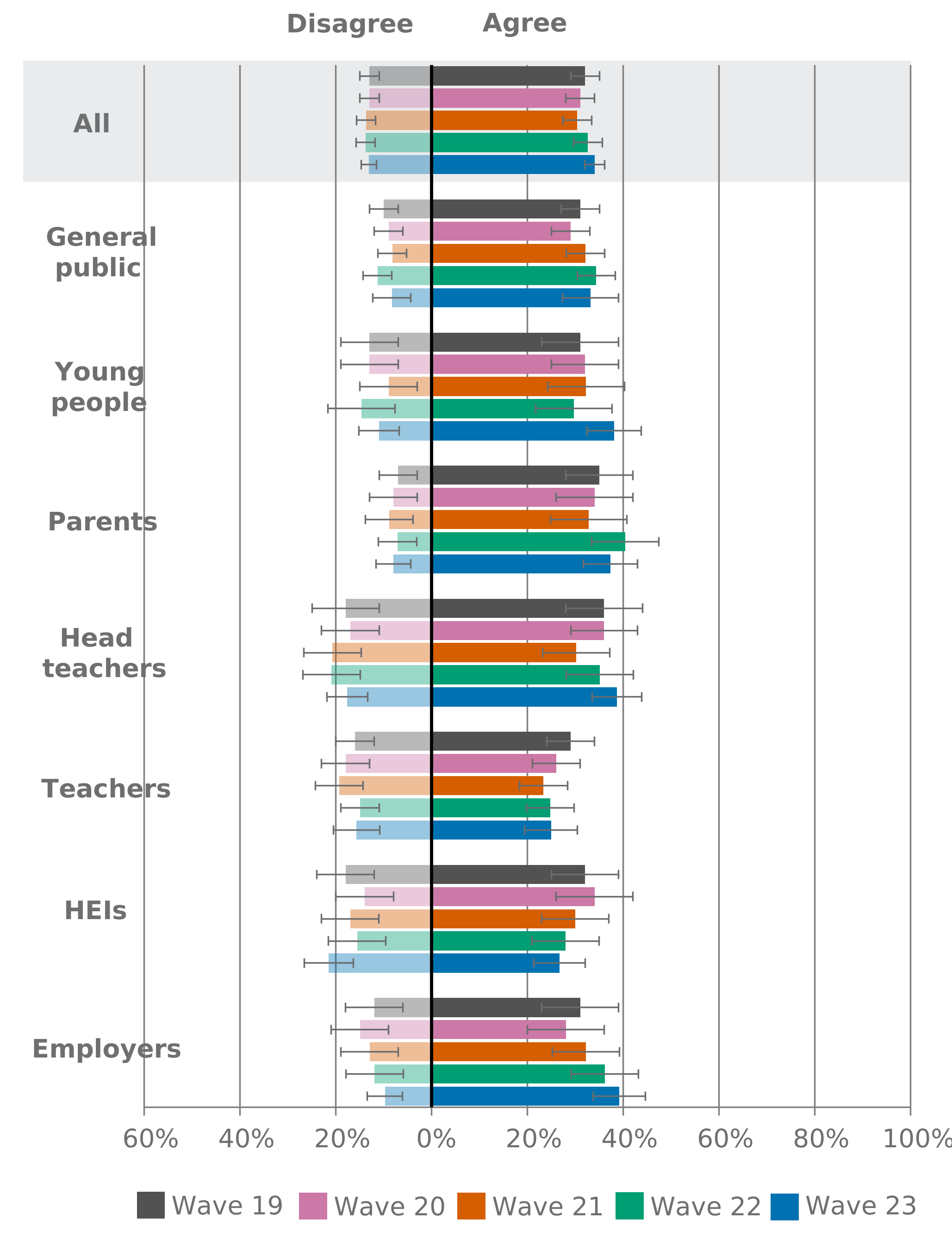
| Respondent type | Wave 19 | Wave 20 | Wave 21 | Wave 22 | Wave 23 |
|---|---|---|---|---|---|
| All – agree | 32% | 31% | 30% | 33% | 34% |
| All – disagree | 13% | 13% | 14% | 14% | 13% |
| General public – agree | 31% | 29% | 32% | 34% | 33% |
| General public – disagree | 10% | 9% | 8% | 11% | 8% |
| Young people – agree | 31% | 32% | 32% | 30% | 38% |
| Young people – disagree | 13% | 13% | 9% | 15% | 11% |
| Parents – agree | 35% | 34% | 33% | 40% | 37% |
| Parents – disagree | 7% | 8% | 9% | 7% | 8% |
| Head teachers – agree | 36% | 36% | 30% | 35% | 39% |
| Head teachers – disagree | 18% | 17% | 21% | 21% | 18% |
| Teachers – agree | 29% | 26% | 23% | 25% | 25% |
| Teachers – disagree | 16% | 18% | 19% | 15% | 16% |
| HEIs – agree | 32% | 34% | 30% | 28% | 27% |
| HEIs – disagree | 18% | 14% | 17% | 16% | 22% |
| Employers – agree | 31% | 28% | 32% | 36% | 39% |
| Employers – disagree | 12% | 15% | 13% | 12% | 10% |
Confidence in standards and marking
Of all respondents in wave 23, 30% agreed that ‘Applied General qualification standards are maintained year-on-year’ (Figure 24), an increase from 27% in wave 22.
This increase in agreement was driven by young people, in which agreement increased from 22% in wave 22 to 32% in wave 23 Although it appeared that levels of agreement also increased in comparison to wave 22 for HEIs and head teachers, these differences were not significant.
Among employers, small non-significant increases in agreement each wave also meant agreement was higher in wave 23 (32%) compared to wave 20 (21%). For parents, there was a non-significant decrease from 30% in wave 22 to 25% in wave 23, which brings the levels of agreement back in line with wave 21 (24%).
Figure 24. Results for “Applied General qualification standards are maintained year-on-year.”
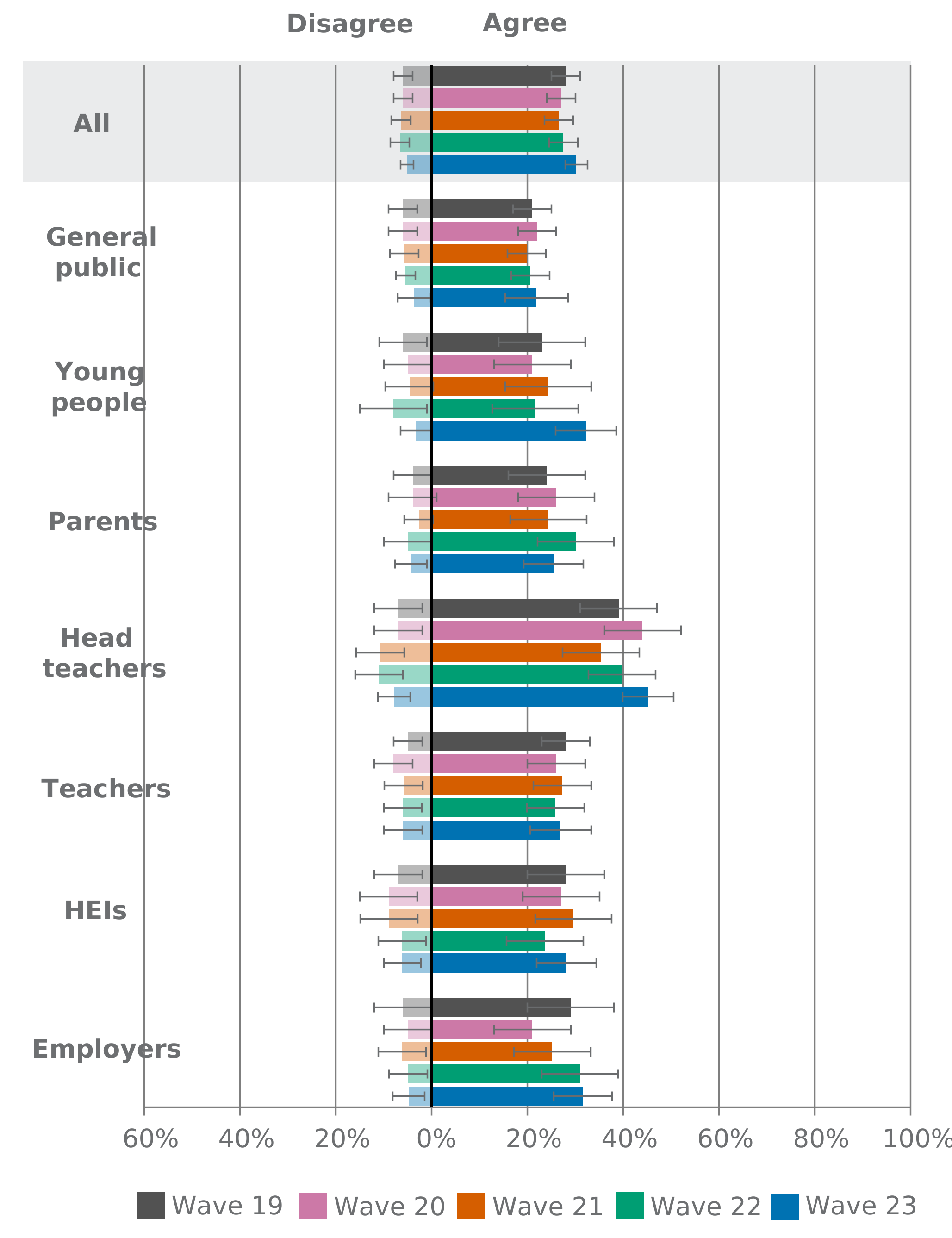
| Respondent type | Wave 19 | Wave 20 | Wave 21 | Wave 22 | Wave 23 |
|---|---|---|---|---|---|
| All – agree | 28% | 27% | 27% | 27% | 30% |
| All – disagree | 6% | 6% | 6% | 7% | 5% |
| General public – agree | 21% | 22% | 20% | 21% | 22% |
| General public – disagree | 6% | 6% | 6% | 5% | 4% |
| Young people – agree | 23% | 21% | 24% | 22% | 32% |
| Young people – disagree | 6% | 5% | 5% | 8% | 3% |
| Parents – agree | 24% | 26% | 24% | 30% | 25% |
| Parents – disagree | 4% | 4% | 3% | 5% | 4% |
| Head teachers – agree | 39% | 44% | 35% | 40% | 45% |
| Head teachers – disagree | 7% | 7% | 11% | 11% | 8% |
| Teachers – agree | 28% | 26% | 27% | 26% | 27% |
| Teachers – disagree | 5% | 8% | 6% | 6% | 6% |
| HEIs – agree | 28% | 27% | 30% | 24% | 28% |
| HEIs – disagree | 7% | 9% | 9% | 6% | 6% |
| Employers – agree | 29% | 21% | 25% | 31% | 32% |
| Employers – disagree | 6% | 5% | 6% | 5% | 5% |
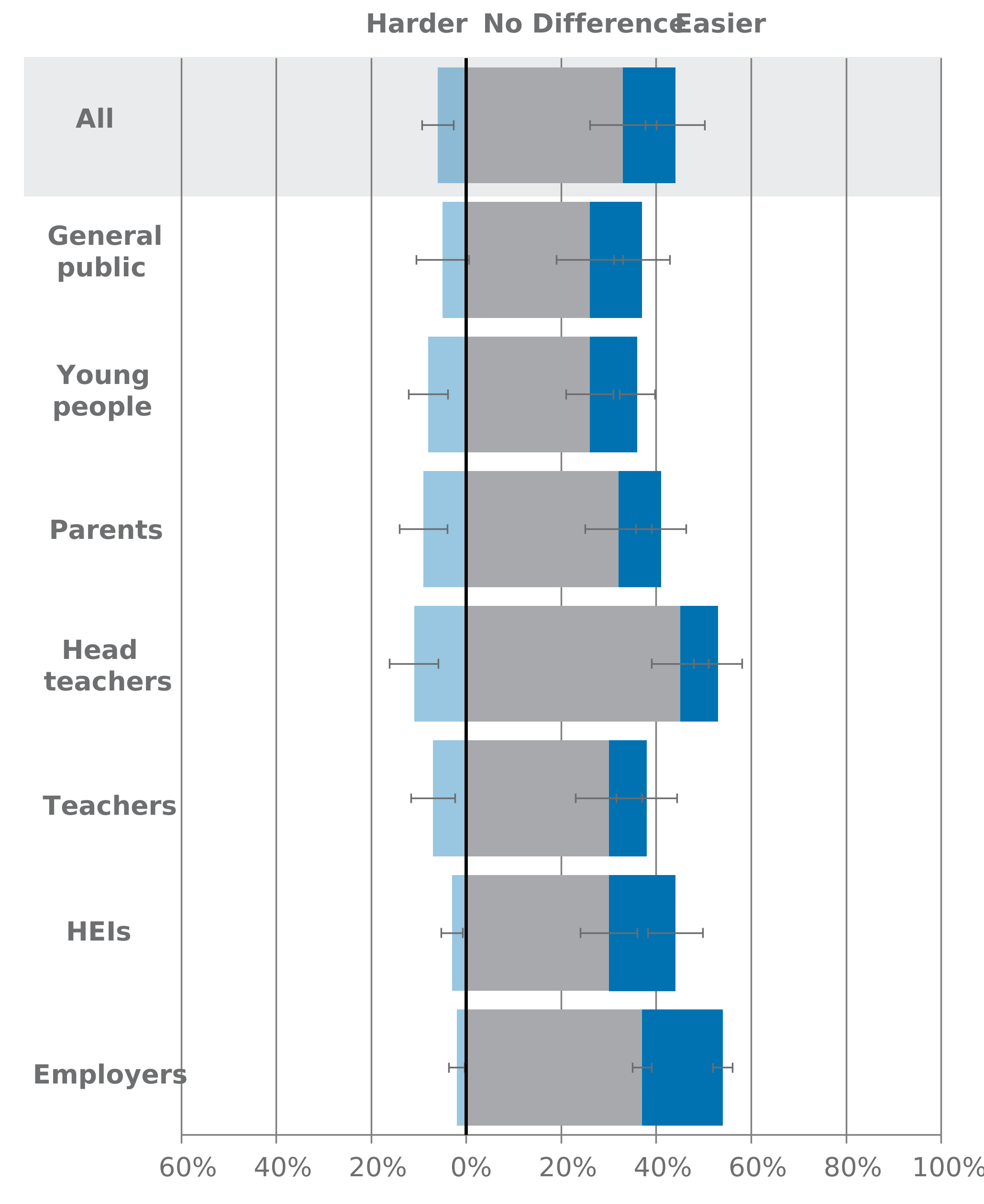
In response to “Thinking about Applied General qualifications, on average, to what extent, if at all, do you think it is getting easier or harder to achieve the same grade each year”, 11% of people surveyed said that they thought it is getting easier to achieve the same Applied General qualification grade each year, 6% said they thought achieving the same Applied General qualifications grade each year is getting harder, while the majority said they don’t know (50%) (Figure 25).
A third (33%) of respondents also reported that there was no difference in whether it is getting easier or harder to achieve the same Applied General qualification grade each year. This aligned with the proportion in wave 23 who agreed that ‘Applied General qualification standards are maintained year-on-year’ (30%).
When looking at individual groups, the highest levels of agreement for each is that there has been no difference in whether it is getting easier or harder to achieve the same grade, or that they don’t know. The highest proportion of those who reported no difference is among head teachers (49%), broadly consistent with the proportion of head teachers who agreed that ‘Applied General qualification standards are maintained year-on-year’ in wave 23 (45%). Head teachers also showed higher proportions agreeing that they are getting harder (11%) compared to other groups.
Employers and HEIs also represented higher proportions agreeing that achieving the same Applied General qualification grade each year is getting easier compared to other groups (17% and 14% respectively), however, the most common response within both groups was that there is no difference in whether it is getting easier or harder (37% and 30%).
Young people and the general public were the groups with the lowest proportions who reported there was no difference (both 26%). However, young people and the general public also showed the highest levels of uncertainty, responding that they “don’t know” (56% young people, 58% general public).
Parents and teaches show a similar pattern to all other groups in which they show higher levels of agreement that there has been no difference (32% and 30% respectively), or they don’t know (51% and 55% respectively) compared to it being easier (9% and 8% respectively) or harder (9% and 7% respectively).
Figure 25. Results for “Thinking about Applied General qualifications, on average, to what extent, if at all, do you think it is getting easier or harder to achieve the same grade each year?”
Wave 23 displayed only.
| Respondent type | Wave 23 |
|---|---|
| All – easier | 11% |
| All – no difference | 33% |
| All – harder | 6% |
| General public – easier | 11% |
| General public – no difference | 26% |
| General public – harder | 5% |
| Young people – easier | 10% |
| Young people – no difference | 26% |
| Young people – harder | 8% |
| Parents – easier | 9% |
| Parents – no difference | 32% |
| Parents – harder | 9% |
| Head teachers – easier | 8% |
| Head teachers – no difference | 49% |
| Head teachers – harder | 11% |
| Teachers – easier | 8% |
| Teachers – no difference | 30% |
| Teachers – harder | 7% |
| HEIs – easier | 14% |
| HEIs – no difference | 30% |
| HEIs – harder | 3% |
| Employers – easier | 17% |
| Employers – no difference | 37% |
| Employers – harder | 2% |
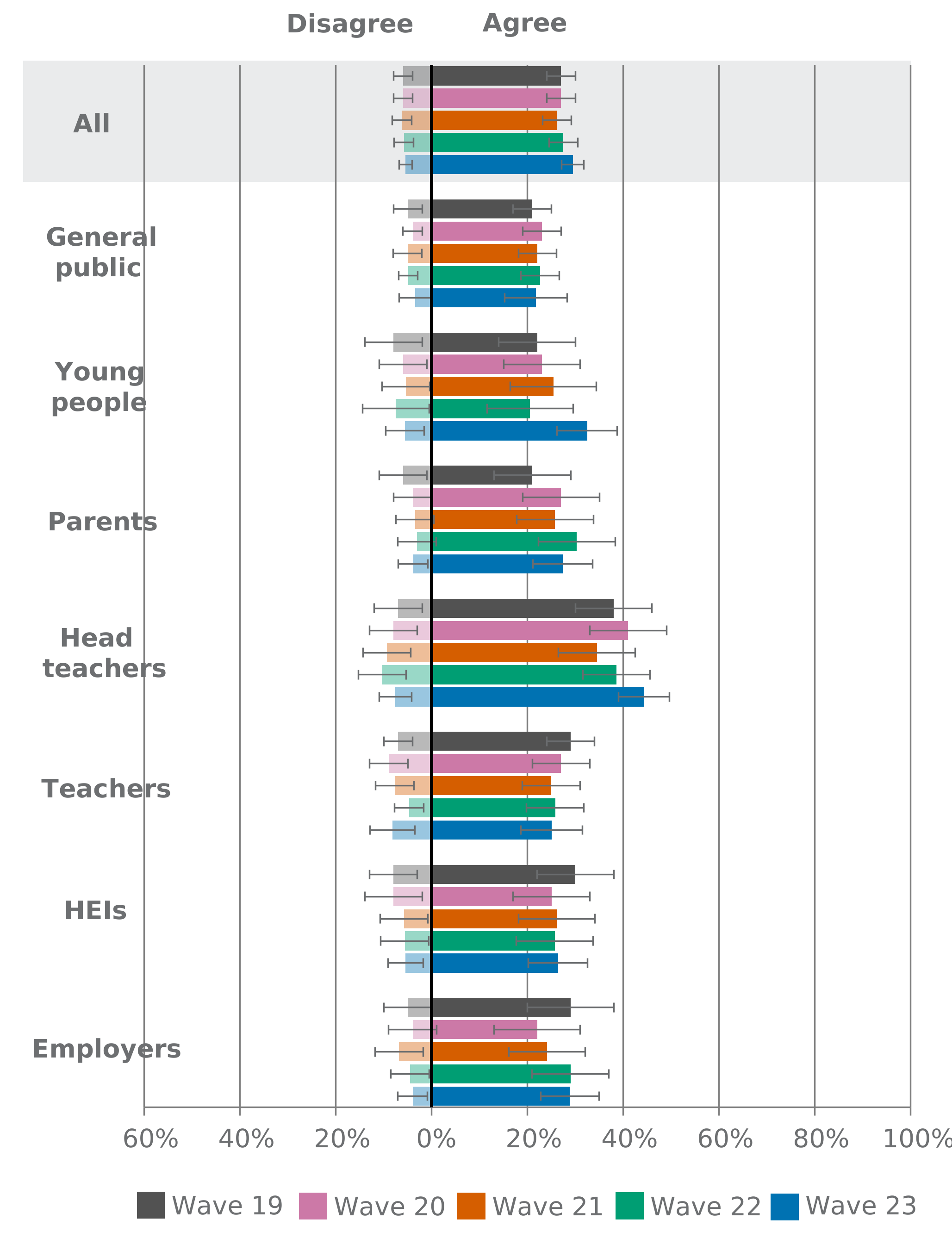
Twenty-nine percent of respondents in wave 23 agreed that ‘the marking of Applied General qualifications is accurate’ (Figure 26). This was consistent with wave 22 (27%) and represented a sustained increase in levels of agreement in comparison to wave 21 (26%).
In wave 23, agreement among young people has increased in comparison to wave 22 (32% in wave 23 from 21% in wave 22). Among head teachers, due to small non-significant increases in agreement each wave, agreement in wave 23 (44%) was higher than wave 21 (34%).
Across all other stakeholder groups, there were no significant changes in levels of agreement in comparison to wave 22.
Figure 26. Results for “The marking of Applied General qualifications is accurate.”
| Respondent type | Wave 19 | Wave 20 | Wave 21 | Wave 22 | Wave 23 |
|---|---|---|---|---|---|
| All – agree | 27% | 27% | 26% | 27% | 29% |
| All – disagree | 6% | 6% | 6% | 6% | 5% |
| General public – agree | 21% | 23% | 22% | 23% | 22% |
| General public – disagree | 5% | 4% | 5% | 5% | 3% |
| Young people – agree | 22% | 23% | 25% | 21% | 32% |
| Young people – disagree | 8% | 6% | 5% | 7% | 6% |
| Parents – agree | 21% | 27% | 26% | 30% | 27% |
| Parents – disagree | 6% | 4% | 4% | 3% | 4% |
| Head teachers – agree | 38% | 41% | 34% | 39% | 44% |
| Head teachers – disagree | 7% | 8% | 9% | 10% | 8% |
| Teachers – agree | 29% | 27% | 25% | 26% | 25% |
| Teachers – disagree | 7% | 9% | 8% | 5% | 8% |
| HEIs – agree | 30% | 25% | 26% | 26% | 26% |
| HEIs – disagree | 8% | 8% | 6% | 6% | 5% |
| Employers – agree | 29% | 22% | 24% | 29% | 29% |
| Employers – disagree | 5% | 4% | 7% | 5% | 4% |
Skills and preparation
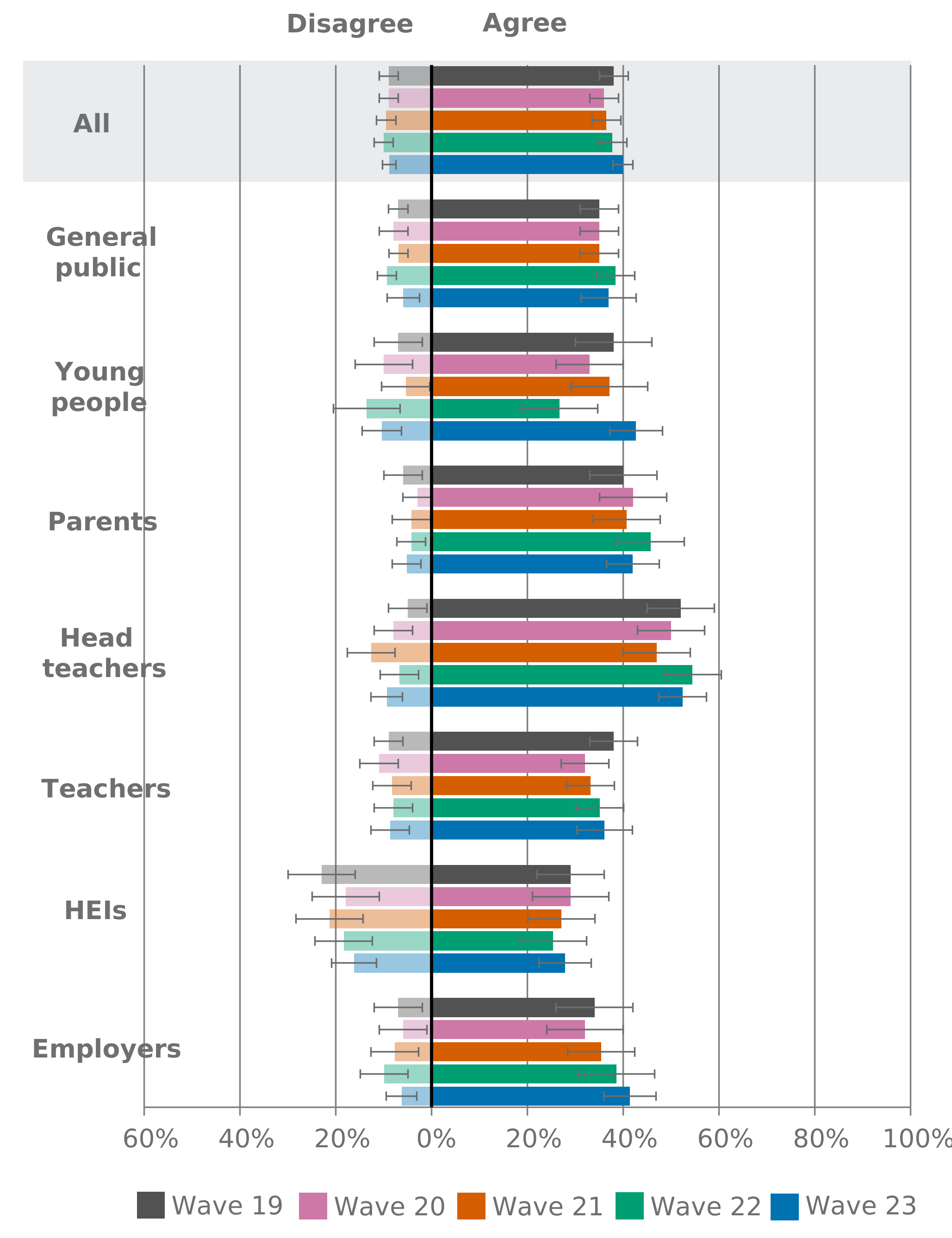
Forty per cent of respondents in wave 23 agreed that ‘Applied General qualifications are good preparation for further study’ (Figure 27). This was consistent with wave 22 (38%) and represented a sustained increase in comparison to wave 21 (36%).
Levels of agreement were broadly consistent across all stakeholder groups, with the exception of young people, among who levels of agreement increased in wave 23 (43%) compared to wave 22 (27%), following a decrease from 37% in wave 21.
Although agreement among employers was broadly consistent year-on-year, levels of agreement in wave 23 (41%) increased compared to wave 20 (32%).
Figure 27. Results for “Applied General qualifications are good preparation for further study.”
| Respondent type | Wave 19 | Wave 20 | Wave 21 | Wave 22 | Wave 23 |
|---|---|---|---|---|---|
| All – agree | 38% | 36% | 36% | 38% | 40% |
| All – disagree | 9% | 9% | 10% | 10% | 9% |
| General public – agree | 35% | 35% | 35% | 38% | 37% |
| General public – disagree | 7% | 8% | 7% | 9% | 6% |
| Young people – agree | 38% | 33% | 37% | 27% | 43% |
| Young people – disagree | 7% | 10% | 5% | 14% | 10% |
| Parents – agree | 40% | 42% | 41% | 46% | 42% |
| Parents – disagree | 6% | 3% | 4% | 4% | 5% |
| Head teachers – agree | 52% | 50% | 47% | 54% | 52% |
| Head teachers – disagree | 5% | 8% | 13% | 7% | 9% |
| Teachers – agree | 38% | 32% | 33% | 35% | 36% |
| Teachers – disagree | 9% | 11% | 8% | 8% | 9% |
| HEIs – agree | 29% | 29% | 27% | 25% | 28% |
| HEIs – disagree | 23% | 18% | 21% | 18% | 16% |
| Employers – agree | 34% | 32% | 35% | 39% | 41% |
| Employers – disagree | 7% | 6% | 8% | 10% | 6% |
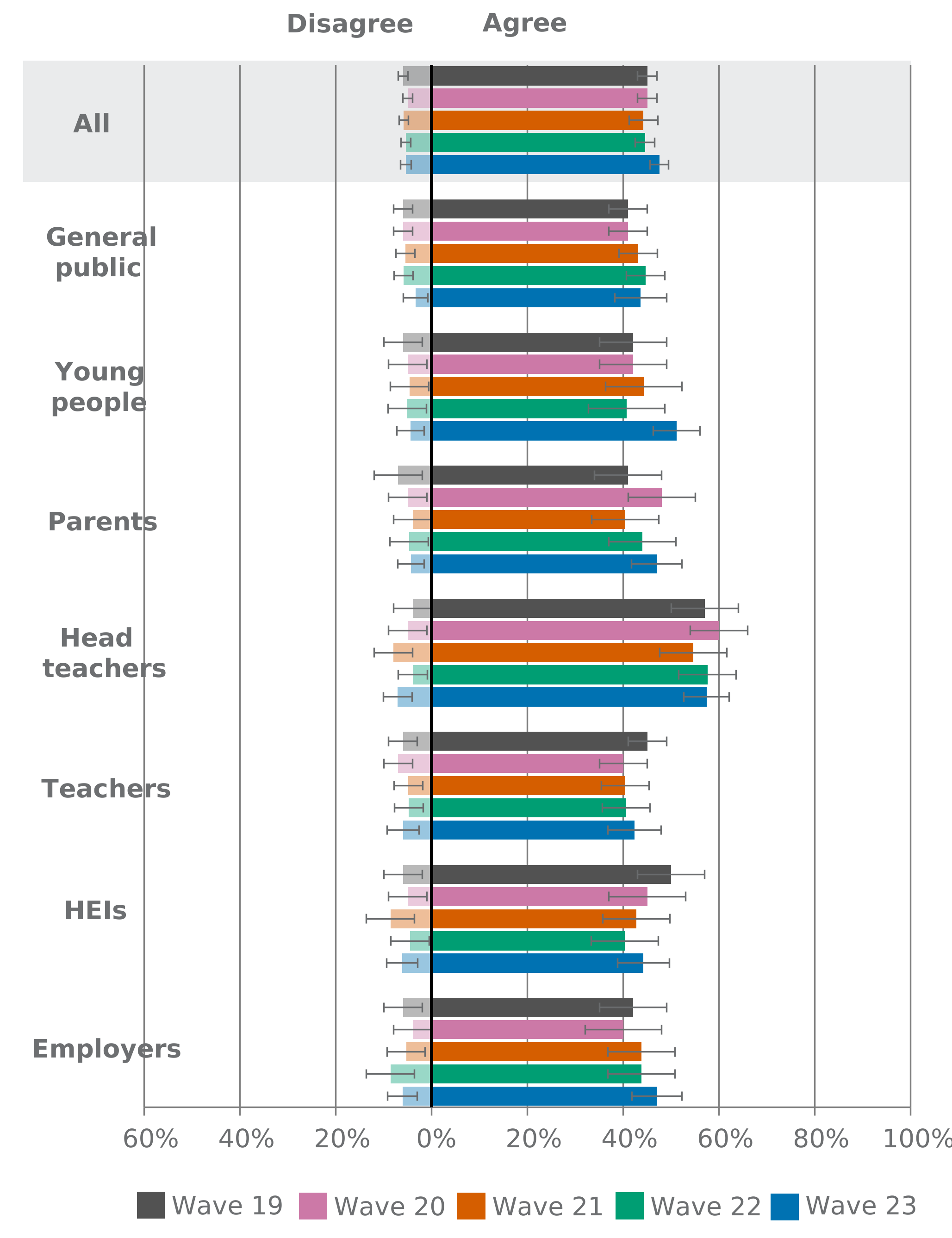
Figure 28 shows that 48% of respondents in wave 23 agreed that ‘Applied General qualifications are good preparation for work’, an increase from 45% in wave 22. This was driven by an increase in agreement among young people with 51% agreeing in wave 23 compared to 41% in wave 22.
Across all other stakeholder groups, there were no significant increases in agreement in comparison to wave 22.
Figure 28. Results for “Applied General qualifications are good preparation for work.”
| Respondent type | Wave 19 | Wave 20 | Wave 21 | Wave 22 | Wave 23 | |
|---|---|---|---|---|---|---|
| All – agree | 45% | 45% | 44% | 45% | 48% | |
| All – disagree | 6% | 5% | 6% | 5% | 5% | |
| General public – agree | 41% | 41% | 43% | 45% | 44% | |
| General public – disagree | 6% | 6% | 6% | 6% | 3% | |
| Young people – agree | 42% | 42% | 44% | 41% | 51% | |
| Young people – disagree | 6% | 5% | 5% | 5% | 4% | |
| Parents – agree | 41% | 48% | 40% | 44% | 47% | |
| Parents – disagree | 7% | 5% | 4% | 5% | 4% | |
| Head teachers – agree | 57% | 60% | 55% | 58% | 57% | |
| Head teachers – disagree | 4% | 5% | 8% | 4% | 5% | |
| Teachers – agree | 45% | 40% | 40% | 41% | 42% | |
| Teachers – disagree | 6% | 7% | 5% | 5% | 6% | |
| HEIs – agree | 50% | 45% | 43% | 40% | 44% | |
| HEIs – disagree | 6% | 5% | 9% | 5% | 6% | |
| Employers – agree | 42% | 40% | 44% | 44% | 47% | |
| Employers – disagree | 6% | 4% | 5% | 9% | 6% |
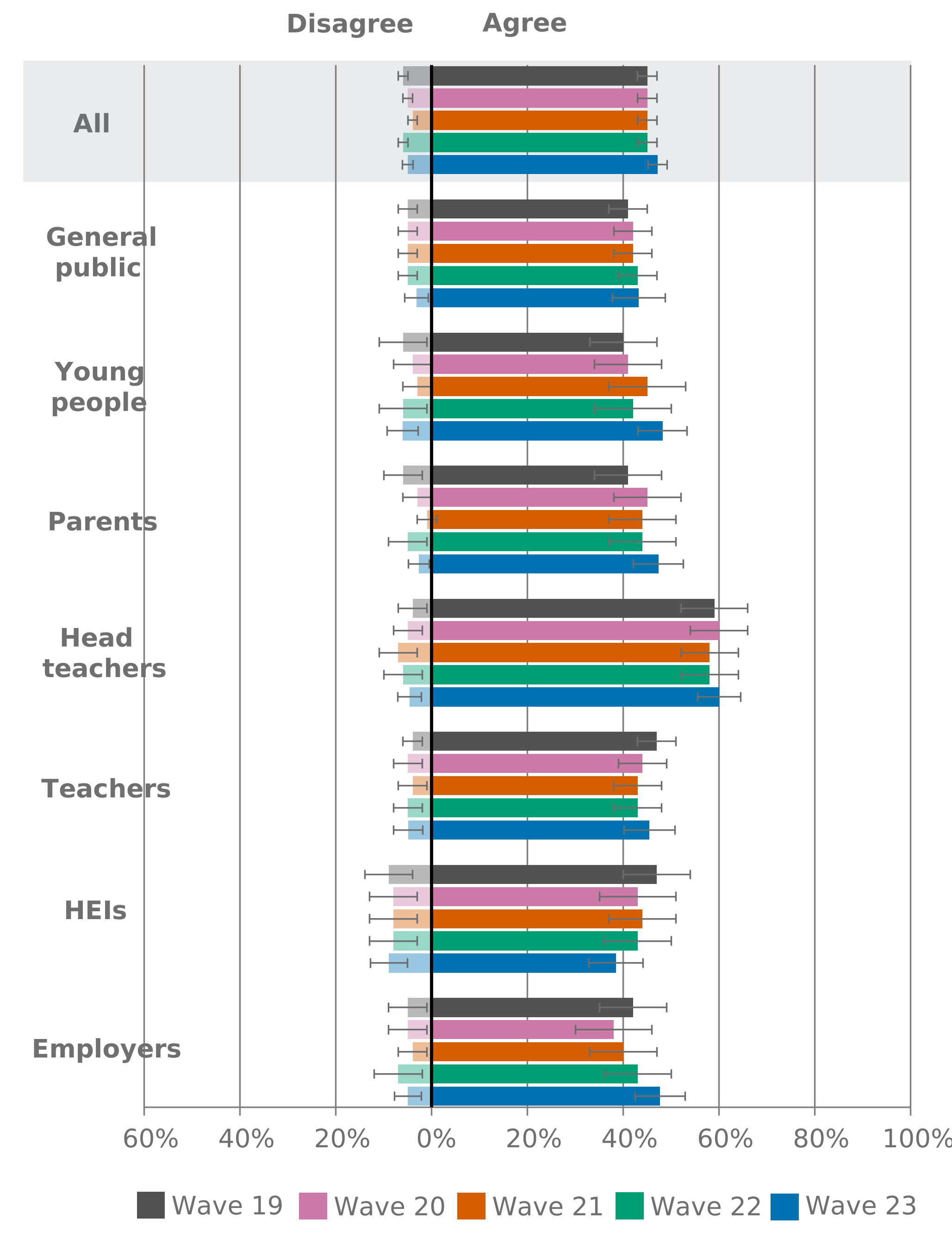
Forty-seven per cent of respondents in wave 23 agreed that ‘Applied General qualifications develop a broad range of skills for students’, consistent with wave 22 (45%).
Although there appeared to be a decrease among HEIs compared to wave 22 and an increase among young people these differences were not significant. Small non-significant increases in agreement among employers each wave has also resulted in a significant increase in agreement in wave 23 compared to wave 20 (48% compared to 38%).
Figure 29. Results for “Applied General qualifications develop a broad range of skills for students.”
| Respondent type | Wave 19 | Wave 20 | Wave 21 | Wave 22 | Wave 23 |
|---|---|---|---|---|---|
| All – agree | 45% | 45% | 45% | 45% | 47% |
| All – disagree | 6% | 5% | 4% | 6% | 5% |
| General public – agree | 41% | 42% | 42% | 43% | 43% |
| General public – disagree | 5% | 5% | 5% | 5% | 3% |
| Young people – agree | 40% | 41% | 45% | 42% | 48% |
| Young people – disagree | 6% | 4% | 3% | 6% | 6% |
| Parents – agree | 41% | 45% | 44% | 44% | 47% |
| Parents – disagree | 6% | 3% | 1% | 5% | 3% |
| Head teachers – agree | 59% | 60% | 58% | 58% | 60% |
| Head teachers – disagree | 4% | 5% | 7% | 6% | 5% |
| Teachers – agree | 47% | 44% | 43% | 43% | 45% |
| Teachers – disagree | 4% | 5% | 4% | 5% | 5% |
| HEIs – agree | 47% | 43% | 44% | 43% | 38% |
| HEIs – disagree | 9% | 8% | 8% | 8% | 9% |
| Employers – agree | 42% | 38% | 40% | 43% | 48% |
| Employers – disagree | 5% | 5% | 4% | 7% | 5% |
Value for money
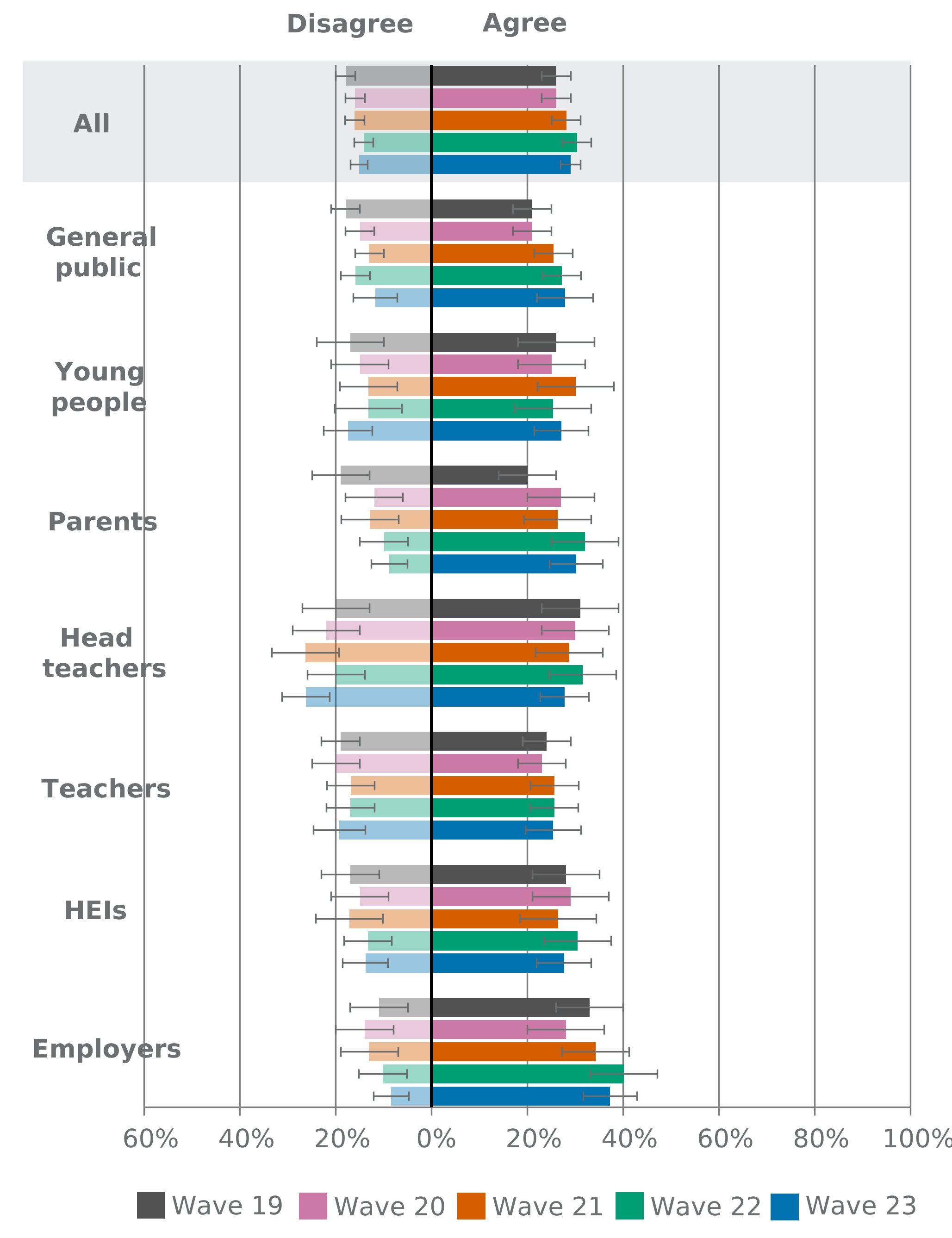
Twenty-nine per cent of respondents in wave 23 agreed that ‘Applied General qualifications offer value for money’ (Figure 30). This was consistent with wave 22 (30%), however, has increased compared to wave 20 (26%).
Agreement among stakeholders remained broadly consistent with wave 22. Due to small non-significant increases in agreement each wave among the general public, agreement was higher in wave 23 (28%) compared to wave 20 (21%). Agreement among employers in wave 23 has also remained broadly consistent with wave 22 (37% compared to 40%) and remained significantly higher than wave 20 (28%).
Figure 30. Results for ‘Applied General qualifications offer value for money’.
| Respondent type | Wave 19 | Wave 20 | Wave 21 | Wave 22 | Wave 23 |
|---|---|---|---|---|---|
| All – agree | 26% | 26% | 28% | 30% | 29% |
| All – disagree | 18% | 16% | 16% | 14% | 15% |
| General public – agree | 21% | 21% | 25% | 27% | 28% |
| General public – disagree | 18% | 15% | 13% | 16% | 12% |
| Young people – agree | 26% | 25% | 30% | 25% | 27% |
| Young people – disagree | 17% | 15% | 13% | 13% | 17% |
| Parents – agree | 20% | 27% | 26% | 32% | 30% |
| Parents – disagree | 19% | 12% | 13% | 10% | 9% |
| Head teachers – agree | 31% | 30% | 29% | 32% | 28% |
| Head teachers – disagree | 20% | 22% | 26% | 20% | 26% |
| Teachers – agree | 24% | 23% | 26% | 26% | 25% |
| Teachers – disagree | 19% | 20% | 17% | 17% | 19% |
| HEIs – agree | 28% | 29% | 26% | 30% | 28% |
| HEIs – disagree | 17% | 15% | 17% | 13% | 14% |
| Employers – agree | 33% | 28% | 34% | 40% | 37% |
| Employers – disagree | 11% | 14% | 13% | 10% | 8% |
Section 5: Reviews of marking and moderation, and appeals against results for GCSEs and A levels
To account for changes made to the A level qualification system over recent years, in wave 20, the question text changed to remove reference to AS.
Key Findings
Overall, 83% of respondents in wave 23 were ‘aware that there is a process of reviews of marking and moderation and appeals for GCSE and A level results’, consistent with wave 22 (83%).
Approximately half of respondents agreed that ‘the process for reviews of marking and moderation and appeals is fair’ for GCSEs (51%) and A levels (49%). There were no significant changes compared to wave 22 for most stakeholder groups. However, agreement for A levels decreased among the general public in wave 23 (47%) compared to wave 22 (53%).
Overall, 55% of respondents agreed that they have adequate information about the process, the same as wave 22.
Approximately four in five (79%) respondents were aware that for GCSEs and A levels, a school or college can appeal to the exam board on the grounds of a marking error. This represented an increase compared to wave 22 (75%). This increase in awareness in wave 23 compared to wave 22 was seen across head teachers (93% in wave 23 compared to 86% in wave 22) and employers (76% in wave 23 compared to 65% in wave 22).
Awareness and perceptions
For the following survey item, the wave 23 effective base was: All responses (N=2,234); general public (N=1,028); teachers (N=610); HEIs (N=271); employers (N=248); parents (N=257); head teachers (N=238); young people (N=285).
Overall, 83% of respondents in wave 23 were ‘aware that there is a process of reviews of marking and moderation and appeals for GCSE and A level results’ (Figure 31). This was the same as wave 22 (83%).
In wave 23 there were no significant differences in comparison to wave 22 among individual stakeholder groups. However, due to gradual, non-significant declines each wave, there was a significant decrease in awareness in wave 23 compared to wave 19 among teachers (94% compared to 97%) and HEIs (88% compared to 96%).
Figure 31. Proportion of people who were “aware that there is a process of reviews of marking and moderation, and appeals for GCSE and A level results”
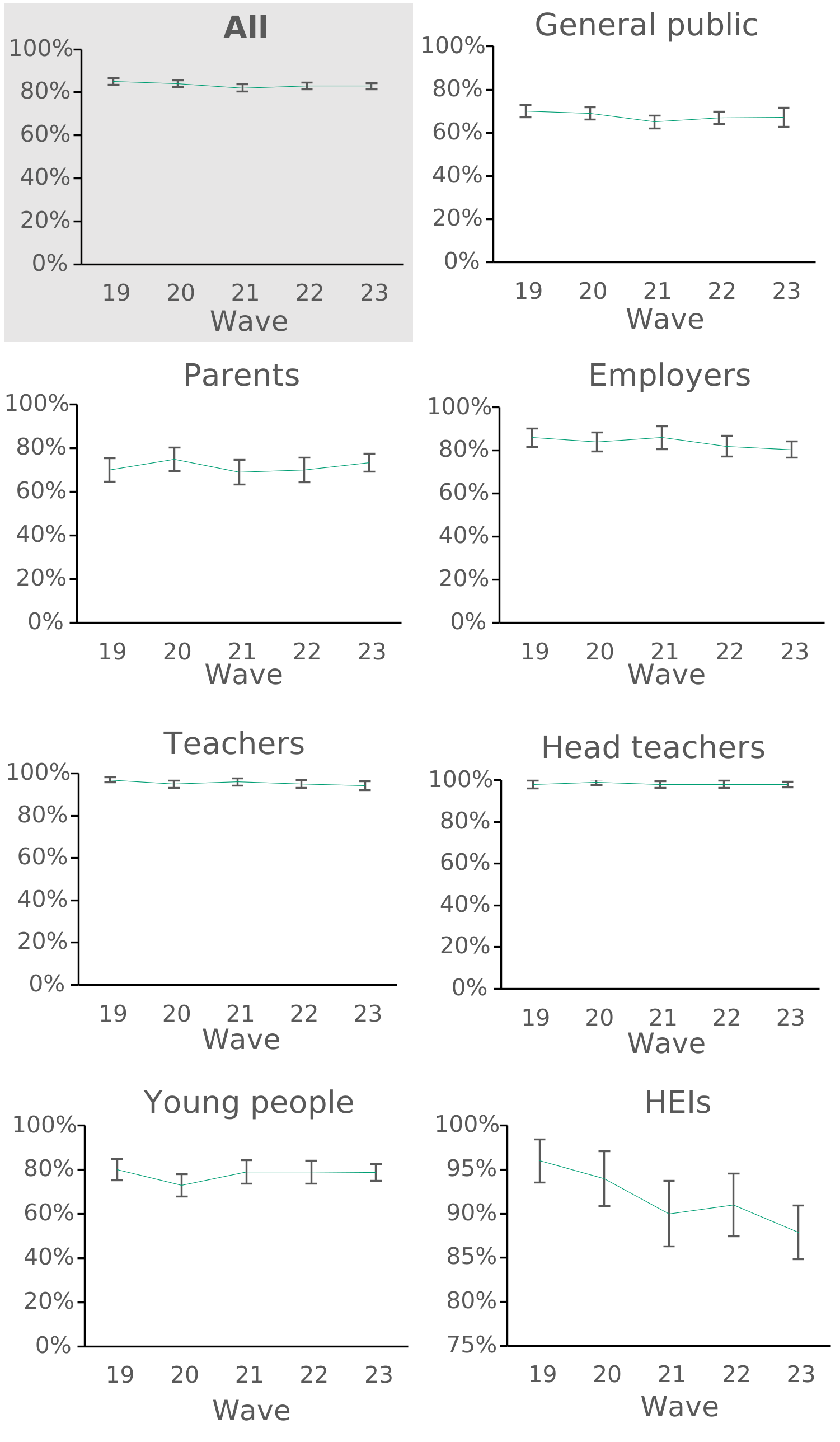
Note: In wave 20, the question text changed to remove reference to AS.
| Respondent type | Wave 19 | Wave 20 | Wave 21 | Wave 22 | Wave 23 |
|---|---|---|---|---|---|
| All – Yes | 85% | 84% | 82% | 83% | 83% |
| General public – Yes | 70% | 69% | 65% | 67% | 67% |
| Young people – Yes | 80% | 73% | 79% | 79% | 79% |
| Parents – Yes | 70% | 75% | 69% | 70% | 73% |
| Head teachers – Yes | 98% | 99% | 98% | 98% | 98% |
| Teachers – Yes | 97% | 95% | 96% | 95% | 94% |
| HEIs – Yes | 96% | 94% | 90% | 91% | 88% |
| Employers – Yes | 86% | 84% | 76% | 82% | 80% |
For the following 4 survey items the wave 23 effective base was: All responses (N=1,818); general public (N=691); teachers (N=580); head teachers (N=232); HEIs (N=237); employers (N=200); young people (N=217); parents (N=191).
Respondents were shown a 5-point scale ranging from strongly disagree to strongly agree. In this section, agree is a combination of strongly agree and agree and disagree a combination of strongly disagree and disagree.
As shown in Figure 32, 51% of respondents in wave 23 agreed that ‘the process of reviews of marking and moderation and appeals for GCSE results is fair’. This was consistent with the previous four waves, including wave 22 (52%).
In wave 23, although agreement among teachers remained consistent with wave 22 (56% in both waves), there was a decrease in agreement compared to wave 20 (62%). For other stakeholder groups there were no significant differences.
Figure 32. Results for “The process of reviews of marking and moderation, and appeals for GCSE results is fair.”
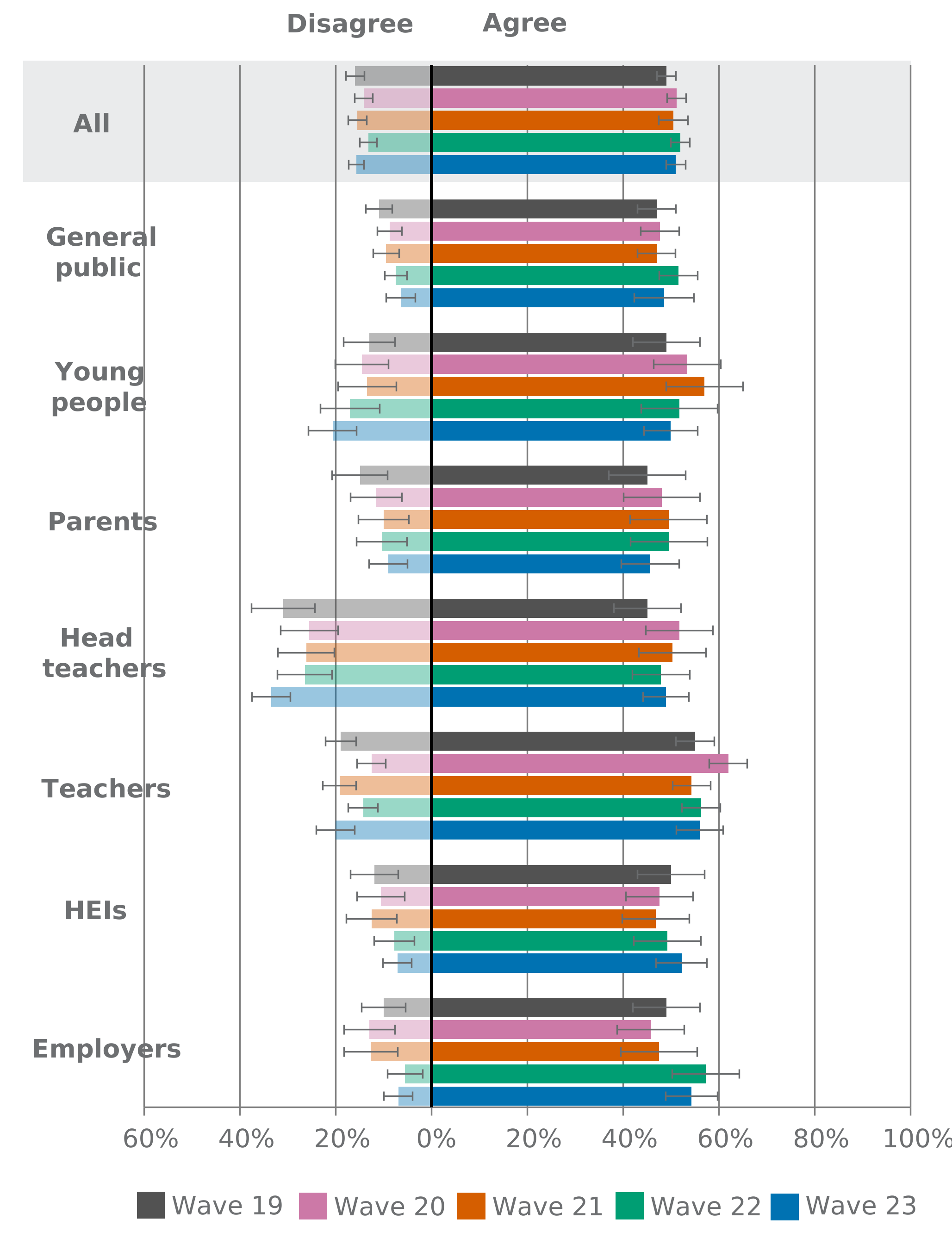
Note: This survey item was available only to those who were aware that there is a review of marking and moderation, and appeals system for GCSE and A level results.
| Respondent type | Wave 19 | Wave 20 | Wave 21 | Wave 22 | Wave 23 |
|---|---|---|---|---|---|
| All – agree | 49% | 51% | 50% | 52% | 51% |
| All – disagree | 16% | 14% | 16% | 13% | 16% |
| General public – agree | 47% | 48% | 47% | 52% | 49% |
| General public – disagree | 11% | 9% | 10% | 7% | 6% |
| Young people – agree | 49% | 53% | 57% | 52% | 50% |
| Young people – disagree | 13% | 15% | 13% | 17% | 21% |
| Parents – agree | 45% | 48% | 49% | 50% | 46% |
| Parents – disagree | 15% | 12% | 10% | 10% | 9% |
| Head teachers – agree | 45% | 52% | 50% | 48% | 49% |
| Head teachers – disagree | 31% | 26% | 26% | 27% | 34% |
| Teachers – agree | 55% | 62% | 54% | 56% | 56% |
| Teachers – disagree | 19% | 13% | 19% | 14% | 20% |
| HEIs – agree | 50% | 48% | 47% | 49% | 52% |
| HEIs – disagree | 12% | 11% | 13% | 8% | 7% |
| Employers – agree | 49% | 46% | 47% | 57% | 54% |
| Employers – disagree | 10% | 13% | 13% | 6% | 7% |
Just under half (49%) of respondents agreed in wave 23 that ‘the process of reviews of marking and moderation, and appeals for A level results is fair’ (Figure 33). This was broadly consistent with the previous four waves, including wave 22 (52%).
In wave 23, agreement decreased among the general public to 47%, after a high of 53% in wave 22. This brings the level of agreement among the general public in line with previous waves 19, 20 and 21, all of which showed agreement levels of 47% for this group.
Among teachers, the level of agreement in wave 23 was broadly consistent with wave 22 (51% in wave 23, compared to 55% in wave 22). However, in wave 23 there was a significant decrease in agreement compared to 62% of teachers showing agreement in wave 20.
Although for other stakeholder groups (for example, employers) there appeared to be significant shifts in wave 23, there were no other significant differences compared to wave 22.
Figure 33. Results for “The process of reviews of marking and moderation, and appeals for A level results is fair.”
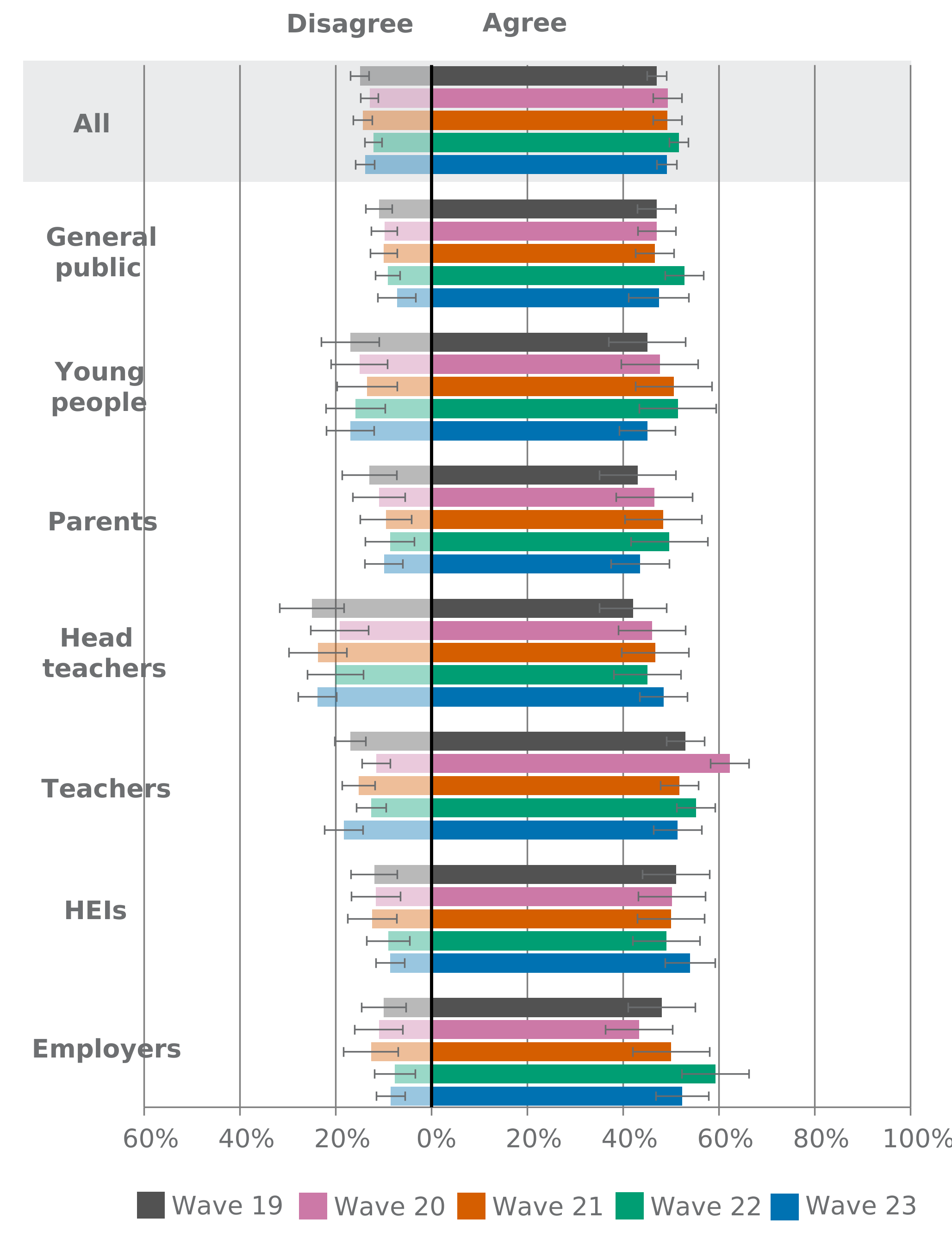
Note: This survey item was available only to those who were aware that there is a review of marking and moderation and appeals system for GCSE and A level results.
| Respondent type | Wave 19 | Wave 20 | Wave 21 | Wave 22 | Wave 23 |
|---|---|---|---|---|---|
| All – agree | 47% | 49% | 49% | 52% | 49% |
| All – disagree | 15% | 13% | 14% | 12% | 14% |
| General public – agree | 47% | 47% | 47% | 53% | 47% |
| General public – disagree | 11% | 10% | 10% | 9% | 7% |
| Young people – agree | 45% | 48% | 51% | 51% | 45% |
| Young people – disagree | 17% | 15% | 13% | 16% | 17% |
| Parents – agree | 43% | 46% | 48% | 50% | 44% |
| Parents – disagree | 13% | 11% | 10% | 9% | 10% |
| Head teachers – agree | 42% | 46% | 47% | 45% | 48% |
| Head teachers – disagree | 25% | 19% | 24% | 20% | 24% |
| Teachers – agree | 53% | 62% | 52% | 55% | 51% |
| Teachers – disagree | 17% | 12% | 15% | 13% | 18% |
| HEIs – agree | 51% | 50% | 50% | 49% | 54% |
| HEIs – disagree | 12% | 12% | 12% | 9% | 9% |
| Employers – agree | 48% | 43% | 50% | 59% | 52% |
| Employers – disagree | 10% | 11% | 13% | 8% | 9% |
Fifty-five per cent of respondents in wave 23 agreed that they ‘have adequate information about the process of reviews of marking and moderation, and appeals for GCSE and A level results’ (Figure 34). This was consistent with the previous 2 waves (both 55%).
Among head teachers, agreement in wave 23 increased compared to wave 22 (85% compared to 77%). Conversely, among the general public, agreement in wave 23 (34%) decreased compared to wave 22(40%).
Among individual stakeholder groups, there were a number of changes in wave 23 in comparison to previous waves. Levels of agreement among young people increased to 51% in wave 23 from 40% in wave 20. After a period of wave-on-wave increases among young people seen in the last 5 years, in wave 23 levels of agreement have dropped broadly in line with agreement levels seen in wave 21 (48%). Among employers, due to small non-significant increases each wave since wave 20, levels of agreement were significantly higher in wave 23 (44%) compared to wave 20 (34%).
Although in wave 23 there appeared to be large shifts in agreement compared to previous waves among other individual groups, these were not significant.
Figure 34. Results for “I have adequate information about the process of reviews of marking and moderation, and appeals for GCSE and A level results.”
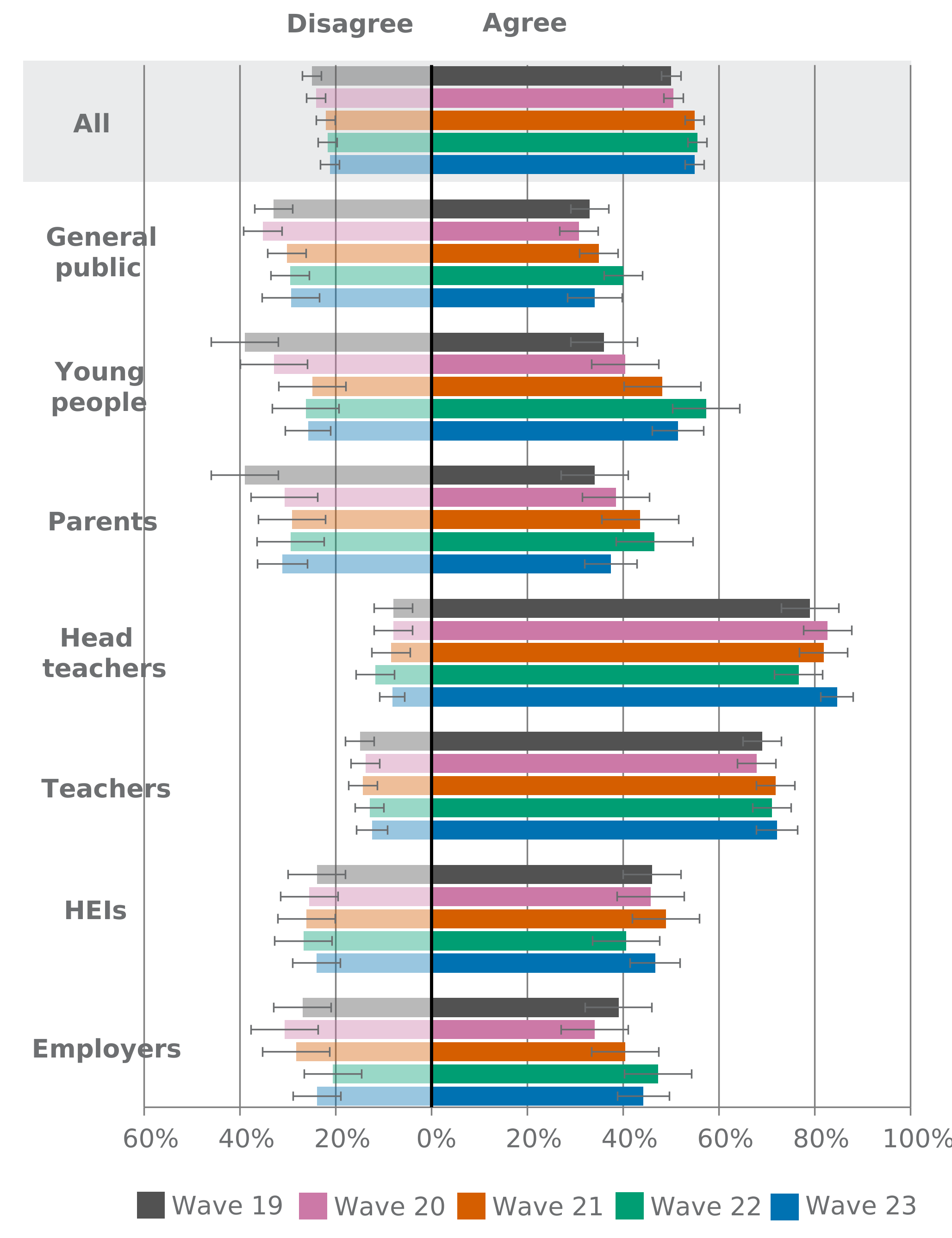
Note: This survey item was available only to those who were aware that there is a review of marking and moderation, and appeals system for GCSE and A level results.
| Respondent type | Wave 19 | Wave 20 | Wave 21 | Wave 22 | Wave 23 |
|---|---|---|---|---|---|
| All – agree | 50% | 50% | 55% | 55% | 55% |
| All – disagree | 25% | 24% | 22% | 22% | 21% |
| General public – agree | 33% | 31% | 35% | 40% | 34% |
| General public – disagree | 33% | 35% | 30% | 30% | 29% |
| Young people – agree | 36% | 40% | 48% | 57% | 51% |
| Young people – disagree | 39% | 33% | 25% | 26% | 26% |
| Parents – agree | 34% | 38% | 44% | 47% | 37% |
| Parents – disagree | 39% | 31% | 29% | 29% | 31% |
| Head teachers – agree | 79% | 83% | 82% | 77% | 85% |
| Head teachers – disagree | 8% | 8% | 9% | 12% | 8% |
| Teachers – agree | 69% | 68% | 72% | 71% | 72% |
| Teachers – disagree | 15% | 14% | 14% | 13% | 12% |
| HEIs – agree | 46% | 46% | 49% | 41% | 47% |
| HEIs – disagree | 24% | 26% | 26% | 27% | 24% |
| Employers – agree | 39% | 34% | 40% | 47% | 44% |
| Employers – disagree | 27% | 31% | 28% | 21% | 24% |
Four in five (79%) respondents were aware that ‘for any A level or GCSE subjects, a school or college can appeal to the exam board on the grounds of a marking error if their concerns about marking have not been addressed during a review of marking, as well as on the ground of a procedural failing by the exam board’ (Figure 35). This represented an increase compared to wave 22 (75%), continuing an upwards trend seen since wave 21 (71%).
Among individual stakeholder groups awareness increased in wave 23 compared to wave 22 for head teachers (93% compared to 86%) and employers (76% compared to 65%). Among all other stakeholder groups although awareness may have appeared to have changed compared to wave 22, the difference was not significant.
Figure 35. Proportion of people who were “aware that for any A level or GCSE subjects, a school or college can appeal to the exam board on the ground of a marking error if their concerns about marking have not been addressed during a review of marking as well as on the ground of a procedural failing by the exam board”
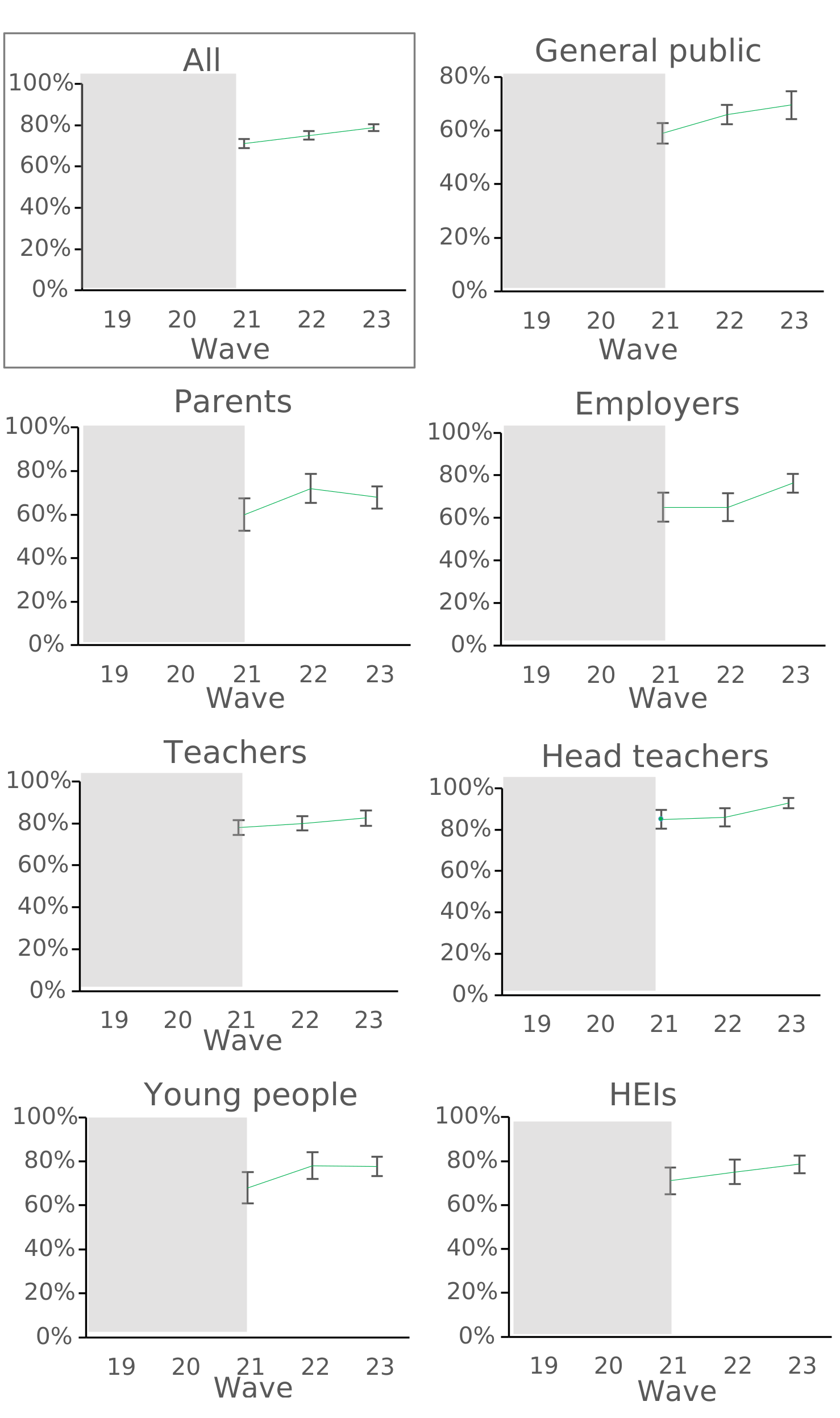
Note: The greyed-out area on the graph represents a break in the time series where this question was not asked during Covid-19.
| Respondent type | Wave 21 | Wave 22 | Wave 23 |
|---|---|---|---|
| All – agree | 71% | 75% | 79% |
| General public – agree | 59% | 66% | 70% |
| Young people – agree | 68% | 78% | 78% |
| Parents – agree | 60% | 72% | 68% |
| Head teachers – agree | 85% | 86% | 93% |
| Teachers – agree | 78% | 80% | 83% |
| HEIs – agree | 71% | 75% | 79% |
| Employers – agree | 65% | 65% | 76% |
Section 6: Special consideration and reasonable adjustments for GCSE and A level qualifications
For the following 6 survey items the wave 23 effective base was: All responses (N=631); (N=teachers 512); head teachers (N=218). These survey items were only available to teachers and head teachers.
Key findings
The overall proportion of teachers and head teachers who agreed that they had ‘adequate information about the arrangements available for a GCSE or A level student who is eligible for special consideration’ (82%) remained consistent in wave 23 with all four previous waves.
Agreement that the ‘special consideration makes the qualification system fairer’ in the current system decreased in wave 23 compared to wave 22 (53% in wave 23 and 59% in wave 22). Similarly, agreement that ‘the right reasonable adjustments are made for the right students’ is lower in wave 23 (47%), compared to wave 19 (54%), wave 20 (53%) and wave 21 (55%).
In wave 23, around half (47%) of teachers and head teachers agreed that they understand how special consideration tariffs are applied.
The overall proportion of teachers and head teachers who had ‘adequate information about the adjustments available for a disabled GCSE or A level student who is eligible for reasonable adjustments’ (69%) remained broadly consistent with previous waves, as did agreement that ‘reasonable adjustments make the qualification system fairer for all GCSE and A level students’ (62%).
Overall, 63% of teachers and head teachers reported that modified papers had been requested for any of their students, and 85% of those who requested a modified paper said these met the needs of the learners who use them well.
Special consideration
Respondents were shown a 5-point scale ranging from strongly agree to strongly disagree. In this section, agree is a combination of strongly agree and agree and disagree a combination of strongly disagree and disagree.
Overall, 82% of head teachers and teachers agreed that they had ‘adequate information about the arrangements available for a GCSE or A level student who is eligible for special consideration’ (Figure 36), consistent with agreement levels in all four previous waves.
The proportion of teachers agreeing had increased steadily over the last four waves, with wave 23 agreement being significantly higher (78%) compared to wave 19 (70%) and wave 20 (72%). The proportion of head teachers agreeing remained broadly consistent over this period.
Figure 36. Results for “I have adequate information about the arrangements that are available for a GCSE or A level student who is eligible for special consideration.”
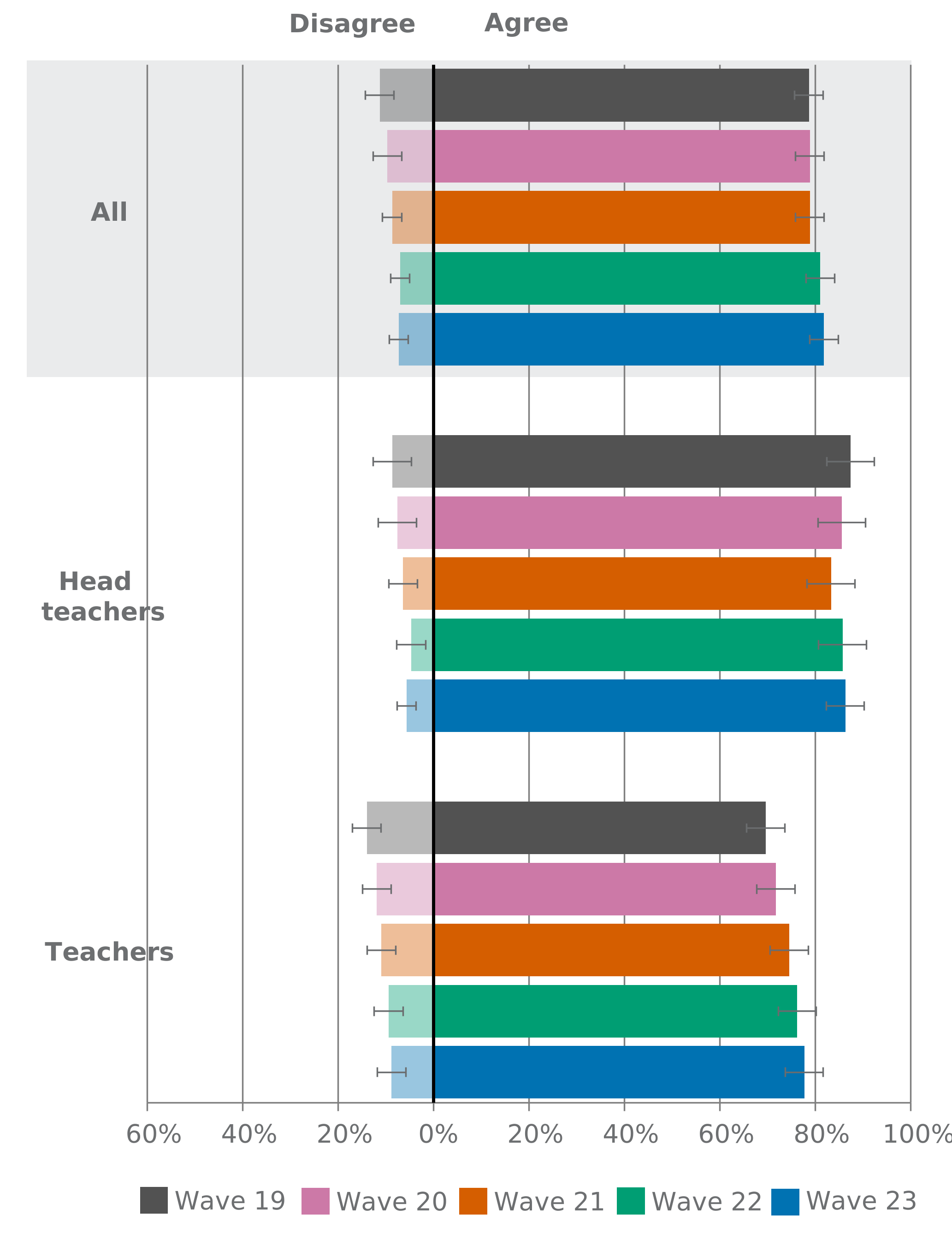
| Respondent type | Wave 19 | Wave 20 | Wave 21 | Wave 22 | Wave 23 |
|---|---|---|---|---|---|
| All – agree | 79% | 79% | 79% | 81% | 82% |
| All – disagree | 11% | 10% | 9% | 7% | 7% |
| Head teachers – agree | 87% | 86% | 83% | 86% | 86% |
| Head teachers – disagree | 9% | 8% | 6% | 5% | 6% |
| Teachers – agree | 70% | 72% | 75% | 76% | 78% |
| Teachers – disagree | 14% | 12% | 11% | 9% | 9% |
Fifty-three per cent of all head teachers and teachers combined agreed that ‘special consideration makes the qualification system fairer for all GCSE and A level students’ (Figure 37). This represented a decrease in agreement compared to wave 22 (59%). At the same time, levels of disagreement increased in wave 23 (21%) compared to wave 21 (16%).
In wave 23, agreement for this statement among teachers (55%) decreased compared to wave 22 (63%), wave 21 (66%) and wave 20 (64%). The proportion of teachers disagreeing that special consideration makes the qualification system fairer for GCSEs and A levels in wave 23 (17%) increased compared to wave 21 (11%).
In wave 23, 51% of head teachers agreed that special consideration makes the qualification system fairer for GCSEs and A levels, which was broadly consistent with wave 22 (56%). However, agreement was lower in wave 23 compared to wave 19 (66%) and wave 20 (63%). For head teachers, however, levels of disagreement remained broadly consistent with the previous four waves.
Figure 37. Results for “Special consideration makes the qualification system fairer for all GCSE and A level students.”
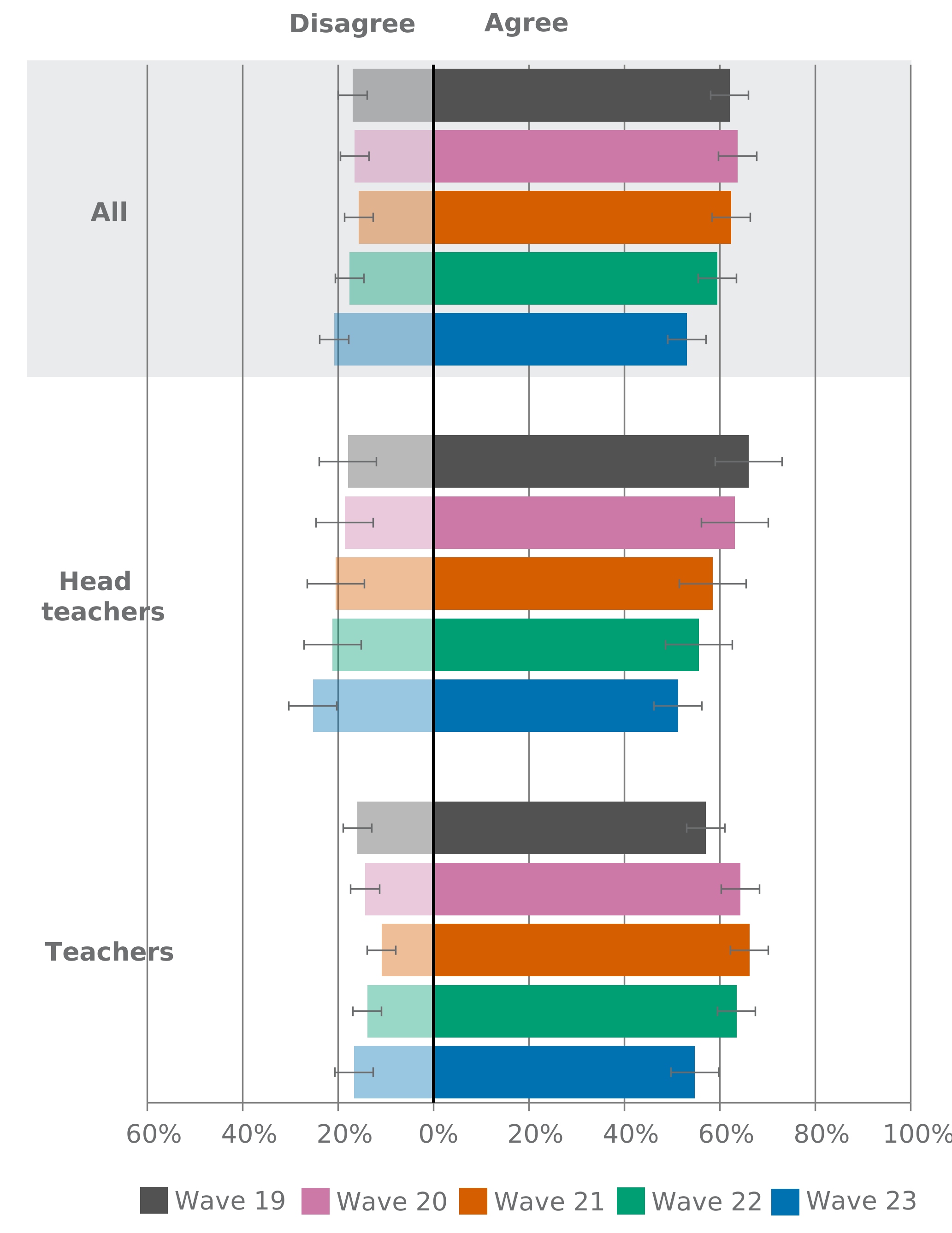
| Respondent type | Wave 19 | Wave 20 | Wave 21 | Wave 22 | Wave 23 |
|---|---|---|---|---|---|
| All – agree | 62% | 64% | 62% | 59% | 53% |
| All – disagree | 17% | 17% | 16% | 19% | 21% |
| Head teachers – agree | 66% | 63% | 58% | 56% | 51% |
| Head teachers – disagree | 18% | 19% | 21% | 21% | 25% |
| Teachers – agree | 57% | 64% | 66% | 63% | 55% |
| Teachers – disagree | 16% | 14% | 11% | 14% | 17% |
In wave 23, 54% of all head teachers and teachers combined agreed that ‘the right arrangements are made for the right GCSE and A level students in the current special consideration system’ (Figure 38). This was broadly consistent with the previous four waves.
In wave 23, the proportion of head teachers agreeing (54%) was broadly consistent with wave 22 (57%). Similarly, the proportion of teachers agreeing in wave 23 (53%) was broadly consistent with wave 22 (56%), although the proportion of teachers disagreeing in wave 23 (22%) increased compared to wave 21 (16%) and wave 22 (16%).
Figure 38. Results for “In the current special consideration system, the right arrangements are made for the right GCSE and A level students.”
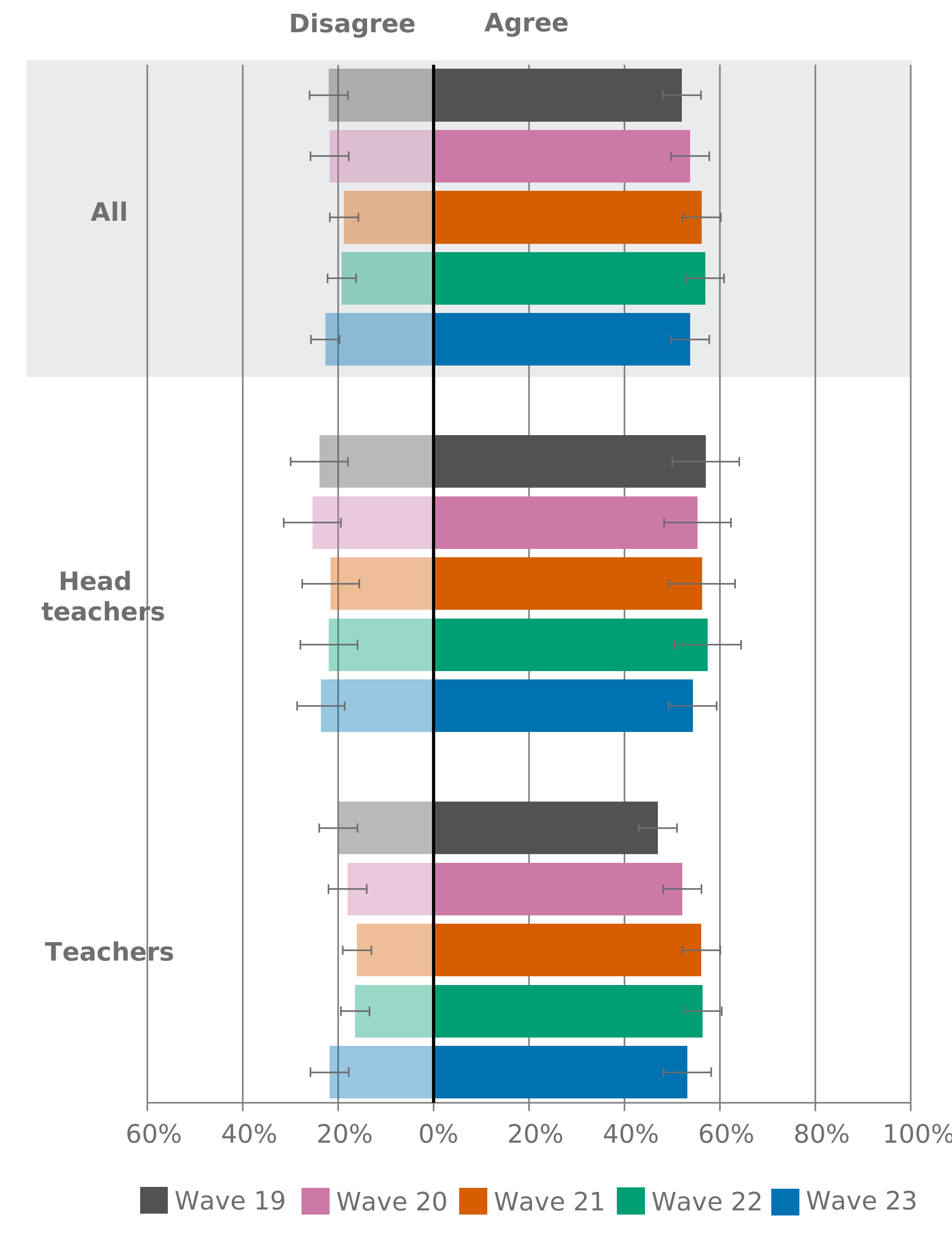
| Respondent type | Wave 19 | Wave 20 | Wave 21 | Wave 22 | Wave 23 |
|---|---|---|---|---|---|
| All – agree | 52% | 54% | 56% | 57% | 54% |
| All – disagree | 22% | 22% | 19% | 19% | 23% |
| Head teachers – agree | 57% | 55% | 56% | 57% | 54% |
| Head teachers – disagree | 24% | 25% | 22% | 22% | 24% |
| Teachers – agree | 47% | 52% | 56% | 56% | 53% |
| Teachers – disagree | 20% | 18% | 16% | 16% | 22% |
In wave 23, a new question was asked to teachers and head teachers, which asked them to what extent they agree that they understand how tariffs are applied in the special consideration system.
Overall, just under half (47%) of all teachers and head teachers combined agreed that they understand how tariffs are applied, with 31% disagreeing (Figure 39). Head teachers reported higher levels of agreement than teachers (58% for head teachers, compared to 36% for teachers), while teachers reported higher levels of disagreement than head teachers (36% for teachers, compared to 25% for head teachers).
Figure 39. Results for “In the special consideration system, I understand how tariffs are applied.”
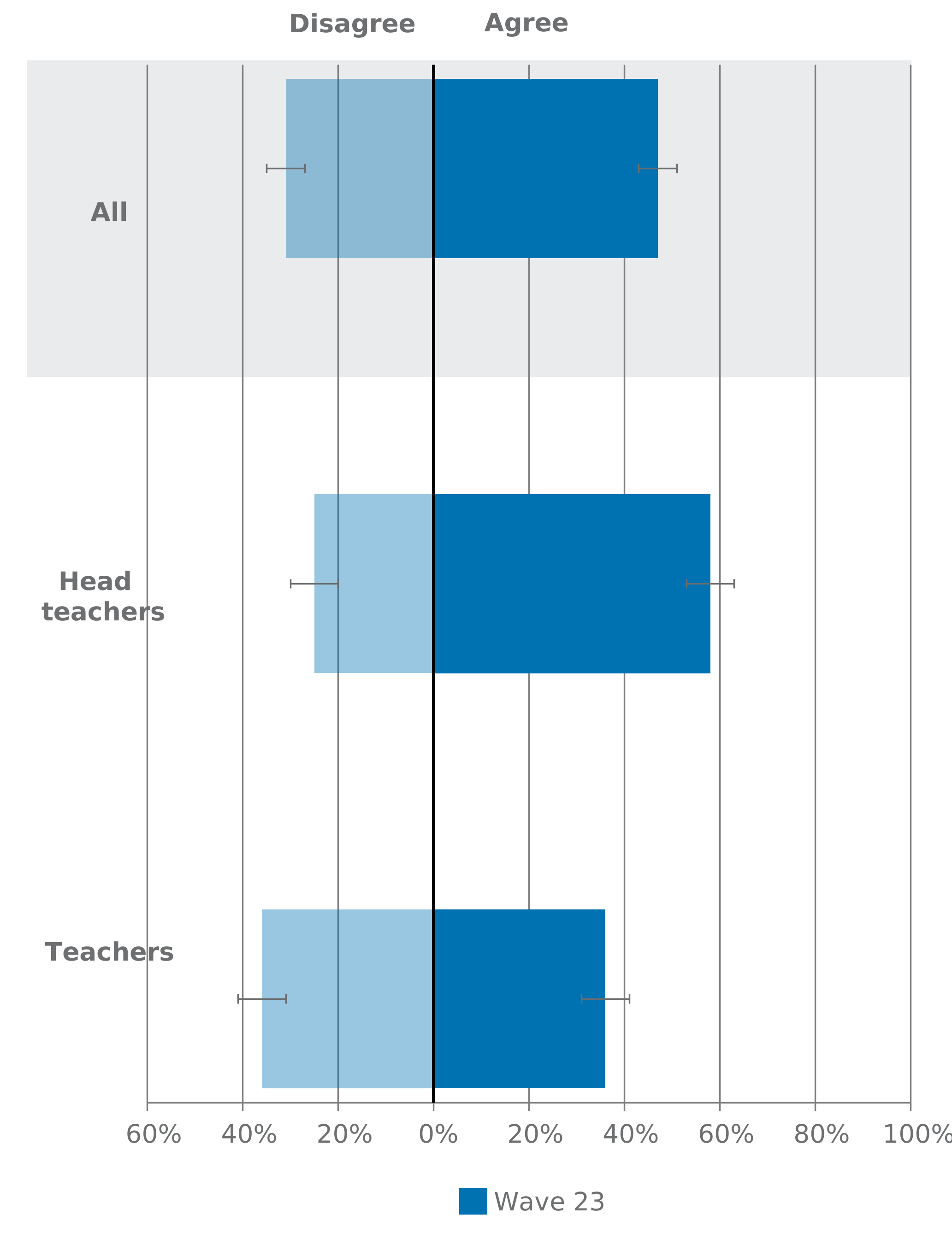
| Respondent type | Wave 23 |
|---|---|
| All – agree | 47% |
| All – disagree | 31% |
| Head teachers – agree | 58% |
| Head teachers – disagree | 25% |
| Teachers – agree | 36% |
| Teachers – disagree | 36% |
Reasonable adjustments
Sixty-nine percent of all head teachers and teachers combined agreed that they ‘have adequate information about the adjustments available for a disabled GCSE or A level student who is eligible for reasonable adjustments’ (Figure 40). (Being disabled under the Equality Act 2010 is defined as having a physical or mental impairment that has a ‘substantial’ and ‘long-term’ negative effect on the ability to do normal daily activities.) This remained broadly consistent compared to wave 22 (72%), but a significant decrease compared to wave 21 (74%).
In wave 23, levels of agreement for head teachers remained consistent with wave 22 (77% compared to 75%). However, in wave 23, agreement for teachers decreased compared to wave 22 (61% in wave 23 compared to 69% in wave 22). Agreement for teachers in wave 23 also decreased compared to wave 20 (67%) and wave 21 (71%). Disagreement for teachers increased in wave 23 compared to wave 22 (20% in wave 23 compared to 13% in wave 22).
Figure 40. Results for “I have adequate information about the adjustments that are available for a GCSE or A level disabled student who is eligible for reasonable adjustments.”
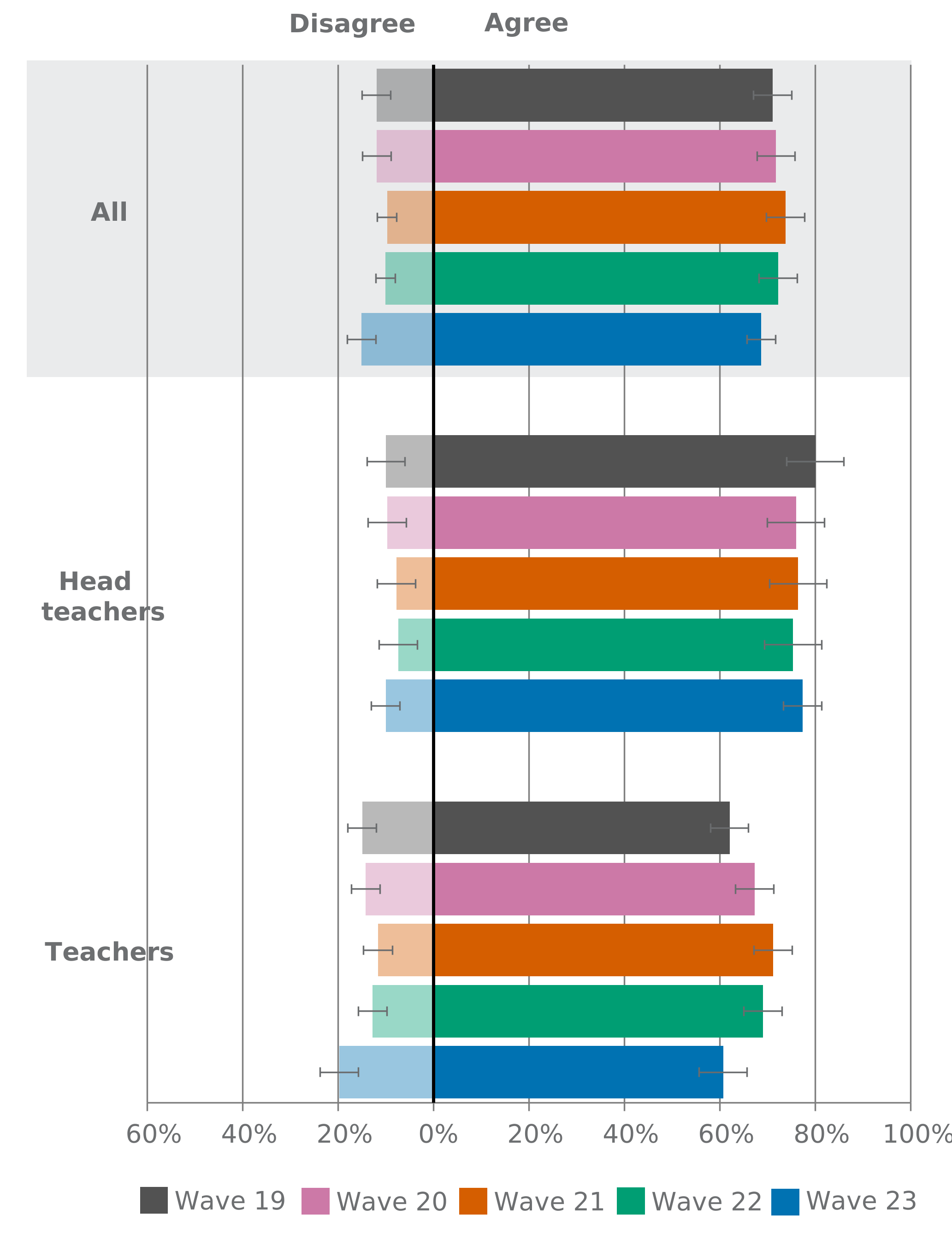
| Respondent type | Wave 19 | Wave 20 | Wave 21 | Wave 22 | Wave 23 |
|---|---|---|---|---|---|
| All – agree | 71% | 72% | 74% | 72% | 69% |
| All – disagree | 12% | 12% | 10% | 10% | 15% |
| Head teachers – agree | 80% | 76% | 76% | 75% | 77% |
| Head teachers – disagree | 10% | 10% | 8% | 7% | 10% |
| Teachers – agree | 62% | 67% | 71% | 69% | 61% |
| Teachers – disagree | 15% | 14% | 12% | 13% | 20% |
In wave 23, just under half (47%) of all head teachers and teachers combined agreed that ‘the right reasonable adjustments are made for the right GCSE and A level disabled students’ (Figure 41). Although this was similar to wave 22 (51%), there was decreased agreement in wave 23 compared to wave 19 (54%), wave 20 (53%) and wave 21 (55%).
The level of agreement among teachers in wave 23 (44%) decreased compared to the previous four waves (51% in wave 19 and wave 20, 54% in wave 21 and wave 22). Conversely, levels of disagreement increased in wave 23 (18%) compared to wave 19 (13%) and wave 20 (15%).
In wave 23, among head teachers, the level of agreement remained broadly consistent with the previous four waves at 50%.
Figure 41. Results for “Currently, the right reasonable adjustments are made for the right GCSE and A level disabled students.”
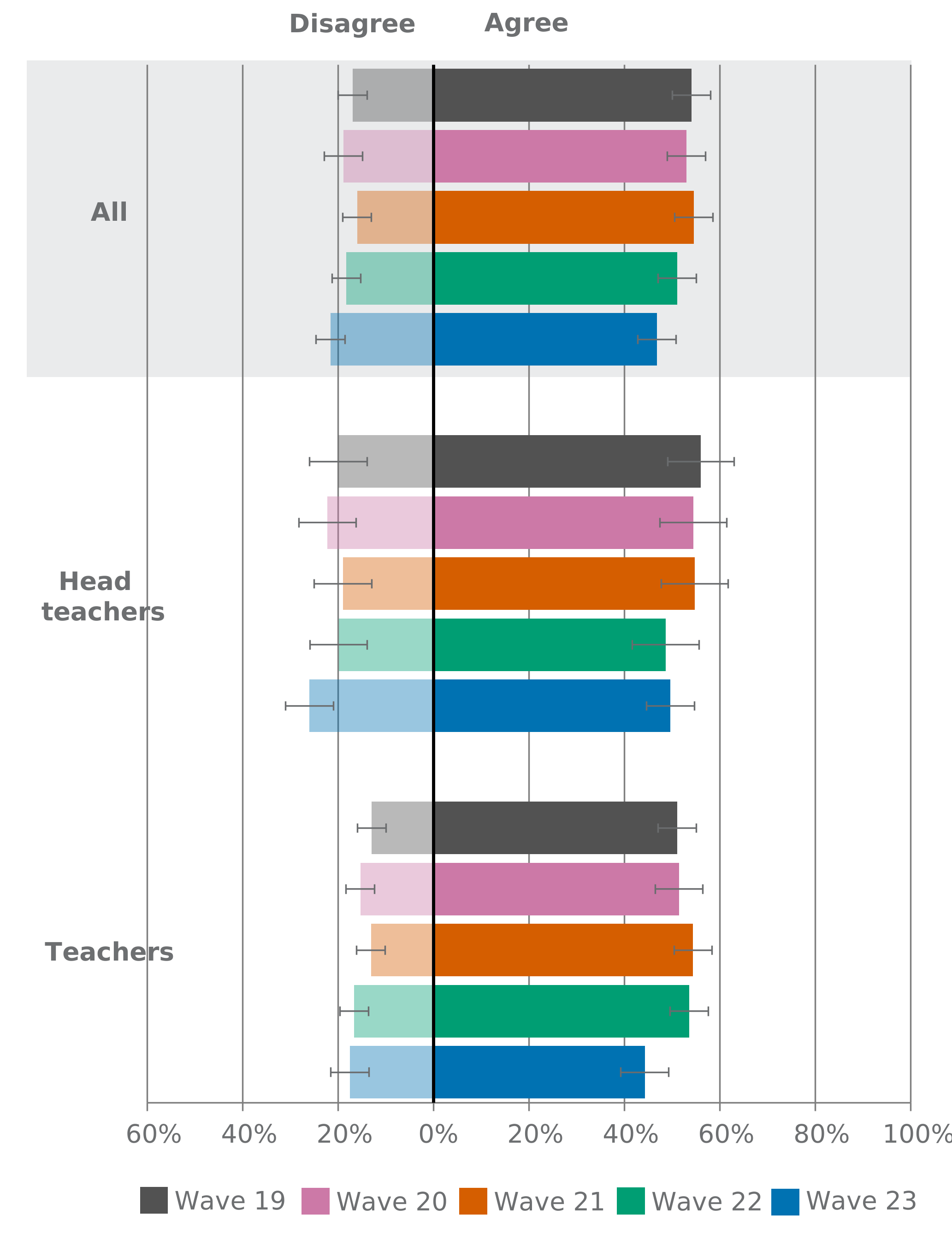
| Respondent type | Wave 19 | Wave 20 | Wave 21 | Wave 22 | Wave 23 |
|---|---|---|---|---|---|
| All – agree | 54% | 53% | 55% | 51% | 47% |
| All – disagree | 17% | 19% | 16% | 18% | 22% |
| Head teachers – agree | 56% | 54% | 55% | 49% | 50% |
| Head teachers – disagree | 20% | 22% | 19% | 20% | 26% |
| Teachers – agree | 51% | 51% | 54% | 54% | 44% |
| Teachers – disagree | 13% | 15% | 13% | 17% | 18% |
Overall, 62% of all head teachers and teachers combined agreed that ‘reasonable adjustments make the qualification system fairer for all GCSE and A level students’ in wave 23 (Figure 42). This was consistent with wave 22 (63%), but, due to gradual shifts over time, represents a decrease in agreement compared to wave 21 (68%).
In wave 23, agreement among teachers decreased compared to the previous two waves (62% in wave 23, compared to 69% in wave 21 and 68% in wave 22). Conversely, levels of disagreement among teachers increased gradually over time so that disagreement in wave 23 (16%) was significantly higher than wave 21 (9%).
Among head teachers, levels of agreement (62%) and disagreement (21%) in wave 23 remain similar to the previous four waves.
Figure 42. Results for “Reasonable adjustments make the qualification system fairer for all GCSE and A level students.”
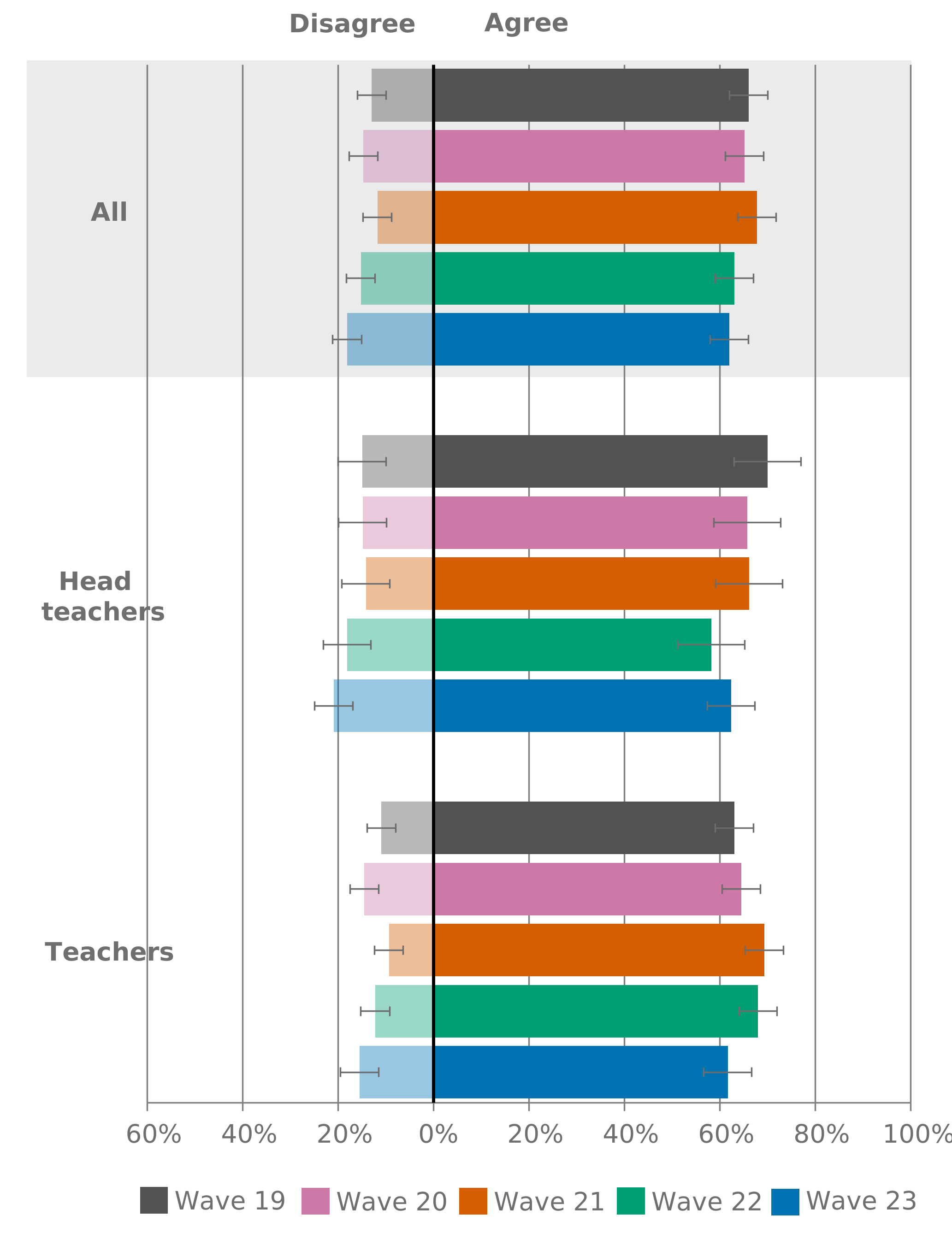
| Respondent type | Wave 19 | Wave 20 | Wave 21 | Wave 22 | Wave 23 |
|---|---|---|---|---|---|
| All – agree | 66% | 65% | 68% | 63% | 62% |
| All – disagree | 13% | 15% | 12% | 15% | 18% |
| Head teachers – agree | 70% | 66% | 66% | 58% | 62% |
| Head teachers – disagree | 15% | 15% | 14% | 18% | 21% |
| Teachers – agree | 63% | 64% | 69% | 68% | 62% |
| Teachers – disagree | 11% | 15% | 9% | 12% | 16% |
Modified exam papers
In wave 23, teachers and head teachers were asked a new question, which asked whether, to the best of their knowledge, modified papers had been requested for any of their students. They were provided 2 answer options, yes and no.
Overall, 63% of teachers and head teachers reported that modified papers had been requested for their students, while 37% said they had not been requested. Teachers and head teachers who requested a modified paper were then asked how well they felt modified papers met the needs of learners who use them. They were shown a 4-point scale ranging from very well to not well at all. In this section, well is a combination of very well and fairly well and not well is a combination of not very well and not well at all.
Overall, 85% of teachers and head teachers reported that modified papers met the needs of learners who use them well, while 10% said they did not meet the needs well (Figure 43). Teachers and head teachers reported similar levels, with 83% of teachers and 86% of head teachers reporting that modified papers met the needs of learners who use them well.
Figure 43. Results for “In your experience, how well, if at all, do you feel modified papers meet the needs of learners who use them?”
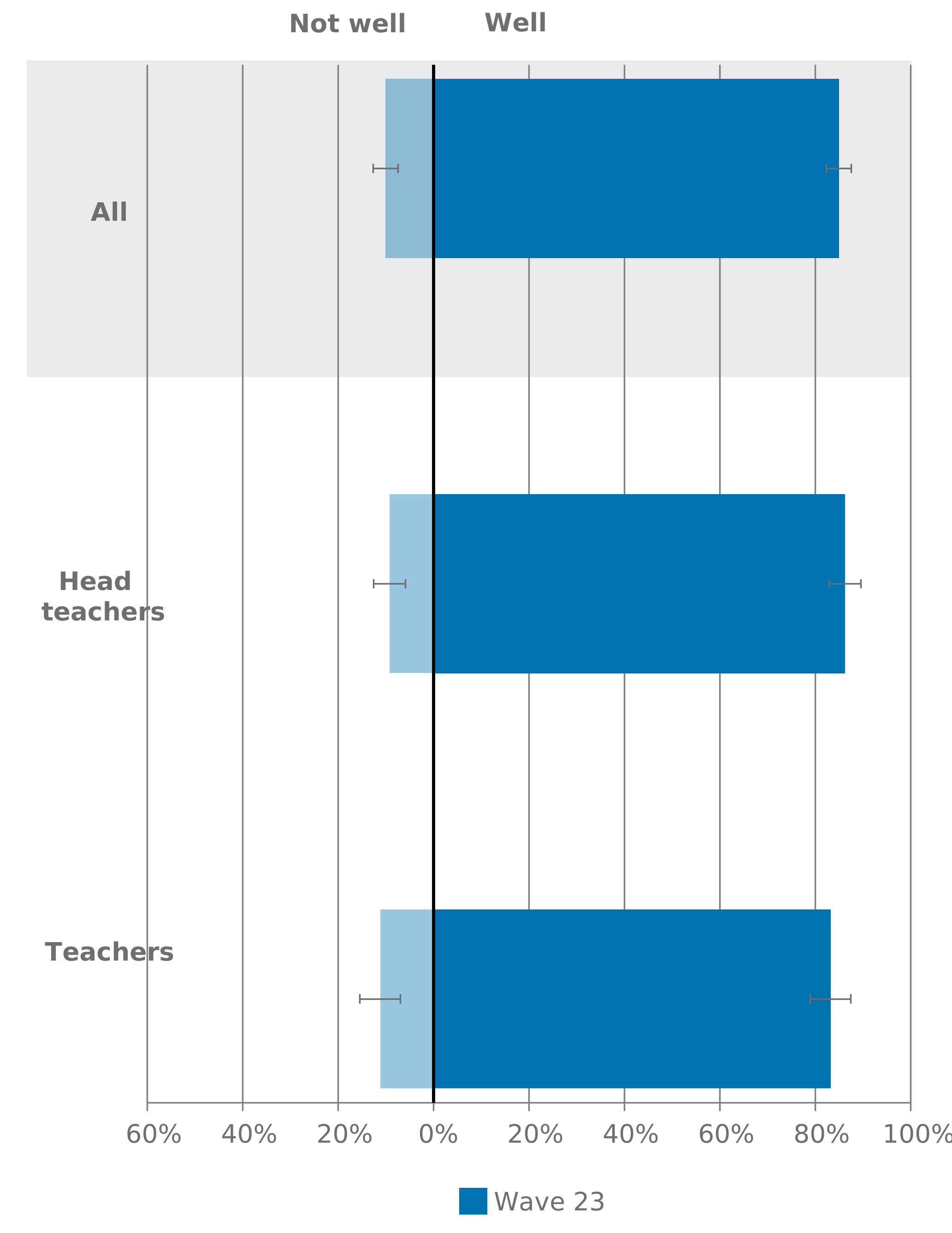
| Respondent type | Wave 23 |
|---|---|
| All – well | 85% |
| All – not well | 10% |
| Head teachers – well | 86% |
| Head teachers – not well | 9% |
| Teachers – well | 83% |
| Teachers – not well | 11% |
Section 7: Malpractice for GCSE and A level qualifications
Awareness and perceptions
To account for changes made to the A level qualification system over recent years, in wave 20, the question text changed to remove reference to AS.
For the following 4 survey items the wave 23 effective base was: All responses (N=631); teachers (N=512); head teachers (N=218). These survey items were available only to teachers and head teachers.
Respondents were shown a 5-point scale ranging from strongly disagree to strongly agree. In this section, agree is a combination of strongly agree and agree and disagree a combination of strongly disagree and disagree.
Key findings
The proportion of teachers (88%) and head teachers (95%) who agreed that they have ‘adequate information about what constitutes malpractice for GCSEs and A levels’ was broadly consistent with wave 22 (84% and 92%, respectively).
Similarly, the overall levels of agreement that respondents know to whom they should report an incident of malpractice (91%) and that they are confident that malpractice is properly reported when it happens in GCSEs and A levels (69%) were consistent with wave 22 (90% and 69%) respectively.
In wave 23, the proportion who agreed that they were confident incidents of malpractice are fairly investigated (78%) was broadly consistent with wave 22 (74%), but represented an increase compared to wave 20 (72%).
Malpractice for GCSE and A level qualifications
Figure 44 shows that 91% of all teachers and head teachers combined in wave 23 agreed that they ‘have adequate information about what constitutes malpractice for GCSEs and A levels’. This was broadly consistent with wave 22 (88%), but an increase compared to wave 21 (86%).
Eighty-eight per cent of teachers agreed with the statement, which was broadly consistent with wave 22 (84%), although again, represented an increase compared to wave 21 (81%).
In wave 23, agreement among headteachers remained broadly consistent (95%), with no significant changes to the past five waves.
Figure 44. Results for “I have adequate information about what constitutes malpractice for GCSEs and A levels.”
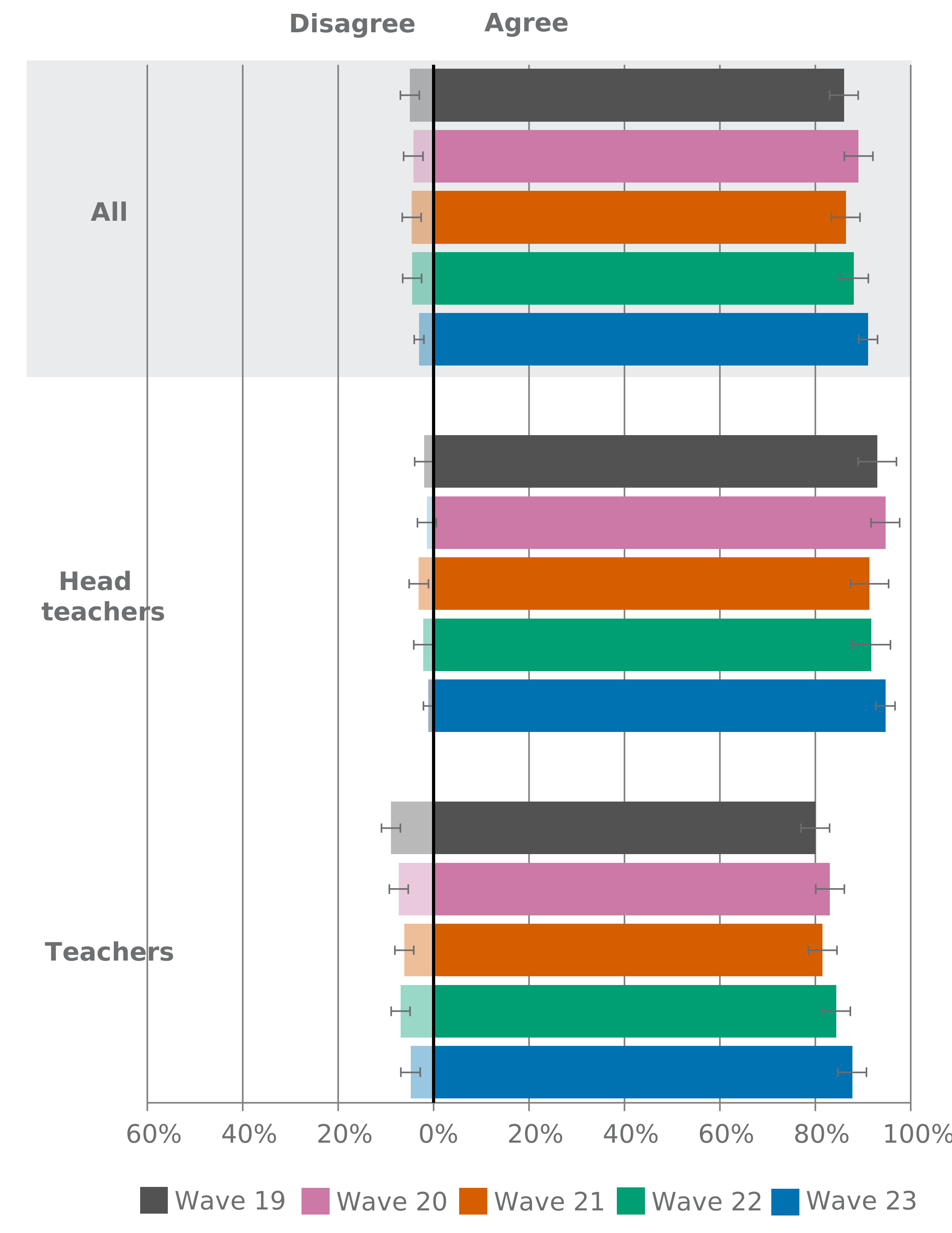
| Respondent type | Wave 19 | Wave 20 | Wave 21 | Wave 22 | Wave 23 |
|---|---|---|---|---|---|
| All – agree | 86% | 89% | 86% | 88% | 91% |
| All – disagree | 5% | 4% | 5% | 5% | 3% |
| Head teachers – agree | 93% | 95% | 91% | 92% | 95% |
| Head teachers – disagree | 2% | 1% | 3% | 2% | 1% |
| Teachers – agree | 80% | 83% | 81% | 84% | 88% |
| Teachers – disagree | 9% | 7% | 6% | 7% | 5% |
Consistent with all recent waves, 91% of all head teachers and teachers combined in wave 23 agreed that they ‘know to whom they should report an incident of malpractice in GCSEs and A levels’ (Figure 45).
In wave 23, head teachers (97%) had higher levels of agreement compared to teachers (86%), consistent with the trend seen in previous waves. There were no significant differences compared to wave 22, however, teachers saw an increase in agreement in wave 23 compared to wave 19 (86% compared to 80%, respectively).
Figure 45. Results for “I know to whom I should report an incident of malpractice for GCSEs and A levels.”
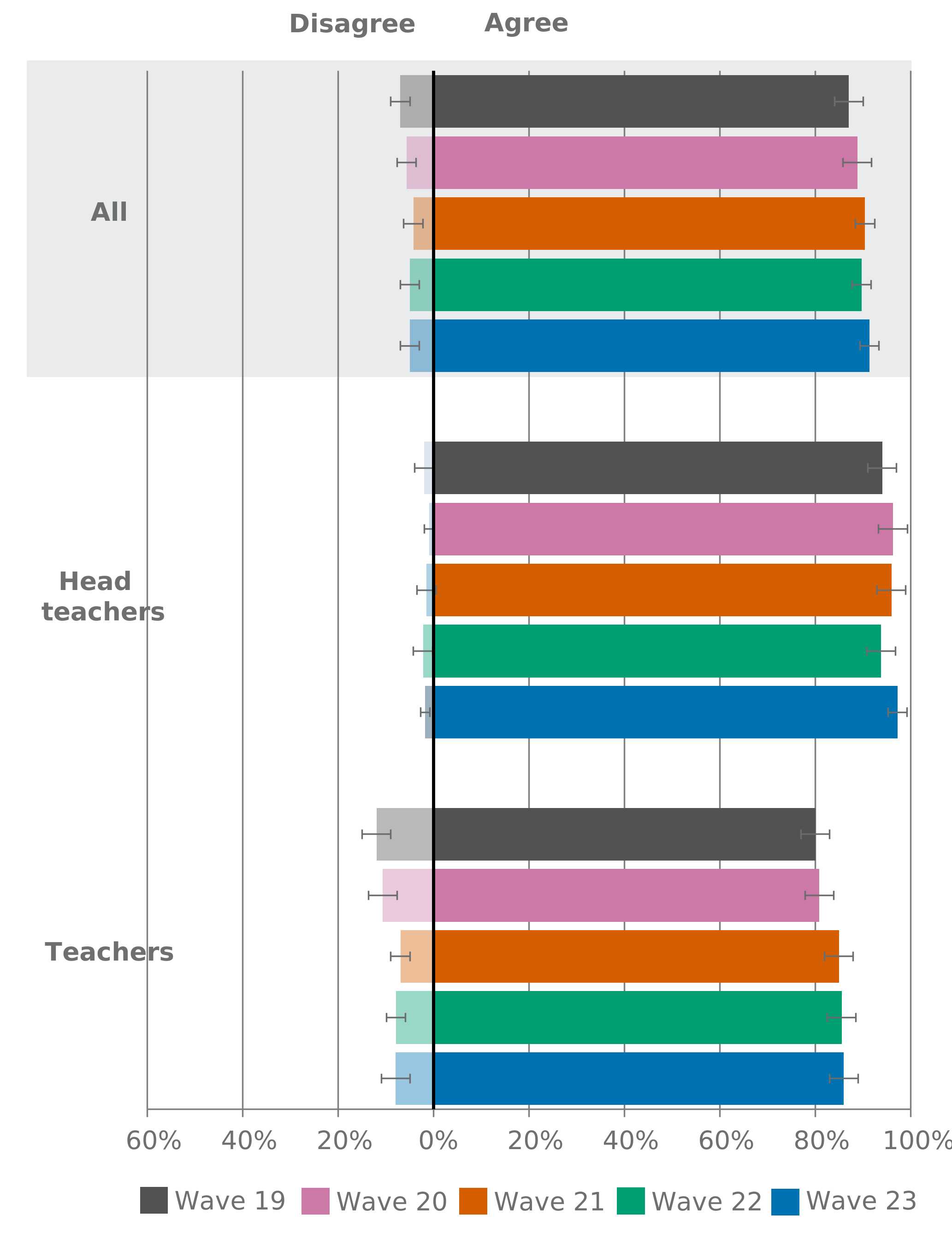
| Respondent type | Wave 19 | Wave 20 | Wave 21 | Wave 22 | Wave 23 |
|---|---|---|---|---|---|
| All – agree | 87% | 89% | 90% | 90% | 91% |
| All – disagree | 7% | 6% | 4% | 5% | 5% |
| Head teachers – agree | 94% | 96% | 96% | 94% | 97% |
| Head teachers – disagree | 2% | 1% | 2% | 2% | 2% |
| Teachers – agree | 80% | 81% | 85% | 86% | 86% |
| Teachers – disagree | 12% | 11% | 7% | 8% | 8% |
In wave 23, 78% of respondents agreed that they were ‘confident that incidents of malpractice are fairly investigated for GCSEs and A levels’. This was broadly consistent with wave 22 (74%), but represented an increase compared to wave 20 (72%) following incremental increases wave on wave (Figure 46).
In wave 23, head teachers had higher levels of agreement compared to teachers (87% and 69% respectively). For head teachers, this was a significant increase compared to wave 21 (80%). Agreement among teachers has remained consistent since wave 20.
Figure 46. Results for “I am confident that incidents of malpractice are fairly investigated for GCSEs and A levels.”
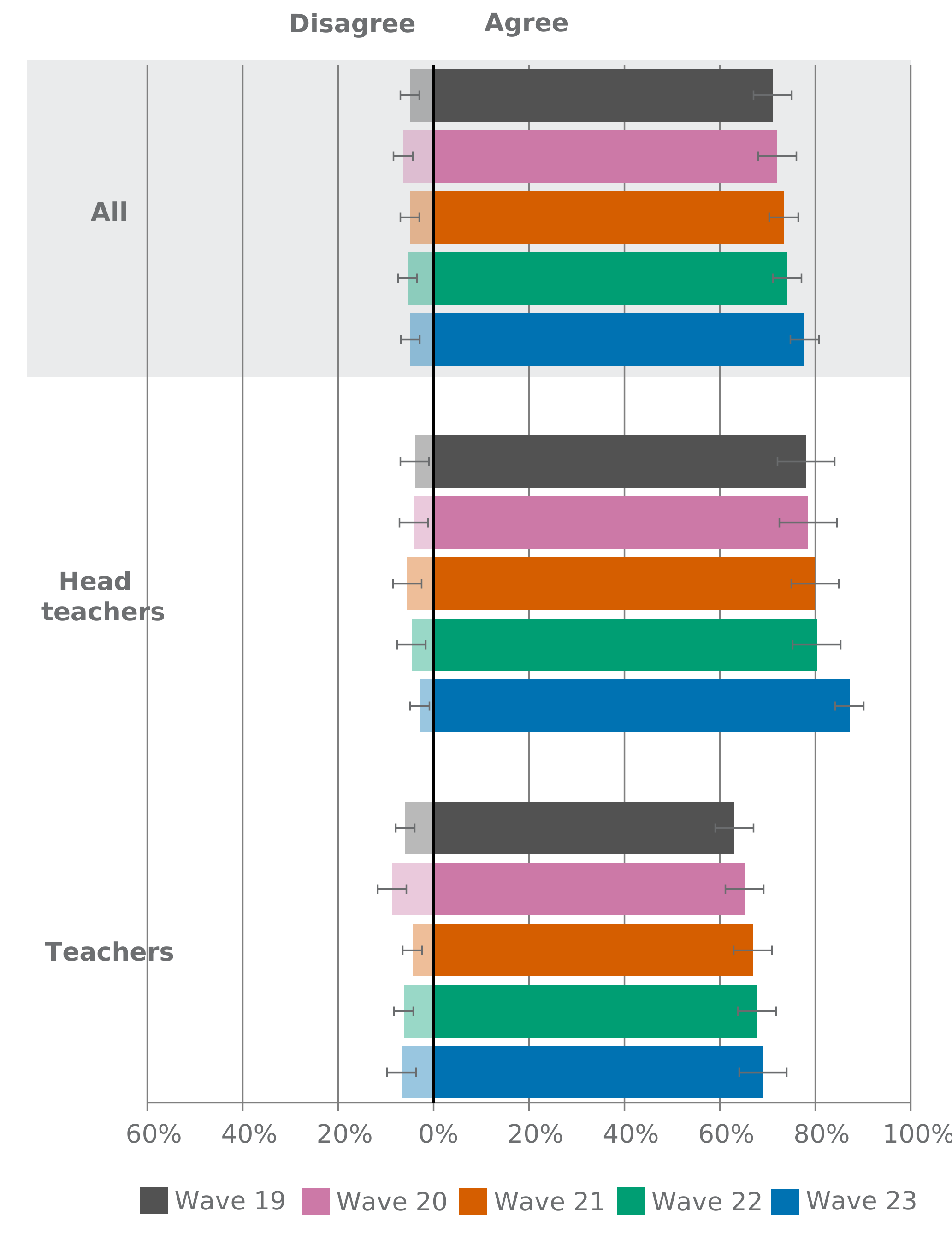
| Respondent type | Wave 19 | Wave 20 | Wave 21 | Wave 22 | Wave 23 |
|---|---|---|---|---|---|
| All – agree | 71% | 72% | 73% | 74% | 78% |
| All – disagree | 5% | 6% | 5% | 5% | 5% |
| Head teachers – agree | 78% | 78% | 80% | 80% | 87% |
| Head teachers – disagree | 4% | 4% | 6% | 5% | 3% |
| Teachers – agree | 63% | 65% | 67% | 68% | 69% |
| Teachers – disagree | 6% | 9% | 4% | 6% | 7% |
Overall, 68% of respondents in wave 23 agreed that they were ‘confident that malpractice is properly reported when it happens in GCSEs and A levels’ (Figure 47). This was consistent with wave 22 (69%) and maintained the increase starting in wave 20 (62%).
In wave 23, 59% of teachers agreed they were ‘confident that malpractice is properly reported’, consistent with wave 22 (59%). Head teachers showed higher levels of agreement than teachers (77%), with levels of agreement also remaining consistent compared to wave 22 (78%).
Figure 47. Results for “I am confident that malpractice is properly reported when it happens in GCSEs and A levels.”
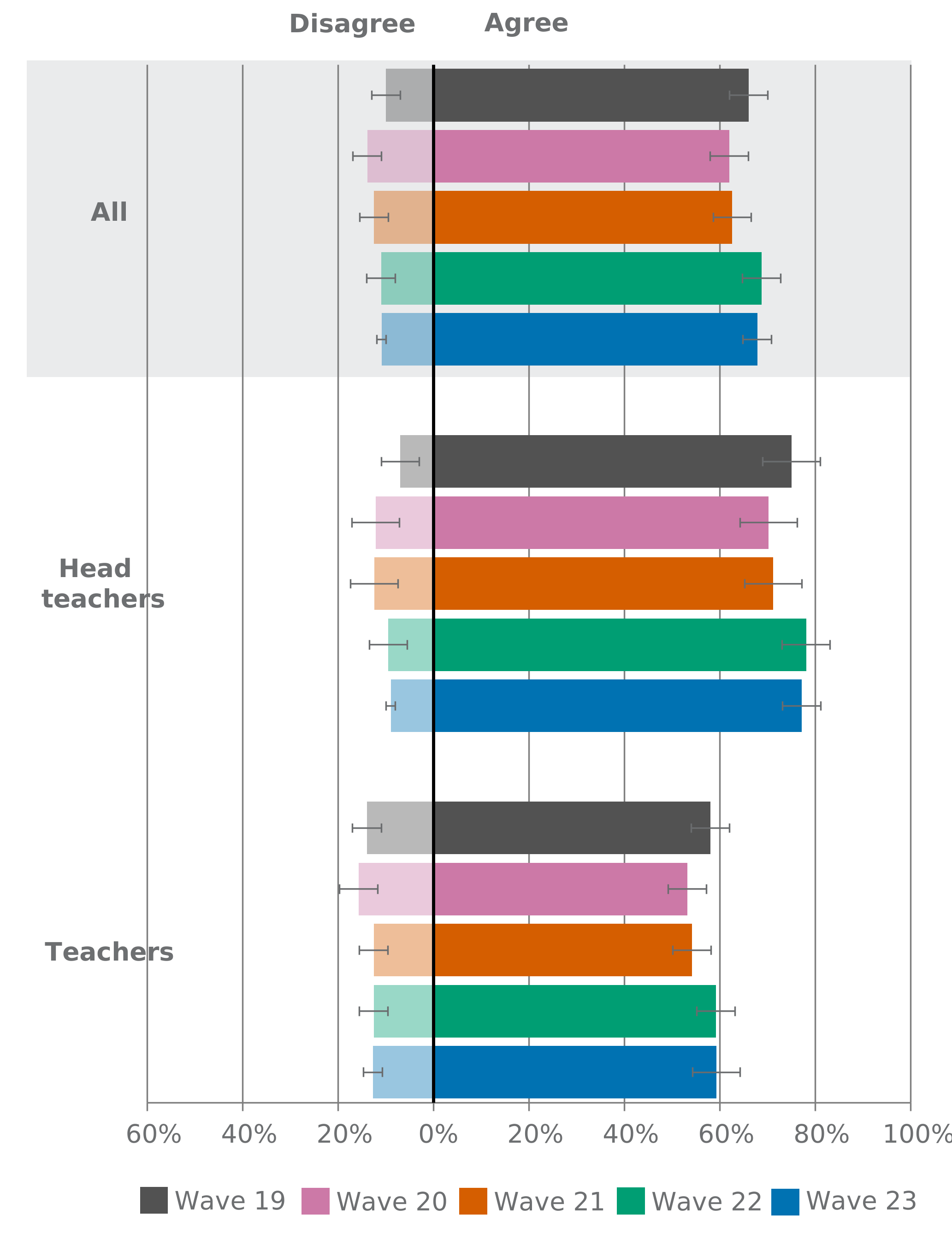
| Respondent type | Wave 19 | Wave 20 | Wave 21 | Wave 22 | Wave 23 |
|---|---|---|---|---|---|
| All – agree | 66% | 62% | 63% | 69% | 68% |
| All – disagree | 10% | 14% | 13% | 11% | 11% |
| Head teachers – agree | 75% | 70% | 71% | 78% | 77% |
| Head teachers – disagree | 7% | 12% | 12% | 10% | 9% |
| Teachers – agree | 58% | 53% | 54% | 59% | 59% |
| Teachers – disagree | 14% | 16% | 13% | 13% | 13% |
Section 8: Appeals against results for Applied General qualifications
Key findings
Of those teaching Applied General qualifications the overall proportion who were ‘aware of the appeals against results process’ in wave 23 (84%) remained broadly consistent across waves since wave 19 (87%).
In wave 23, the proportion of those teaching Applied General qualifications who feel they have ‘adequate information about the appeals against results process’ (84%) has remained broadly consistent since wave 19 (90%). Similarly, while there appeared to be an increase in wave 23 in agreement that ‘the proportion who are ‘confident that appeals are dealt with fairly’ since wave 22, this difference was not significant, with no significant differences when compared to any wave since wave 19.
Awareness and perceptions
For the following survey item, the wave 23 effective base was: All responses (N=46); head teachers (N=28), teachers (N=31). Due to sample sizes, head teachers and teachers are reported as one group.
Overall, 84% of all teachers and head teachers who teach Applied General qualifications combined were ‘aware of the appeals process for Applied General qualifications in schools and colleges’ (Figure 48). These levels of awareness had remained broadly consistent since wave 19 (87%).
Figure 48. Proportion of people who were “aware of the appeals against results process for Applied General qualifications in schools and colleges”
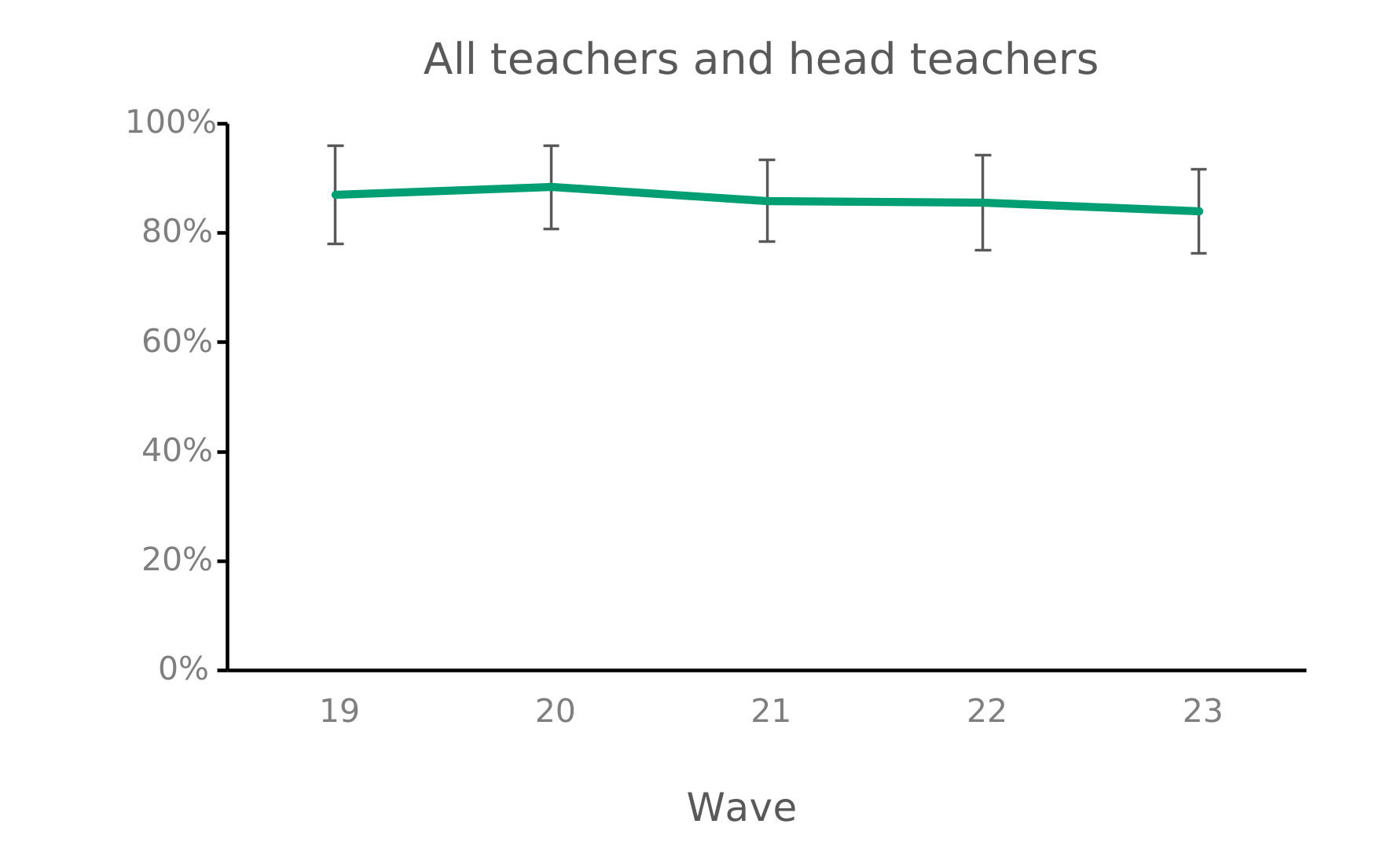
| Respondent type | Wave 19 | Wave 20 | Wave 21 | Wave 22 | Wave 23 |
|---|---|---|---|---|---|
| All – Yes | 87% | 88% | 86% | 86% | 84% |
For the following 2 survey items the wave 23 effective base was: All who teach Applied General qualifications and were aware of the appeals process for Applied General qualifications in schools and colleges (N=35); head teachers (N=24), teachers (N=21). Due to small sample sizes, head teachers and teachers are reported as one group.
Respondents were shown a 5-point scale ranging from strongly disagree to strongly agree. In this section, agree is a combination of strongly agree and agree and disagree a combination of strongly disagree and disagree.
Overall, 84% of teachers and head teachers agreed that they ‘have adequate information about the appeals process for Applied General qualifications taught in schools and colleges’ (Figure 49). There were no significant differences when compared to any wave since wave 19.
Figure 49. Results for “I have adequate information about the appeals against results process for Applied General qualifications taught in schools and colleges.”
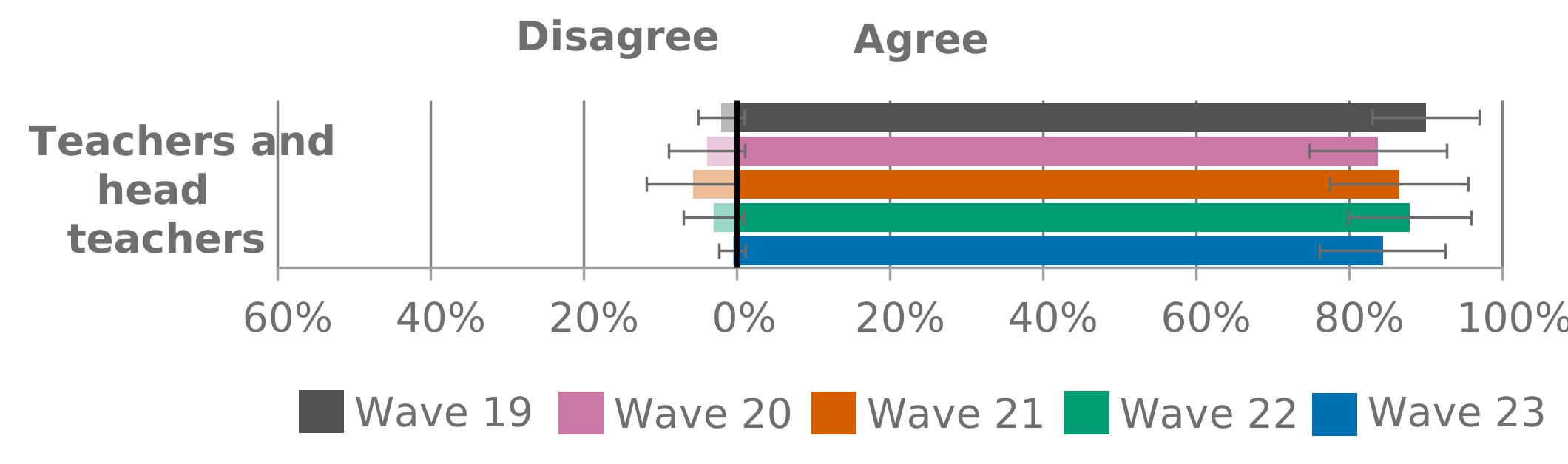
| Respondent type | Wave 19 | Wave 20 | Wave 21 | Wave 22 | Wave 23 |
|---|---|---|---|---|---|
| Teachers and head teachers – agree | 90% | 84% | 87% | 88% | 84% |
| Teachers and head teachers – disagree | 2% | 4% | 6% | 3% | 1% |
Eighty-four percent of teachers and head teachers agreed that they are ‘confident that appeals are dealt with fairly for Applied General qualifications in schools and colleges’ (Figure 50). While there appeared to be an increase in agreement compared to wave 22 this difference was not significant, with no significant differences when compared to any wave since wave 19.
Figure 50. Results for “I am confident that incidents of malpractice for Applied General qualifications taught in schools and colleges are fairly investigated.”
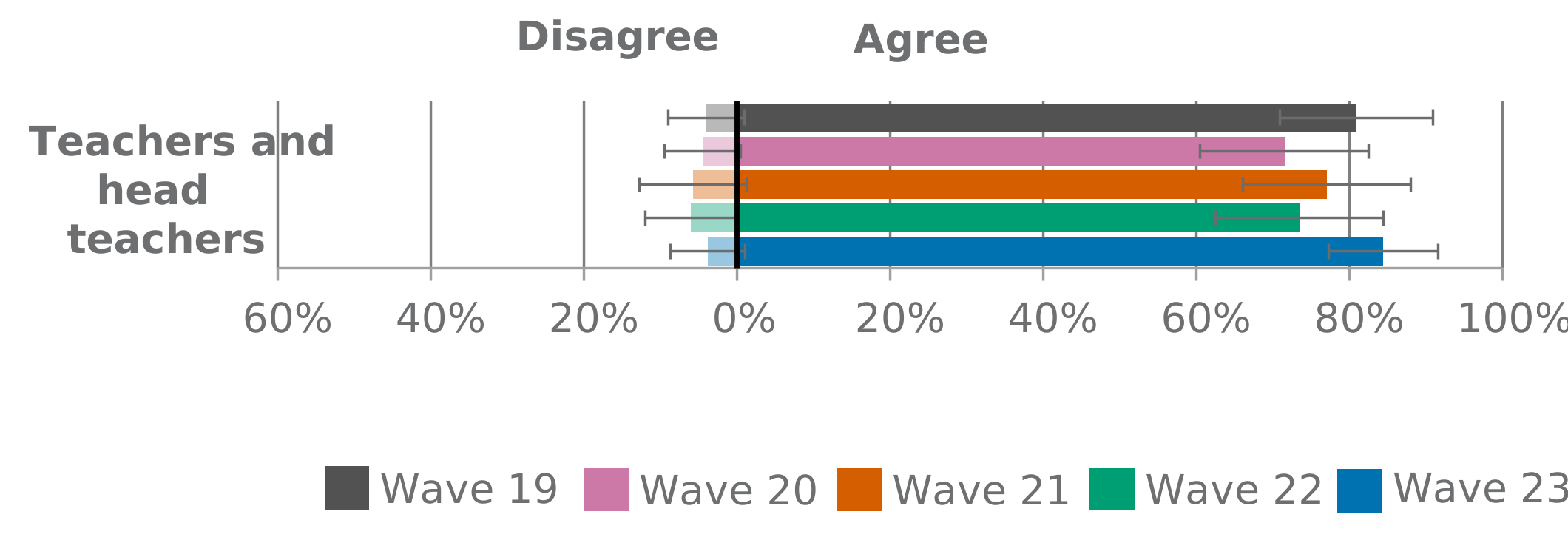
| Respondent type | Wave 19 | Wave 20 | Wave 21 | Wave 22 | Wave 23 |
|---|---|---|---|---|---|
| Teachers and head teachers – agree | 81% | 72% | 77% | 74% | 84% |
| Teachers and head teachers – disagree | 4% | 4% | 6% | 6% | 4% |
Section 9: Malpractice for Applied General qualifications
For the following 4 survey items the wave 23 effective base was: All responses (N=46); teachers (N=31); head teachers (N=28). These survey items were only available to teachers and head teachers who teach Applied General qualifications. Due to small sample sizes, head teachers and teachers are reported as one group.
Key findings
In wave 23, the majority of teachers and head teachers surveyed agreed that they were confident that incidents of malpractice for Applied General qualifications are fairly investigated (76%) and properly reported (74%).
The vast majority also agreed that they had adequate information about what constitutes malpractice for Applied General qualifications in wave 23 (86%) and knew to whom to report an incident (93%). These findings were all consistent with agreement levels seen in wave 22.
Malpractice for Applied General qualifications
Figure 51 shows that in wave 23, 86% of teachers and head teachers agreed that they ‘have adequate information about what constitutes malpractice for Applied General qualifications taught in schools and colleges’. This was broadly consistent with all 5 previous waves.
Figure 51. Results for “I have adequate information about what constitutes malpractice for Applied General qualifications taught in schools and colleges.”
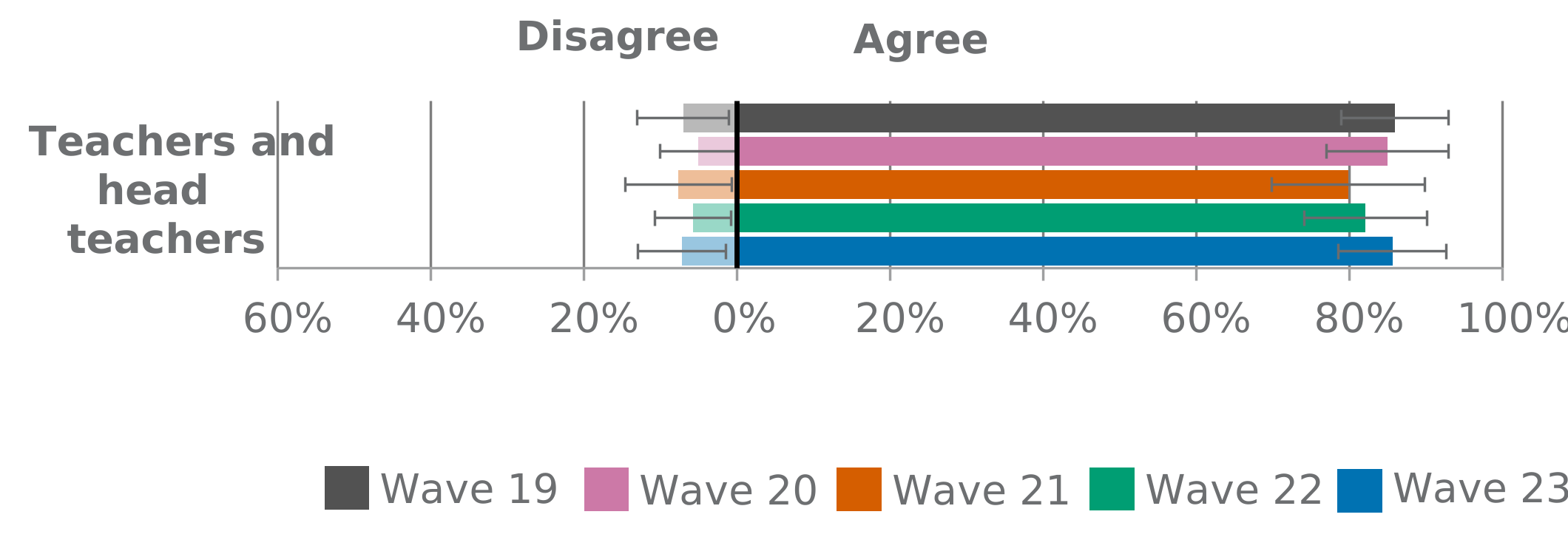
| Respondent type | Wave 19 | Wave 20 | Wave 21 | Wave 22 | Wave 23 |
|---|---|---|---|---|---|
| Teachers and head teachers – agree | 86% | 85% | 80% | 82% | 86% |
| Teachers and head teachers – disagree | 7% | 5% | 8% | 6% | 7% |
Overall, 93% of head teachers and teachers in wave 23 agreed that they ‘know to whom to report an incident of malpractice for Applied General qualifications’. This level of agreement was broadly consistent with previous waves (Figure 52).
Figure 52. Results for “I know to whom I should report an incident of malpractice for Applied General qualifications taught in schools and colleges.”
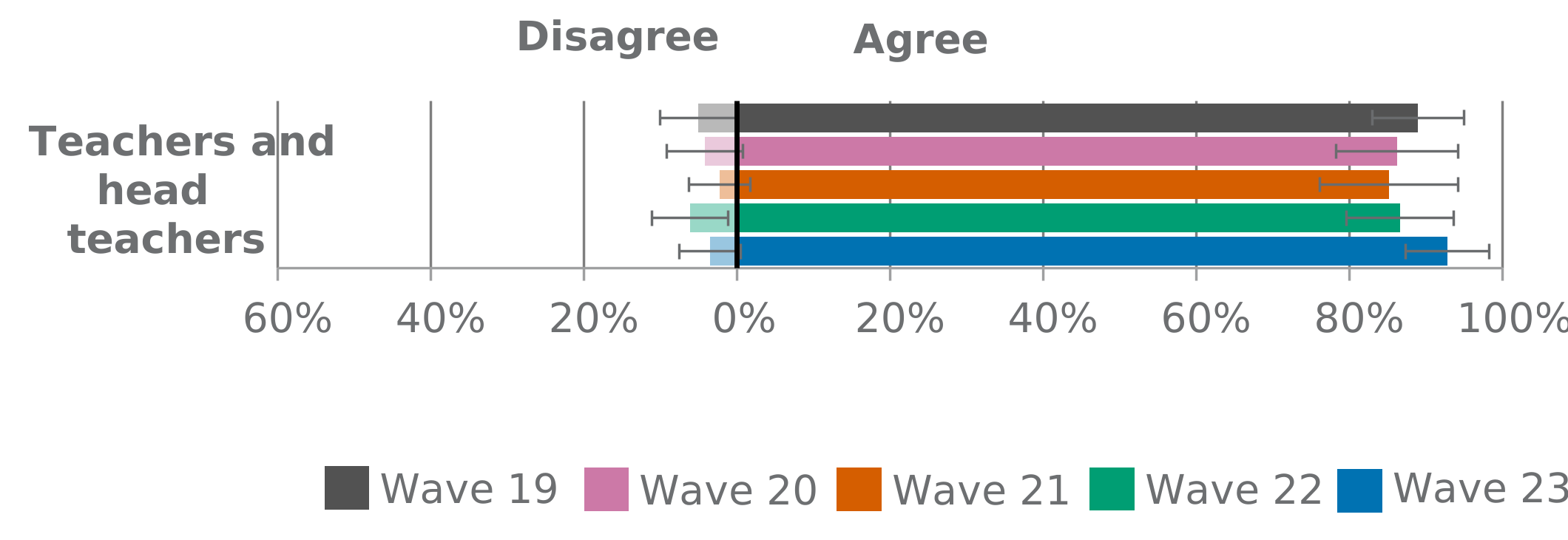
| Respondent type | Wave 19 | Wave 20 | Wave 21 | Wave 22 | Wave 23 |
|---|---|---|---|---|---|
| Teachers and head teachers – agree | 89% | 86% | 85% | 87% | 93% |
| Teachers and head teachers – disagree | 5% | 4% | 2% | 6% | 4% |
Approximately three quarters (76%) of all teachers and head teachers combined agreed in wave 23 that they were ‘confident that incidents of malpractice for Applied General qualifications taught in schools and colleges are fairly investigated’. This was not significantly different from wave 22 (70%) (Figure 53).
Figure 53. Results for “I am confident that incidents of malpractice for Applied General qualifications taught in schools and colleges are fairly investigated.”
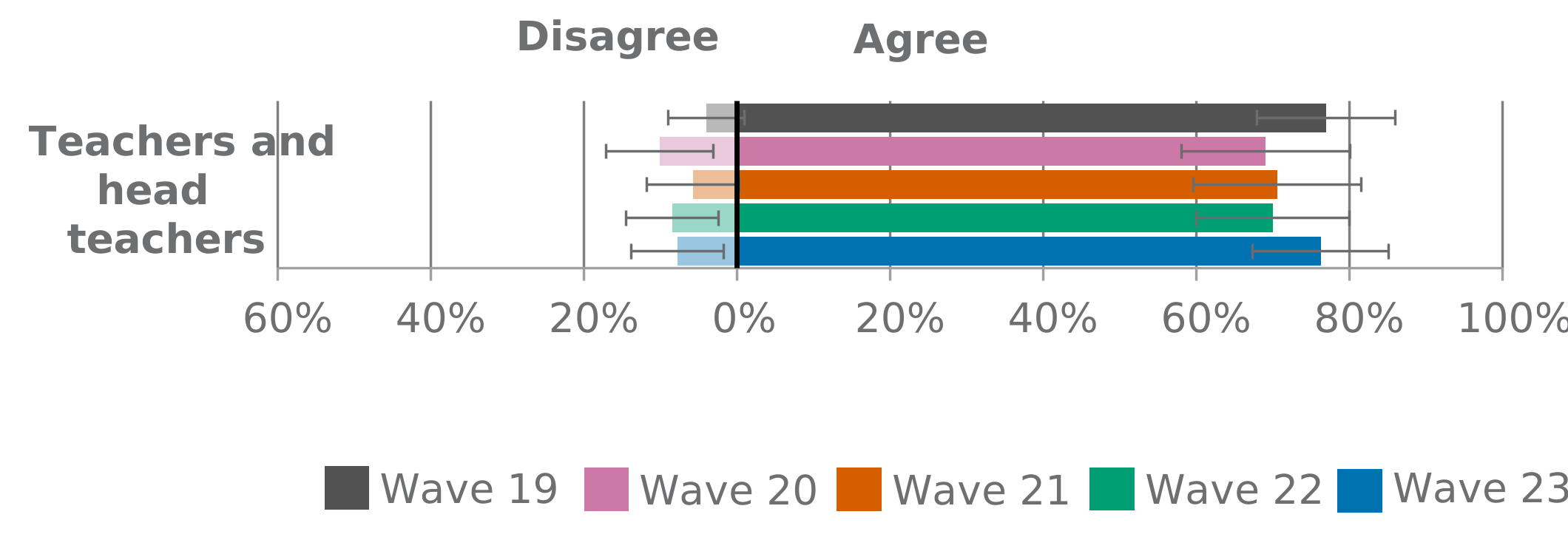
| Respondent type | Wave 19 | Wave 20 | Wave 21 | Wave 22 | Wave 23 |
|---|---|---|---|---|---|
| Teachers and head teachers – agree | 77% | 69% | 71% | 70% | 76% |
| Teachers and head teachers – disagree | 4% | 10% | 6% | 8% | 8% |
In wave 23, 74% of all teachers and head teachers combined agreed they were ‘confident malpractice is properly reported when it happens in Applied General qualifications taught in schools and colleges’. This was broadly consistent with wave 22 (71%) (Figure 54). Although there appeared to be gradual increases in agreement since wave 19, these differences were not significant.
Figure 54. Results for “I am confident malpractice is properly reported when it happens in Applied General qualifications taught in schools and colleges.”
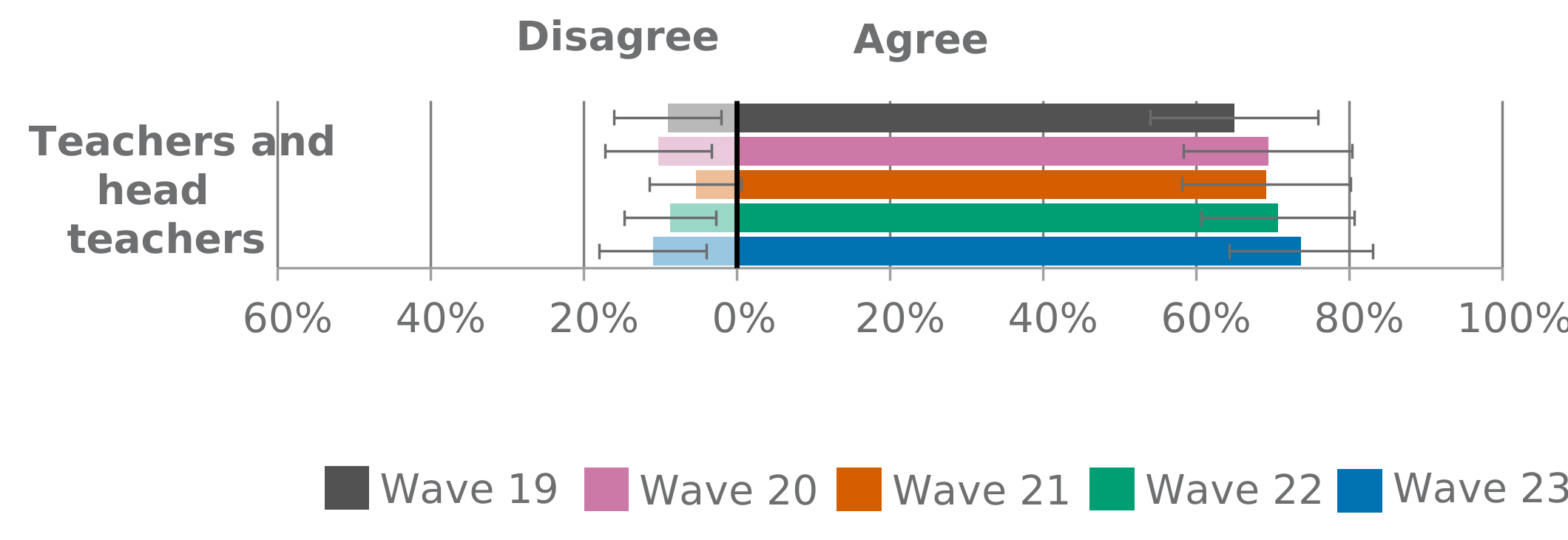
| Respondent type | Wave 19 | Wave 20 | Wave 21 | Wave 22 | Wave 23 |
|---|---|---|---|---|---|
| Teachers and head teachers – agree | 65% | 69% | 69% | 71% | 74% |
| Teachers and head teachers – disagree | 9% | 10% | 5% | 9% | 11% |
Section 10: On-screen examinations
To account for changes made to the A level qualification system over recent years, in wave 20, the question text changed to remove reference to AS.
For the following 2 survey items the wave 23 effective base was: All responses (N=2,234); general public (N=1,028); teachers (N=610); HEIs (N=271); employers (N=248); parents (N=257); head teachers (N=238); young people (N=285).
Key findings
In wave 23, roughly equal proportions of respondents agreed (33%) and disagreed (31%) that ‘on-screen examinations (for example, exams taken on a computer) in GCSE and A level qualifications would be fairer for students than existing pen and paper examinations, while 29% neither agreed nor disagreed and 6% didn’t know. Overall agreement in wave 23 was consistent with wave 22 (34%).
Agreement among teachers in wave 23 (25%) remained consistent with wave 22 (24%), however, was significantly lower compared to wave 21 (31%). Similarly, among employers’ agreement remained broadly consistent this wave (38% compared to 41% in wave 22), yet shows an increase compared to wave 19 (30%) and wave 20 (28%).
Overall, 38% of respondents agreed that on-screen examinations in GCSE and A level qualifications would be more manageable for schools and colleges, consistent with the previous three waves, although continuing a gradual non-significant decreasing trend since wave 21 (41%).
On-screen examinations
As shown in Figure 55, 33% of respondents in wave 23 agreed that ‘on-screen examinations in GCSE and A levels would be fairer for students’. This was consistent with the previous three waves.
Among the individual stakeholder groups in wave 23, young people showed the highest level of agreement (46%), consistent with the previous three waves. Levels of agreement remain broadly consistent in wave 23 among the general public, parents, and head teachers, despite, non-significant shifts.
Among teachers, the level of agreement in wave 23 (25%) has decreased compared to the reported agreement of 31% in wave 21. Conversely, among employers, the level of agreement in wave 23 (38%), while remaining broadly consistent with wave 22, has increased compared to wave 19 (30%) and wave 20 (28%).
Figure 55. Results for “On-screen examinations (e.g. exams taken on a computer) in GCSE and A level qualifications would be fairer for students than existing pen and paper examinations.”
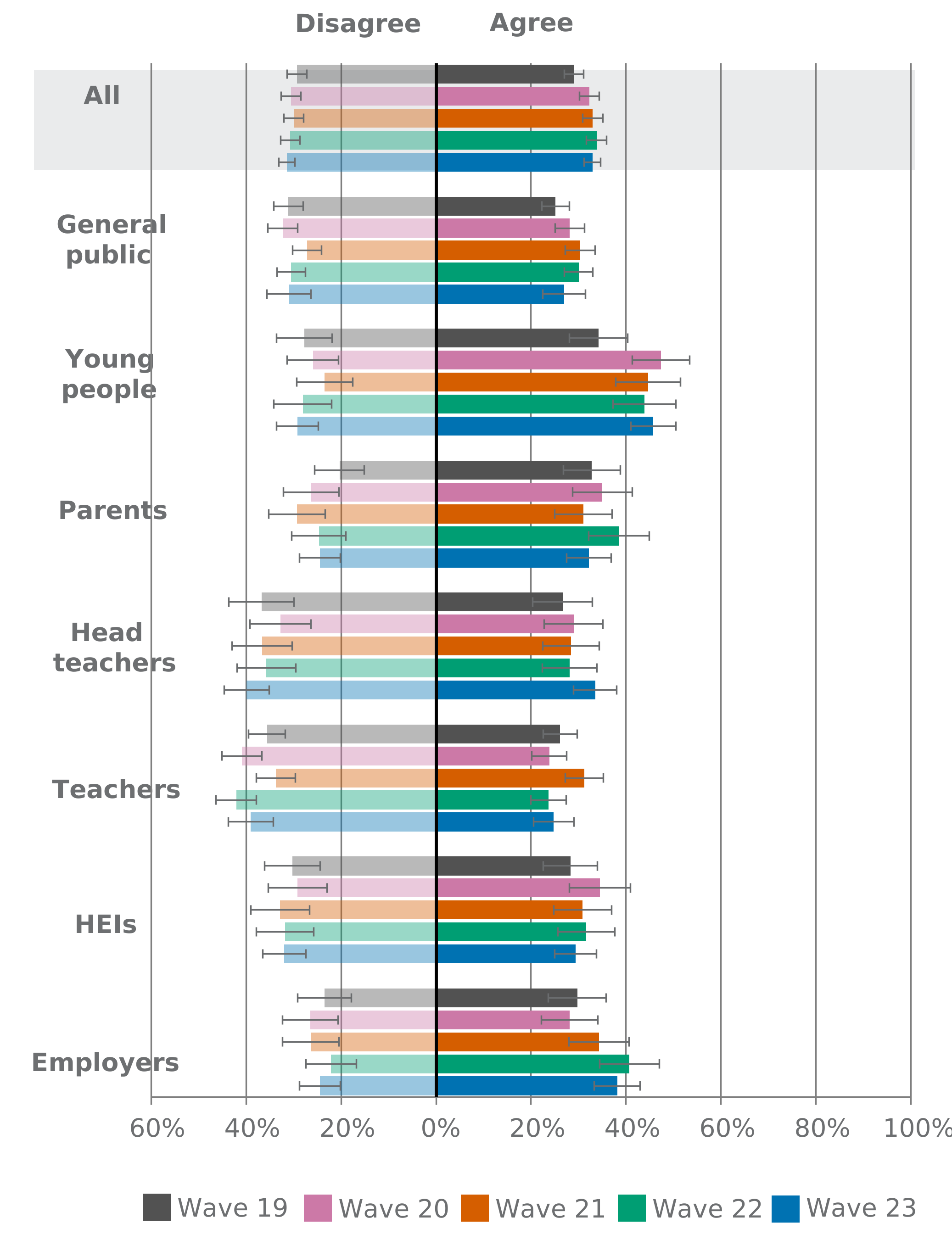
| Respondent type | Wave 19 | Wave 20 | Wave 21 | Wave 22 | Wave 23 |
|---|---|---|---|---|---|
| All – agree | 29% | 32% | 33% | 34% | 33% |
| All – disagree | 29% | 31% | 30% | 31% | 31% |
| General public – agree | 25% | 28% | 30% | 30% | 27% |
| General public – disagree | 31% | 32% | 27% | 31% | 31% |
| Young people – agree | 34% | 47% | 45% | 44% | 46% |
| Young people – disagree | 28% | 26% | 23% | 28% | 29% |
| Parents – agree | 33% | 35% | 31% | 38% | 32% |
| Parents – disagree | 20% | 26% | 29% | 25% | 24% |
| Head teachers – agree | 27% | 29% | 28% | 28% | 34% |
| Head teachers – disagree | 37% | 33% | 37% | 36% | 40% |
| Teachers – agree | 26% | 24% | 31% | 24% | 25% |
| Teachers – disagree | 36% | 41% | 34% | 42% | 39% |
| HEIs – agree | 28% | 34% | 31% | 32% | 29% |
| HEIs – disagree | 30% | 29% | 33% | 32% | 32% |
| Employers – agree | 30% | 28% | 34% | 41% | 38% |
| Employers – disagree | 23% | 26% | 26% | 22% | 24% |
Overall, 38% of respondents agreed in wave 23 that ‘on-screen examinations in GCSE and A level qualifications would be more manageable for schools and colleges’ (Figure 56). As with the perceptions of fairness, this was broadly consistent with the previous three waves, although it does continue a gradual non-significant decreasing trend since wave 21.
Employers reported the highest levels of agreement (53%), followed by young people (49%). Although these differences appeared to have increased compared to wave 22, these differences were not significant.
In wave 23, agreement among teachers was broadly consistent to wave 22, however, due to small non-significant decreases since wave 21, agreement among this group was lower in comparison (22% in wave 23 compared to 28% in wave 21). Agreement among teachers in wave 23 was broadly consistent to wave 22 (26%). Conversely, among head teachers, agreement in wave 23 remained consistent across the previous three waves, remaining higher compared to wave 19 (21% in wave 23 compared to 13% in wave 19).
There were no other significant differences in levels of agreement in wave 23 compared to wave 22 for individual stakeholder groups.
Figure 56. Results for “On-screen examinations (e.g. exams taken on a computer) in GCSE and A level qualifications would be more manageable for schools and colleges than existing pen and paper examinations.”
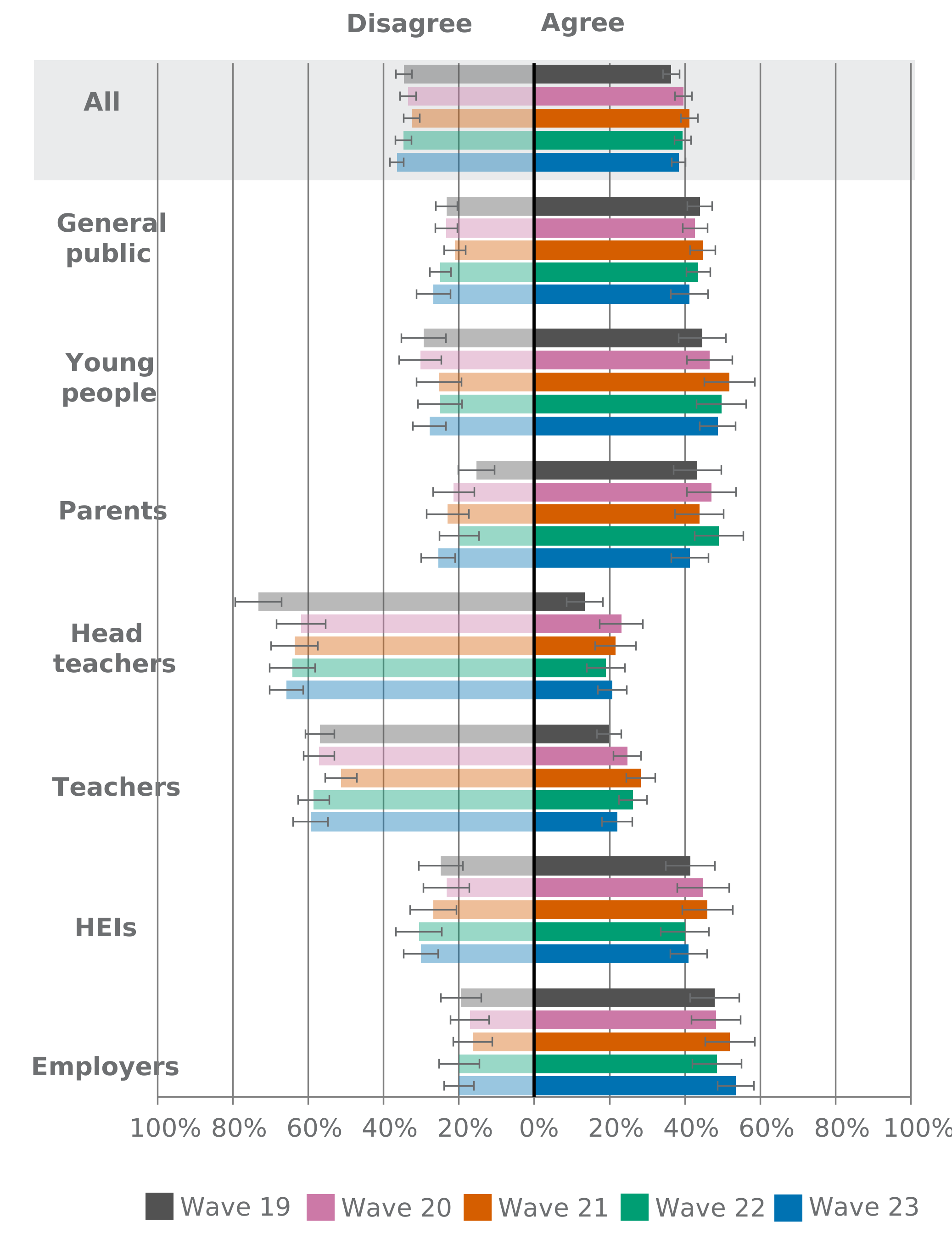
| Respondent type | Wave 19 | Wave 20 | Wave 21 | Wave 22 | Wave 23 |
|---|---|---|---|---|---|
| All – agree | 36% | 40% | 41% | 39% | 38% |
| All – disagree | 35% | 33% | 32% | 35% | 36% |
| General public – agree | 44% | 43% | 45% | 44% | 41% |
| General public – disagree | 23% | 23% | 21% | 25% | 27% |
| Young people – agree | 45% | 47% | 52% | 50% | 49% |
| Young people – disagree | 29% | 30% | 25% | 25% | 28% |
| Parents – agree | 43% | 47% | 44% | 49% | 41% |
| Parents – disagree | 15% | 21% | 23% | 20% | 25% |
| Head teachers – agree | 13% | 23% | 22% | 19% | 21% |
| Head teachers – disagree | 73% | 62% | 64% | 64% | 66% |
| Teachers – agree | 20% | 25% | 28% | 26% | 22% |
| Teachers – disagree | 57% | 57% | 51% | 59% | 59% |
| HEIs – agree | 41% | 45% | 46% | 40% | 41% |
| HEIs – disagree | 25% | 23% | 27% | 31% | 30% |
| Employers – agree | 48% | 48% | 52% | 48% | 53% |
| Employers – disagree | 19% | 17% | 16% | 20% | 20% |