Quarterly infographic: MRSA, MSSA and Gram-negative bacteraemia and CDI, data up to January to March 2026
Updated 9 July 2026
Applies to England

© Crown copyright 2026
This publication is licensed under the terms of the Open Government Licence v3.0 except where otherwise stated. To view this licence, visit nationalarchives.gov.uk/doc/open-government-licence/version/3 or write to the Information Policy Team, The National Archives, Kew, London TW9 4DU, or email: psi@nationalarchives.gov.uk.
Where we have identified any third party copyright information you will need to obtain permission from the copyright holders concerned.
This publication is available at https://www.gov.uk/government/statistics/mrsa-mssa-gram-negative-bacteraemia-and-cdi-quarterly-report/quarterly-infographic-mrsa-mssa-and-gram-negative-bacteraemia-and-cdi-data-up-to-january-to-march-2026
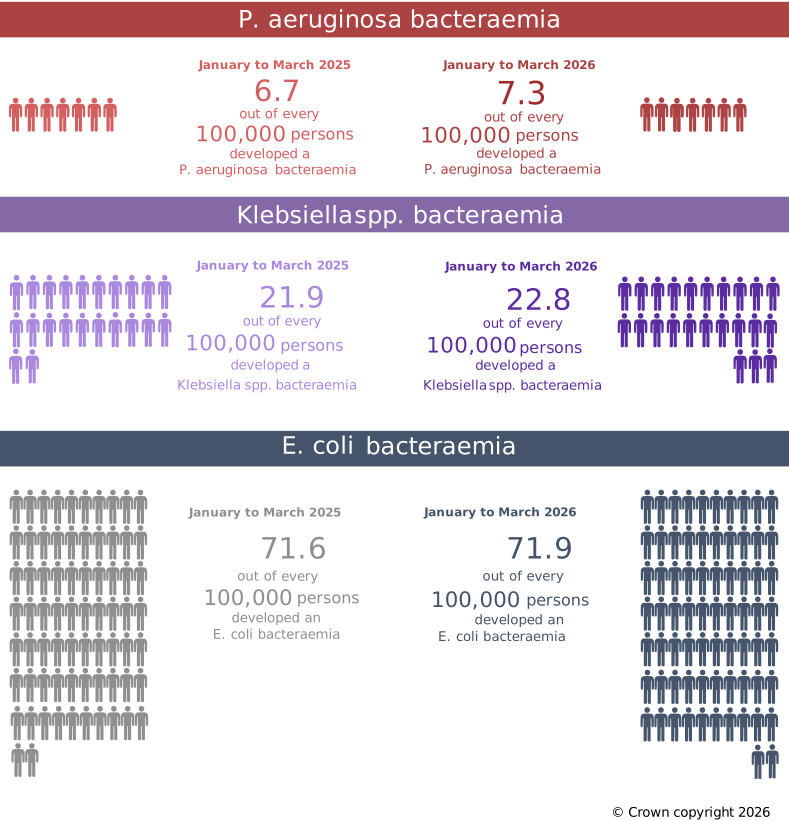
Gram-negative bacteraemias (Klebsiella spp.,P. aeruginosa and E. coli)
Pseudomonas aeruginosa (P. aeruginosa) bacteraemia
January to March 2025: 6.7 out of every 100,000 persons developed a P. aeruginosa bacteraemia.
January to March 2026: 7.3 out of every 100,000 persons developed a P. aeruginosa bacteraemia.
Klebsiella spp. bacteraemia
January to March 2025: 21.9 out of every 100,000 persons developed a Klebsiella spp. bacteraemia.
January to March 2026: 22.8 out of every 100,000 persons developed a Klebsiella spp. bacteraemia.
Escherichia coli (E. coli) bacteraemia
January to March 2025: 71.6 out of every 100,000 persons developed an E. coli bacteraemia.
January to March 2026: 71.9 out of every 100,000 persons developed an E. coli bacteraemia.
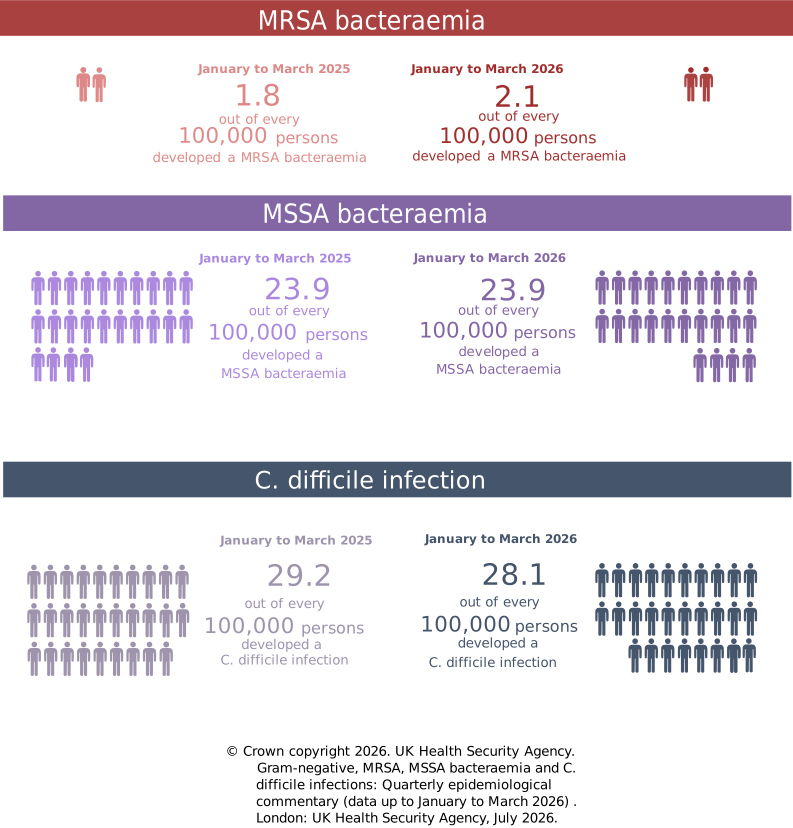
Staphylococcus aureus (S. aureus) MRSA and MSSA bacteraemia and Clostridioides difficile (C. difficile) infections
Meticillin-resistant Staphylococcus aureus (MRSA) bacteraemia
January to March 2025: 1.8 out of every 100,000 persons developed an MRSA bacteraemia.
January to March 2026: 2.1 out of every 100,000 persons developed an MRSA bacteraemia.
Meticillin-susceptible Staphylococcus aureus (MSSA) bacteraemia
January to March 2025: 23.9 out of every 100,000 persons developed an MSSA bacteraemia.
January to March 2026: 23.9 out of every 100,000 persons developed an MSSA bacteraemia.
Clostridioides difficile (C. difficile) infection
January to March 2025: 29.2 out of every 100,000 persons developed a C. difficile infection.
January to March 2026: 28.1 out of every 100,000 persons developed a C. difficile infection.