MOD sponsored cadet forces: 1 April 2026
Published 11 June 2026

© Crown copyright 2026
This publication is licensed under the terms of the Open Government Licence v3.0 except where otherwise stated. To view this licence, visit nationalarchives.gov.uk/doc/open-government-licence/version/3 or write to the Information Policy Team, The National Archives, Kew, London TW9 4DU, or email: psi@nationalarchives.gov.uk.
Where we have identified any third party copyright information you will need to obtain permission from the copyright holders concerned.
This publication is available at https://www.gov.uk/government/statistics/mod-sponsored-cadet-forces-statistics-2026/mod-sponsored-cadet-forces-1-april-2026
This annual publication presents figures on the number of Cadets and Adult Volunteers in the Cadet Forces sponsored by the Ministry of Defence (MOD).
Statistics are provided for the Community Cadets (the Sea Cadet Corps, the Volunteer Cadet Corps, the Army Cadet Force, and the Air Training Corps) and the Combined Cadet Force, whose contingents contain one or more sections from the Royal Navy, Royal Marines, Army and Royal Air Force. More detailed statistics and historic time series can be found in the Excel Tables.
This publication is part of a series of MOD Sponsored Cadet Forces Statistics annual bulletins. Previous statistics on cadets can be found in earlier publications.
1. Key Points and Trends
| ▲88 870 |
Number of Cadets in the Community Cadets At 1 April 2026 Increase of 700 (+1%) since 1 April 2025 |
|---|---|
| ▼48 240 |
Number of Cadets in the Combined Cadet Force At 1 April 2026 Decrease of 2 110 (-4%) since 1 April 2025 |
| ▲23 540 |
Number of Adult Volunteers in the Community Cadets At 1 April 2026 Increase of 310 (+1%) since 1 April 2025 |
| ▲4 540 |
Number of Adult Volunteers in the Combined Cadet Force At 1 April 2026 Increase of 70 (+2%) since 1 April 2025 |
| ▲37% |
Percentage of female Cadets in the Community Cadets At 1 April 2026 Increase of 1% since 1 April 2025 |
| ►39% |
Percentage of female Cadets in the Combined Cadet Force At 1 April 2026 Remained the same since 1 April 2025 |
Responsible Statistician: Tri-Service Head of Branch
Email: Analysis-Tri-Hd@mod.uk
Further information/mailing list: Analysis-Tri-Service@mod.gov.uk
Background Quality Report: https://www.gov.uk/government/statistics/tri-service-personnel-bulletin-background-quality-reports
Would you like to be added to our contact list, so that we can inform you about updates to these statistics and consult you if we are thinking of making changes? You can subscribe to updates by emailing Analysis-Tri-Service@mod.gov.uk.
2. Introduction
This annual publication presents figures on the number of Cadets and Adult Volunteers in the Cadet Forces sponsored by the Ministry of Defence (MOD). It includes age and gender breakdowns of the Cadets, and gender breakdowns of the Adult Volunteers.
The MOD sponsors and supports five Cadet Forces (voluntary youth organisations). They comprise of the Community Cadets (Sea Cadet Corps, Volunteer Cadet Corps, Army Cadet Force and Air Training Corps) and the school-based Combined Cadet Force, whose contingents contain one or more sections from the Royal Navy, Royal Marines, Army or Royal Air Force.
The Cadet Forces provide young people with interesting and challenging activities as part of a stimulating syllabus that develops valuable life skills. In addition, the Cadet Forces encourage young people to take an interest in Defence and the Armed Forces and, for those considering careers in the Services, shows them the various opportunities that exist.
The Cadet Forces are not part of the Armed Forces, and members of the Cadet Forces do not have any liability for military service or compulsory training in the Armed Forces (Regular or Reserve). The Cadet Forces are not conduits for entry into the Armed Forces – this position is clearly stated in the UK’s commitment to the UN Convention on the Rights of the Child.
The next edition of this publication is provisionally scheduled to be released on GOV.UK in June 2027. A calendar of upcoming MOD statistical releases can be found on GOV.UK.
Accredited Official Statistics publication
Accredited Official Statistics are called National Statistics in the Statistics and Registration Service Act 2007. These Accredited Official Statistics were independently reviewed by the Office for Statistics Regulation in 2023. They comply with the standards of trustworthiness, quality and value in the Code of Practice for Statistics and should be labelled ‘Accredited Official Statistics’. Accreditation can be broadly interpreted to mean that the statistics:
- meet identified user needs;
- are well explained and readily accessible;
- are produced according to sound methods; and
- are managed impartially and objectively in the public interest.
Further information on the accreditation process can be found here: Accredited Official Statistics.
Once statistics have been designated as Accredited Official Statistics it is a statutory requirement that the Code of Practice shall continue to be observed. Further details about how this report has been developed since its confirmation as an Accredited Official Statistic can be found in the Background Quality Report.
Our statistical practice is regulated by the Office for Statistics Regulation (OSR). OSR sets the standards of trustworthiness, quality and value in the Code of Practice for Statistics that all producers of official statistics should adhere to.
You are welcome to contact us directly with any comments about how we meet these standards. Alternatively, you can contact OSR by emailing regulation@statistics.gov.uk or via the OSR website.
3. Background and Context
3.1 Key Policies
3.2 Background
The Ministry of Defence sponsors five Cadet Forces: the Sea Cadet Corps, the Volunteer Cadet Corps, the Army Cadet Force, and the Air Training Corps (all based in the community), and the Combined Cadet Force based in schools. There are over 137,000 young people and more than 28,000 adult volunteers in approximately 3,500 cadet units across the UK. Independent research carried out by the University of Northampton clearly demonstrates that the valuable life skills gained from the cadet experience including self-discipline, confidence, and resilience can improve employability and social mobility Report. More than 500 schools across the maintained and independent sectors have cadet units, mainly Combined Cadet Force contingents, with around half these having been established under the joint MOD and Department for Education Cadet Expansion Programme. The Strategic Defence Review, published in June 2025, recommended that the MOD should expand in-school and community-based Cadet Forces across the country by 30% by 2030, with an ambition to reach 250,000 in the longer term.
3.3 Cadet Force Strategy
The Cadet Force Strategy (CFS) was initiated in April 2024 and is currently being produced by the department. It builds upon the earlier CF2025 strategy. As a Tri-Service strategy, it will set out the overarching strategic intent for the MOD-sponsored Cadet Forces, ensuring a coherent strategic direction and unified effort across all cadet forces. The strategy will provide a focused and contemporary strategic vision, drawing on the values, standards, and ethos of the modern Armed Forces to deliver an approach that is both aspirational and appropriately challenging.
The strategy will set out the government’s long-term vision to expand high-quality, accessible cadet provision and ensure more young people from all backgrounds can benefit. This will include modernizing the cadet experience, providing an attractive offer to retain and recruit adult volunteers, and ensure that cadets and volunteers have the right resources and support.
3.4 Cadet Expansion Programme
The joint MOD/DfE Cadet Expansion Programme (CEP) was launched in June 2012, with an initial aim of establishing 100 new cadet units in English state-funded secondary schools by September 2015. In Scotland, a bespoke ‘linked detachment” model has been adopted to bring the Combined Cadet Force (CCF) units into state secondary schools in Scotland. In Wales, the CEP is a joint initiative between the MOD and the Welsh Government to bring CCF units to schools and colleges within Wales.
Following successful delivery of this target the Government committed £50m from LIBOR fines to cover set up costs, uniforms, equipment and training to grow the total number of cadet units in schools across the UK to 500 by March 2020. The number of schools across the UK with cadet units has almost doubled since the start of the programme, now with more units in state schools than in independent schools with 56% of current CCF units within State Schools. Schools which wish to register their interest in the programme can find out more information and register to apply.
The Strategic Defence Review, published in June 2025, recommended that the MOD should expand in-school and community-based Cadet Forces across the country by 30% by 2030, with an ambition to reach 250,000 in the longer term.
3.5 Safeguarding
Safeguarding young people is a key priority and we have robust procedures in place to protect cadets. This includes mandatory security and background checks for all adults who work with children, rigorous disclosure procedures and regular safeguarding training. The MOD’s approach to Safeguarding is set out in its Cadet Forces Safeguarding Framework 2024.
4. Community Cadets
As at 1 April 2026, there were 88,870 cadets in the Community Cadets, made up of 13,720 Sea Cadets, 460 Volunteer Cadet Corps, 39,490 Army Cadets and 35,190 Air Cadets. Since 1 April 2022, the number of Army Cadets has increased by 6,190 (19%), the number of Air Cadets has increased by 9,150 (35%) and the number of Sea Cadets has increased by 140 (1%). Volunteer Cadet Corps numbers are not shown in Figure 1 due to their relatively small size.
Community Cadet Forces include the Sea Cadet Corps (SCC), Volunteer Cadet Corps (VCC), Army Cadet Force (ACF) and Air Training Corps (ATC). (See glossary).
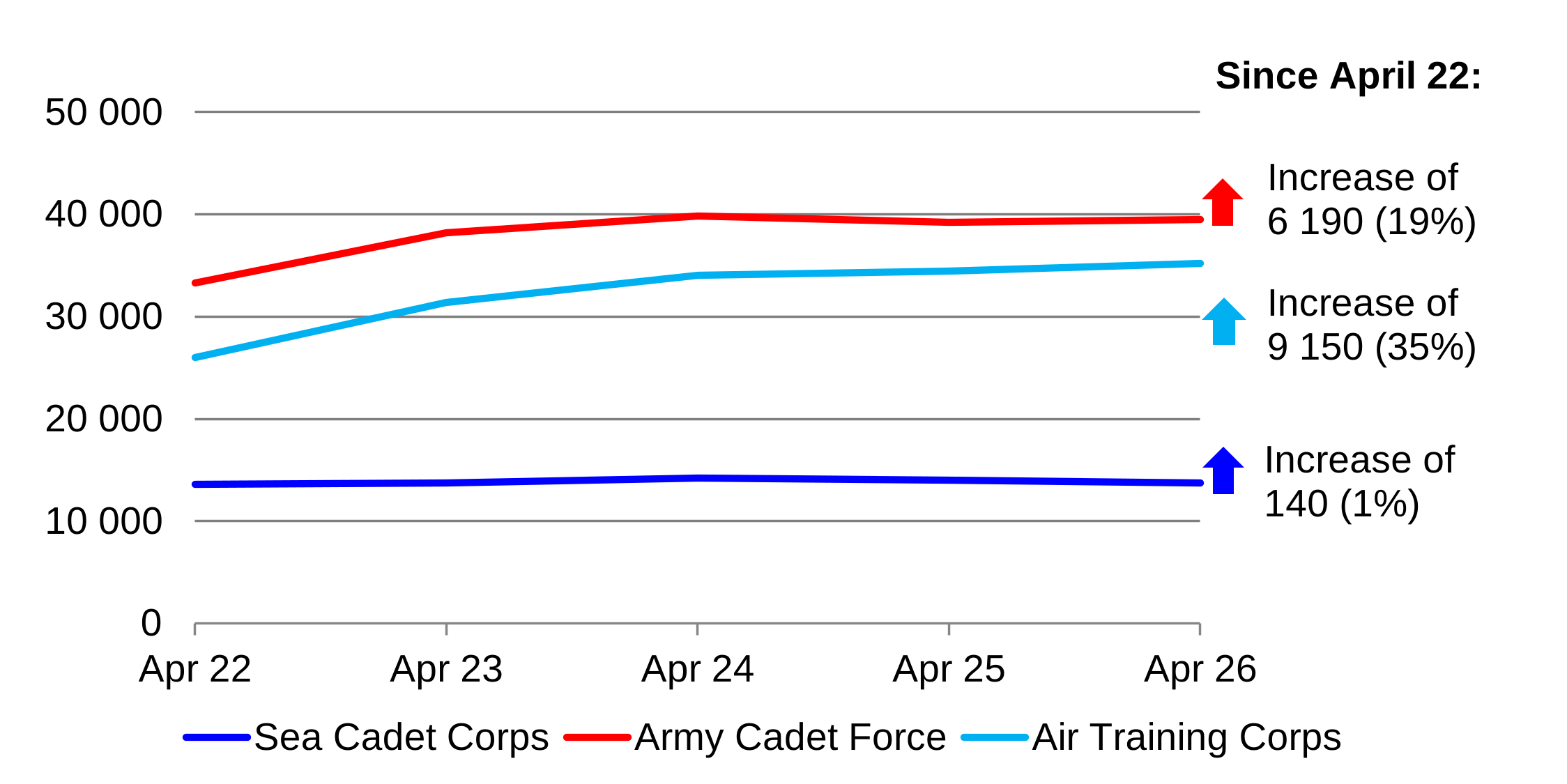
Figure 1: Number of Cadets in the Community Cadets
4.1 Gender
The proportion of female cadets in the Community Cadet Forces has increased to 37% at 1 April 2026 compared with 33% at 1 April 2022.
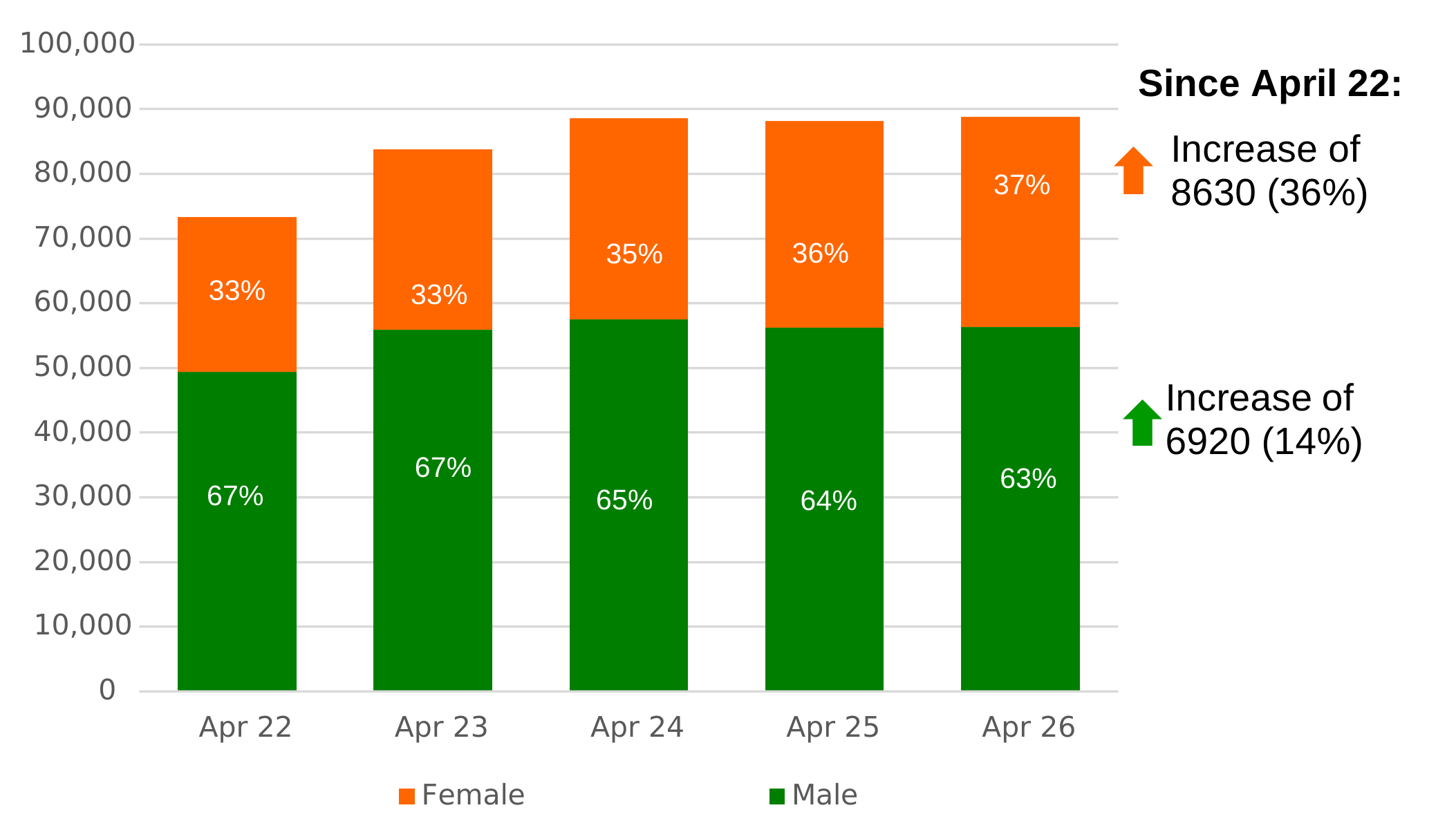
Figure 2: Number of Cadets in the Community Cadets by Gender
The Army Cadet Force had the highest proportion of female cadets at 1 April 2026 (41%), followed by the Sea Cadet Corps (38%), the Volunteer Cadet Corps (32%) and the Air Training Corps (31%) shown in Figure 3. Since 2025, the total number of Sea cadet Corps (SCC) community cadets has decreased, with the Army Cadet Force (ACF) and Air Training Corps (ATC) seeing an increase in numbers.
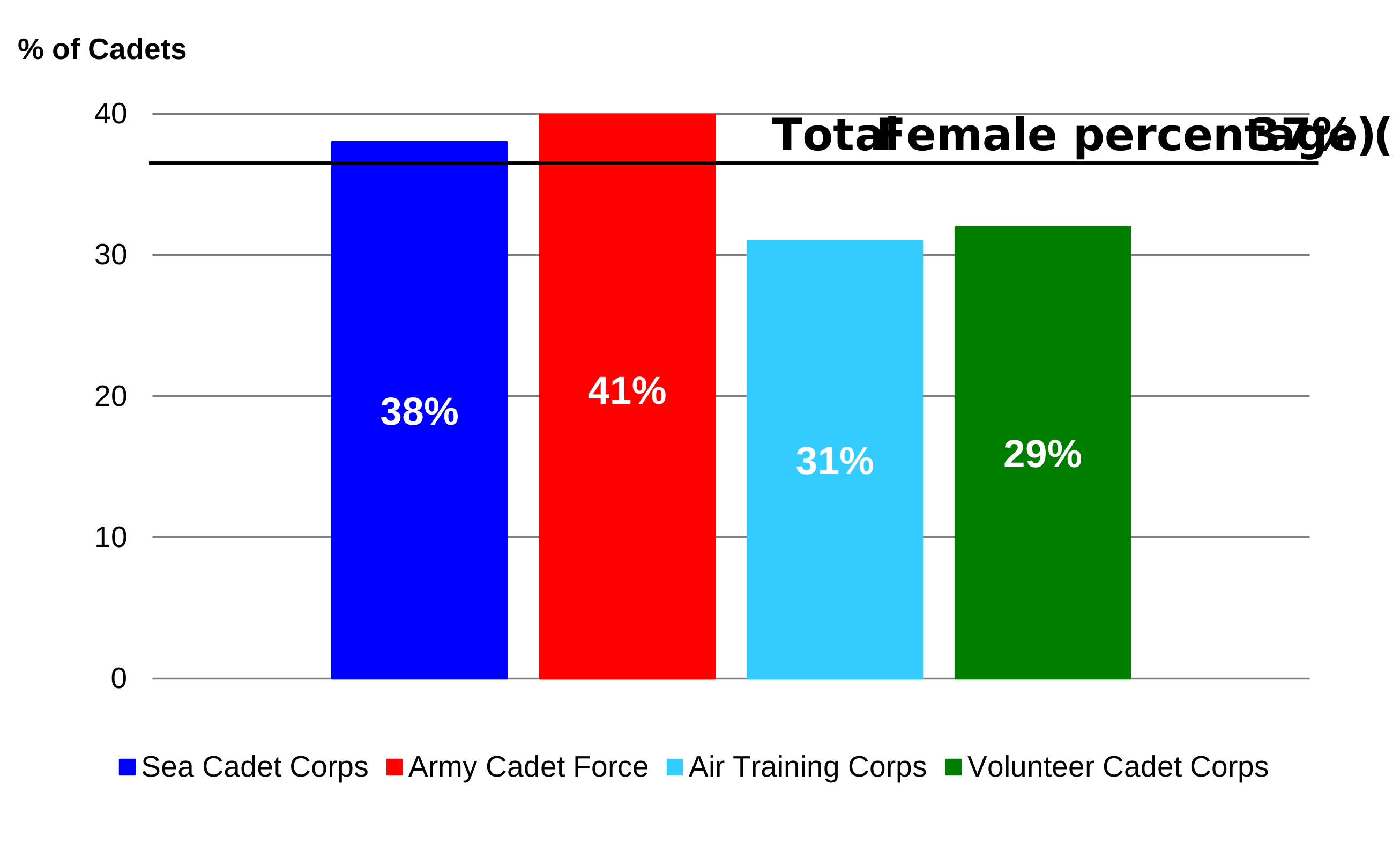
Figure 3: Percentage of Female Cadets in the Community Cadets as at 1 April 26
4.2 Age
Each of the Cadet Forces has different age restrictions1 and as a result different age distributions are observed.
There is a higher proportion of younger cadets than older cadets in the Community Cadet Forces, with SCC and VCC having a higher representation of younger cadets compared to ACF and ATC.
The Sea Cadet Corps’ largest age groups is 13 and 14 (15%). The Volunteer Cadet Corps’ largest age group is 14 year olds (17%). The Army Cadet Force’s and Air Training Corps’ largest age group are 14 year olds (22% and 24% respectively).
1 See glossary for age limits.
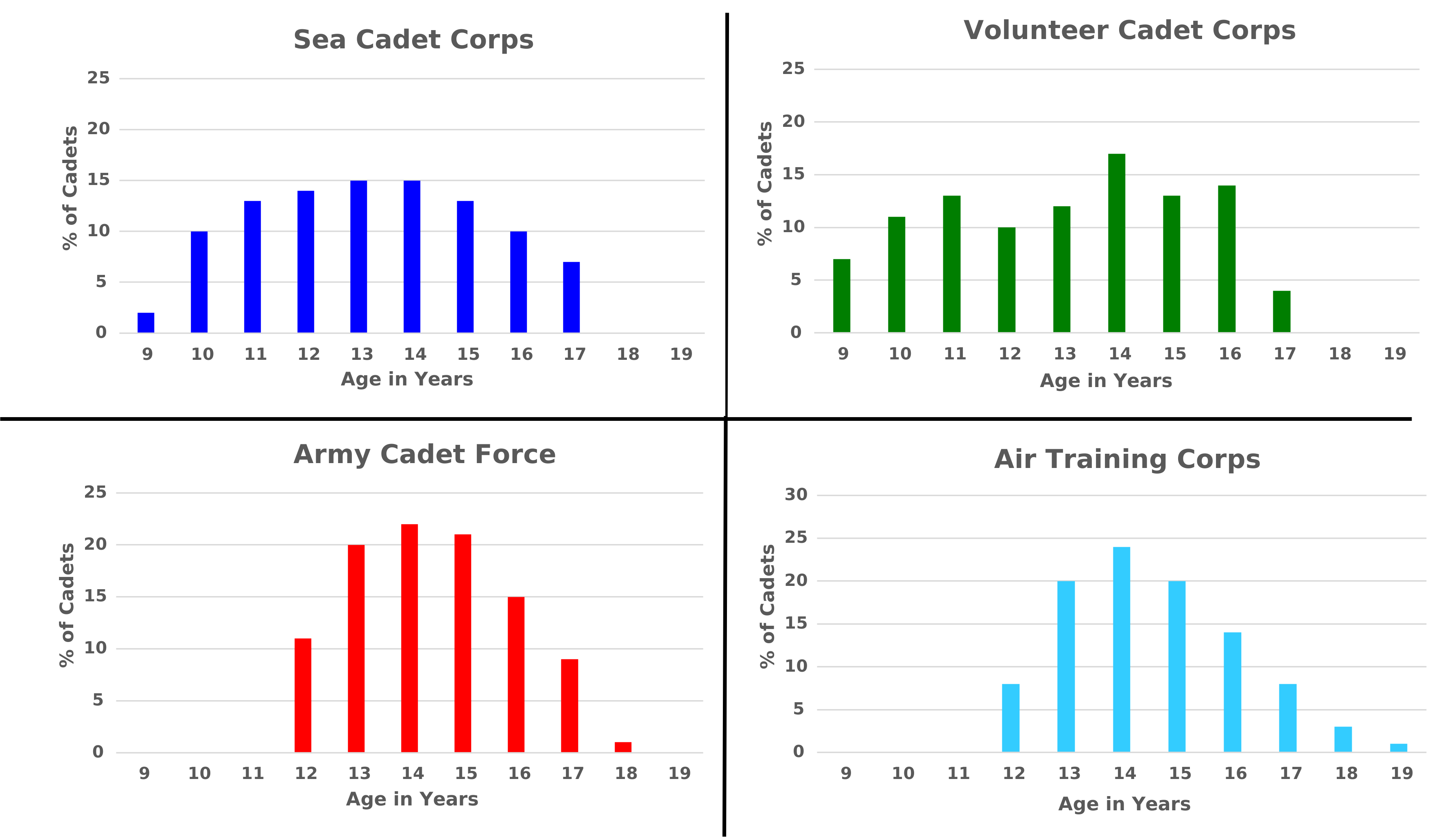
Figure 4: Age Distribution of Cadets in the Community Cadets as at 1 April 26
4.3 Adult Volunteers
As at 1 April 2026, there were 23,540 Adult Volunteers in the Community Cadets, made up of 6,010 in the Sea Cadet Corps, 150 in the Volunteer Cadet Corps, 8,660 in the Army Cadet Force and 8,730 in the Air Training Corps. Figure 5 shows the changes in Adult Volunteer numbers across the Community Cadets since 1 April 2022. Volunteer Cadet Corps numbers are not shown in Figure 5 due to small numbers.
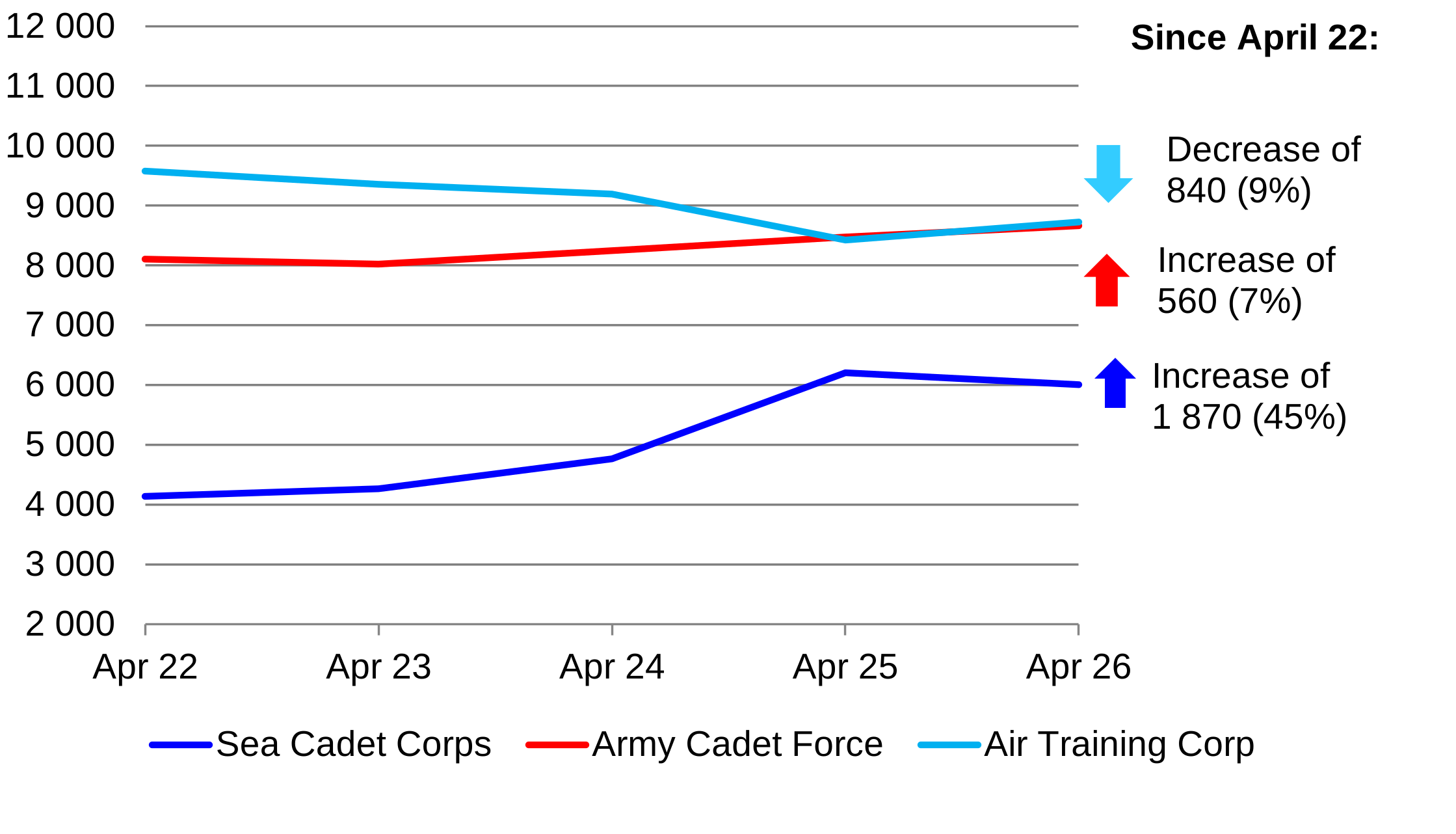
Figure 5: Number of Adult Volunteers in the Community Cadets
Adult Volunteers include uniformed and non-uniformed volunteers. (See glossary).
4.4 Adult Volunteers Gender
The Sea Cadet Corps had the highest percentage of female Adult Volunteers at 1 April 2026 with 38%, followed by the Army Cadet Force with 32% and the Air Training Corps with 30%.
While there is a greater percentage of males in both the Uniformed and non-Uniformed Volunteers, the gender difference is greater in the Uniformed population (70% male) compared with non-Uniformed Volunteers (62% male).
4.5 Adult to Cadet Ratio
Overall the ratio of cadets to Adult Volunteers in the community Cadet Forces has remained stable at almost four cadets (3.8) to one Adult Volunteer, as at 1 April 2026 with variations between Cadet Forces. Please note this does not reflect the ratios of cadets to adult volunteers during training activities which are set out in Joint Service Publication 814 - Policy and Regulations for Ministry of Defence Sponsored Cadet Forces.
5. Combined Cadet Force
As at 1 April 2026, there were 48,240 cadets in the Combined Cadet Force (CCF), made up of 6,190 cadets in the RN and RM sections, 31,940 in the Army sections and 10,110 in the RAF sections. Since 1 April 2022 the total number of cadets in the RN and RM sections, the Army Sections, and the RAF sections has decreased (see figure 6). Since 1 April 2025, the number of cadets in the RN and RM sections has increased by 150 (3%), the number of cadets in the Army sections has decreased by 2180 (-6%) and the number of cadets in the RAF sections has decreased by 80 (-1%).
Combined Cadet Forces is a school-based youth organisation, comprising one or more sections from the RN and RM, Army and RAF. (See glossary).
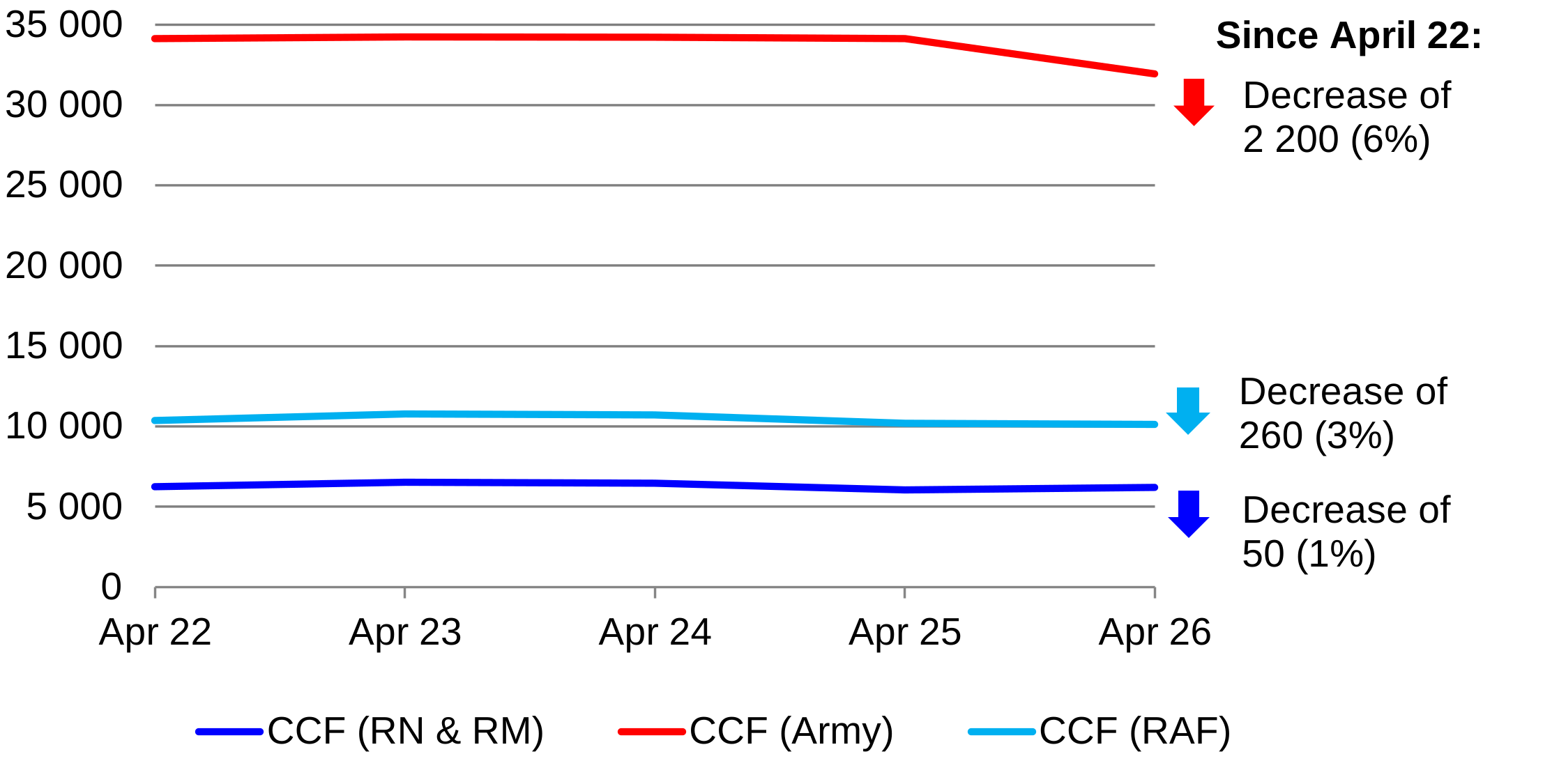
Figure 6: Number of Cadets in the Combined Cadet Force
5.1 Gender
The proportion of female cadets in the CCF has increased slightly, rising to 39% at 1 April 2026 compared with 37% at 1 April 2022. the overall number of female cadets has remained consistent, whereas the number of male cadets has decreased when compared with 1 April 2022 (see Figure 7).
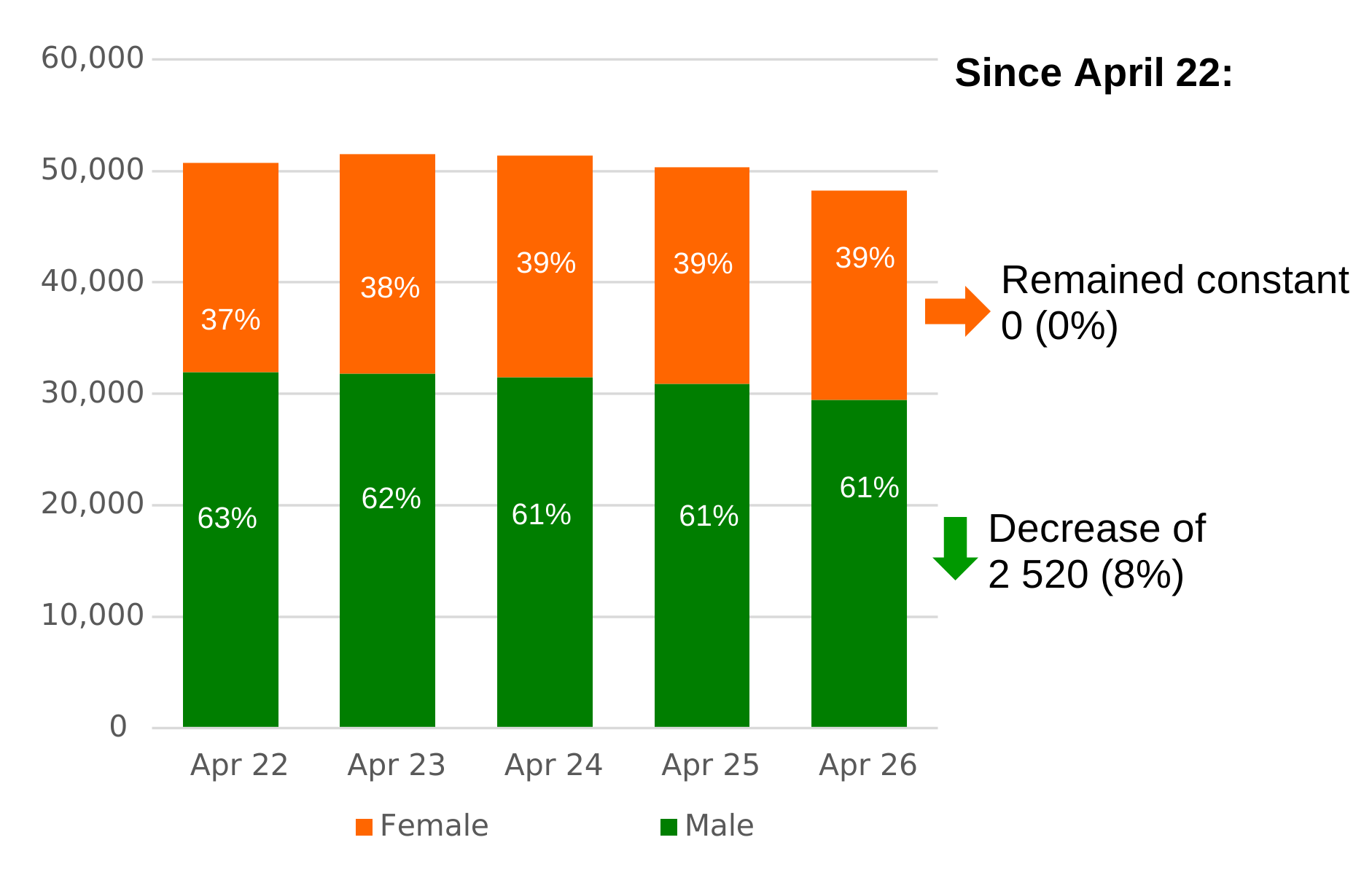
Figure 7: Number of Cadets in the Combined Cadet Force by Gender
At 1 April 2026, the RN and RM had the highest proportion of female cadets (41%), followed by the Army (39%), and the RAF (36%). The proportion of female cadets has increased across the CCF for all three single services since 1 April 2022.
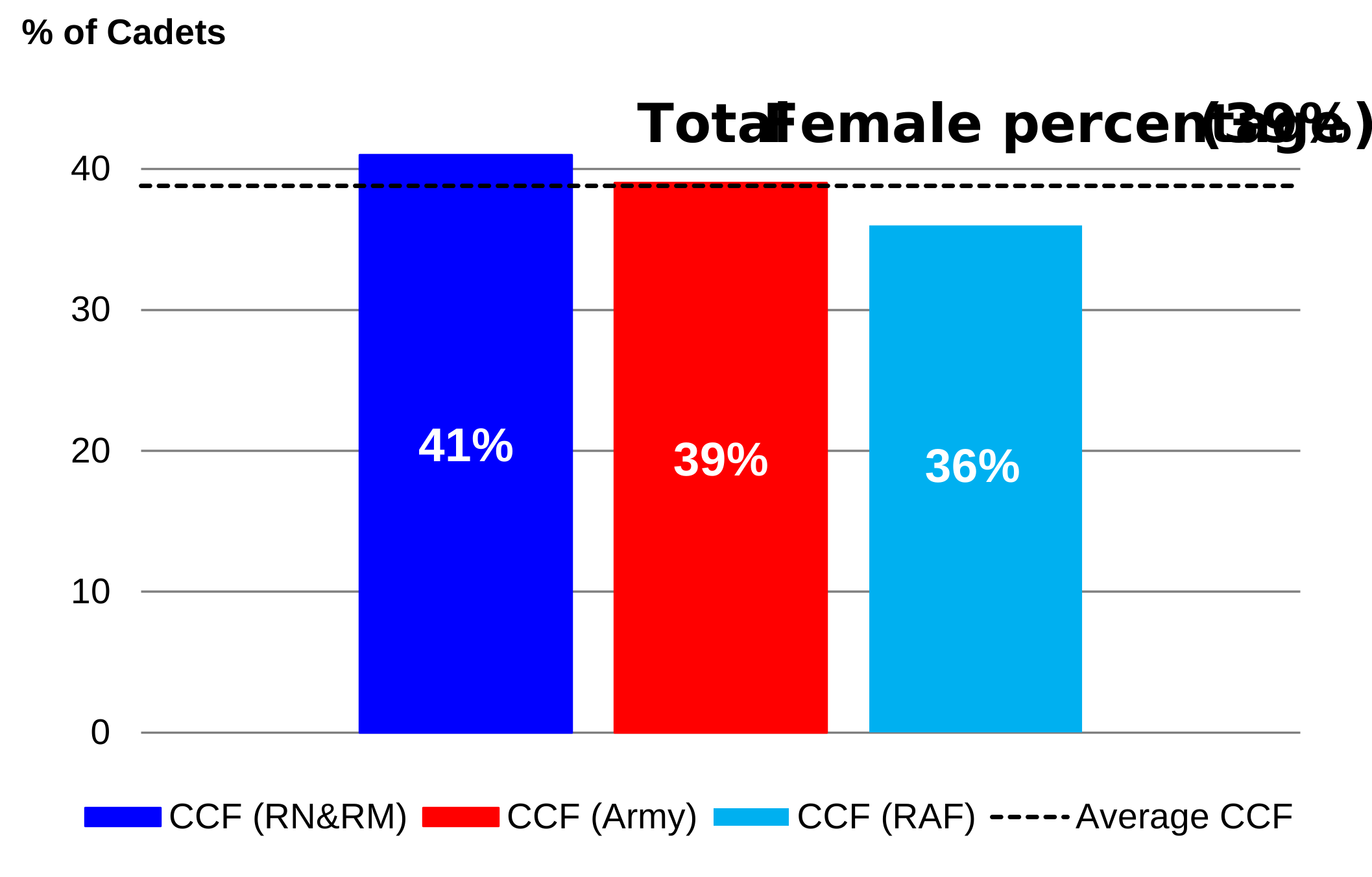
Figure 8: Proportion of Female Cadets in the Combined Cadet Force as at 1 April 26
5.2 Adult Volunteers
As at 1 April 2026, there were 4,540 Adult Volunteers in the Combined Cadet Force (CCF), made up of 690 in the RN and RM sections, 3,120 in the Army sections and 730 in the RAF sections. Figure 9 shows the changes in Adult Volunteers across the CCF since 1 April 2022.
Since 1 April 2025, the number of Adult Volunteers in the RN and RM sections has increased by 30 (5%), the number of Adult Volunteers in the Army sections has remained constant and the number of Adult Volunteers in the RAF sections has increased by 40 (5%).
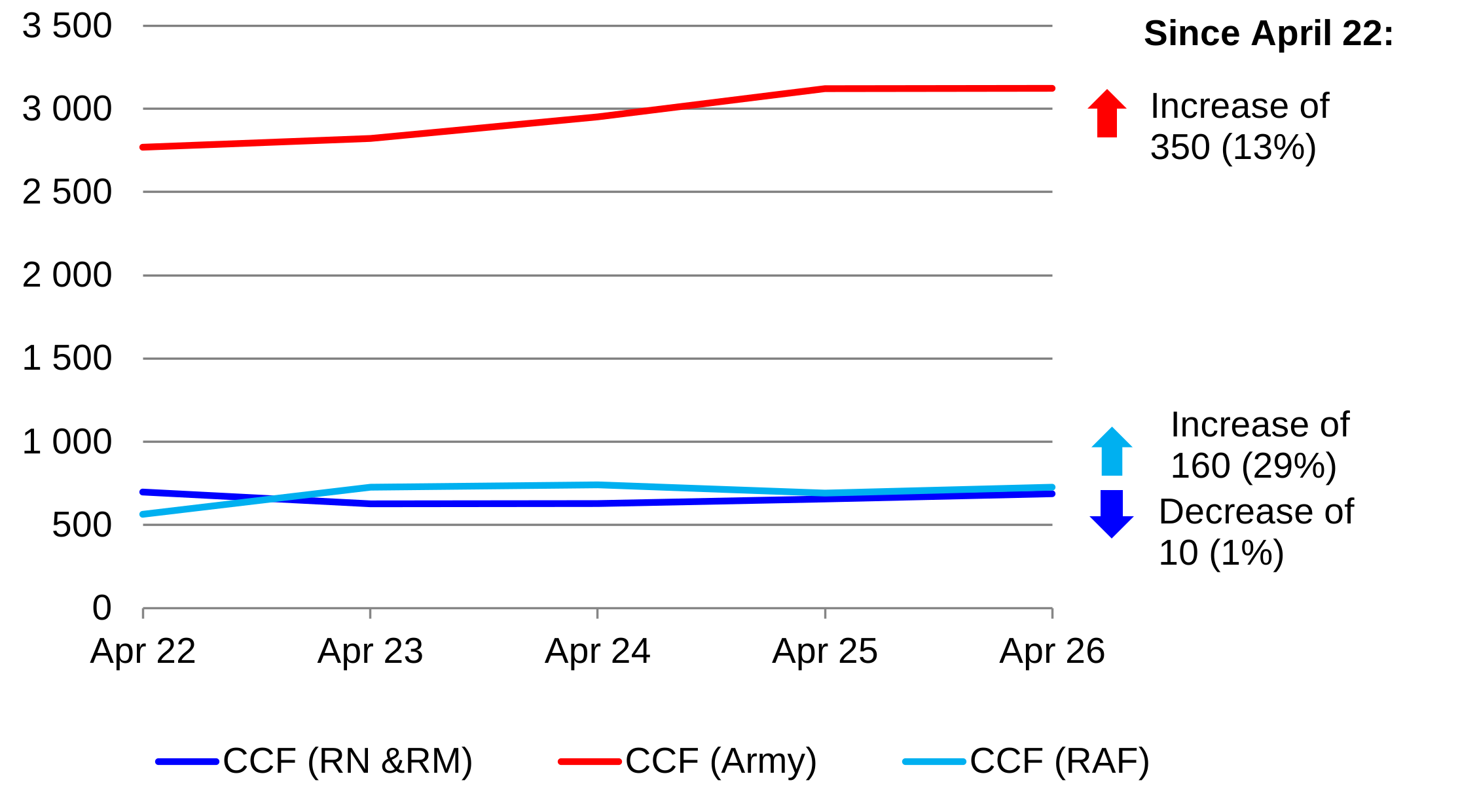
Figure 9: Number of Adult Volunteers in the Combined Cadet Force
5.3 Adult Volunteers’ Gender
The Naval Service and Army have the same percentage of females (35% each) whilst the RAF has (36%). While there is a greater percentage of males in both the Uniformed and non-Uniformed Volunteers, the gender difference is greater in the Uniformed Volunteers (66% male) compared with non-Uniformed population (55% male).
5.4 Adult to Cadet Ratio
Overall there are eleven (10.6) CCF Cadets to each Adult Volunteer at 1 Apr 2026 with variations between sections. Please note this does not reflect the ratios of cadets to Adult Volunteers during training activities which are set out in JSP 814.
6. Glossary
Air Training Corps (ATC) aims to promote and encourage an interest in aviation and the Royal Air Force among young people from age 12 up to 20 years, by providing training which may be useful both in the services and in civilian life.
Army Cadets includes the CCF Army sections and the Army Cadet Force (ACF).
Army Cadet Force (ACF) through a broad range of challenging, educational and adventurous activities gives young people from age 12 up to 20 years the opportunity to develop leadership and team-working skills, builds their confidence and helps them develop physically, mentally, and socially.
Cadet Forces The MOD sponsors and supports five Cadet Forces (military-themed voluntary youth organisations). The Cadet Forces comprise the Sea Cadet Corps (SCC), the Volunteer Cadet Corps (VCC), Combined Cadet Force (CCF). Army Cadet Force (ACF) and Air Training Corps (ATC). The Cadet Forces are not part of the Armed Forces and have no operational role; nor are they conduits for entry into the Armed Forces, cadets are setup for transition into adult life in whichever career they choose.
Cadet Force Adult Volunteers (CFAVs) The Cadet Forces could not exist without the support of adults who volunteer to help train cadets, run meetings, activities, and events. No previous military experience is necessary and adult volunteers are not liable for military call up. The term CFAV includes uniformed and non-uniformed volunteers in cadet facing, supervisory roles, involved in regulated activity. Volunteers not included within this publication’s figures include: Unit Management Trustees, Service Helpers, Parents and Supporters Association, Civilian Committee Members and Honorary Members. Like cadets, the adult volunteers can obtain vocational qualifications linked to community, social action, and volunteering during their time with the cadets.
Combined Cadet Force (CCF) is a unique educational partnership which operates in schools across the UK. Through military-themed activities, cadets have the opportunity to develop skills such as leadership, self-reliance, resourcefulness, endurance and perseverance. CCF contingents contain one or more Royal Navy, Royal Marines, Army, or Royal Air Force sections, which promote the aims and values of the Services they represent.
Community Cadets comprise the Sea Cadet Corps, the Volunteer Cadet Corps, the Army Cadet Force, and the Air Training Corps.
Ministry of Defence (MOD) is the United Kingdom government department responsible for the development and implementation of government defence policy and the headquarters of the British Armed Forces. The principal objective of the MOD is to defend the United Kingdom and its interests. The MOD also manages day to day running of the Armed Forces, contingency planning, and defence procurement.
Royal Air Force Air Cadets (RAFAC) includes the CCF (RAF) and the Air Training Corps (ATC).
Sea Cadet Corps (SCC) (including Royal Marines Cadets) aims to give young people from age 12 up to their 18th birthday the best possible start in life through nautical adventure and fun. There is also a Junior Section for young people between 9 and 12 years. Sea Cadets is the largest national maritime voluntary youth charity, which is part-sponsored by and follows the customs and traditions of the Royal Navy.
Volunteer Cadet Corps (VCC) aims to provide opportunities for young people, from aged 9 up to their 18th birthday, to develop into dependable and useful members of society, employing the traditions of the Royal Navy (RN) and Royal Marines (RM), as the basis for their activities. VCC units (RN and RM) are based at Royal Naval service establishments and are organised and run by volunteers including serving members of the RN and RM. The VCC’s status changed in 2017 to become the fifth MOD sponsored Cadet Force.
| Cadet Force | Lower age limit | Upper age limit | Comments |
|---|---|---|---|
| Sea Cadet Corps | 9 years (9-12 years for Junior Sea Cadets) (13 years for Royal Marines Cadets) |
18th birthday | The lower age limit was lowered from 10 years old in 2022. |
| Volunteer Cadet Corps | 9 Years | 18th birthday | - |
| Combined Cadet Force | Year 81 or later at the discretion of the Head, noting specific restrictions may apply for individual sections. | To the end of the summer holiday of their final year of school. | - |
| Army Cadet Force | 12 years | 20th birthday (for staff cadets) 18th birthday (otherwise) |
The upper age limit was lowered from 18 years 9 months in September 2015. Staff cadets, aged 18 – 20 years were introduced at the end of 2019. The Requirement to be in Year 8 or later was removed on 1 April 2022. |
| Air Training Corps | 12 years and in Year 81 | 20th birthday (for staff cadets) 18th birthday (otherwise) |
The lower age limit was lowered from 13 years in September 2014. |
1 S2 in Scotland and Year 9 in Northern Ireland.