Migrant journey: 2025 report
Published 21 May 2026

© Crown copyright 2026
This publication is licensed under the terms of the Open Government Licence v3.0 except where otherwise stated. To view this licence, visit nationalarchives.gov.uk/doc/open-government-licence/version/3 or write to the Information Policy Team, The National Archives, Kew, London TW9 4DU, or email: psi@nationalarchives.gov.uk.
Where we have identified any third party copyright information you will need to obtain permission from the copyright holders concerned.
This publication is available at https://www.gov.uk/government/statistics/migrant-journey-2025-report/migrant-journey-2025-report
1. Introduction
This release explores how migrants’ leave status changes as they journey through the UK’s immigration system.
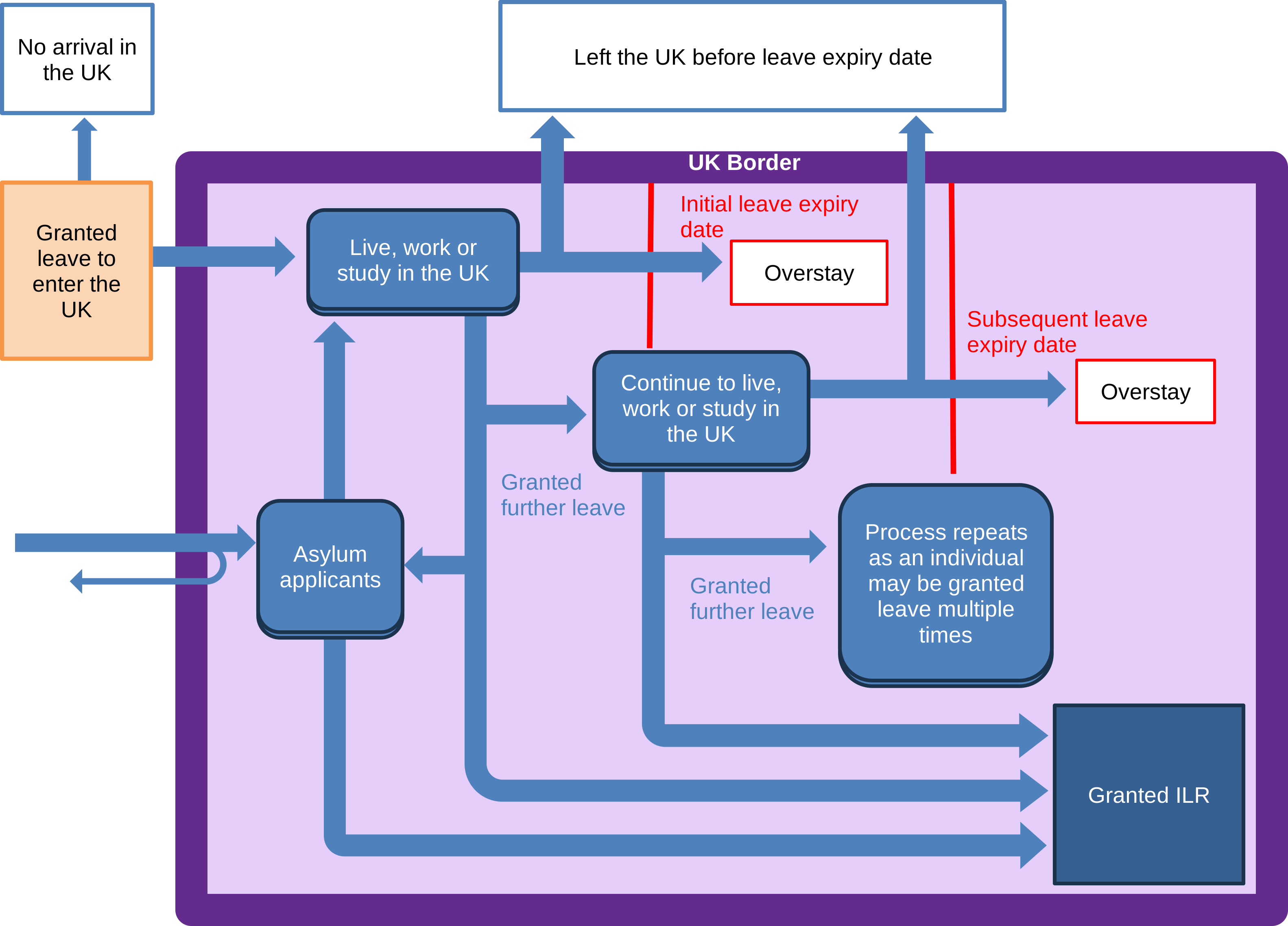
The report examines the number of migrants granted leave in the UK each year, and their status at the end of each subsequent year, until their journey ends. An individual’s leave status may be classified into one of the following broad categories:
Valid leave to remain - these individuals have valid leave to remain in the UK for a limited period. This may be in the category they started their journey in, or in a new category.
Indefinite leave to remain - these individuals have been granted permission to remain in the UK indefinitely (for example being granted settlement or citizenship).
Expired - these individuals’ leave has expired. They are required to leave the UK before their leave expiry date.
This report also includes analysis on the proportion of visas for which individuals are known to have arrived in the UK. Not all arrivals are recorded on the system (for example some people travelling via the Common Travel Area between the UK and Ireland may not be included in the data ). Data relating to individuals’, following the expiry of their leave, are not included in this release and work is ongoing to address data quality issues that currently prevent this analysis. See section ‘about the data’ for more details.
What is a migrant journey?
Within this release, a migrant ‘journey’ is defined as commencing when an individual, who did not hold valid leave in the previous 12 months, is either granted leave to enter the UK or makes an asylum claim in the UK.
The release covers those granted leave to enter the UK through an entry clearance visa or resettlement. Only Asylum claims resulting in a grant of protection are included in this dataset. Individuals may remain in the UK for the duration of their permitted leave. A migrant ‘journey’ may be extended beyond the expiry of that leave, either in their existing leave category (for example, Work or Study) or in a new category, by applying for further leave.
A journey is considered to end when an individual’s leave expires, and no further period of leave is recorded within the subsequent 12 months. If an individual is granted leave within 12 months of their previous period of leave expiring, they continue in their existing journey.
If an individual is granted new leave more than 12 months after their previous leave expired, a new ‘journey’ begins. The number of new ‘journeys’ reported in a year will be fewer than the number of visas granted, because if a visa is granted within 12 months of previous leave expiring it will not be counted as a new ‘journey’.
This report analyses a migrant’s journey over different durations (typically 3, 5 or 10 years), to support understanding of both longer-term and short-term behaviours, and where appropriate, reflects upon the attributes of specific routes, to ensure meaningful analysis. Unless otherwise stated, the statistics presented include both main applicants and dependants.
Figure 1: Flow chart showing a migrant journey
The impact of COVID-19 on migration outcomes (Migrant journey 2025 edition)
On 11 March 2020, the World Health Organization (WHO) declared COVID-19 a global pandemic. In the UK, initial restrictions were introduced from 12 March 2020, followed by a national lockdown from 23 March 2020, alongside similar measures implemented across Europe and internationally.
This publication includes analysis of journeys that began during the 2020 period, when immigration flows and operational processes were affected by the pandemic. As a result, some impacts of COVID-19 can be observed throughout the statistics presented, including in the number of new ‘journeys’, decision making volumes, and subsequent progression to settlement. Where relevant, these effects are highlighted in the commentary.
2. Overall trends
Which routes do people most commonly arrive on?
In 2025, a total of 705,000 journeys to the UK were initiated by non UK citizens, excluding visitors, representing a 17% decrease compared with the previous year. This continues the decline in journey volumes observed in the previous year, following higher volumes in 2022 and 2023, when around 1.3 million journeys were recorded in each year. Despite the recent fall, the number of journeys initiated in 2025 remains above pre-COVID-19 levels, before 2020, when annual figures averaged just under 400,000, over the period covered in this data-series (from 2008).
Most journeys to the UK by foreign migrants predominantly begin on study and work routes. Of the 705,000 new journeys, which began in 2025:
- Study routes accounted for 53%
- Work routes accounted for 29%
- Family routes accounted for 9%
- Asylum routes accounted for 4%
The remaining 5% of journeys began via other routes, including safe and legal pathways such as resettlement schemes, or as dependants joining or accompanying a main applicant on an existing journey where the leave type of the main applicant could not be determined.
Details of policy and legislative changes affecting migration to the UK are published alongside the Immigration statistics quarterly release and details on policy changes effecting entry clearance visas is provided within the monthly entry clearance visa applications publication
How do people’s leave statuses change over time?
Of the 344,058 individuals who began their journey in 2020, 55% still held valid leave to remain in the UK 5 years later, at the end of 2025. This comprised:
- 40% who continued to hold valid leave to remain, a proportion that has increased steadily from 18% among the cohort that began their journeys in 2011, this growth is partly driven by a rising share of individuals who started their journey in the UK via work and family routes, which typically lead to longer periods of stay; more recently, it has also been influenced by an increase in the proportion of individuals arriving in the UK as students who remain in the UK 5 years after their initial arrival see ‘Section 3’
- 14% with indefinite leave to remain (ILR)
- the remaining 45% had expired leave and are therefore expected to have left the UK
The composition of leave status 5 years after arrival varies by route. For example, relatively few individuals entering on study routes will be eligible to apply for indefinite leave to remain, whereas a large share of those entering via family routes will qualify for settlement after 5 years.
Figure 2: Immigration status at end of 2025 of people initially granted leave in 2020, by initial visa type
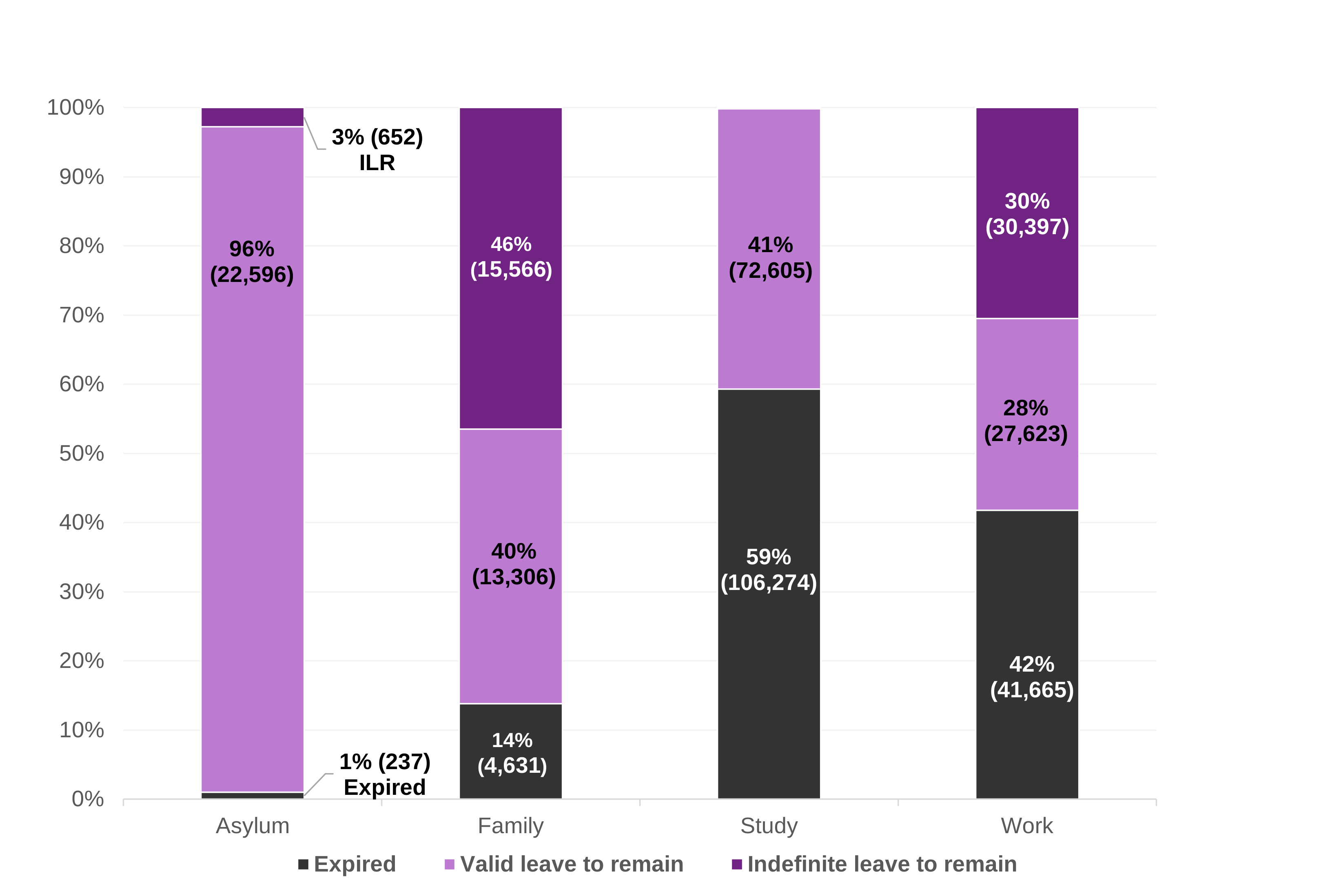
Source: Migrant journey detailed datasets - MJ_D01
Notes:
- Less than 1% of those whose initial journey was a ‘study’ route obtained indefinite leave to remain after 5 years, this is included in the underlying data, however, is not visible in this chart.
- ‘Dependants joining or accompanying’ and ‘Safe and Legal’ routes are excluded from the chart.
Study
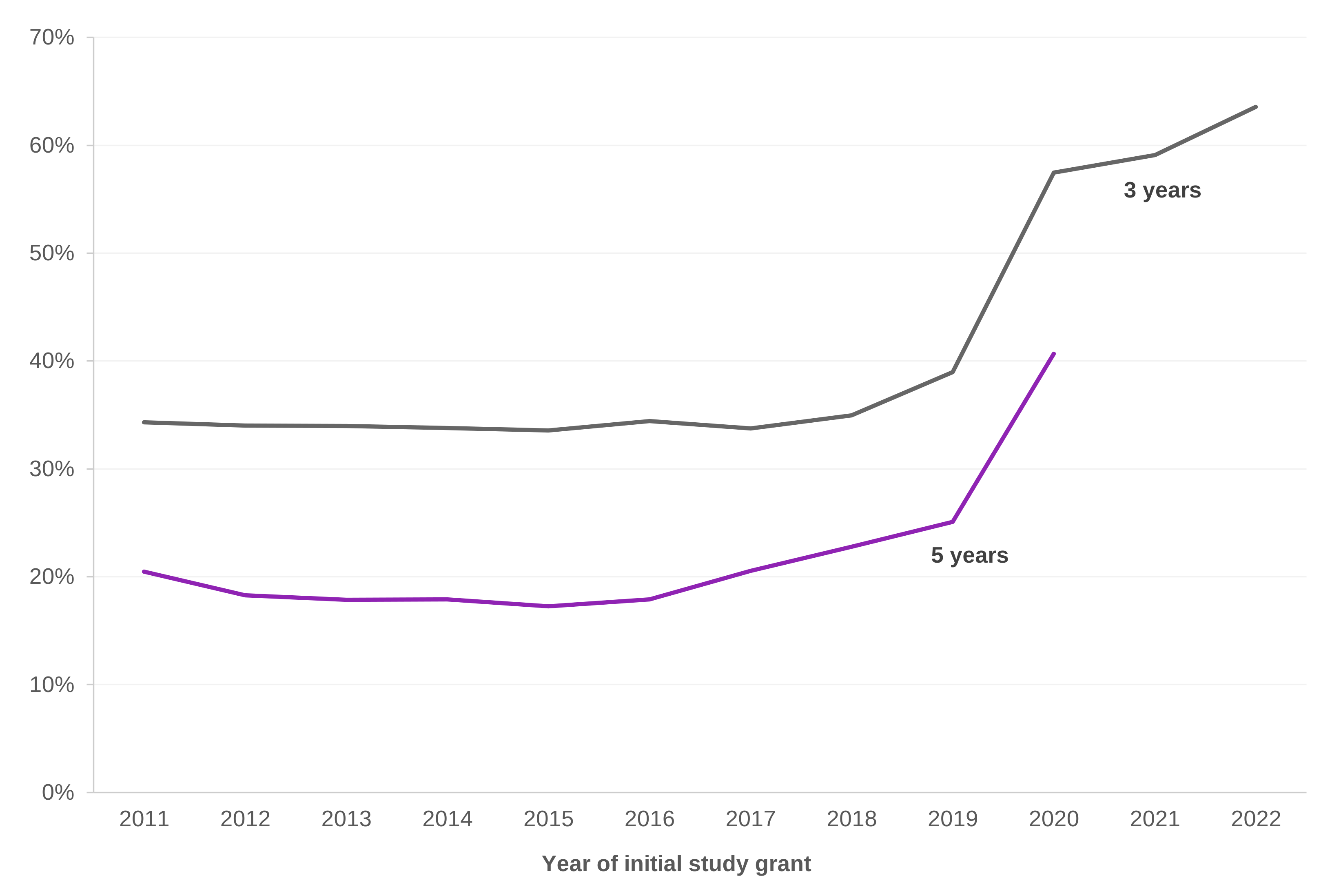
Among students who arrived between 2011 and 2018, around one-third (34%) still held valid leave 3 years after their initial grant, indicating that most students did not remain in the UK beyond the end of their studies. Since then, the proportion remaining in the UK with valid leave has increased, rising to 58% for the 2020 cohort. This upward trend continued for more recent cohorts, with nearly two-thirds (64%) of students who arrived in 2022 still holding valid leave 3 years after arrival.
Of the 571,413 who started their journey on a study route in 2022, after 3 years;
- 11% remained on a study route
- 38% had switched to a Work route
- 15% had moved to other routes, predominantly dependant joining or accompanying (12%) and a small proportion (less than 2%) in Asylum, Family and Safe and Legal routes
More recently the relatively high proportion of students from the 2022 cohort who remained in the UK with valid leave after 3 years reflects increased post-study retention in the UK and transition into work routes, including the Graduate route, which was introduced in 2021.
The Graduate route has provided a structured pathway for international students to extend their stay after completing their studies, allowing international students to work, seek employment, or gain professional experience without requiring sponsorship. Further analysis of students’ progression into work following study is available in the Home Office publication: ‘Analysis of migrants’ use of the Graduate route’.
Additionally, a growing proportion of individuals who initially entered the UK to study have extended their stay as skilled workers (see the ‘Study’ section for further detail).
Work
Individuals who begin their journey on work routes and remain in the UK typically either continue to hold leave within the work category until their leave expires, or progress to indefinite leave to remain. By the end of 2025, 58% of those who had started their journey on a Work route 5 years earlier were still holding some form of leave, with 28% holding a temporary permission to stay and 30% who had obtained ILR.
This level of settlement after 5 years is higher than that observed for earlier cohorts even after a longer period of residence. Among those who began their journey 10 years earlier (in 2015), 20% had obtained ILR by the end of 2025, (see the ‘Work’ section for further detail).
Family
Of the 33,503 journeys that began on Family routes in 2020, 86% still held leave to remain after 5 years, with just under half (46%) having obtained indefinite leave to remain (ILR). The proportion progressing to settlement increases further over time, rising to 79% among those who started on Family routes 10 years prior to the end of 2025.
Most individuals entering the UK on Family routes remain within the Family category until they obtain ILR. Changes introduced in 2012, which extended the qualifying period for settlement from 2 to 5 years, mean that individuals who arrived for Family reasons after this policy change typically take longer to reach settlement than those who arrived beforehand. However, despite the longer qualifying period, there is little indication that these changes have materially reduced the proportion who remain in the UK, reflecting the strong propensity for progression to settlement inherent to Family routes. (see the ‘Family’ section for further detail).
Asylum
Once an asylum claim has been registered, it can take some time before a decision is made. Of the 23,486 asylum claims made in 2020 that resulted in a grant of leave, most individuals continued to hold valid leave to remain after 5 years.
Among individuals granted asylum or other forms of protection following an asylum claim in 2019, 33% had obtained indefinite leave to remain (ILR) by the end of 2025, 6 years later. This period includes both time spent awaiting a decision and time holding leave. The likelihood of securing settlement increases substantially over time: among those granted leave following asylum claims made in 2015, 89% had obtained ILR within 10 years.
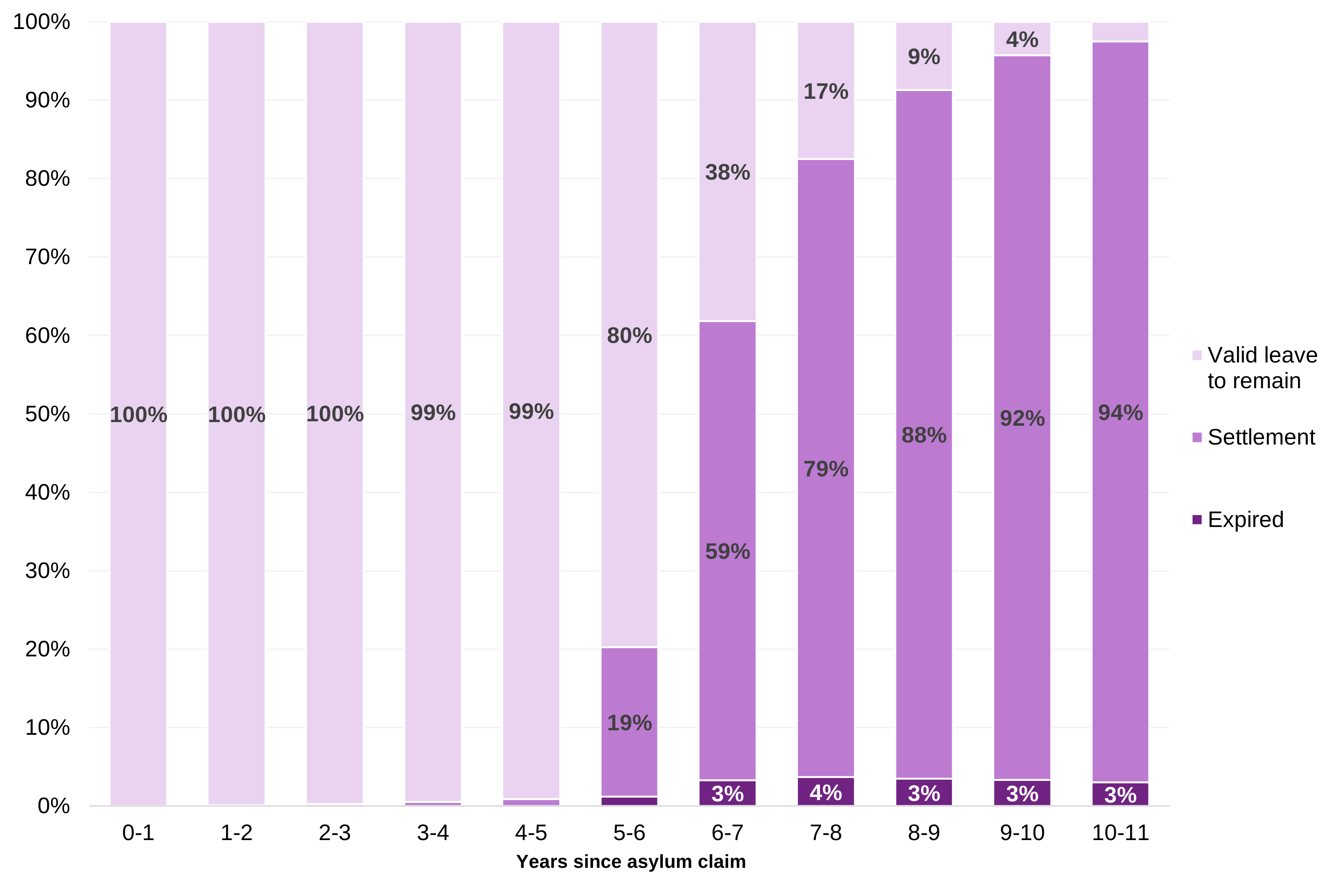
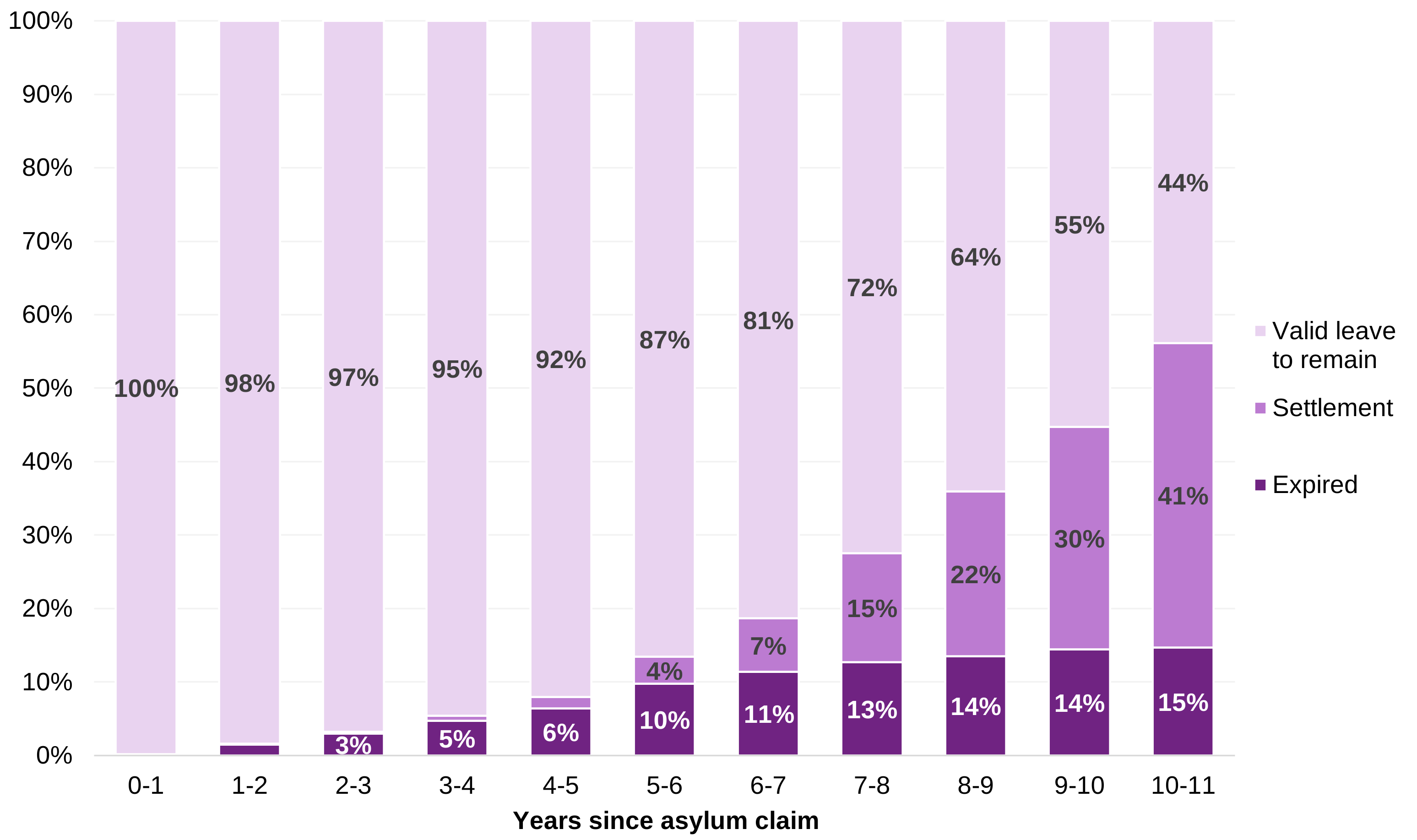
Outcomes also vary by the type of leave initially granted. Individuals granted refugee permission or humanitarian protection are far more likely to progress to settlement in the long term; 94% of those granted such leave in 2015 had obtained ILR by 2025. In contrast, those granted other forms of leave, such as discretionary leave, exceptional leave, or leave as an unaccompanied asylum seeking child (UASC), were much less likely to transition to ILR over the same period, with only 25% of this group from the 2015 cohort having obtained settlement within 10 years (see the ‘Asylum’ section for further detail).
Who is granted settlement?
In 2025, 153,204 journeys resulted in a grant of settlement, representing a 9% decrease compared with the previous year. This decline largely reflects the effects of COVID-19, as fewer individuals entered the UK in 2020, when application volumes and decision making were disrupted, which have fed through to lower numbers reaching settlement at the 5 year eligibility point.
Initial route of entry for those granted settlement in 2025
Family routes accounted for 27% of settlement grants in 2025, despite representing 9% of new journeys in a typical year (as observed across the data series). This reflects the high likelihood that individuals entering the UK on family routes progress towards, and ultimately obtain, settlement.
Work routes comprised 37% of settlement grants, broadly in line with their share of new journeys. Most of those granted settlement from this group (77%) had initially entered on a ‘Worker’ visa (which in 2020 included Tier 2 – General). Prior to settlement, 85% remained on Work related routes, while 15% had switched routes, most commonly to the Family route.
Study routes have historically accounted for the largest proportion of new journeys each year; however, they represented only 11% of settlement grants in 2025. Study routes do not typically provide a direct pathway to settlement. Individuals who initially enter the UK to study generally progress to settlement only after switching onto other routes that allow longer‑term residence. Among those granted settlement in 2025 who initially entered on a study route, 52% held leave on a work route and 29% on a family route immediately prior to settlement, while only 3% remained on a study route. Most individuals granted settlement in 2025 while holding leave on a study route had arrived in the UK in 2015 and obtained settlement after 10 years, likely through qualification under the long‑residence rules.
Asylum and Safe and Legal routes accounted for the remaining 9% of settlement routes, down from 12% in the previous year. This decrease partly reflects the closure of the Afghan Citizens Resettlement Scheme, a temporary pause in decision making for Syrian protection claims, and lower resettlement volumes during the COVID-19 period.
The remaining 15% of settlement grants were issued mainly to individuals whose initial route could not be determined, such as dependants joining or accompanying a main applicant.
Figure 3: Category immediately prior to being granted settlement, by category in which the journey started, for those granted settlement in 2025
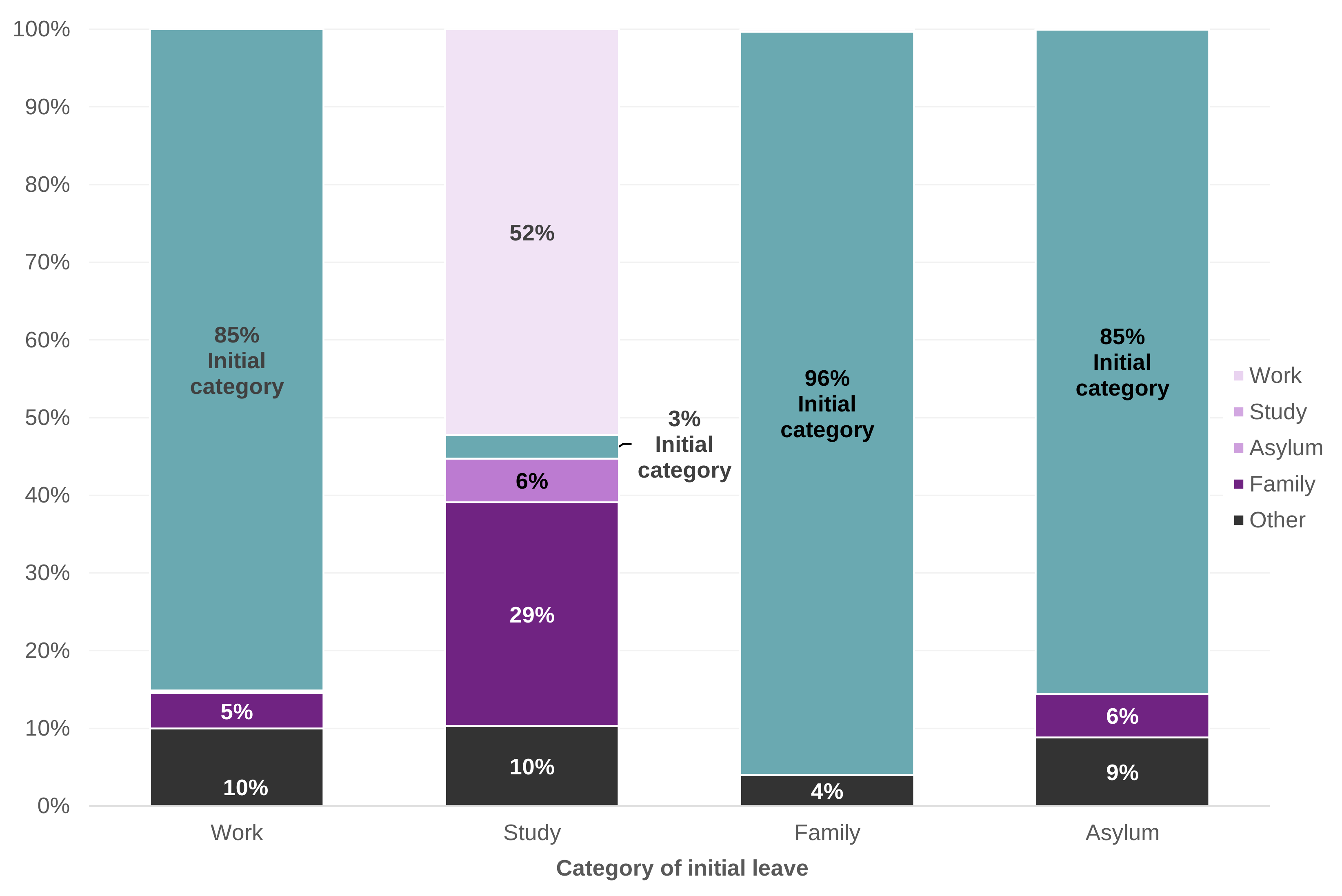
Source: Migrant journey detailed datasets - MJ_D02
Notes:
- Individuals who were in their ‘initial category’ prior to being granted settlement did not necessarily remain in the category for the entire period. Some may have switched to another category before switching back. Others may have moved to a different route within their initial category (for example, from one type of work to another).
- ‘Category prior to settlement’ relates to the type of leave someone had immediately before being granted settlement.
3. Study
Data in this section relates to individuals who initially entered the UK on a Sponsored Study visa either as main applicants or dependants. Short-term Study visas (which permit people to travel to the UK for short periods of up to 11 months) are excluded from this analysis.
How many students arrive in the UK?
Of the 371,013 student journeys starting in 2025, 99% had a recorded arrival.
How long do students remain in the UK?
Among the 179,161 people whose journey started on a Sponsored Study visa (hereafter referred to as the ‘Study cohort’) in 2020, 41% still held valid or indefinite leave to remain at the end of 2025 (5 years later):
- 6% remained on a Sponsored Study route
- 26% had switched to a Work route
- 9% held another category of leave
- less than 1% held indefinite leave to remain
Within the Study route, and across the time-series covered in this report (from 2008 onwards), the 2020 Study cohort recorded the highest proportion of individuals still holding leave to remain 5 years after arrival. Following the 2012 Immigration Rules changes, outcomes for Study migrants were relatively stable for several years, with around 17% to 18% of those arriving between 2012 and 2016 retaining leave after 5 years. This rose to 25% for the 2019 cohort, before increasing to 41% for the 2020 Study cohorts.
The recent increase in the proportion of students remaining in the UK 5 years after arrival largely reflects higher rates of transition from the Study route into Work routes, particularly the Skilled Worker route. For cohorts arriving between 2011 and 2015, 3% to 4% of students had moved into a Work route after 5 years. This proportion rose to 14% for the 2019 cohort, and reached 26% for the 2020 cohort, the majority of whom were on the Skilled Worker route.
This shift has been accompanied by a modest decline in the proportion of students who remained on the Study route 5 years after arrival, falling from 11% among the 2011 to 2015 cohorts to 6% for the 2020 cohort. Taken together, these patterns indicate a change in post study behaviour, with students who remain in the UK increasingly transitioning into work routes rather than continuing their studies.
Figure 4: Leave status after 5 years of people who started their journey on the Sponsored Study route1 between 2008 and 2020
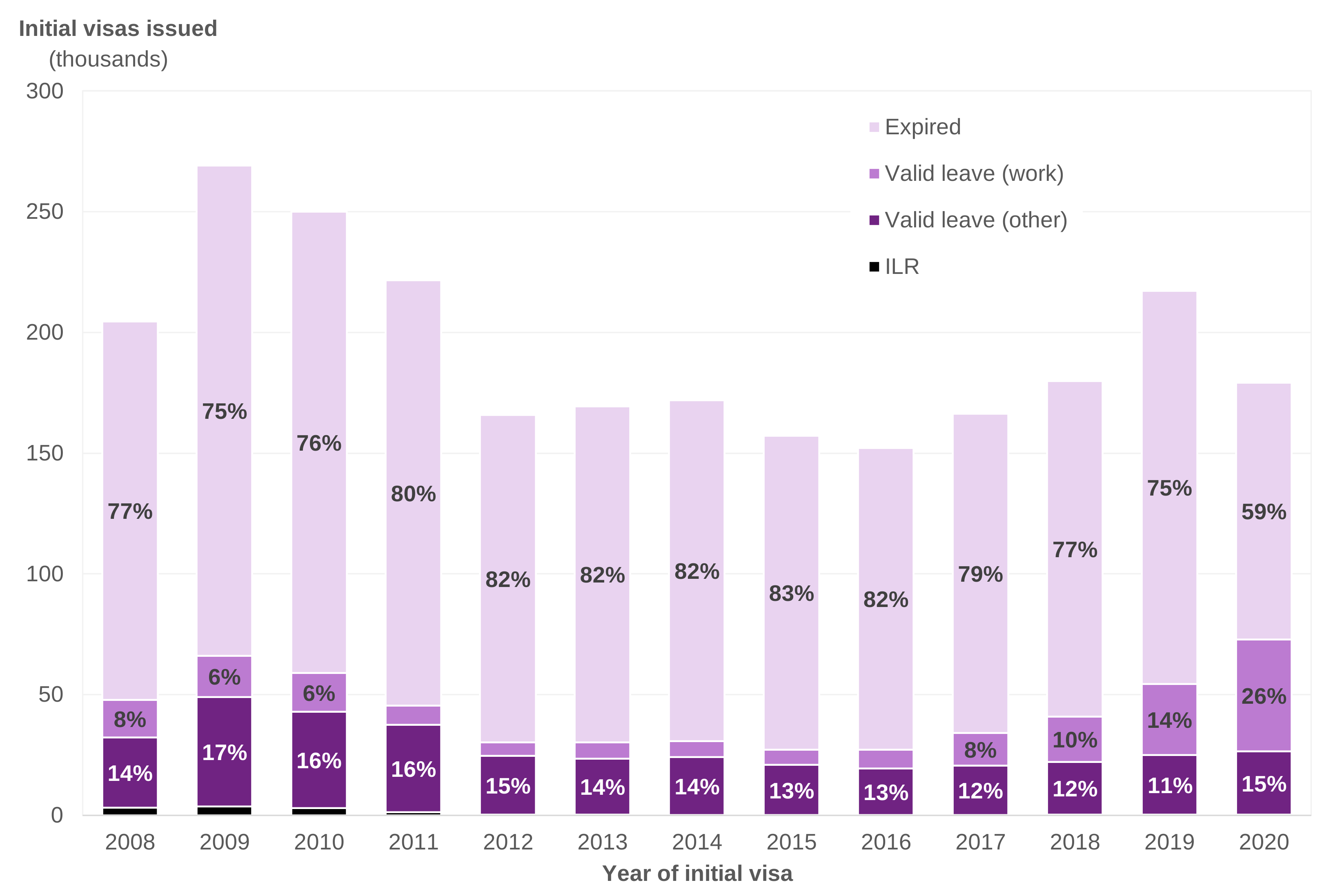
Source: Migrant journey detailed datasets - MJ_D01
Notes:
- Sponsored Study and pre-Points-Based System equivalents. Excludes Short-term Study visas.
- Valid Leave (other) includes other routes, such as Study, asylum, safe and legal, and family.
- Categories less than 6% are not labelled on the chart.
- Percentages may not sum to 100% due to rounding.
Historically, most students’ journeys finished at the end of their studies. Of those starting their studies between 2011 and 2018, around a third continued to hold valid leave after 3 years (decreasing to around 20% after 5 years). However, more recent student arrivals appear to be more likely to remain in the UK beyond their studies - with nearly 60% of students starting their studies in 2020 and 2021 holding valid leave after 3 years. This increased to 64% for the 2022 cohort (see figure 5).
Of the 2022 cohort, a large proportion were on Work routes (38%) after 3 years, particularly the Skilled Worker (19%) and Graduate routes (17%), 12% were dependants either joining or accompanying whilst 11% remain on a Sponsored Study route.
These changes are partly attributable to the introduction of the Graduate route in 2021. The Home Office report titled ‘Analysis of migrants use of the Graduate route’ provides further information. It is too early to say whether these students will remain in the UK permanently, to what extent they are staying longer, or the extent to which other recent policy changes, such as the restrictions on dependents, will impact this trend in future.
A higher proportion of students are transitioning into Work routes, and are doing so earlier in their time in the UK. For student cohorts arriving between 2012 and 2019, around 1% had moved onto a Work route within their first year. From the 2021 cohort onwards, this increased sharply, reaching 14% for the 2023 cohort, before falling slightly to 12% for the 2024 cohort. This shift likely reflects both the increasing proportion of students studying at master’s level in recent years and the wider availability of post study work opportunities.
Figure 5: Proportion of students who held valid leave after 3 and 5 years, by year of initial Study grant
Source: Migrant journey detailed datasets - MJ_D01
The composition of students coming to the UK can also influence the proportion who remain long term. For example, Chinese students, who are less likely to stay in the UK long term, accounted for around 40% of overseas student cohorts between 2017 and 2019, but this share has declined in more recent years. Among Chinese nationals in the 2020 Study cohort, 14% held valid leave 5 years later, compared to 58% of Indian nationals (who make up a similar proportion of this cohort) and 48% amongst all other nationalities.
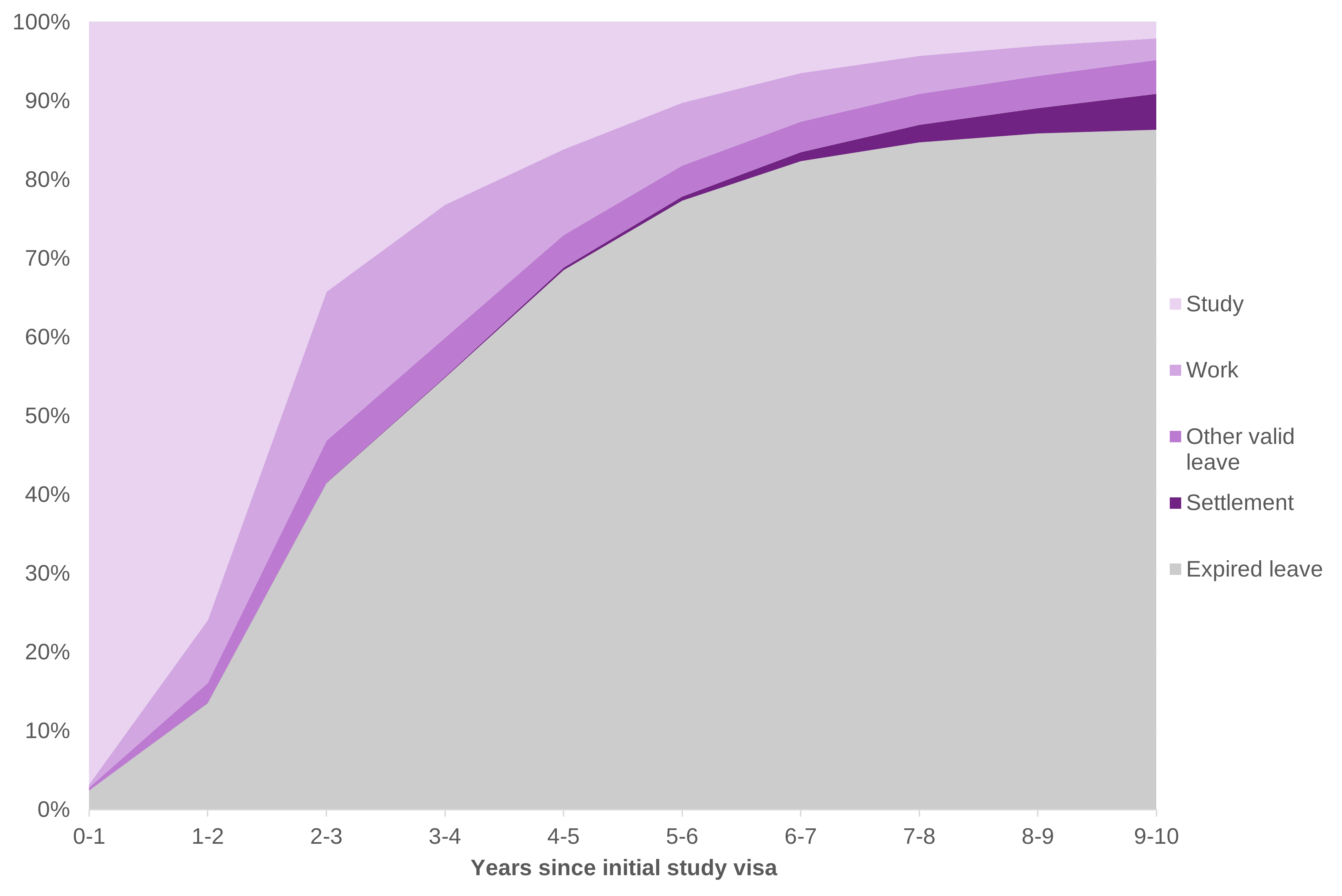
Figure 6: Category of leave of people whose journey started on a Sponsored Study visa since 2008
Source: Migrant journey detailed datasets - MJ_D01
Notes:
- Figure 6 shows the category of leave over time for students; it is based on all historic cohorts of students and will not reflect the more recent changes in student behaviour.
Amongst those whose journey began on a Sponsored Study visa in 2015, who continued to hold valid leave to remain after 10 years, around 1 in 8 (13%) were still on the Study route with 43% having switched to Work and 15% to Family routes.
How many students get indefinite leave to remain (ILR)?
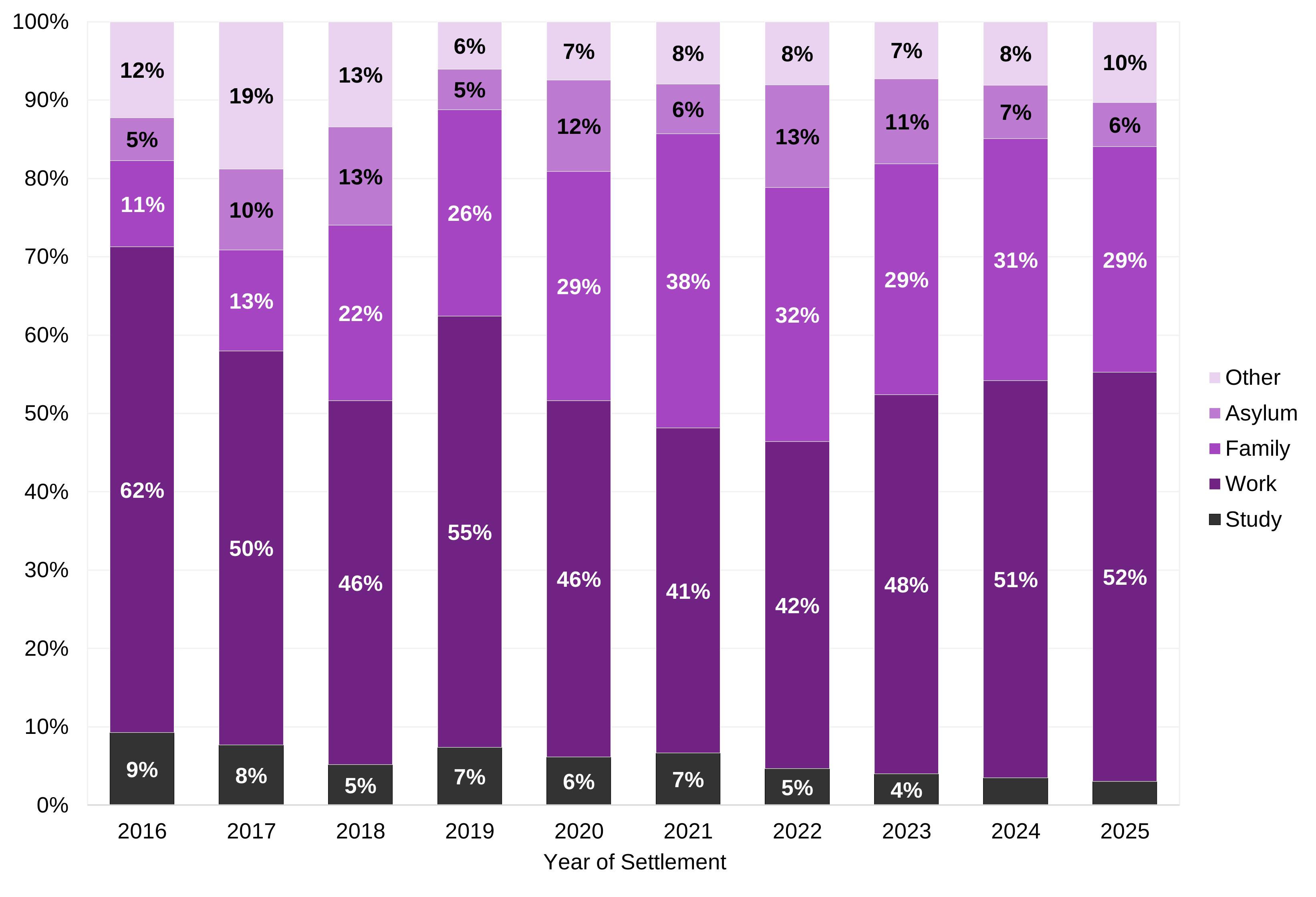
In 2025, 11% (17,579) of those granted settlement began their journey on a Study route. Whilst Study is not a direct route to settlement, students can become eligible for settlement in several ways. For example, they may switch to a different route and meet the additional residency requirements for settlement on that route. Alternatively, an individual may become eligible for settlement after 10 years’ continuous leave on a combination of routes under the long residence rules, including routes which are not a direct route to settlement. Of the individuals who began their journey on a Study route and were granted settlement in the UK in 2025, over half (52%) had transitioned into Work-related routes prior to being granted settlement. Other routes to settlement in that time include transition into Family and Asylum, with 29% and 6% respectively transitioning into these routes before being granted settlement.
Figure 7: Category of leave immediately prior to settlement for those starting their journey on a Sponsored Study visa, by year of settlement grant
Source: Migrant journey detailed datasets - MJ_D02
Notes:
- Categories less than 4% are not labelled on the chart.
- Percentages may not sum to 100% due to rounding.
4. Work
Data in this section relates to those who initially entered the UK on a Work visa either as main applicants or dependants.
In this section when referring to the ‘Tier 2 – General’ visa for 2020, this includes a small proportion of applications from its successor routes (Skilled Worker, Health and Care Worker) which were introduced as part of the new Immigration System in December 2020.
How many workers arrive in the UK?
In 2025, 206,074 journeys began with a grant of a Work visa, 37% fewer than the previous year (328,055). This included:
- 133,697 Worker visas; of which most (83%) were for Skilled Worker (65,886) or Health and Care Worker (45,749)
- 52,530 Temporary Worker visas
- 5,993 Investor, business development and talent visas
- 13,854 Other Work visas and exemptions
Across all work routes and of the journeys starting in 2025, 97% had a recorded arrival.
How long do workers remain in the UK?
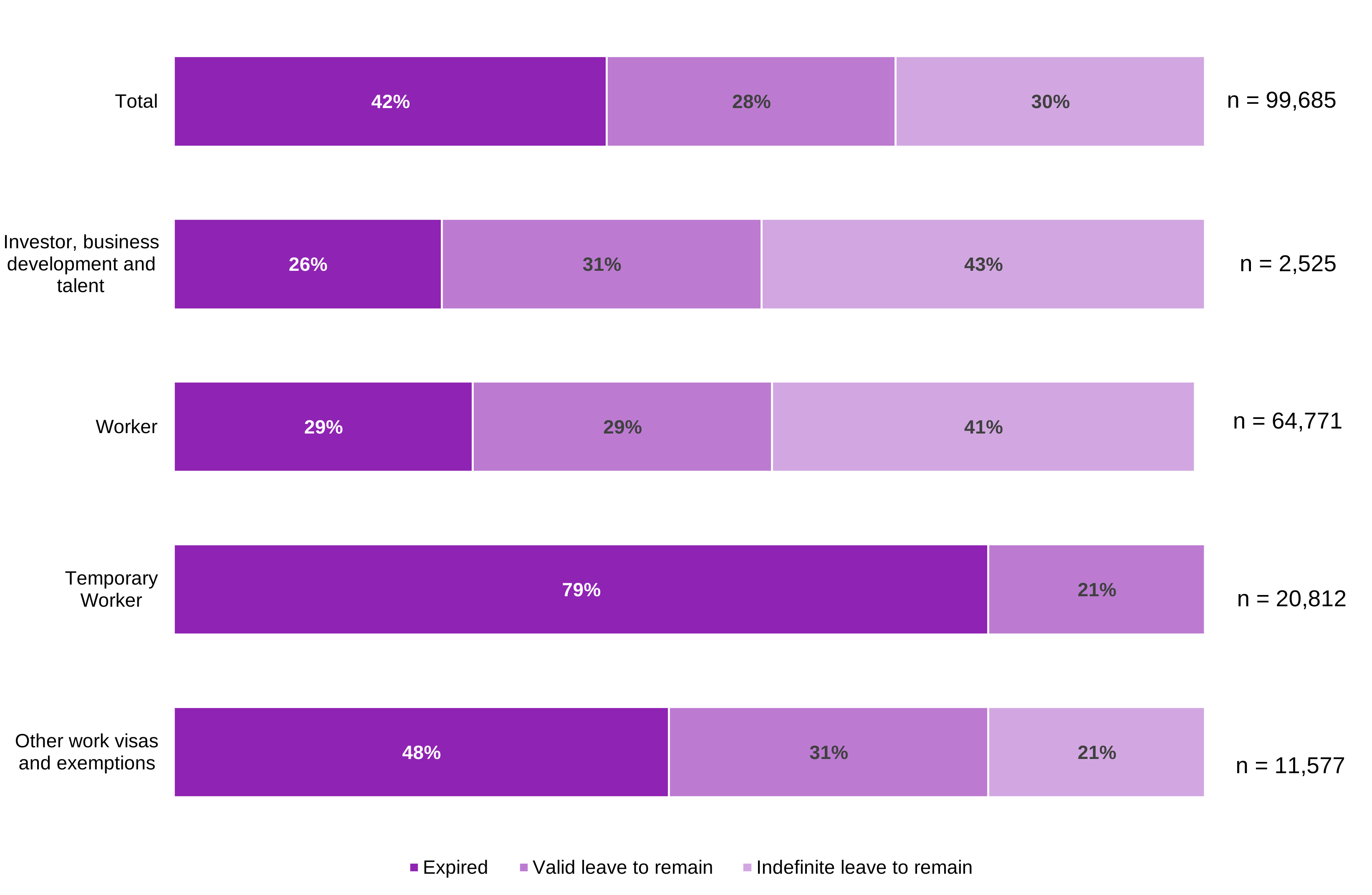
Of the 99,685 people whose journey started on a work visa (hereafter referred to as the ‘work cohort’) in 2020, 58% still held valid or indefinite leave to remain at the end of 2025 (5 years later). This figure includes:
- 18% who remained on a work visa
- 10% who had switched to a different category
- 30% who had been granted indefinite leave to remain (ILR)
Figure 8: Leave status after 5 years (at the end of 2025) for people starting their journey on work routes in 2020, by type of work
Source: Migrant journey detailed datasets - MJ_D01
Notes:
- ‘Investor, business development and talent’, Worker and Temporary worker totals include pre-points-based system equivalents.
- Percentages may not sum to 100% due to rounding.
- The ‘Other Work visas and exemptions’ category includes European Community Association Agreement (ECAA) businessperson, overseas domestic workers, UK Ancestry visas, routes that are now closed (but under which people have existing leave).
Figure 8 shows that, among the 2020 Work cohort, 42% had expired leave after 5 years. Outcomes varied substantially by visa type, for example, 79% of those who entered on Temporary Worker visas had expired leave after 5 years, compared with 29% of those who entered on ‘Worker’ visas.
Nearly all individuals aged 17 and under (over 99%) are dependants accompanying a main Work visa holder, such as a parent. Within the 2020 Work cohort, those aged 17 and under were the most likely to still have permission to remain in the UK after 5 years, with 38% holding valid temporary leave to remain and a further 32% having obtained indefinite leave to remain (ILR). By comparison, among individuals aged 18 and over, 26% held valid temporary leave and 30% had obtained ILR after the same period.
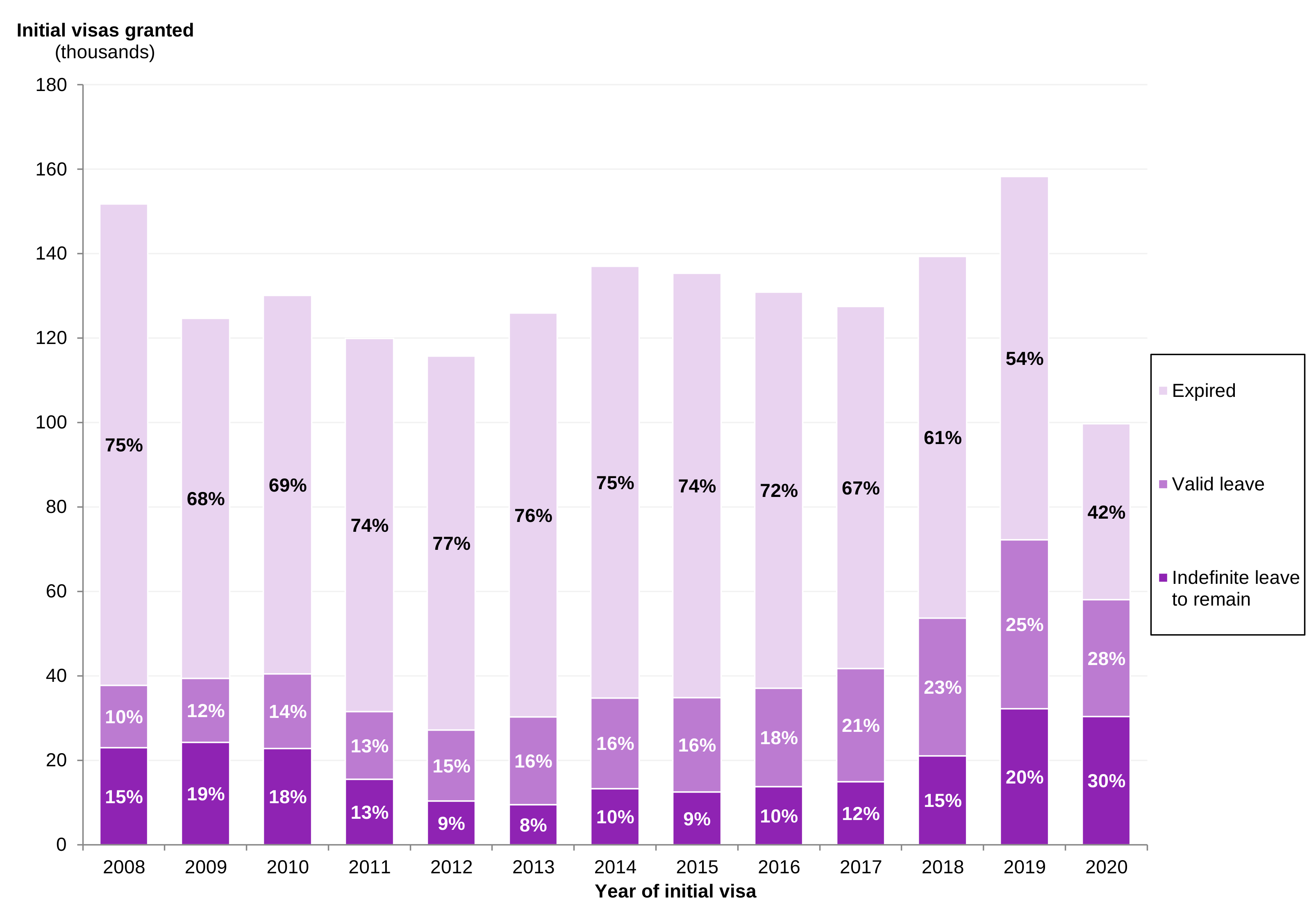
Figure 9: Leave status after 5 years of people who started their journey on a Work route between 2008 and 2020
Source: Migrant journey detailed datasets - MJ_D01
Notes:
- Percentages may not sum to 100% due to rounding.
Figure 9 shows that, for each work cohort between 2011 and 2016, over 70% of individuals had expired leave 5 years later. This proportion has declined for more recent cohorts, falling to less than half (42%) of journeys in the 2020 cohort. This reflects changes in the composition of work routes over time, with a growing share of entrants arriving on ‘Tier 2 – General’ visas which provides migrants the option to extend their stay and a direct path to settlement.
The proportion of individuals entering the UK on a ‘Tier 2 – General’ visa increased from 4% in the 2011 work cohort to 25% in 2020. For the same period, the proportion of individuals arriving on Temporary Worker visas declined; now accounting for 21% of the 2020 work cohort. Temporary Workers are less likely to remain in the UK in the long term, largely because many temporary routes do not permit extensions of stay and offer no direct pathway to settlement.
For those who started their journey on a work route between 2008 and 2020 and still held leave after 5 years (excluding ILR), 81% were in a work category at that point. For those who held valid leave after 10 years (of the 2008 to 2015 cohorts), 43% remained in a Work category and 33% had switched into a Family route.
How many workers get indefinite leave to remain?
Most workers become eligible for settlement after 5 years in the UK. Figure 9 shows that of the 2020 cohort who initially entered the UK on a work visa, 30% had been granted ILR after 5 years, continuing an upward trend observed since 2016. This varies between those coming for skilled and temporary work, with 41% of people in the ‘Worker’ category having been granted ILR after 5 years, compared to less than 1% for ‘Temporary Worker’.
Migrants who entered the UK on a ‘Tier 2 – General’ visa are more likely to have obtained settlement after 5 years than those on other work routes. The proportion granted indefinite leave to remain (ILR) increased steadily from 31% of the 2011 initial leave cohort to 64% of the 2020 cohort. This rate is notably higher than for the wider ‘Worker’ category, where only 27% of those in 2020 cohort had obtained settlement by 2025. This difference largely reflects the composition of the ‘Worker’ category, within which the Intra Company Transfer (ICT) visa is the largest route. Unlike Tier 2 – General, the ICT route does not provide a direct pathway to settlement, lowering overall settlement rates for the broader ‘Worker’ group.
Of all those granted ILR in 2025 (153,204), 37% began their journey on a Work route, most of whom (77%) were in the ‘Worker’ category. For this cohort over half (51%) were granted their work visa in 2020, suggesting that people are more likely to apply for settlement as soon as they become eligible after 5 years.
Most workers remain in their initial category before getting settlement; of those granted settlement in the YE December 2025 who started their journey on a work route, 85% were still on a Work route when granted settlement.
5. Family
How many people arrive in the UK on Family visas?
In 2025, 62,257 migrant journeys began with a grant of leave on a Family route, representing a 20% decrease compared with the previous year. This overall decline was largely driven by a reduction in the number of individuals entering the UK on the Partner route. This reduction is likely associated with the increase to the Minimum Income Requirement (MIR) from £18,600 to £29,000, which was introduced from April 2024. Despite this fall, the Partner route continued to account for most family related journeys in 2025. Journeys initiated on the Child and Other Family routes also declined from with the previous year.
In contrast, journeys under the Refugee Family Reunion category increased by 10% in the latest year. From 2023, the number of Refugee Family reunion journeys have increased, which reflects a higher number of individuals granted refugee status in recent years, who subsequently became eligible to sponsor partners and children to join them in the UK. In September 2025, the UK Government announced an immediate temporary pause to new Refugee Family Reunion applications, which is likely to have affected journey starts in the latter part of the year.
Of all family related journeys that began in 2025, 99% had a recorded arrival in the UK. This is consistent with levels observed in pre pandemic years.
How long do people remain in the UK on Family routes?
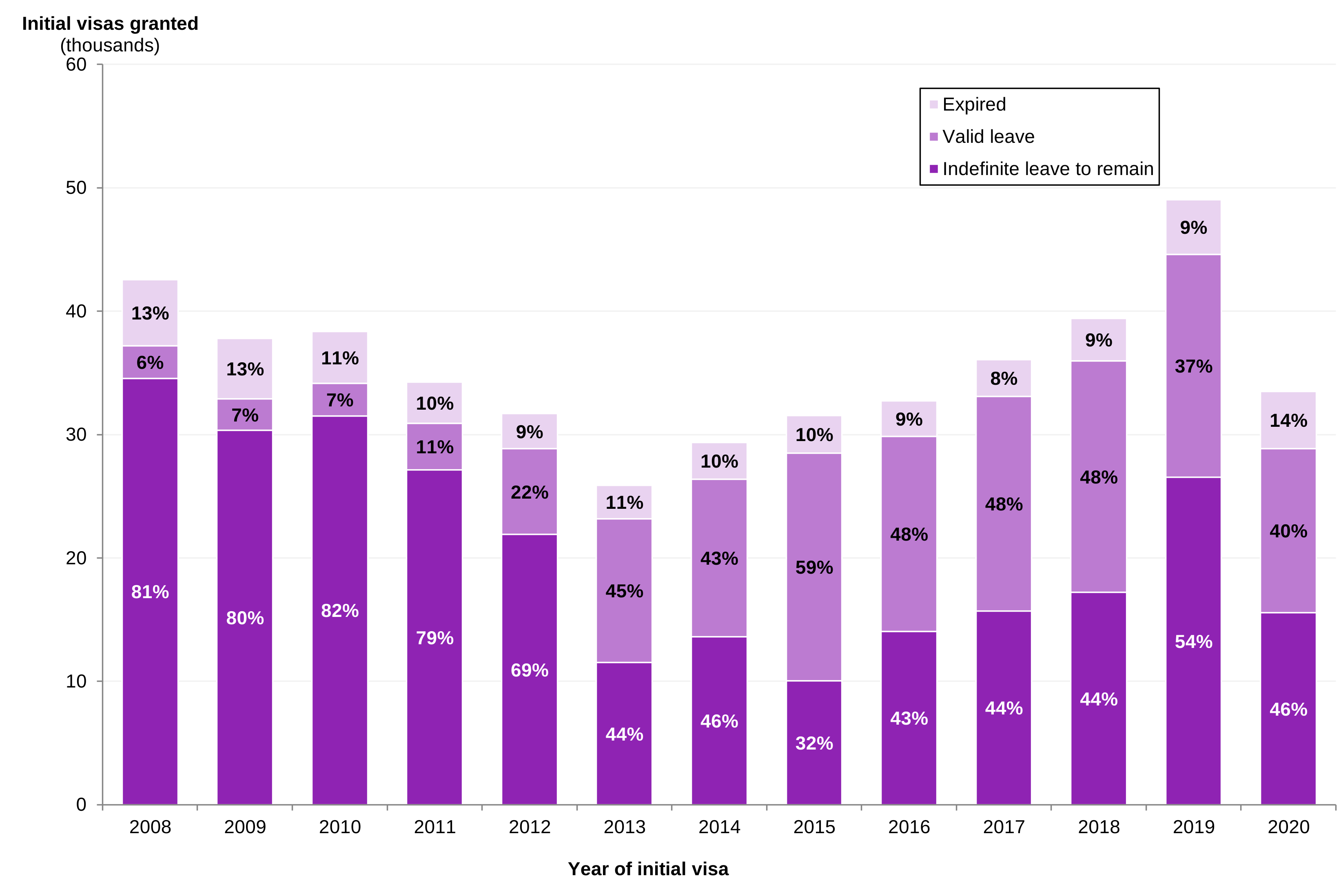
Of the 33,503 people whose journey started on a Family visa (hereafter referred to as the ‘Family cohort’) in 2020, almost 9 out of 10 (86%) still held valid or indefinite leave at the end of 2025 (5 years later):
- 35% remained on a Family visa
- 4% had switched to a different category of visa
- 46% had been granted indefinite leave to remain
This pattern is broadly consistent over previous cohorts, with most of those who start their journey on the Family route remaining on the Family route until either their leave expires, or they go on to get ILR.
For those arriving between 2008 and 2011, over 70% of individuals who began their journey on a Family route had obtained ILR within 5 years, with many granted within 3 years. Following changes to the Immigration Rules in 2012, which extended the qualifying period for settlement on the Family route from 2 to 5 years, the timing and pattern of settlement shifted.
Among cohorts starting their journey from 2013 onwards, the proportion holding ILR after 5 years has remained consistently above 40%, except for the 2015 cohort (32%), with settlement applications for this cohort likely affected by the COVID-19 pandemic in 2020. The 2019 cohort represented the first cohort since 2011 in which most individuals (54%) who started their journey on a Family route had obtained ILR after 5 years.
More recently, the proportion of individuals who began their journey on Family routes in 2020 and had obtained ILR after 5 years was 46%, 8 percentage points lower than the 2019 cohort. While this represents a decline, the 2020 figure remains broadly consistent with levels across much of the past decade. Changes of this scale may also reflect operational factors affecting the timing of applications and decisions, rather than a shift in underlying behaviour.
Of the 2020 ‘family cohort’, 14% had expired leave after 5 years, which reflects that most people coming to the UK on a Family route likely intend to remain long-term in the UK.
Figure 10: Leave status after 5 years of people who started their journey on a Family route between 2008 and 2020
Source: Migrant journey detailed datasets - MJ_D01
Notes:
- Percentages may not sum to 100% due to rounding.
How many people on the Family route get indefinite leave to remain?
Those who arrive on a Family visa are much more likely to obtain settlement than those arriving on Work or Study routes.
Of the 153,204 people granted settlement in 2025, 27% (41,838) started their journey on a Family route (despite the Family route typically accounting for just 9% of new journeys each year). This proportion has remained broadly consistent since 2019. More than half (58%) began their journeys in 2019 or 2020. This suggests many on the Family route apply for settlement soon after they become eligible. Most (96%) of the ‘Family cohort’ remain in the Family category before getting settlement.
The highest numbers of settlement grants, among those who initially entered on a Family route, were issued to nationals of Pakistan and India.
6. Asylum
Data in this section relates to those granted leave following an Asylum claim.
Someone in the UK may claim asylum if they believe they face serious threat to their life or freedom in their home country. They are claiming to be recognised as a refugee under the Refugee Convention. Detailed statistics on asylum seekers are published quarterly by the Home Office in the Immigration system statistics quarterly release.
The following section of this report includes analysis of those who have been granted leave following an asylum claim. The leave may be ‘protection-based leave’ which includes ‘refugee permission’ and ‘humanitarian protection’ (the definitions of these are given in the user guide), or another form of leave. It does not consider those who were refused asylum or still awaiting the outcome of their asylum claim. It also does not include those who arrive as refugees on resettlement schemes, who are typically granted a right to remain in the UK before arrival.
Some individuals who claim asylum may start their journeys on another route (for example as a student) and subsequently apply for asylum while in the UK. Such individuals are included in the category relating to their initial leave and not included in this section (unless more than 12 months has elapsed between their initial leave expiring and them claiming asylum).
In previous editions of the migrant journey report, the start of a journey for asylum claimants began on the date of the latest outcome of their application. Since the 2023 report, the start of a journey is the date the asylum claim was submitted to better reflect the time asylum seekers spend in the UK immigration system.
Once an asylum claim has been registered it can take several months before a decision is made. Following a successful claim, protection-based leave is granted for a period of 5 years. Most individuals granted protection-based leave subsequently go on to obtain ILR.
Some individuals who claim asylum may not meet the criteria of refugee permission or humanitarian protection and therefore will not be granted protection-based leave. However, in some instances, they may be granted another type of leave.
Immigration status in 2025 following an asylum claim in 2020
Among the 23,485 people whose journey started with a claim for asylum in 2020, 99% still held valid or indefinite leave at the end of 2025 (after 5 years):
- 91% remained on the leave they were granted following their asylum claim
- 5% switched to other routes
- 3% had been granted settlement
Of the individuals whose journey began in 2020, 90% were granted protection-based leave:
- 83% still had protection-based leave at the end of 2025
- 4% switched to other routes
- 3% were granted settlement
Figure 11: Immigration status of people granted Refugee permission following an Asylum claim from 2008 onward
Source: Migrant journey detailed datasets - MJ_D01
Notes:
- Categories less than 3% are not labelled on the chart.
- Percentages may not sum to 100% due to rounding.
Figure 12: Immigration status of people granted other leave following an Asylum claim from 2008 onward
Source: Migrant journey detailed datasets - MJ_D01
Notes:
- Categories less than 3% are not labelled on the chart.
- Percentages may not sum to 100% due to rounding.
How many people on asylum routes were granted settlement (ILR) in 2025?
In 2025, 153,204 people were granted settlement, with 9% starting their journey on an asylum route. Of the individuals who began on an asylum route:
- 89% were initially granted protection-based leave
- 11% were initially granted other leave
Most (86%) people who started their journey on an asylum route and were granted settlement in 2025, had remained on an asylum route until getting ILR. A small proportion (6%) switched to family, and 9% to other routes before being granted ILR. Over the last 10 years, one in 8 (12%) people granted settlement started their journey with an asylum claim.
7. About the data
This release looks at how migrants’ leave status changes as they journey through the UK’s immigration system. It includes data for European Economic Area (EEA) migrants and non-EEA migrants. As EEA migrants had freedom of movement prior to the UK leaving the EU and were therefore not required to apply for a visa before coming to the UK, there are relatively few EEA nationals in the data before 2021. As this analysis looks at changes over time, most of the findings relate to non-EEA nationals.
- Forward-look – this looks at migrants who were initially granted a visa in a given year and looks at their leave status in subsequent years. See detailed datasets MJ_D01 for the underlying data.
- Backward-look – this looks at migrants who were granted settlement in a given year and looks at the visa they initially used to come to the UK. See detailed datasets MJ_D02 for the underlying data.
If an individual is granted new leave more than 12 months after their previous leave expired, a ‘new journey’ begins. The number of ‘new journeys’ in a year will be fewer than the number of visas granted because if a visa is granted within 12 months of previous leave expiring it will not be counted as a ‘new journey’.
The length of a ‘journey’ relates to the time in which an individual had valid leave to enter and remain in the UK. This is not the same as the amount of time an individual has been in the UK. An individual may leave the UK before their leave expires. Similarly, some individuals may remain in the UK after their leave expires, as an ‘overstayer’, or while awaiting the outcome of another application (for example an asylum claim).
The report refers to people granted indefinite leave to remain (ILR). This relates to individuals who have been granted settlement or British citizenship (either additionally or alternatively to settlement). Where the report talks about people granted settlement, it refers only to grants of settlement and does not include grants of citizenship though some of those granted settlement will have gone on to be granted citizenship later.
Where does the data come from?
The data used in this report comes from a range of Home Office (HO) systems. It uses data matching to bring together information on a person’s immigration records (such as an entry clearance visa, or an in-country extension of leave) and travel records (such as an arrival into, or departure from, the UK). This allows us to understand how people interact with the UK immigration system, and how their immigration status changes over time.
The systems used to produce this data are designed for operational purposes. Due to limitations in the data, they cannot be used to provide a definitive view of a person’s status at an individual level. They do provide a reasonable view at the aggregate level (see ‘what are the limitations of the data?’ below for more details).
What are the limitations of the data?
Data input: As with all administrative data, there will be a small number of cases where data is missing or has been input incorrectly.
Data matching: Despite the system having a robust data matching process, it will not have a 100% match rate. There are several reasons why records relating to an individual may not be correctly matched. For example, dual nationals may use different documents for different interactions with HO systems - such records may not be matched to the same person. Conversely, 2 individuals with similar personal details may be incorrectly identified as the same person, for example family members with similar names, nationalities and dates of birth (particularly twins). Following the transition from CID to the new Atlas case working system, categorisation of some leave types to routes is limited due to differences in the recording of case outcomes across the 2 systems.
Coverage gaps: The system does not have 100% coverage of people entering and leaving the UK. For example, not all travel within the Common Travel Area (CTA) between the UK and Ireland is captured in the system. This means that an individual could enter the UK from Ireland and not be counted as an arrival in the data or leave the UK to Ireland and not be counted as a departure.
Although these limitations will impact the leave status assigned to each individual to a small extent, they will have a large impact on the analysis that draws upon travel information. Specifically, analysis on the proportion of people who have arrived on a visa in each year; these figures should be considered a minimum number of arrivals.
As a result, the data should not be used to give a definitive view on the number of people who did not use their visa, or the number of people who did not depart once their visa expired.
An update on statistics relating to exit checks
It was our intention to provide a measure of individuals who have an in-time departure from the UK, previously published as part of the annual statistics relating to exit checks. There have been several changes to Home Office systems, and changes to immigration rules, that have impacted the data used to produce the exit checks reports. It is important that we fully understand the impact of these on the statistics and that data issues are addressed and understood to ensure the published statistics are robust. Due to ongoing data issues arising from these changes, we have not been able to include analysis on departures as part of this report. We are working to address these issues with the intention of producing this analysis in future reports.
Other information
The ‘Migrant journey: user guide’ provides further details on this topic including definitions used, how figures are compiled, data quality and issues arising from figures based on data sourced from an administrative database.
The trends seen in this release reflect changes in the levels of immigration over time as well as policy and legislative changes. Details of these can be found in ‘Policy and legislative changes affecting migration to the UK: timeline’ published alongside the Immigration system statistics quarterly release.
We welcome your feedback
If you have any comments or suggestions for the development of this report, please provide feedback by emailing MigrationStatsEnquiries@homeoffice.gov.uk. Please include the words ‘MIGRANT JOURNEY PUBLICATION FEEDBACK’ in the subject of your email.
We’re always looking to improve the accessibility of our documents. If you find any problems or have any feedback relating to accessibility, please email us.