Knife and Offensive Weapon Sentencing Statistics: 2025
Published 21 May 2026
Applies to England and Wales

© Crown copyright 2026
This publication is licensed under the terms of the Open Government Licence v3.0 except where otherwise stated. To view this licence, visit nationalarchives.gov.uk/doc/open-government-licence/version/3 or write to the Information Policy Team, The National Archives, Kew, London TW9 4DU, or email: psi@nationalarchives.gov.uk.
Where we have identified any third party copyright information you will need to obtain permission from the copyright holders concerned.
This publication is available at https://www.gov.uk/government/statistics/knife-and-offensive-weapon-sentencing-statistics-2025/knife-and-offensive-weapon-sentencing-statistics-2025
1. Main Table
| The overall number of knife and offensive weapon offences dealt with by the Criminal Justice System (CJS) was 21,091. This has increased since the year ending December 2024. | This represents a 1.8% increase compared to the year ending December 2024 and an increase of 20.7% over the last decade. |
| The proportion of knife and offensive weapon offences resulting in an immediate custodial sentence was 31.2% in the year ending December 2025. | This is a decrease of 2.6 percentage points since the year ending December 2024. Compared to a decade ago, there has been an increase of 0.3 percentage point. |
| The average sentence length received by offenders sentenced to immediate custody under Section 315 of the Sentencing Act 2020 was 7.9 months in the year ending December 2025. | This is an increase from 7.8 months in the year ending December 2024 and an increase from 7.2 months in the year ending December 2016. |
| The proportion of caution and sentencing occasions involving first-time knife and offensive weapon offenders for the year ending December 2025 was 68%. | The proportion of caution and sentencing occasions involving first-time knife and offensive weapon offenders has seen a decrease of 6.6 percentage points over the last decade. This represents the lowest proportion over the decade. |
This publication presents key statistics describing the trends in offenders receiving cautions and convictions for possession of a knife or offensive weapon offence in England and Wales. This also includes offences involving threatening with either type of weapon.
For any feedback related to the content of this publication, please let us know at MOJPNCteam@justice.gov.uk
2. Statistician’s Comment
This publication covers the period to the end of December 2025, including analysis of single threatening offences dealt with under the Sentencing Act 2020.
Over the most recent year, the number of knife and offensive weapon cases dealt with by the Criminal Justice System (CJS) saw an increase of 1.8% to 21,091 with 31.2% of those resulting in immediate custody. In the most recent year, possession of an article with a blade or point continued to constitute the highest proportion of all knife and offensive weapon sentencing offences (68%).
In the last decade, there has been an upward trend in the average sentence length for knife and offensive weapon offences, committed by adult offenders, that resulted in immediate custody, now sitting at 8.1 months (an increase of 9.7% since year ending December 2015). For 10 to 17-year-old knife and offensive weapon offenders sentenced to immediate custody, the average sentence length now sits at 6.9 months (an increase of 5.2% since year ending December 2015).
Please be aware that figures from 2020 onwards have been impacted by the effects of the Covid-19 pandemic, the operational restrictions imposed and the continued court backlog. Figures for Q2 and Q3 2022 will have been impacted by industrial action taken by the Criminal Bar Association.”
3. Overall - Knife and Offensive Weapon Sentencing
The overall number of knife and offensive weapon offences formally dealt with by the Criminal Justice System (CJS) over the latest year ending December 2025 was 21,091. This is an increase of 1.8% compared to the previous year ending December 2024.
3.1 Overall offences by offence type
The overall number of knife and offensive weapon offences formally dealt with by the CJS over the latest year was 21,091, with the total amount of offences staying within the range of 17,476 and 22,485 over the last ten years. Possession of an article with a blade or point represents the highest proportion (68%) of all knife and offensive weapon offences over the latest year.
Figure 1: Number of Knife and offensive weapon offences by offence type, in England and Wales, annually from year ending December 2015 to December 2025
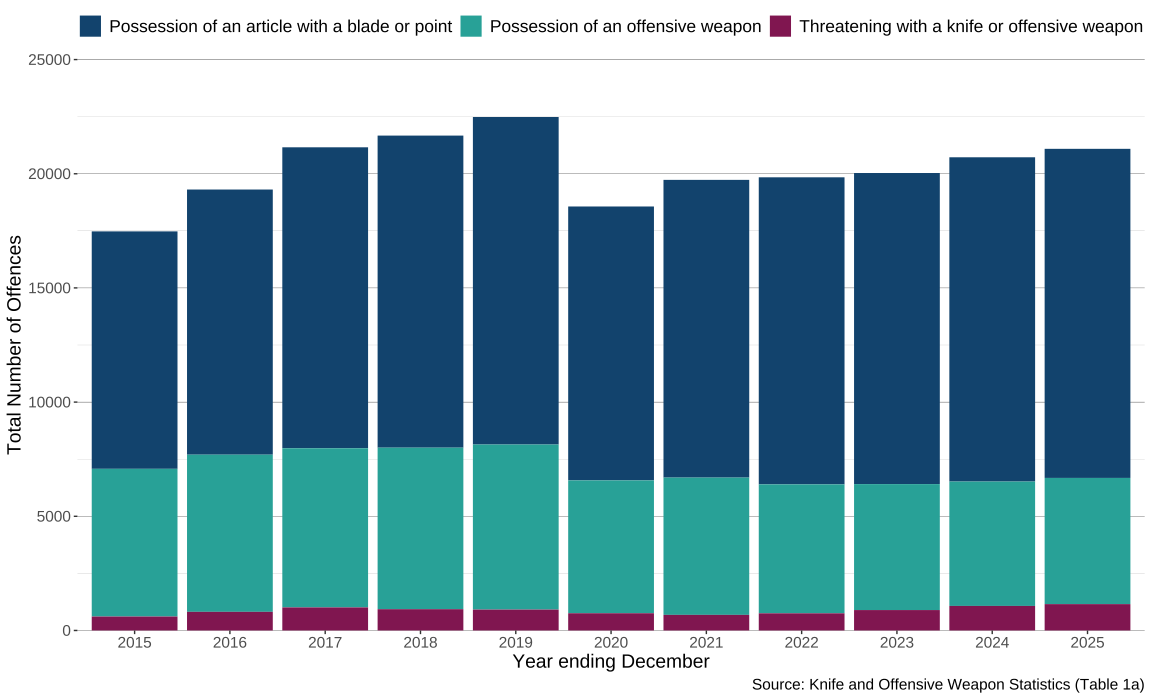
Possession of offensive weapon offences accounted for 26% of total offences in the year ending December 2025. The number of these offences was 5,526, with the latest number of offences falling between the decade minimum (5,446) and maximum (7,227). This was an increase compared to the previous year of 1.5% and a decrease of 14.6% compared to a decade ago.
Threatening with a knife or offensive weapon offences accounted for 5% of total offences in the latest year. The number of threatening with a knife or offensive weapon offences has seen an increase of 7.4% compared to the previous year and has almost doubled[footnote 1] since year ending December 2015.
3.2 Overall changes in offences by sentencing type[footnote 2]
In the year ending December 2025, 6,581 offences resulted in an immediate custodial sentence. These offences were responsible for 31.2% of total knife and offensive weapon offences, compared to 30.9% in the year ending December 2015 and 33.8% in the year ending December 2024. Over the latest year the number of offences resulting in immediate custody has decreased by 6.1%, but over the decade the number of offences resulting in immediate custody increased by 21.8%.
Figure 2: Percentage change of knife and offensive weapon offences by sentencing type, in England and Wales, compared to year ending December 2024 and year ending December 2015
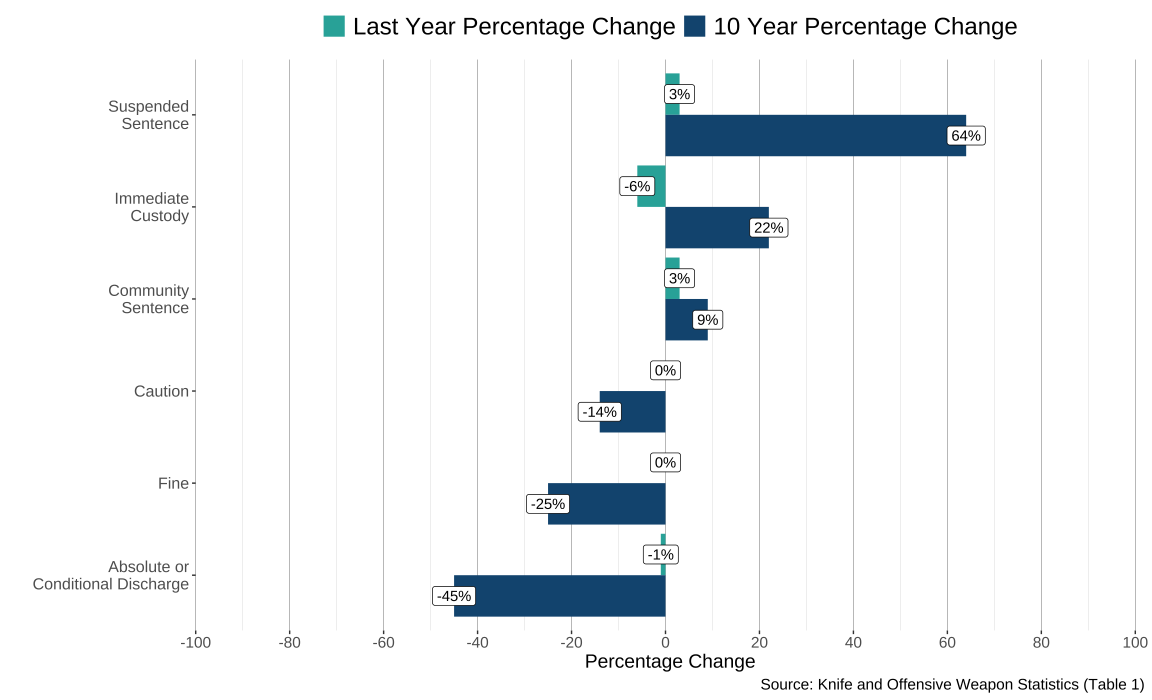
Compared to the year ending December 2015, the number of offences resulting in suspended sentences showed the largest increase (64%). Over the same period, the number of offences resulting in an absolute or conditional discharge showed the largest decrease (45%).
Offences resulting in immediate custody were still the most common outcome of all knife and offensive weapon offences (31.2%) in the year ending December 2025. The second and third most common outcomes were offences resulting in a Suspended sentence (24.8%) and Community sentence (22.6%), respectively.
3.3 Overall by age[footnote 3]
There were 17,565 knife and offensive weapon offences involving adult offenders in the latest year, an increase of 24.9% compared to ten years ago. The latest year saw 3,518 knife and offensive weapon offences involving 10 to 17-year-old offenders dealt with by the CJS, an increase of 3.1% compared to ten years ago.
Figure 3: Number of offences involving adult offenders by sentence type, in England and Wales, annually from year ending December 2015 to December 2025
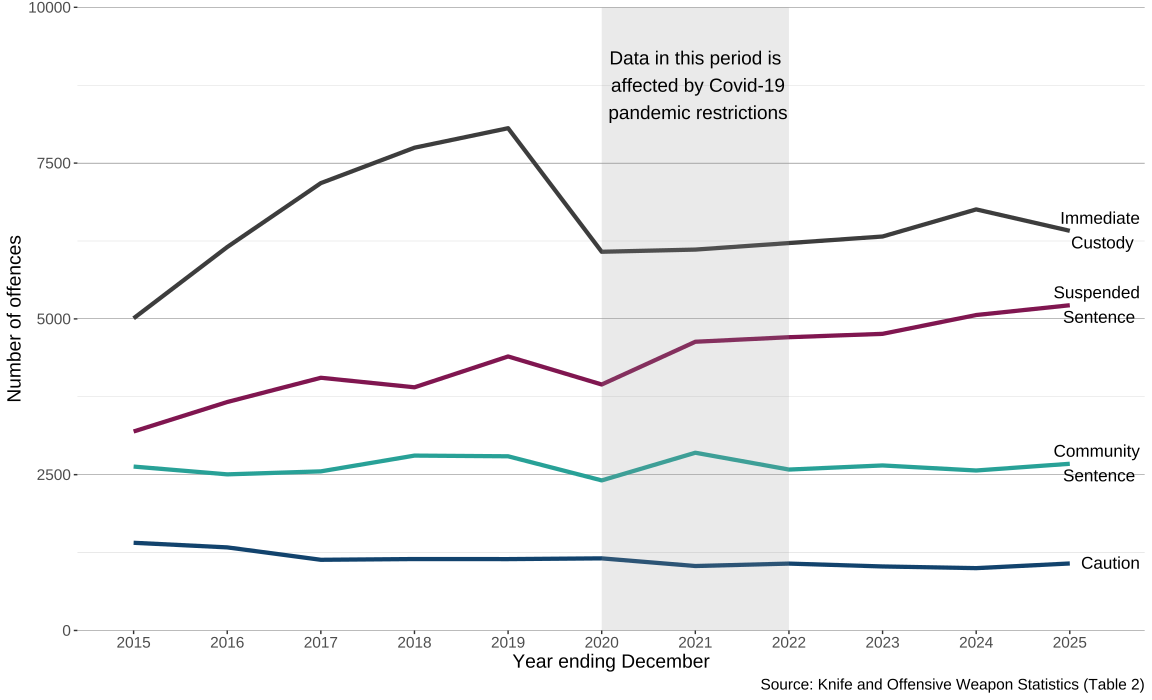
The number of offences involving adult offenders which resulted in immediate custody in year ending December 2025 decreased by 5.1% compared to the previous year, but increased by 28% compared to ten years ago. The number of offences involving adult offenders which resulted in a suspended sentence has increased both compared to the previous year and a decade ago by 3% and 63%, respectively.
For offences dealt with involving 10 to 17-year-old offenders in year ending December 2025, the most common sentence that 10 to 17-year-olds received was a community sentence. This represents 59.6% of all knife and offensive weapon offences involving 10 to 17-year-olds. 168 offences resulted in immediate custody, representing a 57.3% decrease over the decade.
4. Sentencing Lengths
The total number of knife and offensive weapon offences resulting in an immediate custodial sentence in the year ending December 2025 was 6,581. This represents 31.2% of all offences.
4.1 Immediate Custody Sentencing Proportions
Of all knife and offensive weapon offences that resulted in immediate custody in the year ending December 2025, 11% of offences resulted in a sentence of three months or less, 45% resulted in a sentence of over three and up to and including six months, and 44% resulted in a sentence of over six months.
Figure 4: Proportion of offences that resulted in immediate custody by sentence lengths, in England and Wales, annually from year ending December 2015 to December 2025
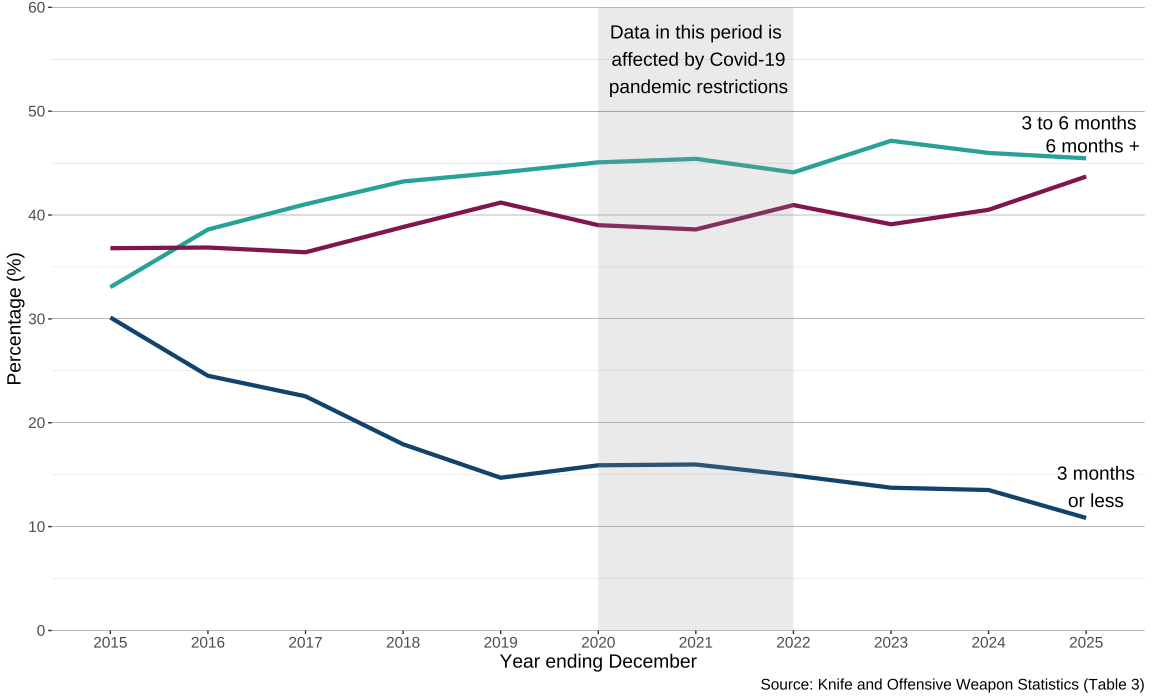
Over the last decade, the proportion of offences that resulted in immediate custody and received a sentence length of 3 to 6 months has seen an increase of 12 percentage points compared to the year ending December 2015. Over the same period, there has also been a sharp decrease in the proportion of offences that resulted in immediate custody and received a sentence length of 3 months or less, a decrease of 19 percentage points compared to the year ending December 2015.
4.2 Immediate Custody Average Sentence Lengths
For all knife and offensive weapon offences that resulted in immediate custody, the average sentence length was 8 months in the year ending December 2025. This is an increase of 2.0% compared to the previous year and an increase of 10.2% compared to ten years ago.
Figure 5: Percentage change in the average sentence length for knife and offensive weapon offences, in England and Wales, compared to year ending December 2024 and year ending December 2015
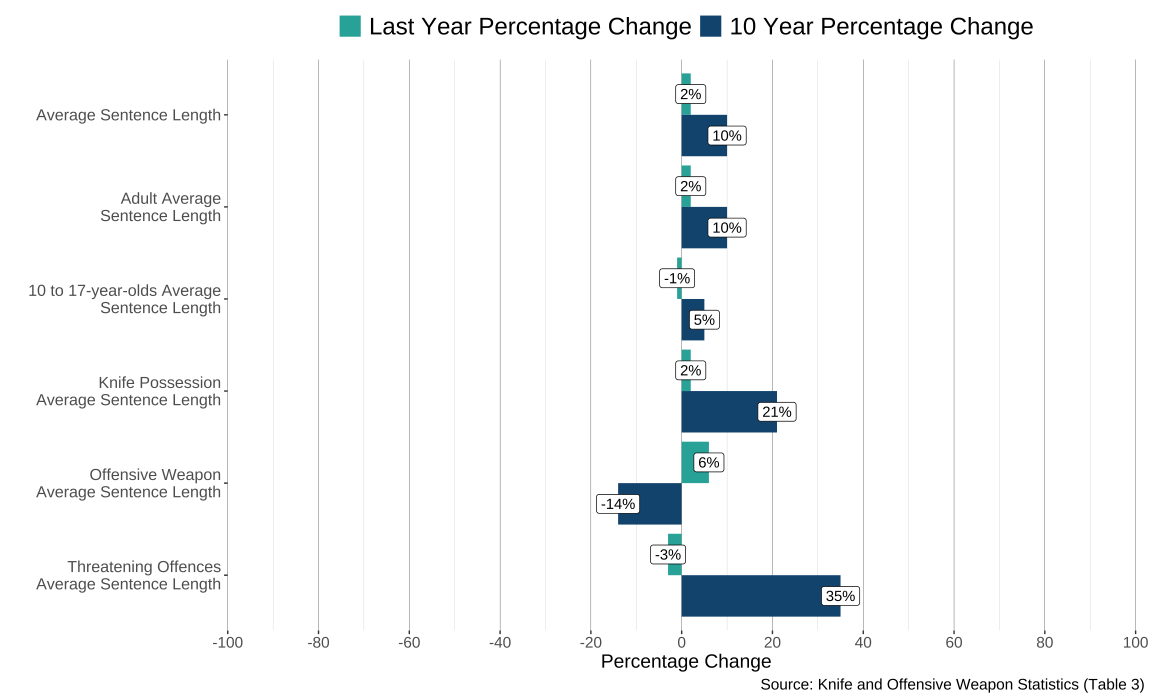
Compared to the year ending December 2015, threatening offences showed the biggest increase in average sentence length for offenders receiving immediate custody (35% increase, average sentence length 10.3 months in year ending December 2015 compared to 14.0 months in year ending December 2025).
In the same period, Offensive weapon offences showed the biggest decrease in average sentence length for all knife and offensive weapon offences (14% decrease, average sentence length of 8.4 months in year ending December 2015 compared to 7.2 months in in year ending December 2025).
5. Repeat Offenders Sentenced under Section 315 of the Sentencing Act 2020
Over the latest year, there were 4,893 occasions where an offender was sentenced for a repeat possession offence under Section 315 of the Sentencing Act 2020.
5.1 Overall - Offenders Sentenced under Section 315 of the Sentencing Act 2020
Over the latest year, there were 4,893 occasions where an offender was sentenced for a repeat possession offence under Section 315 of the Sentencing Act 2020, with 4,613 repeat possession occasions involving adult offenders and 280 repeat possession occasions involving offenders aged 16 to 17-year-olds.
Figure 6: Number of repeat possession occasions sentenced under Section 315 of the Sentencing Act 2020, annually from year ending December 2016 to year ending December 2025, in England and Wales
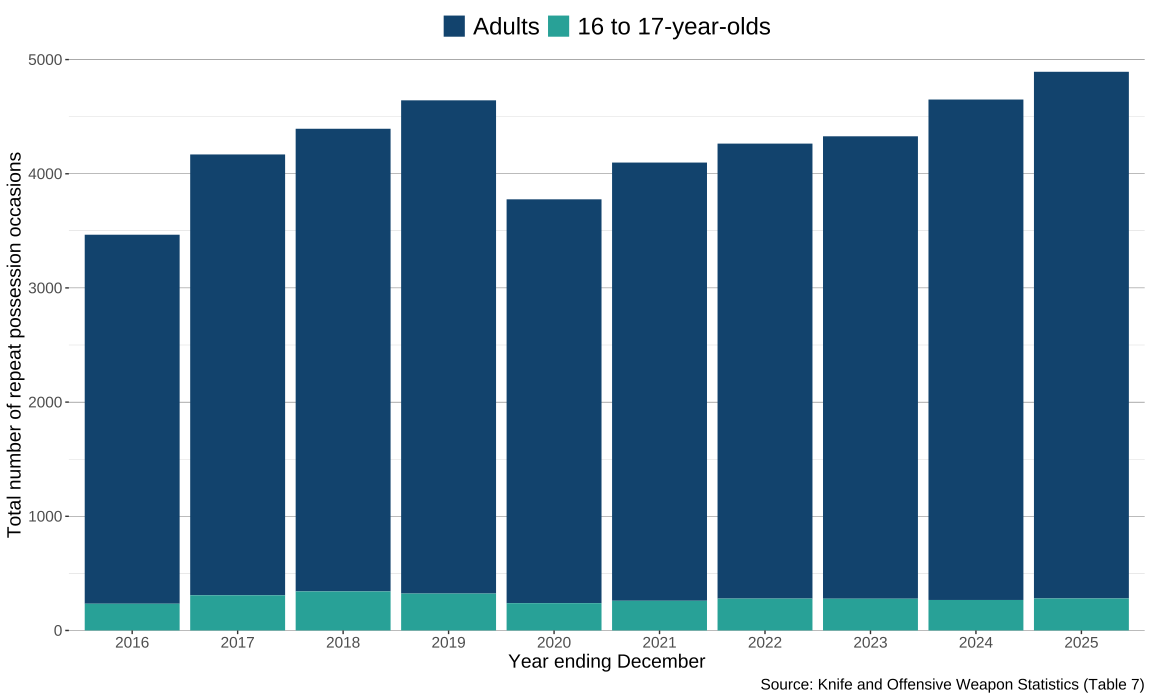
In the year ending December 2025, 60.1% of all sentencing occasions involving repeat possession offences resulted in immediate custody, a decrease of 2.7 percentage points compared to the previous year. In the same period, there has been an increase in the number of sentencing occasions involving adult offenders that resulted in a suspended sentence (up 9.8%) and an increase in the number of sentencing occasions involving 16-to-17-year-olds that resulted in a youth rehabilitation order (up 9.2%).
5.2 Sentencing Length - Offenders Sentenced under Section 315 of the Sentencing Act 2020
In the year ending December 2025 the average sentence length for repeat offenders sentenced to immediate custody under Section 315 of the Sentencing Act 2020 was 7.9 months. The average sentence length for repeat adult offenders was 8 months and the average sentence length for 16-to-17-year-old repeat offenders was 6.1 months.
Figure 7: Percentage change for average sentence length for repeat offenders sentenced under Section 315 of the Sentencing Act 2020, by age, compared to year ending December 2024 and year ending December 2016, in England and Wales
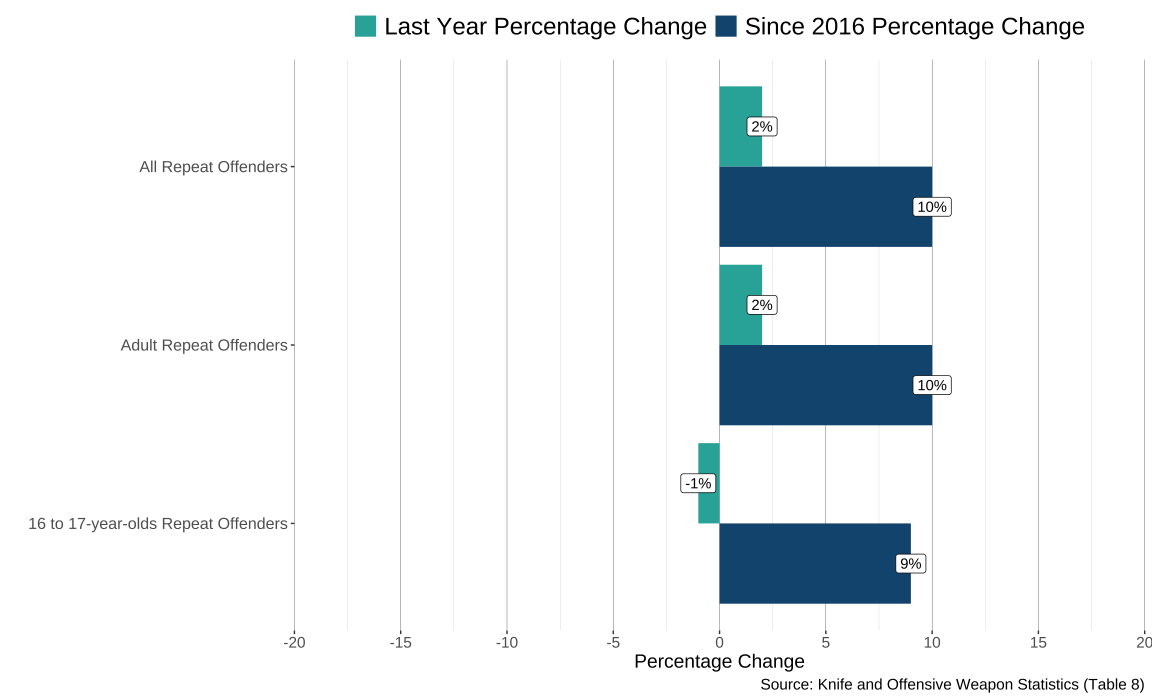
Compared to the previous year, sentence length for 16-to-17-year-olds saw an decrease of 1%. This number should be handled with care due to the small volume of offenders. Adults have seen an increase of 2% compared to the previous year and an increase of 10% since 2016. The average sentence length for all repeat offenders has fluctuated over the period between 7.2 months and 7.9 months.
5.3 By plea[footnote 4] - Offenders Sentenced under Section 315 of the Sentencing Act 2020
In the latest year, 92.9% of all repeat possession offences saw the offender plead guilty. This is a 0.2 percentage point decrease compared to the year ending December 2024 but a 0.6 percentage point increase since the year ending December 2016.
Of all repeat possession offences in which the offender pleaded guilty, 60.1% received an immediate custodial sentence in the year ending December 2025. The total number of all repeat possession offences in which the offender pleaded guilty and received immediate custody increased 1.7% over the latest year and increased 28% since year ending December 2016.
6. Offender History
In the year ending December 2025, 68% of caution and sentencing occasions involved offenders who had committed their first knife or offensive weapon offence.
The proportion of caution and sentencing occasions involving first-time knife and offensive weapon offenders has seen a decrease of 6.6 percentage points over the decade. Although this proportion has fallen, the total number of occasions involving first-time offenders has increased from 12,143 a decade ago to 12,916 in the latest year.
Figure 8: Percentage of caution and sentencing occasions by number of previous cautions and convictions, in England and Wales, year ending December 2025 compared to year ending December 2015
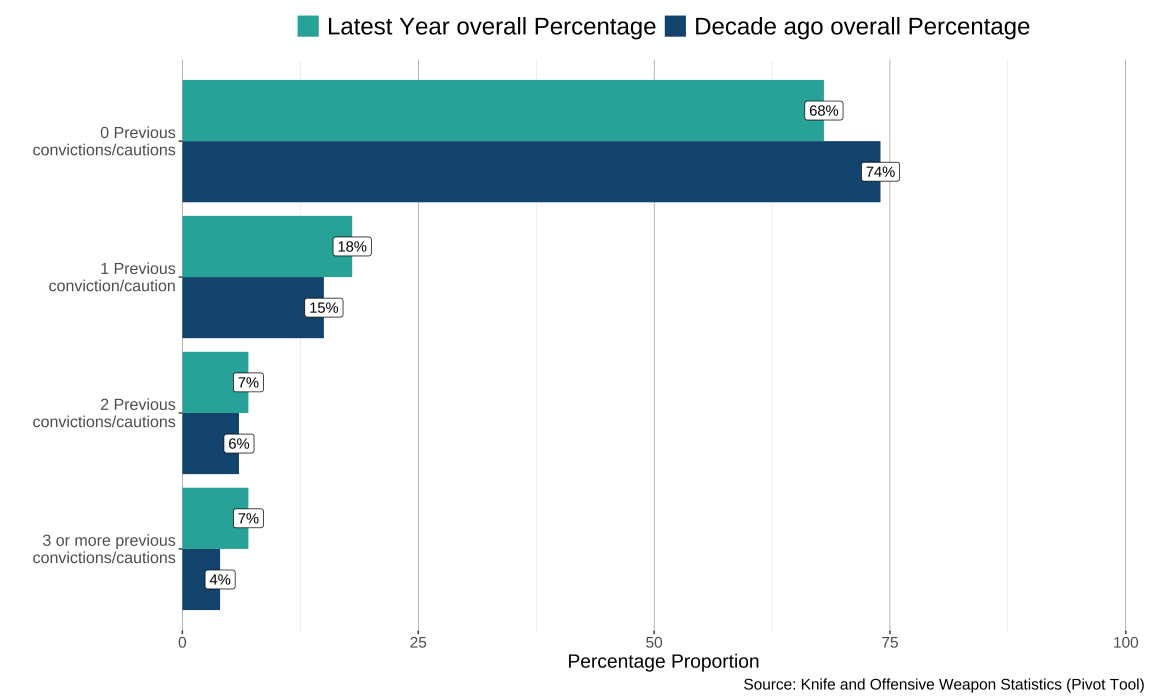
As the proportion of caution and sentencing occasions involving first-time knife and offensive weapon offenders has decreased, there has been a rise in the proportion of occasions involving offenders with one or more previous conviction or caution.
7. Further Information
The data presented are provisional and updated in each publication. Figures provided for more recent quarters are subject to change in future publications as ongoing cases pass through the Criminal Justice System.
A technical guide providing further information on how the data is collected and processed, as well as information on the revisions in policy and legislation relevant to knife and offensive weapon sentencing, can be found here.
The bulletin now includes an analysis of convictions for threatening offences under the Sentencing Act 2020. The minimum sentences are the same as repeat possession offences, except threatening offences can be a first offence or a subsequent offence.
We welcome feedback on the publication. Please direct any comments or questions to MOJPNCteam@justice.gov.uk.
7.1 Accompanying files
As well as this bulletin, the following products are published as part of this release:
- ODS format tables containing data on knife or offensive weapon offences up to the end of December 2025
- An interactive table tool to look at previous offences involving possession of a blade, point or offensive weapon. The tool provides further breakdowns by officer identified sex, officer identified ethnicity and prosecuting police force area.
7.2 Official Statistics status
Our statistical practice is regulated by the Office for Statistics Regulation (OSR). OSR sets the standards of trustworthiness, quality, and value in the Code of Practice for Statistics that all producers of official statistics should adhere to. You are welcome to contact us directly with any comments about how we meet these standards. Alternatively, you can contact the OSR by emailing regulation@statistics.gov.uk or via the OSR website.
7.3 Future publications
Our statisticians regularly review the content of publications. Development of new and improved statistical outputs is usually dependent on reallocating existing resources. As part of our continual review and prioritisation, we welcome user feedback on existing outputs including content, breadth, frequency, and methodology. Please send any comments you have on this publication including suggestions for further developments or reductions in content.
7.4 Contact
Press enquiries should be directed to the Ministry of Justice Enquiries Team:
- Website: https://www.gov.uk/government/organisations/ministry-of-justice/about/media-enquiries
Other enquiries about these statistics should be directed to the Analysis directorate of the Ministry of Justice:
- Ayan Issa, Ministry of Justice, 102 Petty France, London, SW1H 9AJ
- Email: MOJPNCteam@justice.gov.uk
Next update: 20 August 2026
© Crown copyright Produced by the Ministry of Justice Alternative formats are available on request from MOJPNCteam@justice.gov.uk
-
Offences involving threatening with a knife or offensive weapon in a public place or on school premises were introduced on 3rd December 2012. ↩
-
The Other category has not been included in figure 2 and the following percentage change comparisons as the rates are more susceptible to change. It includes cases awaiting final sentencing decisions, which may then move to other categories once the decision is known. ↩
-
Adult and juvenile offenders do not include offenders where there is no age recorded on the system. ↩
-
The plea breakdown in this statistical bulletin does not include offenders who have no plea of guilty or not guilty recorded on the system. ↩