Commentary - Individual insolvencies by Location, Age and Gender, 2025
Published 27 March 2026
Applies to England and Wales

© Crown copyright 2026
This publication is licensed under the terms of the Open Government Licence v3.0 except where otherwise stated. To view this licence, visit nationalarchives.gov.uk/doc/open-government-licence/version/3 or write to the Information Policy Team, The National Archives, Kew, London TW9 4DU, or email: psi@nationalarchives.gov.uk.
Where we have identified any third party copyright information you will need to obtain permission from the copyright holders concerned.
This publication is available at https://www.gov.uk/government/statistics/individual-insolvencies-by-location-age-and-gender-england-and-wales-2025/commentary-individual-insolvencies-by-location-age-and-gender-2025--2
Released
27 March 2026
Next release
March/April 2027
Media enquiries
press.office@insolvency.gov.uk
+44 (0)30 3003 1743
Statistical enquiries
Christopher Bendle (author)
David Webster (responsible statistician)
1. Main Messages for England and Wales
National and regional summary
-
In 2025, the rate of individual insolvency in England and Wales was 25.3 per 10,000 adults, meaning that one in 395 adults entered an insolvency procedure during that year. This was higher than the one in 415 adults (24.1 per 10,000) in 2024.
-
At regional level, the North East of England had the highest individual insolvency rate (33.8 per 10,000 adults), while individuals in London had the lowest (16.2 per 10,000). The North East has been the region with the highest rate of insolvency every year since 2008, while London has been the region with the lowest rate each year since the series began in 2000. The other seven English regions, as well as Wales, all had rates between 23.7 and 29.2 per 10,000. The insolvency rate was higher than the five-year (2020 to 2024) average in all regions of England and Wales.
Local authority and parliamentary constituency areas
-
Rates varied by local authority from 9.4 per 10,000 (1 in 1,067 adults) in Richmond upon Thames to 63.0 per 10,000 (1 in 159 adults) in Halton.
-
The local authorities with the highest rates of individual insolvency were mainly in the North of England, including Halton (63.0 per 10,000), Kingston upon Hull (55.3) and Blackpool (50.8). The six local authorities with the lowest insolvency rates were London boroughs. Outside London, the local authorities with the lowest rates were Cambridge, Ceredigion and Wokingham.
-
The geographical distribution of insolvency rates in 2025 was similar to previous years. For the majority of local authorities, the rate in 2025 was between the same as in 2024 and 3.5 per 10,000 adults higher.
-
Rates varied by parliamentary constituency from 6.8 per 10,000 (1 in 1,475 adults) in Sheffield Hallam to 64.9 per 10,000 (1 in 154 adults) in Kingston upon Hull East.
Age and gender
-
The female insolvency rate (27.6 per 10,000) was higher than the male rate (23.6 per 10,000) as has been the case each year since 2014. Women had a higher rate of insolvency than men in all age groups except for those aged 65 and over.
-
Women were more likely than men to have a debt relief order (DROs) or enter an individual voluntary arrangement (IVA), while men were more likely than women to become bankrupt. Historically, men were more likely to enter bankruptcy than have a debt relief order (DRO), however the reverse has been true since 2021.
-
Insolvency rates were highest for adults between 35 and 44 and lowest for adults aged 65 and over. This has been the case each year since 2007.
-
Individual voluntary arrangements (IVAs) were the most common type of insolvency in all age groups except those under the age of 25, for which DROs were most common. The proportion of insolvencies that were bankruptcies was higher for adults aged over 45 than other age groups, but bankruptcies were the least common type of insolvency for all age groups.
Breathing space
-
In 2025, one in 550 adults (a rate of 18.2 per 10,000) in England and Wales entered a breathing space under the Debt Respite Scheme.
-
The North East was the region with the highest breathing space registration rate in 2025, at 23.3 per 10,000 adults, while London had the lowest, at 14.1 per 10,000 adults. Halton was the local authority with the highest breathing space rate at 54.9 per 10,000 adults, this has been the case every year since the introduction of breathing space in 2021.
-
As with insolvency, breathing space rates were highest for 25 to 44 year-olds and lowest for those over 65.
2. Things you need to know about this release
This statistics release contains data on individual insolvencies (people who are unable to pay debts and enter formal procedures) in England and Wales, broken down by location, age and gender for 2025. The figures covering the period 2015 to 2025 have been included in the time series tables published alongside this commentary.
Forms used to capture data on individuals entering insolvency use the term gender, rather than sex, when asking whether an individual is male, female or prefers not to say. We therefore use the term gender in this publication. In Insolvency Service administrative systems, the gender is recorded as ‘Male’, ‘Female’ or ‘Unknown’.
Figures from previous years have been revised in this publication due to methodological changes. These include improved postcode matching for breathing spaces and updates to data sources following the Insolvency Service moving to a new case management system. In addition, rates for 2024 have been revised using ONS mid-year population estimates for 2024. The previous edition of this publication used mid-year estimates for 2023, as population estimates by local authority for 2024 were not yet available.
Historical figures dating back to 2000 can be found in the tables accompanying the 2019 edition of this release.
For comparative purposes, five-year averages are presented. These averages are the mean annual insolvency rates for 2020 to 2024 for the geography, gender or age group referred to.
Due to low population, the Isles of Scilly local authority has been aggregated with Cornwall and the City of London local authority has been aggregated with Westminster.
Local authority and parliamentary constituency numbers and rates in this publication relate to boundaries in effect in 2025. Where comparisons are made to previous years, numbers and rates for areas whose boundaries have changed relate to the rate of insolvencies within the 2025 boundaries during that time.
More detailed Methodology and Quality information has been published alongside this commentary. More recent individual statistics for England and Wales; Scotland and Northern Ireland can be found in the latest Individual Insolvency Statistics release. Scotland and Northern Ireland are not included in these Location, Age and Gender statistics due to differences in legislation and policy.
This statistics release also contains data on breathing space registrations under the Debt Respite Scheme. Breathing spaces give people with problem debt legal protections from creditors, including pausing most enforcement action and contact from creditors and freezing most interest and charges on their debts. Standard breathing spaces last 60 days and can be entered into once in a 12-month period. Because problem debt can be linked to mental health issues, these protections are also are available to those receiving mental health crisis treatment and last for the duration of a person’s mental health crisis treatment, plus 30 days. There is no limit to the number of mental health crisis breathing spaces a person can have.
3. National trends
Rates in this section are obtained from the monthly Individual Insolvency Statistics. They may differ from the England and Wales rates presented in the accompanying Individual Insolvencies by Location, 2015 to 2025 tables. This is because the monthly statistics use more up to date population estimates that are not yet available at the regional and local authority level.
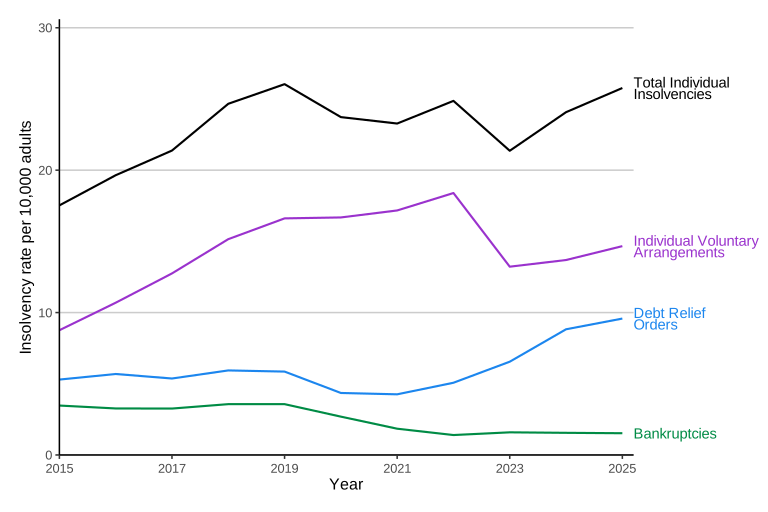
The total insolvency rate in England and Wales was 25.3 per 10,000 adults, an increase of 1.2 per 10,000 adults from 2024. Compared to the five-year average, the rate of insolvency in 2025 was 1.8 per 10,000 higher. The higher rate in 2025 compared to 2024 was driven by higher IVA and DRO numbers.
In 2025, the rate of bankruptcy was 1.5 per 10,000 adults in England and Wales, which is 0.3 lower per 10,000 adults than the five-year average of 1.8 per 10,000 adults. The bankruptcy rate was slightly lower than the 1.8 per 10,000 adults in 2024, but slightly higher than the record low of 1.4 per 10,000 adults in 2022 for the time series, which started in 2000.
In 2025, the rate of DROs was 9.4 per 10,000 adults in England and Wales, 3.6 higher per 10,000 adults than than the five-year average rate. The number of DROs in 2025 was the highest annual number since the introduction of DROs in 2009.
Individual voluntary arrangements (IVAs) continued to account for the majority (57%) of individual insolvencies in England and Wales, which was a similar proportion to 2024. In 2025, the rate of IVAs was 14.4 per 10,000 adults in England and Wales, which was higher than 2024 but 1.4 per 10,000 adults lower than the five-year average.
Figure 1: The total individual insolvency rate increased in 2025, driven by an increase in the IVA and DRO rates
Rate per 10,000 adults, England and Wales, 2015 to 2025
Source: Insolvency Service
4. Regional trends
Individual insolvency rates by region can be found in the accompanying Individual Insolvencies by Location, 2015 to 2025 tables. Historical figures dating back to 2000 can be found in the tables accompanying the 2019 edition of this release.
4.1 Total individual insolvencies by region
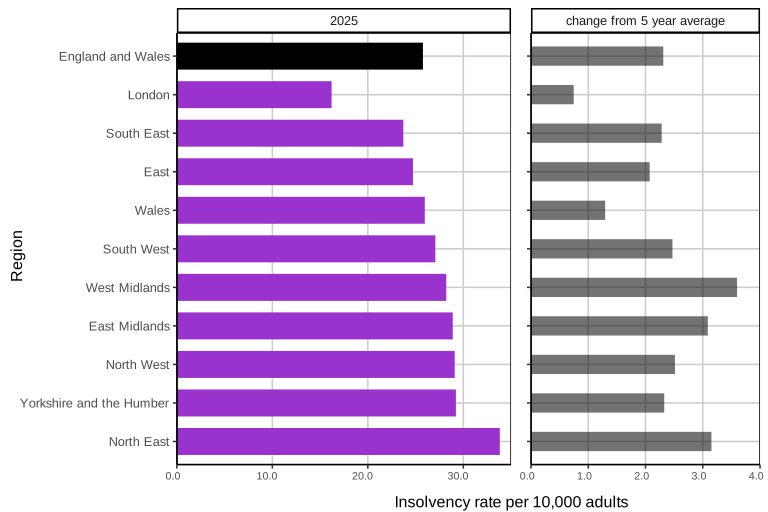
In 2025, the North East continued to have the highest rate of insolvency in England and Wales, with 33.8 insolvencies per 10,000 adults. It has been the region with the highest rate of insolvency each year since 2008.
As has been the case each year since 2009, the North East had the highest rate of IVAs (17.9 per 10,000 adults). It also had the highest DRO rate (14.4) for the tenth year in a row. For the fourth consecutive year, the South West had the highest rate of bankruptcy (1.8).
London continued to have the lowest rate of insolvency per 10,000 adults (16.2) and has been the region with the lowest rates of insolvency since the series began in 2000. London was also the English region with the lowest rates of DROs (5.8) and IVAs (9.0), whilst the East Midlands had the lowest rate of bankruptcies (1.3).
Apart from London and the North East, all regions of England and Wales had insolvency rates between 23.7 and 29.2 per 10,000 adults.
Figure 2: The North East had the highest insolvency rate while London had the lowest rate
Rate per 10,000 adults, by region, England and Wales, 2025 and difference in rates compared to the five-year average (2020 to 2024)
Source: Insolvency Service
The insolvency rate in 2025 was higher than the average of the previous five years in all regions of England and Wales. The West Midlands saw the largest increase with 3.6 more adults per 10,000 compared to the five-year average, the North East had the second-highest difference of 3.2. London showed the lowest increase with 0.7 more adults per 10,000 compared to the five-year average, Wales had the second-smallest increase with 1.3 more adults per 10,000 compared to the five-year average.
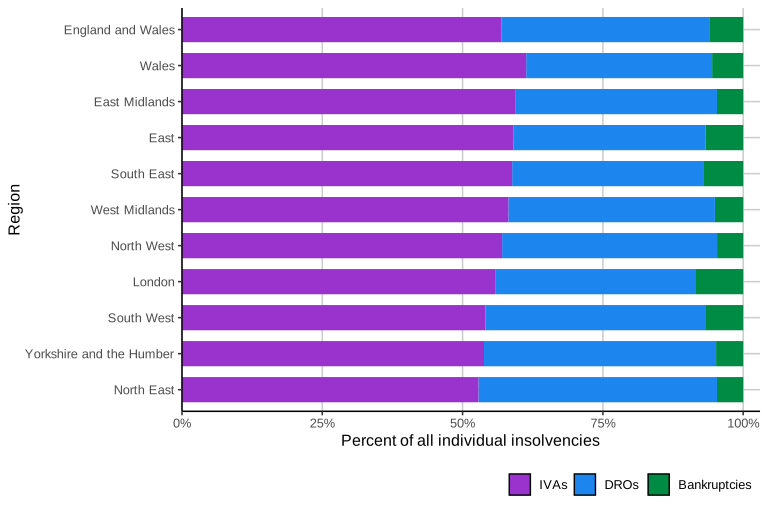
As shown in Figure 3, IVAs were the most common type of insolvency in each region, although their proportion has decreased in all regions since 2023. DROs were the second most common insolvency type in each region. Until 2020, bankruptcies were more common than DROs in London, but in 2025, more than four times as many people in London had a DRO than a bankruptcy. The trend of DROs making up a higher proportion of individual insolvencies coincided with the expansion of the DRO eligibility criteria in 2021, the opening of new DRO hubs in 2023 and the abolition of the upfront £90 fee in April 2024.
Figure 3: IVA were the most common type of insolvency in each region, followed by DROs, then bankruptcies
Percentage of insolvencies that were IVAs, DROs and bankruptcies, by region, England and Wales, 2025
Source: Insolvency Service
4.2 Bankruptcies by region
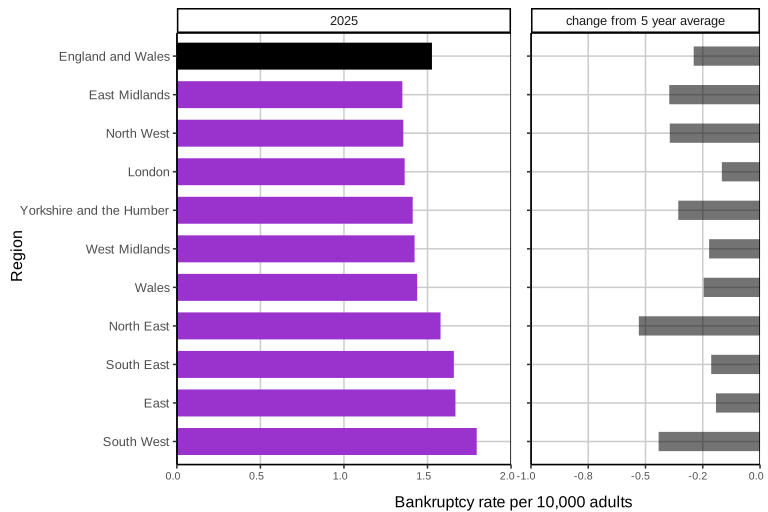
In 2025, bankruptcy rates varied from 1.3 per 10,000 adults in the East Midlands to 1.8 in the South West. All regions of England and Wales saw lower bankruptcy rates than the five-year average.
Figure 4: The bankruptcy rate was highest in the South West and lowest in the East Midlands
Rate per 10,000 adults, by region, England and Wales, 2025 and difference in rates compared to the five-year average (2020 to 2024)
Source: Insolvency Service
4.3 DROs by region
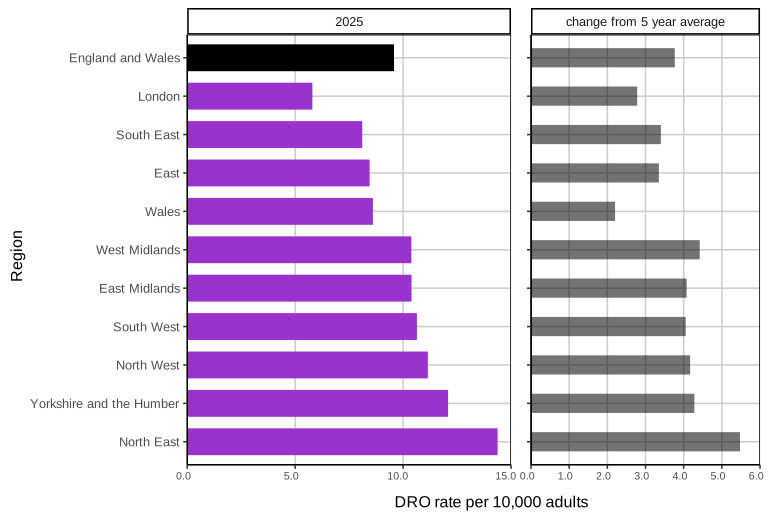
DRO rates in 2025 ranged from 5.8 per 10,000 adults in London to 14.4 in the North East. All regions saw their highest rate of DROs since their introduction in 2009.
Figure 5: The North East had the highest rate of DROs for the tenth year in a row
Rate per 10,000 adults, by region, England and Wales, 2025 and difference in rates compared to the five-year average (2020 to 2024)
Source: Insolvency Service
4.4 IVAs by region
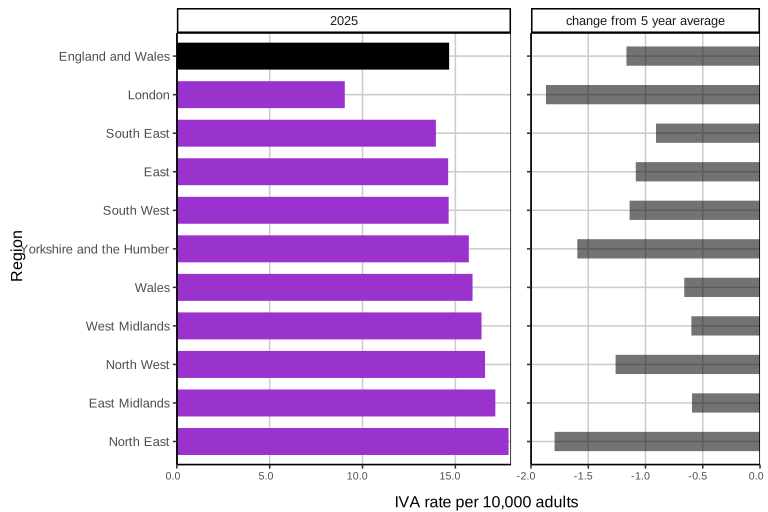
In 2025, the rate of IVAs varied from 9.0 per 10,000 adults in London to 17.9 in the North East. While rates in all regions were slightly higher than in 2024, they remained lower than the five-year average.
Figure 6: The individual voluntary arrangement rate was highest in the North East and lowest in London
Rate per 10,000 adults, by region, England and Wales, 2025 and difference in rates compared to the five-year average (2020 to 2024)
Source: Insolvency Service
5. Local Authority trends
Rates of individual insolvency by local authority can be found in the accompanying Individual Insolvencies by Location, 2015 to 2025 tables. Historical figures dating back to 2000 can be found in the tables accompanying the 2019 edition of this release.
Breakdowns of individual insolvencies by location, age and gender for 2025 can be found in the Location, Age and Gender, 2025 tables. Further information on individual insolvencies by age and gender for England and Wales, 2015 to 2025 can be found in the Age and Gender, 2015 to 2025 tables.
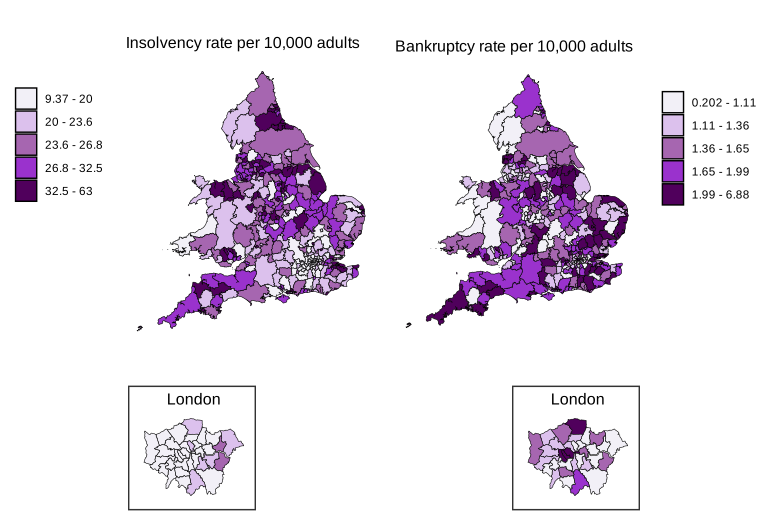
Figure 7: Many of the local authorities with the lowest individual insolvency rates were in London
Rate per 10,000 adults, by local authority, England and Wales, 2025
Source: Insolvency Service
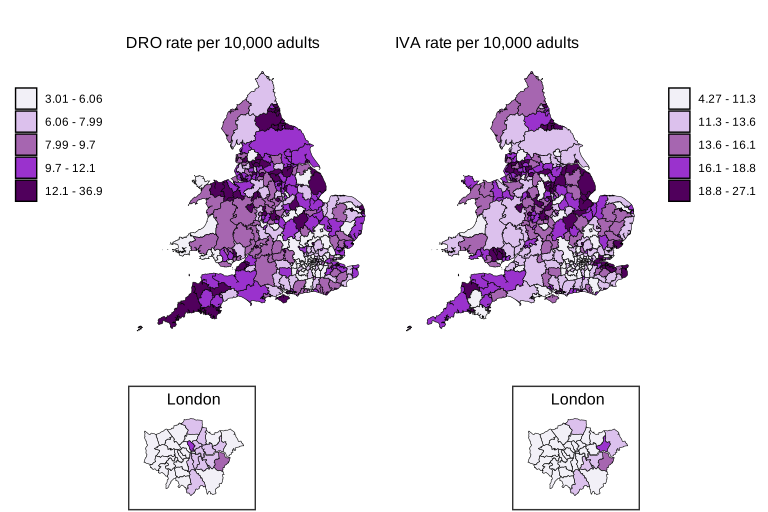
Figure 8: Many of the local authorities with the lowest IVA and DRO rates were in London
Rate per 10,000 adults, by local authority, England and Wales, 2025
Source: Insolvency Service
5.1 Total insolvencies by local authority
The local authority with the highest total individual insolvency rate in 2025 was Halton, with a rate of 63.0 per 10,000 adults. This is the highest rate of insolvency for a local authority recorded in the time series back to 2000. Richmond upon Thames had the lowest individual insolvency rate with 9.4 per 10,000 adults.
The largest increase in the rate of insolvency in 2025 compared to 2024 was in Gosport (up 10.4 insolvencies per 10,000 adults), while the largest decrease was in Worthing (down by 9.4 insolvencies per 10,000 adults)
Table 1: Eight of the ten local authorities with the highest rates of individual insolvency were in Yorkshire and the Humber, the North East and the North West
Insolvency rate per 10,000 adults, by local authority, England and Wales, 2025
| Local Authority | Number of cases | Rate per 10,000 adults |
|---|---|---|
| Halton | 654 | 63.0 |
| Kingston upon Hull | 1177 | 55.3 |
| Blackpool | 586 | 50.8 |
| Hartlepool | 346 | 44.9 |
| Nuneaton and Bedworth | 490 | 44.4 |
| North Tyneside | 763 | 44.2 |
| Gosport | 293 | 44.1 |
| Calderdale | 724 | 43.7 |
| South Tyneside | 524 | 43.3 |
| North East Lincolnshire | 546 | 43.2 |
Table 2: The six local authorities with the lowest insolvency rates were in London
Insolvency rate per 10,000 adults, by local authority, England and Wales, 2025
| Local Authority | Number of cases | Rate per 10,000 adults |
|---|---|---|
| Richmond upon Thames | 143 | 9.4 |
| Camden | 185 | 10.2 |
| Westminster | 189 | 10.5 |
| Wandsworth | 296 | 10.6 |
| Harrow | 228 | 10.8 |
| Kensington and Chelsea | 140 | 11.5 |
| Cambridge | 152 | 12.2 |
| Kingston Upon Thames | 171 | 12.6 |
| Ceredigion | 79 | 12.9 |
| Wokingham | 187 | 13.1 |
The insolvency rate was higher in 2025 compared to 2024 in 241 out of 316 local authorities (76%), lower in 70 (22%) and the same in five (2%).
There were no large changes to the geographical distribution of insolvency rates. For half of the local authorities, the rate in 2025 was between the same as in 2024 and 3.5 per 10,000 adults higher.
5.2 Bankruptcies by local authority
The local authority with the highest bankruptcy rate in 2025 was Stratford-on-Avon with 6.9 bankruptcies per 10,000 adults. Stratford-on-Avon has had the highest bankruptcy rate each year since 2022 and in 2025 had a rate that was 3.1 per 10,000 higher than the local authority with the second-highest rate. The local authority with the lowest rate of bankruptcy in 2025 was Gwynedd, with only two bankruptcies recorded.
Hyndburn had the largest increase in 2025 compared to 2024 (with 2.0 more insolvencies per 10,000 adults), while the largest decrease was in North Warwickshire (down by 1.5 per 10,000).
Table 3: Stratford-on Avon had the highest bankruptcy rate for the fourth year in a row
Bankruptcy rate per 10,000 adults, by local authority, England and Wales, 2025
| Local Authority | Number of cases | Rate per 10,000 adults |
|---|---|---|
| Stratford-on-Avon | 82 | 6.9 |
| Hyndburn | 25 | 3.8 |
| Burnley | 27 | 3.5 |
| Enfield | 81 | 3.3 |
| South Hams | 23 | 3.0 |
Table 4: Gwynedd had the lowest bankruptcy rate
Bankruptcy rate per 10,000 adults, by local authority, England and Wales, 2025
| Local Authority | Number of cases | Rate per 10,000 adults |
|---|---|---|
| Gwynedd | 2 | 0.2 |
| Gedling | 4 | 0.4 |
| Ceredigion | 3 | 0.5 |
| Powys | 7 | 0.6 |
| Broxtowe | 6 | 0.6 |
The bankruptcy rate was higher in 2025 than in 2024 in 145 of the 316 (46%) local authorities, lower in 155 (49%) and the same in 16 (5%).
5.3 DROs by local authority
The local authority with the highest DRO rate in 2025 was Halton at 36.9 per 10,000 adults. The local authority with the lowest DRO rate was Wokingham, with 3.0 DROs per 10,000 adults.
Compared to 2024, the local authority with the largest increase in the DRO rate was Great Yarmouth (up by 8.4 per 10,000 adults) and the local authority with the largest decrease was York (down by 5.6).
Table 5: Halton had the highest debt relief order rate for the second year in a row
DRO rate per 10,000 adults, by local authority, England and Wales, 2025
| Local Authority | Number of cases | Rate per 10,000 adults |
|---|---|---|
| Halton | 383 | 36.9 |
| Calderdale | 457 | 27.6 |
| Kingston upon Hull, City of | 576 | 27.0 |
| Blackpool | 268 | 23.3 |
| Nuneaton and Bedworth | 255 | 23.1 |
Table 6: Three of the five local authorities with the lowest debt relief order rate were in London
DRO rate per 10,000 adults, by local authority, England and Wales, 2025
| Local Authority | Number of cases | Rate per 10,000 adults |
|---|---|---|
| Wokingham | 43 | 3.0 |
| Harrow | 65 | 3.1 |
| Richmond Upon Thames | 49 | 3.2 |
| Rutland | 12 | 3.6 |
| Ealing | 110 | 3.6 |
The DRO rate was higher in 2025 than in 2024 in 223 out of 316 local authorities (71%), lower in 86 (27%) and the same in seven (2%).
5.4 IVAs by local authority
North East Lincolnshire was the local authority with the highest IVA rate in 2025 at 27.1 per 10,000 adults. The local authority with the lowest IVA rate was Westminster with 4.3 per 10,000 adults.
Compared to 2024, the local authority with the largest increase in the IVA rate was Torfaen (up 7.1 per 10,000 adults) and the local authority with the largest decrease was Chesterfield (down 7.3).
Table 7: North East Lincolnshire had the highest individual voluntary arrangement rate
IVA rate per 10,000 adults, by local authority, England and Wales, 2025
| Local Authority | Number of cases | Rate per 10,000 adults |
|---|---|---|
| North East Lincolnshire | 343 | 27.1 |
| Kingston Upon Hull, City of | 566 | 26.6 |
| Blackpool | 295 | 25.6 |
| Swale | 314 | 25.5 |
| Mansfield | 226 | 25.3 |
Table 8: The four local authorities with the lowest individual voluntary arrangement rate were in London.
IVA rate per 10,000 adults, England and Wales, 2025
| Local Authority | Number of cases | Rate per 10,000 adults |
|---|---|---|
| Westminster | 77 | 4.3 |
| Camden | 81 | 4.5 |
| Kensington and Chelsea | 56 | 4.6 |
| Richmond upon Thames | 78 | 5.1 |
| Cambridge | 68 | 5.5 |
The IVA rate was higher in 2025 than in 2024 in 235 out of 316 (74%) local authorities, lower in 77 (24%) and the same in four (1%).
6. Parliamentary Constituency trends
Rates of individual insolvency by parliamentary constituency can be found in the accompanying Parliamentary constituency, 2015 to 2025 tables. Historical figures dating back to 2000 can be found in the tables accompanying the 2019 edition of the individual insolvencies by Parliamentary Constituency.
Parliamentary constituency numbers and rates in this publication relate to the new boundaries that took effect from the 2024 UK general election. Where comparisons are made to previous years, they relate to the rate of insolvencies within the new parliamentary constituency boundaries during that time.
6.1 Total insolvencies by parliamentary constituency
The parliamentary constituency with the highest total individual insolvency rate in 2025 was Kingston upon Hull East, with a rate of 64.9 per 10,000 adults. Sheffield Hallam had the lowest individual insolvency rate with 6.8 per 10,000 adults.
The largest increase in the rate of insolvency compared to 2024 was in Torfaen (up 12.4 per 10,000 adults), while the largest decrease was in Chesterfield (down 9.1).
Table 9: Nine of the ten parliamentary constituencies with the highest insolvency rates were in Yorkshire and the Humber, the North East and the North West
Insolvency rate per 10,000 adults, by parliamentary constituency, England and Wales, 2025
| Parliamentary Constituency | Number of cases | Rate per 10,000 adults |
|---|---|---|
| Kingston upon Hull East | 517 | 64.9 |
| Halifax | 481 | 56.4 |
| Blackpool South | 489 | 54.9 |
| Stockton North | 433 | 53.1 |
| Widnes and Halewood | 391 | 52.3 |
| Great Grimsby and Cleethorpes | 436 | 51.6 |
| Runcorn and Helsby | 379 | 49.9 |
| Jarrow and Gateshead East | 345 | 45.2 |
| Hartlepool | 346 | 44.9 |
| Nuneaton | 366 | 44.7 |
Table 10: Eight of the ten parliamentary constituencies with the lowest insolvency rates were in London
Insolvency rate per 10,000 adults, by parliamentary constituency, England and Wales, 2025
| Parliamentary Constituency | Number of cases | Rate per 10,000 adults |
|---|---|---|
| Sheffield Hallam | 52 | 6.8 |
| Hampstead and Highgate | 73 | 7.6 |
| Cities of London and Westminster | 90 | 7.8 |
| Wimbledon | 74 | 8.4 |
| Richmond Park | 76 | 8.8 |
| Tooting | 82 | 9.2 |
| Chelsea and Fulham | 100 | 9.7 |
| Chesham and Amersham | 80 | 10.1 |
| Harrow East | 99 | 10.3 |
| Hornsey and Friern Barnet | 86 | 10.6 |
The insolvency rate was higher in 2025 than in 2024 in 405 out of 575 (70%) parliamentary constituencies, lower in 161 (28%) and the same in 9 (2%).
6.2 Bankruptcies by parliamentary constituency
The parliamentary constituency with the highest bankruptcy rate in 2025 was Stratford-on-Avon, with a rate of 6.8 bankruptcies per 10,000 adults. This was the fourth year in a row that Stratford-on-Avon has had the highest rate of bankruptcy. Dwyfor Meirionnydd had the lowest bankruptcy rate with 0.3 per 10,000 adults.
The largest decrease in the rate of bankruptcy compared to 2024 was in Liverpool Garston (down 2.0 per 10,000 adults), while the largest increase was in Lowestoft (up 1.9 per 10,000 adults).
Table 11: Stratford-on-Avon had the highest bankruptcy rate in 2025
Bankruptcy rate per 10,000 adults, by parliamentary constituency, England and Wales, 2025
| Parliamentary Constituency | Number of cases | Rate per 10,000 adults |
|---|---|---|
| Stratford-on-Avon | 57 | 6.8 |
| Kenilworth and Southam | 35 | 4.3 |
| Edmonton and Winchmore Hill | 37 | 3.9 |
| Enfield North | 35 | 3.7 |
| North Cornwall | 29 | 3.5 |
Table 12: Dwyfor Meirionnydd had the lowest bankruptcy rate in 2025
Bankruptcy rate per 10,000 adults, by parliamentary constituency, England and Wales, 2025
| Parliamentary Constituency | Number of cases | Rate per 10,000 adults |
|---|---|---|
| Dwyfor Meirionnydd | 2 | 0.3 |
| Gedling | 3 | 0.4 |
| South Cambridgeshire | 4 | 0.5 |
| Stockport | 4 | 0.5 |
| Banbury | 4 | 0.5 |
The bankruptcy rate was higher in 2025 than in 2024 in 254 out of 575 parliamentary constituencies (44%), lower in 283 (49%) and the same in 38 (7%).
6.3 DROs by parliamentary constituency
Halifax had the highest rate of DROs in 2025 with a rate of 36.3 per 10,000 adults. 2025 was the fifth year in a row that Halifax had the highest DRO rate. The lowest DRO rate was in Cities of London and Westminster, which had 2.4 DROs per 10,000 adults.
The largest decrease in the rate of DROs compared to 2024 was in York Central (down by 7.6 per 10,000 adults), while the largest increase was in Great Yarmouth (up by 8.4 per 10,000 adults).
Table 13: The five parliamentary constituencies with the highest rates of DROs were in the North of England
DRO rate per 10,000 adults, by parliamentary constituency, England and Wales, 2025
| Parliamentary Constituency | Number of cases | Rate per 10,000 adults |
|---|---|---|
| Halifax | 310 | 36.3 |
| Kingston upon Hull East | 255 | 32.0 |
| Widnes and Halewood | 233 | 31.2 |
| Stockton North | 209 | 25.6 |
| Blackpool South | 226 | 25.4 |
Table 14: The five parliamentary constituencies with the lowest DRO rates were in London
DRO rate per 10,000 adults, by parliamentary constituency, England and Wales, 2025
| Parliamentary Constituency | Number of cases | Rate per 10,000 adults |
|---|---|---|
| Cities of London and Westminster | 28 | 2.4 |
| Harrow East | 24 | 2.5 |
| Twickenham | 25 | 3.0 |
| Hampstead and Highgate | 29 | 3.0 |
| Ealing Central and Acton | 35 | 3.1 |
The DRO rate was higher in 2025 than in 2024 in 373 of the 575 parliamentary constituencies (65%), lower in 182 (32%) and the same in 20 (3%).
6.4 IVAs by parliamentary constituency
The parliamentary constituency with the highest IVA rate in 2025 was Kingston upon Hull East, with 31.5 IVAs per 10,000 adults. Sheffield Hallam had the lowest rate of IVAs with 2.2 per 10,000 adults.
The largest decrease in the IVA rate compared to 2024 was in Chesterfield (down 7.1 per 10,000 adults), while the largest increase was in Southampton Test (up 8.4 per 10,000 adults).
Table 15: Kingston upon Hull East had the highest rate of IVAs in 2025
IVA rate per 10,000 adults, by parliamentary constituency, England and Wales, 2025
| Parliamentary Constituency | Number of cases | Rate per 10,000 adults |
|---|---|---|
| Kingston upon Hull East | 251 | 31.5 |
| Great Grimsby and Cleethorpes | 260 | 30.8 |
| Rhondda and Ogmore | 229 | 28.4 |
| Blackpool South | 247 | 27.7 |
| Sittingbourne and Sheppey | 250 | 27.7 |
Table 16: Sheffield Hallam had the lowest rate of IVAs in 2025
IVA rate per 10,000 adults, by parliamentary constituency, England and Wales, 2025
| Parliamentary Constituency | Number of cases | Rate per 10,000 adults |
|---|---|---|
| Sheffield Hallam | 17 | 2.2 |
| Hampstead and Highgate | 32 | 3.3 |
| Cities of London and Westminster | 41 | 3.5 |
| Chelsea and Fulham | 40 | 3.9 |
| Richmond Park | 36 | 4.2 |
The IVA rate was higher in 2025 than 2024 in 385 out of 575 parliamentary constituencies (67%), lower in 180 (31%) and the same in 10 (2%).
7. Gender
Forms used to capture data on individuals entering insolvency use the term gender, rather than sex, when asking whether an individual is male, female or prefers not to say. We therefore use the term gender in this publication. In Insolvency Service administrative systems, the gender is recorded as ‘Male’, ‘Female’ or ‘Unknown’.
Rates of individual insolvency by age, gender and local authority for 2025 can be found in the accompanying Location, Age and Gender, 2025 tables. Historical figures dating back to 2000 can be found in the tables accompanying the 2019 edition of this release.
Further breakdowns of individual insolvencies by age and gender can be found in the Individual Insolvencies by Age and Gender, 2015 to 2025 tables.
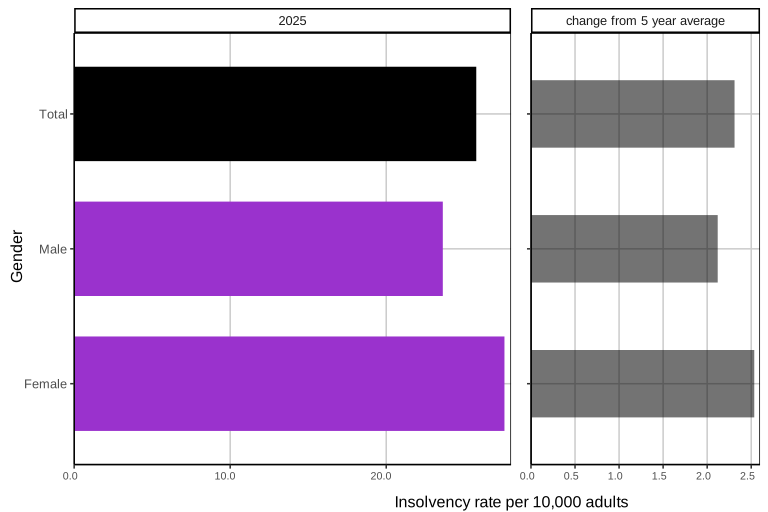
In 2025, the insolvency rate for women (27.6 per 10,000 adults) was higher than for men (23.6 per 10,000 adults), as has been the case every year since 2014. This represents a gender gap of 4.0, per 10,000 adults, 0.3 lower than in 2024. The gender gap is the difference between the female and male insolvency rate per 10,000 adults. A positive gender gap indicates that the female insolvency rate is higher than the male insolvency rate.
The gender gap of 4.0 in 2025 was mostly driven by the higher DRO rate for women compared to men.
Figure 9: The individual insolvency rate in 2025 was higher for women than men. The insolvency rate increased for both women and men.
Rate per 10,000 adults, by gender, England and Wales, 2025 and difference in rates compared to the five-year average (2020 to 2024)
Source: Insolvency Service
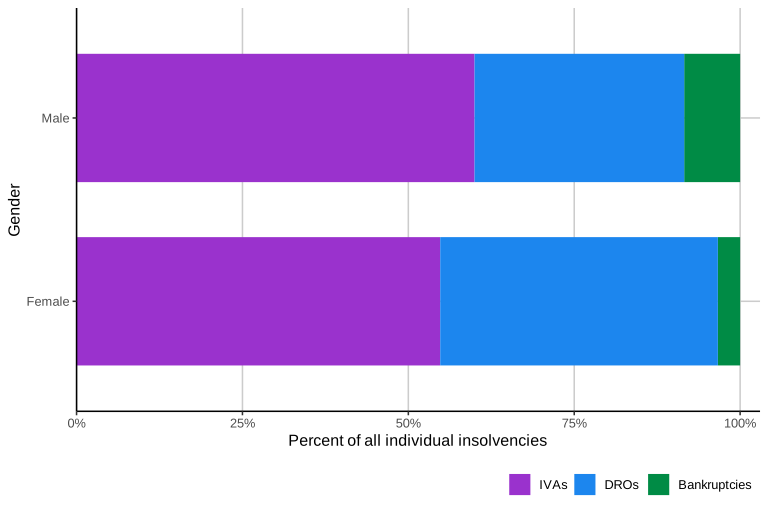
As shown in Figure 10, IVAs accounted for the majority of insolvencies for both men and women (60% for men, 55% for women). However, the relative proportions of DROs and bankruptcies varied by gender. DROs accounted for 42% of insolvencies among women and 32% among men. The picture was reversed for bankruptcies, where 3% of insolvencies for women were bankruptcies and 8% of male insolvencies were bankruptcies.
Historically, men were more likely to enter bankruptcy than have a debt relief order, however the reverse has been true since 2021.
Figure 10: DROs made up a greater proportion of insolvencies for women than for men, while this was reversed for bankruptcies.
Percentage of insolvency types by gender, England and Wales, 2025
Source: Insolvency Service
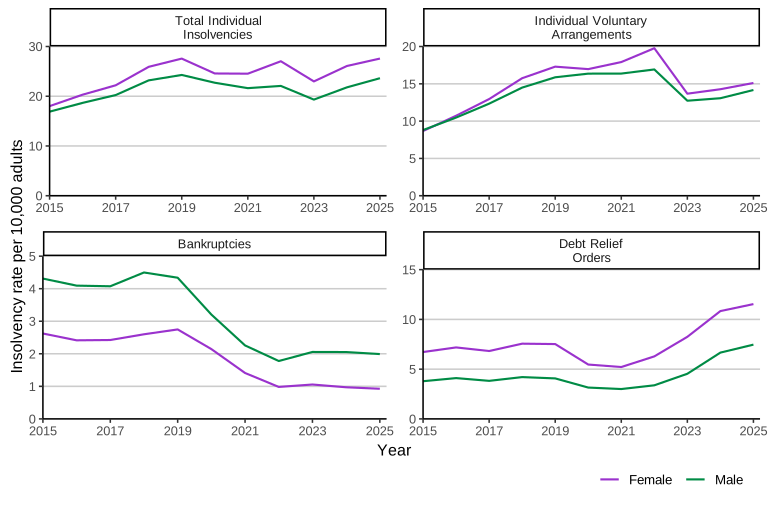
Fifteen years ago, men had a higher rate of insolvencies than women, but the gender gap noticeably narrowed from 2009 onwards and by 2014, women began to have higher insolvency rates than men. This change coincided with a decline in the number of bankruptcies (which are more common for men than for women), the introduction and growth in the number of DROs (where the rate for women was higher), and the narrowing and subsequent reversal of the gender gap for IVAs.
Figure 11: Despite a slight reduction in 2025, the insolvency gender gap has increased over time, with women having a higher insolvency rate than men.
Rate per 10,000 adults, by insolvency type and gender, England and Wales, 2015 to 2025
Source: Insolvency Service
Table 17: Women are more likely to become insolvent than men. The gender gap decreased slightly in 2025.
Gender gap by insolvency type, England and Wales, 2015 to 2025
| Year | Total Individual Insolvencies Gender Gap | Bankruptcy Gender Gap | DRO Gender Gap | IVA Gender Gap |
|---|---|---|---|---|
| 2015 | 1.1 | -1.7 | 2.9 | -0.1 |
| 2016 | 1.6 | -1.7 | 3.1 | 0.2 |
| 2017 | 2.0 | -1.7 | 3.0 | 0.6 |
| 2018 | 2.7 | -1.9 | 3.4 | 1.3 |
| 2019 | 3.3 | -1.6 | 3.5 | 1.4 |
| 2020 | 1.9 | -1.1 | 2.3 | 0.6 |
| 2021 | 2.9 | -0.8 | 2.2 | 1.5 |
| 2022 | 5.0 | -0.8 | 2.9 | 2.8 |
| 2023 | 3.7 | -1.0 | 3.7 | 0.9 |
| 2024 | 4.3 | -1.1 | 4.2 | 1.2 |
| 2025 | 4.0 | -1.1 | 4.1 | 0.9 |
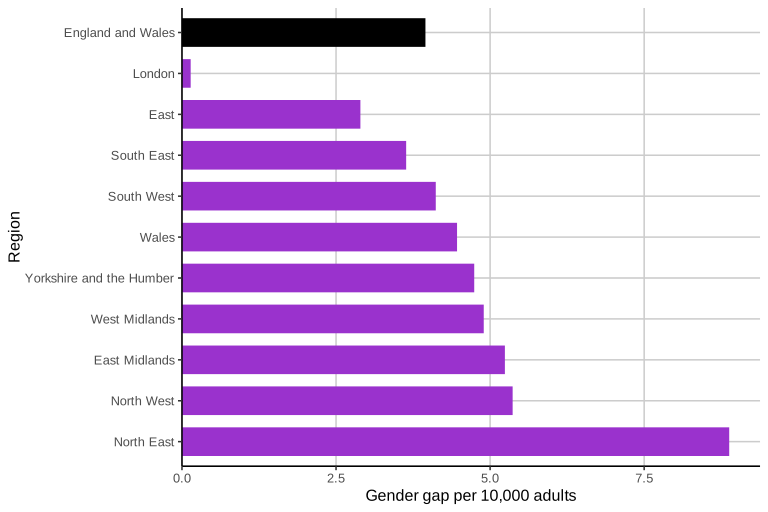
Women had higher insolvency rates than men in every region of England and Wales. The largest gender gap was in the North East (a difference of 8.9 insolvencies per 10,000 adults) while London had the smallest gap (0.1 insolvencies per 10,000 adults). The gender gap was largest in northern regions of England and smallest in the south of England.
Figure 12: Women had a higher insolvency rate in every region of England and Wales
Gender gap in the total insolvency rate per 10,000 adults, by region, England and Wales, 2025
Source: Insolvency Service
8. Age and Gender
Rates of individual insolvency by age, gender and local authority for 2025 can be found in the accompanying Location, Age and Gender, 2025 tables. Historical figures dating back to 2000 can be found in the tables accompanying the 2019 edition of this release.
Further breakdowns of individual insolvencies by age and gender for 2015 to 2025 can be found in the Individual Insolvencies by Age and Gender, 2015 to 2025 tables.
8.1 Total Insolvencies by age and gender
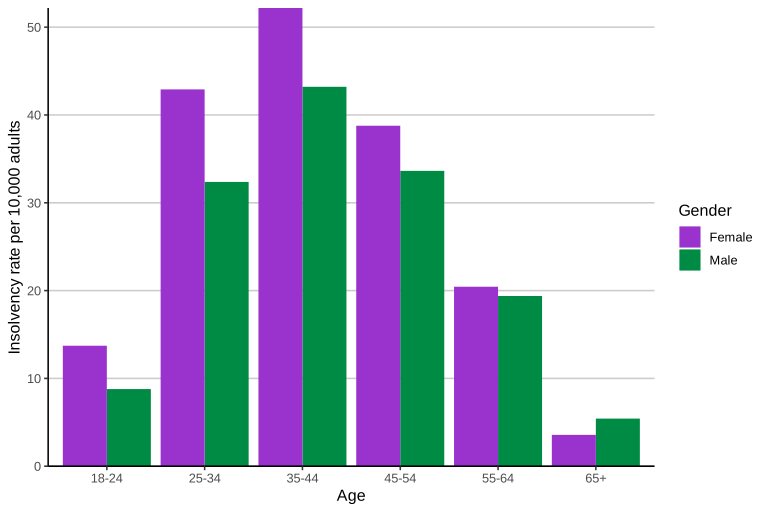
In 2025, the distribution of insolvency rates by age remained broadly similar to previous years. Insolvency rates were highest for adults between 35 and 44 and lowest for adults aged 65 and over. This has been the case each year since 2007.
Figure 13: Insolvency rates were lower in 18 to 24 year-olds and over 65s than for 25 to 54 year-olds
Rate per 10,000 adults, by gender and age group, England and Wales, 2025
Source: Insolvency Service
Figure 13 shows that the insolvency rate was higher among women than men in all age groups, except for over 65s. The age distribution of insolvency was younger for women than for men.
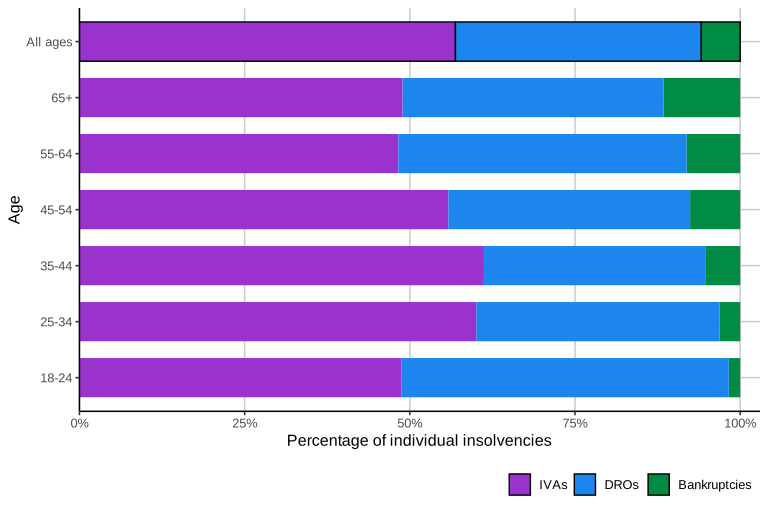
As shown in Figure 14, IVAs were the most common type of insolvency for every age bracket, except those aged 18-24 where DROs were slightly more common. DROs made up approximately half of individual insolvencies for 18 to 24 year-olds and were between 34% and 44% of insolvencies for all other age brackets. Bankruptcies were the least common type of insolvency for all ages, with proportions ranging from making up 2% of insolvencies for 18 to 24 year-olds, to 12% for those over 65.
Figure 14: IVAs were the most common type of insolvency for all age groups except those under 25.
Percentage of each insolvency type by age group, England and Wales, 2025
Source: Insolvency Service
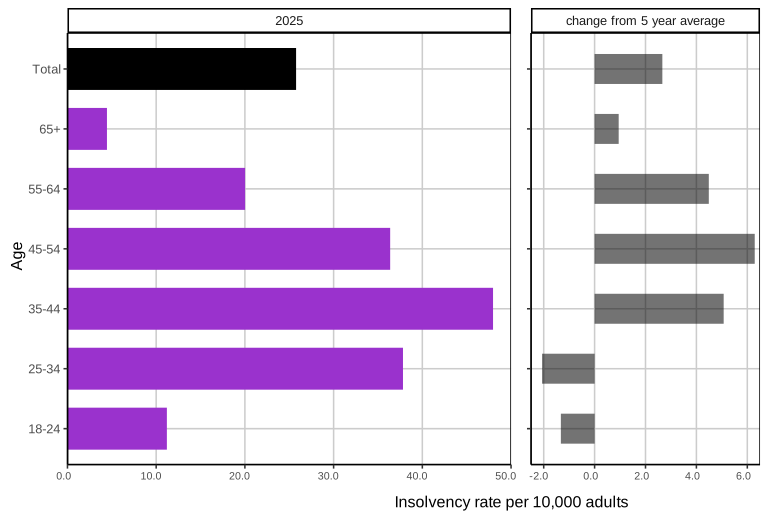
The individual insolvency rate in 2025 was higher than the five-year average for those aged 35 and older, but lower for 18 to 34 year-olds. The largest positive difference compared to the five-year average was for the 45 to 54 age group, where the rate was 6.3 insolvencies per 10,000 adults higher. The largest negative difference was for the 25 to 34 year-old age group, where the rate was 2.1 insolvencies per 10,000 adults lower.
Figure 15: Individual insolvency rates were higher than the five-year average for adults aged over 35, but lower for 18 to 34 year-olds
Rate per 10,000 adults, by age group, England and Wales in 2025 and difference in rates compared to the five-year average (2020 to 2024)
Source: Insolvency Service
8.2 Bankruptcies by age and gender
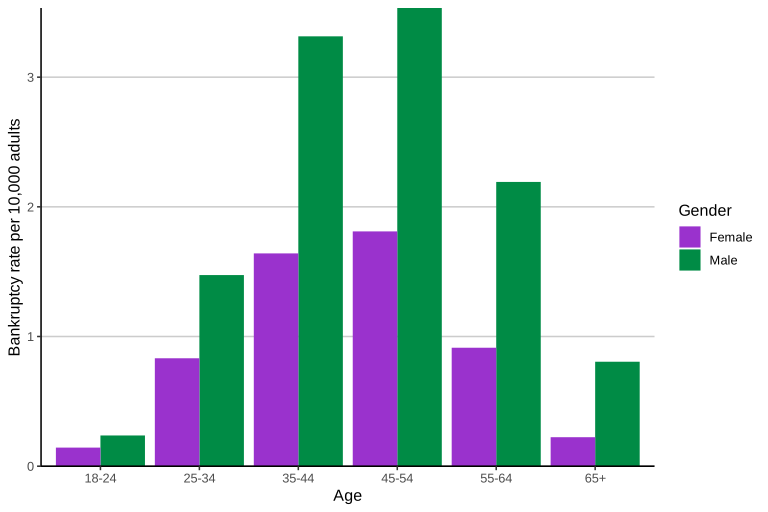
In 2025, bankruptcy rates were lower in younger adults, peaked for those aged 35 to 54, then were lower in older adults. The age distribution for bankruptcy was slightly older than for the overall individual insolvency rates, peaking in the 45 to 54 year-old age group.
The rate of bankruptcy per 10,000 adults was higher for men than for women in all age groups, but the gap between rates varied by age group. Men aged under 25 were 65% more likely to become bankrupt than women in the same age group. This ratio increased with age, with men over 65 being more than 3.5 times as likely to become bankrupt than women in the same age group.
Figure 16: Bankruptcy rates were lower in younger adults, peaked for those aged 35 to 54, then dropped again in older adults
Rate per 10,000 adults, by gender and age group, England and Wales, 2025
Source: Insolvency Service
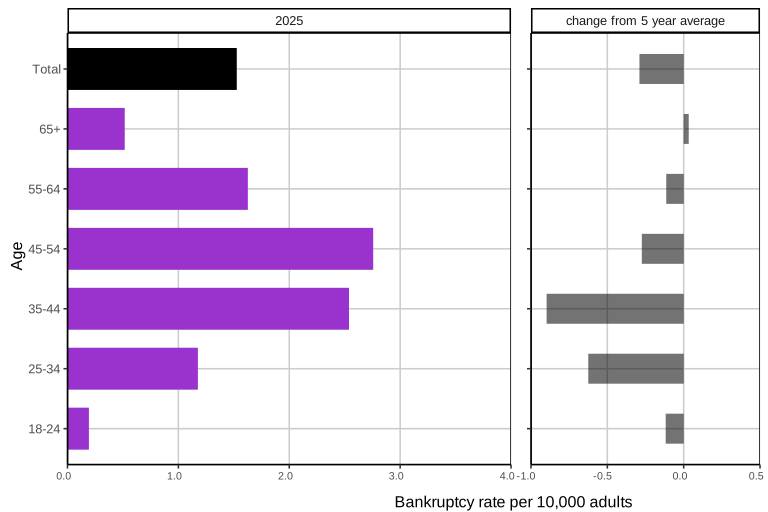
The bankruptcy rate was lower for all age groups in 2025 compared to the five-year average, except for over 65s, who saw a slight increase. There were larger decreases in bankruptcy rates for adults under the age of 45 than older adults.
Figure 17: The bankruptcy rate was lower for all age groups compared to the five-year average
Rate per 10,000 adults, by age group, England and Wales, in 2025 and difference in rates compared to the five-year average (2020 to 2024)
Source: Insolvency Service
8.3 DROs by age and gender
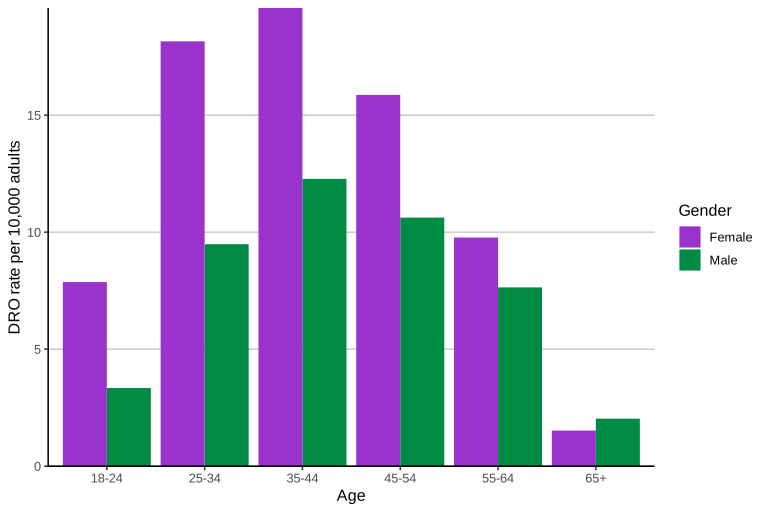
In 2025, women had a higher rate of DROs than men in all age groups except over 65s. This pattern was also observed in previous years. Women aged 18 to 24 were more than twice as likely to have a DRO than men of the same age.
Figure 18: The debt relief order rate was higher for women in all age groups except over 65s.
Rate per 10,000 adults, by gender and age group, England and Wales, 2025
Source: Insolvency Service
Women aged between 35 and 44 had the highest rate of DROs in 2025 with a rate of 19.6 per 10,000 adults, slightly higher than the 18.2 per 10,000 for women aged between 25 to 34. For men, the 35 to 44 age group also had the highest rate of DROs, with a rate of 12.3 per 10,000 adults.
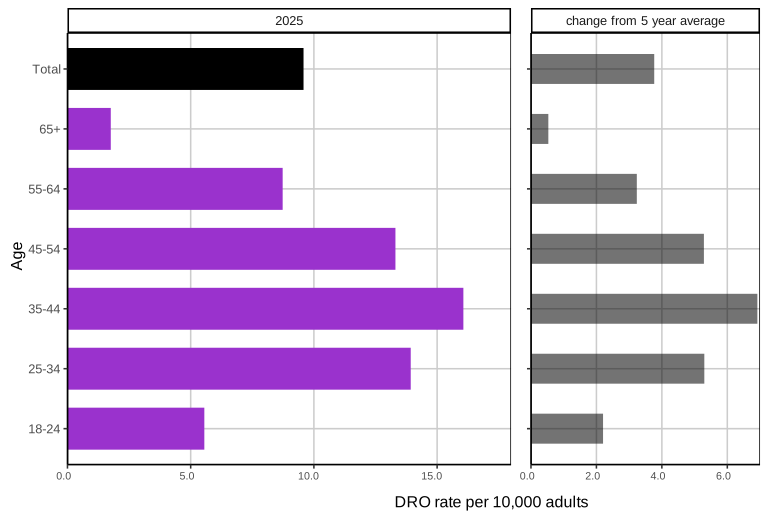
Since their introduction in 2009, the highest DRO rates have been in the 25 to 54 age groups, with lower rates in adults over 55 and adults under 25. This is similar to the pattern observed in total individual insolvencies.
All age groups saw higher DRO rates in 2025 compared with the five-year average. Increases were proportionally similar in most age groups, although slightly lower for over 65s.
Figure 19: The debt relief order rates for age groups between 25 and 54 were higher than for younger and older adults.
Rate per 10,000 adults, by age group, England and Wales, in 2025 and difference in rates compared to the five-year average (2020 to 2024)
Source: Insolvency Service
8.4 IVAs by age and gender
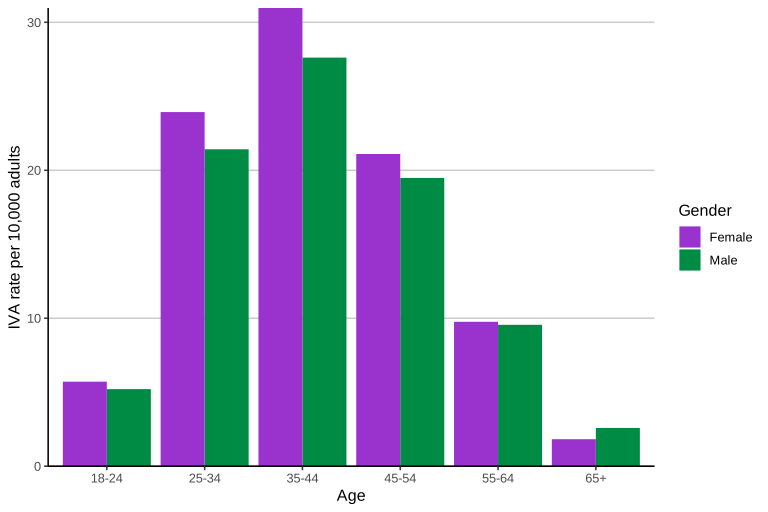
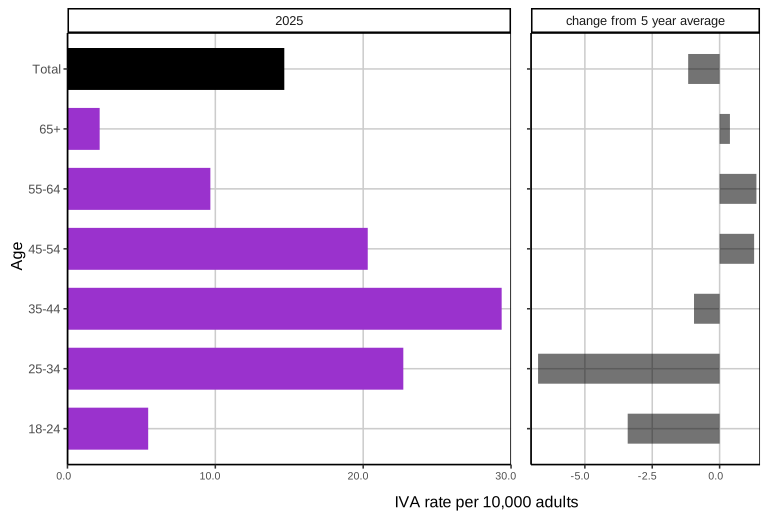
In 2025, women had a slightly higher IVA rate than men in all age groups except over 65s. The 35 to 44 age group had the highest IVA rate, at 29.4 per 10,000 adults, while the over 65 age group had the lowest rate at 2.2 per 10,000 adults.
Figure 20: Women were slightly more likely to enter an IVA than men in all age groups except those over 65
Rate per 10,000 adults, by gender and age group, England and Wales, 2025
Source: Insolvency Service
The 35 to 44 year-old age group has had the highest IVA rate in each of the last four years. Women aged between 35 and 44 had the highest rate of IVAs in 2025, with 31.0 per 10,000. For men, the 35 to 44 age group also had the highest IVA rate, with 27.6 per 10,000.
Compared to the five-year average, the IVA rate was lower in 2025 for ages between 18 and 44, whilst those over 45 saw an increased rate. Changes were larger for those aged under 35 than those aged over 35.
Figure 21: For age groups between 18 and 34, the IVA rate was lower in 2025 compared to the five-year average, whilst it was higher for those aged 45+
Rate per 10,000 adults, by age group, England and Wales, in 2025 and difference in rates compared to the five-year average (2020 to 2024)
Source: Insolvency Service
8.5 Breathing spaces by Location
Breathing space registration rates by country, region, county and local authority can be found in the accompanying tables.
In 2025, one in 550 adults (a rate of 18.2 per 10,000) in England and Wales entered a breathing space.
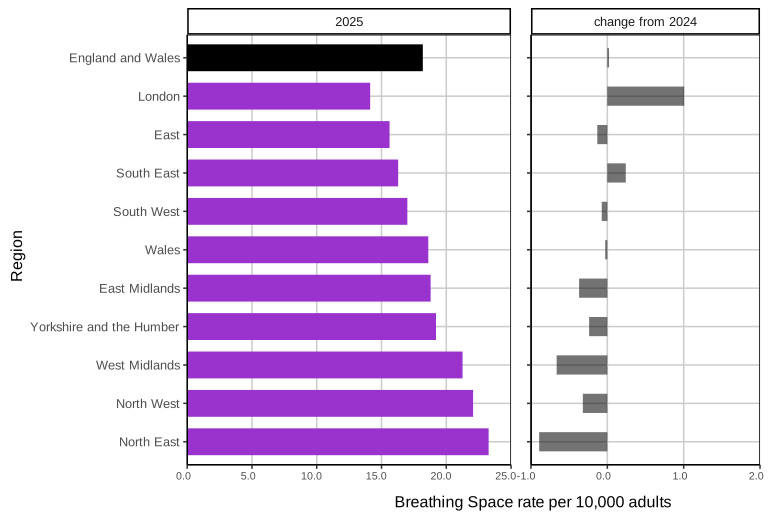
Figure 22 shows the breathing space registration rate in each region of England and Wales. Regional rates ranged from 14.1 per 10,000 (one in 708) in London to 23.3 per 10,000 adults (one in 430) in the North East. Regional rates were similar to 2024 in all regions, with changes in rate ranging from a decrease of 0.9 per 10,000 adults in the North East to an increase of 1.0 in London. Variations in regional breathing space rates were similar to overall insolvency rates, with London, the South East and East having the lowest breathing space rates, while the North East had the highest.
Figure 22: The breathing space rate was highest in the North East and lowest in London.
Rate per 10,000 adults, by region, England and Wales, 2025 and change from 2024
Source: Insolvency Service
The local authority with the highest breathing space rate was Halton, with 54.9 per 10,000 adults entering a breathing space during 2025. This is 1.4 times higher than the 38.1 per 10,000 adults in Blackpool, which was the second highest.
Of the ten local authorities with the highest breathing space rates, five were in the North West, three were in the South East and one each in the East and North East.
Table 18 shows the local authorities with the highest breathing space rates.
Table 18: Halton had the highest breathing space rate
Breathing space rate per 10,000 adults, by local authority, England and Wales, 2025
| Local Authority | Total | Rate |
|---|---|---|
| Halton | 570 | 54.9 |
| Blackpool | 439 | 38.1 |
| Great Yarmouth | 293 | 36.2 |
| Knowsley | 454 | 35.9 |
| Portsmouth | 604 | 35.3 |
The local authority with the lowest breathing space rate in 2025 was Epsom and Ewell at 7.0 per 10,000 adults. Nine of the ten local authorities with the lowest breathing space rates were in London, South East or the East of England.
Table 19 shows the local authorities with the lowest breathing space rates.
Table 19: Epsom and Ewell had the lowest breathing space rate
Breathing space rate per 10,000 adults, by local authority, England and Wales, 2025
| Local Authority | Total | Rate |
|---|---|---|
| Epsom and Ewell | 45 | 7.0 |
| St Albans | 92 | 8.0 |
| Cambridge | 101 | 8.1 |
| Richmond Upon Thames | 125 | 8.2 |
| Elmbridge | 95 | 8.8 |
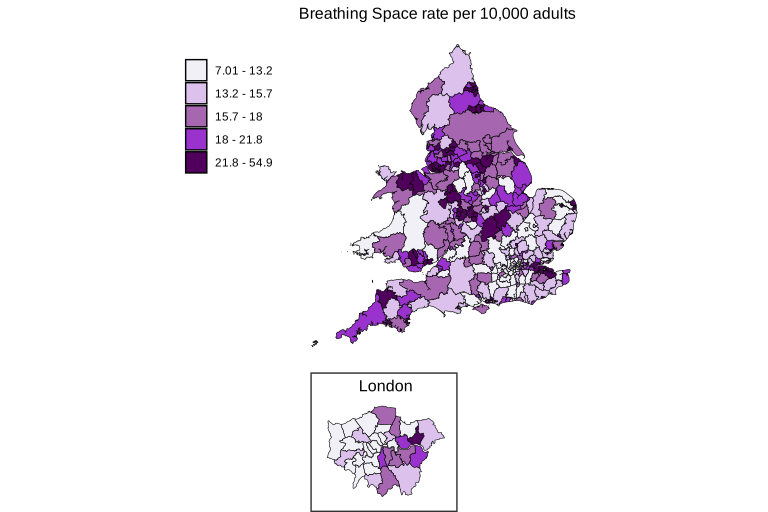
Figure 23 shows breathing space rates by local authority, with darker shades of purple indicating higher rates.
Figure 23: Breathing space registration rates tended to be lower in local authorities in and around London than in the rest of the country
England and Wales, 2025
Source: Insolvency Service
8.6 Breathing spaces by Age
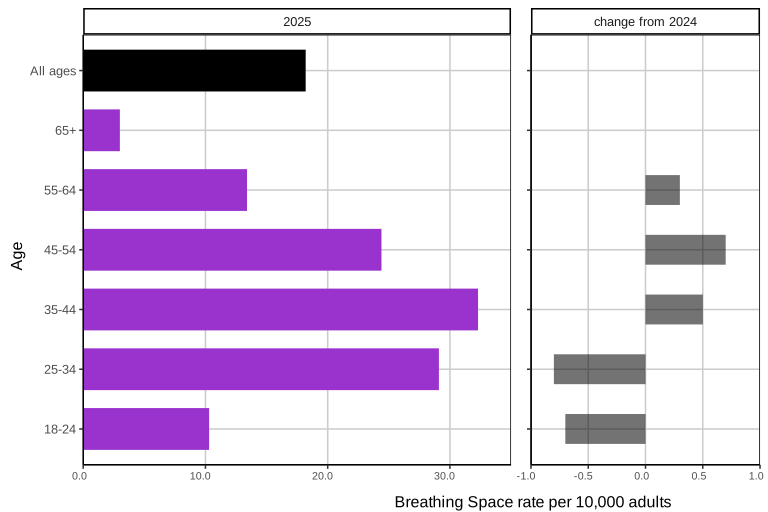
In 2025, breathing space rates were highest for those ages between 25 and 44 and lowest for those over 65. Individuals aged between 35 and 44 had the highest breathing space rate in 2025 at 32.3 per 10,000, while those aged 25 to 34 had a rate of 29.1 per 10,000. The rate was lowest for the over 65 age group, at 3.0 per 10,000 adults. Breathing space rates were lower in 2025 than 2024 for those under 35 and higher for those over 35, but there was no change in rate for over 65s.
Figure 24 shows the breathing space rates by age band.
Figure 24: Breathing space registration rates were higher for 25 to 44 year-olds than for other age groups
England and Wales, 2025
Source: Insolvency Service
9. Data and Methodology
9.1 Data Sources
Details of individual insolvencies were sourced from administrative records held by the Insolvency Service. Extracts from these records, including postcode, date of birth, date of insolvency, and gender, were taken to derive the breakdowns used in this publication.
Details of breathing space registrations were sourced from the Breathing Space Register, which is administered by the Insolvency Service. Extracts from these records, including postcode at date of registration, date of birth and date of registration, were used to derive the breakdowns used in this publication. Information on gender or sex is not recorded.
Population statistics were sourced from NOMIS Population Estimates/Projections. Breakdowns are included by age, gender, local authority, and parliamentary constituency, so they can be used as the denominator when calculating insolvency rates per 10,000 adults. At the time of publication, the ONS mid-year population estimates by local authority and parliamentary constituency were not available for the latest year, therefore the mid-year population estimates for 2024 were used for 2025 instead.
9.2 Methodology and data quality
Detailed methodology and quality information for these statistics can be found in the Methodology and Quality document published alongside this commentary.
Forms used to capture data on individuals entering insolvency use the term gender, rather than sex, when asking whether an individual is male, female or prefers not to say. We therefore use the term gender in this publication. In Insolvency Service administrative systems, the gender is recorded as ‘Male’, ‘Female’ or ‘Unknown’.
Postcode data were matched against the National Statistics Postcode Lookup, to determine the region and administrative area, referred to as ‘local authority’, as well as parliamentary constituency, of each individual. These data were then aggregated to produce counts of insolvencies in each geographical area. The National Statistics Postcode Lookup is derived from data from the Office for National Statistics and Ordnance Survey.
Parliamentary constituency numbers and rates in this publication relate to the new boundaries that took effect from the 2024 UK general election. Where comparisons are made to previous years, they relate to the rate of insolvencies within the new parliamentary constituency boundaries during that time.
Numbers of insolvency cases presented in these tables are mostly consistent with the latest (February 2025) monthly Individual Insolvency Statistics. Rates of insolvency per 10,000 adults in 2025 do not match, because at the time of publication, the ONS mid-year population estimates by location were not available for the latest year. The mid-year population estimates for 2024 were used for 2025 instead. The monthly Individual Insolvency Statistics are the definitive source of the number of new cases each year in England and Wales, and the rate of insolvency per 10,000 adults.
10. Glossary
10.1 Key Terms used within this statistical bulletin
| Term | Definition |
|---|---|
| Bankruptcy | A form of debt relief available for anyone who is unable to pay their debts. Assets owned will vest in a trustee in bankruptcy, who will sell them and distribute the proceeds to creditors. Discharge from debts usually takes place 12 months after the bankruptcy order is granted. Bankruptcies result from either Debtor application – where the individual is unable to pay their debts, and applies online to make themselves bankrupt, or Creditor petition – if a creditor is owed £5,000 or more, they can apply to the court to make an individual bankrupt. These statistics relate to petitions where a court order was made as a result, although not all petitions to court result in a bankruptcy order. |
| Breathing Space | The Breathing Space scheme, launched on 4 May 2021, gives people legal protections from their creditors for 60 days, with most interest and penalty charges frozen, and enforcement action halted. Because problem debt can be linked to mental health issues, these protections are also available for people in mental health crisis treatment – for the full duration of their crisis treatment plus another 30 days. |
| Debt Relief Order (DRO) | A form of debt relief available to those who have a low income, low assets and debt no more than a specified value. There is no distribution to creditors, and discharge from debts takes place 12 months after the DRO is granted. DROs were introduced in April 2009. Following an announcement on 6 March 2024, the £90 administration fee to obtain a DRO was abolished on 6 April 2024. Furthermore, on 28 June 2024, the criteria for DRO eligibility were expanded. The debt threshold was increased from £30,000 to £50,000 and the allowable value of an exempt motor vehicle was increased from £2,000 to £4,000. |
| Gender | Forms used to capture data on individuals entering insolvency use the term gender, rather than sex, when asking whether an individual is male, female or prefers not to say. We therefore use the term gender in this publication. In Insolvency Service administrative systems, the gender is recorded as ‘Male’, ‘Female’ or ‘Unknown’. |
| Individual Voluntary Arrangement (IVA) | A voluntary means of repaying creditors some or all of what they are owed. Once approved by 75% or more of creditors, the arrangement is binding on all. IVAs are supervised by licensed Insolvency Practitioners. |
| Region | For statistical reporting purposes, England is divided into nine regions (formerly Government offices for the regions (GORs)). Each county, unitary authority and London borough is contained entirely within one of these nine regions. |