Short statistical commentary for hospital tooth extractions in 0 to 19 year olds 2025
Published 17 February 2026
Applies to England

© Crown copyright 2026
This publication is licensed under the terms of the Open Government Licence v3.0 except where otherwise stated. To view this licence, visit nationalarchives.gov.uk/doc/open-government-licence/version/3 or write to the Information Policy Team, The National Archives, Kew, London TW9 4DU, or email: psi@nationalarchives.gov.uk.
Where we have identified any third party copyright information you will need to obtain permission from the copyright holders concerned.
This publication is available at https://www.gov.uk/government/statistics/hospital-tooth-extractions-in-0-to-19-year-olds-2025/short-statistical-commentary-for-hospital-tooth-extractions-in-0-to-19-year-olds-2025
What’s new
Indicators have been updated with the latest data for all tooth extraction and decay-related tooth extraction episodes from the Hospital Episodes Statistics (HES) data set in the financial year ending 2025. Numbers and rates per 100,000 population of 0 to 19 year olds have been calculated for the following areas:
- England
- government (statistical) regions
- NHS England regions
- integrated care boards
- upper tier local authorities
- lower tier local authorities
Introduction
This report provides the most recent hospital activity on tooth extractions in children and young people aged 0 to 19 years old at various geographical levels. The data is categorised into episodes that had a primary diagnosis of tooth decay (caries) as the reason for extraction, and those that had other primary diagnoses.
Main findings
In the financial year ending 2025 there were 56,143 episodes of tooth extractions in NHS hospitals in England for 0 to 19 year olds. This represents a 14% increase on the previous year, and is similar to the number of tooth extraction episodes in the financial year ending 2020 (which was 55,137 episodes).
There were 33,976 episodes of tooth extractions with a primary diagnosis of tooth decay for 0 to 19 year olds, an increase of 11% on the previous year. The number of tooth extractions due to tooth decay represents 60.5% of all tooth extractions for this age group. The percentage of tooth extractions due to tooth decay by age band is shown in the bar chart in figure 1 below and also in table 5 in workbook 8 of the data tables.
Figure 1: percentage of tooth extractions that were due to tooth decay by age band
| Age band | Percentage due to tooth decay |
|---|---|
| 0 to 4 years | 81.9 |
| 5 to 9 years | 86.5 |
| 10 to 14 years | 49.2 |
| 15 to 19 years | 21.4 |
The percentage of tooth extractions due to tooth decay was most prevalent in the 5 to 9 year old age band. This percentage decreased with increasing age (as shown in figure 1).
There were 22,167 episodes of non-decay-related (non-caries-related) tooth extractions, that is, extractions without a primary diagnosis of tooth decay. This number has increased by 20% compared to the previous year.
Tooth extractions with a non-decay related primary diagnosis were more prevalent in older children aged 10 to 19 years old. The most common non-decay related tooth extractions were due to impacted teeth, anomalies of tooth position and disturbances in tooth eruption (see table 1 in workbook 7 of the data tables).
There were variations in decay-related tooth extraction episode rates across the government statistical regions. The highest rates were in Yorkshire and the Humber (504 per 100,000 population of 0 to 19 year olds) and the lowest rates were in the East Midlands (73 per 100,000 population of 0 to 19 year olds). The England rate was 251 per 100,000 population of 0 to 19 year olds.
The decay-related tooth extraction episode rate for children and young people living in the most deprived communities was just over 3 times that of those living in the most affluent communities.
Tooth decay continues to remain the most common reason for hospital admissions in children aged between 5 and 9 years (see table 1 in workbook 6 of the data tables) .
The costs to the NHS of hospital admissions for tooth extractions in children aged 0 to 19 years have been estimated and are based on the latest NHS national cost collection data. The costs were £87.7 million for all tooth extractions and £51.2 million for decay-related tooth extractions in the financial year ending 2025. This is an increase compared with the costs in the previous financial year ending 2024 (which were £74.8 million for all tooth extractions and £45.8 million for decay-related extractions). While the average unit cost for the most common tooth extraction procedure has slightly decreased, it is the increase in activity that has had the most impact on the overall increase in costs.
Trends in hospital tooth extraction episodes
There has been a steady increase in the number of tooth extraction episodes since the financial year ending 2022 (see figure 2 and table 1 below). The large decrease in the financial year ending 2021 was likely due to services being affected by the COVID-19 pandemic. The increase in tooth extractions since 2021 is likely due to the continued recovery of services following the COVID-19 pandemic.
Figure 2: percentage of tooth extraction episodes in 0 to 19 year olds in the last 11 years by extraction category
| Year | Percentage tooth decay extractions | Percentage non-decay tooth extractions |
|---|---|---|
| 2015 | 66.8 | 33.2 |
| 2016 | 65.1 | 34.9 |
| 2017 | 64.2 | 35.8 |
| 2018 | 64.7 | 35.3 |
| 2019 | 63.4 | 36.6 |
| 2020 | 63.8 | 36.2 |
| 2021 | 64.9 | 35.1 |
| 2022 | 63.4 | 36.6 |
| 2023 | 65.5 | 34.5 |
| 2024 | 62.3 | 37.7 |
| 2025 | 60.5 | 39.5 |
Table 1: number of tooth extraction episodes in 0 to 19 year olds in the last 11 years by extraction category
| Year | Tooth decay extractions | Non-tooth decay extractions | All tooth extractions |
|---|---|---|---|
| 2015 | 42,209 | 20,987 | 63,196 |
| 2016 | 39,278 | 21,083 | 60,361 |
| 2017 | 39,346 | 21,955 | 61,301 |
| 2018 | 38,385 | 20,929 | 59,314 |
| 2019 | 37,404 | 21,607 | 59,011 |
| 2020 | 35,190 | 19,947 | 55,137 |
| 2021 | 14,645 | 7,904 | 22,549 |
| 2022 | 26,741 | 15,439 | 42,180 |
| 2023 | 31,165 | 16,416 | 47,581 |
| 2024 | 30,587 | 18,525 | 49,112 |
| 2025 | 33,976 | 22,167 | 56,143 |
Tooth extraction episodes by government statistical region and year
The rates in Yorkshire and the Humber are nearly 7 times that of the East Midlands (see figure 3 below and worksheet 1, table 5 in the data tables)
Figure 3: decayed tooth extraction episode rate per 100,000 population of 0 to 19 year olds by statistical region for the financial year ending 2025
| Region | Decayed tooth extraction episode rate per 100,000 population |
|---|---|
| Yorkshire and the Humber | 504 |
| North East | 433 |
| North West | 376 |
| London | 308 |
| England | 250 |
| South West | 231 |
| West Midlands | 188 |
| South East | 119 |
| East of England | 115 |
| East Midlands | 72 |
For most regions there has been an increase in tooth extractions in the financial year ending 2025. This is shown in the bar chart below in figure 4 and in worksheet 7, table 1 in the data tables.
Figure 4: hospital tooth extraction episodes for 0 to 19 year olds by statistical region and financial year
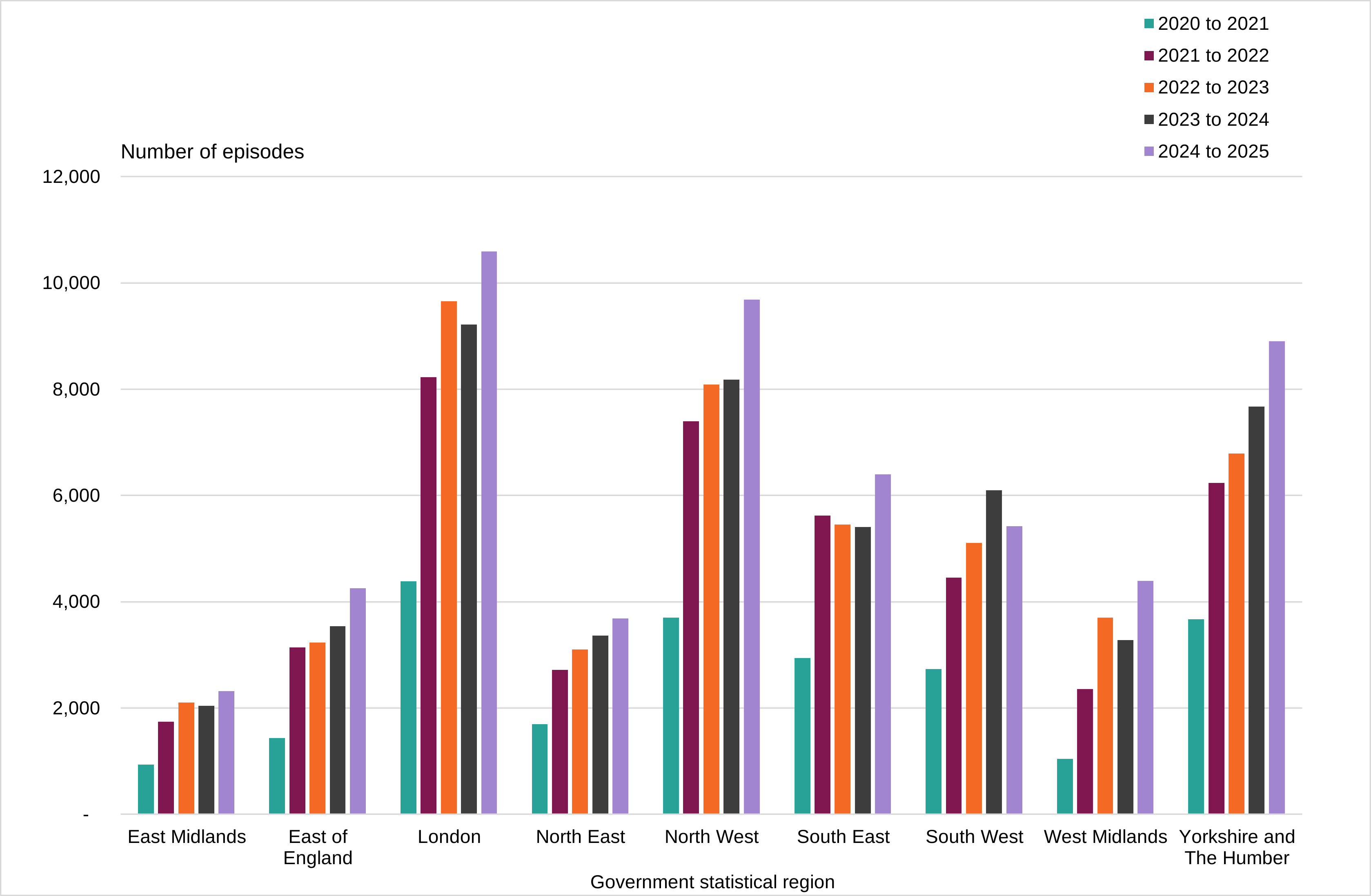
Description of figure 4: a comparison of the number of hospital tooth extraction episodes across the different government statistical regions in England over 5 years (from 2020 to 2021, to 2024 to 2025). London consistently shows the highest numbers across all years, while the East Midlands shows the lowest numbers. All regions show an overall upward trend over the time period, with figures for 2024 to 2025 being the highest in most cases.
Decay-related tooth extraction episode rates per 100,000 population
The decay-related tooth extraction rate for children and young people living in the most deprived communities was over 3 times that of those living in the most affluent communities (see figure 5 below and worksheet 7, table 3 in the data tables).
Figure 5: decay-related tooth extraction episode rate per 100,000 population of 0 to 19 year olds by the 2019 index of multiple deprivation (IMD) quintiles for the financial year ending 2025
| Deprivation quintile (IMD 2019) | Tooth extraction episode rate |
|---|---|
| Quintile 1 | 403 |
| Quintile 2 | 291 |
| Quintile 3 | 210 |
| Quintile 4 | 165 |
| Quintile 5 | 121 |
| England average | 251 |
Quintile 1 is the most deprived quintile, quintile 5 is the least deprived.
The absolute inequalities between the most deprived and least deprived communities are continuing to persist. This is shown in the line chart in figure 6 below and in worksheet 7, table 4 of the data tables.
Figure 6: decay-related tooth extraction episode rate per 100,000 population of 0 to 19 year olds by highest and lowest index of multiple deprivation (IMD) quintiles for the financial years ending 2016 to 2025
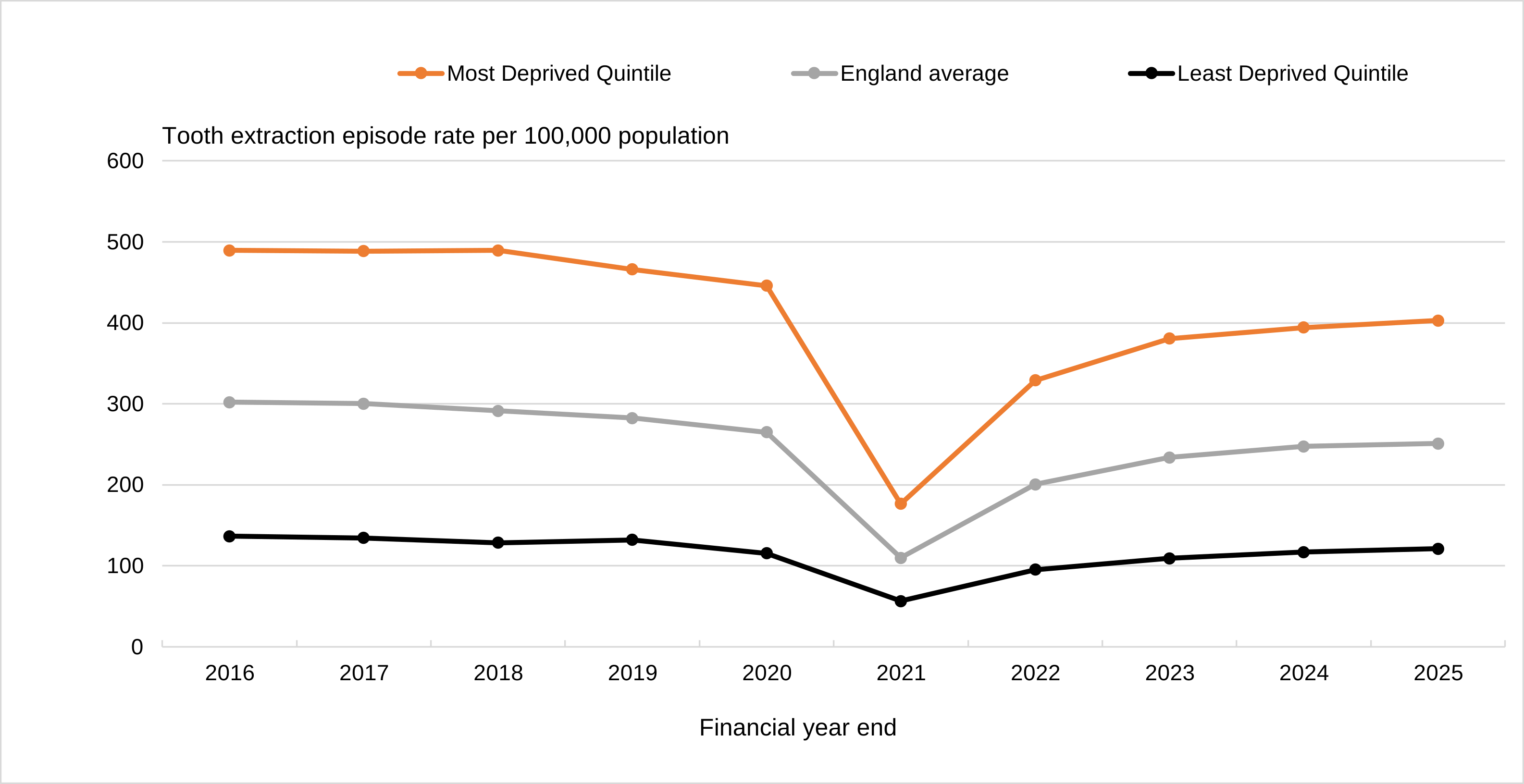
Description of figure 6: decay-related tooth extraction episode rate in the most and least deprived quintiles between 2016 and 2025, with the England average for comparison. The most deprived quintile has the highest rate throughout, the least deprived quintile has the lowest rate throughout, while the England average sits in the middle. All 3 groups show a sharp drop in 2021, followed by a steady rise afterwards. Despite this, the gap between the most and least deprived groups remains large across all years.
Limitations of the data
Caution needs to be taken when interpreting and applying findings from this report. The data reported on may be an underestimation of child tooth extractions conducted in a hospital setting. We recognise that there are tooth extractions conducted by community dental services in hospital settings, and that this activity is not always included in the HES data.
Children may have had multiple extractions within one finished consultant episode (FCE), which may not be captured in this analysis. The data only includes diagnostic description codes for the primary diagnosis of child tooth extractions, and not any further secondary diagnostic codes.
No assumptions can be made about the method of anaesthesia provided for these procedures, but it is likely that the majority of episodes involved general anaesthetic. It is possible that different clinical coding protocols are applied at some sites and this could explain some of the variation in different geographical areas.
NHS Digital is responsible for the quality of HES data and has produced its own data quality statement as well as describing the stages involved in the HES processing cycle.
Further information is available on the tooth extractions collections page.
Ethnicity is still recorded as either ‘not known’ or ‘not stated’ for a quarter of episodes of tooth extractions for 0 to 19 year olds. This has not changed since previous years, which is why a breakdown of activity for this characteristic is not presented. The recording of accurate ethnicity will be reviewed each year.