Quarterly infographic: Gram-negative, MRSA and MSSA and C. difficile infection, quarter 1
Published 8 October 2026
Applies to England

© Crown copyright 2026
This publication is licensed under the terms of the Open Government Licence v3.0 except where otherwise stated. To view this licence, visit nationalarchives.gov.uk/doc/open-government-licence/version/3 or write to the Information Policy Team, The National Archives, Kew, London TW9 4DU, or email: psi@nationalarchives.gov.uk.
Where we have identified any third party copyright information you will need to obtain permission from the copyright holders concerned.
This publication is available at https://www.gov.uk/government/statistics/gram-negative-mrsa-and-mssa-bacteraemia-and-c-difficile-infections-quarterly-reports-2026-to-2027/quarterly-infographic-gram-negative-mrsa-and-mssa-and-c-difficile-infection-quarter-1
Gram-negative bacteraemias (Klebsiella spp.,P. aeruginosa and E. coli)
Pseudomonas aeruginosa (P. aeruginosa) bacteraemia
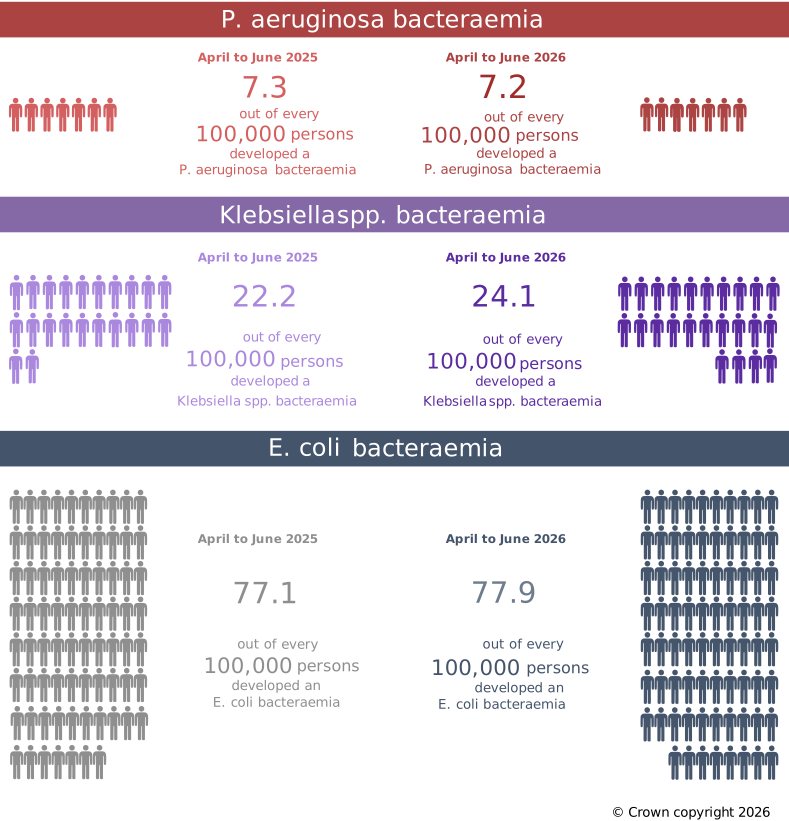
April to June 2025: 7.3 out of every 100,000 persons developed a P. aeruginosa bacteraemia.
April to June 2026: 7.2 out of every 100,000 persons developed a P. aeruginosa bacteraemia.
Klebsiella spp. bacteraemia:
April to June 2025: 22.2 out of every 100,000 persons developed a Klebsiella spp. bacteraemia.
April to June 2026: 24.1 out of every 100,000 persons developed a Klebsiella spp. bacteraemia.
Escherichia coli (E. coli) bacteraemia:
April to June 2025: 77.1 out of every 100,000 persons developed an E. coli bacteraemia.
April to June 2026: 77.9 out of every 100,000 persons developed an E. coli bacteraemia.
Staphylococcus aureus (S. aureus) MRSA and MSSA bacteraemia
Meticillin-resistant Staphylococcus aureus (MRSA) bacteraemia
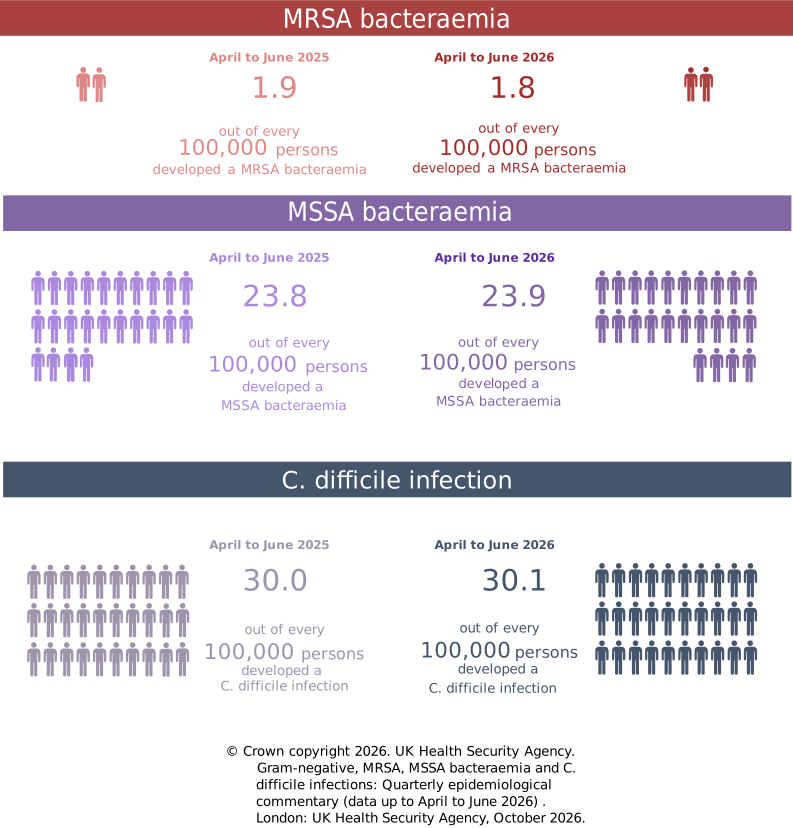
April to June 2025: 1.9 out of every 100,000 persons developed an MRSA bacteraemia.
April to June 2026: 1.8 out of every 100,000 persons developed an MRSA bacteraemia.
Meticillin-susceptible Staphylococcus aureus (MSSA) bacteraemia
April to June 2025, 23.8 out of every 100,000 persons developed an MSSA bacteraemia.
April to June 2026, 23.9 out of every 100,000 persons developed an MSSA bacteraemia.
Clostridioides difficile (C. difficile) infections
C. difficile infections
April to June 2025: 30.0 out of every 100,000 persons developed a C. difficile infection.
April to June 2026, 30.1 out of every 100,000 persons developed a C. difficile infection.