Fraud and error in the benefit system: Financial Year Ending (FYE) 2026 estimates
Updated 19 May 2026
Applies to England, Scotland and Wales

© Crown copyright 2026
This publication is licensed under the terms of the Open Government Licence v3.0 except where otherwise stated. To view this licence, visit nationalarchives.gov.uk/doc/open-government-licence/version/3 or write to the Information Policy Team, The National Archives, Kew, London TW9 4DU, or email: psi@nationalarchives.gov.uk.
Where we have identified any third party copyright information you will need to obtain permission from the copyright holders concerned.
This publication is available at https://www.gov.uk/government/statistics/fraud-and-error-in-the-benefit-system-financial-year-ending-fye-2026-estimates/fraud-and-error-in-the-benefit-system-financial-year-ending-fye-2026-estimates
1. Introduction
The Department for Work and Pensions (DWP) pays welfare benefits to around 24.3 million people. This release contains estimates of how much money the department incorrectly pays, either by paying people too much benefit (overpayments) – or by not paying enough benefit (underpayments). This is calculated as a percentage of the total annual amount of benefit paid by the department (expenditure). These percentages are referred to as overpayment or underpayment rates throughout this publication. The proportion of benefit claims that are overpaid or underpaid is also reported.
The overpayment and underpayment rates are then applied to the benefit expenditure for the Financial Year Ending (FYE) 2026 to estimate the monetary amount of fraud and error. The benefit expenditure figures used are consistent with Spring Forecast 2026.
Overpayments happen because of Fraud, Claimant Error and Official Error (including processing errors or delays by DWP, a local authority, or His Majesty’s Revenue and Customs (HMRC). Underpayments happen because of Official Error.
Since FYE 2024, the estimates that were previously reported as Claimant Error underpayments were removed from this publication and are now reported separately in the ‘Unfulfilled eligibility in the benefit system’ statistical publication.
The data that underpins this publication is based on a sample of benefit claims that are checked for accuracy by a specialist team.
Estimates in this publication relate to benefit claims sampled between September 2024 and October 2025. See Appendix 1 or Appendix 2 for specific time periods relating to each reviewed benefit.
Analysis is undertaken to provide assurance that the sampling period is representative of the financial year. However, actions taken by the department within the financial year may not always be fully reflected within the statistics.
Next Edition: May 2027
2. What you need to know
About this publication
This publication contains estimates of the levels of fraud and error in the benefit system. The main measure is the percentage of benefit expenditure that is overpaid or underpaid, referred to as overpayment or underpayment rates. This is also expressed as a monetary value in pounds. We further report on the proportion of claims with at least one overpayment or underpayment error and the proportion of claims that end up overpaid or underpaid.
DWP measures fraud and error to understand the levels, trends and reasons behind it. This understanding supports decision making on what actions DWP can take to reduce the level of fraud and error in the benefit system to ensure payments are and remain accurate. The National Audit Office considers the amount of fraud and error when they audit DWP’s accounts each year.
These estimates relate to the levels of fraud and error in the benefit system in Great Britain. They are underpinned by reviews of benefit payment correctness in England, Wales and Scotland. The benefit expenditure figures used in this publication also include overseas residents who are receiving United Kingdom benefits, except Financial Assistance Scheme payments which also cover Northern Ireland. All other benefit expenditure on residents of Northern Ireland is the responsibility of the Northern Ireland Executive. The benefit expenditure figures do not include amounts devolved to the Scottish Government (which is forecasted to be £5.8 billion in FYE 2026). The monetary values for previous years are not adjusted for inflation.
Due to each benefit’s expenditure changing year on year, it is recommended that the rates are used when comparing levels of fraud and error over time, rather than the monetary amounts.
Published tables and data
The figures in this publication are a selection from the reference tables accompanying this release. The tables contain further breakdowns of the estimates presented in this publication by different characteristics, with time series data going back to FYE 2006 for some benefits.
How fraud and error is measured
The sample of claims that are selected are assessed to determine whether the benefit award is correct or not. If the claim is incorrect, the amount of money the claim is wrong by is calculated.
Errors on the claims are classified into Fraud, Claimant Error or Official Error.
For an incorrect claim to be classified as Fraud or Claimant Error, the following must apply:
-
the claimant does not meet the conditions for receiving part or all of the benefit in payment
-
benefit payment has stopped or reduced as a result of the claim review
Fraud
An overpayment has occurred where the claimant has provided inaccurate or incomplete information or failed to report a change in their circumstances. Additionally, the claimant could reasonably be expected to understand how this affects their entitlement and there is evidence of fraud or a suspicion of fraudulent intent.
Claimant Error
An overpayment has occurred where the claimant has provided inaccurate or incomplete information, or failed to report a change in their circumstances, but there is no evidence or suspicion of fraudulent intent on the claimant’s part.
Official Error
The benefit has been paid incorrectly due to a failure to act, a delay or a mistaken assessment by DWP, a local authority or HMRC, to which no one outside of that department has materially contributed.
Reasons for Fraud/Error
Any fraud or errors identified are classified further into error reasons, which explain why the claim is incorrect. Simplified descriptions of the error reasons are given in this publication. A more detailed glossary of the error reasons can be found in Appendix 2 of the Background Information and Methodology note. The reference tables contain full breakdowns by error type and error reason for all benefits that we have measured this year.
De Minimis reporting
When reporting on the proportion of claims overpaid and underpaid (incorrectness) we separate out all the errors of 10p or less per week and report them separately to the headline measures within the publication. We call this “De Minimis” reporting. The State Pension section in this publication and section 2 of the Background Information and Methodology note provide further information.
Methodology changes and revisions
For information on revisions, methodology changes and their impact, please see section 1 of the Background Information and Methodology note.
Statistical significance and confidence intervals
Changes between years are noted as being statistically significant when the difference observed is likely to reflect a true change at the population level, rather than random variation between the samples. Any statistically significant changes between the years being compared are specified in this publication.
For more information on Statistical Significance and confidence intervals, please see: Uncertainty and how we measure it for our surveys – Office for National Statistics.
3. Changes in this year’s results
The estimates in this publication are based on a sample of benefit claims. As a result, year‑on‑year comparisons are subject to sampling variability. The changes highlighted in this section are those that are statistically significant – that is, where the sampled data provides clear evidence of a genuine rise or fall in the rate, rather than a change that could have occurred by chance.
This section highlights the statistically significant changes between FYE 2026 and FYE 2025 (DLA was last measured in FYE 2024 and all the statistically significant changes are relative to that year).
Section 4 gives more detailed narrative on the overall levels of fraud and error, whereas section 5 onwards will then give a more detailed narrative around each benefit.
Overall level of fraud and error across all benefits
There was no statistically significant change in the overall overpayment or underpayment rates between FYE 2026 and FYE 2025.
Statistically significant changes at the benefit level
Universal Credit (UC)
UC overpayments due to Earnings/Employment (under-declaration of income from work undertaken) decreased to 1.8% in FYE 2026 from 2.5% in FYE 2025. The majority of these errors were due to Earnings/Employment Fraud which also saw a fall to 1.5% in FYE 2026 from 2.2% in FYE 2025. Self-Reported Earnings Fraud (a subcategory of Earnings/Employment Fraud) dropped to 0.2% in FYE 2026 from 0.4% in FYE 2025.
Pension Credit (PC)
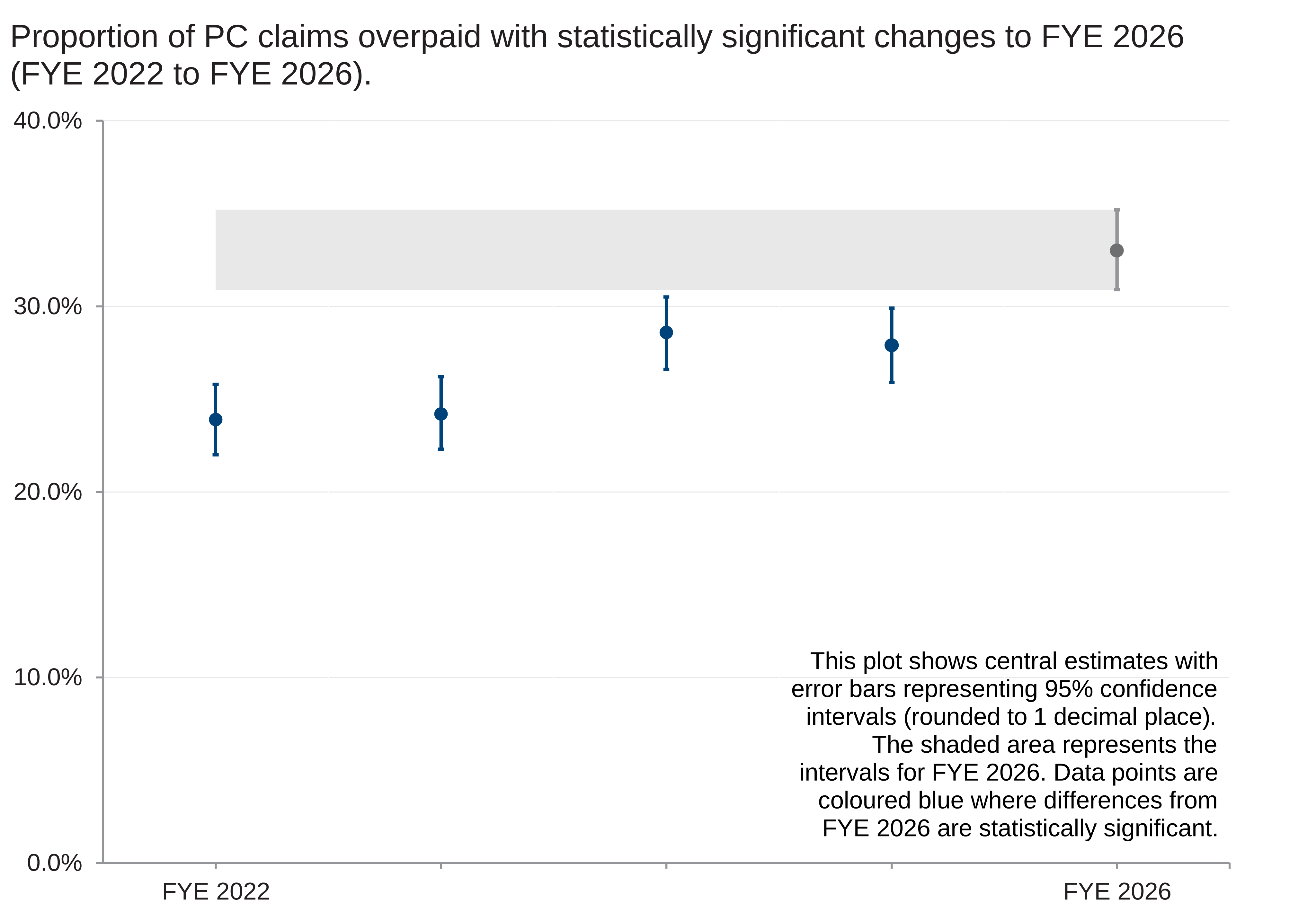
PC incorrectness (the proportion of claims that were either overpaid or underpaid) increased to 37 in 100 claims in FYE 2026 from 31 in 100 claims in FYE 2025. This was driven by a sharp increase in the proportion of PC claims overpaid (33 in 100 claims in FYE 2026 from 28 in 100 claims in FYE 2025).
PC overpayments due to Capital Claimant Error (under-declaration of financial assets) increased to 2.5% in FYE 2026 from 1.8% in FYE 2025.
State Pension (SP)
There were no statistically significant changes measured on SP in FYE 2026.
Housing Benefit (HB)
HB incorrectness (the proportion of claims that were either overpaid or underpaid) dropped to 18 in 100 claims in FYE 2026 from 20 in 100 claims in FYE 2025. This was driven by a decrease in the proportion of HB claims overpaid to 15 in 100 claims in FYE 2026 from 17 in 100 claims in FYE 2025.
The total HB overpayment rate decreased to 6.2% (£800m) in FYE 2026 from 7.2% (£1,100m) in FYE 2025.
HB overpayments due to Earnings/Employment (under-declaration of income from work undertaken) fell to 0.9% in FYE 2026 from 1.2% in FYE 2025.
Within the HB Earnings/Employment error category:
-
Employee Earnings (a subcategory of Earnings/Employment) accounted for the majority of Earnings/Employment errors on HB and dropped to 0.7% in FYE 2026 from 0.9% in FYE 2025
-
Earnings/Employment Fraud decreased to 0.5% in FYE 2026 from 0.7% in FYE 2025
-
Earnings/Employment Official Error decreased to 0.0% in FYE 2026 from 0.1% in FYE 2025
-
Although Earnings/Employment Claimant Error hasn’t changed from FYE 2025, one of its subcategories (Self-Employed Earnings Claimant Error) noted a drop to 0.0% in FYE 2026 from 0.1% in FYE 2025
HB overpayments due to Income – Occupational and Personal Pensions (under-declaration of income related to occupational and personal pensions) decreased to 0.1% in FYE 2026 from 0.2% in FYE 2025.
Within the HB Income – Occupational and Personal Pensions error category there were statistically significant changes in:
-
Income – Occupational and Personal Pensions Fraud, which decreased to 0.0% in FYE 2026 from 0.1% in FYE 2025
-
Income – Occupational and Personal Pensions Claimant Error, which fell to 0.0% in FYE 2026 from 0.1% in FYE 2025
Other statistically significant changes at the error category level included:
- HB overpayments due to Income – Other (under-declaration of income received from sources not covered by any other error categories), decreased to 0.1% in FYE 2026 from 0.2% in FYE 2025. Overpayments due to Income – DWP Benefits Claimant Error (claimants failing to provide accurate or timely information about their income from other DWP benefits) decreased to 0.0% in FYE 2026 from 0.1% in FYE 2025
Personal Independence Payment (PIP)
PIP incorrectness (the proportion of claims that were either overpaid or underpaid) increased to 4 in 100 claims in FYE 2026 from 2 in 100 claims in FYE 2025. This was driven by an increase in the proportion of PIP claims overpaid (3 in 100 claims in FYE 2026 from 1 in 100 claims in FYE 2025).
The total PIP overpayment rate increased to 2.3% (£660m) in FYE 2026 from 1.3% (£330m) in FYE 2025. Functional Needs (claimants failing to report an improvement in their needs) remained the largest PIP overpayment reason and increased to 1.7% in FYE 2026 from 0.8% in FYE 2025.
The rise in the total PIP overpayment rate was almost exclusively due to an increase in overpayments due to Fraud which noted a rise to 1.4% in FYE 2026 from 0.4% in FYE 2025. Again, Functional Needs Fraud remained the main driver, increasing to 1.2% in FYE 2026 from 0.3% in FYE 2025.
PIP Official Error overpayments due to Award Determination (an incorrect determination of the appropriate entitlement by DWP) noted a decrease to 0.1% in FYE 2026 from 0.2% in FYE 2025. All Award Determination overpayments were due to Official Error.
The rate of cases excluded from the headline PIP overpayment estimates due to a categorisation of Not Reasonably Expected To Know (Not RETK) was 3.6% (£1,030m) in FYE 2026 – an increase from 1.9% (£500m) in FYE 2025. These are cases where the claimant was incorrectly overpaid, but we would not reasonably expect them to know to report the change. Not RETK cases are all Claimant Error cases with error reason Functional Needs. Further information can be found in the Background Information and Methodology note.
Disability Living Allowance (DLA)
DLA was last measured in FYE 2024 – all statistically significant changes mentioned in this section are relative to FYE 2024.
Looking at the proportion of incorrect DLA claims, the incorrectness was 9 in 100 claims in FYE 2026 (2 in 100 claims were overpaid and 7 in 100 claims were underpaid). All of those proportions increased from FYE 2024 when the incorrectness was 4 in 100 claims (1 in 100 claims was overpaid and 3 in 100 claims were underpaid).
Award Determination (an incorrect determination of the appropriate entitlement by DWP) and Functional Needs (claimants failing to report an improvement in their needs) were the two largest DLA overpayment reasons. Award Determination increased to 0.4% in FYE 2026 from 0.2% in FYE 2024 and Functional Needs increased to 0.2% in FYE 2026 from 0.0% in FYE 2024. All the Award Determination errors were due to Official Error, and most of the Functional Needs errors were due to Claimant Error.
DLA underpayments due to Award Determination also saw an increase to 2.3% in FYE 2026 from 1.0% in FYE 2024. Award Determination was the only DLA underpayment reason recorded in FYE 2026, which means that the total DLA underpayment rate noted the same statistically significant increase.
4. Estimates of the amount of fraud and error for all benefits
The total rate of benefit expenditure overpaid in FYE 2026 was 3.2% (£9.9bn), compared with 3.3% (£9.4bn) in FYE 2025.
The total rate of benefit expenditure underpaid remained at 0.4% in FYE 2026 (£1.2bn), the same as in FYE 2025 (£1.2bn).
In FYE 2026 the benefit expenditure was £308.6bn, compared with £286.6bn in FYE 2025.
The Fraud (2.2%), Claimant Error (0.6%) and Official Error (0.4%) overpayment rates in FYE 2026 have remained broadly similar to FYE 2025.
The underpayment rate (0.4%) in FYE 2026 has also remained broadly similar to FYE 2025.
Impact of changes in total benefit expenditure and the rollout of Universal Credit
Changes in the composition of the benefit caseload and expenditure over the last seven years – particularly the increasing share accounted for by UC – mean that movement in the overall benefit overpayment rate is expected as the balance between the benefits changes, even when individual benefit overpayment rates remain unchanged. The migration of claimants from Tax Credits to UC, which began before the COVID‑19 pandemic and accelerated substantially during it, has further increased UC’s share of the caseload and expenditure. As a result, shifts in UC volumes have had an increasingly strong influence on the overall overpayment rate.
For these reasons, caution should be taken when comparing fraud and error estimates over a longer time series.
More analysis on the impact of changes to benefit expenditure and the UC rollout can be found in DWP’s annual report and accounts 2024 to 2025 (pages 116-119), and this analysis will be updated in July 2026 when the new accounts are published.
Net loss from overpayments
Overpayments can be recovered – this means not all of the £9.9bn is lost and we can describe a net loss figure which deducts recoveries from total overpayments. In FYE 2026, £0.6bn of Universal Credit (UC) was recovered along with £0.2bn of other DWP benefits and £0.4bn of Housing Benefit (HB). This compares to £0.4bn of UC, £0.3bn of other DWP benefits and £0.4bn of HB recovered in FYE 2025.
Note that some recoveries made by DWP are not included in our net loss estimate as they do not relate to our fraud and error reporting (mainly recoveries of tax credits and of benefit advances).
The net rate of loss from overpayments remained at 2.8% (£8.6bn) in FYE 2026, the same as in FYE 2025 (£8.1bn).
5. Universal Credit overpayments and underpayments
Universal Credit (UC) is a payment to help with living costs for people who are in work on a low income, or for those who are out of work. Eligibility for UC depends on individual circumstances and the claimant residing in Great Britain.
Advance payments of UC are not part of the benefit payment itself and consequently are not reviewed for fraud and error. See section 3 of the Background Information and Methodology note for further information.
The expenditure on UC has increased to £79.2bn in FYE 2026 from £65.3bn in FYE 2025. This means that the monetary values of fraud and error cannot be directly compared between these years.
The UC incorrectness (the proportion of claims that were either overpaid or underpaid) was 24 in 100 claims in FYE 2026.
Overpayments
The Universal Credit overpayment rate was 8.5% (£6,720m) in FYE 2026, compared with 9.5% (£6,210m) in FYE 2025, however this wasn’t a statistically significant change. The FYE 2026 rate shows a level similar to before the COVID-19 pandemic (FYE 2019 and FYE 2020) and is a continuation of a downwards trend that started in FYE 2022.
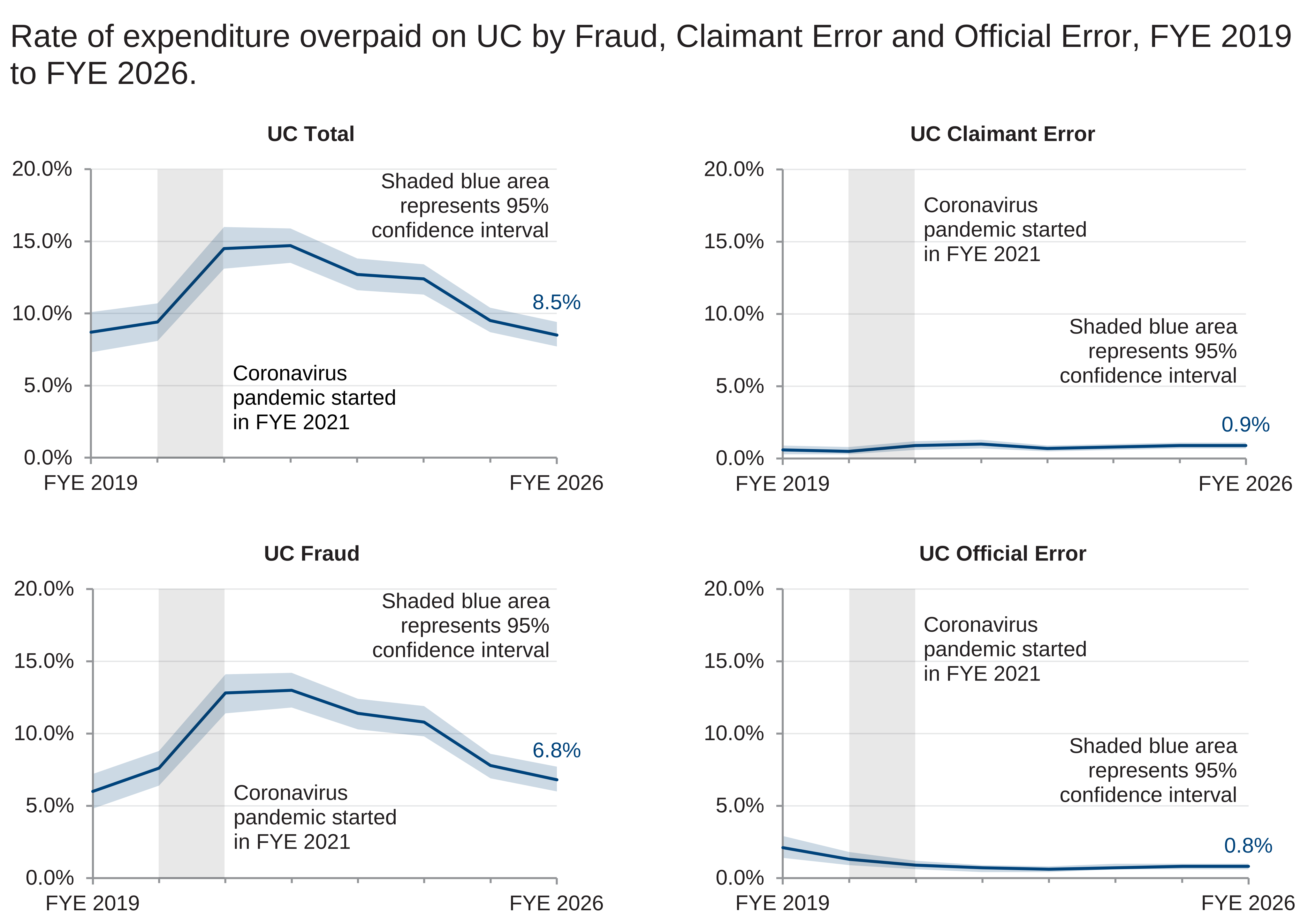
The proportion of UC claims overpaid remained at 21 in 100 claims in FYE 2026. When comparing FYE 2026 to the COVID-19 peak, the proportion of UC claims overpaid saw a statistically significant decrease from 24 in 100 claims in FYE 2022. Furthermore, the loss of entitlement rate (the proportion of reviews finding claimants did not meet UC eligibility criteria) fell to 7.0% in FYE 2026 from 12.5% in FYE 2022. These measures show that, relative to the COVID-19 peak, fewer UC claimants are being overpaid.
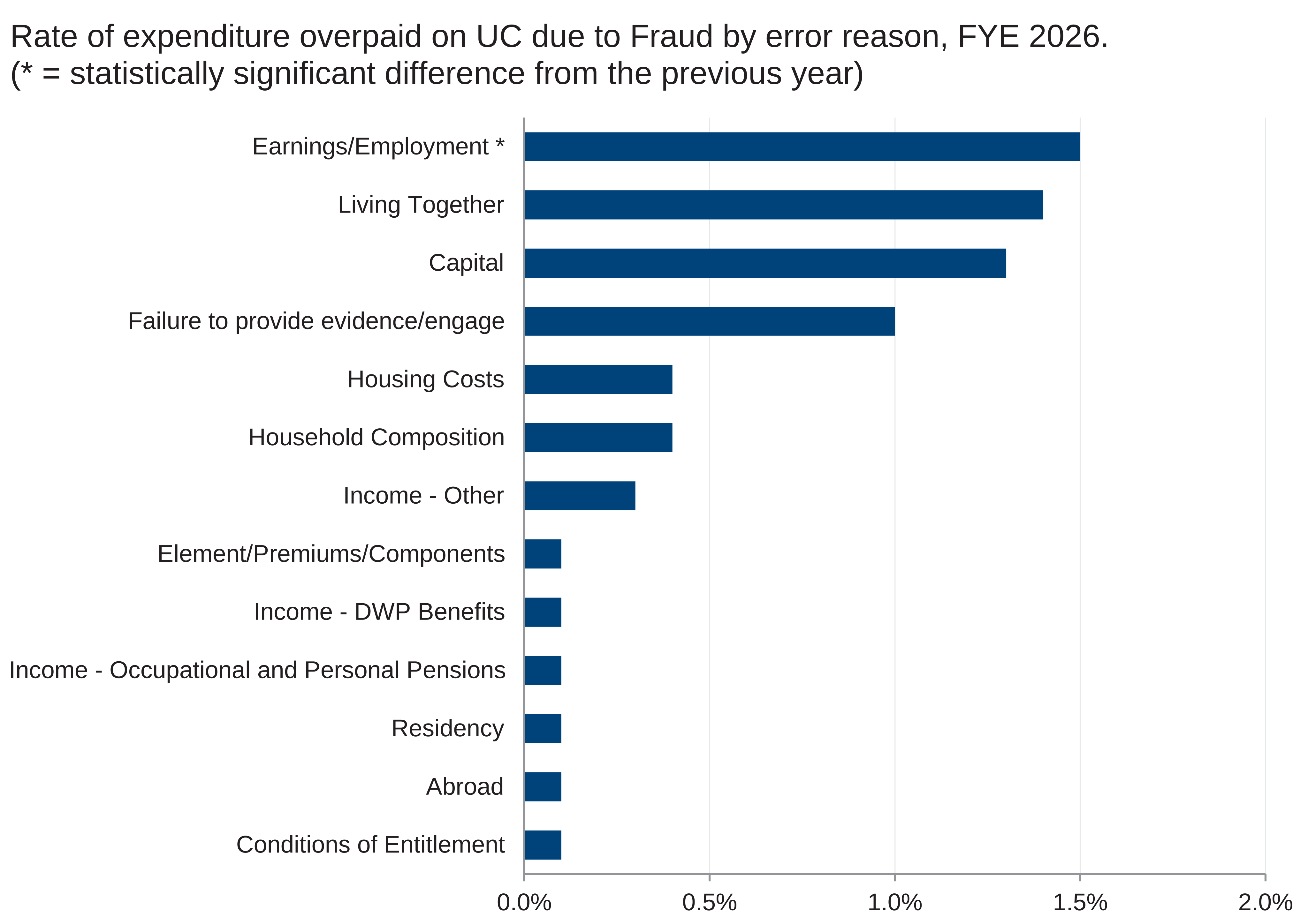
The rise of the total UC overpayment rate in FYE 2021 and FYE 2022 was driven by increased levels of Fraud in those years. Overpayments due to Fraud have fallen since the FYE 2022 peak and returned to a pre-pandemic level, measuring 6.8% (£5,420m) in FYE 2026.
Earnings/Employment (under-declaration of income from work undertaken) remained the main cause of Universal Credit Fraud overpayments but saw a statistically significant decrease to 1.5% in FYE 2026 from 2.2% in FYE 2025.
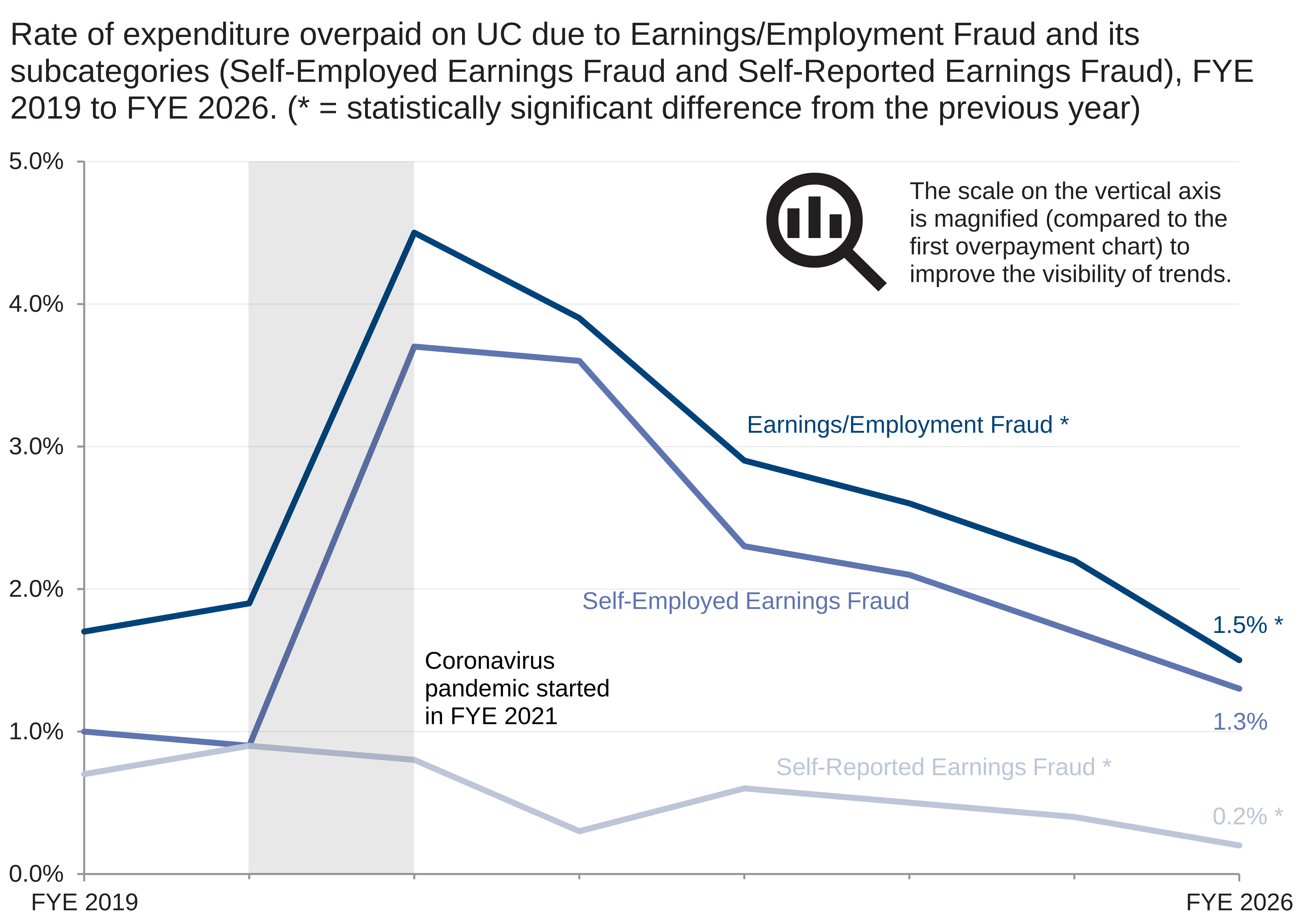
Fraud due to Earnings/Employment has been the main cause of UC Fraud overpayments in all measurement years since FYE 2019, and its trend tends to mirror the total Fraud overpayments. Earnings/Employment Fraud is predominantly related to Self-Employed Earnings (under-declaration of income from self-employment). Since its peak in FYE 2021 during the COVID-19 pandemic, Earnings/Employment Fraud had continued to fall and saw a statistically significant decrease to 1.5% in FYE 2026 from 2.2% in FYE 2025. One of its subcategories (Self-Reported Earnings Fraud) also decreased to 0.2% in FYE 2026 from 0.4% in FYE 2025.
Earnings/Employment, Living Together (claimants who failed to declare living with a partner) and Capital (under-declaration of financial assets) remained the three main causes of Fraud overpayments and accounted for over £6 in every £10 overpaid due to Fraud in FYE 2026, similar to FYE 2025.
UC overpayments due to Official Error and Claimant Error have been stable over the past 5 years and remained at 0.8% (£610m) and 0.9% (£690m) respectively in FYE 2026.
Underpayments
The Universal Credit underpayment rate was 0.4% (£350m) in FYE 2026, compared with 0.6% (£390m) in FYE 2025.
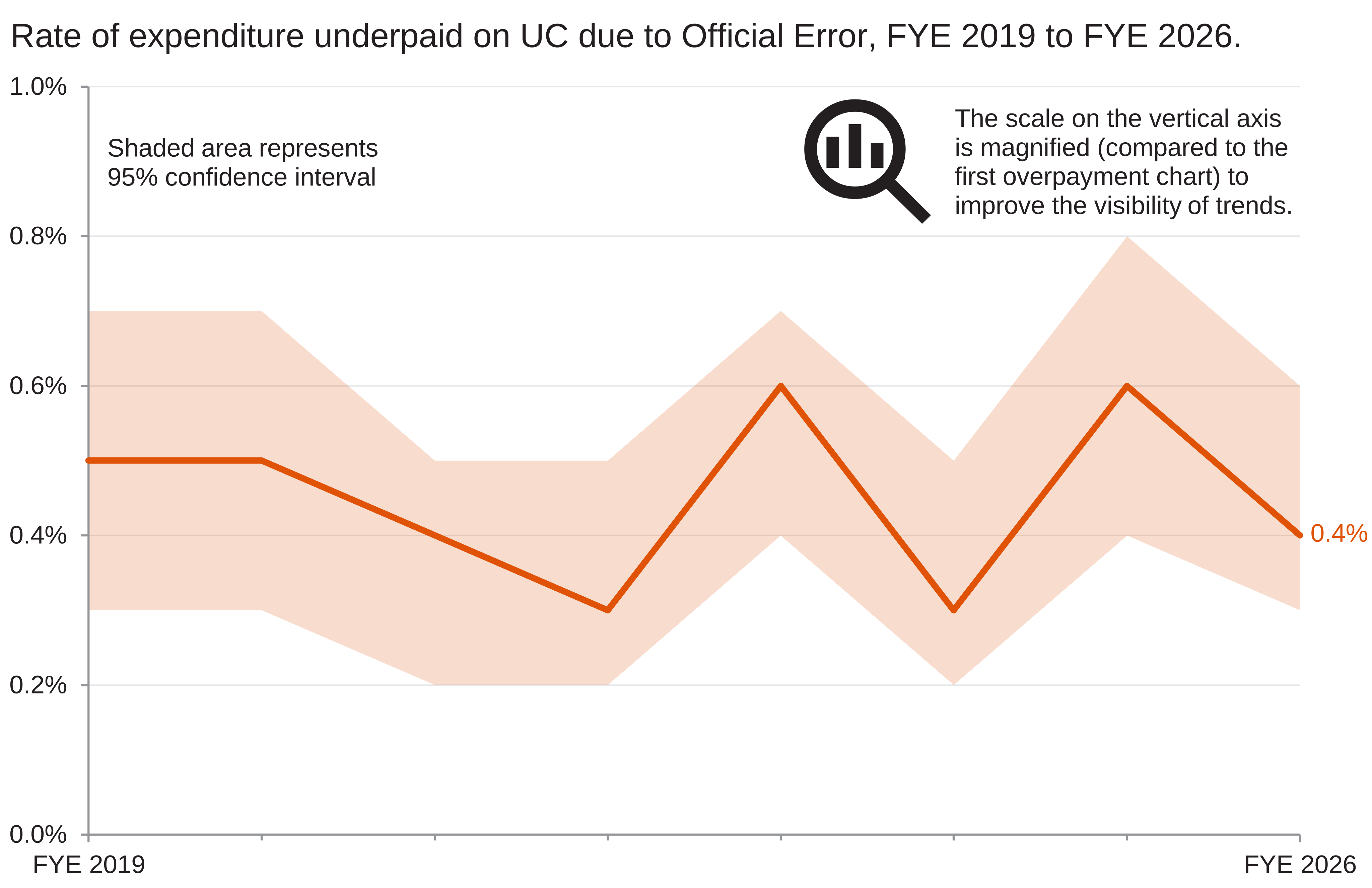
The UC underpayment rate remained considerably lower than the overpayment rate in FYE 2026. Over the past five years, it has fluctuated between 0.3% and 0.6% of the expenditure. In FYE 2026, four error reasons accounted for the majority of underpayments, with all other error reasons rounding to 0.0% of the UC expenditure.
The main underpayment reasons include Element/Premium/Components (underpayment of any additional elements beyond the standard allowance), Housing Costs (where the award included an incorrect amount towards the cost of rent and/or service charges), Household Composition (where the department failed to correctly consider the effect of other people in the customer’s household) and Childcare Costs (where the award included an incorrect amount towards the cost of childcare paid by the customer). Each of these underpayment reasons accounted for 0.1% of the UC expenditure in FYE 2026.
The proportion of UC claims underpaid was 2 in 100 claims in FYE 2026.
6. State Pension overpayments and underpayments
State Pension (SP) is paid to those who have reached the minimum age to claim (currently 66 years old, increasing gradually over the next two years until it reaches 67 years old) and have enough qualifying years on their National Insurance record. SP is the benefit with the highest expenditure, accounting for a little under half of total benefit expenditure.
Prior to FYE 2022, SP reviews were limited to Official Error checks using information held by the department and there was no customer contact. Since then, the process has included a full claim review and direct customer contact, which allowed new types of errors to be identified. As a result, the estimates from FYE 2022 and subsequent years cannot be compared to the previous time periods.
Claimants who live overseas and have reported a non-GB address are not part of the SP review. An adjustment is made to the calculation on overseas Fraud and Claimant error, concerning the late/non-notification of death, and is applied to overpayment rates. Further information on this can be found in the Background Information and Methodology note.
The expenditure on SP has increased to £146.1bn in FYE 2026 from £136.4bn in FYE 2025 (revised from the FYE 2025 release). This means that the monetary values of fraud and error cannot be directly compared between these years.
The SP incorrectness (the proportion of claims that were either overpaid or underpaid) was 7 in 100 claims in FYE 2026.
Overpayments
The State Pension overpayment rate was 0.2% (£230m) in FYE 2026, compared with 0.1% (£180m) in FYE 2025. The SP overpayment rate is consistently the lowest of all DWP benefits.
Overpayments due to Official Error and Fraud both rounded to 0.0% of the SP expenditure (£60m and £0m respectively) in FYE 2026.
Overpayments due to Claimant Error remained at 0.1% (£170m).
The proportion of SP claims overpaid remained at 2 in 100 claims in FYE 2026.
Underpayments
The State Pension underpayment rate remained at 0.3% (£390m) in FYE 2026, the same as in FYE 2025 (£430m).
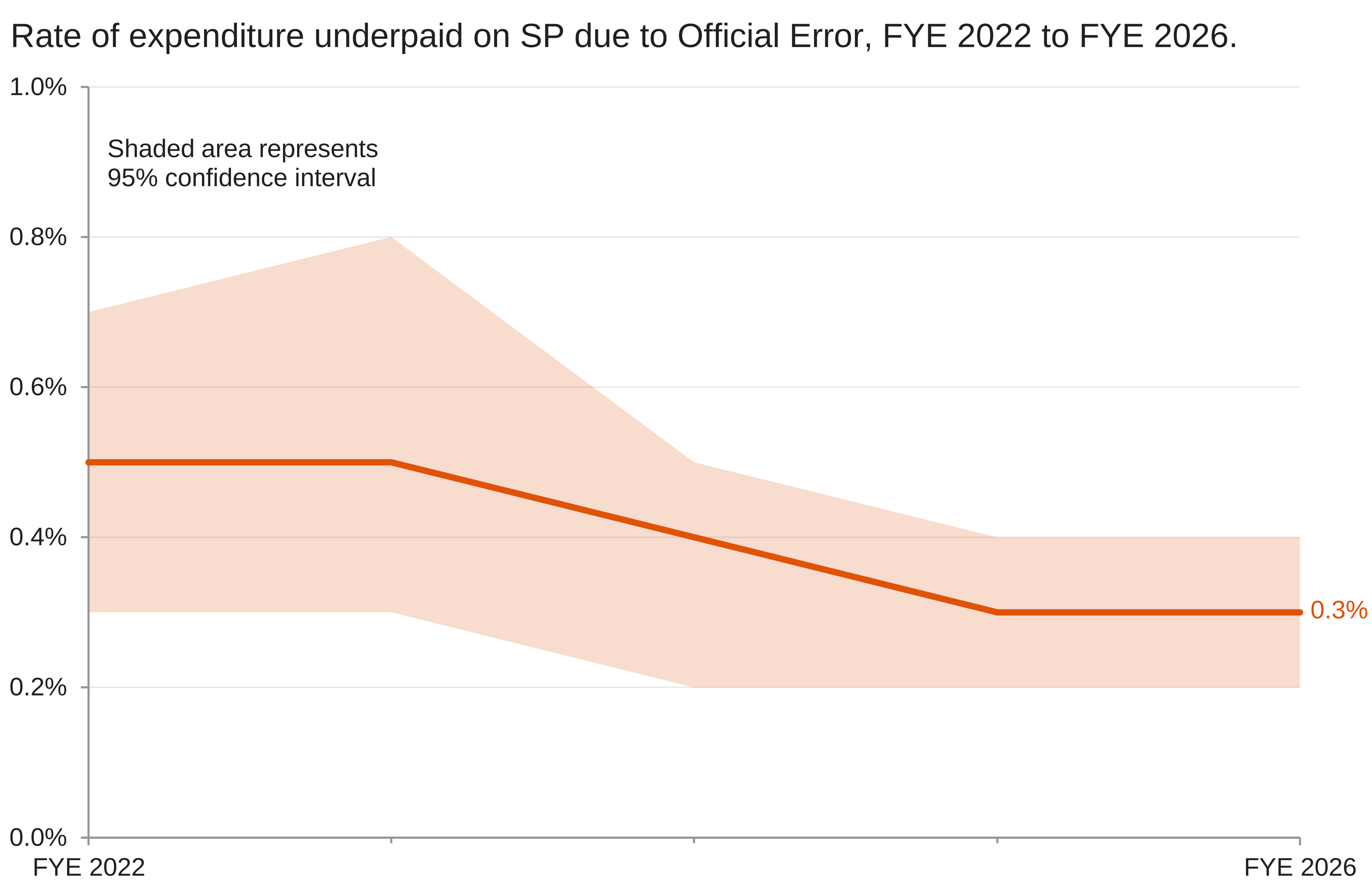
Contributions (errors relating to discrepancies in the claimant’s National Insurance record) remained the largest reason for SP underpayments at 0.1% and remained broadly the same as in FYE 2025. The main error within this error reason category continued to be around the historic recording of Home Responsibilities Protection (HRP), administered by HMRC – these types of errors accounted for £6 in every £10 underpaid due to Contributions.
HRP was a scheme existing from 1978 to 2010 to protect the SP entitlement of people with domestic caring responsibilities. HRP reduced the number of qualifying years needed to get a full basic SP. Some people have not had all eligible years of HRP recorded on their National Insurance records and so have an incomplete record affecting their SP entitlement. DWP and HMRC established the Legal Entitlements and Administrative Practice (LEAP) correction exercise to identify and invite potentially affected people to apply, correct their records, and receive both arrears and revised ongoing SP payments.
The proportion of SP claims underpaid was 5 in 100 claims in FYE 2026.
7. Personal Independence Payment overpayments and underpayments
Personal Independence Payment (PIP) helps with extra costs caused by long-term disability or ill-health. From April 2013 PIP started to replace Disability Living Allowance (DLA) for people of working age.
PIP has been measured for fraud and error since FYE 2018, with the exception of FYE 2021 and FYE 2022, due to the COVID-19 pandemic restrictions.
The expenditure on PIP has increased to £28.5bn in FYE 2026 from £25.8bn in FYE 2025. This means that the monetary values of fraud and error cannot be directly compared between these years.
The PIP incorrectness (the proportion of claims that were either overpaid or underpaid) increased to 4 in 100 claims in FYE 2026 from 2 in 100 claims in FYE 2025.
Overpayments
The Personal Independence Payment overpayment rate increased to 2.3% (£660m) in FYE 2026 from 1.3% (£330m) in FYE 2025. This was a statistically significant increase and a continuation of an upwards trend that started in FYE 2024.
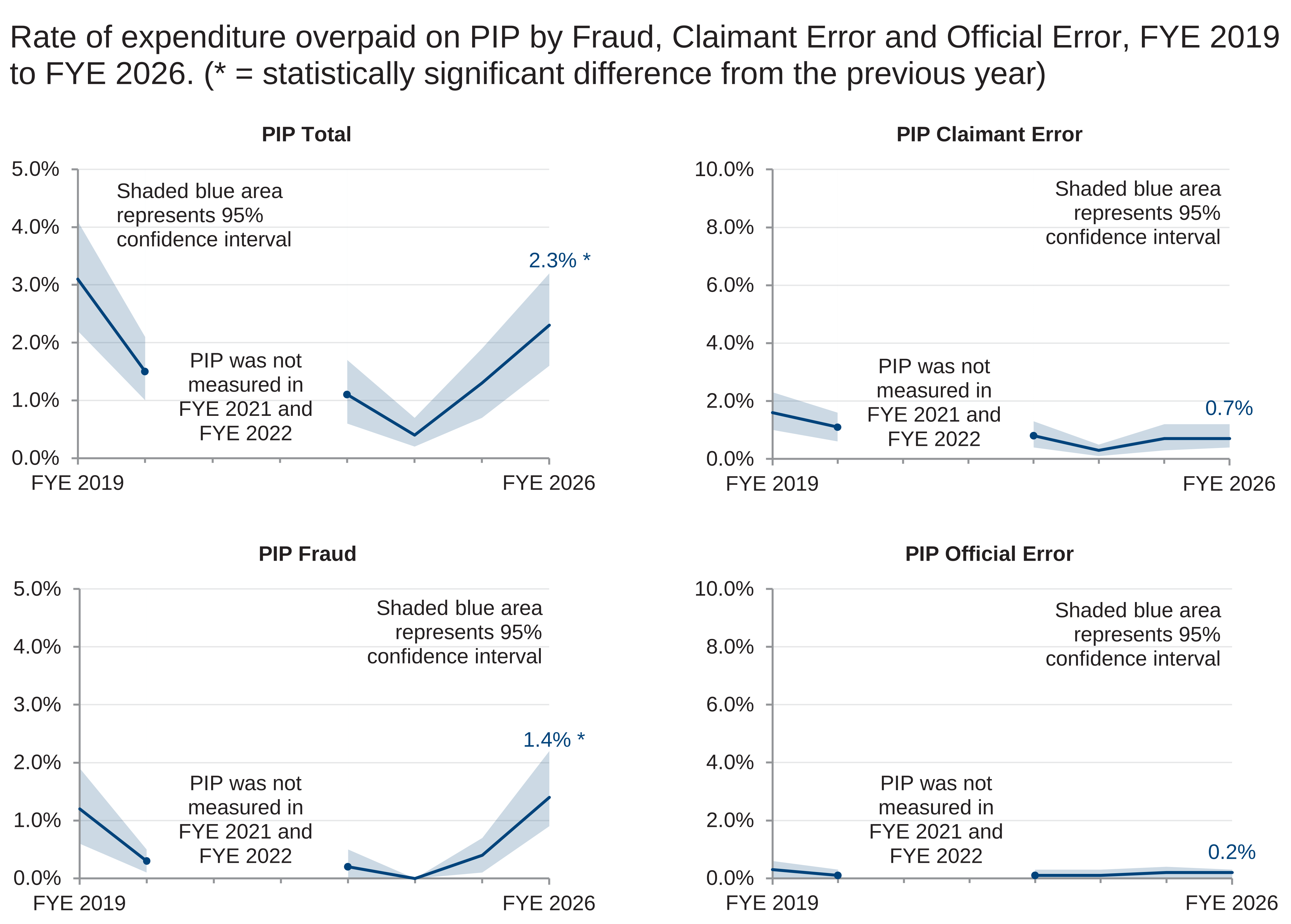
More PIP claims were found to be overpaid across Fraud and Claimant Error in FYE 2026 compared with FYE 2025. This led to a statistically significant increase in the proportion of PIP claims overpaid, which was 3 in 100 claims in FYE 2026 compared with 1 in 100 claims in FYE 2025.
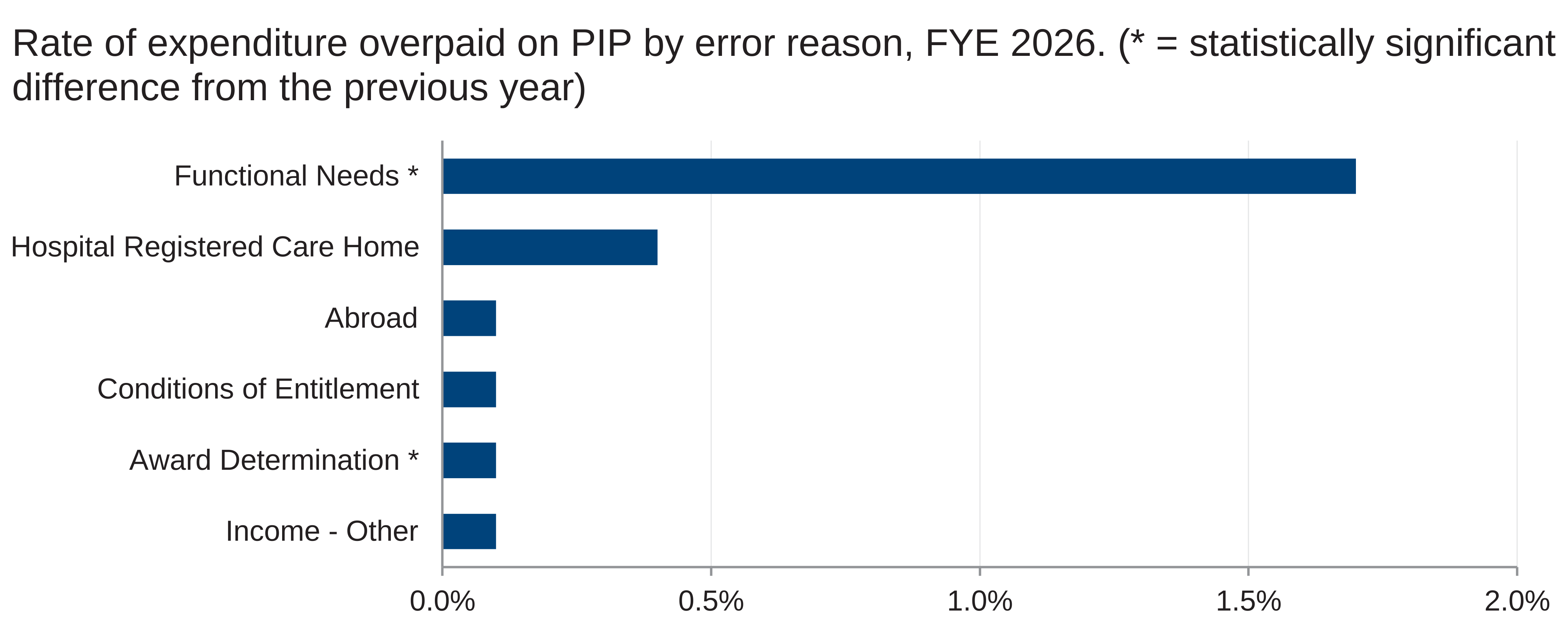
Functional Needs (claimants failing to report an improvement in their needs) remained the main cause of PIP overpayments and accounted for over £7 in every £10 overpaid on PIP in FYE 2026. The rate of overpayments due to Functional Needs remained broadly the same between FYE 2018 and FYE 2023 until a statistically significant decrease in FYE 2024 followed by an increase the year after. In FYE 2026, Functional Needs saw a second consecutive statistically significant increase to 1.7% in FYE 2026 from 0.8% in FYE 2025.
Functional Needs accounted for majority of the Personal Independence Payment overpayments in FYE 2026. All other overpayment reasons were comparatively small.
Overpayments due to Functional Needs Fraud accounted for around half of all the PIP overpayments in FYE 2026 – the rate was 1.2% in FYE 2026 compared with 0.3% in FYE 2025. This was a statistically significant increase and the main driver behind the statistically significant rise in the total PIP Fraud overpayments – 1.4% (£410m) in FYE 2026 compared with 0.4% (£100m) in FYE 2025. The growing Fraud overpayment rate was the main cause of the statistically significant increase in the total PIP overpayment rate recorded this year.
Overpayments due to Official Error remained at 0.2% (£50m) in FYE 2026. These have been low and stable ever since we started measuring PIP for fraud and error in FYE 2018.
Overpayments due to Claimant Error remained at 0.7% (£210m) in FYE 2026. This follows a statistically significant decrease in Claimant Error overpayments recorded in FYE 2024.
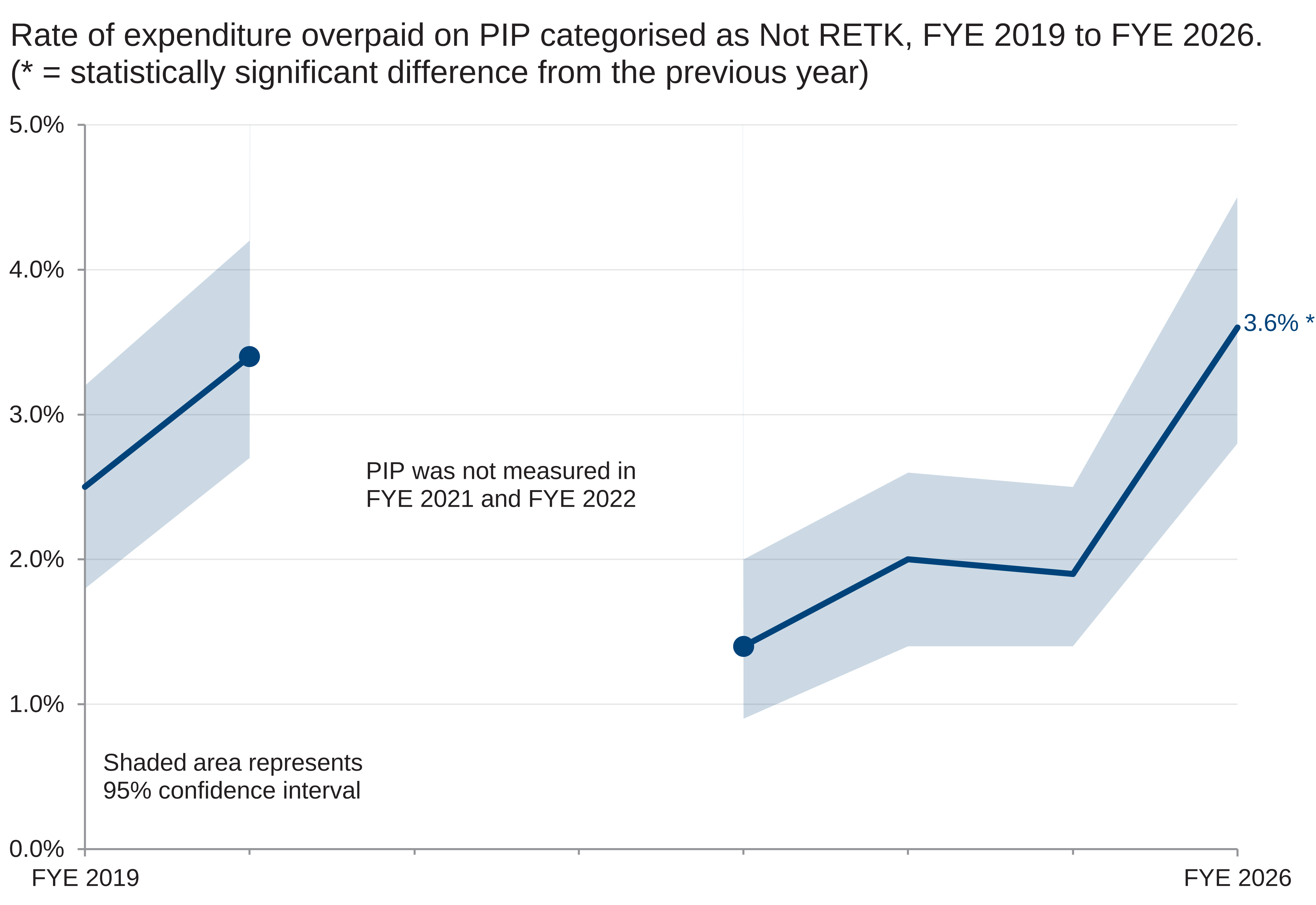
The rate of cases excluded from the headline overpayment estimates due to a categorisation of Not Reasonably Expected To Know (Not RETK) was 3.6% (£1,030m) in FYE 2026 – a statistically significant increase from 1.9% (£500m) in FYE 2025. This is where the claimant was incorrectly overpaid, but we would not reasonably expect them to know to report the change. Not RETK cases are all Claimant Error cases with error reason Functional Needs. Further information can be found in the Background Information and Methodology note.
The Not Reasonably Expected To Know rate of 3.6% recorded in FYE 2026 was the highest measured to date, and a statistically significant rise from 1.9% in FYE 2025.
Underpayments
The Personal Independence Payment underpayment rate remained at 0.2% (£70m) in FYE 2026, the same as in FYE 2025 (£40m).
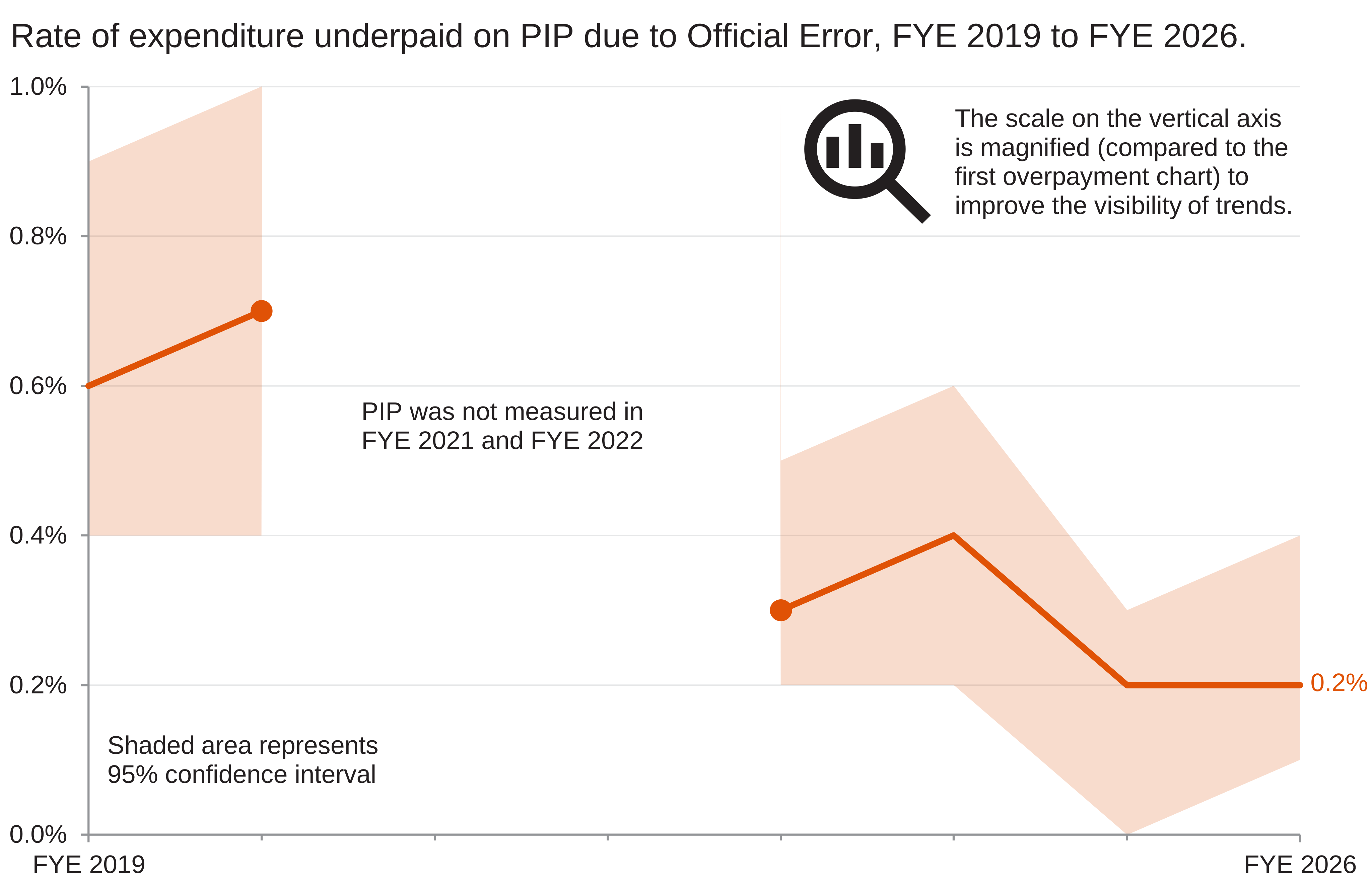
The PIP underpayment rate was much smaller than the overpayment rate in FYE 2026 and the estimates have been broadly the same ever since PIP measurement restarted in FYE 2023. All underpayments in FYE 2026 were due to Award Determination (an incorrect determination of the appropriate entitlement by DWP).
The proportion of PIP claims underpaid was less than 1 in 100 claims in FYE 2026.
8. Housing Benefit overpayments and underpayments
Housing Benefit (HB) can help pay rent for people who are unemployed, on a low income, or claiming benefits. How much the claimant can get depends on their income and circumstances. For people who haven’t reached State Pension age (working age claimants), HB is being replaced by Universal Credit (UC), so this group will gradually move onto UC. Working age people cannot make new claims for HB unless they are in supported, sheltered, or temporary housing. People who reached State Pension age (pension age claimants) can continue to make new claims for HB.
These estimates relate to all of HB. Separate estimates are also published for working age and pension age claimants (see reference tables). These two groups consist of “passported” claims (who get HB because they receive another qualifying income-related benefit) and “non-passported” claims (who get HB without one of these qualifying benefits). This means that HB contains four client groups: passported and non-passported working age, as well as passported and non-passported pension age. Combining these four groups gives the total HB estimates. The table below shows how the proportions of each HB client group contribute to the total HB expenditure:
| FYE 2026 expenditure (£m) | FYE 2026 expenditure proportion (%) | FYE 2025 expenditure (£m) | FYE 2025 expenditure proportion (%) | |
|---|---|---|---|---|
| Housing Benefit | 12,900 | 100 | 15,400 | 100 |
| Pension age (total) | 7,100 | 55 | 6,800 | 44 |
| Working age (total) | 5,800 | 45 | 8,500 | 56 |
| Pension age (Passported) | 4,700 | 37 | 4,400 | 29 |
| Working age (Passported) | 4,700 | 36 | 6,700 | 44 |
| Pension age (Non-passported) | 2,400 | 19 | 2,400 | 16 |
| Working age (Non-passported) | 1,100 | 9 | 1,800 | 12 |
In FYE 2026, DWP reviewed claims for non-passported and passported pension age client groups. The estimates for the HB working age client groups relate to reviews undertaken in previous years. Passported working age claims were last reviewed in FYE 2025 and non-passported working age in FYE 2023. The rates of fraud and error found when each group was last measured have been applied to the FYE 2026 expenditure.
The expenditure on HB has decreased to £12.9bn in FYE 2026 from £15.4bn in FYE 2025. This means that the monetary values of fraud and error cannot be directly compared between these years.
The HB incorrectness (the proportion of claims that were either overpaid or underpaid) decreased to 18 in 100 claims in FYE 2026 from 20 in 100 claims in FYE 2025.
Overpayments
The Housing Benefit overpayment rate decreased to 6.2% (£800m) in FYE 2026 from 7.2% (£1,100m) in FYE 2025. This was a statistically significant decrease.
The fall in the HB overpayment rate was mainly driven by:
-
a statistically significant decrease in HB pension age overpayment rate, falling to 5.6% in FYE 2026 from 7.2% in FYE 2025
-
a statistically significant decrease in the HB non-passported pension age overpayment rate which fell to 8.5% in FYE 2026 from 11.2% in FYE 2025
The proportion of HB claims overpaid also saw a statistically significant decrease, falling to 15 in 100 in FYE 2026 from 17 in 100 in FYE 2025. This reduction was driven by:
-
a statistically significant decrease in the proportion of HB pension age claims overpaid, which decreased to 16 in 100 claims in FYE 2026 from 19 in 100 claims in FYE 2025
-
a statistically significant fall in HB non-passported pension age claims which decreased to 28 in 100 claims in FYE 2026 from 37 in 100 claims in FYE 2025
Although the total Housing Benefit overpayment rate saw a statistically significant decrease from FYE 2025, there were no statistically significant differences to any of the error types (Fraud, Claimant Error and Official Error).
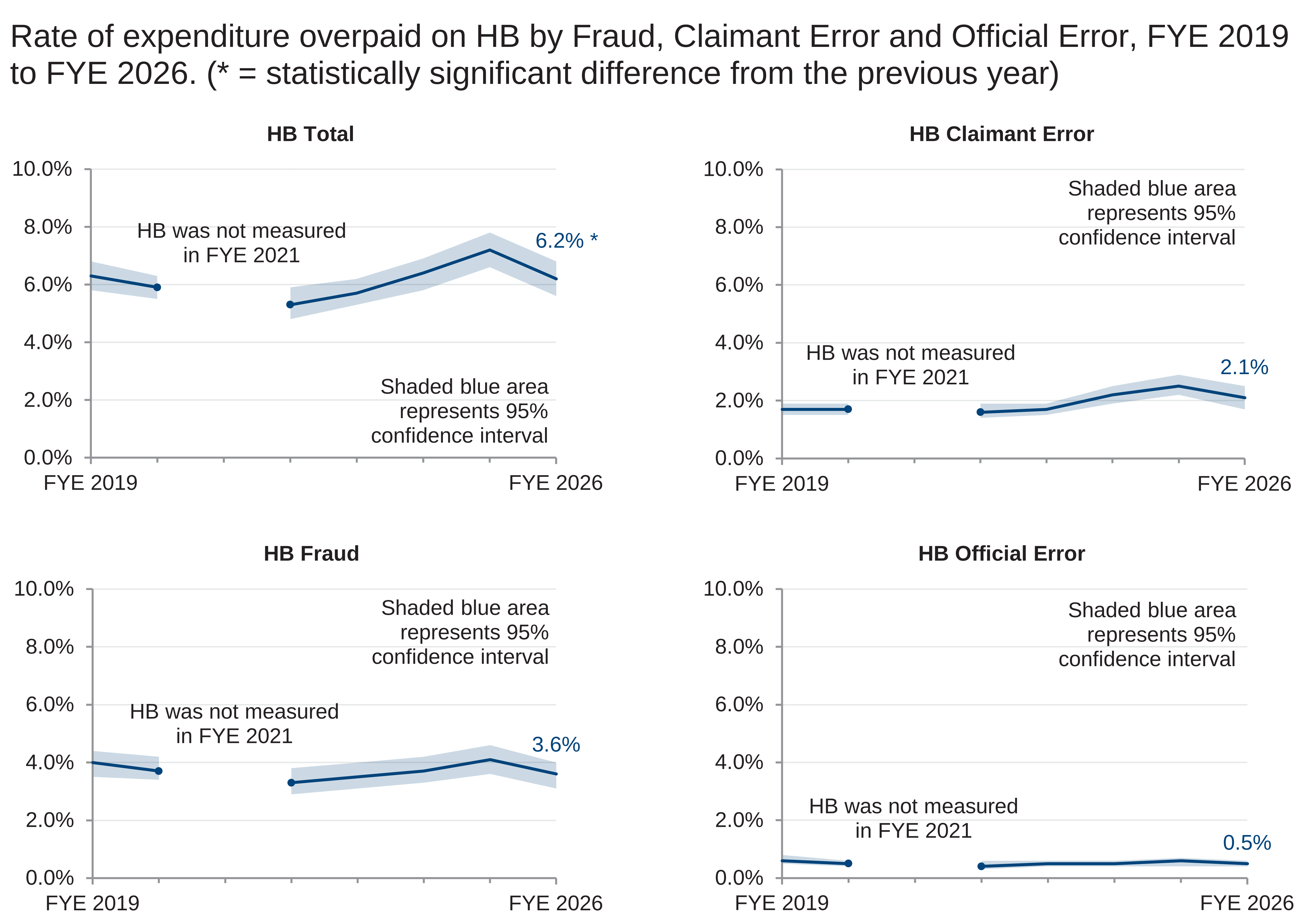
Capital (under-declaration of financial assets) remained the main cause of Housing Benefit overpayments and accounted for over £4 in every £10 overpaid on Housing Benefit in FYE 2026.
Although there were no statistically significant changes in overpayments due to Capital at the total HB level, Capital overpayments for pension age claims (both non-passported and passported groups combined) saw a statistically significant fall to 3.3% in FYE 2026 from 4.5% in FYE 2025.
Earnings/Employment (under-declaration of income from work undertaken) saw the largest fall of all overpayment reasons, measuring 0.9% in FYE 2026 compared with 1.2% in FYE 2025. This was a statistically significant decrease.
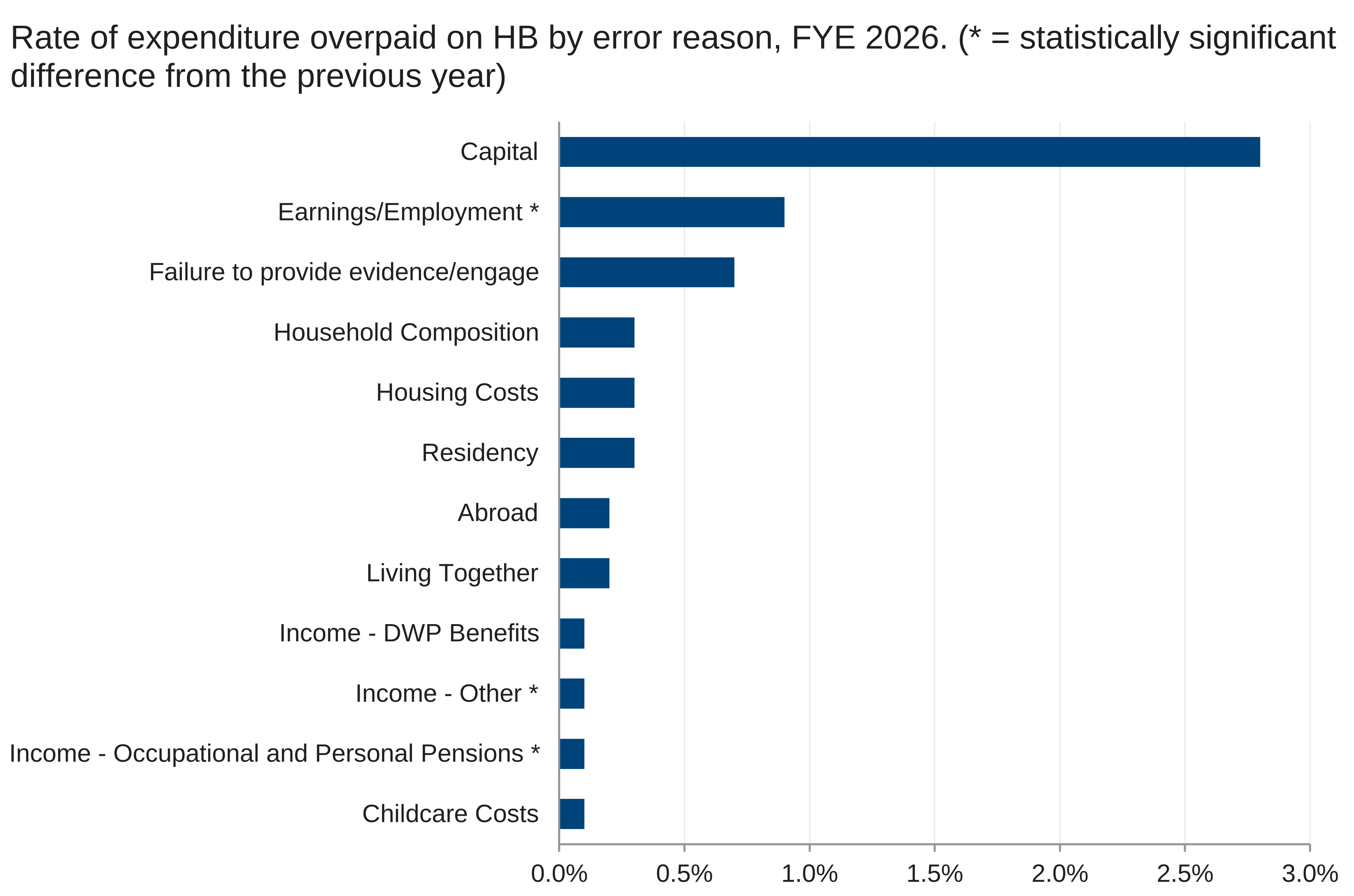
The main driver of the fall in overpayments due to Earnings/Employment, was Employee Earnings (under-declaration of earnings from employment), which saw a statistically significant decrease to 0.7% in FYE 2026 from 0.9% in FYE 2025. The reduction in Earnings/Employment was also influenced by changes in HB expenditure composition: non-passported working age claims made up a smaller proportion of the total HB expenditure than in FYE 2025, but these claims had the highest overpayment rate of all HB client groups (remaining at 7.6% in FYE 2026, the same as in FYE 2025).
Due to the nature of pension age client groups, non-employment income (such as private pensions or annuities) tends to contribute more towards the HB overpayments recorded on those claims.
At the total HB level, there were statistically significant reductions in overpayments due to:
-
Income – Occupational and Personal Pensions (under-declaration of income related to occupational and personal pensions), which fell to 0.1% in FYE 2026 from 0.2% in FYE 2025
-
Income – Other (under-declaration of income received from sources not covered by any other error categories), which fell to 0.1% in FYE 2026 from 0.2% in FYE 2025
Both of these changes were driven by similar significant drops in the non-passported pension age client group, where Income – Occupational and Personal Pensions decreased to 0.3% in FYE 2026 from 0.9% in FYE 2025 and Income – Other fell to 0.0% in FYE 2026 from 0.3% in FYE 2025.
Underpayments
The Housing Benefit underpayment rate was 0.3% (£40m) in FYE 2026, compared with 0.4% (£60m) in FYE 2025.
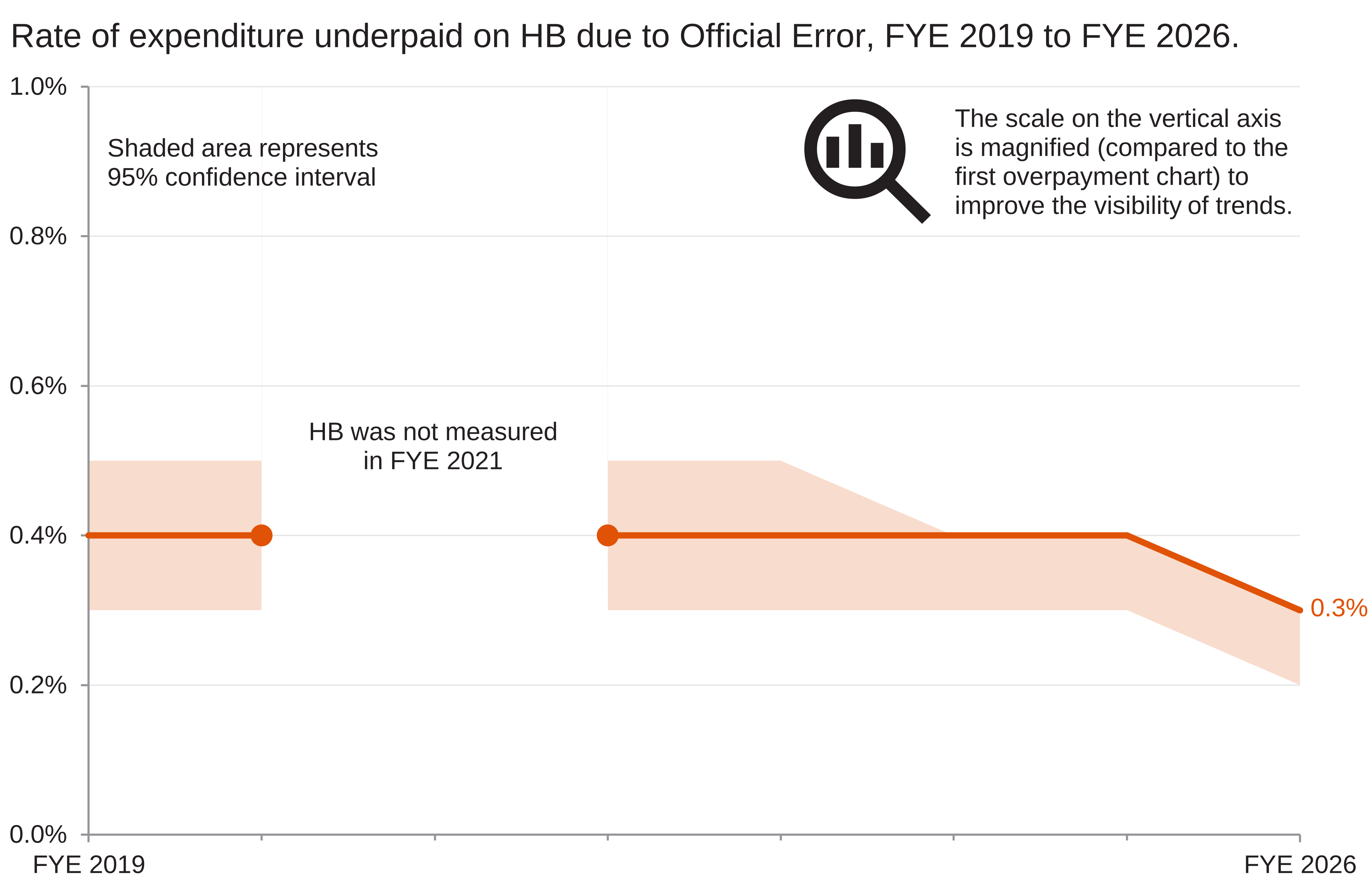
Passported pension age was the only client group that saw a statistically significant change in underpayment rate, falling to 0.1% in FYE 2026 from 0.3% in FYE 2025.
Housing Costs errors (where local authorities incorrectly applied eligible housing costs), were the main cause of HB underpayments in FYE 2026, measuring 0.1%. This was the only underpayment reason that did not round to 0.0% of total HB expenditure.
The proportion of HB claims underpaid remained at 3 in 100 claims in FYE 2026.
9. Disability Living Allowance overpayments and underpayments
Disability Living Allowance (DLA) helps with extra costs associated with long term disability or ill-health. From April 2013, Personal Independence Payment (PIP) started to replace DLA. Adults are still in receipt of DLA, however new claims can only be made for children under 16.
These estimates relate to all of DLA. DLA is made up of two main client groups (children under 16 and adults aged 65 or over) and a third small client group (working age adults). In FYE 2024 both main client groups were measured. This year we have only measured the child client group, while the estimates for the adult group relate to reviews undertaken in FYE 2024 and have been applied to the FYE 2026 expenditure. Further information on how the overall DLA overpayment and underpayment figures are calculated can be found in the Background Information and Methodology note.
The expenditure on DLA increased to £8.3bn in FYE 2026 from £6.8bn in FYE 2024. This means that the monetary values of fraud and error cannot be directly compared between these years.
The DLA incorrectness (the proportion of claims that were either overpaid or underpaid) increased to 9 in 100 claims in FYE 2026 from 4 in 100 claims in FYE 2024.
Overpayments
The Disability Living Allowance overpayment rate was 0.9% (£70m) in FYE 2026, compared with 0.5% (£30m) in FYE 2024.
Although the rate of expenditure overpaid in FYE 2026 did not show a statistically significant change from FYE 2024, the proportion of DLA claims overpaid increased to 2 in 100 in FYE 2026 from 1 in 100 in FYE 2024 – this was a statistically significant increase.
Award Determination (an incorrect determination of the appropriate entitlement by DWP) remained the main cause of overpayments and accounted for £4 in every £10 overpaid on Disability Living Allowance in FYE 2026. Award Determination saw a statistically significant increase to 0.4% in FYE 2026 from 0.2% in FYE 2024.
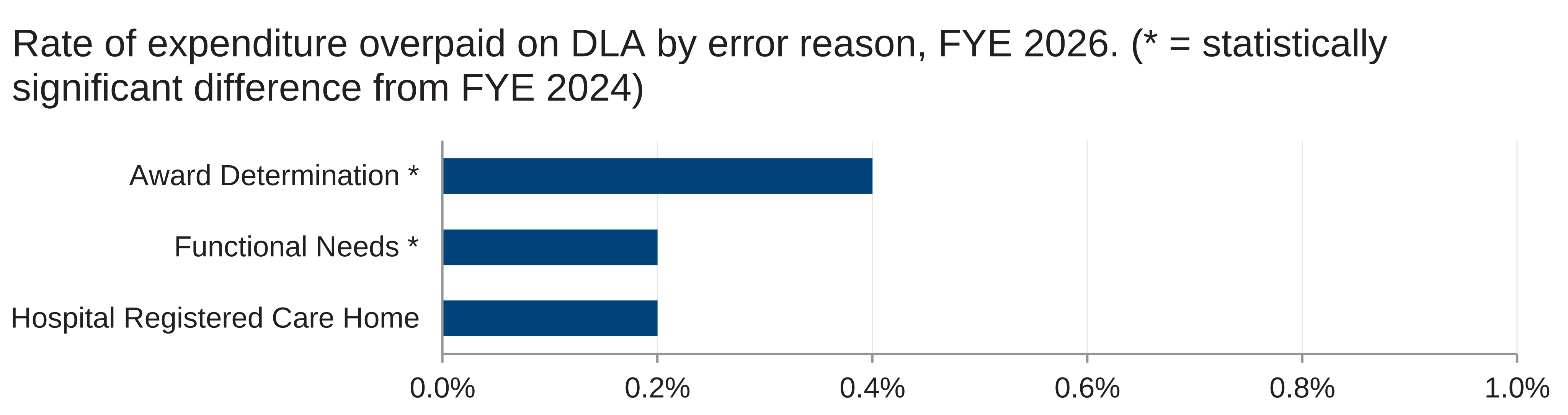
Functional Needs (claimants failing to report an improvement in their needs) saw a statistically significant increase to 0.2% in FYE 2026 from 0.0% in FYE 2024. Functional Needs accounted for £3 in every £10 overpaid on DLA in FYE 2026.
Overpayments due to Claimant Error were 0.3% (£20m) in FYE 2026. The main driver behind Claimant Error were Functional Needs errors, which saw a statistically significant increase to 0.2% in FYE 2026 from 0.0% in FYE 2024.
The rate of cases excluded from the headline overpayment estimates due to a categorisation of Not Reasonably Expected To Know (Not RETK) was 0.9% (£80m) in FYE 2026. This is where the claimant was incorrectly overpaid, but we would not reasonably expect them to know to report the change. Not RETK cases are all Claimant Error cases with error reason Functional Needs. Further information can be found in the Background Information and Methodology note.
Overpayments due to Fraud were 0.2% (£10m) in FYE 2026. All Fraud was due to Hospital/Registered Care Home (failing to report extended stays in hospitals or registered care homes) and Functional Needs.
Overpayments due to Official Error were 0.4% (£30m) in FYE 2026, with most of those due to Award Determination.
Underpayments
The Disability Living Allowance underpayment rate was 2.3% (£190m) in FYE 2026, compared with 1.0% (£70m) in FYE 2024. This was a statistically significant increase.
All underpayments in FYE 2026 were due to Award Determination.
The proportion of DLA claims underpaid increased to 7 in 100 claims in FYE 2026 from 3 in 100 claims in FYE 2024 – this was a statistically significant increase.
10. Pension Credit overpayments and underpayments
Pension Credit (PC) provides support to people who have reached State Pension age (SPA) and reside in Great Britain. Guarantee Credit tops up any other income to a ‘standard minimum guarantee’ amount and additional amounts may be payable in certain circumstances, for example, for severe disability, for certain housing costs or for caring. Savings Credit is an extra payment for those who have made some additional provision for their retirement through, for example, an occupational pension or savings. Those reaching SPA from 6 April 2016 are not eligible for Savings Credit.
The expenditure on PC has increased to £6.1bn in FYE 2026 from £5.9bn in FYE 2025. This means that the monetary values of fraud and error cannot be directly compared between these years.
The PC incorrectness (the proportion of claims that were either overpaid or underpaid) increased to 37 in 100 claims in FYE 2026 from 31 in 100 claims in FYE 2025.
Overpayments
The Pension Credit overpayment rate was 10.0% (£620m) in FYE 2026, compared with 10.3% (£610m) in FYE 2025. Although this was not a statistically significant change, this was the second consecutive year when Pension Credit was the most overpaid benefit relative to expenditure.
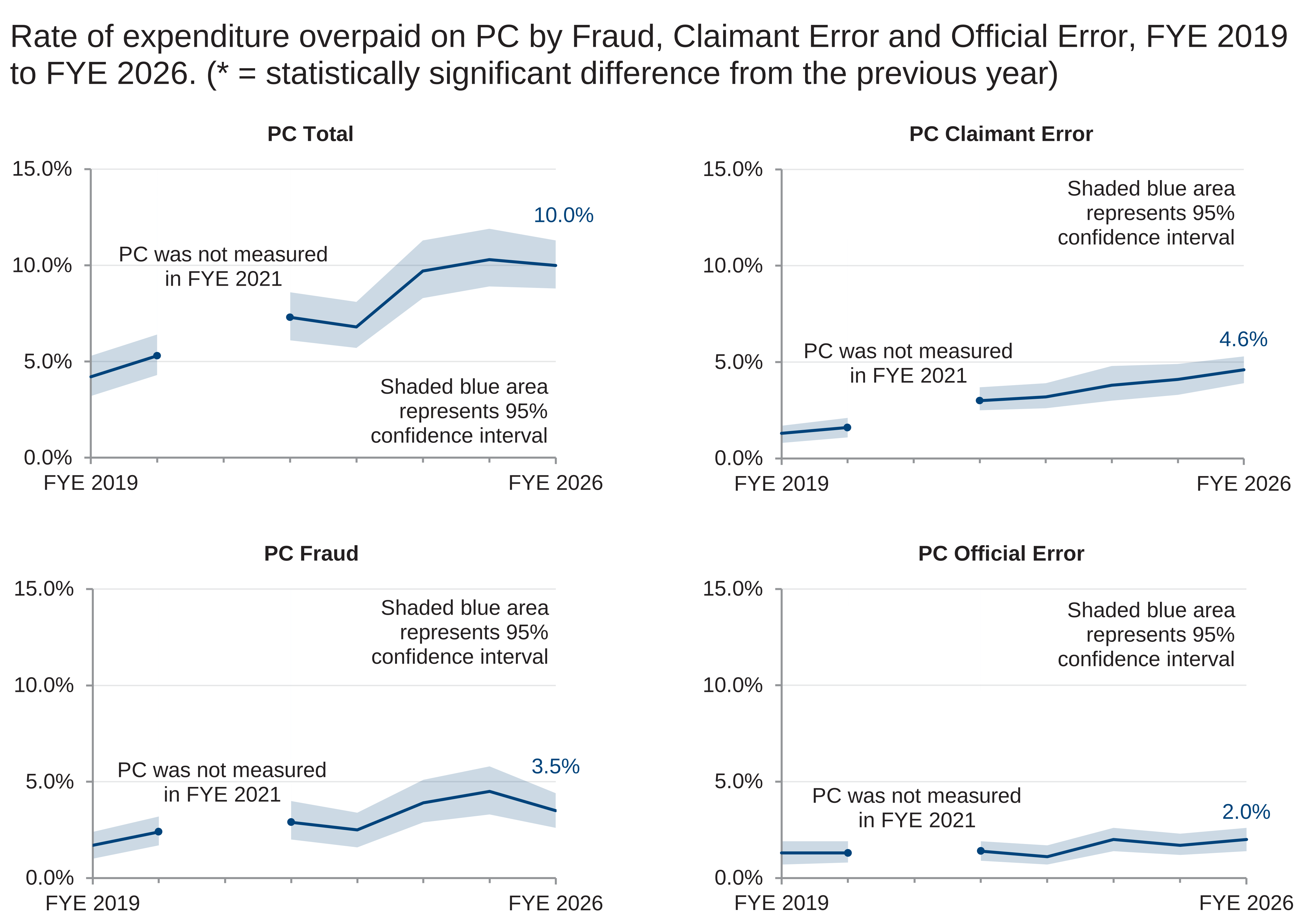
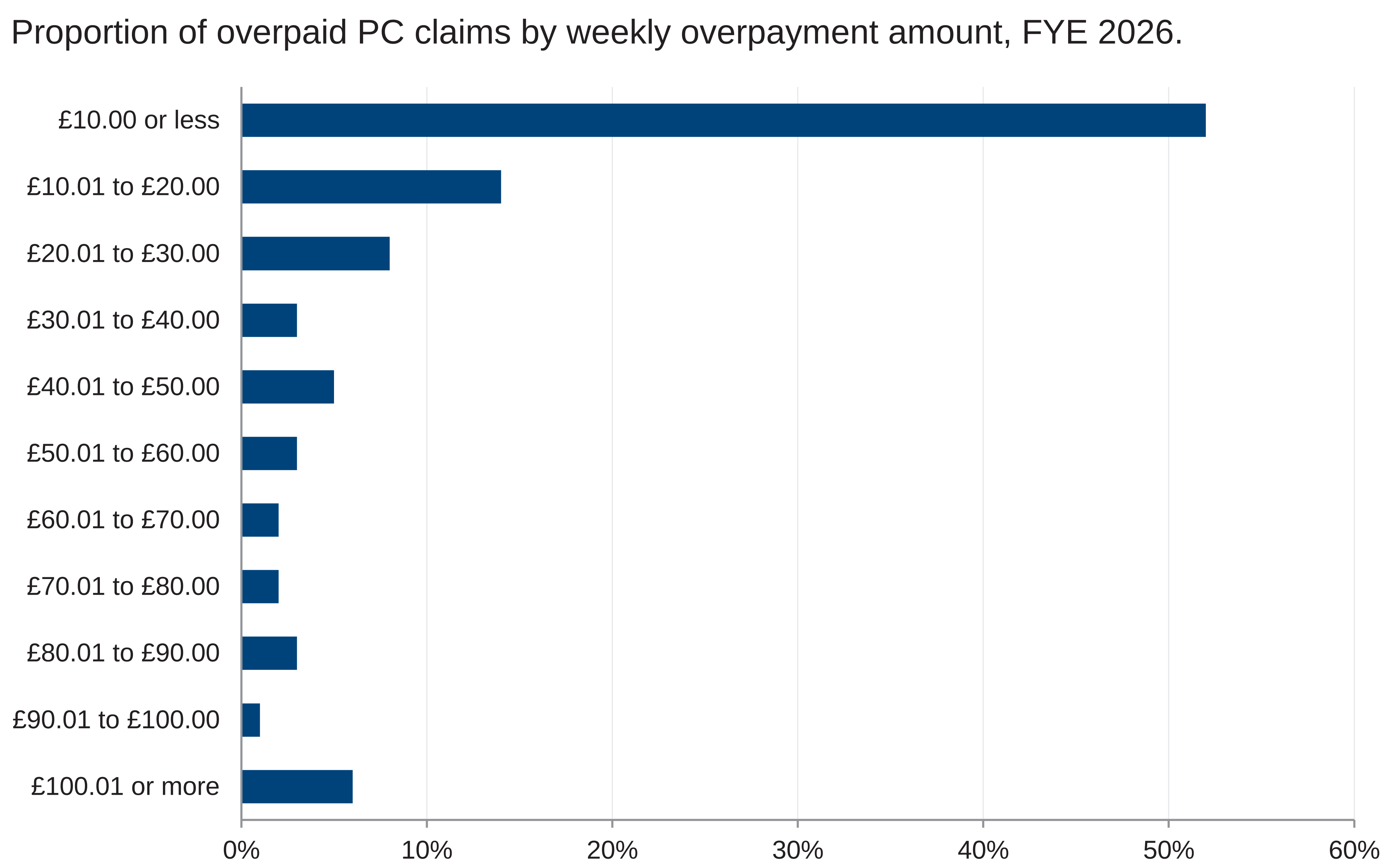
Although the rate of expenditure overpaid in FYE 2026 (10.0%) was broadly the same as in FYE 2025 (10.3%), the proportion of PC claims overpaid increased to 33 in 100 claims in FYE 2026 from 28 in 100 claims in FYE 2025. This was a statistically significant increase and marked the third consecutive year when PC was the benefit with the highest proportion of claims being overpaid. Since there were more PC claims overpaid in FYE 2026 compared to FYE 2025, yet the overpayment rate remained broadly similar, the average PC overpayment in FYE 2026 was smaller than in FYE 2025.
While the incorrectness showed that around one in three PC claims was overpaid in FYE 2026, most overpayments were of relatively small amounts. More than half of all the claims overpaid in FYE 2026 had a weekly overpayment of less than £10.
Capital (under-declaration of financial assets) and Abroad (claimants remaining abroad for a longer period than is allowed) remained the two main causes of PC overpayments and accounted for over £5 in every £10 overpaid on PC in FYE 2026.
Overpayments due to Claimant Error were 4.6% (£280m) in FYE 2026.
Claimant Error overpayments on Pension Credit were mainly driven by errors relating to Capital – those showed a statistically significant increase to 2.5% (£150m) in FYE 2026 from 1.8% (£110m) in FYE 2025.
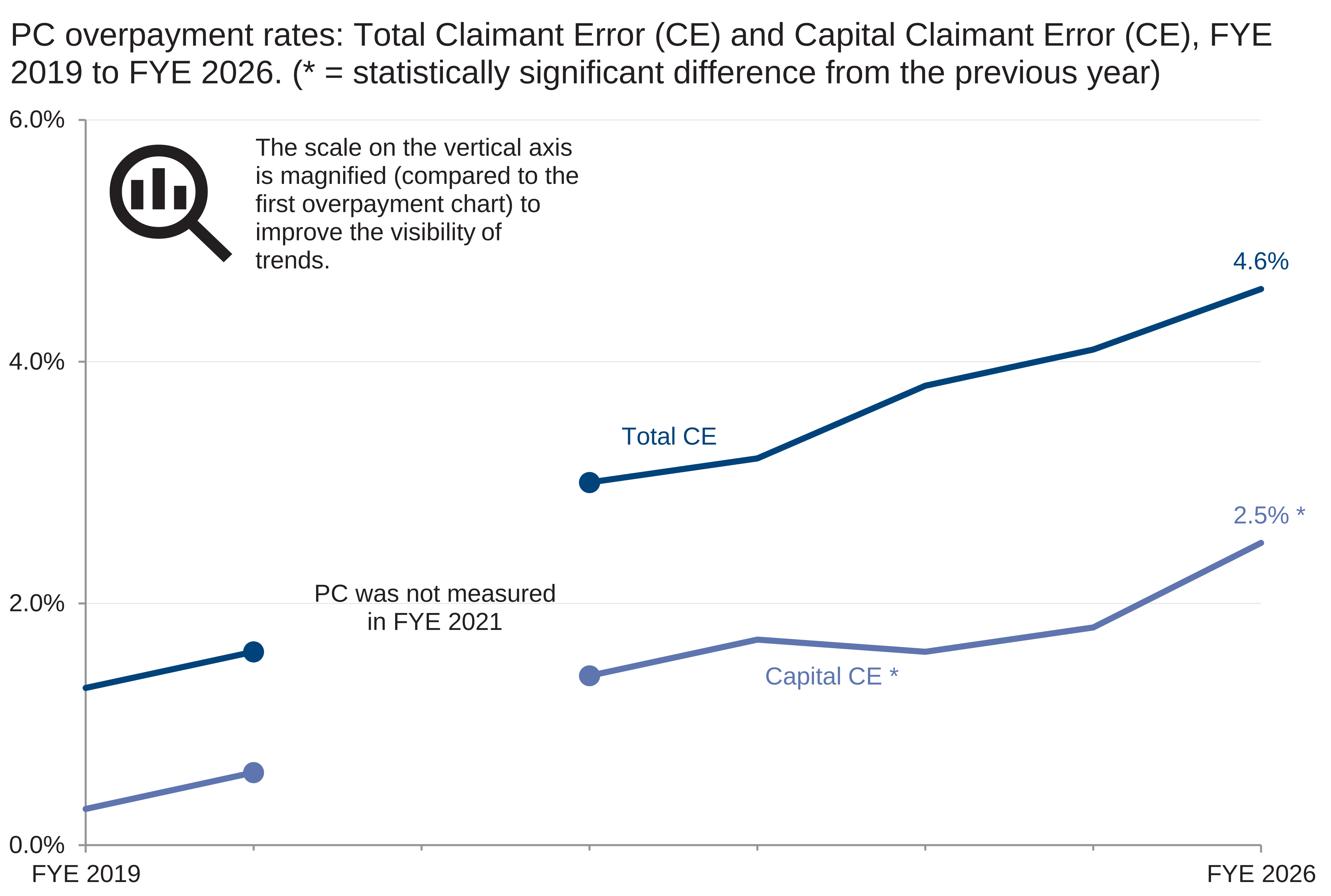
Claimant Error due to Capital has been the main cause of PC Claimant Error overpayments in all measurement years since FYE 2019, and its trend tends to mirror the total Claimant Error overpayments. Due to the statistically significant increase recorded in Claimant Error overpayments due to Capital, these accounted for over £5 in every £10 of the total Claimant Error on PC.
Overpayments due to Fraud and Official Error were 3.5% (£210m) and 2.0% (£120m) in FYE 2026 respectively.
Underpayments
The Pension Credit underpayment rate was 1.3% (£80m) in FYE 2026, compared with 1.2% (£70m) in FYE 2025.
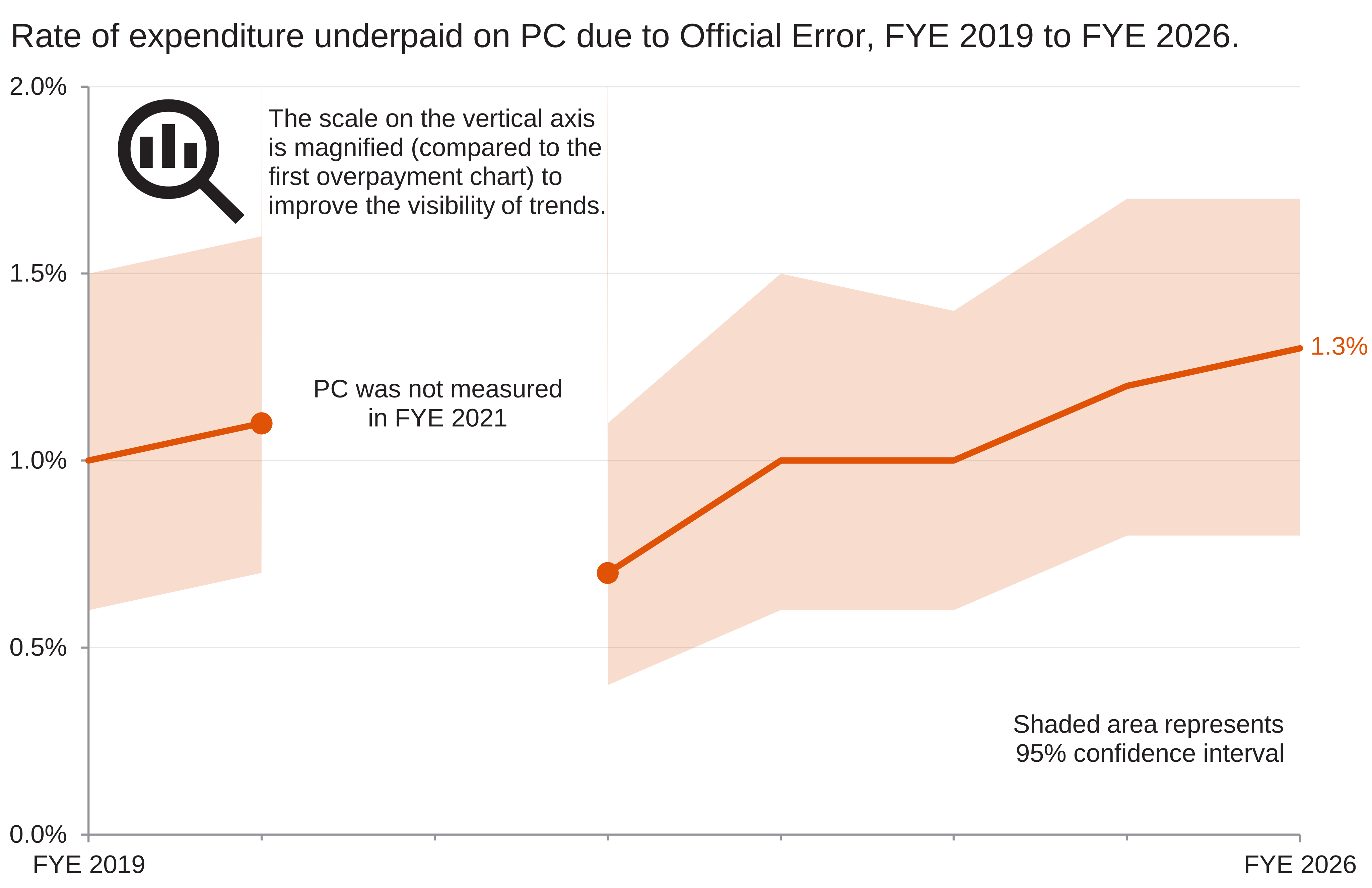
Additional amounts of PC can be paid if a claimant meets certain conditions – they are often called premiums. Element/Premium/Components (Official Error where the department has underpaid any additional amounts) remained the main cause of underpayments and accounted for over £5 in every £10 underpaid on PC in FYE 2026. These errors mostly related to an unpaid Extra Amount for Severe Disability (EASD).
The proportion of PC claims underpaid was 4 in 100 claims in FYE 2026.
11. About these statistics
All the information underlying the charts and figures featured in this publication is included in the accompanying reference tables.
The tables show the rates and monetary values of overpayments and underpayments for each benefit, split by Fraud, Claimant Error and Official Error. The tables also show the net loss of overpayments measure, with a time series and a breakdown by benefit.
More detail about the cause of the error (for example: income, savings and who lives in the household), and the demographics of the claimants, is provided for benefits measured this year. The proportion of claims that are overpaid or underpaid and the amount of money that is incorrectly paid are also estimated.
The Background Information and Methodology note provides further information on how the ‘Fraud and error in the benefit system’ statistics are calculated and gives a glossary of the causes of fraud and error used in this publication and the reference tables. It also contains further details on any methodological changes which have been introduced.
The release strategy provides further information on upcoming plans for future releases of these statistics.
User comments are welcomed and should be sent to: enquiries.fema@dwp.gov.uk
Accredited official statistics status
Accredited official statistics are called National Statistics in the Statistics and Registration Service Act 2007. This status means that these statistics meet the highest standards of trustworthiness, quality and public value, and there is a responsibility to maintain compliance with these standards.
These official statistics were first independently reviewed by the Office for Statistics Regulation in December 2017. They comply with the standards of trustworthiness, quality and value in the Code of Practice for Statistics and should be labelled ‘accredited official statistics’. Since the OSR assessment, we have continued to comply with the Code of Practice for Statistics and have made several improvements including:
-
releasing our publication, including all the charts and images, in HTML format to aid accessibility, and releasing a copy of the tables which have been revised to meet accessibility guidelines
-
carrying out measurement of benefits that were not previously reviewed (such as Attendance Allowance) and carrying out more recent reviews of benefits that had not been measured for a considerable period of time (such as State Pension, Carer’s Allowance and Disability Living Allowance)
-
aligning the sample period of the reviews that underpin the statistics more closely with the financial year we are measuring
-
improving the methodology to more accurately estimate both the overall rates of fraud and error and the root cause of fraud and error
-
listing and quantifying the potential impact of all omissions from our statistics within our Background Information and Methodology note
-
carrying out a consultation around user needs and as a result of this, reducing our publication to one per year, rather than a provisional and final publication, to reduce user confusion
-
improving engagement with key internal stakeholders, to help further ensure the robustness of the statistics and also to help us improve the narrative within the publication
-
encouraging engagement with external users by promoting our statistics on the StatsUserNetwork website, allowing more ways for us to gather feedback
-
improving the commentary within the publication and also how we communicate the uncertainty within our statistics
Our statistical practice is regulated by the Office for Statistics Regulation (OSR).
OSR sets the standards of trustworthiness, quality and value in the Code of Practice for Statistics that all producers of official statistics should adhere to.
You are welcome to contact us directly at enquiries.fema@dwp.gov.uk with any comments about how we meet these standards.
Alternatively, you can contact OSR by emailing regulation@statistics.gov.uk or via the OSR website.
Other Official Statistics
Read details of other Official Statistics produced by DWP.
12. Contact information
Lead Statistician: Milosz Waszak
Feedback or enquiries about these statistics should be directed by email to: enquiries.fema@dwp.gov.uk
DWP Press Office: 0115 965 8781
Report Benefit Fraud: 0800 854 4400
Appendix 1: FYE 2026 overpayment rates and monetary values by benefit
| Expenditure (£m) | Total Rate (%) | Total Value (£m) | Fraud Rate (%) | Fraud Value (£m) | Claimant Error Rate (%) | Claimant Error Value (£m) | Official Error Rate (%) | Official Error Value (£m) | Last measured | |
|---|---|---|---|---|---|---|---|---|---|---|
| Universal Credit | 79,200 | 8.5 | 6,720 | 6.8 | 5,420 | 0.9 | 690 | 0.8 | 610 | Nov 2024 to Oct 2025 |
| State Pension | 146,100 | 0.2 | 230 | 0.0 | 0 | 0.1 | 170 | 0.0 | 60 | Nov 2024 to Oct 2025 |
| Personal Independence Payment | 28,500 | 2.3 | 660 | 1.4 | 410 | 0.7 | 210 | 0.2 | 50 | Sep 2024 to Aug 2025 |
| Housing Benefit | 12,900 | 6.2 | 800 | 3.6 | 460 | 2.1 | 270 | 0.5 | 60 | Nov 2024 to Oct 2025 |
| Attendance Allowance | 8,500 | 2.2 | 190 | 0.0 | 0 | 1.9 | 160 | 0.3 | 30 | Oct 2020 to Aug 2021 |
| Disability Living Allowance | 8,300 | 0.9 | 70 | 0.2 | 10 | 0.3 | 20 | 0.4 | 30 | Nov 2024 to Oct 2025 |
| Employment and Support Allowance | 7,000 | 3.4 | 240 | 1.5 | 100 | 1.6 | 110 | 0.4 | 20 | Sep 2021 to Aug 2022 |
| Pension Credit | 6,100 | 10.0 | 620 | 3.5 | 210 | 4.6 | 280 | 2.0 | 120 | Nov 2024 to Oct 2025 |
| Carer’s Allowance | 4,600 | 3.9 | 180 | 2.5 | 110 | 1.0 | 40 | 0.5 | 20 | Mar 2024 to Sep 2024 |
| Jobseeker’s Allowance | 300 | 4.6 | 10 | 3.1 | 10 | 0.3 | 0 | 1.2 | 0 | Oct 2017 to Sep 2018 |
| Income Support | 0 | 3.9 | 0 | 2.4 | 0 | 1.0 | 0 | 0.4 | 0 | Oct 2013 to Sep 2014 |
| Incapacity Benefit | 0 | 2.4 | 0 | 0.3 | 0 | 0.9 | 0 | 1.2 | 0 | Oct 2009 to Sep 2010 |
| Interdependencies | 120 | 20 | 40 | 60 | ||||||
| Never Reviewed | 7,100 | 0.5 | 30 | 0.2 | 20 | 0.1 | 10 | 0.1 | 10 | |
| Total | 308,600 | 3.2 | 9,900 | 2.2 | 6,800 | 0.6 | 2,000 | 0.4 | 1,100 | |
| Range | (3.0 to 3.5) | (9,100 to 10,700) | (2.0 to 2.4) | (6,100 to 7,500) | (0.6 to 0.8) | (1,700 to 2,300) | (0.3 to 0.4) | (900 to 1,300) |
Notes to Appendix 1
-
Rows and columns may not sum to totals due to rounding.
-
Approximate 95% confidence interval ranges are given for the totals in the row below them. These also allow for non-sample error in occasionally reviewed benefits and the additional uncertainty that comes from the use of older measurement periods.
-
A number of claims are removed from the headline overpayment estimates due to a review not being completed and categorised as ‘Inconclusive’. In financial year ending (FYE) 2026, these claims are estimated to have a total monetary value of £1,100m (Universal Credit £410m, Housing Benefit £220m, Pension Credit £120m, State Pension £100m, Personal Independence Payment £100m, Attendance Allowance £70m, Employment Support Allowance £40m, Carer’s Allowance £30m, Disability Living Allowance £20m, Jobseeker’s Allowance rounded to £0m).
-
Certain errors are removed from the headline overpayment estimates for Disability Living Allowance (DLA), Personal Independence Payment (PIP) and Attendance Allowance (AA) due to a categorisation of Not Reasonably Expected To Know (Not RETK). Based on financial year ending (FYE) 2026 expenditure, the excluded AA figure is estimated to be £50m (£0m, £160m). The excluded PIP figure is estimated to be £1,030m (£800m, £1,280m) for FYE 2026 and the excluded DLA figure is estimated to be £80m (£50m, £100m). The numbers in brackets are 95% confidence intervals. See the “Benefit-specific adjustments” in section 3 of the Background Information and Methodology note for more information.
-
Monetary values associated with Income Support and Incapacity Benefit are displayed as zeros due to rounding.
-
Interdependencies is the knock-on effect of Disability Living Allowance (DLA) or Personal Independence Payment (PIP) fraud and error on other benefits, where receipt of DLA or PIP is a qualifying condition. It is only included for overpayments.
-
The ‘Never reviewed’ category includes benefits which were not previously reviewed and have not been historically reviewed in a particular year.
Appendix 2: FYE 2026 underpayment rates and monetary values by benefit
| Expenditure (£m) | Official Error Rate (%) | Official Error Value (£m) | Last measured | |
|---|---|---|---|---|
| Universal Credit | 79,200 | 0.4 | 350 | Nov 2024 to Oct 2025 |
| State Pension | 146,100 | 0.3 | 390 | Nov 2024 to Oct 2025 |
| Personal Independence Payment | 28,500 | 0.2 | 70 | Sep 2024 to Aug 2025 |
| Housing Benefit | 12,900 | 0.3 | 40 | Nov 2024 to Oct 2025 |
| Attendance Allowance | 8,500 | 0.1 | 10 | Oct 2020 to Aug 2021 |
| Disability Living Allowance | 8,300 | 2.3 | 190 | Nov 2024 to Oct 2025 |
| Employment and Support Allowance | 7,000 | 1.1 | 80 | Sep 2021 to Aug 2022 |
| Pension Credit | 6,100 | 1.3 | 80 | Nov 2024 to Oct 2025 |
| Carer’s Allowance | 4,600 | w | w | Mar 2024 to Sep 2024 |
| Jobseeker’s Allowance | 300 | 1.2 | 0 | Oct 2017 to Sep 2018 |
| Income Support | 0 | 0.3 | 0 | Oct 2013 to Sep 2014 |
| Incapacity Benefit | 0 | 0.7 | 0 | Oct 2009 to Sep 2010 |
| Never Reviewed | 7,100 | 0.2 | 10 | |
| Total | 308,600 | 0.4 | 1,200 | |
| Range | (0.3 to 0.5) | (1,000 to 1,400) |
Notes to Appendix 2
-
Rows and columns may not sum to totals due to rounding.
-
Approximate 95% confidence interval ranges are given for the totals in the row below them. These also allow for non-sample error in occasionally reviewed benefits and the additional uncertainty that comes from the use of older measurement periods.
-
Some estimates are displayed as zeros due to rounding.
-
Some cells have no data – when this is the case, a shorthand is used to briefly describe the reason for the missing data, w = no data found in the sample.
-
The ‘Never Reviewed’ category includes benefits which were not previously reviewed and have not been historically reviewed in a particular year.
Appendix 3: Cannot Review adjustment
Please see section 3 of the Background Information and Methodology note for more information on this adjustment.
The primary reason for an ineffective review is the claimant not engaging in a review, resulting in their benefit claim being suspended and then later terminated. This includes instances where the claimant withdrew their claim to the benefit after they received a review notification.
These ineffective reviews are referred to as ‘Cannot Review’ and, for most claimants, the department holds very little evidence of their current circumstances and their reasons for failing to engage.
For those claims where there is a lack of evidence available, a set of assumptions are applied to categorise them for reporting purposes as follows:
-
Fraud – where a claim has a suspicion of Fraud raised during the initial data gathering prior to review. These claims are assumed to be Fraud in the reported estimates
-
Not Fraud – where there is no information to suggest a suspicion of Fraud and the claimant reclaims the benefit at a similar rate within four months of their original award being terminated. These claims are assumed not to be Fraud. Any other errors such as Official Error would remain on the claim, so they may still not be entirely correct
-
Inconclusive – where there is no information to suggest a suspicion of Fraud or that the claimant has reclaimed the benefit. These claims are recorded as inconclusive, and no assumptions are made. These claims are taken out of the headline reported estimates, since there is insufficient evidence to categorise as Fraud or not. The expenditure for these claims is estimated and reported separately within the publication and reference tables
Cannot Review claims, where there was no evidence of the claimant’s reason for failing to engage, accounted for around £1,420m (0.5% of all FYE 2026 expenditure on benefits that have been reviewed since FYE 2018).
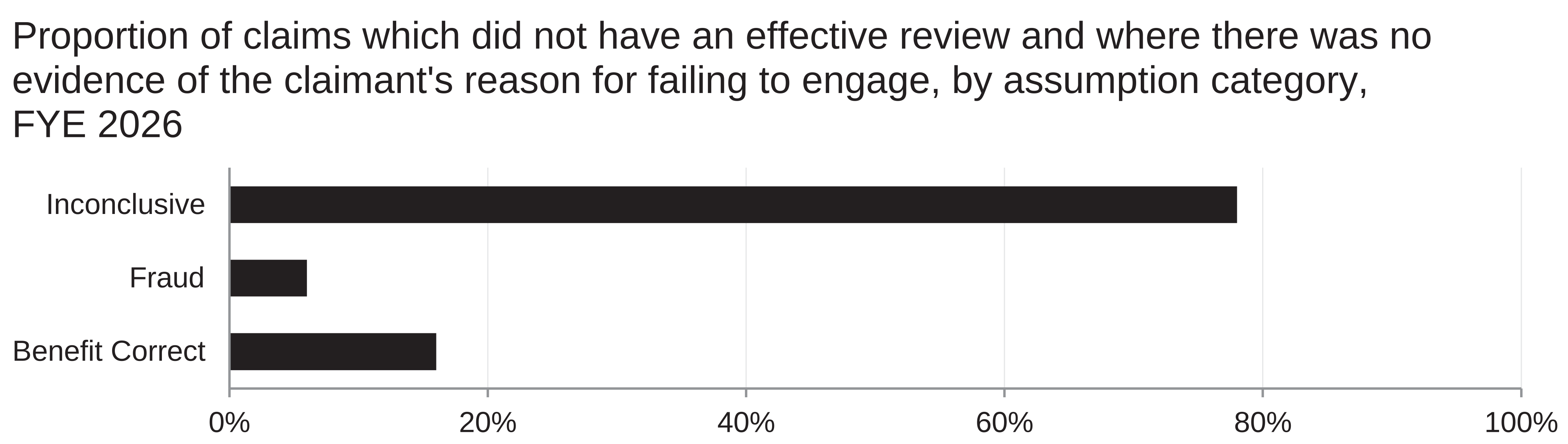
FYE 2026 estimates of the breakdown of claims that did not have an effective review, and where there was no evidence of the claimant’s reason for failing to engage, by benefit and assumption categorisation.
| Fraud Rate (%) | Fraud Value (£m) | Not Fraud Rate (%) | Not Fraud Value (£m) | Inconclusive Rate (%) | Inconclusive Value (£m) | |
|---|---|---|---|---|---|---|
| Attendance Allowance | 0.0 | 0 | 0.1 | 10 | 0.8 | 70 |
| Carer’s Allowance | 0.0 | 0 | 0.2 | 10 | 0.7 | 30 |
| Disability Living Allowance | 0.0 | 0 | 0.0 | 0 | 0.2 | 20 |
| Employment and Support Allowance | 0.0 | 0 | 0.0 | 0 | 0.6 | 40 |
| Housing Benefit | 0.1 | 10 | 0.6 | 80 | 1.7 | 220 |
| Jobseeker’s Allowance | 1.0 | 0 | 0.3 | 0 | 0.3 | 0 |
| Personal Independence Payment | 0.0 | 0 | 0.1 | 20 | 0.3 | 100 |
| Pension Credit | 0.0 | 0 | 0.1 | 0 | 1.9 | 120 |
| State Pension | 0.0 | 0 | 0.0 | 0 | 0.1 | 100 |
| Universal Credit | 0.1 | 100 | 0.1 | 60 | 0.5 | 410 |
| Total | 0.0 | 120 | 0.1 | 190 | 0.4 | 1,100 |
Notes to Appendix 3
- For Employment and Support Allowance, Attendance Allowance, Jobseeker’s Allowance and Carer’s Allowance, the last measured Cannot Review rates were applied to the expenditure for FYE 2026.
Nearly 4 in 5 of the Cannot Review claims where there was no evidence of the claimant’s reason for failing to engage were categorised as Inconclusive.
ISBN: 978-1-78659-919-3