Football-related arrests, banning orders: 2025 to 2026 domestic season
Published 23 July 2026
Applies to England and Wales

© Crown copyright 2026
This publication is licensed under the terms of the Open Government Licence v3.0 except where otherwise stated. To view this licence, visit nationalarchives.gov.uk/doc/open-government-licence/version/3 or write to the Information Policy Team, The National Archives, Kew, London TW9 4DU, or email: psi@nationalarchives.gov.uk.
Where we have identified any third party copyright information you will need to obtain permission from the copyright holders concerned.
This publication is available at https://www.gov.uk/government/statistics/football-related-arrests-banning-orders-2025-to-2026-domestic-season/football-related-arrests-banning-orders-2025-to-2026-domestic-season
This release includes data, trends and football club comparisons for the 2025 to 2026 domestic football season (including regulated football matches played in and outside England and Wales). Additional statistics, covering the FIFA World Cup 2026 held in the summer of 2026, and any revisions to the domestic football season data, will be published in autumn 2026. This release covers:
- football-related arrests and other police actions (arrests and other police actions connected with regulated football matches played in and outside England and Wales during the domestic football season period, including those covered by Schedule 1 to the Football Spectators Act 1989, comparable ‘football-related arrests’ made outside England and Wales, and other offences connected with regulated football matches such as theft (recorded as ‘other’ arrests and police actions))
- football banning orders (a court-imposed order to prevent violence or disorder at, or in connection with, regulated football matches; new football banning orders relate to those orders issued by courts in England and Wales during the domestic football season (1 June 2025 to 31 May 2026 reporting period))
- reported incidents of football-related violence, disorder, anti-social behaviour and harm connected to football (submitted to the United Kingdom Football Policing Unit (UKFPU) by police dedicated football officers (DFOs); these reported incidents relate to supporters of English and Welsh clubs and the national teams playing in England and Wales during the domestic football season, and may include information from organisations such as the Football Association (FA) and Kick It Out)
- online hate and abuse connected to football (offences reported to relevant bodies such as the FA, Union of European Football Associations (UEFA), Kick It Out or the police, that met specific criteria and passed threshold tests during the domestic football season period)
The 2025 to 2026 domestic football season took place between June 2025 and May 2026. It covered the period in which English and Welsh domestic club teams played the majority of their 2025 to 2026 season matches.
The user guide provides additional information on the coverage of the data, quality and methodology, information on the conventions used in the statistics, and relevant legislation.
The accompanying data tables provide supplementary data to this release.
New to this release
Unauthorised entry added to Schedule 1 offences
On 22 March 2026, unauthorised entry to football matches was added to Schedule 1 of the Football Spectators Act 1989. This creates an offence of entering, or attempting to enter, a football match without a valid ticket, including by tailgating and forced entry. It also covers the knowing use of forged tickets or passes, and impersonation of matchday staff. Data on arrests for this offence are included in the 2025 to 2026 domestic season publication for the first time. A football banning order (FBO) can also be made following a conviction for this offence.
Sexism and misogyny, and violence against women and girls included in reported incidents at football matches
Incidents of sexism and misogyny, and violence against women and girls at football matches have been included in the 2025 to 2026 domestic season publication for the first time. This development follows the creation of the UKFPU’s Safeguarding At Football Events (SAFE) Group which aims to address some of the key issues and safeguarding risks within football. For more information see the user guide.
1. Summary of statistics
1.1 Football-related arrests and other police actions
During the 2025 to 2026 domestic football season, there were 1,963 football-related arrests and other police actions relating to regulated football matches played in England and Wales. This was a decrease of 2% (-40) compared with equivalent matches in the 2024 to 2025 domestic football season.
On 22 March 2026, unauthorised entry was added to Schedule 1 of the Football Spectators Act 1989, and therefore arrests and other police actions could be made in relation to this offence from this date.
In total, 45 arrests and other police actions were made for unauthorised entry during the 2025 to 2026 domestic football season; excluding this offence, the total number of football-related arrests and other police actions in England and Wales decreased by 4% (-85) compared with the 2024 to 2025 domestic football season.
1.2 Football banning orders
Data taken on 1 June 2026 (at the end of the domestic football season) showed there were a total of 2,460 football banning orders issued in England and Wales that were in force, an increase of 1% compared with 1 June 2025 (2,439). During the 2025 to 2026 domestic football season (1 June 2025 to 31 May 2026), 701 new banning orders were issued. Over a comparable 10-month period (1 August 2025 to 31 May 2026), 568 new banning orders were issued, a 17% decrease compared with the same period in the 2024 to 2025 domestic football season (685).
1.3 Reported incidents
Incidents were reported in relation to 1,644 club and international football matches in England and Wales during the 2025 to 2026 domestic football season. The number of matches with reported incidents increased by 4% (+64 matches) compared with the 2024 to 2025 domestic football season (1,580).
Of the increase, 22 matches involved incidents recorded under the new category of sexism and misogyny (with no other main incident type selected), and 37 involved incidents recorded under the new category of violence against women and girls (with no other main incident type selected). The overall increase was therefore largely driven by the introduction of these new categories.
1.4 Collection of data
User feedback
A public user engagement survey took place between February and March 2025 to gather feedback on official statistics on football-related arrests and banning orders, including data use and publication timeliness. In response, data for the 2024 to 2025 domestic football season (including regulated football matches played in and outside England and Wales) were published earlier than in previous years, shortly after the domestic football season ended. Additional data on summer 2025 international tournaments, along with revisions, were published in November 2025. Going forward, these statistics will be published twice a year rather than once in the autumn.
2. Football-related arrests and other police actions
Statistics on football-related arrests and other police actions were submitted by the 43 territorial police forces in England and Wales, and by the British Transport Police (BTP), to the UKFPU. Within this report, ‘football-related arrests and other police actions’ are for offences under Schedule 1 to the Football Spectators Act 1989 and comparable arrests (as determined by the UKFPU) of English or Welsh supporters made outside England and Wales. These include football-specific offences (such as entering the pitch and throwing missiles inside a stadium) and other violent and public order offences connected with regulated football matches.
Regulated football matches in England and Wales include matches involving English and Welsh clubs in the top 6 levels of men’s English football (Premier League to National League North and South), the Cymru Premier, Women’s Super League and Women’s Super League 2, international matches played in England and Wales, matches such as the UEFA Champions League final, and some associated age group matches (including under 18 and above ).
A person may be arrested or subject to police action at a football match for an offence not included in Schedule 1 to the 1989 Act, for example theft. These arrests are shown as ‘other’ arrests and police actions.
2.1 Football-related arrests and other police action types in England and Wales
During the 2025 to 2026 domestic football season there were 1,963 football-related arrests and other police actions relating to regulated matches played in England and Wales, a 2% (-40) decrease compared with the 2024 to 2025 domestic football season.
On 22 March 2026, unauthorised entry was added to Schedule 1 of the Football Spectators Act 1989, meaning that arrests and other police actions could be made in relation to this offence from this date. In total, 45 arrests and other police actions were made for unauthorised entry during the 2025 to 2026 domestic football season; excluding this offence, the total number of football-related arrests and other police actions decreased by 4% (-85).
Of the 1,963 football-related arrests and other police actions:
- 1,694 were arrests
- 269 were other police actions
- of which: 7 were fixed penalty notices (FPNs), 99 were reported for summons and 163 were voluntary attendance
Excluding other police actions, there was a 1% decrease in arrests relating to matches played in England and Wales.
Of the 1,963 football-related arrests and other police actions, 4 football-related arrests and other police actions were recorded at women’s matches, comprising of 3 arrests and one voluntary attendance.
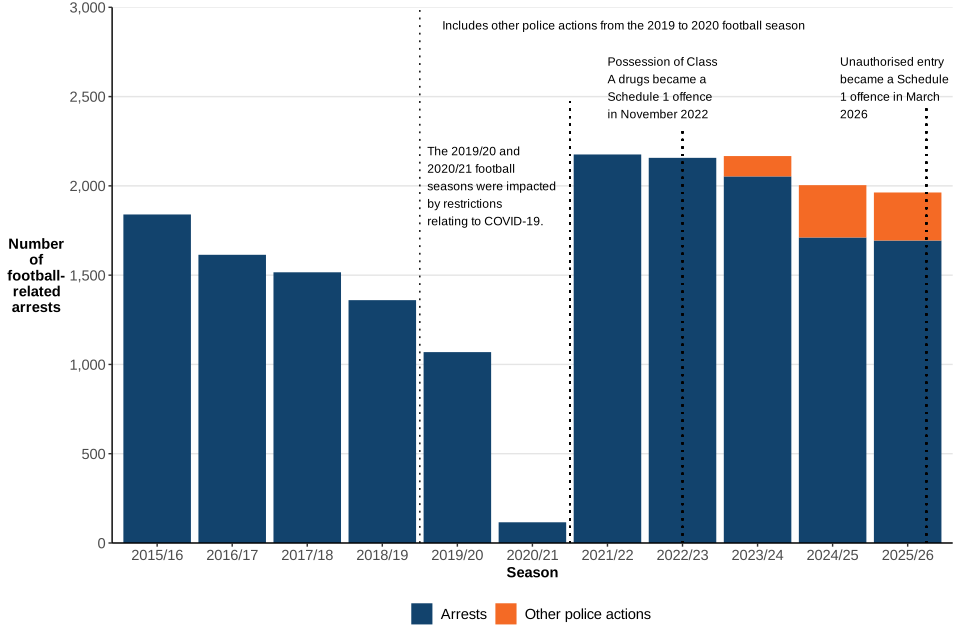
Figure 1 shows comparable football-related arrest figures relating to club and international regulated football matches played in England and Wales during the domestic football season in blue.
Prior to the COVID-19 pandemic, there was a downward trend in football-related arrests and other police actions, with a decrease of 27% over 3 seasons, from 1,895 in the 2015 to 2016 season to 1,381 in the 2018 to 2019 season (before the COVID-19 pandemic). Following the return of spectators to stadia after the pandemic, the number of football-related arrests and other police actions increased to 2,198 in the 2021 to 2022 season and remained at a similar level in the 2022 to 2023 and 2023 to 2024 seasons.
Since then, the number has fallen for 2 consecutive seasons, to 2,004 in the 2024 to 2025 season and to 1,963 in the 2025 to 2026 domestic season.
Figure 1: Football-related arrests and other police actions, from 2015 to 2016 football season to 2025 to 2026 domestic football season, in England and Wales
Source: Home Office, Football-related arrests, banning orders: 2025 to 2026 domestic football season, table 4
Notes:
- Figures include arrests and other police actions relating to all regulated football matches in England and Wales.
- Figures for the 2025 to 2026 domestic football season are as of 1 June 2026. This includes all regulated football matches played in England and Wales during the domestic football season. Follow-up statistics covering international tournaments held in summer 2026 and any revisions to the domestic football season data (for example due to late reporting) will be published in autumn 2026.
- Possession of Class A drugs became a Schedule 1 offence on 10 November 2022 during the 2022 to 2023 season. Prior to 10 November 2022, arrests relating to the possession of Class A drugs were categorised as ‘other’ arrests.
- Unauthorised entry became a Schedule 1 offence on 22 March 2026 during the 2025 to 2026 season.
- Other police actions, such as (FPNs), report for summons and voluntary attendance, were included within the arrest category from the 2019 to 2020 season, and have been separately identifiable since the 2023 to 2024 season.
Just over half (54%; 1,067) of the total football-related arrests and other police actions in the 2025 to 2026 domestic season took place inside football stadia, and the majority of arrests and other police actions were of supporters of clubs in the top 6 tiers in English football (1,814; 92%).
2.2 Football-related arrests and other police actions relating to European club competitions decreased
Of the 1,963 football-related arrests and other police actions in England and Wales:
- 1,812 (92%) related to clubs playing in domestic competitions (including friendlies)
- 136 (7%) related to club matches played in European competitions during the domestic season
- 15 (1%) related to international team matches played during the domestic season
In addition to the 136 football-related arrests and other police actions relating to club matches played in European competitions in England and Wales, there was one additional arrest relating to a match played outside of England and Wales. This compares with 199 arrests and other police actions in England and Wales, and 33 arrests outside England and Wales in the 2024 to 2025 domestic season (all of which related to matches played in the Europa Conference League and Champions League).
There were no arrests related to internationals held outside England and Wales during the domestic season period.
In total there were 1,964 arrests and other police actions inside and outside England and Wales during the 2025 to 2026 domestic season.
Follow-up statistics covering the FIFA World Cup 2026, held in summer 2026, will be published in autumn 2026.
2.3 Most common offence type was public disorder
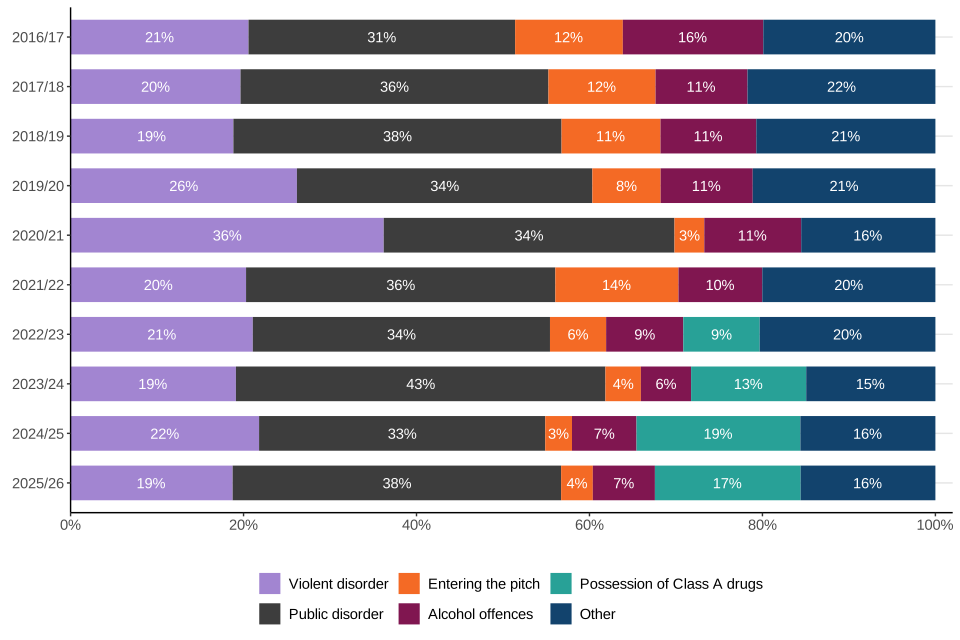
During the 2025 to 2026 domestic football season, the most common football-related arrest and other police action offence types were public disorder (38%), violent disorder (19%), and the possession of Class A drugs (17%), as shown in Figure 2.
Over time, the proportion of arrests and other police actions by offence type has remained relatively stable, with the exception of alcohol offences, which have decreased over time (from 34% in the 2010 to 2011 season to 7% in the 2025 to 2026 domestic football season) and arrests for entering the pitch which have fluctuated over time (with a high of 14% in the 2021 to 2022 season and a low of 3% in the 2024 to 2025 season). Since the possession of Class A drugs became a Schedule 1 offence in November 2022, during the 2022 to 2023 season, the proportion of arrests and other police actions for this offence type has increased from 9% in the 2022 to 2023 season to 17% in the 2025 to 2026 domestic football season, and hit a high of 19% in the 2024 to 2025 season.
Figure 2: Football-related arrests and other police actions by offence type, from 2016 to 2017 football season to 2025 to 2026 domestic football season’
Source: Home Office, Football-related arrests and banning orders: 2025 to 2026 domestic season, table 6
Notes:
- Figures include arrests and other police actions at all regulated football matches played in and outside England and Wales.
- Figures for the 2025 to 2026 domestic football season are as of 1 June 2026. Follow-up statistics covering international tournaments held in summer 2026 will be published in autumn 2026.
- Other includes throwing missiles, racist and indecent chanting, unauthorised entry (became a Schedule 1 offence in March 2026 during the 2025 to 2026 season), unauthorised ticket resale (commonly known as ‘ticket touting’), possession of an offensive weapon, possession of pyrotechnics, failing to comply with the terms of a banning order, criminal damage and other offences against property.
2.4 Highest number of arrests and other police actions - Manchester City supporters
During the 2025 to 2026 domestic football season, there were 1,814 football-related arrests and other police actions involving supporters of clubs in the top 6 tiers in English football, a 3% decrease compared with the 2024 to 2025 domestic season (1,861). Excluding unauthorised entry, the total number of football-related arrests and other police actions decreased by 5% (-90) compared with the 2024 to 2025 domestic season.
Away supporters accounted for a slightly higher proportion of arrests and other police actions (53%; 955) than home supporters (46%; 836).
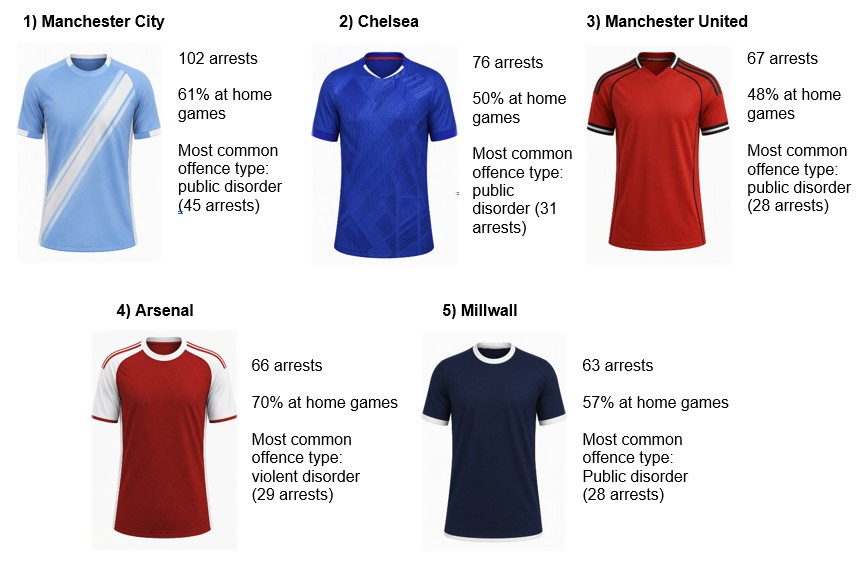
The club with the highest number of supporters arrested or subject to other police actions in the 2025 to 2026 domestic football season was Manchester City, with 102 arrests and other police actions. Chelsea was second, with 76, and Manchester United third, with 67.
Figure 3: Clubs with the highest number of supporters arrested or subject to other police actions, 2025 to 2026 domestic football season
Source: Home Office, Football-related arrests and banning orders: 2025 to 2026 domestic season, table 5
Notes:
- The number of arrests shown include other police actions.
In the 2025 to 2026 domestic football season, Manchester United had the largest decrease in the number of supporters arrested or subject to other police actions compared with the 2024 to 2025 season (-60; -47%). This follows a large increase in the number of arrests and other police actions in the 2024 to 2025 season (+39; +44% compared with the 2023 to 2024 season).
Portsmouth had the largest increase in arrests and other police actions compared with the 2024 to 2025 season (from 16 to 55 arrests and other police actions).
2.5 Arrest and other police actions rate for the 2025 to 2026 domestic football season was 4 per 100,000 attendees
During the 2025 to 2026 domestic football season, around 48 million people attended men’s regulated football matches in and outside England and Wales (including the top 5 divisions of men’s English football, FA Cup, League Cup, Football League Trophy, Champions League, Europa League, Europa Conference League and Internationals).
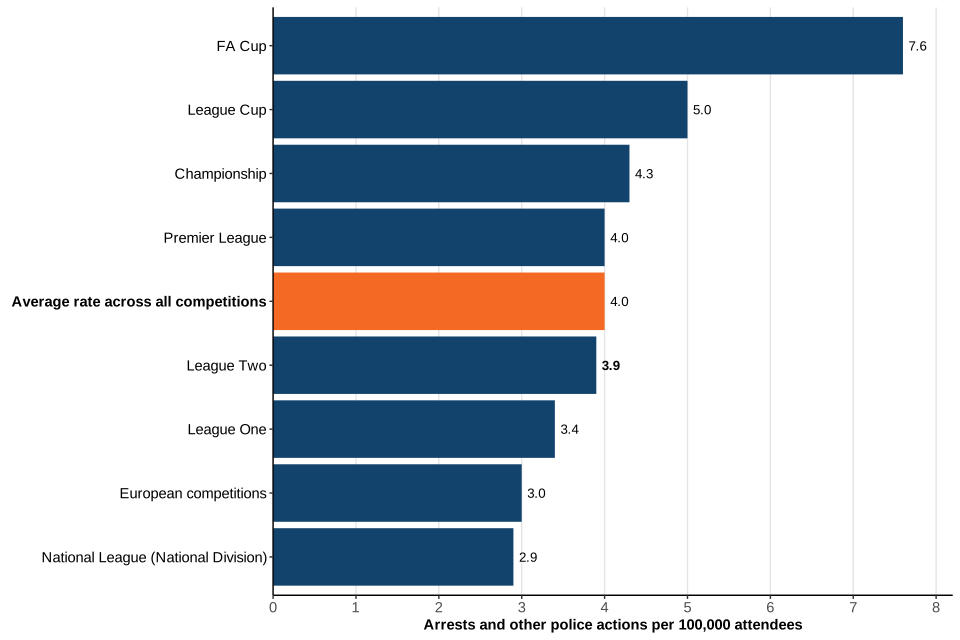
With 1,908 arrests and other police actions relating to these matches, the rate for the 2025 to 2026 domestic football season was 4.0 per 100,000 attendees, compared with 4.2 per 100,000 attendees in the 2024 to 2025 season.
Arrests and other police actions relating to FA Cup matches had the highest competition rate, at 7.6 arrests and other police actions per 100,000 attendees. National League (National Division) matches had the lowest rate of 2.9 per 100,000 attendees.
Figure 4: Football-related arrests and other police actions rate per 100,000 attendees by competition, 2025 to 2026 domestic football season
Source: Home Office, Football-related arrests and banning orders: 2025 to 2026 domestic season, table 10; attendance figures from Transfermarkt.com, BBC Sports and Sky Sports.
Notes:
- Figures include arrests relating to all regulated football matches in and outside England and Wales during the 2025 to 2026 domestic football season. Follow-up statistics covering international tournaments held in summer 2026 will be published in autumn 2026.
- Does not include other competitions which include the Community Shield, Under-21 internationals and domestic pre-season friendlies, or women’s regulated football matches.
- Chart does not include competitions with less than 30 arrests.
- Due to the earlier publication of figures for the 2025 to 2026 football season, ‘The Football Yearbook’ previously used for the attendance data was not available at the time of publication. Attendance figures were therefore obtained from Transfermarkt.com, BBC Sports and Sky Sports.
2.6 Ninety-nine football-related arrests and other police actions by BTP
During the 2025 to 2026 domestic football season, there were 99 football-related arrests and other police actions under Schedule 1 to the Football Spectators Act 1989 reported by the BTP in connection with regulated football matches in England and Wales. This compares with 106 in the 2024 to 2025 football season. Of the 99 football-related arrests and other police actions recorded in the 2025 to 2026 domestic season, 2 were recorded at women’s football matches.
The most common BTP offence types were public disorder (55%; 54 arrests and other police actions), violent disorder (24%; 24) and alcohol offences (17%; 17). Public disorder has been the most common offence type for BTP arrests and other police actions in all previous seasons since the data collection began (excluding the 2020 to 2021 season which was impacted by COVID-19). For more information on football-related arrests and other police actions by the BTP see the user guide.
2.7 ‘Other’ arrests and police actions
A person may be arrested at a football match for an offence not covered by Schedule 1, for example possession of Class B drugs (such as cannabis) or theft. These arrests are described in the data as ‘other’ arrests and police actions.
From 22 March 2026, unauthorised entry was added to Schedule 1 of the Football Spectators Act 1989. Such behaviour resulting in arrests or other police action was previously recorded as ‘other’ arrests.
In the 2025 to 2026 domestic football season, there were 255 ‘other’ arrests in connection with regulated matches in England and Wales (including those by the BTP), including one related to a women’s football match. This compares with 331 in the 2024 to 2025 football season (-23%). The way in which ‘other’ arrests are recorded means that it is not possible for these to be published by offence type. For more information see the user guide.
3. Football banning orders
Football banning orders in England and Wales help prevent violence or disorder at, or in connection with, regulated football matches. An individual with a banning order is prevented from attending all regulated matches in the UK and may be required to hand over their passport to the police before overseas regulated matches and tournaments. Banning orders are issued by courts in England and Wales either following a conviction for a football-related offence, or following a complaint by a local police force, BTP, or the Crown Prosecution Service (CPS). A football banning order lasts for between 3 and 10 years. In cases where the individual does not receive a custodial sentence for the relevant offence, the maximum duration is 5 years; if the individual receives a custodial sentence the maximum duration is 10 years. For more information, see the user guide.
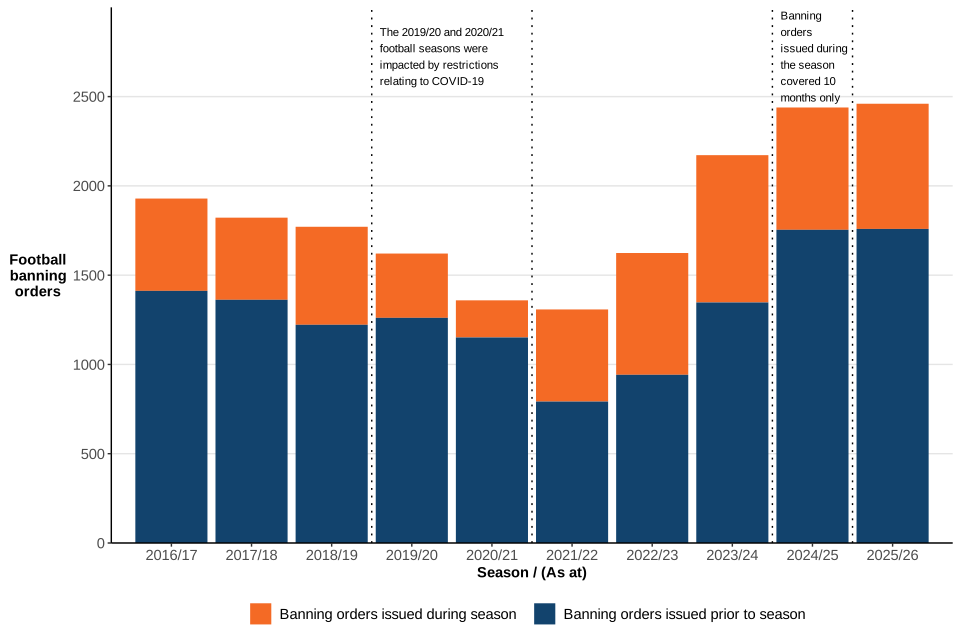
Data on new football banning orders was previously collected over a 12-month period from 1 August to 31 July, with figures reported as at 1 August. In response to user feedback, the end date for the 2024 to 2025 data collection was brought forward to 31 May to enable the publication of data shortly after the end of the domestic football season. As a result, data for that season covers a 10-month period (1 August 2024 to 31 May 2025) rather than a full 12 months. From the 2025 to 2026 season onwards, data are collected over a 12-month period, from 1 June 2025 to 31 May 2026. Comparisons between the 2025 to 2026 and 2024 to 2025 seasons are therefore based on the equivalent 10-month period (1 August to 31 May) to ensure consistency.
3.1 Highest number of football banning orders in force since 2012
Data taken on 1 June 2026 showed there were a total of 2,460 football banning orders issued in England and Wales that were in force at the end of the 2025 to 2026 domestic football season. This was an increase of 1% compared with the end of the 2024 to 2025 season (2,439) and the highest number in force since the end of the 2011 to 2012 season (2,731).
During the 2025 to 2026 domestic football season (1 June 2025 to 31 May 2026), 701 new banning orders were issued. Over the comparable 10-month period (1 August 2025 to 31 May 2026), 568 new banning orders were issued, a 17% decrease compared with the same period in the 2024 to 2025 domestic football season (685).
Figure 5: Number of football banning orders in force in England and Wales, 2016 to 2017 football season to 2025 to 2026 domestic football season
Source:
Home Office, Football-related arrests and banning order statistics, 2025 to 2026 domestic season, table 1
Notes:
- Extraction dates of new banning order data varied slightly year-on-year. See the data tables for data extraction dates.
- Previously, data on new football banning orders issued were collected from 1 August to 31 July, with total banning orders in force at the end of the season reported as at 1 August. From the 2024 to 2025 domestic football season onwards, data on new football banning orders issued were collected from 1 June to 31 May, with total banning orders in force at the end of the season reported as at 1 June.
An individual can have multiple bans. Therefore, the number of bans is not equal to the number of individuals who have a ban.
3.2 Most football banning orders issued to males and those aged 18 to 34
Of the 2,460 football banning orders in force on 1 June 2026, almost all (99.4%; 2,446) were issued to males. Around 60% (1,480) were issued to those aged between 18 and 34, and 3% (75) to those aged 17 and under.
3.3 West Ham United supporters continue to have the highest number of football banning orders in force
At the end of the 2025 to 2026 domestic football season, West Ham United supporters had the highest number of football banning orders issued in England and Wales that were in force (121) across all football clubs, ranking top for the third consecutive year. Chelsea supporters had the second highest number (86) and Manchester United supporters had the third highest number (84). As banning orders last between 3 and 10 years, movement in this ranking is slow. The 5 clubs with the highest number of football banning orders in force are shown in Table 1.
Table 1: Clubs with the highest number of football banning orders in force at the end of the season, 2025 to 2026 and 2024 to 2025 domestic football seasons
| Football club | 2025 to 2026 domestic season | 2025 to 2026 domestic season | 2024 to 2025 domestic season | 2024 to 2025 domestic season |
|---|---|---|---|---|
| Football banning orders in force | Ranking | Football banning orders in force | Ranking | |
| West Ham United | 121 | 1 | 112 | 1 |
| Chelsea | 86 | 2 | 80 | 3 |
| Manchester United | 84 | 3 | 108 | 2 |
| Manchester City | 82 | 4 | 76 | 4 |
| Liverpool | 81 | 5 | 62 | 8 |
Source: Home Office, Football-related arrests and banning order statistics, 2025 to 2026 domestic season, football banning order detailed datasets
Notes:
- Data on the number of supporters of individual clubs are not available on a comparable basis; therefore, it is not possible to calculate rates or proportions of supporters who are subject to a football banning order.
During the 2025 to 2026 domestic football season, Liverpool (37), Everton (31) and West Ham United (30) supporters were issued the highest number of new football banning orders.
Football banning orders are imposed by courts and may be issued in a different season to when the related offence happened. As a result, some orders recorded in a given season may relate to arrests made in an earlier season. For example, an individual arrested during the 2024 to 2025 football season would be included in that season’s arrest figures, but a football banning order may not be made until later. This means the football banning order would appear in a future season’s statistics.
4. Reported incidents at football matches
Reported incidents include football-related violence, disorder, anti-social behaviour and harm, and association with risk groups. These incidents relate to regulated football matches played in England and Wales and do not necessarily constitute criminal offences. Reports of incidents are submitted to the UKFPU by police DFOs and may be informed by information from partner organisations such as the FA and Kick It Out.
Figures in this section relate to the number of football matches where incidents were reported, not the number of individual incidents. Multiple incidents may be reported at each match. The way that DFOs entered incident data onto the system changed during the 2023 to 2024 season, from selecting options about the match as a whole on one screen to a more detailed recording of the events that occurred over multiple screens, and therefore it is possible there was under recording of some categories within matches identified as having multiple incident types during the 2023 to 2024 season as recording practices adjusted.
Incidents of sexism and misogyny, and violence against women and girls at football matches have been included in the 2025 to 2026 season publication for the first time. This development follows the creation of the UK Football Policing Unit’s (UKFPU) Safeguarding At Football Events (SAFE) Group which aims to address some of the key issues and safeguarding risks within football. For more information see the user guide.
4.1 Incidents reported at half of football matches
As of 1 June 2026, 3,136 regulated football matches involving men’s English and Welsh clubs and the national teams had been played in the 2025 to 2026 domestic football season in England and Wales (excluding National League North and South matches).
Of the 3,136 matches, incidents were reported at half of these (1,564; 50%). This compares with 3,092 matches played in the 2024 to 2025 domestic football season, of which 1,552 had incidents reported (50%).
In addition to the above matches, incidents were reported at 67 National League North and South matches. There were also 13 women’s regulated football matches with reported incidents, which compares to 11 matches in the 2024 to 2025 season.
In total there were 1,644 matches with reported incidents, which was an increase of 4% (+64 matches) compared with the 2024 to 2025 season (1,580). Of the increase, 22 matches involved incidents recorded under the new category of sexism and misogyny (with no other main incident type selected), and 37 involved incidents recorded under the new category of violence against women and girls (with no other main incident type selected). The overall increase was therefore largely driven by the introduction of these new categories. Previously, some incidents of sexism and misogyny may have been recorded under ‘inappropriate chanting’ which may explain the 23% (-27) decrease in this category.
4.2 Most matches with incidents were categorised as low severity
A post-match incident report assessment is made after each relevant regulated football match and allocates a low, medium or high severity category to each match depending on the severity of incidents that happened before, during and after the match.
In the 2025 to 2026 men’s domestic season, of the matches with incidents reported, there were 1,061 matches with low severity incidents (65%), 411 matches with medium severity incidents (25%) and 159 matches with high severity incidents (10%). Compared with the 2024 to 2025 domestic football season, there were decreases in matches with low severity incidents (-114; -10%), and increases in matches with medium severity incidents (+123; +43%) and high severity incidents (+53; +50%). The increase in high severity incidents may have been driven in part by the increase in organised or pre-planned incidents (+33), which by their nature are more likely to be categorised as high severity.
Of the 13 women’s matches with reported incidents, 12 were recorded as low severity and one was recorded as medium severity.
4.3 Most common incidents involved non-risk supporters and youth supporters
Figures on reported incidents are available by type of incident and by type of supporter. More than one incident type may be reported at each match, so the total number of reported incident types is greater than the number of matches where an incident was reported.
The most common incident types reported were hate crime (at 491 matches), throwing missiles (at 359 matches) and pyrotechnics (at 316 matches).
The most commonly reported incidents involved non-risk supporters (where supporters were not considered a risk in terms of violence or disorder at the match; at 558 matches). This was an increase of 30% (+129) compared with the 2024 to 2025 season.
There were 425 matches involving spontaneous incidents (for example supporters engaging in disorder which is not organised or pre-planned), and 516 matches where public order or anti-social behaviour incidents involving youth supporters were recorded (these involve supporters aged 18 or under, in planned or spontaneous incidents, at or in connection with, a football event). The increase in incidents involving youth supporters is likely due to improved reporting procedures.
Hate crime incidents were reported in relation to 491 matches; 356 related to race, 144 to sexual orientation, 28 to religion, 14 to disability and 3 to gender identity.
Incidents of sexism and misogyny, and violence against women and girls at football matches have been included in the 2025 to 2026 season publication for the first time. There were 63 matches where incidents of violence against women and girls were reported and 75 matches where incidents of sexism and misogyny were reported.
For more information on reported incidents at football matches, see Tables 11 to 13.
5. Online hate and abuse connected to football
From 1 July 2022, football-related online hate and abuse was added to Schedule 1 to the Football Spectators Act 1989, and statistics on these have been included within this publication since the 2021 to 2022 release. This is the fifth annual publication of these statistics and the second year that ‘in development’ has been removed from the official statistics label. This indicates that the development stage of the statistics has ended, and that:
- feedback demonstrates that the statistics are useful and credible
- the statistical methods involved in analysing the data are now well established
- the quality and coverage limitations are known and the impact of these are understood
Online hate and abuse connected to football is defined by the UKFPU as any electronic communication directed towards a player, manager, coach, club, football authority, match official or football personality, where there is a clear link to football and the content demonstrates hostility, prejudice or abuse directed at an individual or group. This may include content relating to race, disability, nationality, sexual orientation, religion, transgender identity, tragedy chanting and other forms of abuse. Incidents that are included have met specific criteria and passed a series of ‘threshold tests’ relating to the content of the post, the time and place it occurred, and the evidence available. See the CPS guidance on hate crime offences involving communications and the user guide for more information.
During the 2025 to 2026 domestic season, there were 405 online hate crimes and abuse incidents recorded in connection with football. Of these, 387 related to men’s and 18 related to women’s football.
In the 2024 to 2025 domestic season there were 234 online hate crimes and abuse incidents recorded in connection with football (201 related to men’s and 33 related to women’s football).
For more information see the ‘online hate and abuse connected to football’ section of the user guide.
‘Football-related arrests and banning order statistics’ is an official statistics output produced to the highest professional standards and free from political interference. It has been produced by statisticians working in the Home Office Analysis and Insight Directorate in accordance with the Home Office’s ‘Statement of compliance with code of practice for statistics’ which covers policies on revisions and other matters. The Home Office Chief Statistician and Head of Profession for Statistics reports to the National Statistician with respect to all professional statistical matters, oversees all Home Office official statistics products with respect to the Code of Practice for Statistics and is responsible for their timing, content and methodology.
6. Forthcoming and previous statistical releases
Frequency of football-related arrests and banning order statistics related to the domestic football season: Annual
Additional statistics, covering international tournaments (for example the FIFA World Cup and European competitions) held in the summer, and any revisions to the domestic football season data, will be published in the autumn on an annual basis.
Publications are pre-announced on the Home Office statistics release calendar.
Previous statistical releases are available on the football-related arrests and banning orders statistics collection page.
7. Feedback and enquiries
Home Office statistical practice is regulated by the Office for Statistics Regulation (OSR). OSR sets the standards of trustworthiness, quality and value in the Code of Practice for Statistics that all producers of official statistics should adhere to. You are welcome to contact us directly at PolicingStatistics@homeoffice.gov.uk with any comments about how we meet these standards. Alternatively, you can contact OSR by emailing regulation@statistics.gov.uk or via the OSR website.
Home Office responsible statistician: Jenny Bradley
We are always looking to improve the accessibility of our documents. If you have any problems or feedback relating to accessibility, or general questions about this publication, please email us at PolicingStatistics@homeoffice.gov.uk.
Press enquiries: 0300 123 3535