Family Court Statistics Quarterly: July to September 2025
Published 18 December 2025

© Crown copyright 2025
This publication is licensed under the terms of the Open Government Licence v3.0 except where otherwise stated. To view this licence, visit nationalarchives.gov.uk/doc/open-government-licence/version/3 or write to the Information Policy Team, The National Archives, Kew, London TW9 4DU, or email: psi@nationalarchives.gov.uk.
Where we have identified any third party copyright information you will need to obtain permission from the copyright holders concerned.
This publication is available at https://www.gov.uk/government/statistics/family-court-statistics-quarterly-july-to-september-2025/family-court-statistics-quarterly-july-to-september-2025
1. Main Points
| Increase in the number of cases started in the family courts | 67,844 new cases started in Family courts in July to September 2025, up 2% on the same quarter in 2024. This was due to increases in most case types: domestic violence (11%), private law (11%), financial remedy (7%) and public law (1%) cases. However, there was a decrease in matrimonial matters (7%) and adoption (3%) case starts. |
| On average, care proceedings took less time than in the same quarter last year with more disposals within 26 weeks | The average time for a care or supervision case to reach disposal was 37 weeks in July to September 2025, down 3 weeks compared to the same quarter in 2024. 39% of cases were disposed of within 26 weeks - up 4 percentage points compared to the same period in 2024. |
| Private law (Children Act) cases were disposed quicker | The average time for Children Act private law cases to be disposed was 36 weeks during July to September 2025, down around 4 weeks compared to the same period in 2024. |
| There were 26,153 divorce applications under the no fault divorce legislation this quarter | Between July to September 2025 there were 26,153 divorce applications made, down 7% compared to the same period in 2024, including those for dissolution of civil partnerships. |
| Increase in both domestic violence remedy orders applied for and orders made | The number of domestic violence remedy orders applied for was 9,849, an increase of 13% compared to the equivalent quarter in 2024, while the number of orders made increased by 6% to 9,756 over the same period. |
| Decrease in the number of both adoption applications and orders | In July to September 2025 there were 934 adoption applications, down 3% on the equivalent quarter in 2024. The number of adoption orders issued decreased by 14% to 920. |
| Increase in deprivation of liberty applications and orders made under the Mental Capacity Act 2005 | There were 2,257 applications under the Mental Capacity Act 2005 relating to deprivation of liberty in July to September 2025, up 6% on the equivalent quarter in 2024. Orders increased by 21% to 5,828 in the latest quarter compared to the same period last year. |
| Decrease in time taken for probate grants issued | Probate grants took approximately 5 weeks (mean average) to be issued after the application was submitted during July to September 2025, down around 2 weeks on the equivalent quarter in 2024. The number of probate applications was 60,132 a decrease of 1% over the same period. |
This publication presents statistics on activity in the family courts of England and Wales and provides figures for the latest quarter (July to September 2025). For further information and technical details please refer to the accompanying Guide to Family Court Statistics.
For feedback related to the content of this publication, please let us know at familycourt.statistics@justice.gov.uk
2. Data Improvements
Financial remedy timeliness: This metric has been reintroduced, following a period of pausing that series. Further information on this is given in the ‘Methodology changes’ section below.
Forced marriage and female genital mutilation protection orders: Information on FM/FGM protection orders was previously sourced from the HMCTS Performance database (OPT), and more recently with a data quality warning. To improve data quality, we have extracted this data from the FamilyMan database – as a result some breakdowns (such as applicant type) are no longer available.
3. Data Quality Issues
The rollout of reform in family courts introduced a new data management system, Core Case Data (CCD), to collect family data. As each service area undergoes reform, existing cases stay on the legacy system FamilyMan (FM) until they are disposed or closed, while new cases are recorded on CCD with some key details copied back to FM.
Most recently, family private law (including domestic violence remedy data) started this reform process and work has been completed to combine both FM and CCD. However, additional work is required to process all data required for this bulletin. Several data series have been paused whilst this additional work is completed. The series that remain paused are:
- The number of children involved in private law applications by order type (Table 3)
- The number of private law cases starting in the High Court (Table 7)
- Private law timeliness to final order (Table 9)
- Applicant and respondent legal representation for private law and domestic violence cases (Tables 10 and 11)
These series will be reinstated as soon as possible when the work is complete.
Please also note that application events and disposals made have been discontinued as this related directly to the way these aspects were entered onto the legacy system Familyman. CCD works differently and so this data no longer exists for private law cases (including domestic violence remedy cases). (Tables 2 and 15) Data for divorce hearings for Q2 (Apr-Jun) 2022 onwards (Tables 11 and 13) has recently been made available and will be reinstated when resource permits.
4. Methodology changes
We have revised the timeliness metrics for both private law and financial remedy in this bulletin (Table 10).
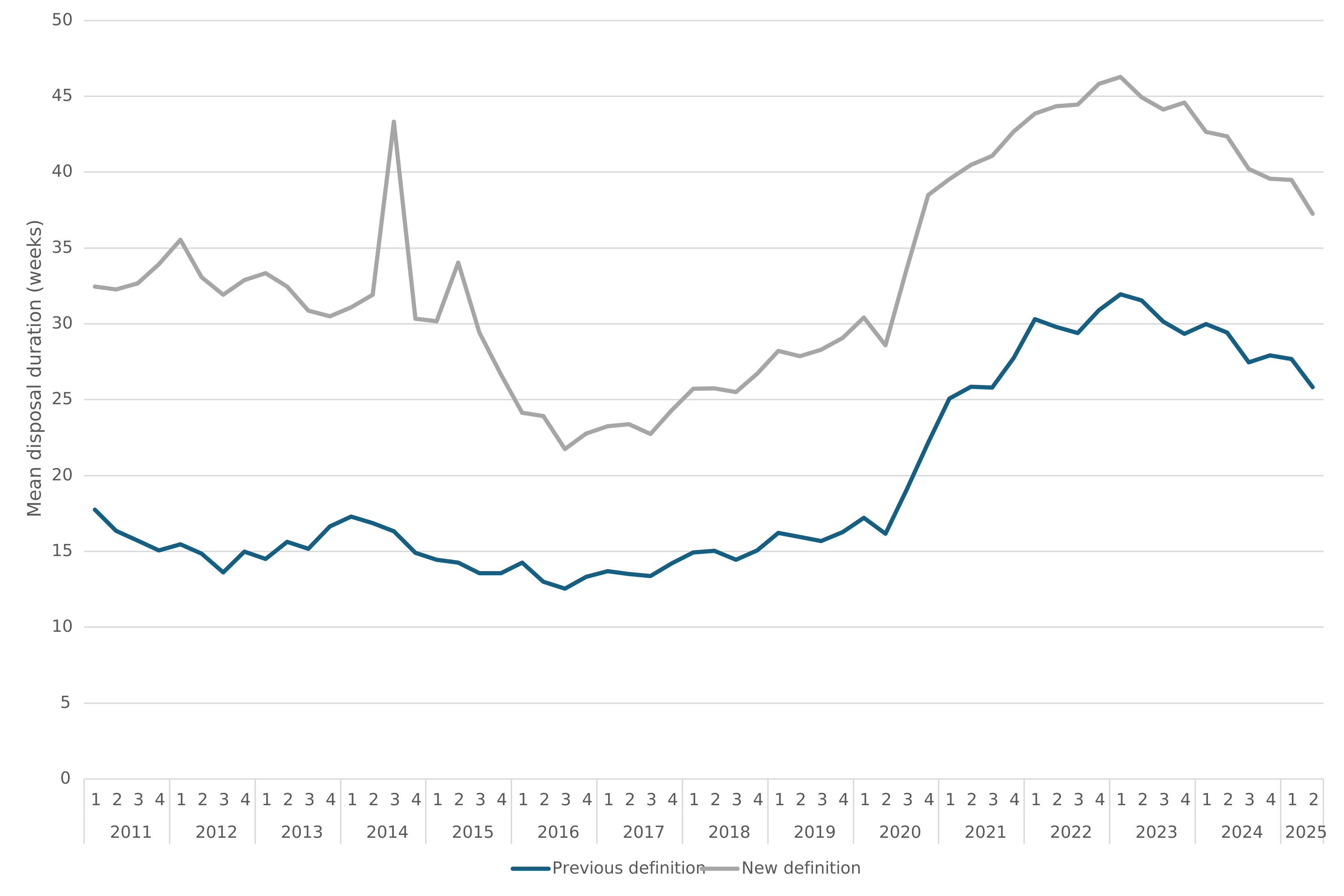
Private law: Previously, the time was calculated for every child and for every order that child was subject to. We have now moved to a more straightforward case-level measure that looks at the average number of weeks from application to disposal for all cases closed in the period referred to (for both care & supervision and public law timeliness metrics). This definition aligns with that used in the management information published by HMCTS and better matches the experience of the court user. This follows a similar amendment to public law timeliness in the Q2 2024 publication following data amalgamation.
The series has been backdated in the tables that accompany this bulletin. The chart below demonstrates the differences between the original and new definitions – whilst the new series are a step change from the original definition, the general trends are similar. Any comparisons made in this and future bulletins use the same definitions.
We will review the methodology of this metric with HMCTS and policy colleagues to ensure that it remains fit for purpose.
Figure A: Mean disposal duration for Private Law Cases comparing the previous definition to the new definition, January to March 2011 to April to June 2025 (Source: Table 10)
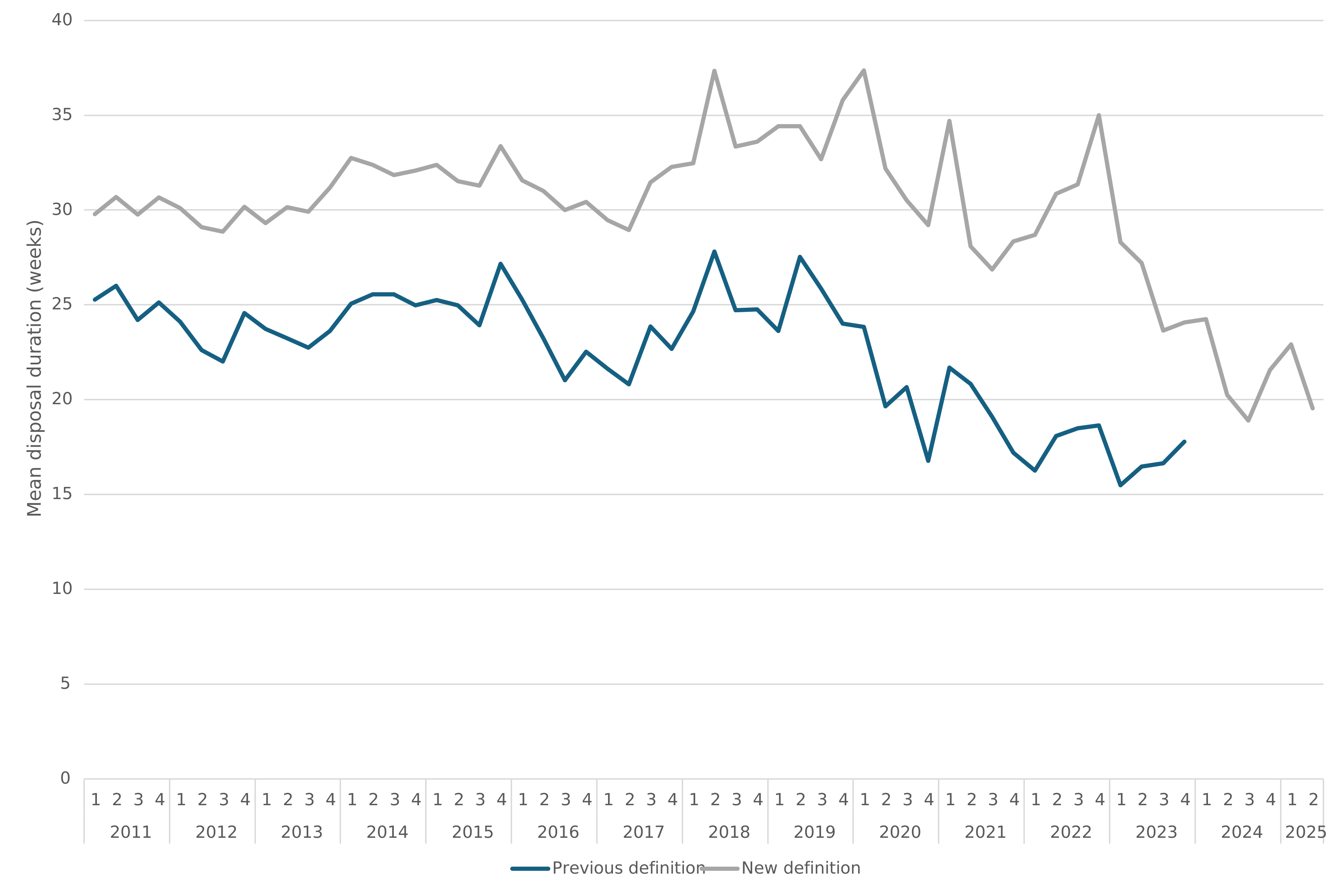
Financial remedy: Previously, the time was calculated from the application date to the first disposal in that case. To better align with both operational and policy focus, we have now moved to look at the time to the final order in that case. This results in a longer duration, as demonstrated in the chart below, with additional time being considered between the first disposal and final order.
As above, the series has been backdated in the tables that accompany this bulletin and any comparisons made in this and future bulletins use the same definitions.
Figure B: Mean disposal duration for Financial Remedy Cases comparing the previous definition to the new definition, January to March 2011 to April to June 2025 (Source: Table 10)
We welcome any feedback from users on the contents of this note, if you want to comment please contact as on familycourt.statistics@justice.gov.uk
5. Statistician’s comment
During July to September 2025, an increased number of cases started for most areas, including domestic violence and private law, compared to the equivalent period last year. However, the number of cases disposed for matrimonial matters and adoption decreased during this period.
Data on public law cases shows that care proceedings showed more disposals within the 26-week timeframe, and private law cases were also disposed of quicker compared to the same period last year.
Time taken for probate grants to be issued improved compared to the equivalent quarter in 2024.
6. Overview of the Family Justice System
Increases in both the number of cases started and cases disposed in Family Courts
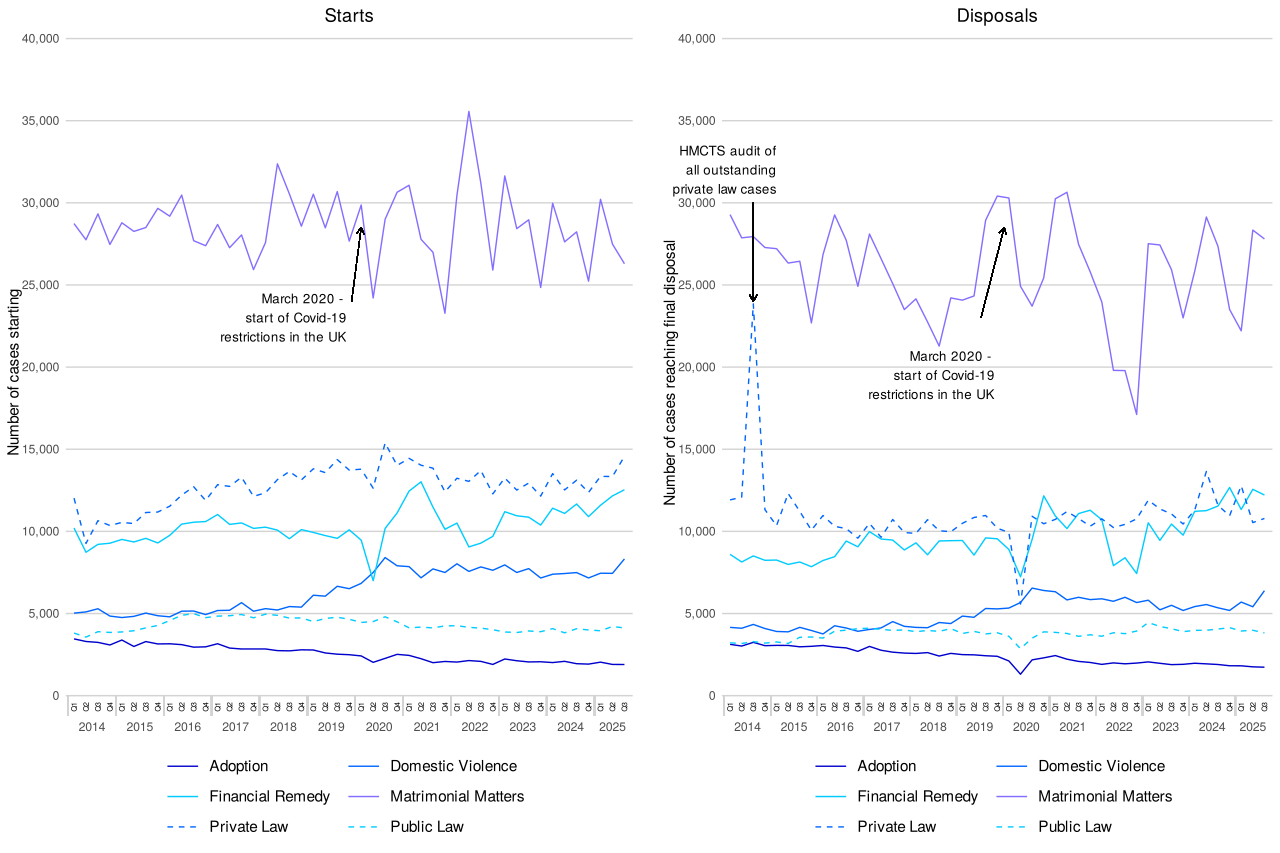
In July to September 2025, 67,844 new cases started in family courts, up 2% on the equivalent quarter in 2024. This was due to increases in most case types: domestic violence (11%), private law (11%), financial remedy (7%) and public law (1%) cases. However, there was a decrease in matrimonial (7%) and adoption (3%) case starts.
There were 62,867 case disposals in July to September 2025, up 2% on the equivalent quarter of 2024. This was driven by increases in domestic violence (19%), financial remedy (6%) and matrimonial (2%) cases. However, there was a decrease in adoption (9%), private law (7%) and public law (6%) case disposals. (Table 1)
Figure 1: Cases started and disposed, by case type, January to March 2014 to July to September 2025 (Source: Table 1)
In July to September 2025, 39% of new cases within family courts related to matrimonial matters, down 4 percentage points from the equivalent quarter of 2024.
Timeliness by Case Type
The mean average time for divorce cases (under the no fault divorce law) to reach first disposal was just over 36 weeks, up 3 weeks compared to the equivalent quarter in 2024. Private law cases took less time, with the mean average time to disposal in July to September 2025 taking 36 weeks, down around 4 weeks compared to the same period in 2024. (Tables 10, 10b)
Public and private law cases – number of parties
The vast majority of private law cases involve one applicant (96%) and one respondent (95%) only (Table 6). However, for public law cases whilst nearly all cases have only one applicant, 81% involve two or more respondents.
HMCTS monthly management information
The statistics in this publication focus on the period between July to September 2025; however, monthly management information (MI) has been published by HMCTS that covers up to October 2025. https://www.gov.uk/government/statistical-data-sets/hmcts-management-information-october-2025. This MI is subject to the data quality issues associated with extracting data from large live administrative case management systems. Late reporting of cases and regular updating of case details, which can lead to the figures being updated to manage the case - more recent figures may therefore be subject to larger revisions and should be treated with greater care and considered provisional.
7. Children Act - Public Law
Increase in the number of public law case starts and decrease in the number of cases disposed
There were 4,120 public law cases starting in July to September 2025, up 1% compared to the equivalent quarter in 2024. Cases disposed were down 6% to 3,822 (Table 2).
Average time for care proceedings decreased
The average time for a care and supervision case to be disposed was 37 weeks in July to September 2025, down 3 weeks from the same quarter in 2024. 39% of these care proceedings were disposed of within the 26-week limit introduced in the Children and Families Act 2014, up 4 percentage points from the same period last year (Table 8).
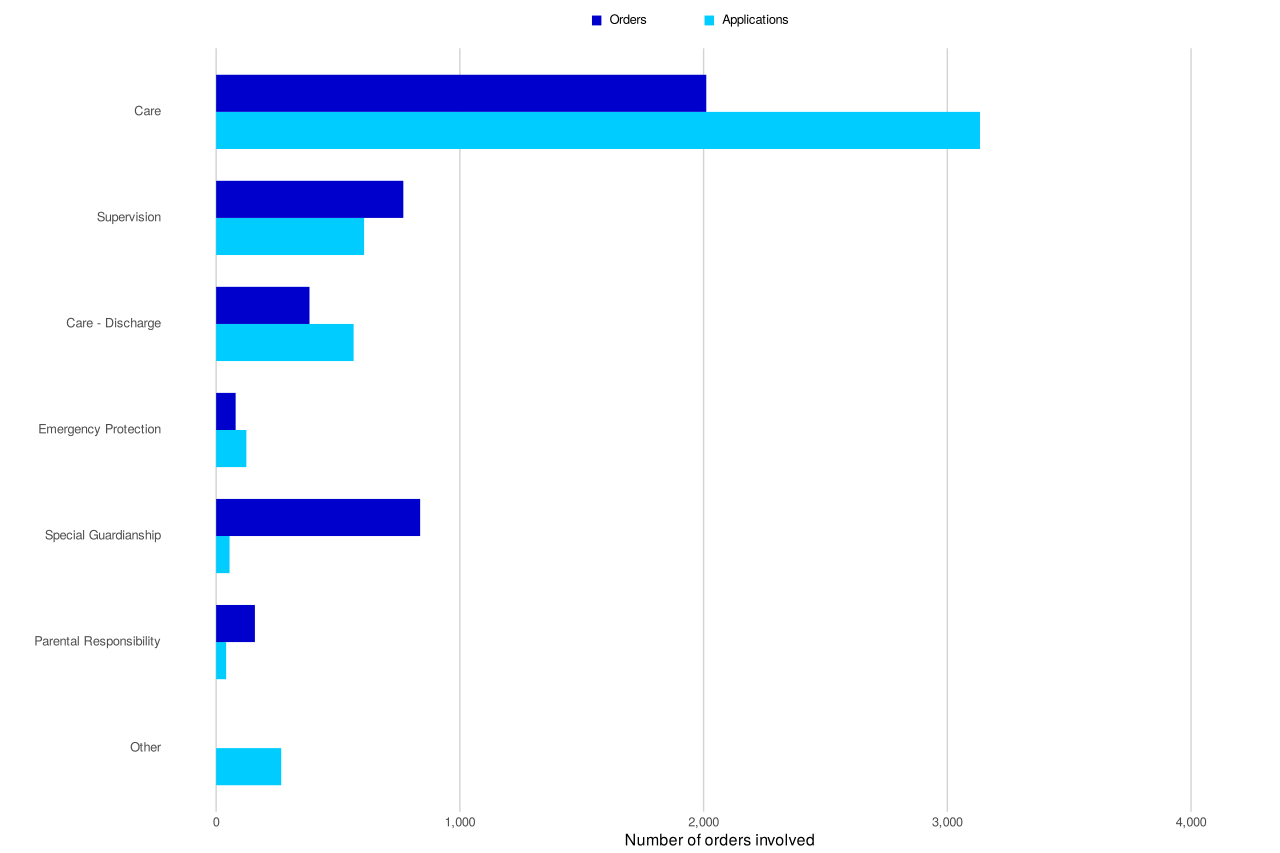
There were 7,123 individual children involved in new public law applications in July to September 2025, up 4% on the same quarter in the previous year, while the number of orders applied for increased by 3%. In July to September 2025, public law care applications made up 66% of public law orders applied for (3,134) (Figure 2).
Figure 2: Public law applications and orders made by order type, July to September 2025 (Source: Table 3-4)
Open caseload
There were 10,234 total open public law cases at the end of September 2025, similar to the open caseload at the end of September 2024. 67% (6,818) of the open caseload at the end of September 2025 had been open for less than 26 weeks, whereas 181 cases (2%) had been open for 90 weeks or longer.
8. Children Act - Private Law
Increase in the number of private law case starts and decrease in the number of cases disposed
The number of private law cases[footnote 1] started increased by 11% (to 14,565) in July to September 2025 compared to the equivalent quarter in 2024.
The number of private law cases disposed of during July to September 2025 was down 7% in the equivalent quarter in 2024 (Table 2).
There were 28,909 new private law orders applied for in July to September 2025, up 15% on the equivalent quarter in 2024, with 21,711 individual children involved in these applications.
The number of private law orders made in July to September 2025 was 28,498, down 7% on the equivalent quarter in 2024.
Timeliness of Private law cases
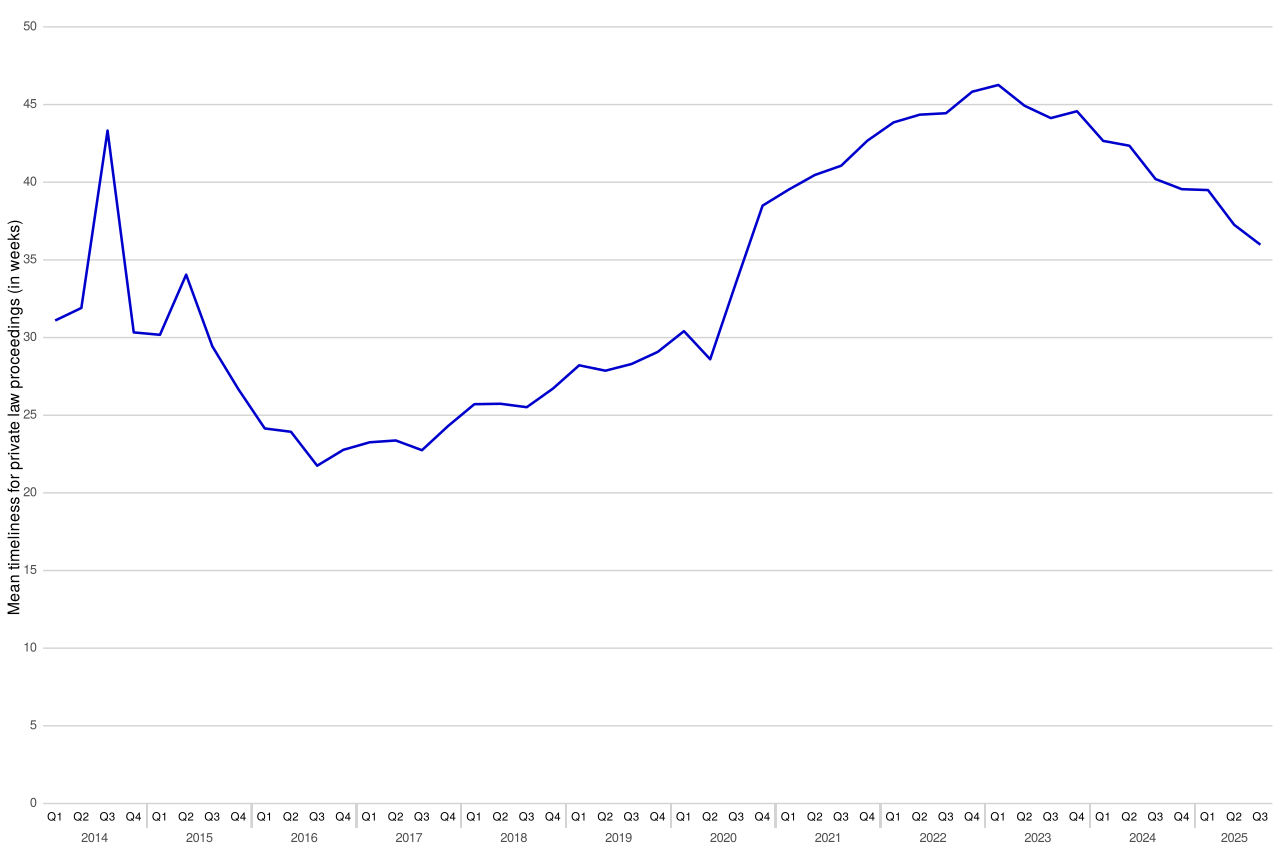
In July to September 2025, it took on average 36 weeks for private law cases to be disposed, down 4 weeks from the same period in 2024 (Table 10).
Figure 3: Private law timeliness to case disposal in the family court, January to March 2014 to July to September 2025 (Source: Table 10)
9. Legal Representation
Cases with legal representation take longer on average In general, cases where either both parties or the respondent only had legal representation took longer to be disposed of than those cases where only the applicant was represented or where both parties were without legal representation (Table 10).
Legal representation in private law cases
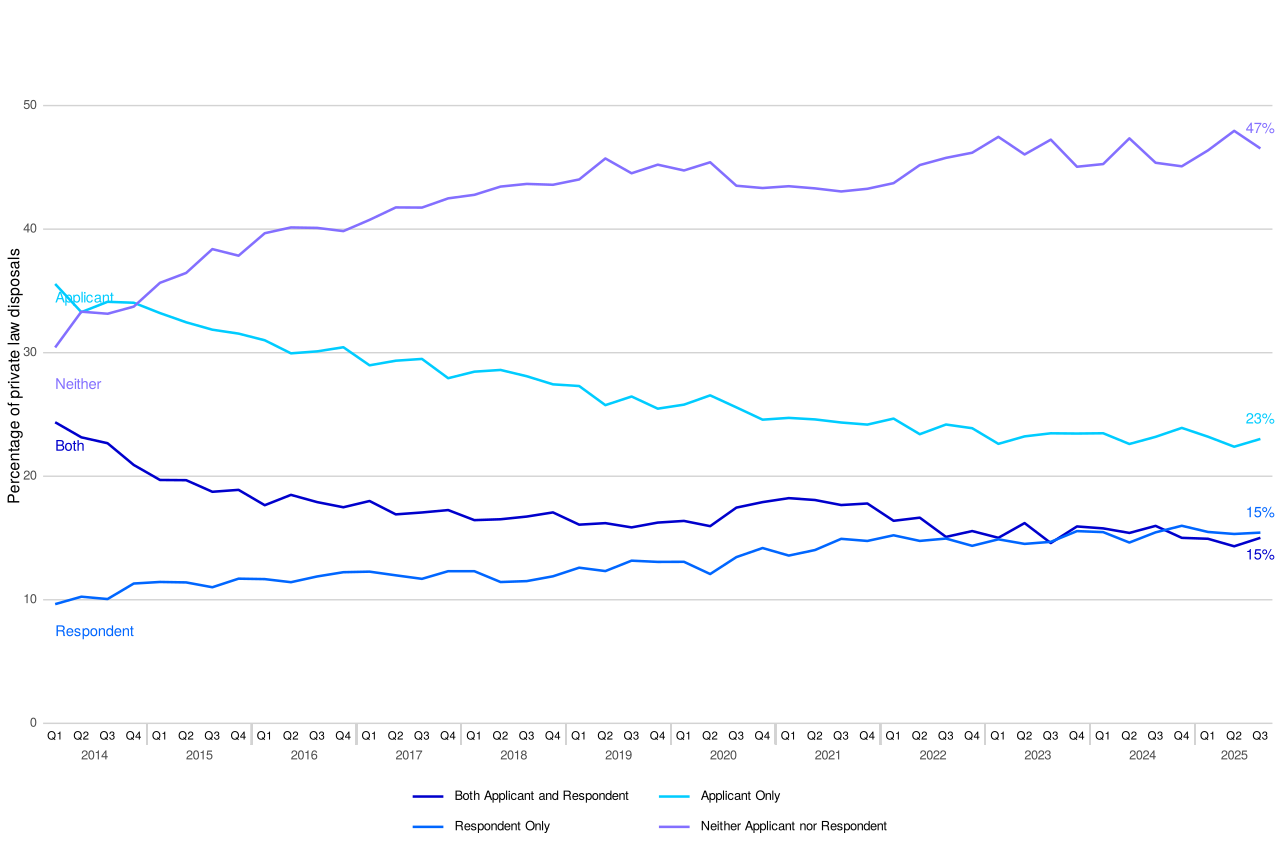
The implementation of the LASPO Act led to a shift in the proportion of private law cases involving legal representation[footnote 2],[footnote 3]. More recently, the proportions have been relatively stable - in July to September 2025, the proportion of disposals where neither the applicant nor respondent had legal representation was 47%, up 1 percentage point between July to September 2024.
Correspondingly, the proportion of cases where both parties had legal representation was 15% in July to September 2025, down 1 percentage point compared to the same period in 2024 (Figure 4).
Figure 4: Proportion of private law disposals by type of legal representation of the parties, January to March 2014 to April to June 2025 (Source: Table 10)
The proportion of parties with legal representation in cases with at least one hearing varies by case type and range from around 84% for public law cases to 3% for adoption cases, with figures subject to change as new cases progress (Table 11).
10. Divorce
There were 26,153 divorce applications made between July to September 2025 under the ‘no fault divorce’ (NFD) legislation
Between July to September 2025 there were 26,153 applications made (Table 12b). This was a decrease of 7% from the same quarter in 2024. There were 27,683 final orders granted in July to September 2025 up 2% compared to the same quarter in 2024 (across both no fault divorce and prior legislation) (Table 12).
Increase in the average time for all divorce proceedings
In July to September 2025, the mean average time from application to conditional order was 40 weeks, up 3 weeks from the same quarter of 2024 (Table 12).
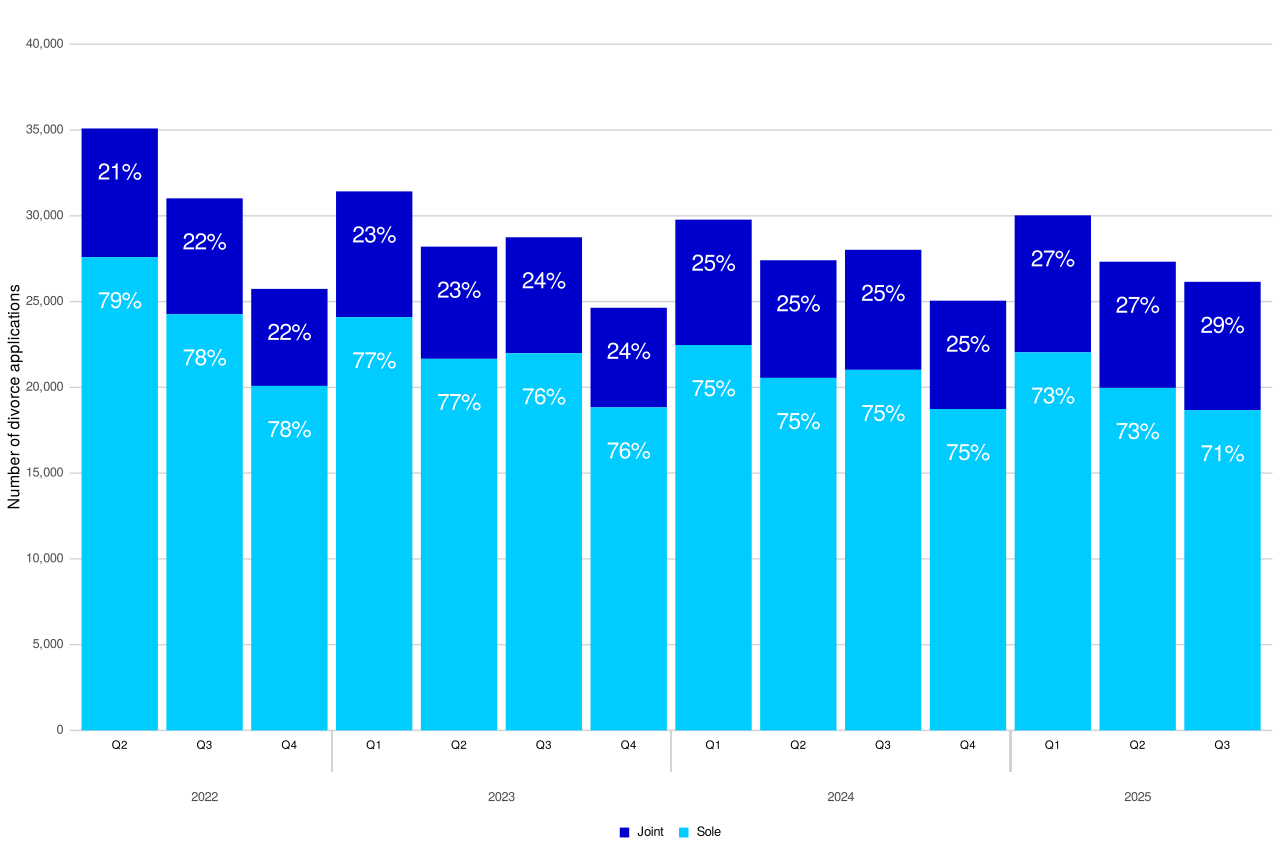
There were 26,153 divorce applications made during July to September 2025 (71% from sole applicants, 29% from joint applicants) (Table 12b), down by 7% from the same quarter in 2024. There were 27,683 final orders granted in July to September 2025, up 2% compared to the same quarter in 2024 (across both no fault divorce and prior legislation) (Table 12).
Timeliness of divorce cases
The mean average time from the date of application to conditional order was 40 weeks, up 3 weeks from the same period in 2024. The mean average time from application to final order was 67 weeks, up 5 weeks from the equivalent quarter in 2024.
The mean timeliness figures can be inflated when historical cases reach decree nisi/conditional order or decree absolute/final order. These historical cases have less effect on the median timeliness, which may act as a better indicator for the length of current divorce proceedings. In July to September 2025, the median time to conditional order was 28 weeks and 42 weeks to final order.
Please note that, due to the mandatory waiting period between applying for divorce and applying for the conditional order (CO), this means that any NFD cases started would have had to have waited at least 20 weeks before getting to the CO stage. For cases applied for under the old law, our timeliness measure will represent a dwindling number of cases and reflect the tail end of cases applied for some time ago, and so this measure will be relatively high and will increase over time (and represent fewer cases) until all cases applied for under the old law are dealt with.
Sole and Joint divorce cases
For sole divorce cases, there were 18,674 applications made during July to September 2025 (71% of the total, down 4 percentage points from the same period of 2024). The average time to conditional order for July to September 2025 for these cases was 38 weeks, and 58 weeks from application to final order.
For joint divorce cases, there were 7,479 applications made during July to September 2025 (29% of the total, up 4 percentage points from the same period of 2024). The average time to conditional order for July to September 2025 for these cases was 32 weeks, and 50 weeks from application to final order.
Figure 5: Divorce applications made between Q2 2022 to Q3 2025, by applicant type (Source: Table 12b)
11. Financial Remedy
Increase seen in financial remedy applications and disposals events
In July to September 2025, the number of financial remedy applications was up 7% and the number of disposal events was up 6% compared to the same period in 2024 (Table 14).
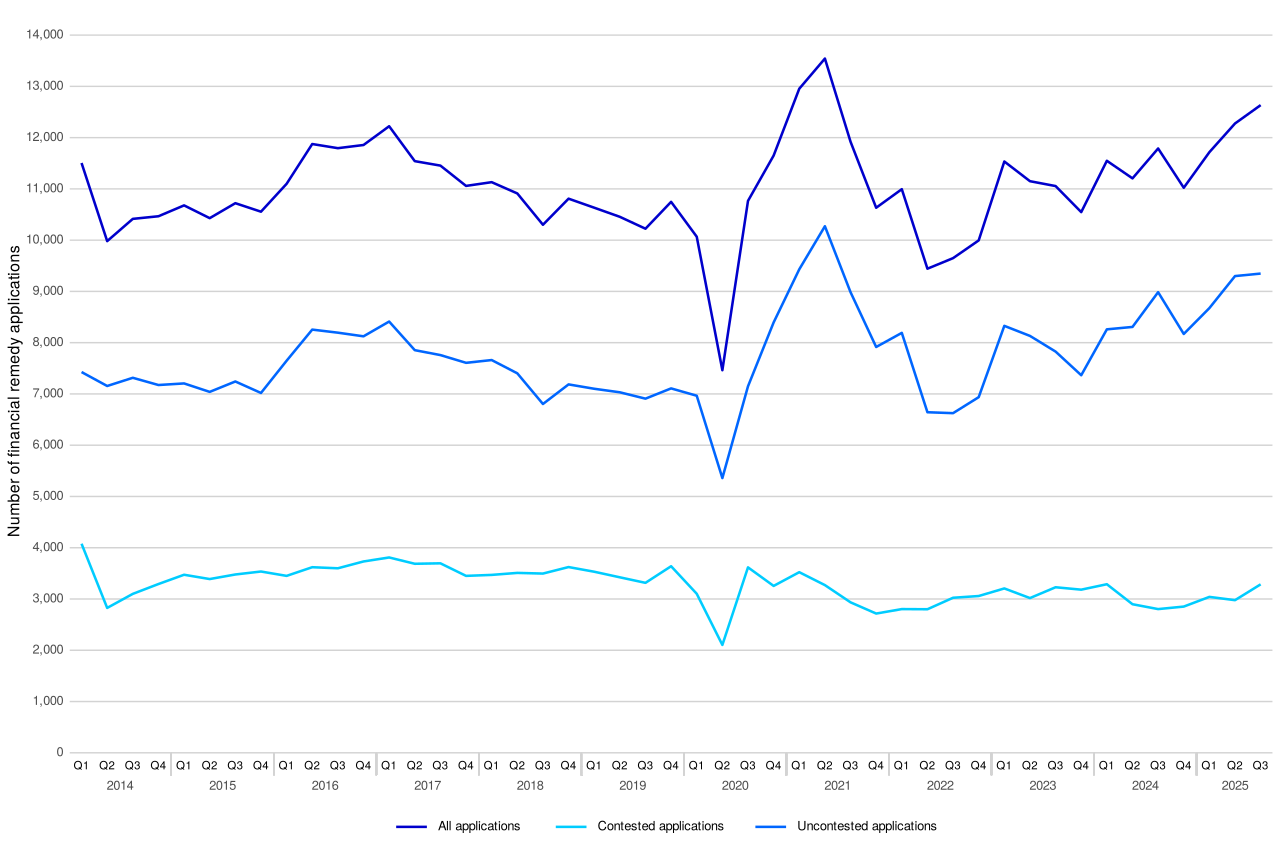
There were 12,634 financial remedy applications made in July to September 2025, up 7% from the same period in 2024, while there were 12,268 financial remedy disposals events, up 6% compared with a year earlier. During the latest quarter, 74% of applications were uncontested and 26% were contested.
Figure 6: Applications for financial remedy orders, January to March 2014 to July to September 2025 (Source: Table 14)
12. Domestic Violence Remedy Orders
Increase in both the number of domestic violence remedy orders applied for and orders made.
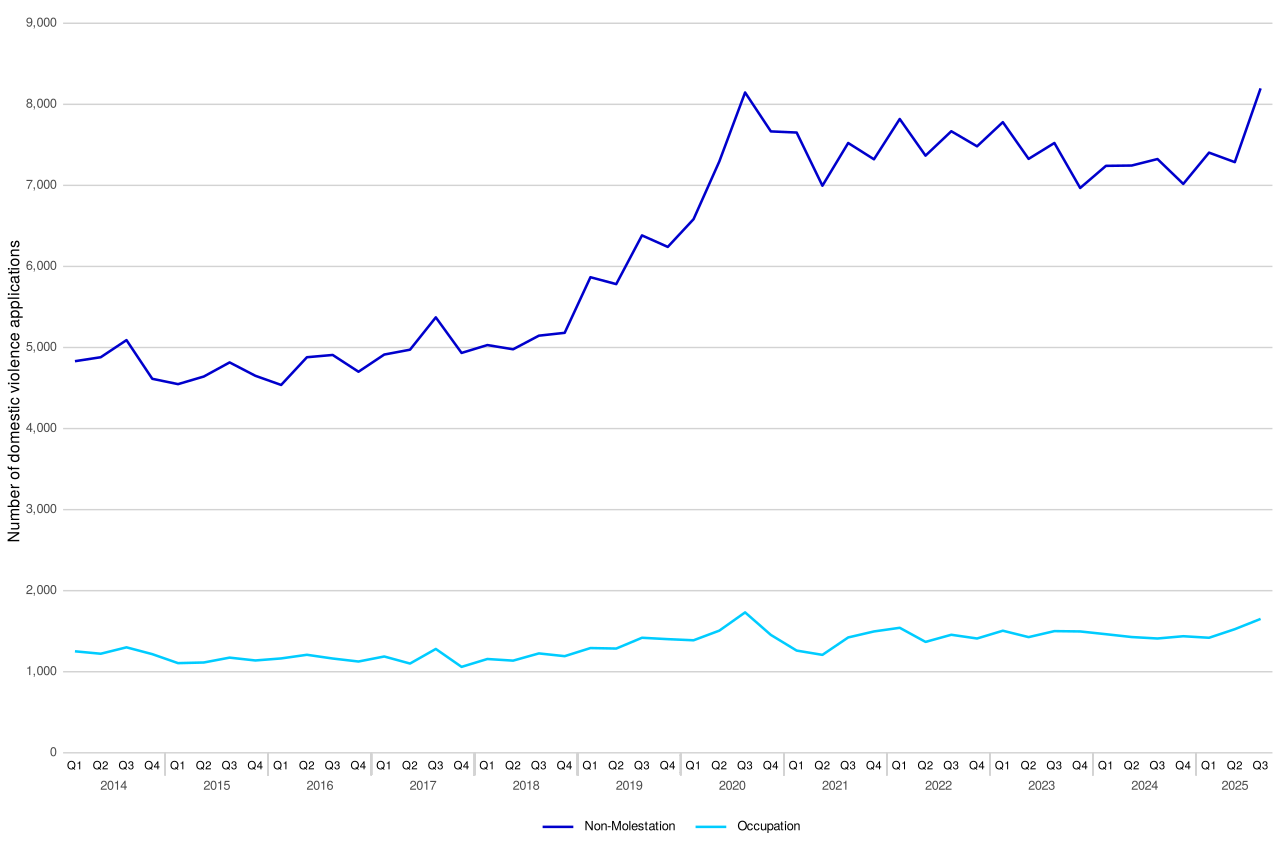
In July to September 2025, there was a 13% increase in orders applied for compared to the equivalent quarter in 2024. The number of orders made increased by 6% over the same period. The overall picture highlights a longer-term increase in the number of orders applied for, with the number in the latest quarter. (Table 15).
In July to September 2025, 9,849 orders applied for. Most of the orders requested were non-molestation orders (83%) compared to occupation orders (17%); these proportions have remained relatively consistent in recent years. Applications for non-molestation and occupation orders in July to September 2025 were both up, by 12% and 17% respectively, compared to the same period in 2024.
There were 9,756 domestic violence orders made in July to September 2025, up 6% from the same period last year. 94% were non-molestation orders and 6% were occupation orders, with both non-molestation orders and occupation orders up by 6% compared to the equivalent quarter in 2024.
Figure 7: Applications for domestic violence remedy orders, January to March 2014 to July to September 2025 (Source: Table 15)
13. Forced Marriage Protection Orders and Female Genital Mutilation Protection Orders
Long-term upward trend in the number of forced marriage protection orders and female genital mutilation protection orders (Table 16 and 17)
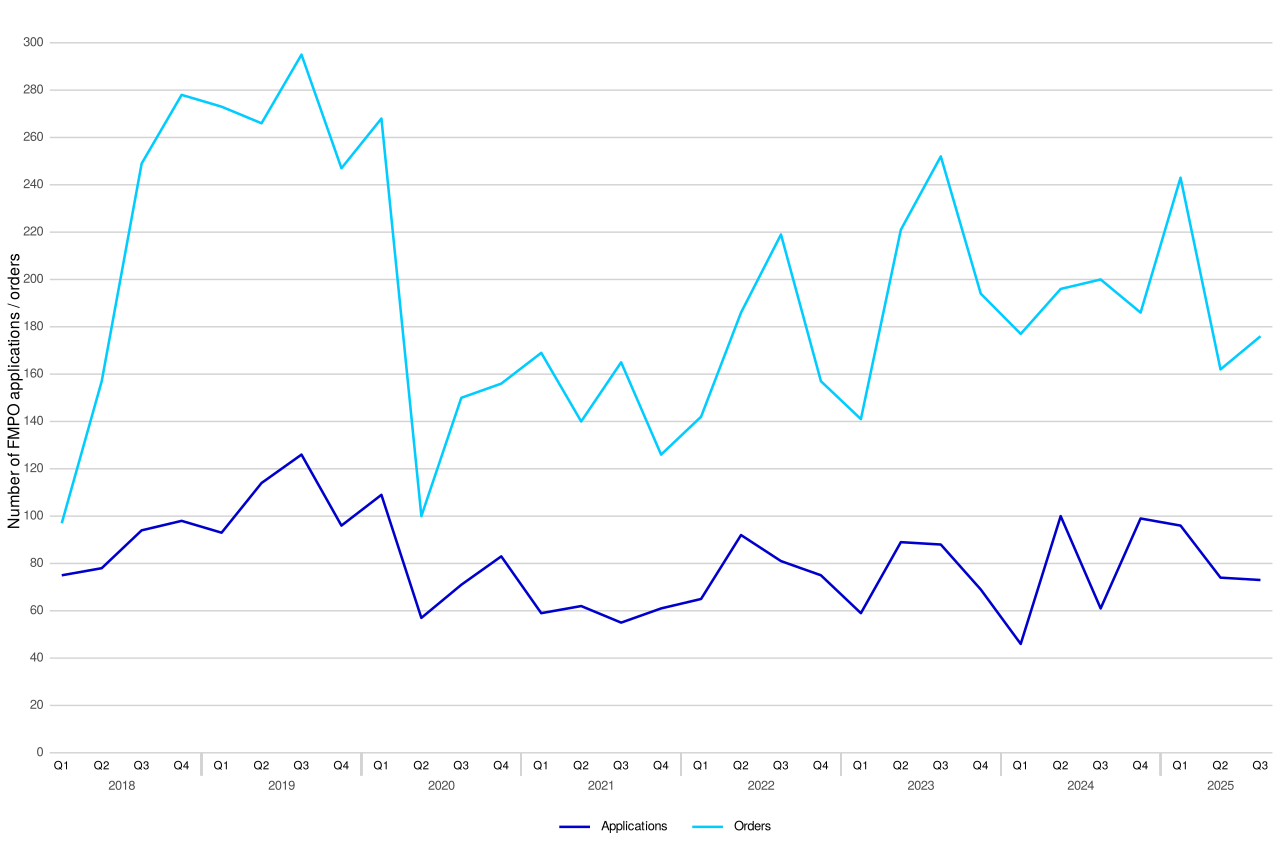
The number of applications and orders made for forced marriage protection orders (FMPOs) is very small. Consequently, numbers fluctuate each quarter but overall, there has broadly been a long-term upward trend from their introduction in November 2008 until the end of 2019 with a less pronounced increase thereafter.
In July to September 2025, there were 73 applications made, up from 61 applications made in the equivalent quarter in 2024. Over the same period, there were 176 orders made (including interim and final orders, along with making variations to existing orders), down 12% since the same period from the previous year.
Historically the numbers of orders made outweigh the number of applications. Often there are multiple orders granted per case, where one application covers more than one person, and an order is granted for each person covered in the application. Interim orders, as well as extensions and increased provision of previous orders can also be granted as new orders for the same person to be protected, without the need for a new application to be submitted.
An increase in the number of orders does not necessarily represent an increase in the prevalence of forced marriage, but potentially it relates to a greater awareness of forced marriage being a crime and the support available. Particularly during 2019 where the government held events with relevant groups (local authorities, police, charities etc.), designed specifically to raise awareness of FMPOs and how they can be used to protect those at risk. In 2020, health education became compulsory across all state-funded schools in England, where Relationship Education is compulsory in primary schools and Relationship and Sex Education (RES) is compulsory in secondary schools to spread awareness of forced marriages.
Figure 8: Applications and orders made for Forced Marriage Protection Orders, January to March 2014 to July to September 2025 (Source: Table 16)
The number of applications and orders made for female genital mutilation protection orders (FGMPOs) is very small, with only 39 applications and 69 orders made (again, including interim orders and variations to existing orders, along with final orders) respectively in July to September 2025 (Table 17). In total, there have been 619 applications and 1,409 orders made up to end of September 2025, since the series began in 2018.
14. Adoptions
Decrease in the number of adoption applications and orders, consistent with the long-term trend showing a fall in adoptions
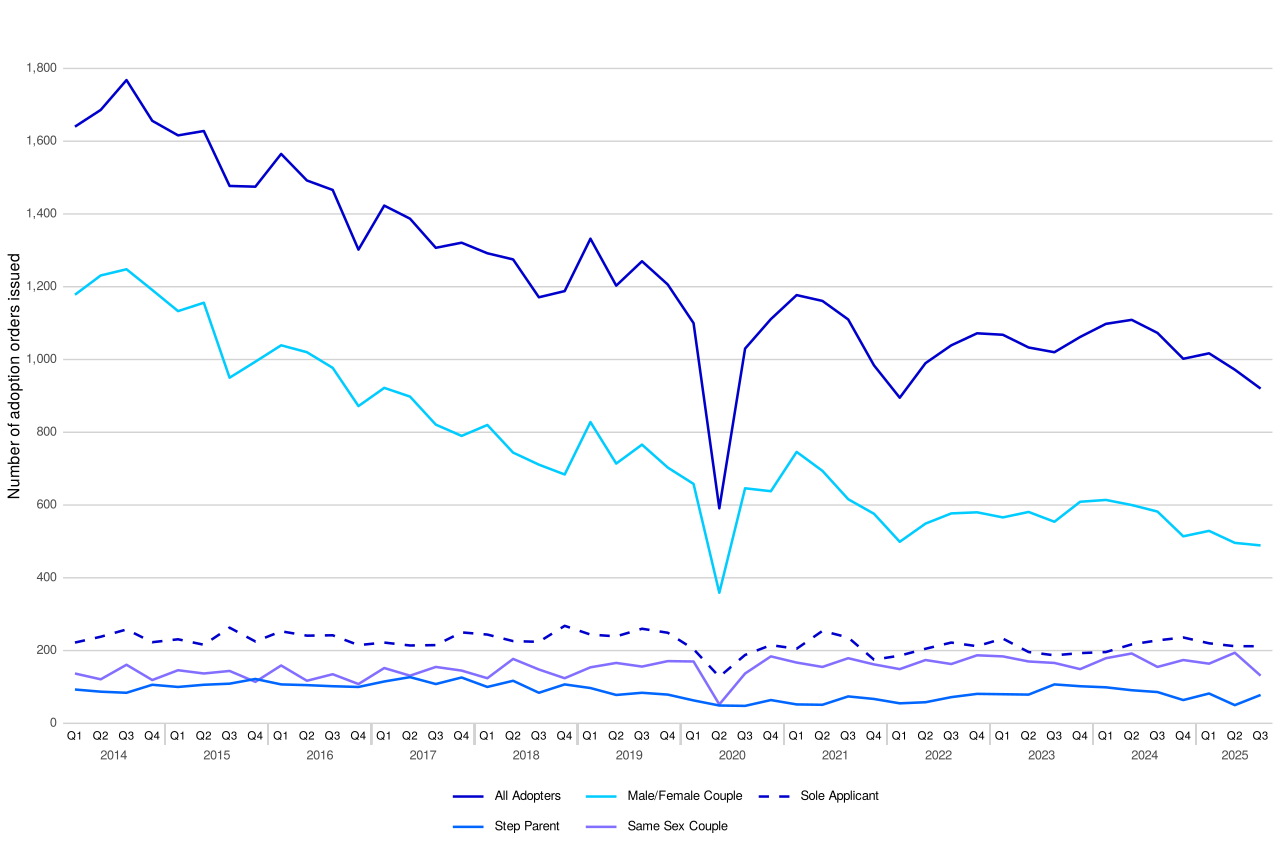
During July to September 2025, there were 934 adoption applications made, down 3% from the equivalent quarter in 2024. Over the same period, the number of adoption orders issued also decreased by 14% to 920 (Tables 18 and 19).
There were 1,880 total disposals in July to September 2025, a decrease of 9% compared to the equivalent quarter in 2024. The chart below shows the trend of adoption orders by the type of adopter. This shows that during July to September 2025, 53% of all adoption orders were issued to mixed-sex couples, 23% to sole applicants, 14% to same-sex couples and 8% to step-parents.
Figure 9: Adoption orders issued, by adopter, January to March 2014 to July to September 2025 (Source: Table 19)
15. Mental Capacity Act - Court of Protection
Increase in both applications and orders made in relation to deprivation of liberty under the Mental Capacity Act 2005
There are two figures related to deprivation of liberty. The first are those made under the Mental Capacity Act 2005 which cover people over 18 and are made by the Court of Protection, and the second refers to the ability of the High Court to make deprivation of liberty orders for people under 18. The figures in this summary refer to the former.
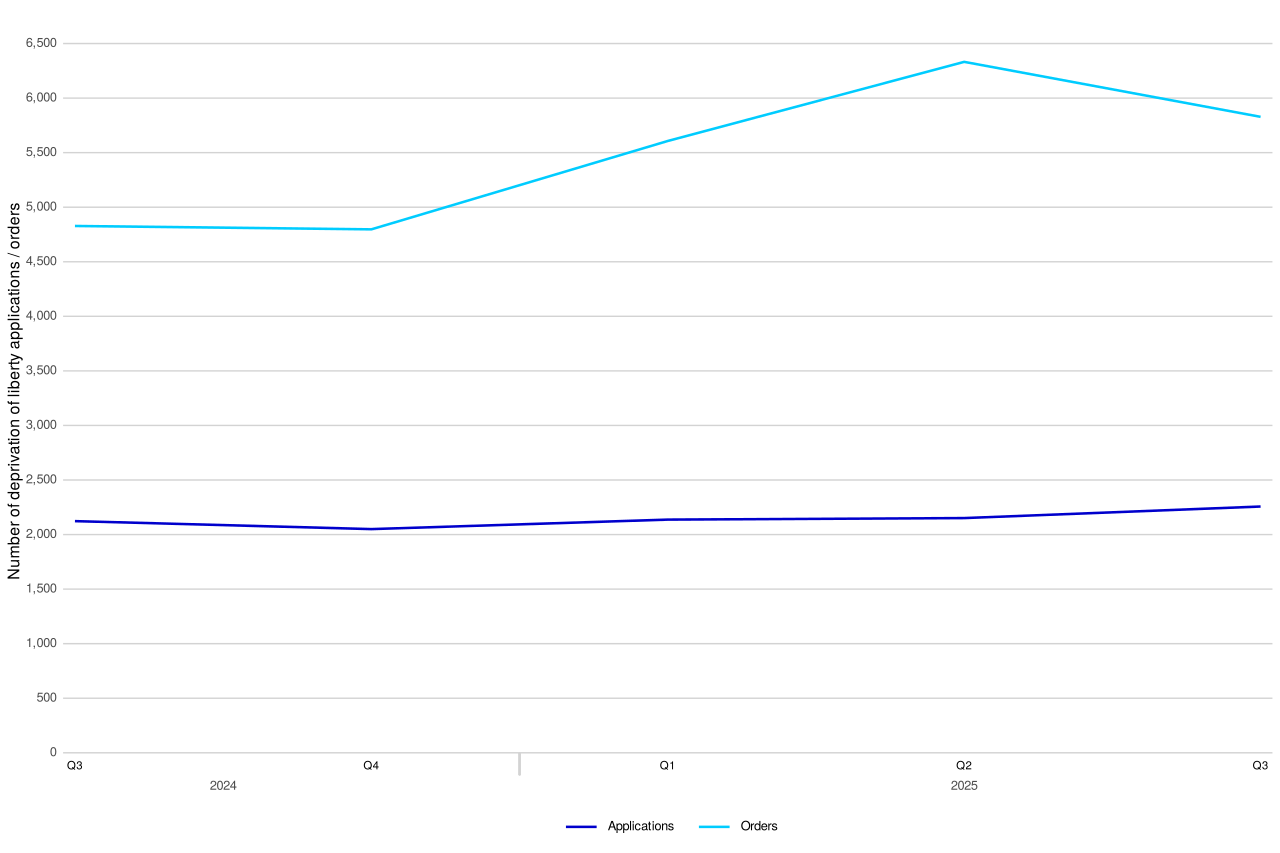
There were 2,257 applications relating to deprivation of liberty under the Mental Capacity Act 2005 made in the most recent quarter, which is an increase of 6% on the number made in the same quarter in 2024. Furthermore, there was an increase by 21% in the orders made for deprivation of liberty over the same period from 4,828 to 5,828.
An increase in both applications and orders under the Mental Capacity Act 2005 (MCA) There were 11,317 applications made in July to September 2025, up by 17%. During the same period there were 14,228 orders made, up by 20%.
In July to September 2025, there were 11,317 applications made under the Mental Capacity Act 2005 (MCA), up 17% on the equivalent quarter in 2024 (9,699). Of those, 34% related to interim applications (Table 20).
In comparison, there were 14,228 orders made under the Mental Capacity Act 2005 (MCA), up by 20% on the same quarter in 2024. Of those, 41% related to orders for Deprivation of Liberty (Table 21).
Deprivation of Liberty applications made under the Mental Capacity Act
There were 2,257 applications relating to deprivation of liberty under the Mental Capacity Act in July to September 2025 (20% of the applications made under the Mental Capacity Act in this quarter). Deprivation of liberty orders made increased by 21% from 4,828 last year to 5,828 in the latest quarter.
Deprivation of Liberty applications made under the High Court
There are also deprivation of liberty applications made to the High Court, which has the power to make deprivation of liberty orders for children under the age of 18. There were 381 applications during July to September 2025, up 3% compared to the same period in 2024 for this purpose, handling the same number of children. Almost all of these children were teenagers; 60% aged between 13 and 15 and 26% aged between 16 and 18 years (Table 22).
In July to September 2025, 314 orders were issued (up 3%), of which, 41 have had a final order made. 27% of the orders which were finalised between July to September 2025 lasted less than 3 months, while 20% lasted more than 12 months. These are different from the deprivation of liberty applications and orders made under the Mental Capacity Act 2005 which relate to people over the age of 18. This means that the changes that affected data quality for deprivation of liberty applications made under the Mental Capacity Act do not affect the applications here.
Figure 10: Deprivation of Liberty applications and orders under the Mental Capacity Act 2005, July to September 2024 to July to September 2025 (Source: Table 21)
16. Mental Capacity Act - Office of the Public Guardian
Increase in both applications and orders made in relation to deprivation of liberty under the Mental Capacity Act 2005.
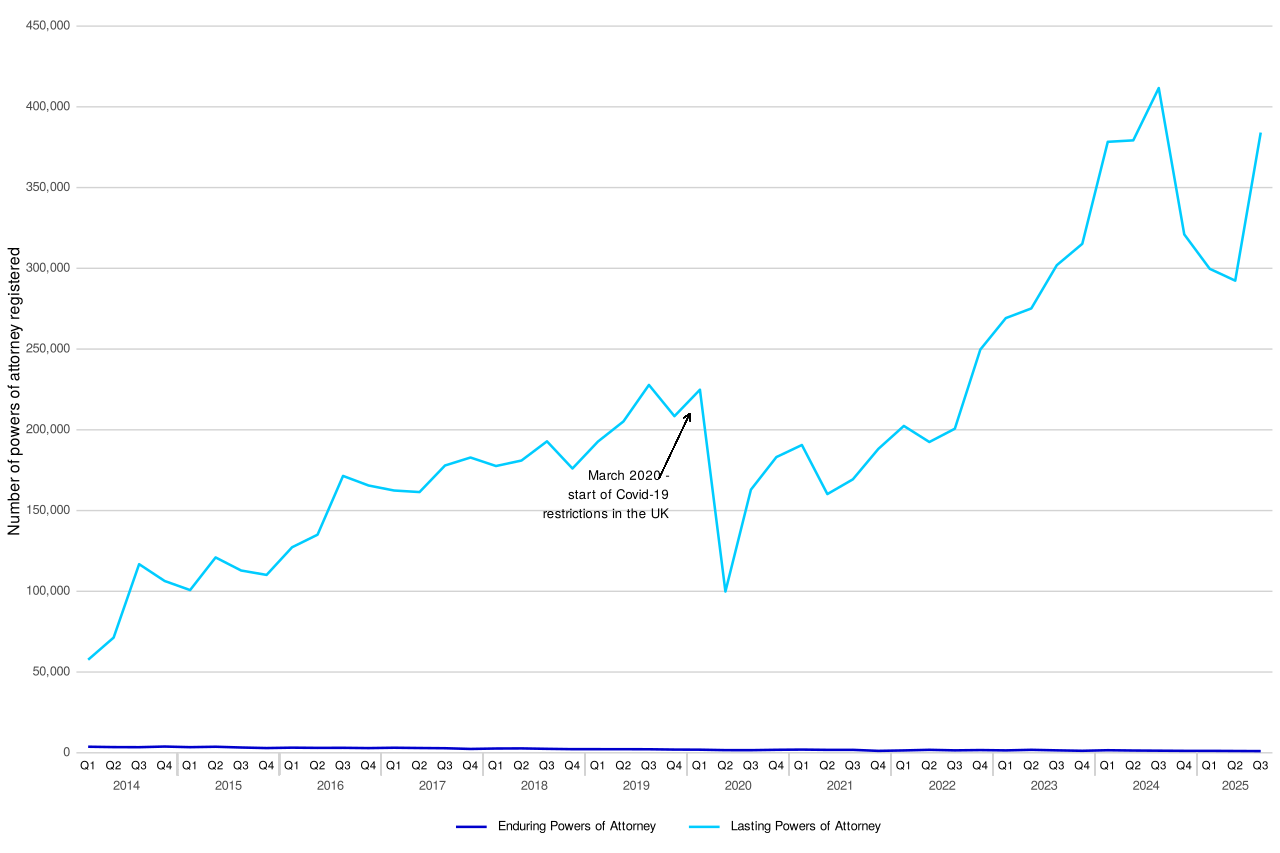
In July to September 2025, there were 384,069 LPAs registered, down 7% compared to the equivalent quarter in 2024 (Table 23).
In total there were 385,104 Powers of Attorney (POAs) registered in July to September 2025, down 7% from the same quarter in 2024 (Table 23). In July to September 2025, 56% of POAs registered were from female donors whilst 42% were from male donors and 47% were over 75 years old. Lasting Power of Attorney (LPAs) made up almost all (99.7%) of POAs registered in July to September 2025, with Enduring Powers of Attorney (EPAs) making up the other share. There were 1,035 EPAs registered in July to September 2025, down 20% on the equivalent quarter in 2024.
The sharp increase in LPAs seen during 2015 and 2016 was largely due to increased publicity and the new online forms introduced in July 2015 making it simpler and faster to apply. The more recent increase in LPAs is part of the trend seen of more applications being made over time as awareness of LPAs has increased and also in response to the pandemic, leading to a peak in mid-2024.
Figure 11: Powers of Attorney registered, January to March 2014 to July to September 2025 (Source: Table 22)
17. Probate Service
Probate grants issued more quickly than other grants of representation
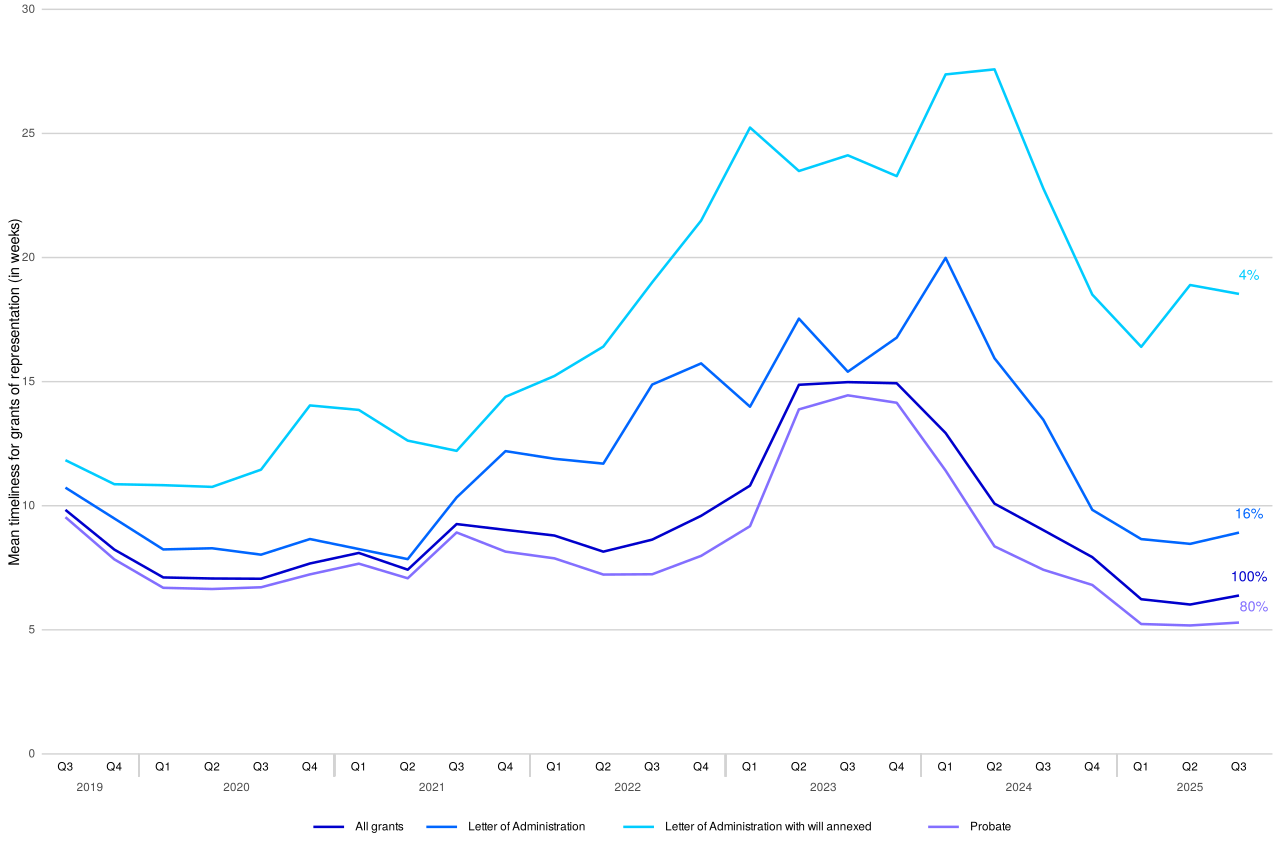
Probate grants took approximately 5 weeks to be issued after the application was submitted during July to September 2025, down around 2 weeks from the equivalent quarter in 2024. Letters of administration with a will and without a will took around 19 and 9 weeks respectively (Table 25).
Similar levels in the proportion of digital applications for probate grants with an increase in the proportion of probate grants issued made digitally
In July to September 2025, there were 60,132 applications for probate grants. 59,572 probate grants were issued in the same period. 93% of both applications and grants issued were made digitally, compared to 92% of each in the same quarter in 2024 (Table 24).
There were 75,588 applications made for grants of representation in July to September 2025. 60,132 (80%) of these were for probate grants, of which 93% were made digitally (Table 24).
Probate grants also make up the majority (80%) of all grants issued. In July to September 2025, 56% of the grants issued were applied for by legal professionals and 44% were personal applications (Table 24). For the 59,572 probate grants issued in the same period, 93% were issued digitally.
Timeliness of probate grants
The mean average time from application submission to grant issue for probate grants was 5 weeks (median average 2 weeks) overall. Whilst the mean average time for the majority of grants (that is digital probate grants for applications not stopped which formed 73% of total probate grants issued) took approximately 2 weeks from application submission to grant issue and 1 week from document receipt to grant issue.
Timeliness of grants issued can be affected if the case has been ‘stopped’ for any reason (this can occur when there’s a dispute about either who can apply for probate or where there are issues with a will or proposed will, or if an error is identified and a request for further information made). Probate grants that were stopped during July to September 2025 took 14 weeks on average to be issued, compared to 2 weeks for those that were not stopped.
Time taken from document receipt (i.e. when payment has been made and the application and all accompanying documents are ready for examination) to grant issue, is around 2 weeks quicker than the average time from application submission for probate grants.
Averages for letters of administration with a will and without a will were 19 and 9 weeks respectively for July to September 2025, though these formed a smaller proportion of all grants issued, 4% and 16% respectively (Figure 12).
Figure 12: Average (mean) time for grants of representation issued from application submission by the Probate Service, July to September 2019 to July to September 2025 (Source: Table 25)
Open Caseload
There were 38,205 total open probate cases at the end of September 2025. This is down from 45,467 at the end of September 2024, a fall of 16%. This is due to the recovery plan in probate, which has been in place since August 2023 and has been focused on upskilling staff to tackle the open caseload. The majority of the open caseload is for probate grants (62%), compared to letters of administration (28%) and letters of administration with a will annexed (10%). Open cases for probate only decreased from 29,103 in September 2024 to 23,824, down by 18%.
82% (31,192) of the open caseload at the end of September 2025 had been open for less than six months.
18. Further information
The data presented in this publication are from live administrative databases. Therefore, previously published data is liable to be updated in the latest bulletin, following any further data cleaning or the incorporation of additional cases not available in the extracts used to produce previous bulletins.
Accompanying files
As well as this bulletin, the following products are published as part of this release:
-
A technical guide providing further information on how the data is collected and processed, as well as information on the revisions policy and legislation relevant to family court and background on the functioning of the family justice system.
-
A set of overview tables (also available in accessible format) and CSV files, covering each section of this bulletin
-
A data visualisation tool to provide a more granular and interactive view of cases through the Family court system. This can be found here: https://www.gov.uk/government/statistics/family-court-statistics-quarterly-july-to-september-2025/family-court-data-visualisation-tools
Accredited official statistics status Accredited official statistics are called National Statistics in the Statistics and Registration Service Act 2007. These accredited official statistics were independently reviewed by the Office for Statistics Regulation in January 2019. They comply with the standards of trustworthiness, quality and value in the Code of Practice for Statistics and should be labelled ‘accredited official statistics’.
It is the Ministry of Justice’s responsibility to maintain compliance with the standards expected for accredited official statistics. If we become concerned about whether these statistics are still meeting the appropriate standards, we will discuss any concerns with the Authority promptly. Accredited official statistics status can be removed at any point when the highest standards are not maintained, and reinstated when standards are restored.
Contact
Press enquiries should be directed to the Ministry of Justice press office:
Tel: 0300 790 0711 Email: newsdesk@justice.gsi.gov.uk
Other enquiries about these statistics should be directed to the Courts and People division of the Ministry of Justice:
Sarah Steadman, Head of Family Court Statistics, using the following email address familycourt.statistics@justice.gov.uk
Next update: 26 March 2025
URL: https://www.gov.uk/government/collections/family-court-statistics-quarterly
© Crown copyright
Produced by the Ministry of Justice
Alternative formats are available on request from ESD@justice.gov.uk
-
The Children and Family Court Advisory and Support Service (Cafcass) also publishes (England only) data on the number of private law cases. A comparison of Cafcass and MoJ data and further information can be found in the accompanying guide. ↩
-
Please see the accompanying guide for further details. ↩
-
Removal of Legal Aid was a result of the Legal Aid, Sentencing & Punishment of Offenders Act 2012 (LASPO). ↩