Enterprise Investment Scheme and Seed Enterprise Investment Scheme: 2026
Updated 21 May 2026

© Crown copyright 2026
This publication is licensed under the terms of the Open Government Licence v3.0 except where otherwise stated. To view this licence, visit nationalarchives.gov.uk/doc/open-government-licence/version/3 or write to the Information Policy Team, The National Archives, Kew, London TW9 4DU, or email: psi@nationalarchives.gov.uk.
Where we have identified any third party copyright information you will need to obtain permission from the copyright holders concerned.
This publication is available at https://www.gov.uk/government/statistics/enterprise-investment-scheme-and-seed-enterprise-investment-scheme-may-2026/enterprise-investment-scheme-and-seed-enterprise-investment-scheme-2026
1. Main points and summary
1.1 Enterprise Investment Scheme
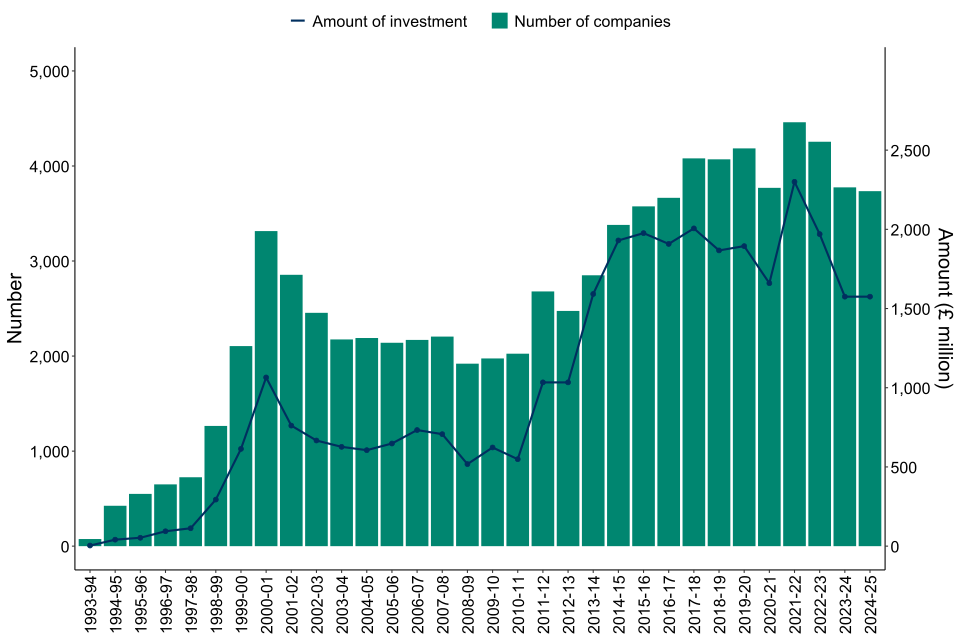
In the tax year 2024 to 2025, 3,735 companies raised a total of £1,575 million of funds under the EIS scheme. Funding has remained consistent since 2023 to 2024, the previous year, when 3,775 companies raised £1,575 million.
Around £333 million of investment was raised by 1,145 new EIS companies in 2024 to 2025.
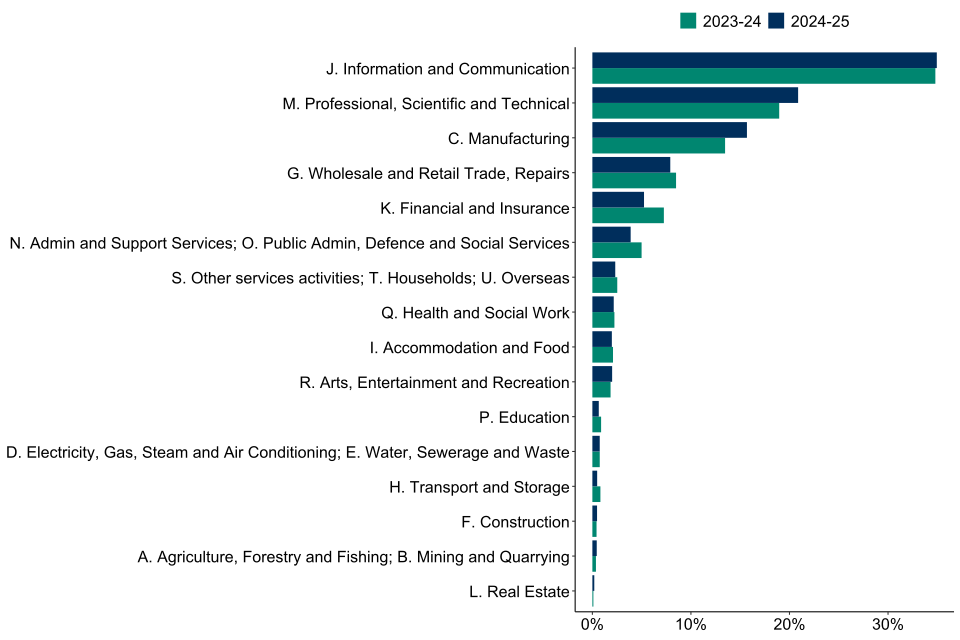
In 2024 to 2025, companies from the Information and Communication sector accounted for £550 million of investment (35% of all EIS investment).
Companies registered in London and the South East accounted for the largest proportion of investment, raising £948 million (60% of all EIS investment) in 2024 to 2025.
1.2 Seed Enterprise Investment Scheme
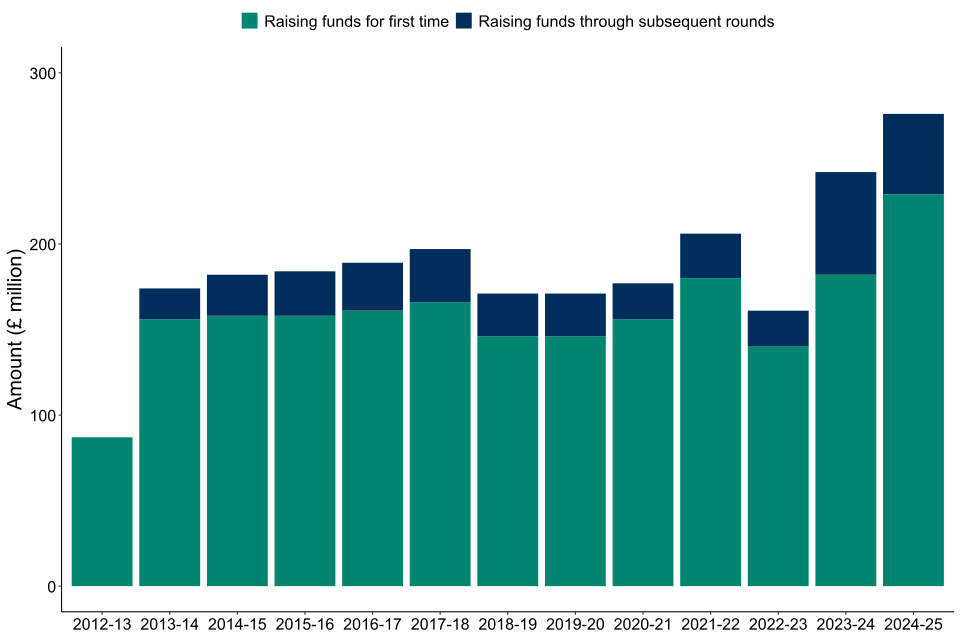
In 2024 to 2025, 2,430 companies raised a total of £276 million of funds under the SEIS scheme. Funding in 2024 to 2025 has increased by 14% from 2023 to 2024 when 2,310 companies raised £242 million. This continued increase is likely due to expansion of the limits of the scheme in April 2023 which allows companies to raise more investment and allows more companies to qualify.
Around 1,775 of the companies were raising funds under the SEIS scheme for the first time in 2024 to 2025, representing £229 million of investment.
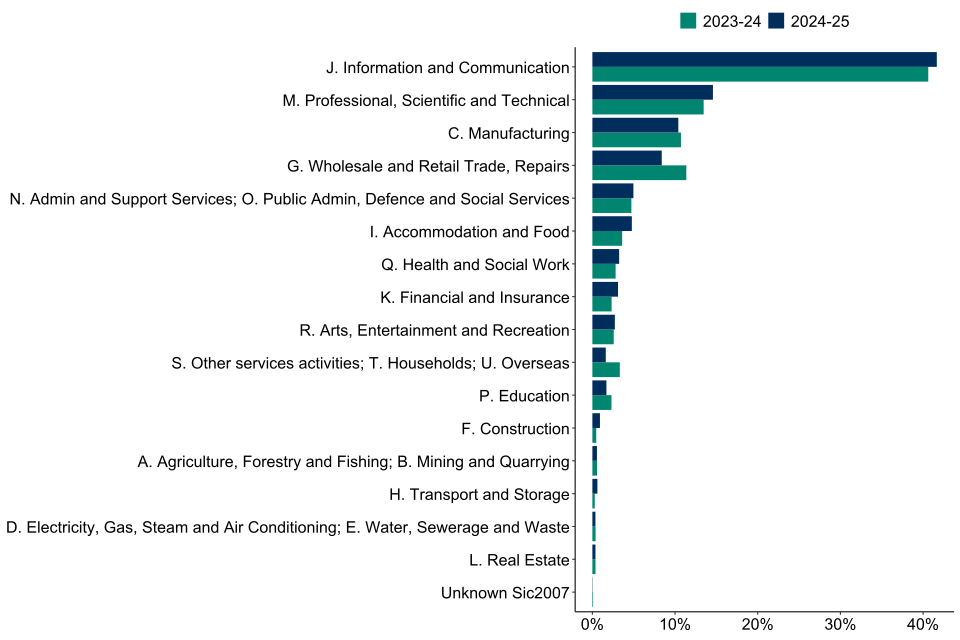
In 2024 to 2025, companies from the Information and Communication sector accounted for £115 million (42% of all SEIS investment).
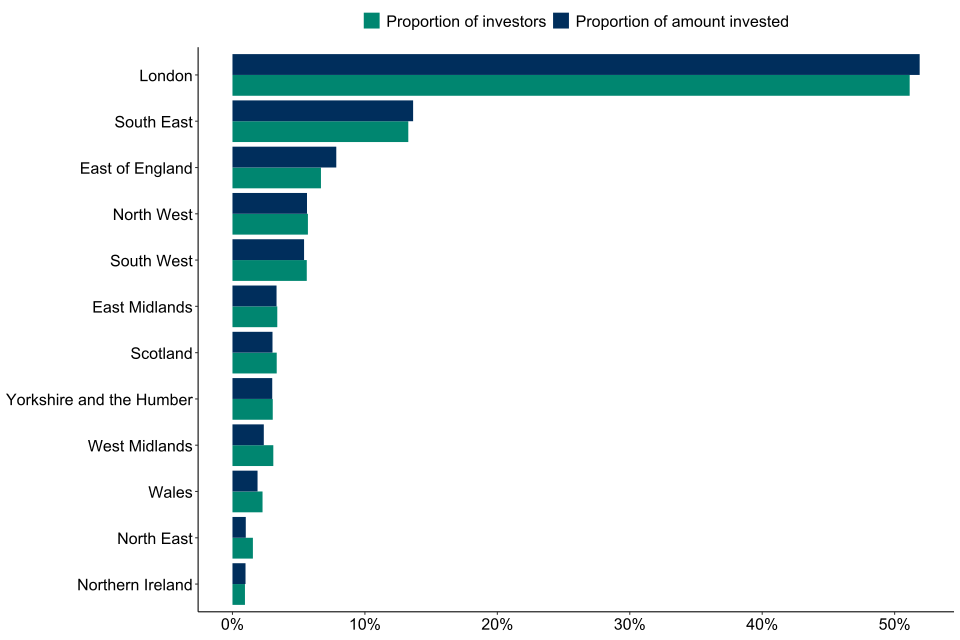
Companies registered in London and the South East accounted for the largest proportion of investment, raising £181 million (66% of SEIS investment) in 2024 to 2025.
1.3 Advance assurance requests
Enterprise Investment Scheme
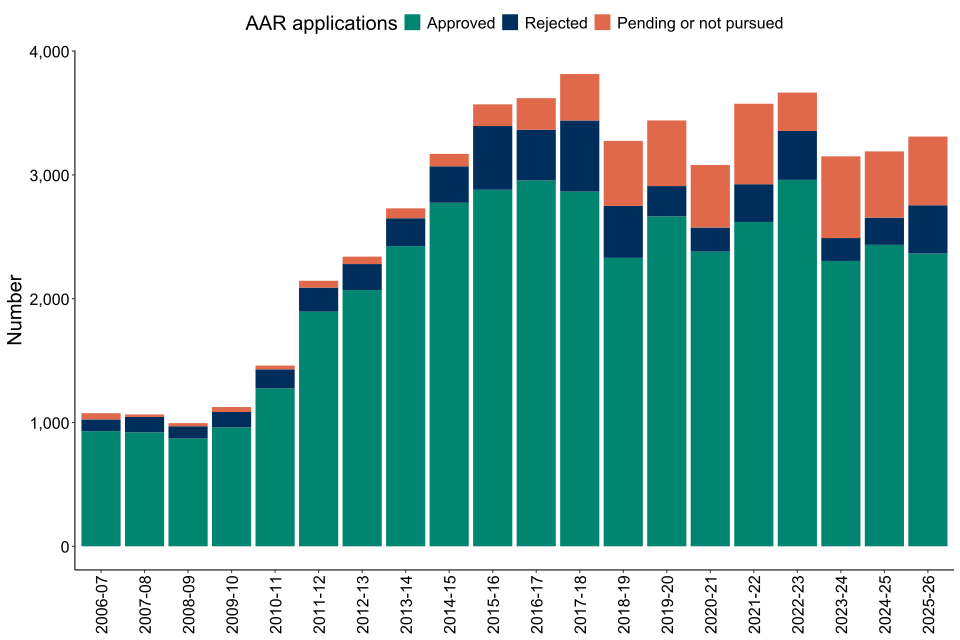
In 2025 to 2026, 3,310 AAR applications for EIS were received and 2,365 (72%) have been approved so far. The number of applications has increased from 2024 to 2025 when 3,185 AAR applications were received and 2,435 (76%) approved.
Seed Enterprise Investment Scheme
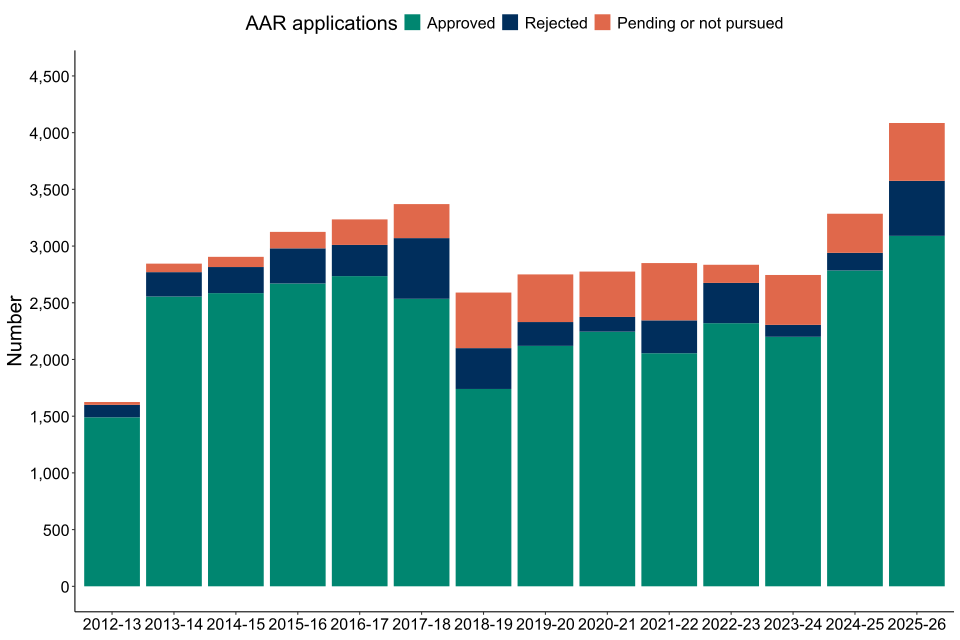
In 2025 to 2026, 4,085 AAR applications for SEIS were received and 3,090 (76%) have been approved so far. The number of applications has increased from 2024 to 2025, when 3,285 AAR applications were received and 2,785 (85%) approved.
2. Introduction
2.1 About these statistics
This is an annual Accredited Official Statistics publication produced by HM Revenue and Customs (HMRC). It provides information on the number of companies raising funds, the number of subscriptions and the amounts raised through the Enterprise Investment Scheme (EIS) and Seed Enterprise Investment Scheme (SEIS). These statistics are accredited official statistics.
The EIS and SEIS are 2 of 3 tax-based venture capital schemes that were active in the 2024 to 2025 tax year, the other being the Venture Capital Trust (VCT) scheme.
The SITR scheme concluded in April 2023 and is no longer open to new investment so is not included in this publication. Historical figures can be found in previous publications, available from The National Archives.
The current release includes the first estimates for 2024 to 2025. The figures for 2022 to 2023 and 2023 to 2024 include small revisions and minor updates, arising from the receipt of a small number of further EIS1 and SEIS1 forms for these years.
Companies have a period of 3 years after shares are issued to submit a compliance statement. Figures from 2023 to 2024 onwards have been uplifted to take account of late returns submitted by companies. Thus, these figures should be treated as provisional and will be subject to revisions in future publications.
The publication also provides information on the industrial and geographical breakdown of EIS and SEIS companies, the distribution of companies by the amounts of funds raised, and the distribution of investors by the size of their investment.
Section 1 summarises the main statistical points; Sections 3 and 4 present an overview of the statistics and discuss recent trends. In Section 5, this release includes figures for advance assurance requests received by HMRC. As part of the qualifying process for seeking investment through the schemes, companies can provide a return to HMRC in advance of a share issue to check that it will meet the qualifying conditions for these schemes.
The statistical tables are included on the main publication page.
The next release is planned to be in Spring 2027.
People interested in this publication may also be interested in the Accredited Official Statistics publication on Venture Capital Trusts (VCT).
3. Enterprise Investment Scheme (EIS)
3.1 EIS: Number of EIS companies and amount of investment
The number of companies raising funds and the level of investment have shown similar trends since the EIS was introduced. In 2024 to 2025 the number of companies raising funds decreased slightly to 3,735, raising a total of £1,575 million. This is most likely a result of a sustained recent period of higher interest rates and some continued natural reduction following the high levels of investment in 2021 to 2022, that is reflective of the wider venture capital market in the UK. In addition, the increase to the limits of the SEIS scheme may have directed some funding away from EIS and into SEIS.
Users have responded to a series of legislative changes, notably in 2014, 2015 and 2018, which were introduced to ensure the focus is on investment in early-stage companies that have the intention to grow and develop in the longer term.
In 2020 to 2021, there was a decrease in the number of companies raising funds under the EIS (10%), with the amount raised by EIS companies also dropping by 12% compared to the previous year. The Covid-19 pandemic is likely to have reduced investment through the first 3 quarters of tax year 2020 to 2021. However, funding rebounded in the last quarter of 2020 to 2021 with amounts being raised above pre-pandemic levels for the equivalent period.
This trend continued into 2021 to 2022 where the strong rebound into investment saw both the number of companies raising funds and the total amount raised through the EIS exceeding the previous record limits set in 2017 to 2018 and 2019 to 2020.
Following this record breaking year, the number of companies raising funds and the total amount raised has shown a reduction in both the 2023 to 2024 and 2024 to 2025 tax years. The amount of funds raised in 2023 to 2024 has dipped below the levels shown pre-pandemic and has remained at this level for 2024 to 2025.
Figure 1: Number of companies raising funds and amount raised, 1993-94 to 2024-25
3.2 EIS: New investment
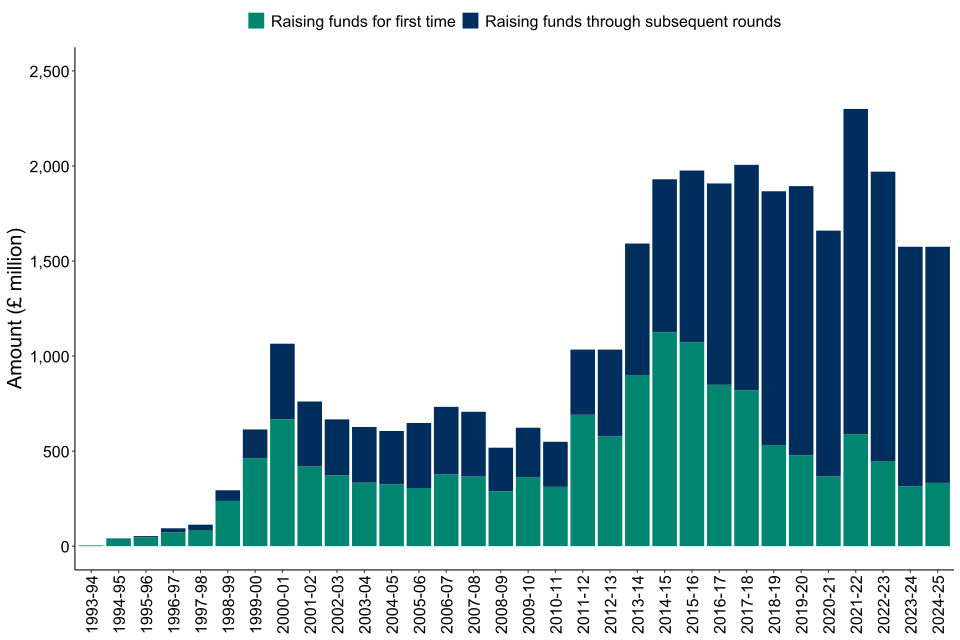
In 2018 to 2019, there was a large drop in funds raised by new companies with only 28% of funding being raised by companies using the EIS for the first time. This trend has continued with 21% of the total amount being raised by new EIS companies in 2024 to 2025. This is likely to be due to the introduction of the risk-to-capital condition which places further restrictions on the qualification of investment under the EIS.
These restrictions were introduced to ensure that investment under the EIS is genuinely at risk and is made with the intention of providing long-term growth and development of the company’s trade. Those low-risk and limited growth investment arrangements targeted by the new condition typically involved the creation of new companies raising funds for the first time.
A proportion of this investment was expected to be reinvested elsewhere and, with the new incentives to invest in knowledge intensive companies, this has resulted in increased investment in these companies.
In addition, with the increase to the limits of the SEIS scheme from 2023 to 2024, more new companies may have qualified for, and favoured raising funds under, this scheme.
Figure 2: Amount of funds raised under the EIS by new companies and old companies, 1993-94 to 2024-25
3.3 EIS: Industry Sector
In 2024 to 2025, companies from the top 4 sectors (the Manufacturing, the Wholesale and Retail Trade, Repairs, the Information and Communication, the Professional, Scientific and Technical sectors) together accounted for around £1,251 million of investment and made up 80% of all EIS Investment. This proportion is a slight increase compared with 2023 to 2024.
Figure 3 compares the proportion of investment across sectors, by amount raised under the EIS between 2023 to 2024 and 2024 to 2025. The trends for the 2 years are similar, with proportions remaining broadly the same for the Information and Communication sector, a decrease in the Financial and Insurance sector but an increase in both the Manufacturing and the Professional, Scientific and Technical sectors.
Figure 3: Comparison between amounts of funds raised under the EIS by different industry sectors, 2023-24 to 2024-25
The sector breakdowns in this section are based on the Standard Industrial Classification (SIC) 2007.
3.4 EIS: Size of investment per company
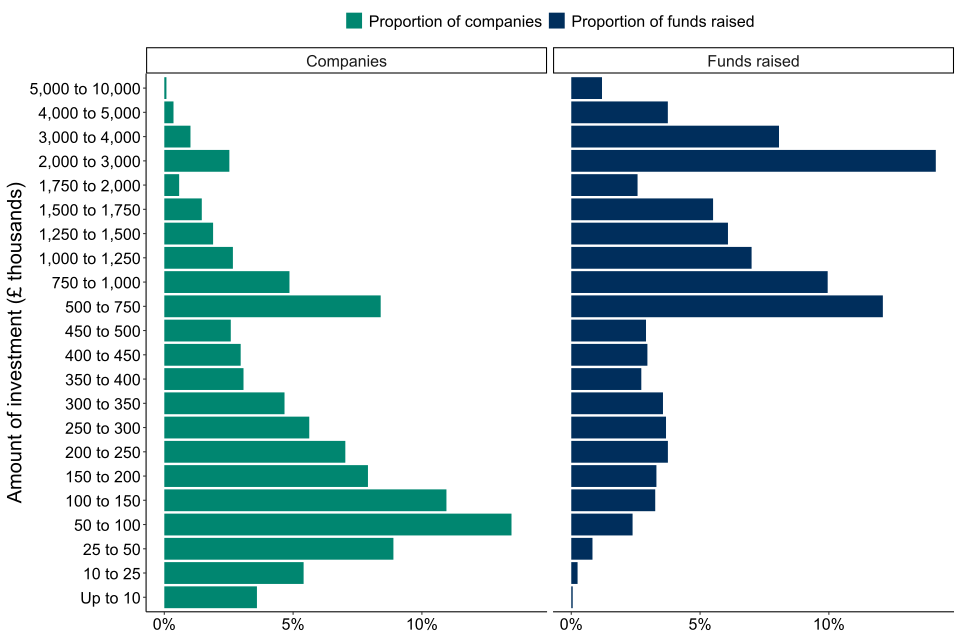
The distribution of the number of companies raising funds under the EIS by investment size differs from the distribution of amount of funds raised by size of investment. In 2024 to 2025, around 4% of EIS companies raised 27% of all investment (investments over £2 million). It is likely that the risk-to-capital condition will have affected these higher investment categories in particular.
From 2018 to 2019 the annual limit for KICs increased from £5 million to £10 million.
Figure 4: Distribution of the proportion of funds raised under the EIS by investment band, 2024 to 2025
3.5 EIS: Geographical region of company registration
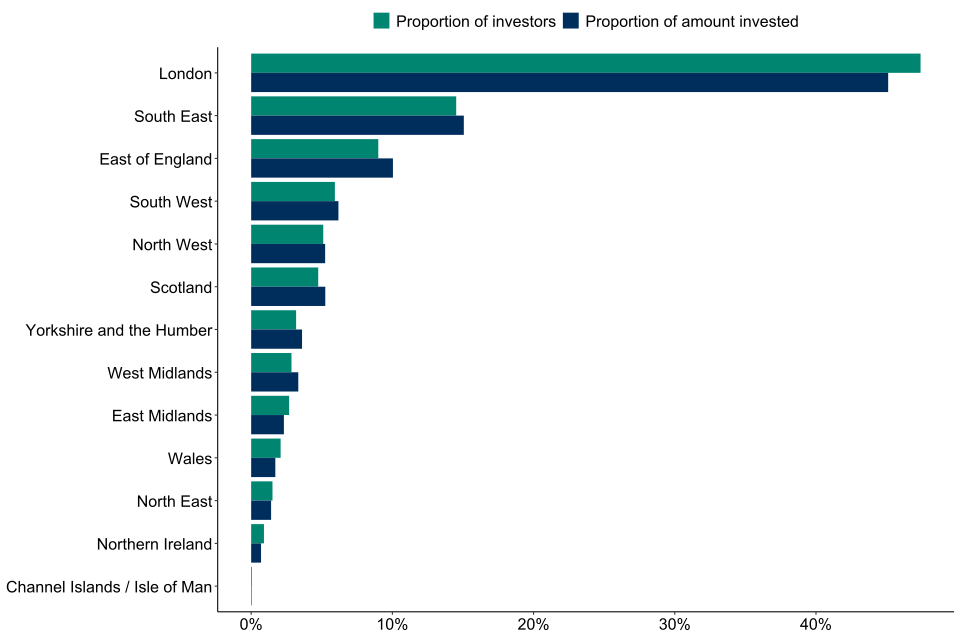
The proportion of the amount of investment in companies with a registered office in London and the South East was 60% in 2024 to 2025. Whilst this proportion is similar to recent years, there has been a very gradual decrease with 65% of total funds raised in the 2022 to 2023 tax year and 63% of total funds raised in the 2023 to 2024 tax year previously being raised in London and the South East.
Figure 5: Distribution of the number of EIS companies and amount of investment by location, 2024 to 2025
3.6 EIS: Investors claiming Income Tax relief under EIS
The number of investors claiming Income Tax relief through the Self Assessment forms under the EIS has decreased, from 35,675 in tax year 2023 to 2024 to 33,220 in the 2024 to 2025 tax year.
The total investment on which tax relief was claimed under EIS decreased overall (7%) in 2024 to 2025 compared with 2023 to 2024 and there was a similar decrease of 7% in the total number of investors. This could be in part due to investors favouring SEIS investments following the investor limit expansion to benefit from the more generous tax relief rate.
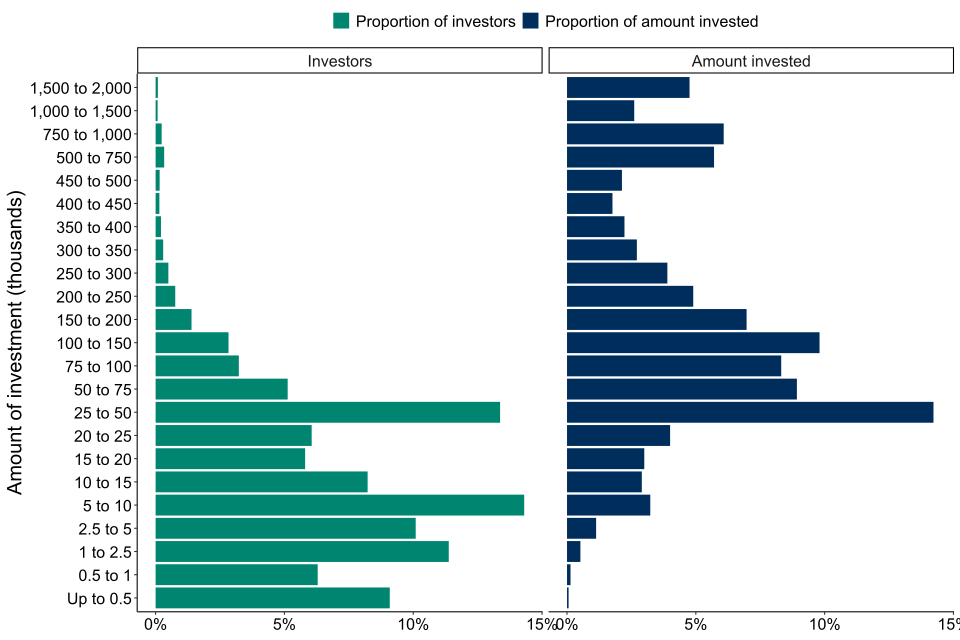
In 2018 to 2019, new limits were introduced for investments in KICs. These allow individuals to invest up to £2 million in a year if they are investing in a KIC. There were 55 investments between £1 million and £2 million in 2024 to 2025, contributing £93 million of investment. With the higher limit available, investments of over £500,000 comprised 20% of the total amount of EIS investment raised on which claims were made in 2024 to 2025.
Figure 6: Proportion of investors and amount of investment, by size of investment (investment on which Income Tax relief was claimed), 2024-25
Total figures provided on the amount of investment on which Income Tax relief was claimed are not directly comparable with the figures on the amount of investment reported by companies. Some investors may choose to offset the tax liability against the previous year. A small amount of relief would also be claimed through the PAYE system; this is assumed to relate to about 5% of total EIS investment.
4. Seed Enterprise Investment Scheme
4.1 SEIS: Number of SEIS companies and amount of investment
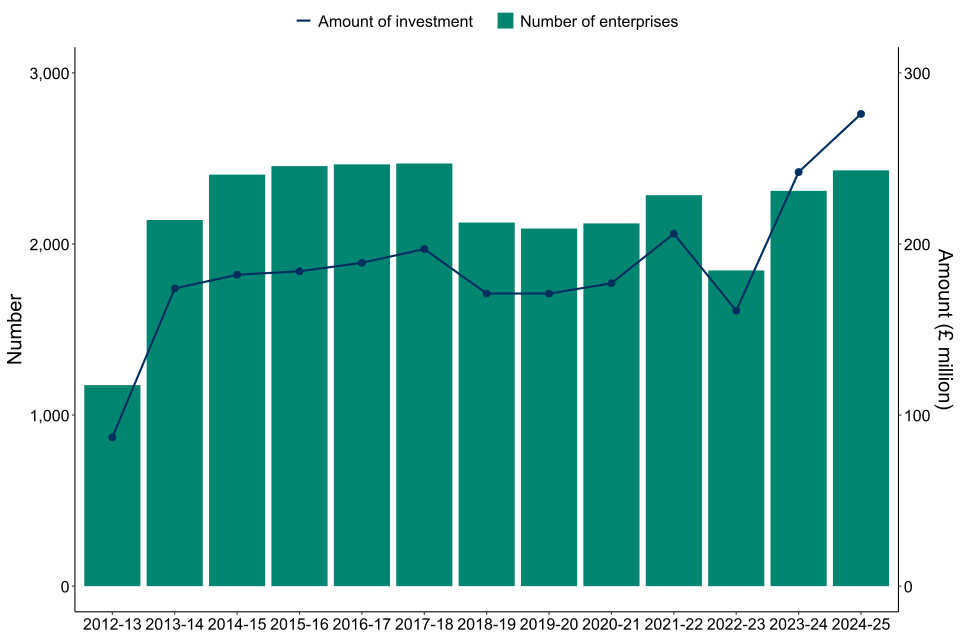
In 2024 to 2025, the number of companies raising investment under SEIS was 2,430, compared to 2,310 in the previous year. The amount raised by these companies increased by 14% to £276 million compared to the £242 million raised in the previous year. The SEIS underwent a large expansion effective from April 2023 where several limits that restricted the number of companies that qualified for the SEIS were relaxed, so that more companies could qualify for the scheme. As part of the expansion, the limit on the amount of investment that companies can raise increased from £150,000 to £250,000. Combined, these limit relaxations are responsible for the sharp increase in the number of companies raising funds and the amount raised in 2023 to 2024. This trend continued into the 2024 to 2025 tax year, but the increase has slowed.
Figure 7: Number of companies raising funds and amount raised, 2012-13 to 2024-25
4.2 SEIS: New investment
The number of new companies raising SEIS funds in tax year 2024 to 2025 increased by around 14% from the previous year, and the amount raised by these companies also increased by 26% which is consistent with the expansion of the SEIS company investment limit to £250,000.
Figure 8: Amount of funds raised by new and old SEIS companies, 2012-13 to 2024-25
4.3 SEIS: Industry sector
In 2024 to 2025, companies from just one sector (the Information and Communication) accounted for £115 million of investment, which makes up 42% of the total amount of SEIS investment received. The next 3 largest sectors (the Professional, Scientific and Technical, the Manufacturing, the Wholesale and Retail Trade, Repairs sectors) together accounted for 33% of total investment.
The proportion of SEIS investment by industry sector in 2024 to 2025 has increased by 21% for the Professional, Scientific and Technical and by 17% for the Information and Communication sectors. There has been a 12% increase compared to the previous year in investment received by the Manufacturing sector but a 15% decrease compared to the 2023 to 2024 tax year for the Wholesale and Retail Trade, Repairs sector.
Figure 9: Comparison between the proportion of funds raised under the SEIS by different industry sectors, 2023-24 to 2024-25
4.4 SEIS: Size of investment per company
Most companies receive investments of over £50,000 through the SEIS (66% of companies in 2024 to 2025). In 2024 to 2025, around 45% of companies raised amounts over £100,000, similar to the 44% in 2023 to 2024.
The tax year 2023 to 2024 is the first year since the expansion of the limits of the SEIS scheme and companies are able to raise over £150,000. In 2023 to 2024, approximately 19% of companies raised over £150,000 and collectively they raised 39% of all investment through the scheme. This trend continued into 2024 to 2025 with 32% of companies raising over £150,000, raising 63% of all investment through the SEIS.
Figure 10: The percentage distribution of funds raised under the SEIS by investment band, 2024-25

4.5 SEIS: Geographical region of company registration
The largest proportion of funds raised under the SEIS were through companies with a registered office in London and the South East. In 2024 to 2025, these regions accounted for 66% of the total SEIS investment (Figure 11), which is similar to the previous year where London and the South East accounted for 64% of total investment.
Figure 11: The percentage distribution of the number of SEIS companies and amount of investment by location, 2024-25
4.6 SEIS: Investors claiming Income Tax relief under SEIS
In 2024 to 2025, 11,200 investors claimed Income Tax relief through the Self Assessment forms under the SEIS, compared to 10,290 investors in 2023 to 2024. The amount of relief claimed remained broadly consistent increasing by 3% from 2023 to 2024.
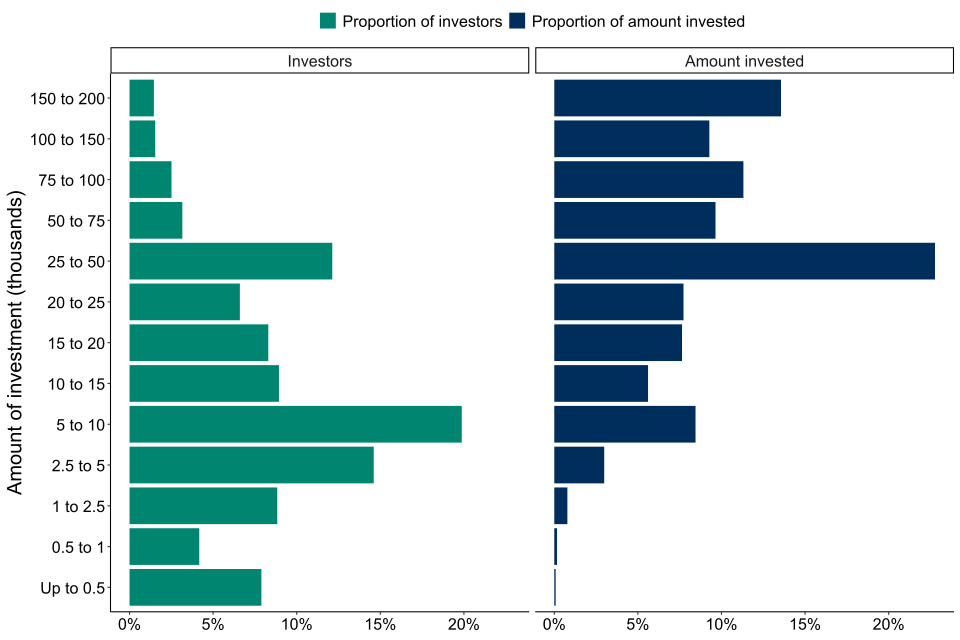
Most investors claiming the relief invested £10,000 or less into qualifying SEIS companies (56%).
Investments of over £25,000 contributed 66% of the total amount of SEIS investment raised on which claims were made, which is broadly consistent with 2023 to 2024 (70%).
As part of the April 2023 SEIS expansions, investors are now able to claim Income Tax relief on investments up to £200,000. This was previously limited to £100,000 in years prior to 2023 to 2024.
In 2023 to 2024, approximately 3% of investors invested over £100,000 and collectively these investors represented approximately 24% of all investment on which Income Tax relief was claimed. This trend continued into the 2024 to 2025 tax year with 3% of investors investing over £100,000, representing 23% of all investment.
Figure 12: Proportion of SEIS investors claiming Income Tax relief and amount of investment by investment band, 2024-25
5. Advance assurance requests
Companies considering using the EIS or SEIS can obtain advance assurance (AA) that HMRC will regard the shares to be issued as satisfying the requirements of the scheme.
These statistics show the number of companies seeking advance assurance, the number of AAR applications received, and, of these, how many were approved, rejected, or not pursued further. Statistics are presented from 2006 to 2007 for the EIS and 2012 to 2013 for the SEIS.
5.1 EIS: Number of AARs received and outcomes
In 2025 to 2026, HMRC received 3,310 advance assurance applications for the EIS, and increase of 4% from 2024 to 2025. A number of the applications for 2025 to 2026 are still being processed, but as of March 2026, 72% have been approved so far. Of the 3,185 applications received in 2024 to 2025, 76% have been approved (Figure 13).
Figure 13: Number of EIS advance assurance applications received, approved and rejected, 2006-07 to 2025-26
5.2 SEIS: Number of AARs received and outcomes
In 2025 to 2026, HMRC received 4,085 SEIS AAR applications, an increase of 24% from 2024 to 2025. A number of the applications for 2025 to 2026 are still being processed, but as of March 2026, 76% of applications have been approved. In 2024 to 2025 there were 3,285 SEIS AAR applications and of these 2,785 (85%) have been approved.
Figure 14: Number of SEIS advance assurance applications received, approved and rejected, 2012-13 to 2025-26