English Housing Survey 2024 to 2025: weather resilient homes - fact sheet
Published 9 July 2026
Applies to England

© Crown copyright 2026
This publication is licensed under the terms of the Open Government Licence v3.0 except where otherwise stated. To view this licence, visit nationalarchives.gov.uk/doc/open-government-licence/version/3 or write to the Information Policy Team, The National Archives, Kew, London TW9 4DU, or email: psi@nationalarchives.gov.uk.
Where we have identified any third party copyright information you will need to obtain permission from the copyright holders concerned.
This publication is available at https://www.gov.uk/government/statistics/english-housing-survey-2024-to-2025-weather-resilience-in-housing-fact-sheet/english-housing-survey-2024-to-2025-weather-resilient-homes-fact-sheet
The English Housing Survey (EHS) is a national survey of people’s housing circumstances and the condition and energy efficiency of housing in England. This fact sheet examines how resilient English homes are to extreme weather conditions, including overheating and inability to keep warm during winter, moisture damage following a storm, and the influence of dwelling characteristics such as tenure, dwelling type, construction, and exposure. It also explores action taken by households to mitigate overheating and the impact of heating controls on the ability to keep warm.
Understanding the weather resilience of homes is crucial for maintaining the safety and comfort of households. The National Adaptation Programme sets out plans to increase resilience within the built environment and mitigate the impact of climate change on public health. Overheating and moisture risks are among concerns when assessing the weather and climate resilience of homes.
1. Overheating and the ability to keep warm in winter
In the EHS, we asked respondents whether their home got uncomfortably hot at any time of the year, and if they were unable to cool it down. We refer to this as ‘overheating’. Additionally, the survey asks respondents whether they were able to keep comfortably warm in their living room during the cold winter weather.
These measures are subjective and reflect a households’ perception of temperature within the home. Therefore, while these findings may be related to a dwelling’s characteristics, they may also be influenced by the household member’s circumstances and preferences.
Throughout this section, although the questions are asked to either the HRP or main respondent, the focus is on the number and proportion of occupied dwellings.
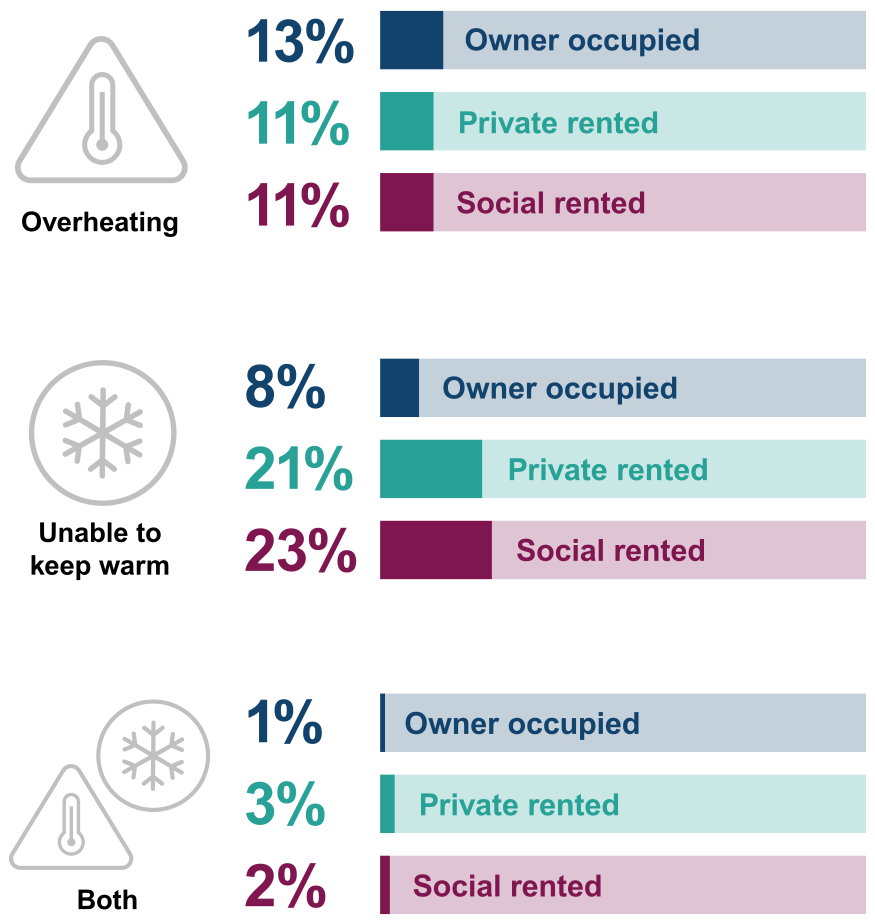
In 2024, approximately 3 million homes were reported as overheating, with owner occupied dwellings (13%) more affected than both private (11%) and social rented dwellings (11%), Annex Table 1.1.
Conversely, 3.1 million occupied dwellings were reported as being unable to keep warm in winter, predominantly among social rented (23%) and private rented (21%) homes, compared with owner occupied dwellings (8%), Annex Table 1.2.
Over the last 5 years, the proportion of occupied dwellings where households reported overheating increased from 7% in 2019 to 12% in 2024 (EHS Headline Report 2019-20).
In 2024, around 395,000 homes experienced both getting uncomfortably hot and an inability to keep warm in the winter. Private rented dwellings (3%) and social rented dwellings (2%) were more likely to experience both than owner occupied dwellings (1%) Annex Table 1.3.
Owner occupied dwellings were more likely to be reported as overheating than rented dwellings. Conversely, rented dwellings were more likely to be reported as feeling too cold or both too cold and too hot.
Dwelling type
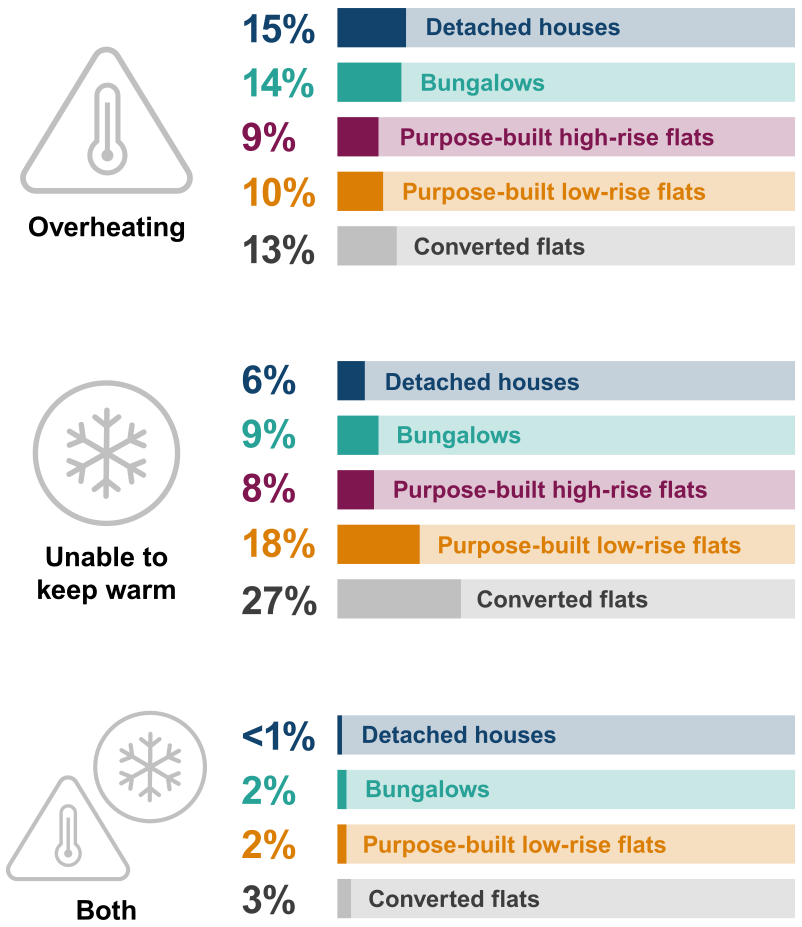
Across dwelling types, detached houses (15%) and bungalows (14%) were the most likely to be reported as uncomfortably hot, followed by semi-detached houses (12%), terraced houses (11%) and purpose built flats (9% to 10%), Annex Table 1.1.
In comparison, flats were typically the most likely to be reported as unable to keep warm during cold winter weather. This was driven by converted flats where over a quarter (27%) were reported as unable to keep warm, higher than other dwelling types, excluding terraced houses.
There was also a high proportion of low-rise purpose built flats reported as unable to keep warm (18%), but the figure for high rise was relatively smaller (8%). Mid-terrace houses (17%) and end-terrace houses (15%) were more likely to be reported as unable to be kept warm than other types of houses (6% to 11%). This was consistent across the owner occupied and social rented tenures, Annex Table 1.2.
There was a similar trend for dwellings that were reported to be both uncomfortably hot and cold. All other dwelling types were more likely to be reported as both uncomfortably hot and cold (1% to 3%) than detached houses (0.5%). In addition, mid terraced houses were more likely to be reported as both uncomfortably hot and cold (3%) than end terraced houses (2%), bungalows (2%), and semi-detached houses (1%), Annex Table 1.3.
Detached homes and bungalows were more vulnerable to overheating, whereas converted flats and low-rise purpose-built flats were more prone to cold issues. Converted flats were more likely to be both hot and cold compared with detached homes.
Construction type
The following analysis looks at the dwelling stock in relation to overheating by construction type. The eight different types of wall construction that were considered here are solid masonry, cavity masonry, crosswall masonry, timber, steel, concrete frame, concrete boxwall and other concrete (typically, these are concrete crosswall, with concrete either prepared on site or of precast concrete panels).
See the Glossary for a detailed definition of each wall type.
Solid masonry and cavity masonry were the most common types of wall in the stock and so a subtotal for the remaining wall types with smaller sample sizes was used. This includes crosswall masonry, timber frame, steel frame, concrete frame, concrete boxwall and other concrete walls, and is referred to in the text as ‘other less common wall types’.
In 2024, of the 3 million dwellings reported as overheating, 2 million were constructed with cavity masonry walls, 667,000 had solid masonry walls and 309,000 dwellings had other less common wall types, Annex Table 1.1.
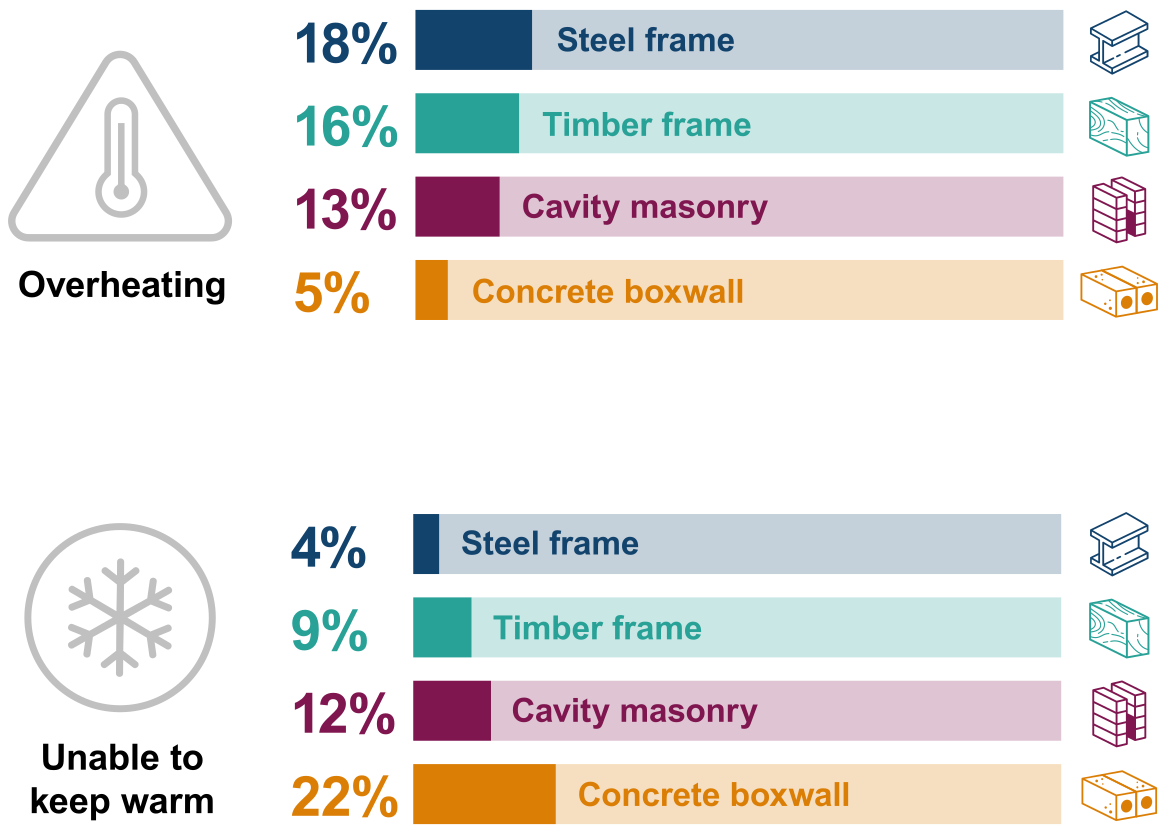
Overheating was more prevalent in dwellings with steel frame (18%), timber frame (16%) and cavity masonry walls (13%) compared with concrete frame (9%) and concrete boxwall (5%). Social rented dwellings followed a similar trend. However, for owner occupied dwellings, those with cavity masonry (14%) were more likely to be reported as overheating compared with solid masonry walls (11%).
Those living in dwellings with crosswall masonry (15%), cavity masonry (13%) and solid masonry walls (11%) were all more likely to report overheating in 2024 when compared with the 2020-21 Subjective Overheating and Construction Type fact sheet (5%, 8% and 7%, respectively).
For those who lived in dwellings that were unable to keep warm, there was a different trend. Those living in dwellings with concrete boxwall construction (22%) were more likely to report being unable to keep warm than those with cavity masonry (12%), timber frame (9%) and steel frame (4%) construction. Households living in dwellings with crosswall masonry (14%) and cavity masonry (12%) were more likely to report being unable to keep warm than those with steel frame (4%), Annex Table 1.2.
Overheating was more prevalent in uncommon construction types such as steel and timber frames, as well as the more common cavity masonry, whereas those living in dwellings built with concrete boxwall construction were more likely to report being unable to keep warm.
2. Measures taken to keep cool when overheating
This section refers to actions taken by households to keep cool in their home and whether they reported overheating. As such, the following analysis relates to households and presents data for ‘2024-25’. Fieldwork was carried out from March 2024 to March 2025, inclusive, and the terminology reflects this.
Households were asked what measures they took to keep cool during the summer months and were able to select any number of the following responses:
- Open the windows
- Switch on a fan
- Close the shutters
- Close the curtains
- Close the blinds
- Unroll the awning or canopy
- Switch on the air conditioner
Note: that these measures are self reported reported only, meaning that the response of e.g. air conditioner is not the same as having an air conditioning unit.
Being able to cool down in the summer months is particularly important for older households who are more at risk of ill-health due to excessive heat.
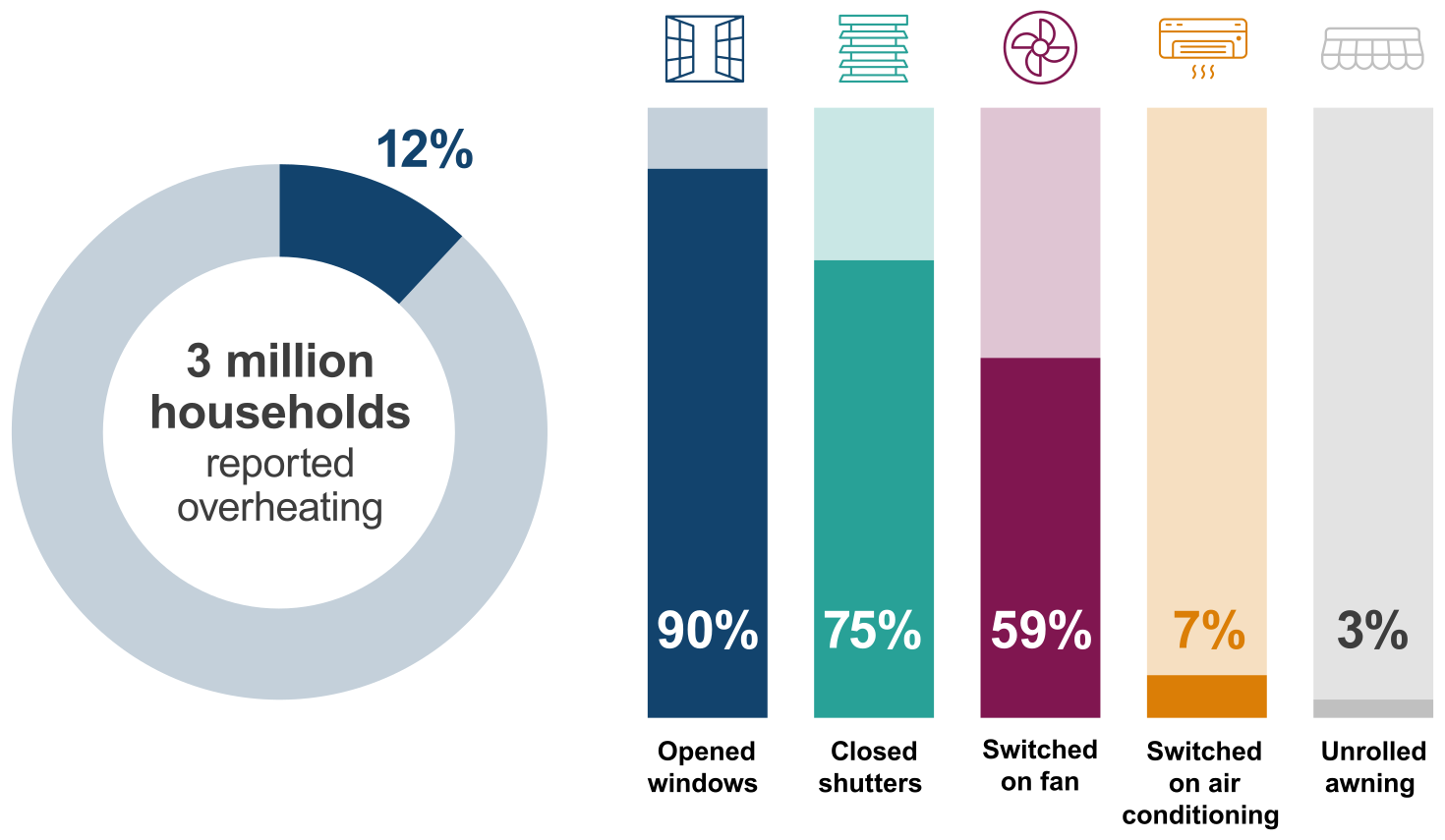
Out of the 3 million households who reported getting uncomfortably hot in 2024-25, the most common method of keeping cool was opening the windows (90%), followed by closing shutters, curtains, or blinds (75%), switching on a fan (59%), air conditioners (7%) and unrolling the awning or canopy (3%), Annex Table 1.4.
Among households who reported overheating, the proportion that opened their windows did not differ across tenures. This was also true for households that did not report overheating. However, owner occupiers (9%) were more likely to switch on an air conditioner to cool down than private renters (4%). No significant differences were found for social renters (6%).
Of the 3 million households who reported overheating, the most common methods of keeping cool in the summer were opening windows, closing shutters and switching on a fan.
Overheating by overshading and double glazing
This section refers to overheating in dwellings as reported by the household.
Overshading is determined by the exposure of the dwelling’s windows to direct sunlight and is used to establish the amount of solar gain in winter. Most solar gains through windows are from those facing South, therefore the overshading of the windows in the southern-most facing view is recorded. There are four options based on the average level of overshading of the dwelling’s windows:
- None/Very little - <20% of the average windows overshaded
- Modest – 20% to 60% of the average windows overshaded
- Significant – 60% to 80% of the average windows overshaded
- Heavy - >80% of the average windows are overshaded
In 2024, 2.3 million dwellings reported as overheating had none or very low levels of overshading (12%), while 661,000 had moderate, significant or heavy overshading. Additionally, 2.8 million dwellings had 80% or more windows with double glazing while 206,000 had less than 80%, Annex Table 1.5.
Among social rented dwellings, those with moderate, significant or heavy overshading (13%) were more likely to be reported as uncomfortably hot compared with dwellings with none or very little overshading (10%). There was no significant difference between owner occupied or private rented dwellings.
The extent of double glazing did not impact the likelihood of overheating, with no differences observed between dwellings with less than 80% double glazing and dwellings with 80% or more. This was the same across tenure.
Ability to keep warm by heating controls and dwelling exposure
This section also refers to the dwelling, where the ability to keep warm is as reported by the household.
All wet central heating systems (e.g. a boiler system with radiators), storage radiators, warm air systems and communal systems are considered efficient and are programmable if they have a programmer and room thermostat (and was installed in 2006 or later for a storage heater). In the new Decent Homes Standard, these controls are considered adequate when they are programmable by the tenant and they provide and maintain a reasonable degree of thermal comfort to every room in the home.
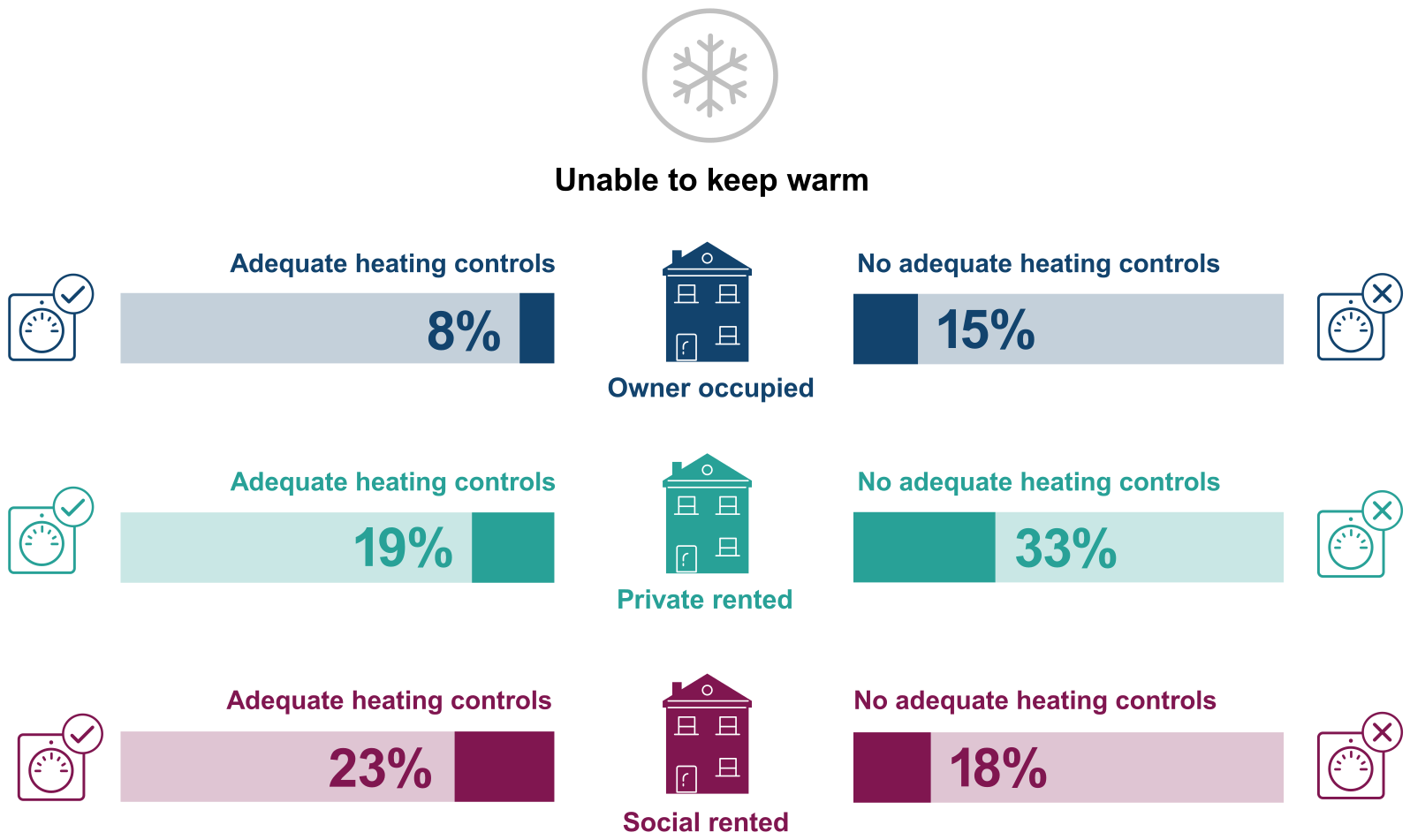
In 2024, 2.7 million dwellings where the household reported being unable to keep warm, had adequate programmable heating controls, while almost 400,000 did not. Dwellings without adequate programmable heating controls (20%) were more likely to be described as unable to keep warm in the winter than those that had adequate programmable heating controls present (12%). This was similar across owner occupied and private rented dwellings. However, social rented dwellings with adequate programmable heating controls (23%) were more likely to have issues with cold compared with social rented dwellings without (18%), Annex Table 1.6.
Where adequate programmable heating was not present, households in private rented dwellings (33%) were more likely to report having cold problems than both social rented (18%) and owner occupied dwellings (15%).
Overall, dwellings without adequate programmable heating controls were more likely to be reported as unable to keep warm in winter, with private rented dwellings being the most affected. Conversely, social rented dwellings showed the opposite relationship.
Dwelling exposure
In the EHS, sheltered walls are determined from obstructions that prevent wind from reaching the majority of the side of a dwelling. These obstructions must meet certain height or distance criteria to qualify as sheltered walls.
A dwelling is classed as being exposed if it is in a wet or windy position. For example, a dwelling surrounded by other buildings or trees is not likely to be exposed. However, a dwelling that is open to the elements on all four sides, is in an exposed position.
Around 1.9 million dwellings where the household reported being unable to keep warm had two or fewer sheltered walls, while 1.2 million dwellings had three or more sheltered walls. Dwellings with three or more walls exposed were also more likely to be reported as unable to keep warm (15%) compared with dwellings that had two or fewer walls exposed (12%). This was the same for owner occupied dwellings.
Overall, there was no association observed between whether a home was exposed or not and the household’s ability to keep warm, 13% of both exposed and non-exposed dwellings were reported as unable to keep warm. This was also reflected across tenure.
3. Resilience to rain and storms
This section describes the composition of dwellings with householders who reported internal moisture damage in their home following a storm, broken down by tenure. It also examines whether dwelling characteristics such as roof pitch, dwelling exposure and disrepair affect the dwellings’ resilience to rain and storms.
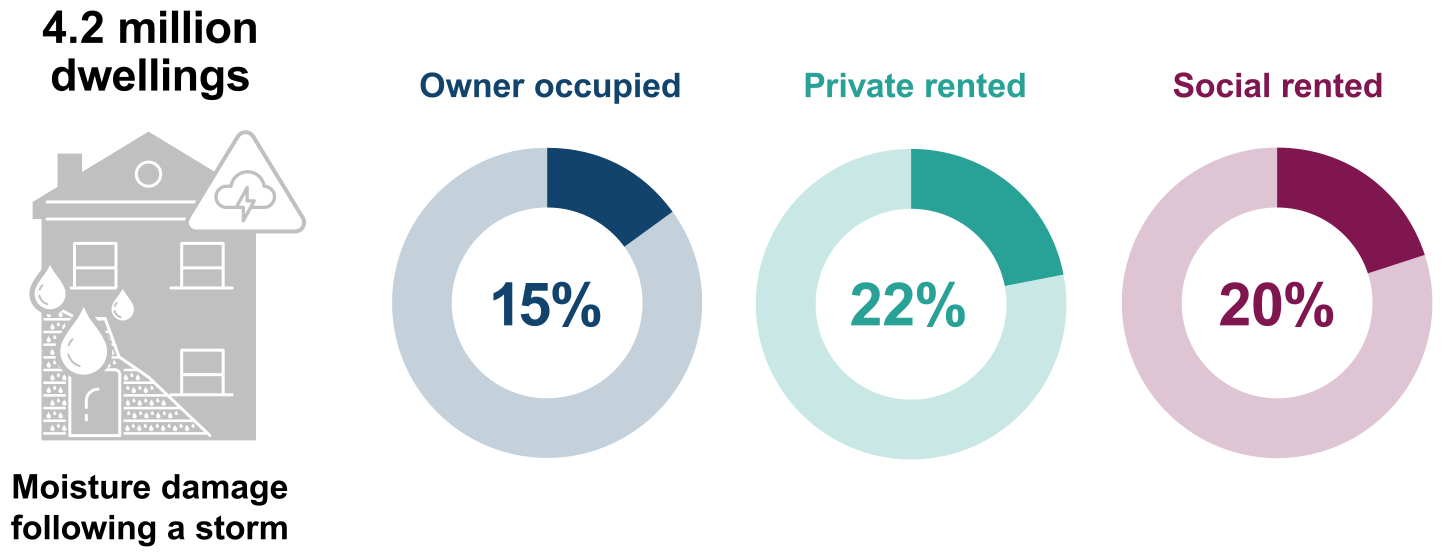
In 2024, 4.2 million dwellings had householders report new moisture damage in the home following a storm during the previous 12 months. Private rented dwellings were the most likely to be reported as having storm damage (22%), followed by social rented dwellings (20%) and owner occupied dwellings (15%). This trend was also reported in the Climate resilient homes fact sheet last year, Annex Table 2.1.
Private rented dwellings were more likely to be reported for new moisture damage following a storm than other tenures.
Roof pitch
For this fact sheet, data collected on roof pitch has been grouped into three main responses.
Flat to 15°: mostly flats or houses with flat roof extensions.
16° to 39°: represents the majority of the English housing stock.
40° or over: includes dwellings with steeper roofs.
Roof pitch had varying effects on the likelihood of households reporting moisture damage following a storm. Households in dwellings with a roof pitch of 16° to 39° were more likely to report damage following a storm (18%) compared with dwellings that had a roof pitch of 40° or over (16%). Private rented dwellings with a roof pitch of 16° to 39° were more likely to have damage reported (25%) than social rented (20%) and owner occupied dwellings (16%).
External disrepair
The Decent Homes Standard’s definition of the disrepair criterion takes into account the degree of repair required on certain dwelling elements. These elements are considered to be in need of repairs if they require replacing or have major repairs. The following subset are explored here in relation to moisture damage incurred following a storm:
- Roof disrepair
- Wall disrepair
- Window disrepair
- Door disrepair
For the Decent Homes Standard, the age of the element is also considered alongside the nature of the disrepair. The data discussed in this section relate only to the presence of disrepair, and not to the age of the elements. Disrepair is identified by a trained surveyor, rather than reported by the householder.
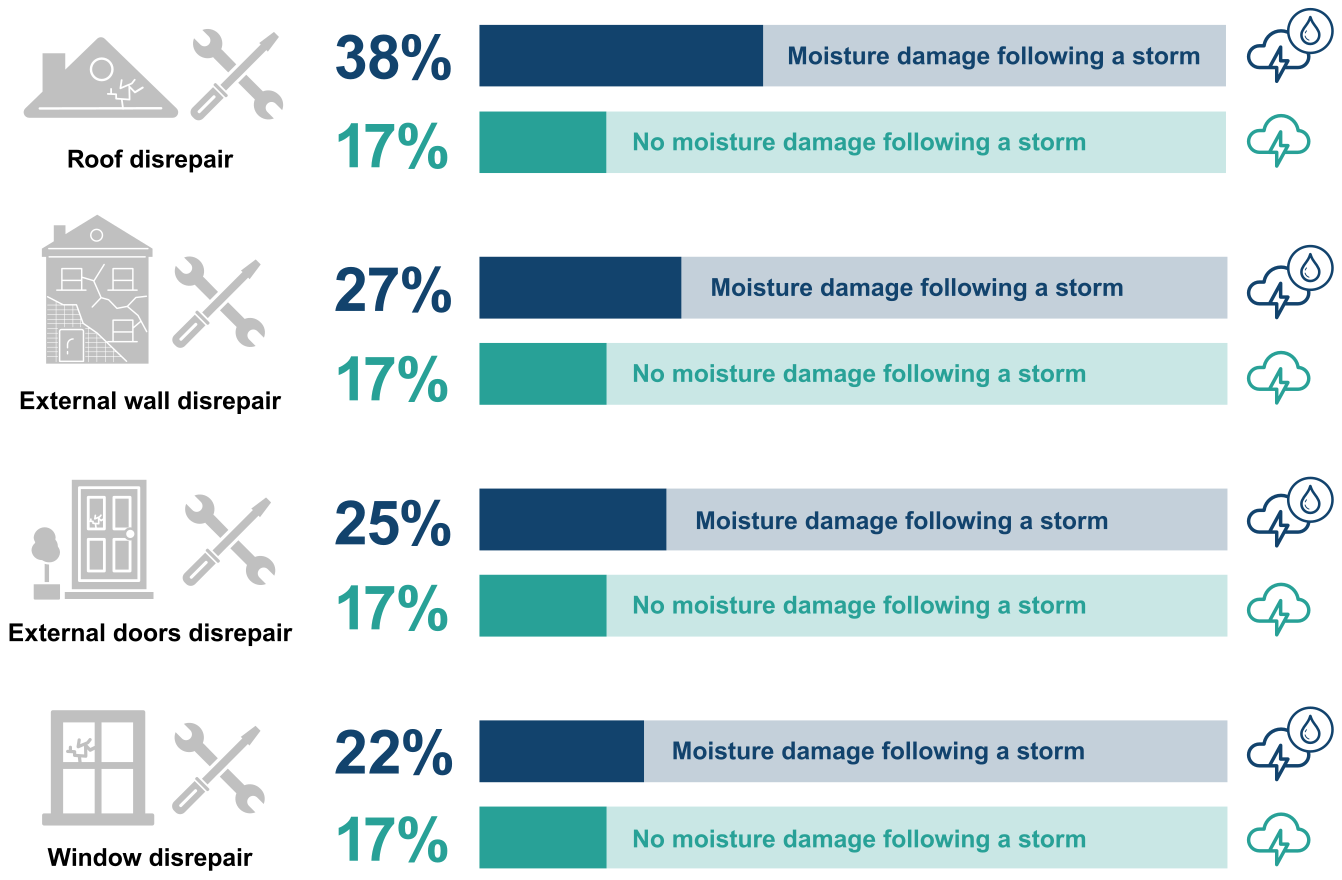
Overall, dwellings in disrepair were more likely to have water damage following a storm compared with those in good condition. Out of all dwellings that had roofs in disrepair, 38% experienced moisture damage following a storm. This was higher than dwellings that had doors in disrepair (25%) and windows in disrepair (22%). Dwellings with wall disrepair were no more likely to have storm damage than dwellings with other types of disrepair. These findings were similar across owner occupied dwellings, Annex Table 2.2.
Homes with roof disrepair (38%) were more likely to incur damage following a storm than dwellings without roof disrepair (17%). This was the same across all tenures.
Dwellings with disrepair were more likely to have moisture damage following a storm, with roof disrepair contributing the most.
Dwelling exposure
A dwelling is classed as being exposed if it is in a wet or windy position. For example, a dwelling surrounded by other buildings or trees is not likely to be exposed. However, a dwelling that is open to the elements on all four sides is in an exposed position.
Among the 4.2 million dwellings where households reported moisture damage following a storm, around 1.6 million were in an exposed position, while 2.7 million were not. Exposure had no impact on the likelihood of a dwelling being damaged by a storm, which was also reflected across tenure, Annex Table 2.3.
Dwelling construction
The following analysis looks at the resilience of the current dwelling stock against rain and storm damage. As referenced in Section 1, eight different types of wall construction are considered here. These include masonry walls (solid, cavity and crosswall), frame construction (timber, steel and concrete) as well as concrete boxwall and other concrete walls.
Additionally, this section refers to the subtotal of ‘other less common wall types’ which includes crosswall masonry, timber frame, steel frame, concrete frame, concrete boxwall and other concrete walls.
In 2024, of the 4.2 million dwellings that were reported for moisture damage following a storm, 2.2 million had cavity masonry walls, 1.7 million had solid masonry walls and 340,000 dwellings had other less common wall types, Annex Table 2.4.
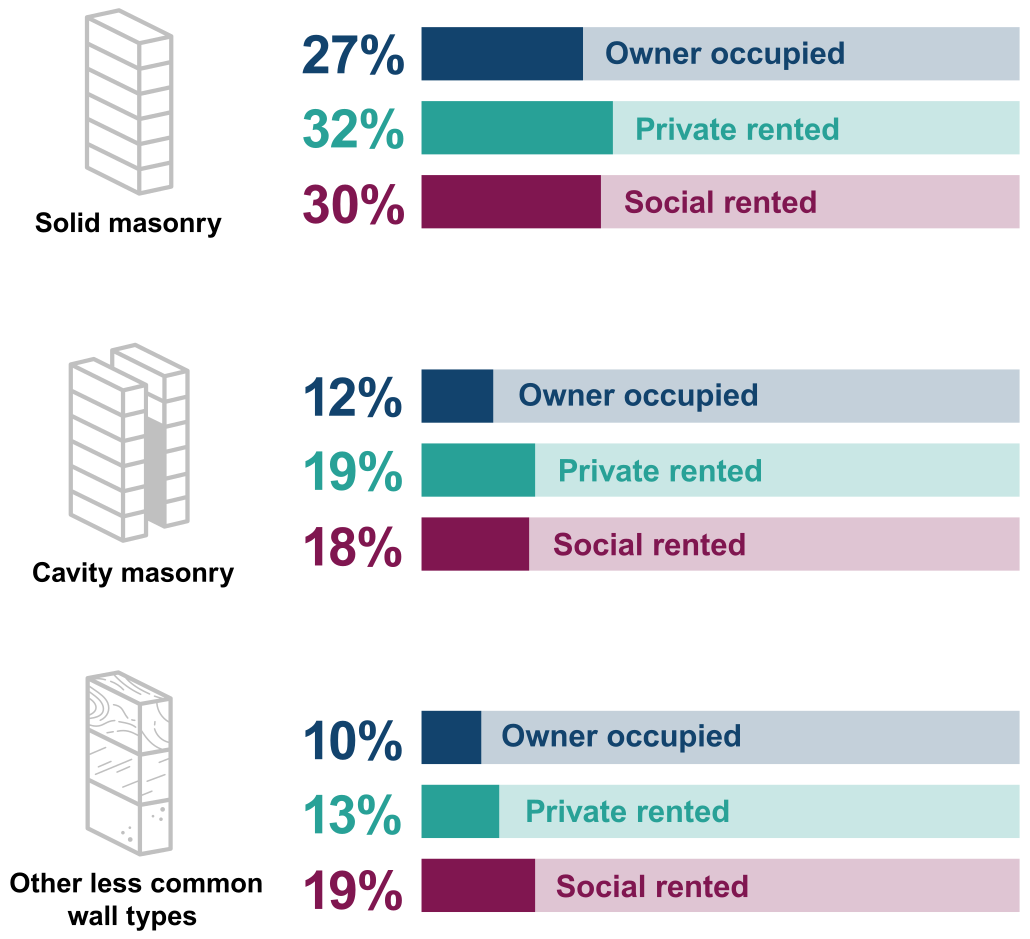
Households in dwellings with solid masonry walls (28%) were more likely to report damage following a storm than dwellings with most other wall types: concrete boxwall and crosswall masonry (both 19%), concrete frame (15%), cavity masonry (14%), timber frame (9%) and steel frame (8%).
Private rented households in dwellings with masonry walls (crosswall (44%), solid (32%) and cavity (19%)) were all more likely to report damage following a storm than similar households from other tenures. This generally followed the overall trend that private rented dwellings were most likely to incur storm related damage (22%) than social rented (20%) and owner occupied (15%) dwellings.
However, among dwellings with all other less common wall types, social rented dwellings were more likely to be described as having moisture damage following a storm (19%) than both private rented (13%) and owner occupied dwellings (10%).
Householders in dwellings constructed of solid masonry were most likely to report having moisture damage following a storm, followed by those with cavity masonry and other less common wall types. Private rented households in dwellings with all types of masonry walls were most likely to report moisture damage, whereas those in social rented dwellings constructed of less common wall types were more likely to report damage.
4. Technical notes
Further details on the English Housing Survey methodology and glossary of terms can be found in the Technical Notes and glossary.
Underlying data for this report are published as Annex Tables
If you have any queries about this report, would like any further information or have suggestions for analyses you would like to see included in future EHS reports, please contact ehs@communities.gov.uk.