Diabetes profile: statistical commentary, April 2026
Published 8 April 2026
Applies to England

© Crown copyright 2026
This publication is licensed under the terms of the Open Government Licence v3.0 except where otherwise stated. To view this licence, visit nationalarchives.gov.uk/doc/open-government-licence/version/3 or write to the Information Policy Team, The National Archives, Kew, London TW9 4DU, or email: psi@nationalarchives.gov.uk.
Where we have identified any third party copyright information you will need to obtain permission from the copyright holders concerned.
This publication is available at https://www.gov.uk/government/statistics/diabetes-profile-update-april-2026/diabetes-profile-statistical-commentary-april-2026
What’s new
This update to the diabetes profile adds new indicators on risk of developing type 2 diabetes, level of achievement of treatment targets, and updates for existing indicators that use the latest National Diabetes Audit (NDA) data. Indicators based on NDA data have been updated using data for the financial year from April 2024 to March 2025.
New indicators added to the profile include:
- estimated total non-diabetic hyperglycaemia (NDH) prevalence in adults aged 18 and over
- diagnosed prevalence of type 2 diabetes among adults aged 19 to 39 years
- percentage of people with diabetes aged 12 and over who achieved a blood pressure of 140/90 millimetres of mercury (mmHg) or less
From the financial year ending March 2025, the NDA has changed from a 15-month audit period (January to March the following year) to a 12-month financial year period (April to March). This change in the audit period means that the values reported from the financial year ending March 2025 are not comparable with previously reported data. There is now a new time series for these indicators.
Introduction
The annual update of the diabetes profile brings together data on risk factors, prevalence, care and outcomes for people with diabetes in England. It includes indicators on:
- type 2 diabetes risk factors
- diabetes prevalence
- care processes and treatment targets in primary care
- structured education
- complications and mortality
By presenting disease outcomes and risk factors, this profile:
- brings together data on the pathway of healthcare in one tool
- provides data for health professionals and local public health colleagues when assessing the impact of the disease on their local population and making decisions about services
- supports users to identify and address inequalities in care between their areas and identify priority areas
The NDA is a national clinical audit of primary care data, which measures the effectiveness of diabetes healthcare against National Institute for Health and Care Excellence (NICE) clinical guidelines and quality standards. NICE recommends in the Type 2 diabetes in adults quality standard 9 care processes for diabetes and in the Type 2 diabetes in adults: management guidance 3 treatment targets for diabetes.
Main findings
This update shows for England:
- modelled estimates suggest that in 2021 around 5.7 million adults aged 18 and over had NDH, a prevalence of 12.7%
- there were just over 152,000 adults aged 19 to 39 with diagnosed type 2 diabetes at March 2024, a prevalence of 0.83%
- 43.0% of people with type 1 diabetes and 58.2% of people with type 2 and other diabetes received 8 recommended care processes in the financial year ending March 2025
- 30.7% of people with type 1 diabetes and 45.2% of people with type 2 and other diabetes achieved all 3 treatment targets for glycated haemoglobin (HbA1c), blood pressure and statin prescription in the financial year ending March 2025
Detailed findings
Estimated total prevalence of non-diabetic hyperglycaemia (NDH)
NDH refers to blood glucose levels that are above the normal range but below the diagnostic threshold for diabetes. NDH is defined as an HbA1c level between 42 and 47 millimoles per mole (mmol/mol) in people who do not already have diabetes. People with NDH have a higher risk of developing type 2 diabetes, so identifying and managing this group is important for prevention.
For England as a whole, the estimates indicate that around 5.7 million adults had NDH in 2021, a prevalence of 12.7%.
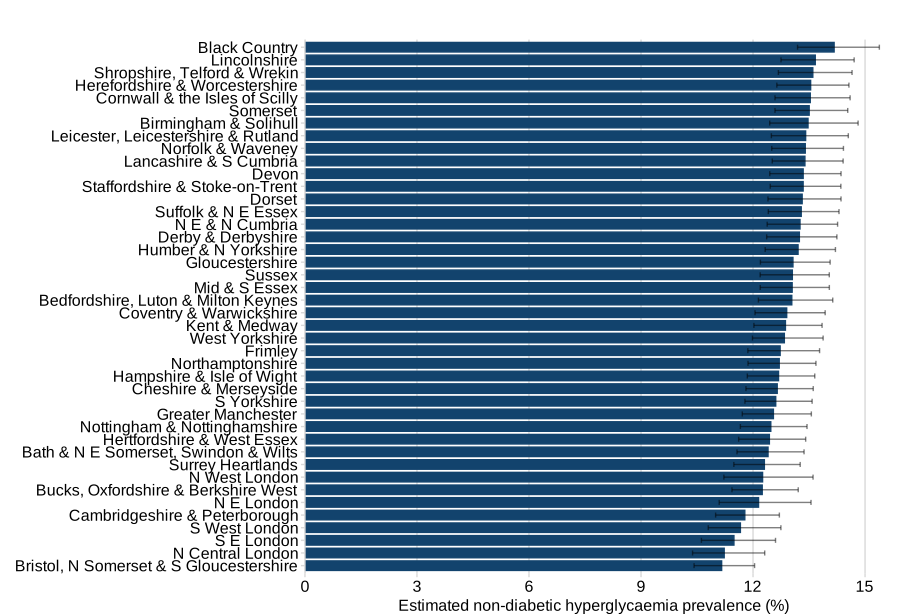
There is variation in estimated NDH prevalence across the country. At regional level, estimates range from 11.8% in London to 13.5% in the West Midlands. Figure 1 shows that, across integrated care boards (ICBs), estimated prevalence ranges from around 11.2% in NHS Bristol, North Somerset and South Gloucestershire ICB to 14.2% in NHS Black Country ICB.
At lower tier local authority level, estimated NDH prevalence ranges from around 8.6% to 16.0%, a difference of about 7.4 percentage points between areas.
Details about the methodology used to estimate NDH prevalence are available in the accompanying technical document from Fingertips.
Figure 1: estimated total non-diabetic hyperglycaemia prevalence (and 95% confidence intervals), people aged 18 and over, England ICBs, 2021
Source: OHID, based on Office for ONS and NHS England data
The Fingertips profile shows the:
Young adults with type 2 diabetes
Early-onset type 2 diabetes, typically defined as diagnosis before the age of 40, is associated with a higher lifetime risk of complications, adverse cardiovascular outcomes and earlier death than diagnosis later in life. This indicator focuses on adults aged 19 to 39 and the prevalence of type 2 diabetes in that group.
As of March 2024, there were just over 152,000 adults aged 19 to 39 in England with diagnosed type 2 diabetes, a prevalence of 0.83% in this age group. Prevalence was slightly higher in females (0.86%) than males (0.79%), which is the opposite pattern to overall adult type 2 diabetes where prevalence is higher in males.
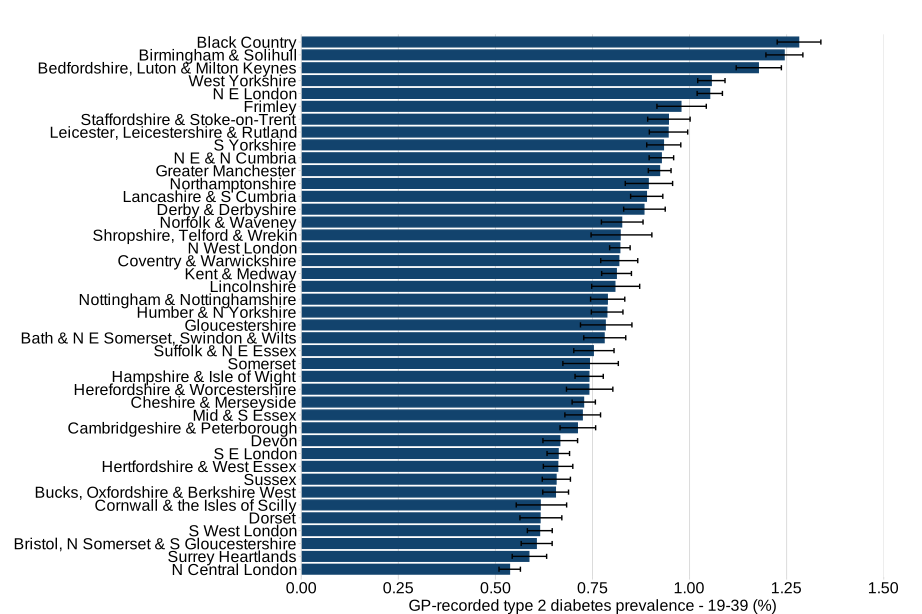
Figure 2 shows there is variation of type 2 diabetes prevalence in young people across ICBs. For the financial year ending March 2024, ICB level prevalence among adults aged 19 to 39 ranged from 0.54% in NHS North Central London ICB to 1.28% in NHS Black Country ICB.
Recorded prevalence is likely to underestimate the true burden of early-onset type 2 diabetes in this age group, as some people will remain undiagnosed. Evidence from Office for National Statistics (ONS) in the Risk factors for pre-diabetes and undiagnosed type 2 diabetes in England: 2013 to 2019 publication shows this is more likely in this age group.
Figure 2: percentage of people aged 19 to 39 years diagnosed with type 2 diabetes (and 99.8% confidence intervals), ICBs in England, financial as March 2024
Source: OHID, based on NDA data
The Fingertips profile shows the:
Care processes
The NDA reports on completion of 9 recommended care processes for people with diabetes in primary care. These include checks of HbA1c, blood pressure, cholesterol, kidney function, urinary albumin, retinal screening, foot risk, body mass index (BMI) and smoking status. Data on retinal screening was not available for this release, therefore data on the 8 other care processes is reported here.
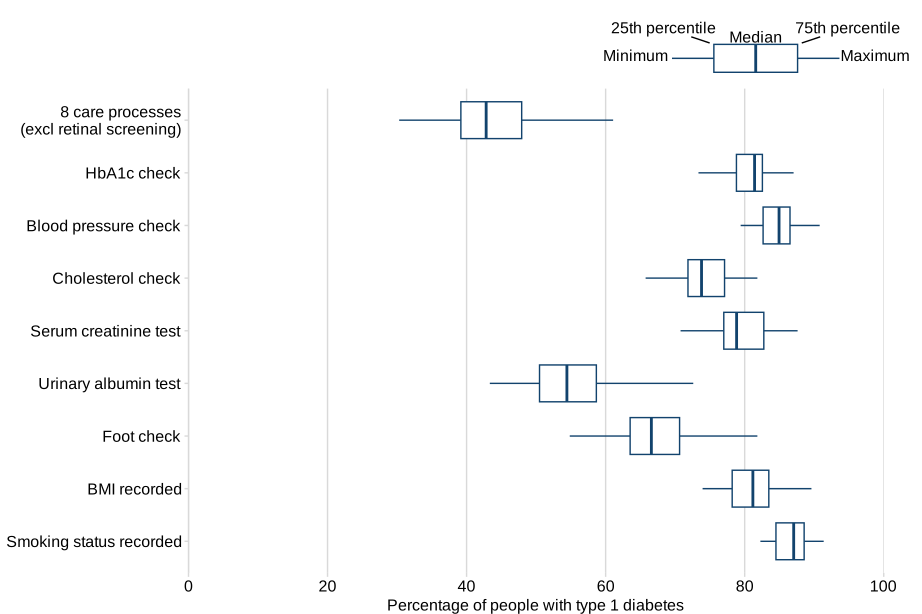
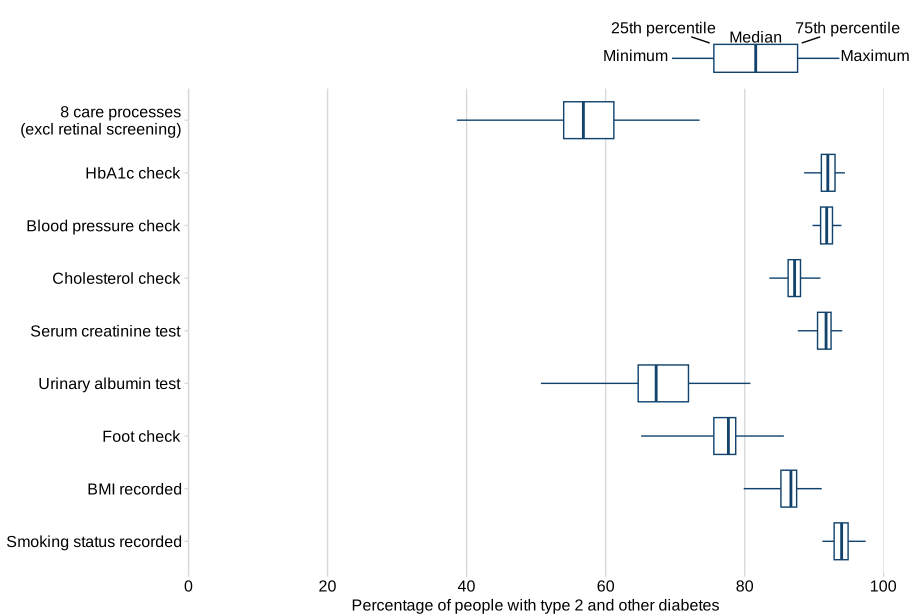
In the financial year ending March 2025, 43.0% of people with type 1 diabetes in England received 8 care processes (excluding retinal screening). For people with type 2 and other diabetes, 58.2% received 8 care processes.
Figures 3 and 4 show that there is variation across ICBs in the percentage of people with diabetes who received 8 care processes. Care processes with the highest completion rates, such as HbA1c and blood pressure check, tend to show the smallest variation across ICBs. By contrast, urinary albumin testing and foot checks have lower completion rates and greater variation across ICBs.
The change from a 15-month to a 12-month audit period has contributed to lower measured completion of care processes in this update compared with previous years, because practices now have a shorter window in which to complete all care processes for each person.
Figure 3: percentage of people with type 1 diabetes that received care processes, ICBs in England, financial year ending March 2025
Source: NHS England, NDA
Figure 4: percentage of people with type 2 and other diabetes that received care processes, ICBs in England, financial year ending March 2025
Source: NHS England, NDA
Treatment targets
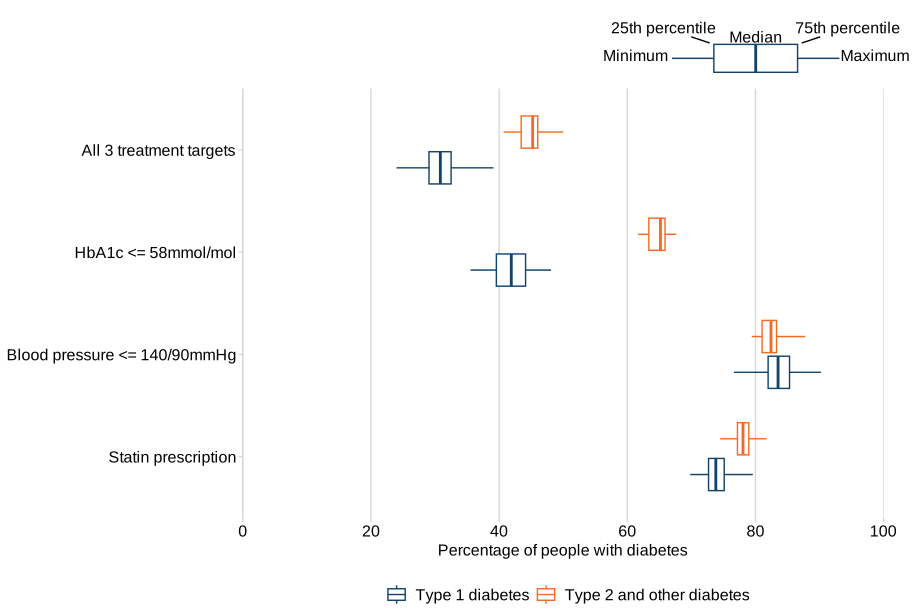
The NDA also reports on achievement of treatment targets recommended by NICE for people with diabetes: HbA1c, blood pressure and statin prescription for cardiovascular disease prevention where appropriate. These indicators use updated blood pressure thresholds of 140/90 mmHg, leading to higher achievement for this target and the bundled all 3 treatment targets indicators compared to the previous threshold of 140/80 mmHg.
In the financial year ending March 2025, 30.7% of people with type 1 diabetes achieved all 3 treatment targets for HbA1c, blood pressure and statin prescription. For people with type 2 and other diabetes, 45.2% achieved all 3 treatment targets.
Figure 5 shows that, across ICBs, a greater proportion of people with type 2 and other diabetes achieve all 3 treatment targets than people with type 1 diabetes. In the financial year ending March 2025, 64.7% of people with type 2 and other diabetes achieved an HbA1c of 58 mmol/mol or less, compared with 41.5% of people with type 1 diabetes. Both groups show similar rates in meeting blood pressure and statin targets.
Earlier NDA data, using the previous audit period, showed that the percentage of people with type 1 diabetes achieving an HbA1c of 58 mmol/mol or less has increased over time, while the equivalent percentage for people with type 2 and other diabetes has shown no improvement. This previous time series is still available on Fingertips as separate indicators.
The impact of the audit period change on treatment target achievement is much smaller than care processes.
Figure 5: percentage of people with diabetes that achieved treatment targets, by type of diabetes, ICBs in England, financial year ending March 2025
Source: NHS England, NDA
Further information
Further details about the data sources, indicator definitions and methods used in this update are available in the definitions and metadata sections of the online diabetes profile in Fingertips.
More detailed analysis of the impact of changing the NDA audit period from 15 months to 12 months is available from the NDA publication: impact of audit period change from 15 to 12 months.
Further resources on care processes, treatment targets and young people with type 2 diabetes are available from the NDA dashboards.
For queries about this commentary or the diabetes profile, email ncvin-ohid@dhsc.gov.uk.