DCMS Sectors Economic Estimates: Research and Development (R&D) Expenditure 2024 - Main Report
Published 30 April 2026

© Crown copyright 2026
This publication is licensed under the terms of the Open Government Licence v3.0 except where otherwise stated. To view this licence, visit nationalarchives.gov.uk/doc/open-government-licence/version/3 or write to the Information Policy Team, The National Archives, Kew, London TW9 4DU, or email: psi@nationalarchives.gov.uk.
Where we have identified any third party copyright information you will need to obtain permission from the copyright holders concerned.
This publication is available at https://www.gov.uk/government/statistics/dcms-sectors-economic-estimates-research-and-development-rd-2024/dcms-sectors-economic-estimates-research-and-development-rd-expenditure-2024-main-report
1. Introduction
Release date: 30 April 2026
Next release: 2027
Geographic coverage: United Kingdom
Time coverage: 2022 to 2024
Responsible analyst: Florence Wragg
These official statistics in development provide estimates of expenditure on Research and Development (R&D) by UK businesses in the DCMS sectors from 2022 to 2024.
Estimates of R&D expenditure by businesses in the civil society sector are not available in this release because these organisations are not identifiable in the data source.
Tourism industries estimates in this release are constructed on a different basis to the tourism sector estimates in our other Economic Estimates, and will be larger as they take into account the entire industry rather than strictly tourism activity.
These estimates are based on the Office for National Statistics (ONS) Business Enterprise Research and Development (BERD) survey. Due to sampling and methodology changes to the BERD survey in 2022, estimates in this release are not directly comparable to previous estimates produced using BERD data for years before 2022. This includes estimates published by the ONS on Expenditure on research and development performed in UK businesses in the Creative Industries sector, 2020. More information on these changes is available in the accompanying technical report.
We advise caution when interpreting comparisons over time. The ONS advises that while all estimates produced using the BERD data are affected by sample rotation, the impact of this can be more pronounced when analysing the data by industry, which may affect estimates for DCMS sectors. As such, industry estimates are more useful as a point in time estimate only, as data movements between years may not necessarily reflect the actual R&D growth in these industries.
For this reason, we have only included comparisons over time for DCMS as a whole and the creative industries in this report, and not for smaller DCMS sectors, such as the sport sector, tourism industries, cultural sector and gambling sector, which are likely to be more impacted by the effects of sampling rotation.
Official statistics in development
These statistics are labelled as official statistics in development. Official statistics in development are official statistics that are undergoing development and will be tested with users, in line with the standards of trustworthiness, quality and value in the Code of Practice for Statistics. These R&D estimates are designed to complement our other economic estimates and to give a deeper understanding of the economic performance of DCMS sectors to the UK economy. They are being published as official statistics in development because:
- We will be exploring further improvements, including the feasibility of additional breakdowns, and the development of measures to understand the quality of the estimates, such as standard errors.
- We are continuing to seek user feedback on the usefulness of the statistics, the suitability of the methodology used and how clearly the statistics are communicated, including explanations about quality.
In this release we have introduced a number of improvements, including:
- Adding a breakdown for DCMS sectors based on ownership (overseas-owned vs UK-owned)
- Publishing inflation-adjusted estimates for total R&D expenditure by DCMS sector and by region for DCMS sectors and the creative industries.
We will continue to seek user feedback about this release. We will consider this feedback and make an assessment about whether the statistics still remain in development or if the label can be removed for the next annual R&D release, expected in 2027. If you have any feedback on this release, please send this to evidence@dcms.gov.uk.
2. Headline Findings
2.1 R&D expenditure by businesses in the included DCMS sectors
In 2024, expenditure on R&D by businesses in the included DCMS sectors was an estimated £10.5 billion, 19% of the R&D expenditure by UK businesses overall (£55.6 billion). Expenditure by businesses in the creative industries accounted for the largest proportion of R&D spend by included DCMS sectors (£9.4 billion), specifically by businesses in the IT, software and computer services subsector (£6.6 billion).
Inflation-adjusted estimates over time
We advise caution when interpreting comparisons over time. The ONS advises that while all estimates produced using the BERD data are affected by sample rotation, the impact of this can be more pronounced when analysing the data by industry, which may affect estimates for DCMS sectors. As such, industry estimates are more useful as a point in time estimate only, as data movements between years may not necessarily reflect the actual R&D growth in these industries.
For this reason, we have only included comparisons over time for DCMS as a whole and the creative industries in this report, and not for smaller DCMS sectors, such as the sport sector, tourism industries, cultural sector and gambling sector, which are likely to be more impacted by the effects of sampling rotation.
This section presents estimates of R&D expenditure by businesses in the included DCMS sectors using constant prices (2024 prices) to produce inflation-adjusted (real terms) estimates over time. This uses the new R&D deflator developed by the ONS for all UK businesses. As the ONS R&D deflator is not available at industry level, these estimates do not account for any differences in inflation between industries. Further information is available in the technical report.
Adjusting for inflation, R&D expenditure by businesses in the included DCMS sectors increased by 3% in real terms between 2023 and 2024, following a small decrease of 1% in real terms between 2022 and 2023. The increase between 2023 and 2024 in the included DCMS sectors was mainly driven by an increase in R&D expenditure performed by businesses in the creative industries, which accounts for the majority of R&D expenditure by businesses in the included DCMS sectors.
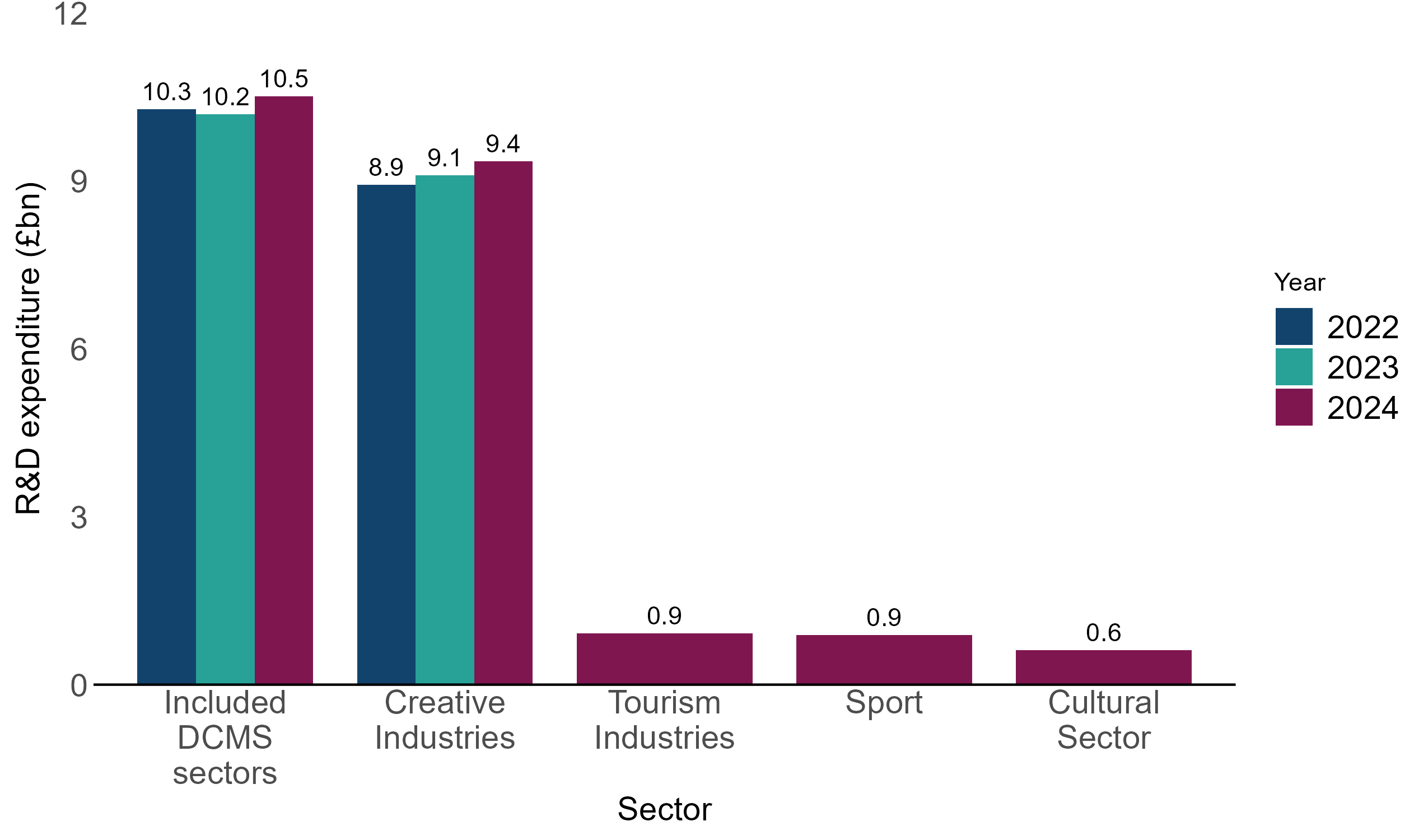
Figure 1: R&D expenditure (£ billions) by businesses in the included DCMS sectors in constant prices (2024), adjusted for inflation, 2022 to 2024.
Due to the potential effects of sampling rotation on changes over time for smaller sectors, Figure 1 includes estimates for 2024 only for the sport sector, tourism industries and cultural sector.
Please note that due to overlaps between the DCMS sectors, for example where some industries are simultaneously classed as being in the creative industries and cultural sector, the sum of totals will not add up to the included DCMS sectors totals and the sum of proportions will not equal 100%. Further information is available in the accompanying technical report.
Estimates of R&D expenditure in 2024 and trends vary by sector:
- Creative industries: £9.4 billion, an increase of 3% in real terms from 2023, following an increase of 2% in real terms between 2022 and 2023. The creative industries accounted for 89% of total R&D expenditure by the included DCMS sectors and 17% of expenditure by UK businesses overall.
- Cultural sector: £0.6 billion, accounting for 6% of total R&D expenditure by the included DCMS sectors and 1% of expenditure by UK businesses overall.
- Tourism industries*: £0.9 billion, accounting for 8% of total R&D expenditure by the included DCMS sectors and 2% of expenditure by UK businesses overall.
- Sport sector: £0.9 billion, accounting for 9% of total R&D expenditure by the included DCMS sectors and 2% of expenditure by UK businesses overall.
- R&D expenditure for the gambling sector is not available for 2024 to prevent the disclosure of respondent information in line with ONS disclosure rules.
*Tourism industries estimates in this release are constructed on a different basis to the tourism sector estimates in our other economic estimates, and will be larger as they take into account the entire industry rather than strictly tourism activity.
2.2 Regional distribution of R&D expenditure by businesses in the included DCMS sectors
Regional breakdowns of R&D expenditure are available for included DCMS sectors overall and the creative industries only. This is because a large proportion of the regional values for other DCMS sectors and subsectors had to be suppressed in line with ONS disclosure control guidance to make sure that information attributable to an individual business is not identifiable in any published outputs. For this reason, we have published a regional breakdown for DCMS overall and the creative industries only.
Overall, the region accounting for the largest proportion of R&D expenditure by businesses in the included DCMS sectors was London (57%) followed by the South East (16%). For context, in UK businesses overall, London accounted for the largest proportion of R&D expenditure (24%) followed by the East of England (19%) and the South East (17%). This shows that R&D expenditure by businesses in the included DCMS sectors is more concentrated in London than for UK businesses overall.
Expenditure by businesses in the creative industries followed a similar trend. The region accounting for the largest proportion of R&D expenditure was London (63%), followed by the South East (14%).
Trends in R&D expenditure by businesses in the included DCMS sectors between 2023 and 2024 vary across regions. The largest absolute increases between 2023 and 2024 were London (£0.6 billion) and the South East (£0.1 billion), driving the overall increase for included DCMS sectors.
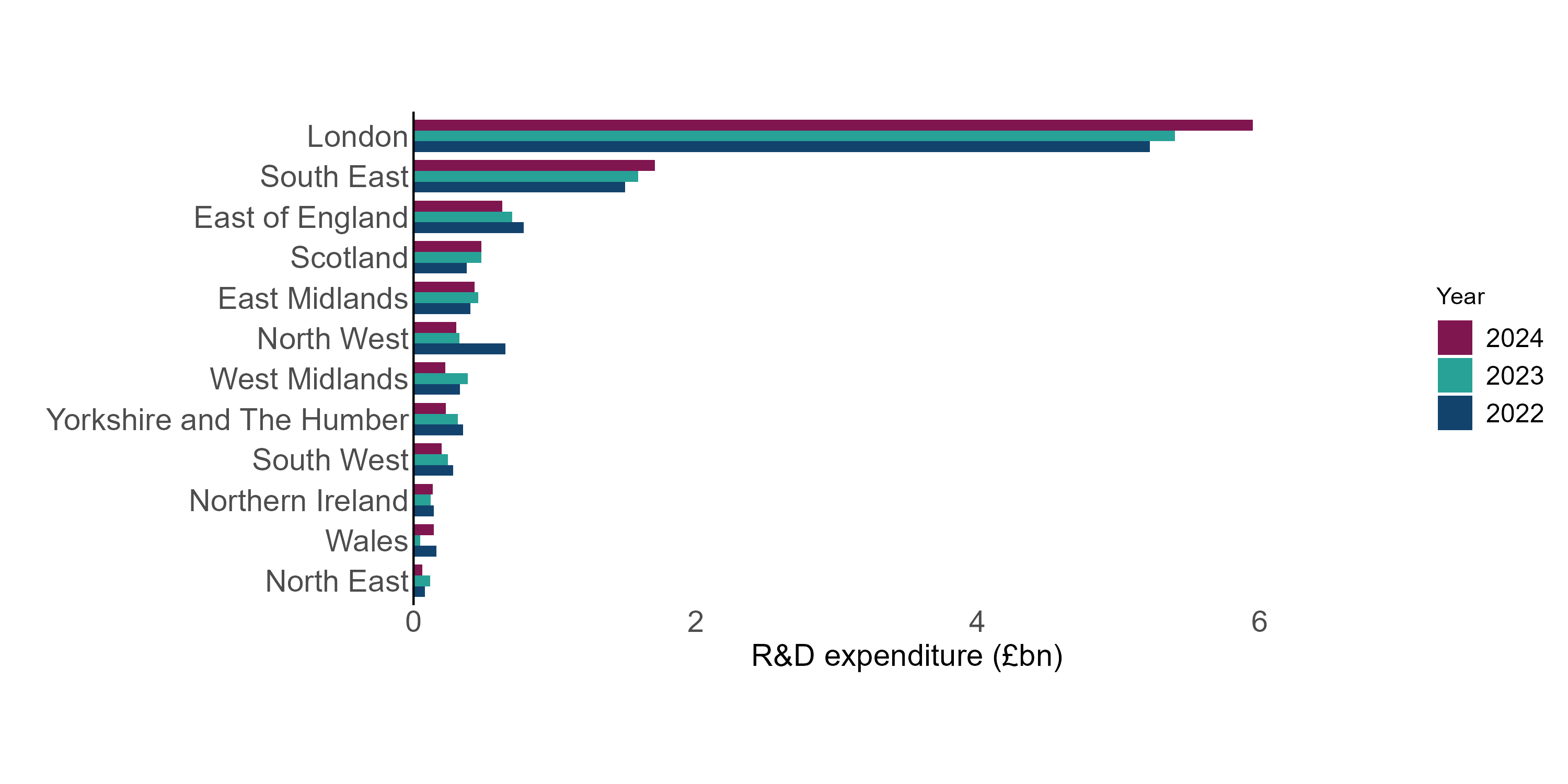
Figure 2: R&D expenditure (£ billions) by businesses in the included DCMS sectors by region in constant prices (2024), adjusted for inflation, 2022 to 2024.
2.3 R&D expenditure by businesses in the included DCMS sectors by employment size band
In 2024, 40% of R&D expenditure by businesses in the included DCMS sectors was by small to medium sized businesses (0 to 249 employees), a higher proportion than for all UK businesses overall (32%). Estimates of R&D expenditure by employment size band in 2024 and trends vary by sector. The creative industries had the largest proportion of R&D expenditure by businesses in the 0 to 249 employment band (44%), followed by the tourism industries (12%), and the sport sector (10%). R&D expenditure by employment band size for the cultural sector and the gambling sector are not available for 2024 to prevent the disclosure of respondent information in line with ONS disclosure rules.
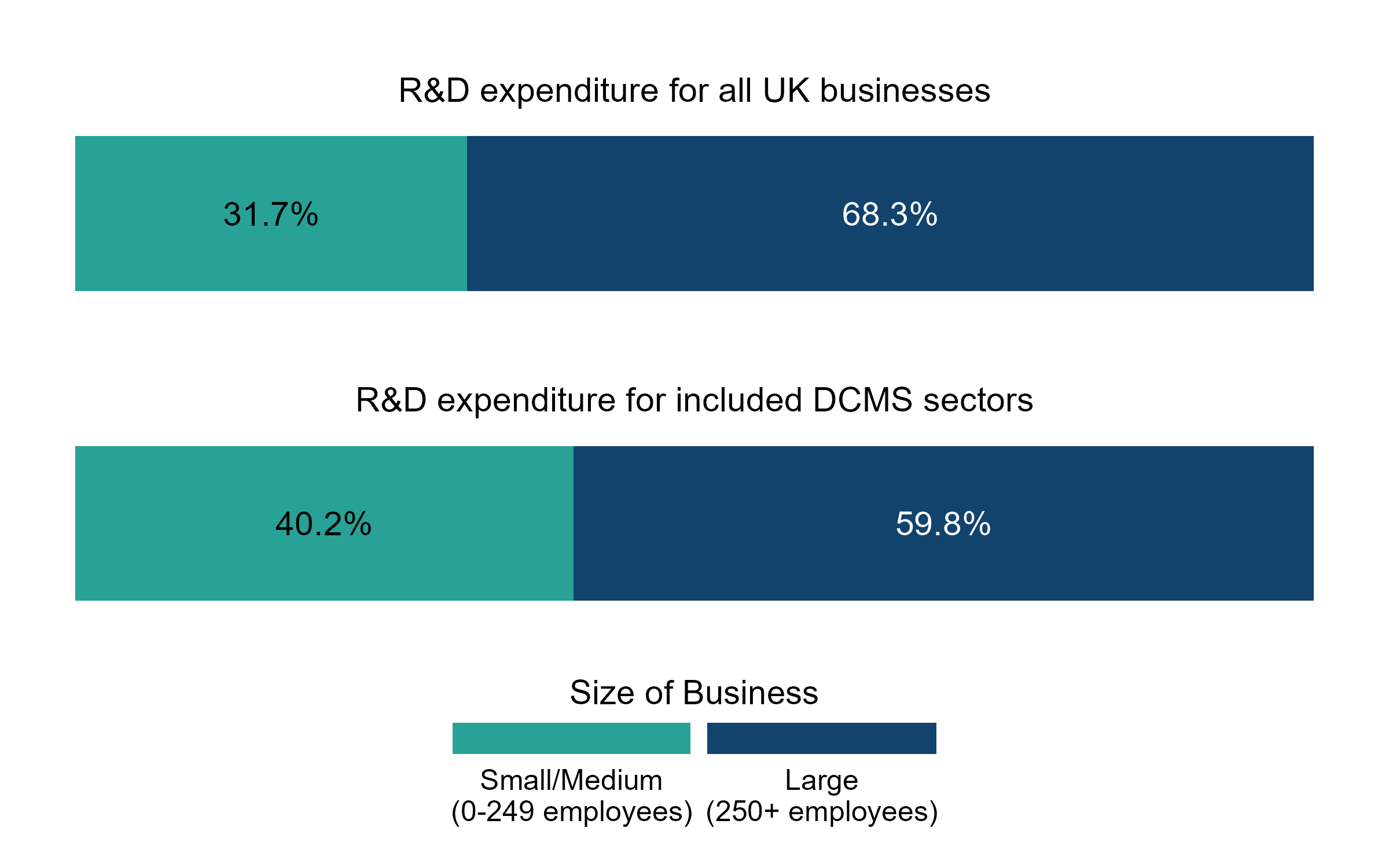
Figure 3: Percentage of R&D expenditure for all UK businesses and businesses in the included DCMS sectors by employment band, 2024
2.4 R&D expenditure by businesses in the included DCMS sectors by UK or Overseas ownership
In 2024, 36% of R&D expenditure by businesses in the included DCMS sectors was by UK-owned businesses, a lower proportion than for UK businesses overall (49%). The tourism industries had the largest proportion of R&D expenditure by UK-owned businesses (69%), followed by the sport sector (49%), and the creative industries (34%). R&D expenditure by UK-ownership for the cultural sector and the gambling sector are not available for 2024 to prevent the disclosure of respondent information in line with ONS disclosure rules.
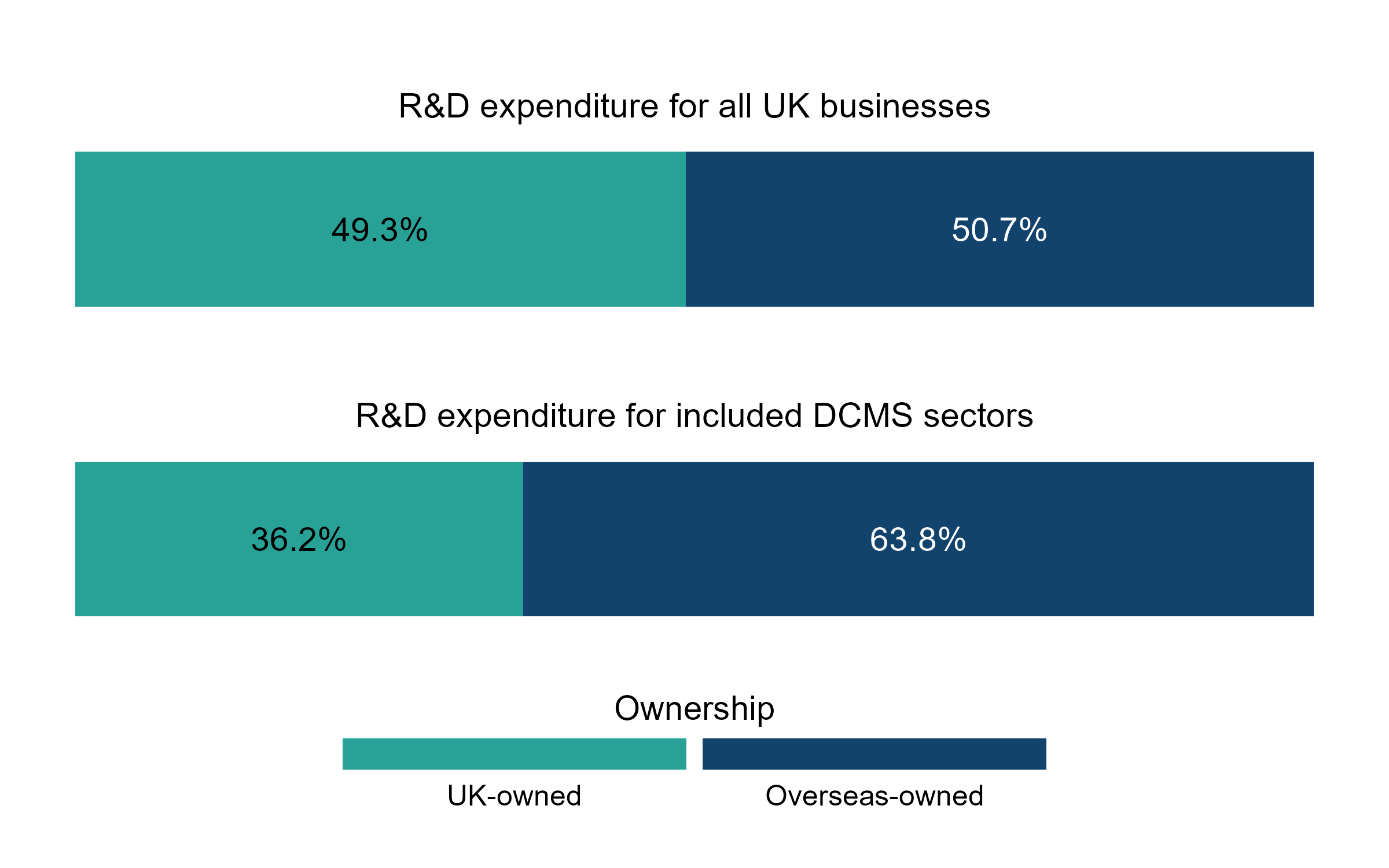
Figure 4: Percentage of R&D expenditure for all UK businesses and businesses in the included DCMS sectors by UK ownership and overseas ownership, 2024
3. Further Information
DCMS has developed a suite of Economic Estimates to understand the economic impact its sectors have on the UK economy. In combination with other economic indicators, these estimates help build a comprehensive picture of the UK economy, and of the DCMS Sectors’ importance within it.
The DCMS sectors covered in this report are:
- Creative industries
- Cultural sector
- Gambling
- Sport
- Tourism industries
Estimates of R&D expenditure by businesses in the civil society sector are not available in this release because these organisations are not identifiable in the data source.
Tourism industries estimates in this release are constructed on a different basis to the tourism sector estimates in our other economic estimates, and will be larger as they take into account the entire industry rather than strictly tourism activity.
Methodological information on the sector definitions, data sources, calculations of productivity and limitations of the approach can now be found in the accompanying technical report.
The responsible statistician for this release is Florence Wragg. For enquiries on this release, please email evidence@dcms.gov.uk.
For general enquiries contact: Department for Culture, Media and Sport, 100 Parliament Street, London, SW1A 2BQ. For media enquiries contact: 020 7211 2210.
Our statistical practice is regulated by the Office for Statistics Regulation (OSR). OSR sets the standards of trustworthiness, quality and value in the Code of Practice for Statistics that all producers of official statistics should adhere to. You are welcome to contact us directly with any comments about how we meet these standards. Alternatively, you can contact OSR by emailing regulation@statistics.gov.uk or via the OSR website.