DCMS Sectors Economic Estimates Productivity 2024 (provisional)
Published 25 June 2026

© Crown copyright 2026
This publication is licensed under the terms of the Open Government Licence v3.0 except where otherwise stated. To view this licence, visit nationalarchives.gov.uk/doc/open-government-licence/version/3 or write to the Information Policy Team, The National Archives, Kew, London TW9 4DU, or email: psi@nationalarchives.gov.uk.
Where we have identified any third party copyright information you will need to obtain permission from the copyright holders concerned.
This publication is available at https://www.gov.uk/government/statistics/dcms-sector-economic-estimates-productivity-2024-provisional/dcms-sectors-economic-estimates-productivity-2024-provisional
1. Introduction
Release date: 25 June 2026
Next release: 2027
Geographic coverage: United Kingdom
Time coverage: 2019 to 2024
Responsible analyst: Rachel Moyce
These official statistics in development provide provisional estimates of the productivity of DCMS sectors annually for 2019 to 2023, and provisionally for 2024, measured by gross value added (GVA) per hour worked and per filled job. Output per hour is generally the preferred measure of labour productivity as it accounts for different working patterns, for example part-time working.
This publication includes a time series for the first time for output per job, and updates and revises the time series for output per hour. Estimates of productivity in the tourism and civil society sectors are included for the first time.
Regional estimates are also published for the first time but do not include tourism or civil society, as regional GVA estimates are not available for these sectors. The regional estimates cover 2023 only, as regional GVA estimates are not currently available for 2024. This means that the GVA data used for regional estimates has not been revised following Blue Book 2025. (see technical report and earlier productivity estimates.) We intend to publish updated regional estimates, including a time series from 2019 to 2024, when we publish regional GVA 2024, as data becomes available.
We use current prices to report estimates in a particular year, and chained volume measures for comparisons over time.
Official statistics in development
These statistics are labelled as official statistics in development. Official statistics in development are official statistics that are undergoing development and will be tested with users, in line with the standards of trustworthiness, quality and value in the Code of Practice for Statistics. These productivity estimates are designed to complement our other economic estimates and to give a deeper understanding of the economic performance of DCMS sectors to the UK economy. They are being published as official statistics in development because:
- they use data from the Annual Population Survey (APS) and the ONS productivity hours and productivity jobs series, which use the Labour Force Survey (LFS), among other data sources. The APS and LFS have been impacted by falling response rates and ONS has warned about the impact of these lower response rates on productivity data. Accreditation of ONS outputs based on these surveys has been suspended;
- they include estimates for civil society and tourism for the first time;
- they include regional estimates for the first time, and we will be further developing these to include a time series;
- the methodology is still in development, including exploring the possibility of aligning estimates more closely with ONS productivity measures, potentially:
- incorporating jobs data from the Business Register and Employment Survey (BRES)
- using a component measure of productivity, in line with ONS ambitions to replace current estimates with a new measure using this approach;
- we will be seeking user feedback on the usefulness of the statistics, the suitability of the methodology used and how clearly the statistics are communicated, including explanations about quality.
We expect to make further methodological improvements and implement changes after seeking user feedback. These changes will be made by the next annual productivity release, expected in 2027. At this point we will make an assessment about whether the statistics still remain in development or if the label can be removed.
We welcome feedback on these statistics. We particularly welcome views on:
- the methodology and data sources used
- the presentation of these measures and explanations about the quality of the data
- suggestions for how these statistics could be further improved
- how you are using the estimates
Please contact evidence@dcms.gov.uk by 25 September 2026 with any feedback.
2. Headline Findings
Please see section 4 of this report for more information on interpreting productivity estimates.
Figure 1: Productivity in DCMS sectors and the UK economy: output (GVA) per hour and per job, 2024
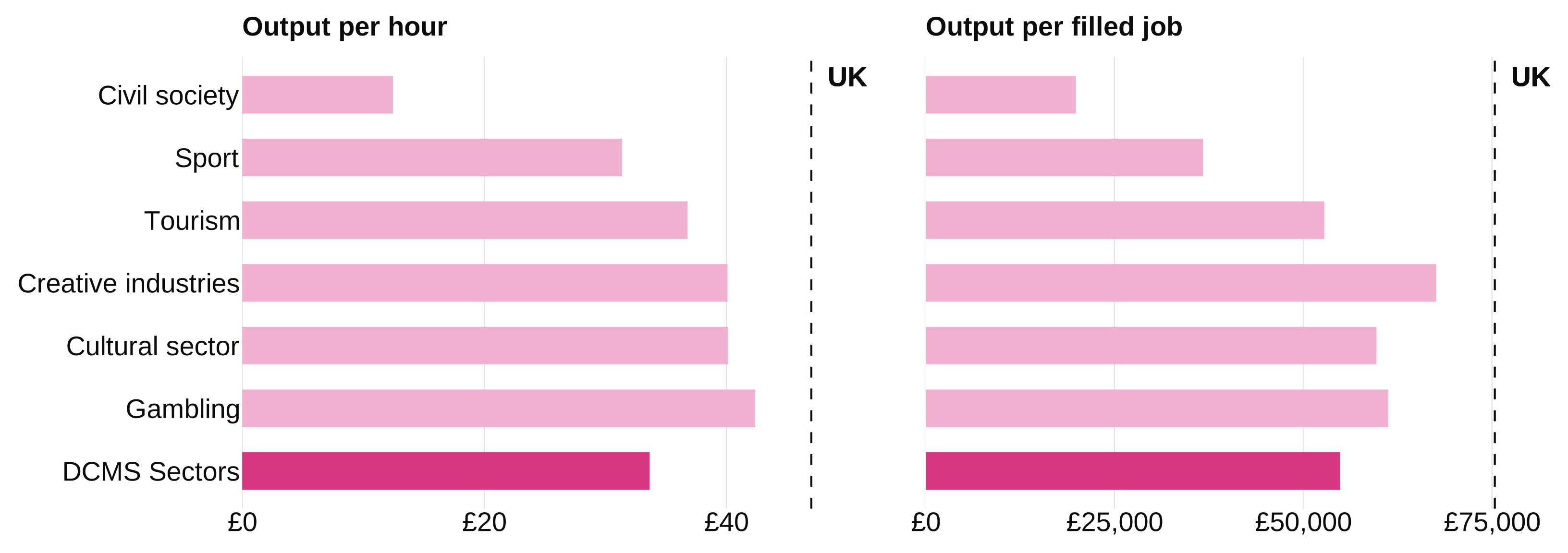
Provisional estimates suggest that productivity in the DCMS sectors in 2024 is lower than the UK economy average in terms of both output per hour and annual output per job. In 2024:
- Output per hour in DCMS sectors was £34, lower than the £47 for the UK economy as a whole. This means that for DCMS sectors compared to the average for all UK industries, more hours of work are needed to generate the same amount of GVA.
- In terms of annual output per job, DCMS sector productivity was £55,000, lower than the £75,000 for the UK economy as a whole, meaning that each filled job in DCMS sectors generates less than the UK average for all industries.
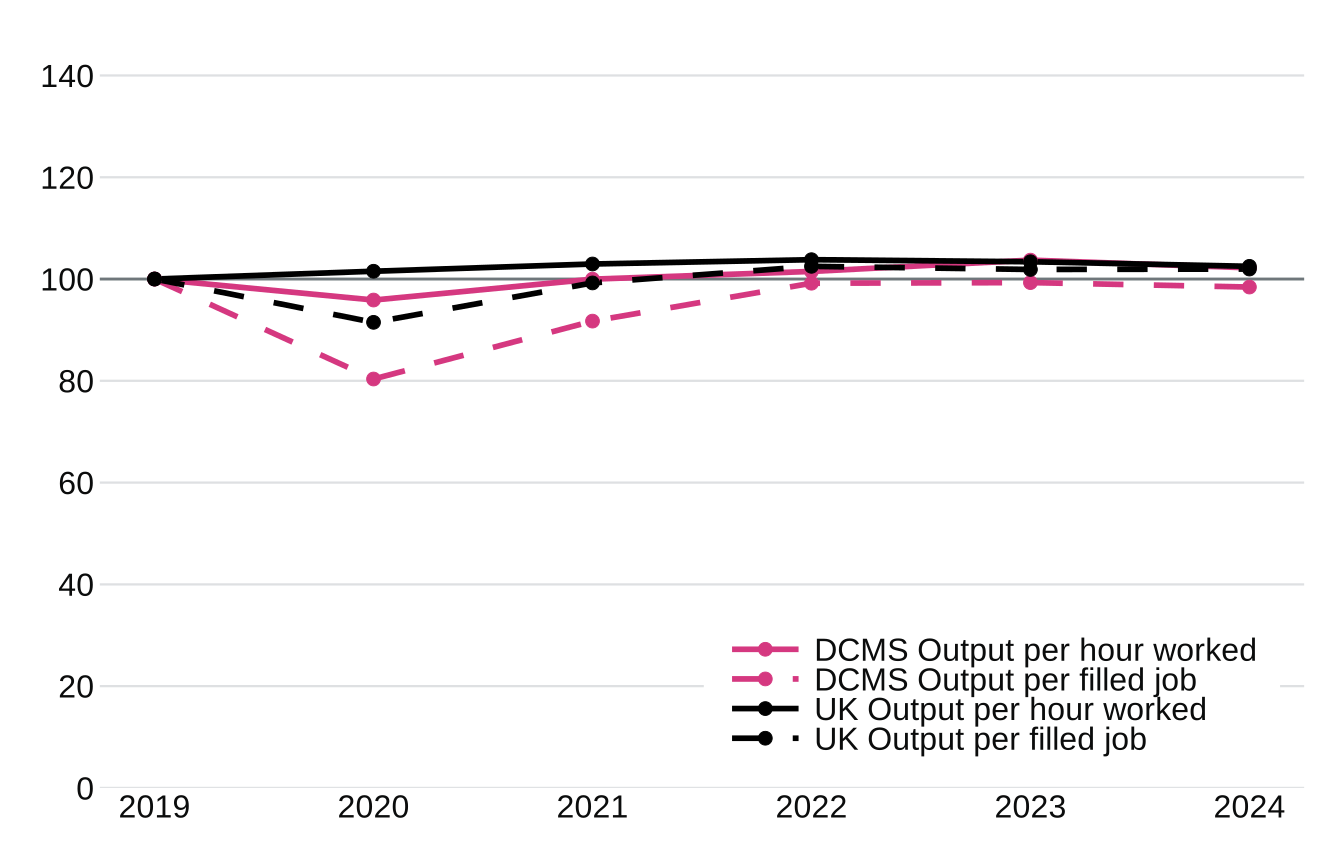
- Output per hour in DCMS sectors was 2.2% higher in 2024 than in 2019 in real terms. From 2023 to 2024, output per hour fell by 1.5%. In comparison, output per hour for all UK industries rose by 2.5% from 2019 to 2024, and fell by 0.9% from 2023 to 2024.
- Annual output per job in DCMS sectors was 1.6% lower in 2024 than in 2019 in real terms. From 2023 to 2024, output per job fell by 0.9%. In comparison, output per job in the UK economy as a whole increased by 2.0% from 2019 to 2024, and remained similar from 2023 to 2024.
- Comparing the fall in output per job and the rise in output per hour in DCMS sectors between 2019 and 2024, this might suggest that workers in these sectors are working fewer hours per job, for example, full-time jobs may have been replaced with part-time. However, both the growth in output per hour and the decrease in output per job are small. Additionally, current issues with Labour Force Survey (LFS) sample sizes create uncertainty in the estimates, so inferences should be treated with caution.
Figure 2: Index of labour productivity in real terms, DCMS and UK economy total, 2019 to 2024 Index 2019 = 100
Regional estimates 2023 provisional
Regional estimates are only available for 2023. No regional GVA estimates are available for 2024 yet, and a reliable time series for 2019 to 2022 cannot be calculated based on the most recent regional data as it does not take account of revisions to GVA in the Blue Book 2025. The regional estimates do not include tourism or civil society as we do not currently have a method for estimating GVA regionally for these sectors.
Figure 3. Regional productivity for the whole UK economy and included DCMS sectors, 2023, £s
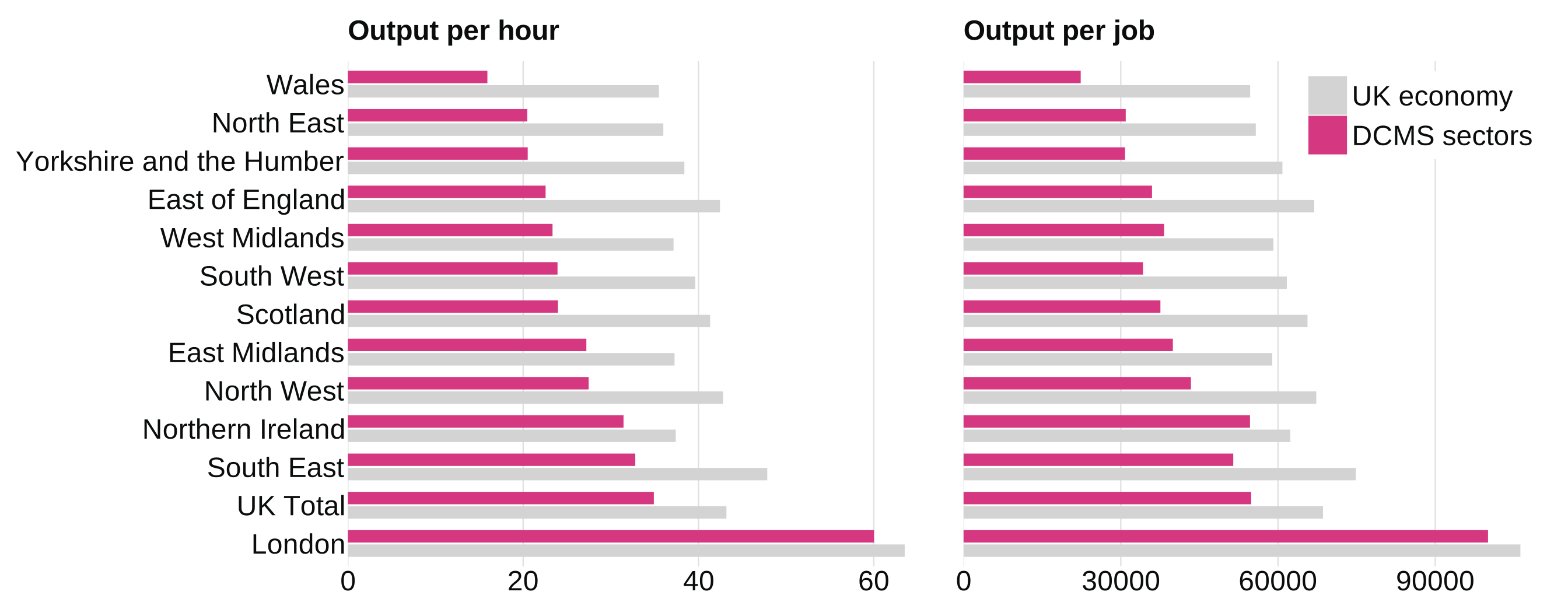
- Included DCMS sector output per hour in 2023 was highest in London at £60, followed by the South East at £33, compared to £35 on average for included DCMS sectors over the UK as a whole. Average output per hour for all UK industries was also highest in London (£64) and the South East (£48).
- The lowest output per hour in included DCMS sectors in 2023 was in Wales, at £16 per hour, followed by the North East at £20 and Yorkshire and the Humber, at £21. Average output per hour for all UK industries was also lowest in Wales and the North East, at £35 and £36 respectively.
- Included DCMS sector annual output per job in 2023 was highest in London at £100,000, followed by Northern Ireland and the South East at £55,000 and £51,000 respectively. The UK average for included DCMS sectors was £55,000. Average output per job across all UK industries was also highest in London (£106,000) and the South East (£75,000), and was £62,000 in Northern Ireland.
- The lowest annual output per job for included DCMS sectors in 2023 was in Wales, at £22,000 per job. The average for all UK industries was also lowest in Wales at £55,000.
The following information is worth noting:
- The productivity estimates above use current prices to report current year sector estimates and chained volume measures in 2023 prices (accounting for inflation) for any comparisons over time.
- Estimates for 2024 are provisional and subject to change when the National Accounts are published later in 2026.
- Regional estimates are only available for 2023, and do not account for revisions to GVA in the Blue Book 2025. These estimates will be revised and updated with a time series from 2019 to 2024 when more data becomes available. Until updated estimates become available, we advise not to make time series comparisons for the regions, as these may be misleading.
- Figures for DCMS sectors overall are not directly comparable to the ones previously published as we have now included civil society and tourism.
- The jobs estimates used for these estimates are not the same as those published in DCMS Economic Estimates: Employment releases. This is because we have constrained the estimates to the Productivity Jobs series published by the ONS. The productivity jobs series has been designed to better align the industry allocation of jobs to the method used to produce GVA, so that input and output in the productivity calculation are aligned. The DCMS employment series remain the headline measure for reporting the number, and trends, of filled jobs in DCMS sectors.
- GVA is a standard measure of labour output, and has the advantages of comparability and availability of data, but will produce apparently lower values of productivity for parts of DCMS sectors (e.g. museums, libraries, civil society) where goods and services are often provided free at the points of consumption and have wider cultural and societal benefits (which may also include indirect effects on UK GVA).
- These estimates use the ONS datasets output per hour worked and output per job which are classified as official statistics in development because the estimates are based on the Labour Force Survey which has been impacted by falling sample sizes. The estimates also use ONS Annual Population Survey (APS) estimates of hours worked, which has also been impacted by falling sample sizes. As a result, the accreditation of ONS statistics based on the APS was temporarily suspended on 9 October 2024 and these statistics are considered official statistics in development until further review. This means there is greater uncertainty in DCMS sector productivity estimates.
3.Sector level analysis
3.1 Overlaps between sectors
Sector overlap
Some industries are found within multiple sectors and are likely to drive trends in the same way for both sectors. Overlaps between sectors will vary depending on what is being estimated. In these calculations, that includes GVA as the output and hours worked as the input. More detail is given below for sector overlaps in GVA.
For example, in 2024:
- 58.9% of the DCMS Sector GVA is within the creative industries
- 16.3% of DCMS Sector GVA is within the cultural sector
- However, 15.9% of DCMS Sector GVA is within both the Creative Industries and the cultural sector. This illustrates that the cultural sector is almost fully contained within the creative industries (but not vice versa) and these overlaps include activities such as performing arts and radio and television broadcasting.
When calculating the DCMS Sector total, the GVA from industries within the overlap is counted once. Users should be aware that the estimate for ‘All DCMS sectors’ is therefore lower than the sum of the individual sectors.
For more information, Chapter 2 of the technical report visually outlines the overlap between SIC codes in DCMS sectors, but not the value of GVA within these overlaps.
3.2 Sector findings
In 2024, output per hour and output per job in each included DCMS sector was lower than the UK economy average. However, there is wide variation at the subsector level.
In 2024, of all DCMS sectors, the gambling sector had the highest output per hour at £42, lower than the UK economy average of £47. The gambling sector is the smallest DCMS sector by GVA, but also has a lower number of hours worked than other sectors. The smaller size also means the data is more volatile year to year.
The creative industries, the largest DCMS sector by GVA, had an output per hour of £40 in 2024. The lowest output per hour in the DCMS sectors was civil society, at £12, although this estimate is based on different definitions of civil society in the output (GVA) and input (jobs/hours) measures, and would also be expected to generate output that isn’t captured in GVA, for example, free services/goods.
In terms of annual output per job, in 2024, the creative industries had the highest output per job at £68,000, lower than the UK economy average of £75,000. The lowest output per job in the DCMS sectors in 2024 was £20,000 in civil society, although this estimate is based on different definitions of civil society in the output (GVA) and input (jobs/hours) measures, and would also be expected to generate output that isn’t captured in GVA, for example, free services/goods.
Figure 4: Decomposition of growth of output per hour worked, hours worked and gross value added (GVA), percentage change, 2023 to 2024
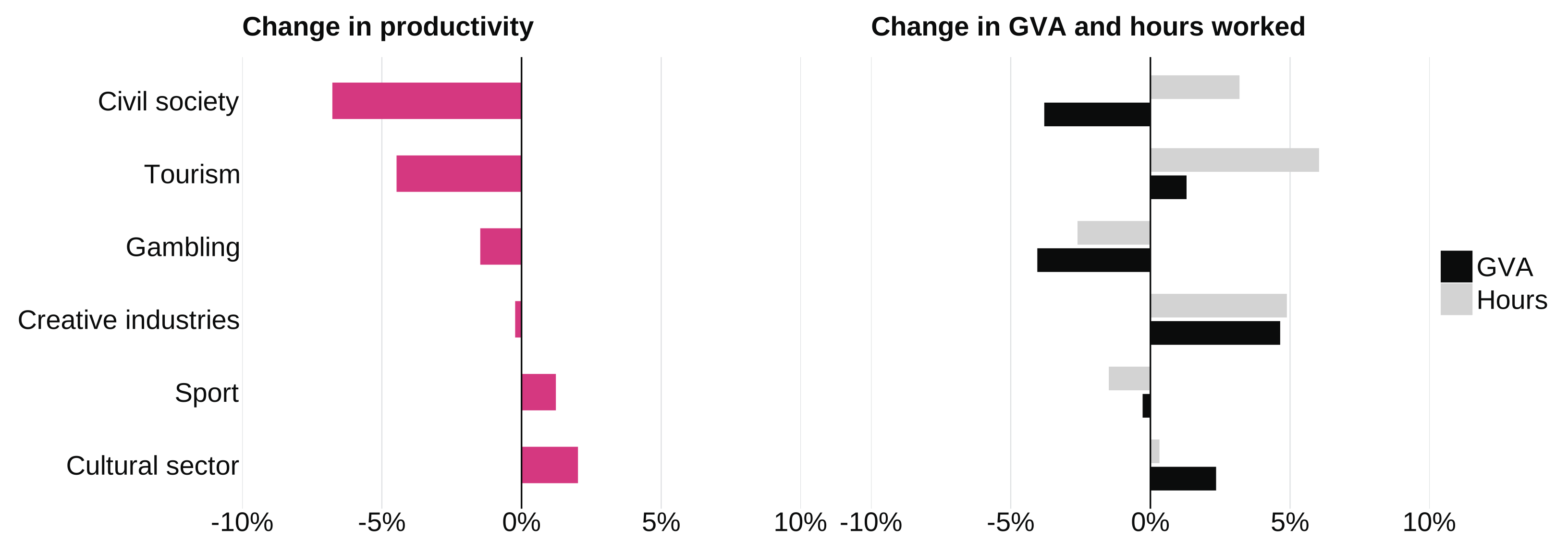
The largest decrease in output per hour from 2023 to 2024 was for civil society (-6.8%), This was due to a decrease in GVA combined with an increase in hours worked, both leading to lower productivity.
The largest increase in output per hour from 2023 to 2024 was for the cultural sector (+2.0%). Although the number of hours worked increased, GVA increased by more, leading to an increase in output per hour.
Figure 5: Decomposition of growth of output per job, jobs and gross value added (GVA), percentage change, 2023 to 2024
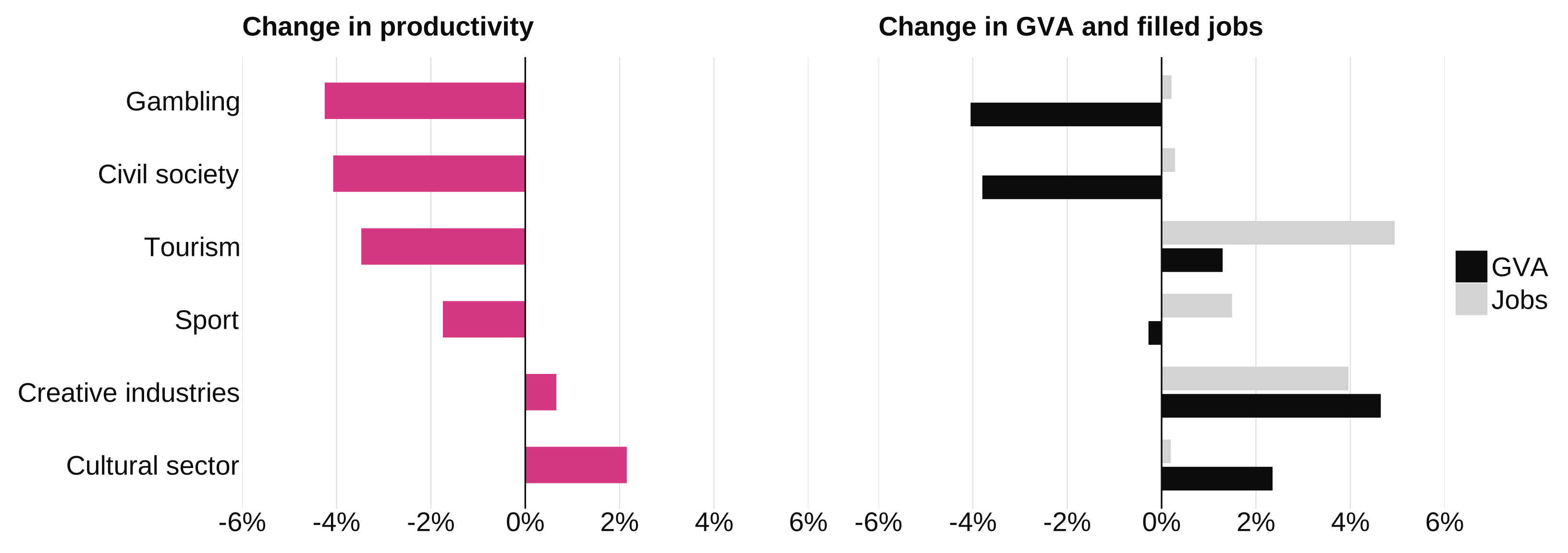
The largest decrease in output per job from 2023 to 2024 was for gambling (-4.3%). This was largely due to a decrease in GVA, and the small increase in jobs would also decrease productivity.
The largest increase in output per job was for the cultural sector (+2.2%). This was mainly due to the increase in GVA, partially offset by a small increase in the number of jobs.
3.3 Creative Industries
Creative industries output per hour was £40 in 2024, lower than the UK economy average of £47. Output per hour was largely unchanged from 2023 to 2024, but increased by 13.7% from 2019 to 2024.
In terms of annual output per job, creative industries productivity in 2024 was £68,000, compared to the UK economy average of £75,000. There was a small increase in output per job (0.7%) from 2023 to 2024, and an increase of 11.4% from 2019 to 2024.
DCMS has grouped the Standard Industrial Classification (SIC) codes defining the creative industries into nine distinct subsectors, grouped by policy themes. We have produced estimates of output per hour and output per job by subsector.
Figure 6: Creative industries and subsector output per hour and job 2024
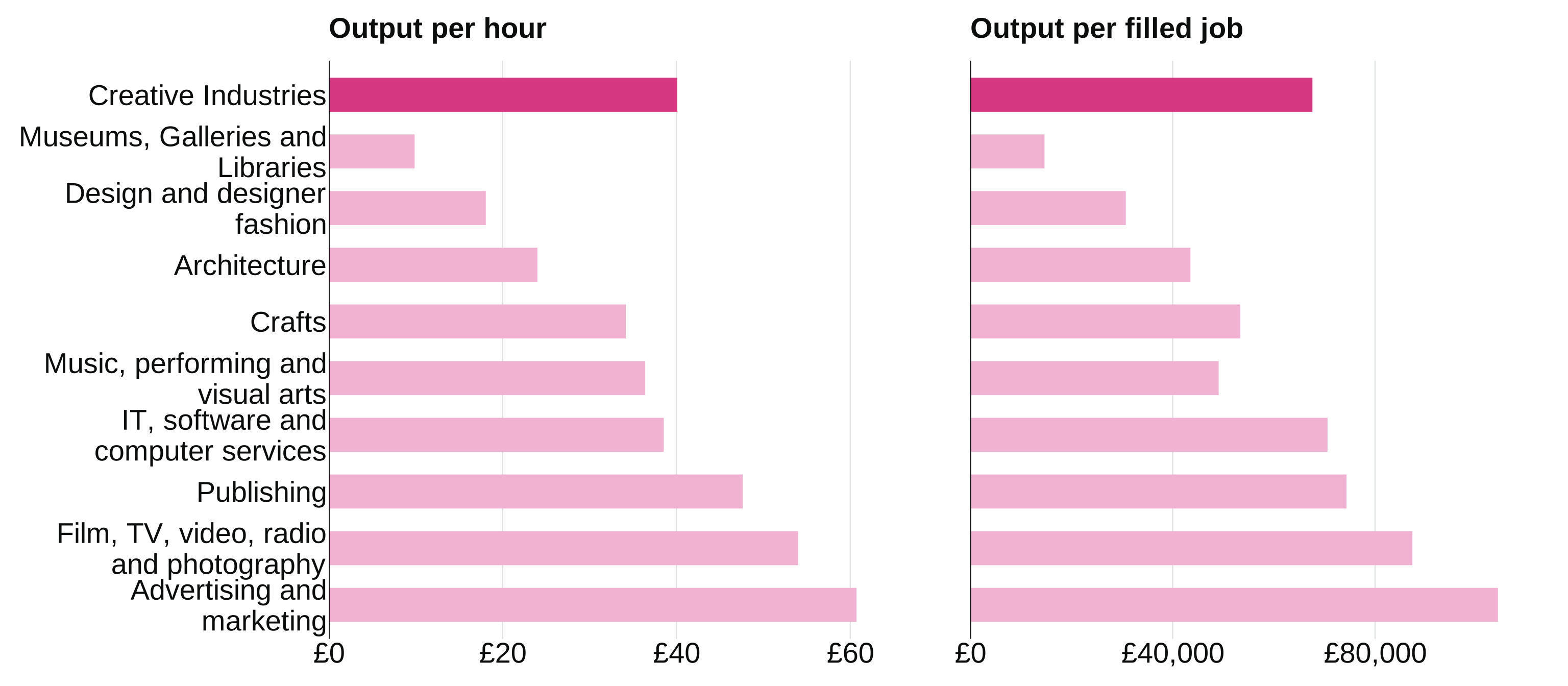
Looking at output per hour for these subsectors:
- The highest output per hour was in the ‘advertising and marketing’ subsector at £61 per hour, followed by ‘film, TV, radio and photography’ at £54 per hour.
- The lowest output per hour was in the ‘museums, galleries and libraries’ subsector at £10 per hour. We might expect to see lower productivity in this subsector using these measures, as many of the kinds of outputs we expect to be produced from the labour input are not included in GVA.
Looking at annual output per job for creative industries subsectors:
- The highest output per job was in the ‘advertising and marketing’ subsector at £104,000 per job.
- The lowest output per hour was in the ‘museums, galleries and libraries’ subsector at £15,000 per job. We might expect to see lower productivity in this subsector using these measures, as many of the kinds of outputs we expect to be produced from the labour input are not included in GVA.
Figure 7: Decomposition of growth of output per hour worked, hours worked and gross value added (GVA) for creative industries and subsectors, percentage change, 2023 to 2024
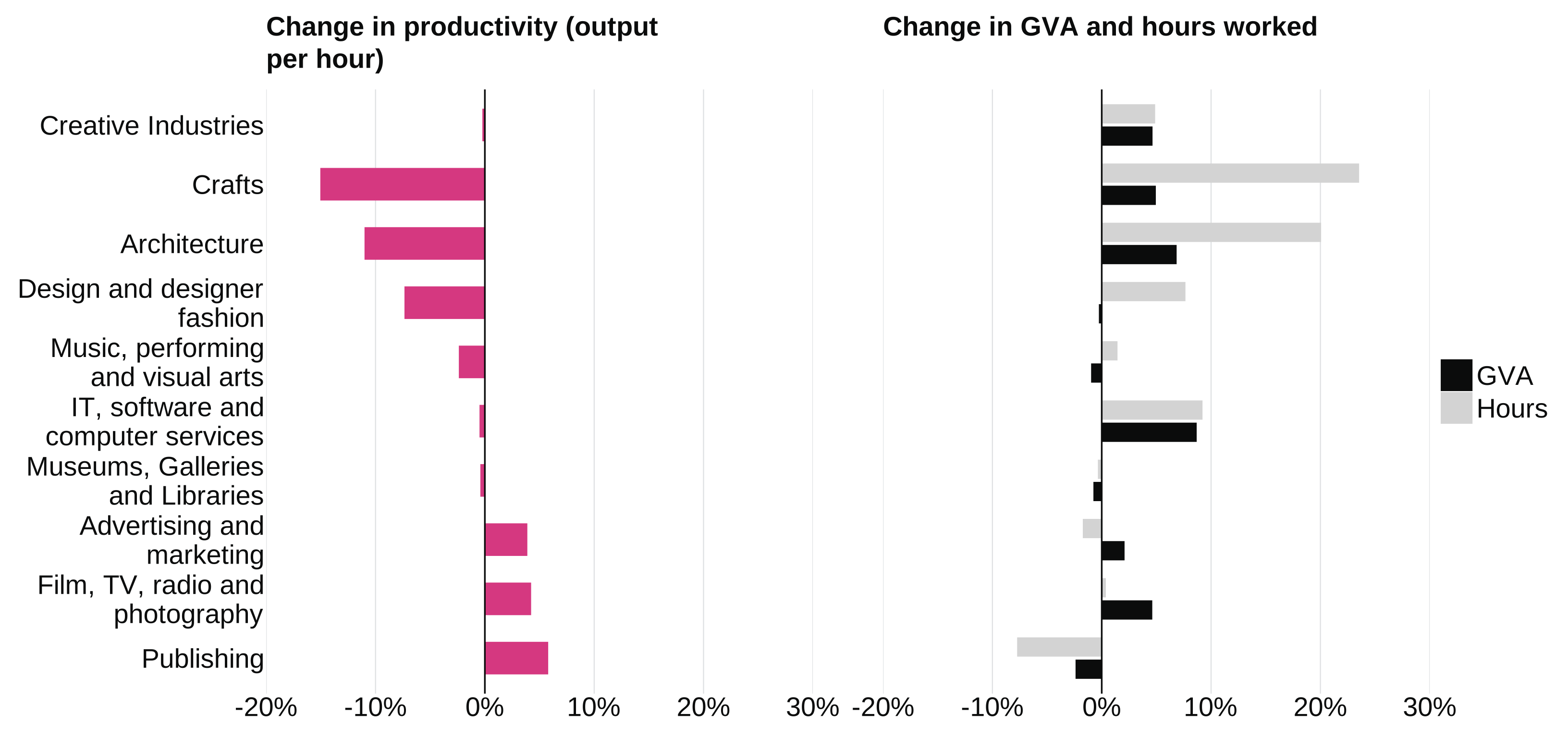
The largest decreases in subsector output per hour from 2023 to 2024 were in the ‘crafts’ (-15.0%) and ‘architecture’ (-11.0%) subsectors. While GVA increased in these subsectors, the number of hours worked increased by a greater amount.
The largest increases in subsector output per hour were in the ‘publishing’ (+5.8%) and ‘film, TV, radio and photography’ (+4.2%) subsectors. In the ‘publishing’ subsector the increase was largely due to a decrease in hours worked, slightly offset by decreased GVA. In ‘film, TV, radio and photography’ there was an increase in GVA.
Figure 8: Decomposition of growth of output per job, filled jobs and gross value added (GVA) for creative industries and subsectors, percentage change, 2023 to 2024
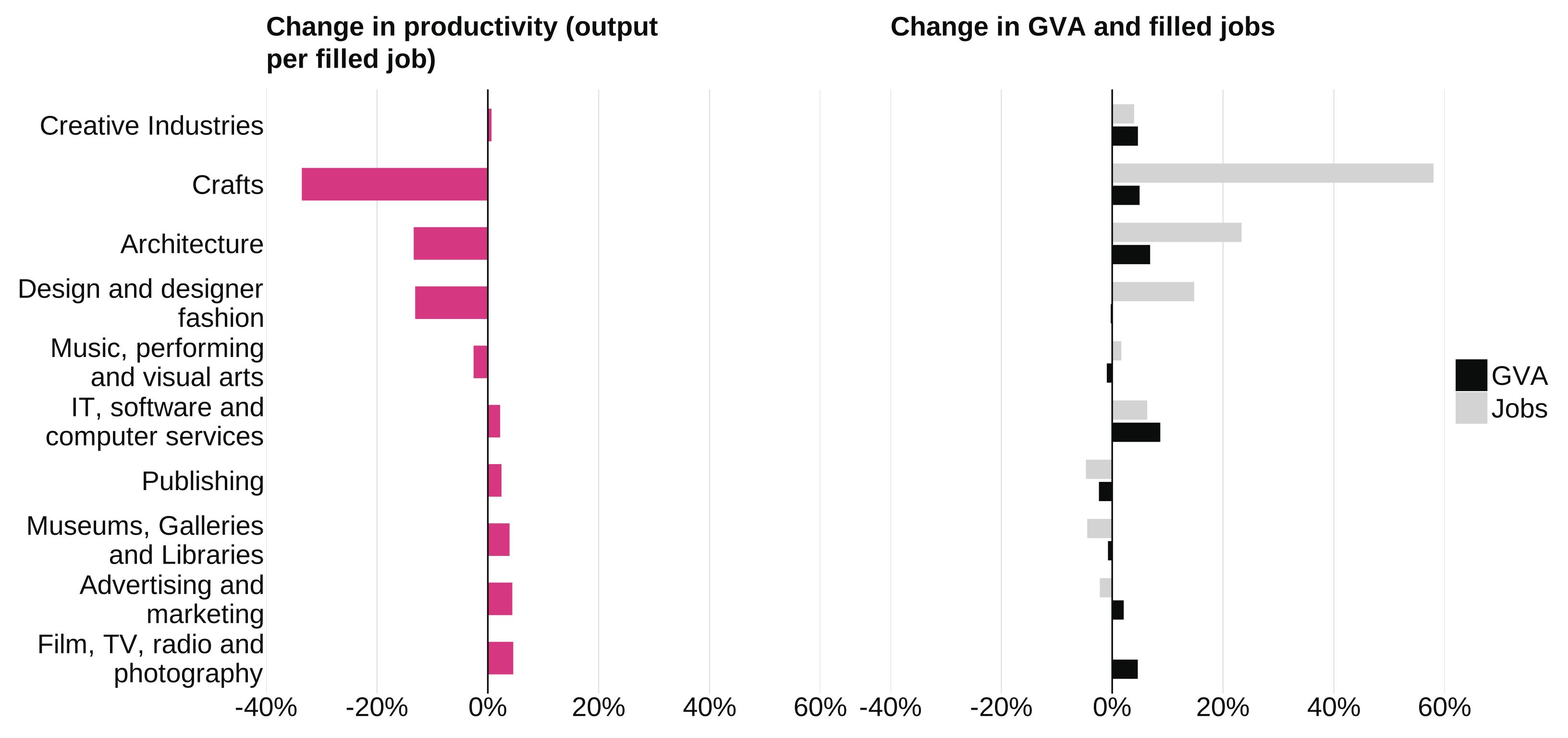
The largest decrease in subsector output per job from 2023 to 2024 was in the ‘crafts’ subsector (-33.6%). This was largely due to an increase in jobs, partially offset by a small increase in GVA. This is a small subsector, so the time series can be volatile.
The largest increase in subsector output per job was in ‘film, TV, radio and photography’ (+4.6%). This was due to an increase in GVA, while jobs remained relatively unchanged.
Regional productivity
Figure 9: Regional productivity in the creative industries and the UK whole economy, 2023, £s
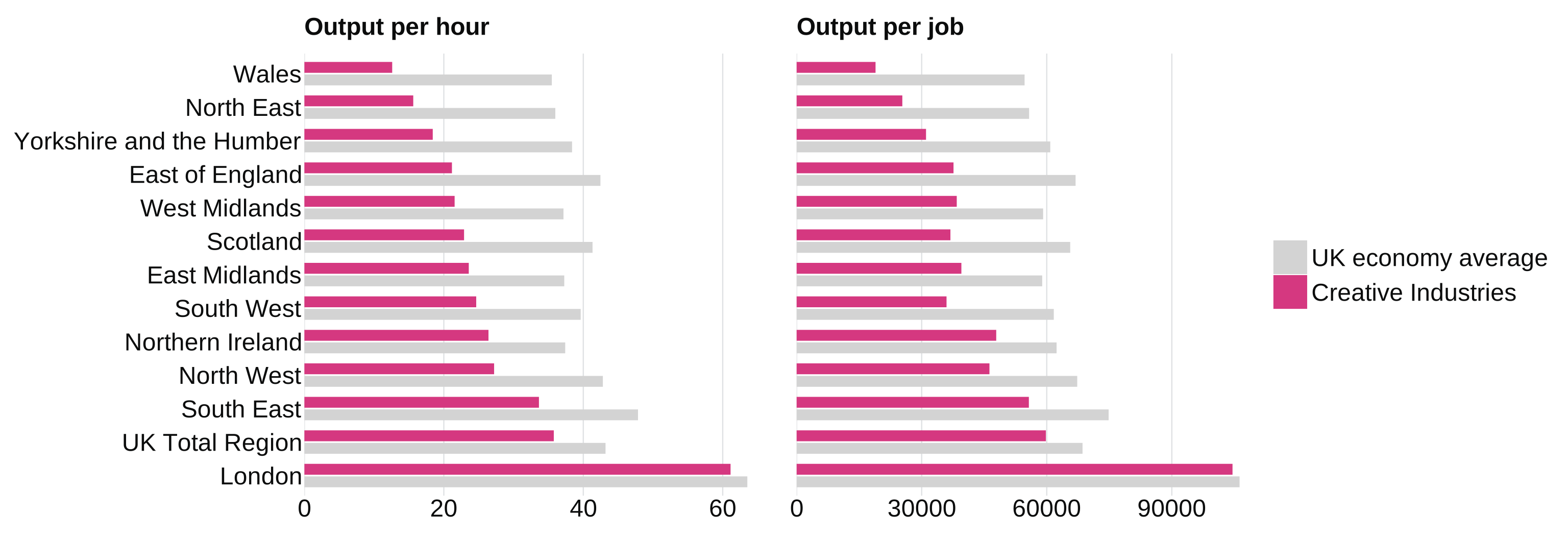
In 2023, output per hour in the creative industries was highest in London at £61, followed by the South East at £34. The average output per hour across the UK in creative industries was £36 in 2023. Average output per hour for all UK industries was also highest in London (£64) and the South East (£48).
The lowest output per hour in the creative industries was in Wales at £13 per hour, followed by £136 per hour in the North East. Average output per hour for all UK industries was also lowest in Wales and the North East, at £35 and £36 respectively.
Annual output per job in the creative industries in 2023 was highest in London at £105,000, followed by the South East at £56,000. This compares to £60,000 average output per job across the UK in the creative industries. Average output per job across all UK industries was also highest in London (£106,000) and the South East (£75,000).
The lowest output per job in creative industries was in Wales, at £19,000, and in the North East at £25,000. Again, average output per job was also lowest in these regions for all UK industries at £56,000 and £55,000 respectively.
3.4 Cultural Sector
Cultural sector output per hour was £40 in 2024, lower than the UK economy average of £47. Output per hour was 2.0% higher than in 2023 and around 5.0% higher than in 2019.
In terms of annual output per job, cultural sector productivity in 2024 was £60,000, compared to the UK economy average of £75,000. Output per job increased by 2.2% from 2023 to 2024, and by 4.1% from 2019 to 2024.
DCMS has grouped the Standard Industrial Classification (SIC) codes defining the cultural sector into nine distinct subsectors, grouped by policy themes. We have produced estimates of output per hour and output per job by subsector.
Figure 10: Cultural sector and subsector output per hour and job 2024
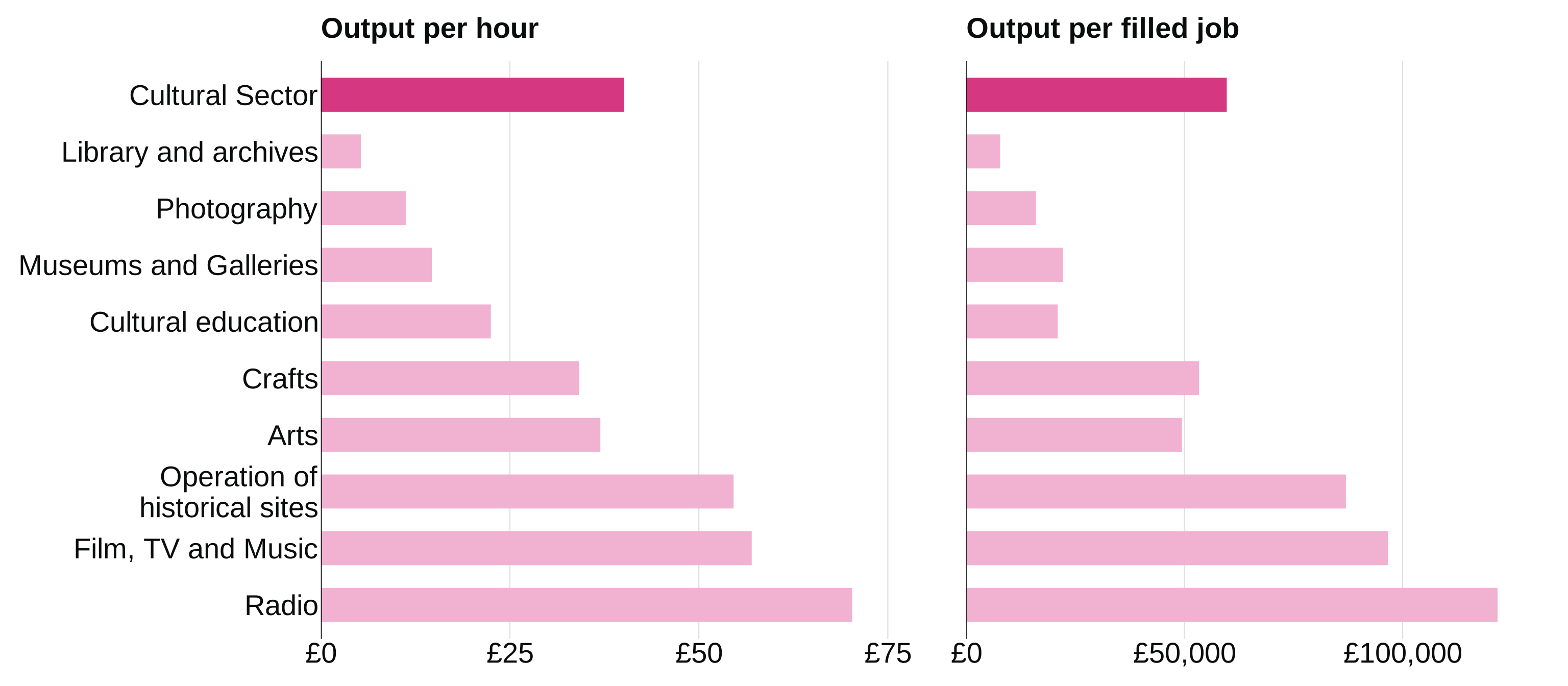
Looking at output per hour for these subsectors:
- The highest output per hour was in the ‘radio’ subsector at £70 per hour, followed by ‘film, TV and music’ at £57 per hour.
- The lowest output per hour was in the ‘library and archives’ subsector at £5 per hour. We might expect to see lower productivity in this subsector using these measures, as many of the kinds of outputs we expect to be produced from the labour input are not included in GVA.
Looking at annual output per job for cultural subsectors:
- The highest output per job was in the ‘radio’ subsector at £122,000 per job, followed by ‘film, TV and music’ at £97,000 per job.
- The lowest output per job was in the ‘library and archives’ subsector at £8,000 per job. We might expect to see lower productivity in this subsector using these measures, as many of the kinds of outputs we expect to be produced from the labour input are not included in GVA.
Figure 11: Decomposition of growth of output per hour worked, hours worked and gross value added (GVA) in the cultural sector and subsectors, percentage change, 2023 to 2024
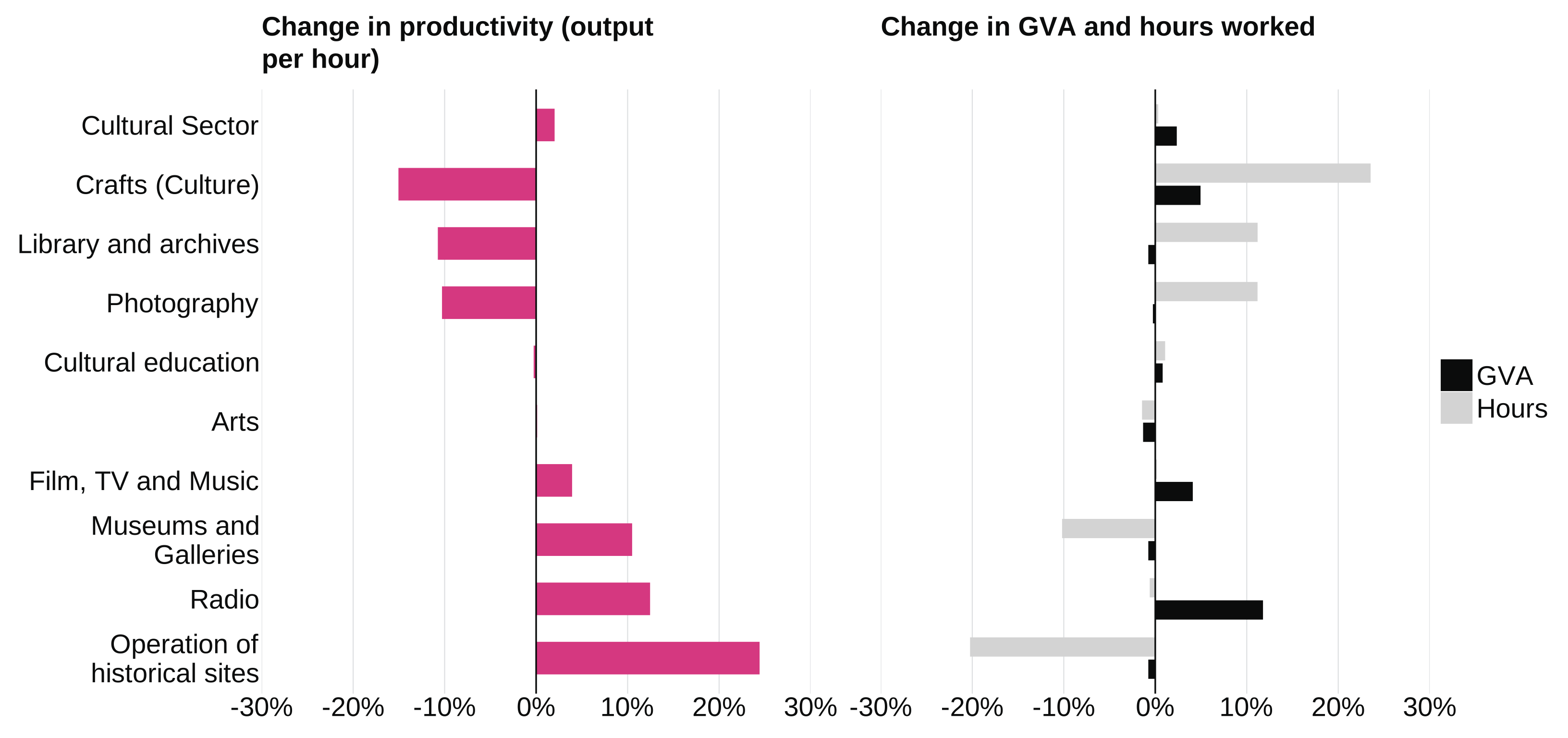
The largest decrease in output per hour from 2023 to 2024 was ‘crafts’ (-15.0%). This was due to a large increase in hours worked, partially offset by an increase in GVA.
The largest increase in output per hour was ‘operation of historical sites and similar visitor attractions’ (+24.4%). This was due to a large decrease in hours worked, slightly offset by a small drop in GVA.
Both of these are small subsectors, so more subject to volatility in the time series.
Figure 12: Decomposition of growth of output per job, filled jobs and gross value added (GVA) in the cultural sector and subsectors, percentage change, 2023 to 2024
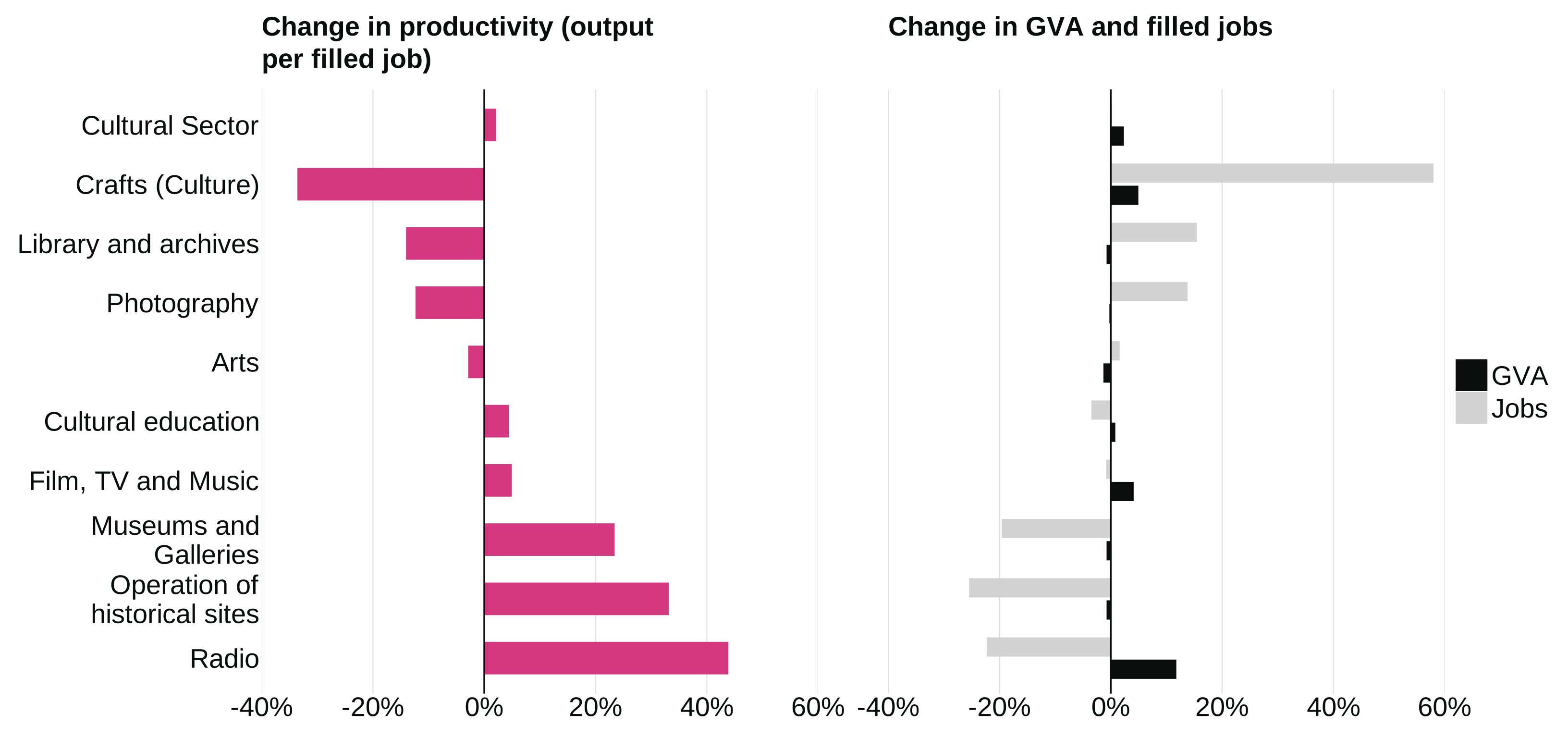
The largest decrease in output per job from 2023 to 2024 was in ‘crafts’ (-33.6%). This was due to a large increase in jobs, partially offset by a small increase in GVA. Crafts is a small subsector and subject to volatility in the time series.
The largest increase in output per job was ‘radio’ (+43.9%). This was due to a decrease in jobs combined with an increase in GVA.
Regional productivity
Figure 13: Regional productivity in the cultural sector and the UK whole economy, 2023, £s
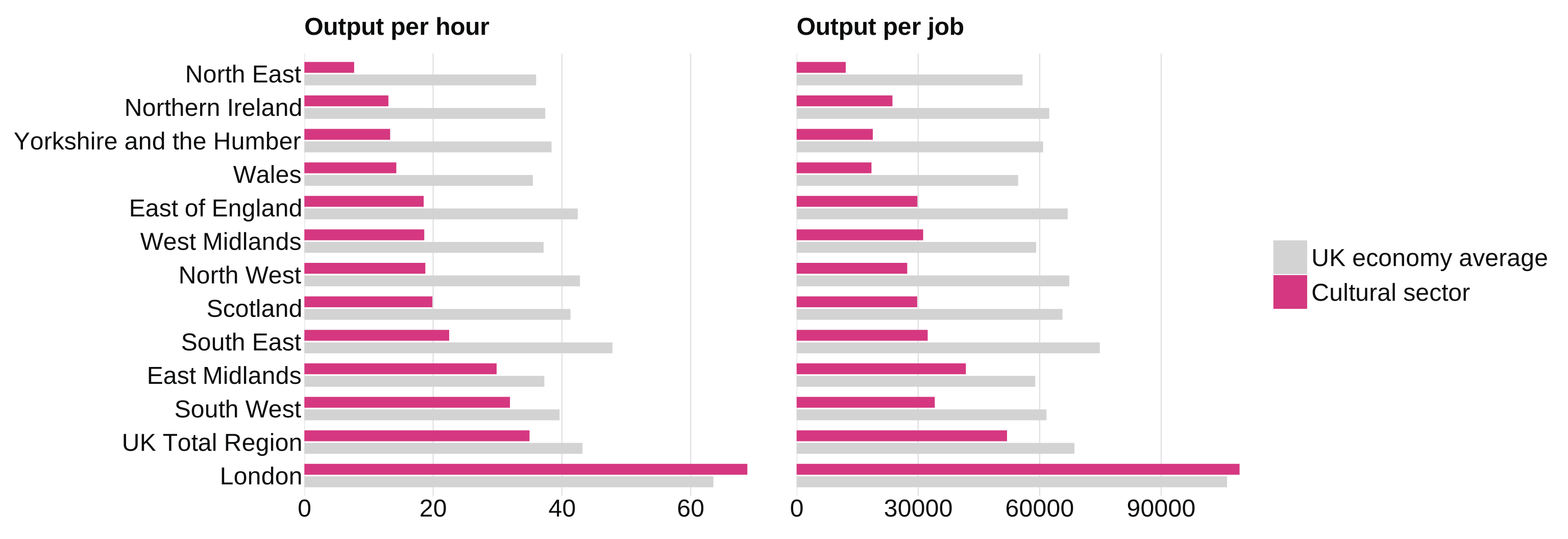
In 2023, output per hour in the cultural sector was highest in London at £69 per hour. Cultural sector GVA is much higher in London than the rest of the UK, which drives the high productivity in this region. The next highest output per hour was in the South West at £32 per hour. The average output per hour across the UK in the cultural sector was £35 in 2023. Average output per hour for all UK industries was also highest in London (£64) and the South East (£48).
The lowest output per hour in the cultural sector was in the North East at £8 per hour, followed by £13 per hour in Yorkshire & the Humber and Northern Ireland. In the North East the average output per hour for all UK industries was £36, the second lowest region, while in Yorkshire & the Humber and Northern Ireland it was £38 and £37 respectively.
Annual output per job in the cultural sector in 2023 was highest in London at £109,000, followed by the East Midlands at £42,000. This compares to £52,000 average output per job across the UK in the cultural sector. Average output per job across all UK industries was also highest in London (£106,000), while in the East Midlands it was £59,000.
The lowest output per job in the cultural sector was in the North East at £12,000. Average output per job across all UK industries in the North East was £56,000.
3.5 Gambling
Gambling sector output per hour was £42 in 2024, lower than the UK economy average of £47. Output per hour was 1.5% lower in 2023 than 2024, and around 10.2% lower in 2024 than in 2019.
In terms of annual output per job, gambling sector productivity in 2024 was £61,000, compared to the UK economy average of £75,000. Output per job fell by 4.3% from 2023 to 2024, and by 18.8% from 2019 to 2024.
It should be noted that the gambling sector is small, comprising just one two-digit SIC code (SIC 92). Consequently, estimates are prone to sampling variability from year to year.
Regional productivity
Figure 14: Regional productivity in the gambling sector and the UK whole economy, 2023, £s
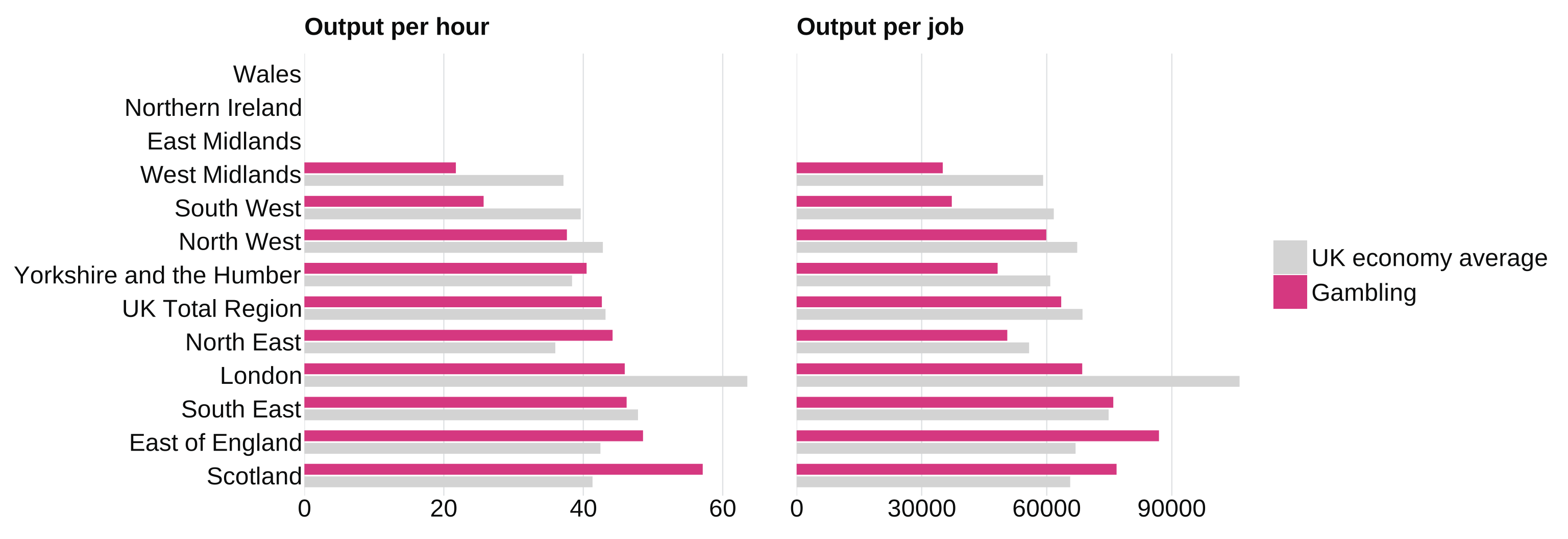
- In 2023, output per hour in the gambling sector was highest in Scotland, at £57 per hour, however gambling is a small sector and the sample size in several regions in small enough to be considered unreliable. The next highest output per hour was in the East of England at £49, but the sample size means this estimate is considered unreliable. This compares to the UK average output per hour for gambling of £43. Average output per hour for all UK industries in the Scotland and the East of England was £41 and £42 respectively.
- The lowest output per hour in the gambling sector was in the West Midlands at £22. Average output per hour for all UK industries in the West Midlands was £37.
- Annual output per job in the gambling sector in 2023 was highest in the East of England at £87,000, followed by Scotland at £77,000, however the East of England has an unreliably small sample size. The average gambling sector output per job across the UK in 2023 was £63,000. In the East of England, average output per hour for all UK industries was £67,000, and in Scotland it was £66,000.
- The lowest output per job in the gambling sector was in the West Midlands at £35,000. Average output per hour in the West Midlands for all UK industries was £59,000.
- Due to the small sample sizes, no productivity estimates could be calculated for the gambling sector for Northern Ireland and Wales.
While gambling GVA was highest in London in 2023, gambling employment was also much higher in the region, so productivity was lower.
3.6 Sport
Sport sector output per hour was £31 in 2024, compared to the UK economy average of £47. Output per hour was around 1.2% higher than in 2023, and 2.9% higher than in 2019.
In terms of annual output per job, sport sector productivity in 2024 was £37,000, compared to the UK average of £75,000. Output per job fell by 1.7% from 2023 to 2024, and by 3.5% from 2019 to 2024.This might suggest that as productivity per hour has increased, the number of hours worked per job has decreased, however the growth in output per hour and decline in output per job are fairly small, and there is uncertainty in the underlying data.
Regional productivity
Figure 15: Regional productivity in the sport sector and the UK whole economy, 2023, £s
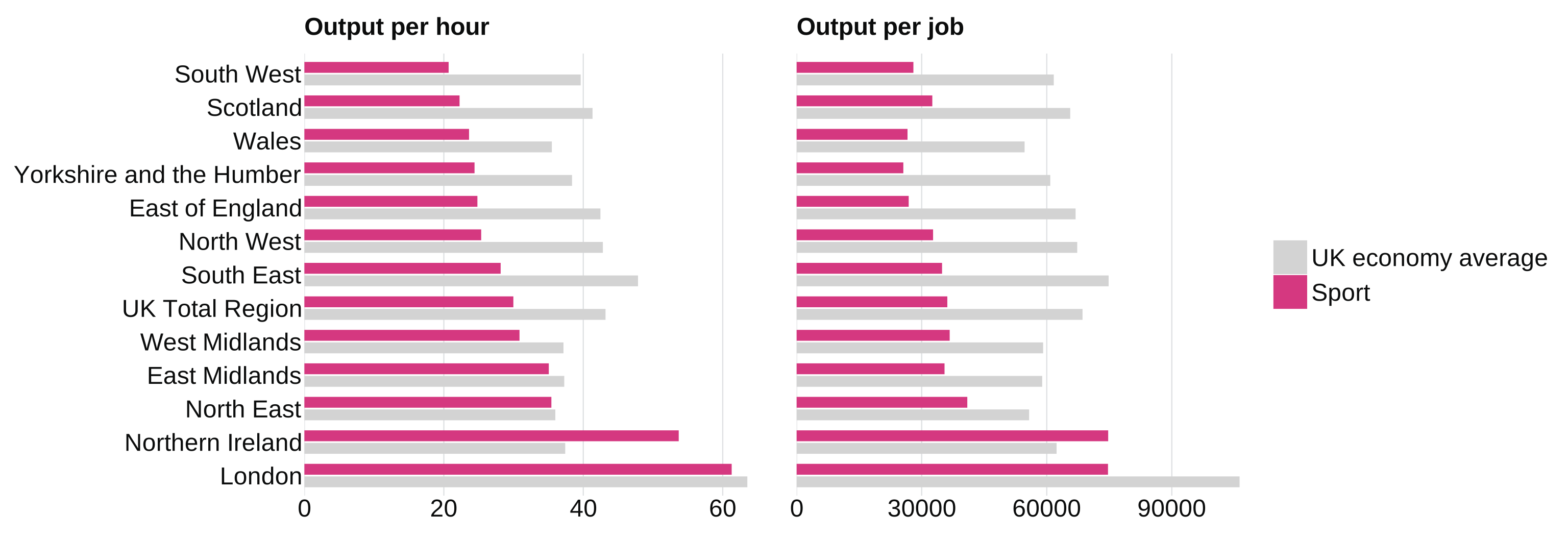
- In 2023, output per hour in the sport sector was highest in London at £61 per hour. The next highest output per hour was in Northern Ireland at £54 per hour. The UK average output per hour for the sport sector was £30. The average output per hour for all UK industries was also highest in London, at £64, and in Northern Ireland it was £37.
- The lowest output per hour in the sport sector was in the South West, at £21. The average for all UK industries in the South West was £40.
- Output per job in the sport sector in 2023 was highest in London and Northern Ireland at £75,000. The UK average output per hour for the sport sector was £36,000. The average for all UK industries was also highest in London at £106,000, whereas in Northern Ireland it was £62,000.
- The lowest output per job in the sport sector was in Yorkshire & the Humber, at £26,000. The average for all UK industries in Yorkshire & the Humber was £61,000.
3.7 Civil society
Civil society output per hour was £12 in 2024, compared to the UK economy average of £47. Output per hour decreased by 6.8% from 2023 to 2024, and by 18.1% from 2019 to 2024.
In terms of output per job, civil society productivity in 2024 was £20,000, compared to the UK average of £75,000. Output per job decreased by 4.1% from 2023 to 2024, and by 17.2% from 2019 to 2024.
We might expect to see lower productivity in this sector using these measures, as many of the kinds of outputs we expect to be produced from the labour input are not included in GVA, for example, free goods and services. In addition, the definition of civil society used to calculate GVA is recognised as under-estimating GVA for this sector, as it uses the non-market charities portion of the NPISH (Non-profit institutions serving households), and will not include market provider charities who have passed the market test and therefore sit in the corporate sector (these data are not currently measured by ONS on a National Accounts basis), mutuals, social enterprises or community interest companies.
Regional estimates are not available for civil society, due to lack of regional GVA data.
The definition of civil society varies from other included DCMS sectors. For further methodological details, please refer to the technical report.
3.8 Tourism
Tourism sector output per hour was £37 in 2024, compared to the UK economy average of £47. Output per hour fell by 4.5% from 2023 to 2024, and was 6.3% lower in 2024 than in 2019.
In terms of annual output per job, tourism sector productivity in 2024 was £53,000, compared to the UK average of £75,000. Output per job fell by 3.5% from 2023 to 2024, and by 9.8% from 2019 to 2024.
Regional estimates are not available for tourism, due to lack of regional GVA data.
4. Interpreting productivity measures
4.1 What is productivity?
Labour market productivity is a measure of how much output is produced for a given input. Here we use Gross Value Added (GVA) as the output, and actual hours worked or number of jobs as the input. Output per hour worked is the preferred measure as it accounts for different ways of working, for example part-time workers, and using actual hours accounts for deviations from usual working hours, for example, holidays and overtime.
Output per hour is GVA generated by an hour of work, on average.
Output per job is GVA generated by a job in the sector, on average.
4.2 What causes productivity change over time?
An increase in output per hour over time can mean that
- GVA has increased, while the number of hours worked has decreased or stayed the same, or
- GVA has stayed the same, while the number of hours worked has decreased, or
- the number of hours worked has decreased, while GVA has increased, or
- the number of hours worked has stayed the same while GVA has increased.
An increase in output per job over time can mean that
- GVA has increased, while the number of jobs has decreased or stayed the same, or
- GVA has stayed the same, while the number of jobs has decreased, or
- the number of jobs has decreased, while GVA has increased, or
- the number of jobs has stayed the same while GVA has increased.
As an example, automation of processes could mean that more GVA could be generated by the same hours/jobs worked, or the same GVA could be generated while reducing the number of hours worked/jobs, or a combination of these.
Similarly, decreases in productivity can be caused by a reduction in GVA, or by an increase in the number of hours worked/jobs needed to generate the same amount of GVA, or by different rates of growth or decline in GVA and hours worked/jobs.
4.3 What does output per hour mean compared to output per job?
Compared to UK economy average
If output per hour is higher than average, while output per job is lower than average, this suggests that fewer hours are worked per job than the average, for example, there may be a higher proportion of part-time workers.
If output per hour is lower than average, while output per job is higher than average, this suggests that more hours are worked per job than the average, for example fewer part-time workers, or more overtime worked.
Change over time
If output per hour has increased over time, but output per job has decreased, this suggests that hours worked per job have also decreased.
If output per hour has decreased over time, but output per job has decreased, this suggests that the hours worked per job have increased.
These estimates use data based on the Labour Force Survey, which has been impacted by falling response rates. In particular, although these historic lower response rates are improving, they are still impacting annual growth rates in productivity data. This means that comparisons over time are more uncertain, and smaller changes to the number of jobs/hours over time may not be statistically significant. ONS has announced that they are developing a new ‘component’ approach to measuring productivity which will ultimately replace the current published productivity series. We will consider how this changes our approach to measuring productivity for DCMS sectors, once this data becomes available.
5. Strengths and limitations
Strengths of these estimates
- These estimates have been calculated to follow the ONS methodology as closely as possible, to aid comparability to UK national estimates.
- The output measure used is the GVA published in the DCMS sector annual GVA publication, giving consistency across DCMS Economic Estimates.
- Annual Population Survey data allows us to estimate actual hours worked, rather than usual or contracted hours. For this publication, an additional step has been added to constrain total hours to the ONS hours worked measure, which uses additional sources of data. This enables us to use proportions of actual hours worked while keeping comparability to ONS data.
Limitations of these estimates
- Several DCMS sectors’ outputs are not well represented by GVA alone (particularly in the cultural sector, for example, museums and libraries, and civil society). This is because these sectors’ goods and services are often provided free at the point of consumption. Also, GVA cannot capture wider cultural and societal benefits associated with these sectors (which may also include indirect effects on UK GVA). Hence, these productivity measures cannot fully account for output in these sectors. DCMS’s Cultural and Heritage Capital Programme sets out an ambition for a culture and heritage capital account that goes beyond transactions with market prices.
- The underlying data for these estimates includes the Annual Population Survey (APS) estimates of hours worked and number of jobs in each 4-digit SIC code. While this enables us to estimate actual hours worked at a 4-digit SIC level, responses are self-reported, and SIC codes may therefore be less accurate. Due to ongoing challenges with response rates, response levels and weighting, the accreditation of ONS statistics based on the APS was temporarily suspended on 9 October 2024 and are considered official statistics in development until further review. As a result of the falling sample sizes, estimates based on the APS are likely to have increased volatility and uncertainty.
- The ONS productivity jobs series and productivity hours series use the Labour Force Survey, which has experienced falling response rates and are therefore currently labelled as official statistics in development. This means there is greater uncertainty in DCMS sector estimates.
- Regional estimates of productivity use the latest available regional GVA data, published before the publication of Blue Book 2025, and so do not take account of these revisions. They are therefore not comparable to the UK level productivity estimates, and will be updated when revised data becomes available later in 2026.
6. Further information
The accompanying data tables consist of estimates for output per hour worked and annual output per job in the DCMS sectors and subsectors from 2019 to 2024, in current prices and in chained volume measure
The DCMS sectors covered in this report are:
- Civil Society
- Creative Industries
- Cultural Sector
- Gambling
- Sport
- Tourism
Methodological information on the sector definitions, data sources, calculations of productivity and limitations of the approach can now be found in the accompanying technical report, along with. a summary of alternative economic measures of these sectors that are published elsewhere.
The next regular update to these statistics will be released in 2027 following the publication of the next DCMS sector annual GVA estimates. The GVA figures used will be revised in the next annual update. Regional estimates will be revised ahead of this, as data becomes available, to bring them in line with the main UK estimates and provide a time series from 2019 to 2024.
DCMS has developed a suite of economic estimates to understand the economic impact its sectors have on the UK economy. In combination with other economic indicators, productivity estimates help build a comprehensive picture of the UK economy, and of the DCMS Sectors’ importance within it.
Our statistical practice is regulated by the Office for Statistics Regulation (OSR). OSR sets the standards of trustworthiness, quality and value in the Code of Practice for Statistics that all producers of official statistics should adhere to. You are welcome to contact us directly with any comments about how we meet these standards. Alternatively, you can contact OSR by emailing regulation@statistics.gov.uk or via the OSR website.
The responsible statistician for this release is Rachel Moyce. For enquiries on this release, please email evidence@dcms.gov.uk.
For general enquiries, please see this guidance on how to contact the department.
. For media enquiries contact: 020 8080 3054