Connect to Work to March 2026
Published 11 June 2026
Applies to England and Wales

© Crown copyright 2026
This publication is licensed under the terms of the Open Government Licence v3.0 except where otherwise stated. To view this licence, visit nationalarchives.gov.uk/doc/open-government-licence/version/3 or write to the Information Policy Team, The National Archives, Kew, London TW9 4DU, or email: psi@nationalarchives.gov.uk.
Where we have identified any third party copyright information you will need to obtain permission from the copyright holders concerned.
This publication is available at https://www.gov.uk/government/statistics/connect-to-work-to-march-2026/connect-to-work-to-march-2026
1. Introduction
Connect to Work is a key part of the Pathways to Work offer of support to help disabled people and those with health conditions into employment. It complements other existing Government-funded employment support. It is a voluntary, locally led Supported Employment programme designed to help individuals with disability, health conditions and other complex issues overcome barriers to employment and move closer to finding meaningful, sustainable work.
Connect to Work supports people who:
-
have a disability as defined in section 6 of the Equality Act 2010 or the Social Model of Disability
-
meet the definition of one of the specified disadvantaged groups with additional multiple and complex barriers that would benefit from support. See the background information and methodology report published alongside this release, for further details.
The programme is predominantly targeted at the economically inactive, and can also help those struggling to maintain work as a result of their health or complex circumstances.
Connect to Work funding is providing support across 49 Delivery Areas in England and Wales. As of March 2026, 43 delivery areas have launched their programmes. See What you need to know for further information.
You can find out more about the programme in our background information and methodology report, published alongside this release.
2. Main Stories
The statistics show:
-
between April 2025 and March 2026, 17,000 individuals were referred to the programme
-
between April 2025 and March 2026, 14,000 participants started on the programme.
-
of 14,000 total starts, 12,000 (88%) are receiving Out-of-Work support, and 1,700 (12%) are receiving In-Work Retention Support.
-
1,600 Out-of-Work support participants have achieved First Earnings from employment
-
1,000 participants receiving Out-of-Work support have achieved a Lower Threshold Job Outcome, and 350 have achieved a Higher Threshold Job Outcome
-
320 participants receiving In-Work Retention Support have achieved a Higher Threshold Job Outcome
3. What you need to know
Connect to Work Programme
Connect to Work is a Supported Employment programme. Participants are given a dedicated specialist employment support adviser who works alongside them to understand their career goals and help them to address any specific barriers to employment. Participants are supported to have conversations with prospective employers, removing the need to go through complex application processes. The employment adviser works with both the employer and the participant to ensure that the transition into work is smooth and that the workplace is inclusive.
Participant journey
Participants on Connect to Work can receive Out-of-Work support or In-Work Retention Support (IWRS).
Out-of-Work participants receive one-to-one support from Connect to Work for up to 12 months to help identify and fulfil employment goals that are suitable for their circumstances. Up to two extensions of 3 months can be granted in exceptional circumstances. This means the total length of time an Out-of-Work participant can receive support is 18 months.
IWRS participants who are at risk of falling out of employment or self-employment due to their disability or complex barriers can receive up to 4 months of support, with the option to extend support for an additional 2 months in exceptional circumstances. This means the total length of time an In-Work Retention Support participant can receive support is 6 months.
Further information can be found in the background information and methodology report published alongside this release.
Measures
The Connect to Work statistics cover 6 measures:
-
Referrals: the point at which the referral is imputed into DWP systems successfully, after agreeing to participate at the initial meeting
-
Individuals referred: Since one individual can have multiple referrals, individuals referred is the number of individual people referred. Only the first referral per person is counted
-
Starts: A start on the programme is recorded when a participant has met with an advisor and signed a Vocational Action Plan
-
First earnings from employment: The point at which a participant achieves their first earnings from their first employment whilst on the programme. A participant who achieves first earnings may not necessarily go on to achieve a job outcome. Statistics on first earnings from employment do not include those on the In-Work Retention Support journey
-
Lower Threshold Job Outcome: The point at which a participant receives gross earnings equivalent to 9 hours x 13 weeks at the National Living Wage. Lower Threshold Job Outcome statistics do not include those on the In-Work Retention Support journey
-
Higher Threshold Job Outcome: The point at which a participant receives gross earnings equivalent to 18 hours x 26 weeks at the National Living Wage
We plan to release performance data and more detailed breakdowns when sufficient data becomes available. For more information on Connect to Work measures, see the background information and methodology report.
Delivery areas
Connect to Work is funding support across all of England and Wales and the services are organised into 49 delivery areas. For details, see the background information and methodology report.
Referrals to Connect to Work began in April 2025. As of the end of March 2026, 43 areas had started. An Accountable Body is the lead authority within a defined Delivery Area, who will take overall responsibility as the Grant recipient for leading the implementation of Connect to Work across the Delivery Area. For a full list of Accountable Bodies and Delivery Areas, and a table of rollout dates, see the background information and methodology report.
Two of the 49 Delivery Areas received their Connect to Work funding through Integrated Settlements in 2025 to 2026. A further eight Delivery Areas received Connect to Work funding through an Integrated Settlement in 2026 to 2027. All Integrated Settlement recipients need to deliver Supported Employment with their Connect to Work funding, except the Greater Manchester Combined Authority who are delivering a separate pilot. As such, Integrated Settlement outcome data will be included in statistical releases, except for Greater Manchester.
To provide a national picture of what has been delivered with Connect to Work funding we will use Connect to Work terminology, but we recognise the different funding model for Integrated Settlements.
For more information, see Integrated Settlements for Mayoral Combined Authorities.
Supported Employment models
Connect to Work is a Supported Employment programme, with support delivered via the Individual Placement and Support (IPS) model or the Supported Employment Quality Framework (SEQF) model. For more information on the different Supported Employment models, see the background information.
4. Joining Connect to Work
From April 2025 to the end of March 2026, there were:
-
17,000 referrals
-
17,000 individuals referred
-
14,000 starts on the programme
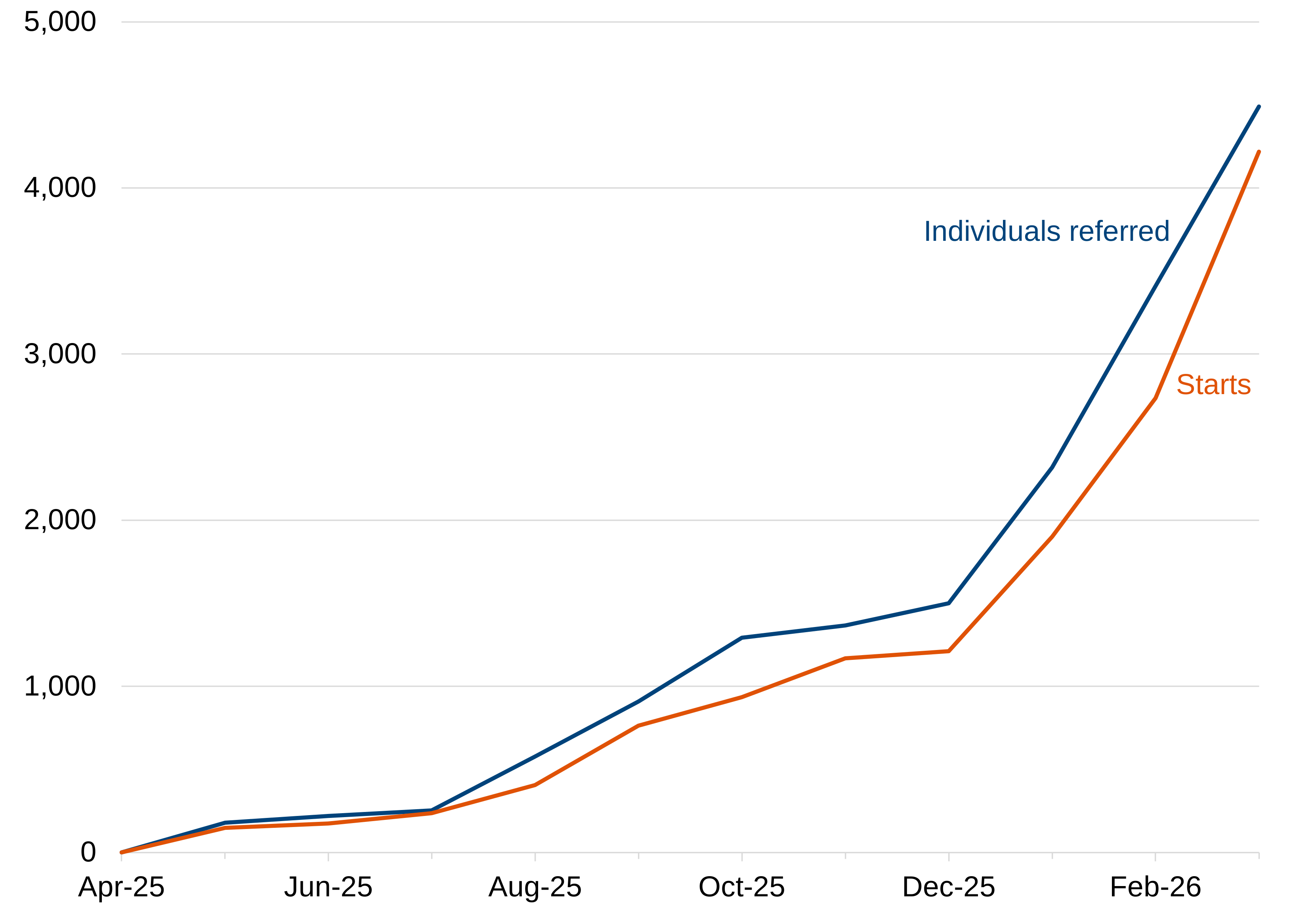
In March 2026, 4,500 individuals were referred to Connect to Work
Figure 1: Monthly number of individuals referred and starts to Connect to Work, April 2025 to end of March 2026
Source: Stat-Xplore, Connect to Work
Note: Both the individuals referred and starts measures above are calculated using the month in which referral or start was achieved. Caution should be used in direct comparisons between both metrics, as those who started within the period may not have been referred within the same period.
Figure 1 shows the monthly total of individuals referred and starts have increased since April 2025, as Connect to Work has gradually been rolled out over a total of 43 areas so far. In the most recent month (March 2026) 4,500 people were referred and 4,200 started on Connect to Work.
The proportion of individuals referred that have started is 84%. There are several reasons why an individual may not have started on the programme. They may have found employment after being referred but before starting, experienced a change in circumstances which meant they could no longer participate, or they may not have attended their first meeting with their provider. See the background information and methodology report for more details.
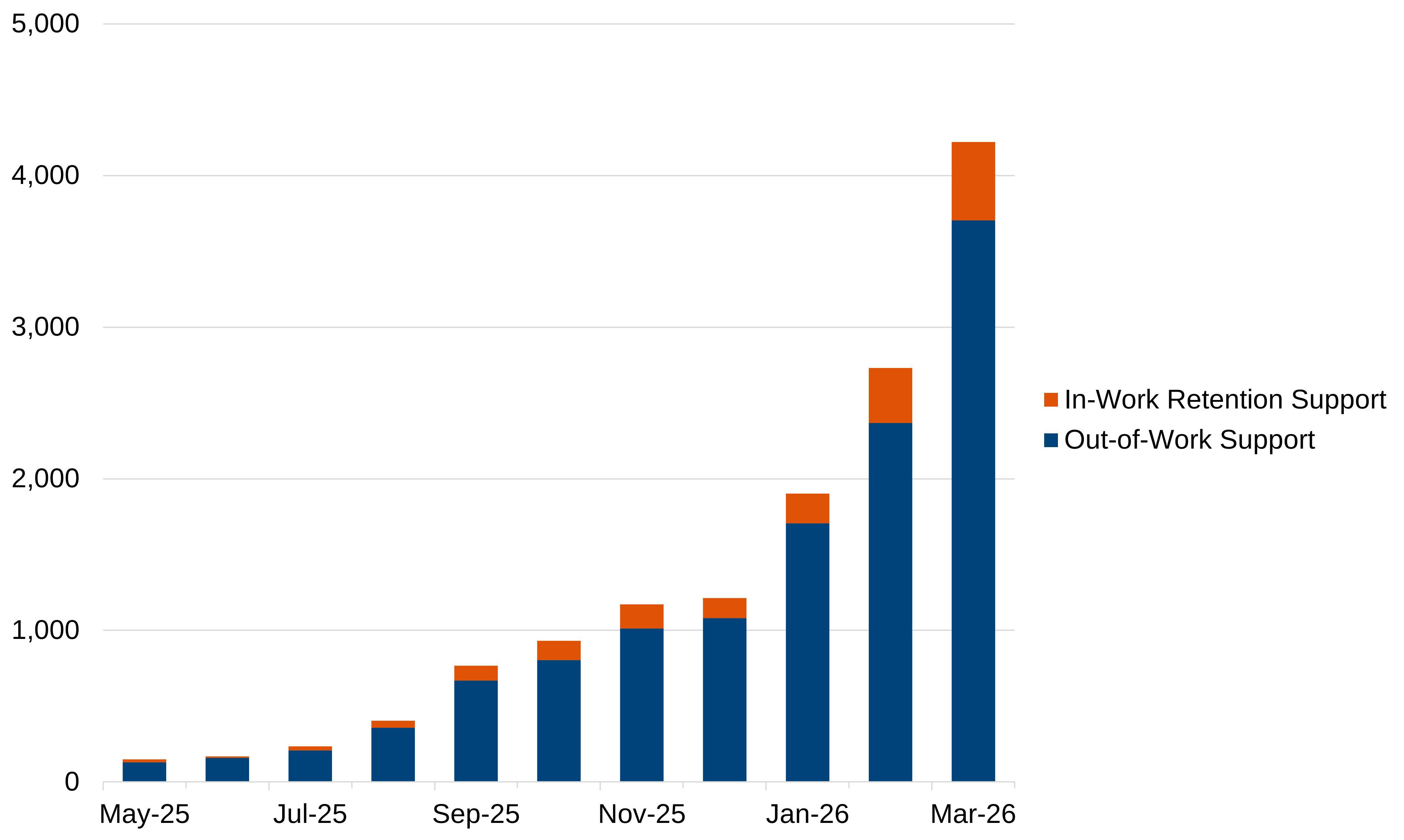
Of 4,200 total starts in the most recent month, 88% started on the Out-of-Work support journey and 12% on the In Work Retention Support journey
Figure 2: Starts on Connect to Work by participant support journey, May 2025 to March 2026
Source: Stat-Xplore, Connect to Work
Figure 2 shows that since Connect to Work began, total monthly starts have increased to 4,200 in the most recent month (March 2026) and the majority of participants that have started to receive Out-of-Work Support. Since the beginning of the programme, 88% of total starts receive Out-of-Work Support while 12% receive In-Work Retention Support.
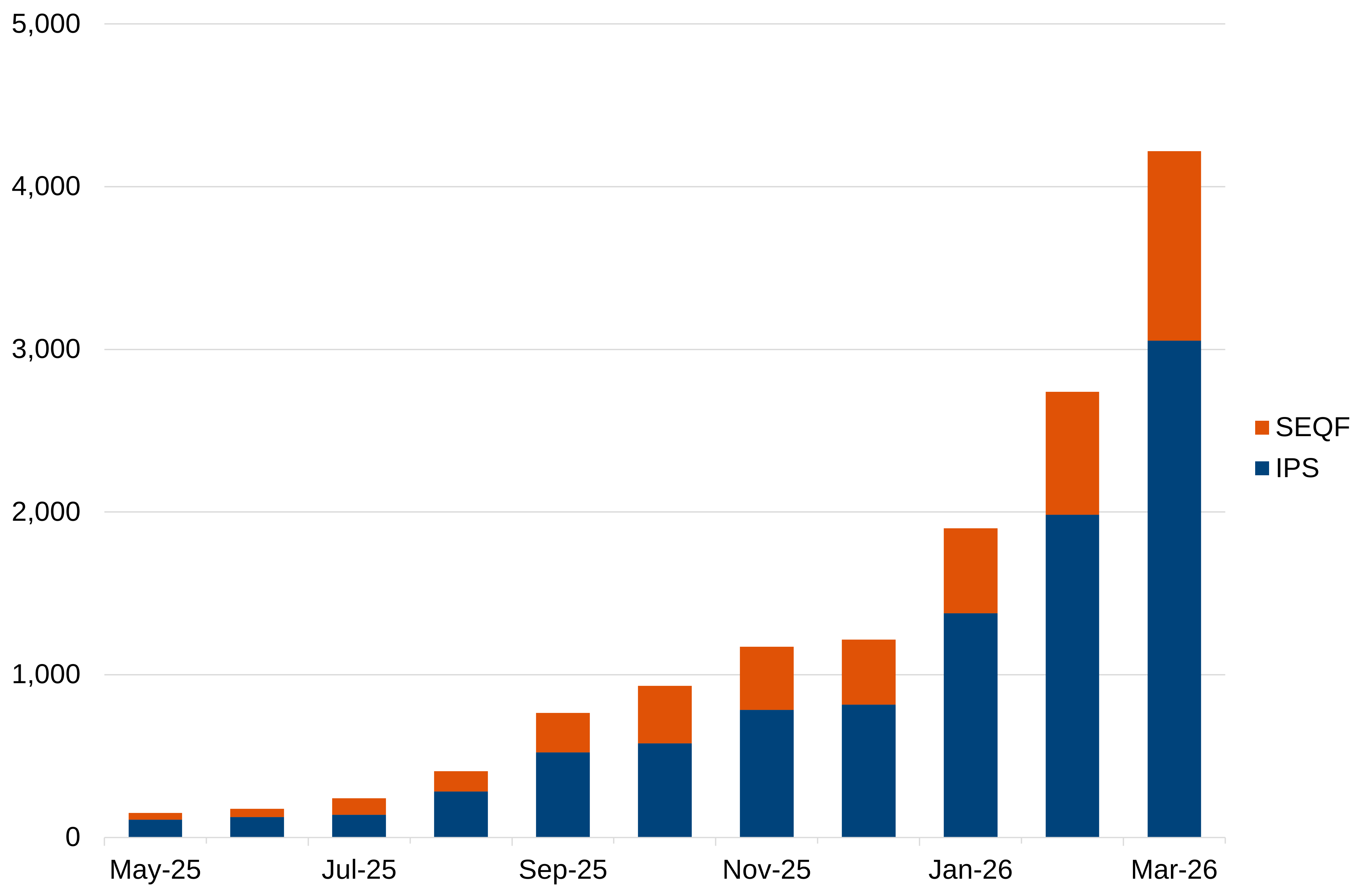
Across the whole programme, 70% of total starts have been delivered via the IPS model
Figure 3: Starts by Supported Employment model, May 2025 to end of March 2026
Source: Stat-Xplore, Connect to Work
Figure 3 shows the proportion of starts delivered via the IPS model is greater than the proportion delivered via the SEQF model. Of the 14,000 starts to date, 70% have been on the IPS model (9,800) and 30% on the SEQF model (4,100).
Of the 14,000 participants that have started on the programme, 43% are female and 57% are male
Table 1: Number and proportion of starts on Connect to Work by sex, from April 2025 to end of March 2026
| Starts | Proportion of Starts | |
|---|---|---|
| Female | 5,900 | 43% |
| Male | 8,000 | 57% |
| Unknown | [low] | [low] |
| Total | 14,000 | 100% |
Notes for Table 1:
-
[low] indicates a figure below 5
-
rounding has been applied to figures in this table
Source: Stat-Xplore, Connect to Work
Table 1 shows that the majority of participants that have started on Connect to Work have been male. 57% of the 14,000 participants that have started have been male, whilst 43% have been female.
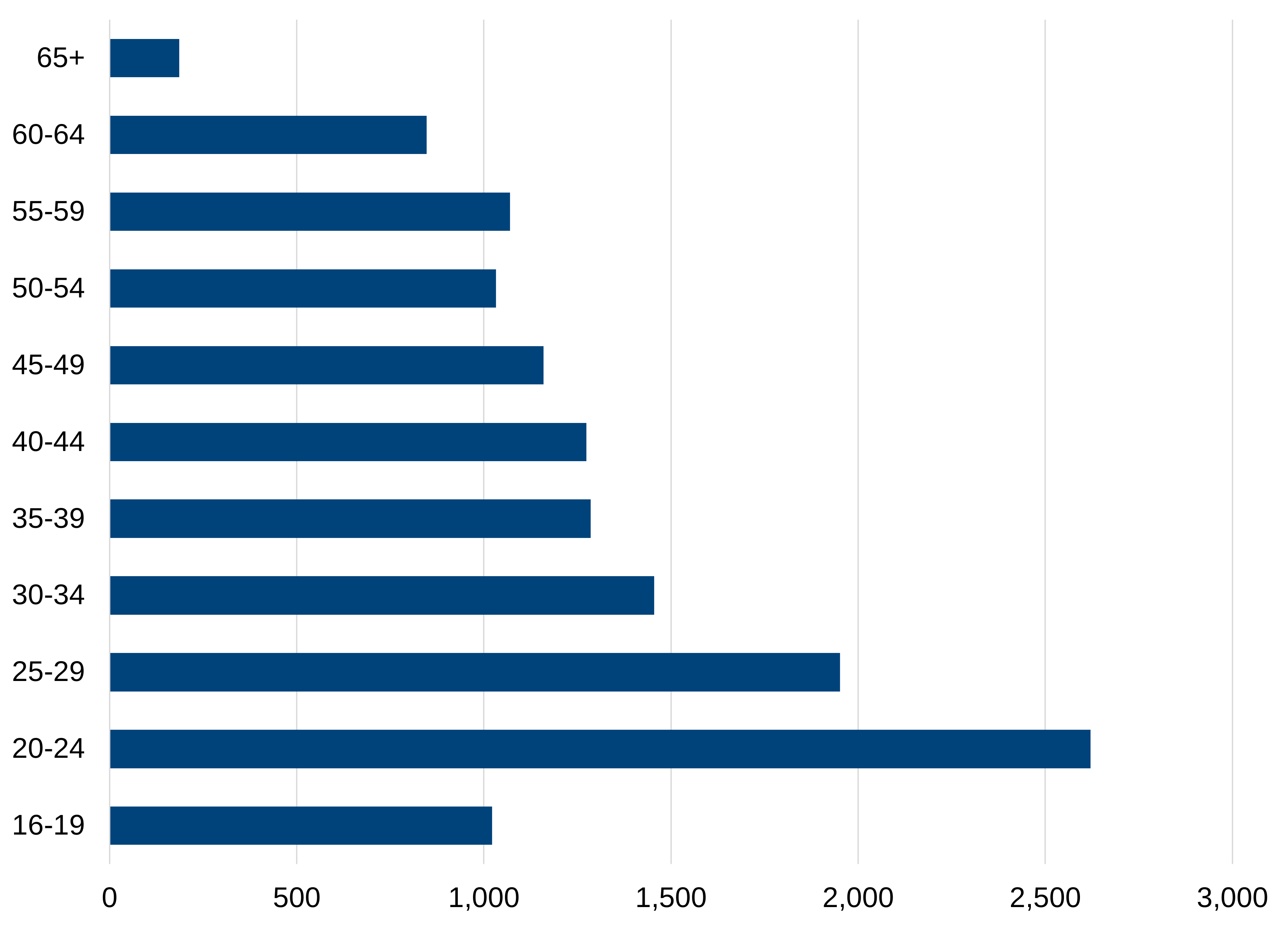
Between April 2025 and March 2026, 26% of starts were aged 16-24
Figure 4: Starts to Connect to Work by age group, May 2025 to end of March 2026
Source: Stat-Xplore, Connect to Work
Figure 4 shows the number of starts to Connect to Work to date by age group. 1,000 people aged 16-19 have started on Connect to Work. The 20-24 age group has the largest amount of starts with 2,600 starts to date. Above the 20-24 group, the starts for each age group decrease overall as the age increases with 65+ age group having 190 starts to date.
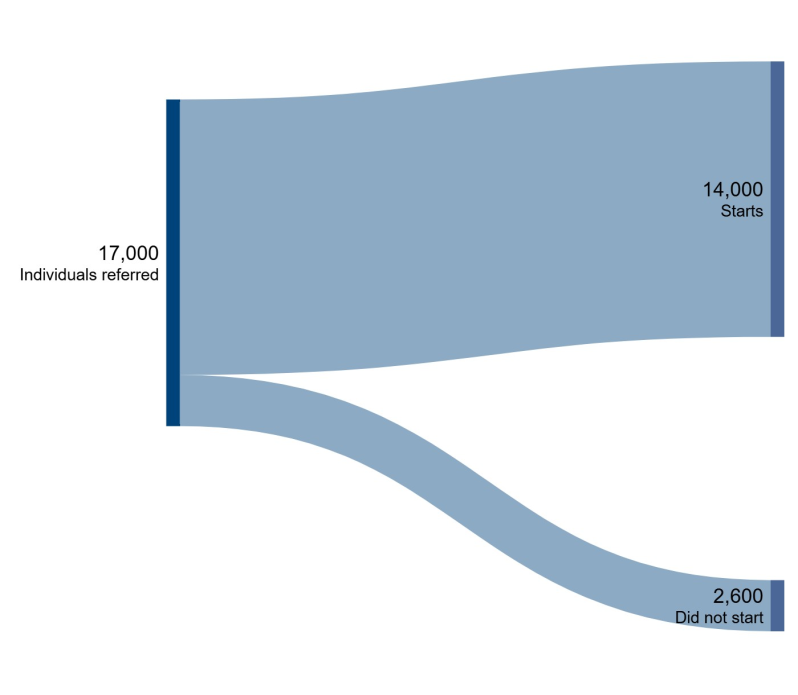
84% of participants who were referred to Connect to Work started on the programme
Figure 5: The flow of participants referred to Connect to Work up to end of March 2026
Source: Stat-Xplore, Connect to Work
Note for Figure 5:
- summed values do not equal overall total due to rounding.
Of the 17,000 individuals who were referred to Connect to Work by the end of March 2026, 14,000 started (84%).
There are several reasons why an individual may not have started on the programme. They may have found employment after being referred but before starting, experienced a change in circumstances which meant they could no longer participate, or they may not have attended their first meeting with their provider. See the background information and methodology report, published alongside this release, for further details.
5. First earnings from employment and job outcomes from Connect to Work
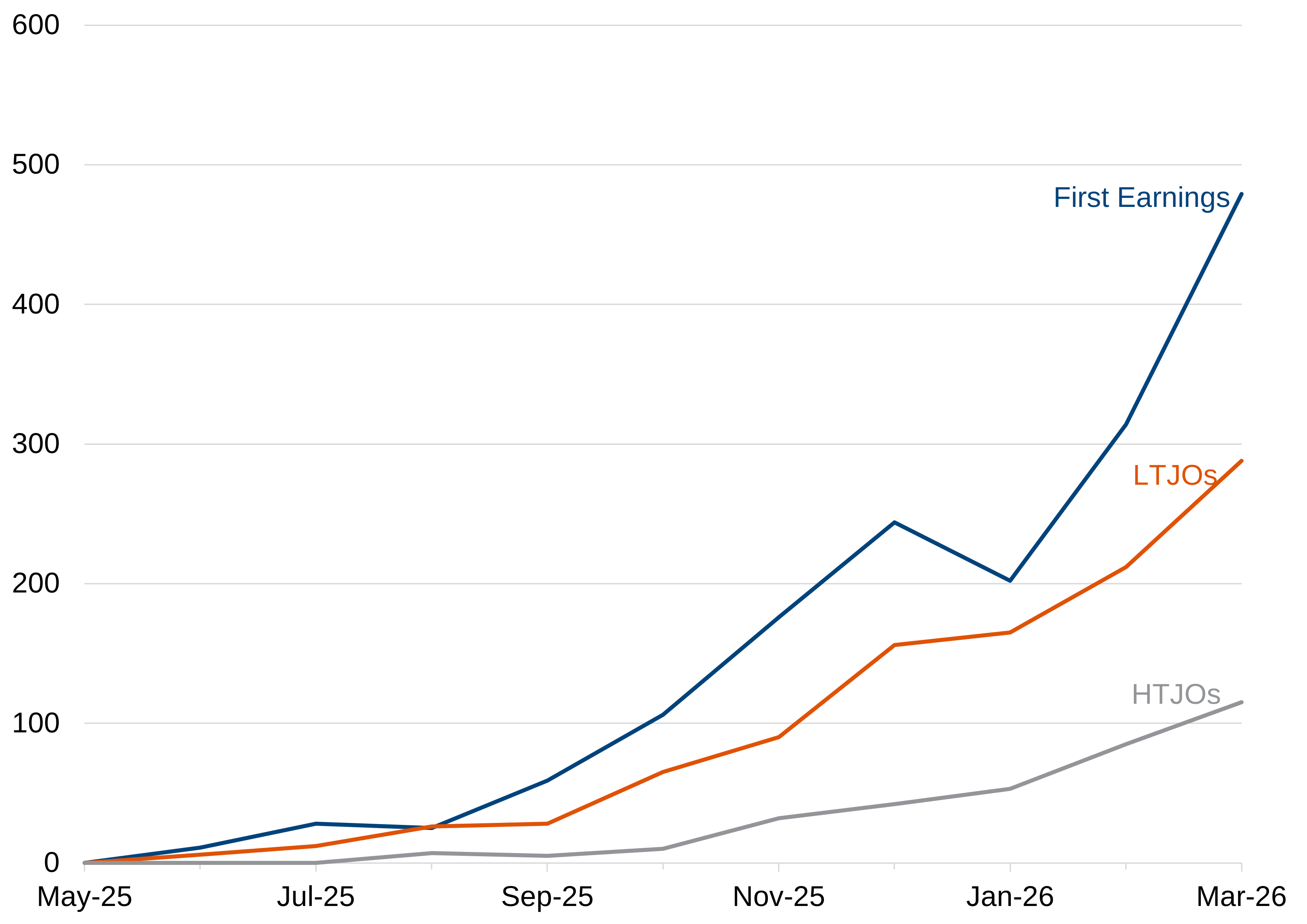
1,600 Out-of-Work participants have achieved first earnings since the beginning of the programme
Figure 6: Number of participants achieving first earnings from employment, lower threshold, and higher threshold outcomes on Connect to Work by month in which they occurred, Out-of-Work group, May 2025 to end of March 2026
Source: Stat-Xplore, Connect to Work
Figure 6 shows that the monthly number of Out-of-Work participants achieving first earnings from employment increased overall from the start of the programme to December 2025, then slightly decreased in January 2026, and since then has increased to 480 in March 2026.
Since the start of the programme, the number Out-of-Work participants achieving Lower Threshold Job Outcomes (LTJOs) and Higher Threshold Job Outcomes (HTJOs) have been increasing each month, with 290 LTJOs and 120 HTJOs achieved by Out-of-Work participants in March 2026.
Please note that Out-of-Work participants have not had the full duration in which to achieve a job outcome. Out-of-Work support is given for a minimum period of 12-months and outcomes are tracked for a further 13 weeks. Therefore, any Out-of-Work participants that have not achieved a job outcome to date may proceed to do so later.
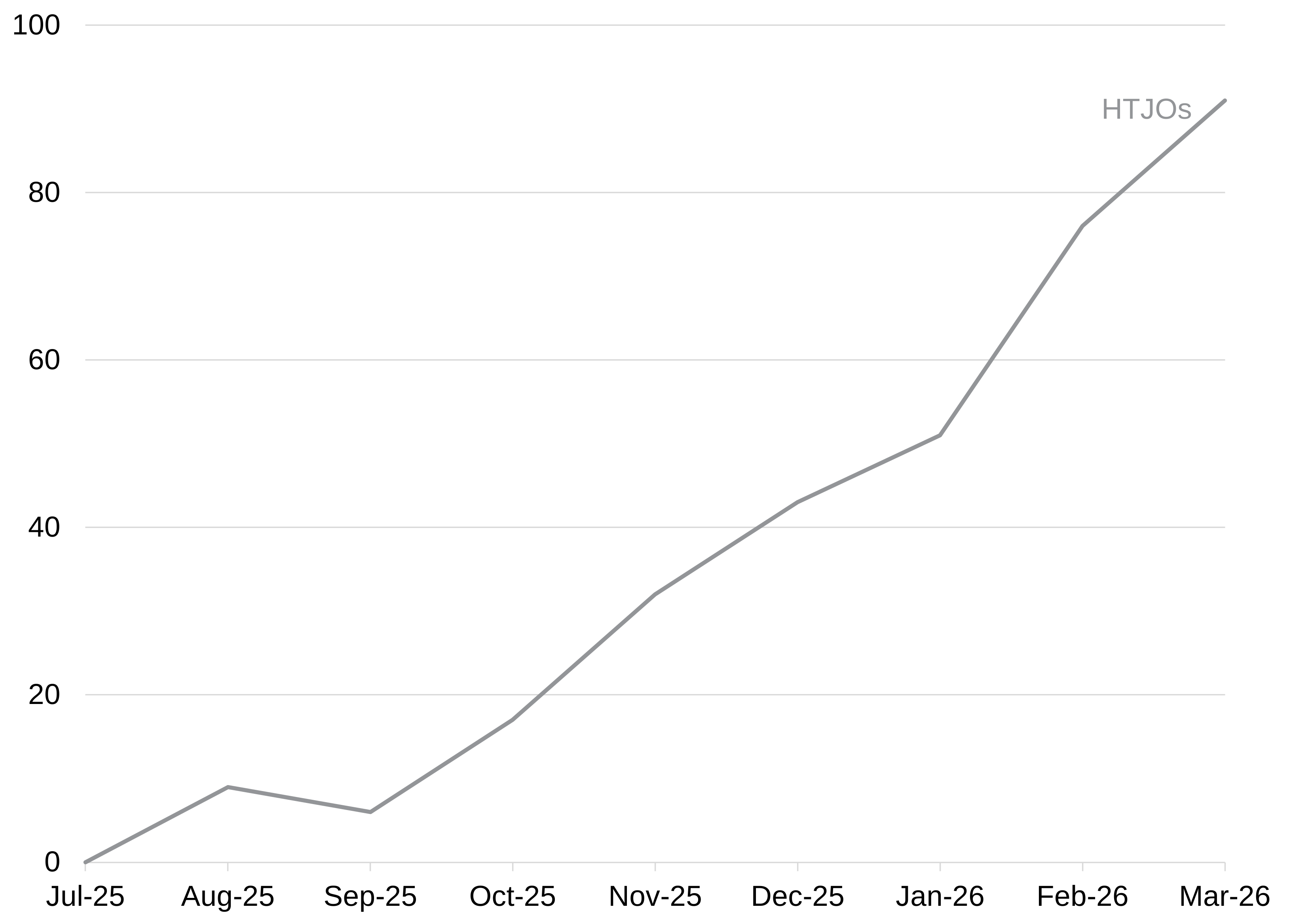
320 IWRS participants have achieved higher-threshold job outcomes since the beginning of the programme
Figure 7: Number of participants achieving higher threshold outcomes on Connect to Work by month in which they occurred, In-Work group, July 2025 to end of March 2026
Source: Stat-Xplore, Connect to Work
Figure 7 shows the monthly total of Higher Threshold Job Outcomes (HTJOs) achieved by participants receiving In-Work Retention Support (IWRS) has increased overall. In the most recent month (March 2026), 90 IWRS participants achieved a HTJO.
Please note that IWRS participants have not had the full duration in which to achieve a job outcome. In-Work Retention Support is given for 4 months and outcomes are tracked for a year from the participant’s start date. Therefore, any IWRS participants that have not achieved a job outcome to date may proceed to do so later.
6. About these statistics
This statistical summary gives an overview. Key points and trends are presented using charts and commentary. The information underlying the charts is available on Stat-Xplore.
Rounding
Volumes and amounts have been rounded as detailed in the background information and methodology report. There are sometimes exceptions to this, for example where figures in text are rounded to a more appropriate level in line with figures in graphs. Percentages are calculated using numbers prior to disclosure controls and/or rounding and are rounded to the nearest whole percentage point. For these reasons, some totals may not sum to 100.
Status
The statistics in this bulletin are classified as Official Statistics in Development. The Statistics and Registration Service Act 2007 defines ‘Official Statistics’ as all those statistical outputs produced by the UK Statistics Authority’s executive office (the Office for National Statistics), by central Government departments and agencies, by the devolved administrations in Northern Ireland, Scotland, and Wales, and by other Crown bodies (over 200 bodies in total).
Our statistical practice is regulated by the Office for Statistics Regulation (OSR). OSR sets the standards of trustworthiness, quality and value in the Code of Practice for Official Statistics. The Code encourages and supports producers of statistics to maintain their independence and to ensure adequate resourcing for statistical production. It helps producers and users of statistics by setting out the necessary principles and practices to produce statistics that are trustworthy, high quality and of public value.
You are welcome to contact us directly by email at EPASS Team about how we meet these standards.
Alternatively, you can email OSR or via the Office for Statistics Regulation website.
How can this data be used?
You can use this data:
-
for monitoring the overall flow of participants being referred to and starting on Connect to Work funded programmes, those achieving first earnings and lower threshold and higher threshold job outcomes
-
for monitoring the differences in demographics of programme participants for age group, participant journey, Supported Employment model, and whether male or female
You cannot use this data:
- for making simple comparisons between different demographic groups (age group, participant journey, Supported Employment model, and whether male or female) in terms of the success of the programme
Where to find out more
Read the Connect to Work background information and methodology report, published alongside this release, for more information about the statistics.
The Connect to Work grant guidance is used by Accountable Bodies.
Users can also produce their own tables and access demographic breakdowns using Stat-Xplore.
7. Future plans and your feedback
Expected changes in future releases
Some changes may be made to the Connect to Work Official Statistics in future releases. We will pre-announce all major changes to users.
For detailed plans, see the Connect to Work Release Strategy.
Feedback and queries
Authors: Sophie Buckland, Daniel O’Hagan and Alys Owen
Lead Statistician: Tracy Hills
If you have any queries or feedback about existing Connect to Work Official Statistics, or the changes proposed above, please email the EPASS Team.
For media enquiries on these statistics, please contact the DWP press office.
DWP would like to hear your views on our statistical publications. If you use any of our statistics publications, we would be interested in hearing what you use them for and how well they meet your requirements. Please send your comments by email to: stats-consultation@dwp.gov.uk.
Users can also join the ‘Welfare, Wellbeing and Housing’ group at StatsUserNetwork. DWP announces items of interest to users via this forum, as well as replying to users’ questions.
ISBN: 978-1-78659-992-6