Community and Engagement Survey 2025/26 - UEFA Euro 2028 UK and Ireland: report
Updated 16 September 2026
Applies to England

© Crown copyright 2026
This publication is licensed under the terms of the Open Government Licence v3.0 except where otherwise stated. To view this licence, visit nationalarchives.gov.uk/doc/open-government-licence/version/3 or write to the Information Policy Team, The National Archives, Kew, London TW9 4DU, or email: psi@nationalarchives.gov.uk.
Where we have identified any third party copyright information you will need to obtain permission from the copyright holders concerned.
This publication is available at https://www.gov.uk/government/statistics/community-and-engagement-survey-202526-major-events/community-and-engagement-survey-202526-uefa-euro-2028-uk-and-ireland-report
This report summarises the key findings for the ‘UEFA EURO 2028 UK & Ireland’ major event in the Community and Engagement Survey (CES) for 2025/26.[footnote 1] Reports for other sections within the CES are available on the annual web page.
The CES asked respondents about their awareness of the UEFA EURO 2028 UK & Ireland major event and intentions to participate in related activities.
The CES is representative of people aged 16 and over in England. For simplicity, we will sometimes refer just to “people” in our reporting.
For information on how to use and interpret these statistics see the note available on the supplementary documents page.[footnote 2]
1. Key findings
1.1 Headline
45% of people aged 16+ and over in England were aware of the UEFA EURO 2028 UK & Ireland 2026.
By ITL2 area, there was a 10 percentage point difference in the proportion of people who were aware of the UEFA EURO 2028 UK & Ireland event, from 50% in Tees Valley to 40% in Inner London - West.
Of those people aware of the event, 42% of people aged 16+ were interested in participating in the UEFA EURO 2028 UK & Ireland 2026 event.
1.2 Forms of participation
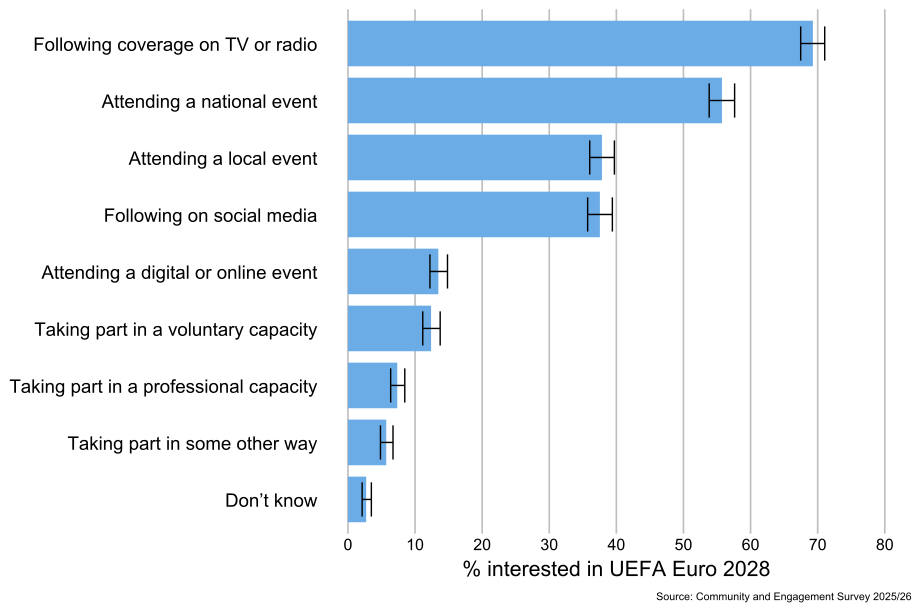
As shown in Figure 1, of those people who were aware of the UEFA EURO 2028 UK & Ireland 2026 event, 42% of people were interested in participating. Of those who were interested in participating in the event, the most popular method was following coverage on TV or radio (including watching the event and/or news about the event) (69%), followed by attending a national event (56%), attending a local event (38%) and following on social media (38%).
Figure 1: Forms of participating in UEFA EURO 2028 UK & Ireland 2026, England: 2025/26 (Base: All people aged 16 and over who were aware of UEFA EURO 2028 UK & Ireland 2026)
2. Demographics: Who was aware of the UEFA EURO 2028 UK and Ireland
Demographic questions in the survey are voluntary and self-reported by the respondent.
2.1 Age
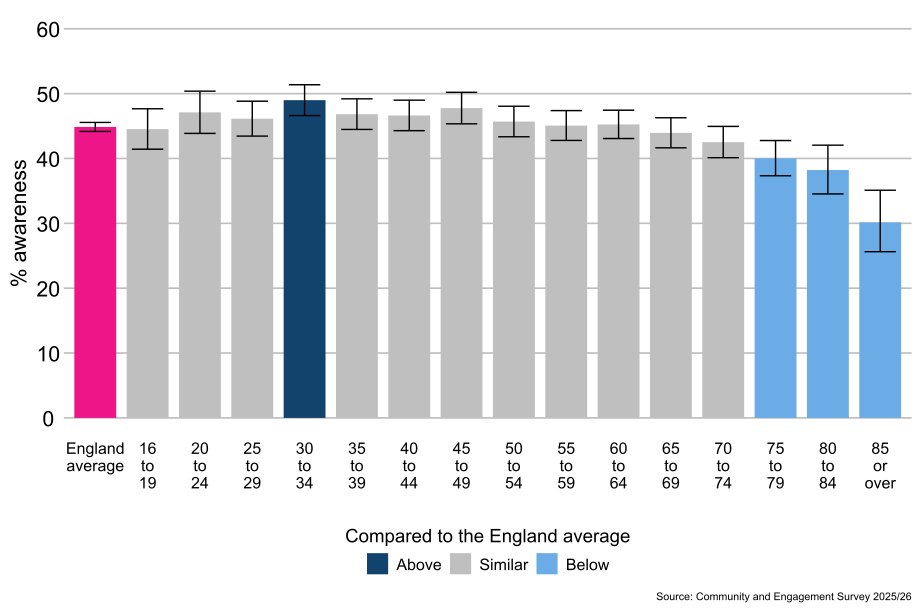
As shown in Figure 2, people aged 30 to 34 (49%) were more likely to be aware of the UEFA EURO 2028 UK & Ireland event compared with the average for people in England (45%). People aged 75 to 79 (40%), 80 to 84 (38%) and 85 or over (30%) were less likely to be aware of the UEFA EURO 2028 UK & Ireland compared with the average for people in England (45%).
Figure 2: Awareness of the UEFA EURO 2028 UK & Ireland, by age, England: 2025/26 (Base: All people aged 16 and over)
2.2 Disability status
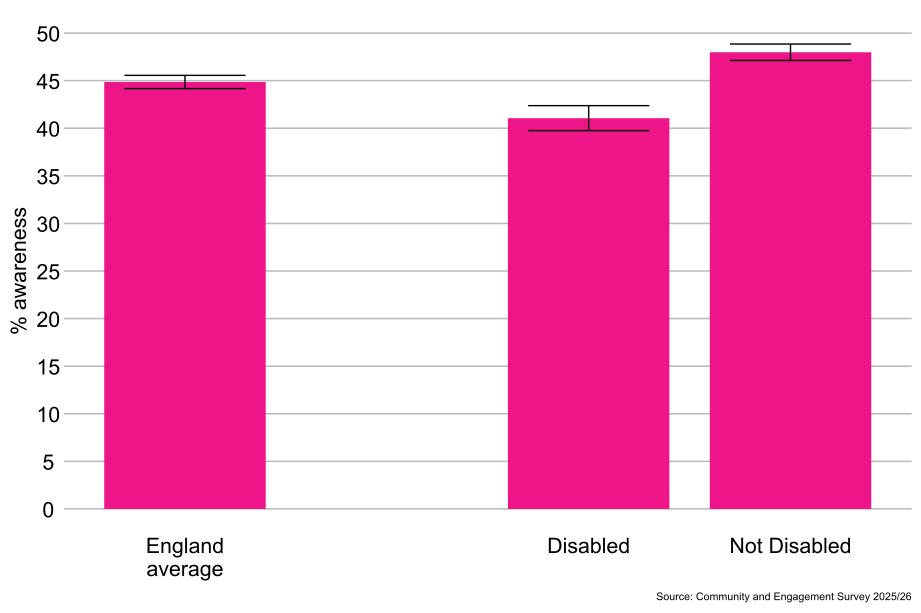
As shown in Figure 3, non-disabled people (48%) were more likely to be aware of the UEFA EURO 2028 UK & Ireland event than disabled people (41%).
Figure 3: Awareness of the UEFA EURO 2028 UK & Ireland, by disability status, England: 2025/26 (Base: All people aged 16 and over)
2.3 Sex[footnote 4]
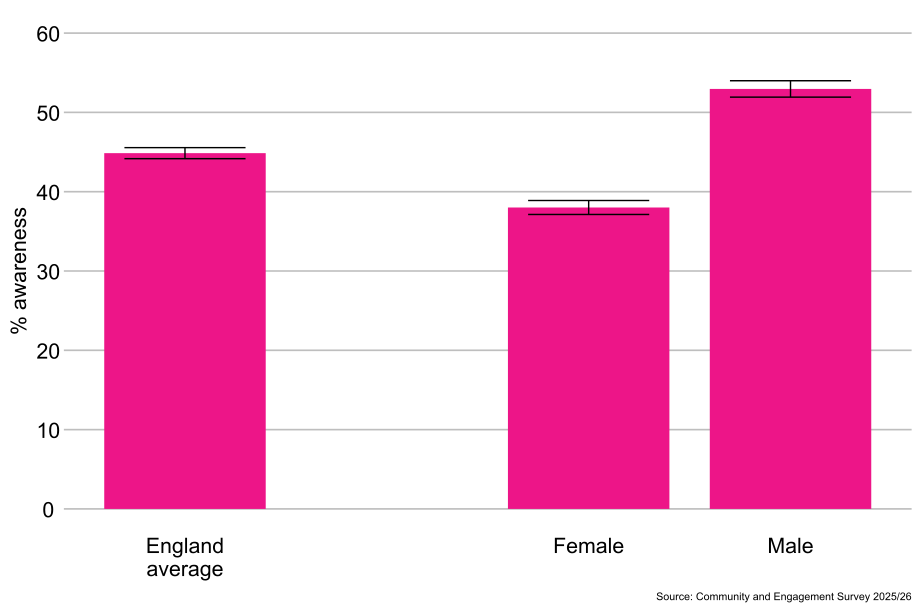
As shown in Figure 4, males (53%) were more likely to be aware of the UEFA EURO 2028 UK & Ireland event than females (38%).
Figure 4: Awareness of the UEFA EURO 2028 UK & Ireland, by sex, England: 2025/26 (Base: All people aged 16 and over)
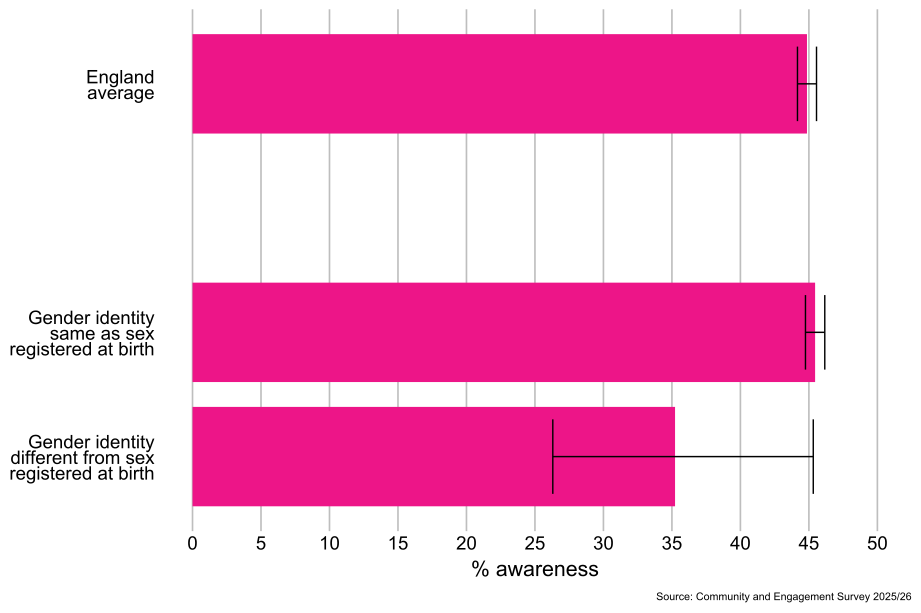
2.4 Gender identity[footnote 5]
As shown in Figure 5, there was no significant difference between the proportion of people whose gender identity was the same as their sex registered at birth (45%) and those people whose gender identity was different from their sex registered at birth (35%) who were aware of the UEFA EURO 2028 UK & Ireland.
Figure 5: Awareness of the UEFA EURO 2028 UK & Ireland, by gender identity, England: 2025/26 (Base: All people aged 16 and over)
2.5 Sexual orientation[footnote 6]
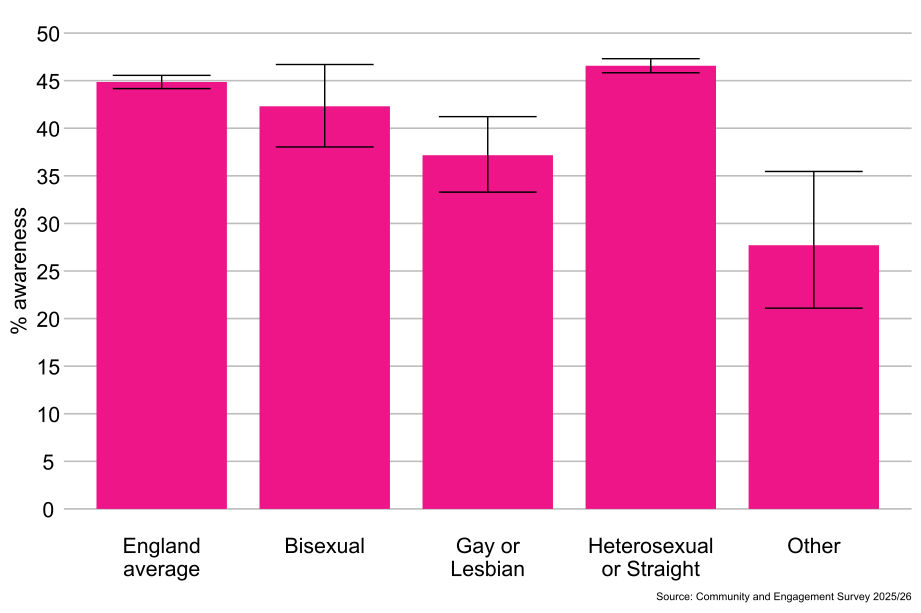
As shown in Figure 6, heterosexual or straight people (47%) were more likely to be aware of the UEFA EURO 2028 UK & Ireland event than gay or lesbian people (38%) and people from the “Other sexual orientation” classification (28%).
Figure 6: Awareness of the UEFA EURO 2028 UK & Ireland, by sexual orientation, England: 2025/26 (Base: All people aged 16 and over)
2.6 Religion
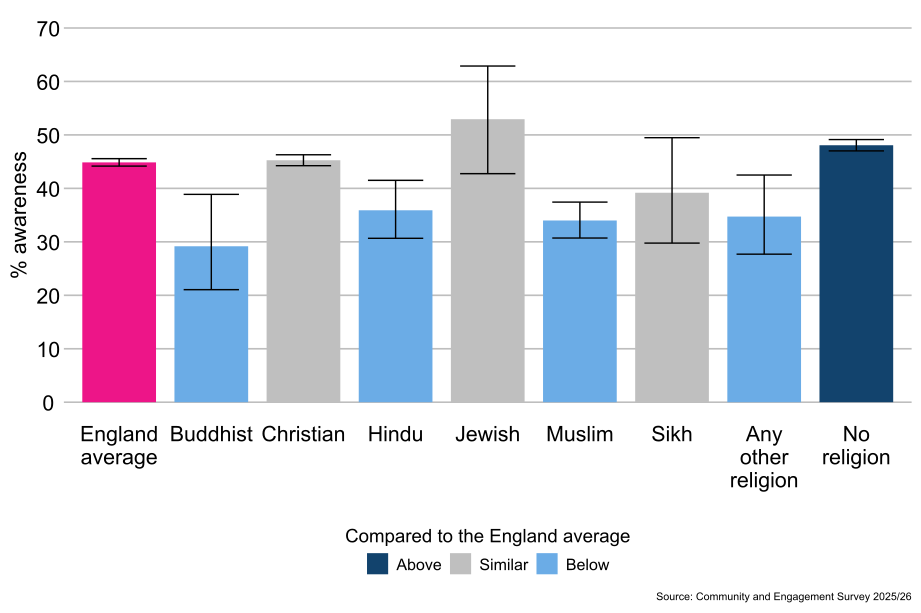
As shown in Figure 7, compared with the average for people in England (45%), people who reported having no religion (48%) were more likely to be aware of the UEFA EURO 2028 UK & Ireland. Buddhist people (29%), Muslim people (34%), people from the Any other religion classification (35%) and Hindu people (36%) were less likely to be aware of the UEFA EURO 2028 UK & Ireland event compared with the average for people in England (45%).
Figure 7: Awareness of the UEFA EURO 2028 UK & Ireland, by religion, England: 2025/26 (Base: All people aged 16 and over)
2.7 Ethnicity
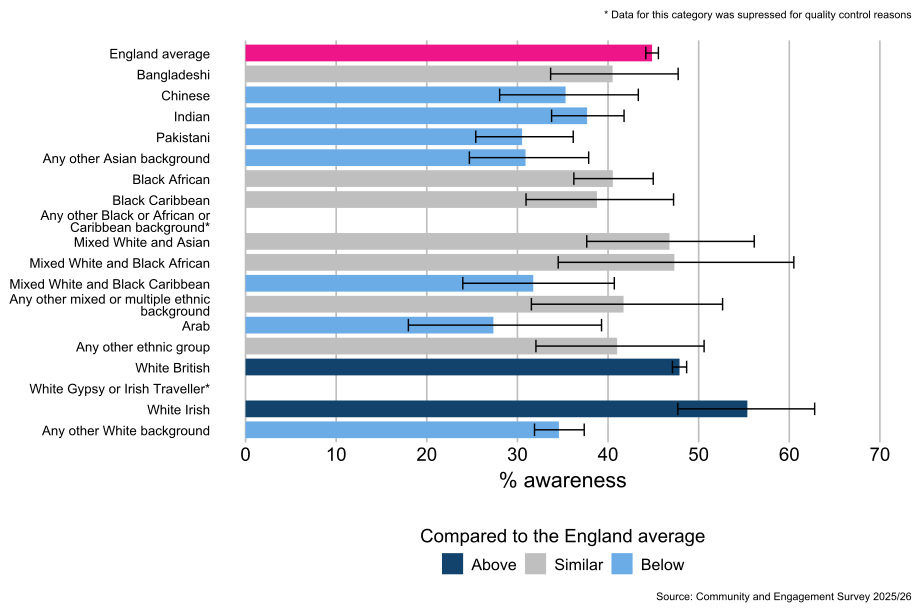
As shown in Figure 8, compared with the average for people in England (45%), people from the White British[footnote 7] (48%) and White Irish (55%) ethnic groups were more likely to be aware of the UEFA EURO 2028 UK & Ireland event. People from the Arab (27%), Pakistani (31%), Any other Asian background (31%), Mixed White and Black Caribbean (32%), Any other White background (35%), Chinese (35%) and Indian (38%) ethnic groups were less likely to be aware of the UEFA EURO 2028 UK & Ireland event compared with the average for people in England (45%).
Figure 8: Awareness of the UEFA EURO 2028 UK & Ireland, by ethnicity, England: 2025/26 (Base: All people aged 16 and over)
2.8 Socio-economic classification[footnote 8]
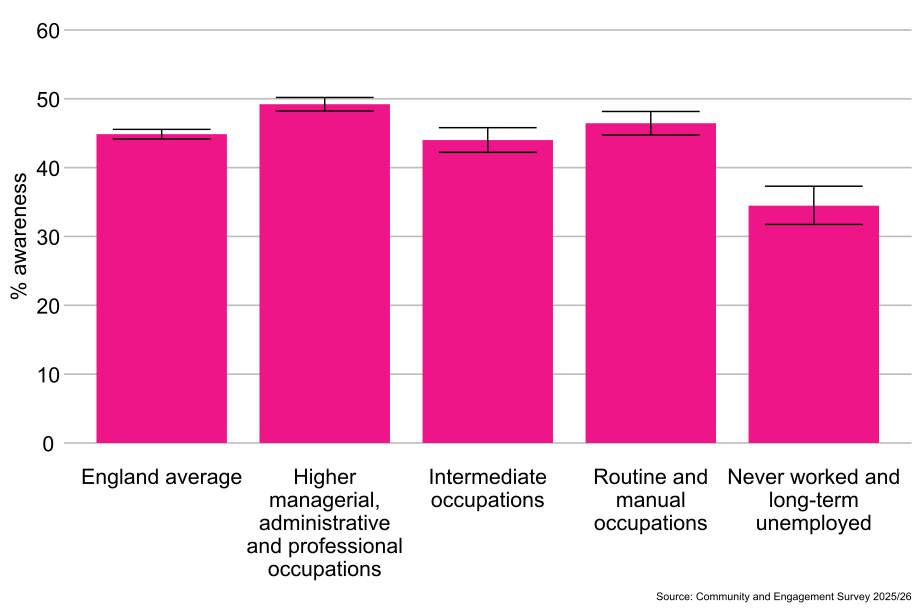
As shown in Figure 9, people from the higher managerial, administrative and professional occupations classification (49%) were more likely to be aware of the UEFA EURO 2028 UK & Ireland event than people in the routine and manual occupations classification (46%) and people from the intermediate occupations classifications (44%). People from the never worked and long-term unemployed classification (34%) were less likely to be aware of the UEFA EURO 2028 UK & Ireland event compared to people from all other socio-economic classifications.
Figure 9: Awareness of the UEFA EURO 2028 UK & Ireland, by socio-economic classification, England: 2025/26 (Base: All people aged 16 and over)
2.9 Index of Multiple Deprivation[footnote 9]
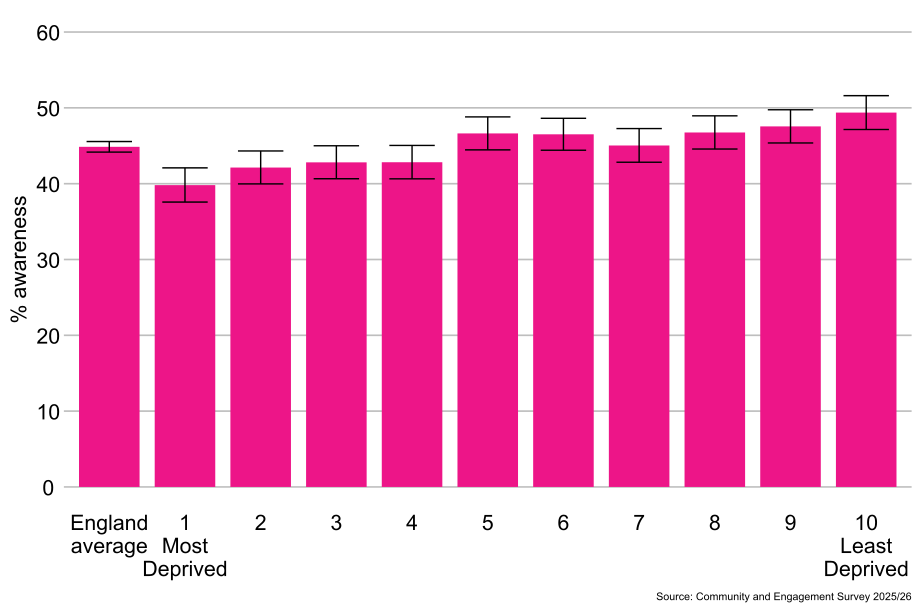
As shown in Figure 10, people from the most deprived areas (1st decile, 40%) were less likely to be aware of the UEFA EURO 2028 UK & Ireland event compared to people from the least deprived areas (10th decile, 49%).
Figure 10: Awareness of the UEFA EURO 2028 UK & Ireland, by Index of Multiple Deprivation, England: 2025/26 (Base: All people aged 16 and over)
3. Awareness of the UEFA EURO 2028 UK & Ireland by ITL1 and ITL2 area
3.1 Regional differences[footnote 10]
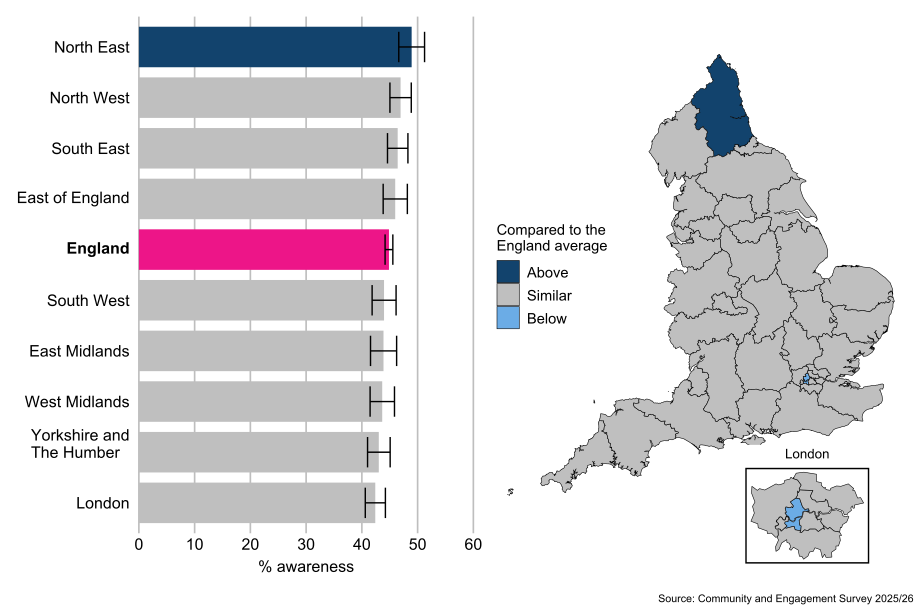
As shown in Figure 11, compared with the average for people in England (45%), people living in the North East ITL1 area (49%) were most likely to be aware of the UEFA EURO 2028 UK & Ireland event.
3.2 ITL2 area differences
By ITL2 area, there was a 10 percentage point difference in the proportion of people who were aware of the UEFA EURO 2028 UK & Ireland event, from 50% in Tees Valley to 40% in Inner London - West.
The proportion of people who were aware of the UEFA EURO 2028 UK & Ireland event was in line with the England average in 34 ITL2 areas (94%), higher than the England average in 1 ITL2 area (Northumberland, Durham and Tyne & Wear (49%), 3% of ITL2 areas), and lower than the England average in 1 ITL2 area (Inner London - West (40%), 3% of ITL2 areas).
Figure 11: Awareness of the UEFA EURO 2028 UK & Ireland by ITL1 and ITL2 area: England: 2025/26 (Base: All people aged 16 and over)
-
The major event estimates are based on data collection from April 2025 to March 2026 through the Participation Survey (April to September 2025) and the Community and Engagement Survey (October 2025 to March 2026). ↩
-
The majority of estimates in this report are rounded to the nearest whole number. As data are rounded, some changes may appear bigger or smaller than they are. The unrounded numbers are available in the corresponding data tables. ↩
-
Awareness of the UEFA EURO 2028 UK & Ireland 2026 has been collected for the first time in the 2025/26 survey year. This means that comparisons to previous survey years are not available. ↩
-
This data is based on the respondent’s sex. The Community and Engagement Survey respondents were asked the question “What is your sex?”. The response options were ‘Male’, ‘Female’ and ‘Prefer not to Say’. This closely follows the ONS Census 2021 question for sex, where the target concept was certificated sex meaning a person’s sex at birth or as modified by a Gender Recognition Certificate (GRC), but has been slightly amended to include a ‘Prefer not to Say’ option as we do for all demographic questions in the Community and Engagement Survey. ↩
-
This data is based on the respondent’s gender identity. The Community and Engagement Survey respondents were asked the question ‘Is the gender you identify with the same as your sex registered at birth?. The response options were ‘Yes’, ‘No, type in gender identity’ or ‘Prefer not to say’. This closely follows the ONS Census 2021 question for England and Wales, but has been slightly amended to include a ‘Prefer not to Say’ option as we do for all demographic questions in the Community and Engagement Survey. It should be noted that in the Census 2021 data for England and Wales, patterns were identified that suggest that some respondents may not have interpreted the question as intended, notably those with lower levels of English language proficiency. Analysis of Scotland’s Census 2022, where the gender identity question was different, has added weight to this observation. More information can be found in the ONS sexual orientation and gender identity quality information report and the additional guidance and quality information for users of gender identity estimates from Census 2021 in England and Wales. Similar respondent error may have occurred during the data collection for these statistics so comparisons between subnational and other smaller group breakdowns should be considered with caution. ↩
-
Sexual orientation is an umbrella term covering sexual identity, attraction, and behaviour. For an individual respondent, these may not be the same. For example, someone in an opposite-sex relationship may also experience same-sex attraction, and vice versa. This means the statistics should be interpreted purely as showing how people responded to the question, rather than being about whom they are attracted to or their actual relationships. ↩
-
The White British ethnic group includes people from an English, Welsh, Scottish, Northern Irish or British ethnic group. ↩
-
This is a form of socio-economic classification based on the employment status and occupation of the respondent. ↩
-
The Index of Multiple Deprivation is a geographical measure which classifies the relative deprivation of an area. It combines seven indices to produce one overall measure for the area (rather than the individual). It takes into account income, employment, education, skills and training, health and disability, crime, barriers to housing and services, and living environment. For this commentary, the most and least deprived deciles have been compared. There may be some other significant differences between deciles in between which have not been commented on here. The analysis of the Index of Multiple Deprivation was conducted using the 2025 Index of Multiple Deprivation. ↩
-
The question on awareness of the UEFA EURO 2028 UK & Ireland event was not asked to all respondents. This means that data are not available at LA level. Data are however available by ITL2 area level (summary commentary provided in this report) and by combined authority level in the corresponding data tables. ↩