Introduction and key findings
Published 26 November 2026
Applies to England

© Crown copyright 2026
This publication is licensed under the terms of the Open Government Licence v3.0 except where otherwise stated. To view this licence, visit nationalarchives.gov.uk/doc/open-government-licence/version/3 or write to the Information Policy Team, The National Archives, Kew, London TW9 4DU, or email: psi@nationalarchives.gov.uk.
Where we have identified any third party copyright information you will need to obtain permission from the copyright holders concerned.
This publication is available at https://www.gov.uk/government/statistics/chapters-for-english-housing-survey-2025-to-2026-headline-findings-on-demographics-and-household-resilience/introduction-and-key-findings
Introduction and key findings
The English Housing Survey (EHS) is a national survey of people’s housing circumstances and the condition and energy efficiency of housing in England. It is a repeated cross-sectional survey that pairs a household interview with a physical inspection of the home. It is an Accredited Official statistic (previously known as National statistic), and is one of the longest standing government surveys, first run in 1967.
To support timely and relevant reporting, the previous EHS Headline report has been split into two releases. This report is the first publication of findings from the 2025-26 survey. It details findings on demographics and household resilience. Additional findings on housing quality and energy efficiency will be published in January 2027.
Background to the English Housing Survey 2025-26 data
The interview fieldwork for the 2025-26 EHS was carried out from end of March 2025 to March 2026. During this time, inflation and interest rates remained relatively steady after increasing significantly. Households also continued to face high energy prices following sizable increases in 2023. According to ONS data, private rents were also significantly higher than they were 12 month previous, following substantial increases in 2023. These conditions are reflected in the EHS findings for this year. In this report, you will find further detail on affordability and households facing rises in rent payments. Also, while we continue to see more first time buyers than ten years ago, they tend to be older and have longer mortgage periods. We also see fewer social renters expecting to buy a home compared to the pre-pandemic period.
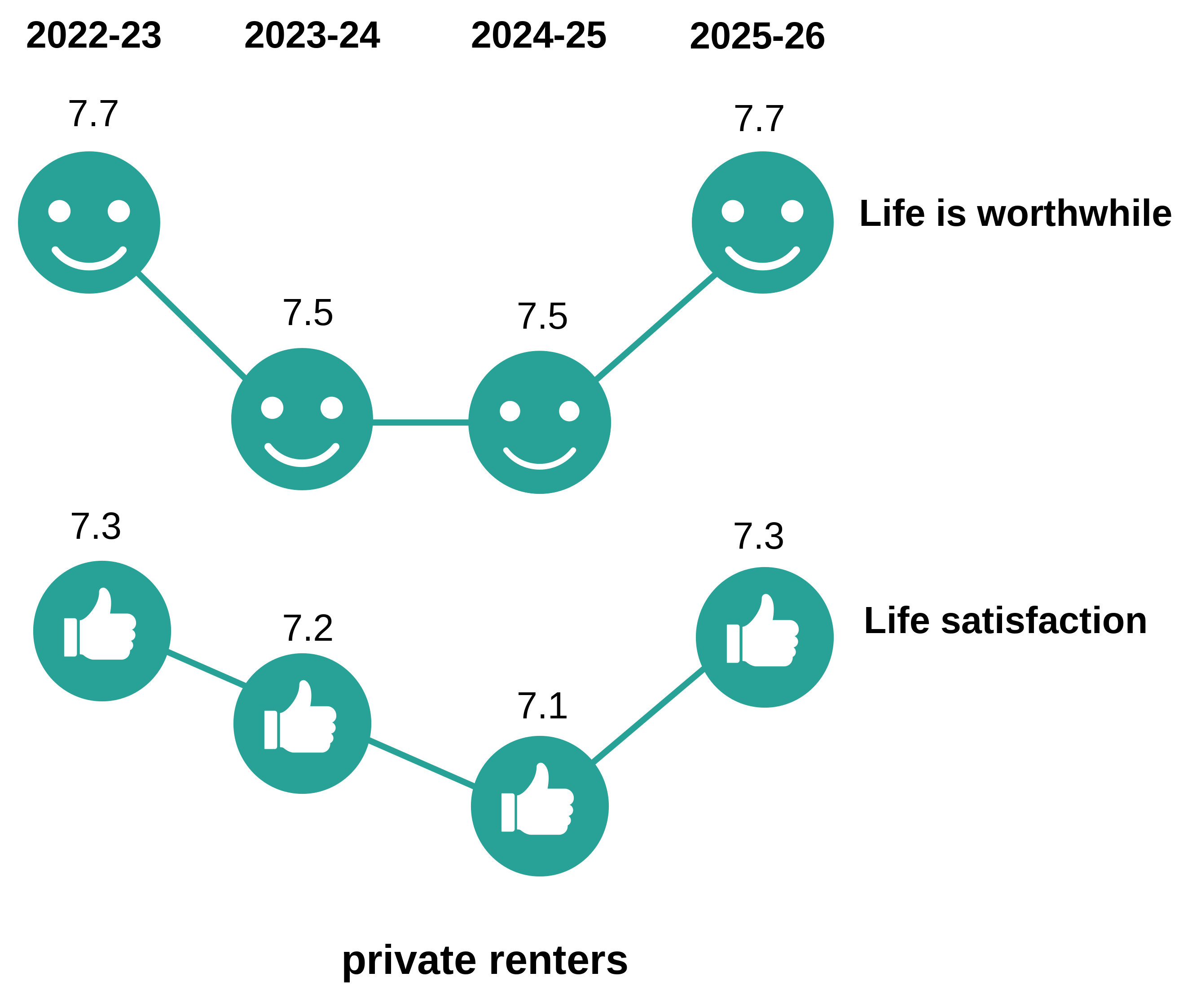
At the same time, the proportion of households with savings remains higher than it was before the COVID-19 pandemic, particularly for outright owners, who generally have more equity in their homes and will not be affected by higher interest rates in the same way as mortgagors. We also observe fewer social rented households falling behind on their rent, and fewer rented households reporting that the find it difficult to pay their rent. In terms of wellbeing, we also saw average increases reported for life satisfaction and life feeling worthwhile in the private rented sector, compared to lower levels reported over 2023-24 and 2024-25.
Taken together, these findings continue to show disparity in the financial resilience of households in England, with a smaller but substantial proportion of households struggling with finances and increasingly exposed to risk, and others who are more financially comfortable, with the ability to better absorb increases in the cost of living, with savings or equity in housing.
This report
This report contains headline findings on demographics and household resilience. It is split into four chapters.
The first chapter provides a profile of households and dwellings in England, covering tenure (owner occupation and renting in either the social or private sectors) and the demographic and economic characteristics of the people who live in those tenures.
The second chapter explores housing costs and affordability and how this varies between tenures and over time. This includes average mortgage and rental costs, the extent to which private and social renters claim housing support and savings.
The third chapter discusses first time buyers, future buying expectations among renters, length of time in current accommodation and tenure, and household moves.
The fourth chapter presents well-being rates using four measures of personal well-being and discusses loneliness and satisfaction with accommodation.
This is the first release of data from the 2025-26 survey. The report will be followed by two more chapters on housing quality and energy efficiency in January and then a series of more detailed topic reports in the spring and summer of 2027.
Key findings
Owner occupation remained the largest tenure group in England in 2025-26 (65% of households, 16.3 million households), followed by the private rented sector (19%, 4.8 million households), with the social rented sector being the smallest (16%, 4.1 million households). Within the social rented sector, the majority (10% of overall households) were owned by housing associations and the remaining 6% were owned by local authorities.
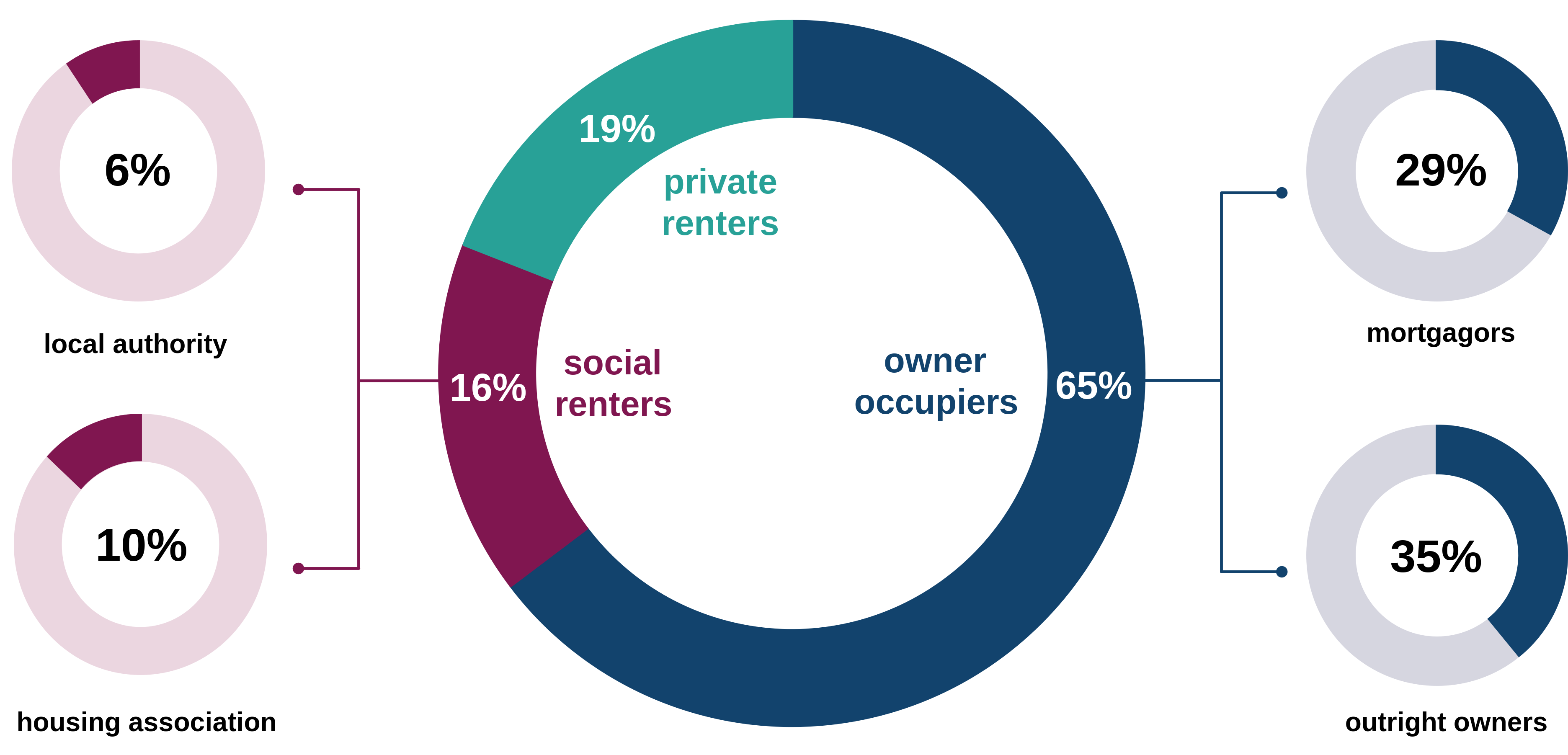
While the private rented sector has remained fairly similar in size relative to other tenures over the last fifteen years, there have been changes within the owner occupied and social rented sectors. Since 2013-14, outright owners have represented a larger share of households than mortgagors, and there has been a continued divergence within the social rented sector, with an increase in households renting from a housing association and a decrease in households renting from a local authority.
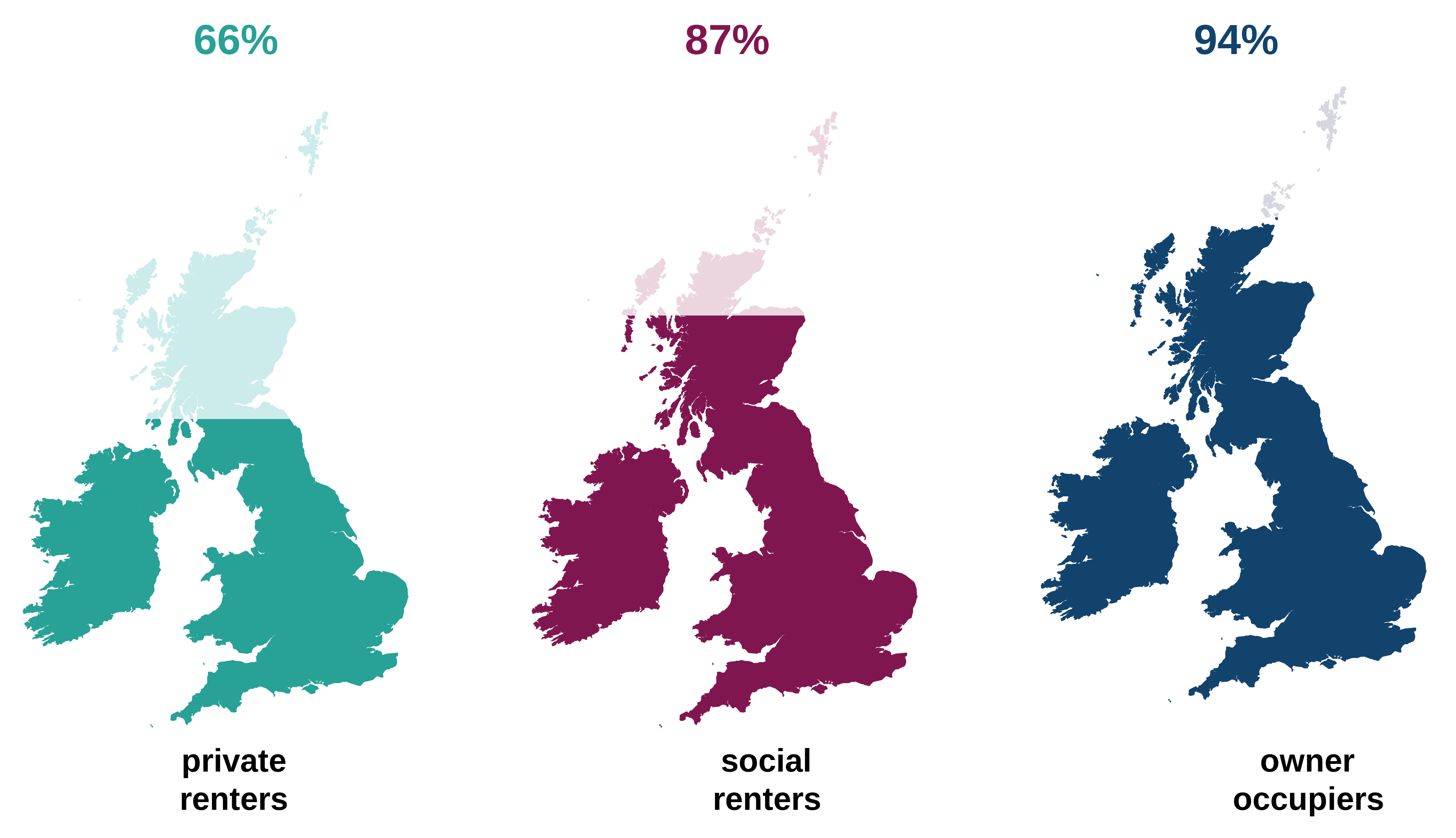
The private and social rented sectors were more nationally diverse tenures. The majority of owner occupiers (94%) were from the UK or Republic of Ireland, compared to 87% of social renters and 66% of private renters.
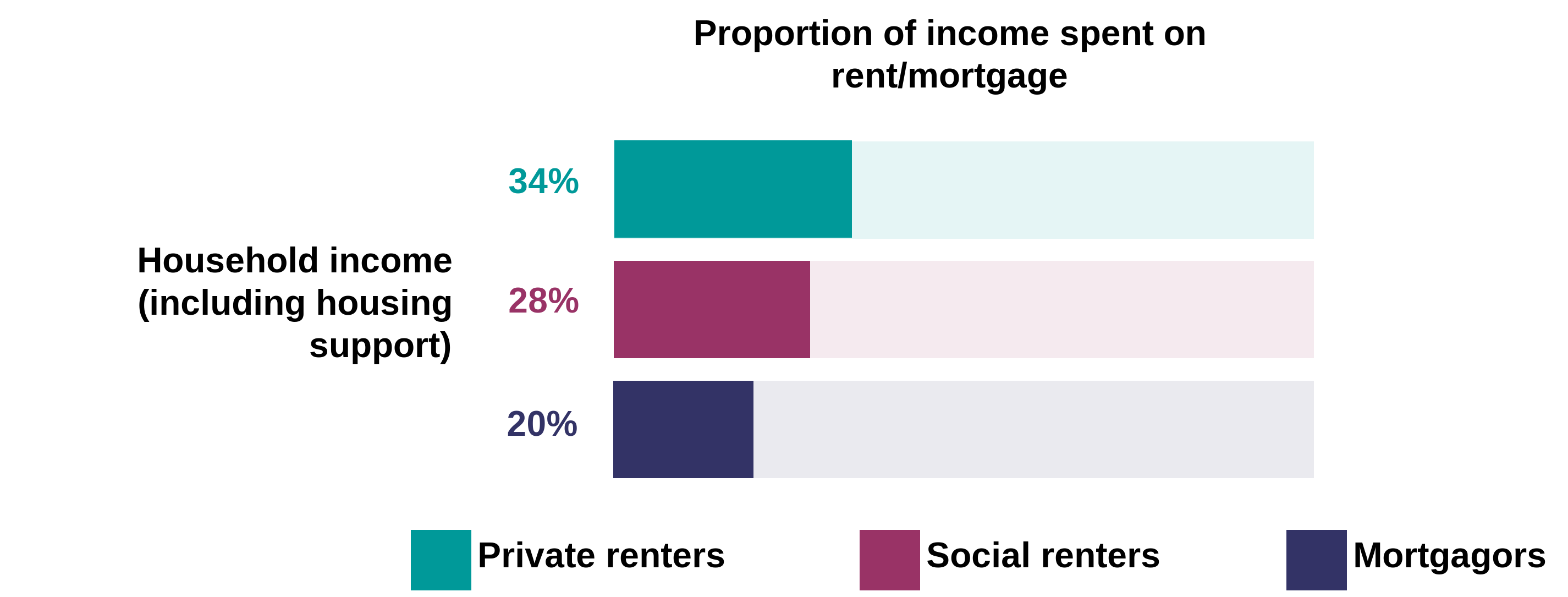
On average, private renters spent a third (34%) of their household income (including housing support) on housing costs compared to social renters (28%) or mortgagors (20%). Over the past decade, the change in the proportion of household income (including housing support) that both renters and mortgagers spent on rent or mortgage between 2015-16 and 2025-26 was not significant.
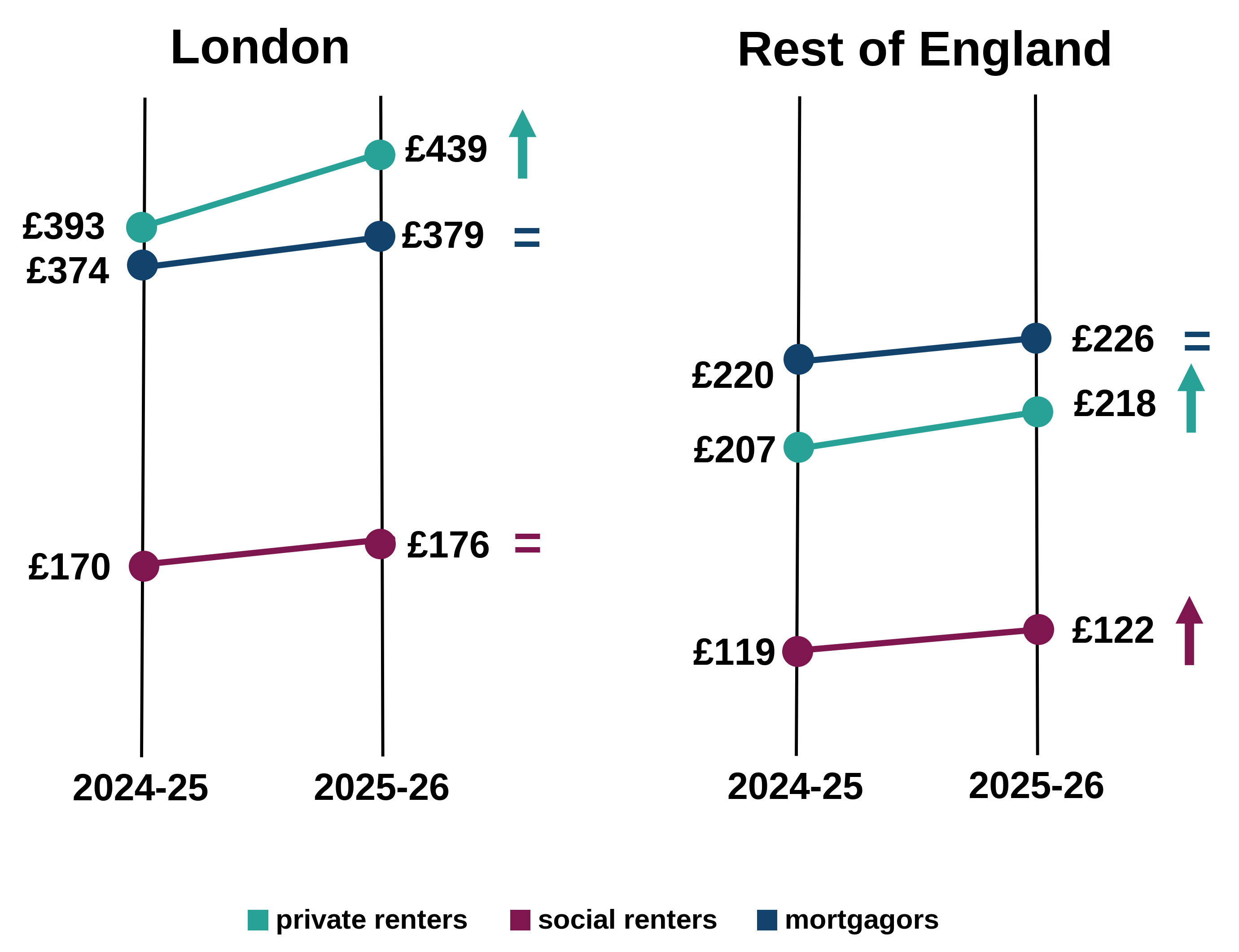
Average weekly rent for private renters increased significantly from 2024-25, with average increases larger for households in London. In London weekly private rent increased from a mean of £393 in 2024-25 to £439 in 2025-26 (an increase of £46), whereas the rest of England increased by £11 per week, from £207 in 2024-25 to £219 in 2025-26.
The same significant increase was not seen for social renters in London, nor for mortgagors in either part of the country. However, there was an increase in rents in the social sector in the rest of England from £119 in 2024-25 to £122 per week in 2025-26.
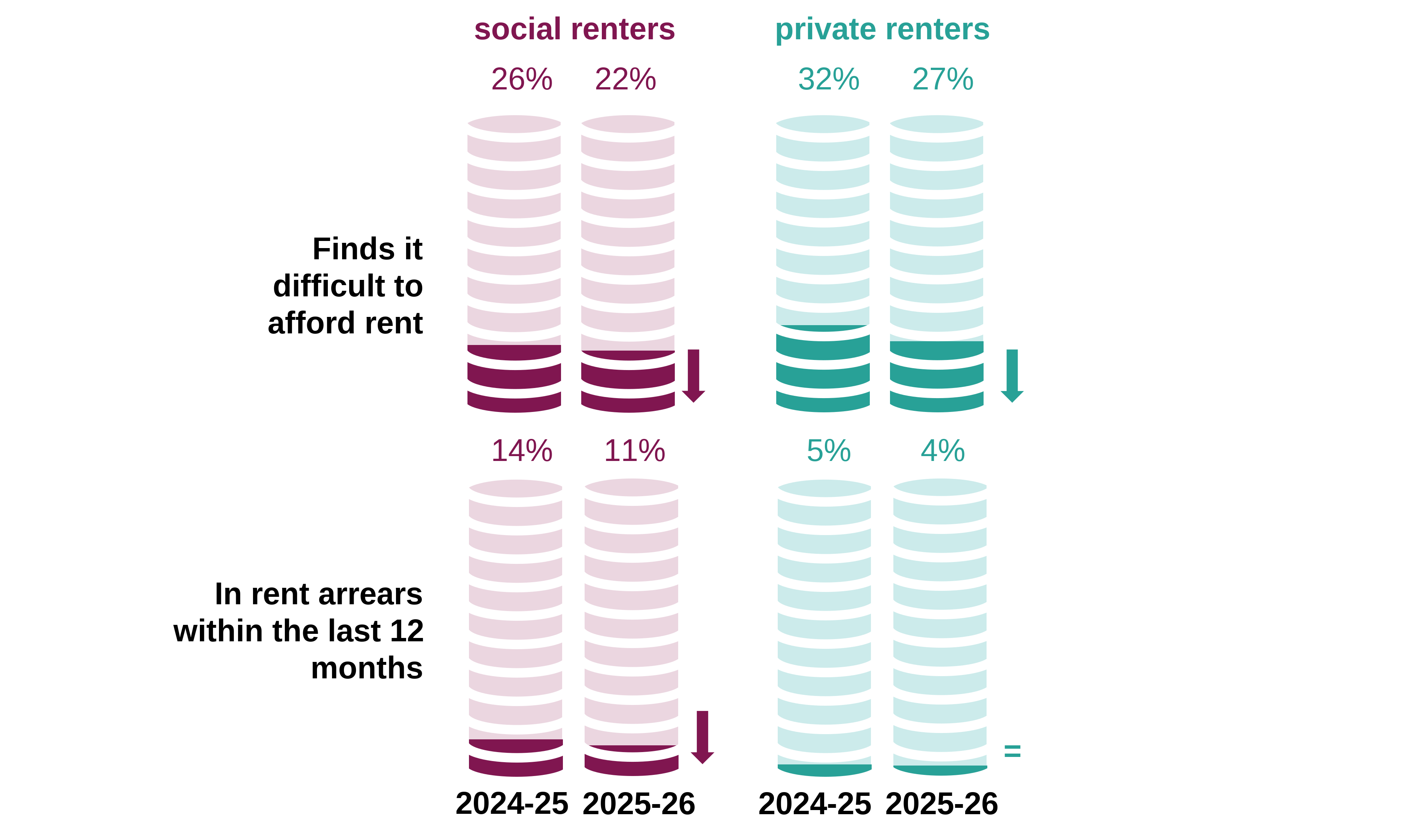
Despite increases in rent, the proportion of social renters reporting current or previous rental arrears has decreased over the last 10 years (from 25% in 2015-16 to 11%), although social renters (11%) were still significantly more likely to report being in rent arrears than private renters (4%).
For both private and social renters, the proportion finding it fairly or very difficult to pay their rent was lower than in 2024-25, 32% down to 27% in 2025-26 for private renters and 26% down to 22% in 2025-26 for social renters.
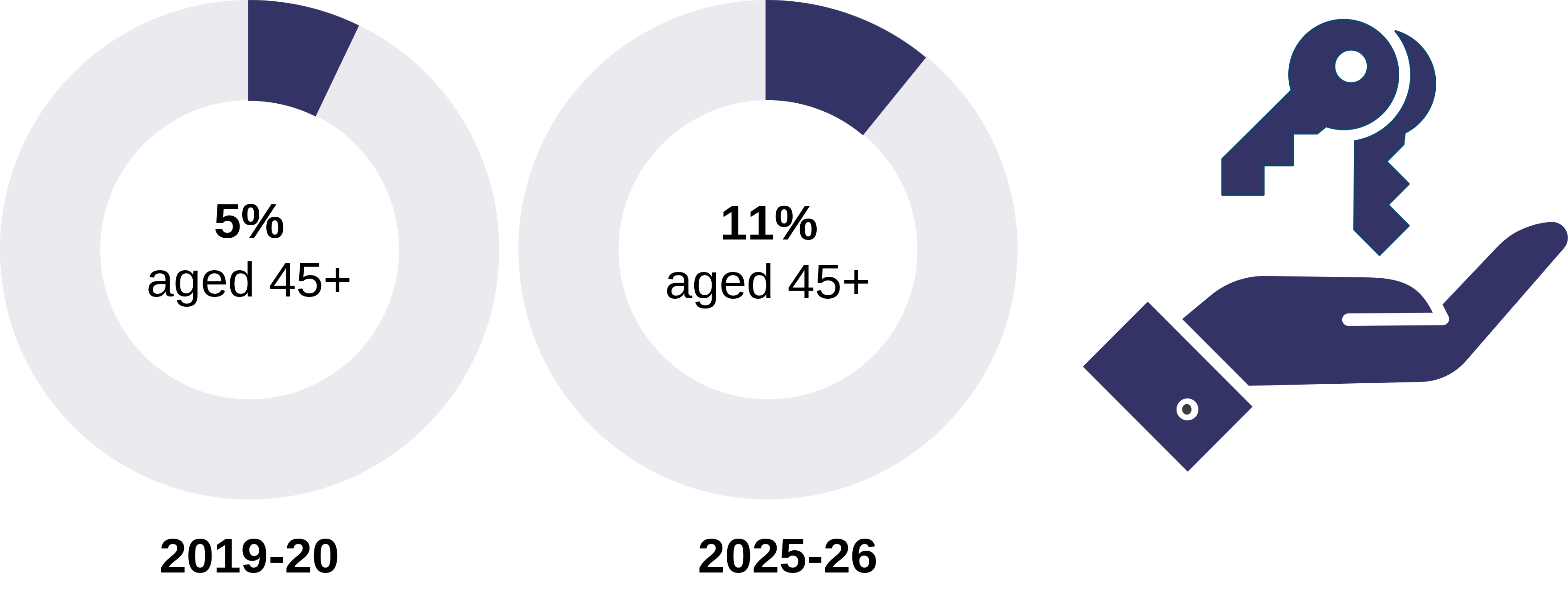
In a continuation of a trend seen over the past few years, first time buyers are getting older. The mean age of a first time buyer in England was 34 in 2025-26, up from 32 in 2019-20. Although 25 to 34 year olds still accounted for the majority (54%), this was down substantially from 65% in 2019-20. At the other end of the distribution, the proportion aged 45 or over increased from 5% to 11%.
First time buyers are also increasingly likely to be buying their home as an individual. Over a quarter (26%) of first time buyers were single person households in 2025-26, up from a fifth (19%) in 2019-20.
Reflecting trends in the general population, first time buyers have become more ethnically diverse. The proportion of first time buyer households with a Household Reference Person (HRP) from an ethnic minority group increased from 15% in 2019-20 to 25% in 2025-26.
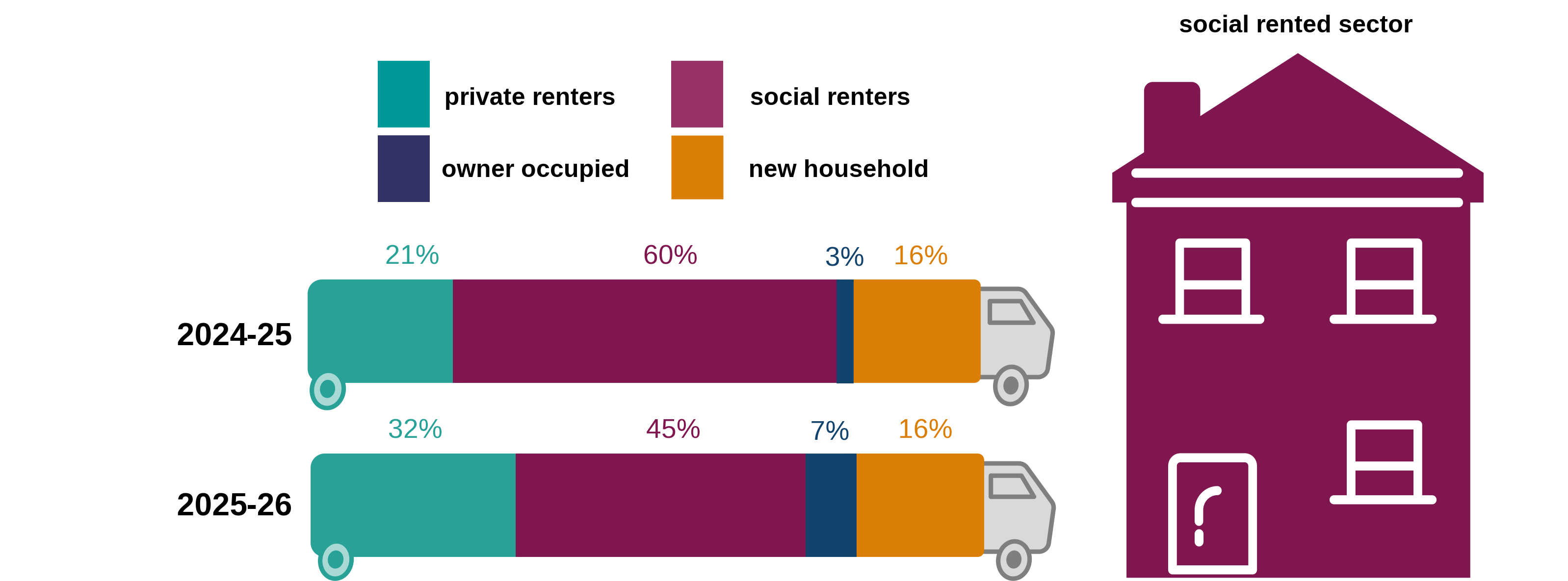
Moves into the social rented sector are increasingly driven by households coming from the private rented sector. In 2024-25, 51,000 (21%) of the 247,000 total moves into the social sector were from the private rented sector. In 2025-26 this increased to 82,000 or 32% of the total (252,000).
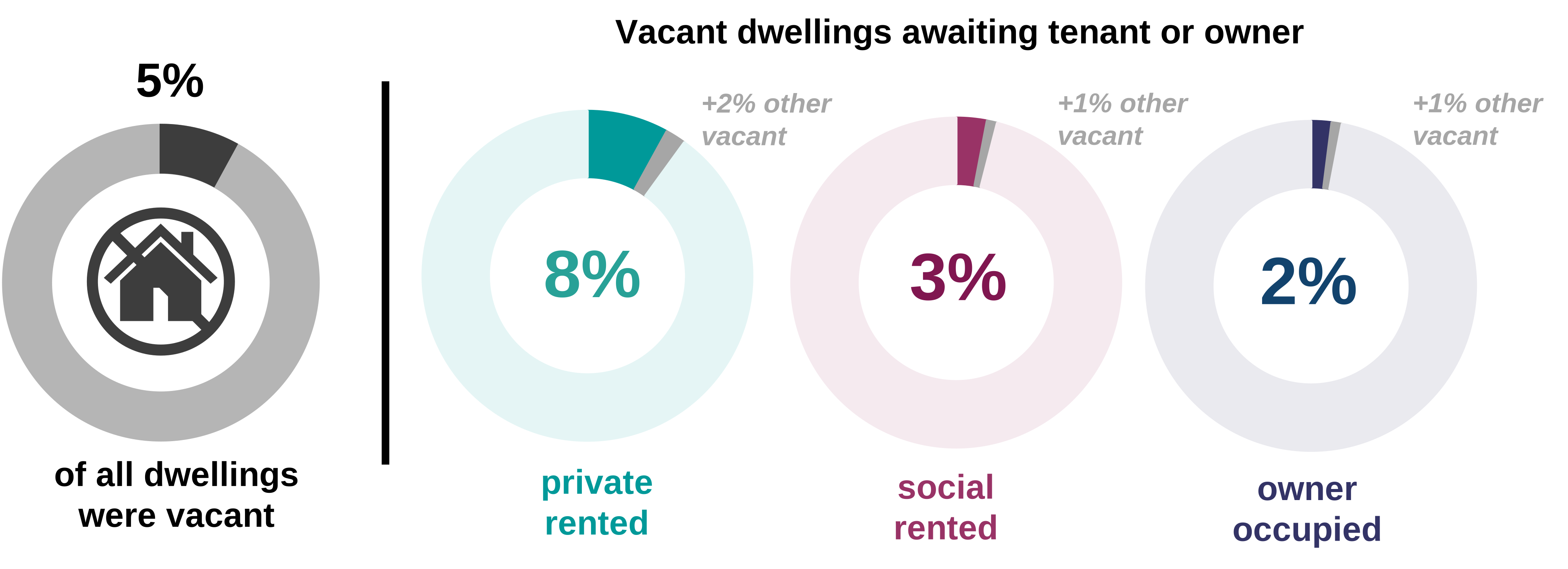
In 2025, there were 1.2 million vacant dwellings, making up 5% of the dwellings in England (3% of owner occupied, 10% of private rented and 4% of social rented dwellings were vacant at the time of survey). Within the private rented and social rented sectors, the most common reason for vacancy was awaiting another tenant or owner (8% and 3% of all dwellings respectively) compared with 2% in the owner occupied vacant dwellings.
Private renters reported higher scores in 2025-26 for thinking life is worthwhile (mean of 7.7) and life satisfaction (7.3) compared to 2023-24 and 2024-25, but similar to 2022-23. In 2025-26, owner occupiers continued to report higher scores for thinking life is worthwhile, life satisfaction, and happiness, and lower scores for anxiety compared to the private rented sector and the social rented sector.
Acknowledgements and further queries
Each year the English Housing Survey relies on the contributions of a large number of people and organisations. The Ministry of Housing, Communities and Local Government (MHCLG) would particularly like to thank the following people and organisations without whom the 2025-26 survey and this report would not have been possible: all the households who gave up their time to take part in the survey, NatCen Social Research, the Building Research Establishment (BRE) and CADS Housing Surveys.
This report was produced by the Housing Evidence, Research and Surveys Team at MHCLG. If you have any queries about it, would like any further information or have suggestions for analyses you would like to see included in future EHS reports, please contact ehs@communities.gov.uk.