Introduction and key findings
Updated 9 July 2026
Applies to England

© Crown copyright 2026
This publication is licensed under the terms of the Open Government Licence v3.0 except where otherwise stated. To view this licence, visit nationalarchives.gov.uk/doc/open-government-licence/version/3 or write to the Information Policy Team, The National Archives, Kew, London TW9 4DU, or email: psi@nationalarchives.gov.uk.
Where we have identified any third party copyright information you will need to obtain permission from the copyright holders concerned.
This publication is available at https://www.gov.uk/government/statistics/chapters-for-english-housing-survey-2024-to-2025-headline-findings-on-demographics-and-household-resilience/introduction-and-key-findings
Introduction and key findings
The English Housing Survey (EHS) is a national survey of people’s housing circumstances and the condition and energy efficiency of housing in England. It is a repeated cross-sectional survey that pairs a household interview with a physical inspection of the home. It is an Accredited Official statistic (previously known as National statistic), and is one of the longest standing government surveys, first run in 1967.
To support timely and relevant reporting, the usual EHS Headline report has been split into two releases. This report is the first publication of findings from the 2024-25 survey, and details findings on housing demographics and resilience. Additional findings on housing quality and energy efficiency will be published in January 2026.
Background to the English Housing Survey 2024-25 data
The interview fieldwork for the 2024-25 data was carried out from end of March 2024 to March 2025. During this time, households were faced with rising inflation, including higher interest rates, general increases in the cost of energy, and increases in other living costs. This is reflected in the EHS findings for this year – showing significant and substantial rises in rent and mortgage payments, and a higher proportion of renters saying they struggle to pay for housing. While we see more first time buyers than ten years ago, they tend to be older and have longer mortgage periods. We also see fewer social renters expecting to buy a home compared to five years ago. At the same time, the proportion of households with savings is still higher than it was before the COVID-19 pandemic, particularly for outright owners, who generally have more equity in their homes and will not be affected by higher interest rates in the same way as mortgagors.
Four years later, we continue to see the legacy of the COVID-19 pandemic reflected in EHS data – not necessarily in the methodology, which is back to our usual face-to-face interviews and full household inspections – but in the results of our analysis. Average wellbeing levels remain lower than they were pre-pandemic, levels of savings remain higher, as does the proportion of households containing someone with a long-term illness or disability. Households now report lower than usual levels of satisfaction with their accommodation. We also see significantly more one person households than before the pandemic. We are still learning about and understanding the lingering impact of the pandemic on our lives and relationship to our homes.
Taken together, these findings continue to show disparity in the financial resilience of households in England, with a smaller but substantial proportion of households struggling with finances and increasingly exposed to risk, and others who are more financially comfortable with the ability to better absorb increases in the cost of living, with savings or equity in housing.
This report
This report contains headline findings on household demographics and resilience. It is split into four chapters.
The first chapter provides a profile of households and dwellings in England, covering tenure (owner occupation and renting in either the social or private sectors) and the demographic and economic characteristics of the people who live in those tenures.
The second chapter explores housing costs and affordability and how this varies between tenures and over time, including average mortgage and rental costs, the extent to which private and social renters claim housing support to help meet the cost of their rent, and savings.
The third chapter discusses first time buyers, future buying expectations among renters, length of time in current accommodation and tenure, and household moves.
The fourth chapter presents well-being rates using four measures of personal well-being and also discusses loneliness and satisfaction with accommodation.
This is the first release of data from the 2024-25 survey. The report will be followed by two more chapters on housing quality and energy efficiency in January and then a series of more detailed topic reports in the spring and summer of 2026.
Key findings
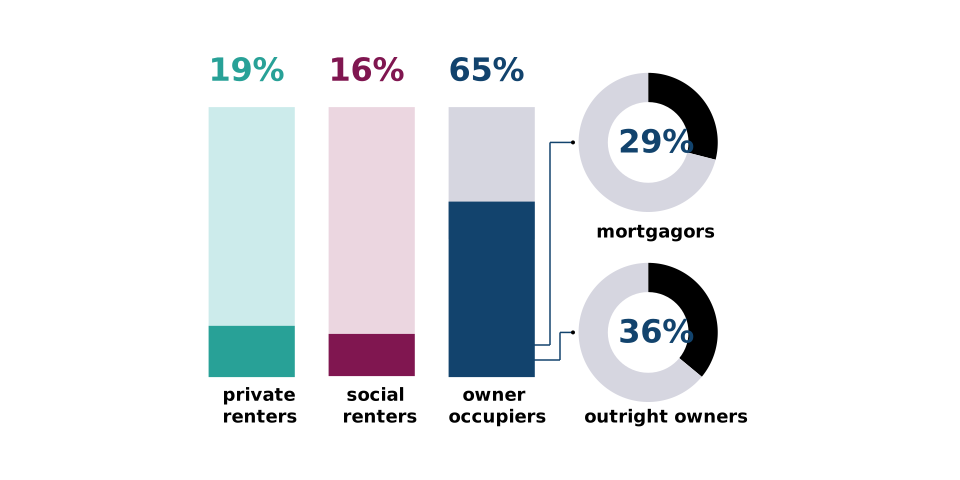
Owner occupation remained the largest tenure group in England (65% of households), followed by the private rented sector (19%), with the social rented sector being the smallest (16%).
While the overall proportion of owner occupiers remains similar to a decade ago, the proportion of outright owners is significantly higher. Since 2014-15, there have been a higher proportion of outright owners compared to mortgagors. In 2024-25, there were 36% of households who owned their homes outright (33% in 2014-15), while 29% were mortgagors (30% in 2014-15).
The size of the private rented sector has generally remained stable across all regions. In London, there was no statistically significant change in the number of private rented sector dwellings, though the proportion of households in London who privately rent decreased from 32% in 2023-24 to 28% in 2024-25. The proportion of private renters is affected by both the size of the owner occupied and social rented sectors, so small increases in the relative size of the other two tenures could impact the proportion of private renters.
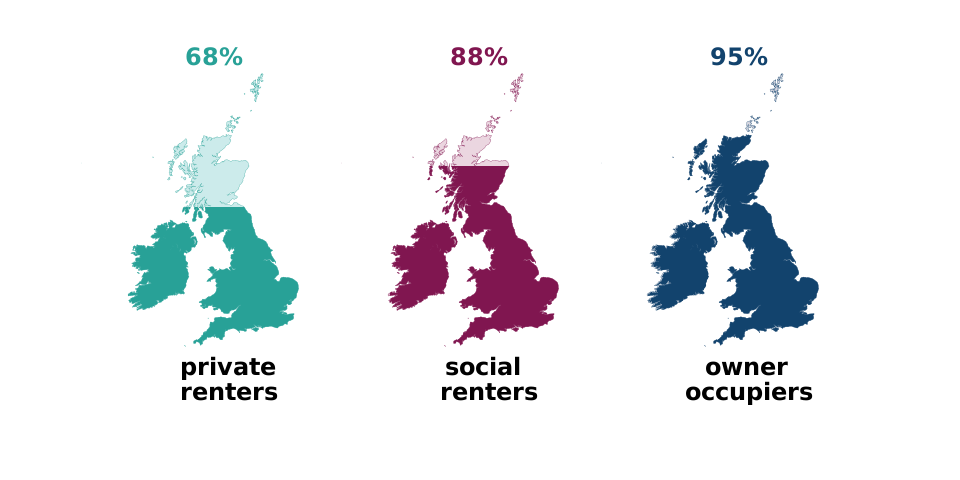
The private and social rented sectors were more nationally diverse tenures. The majority of owner occupiers (95%) had HRPs from the UK or Republic of Ireland (ROI), compared with 88% of social renters and 68% of private renters.
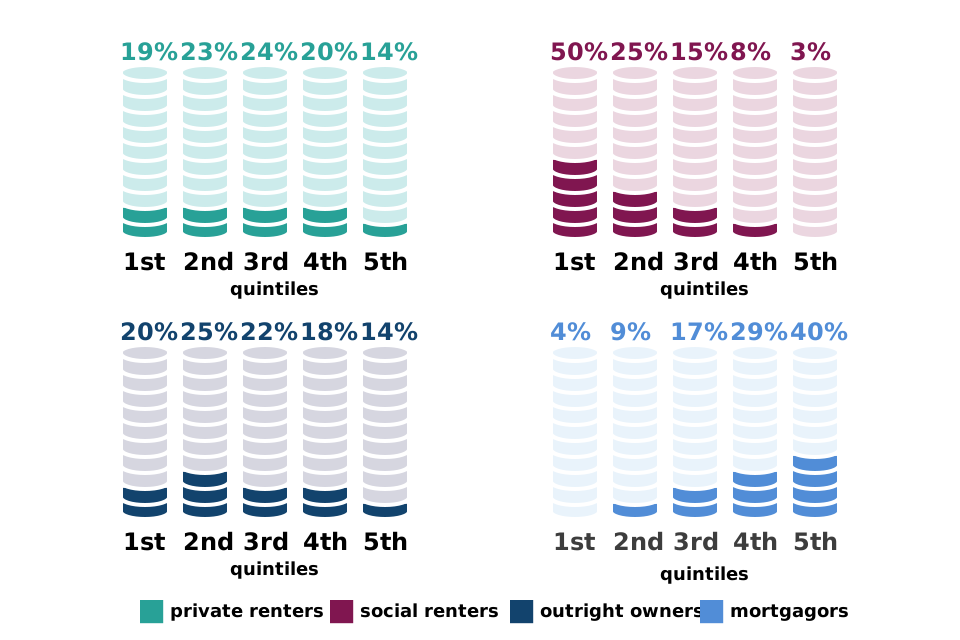
In 2024-25, 50% of social renters were in the lowest income quintile and 25% in the second lowest, while mortgagors were concentrated in the two highest income quintiles (40% were in the top income quintile and 29% in the second highest). Private renters (along with outright owners) were more evenly spread across the quintiles.
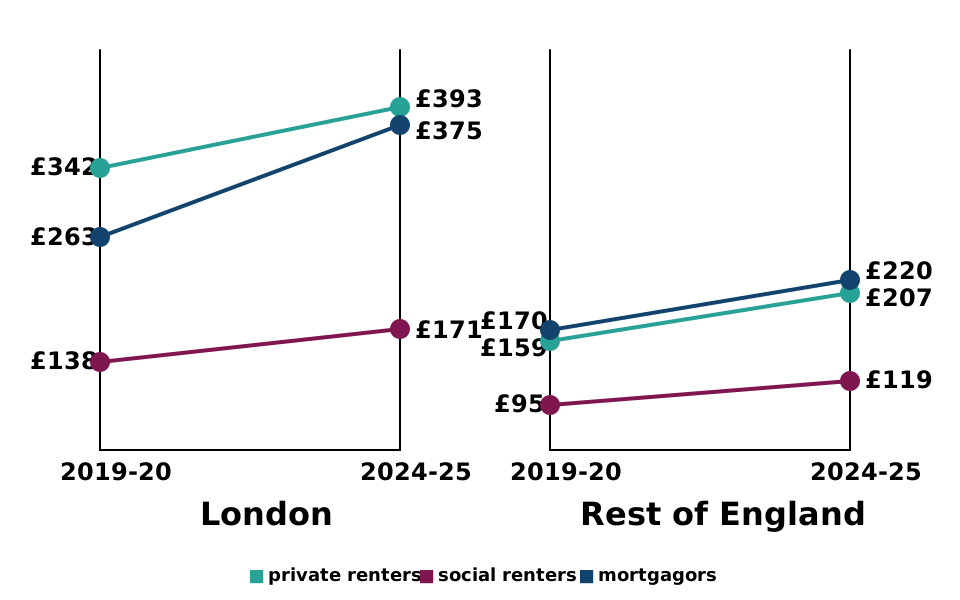
Mean weekly mortgage payments in 2024-25 were higher in London (£375) than in the rest of England (£220). Mean mortgage for both areas has increased compared to five years ago (2019-20), from £263 and £170 respectively. Over the same period, the average (mean) weekly rental costs for private and social renters also increased, to £393 in London and £207 in the rest of England for private renters; and £171 in London and to £119 in the rest of England for social renters.
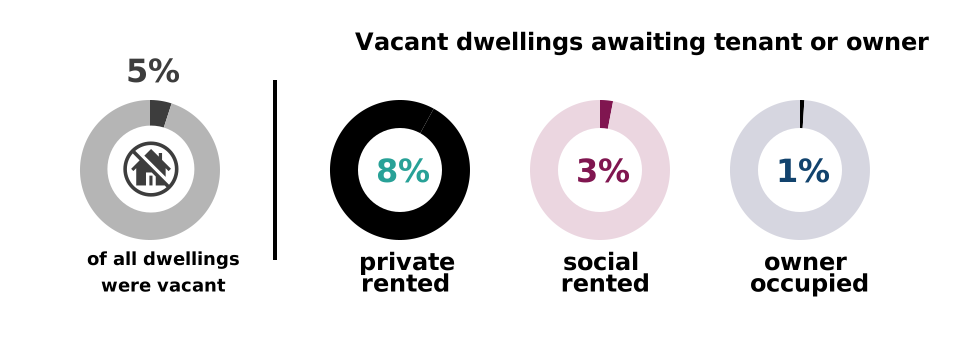
In 2024, there were 1.2 million vacant dwellings, making up 5% of the dwellings in England (3% of owner occupied, 11% of private rented and 4% of social rented dwellings were vacant at the time of survey). Within the private rented and social rented sectors, the most common reason for vacancy was awaiting another tenant or owner (8% and 3% of all dwellings respectively) compared with 1% in the owner occupied vacant dwellings.
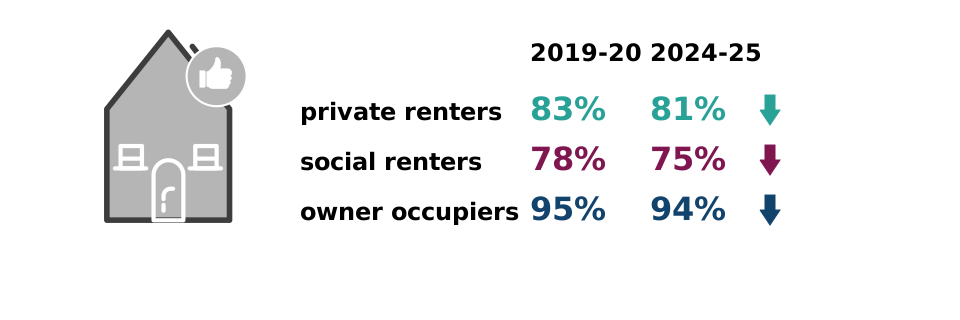
In 2024-25, owner occupiers were more likely to report being satisfied with their accommodation (94%) than private renters (81%). The lowest levels of satisfaction were in social rented households (75%). Satisfaction has fallen across all tenures since 2019-20.
Acknowledgements and further queries
Each year the English Housing Survey relies on the contributions of a large number of people and organisations. The Ministry of Housing, Communities and Local Government (MHCLG) would particularly like to thank the following people and organisations without whom the 2024-25 survey and this report would not have been possible: all the households who gave up their time to take part in the survey, NatCen Social Research, the Building Research Establishment (BRE) and CADS Housing Surveys.
This report was produced by the Housing Evidence, Research and Surveys Team at MHCLG. If you have any queries about it, would like any further information or have suggestions for analyses you would like to see included in future EHS reports, please contact ehs@communities.gov.uk.
The responsible analyst for this report is: Chauncey Glass, Data, Analysis, Statistics and Surveys Division, MHCLG. Contact via ehs@communities.gov.uk.