Bulletin: BDUK Delivery Performance, quarterly: April 2026 to June 2026
Published 17 September 2026

© Crown copyright 2026
This publication is licensed under the terms of the Open Government Licence v3.0 except where otherwise stated. To view this licence, visit nationalarchives.gov.uk/doc/open-government-licence/version/3 or write to the Information Policy Team, The National Archives, Kew, London TW9 4DU, or email: psi@nationalarchives.gov.uk.
Where we have identified any third party copyright information you will need to obtain permission from the copyright holders concerned.
This publication is available at https://www.gov.uk/government/statistics/bduk-delivery-performance-quarterly-april-2026-to-june-2026/bulletin-bduk-delivery-performance-quarterly-april-2026-to-june-2026
1. About this release
This quarterly official statistics report presents how many premises in the United Kingdom have received a gigabit-capable broadband connection as a result of Building Digital UK (BDUK) subsidy. The latest figures cover premises that received gigabit-capable coverage through BDUK subsidy between 1 April 2026 and 30 June 2026. This publication includes updates to previously reported delivery figures.
2. Headline findings
We estimate that BDUK interventions delivered gigabit-capable broadband coverage to 46,300 premises in Q1 2026/27, an increase of 1,420 (3%) premises compared with Q1 2025/26.
Since the launch of BDUK gigabit programmes, an estimated cumulative total of 1,462,910 premises have received gigabit-capable coverage through BDUK subsidy.
Delivery in Q1 2026/27 was primarily driven by Gigabit Infrastructure Subsidy (GIS) contracts, which accounted for 87% (40,230 premises) of all premises passed during the first quarter of the year. Voucher schemes contributed 8% (3,580 premises), while Superfast interventions accounted for the remaining 5% (2,490 premises). The Hubs intervention reached the end of its delivery phase and therefore did not contribute to the overall number of premises passed in Q1 2026/27. The figures reported for GIS do not include delivery for contracts in Scotland in which BDUK is not the leading authority.
Delivery continued to be concentrated in rural areas, which represented 90% (41,490 premises) of all premises passed during the quarter.
Most premises passed were residential properties. In Q1 2026/27, 91% (41,940 premises) were classified as residential and 9% (3,980 premises) as commercial.
England accounted for approximately three quarters of the delivery (79%, 36,540 premises), followed by Scotland (12%, 5,780 premises), Wales (7%, 3,170 premises), and Northern Ireland (2%, 770 premises).
Delivery in Q1 2026/27 remained concentrated in large rural local authorities, with North Yorkshire recording the highest number of premises passed (2,910), followed by Wiltshire (2,160) and Somerset (1,820).
3. Overview
This bulletin presents quarterly official statistics on the delivery performance of Building Digital UK (BDUK) for the period 1 April 2024 to 30 June 2026, with a particular emphasis on Q1 2026/27. It includes breakdowns by:
-
Time period (quarters)
-
Geographies
-
Urban/rural classification
-
Commercial/residential classification
-
Whether the premises are in the Ofcom premises base
-
Broadband speed classification
-
Intervention type
4. Overall delivery trends
By the end of June 2026, the cumulative number of premises to which BDUK has delivered gigabit-capable coverage since the inception of its gigabit programmes in 2012 reached 1,462,910. Of these, 46,300 premises were delivered between 1 April and 30 June 2026.
Figure 1 shows delivery from Q1 2024/25 to Q1 2026/27. Premises passed in the first quarter of 2026/27 are broadly in line with those achieved in the equivalent quarter of 2025/26.
Figure 1: Premises passed to year end by quarters, UK, 1 April 2024 to 30 June 2026
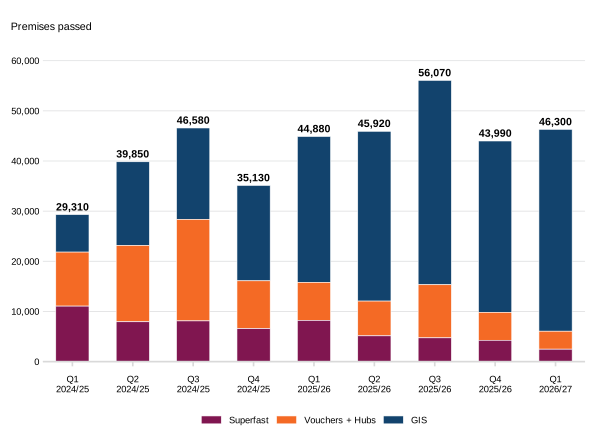
Total delivery rose through 2025/26 to peak at 56,070 premises in Q3 2025/26, before decreasing to 43,990 in Q4 2025/26 and 46,300 in Q1 2026/27.
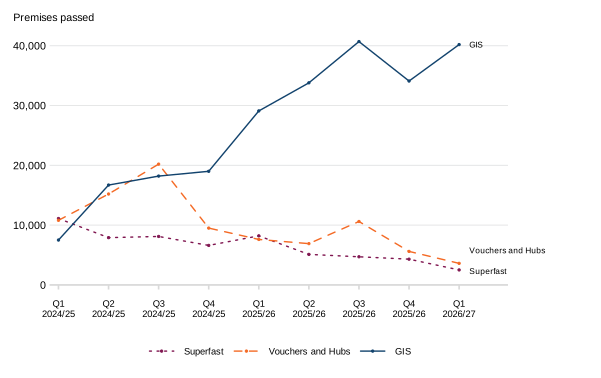
Figure 2 shows how these trends differ by intervention. GIS delivery increased in Q1 2026/27 as additional contract areas became operational and delivery progressed on existing contracts. In contrast, delivery through Vouchers and Hubs, and Superfast programme, continued the gradual downward trend that was already apparent at the end of 2025/26, reflecting their progression into the final stages of delivery. The figures reported for GIS do not include delivery for contracts in Scotland for which BDUK is not the leading authority.
Figure 2: Quarterly delivery trends by BDUK intervention, UK,1 April 2024 to 30 June 2026
5. Geographic distribution of delivery
Delivery across the UK reflects differing levels of maturity in delivery programmes, with countries at different stages. In particular, the figures reported for GIS do not include delivery for contracts in Scotland for which BDUK is not the leading authority.
5.1 By country
Of the 46,300 premises passed in Q1 2026/27:
-
79% (36,540 premises) were delivered in England
-
12% (5,780 premises) in Scotland
-
7% (3,170 premises) in Wales
-
2% (770 premises) in Northern Ireland
Figure 3 shows the distribution of premises passed by country in each quarter from Q1 2024/25 to Q1 2026/27.
Figure 3: Premises passed by country, UK, 1 April 2024 to 30 June 2026
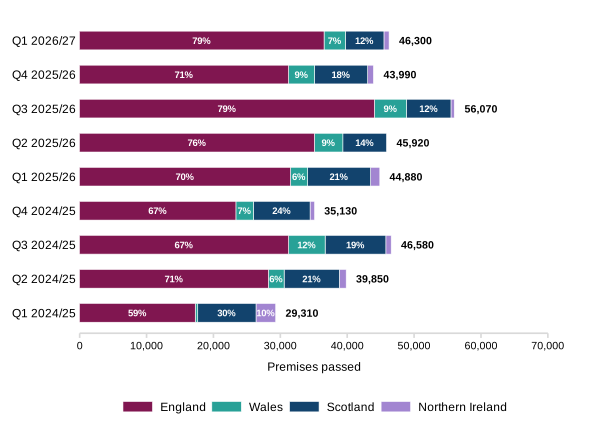
England consistently accounted for the largest share of delivery throughout the period, rising from around three fifths (59%) in Q1 2024/25 to 79% in Q1 2026/27.
The England share continues to fluctuate quarter to quarter but the overall direction has been upward, reflecting a continued concentration of delivery in England, particularly in large rural Gigabit Infrastructure Subsidy (GIS) contract areas. This result should though be viewed in the context of England containing the large majority of UK households and premises, with approximately 83% [footnote 1] England. Furthermore, these figures exclude delivery for contracts in Scotland where BDUK is not the lead delivery authority.
Scotland accounted for the second-largest share in most quarters, but its share has declined over the period, from 30% in Q1 2024/25 to 12% in Q1 2026/27. This is consistent with some BDUK-subsidised delivery in Scotland nearing completion, as noted for the wider regional trends. As mentioned above, new GIS contracts in Scotland for which BDUK is not the leading authority are not included in these figures. For reference, approximately 9% of UK premises are located in Scotland.
Wales remained a relatively small contributor throughout the period, accounting for between 6% and 9% of quarterly delivery during the reported quarters. While its share generally remained stable, it fell below 5% in Q1 2024/25 and reached a peak of 12% in Q3 2024/25. For reference, approximately 5% of UK premises are located in Wales.
Northern Ireland accounted for a very small share in every quarter from Q2 2024/25 (3% or below), representing around 2% of delivery in Q1 2026/27. This followed a higher contribution of 10% in Q1 2024/25. The decline largely reflects the completion of major broadband roll-out programmes in earlier years. According to the latest (Spring 2026) Ofcom Connected Nations update, 95% of Northern Ireland premises already have access to gigabit-capable broadband, compared with 88% across the UK. A lower share of ongoing delivery is therefore not unexpected. The new GIS contract in Northern Ireland for which BDUK is not the leading authority is included in these figures for the first time in this bulletin.
5.2 By region
Within England, the South West recorded the highest level of delivery in Q1 2026/27, with 9,330 premises passed, followed by Yorkshire and the Humber (6,510 premises) and the East of England (4,240 premises).
Higher levels of delivery continued to be observed in predominantly rural regions, where commercial rollout is more challenging and subsidy interventions are more likely to be required. Several regions recorded stronger delivery in the first quarter of 2026/27 than in the final quarter of 2025/26, likely reflecting additional Gigabit contract areas becoming operational. Conversely, other regions saw a decrease in delivery, as some BDUK-subsidised delivery nears completion.
5.3 By local authority district
The local authority districts with the highest levels of delivery in Q1 2026/27 were concentrated in a small number of large, predominantly rural areas. North Yorkshire recorded the highest delivery (2,910 premises), followed by Wiltshire (2,160) and Somerset (1,820). This pattern extended across the top 10, which also included East Riding of Yorkshire (1,630), Northumberland (1,010) and Westmorland and Furness (1,060) in northern England, East Lindsey (1,130) in the Midlands, Dorset (1,390) in the southwest, and the Scottish authorities of Aberdeenshire (1,150) and Argyll and Bute (1,040).
Table 1. Top 10 local authority districts by premises passed, UK, 1 April 2026 to 30 June 2026
| Local Authority District | Premises Passed |
|---|---|
| North Yorkshire | 2,910 |
| Wiltshire | 2,160 |
| Somerset | 1,820 |
| East Riding of Yorkshire | 1,630 |
| Dorset | 1,390 |
| Aberdeenshire | 1,150 |
| East Lindsey | 1,130 |
| Westmorland and Furness | 1,060 |
| Argyll and Bute | 1,040 |
| Northumberland | 1,010 |
These patterns confirm previous trends, with the highest levels of delivery concentrated in rural areas where subsidy is targeted at harder-to-reach premises and wider commercial deployment is less likely. Delivery in these areas is typically associated with large Gigabit Infrastructure Subsidy (GIS) contract areas, which span extensive geographic regions with lower population density.
5.4 By rural/urban classification
In Q1 2026/27 41,490 premises (90%) delivered by BDUK were in rural areas. This reflects the continued focus of subsidy on harder-to-reach locations where commercial deployment is less viable. Urban areas accounted 12% of delivery[footnote 2].
Figure 4 shows the distribution of premises passed by rural and urban classification over time. Delivery has been consistently concentrated in rural areas, which accounted for between 84% and 92% of total delivery across the period.
Figure 4. Delivery by grouped rural and urban classification, UK,1 April 2024 to 30 June 2026
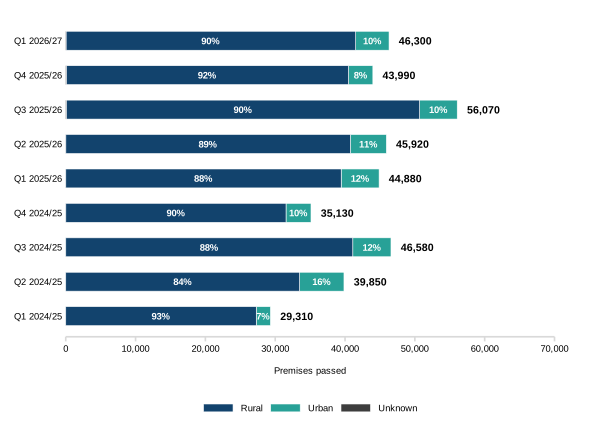
The increase in total delivery in Q1 2026/27 was therefore driven primarily by rural areas, with urban delivery remaining a small and relatively stable proportion of the total. This distribution remained broadly consistent across all the represented quarters.
6. By premises characteristics
6.1 By premises type
Most premises passed were residential properties. In Q1 2026/27, 91% (41,940) of premises passed were classified as residential and 9% (3,980) as commercial.
Figure 5. Delivery by premises type, UK, 1 April 2024 to 30 June 2026
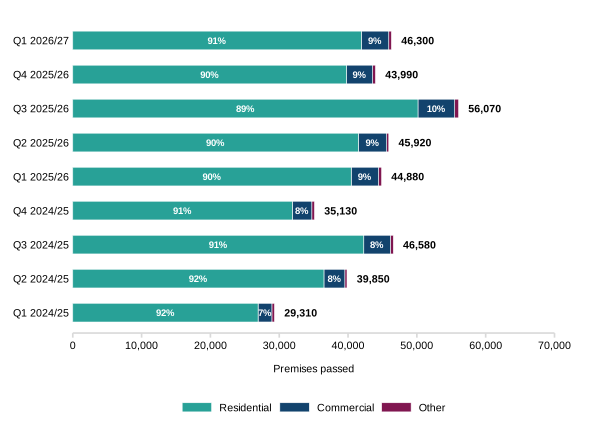
Figure 5 highlights that residential premises continued to account for the majority of subsidised delivery. The composition of delivery by premises type remained stable over time, with residential premises consistently accounting for the large majority of BDUK delivery. This distribution remained broadly consistent across all the represented quarters. For reference, approximately 94% of UK premises are classified as residential[footnote 3].
6.2 By Superfast availability (>30 Mbit/s)
An estimated 9,350 premises (20%) delivered in Q1 2026/27 did not previously have access to superfast broadband speeds of at least 30 Mbit/s.
Figure 6. Delivery by availability of superfast broadband, UK, 1 April 2026 to 30 June 2026
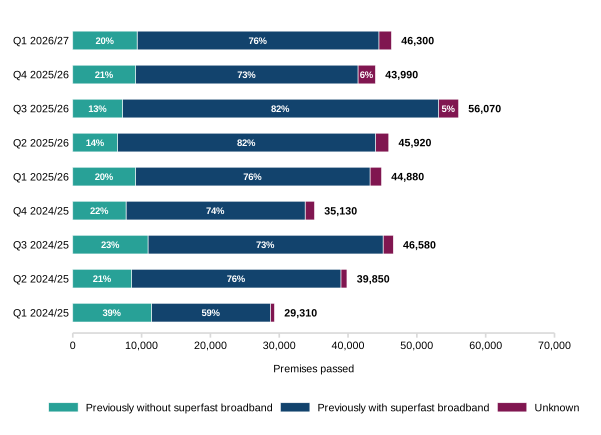
Figure 6 shows how the composition of delivery by broadband availability has changed over time. Before 2021, most delivery was to premises without superfast broadband. However, this proportion has declined rapidly over time as overall levels of superfast coverage have increased across the country. This reflects both the expansion of superfast availability in the UK and changes in the focus of BDUK interventions. While the Superfast programme was primarily targeted at premises without access to superfast broadband, more recent contracts (i.e. GIS, Vouchers, Hubs) support delivery to both premises without superfast coverage and those already able to access superfast services. As a result, a decreasing proportion of delivery has been directed towards premises without superfast broadband.
In Q1 2026/27, the proportion of delivery to premises without superfast coverage remained broadly stable compared to Q1 2025/26. More broadly, as gigabit delivery has expanded, an increasing share of delivery has supported upgrades to higher-capacity broadband infrastructure rather than first-time access to superfast speeds.
7. Overall delivery trends by year (revised figures)
Figure 7 shows annual premises passed by intervention type from 2021/22 to 2025/26. Over this period, delivery has shifted away from Superfast in the earlier years, through a period dominated by Vouchers and Hubs, towards Gigabit Infrastructure Subsidy (GIS), which has become the principal intervention by 2024/25. Annual delivery reached its highest level in the series in 2025/26, at 190,840 premises, driven by GIS, which accounts for roughly three quarters of premises passed in that year.
Figure 7: Premises passed by BDUK intervention, UK, 2021/22 to 2025/26
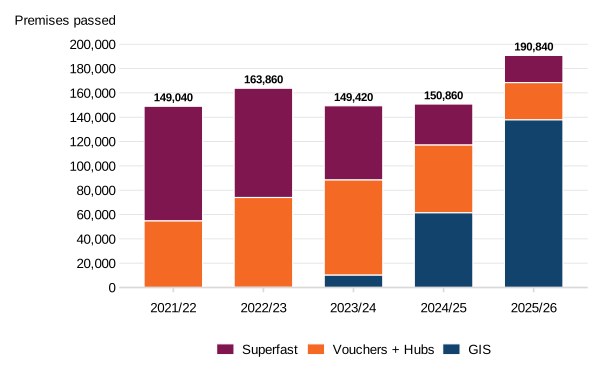
Annual totals were 149,040 in 2021/22, 163,860 in 2022/23, 149,420 in 2023/24, 150,860 in 2024/25 and 190,840 in 2025/26. These figures have been revised slightly compared to the figures reported in the previous bulletin (BDUK delivery performance, annual: April 2025 to March 2026), as additional information becomes available over time and late-reported connections are incorporated. The most notable change is in 2025/26, where the total has been revised downwards by around 1,730 premises, reflecting mainly changes to GIS delivery captured since the previous release. Figures for the current year (2026/27) are excluded from this section as we only have estimates for part of the year.
7.1 Revisions and changes from previous releases
This is BDUK’s quarterly official statistics release and builds on the figures previously published in the annual statistical series.
Historical figures are revised in each release to incorporate improved supplier reporting and updated delivery information. These revisions may alter:
-
delivery dates
-
intervention classification
-
the number of premises passed
Key revisions compared to the previously published figures in BDUK Delivery Performance, annual: April 2025 to March 2026
-
GIS: around 1,100 premises have been removed in the Gigabit Infrastructure Subsidy (GIS) delivery figures previously reported (210,520 premises passed) because of changes across contracts, methodology updates, and new ingestions into BDUK systems (i.e. Northern Ireland contracts)
-
Vouchers: around 500 premises have been removed in the Vouchers delivery figures previously reported (384,810 premises passed), associated with changes in collection methodology and more accurate suppliers’ returns.
-
Hubs: around 20 premises have been added to the Hubs delivery figures previously reported (5,760 premises passed). These premises relate to contracts that were temporarily removed from the delivery pipeline during routine quality assurance and subsequently reingested following data consolidation with the relevant suppliers.
-
Superfast: around 220 premises have been removed in the Superfast delivery figures previously reported (817,330 premises passed), as historic figures have been reviewed and updated as part of suppliers’ data consolidation processes.
8. Publication information
8.1 Data sources
We used the following data sources for this quarterly Q1 2026/27 performance report:
-
BDUK management information as of 3 September 2026.
-
Ofcom Connected Nations: May 2026 data from Spring Update 2026
8.2 Methodological improvements
BDUK updates its historical time series with each release. This is because BDUK works closely with suppliers to improve the quality of their reporting; when improvements are made, we may receive revised information that alters the original delivery date of a premises or corrects the number of premises passed. This has resulted in changes to historical data, with movement between interventions and delivery periods.
8.3 Known issues
BDUK is currently developing a methodology to improve the identification of Unique Property Reference Numbers (UPRNs) for addresses that do not currently have one associated, which will improve the accuracy of our counting methodology. In addition, BDUK is reviewing the data quality of its vouchers and updating the associated multiplier methodology.
8.4 Official Statistics
The BDUK Delivery Performance Statistics are labelled as official statistics and has been produced to the standards set out in the Code of Practice for Statistics.
Our statistical practice is regulated by the Office for Statistical Regulation (OSR). OSR sets the principles of trustworthiness, quality and value in the Code of Practice for Statistics that all producers of official statistics should adhere to.
You are welcome to contact us directly with any comments about how we meet these standards by emailing bduk.statistics@dsit.gov.uk. Alternatively, you can contact OSR by emailing regulation@statistics.gov.uk or via the OSR website.
8.5 Pre-release access
The accompanying pre-release access document lists ministers and officials who have received privileged early access to this release. In line with best practice, the list has been kept to a minimum and those given access for briefing purposes had a maximum of 24 hours.
8.6 Contact
Responsible Statistician: A S Bhopal, Statistics and Data Intelligence Lead, Building Digital UK (BDUK) Directorate.
Author: M Zottoli, Senior Statistical Officer
Email: bduk.statistics@dsit.gov.uk
Please contact us at the above email with any questions or suggestions for improvements.
-
The proportion of UK premises located in each Nation has been calculated using the ‘Premise Base’ figures published by Ofcom in their latest (Spring 2026) Connected Nations update (file 202601_fixed_coverage_UK_and_nations_r1.csv in the data download) ↩
-
Less than 0.1% of records are classified as Unknown due to lack of appropriate matching ↩
-
The proportion of UK premises classified as residential is consistent with the Premise Base figures published by Ofcom in their latest (Spring 2026) Connected Nations update. ↩