Balance sheet analysis and farming performance, England 2024/25 - statistics notice
Updated 19 March 2026
Applies to England

© Crown copyright 2026
This publication is licensed under the terms of the Open Government Licence v3.0 except where otherwise stated. To view this licence, visit nationalarchives.gov.uk/doc/open-government-licence/version/3 or write to the Information Policy Team, The National Archives, Kew, London TW9 4DU, or email: psi@nationalarchives.gov.uk.
Where we have identified any third party copyright information you will need to obtain permission from the copyright holders concerned.
This publication is available at https://www.gov.uk/government/statistics/balance-sheet-analysis-and-farming-performance-england/balance-sheet-analysis-and-farming-performance-england-202425-statistics-notice
This release presents the main results from an analysis of the profitability and resilience of commercial farm businesses in England using data from the Farm Business Survey. Commercial farm businesses are farms with agricultural output higher than £21,000 (€25,000) per year. Although they are around half of the total farming population, they account for over 95% of Standard Output and over 90% of agricultural land in England. Therefore, these businesses produce almost all the agricultural output in England.
Six measures are examined in this release: liabilities, net worth, gearing ratio, liquidity ratio, net interest payments as a proportion of Farm Business Income (FBI), and Return on Capital Employed (ROCE). The results cover the survey period from 1 March 2024 to 28 February 2025.
Key results
-
In 2024/25, the average (mean) level of liabilities, also known as debt, was £302 thousand per farm, an increase of 1% from 2023/24.
-
The average net worth per farm was £2.5 million in 2024/25, and 24% of farms had a net worth of at least £3 million.
-
The average gearing ratio was 11% in 2024/25; this value has been largely unchanged over the last decade.
-
The average liquidity ratio was 271% in 2024/25, which was 13 percentage points lower than the previous year.
-
Net interest payments were, on average, 15% of Farm Business Income (FBI) in 2024/25, a fall of 5 percentage points from 2023/24.
-
The average (median) ROCE was -0.1% in 2024/25, a rise of 0.7 percentage points compared to 2023/24.
Points which apply throughout
-
The Farm Business Survey is the source for all data presented in tables and charts unless otherwise stated.
-
All values relate to England, unless otherwise stated, and cover a March to February fiscal year, with the most recent year shown ending in February 2024. Fiscal years are shown in YYYY/YY format, for example, the period of 1 March 2024 to 28 February 2025 is shown as 2024/25. To ensure consistency in harvest/crop year and commonality of subsidies within any one Farm Business Survey year, only farms which have accounting years ending between 31 December and 30 April are included in the survey. Aggregate results are presented in terms of an accounting year ending on the last day of February, which is the approximate average of all farms in the Farm Business Survey.
- Unless otherwise stated, values are expressed in current rather than real terms:
- Current terms (also known as nominal) values are the values expressed in historical monetary terms.
- Real terms values are the current terms values adjusted to take inflation into account using the Gross Domestic Product (GDP) deflator data, published 30 September 2025 at: https://www.ons.gov.uk/economy/grossdomesticproductgdp/timeseries/ybgb.
-
Due to the small sample sizes, pig and poultry farms have been combined into one farm type.
-
All financial figures have been rounded to levels which are appropriate for their scale, for example, figures over £100 thousand are rounded to the nearest £1,000, and figures between £1,000 and £100 thousand are rounded to the nearest £100. All percentages have been calculated on unrounded data and rounded to the nearest 1%.
-
Per hectare results are calculated per hectare of farmed area, where farmed area is Utilised Agricultural Area plus the net area of land hired in (in other words, the area of land hired in minus the area of land hired out).
-
The acronym ‘LFA’ refers to Less Favoured Area. These areas were established in 1975 to provide support to mountainous and hill farming areas. They are areas where the natural characteristics (geology, altitude, climate, short growing season, low soil fertility, or remoteness) make it difficult for farmers to compete.
-
Various breakdowns are shown in each sector which are generally ordered by the significance of the predictive variables, as determined by generalised linear models. For more information on the methods used, see section 8.4.
- Where dataset tables are referred to in the text, this refers to the ‘Balance sheet analysis and farming performance, England 2024/25 - dataset’ file, which can be found on the publication landing page.
1 Liabilities
This section examines the indebtedness of farm businesses, as measured by their total liabilities. Liabilities are the total debt (short term and long term) that the farm business holds, including mortgages, long term loans and monies owed for hire purchases, leasing, and overdrafts. A farm with high liabilities will require consistent income flows to ensure that interest payments can be met.
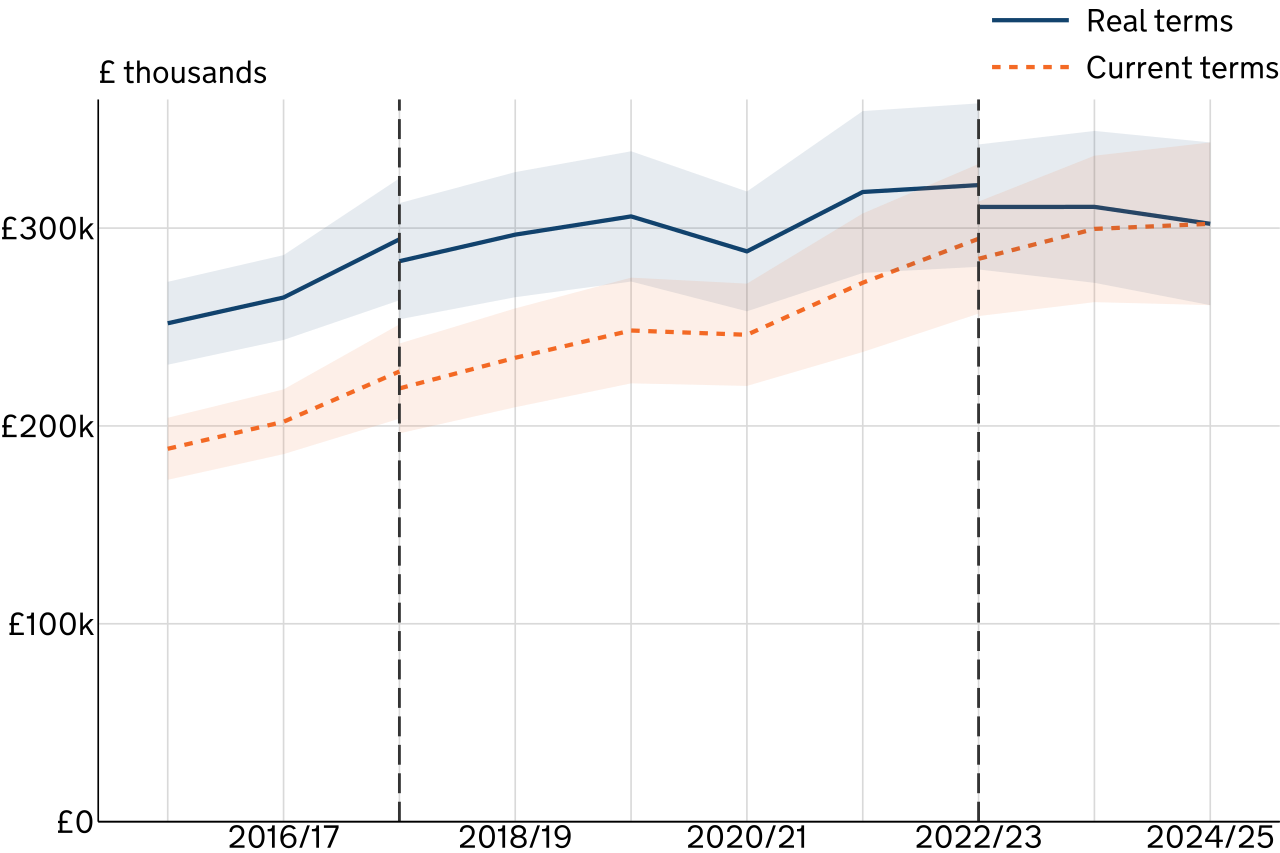
Figure 1.1 Average liabilities in current and real terms (2024/25 prices) in England, 2015/16 to 2024/25
Source: Dataset table 1.1
Figure notes:
-
Real terms prices use the GDP deflator data published 30 September 2025 at: https://www.ons.gov.uk/economy/grossdomesticproductgdp/timeseries/ybgb.
-
Values are shown here with 95% confidence intervals, which give an indication of the degree of uncertainty around an estimate; the lower and upper limits show the possible range around the published averages.
-
The breaks in the series shown in 2017/18 and 2022/23 represent changes in the method used to assign farms to a specific farm type, along with further changes to the Standard Labour Requirements and the update to the weighting methodology in 2022/23. Where breaks occur, average liabilities have been calculated using both methods for comparability.
Figure 1.1 shows a ten-year time series of average liabilities per farm in both current and real terms. The average level of debt across all farms has been on a general upward trend since 2015/16, with a brief dip in 2020/21. In 2024/25, the average farm business had liabilities of £302 thousand, an increase of 1% compared to the nominal value from 2023/24. However, in real terms, the 2024/25 value was 3% lower than the previous year.
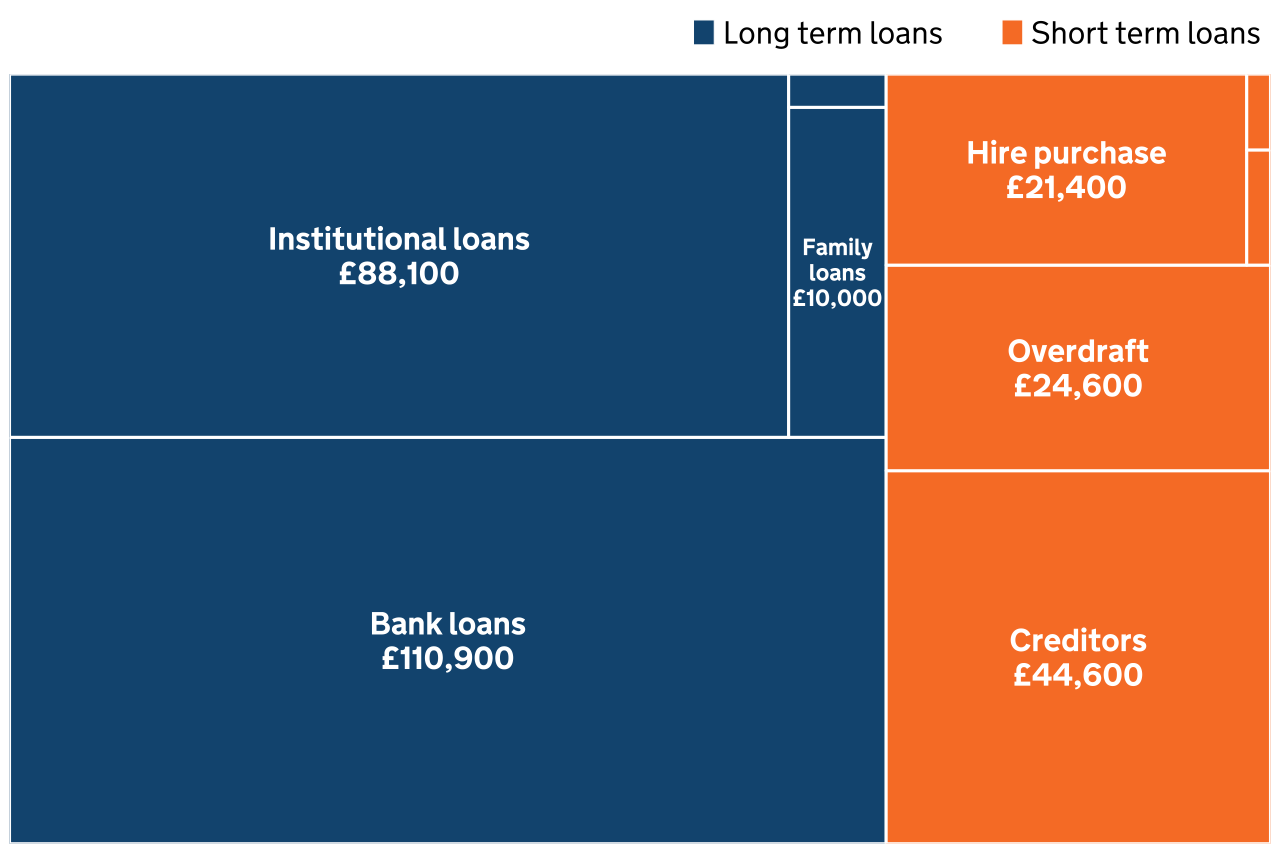
Figure 1.2 The composition of liabilities (£ per farm) for the average farm business in England, 2024/25
Source: Defra, Farm Business Survey
Figure notes:
-
The size of the box for each category is proportional to its contribution to the overall average liabilities per farm.
-
In the long term loans, the ‘Other loans’ (£1,000) category is too small to be labelled in the plot.
-
In the short term loans, the ‘Other short term loans’ (£900) and ‘Leasing’ (£600) categories are too small to be labelled in the plot.
Figure 1.2 shows the composition of liabilities for the average farm business. The largest components of liabilities were bank loans (£110,900, or 37% of total liabilities) and institutional loans (£88,100, 29%).
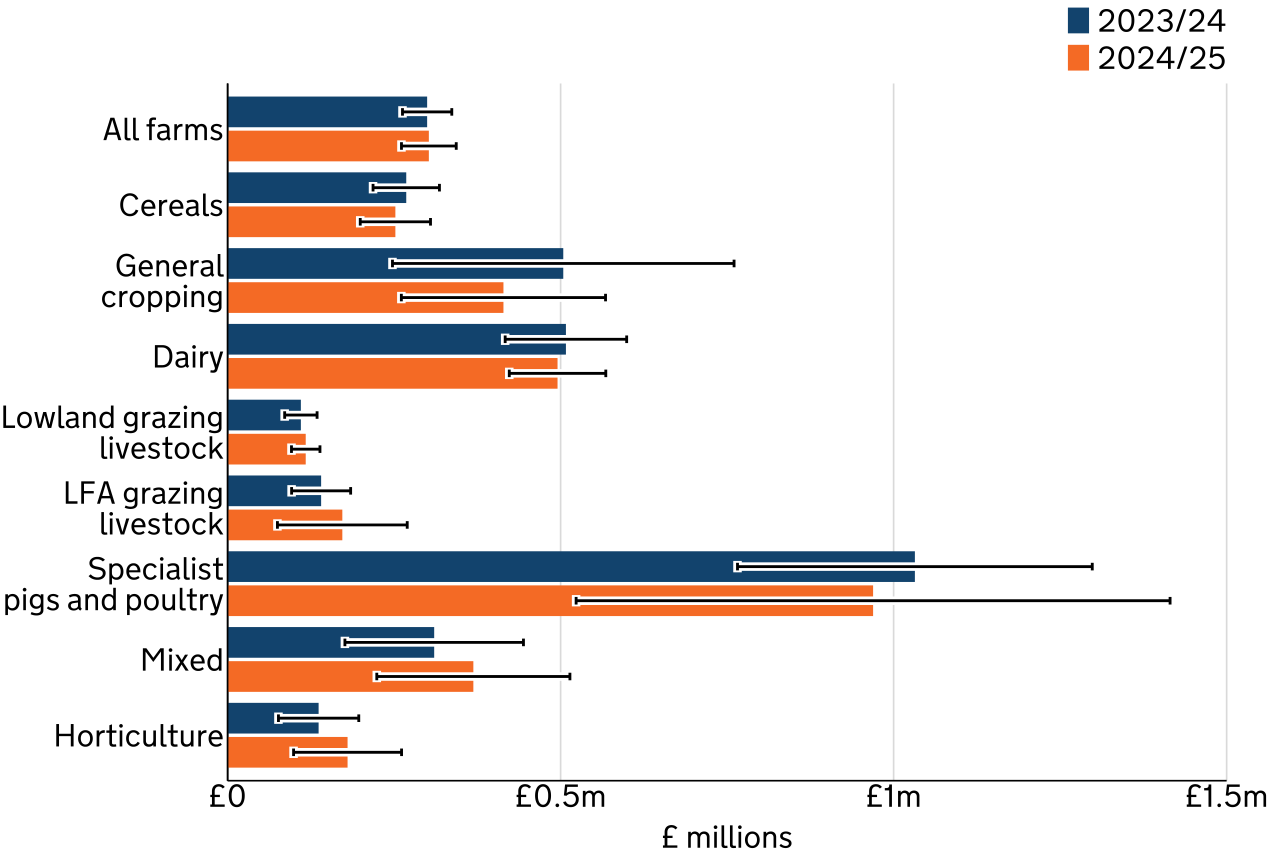
Figure 1.3 Average liabilities by farm type in England, 2023/24 and 2024/25
Source: Dataset table 1.1
Figure notes:
-
The legend is presented in the same order as the bars.
-
Values are shown here with 95% confidence intervals, which give an indication of the degree of uncertainty around an estimate; the lower and upper limits show the possible range around the published averages.
-
An update to the weighting methodology in 2025 has resulted in revisions to the 2023/24 data.
Figure 1.3 shows average liabilities by farm type in 2023/24 and 2024/25. The highest level of average liabilities in 2024/25 was in specialist pig and poultry farms, at £969 thousand per farm. However, mixed farms had the largest rise (in absolute terms) in average levels of debt, increasing by 19% to £369 thousand per farm.
The lowest levels of debt of 2024/25 continued to be in grazing livestock farms, with average liabilities at £172 thousand in LFA and £117 thousand in lowland farms. The largest drop in average liabilities was in general cropping farms, where it decreased by 18% to £414 thousand.
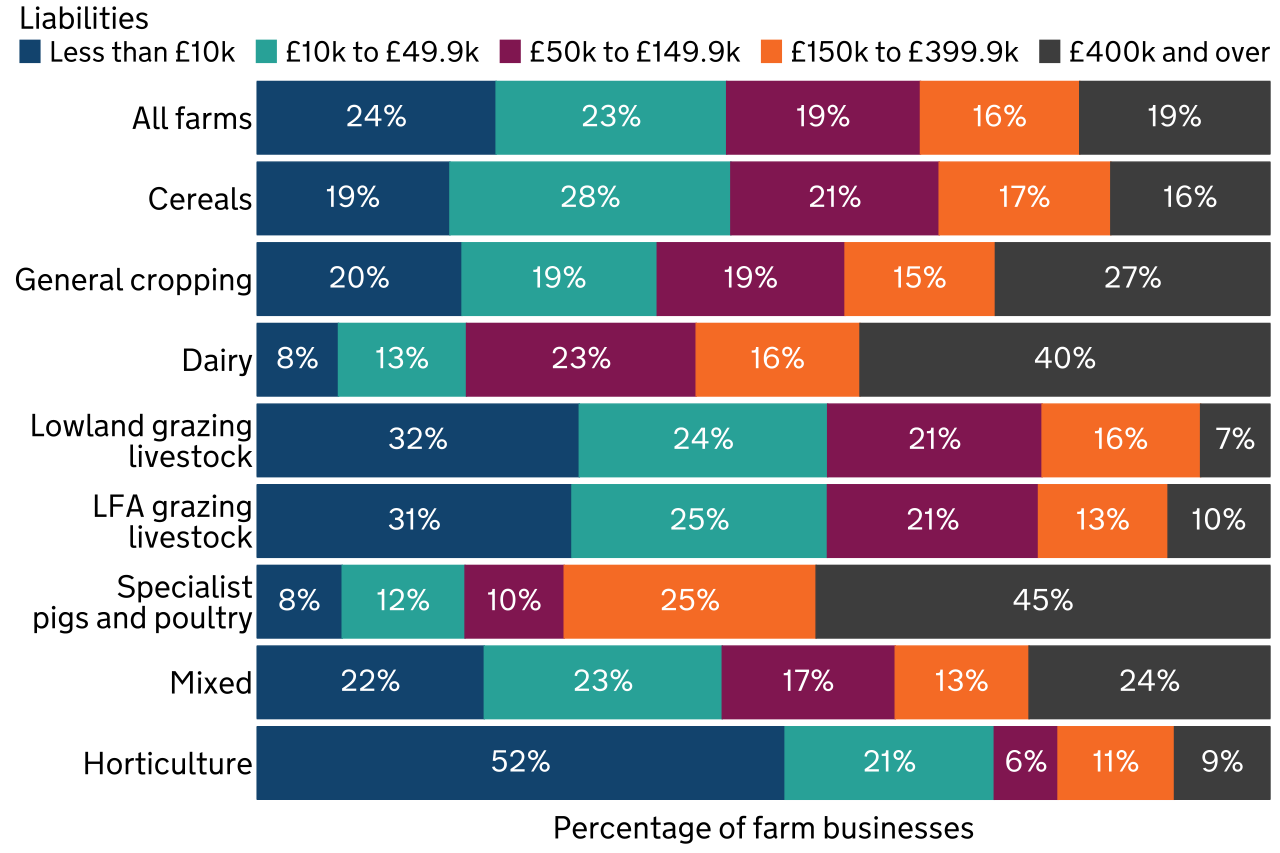
Figure 1.4 Distribution of farms by liabilities held and farm type in England, 2024/25
Source: Dataset table 1.3
Figure note: The legend is presented in the same order as the bars.
Figure 1.4 shows the distribution of liabilities within farm types in 2024/25. At the all farm level, there was little change from 2023/24 in the distribution of liabilities. There was some variation within individual farm types, but the overall patterns remained the same. See figure 1.4 of the 2023/24 publication for comparison.
Around a quarter of all farms owed less than £10 thousand in 2024/25, while around a fifth had liabilities of £400 thousand and over.
The lowest proportion owing at least £150 thousand was in Horticulture farms, at 21%, followed by LFA grazing livestock and lowland grazing livestock farms, both at 23%. Horticulture farms also had by far the highest proportion, just over half, owing less than £10 thousand. Specialist pig and poultry farms and dairy farms had the highest proportion with liabilities of at least £150 thousand, at 70% and 57% respectively. These farm types also had the lowest proportion owing less than £10 thousand, at 8% each.
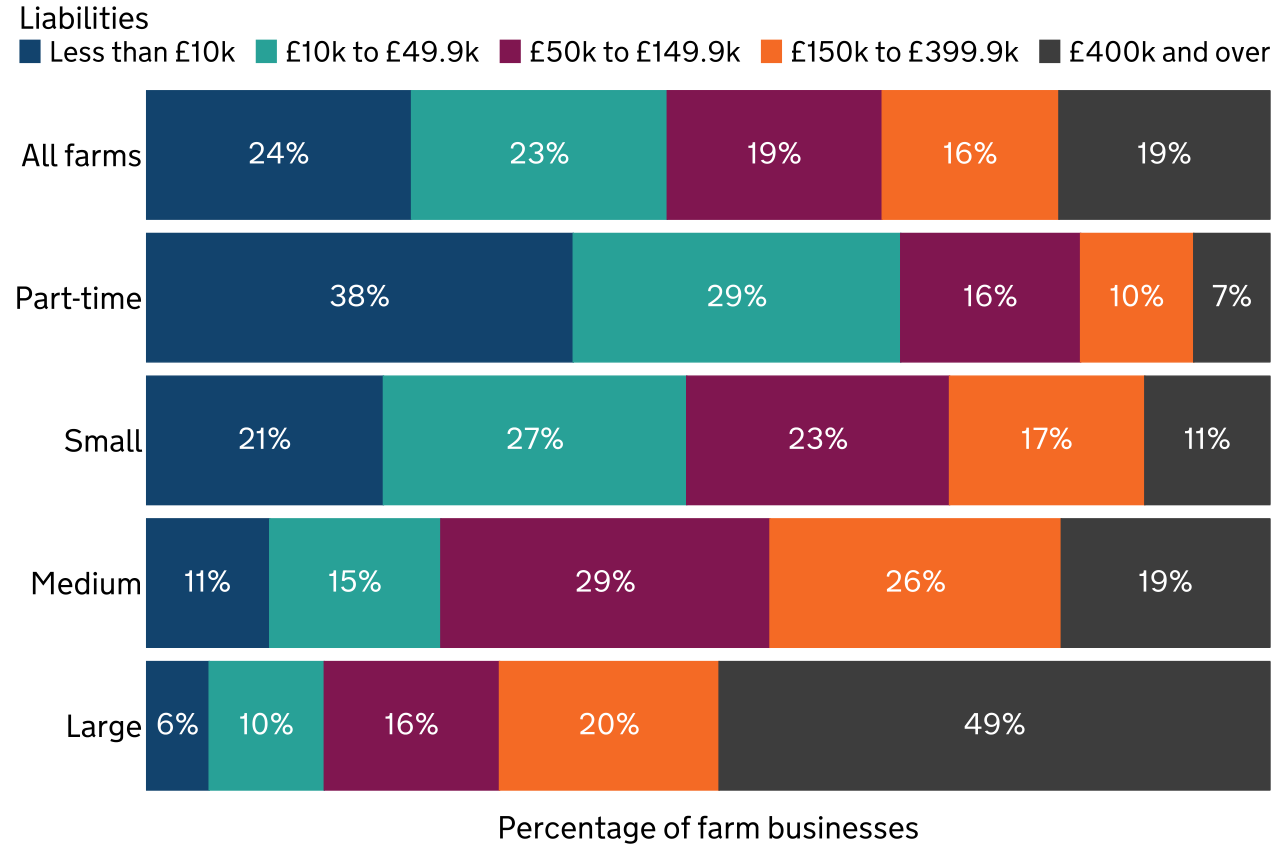
Figure 1.5 Distribution of farms by liabilities held and farm business size (based on SLR) in England, 2024/25
Source: Dataset table 1.3
Figure note: The legend is presented in the same order as the bars.
Farm business sizes are based on the estimated Standard Labour Requirement (SLR) for the business, rather than its land area. For more detail see Table 8.1.
While the average level of debt ranged from £118 thousand to £289 thousand for part-time to medium farm businesses, the value for large farm businesses was substantially higher, at £780 thousand. This pattern can be seen in figure 1.5, which compares liabilities by farm business size and shows that the proportion of farms falling into the higher bands increases with the size of the farm business.
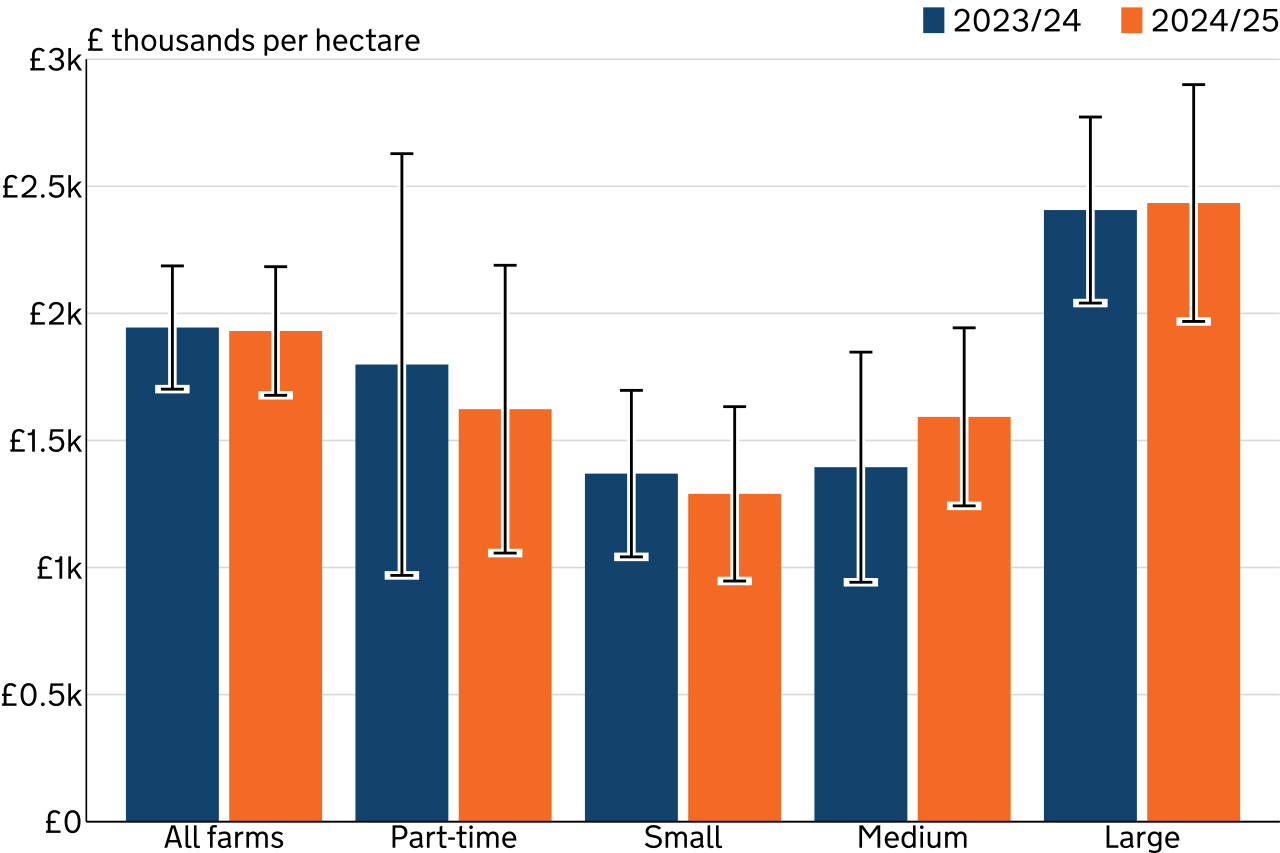
Figure 1.6 Average liabilities held by farms per hectare of farmed land by farm business size (based on SLR) in England, 2023/24 and 2024/25
Source: Dataset table 1.2
Figure notes:
-
The legend is presented in the same order as the bars.
-
Values are shown here with 95% confidence intervals, which give an indication of the degree of uncertainty around an estimate; the lower and upper limits show the possible range around the published averages.
-
An update to the weighting methodology in 2025 has resulted in revisions to the 2023/24 data.
Figure 1.6 shows the average liabilities per hectare by farm business size (based on SLR) in 2023/24 and 2024/25. With the farm area taken into account, part-time farms had higher average debts than both small and medium farms. Small farm businesses owed the least on average, £1,290 per hectare. However, large farms owed the most on average, £2,430 per hectare.
It is important to note, however, that the per hectare results may be distorted by the method used to classify farms into their sizes. Farm business size is categorised by labour requirements rather than farmed area and, except for glasshouses used to grow crops, buildings are not included as part of the farmed area. This means that farms which keep animals housed will have a smaller farmed area, so can have much higher per hectare results than farms with the same labour requirements but which keep animals outside. Certain farm types are more likely to keep animals housed, such as pig and poultry farms. In addition, farms which require highly labour-intensive work over a small area, such as horticulture, will also be affected by this distortion.
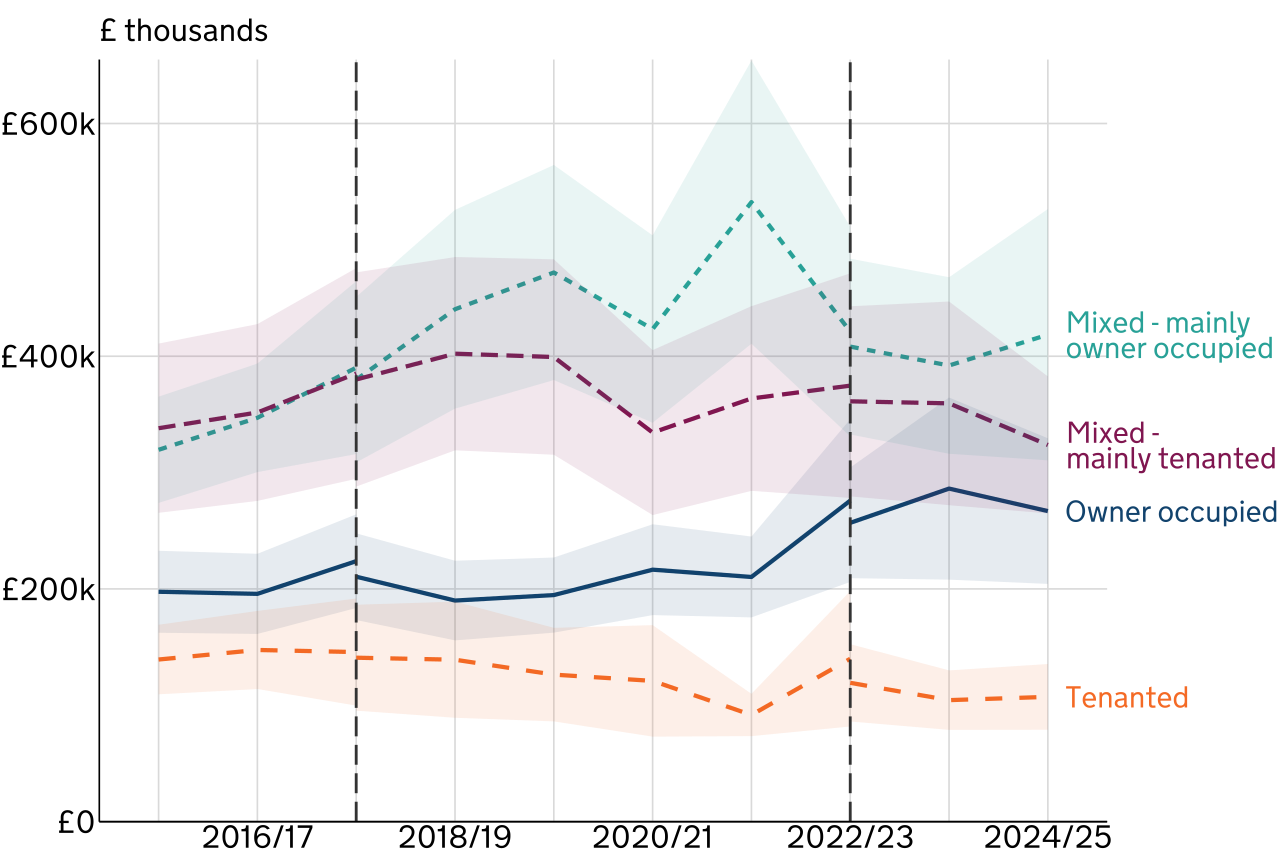
Figure 1.7 Average liabilities in real terms (2024/25 prices) by tenure type in England, 2015/16 to 2024/25
Source: Dataset table 1.1
Figure notes:
-
Values are shown here with 95% confidence intervals, which give an indication of the degree of uncertainty around an estimate; the lower and upper limits show the possible range around the published averages.
-
The breaks in the series shown in 2017/18 and 2022/23 represent changes in the method used to assign farms to a specific farm type, along with further changes to the Standard Labour Requirements and the update to the weighting methodology in 2022/23. Where breaks occur, average liabilities have been calculated using both methods for comparability.
Figure 1.7 shows the effect of land ownership on average liabilities. Tenanted farms had the lowest levels of average debt in all years between 2015/16 and 2024/25, with an average of £107 thousand in 2024/25. The confidence intervals for the other tenure types were overlapping in 2024/25, suggesting that the difference between their values was not statistically significant. The highest average of 2024/25 was in mixed but mainly owner occupied farms, at £418 thousand.
Since 2015/16, the average debt of tenanted farms has been trending down, while it has been trending up for owner-occupied farms. Average debt of mixed tenure farms has been more volatile, however, mainly tenanted farms had a lower average in 2024/25 than in 2015/16, while the average for mainly owner-occupied farms increased over the ten years.
2 Net Worth
This section examines the net worth of farm businesses in England. Net worth represents the wealth of a farm if all of their liabilities were called in. It is measured by subtracting the value of the total liabilities from total assets, which includes tenant-type capital and land. Farms with a high net worth are more likely to be resilient to changes in their income in the short-term because they can draw on their reserves to support the business if the financial position of the farm deteriorates.
Note that this is not a clear guide to inheritance tax liabilities which are due on an individual’s estate at the time of their death. This is because farm businesses can have multiple owners and can also be partly or fully passed on as gifts before death.
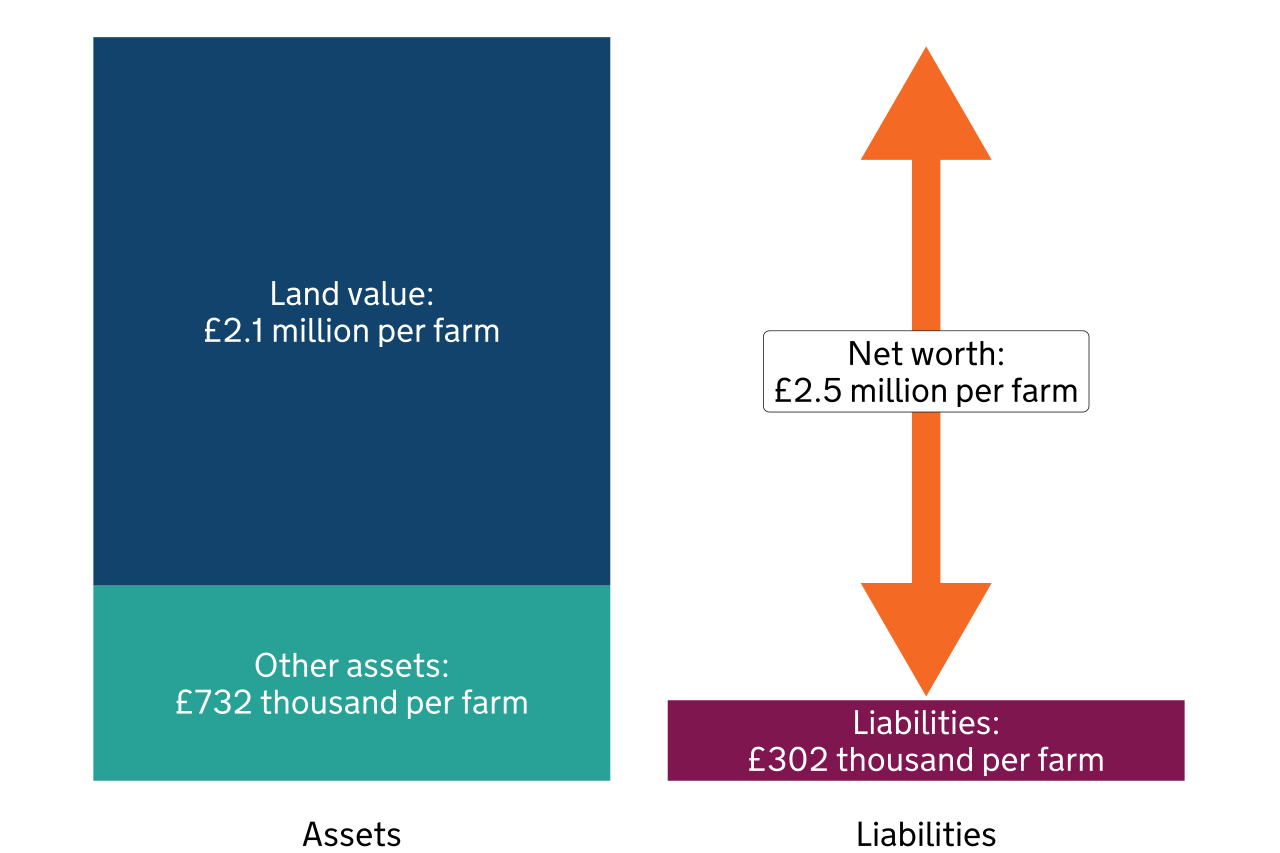
Figure 2.1 Net worth calculation for farms in England, 2024/25
Source: Dataset table 1.1 (Liabilities); Dataset table 2.1 (Net worth); Defra, Farm Business Survey (Assets)
Figure 2.1 shows how net worth is calculated, along with the associated values at the all farm level for 2024/25. The average net worth across all farms in England was £2.5 million in 2024/25. Figure 2.1 of the 2023/24 publication shows the values from the previous survey year. In 2024/25 the proportion of farms with a net worth of at least £3 million increased by 1 percentage point to 24%, equating to approximately 11,787 farms.
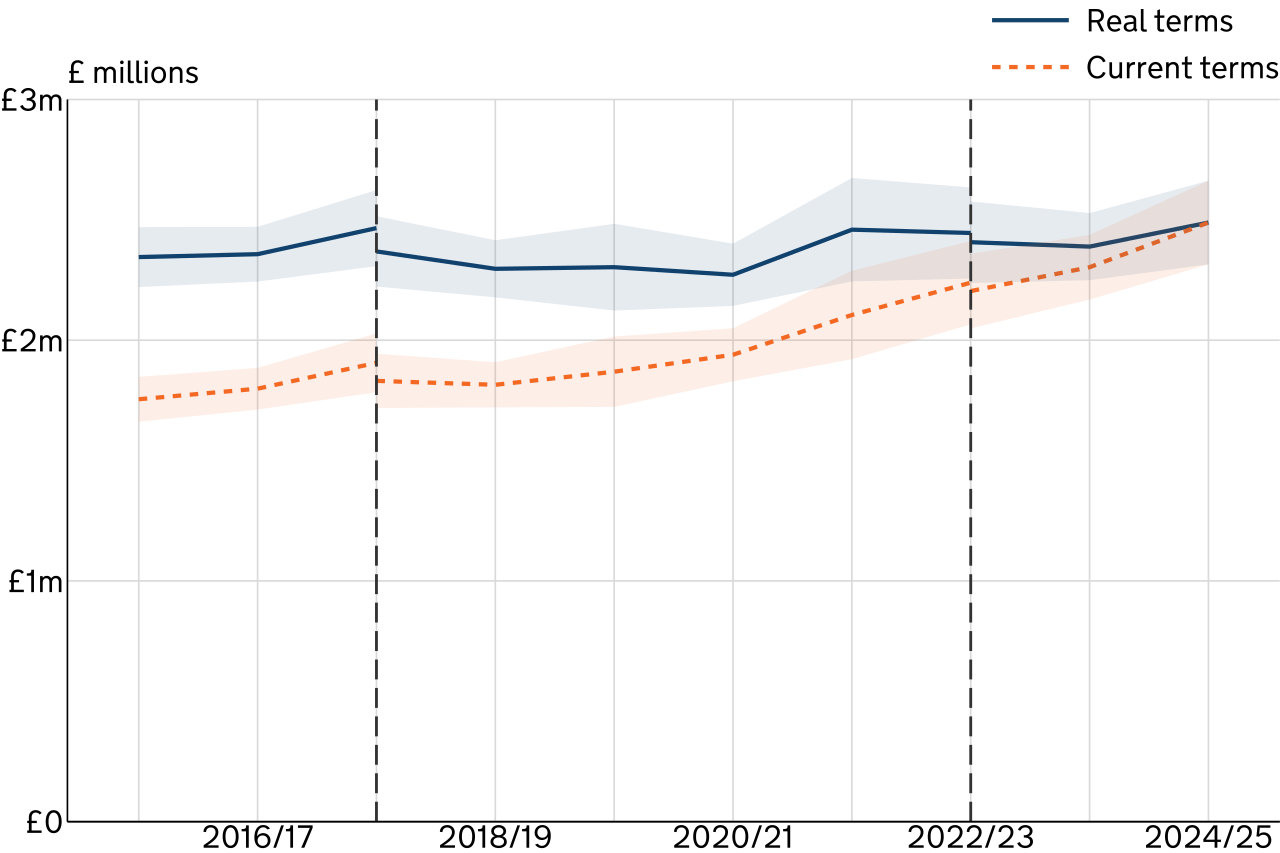
Figure 2.2 Average net worth in current and real terms (2024/25 prices) in England, 2015/16 to 2024/25
Source: Dataset table 2.1
Figure notes:
-
Real terms prices use the GDP deflator data published 30 September 2025 at: https://www.ons.gov.uk/economy/grossdomesticproductgdp/timeseries/ybgb.
-
Values are shown here with 95% confidence intervals, which give an indication of the degree of uncertainty around an estimate; the lower and upper limits show the possible range around the published averages.
-
The breaks in the series shown in 2017/18 and 2022/23 represent changes in the method used to assign farms to a specific farm type, along with further changes to the Standard Labour Requirements and the update to the weighting methodology in 2022/23. Where breaks occur, average liabilities have been calculated using both methods for comparability.
Figure 2.2 shows a time series of average net worth per farm in both current and real terms. While in current terms, average net worth has been steadily increasing, the trend is more flat after adjusting for inflation. In current terms, average net worth rose by 8% to £2.5 million in 2024/25, and in real terms it rose by 4%.
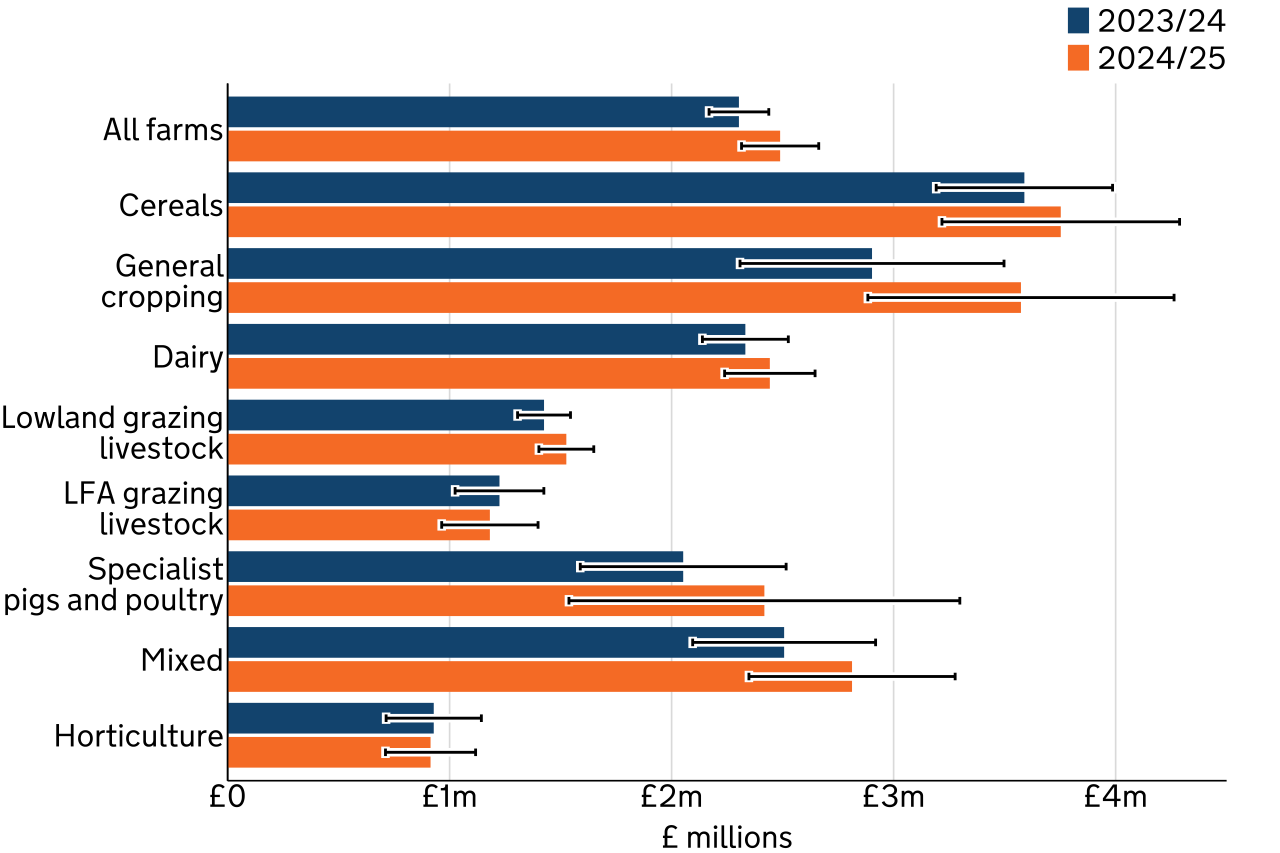
Figure 2.3 Average net worth by farm type in England, 2023/24 and 2024/25
Source: Dataset table 2.1
Figure notes:
-
The legend is presented in the same order as the bars.
-
Values are shown here with 95% confidence intervals, which give an indication of the degree of uncertainty around an estimate; the lower and upper limits show the possible range around the published averages.
-
An update to the weighting methodology in 2025 has resulted in revisions to the 2023/24 data.
Figure 2.3 shows average net worth per farm, by farm type, in 2023/24 and 2024/25. Continuing a trend over several years, cereal and general cropping farms had the highest average net worth of all farm types, at £3.8 million and £3.6 million respectively. General cropping farms also had the highest percentage increase, 23%, in their average net worth between 2023/24 and 2024/25.
Horticulture and LFA grazing livestock farms had the lowest net worth in 2024/25, with averages of £914 thousand and £1.2 million, respectively. These were also the only farm types which had a decrease between 2023/24 and 2024/25, with their respective net worth averages falling by 2% and 4%.
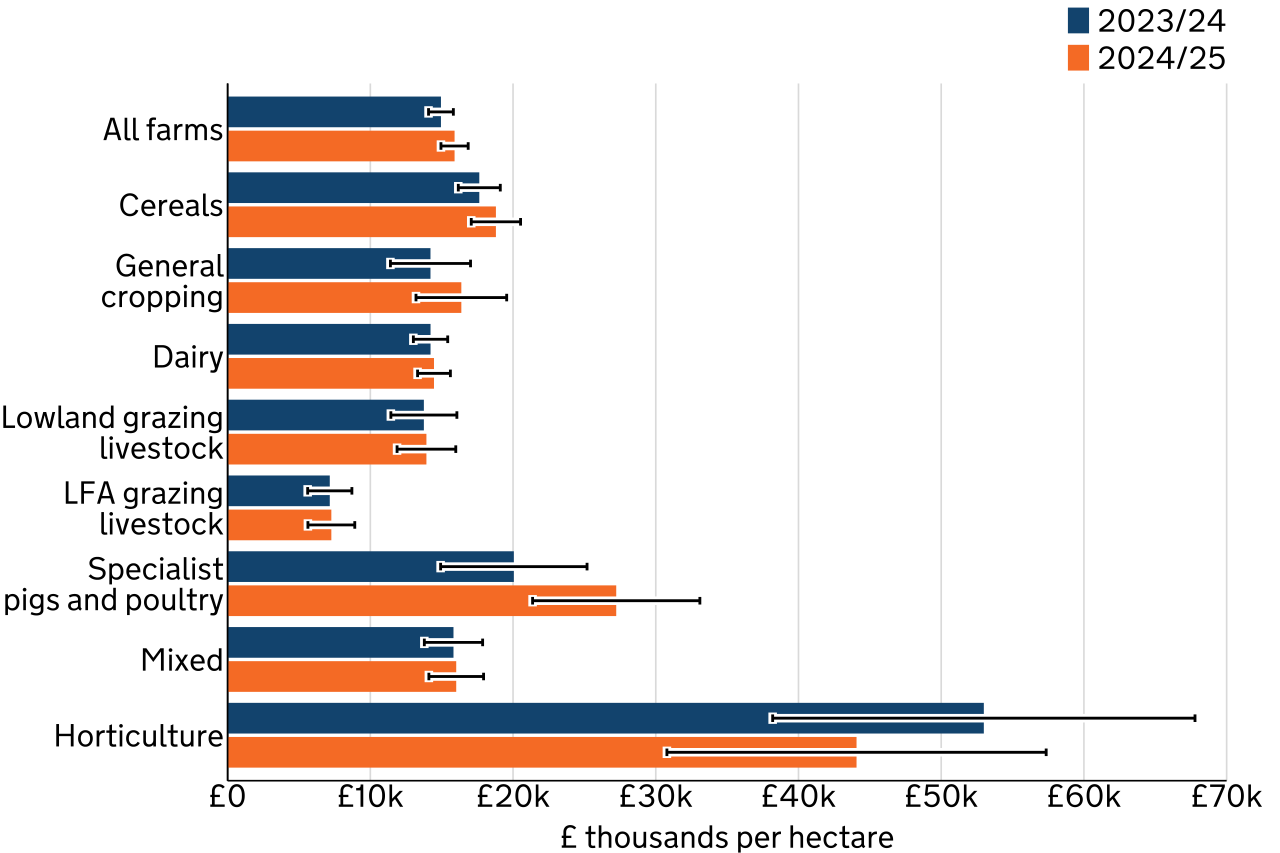
Figure 2.4 Average net worth per hectare of farmed land by farm type in England, 2023/24 and 2024/25
Source: Dataset table 2.2
Figure notes:
-
The legend is presented in the same order as the bars.
-
Values are shown here with 95% confidence intervals, which give an indication of the degree of uncertainty around an estimate; the lower and upper limits show the possible range around the published averages.
-
An update to the weighting methodology in 2025 has resulted in revisions to the 2023/24 data.
Figure 2.4 shows average net worth per hectare by farm type in 2023/24 and 2024/25. While they had the highest average net worth overall, cereal farms had an average net worth per hectare of £18.8 thousand, which was the third highest among the farm types.
While horticulture farms had the lowest average net worth, their net worth per hectare was the highest by far, at £44.1 thousand. This is largely because, in general, horticulture farms operate on a much smaller area than other farm types but are growing higher value crops such as salad vegetables or mushrooms.
The second highest net worth per hectare value was in specialist pig and poultry farms, at £27.2 thousand. This is likely because buildings which house animals are not included as part of the farmed area; pig and poultry farms are more likely to keep animals housed, resulting in a higher per hectare value.
The farm type with the lowest average net worth per hectare was LFA grazing livestock farms, at £7.3 thousand. The likely reason is that these farms are usually spread over a large area of upland, which also tends to be of lower value.
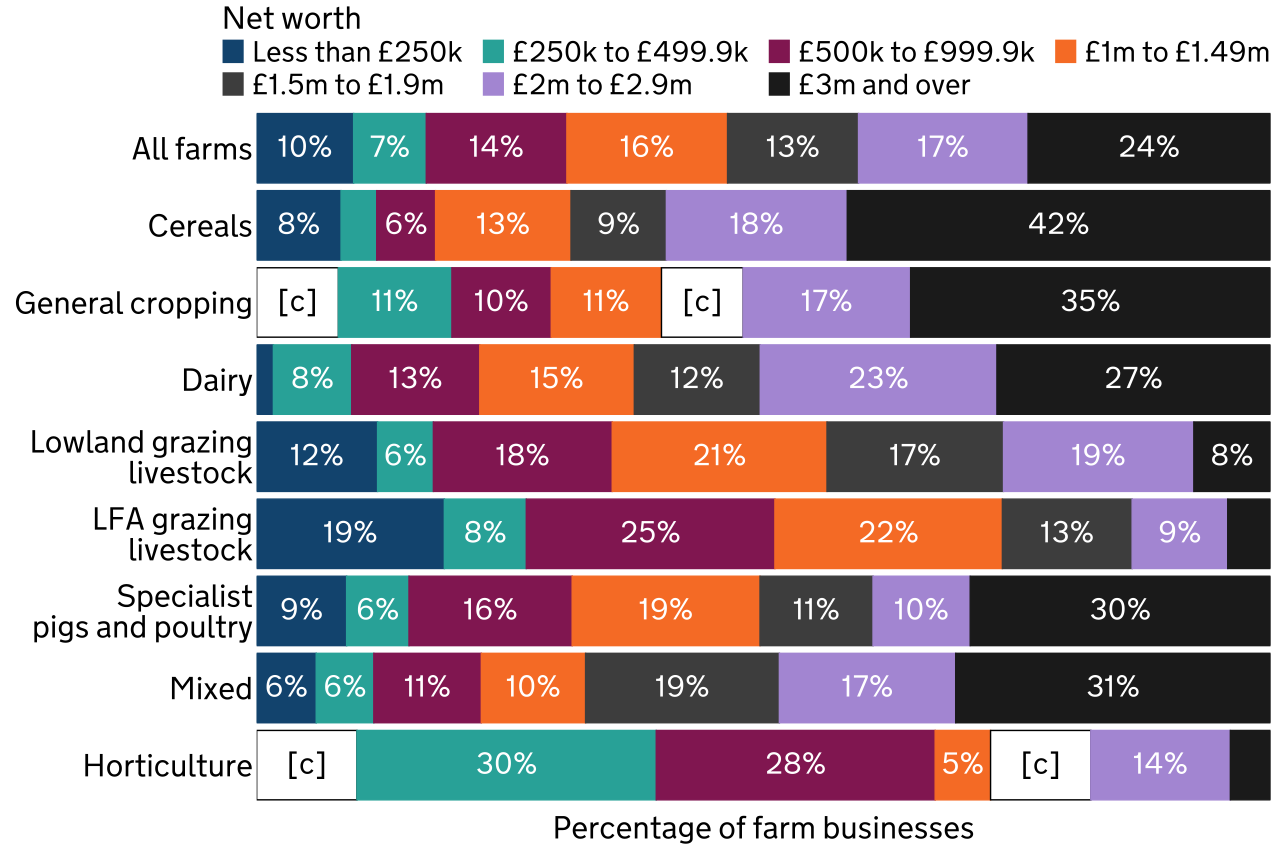
Figure 2.5 Distribution of farms by net worth and farm type in England, 2024/25
Source: Dataset table 2.3
Figure notes:
- The legend is presented in the same order as the bars (read the top row left to right, then the bottom row left to right).
- Text is not displayed where proportions are below 5%.
- White bars with black outlines and the symbol [c] indicate that results have been suppressed due to a small sample size. The size of the bar does not indicate the suppressed value. Suppressed values are included in the ‘All farms’ averages.
- Data on the number of farms which make up the distributions shown in this graph is available in dataset table 2.4.
Figure 2.5 shows the distribution of net worth in 2024/25. Equivalent values for 2023/24 are shown in figure 2.6 of the previous publication. At the all farm level, the distribution did not change significantly compared to 2023/24. The proportion of farms with a net worth of less than £250 thousand increased by 1 percentage point to 10%, and the proportion of farms with a net worth of at least £3 million also increased by 1 percentage point to 24%.
When broken down by farm type, distributions in 2024/25 were also mostly similar to 2023/24. For example, cereal farms continued to have the highest percentage of farms with a net worth of at least £3 million, at 42%.
However, some larger changes did occur. For example, the percentage of horticulture farms with a net worth between £250 thousand and £499.9 thousand decreased by 8 percentage points to 30%, while the percentage with a net worth between £2 million and £2.9 million increased by 7 percentage points to 14%. Similarly, specialist pig and poultry farms with a net worth between £2 million and £2.9 million decreased by 8 percentage points to 10%, while those with a net worth between £500 thousand and £999.9 thousand increased by 7 percentage points to 16%.
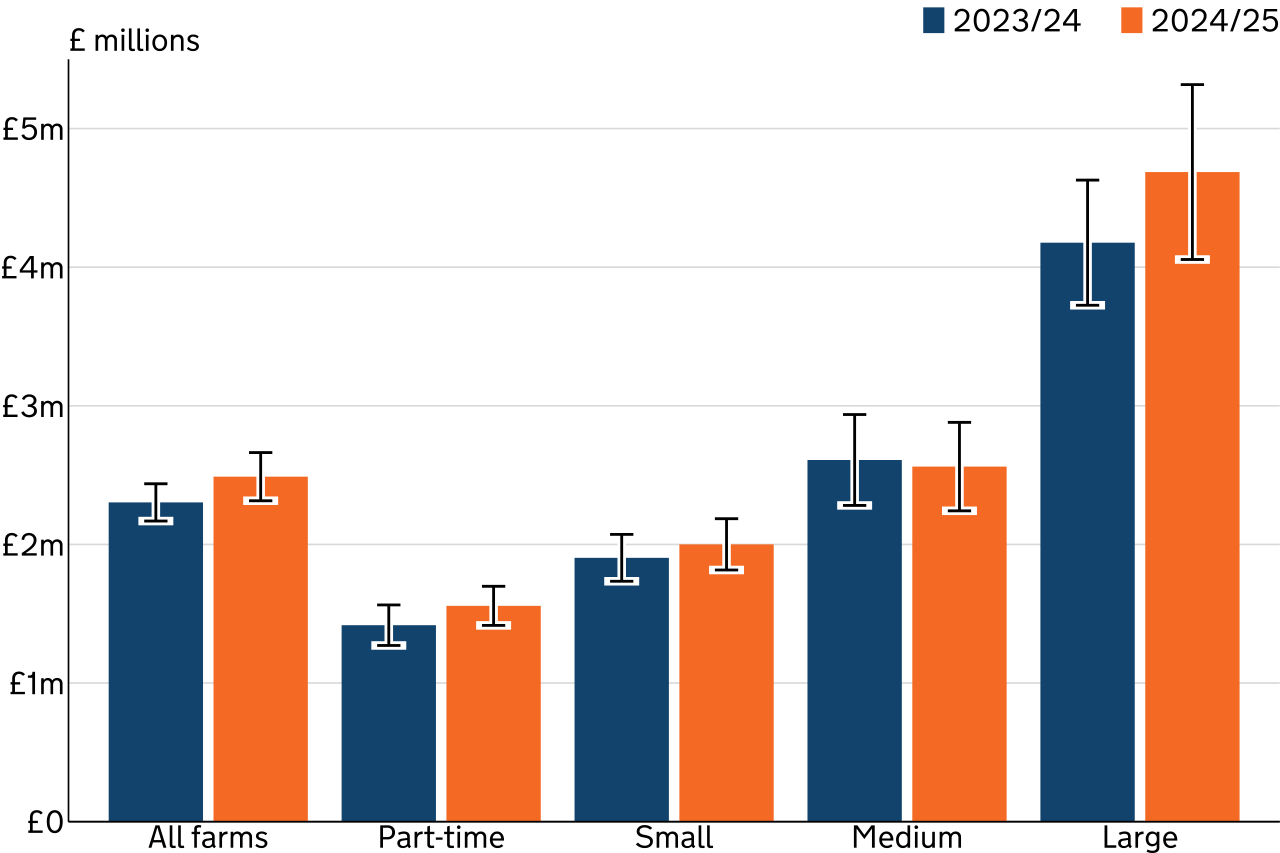
Figure 2.6 Average net worth by farm business size (based on SLR) in England, 2023/24 and 2024/25
Source: Dataset table 2.2
Figure notes:
-
The legend is presented in the same order as the bars.
-
Values are shown here with 95% confidence intervals, which give an indication of the degree of uncertainty around an estimate; the lower and upper limits show the possible range around the published averages.
-
An update to the weighting methodology in 2025 has resulted in revisions to the 2023/24 data.
Figure 2.6 shows average net worth per farm, by farm business size (based on SLR), in 2023/24 and 2024/25. The average net worth of farms increases with farm business size. For example, in 2024/25 the lowest average net worth was in part-time farm businesses, at £1.6 million, and the highest average net worth was in large farm businesses, at £4.7 million.
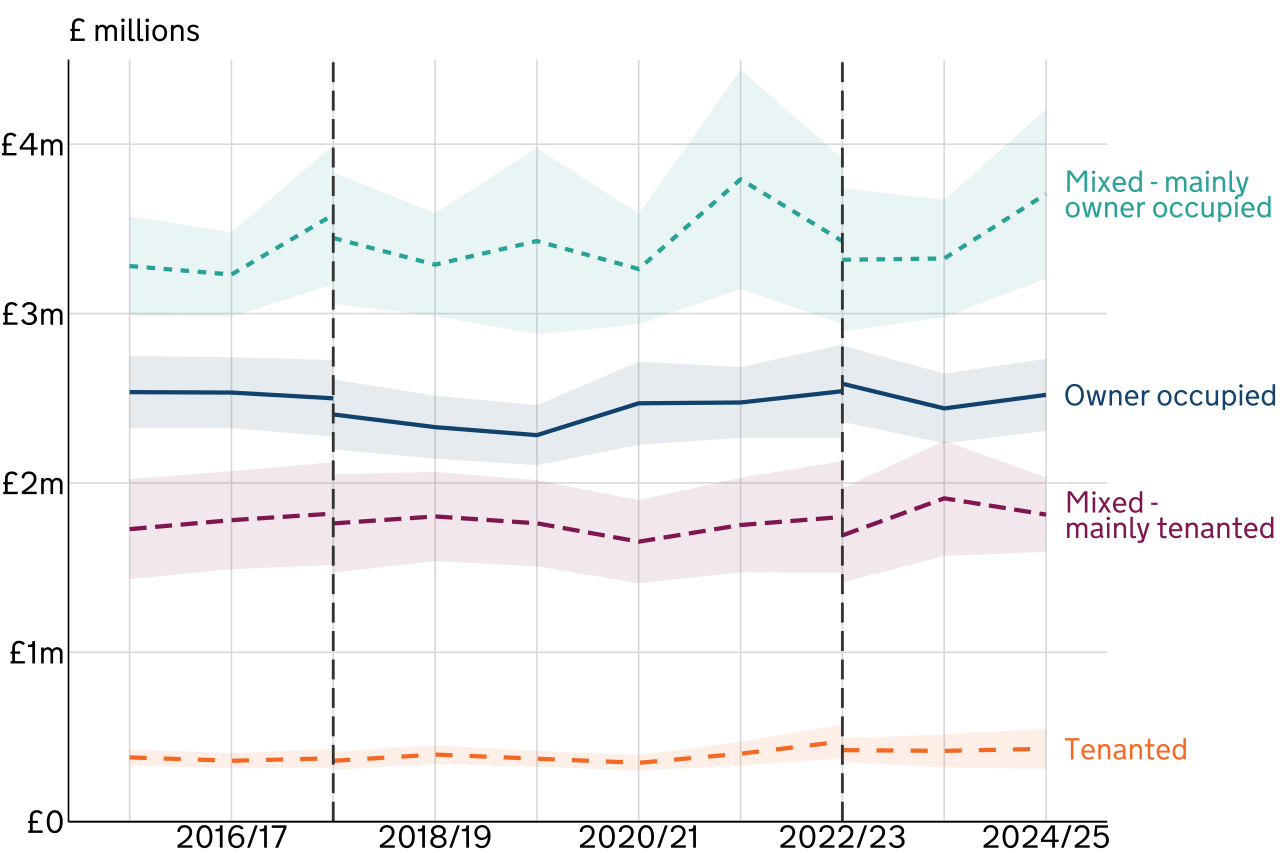
Figure 2.7 Average net worth in real terms (2024/25 prices) by farm tenure in England, 2015/16 to 2024/25
Source: Dataset table 2.1
Figure notes:
-
Values are shown here with 95% confidence intervals, which give an indication of the degree of uncertainty around an estimate; the lower and upper limits show the possible range around the published averages.
-
The breaks in the series shown in 2017/18 and 2022/23 represent changes in the method used to assign farms to a specific farm type, along with further changes to the Standard Labour Requirements and the update to the weighting methodology in 2022/23. Where breaks occur, average net worth has been calculated using both methods for comparability.
Figure 2.7 shows a time series of average real terms net worth by tenure type. In general, farms with greater land ownership tend to have a greater net worth, demonstrating the important contribution of land value to net worth.
Farms that were mixed but mainly owner occupied continued to have the highest average net worth in 2024/25, £3.7 million. These farms also saw the largest real terms percentage increase, 11%, between 2023/24 and 2024/25. The lowest average net worth was in tenanted farms at £430 thousand, which was a rise of 3% compared to the real terms value from the previous year. Only the average in mixed but mainly tenanted farms decreased in real terms between 2023/24 and 2024/25, a fall of 5%.
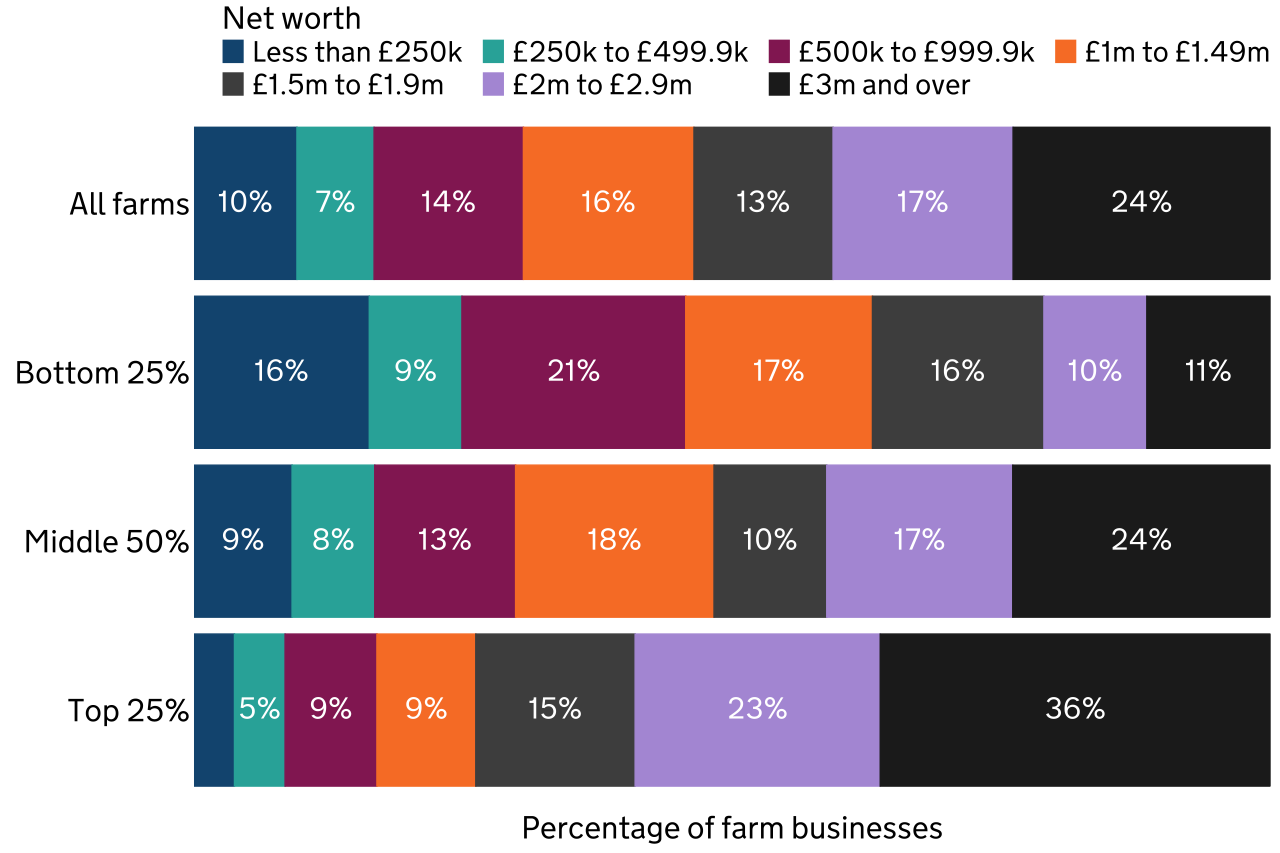
Figure 2.8 Distribution of farms by net worth and economic performance in England, 2024/25
Source: Dataset table 2.3
Figure notes:
- The legend is presented in the same order as the bars (read the top row left to right, then the bottom row left to right).
- Text is not displayed where proportions are below 5%.
- Data on the number of farms which make up the distributions shown in this graph is available in dataset table 2.4.
Figure 2.8 shows that the proportion of farms with a net worth of at least £3 million generally increases with the economic performance of the farm business, from 11% in lower performing farm businesses to 36% in higher performing farm businesses. Conversely, as the economic performance of the farm businesses increases, the proportion of farms with a net worth of less than £250 thousand decreases, with higher performing farm businesses at 4% and lower performing farm businesses at 16%.
3 Gearing ratio
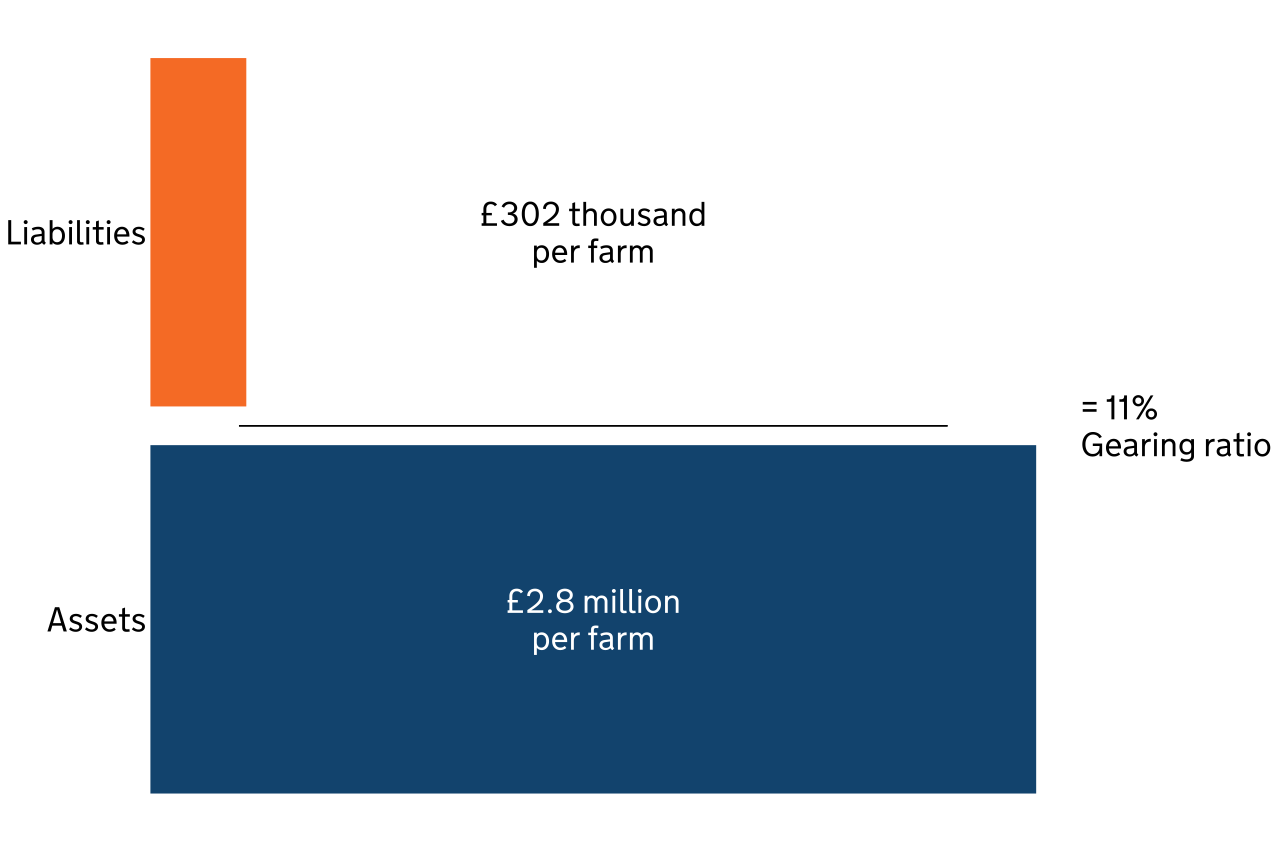
In order to get a deeper understanding of the indebtedness of a farm, we can compare what the farm business owes (its liabilities) to the assets that the owners have tied up in the business. An accounting measure is used which expresses a farm’s liabilities as a proportion of its assets, sometimes referred to as the gearing ratio. Figure 3.1 illustrates how gearing ratio is calculated.
Figure 3.1 Gearing ratio calculation for farms in England, 2024/25
Source: Dataset table 1.1 (Liabilities); Dataset table 3.1 (Gearing ratio); Defra, Farm Business Survey (Assets)
If a farm business has assets equal to its liabilities, this will give a gearing ratio value of 100%, whereas if their assets are twice as large as its liabilities then the gearing ratio will be 50%. This provides a measure of the long-term financial viability of a farm. A lower ratio is generally seen as more acceptable because this suggests that the farm business is more likely to be able to meet its investment needs from earnings. A higher ratio may be seen as a greater risk because interest costs will be higher, and the farm will have lower funds to borrow against. However, being highly geared does not necessarily imply an unsuccessful business. Investment can increase profitability, so increasing the gearing ratio can lead to better performance. In 2024/25, the average gearing ratio for farms in England was 11%, meaning that, generally speaking, farms in England have large assets relative to their liabilities.
Figure 3.2 Average gearing ratio by farm type (all farms and selected types) in England, 2015/16 to 2024/25
Source: Dataset table 3.1
Figure notes:
-
Values are shown here with 95% confidence intervals, which give an indication of the degree of uncertainty around an estimate; the lower and upper limits show the possible range around the published averages. Confidence intervals are not shown for general cropping farms due to excessive overlapping with the ‘All farms’ line.
-
The breaks in the series shown in 2017/18 and 2022/23 represent changes in the method used to assign farms to a specific farm type, along with further changes to the Standard Labour Requirements and the update to the weighting methodology in 2022/23. Where breaks occur, average gearing ratio has been calculated using both methods for comparability.
-
Farm types are included in the graph if their average gearing ratio changed by at least 3 percentage points between 2023/24 and 2024/25.
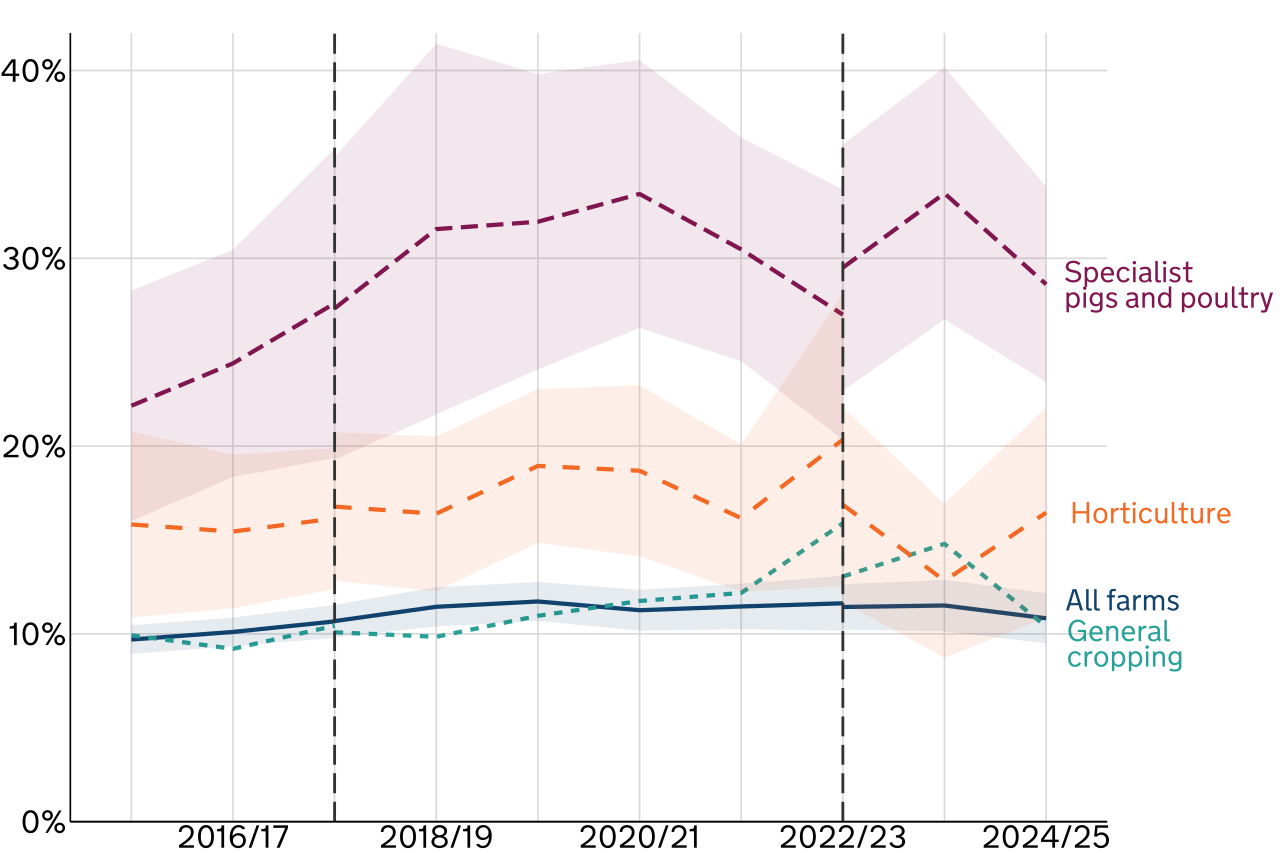
Figure 3.2 shows a time series of average gearing ratio for all farms, as well as any farm types which saw a change to their average gearing ratio of at least 3 percentage points between 2023/24 and 2024/25. The average gearing ratio at the all farm level has had very little variation over the years, ranging between 10% and 12%, while it has been more volatile within farm types.
In 2024/25, the farm type with the highest average gearing ratio continued to be specialist pig and poultry farms, with a ratio of 29%. The specialist pig and poultry farms also had the biggest change compared to the previous year, a fall of 5 percentage points. The second highest average gearing ratio was 17%, seen in dairy farms. For the fifth consecutive year, cereal farms had the lowest average gearing ratio in 2024/25, at 6%.
Figure 3.3 Distribution of farms by gearing ratio and farm type in England, 2024/25
Source: Dataset table 3.2
Figure notes:
- The legend is presented in the same order as the bars.
- Text is not displayed where proportions are below 5%.
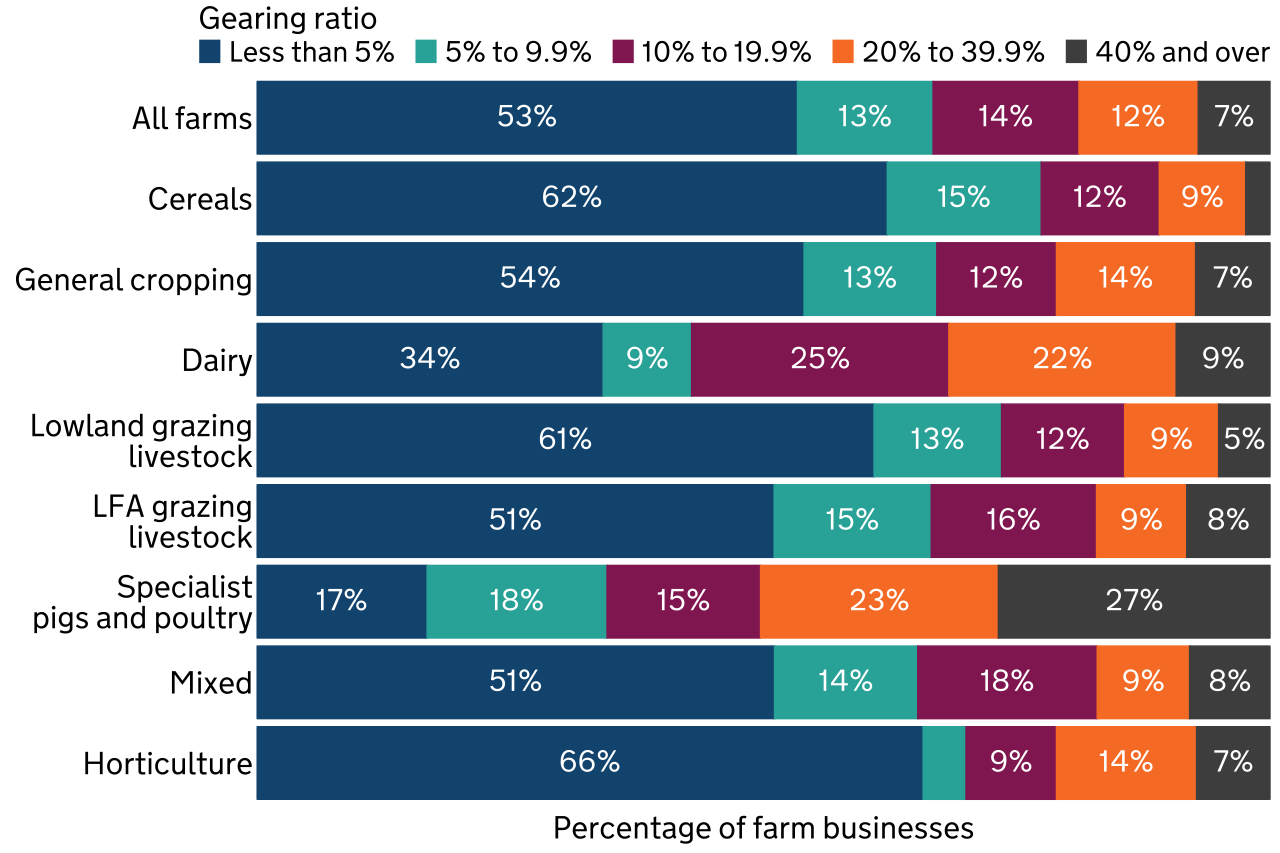
Figure 3.3 compares the distribution of gearing ratio within farm types in 2024/25. Most farms had a relatively low value, with just over half of all farms having a gearing ratio of less than 5%. Only 7% of farms had a gearing ratio of at least 40%.
Specialist pig and poultry farms tended to have higher gearing ratios, with 27% having a gearing ratio of at least 40%. Most other farm types tended towards lower gearing ratios, for example, 66% of horticulture farms had a ratio of less than 5%.
Figure 3.4 Distribution of farms by gearing ratio and farm business size (based on SLR) in England, 2024/25
Source: Dataset table 3.2
Figure note: The legend is presented in the same order as the bars.
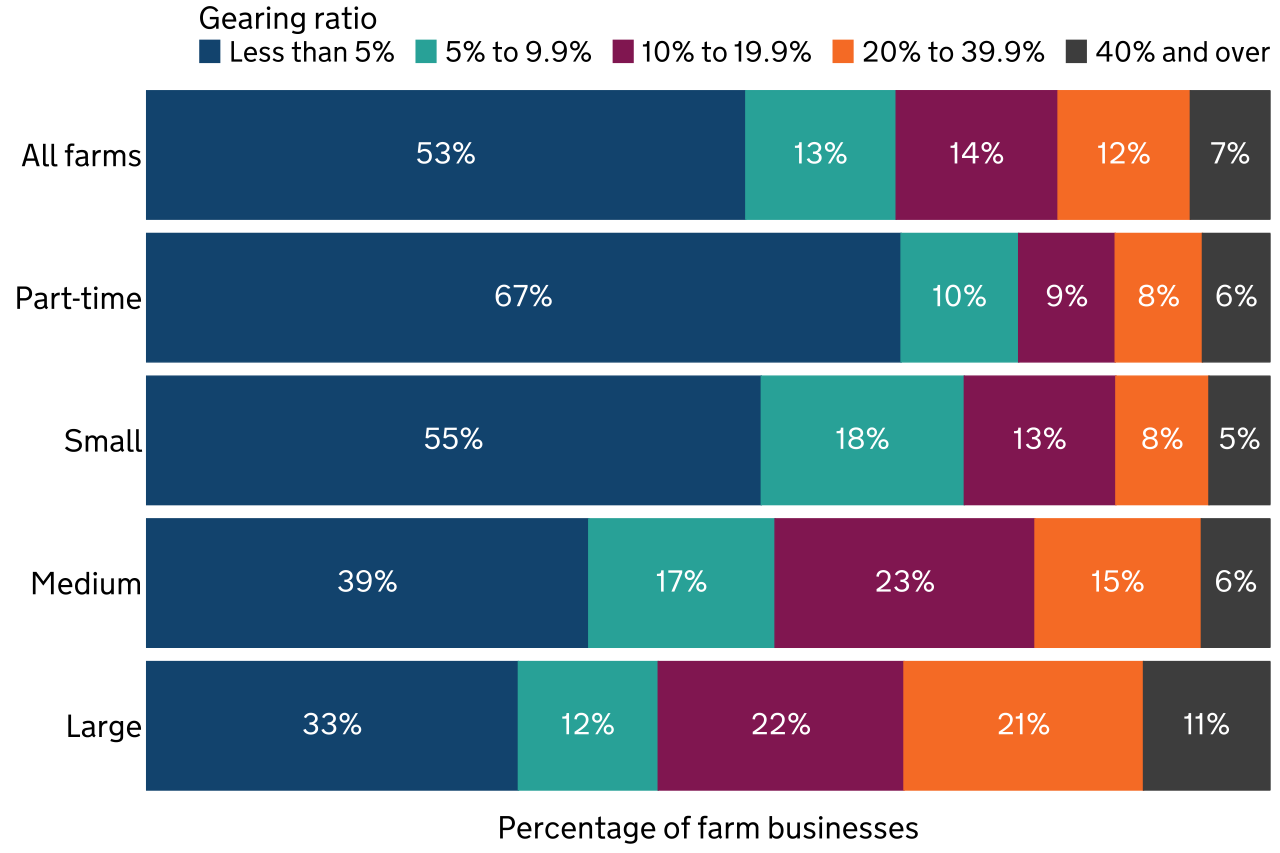
Average gearing ratio increased with farm business size, ranging from 7% in part-time farms to 14% in large farms. For all farm business sizes, average gearing ratio was similar to the 2023/24 values.
Figure 3.4 shows the distributions of gearing ratio for farms of different sizes (based on SLR) in 2024/25. For part-time farms, around two thirds had a gearing ratio of less than 5%, and 6% had a gearing ratio of at least 40%. Conversely, a third of large farms had a gearing ratio of less than 5%, and around one in ten had a gearing ratio of 40% or more. This was driven by larger farms having higher liabilities (see figure 1.6) rather than having less in assets.
Figure 3.5 Average gearing ratio by farm tenure in England, 2015/16 to 2024/25
Source: Dataset table 3.1
Figure notes:
-
Values are shown here with 95% confidence intervals, which give an indication of the degree of uncertainty around an estimate; the lower and upper limits show the possible range around the published averages.
-
The breaks in the series shown in 2017/18 and 2022/23 represent changes in the method used to assign farms to a specific farm type, along with further changes to the Standard Labour Requirements and the update to the weighting methodology in 2022/23. Where breaks occur, average gearing ratio has been calculated using both methods for comparability.
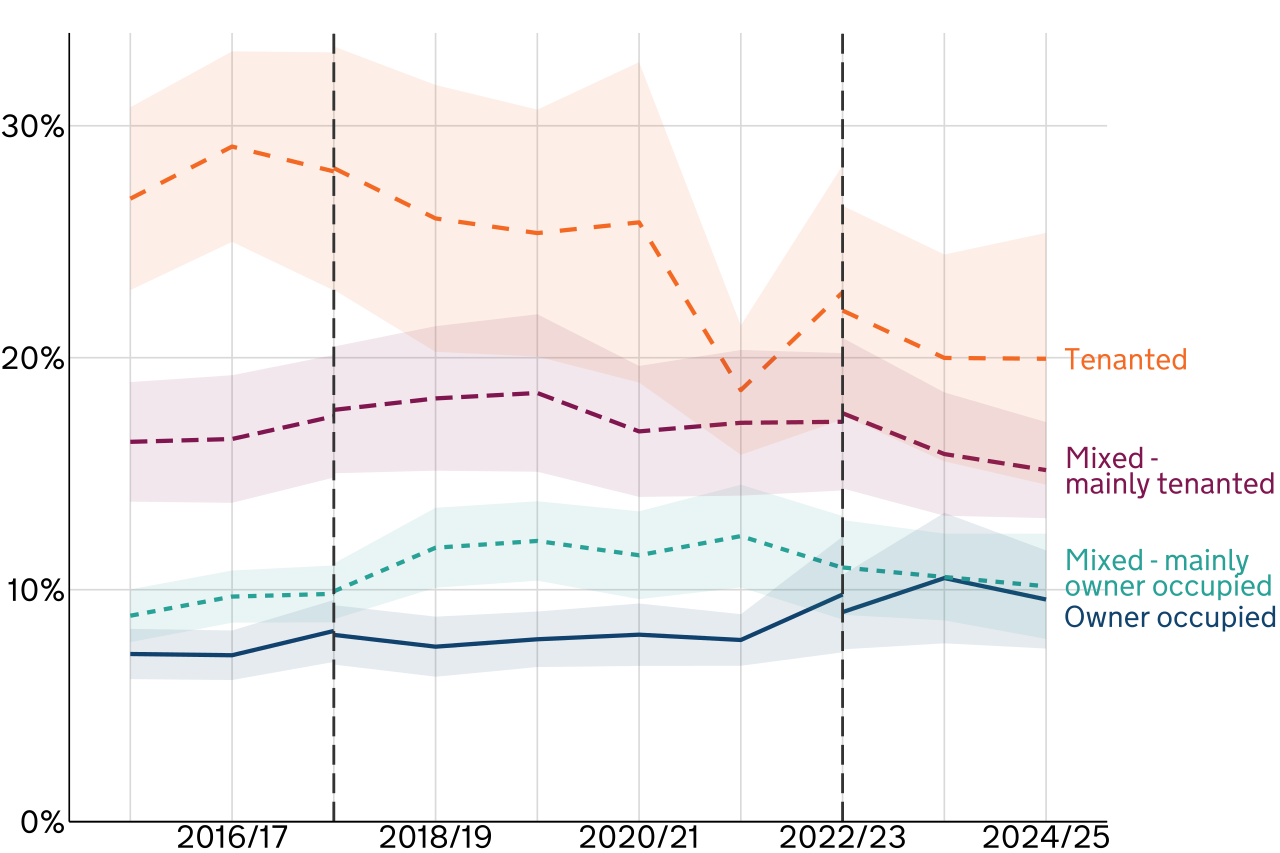
Figure 3.5 shows the average gearing ratio per farm, by tenure type, over the last ten years. The gearing ratio has consistently reduced as the level of land ownership increases; owner occupied farms had the lowest gearing ratio in 2024/25, at 10%, while tenanted farms had the highest, at 20%. However, of the four tenure types, tenanted farms have had had the steepest downward trend over the last ten years.
Between 2023/24 and 2024/25, the average gearing ratios for all tenure types had only small differences. The biggest change was in owner occupied farms, a decrease of 1 percentage point to 10%.
3.1 Gearing ratio by liabilities and net worth
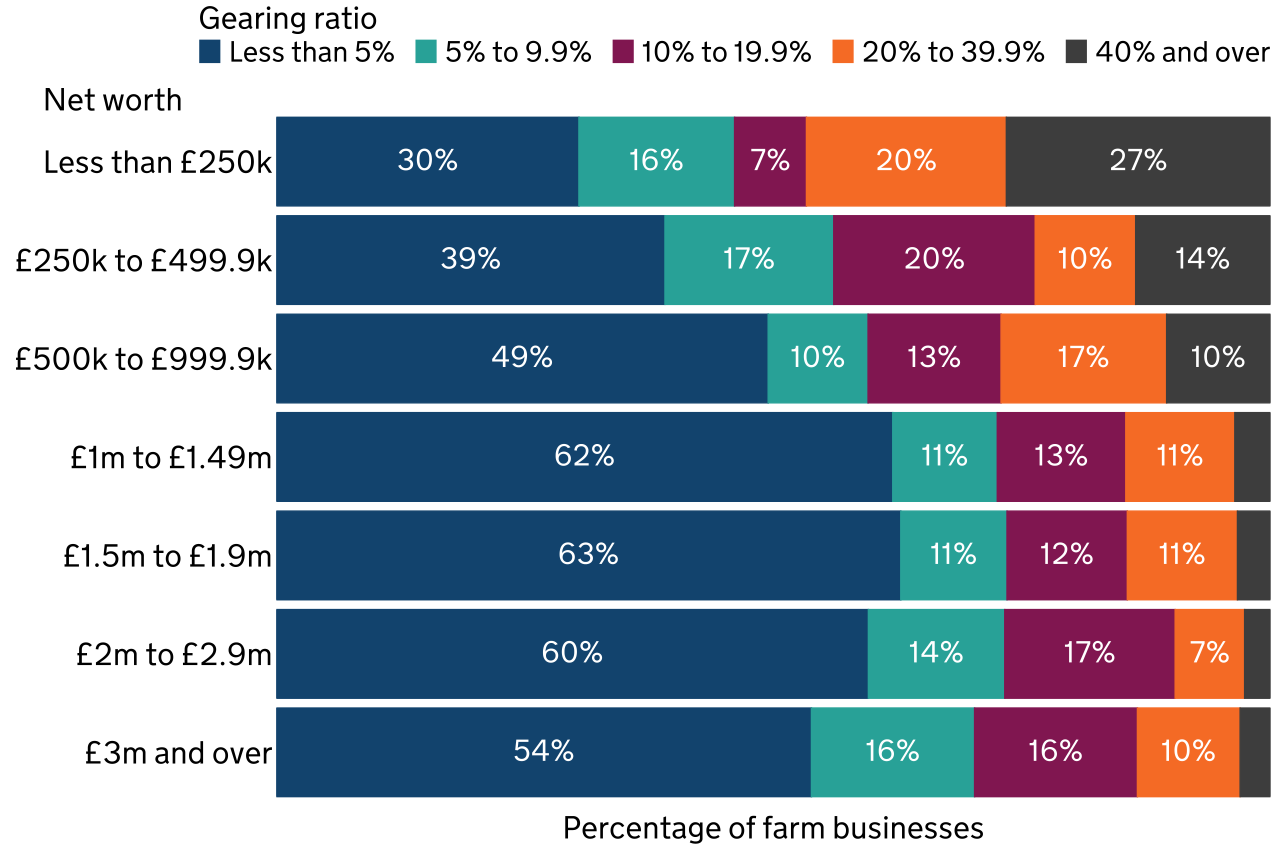
Farms with lower liabilities also tended to have a lower gearing ratio; of farms with less than £10 thousand in liabilities, 97% had a gearing ratio of less than 5%. This indicates that these farms were in a favourable situation, because they had very low liabilities compared to their assets. On the other hand, 27% of farms with at least £400 thousand of liabilities had a gearing ratio of over 40%. However, as previously mentioned, a high gearing ratio alone is not necessarily a marker of a less successful business.
Figure 3.6 Distribution of farms by gearing ratio and net worth in England, 2024/25
Source: Dataset table 3.3
Figure notes:
- The legend is presented in the same order as the bars.
- Text is not displayed where proportions are below 5%.
- Data on the number of farms which make up the distributions shown in this graph is available in dataset table 2.4.
Figure 3.6 shows the distribution of farms by gearing ratio and net worth. Farms with a higher net worth also tended to have a lower gearing ratio. Of farms with a net worth of less than £250 thousand, 30% had a gearing ratio of less than 5%, while around a quarter had a gearing ratio of 40% or more. In comparison, just over half of farms with a net worth of at least £3 million had a gearing ratio of less than 5%, while 3% had a gearing ratio of 40% or more.
4 Liquidity
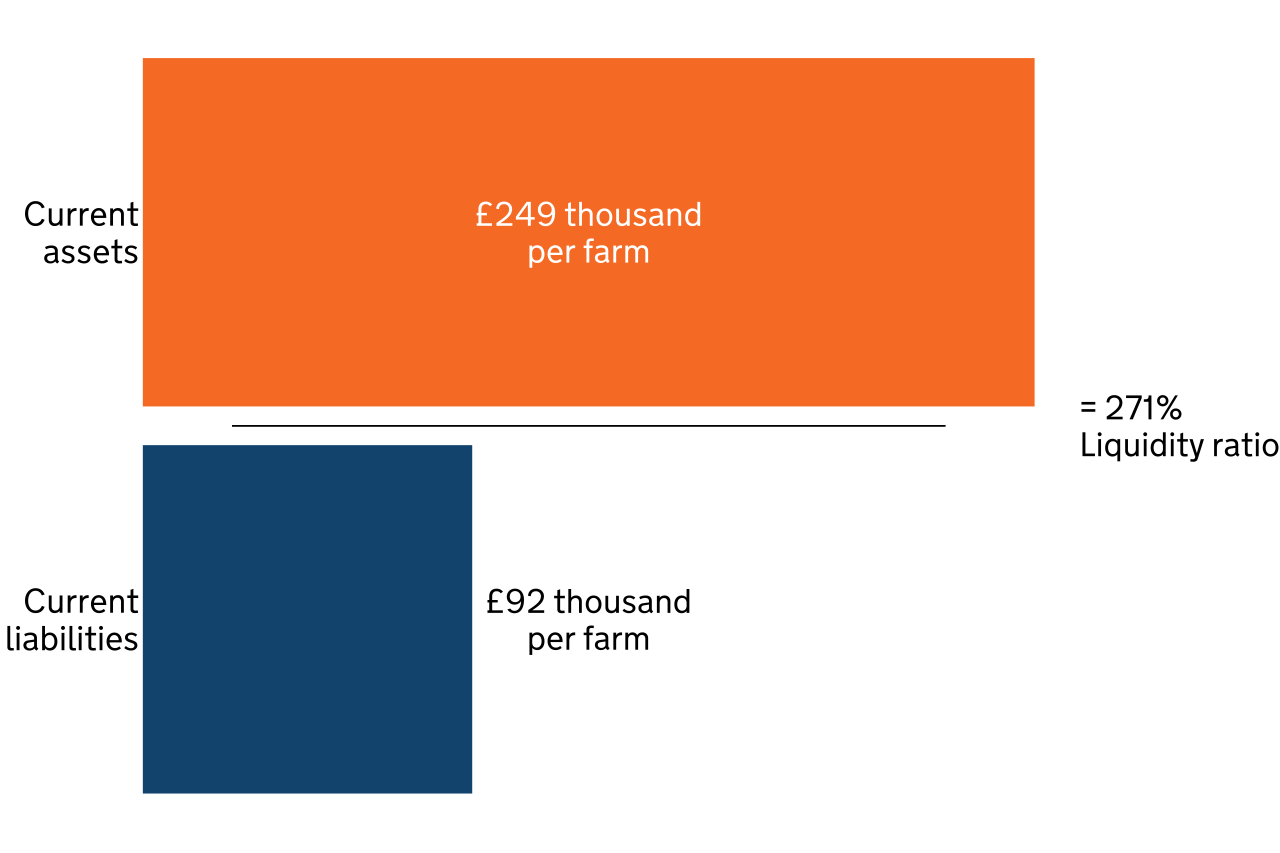
Liquidity is a measure of the short term financial viability of farms. A large proportion of the assets of a farm business, such as land or machinery, will typically have a monetary value that is difficult or costly to realise in the short term. The liquidity ratio provides an indication of the ability of a farm to finance its immediate financial demands, known as ‘current liabilities’, from its assets that can be realised easily, such as cash, savings or stock, known as ‘current assets’. If the liquidity ratio is equal to or above 100%, then a farm is able to meet its current liabilities using current assets. If the ratio is less than 100%, then a farm business is unable to meet its immediate financial demands using current assets. Figure 4.1 illustrates how liquidity ratio is calculated.
Figure 4.1 Liquidity ratio calculation for farms in England, 2024/25
Source: Dataset table 4.1 (Liquidity ratio); Defra, Farm Business Survey (Current assets and Current liabilities)
In 2024/25, the average liquidity ratio was 271%, meaning that, in general, farms in England were able to meet their current liabilities.
Figure 4.2 Average liquidity ratio of selected farm types in England, 2015/16 to 2024/25
Source: Dataset table 4.1
Figure notes:
-
Values for ‘All farms’ are shown here with 95% confidence intervals, which give an indication of the degree of uncertainty around an estimate; the lower and upper limits show the possible range around the published averages. Confidence intervals are not shown for farm types due to excessive overlapping.
-
The breaks in the series shown in 2017/18 and 2022/23 represent changes in the method used to assign farms to a specific farm type, along with further changes to the Standard Labour Requirements and the update to the weighting methodology in 2022/23. Where breaks occur, average liquidity ratio has been calculated using both methods for comparability.
-
Farm types are included in the graph if their average liquidity ratio changed by at least 50 percentage points between 2023/24 and 2024/25.
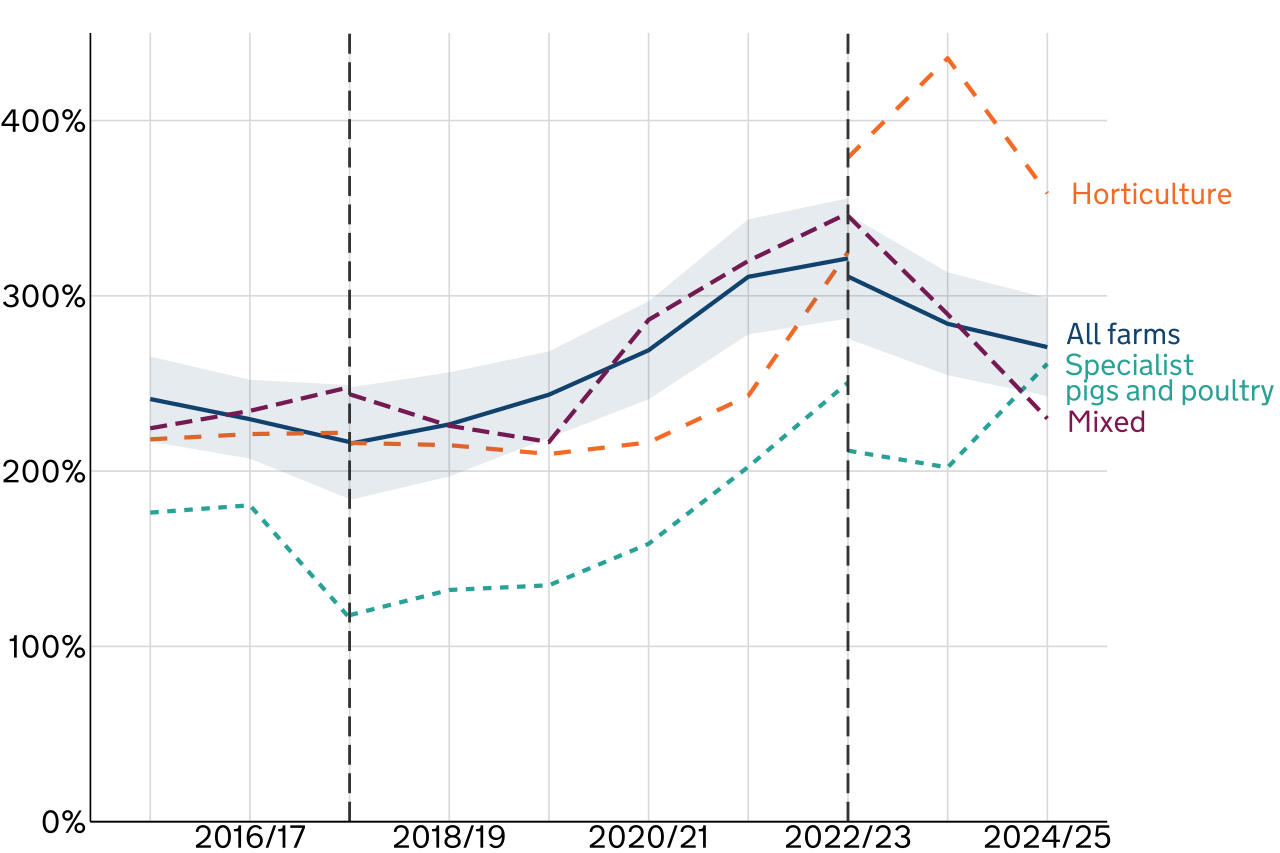
Figure 4.2 shows the average liquidity ratio for all farms between 2015/16 and 2024/25, as well as any farm types whose average liquidity ratio changed by at least 50 percentage points between 2023/24 and 2024/25. The average liquidity ratio of farm businesses in England fell by 13 percentage points in 2024/25.
In 2024/25, all farm types had an average liquidity ratio of over 100%; horticulture farms had the highest average ratio, at 358%, whereas dairy farms had the lowest, 180%.
Between 2023/24 and 2024/25, average liquidity ratio increased in specialist pig and poultry and general cropping farms by 59 and 36 percentage points, respectively. In the other farm types, average liquidity ratio fell; the biggest decrease was in horticulture farms, where the average fell by 77 percentage points.
Figure 4.3 Distribution of farms by liquidity ratio and farm type in England, 2024/25
Source: Dataset table 4.2
Figure notes:
- The legend is presented in the same order as the bars.
- Text is not displayed where proportions are below 5%.
- White bars with black outlines and the symbol [c] indicate that results have been suppressed due to a small sample size. Where the bar is less than 5% wide, the symbol [c] is not displayed. The size of the bar does not indicate the suppressed value. Suppressed values are included in the ‘All farms’ averages.
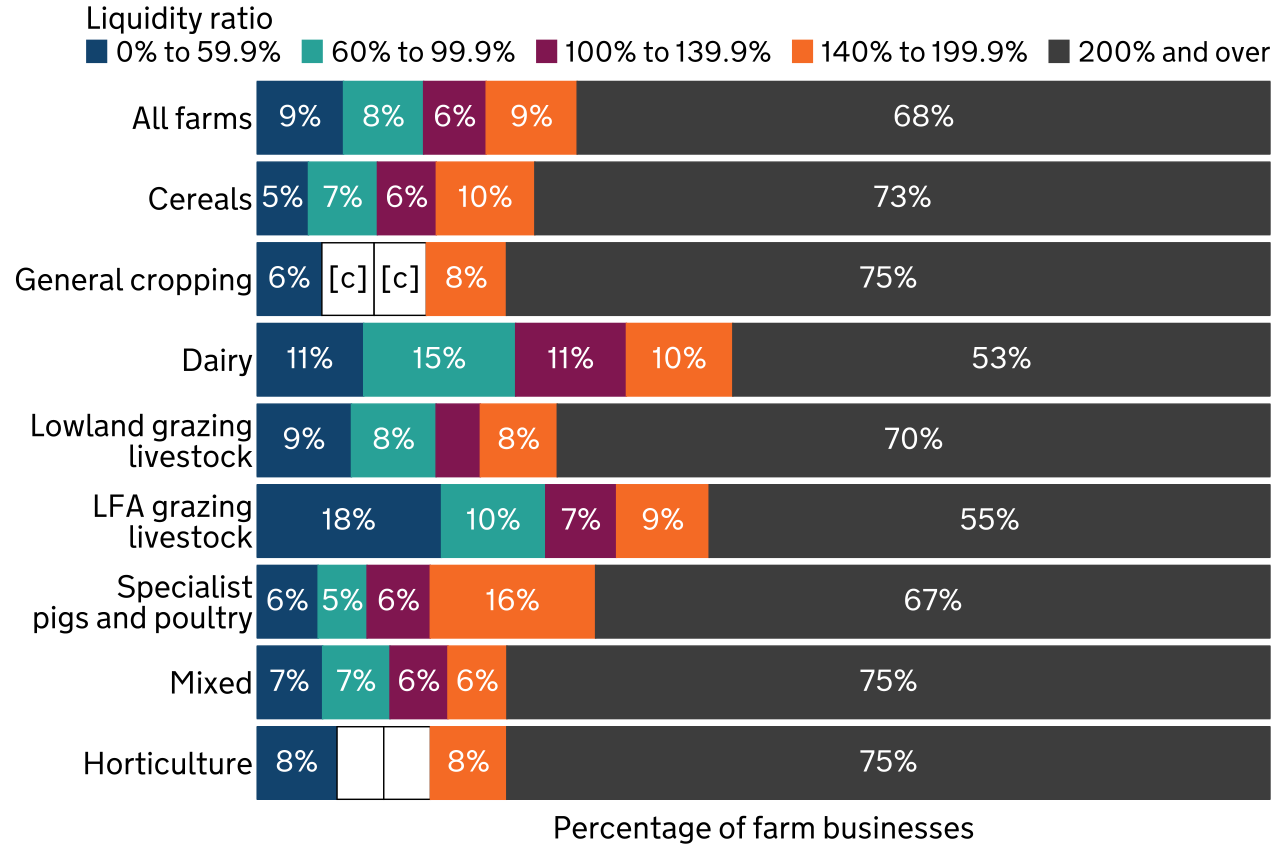
Figure 4.3 compares the distribution of liquidity ratio within farm types in 2024/25. The majority of farms had a strong liquidity ratio; 68% had a ratio of at least 200%, suggesting that they could easily cover their immediate financial demands with their current assets. Overall, 16% of farms had a liquidity ratio below 100%; this is the point at which current assets do not cover current liabilities. When broken down by farm type, LFA grazing livestock farms were most likely to be in this situation, with 29% of these farms having a liquidity ratio of less than 100%.
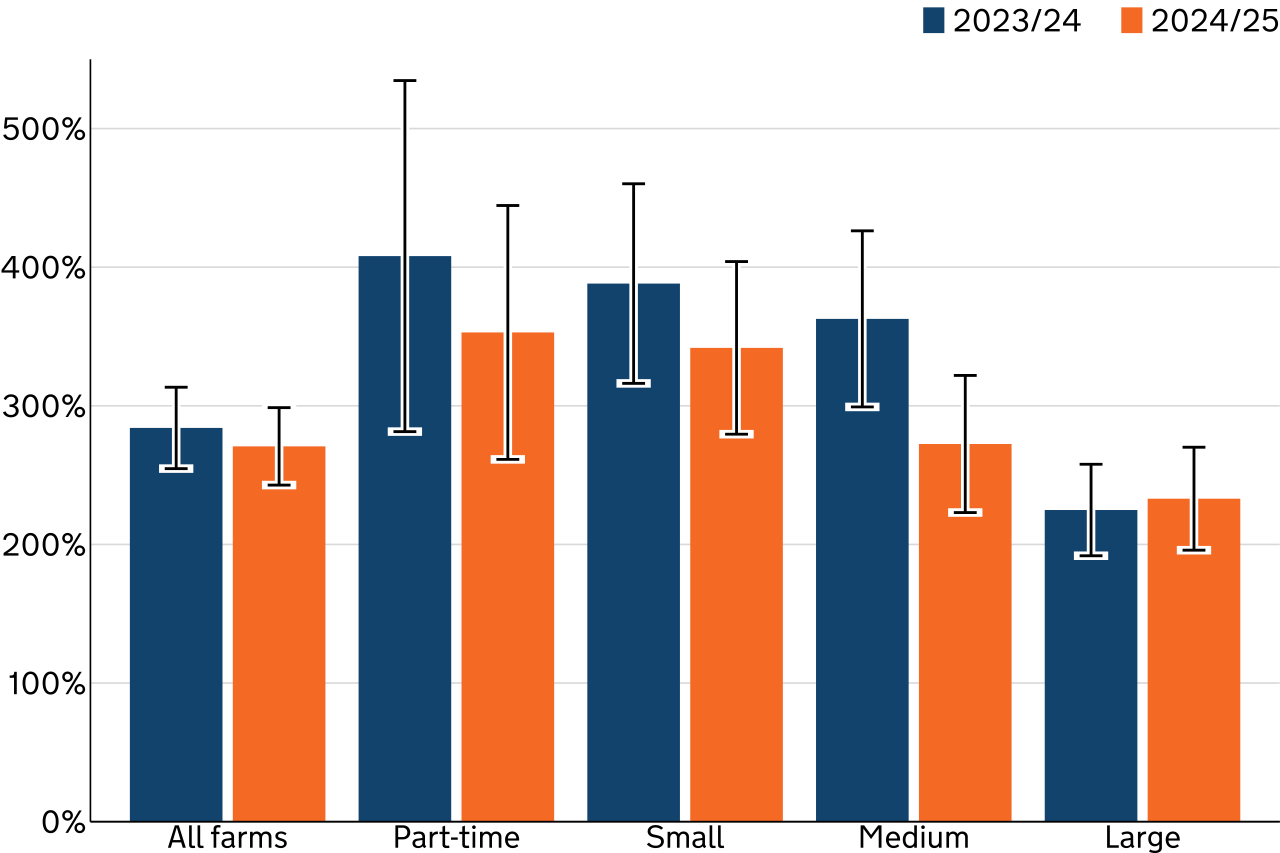
Figure 4.4 Average liquidity ratio by farm business size (based on SLR) in England, 2023/24 and 2024/25
Source: Dataset table 4.1
Figure notes:
-
The legend is presented in the same order as the bars.
-
Values are shown here with 95% confidence intervals, which give an indication of the degree of uncertainty around an estimate; the lower and upper limits show the possible range around the published averages.
-
An update to the weighting methodology in 2025 has resulted in revisions to the 2023/24 data.
Figure 4.4 shows that average liquidity ratio decreases as farm business size, based on SLR, increases; large farm businesses had the lowest average ratio, 233%, while part-time farm businesses had the highest average ratio, 353%. Medium farm businesses saw the biggest decrease compared to the previous year, falling by 90 percentage points.
The highest percentage of farms with a liquidity ratio under 100% was seen in large farm businesses; 20% of these farms did not have enough in current assets to cover their liabilities. The smallest percentage was in small farm businesses, at 15%.
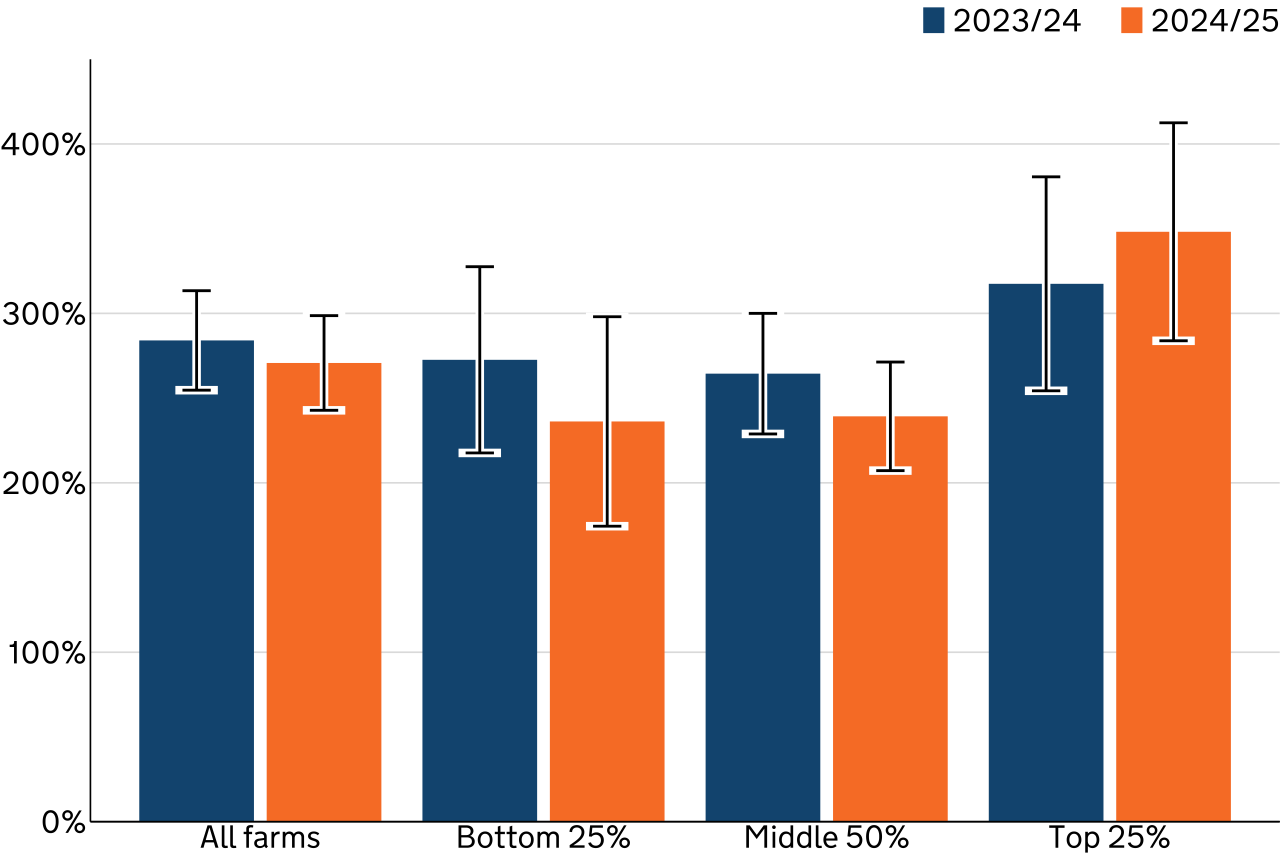
Figure 4.5 Average liquidity ratio by economic performance in England, 2023/24 and 2024/25
Source: Dataset table 4.1
Figure notes:
-
The legend is presented in the same order as the bars.
-
Values are shown here with 95% confidence intervals, which give an indication of the degree of uncertainty around an estimate; the lower and upper limits show the possible range around the published averages.
-
An update to the weighting methodology in 2025 has resulted in revisions to the 2023/24 data.
Figure 4.5 shows that the top 25% economic performers tend to have a higher average liquidity ratio than the bottom 75%. Farms who were in the top 25% had the highest average liquidity ratio in 2024/25, at 348%, and this was 31 percentage points higher than the 2023/24 value. In contrast, the average liquidity ratio of farms in the bottom 25% performers fell by 36 percentage points to 236% over the same period.
When comparing the distribution of liquidity ratio by economic performance band, around a fifth of the bottom 25% performers had a liquidity ratio below 100% in 2024/25, while just 9% of the top 25% performers did.
5 Net Interest payments as a proportion of Farm Business Income (FBI)
This section examines net interest payments as a proportion of FBI. This measure provides an indication of whether farms can afford to pay the interest on their debts. The usual measure of FBI includes net interest payments as a cost, therefore, the value for FBI used in the calculation of this measure has not had net interest deducted from it. The proportion is dependent on the value of FBI, which rose by 48% at the all farm level in 2024/25.
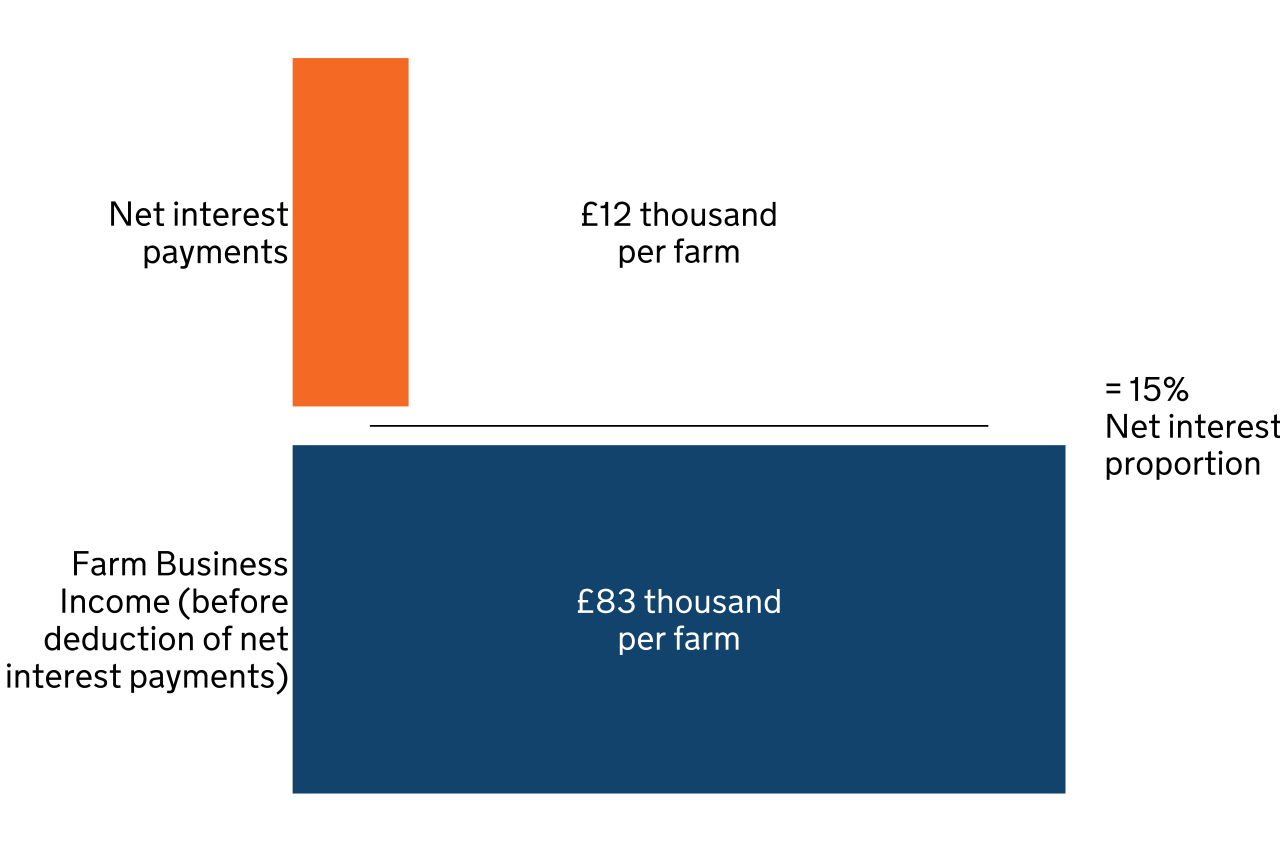
Figure 5.1 Net interest as a proportion of FBI calculation for farms in England, 2024/25
Source: Dataset table 5.1 (Net interest proportion); Defra, Farm Business Survey (Net interest payments and Farm Business Income)
In 2024/25, net interest payments were, on average, 15% of FBI. This was a fall of 5 percentage points compared with 2023/24. The change was driven by net interest payments increasing by 7%, while FBI (before deduction of net interest payments) rose by 40%.
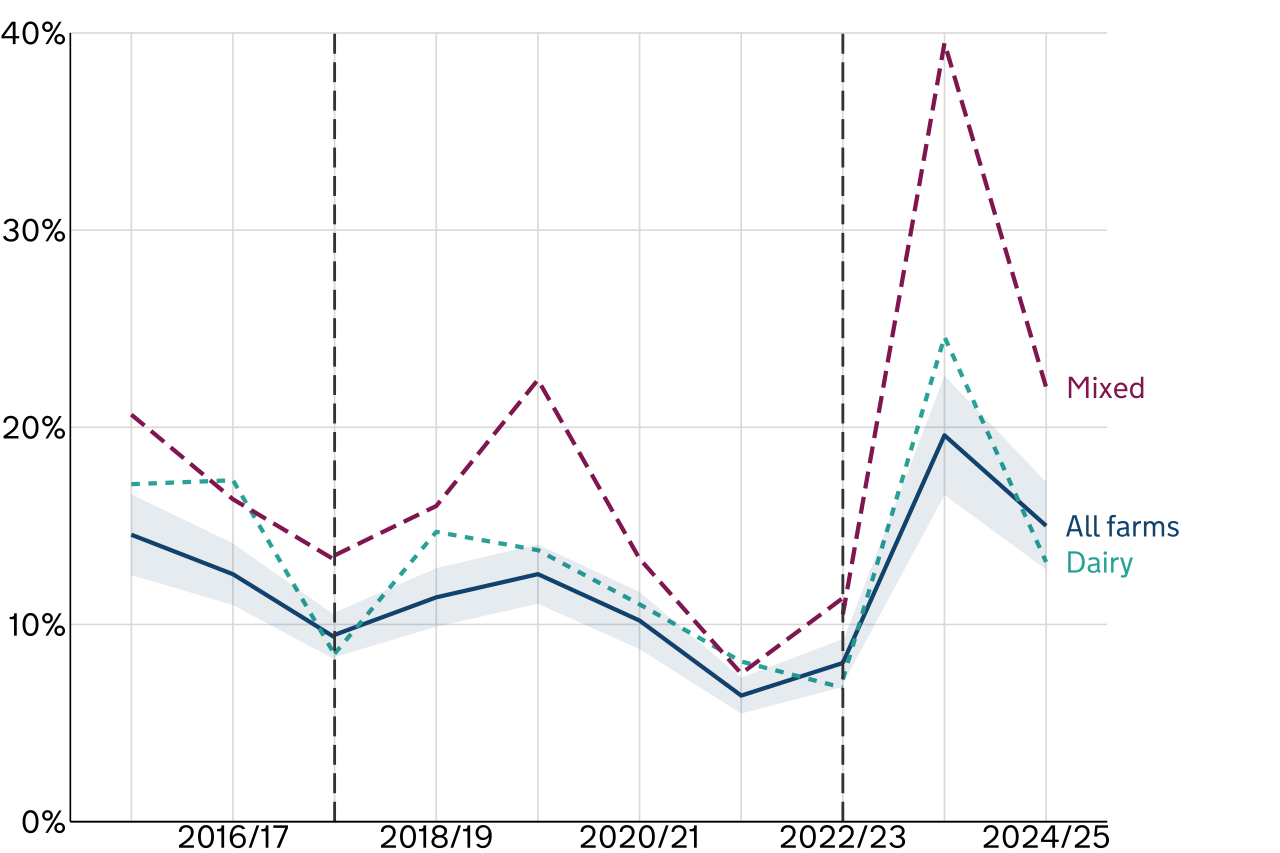
Figure 5.2 Average net interest payments as a proportion of Farm Business Income of selected farm types in England, 2015/16 to 2024/25
Source: Dataset table 5.1
Figure notes:
-
Values for ‘All farms’ are shown here with 95% confidence intervals, which give an indication of the degree of uncertainty around an estimate; the lower and upper limits show the possible range around the published averages. Confidence intervals are not shown for farm types due to excessive overlapping.
-
The breaks in the series shown in 2017/18 and 2022/23 represent changes in the method used to assign farms to a specific farm type, along with further changes to the Standard Labour Requirements and the update to the weighting methodology in 2022/23. Where breaks occur, average liquidity ratio has been calculated using both methods for comparability.
-
Farm types are included in the graph if their average net interest proportion changed by at least 10 percentage points between 2023/24 and 2024/25.
Figure 5.2 shows the average net interest payments as a proportion of FBI for all farms between 2015/16 and 2024/25, as well as any farm types whose net interest payments changed by at least 10 percentage points between 2023/24 and 2024/25.
The average proportion of net interest payments fell in most farm types in 2024/25; the biggest decrease was in mixed farms, where the average fell by 17 percentage points. However, mixed farms continued to have the highest net interest proportion, at 22%, in 2024/25.
It only increased in horticulture and general cropping farms, rising by 3 and 2 percentage points, respectively. This was due to these farm types having only small changes in their average FBI (before deduction of net interest payments) – it rose by 3% in general cropping farms and fell by 5% in horticulture farms – while average net interest payments rose by 20% for general cropping farms and rose by 46% for horticulture farms. Despite this, horticulture farms had the lowest average net interest proportion in 2024/25, at 10%.
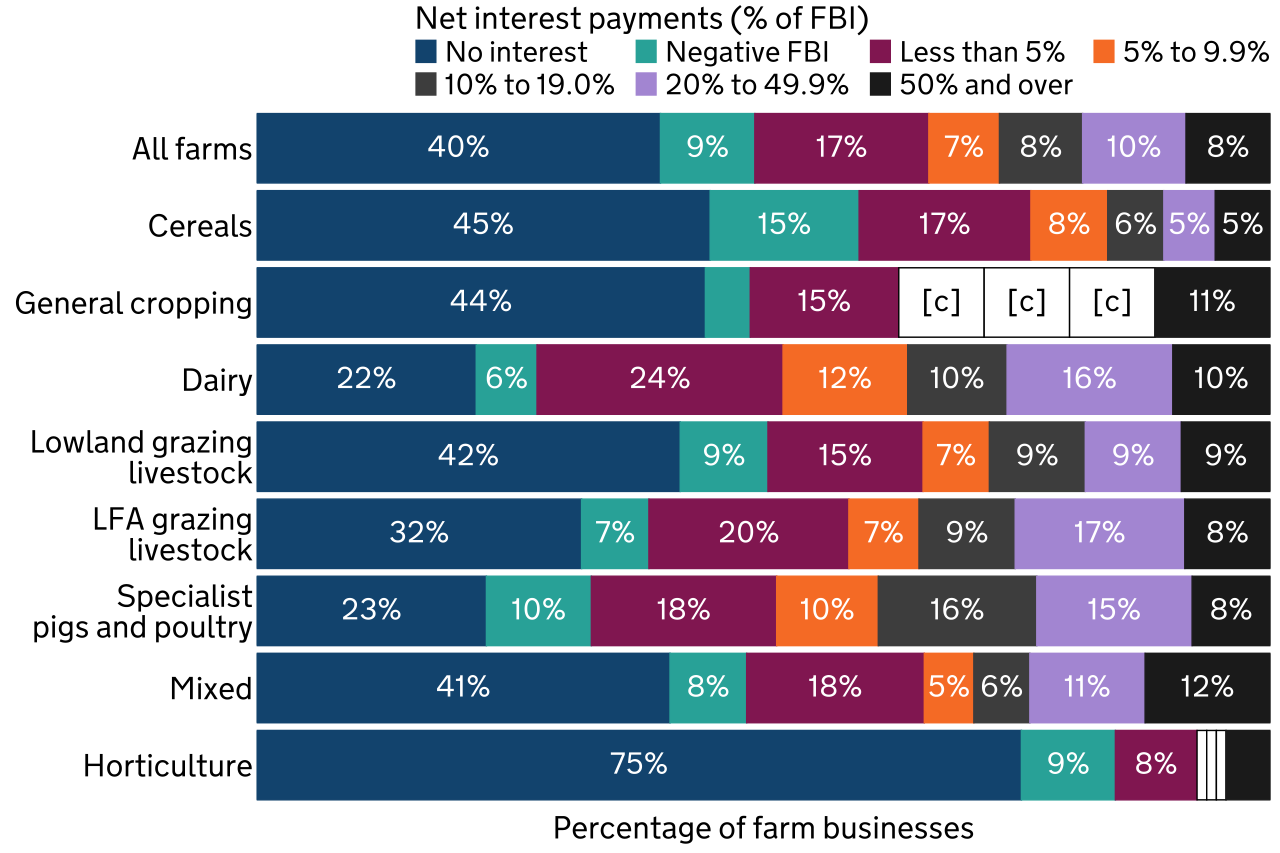
Figure 5.3 Distribution of farms by net interest payments as a proportion of Farm Business Income and farm type in England, 2024/25
Source: Dataset table 5.2
Figure notes:
- The legend is presented in the same order as the bars (read the top row left to right, then the bottom row left to right).
- Text is not displayed where proportions are below 5%.
- White bars with black outlines and the symbol [c] indicate that results have been suppressed due to a small sample size. Where the bar is less than 5% wide, the symbol [c] is not displayed. The size of the bar does not indicate the suppressed value. Suppressed values are included in the ‘All farms’ averages.
Figure 5.3 shows that, in 2024/25, 40% of farm businesses were in the ‘No interest’ category; this means that they either had no loans, or the interest they received on their savings or investments was greater than the interest paid on loans. The horticulture sector had three quarters of farms in this group, compared to around a fifth of dairy farms.
Farms in the ‘Negative FBI’ category are those which already had a negative FBI before interest payments; these farms would be unable to pay some or all of the interest on their debts without further borrowing or drawing on their assets. Cereal farms had the highest percentage in this group, at 15%.
Mixed farms had the highest proportion of farms, 12%, paying net interest equivalent to 50% or more of their FBI.
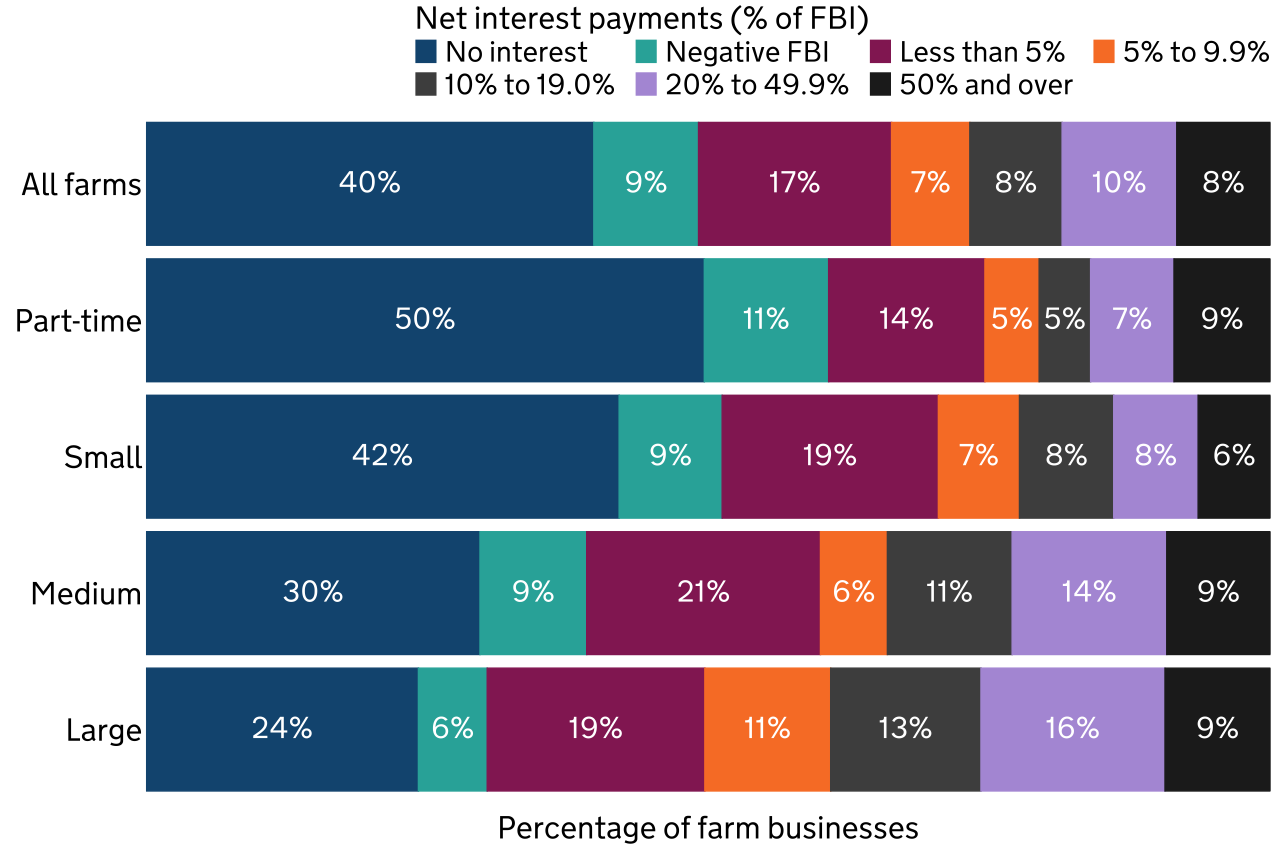
Figure 5.4 Distribution of farms by net interest payments as a proportion of Farm Business Income and farm business size (based on SLR) in England, 2024/25
Source: Dataset table 5.2
Figure notes:
- The legend is presented in the same order as the bars (read the top row left to right, then the bottom row left to right).
- Text is not displayed where proportions are below 5%.
Figure 5.4 shows that, as the size of the farm business increased, the percentage of farms who either paid no interest, or received more in interest than they paid, decreased. For part-time farms, half of farm businesses were in this situation, whereas around a quarter of large farms were.
The differences between farm business sizes in the percentage of farms paying net interest equivalent to 50% or more of their FBI did not have such a clear pattern, with large, medium and part-time farms all having the same proportion, 9%. However, small farms had the lowest proportion, 6%.
6 Return on Capital Employed
Return on Capital Employed (ROCE) is a measure of the return that a business makes from its available capital. ROCE provides a more holistic view than profit margins, focusing on efficient use of capital and low costs, allowing an equal comparison across farms of differing sizes. A positive ROCE value indicates that a farm business is achieving an economic return on the capital used, while a negative ROCE value indicates that a farm is not achieving an economic return on the capital employed.
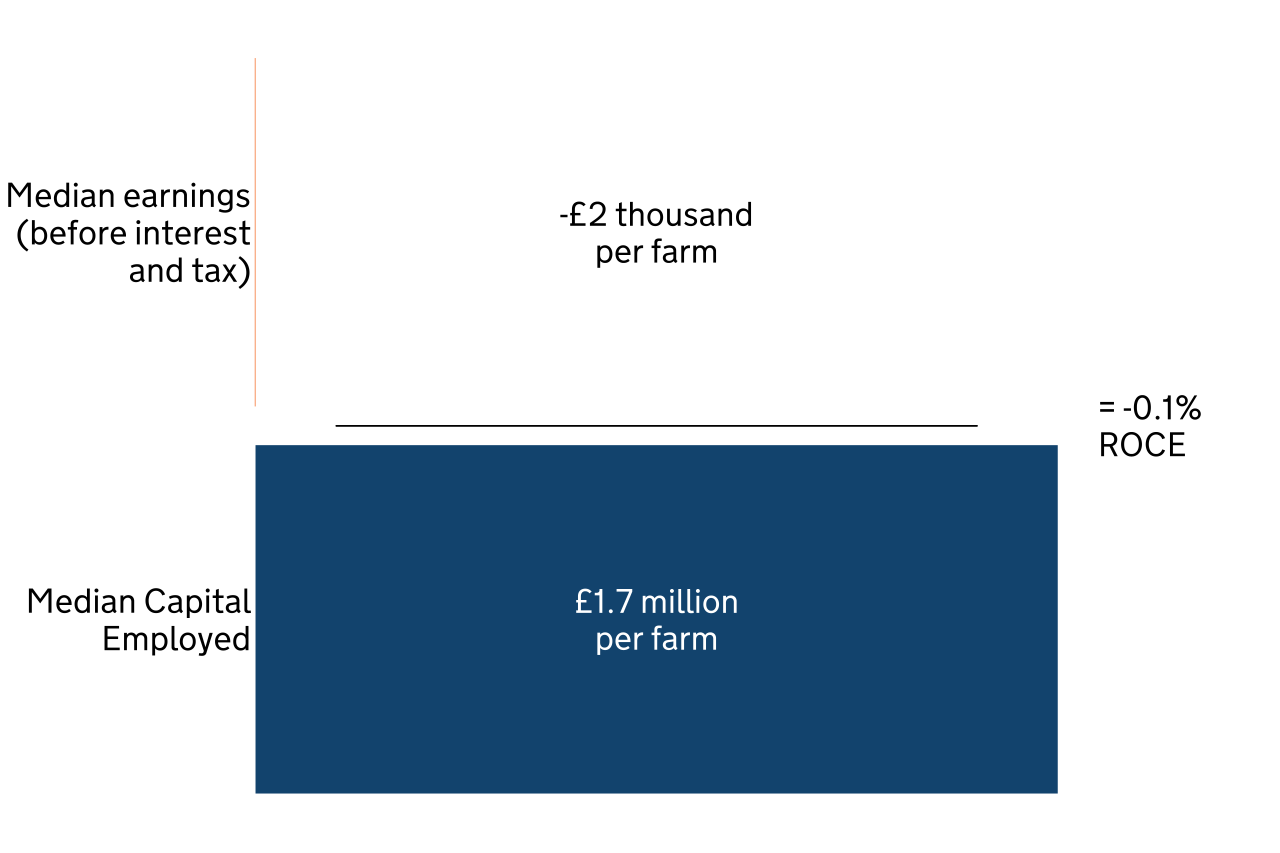
The ROCE calculation uses earnings (before interest and tax) and Capital Employed. Earnings are calculated by subtracting the imputed cost of all unpaid labour from Farm Business Income (FBI). Capital Employed is the available amount that each farm business could use to earn profit in the upcoming financial year, and is calculated by subtracting current (short-term) liabilities from total assets. ROCE is calculated as earnings (before interest and tax) divided by the absolute value of Capital Employed.
Given the importance of land as an asset base for farming, an additional measure of ROCE has been included which excludes the value of land from assets.
All the previous measures discussed in this publication describe average values using the mean. However, the distribution of the ROCE values is highly skewed and as a result, the average of the ROCE is most appropriately described using the median.
Figure 6.1 Return on Capital Employed (ROCE) calculation for farms in England, 2024/25
Source: Dataset table 6.1 (ROCE); Defra, Farm Business Survey (Earnings and Capital employed)
In 2024/25, the average (median) ROCE per farm in England was -0.1%. This was a rise of 0.7 percentage points compared with 2023/24. It shows that, in 2024/25, the average farm was making a loss on their capital used.
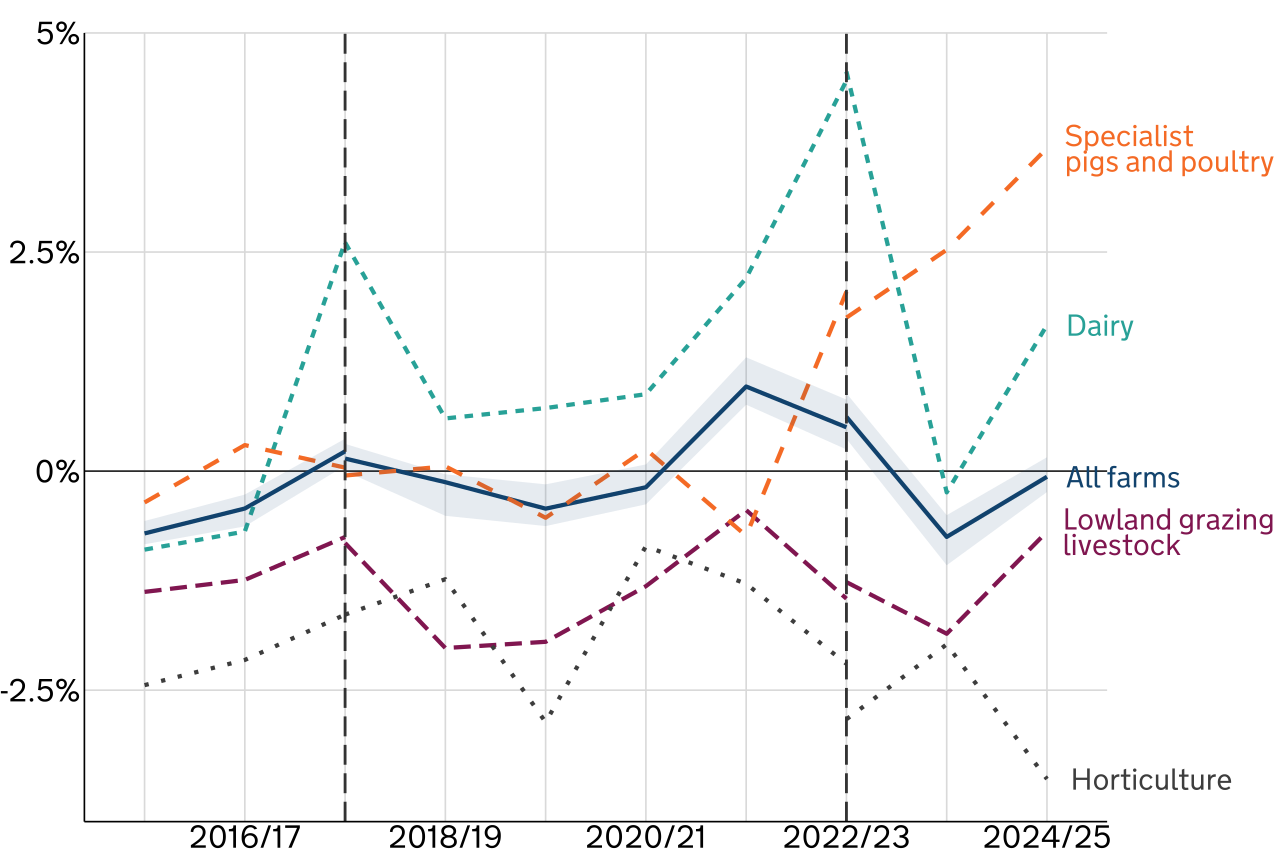
Figure 6.2 Average (median) Return on Capital Employed (ROCE) of selected farm types in England, 2015/16 to 2024/25
Source: Dataset table 6.1
Figure notes:
-
Values for ‘All farms’ are shown here with 95% confidence intervals, which give an indication of the degree of uncertainty around an estimate; the lower and upper limits show the possible range around the published averages. Confidence intervals are not shown for farm types due to excessive overlapping.
-
The breaks in the series shown in 2017/18 and 2022/23 represent changes in the method used to assign farms to a specific farm type, along with further changes to the Standard Labour Requirements and the update to the weighting methodology in 2022/23. Where breaks occur, average liquidity ratio has been calculated using both methods for comparability.
-
Farm types are included in the graph if their average ROCE changed by at least 1 percentage point between 2023/24 and 2024/25.
Figure 6.2 shows the time series of average (median) ROCE for all farms in England, as well as any farms whose ROCE changed by at least 1 percentage point between 2023/24 and 2024/25. In 2024/25, average ROCE experienced a rise of 0.7 percentage points to -0.1%. This was driven by an increase in earnings of around 88%.
Specialist pig and poultry, dairy and general cropping farms all had a positive average ROCE value in 2024/25 (3.7%, 1.7% and 1.3% respectively). All other farms types had a negative average, indicating that the average business in these farm types was not achieving an economic return from their available capital.
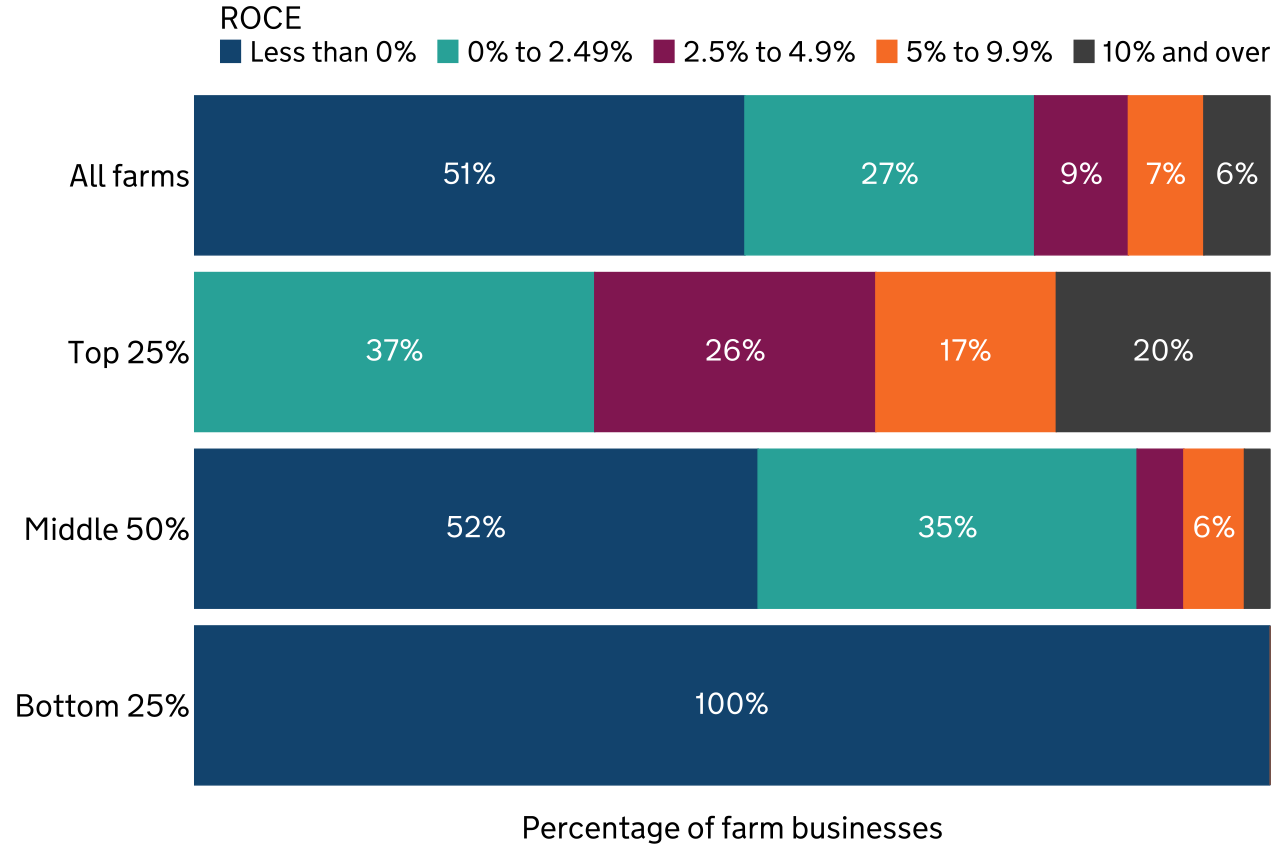
Figure 6.3 Distribution of farms by Return on Capital Employed (ROCE) and economic performance in England, 2024/25
Source: Dataset table 6.2
Figure notes:
- The legend is presented in the same order as the bars.
- Text is not displayed where proportions are below 5%.
Figure 6.3 shows that ROCE tends to increase with economic performance. As in previous years, no top 25% economic performers sampled by the Farm Business Survey in 2024/25 had a negative ROCE, which was in stark contrast with the bottom 25%, where all of the farms had a negative ROCE.
Just over half of all farms had a negative ROCE in 2024/25 and 6% had an ROCE of at least 10%. In comparison, a fifth of the top 25% economic performers had an ROCE of 10% or over.
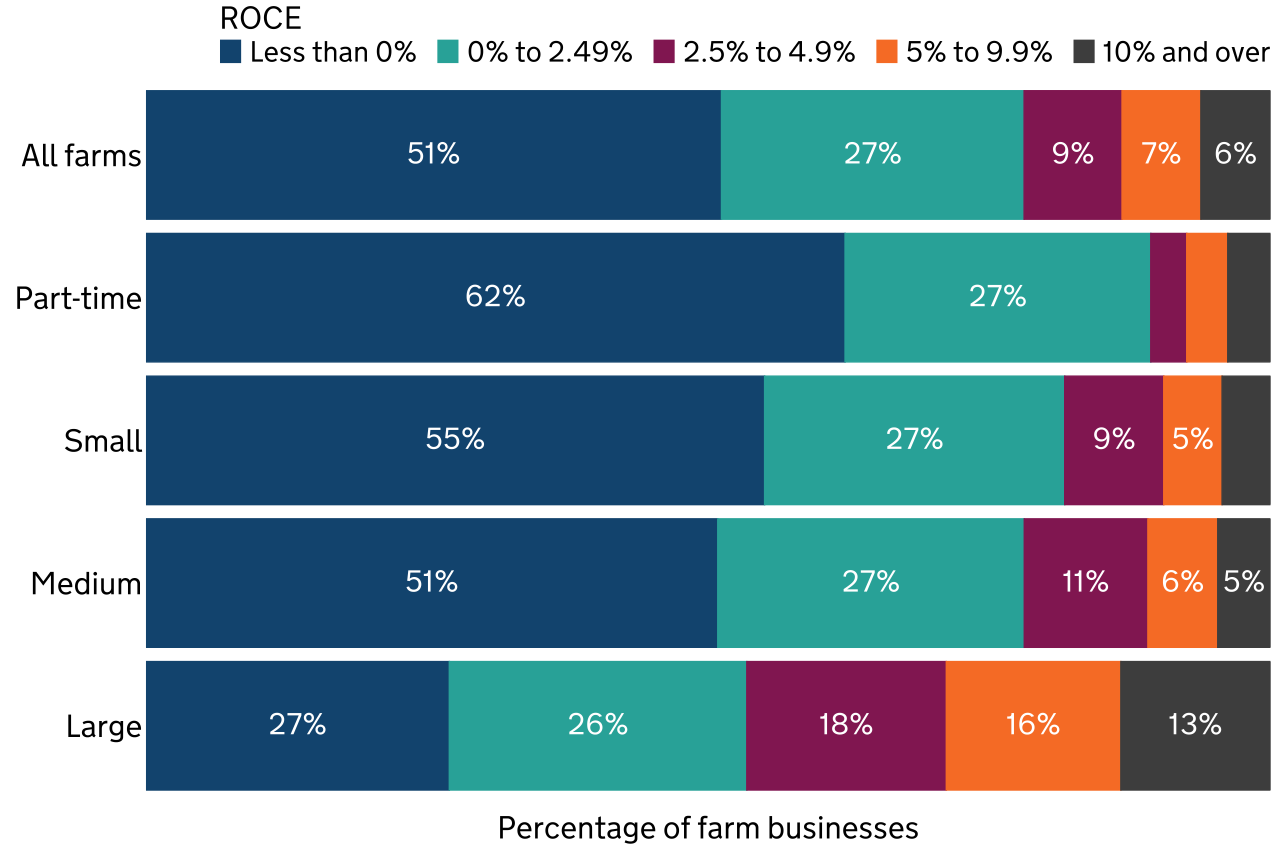
Figure 6.4 Distribution of farms by Return on Capital Employed (ROCE) and farm business size (based on SLR) in England, 2024/25
Source: Dataset table 6.2
Figure notes:
- The legend is presented in the same order as the bars.
- Text is not displayed where proportions are below 5%.
ROCE tends to increase as farm business size increases, with large farms having an average ROCE of 2.1% in 2024/25, while part-time farms had an average of -1.0%. This pattern is demonstrated in figure 6.4, which shows that 89% of part-time farms had an ROCE of less than 2.5%, and 7% had an ROCE of at least 5%. Conversely, 53% of large farms had an ROCE of less than 2.5%, and 29% had an ROCE of at least 5%.
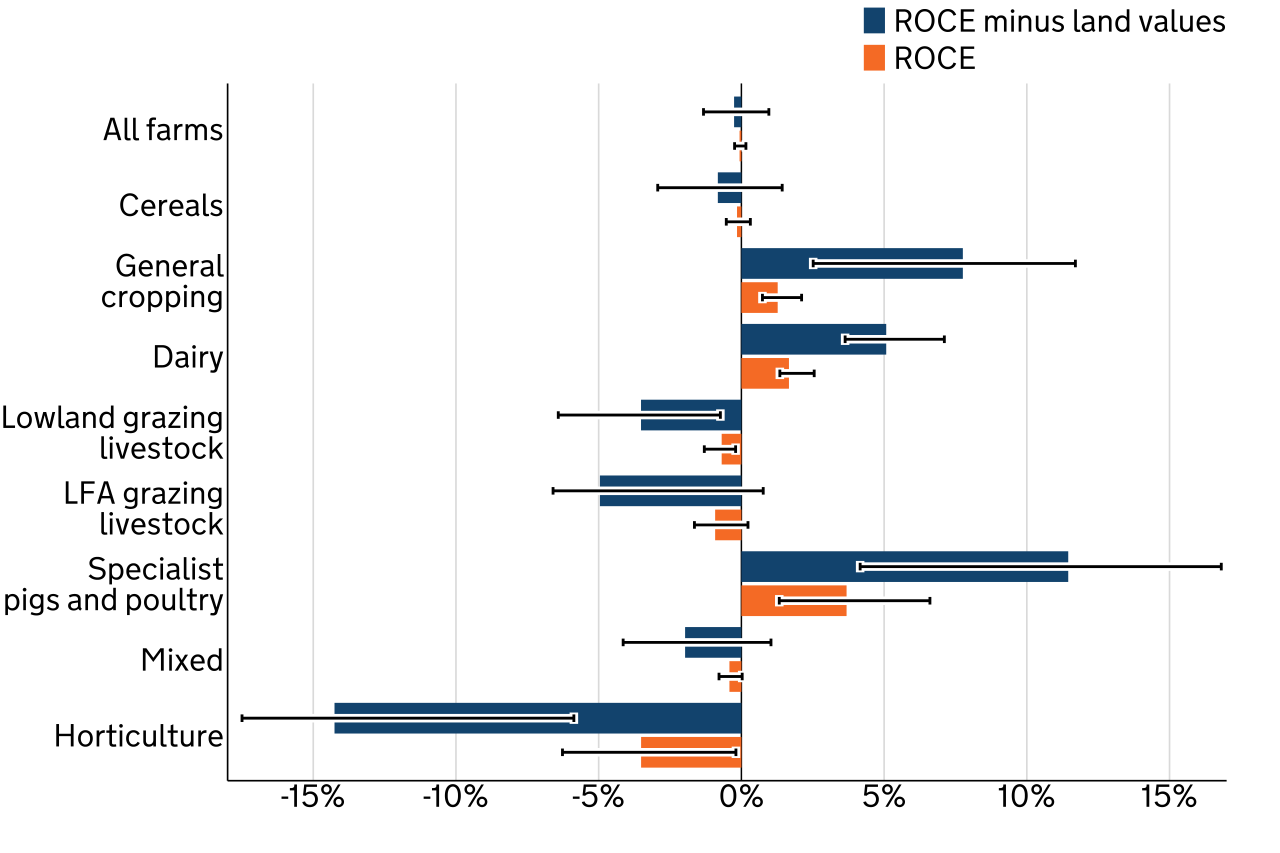
Figure 6.5 Average (median) Return on Capital Employed (ROCE) and ROCE minus land values by farm type in England, 2024/25
Source: Dataset tables 6.1 (ROCE) and 7.1 (ROCE minus land values)
Figure notes:
-
The legend is presented in the same order as the bars.
-
Values are shown here with 95% confidence intervals, which give an indication of the degree of uncertainty around an estimate; the lower and upper limits show the possible range around the published averages.
Figure 6.5 compares the 2024/25 averages (median) of ROCE and average ROCE minus land values for each farm type. The ROCE averages were consistently closer to zero than the ROCE minus land values averages, demonstrating the importance of land as an asset base for farming.
7 What you need to know about this release
7.1 Contact details
Responsible statistician: Cat Hand
Public enquiries: fbs.queries@defra.gov.uk
For media queries between 9am and 6pm on weekdays:
Telephone: 0330 041 6560
Email: newsdesk@defra.gov.uk
7.2 National Statistics Status
Accredited official statistics are called National Statistics in the Statistics and Registration Service Act 2007. An explanation can be found on the Office for Statistics Regulation website. Our statistical practice is regulated by the Office for Statistics Regulation (OSR). OSR sets the standards of trustworthiness, quality and value in the Code of Practice for Statistics that all producers of official statistics should adhere to.
These accredited official statistics were independently reviewed by the Office for Statistics Regulation in January 2014. They comply with the standards of trustworthiness, quality and value in the Code of Practice for Statistics and should be labelled ‘accredited official statistics’.
You are welcome to contact us directly with any comments about how we meet these standards (see contact details above). Alternatively, you can contact OSR by emailing regulation@statistics.gov.uk or via the OSR website.
Since the latest review by the Office for Statistics Regulation, we have continued to comply with the Code of Practice for Statistics, and have made the following improvements:
-
Reviewed and improved data presentation to better meet accessibility guidelines
-
Automated production of the statistics using Reproducible Analytical Pipelines (RAP)
-
Reviewed and improved accompanying commentary.
7.3 User engagement
In line with Defra’s User Engagement for Statistics Policy Statement and the Code of Practice for Official Statistics, we are committed to ensuring that our statistics are of value and meet user needs, and we welcome any feedback or suggestions regarding this publication. To provide feedback, you can email us at: fbs.queries@defra.gov.uk. You can also register as a user of the FBS statistics publications. Registering as a user means we will be able to contact you regarding any user engagement activities that we may run, such as seeking feedback on proposed changes.
7.4 Survey content, methodology and data uses
The Farm Business Survey is an annual survey providing information on the financial position, physical characteristics, and economic performance of farm businesses in England. The sample of farm businesses covers all regions of England and all types of farming.
Data for the Farm Business Survey are collected through face-to-face interviews with farmers, conducted by highly trained research officers.
The data are widely used by the industry for benchmarking and inform wider research into the economic performance of the agricultural industry, as well as for evaluating and monitoring current policies. The data will also help to monitor farm businesses throughout the Agricultural Transition period.
7.5 Availability of results
All Defra statistical notices can be viewed on the Statistics at Defra page.
More publications and results from the Farm Business Survey are available on the Farm Business Survey Collection page.
8 Technical note
8.1 Survey coverage and weighting
The Farm Business Survey only includes farm businesses with a Standard Output of at least £21 thousand, based on activity recorded in the previous June Survey of Agriculture and Horticulture. In 2024/25, the sample of 1,426 farms represented approximately 49,300 farm businesses in England.
Initial weights are applied to the Farm Business Survey records based on the inverse sampling fraction for each design stratum (farm type and farm size). Dataset table 16 from the Farm Accounts in England publication shows the distribution of the sample compared with the distribution of businesses from the 2024 June Survey of Agriculture. These initial weights are then adjusted, using calibration weighting, so that they can produce unbiased estimates of a number of different target variables. These variables have been updated due to the BPS data no longer being available in 2024/25. The detailed technical note on the weighting methodology has been updated to reflect the changes in the calibration model. More detailed information about the Farm Business Survey can be found on the technical notes and guidance page. This includes information on the data collected, information on calibration weighting and definitions used within the Farm Business Survey.
The data used for this analysis is from those farms present in the Farm Business Survey that have complete returns on their assets and liabilities. In 2024/25 this subsample consisted of 1,420 farms (99.6% of the full sample). This subsample has been reweighted using a method that preserves marginal totals for populations according to farm type and farm size groups. As such, values shown in this publication may not exactly match results calculated using the main FBS weights.
8.2 Accuracy and reliability of the results
As it is impractical to survey the entire population of farms, estimates derived from the Farm Business Survey data are inherently subject to sampling error. This is a core principle in statistical survey methodology, which aims to infer population parameters by obtaining a representative sample through carefully designed sampling techniques. To quantify sampling error and provide a measure of uncertainty, this publication presents 95% confidence intervals for estimated means. These intervals, shown as error bars in bar plots, indicate the range within which we expect the true population mean to lie for 95% of similarly constructed samples. Narrower confidence intervals typically indicate larger sample sizes or less variability within the sample, thereby offering more precise estimates of the population mean. Conversely, wider confidence intervals often result from smaller sample sizes or greater sample standard deviations, signalling less precision. These wider intervals should be interpreted with greater caution. Statistically, a confidence interval provides a plausible range for the true population mean based on the sample data. Specifically, a 95% confidence interval reflects a process that, under repeated sampling, would contain the true population mean in 95% of such intervals, rather than indicating a 95% probability for any single interval to include the population mean.
8.3 Statistical methods
Each of the sections in this publication relates to a measure of farm profitability and resilience, and various breakdowns are shown for each measure. To determine which breakdowns to include, generalised linear models were fitted to examine how the five breakdowns, known as predictor variables (farm type, size, tenure type, region and economic performance), were related to each of the measures, known as response variables (net worth, liabilities, gearing ratio, liquidity ratio, net interest payments as a proportion of FBI, and ROCE). In each case, the distribution of the response variable was examined and, if necessary, transformed to conform to assumptions of normality. The breakdowns with the most statistical significance are discussed in this publication. All breakdowns of each measure are available in the dataset tables, which can be found on the publication landing page.
8.4 Definitions
Mean
The mean is found by adding up the weighted variable of interest for each individual farm in the sample for analysis and dividing the result by the corresponding weighted number of farms.
In this report, average is usually taken to refer to the mean, except for Return on Capital Employed averages.
Median
The median divides the population, when ranked by an output variable, into two equal sized groups. The median of the whole population is the middle value.
In this report, the Return on Capital Employed averages are represented with medians.
Farm type
This refers to the ‘robust type’, which is a standardised farm classification system.
Farm business size
Farm business size is classified using the Standard Labour Requirement (SLR), rather than by Standard Output grouping or land area. The SLR of a farm represents the normal labour requirement for all the farm’s cropping and livestock activities under typical conditions. This is measured in Full Time Equivalents (FTE), which is the number of full-time workers required. The SLR is calculated from standard coefficients applied to each enterprise on the farm. The standard coefficients represent the input of labour required per head of livestock or per hectare of crops for enterprises of average size and performance.
The most recent update to SLR coefficients was in 2024, which was based on data from the 2019/20 to 2022/23 surveys. Before this, the previous update was in 2009, which was based on data from the 2004/05 to 2007/08 surveys.
Table 8.1: Farm business size by Standard Labour Requirement (SLR)
| Farm business size | SLR |
|---|---|
| Part-time | Less than 1 FTE |
| Small | 1 to less than 2 FTE |
| Medium | 2 to less than 3 FTE |
| Large | 3 or more FTE |
Farm economic performance
Economic performance for each farm is measured as the ratio between economic output (mainly sales revenue) and inputs (costs). The inputs for this calculation include an adjustment for unpaid manual labour. The higher the ratio, the higher the economic efficiency and performance. The farms are then ranked and allocated to performance bands based on economic performance percentiles:
-
Bottom 25% of economic performers.
-
Middle 50% of economic performers.
-
Top 25% of economic performers.
Liabilities
Liabilities are the total debt (short and long term) of the farm business including mortgages, long term loans and monies owed for hire purchase, leasing, and overdrafts. High levels of liabilities will require consistent income flows to ensure that interest on borrowing can be paid.
Net worth
Net worth subtracts the value of total liabilities from total assets, including tenant type capital and land; this represents the wealth of a farm if all of their liabilities were called in. Businesses with a high net worth are likely to be resilient, at least in the short term, to fluctuations in their income. This is because they can draw on these reserves to support the business if the financial position of the farm deteriorates. Note that this is not a clear guide to inheritance tax liabilities which are due on an individual’s estate at the time of their death; farm businesses can have multiple owners and can also be partly or fully passed on as gifts before death.
Assets
Assets include milk and livestock quotas, as well as land, buildings (including the farmhouse), breeding livestock, and machinery and equipment. For tenanted farmers, assets can include farm buildings, cottages, quotas, etcetera, where they are owned by the occupier. Personal possessions (for example, jewellery, furniture, and possibly private cash) are not included.
Tenant type capital
Tenant type capital comprises assets normally provided by tenants and includes livestock, machinery, crops and produce in store, stocks of bought and home-grown feeding stuffs and fodder, seeds, fertilisers, pesticides, medicines, fuel and other purchased materials, work in progress (tillages or cultivations), cash and other assets needed to run the business. Orchards, other permanent crops, such as soft fruit and hop gardens and glasshouses, are also generally considered to be tenant-type capital.
Gearing ratio
The gearing ratio is an accounting measures which gives a farm’s liabilities as a proportion of its assets. If a farm has assets equal to its liabilities, this will give a gearing ratio value of 100%. If a farm’s assets are twice as large as its liabilities, the gearing ratio will be 50%. A lower ratio (less than 50%) is generally seen as more acceptable because this suggests that the farm business is more likely to be able to meet its investment needs from earnings. A higher ratio may be seen as a greater risk as interest costs will be higher and the farm will have lower funds to borrow against. However, being highly geared does not necessarily imply an unsuccessful business; investment can increase profitability, so increasing the gearing ratio can lead to better performance.
Liquidity ratio
The liquidity ratio is a measure of the short term financial viability of farms and is calculated as current assets divided by the current liabilities of the farms. A large proportion of the assets on a farm, such as land or machinery, will typically have a monetary value that is difficult or costly to realise in the short term. The liquidity ratio shows the ability of a farm to finance its immediate financial demands from its current assets, such as cash, savings or stock. If the liquidity ratio is equal to or above 100%, then a farm is able to meet is current liabilities using current assets. If the ratio is less than 100%, then a farm is unable to meet its immediate financial demands using current assets. A small number of farms with no recorded current liabilities have been excluded from this analysis.
Return on Capital Employed (ROCE)
ROCE is a measure of the return that a business makes from the available capital; it provides a more holistic view than profit margins, focusing on efficient use of capital and low costs and allowing an equal comparison across farms of differing sizes.
ROCE = Earnings / Absolute value of Capital Employed
ROCE minus land value = Earnings / (Absolute value of Capital Employed - Value of agricultural land)
Earnings are calculated using Defra’s main income measure, Farm Business Income (FBI), minus the imputed cost of all unpaid labour. Capital employed is the available amount that each farm could use to earn profit in the upcoming financial year; it is calculated by subtracting current (i.e. short term) liabilities from total assets. Short term liabilities are deducted in order to measure the capital assets that would remain after short term commitments have been met (overdrafts are treated as a long term liability and therefore not deducted). A positive ROCE value shows that the farm is achieving an economic return on the capital used and a negative ROCE value shows that the farm is making a loss.
Utilised Agricultural Area (UAA)
Utilised Agricultural Area (UAA) is the crop area, including fodder, set-aside land, temporary and permanent grass, and rough grazing in sole occupation (but not shared rough grazing). In other words, it is the agricultural area of the farm. It includes bare land and forage let out for less than one year.
Farm Business Income (FBI)
For non-corporate businesses, Farm Business Income represents the financial return to all unpaid labour (farmers and spouses, non-principal partners and their spouses and family workers) and on all their capital invested in the farm business, including land and buildings. For corporate businesses it represents the financial return on the shareholders capital invested in the farm business. Note that, prior to 2008/09, directors’ remuneration was not deducted in the calculation of Farm Business Income.
Farm Business Income is used when assessing the impact of new policies or regulations on the individual farm business. Farm Business Income is essentially equivalent to financial Net Profit, however, the measures slightly differ because Net Profit is derived from financial accounting principles whereas Farm Business Income is derived from management accounting principles. For example, in financial accounting output stocks are usually valued at cost of production, whereas in management accounting they are usually valued at market price. In financial accounting, depreciation is usually calculated at historic cost whereas in management accounting it is often calculated at replacement cost.