Armed Forces Sexualised Behaviours and Sexual Harassment Survey
Published 13 November 2025

© Crown copyright 2025
This publication is licensed under the terms of the Open Government Licence v3.0 except where otherwise stated. To view this licence, visit nationalarchives.gov.uk/doc/open-government-licence/version/3 or write to the Information Policy Team, The National Archives, Kew, London TW9 4DU, or email: psi@nationalarchives.gov.uk.
Where we have identified any third party copyright information you will need to obtain permission from the copyright holders concerned.
This publication is available at https://www.gov.uk/government/statistics/armed-forces-sexualised-behaviours-and-sexual-harassment-survey/armed-forces-sexualised-behaviours-and-sexual-harassment-survey
This report provides a summary of the key findings from the Armed Forces Sexualised Behaviours and Sexual Harassment Survey 2025 (SBSHS) on experiences and awareness of different sexualised behaviours, and perceptions of sexual harassment in the Armed Forces.
1. Key points
1.1 Regulars
1.2 Experiences of sexualised behaviour
-
67% of females experienced at least one sexualised behaviour in the last 12 months compared to 34% of males.
-
Females were more likely to experience all four types of sexualised behaviours (Verbal, Non-Verbal, Cyber, Physical).
-
Out of the 19 behaviours, both females (58%) and males (25%) most commonly experienced “jokes or comments of a sexual nature”.
-
RAF females (63%) were less likely to have experienced a sexualised behaviour compared to RN and Army females (both 69%).
-
Army males (30%) were less likely to have experienced a sexualised behaviour compared to RN and RAF males (both 38%).
-
Female Other Ranks (71%) were more likely to have experienced a sexualised behaviour compared to female Officers (58%), male Officers (35%) and male Other Ranks (33%).
1.3 Contextual information of sexualised behaviour experiences
-
Sexualised behaviour most commonly occurred in an open workplace at the military home or training unit (76%).
-
Regulars most commonly experienced sexualised behaviour from 2-3 different individuals (45%).
-
Females are more likely than males to experience a sexualised behaviour from another person at their unit (Females: 34%, Males 25%) or more senior to them (Females 26%, Males 16%).
-
Females are more likely to report feeling affected from experiencing the sexualised behaviour compared to males.
-
93% of females believed their experience of sexualised behaviour was sexual harassment compared to 78% of males.
1.4 Regulars’ perception of sexual harassment
-
17 of the 19 behaviours were classed as sexual harassment by at least 80% of Regulars. The remaining two behaviours “jokes or comments of a sexual nature” and “referring to people of any gender in offensive terms” were classed by 67% and 62% of Regulars respectively.
-
Army were the least likely of the Services to define 16 of the behaviours as sexual harassment.
1.5 Awareness of sexualised behaviour at work
-
73% of females have seen (or had knowledge of) at least one sexualised behaviour in the last 12 months compared to 43% of males.
-
Females were more likely than males to have seen (or had knowledge of) all four types of behaviour (Verbal, Non-Verbal, Cyber and Physical).
-
Out of the 19 behaviours, both females (66%) and males (38%) most commonly have seen (or had knowledge of) “jokes or comments of a sexual nature”.
1.6 Prevention and support at work
- Males were more likely than females to believe their Service “tries to prevent sexual harassment” (Males: 68%, Females: 42%) and “supports those who have been harassed” (Males: 58%, Females: 32%) to a “large-very large extent”.
1.7 Reserves
1.8 Experiences of sexualised behaviour
-
55% of females experienced at least one sexualised behaviour in the last 12 months compared to 34% of males.
-
Females were more likely to experience all four types of sexualised behaviours (Verbal, Non-Verbal, Cyber, Physical).
-
Out of the 19 behaviours, both females (47%) and males (25%) most commonly experienced “jokes or comments of a sexual nature”.
-
Female Other Ranks (60%) were more likely to experience a sexualised behaviour compared to female Officers (42%), male Officers (29%) and male Other Ranks (36%).
1.9 Contextual information of sexualised behaviour experiences
-
Sexualised behaviours most commonly occurred in the workplace at the military home or training unit (60%).
-
Reserves most commonly experienced sexualised behaviour from 2-3 different individuals (47%).
-
Females are more likely to report feeling affected from experiencing the sexualised behaviour compared to males.
-
92% of females believed their experience of sexualised behaviour was sexual harassment compared to 82% of males.
1.10 Reserves’ perception of sexual harassment
- 17 of the 19 behaviours were classed by Reserves as sexual harassment by at least 89%. The remaining two behaviours “jokes or comments of a sexual nature” and “referring to people of any gender in offensive terms” were classed by 74% and 73% of Reserves respectively.
1.11 Awareness of sexualised behaviour at work
-
62% of females have seen (or had knowledge of) at least one sexualised behaviour in the last 12 months compared to 44% of males.
-
Females were more likely than males to have seen (or had knowledge of) all four types of behaviour (Verbal, Non-Verbal, Cyber and Physical).
-
Out of the 19 behaviours, both females (58%) and males (39%) most commonly have seen (or had knowledge of) “jokes or comments of a sexual nature”.
1.12 Prevention and support at work
- Males were more likely than females to believe their Service “tries to prevent sexual harassment” (Males: 76%, Females: 51%) and “supports those who have been harassed” (Males: 56%, Females: 33%) to a “large-very large extent”.
Responsible statistician: Analysis and Performance Directorate Surveys Head of Branch
Email: Analysis-Surveys-Enquiries@mod.gov.uk
Would you like to be added to our contact list so that we can inform you about updates to these statistics and consult you if we are thinking of making changes? You can subscribe to updates by emailing Analysis-Publications@mod.gov.uk
2. Introduction
2.1 Purpose
Research into sexual harassment in Defence started with the British Armed Forces in 2005, with a Tri-Service survey administered to all female personnel. The single Services then each conducted their own investigations between 2009 and 2022. The 2019 Wigston review recommended that future Sexual Harassment Surveys were centralised for reasons including to allow for direct comparisons to be made (e.g. by sex, Service and Rank). The House of Commons Defence Committee (HCDC) Report (2021) recommended that the survey was developed with independent experts and academia and administered more frequently. This survey is the direct outcome of these recommendations and is the first iteration.
The SBSHS aims to investigate the nature of sexualised behaviour and perceived sexual harassment within the Armed Forces. The data will be used to gain a detailed understanding of sexualised behaviour and sexual harassment.
2.2 Sexualised behaviours selected
Information has been gathered regarding personnel’s personal experiences of 19 targeted sexualised behaviours, providing insights into the nature and context of incidents. Sexualised behaviours are defined as actions with a component of ‘unwanted conduct’, often described as being ‘unwelcome’, ‘inappropriate’, ‘without permission’ and ‘without consent.’ Similarly, there is an ‘intimidating or hostile environment’ component identified within other behaviours.
The 19 behaviours were created following an independent review of existing legal and psychological research by Loughborough University and categorised into four behaviour classifications. Behaviours that constitute sexual harassment fall into three categories: ‘Verbal’, ‘Non-Verbal’, and ‘Physical’ behaviours. In addition to these three categories, the Government Equalities Office (2019) included an additional category for sexual harassment behaviours, ‘Cyber harassment’, which has subsequently been added to this survey. Therefore, responses have been analysed based on the below groupings in Table 1.
Table 1. The 19 sexualised behaviours Investigated by the SBSHS and their Loughborough Classifications
| Behaviour | Classification |
|---|---|
| Referring to people of any gender in offensive terms | Verbal |
| Jokes or comments of a sexual nature | Verbal |
| Making unwelcome comments about someone’s appearance, body, and/or sexual activity | Verbal |
| Saying or implying someone would be treated better in return for engaging in sexual activity | Verbal |
| Saying or implying someone would be treated worse if they do not engage in sexual activity | Verbal |
| Making unwelcome attempts to establish a romantic or sexual relationship with someone, despite their discouragement | Verbal |
| Spreading rumours of a sexual nature | Verbal |
| Cat calling, wolf whistling or other provocative sounds | Verbal |
| Physically following someone, making them feel sexually threatened | Non-Verbal |
| Displaying pornographic or sexual materials, including viewing it in proximity to others | Non-Verbal |
| Staring, or leering at someone | Non-Verbal |
| Sexual gestures and/or sexual body language | Non-Verbal |
| Treating someone negatively for refusing to engage in sexual activity | Non-Verbal |
| Indecent exposure / Flashing (e.g. the deliberate exposure of someone’s intimate parts) | Non-Verbal |
| Sending unprompted messages of a sexual nature via text, email, social media, or group messaging platform | Cyber |
| Sharing sexually suggestive material about someone via text, email, social media, or group messaging platform without their permission | Cyber |
| Taking and/or sharing sexual pictures or videos of someone without their permission | Cyber |
| Touching someone in a way that makes them feel uncomfortable | Physical |
| Subjecting someone to sexual activity which they do not consent to | Physical |
2.3 Research comparisons
Results from the SBSHS should not be directly compared to existing research due to differences including questionnaire design, sample frame, and points of investigation. Please see the Background Quality Report for further details.
For example, the Armed Forces Continuous Attitude Survey (AFCAS) estimates Regulars’ self-reported experience of ‘sexual harassment’ by asking the question: “Do you believe you have been subjected to sexual harassment in a Service environment in the last 12 months?”.
The SBSHS focuses on sexualised behaviours and not on a legal definition of sexual harassment. Using a self-reporting approach, where personnel identify if they have experienced sexual harassment, is open to interpretation, which is not the case when using a set of behavioural indicators. Estimates of perceived levels of experienced sexual harassment are calculated based on the sexualised behaviours that personnel have experienced, and whether they identified the same behaviour to be sexual harassment.
2.4 Considerations
This survey was open to all Regular and Reserve Armed Forces personnel, including phase 1 and phase 2 trainees. However, due to a low uptake of responses from the trainee population, their responses were removed from analysis. Following this survey, the Department will be actively looking at how to reach and increase participation of our trainee personnel.
Due to the targeted and sensitive nature of this survey, self-selection bias may have had an impact on the representativeness of results. This bias suggests those who are affected by, or have strong opinions of, the topic of a survey will be more likely to take part. Substantive efforts were made to counteract this potential bias through clear, targeted communication to clarify that all personnel were eligible and encouraged to participate, regardless of personal experiences.
2.5 Official statistics publication
Official statistics comply with the standards of trustworthiness, quality and value in the Code of Practice for Statistics. Official statistics can be broadly interpreted to mean that the statistics:
-
Meet identified user needs
-
Are well explained and readily accessible
-
Are produced according to sound methods
-
Are managed impartially and objectively in the public interest
Our statistical practice is regulated by the Office for Statistics Regulation (OSR). OSR sets the standards of trustworthiness, quality and value in the Code of Practice for Statistics that all producers of Official Statistics should adhere to.
You are welcome to contact us directly with any comments about how we meet these standards.
Alternatively, you can contact OSR by emailing: regulation@statistics.gov.uk or via the OSR website.
3. Using and interpreting the statistics in this report
The following guide summarises what you can and cannot do when interpreting and using the statistics in this report.
You can:
-
Review percentages of Regulars and Reserves who have been the target of sexualised behaviours in the last 12 months, and how it made them feel.
-
View general information about incidents of sexualised behaviours including characteristics of the perpetrator and location of the experience(s).
-
Identify how Regulars and Reserves are most likely to respond to experiencing sexualised behaviours.
-
Examine how Regulars and Reserves feel their Service/the MOD are managing workplace sexual harassment.
-
Review perceived levels of sexual harassment from those who experienced a sexualised behaviour.
-
Explore which behaviours are believed to be sexual harassment by Regulars and Reserves.
You cannot:
-
Use this release to calculate prevalence of sexual harassment within the Armed Forces, as the survey did not investigate personnel’s self-reported experience of ‘sexual harassment’, focussing instead on experiences of specific sexualised behaviours in the last 12 months.
-
Determine how personnel responded to an individual behaviour, as they may have experienced more than one, and responded to each in different ways.
-
Directly compare to other sexual harassment surveys and data such as previous single Service sexual harassment surveys to manufacture and calculate differences.
4. Navigating through the report
The report is split into a main Regulars section and Reserves section. Each section follows the same structure (sub sections) outlined below:
-
Personal experiences of sexualised behaviour (all)
-
Location of experience
-
Number of perpetrators
-
Rank of perpetrator(s)
-
Relationship of perpetrator(s) to those who experienced the behaviour
-
Impact on those who experienced the behaviour
-
Effectiveness of response to the sexualised behaviour
-
Was anyone told about the experience?
-
Was the experience perceived as sexual harassment?
-
Definitions of sexual harassment (all)
-
Awareness of sexualised behaviours occurring (all)
-
Perceived prevention of sexualised behaviours (all)
-
Perceived support for those who experienced sexual harassment (all)
Within each sub section, sex, Service and rank comparisons have been made, where appropriate, based on when there were differences. Only statistically significant differences were highlighted in the report. Not every statistically significant difference has been reported on.
For full breakdowns of each individual question in the SBSHS by sex, Service and rank, please refer to the supplementary tables on the SBSHS landing page.
For the purpose of this report, when references are made to Royal Navy Regular personnel (RN), this population includes both Royal Navy and Royal Marines (Regulars). When references were made to Maritime Reserve personnel (Maritime), this population includes Reserves of both the Royal Navy and the Royal Marines.
5. Regular Armed Forces Personnel
6. Experience of sexualised behaviours (Regulars)
This section is based on Regulars who have experienced at least one sexualised behaviour in the last 12 months
Due to the unequal ratio of male to female personnel within the Armed Forces, weighting for representativeness will result in ‘overall figures’ appearing closer to the estimates for ‘male personnel’ in isolation.
You can find overall figures in the Supplementary Tables.
As there are differences in the experiences of female and male personnel, this statistic will primarily report findings split by sex.
Personnel were asked to indicate whether they had, in the previous 12 months, experienced sexualised behaviour directed towards themselves personally. Personnel were presented with a list of the 19 sexualised behaviours and asked how often they had experienced these behaviours over the last 12 months.
6.1 Experience of sexualised behaviours (Regulars by sex)
Female Regular personnel were more likely (67%) than male Regular personnel (34%) to have experienced at least one sexualised behaviour in the last 12 months.
6.2 Experience by behaviour type (Regulars by sex)
Figure 1. Regulars’ experience of sexualised behaviour in the last 12 months, by type, by sex (%).
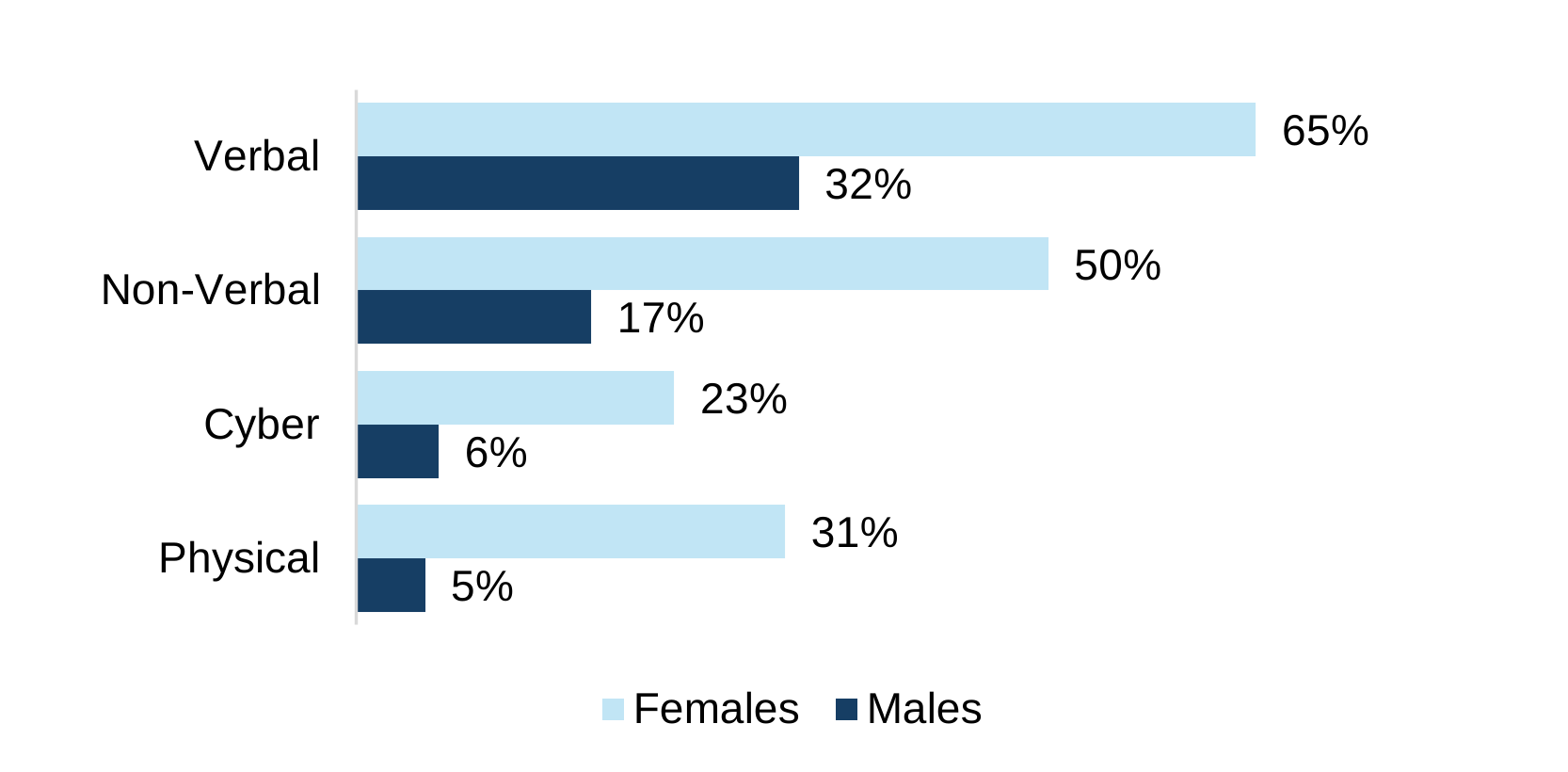
To have experienced a sexualised behaviour type, personnel had to have experienced at least one of the listed behaviours within its category in the last 12 months.
Figure 1 shows females were more likely to have experienced all four types of sexualised behaviour (‘Verbal’, ‘Non-Verbal’, ‘Cyber’ and ‘Physical’) compared to males.
Females were more likely to have experienced all of the individual sexualised behaviours compared to males.
6.3 Experience by individual behaviours – Verbal (Regulars by sex)
Figure 2. Regulars’ experience of ‘Verbal’ sexualised behaviour in the last 12 months, by sex (%).
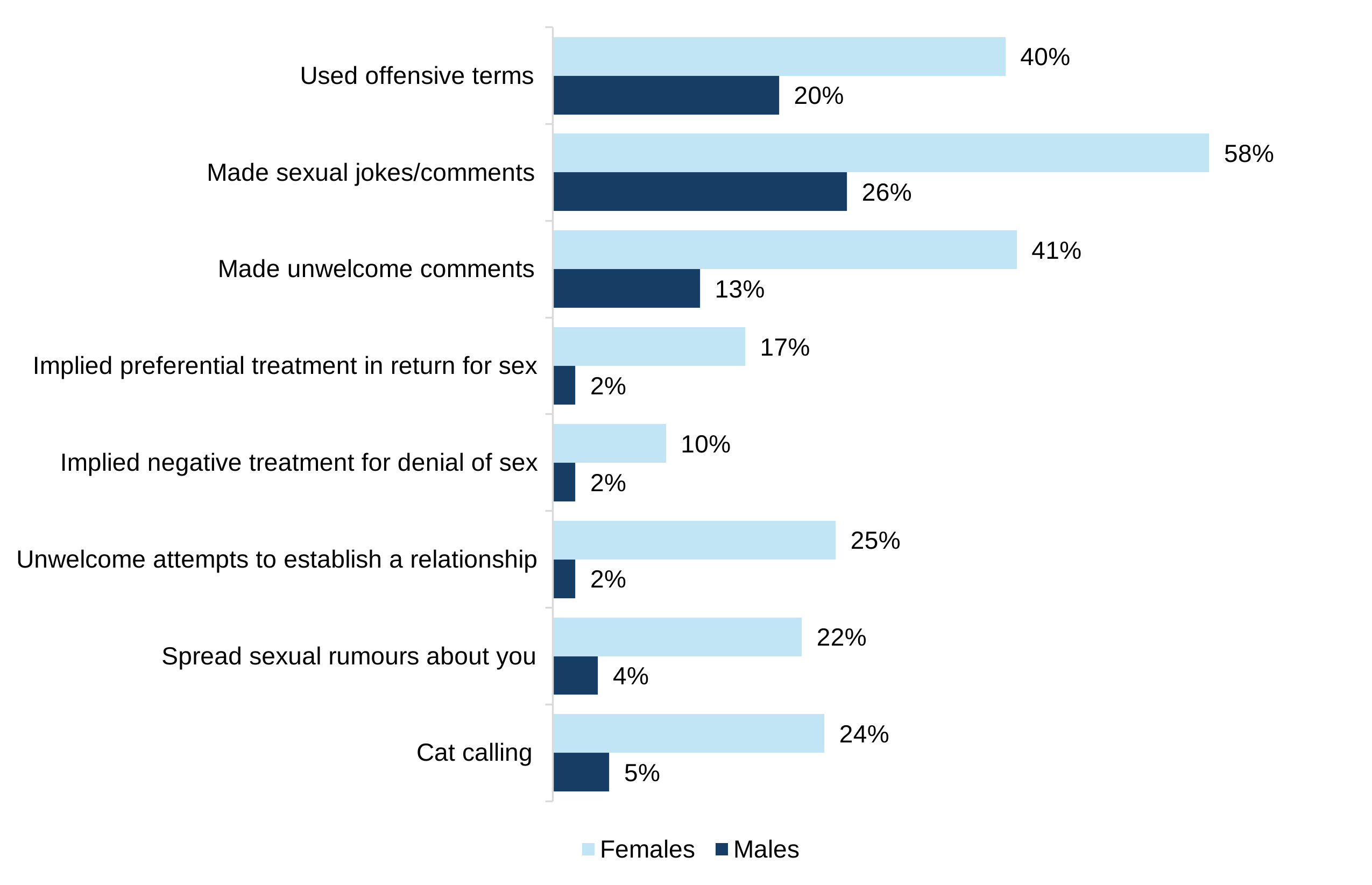
Figure 2 shows both females and males most commonly experienced “jokes or comments of a sexual nature” (Females: 58%, Males: 26%).
Around four in ten females experienced having “unwelcome comments [made] about [their] appearance, body, and/or sexual activity” (41%), and/or being “referred to in offensive terms” (40%) compared to 20% and 13% of males respectively.
Around one in four females experienced “unwelcome attempts to establish a romantic/sexual relationship with [them]” (25%), “cat calling, wolf whistling or other provocative sounds” (24%), and/or having “rumours of a sexual nature [spread] about [them]” (22%), compared to between 2% and 5% of males.
6.4 Experience by individual behaviours - Non-Verbal (Regulars by sex)
Figure 3. Regulars’ experience of ‘Non-Verbal’ sexualised behaviour in the last 12 months, by sex (%).
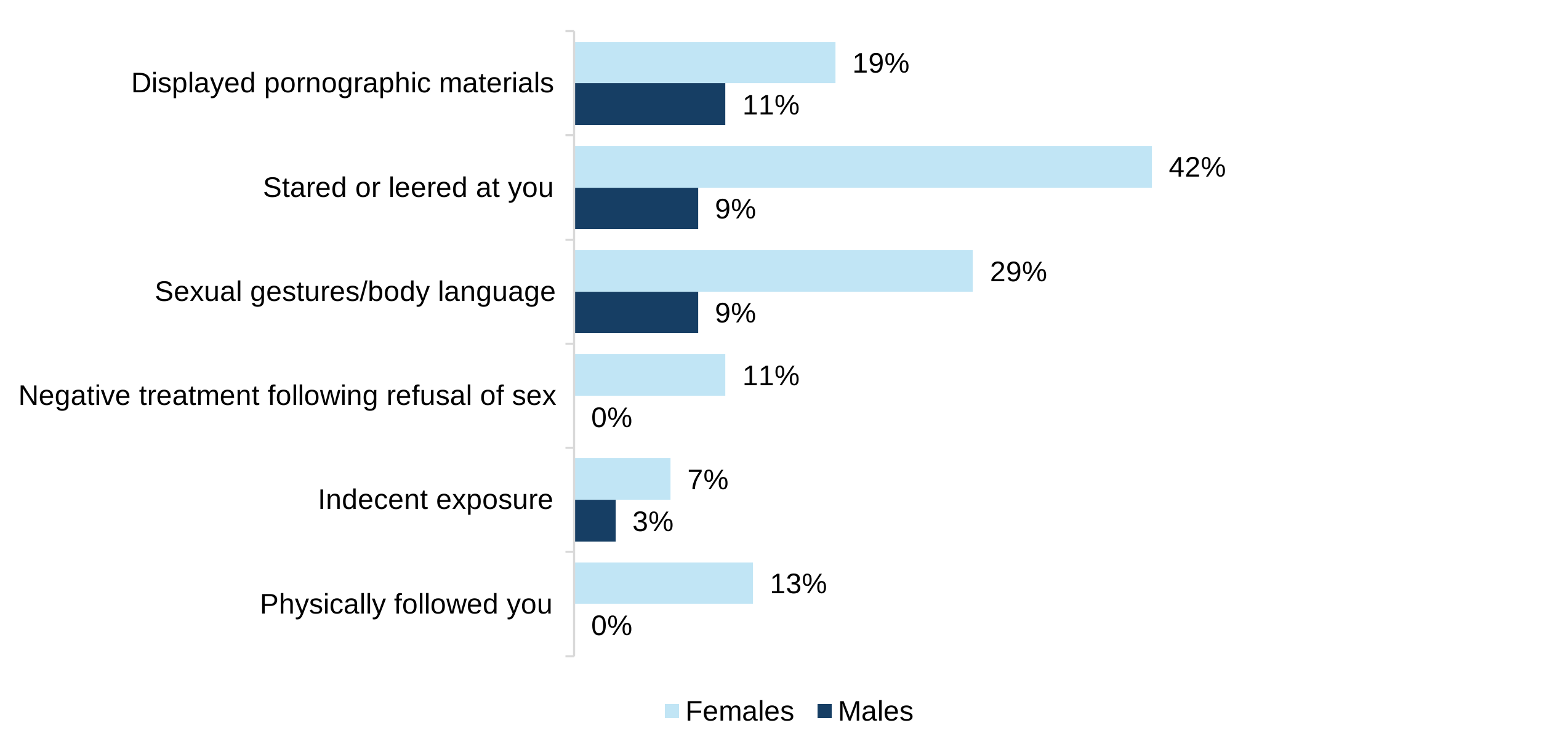
Figure 3 shows just over four in ten (42%) females were “stared or leered at” and around three in ten females (29%) experienced “sexual gestures and/or sexual body language” compared to around one in ten males (9%).
More than one in ten females experienced being “physically followed, making [them] feel sexually threatened” (13%) and/or were “treated negatively for refusing to engage in sexual activity” (11%). Less than 1% of males experienced these behaviours.
6.5 Experience by individual behaviours – Cyber (Regulars by sex)
Figure 4. Regulars’ experience of ‘Cyber’ sexualised behaviour in the last 12 months, by sex (%).
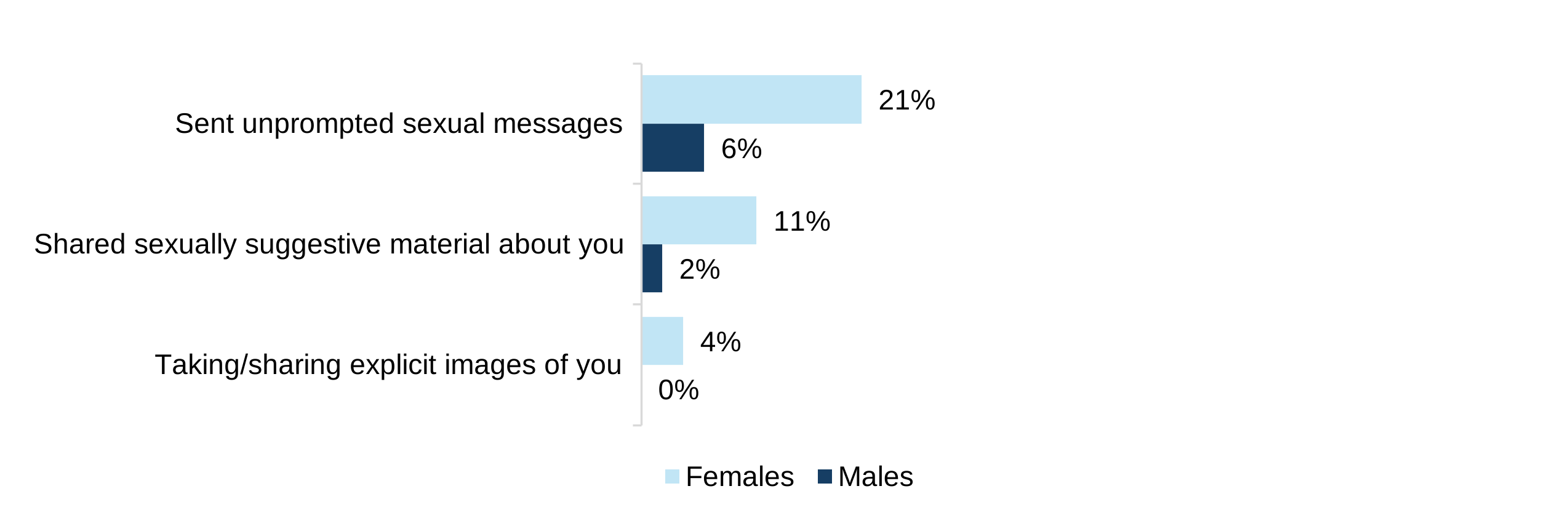
Figure 4 shows around one in five females (21%) were “sent unprompted messages of a sexual nature via text, email, social media or group messaging platform” compared to 6% of males.
Around one in ten (11%) females had “sexually suggestive material about [them] [shared] via text, email, social media or group messaging platform without [their] permission” and 4% have had “sexual pictures or videos of [them] taken and/or shared without [their] permission” compared to 2% and less than 1% of males respectively.
6.6 Experience by individual behaviours – Physical (Regulars by sex)
Figure 5. Regulars’ experience of ‘Physical’ sexualised behaviour in the last 12 months, by sex (%).
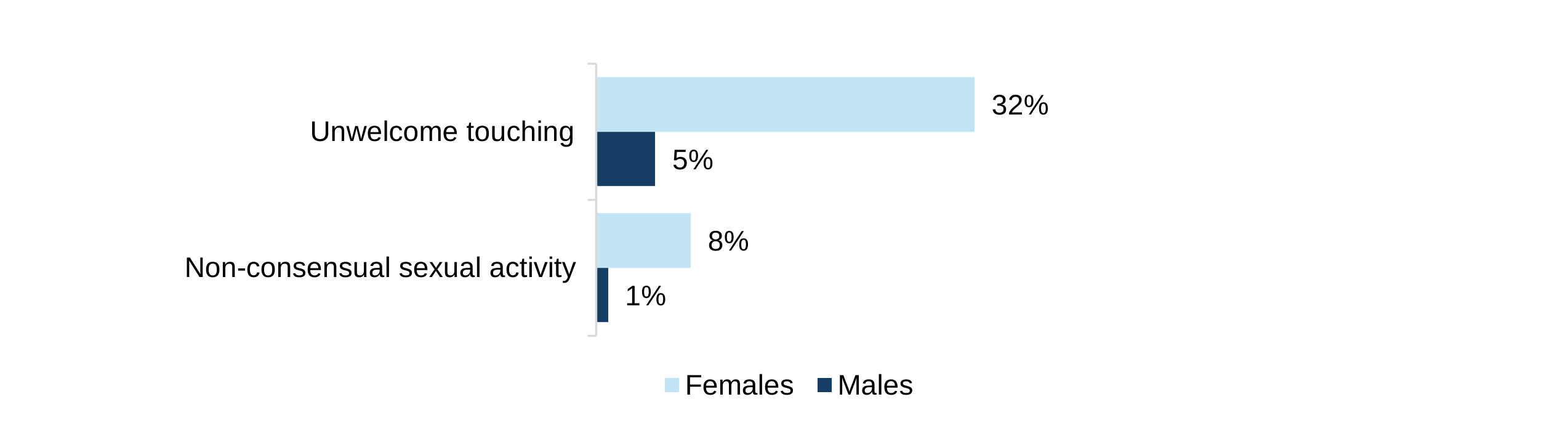
As shown in figure 5, almost one third (32%) of females were “touched in a way that made [them] feel uncomfortable” compared to 5% of males.
Almost one in ten (8%) females were “subjected to sexual activity which [they] did not consent to” compared to 1% of males.
6.7 Experience of sexualised behaviour (Regulars by sex and Service)
Figure 6. Regulars’ experience of sexualised behaviour in the last 12 months, by Service, by sex (%).
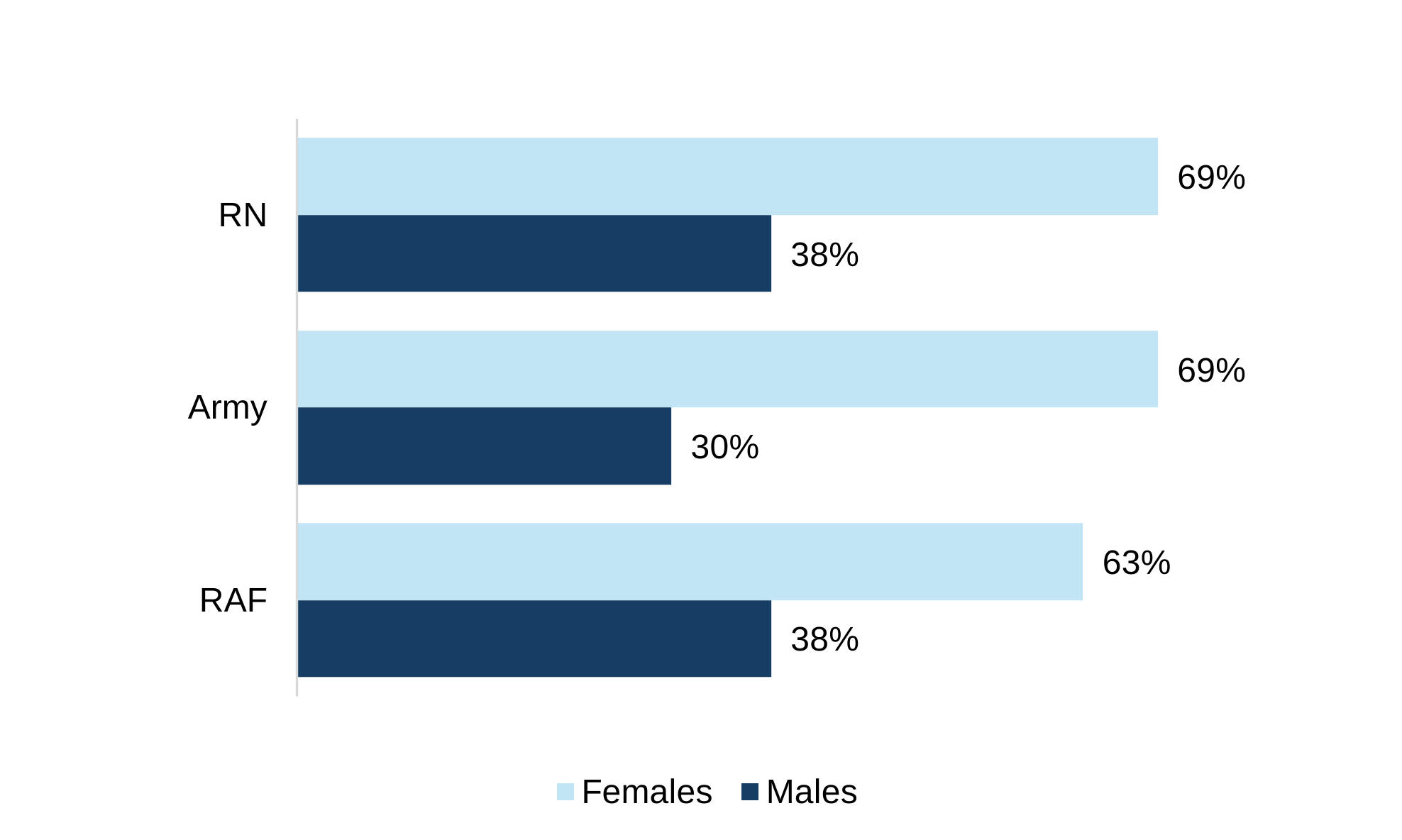
Figure 6 shows that RAF females were less likely (63%) to have experienced sexualised behaviour compared to females of the other Services (Army: 69%. RN: 69%).
Army males were less likely (30%) to have experienced sexualised behaviour compared to males of the other Services (RN: 38% RAF: 38%).
6.8 Experience by sexualised behaviour type (Regulars by sex and service)
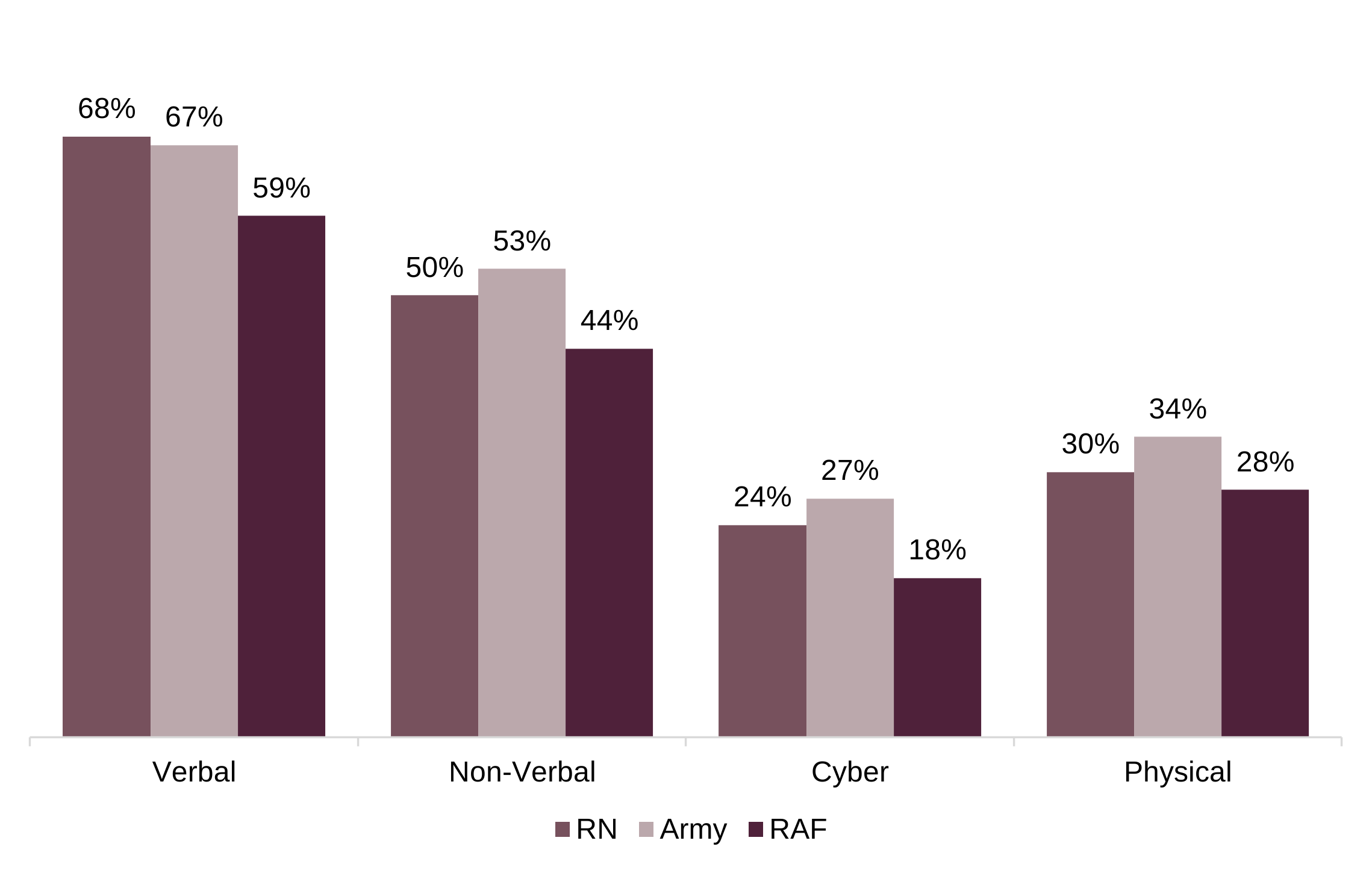
Figure 7. Female Regulars’ experience of sexualised behaviour in the last 12 months, by Service, by type (%).
To have experienced a sexualised behaviour type, personnel had to have experienced at least one of the listed behaviours within its category in the last 12 months.
Figure 7 shows that RAF females were less likely to have experienced ‘Verbal’, ‘Non-Verbal’ and ‘Cyber’ behaviour compared to females of the other Services.
Figure 8. Male Regulars’ experience of sexualised behaviour in the last 12 months, by Service, by type (%).
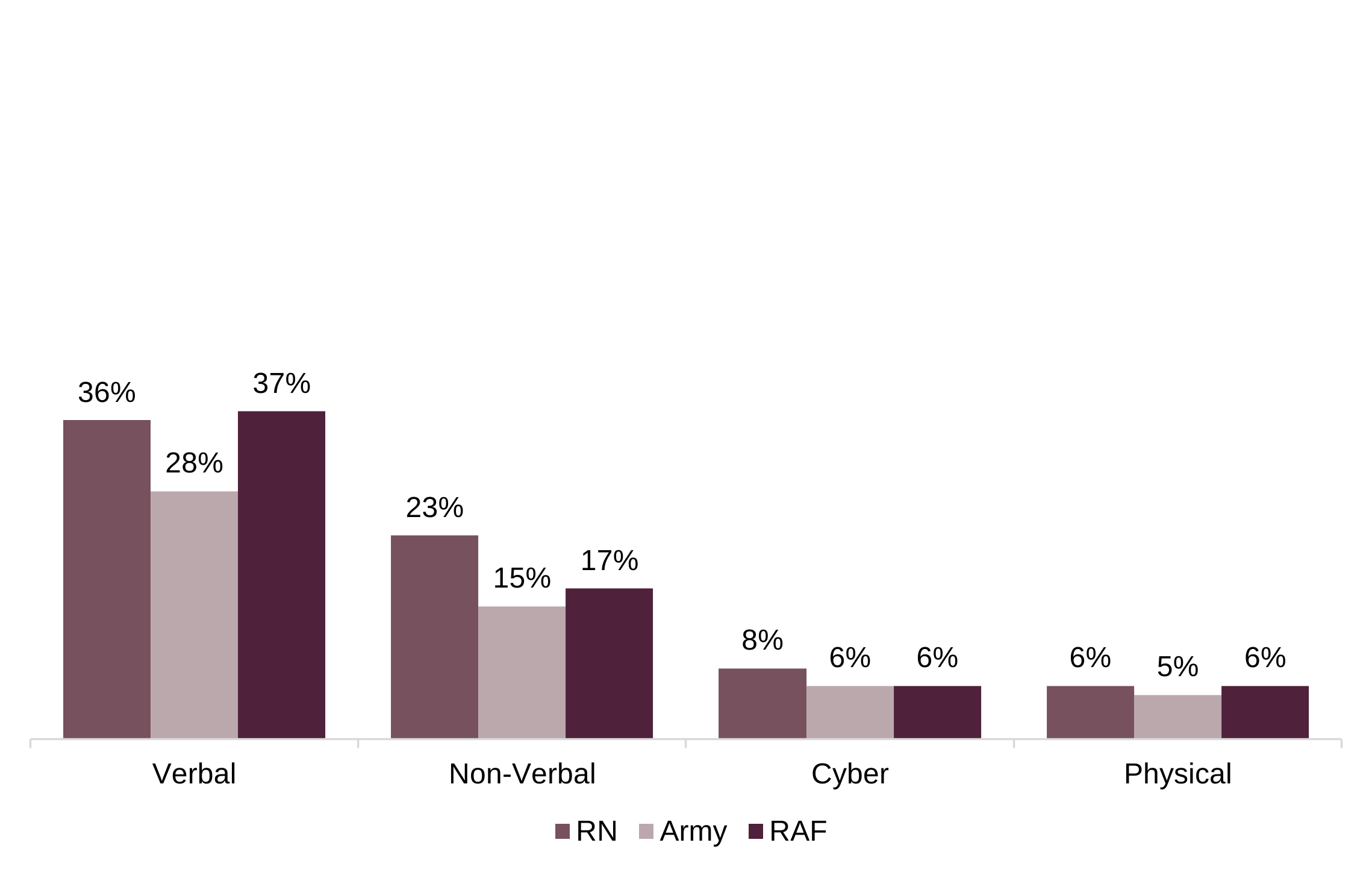
Figure 8 shows that RN males were more likely to have experienced sexualised behaviour classified as ’Non-Verbal’ compared to males from other Services. Army males were less likely to have experienced ‘Verbal’ sexualised behaviour compared to males from other Services.
6.9 Experience of sexualised behaviour (Regulars by sex and rank)
Figure 9. Regulars’ experience of sexualised behaviour in the last 12 months, by Sex, by Rank Group (%).
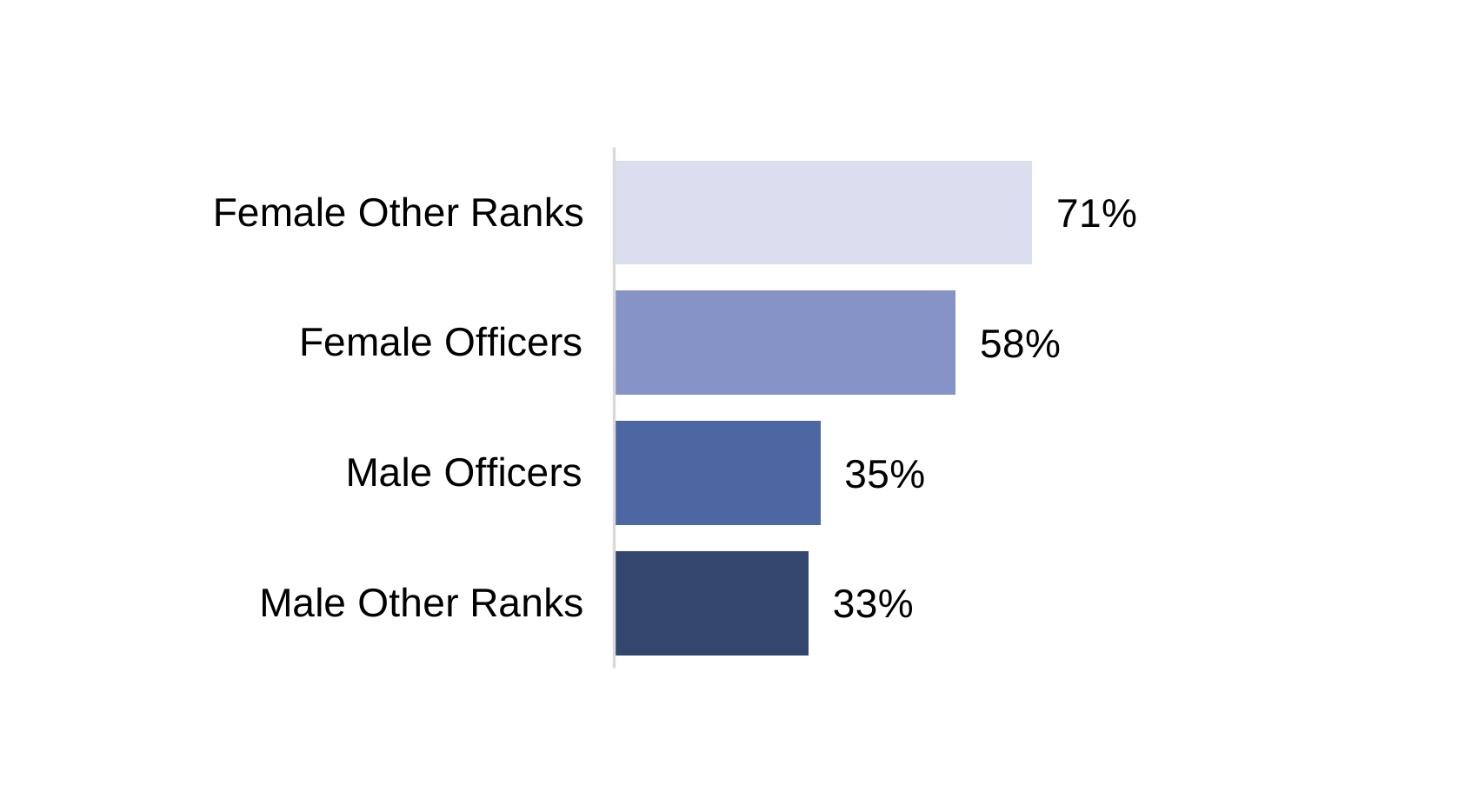
Figure 9 shows that Female Other Ranks were more likely to have experienced sexualised behaviour compared to other sex/rank groups.
Both female rank groupings (Officers: 58%, Other Ranks: 71%) were more likely to have experienced sexualised behaviour than male rank groupings (Officers: 35%, Other Ranks: 33%).
6.10 Experience by sexualised behaviour type (Regulars by sex and rank)
Figure 10. Regulars’ experience of sexualised behaviour in the last 12 months, by Sex, by Rank Group, by type (%).
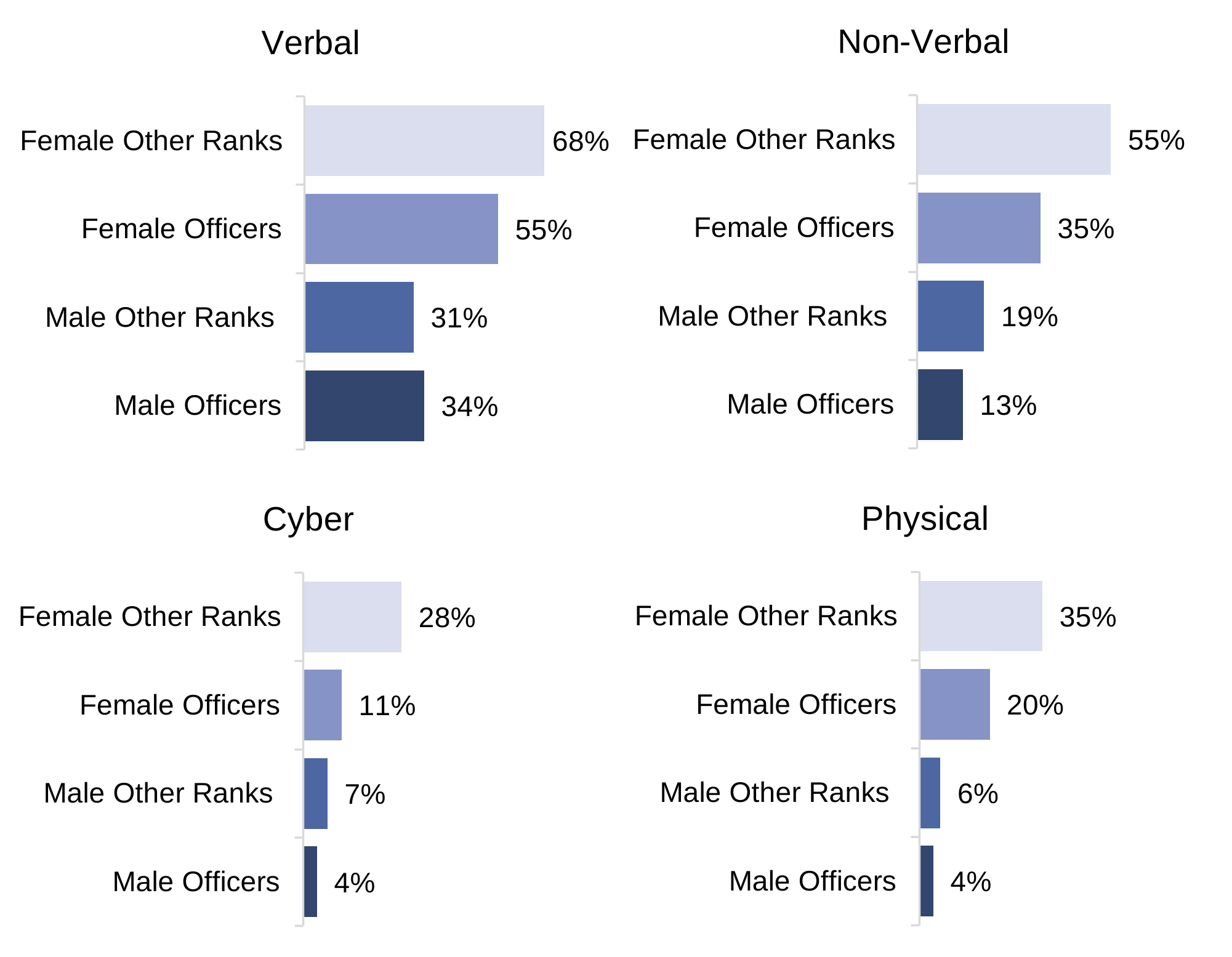
To have experienced a sexualised behaviour type, personnel had to have experienced at least one of the listed behaviours within its category in the last 12 months.
Figure 10 shows that Female Other Ranks were most likely to experience all four types of sexualised behaviour compared to other sex/rank groups.
Female Officers were more likely than both male rank groupings to have experienced all four types of sexualised behaviour.
7. Contextual information on the experiences of sexualised behaviour (Regulars)
This section is only based on the responses from Regulars who had experienced at least one of any sexualised behaviour at least once in the last 12 months. Regulars who have been targeted by sexualised behaviour(s) were subsequently asked to provide details of the incident(s).
Personnel were asked to answer questions based on all behaviours they may have experienced. As personnel may have experienced more than one sexualised behaviour, it is not possible to determine which behaviour personnel are referring to, as they may have responded to each in different ways.
8. Location of experienced sexualised behaviour (Regulars)
Figure 11. Locations where Regulars experienced sexualised behaviour in the last 12 months (%).
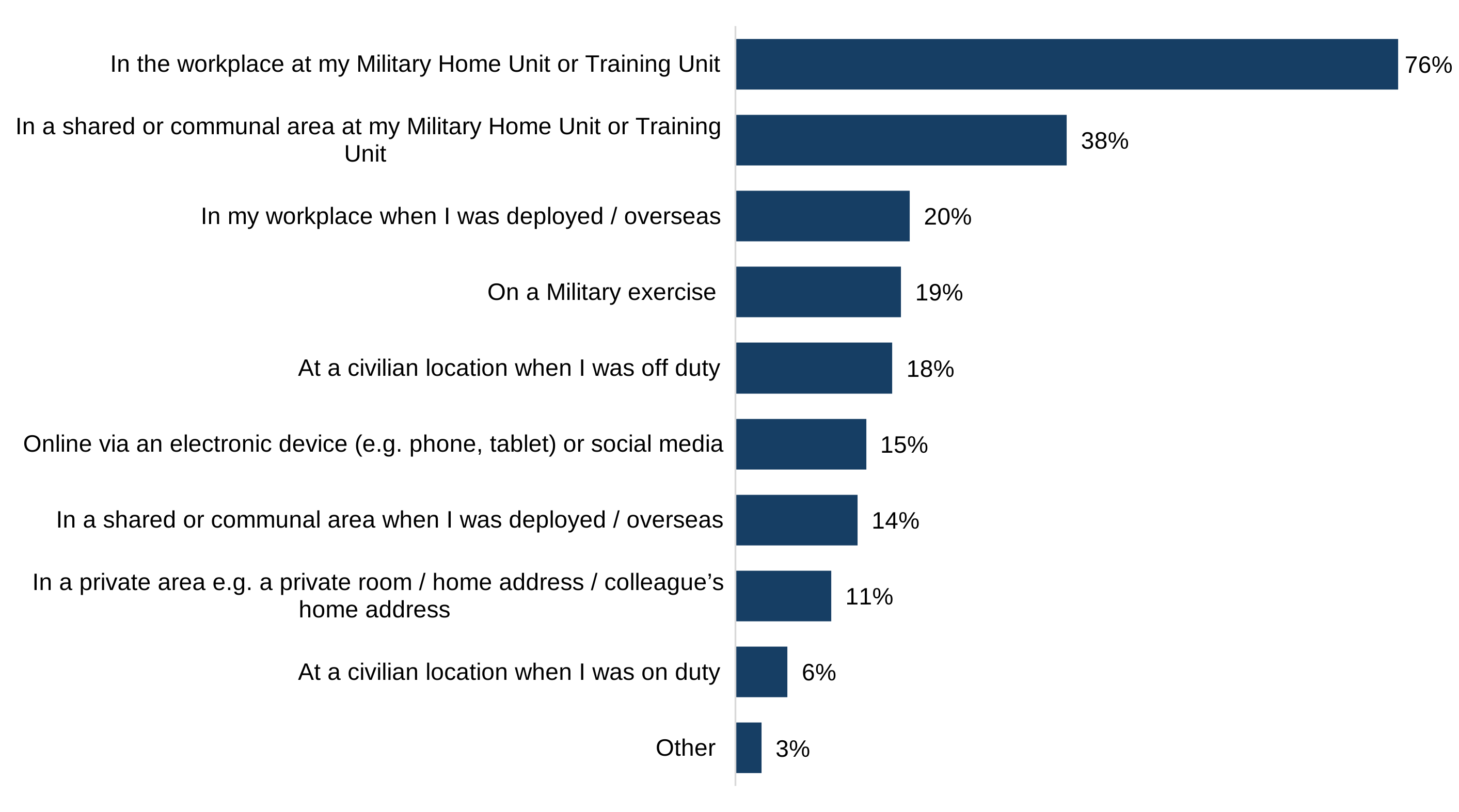
Figure 11 shows that incidents of sexualised behaviour were most commonly experienced in an open workplace (“Military Home Unit or Training Unit”) (76%).
The second most common location was “in a shared or communal area at my Military Home Unit or Training Unit” (38%) followed by one in five (20%) experiences happening “in my workplace when I was deployed / overseas”.
8.1 Location of experienced sexualised behaviour (Regulars by sex)
Females were more likely than males to have experienced sexualised behaviour “online” (Females: 20%, Males: 13%) and in a more ‘public’ environment, such as “in a shared or communal area when I was deployed / overseas” (Females: 16%, Males: 13%).
Males were more likely than females to experience sexualised behaviour in an environment away from their home unit (“on a Military exercise”) (Males: 20%, Females: 16%), and in situations with fewer potential witnesses such as “in a private area e.g. a private room / home address / colleague’s home address” (Males: 11%, Females: 8%).
8.2 Location of experienced sexualised behaviour (Regulars by Service)
Army were more likely (25%) to experience sexualised behaviour “on a Military exercise” compared to both RN (16%) and RAF (12%).
RN were more likely (26%) to experience sexualised behaviour “in [their] workplace when [they were] deployed / overseas” compared to Army (18%) and RAF (17%).
9. Number of perpetrators (Regulars)
Personnel were asked to specify how many different individuals perpetrated the sexualised behaviour that they experienced: “1”, “2-3”, “4-10”, “More than 10” or if they were “not sure”.
As personnel were asked to answer questions based on all the experienced sexualised behaviours, it is not possible to determine whether a singular behaviour, or multiple different behaviours was perpetrated by one or more individual(s).
Figure 12. Number of individuals responsible for sexualised behaviour experienced by Regulars in the last 12 months (%).
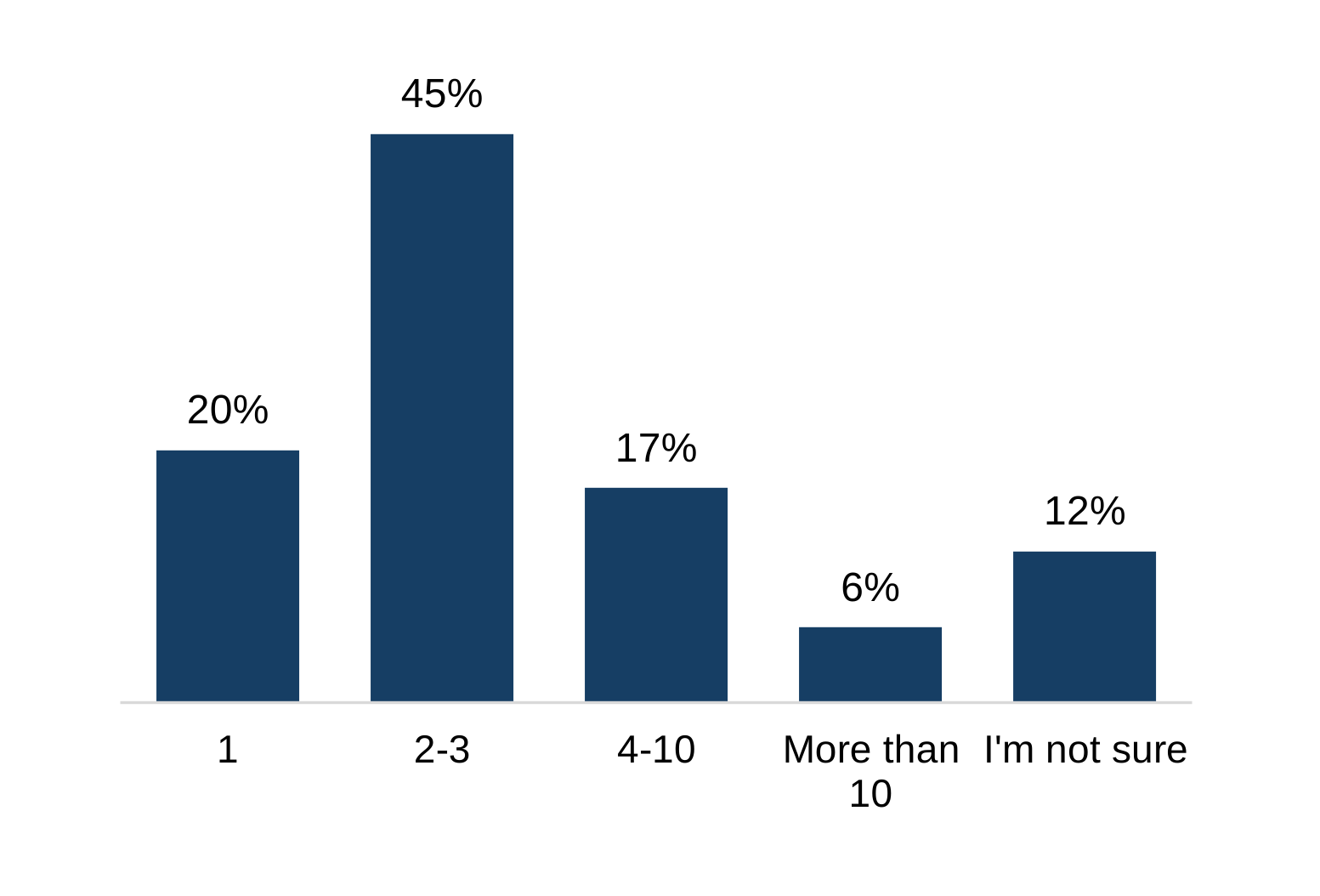
Figure 12 shows nearly half (45%) of Regulars indicated that the sexualised behaviour they experienced was perpetrated by “2-3” different individuals. The second most common number of perpetrators was “1” (20%).
The pattern of responses is also seen across sex, Service and rank groups.
10. Rank of perpetrator(s) (Regulars)
Personnel were asked to state the rank(s) of the perpetrator(s) of the sexualised behaviour they experienced.
Perpetrator rank is therefore ‘perceived by’ the individual that experienced the sexualised behaviour.
As personnel were asked to comment on all behaviours they had experienced and could select more than one response to the questions, it is not possible to specify which behaviour were perpetrated by which rank(s). Respondents may have had multiple experiences of sexualised behaviours perpetrated by different ranks, therefore percentages may not sum to 100%.
“Junior Ranks” and “Senior non-commissioned Officers (NCO) / Warrant Officers” are junior and senior ‘levels’ of the rank group ‘Other Ranks’ as mentioned elsewhere in the report. Junior Officers, Senior Officers and 1* and above ranks, make up the rank group ‘Officers’.
Overall percentages will be affected by the number of personnel within each rank population (i.e. low estimates associated with “1* and above” ranks, may be attributed to the low population of Regulars with these ranks).
10.1 Rank of perpetrator(s) (Regulars by sex)
Figure 13. Rank of the individuals responsible for the sexualised behaviour experienced by Regulars in the last 12 months, by sex (%).
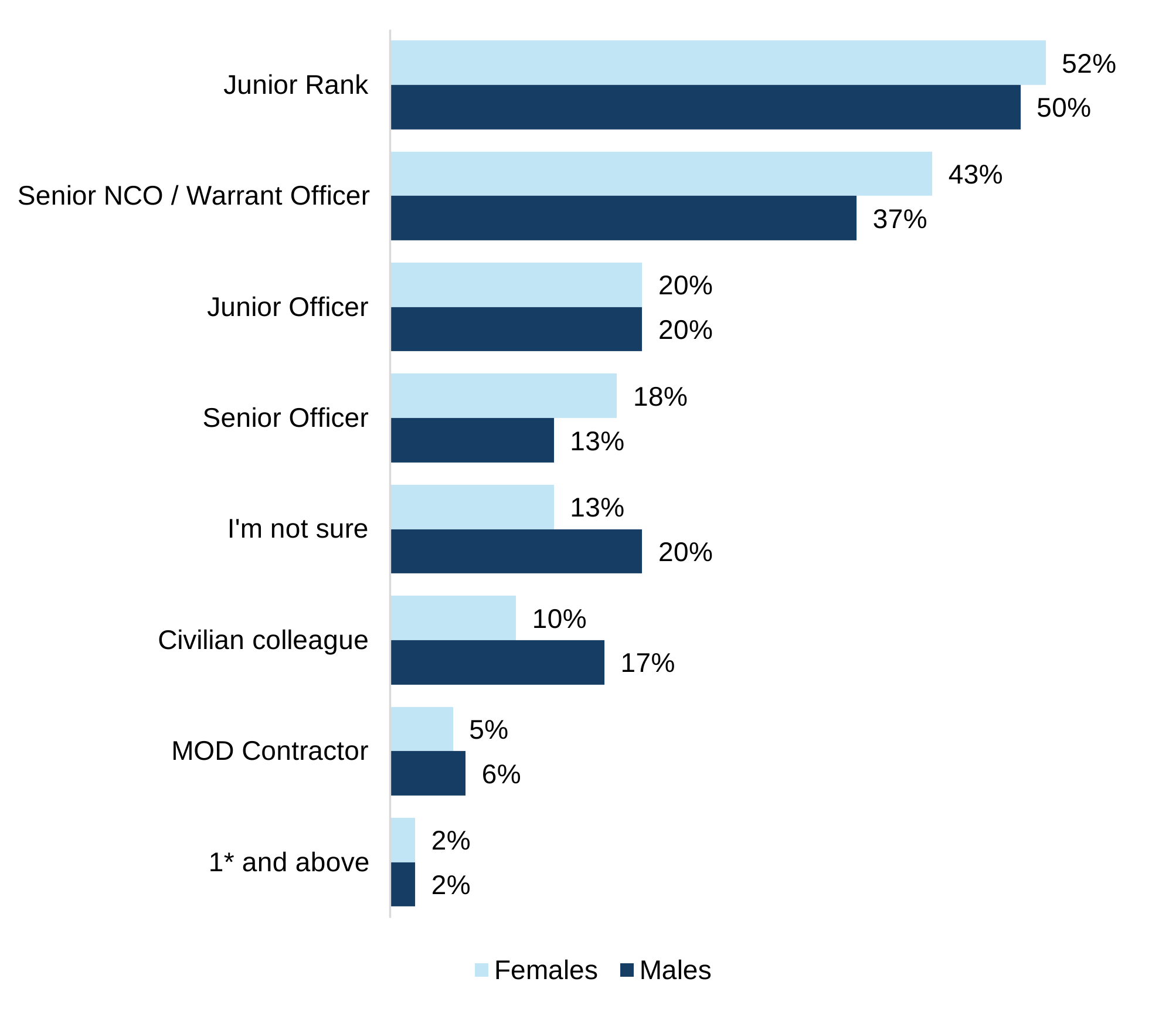
Figure 13 shows females experienced sexualised behaviour perpetrated by “Senior Officer[s]” (18%) more than males (13%).
Males experienced sexualised behaviour perpetrated by “Civilian colleague[s]” (17%) more than females (10%).
10.2 Rank of perpetrator(s) (Regulars by Service)
Army were less likely (18%) to experience sexualised behaviour by a “Junior Officer” compared to the other Services (RN: 23%, RAF: 22%).
10.3 Rank of perpetrator(s) (Regulars by rank)
Figure 14. Ranks of the individuals responsible for the sexualised behaviour by Regulars in the last 12 months, by rank (%).
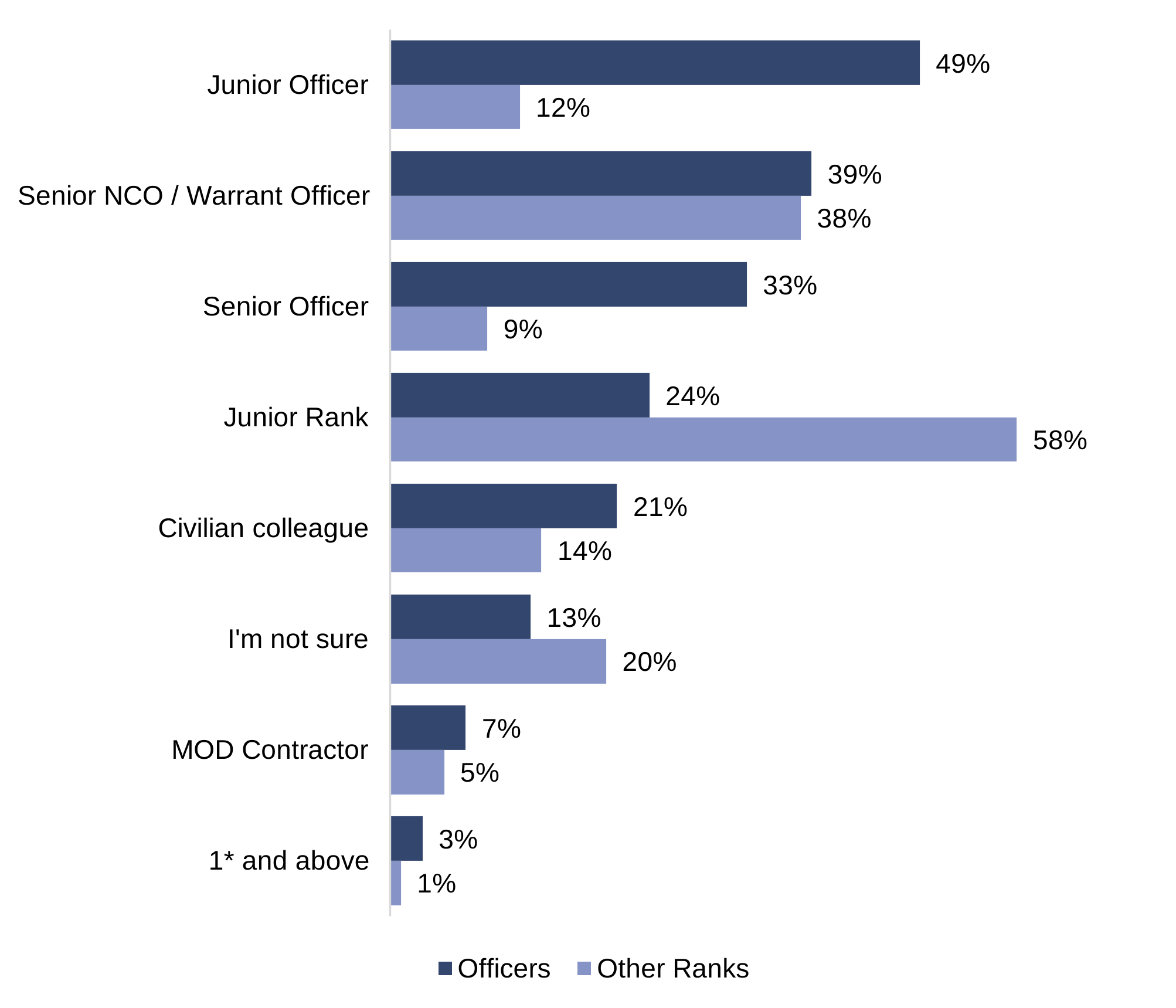
Figure 14 shows that Officers were more likely than Other Ranks to experience sexualised behaviour perpetrated by other Officers (“Junior Officer”, “Senior Officer”, “1* and above”).
Officers were also more likely to identify a “Civilian colleague” as the perpetrator of the sexualised behaviour they experienced (Officers: 21%, Other Ranks: 14%).
Other Ranks were more likely than Officers to experience sexualised behaviour by “Junior Ranks” (Other Ranks: 58%, Officers 24%).
11. Relationship of perpetrator(s) (Regulars)
Regulars that have experienced a sexualised behaviour were most likely to identify the relationship of the perpetrator as their “work colleague”(66%) regardless of sex, Service or rank.
11.1 Relationship of perpetrator(s) (Regulars by sex)
Figure 15. Relationship of the individuals responsible for the sexualised behaviour to Regulars who experienced them in the last 12 months, by sex (%).
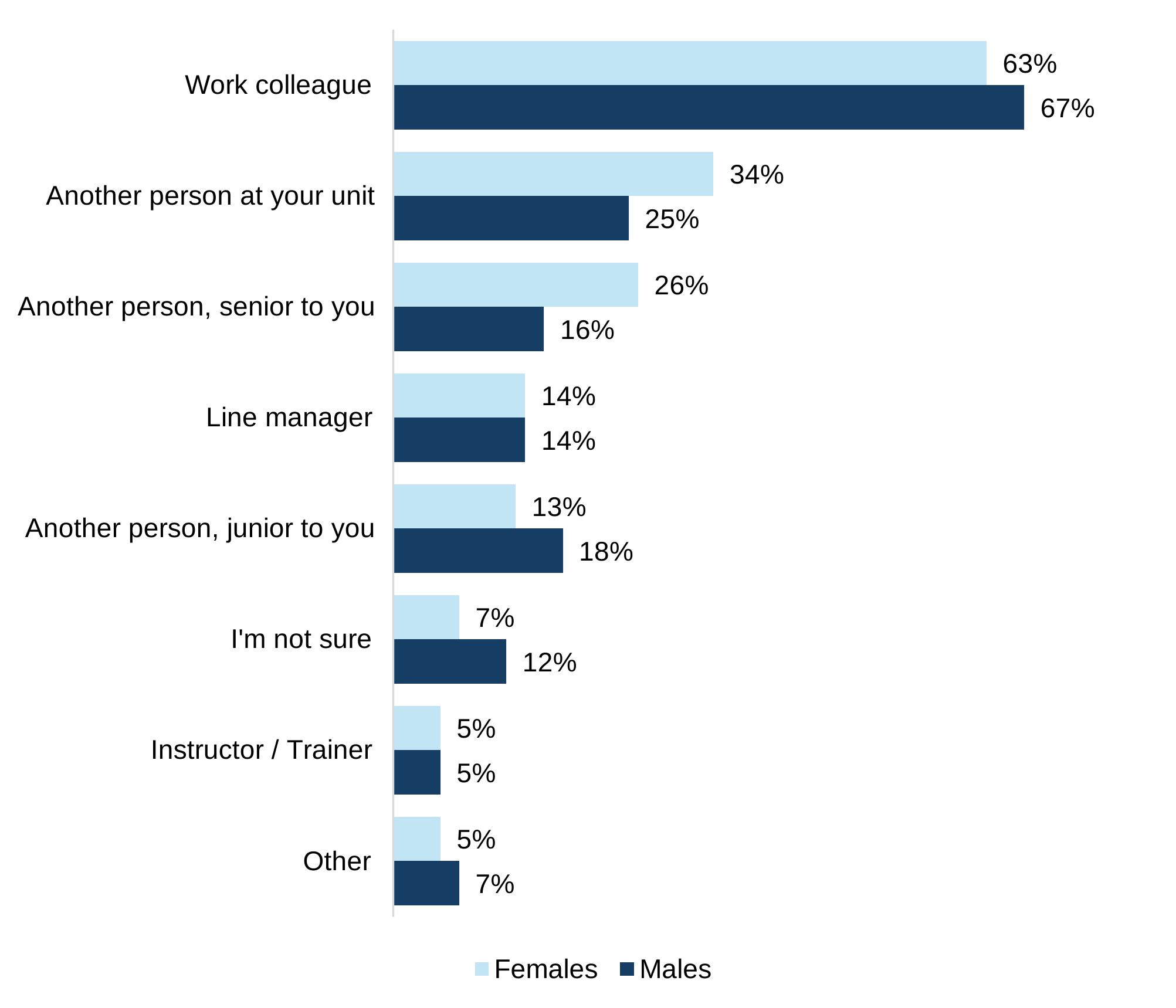
Figure 15 shows that females were more likely than males to experience sexualised behaviour perpetrated by “another person at [their] unit” (Females 34%, Males 25%) and “another person, more senior to [them]” (Females 26%; Males 16%).
Males (18%) were more likely than females (13%) to experience sexualised behaviour perpetrated by “another person, junior to [them]” .
12. Impact of experienced sexualised behaviour (Regulars)
12.1 Impact of experienced sexualised behaviour (Regulars by sex)
Figure 16. Impact on Regulars who experienced sexualised behaviour, by sex (%).
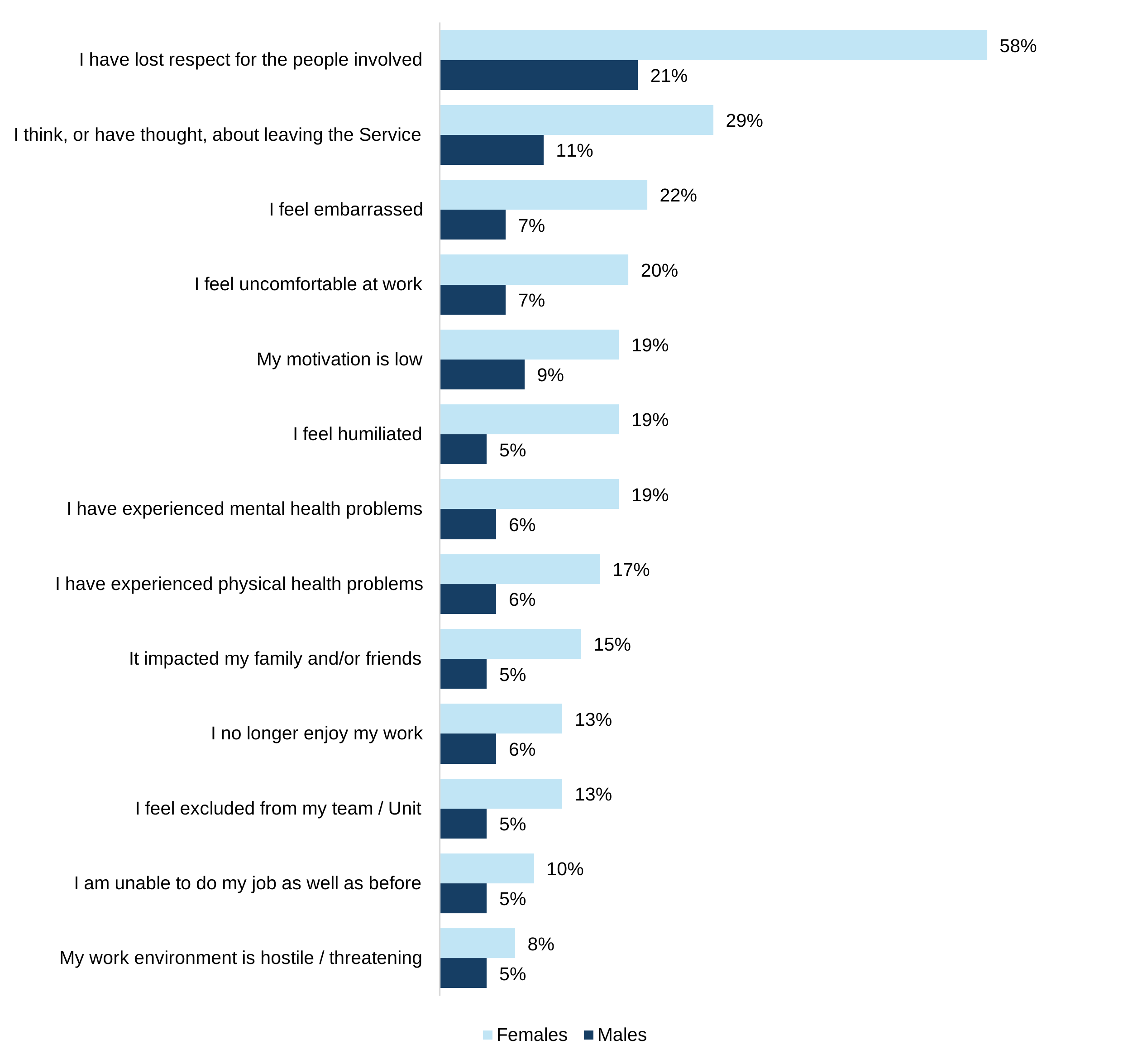
Figure 16 shows “[losing] respect for the people involved” was the most common impact on both females (58%) and males (21%) who experienced sexualised behaviour.
Females were more likely to report experiencing all of the impacts compared to males.
12.2 Impact of experienced sexualised behaviour (Regulars by rank)
Other Ranks were more likely than Officers to have considered “leaving the Service” (Other Ranks: 16%, Officers: 10%), to have “experience[d] mental health problems” (Other Ranks: 10%, Officers: 5%) and/or state that their “motivation is low” (Other Ranks: 12%, Officers: 6%).
13. Perceived effectiveness of responses to sexualised behaviour (Regulars)
Personnel were asked which one of their responses (if applicable) to experiencing sexualised behaviour was most effective at stopping the behaviour(s).
The perceived effectiveness of a response is the percentage of personnel who attempted the response and stated it was the most effective method they had tried.
13.1 Perceived effectiveness of responses to sexualised behaviour (Regulars by sex)
Figure 17. Regulars’ perceived effectiveness of responses to sexualised behaviour, in the last 12 months, by sex (%).
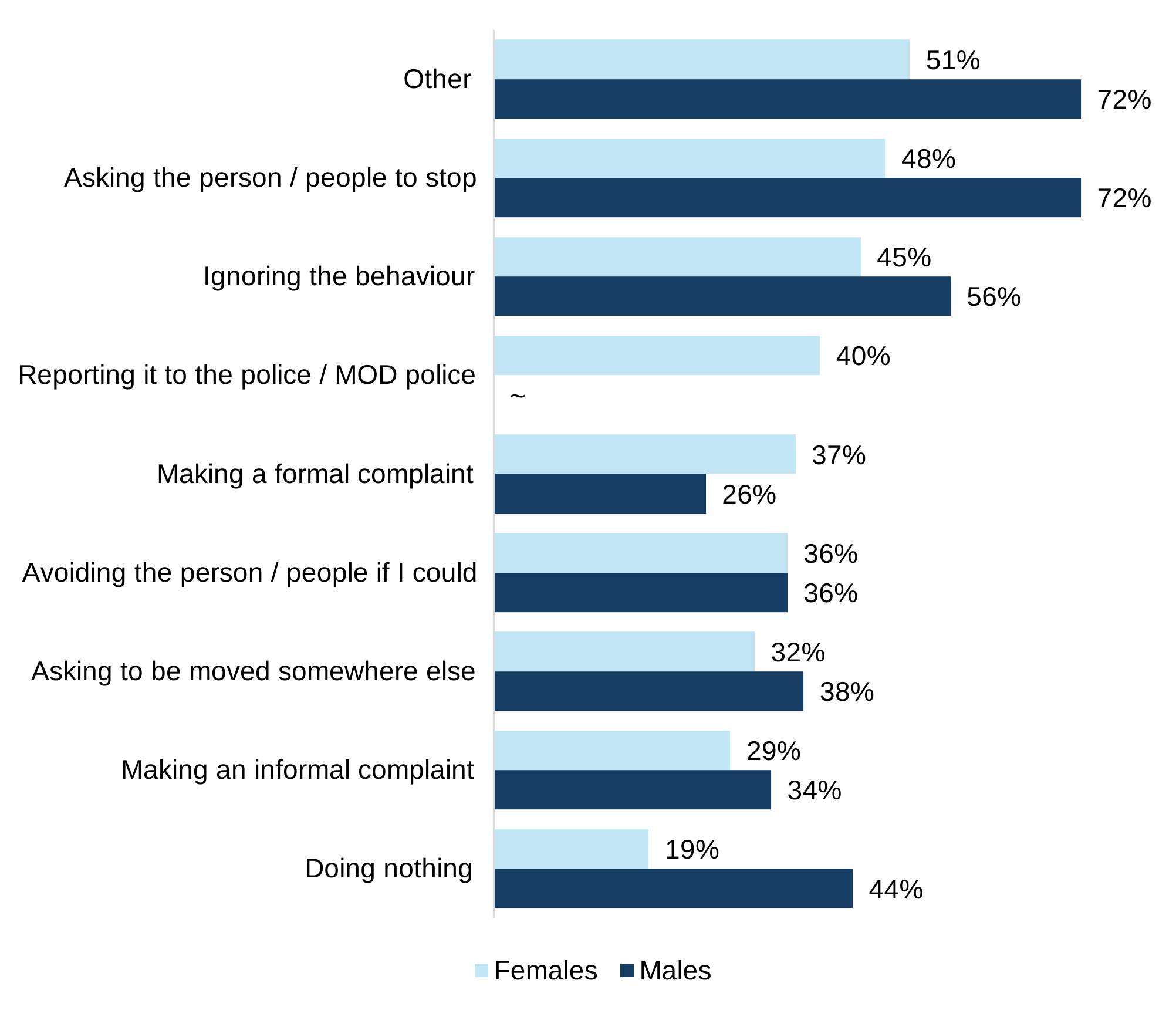
~ denotes that estimates were based on fewer than 30 respondents and therefore supressed.
Figure 17 shows that “asking the [perpetrator(s)] to stop” was perceived by both males and females to be the most effective single response at stopping sexualised behaviour. However, males (72%) were more likely to perceive this response as the most effective compared to females (48%).
Males were also more likely than females to perceive that “ignoring the behaviour” (Males: 56%, Females: 45%), and/or “doing nothing” (Males: 44%, Females: 19%) was the most effective method at stopping the behaviour.
Females were more likely than males (Females: 37%, Males: 26%) to perceive that “making a formal complaint” was the most effective of their responses at stopping the sexualised behaviour.
Almost three quarters (72%) of males, and more than half (51%) of females indicated that the most effective of their response(s) to stopping sexualised behaviours was “other”. This suggests that there are other methods of reporting or responding to sexualised behaviours beyond the scope of those investigated in this survey.
13.2 Perceived effectiveness of responses (Regulars by rank)
Officers (75%) were more likely than Other Ranks (61%) to perceive that the most effective response they used at stopping the sexualised behaviour was “asking the [perpetrator(s)] to stop”.
14. Who personnel told about their experience of sexualised behaviour (Regulars)
14.1 Who personnel told about their experience of sexualised behaviour (Regulars by sex)
Females were more likely (48%) to tell someone that they had experienced sexualised behaviour compared to males (18%).
Figure 18. Reasons Regulars did not tell anyone about their experience of sexualised behaviour, in the last 12 months by sex (%).
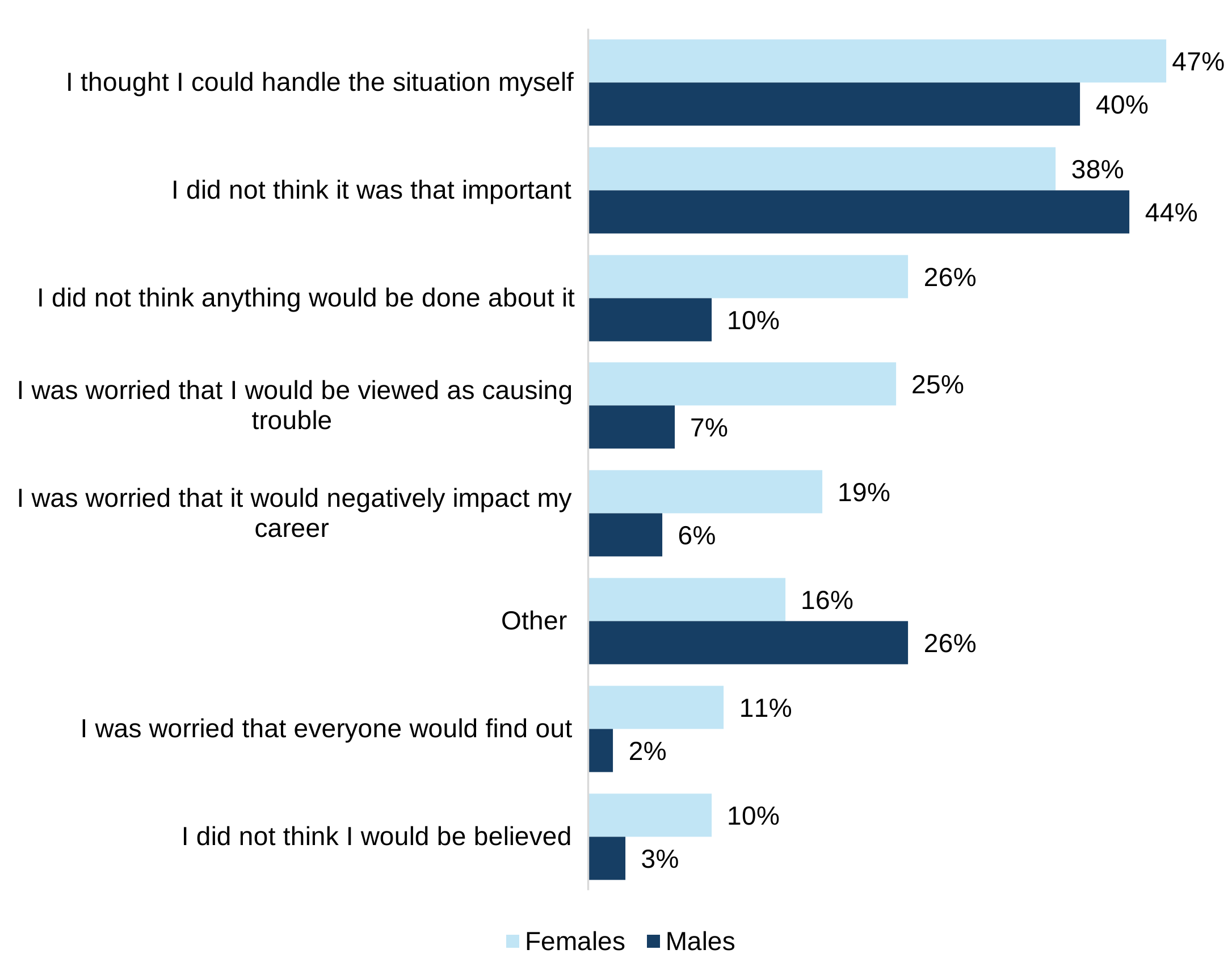
Figure 18 shows that around a quarter of females who decided not to tell anyone about their experience, did so because they “did not think anything would be done about it” (26%), or they were “worried that [they] would be viewed as causing trouble” (25%) compared to 10% and 7% of males respectively.
Females (10%) were also more likely than males (3%) to feel that they would “not be believed”.
15. Was the sexualised behaviour perceived as sexual harassment (Regulars)
Perceptions of sexual harassment are calculated based on whether personnel have experienced a sexualised behaviour, that they would classify as sexual harassment.
The SBSHS asks whether personnel believed each of the 19 sexualised behaviours is sexual harassment. Should personnel believe that a given behaviour is sexual harassment and also recorded having experienced this behaviour, it is presumed that they perceived their experience to be sexual harassment.
Of those Regulars who experienced sexualised behaviours in the last 12 months, 93% of females believed at least one sexualised behaviour they experienced was sexual harassment compared to 78% of males.
15.1 Perceived sexual harassment (Regulars by sex)
Figure 19. Types of sexualised behaviour Regulars experienced and defined as sexual harassment, in the last 12 months, by sex (%).
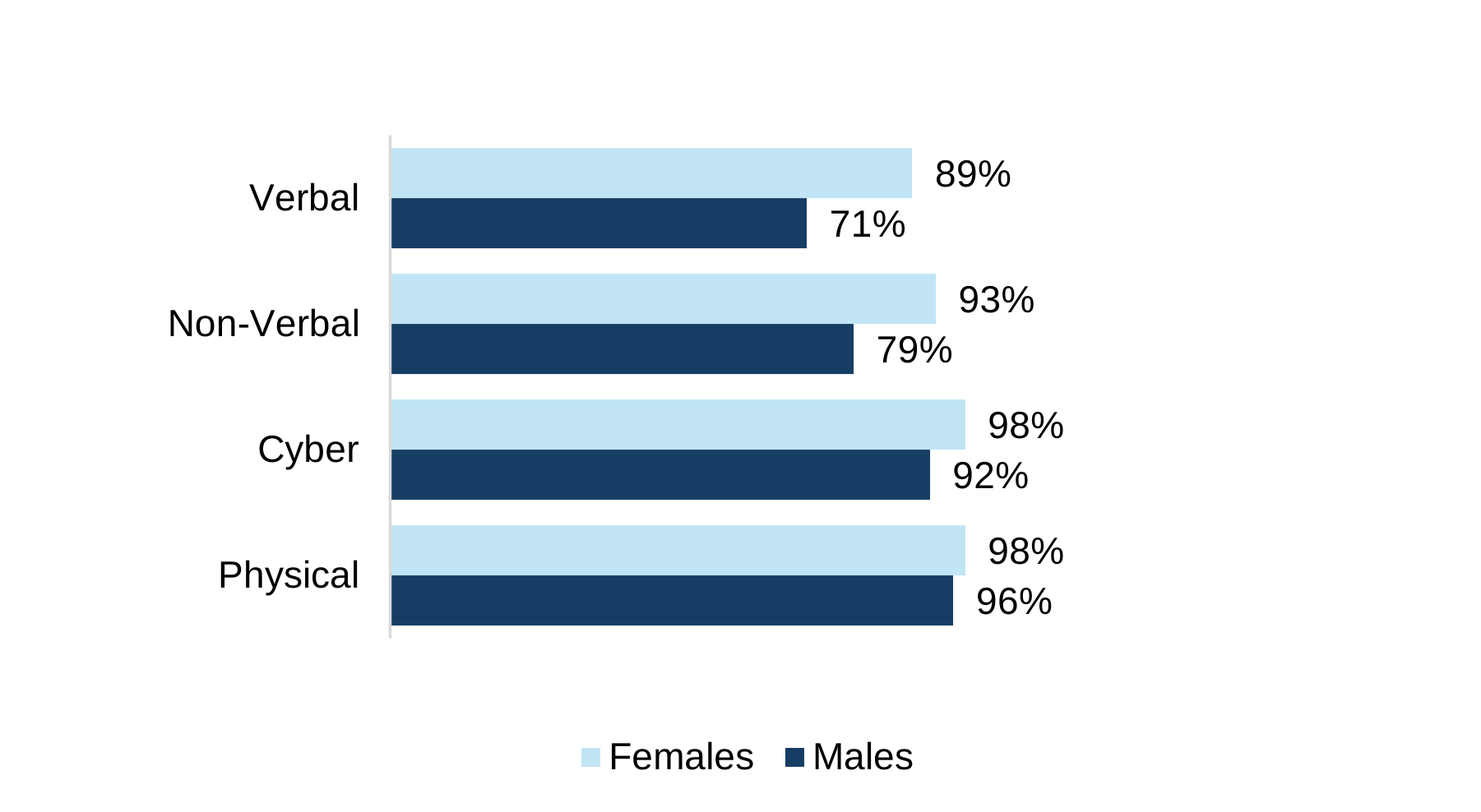
Figure 19 shows more females compared to males felt the sexualised behaviour they experienced was sexual harassment for ‘Verbal’ (Female: 89%, Male: 71%), ‘Non-Verbal’ (Female: 93%, 79%) and ‘Cyber’ (Female: 98%, Male: 92%) behaviours.
16. Definitions of sexual harassment (Regulars)
This section is based on all responses from Regulars regardless of whether or not they have experienced a sexualised behaviour in the last 12 months
To assess how Regulars may define behaviour that is sexual harassment, all personnel were asked to indicate whether they viewed each of the 19 investigated behaviours as sexual harassment.
17 of the 19 behaviours were classified as sexual harassment by at least 80% of Regulars. The remaining two behaviours were “referring to people of any gender in offensive terms” and “jokes or comments of a sexual nature” where 62% and 67% classified them as sexual harassment respectively.
The behaviours most likely to be identified as sexual harassment were: “subjecting someone to sexual activity which they do not to consent to”, “taking and/or sharing sexual pictures or videos of someone without their permission” and “indecent exposure / flashing” (all 94%).
16.1 Definitions of sexual harassment (Regulars by Service)
Army were the least likely of the Services to define 16 of the specified sexualised behaviours as sexual harassment.
RAF were the most likely of the Services to agree that “displaying pornographic or sexual materials” is sexual harassment.
16.2 Definitions of sexual harassment – behaviour type (Regulars by sex)
Figure 20. Sexualised behaviour types where Regulars defined all behaviours as sexual harassment, by sex (%).
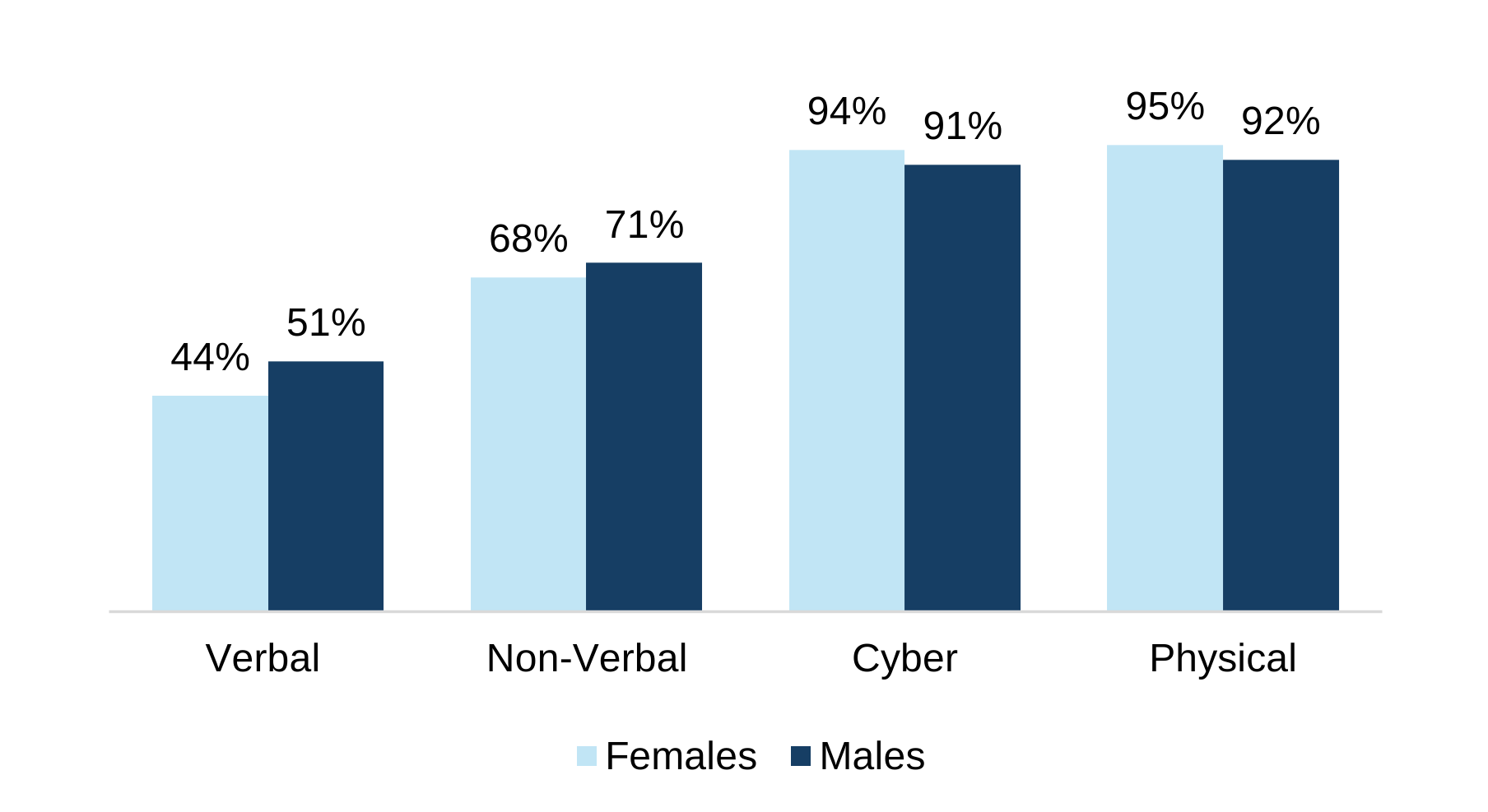
Figure 20 shows females were more likely than males to identify all ‘Physical’ (Females: 95%, Males:92%) and all ‘Cyber’ (Females: 94%, Males:91%) behaviours as sexual harassment.
Males were more likely to identify all ‘Verbal’ (Males: 51%, Females: 44%) and all ‘Non-Verbal’ (Males: 71%, Females: 68%) behaviours as sexual harassment.
16.3 Definitions of sexual harassment – behaviour type (Regulars by rank)
Figure 21. Sexualised behaviour types where Regulars defined all behaviours as sexual harassment, by rank (%).
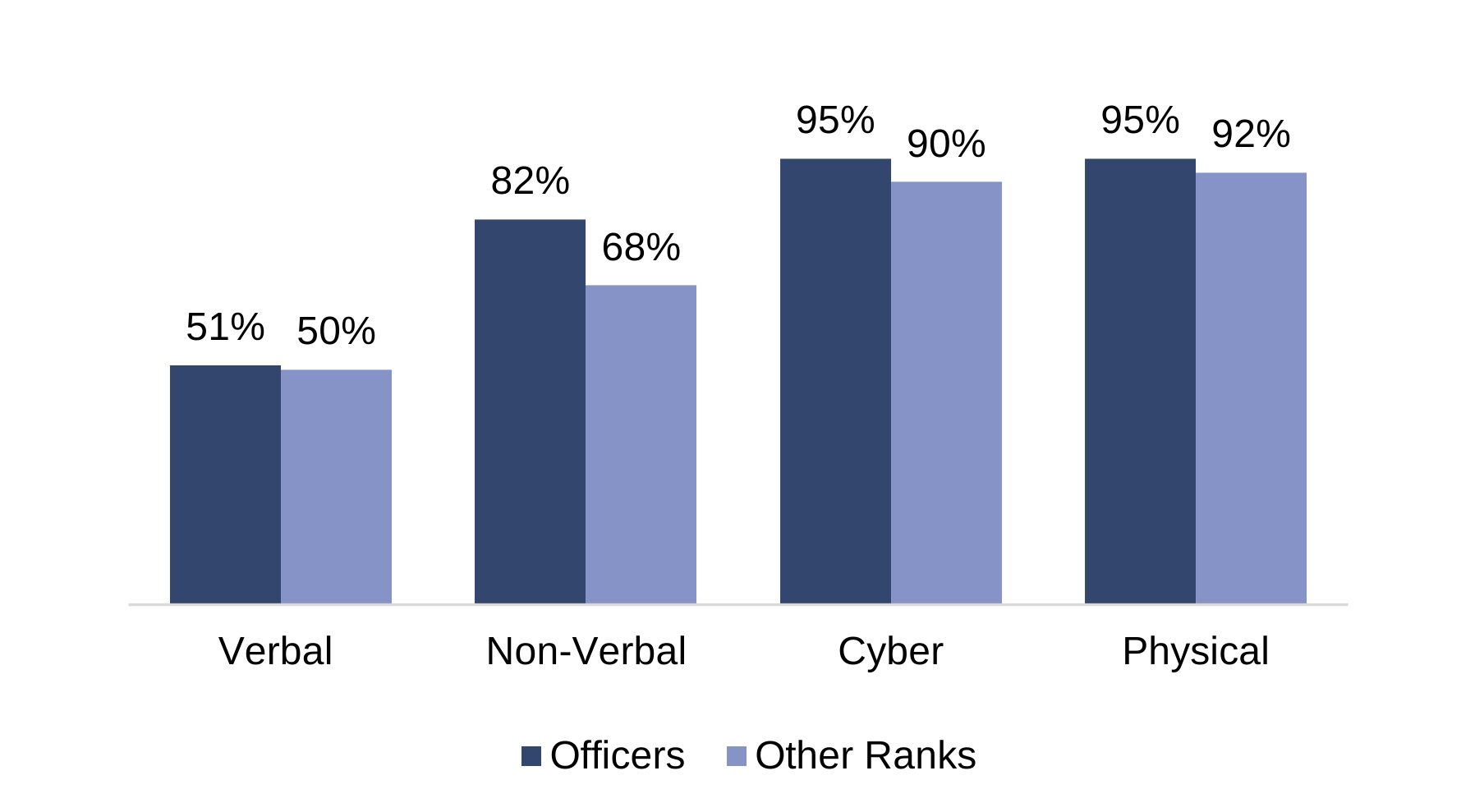
Figure 21 shows Officers are more likely than Other Ranks to view all ‘Non-Verbal’ (Officers: 82%, Other Ranks: 68%) ‘Cyber’ (Officers: 95%, Other Ranks: 90%) and ‘Physical’ (Officers: 95%, Other Ranks: 92%) behaviour types as sexual harassment.
17. Awareness of sexualised behaviour (Regulars)
Personnel were asked to indicate whether they had, in the previous 12 months, seen, or had knowledge of, UK Military personnel and/or Civilian colleagues directing any of the 19 sexualised behaviours towards other people at work. Personnel were presented with a list of the 19 sexualised behaviours and asked how often they had seen/had knowledge of them having occurred.
Due to the unequal ratio of male to female personnel within the Armed Forces, weighting for representativeness will result in ‘overall figures’ appearing closer to the estimates for ‘male personnel’ in isolation.
As there are differences in the experiences of female and male personnel, this report will primarily report findings from a sex split perspective.
17.1 Awareness of sexualised behaviour (Regulars by sex)
73% of females have seen (or had knowledge of) at least one sexualised behaviour in the last 12 months, compared to 43% of males.
17.2 Awareness by behaviour type (Regulars by sex)
Figure 22. Regulars’ awareness of sexualised behaviour in the last 12 months, by type, by sex (%).
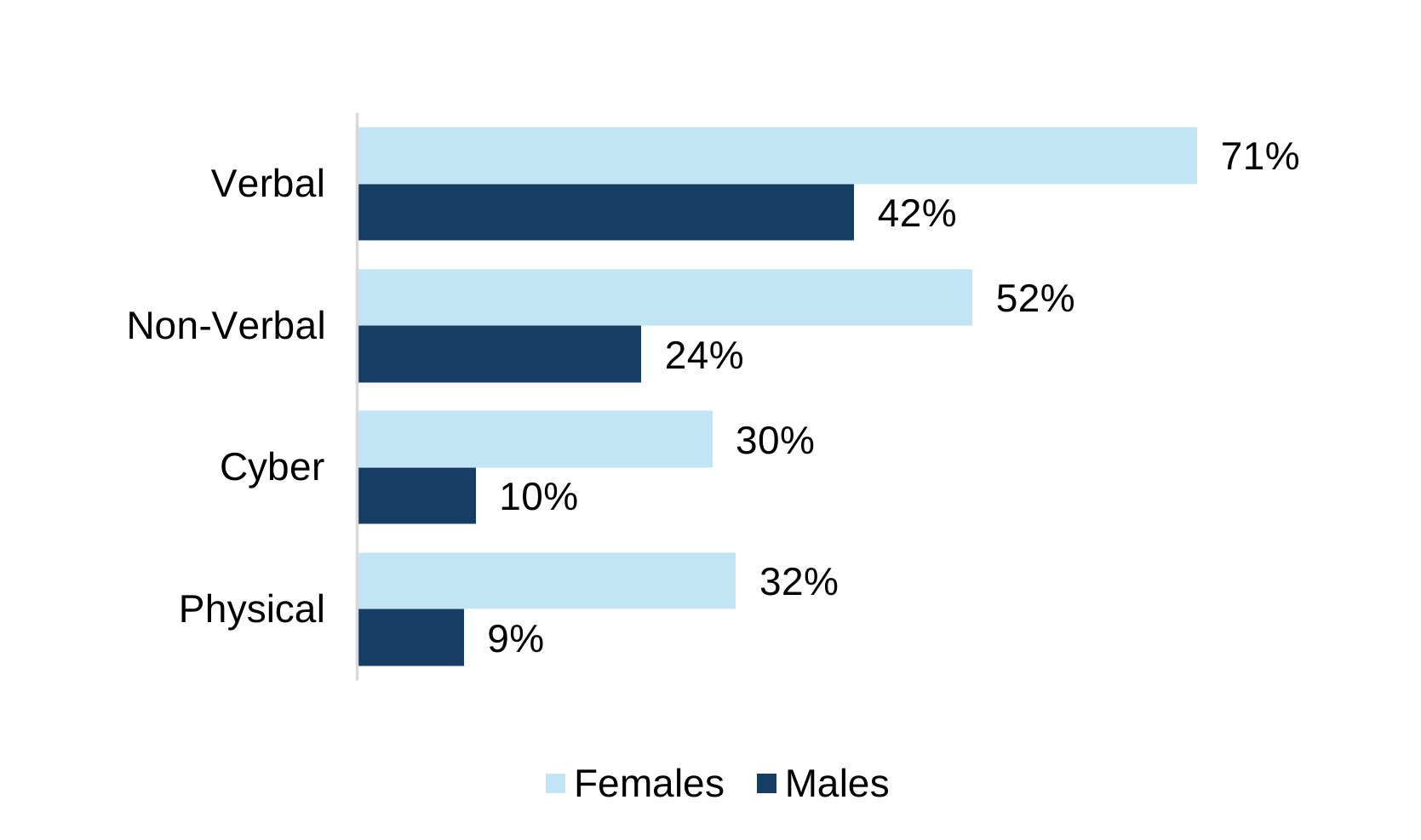
To have seen (or had knowledge of) a sexualised behaviour type, personnel had to have seen/had knowledge of at least one of the listed behaviours within its category in the last 12 months.
Figure 22 shows that females were more likely to have seen (or had knowledge of), all four types of behaviour compared to males.
Females were more likely to have seen (or had knowledge of) all the different individual sexualised behaviours compared to males.
17.3 Awareness by behaviour type – Verbal (Regulars by sex)
Figure 23. Regulars’ awareness of ‘Verbal’ sexualised behaviour in the last 12 months, by sex (%).
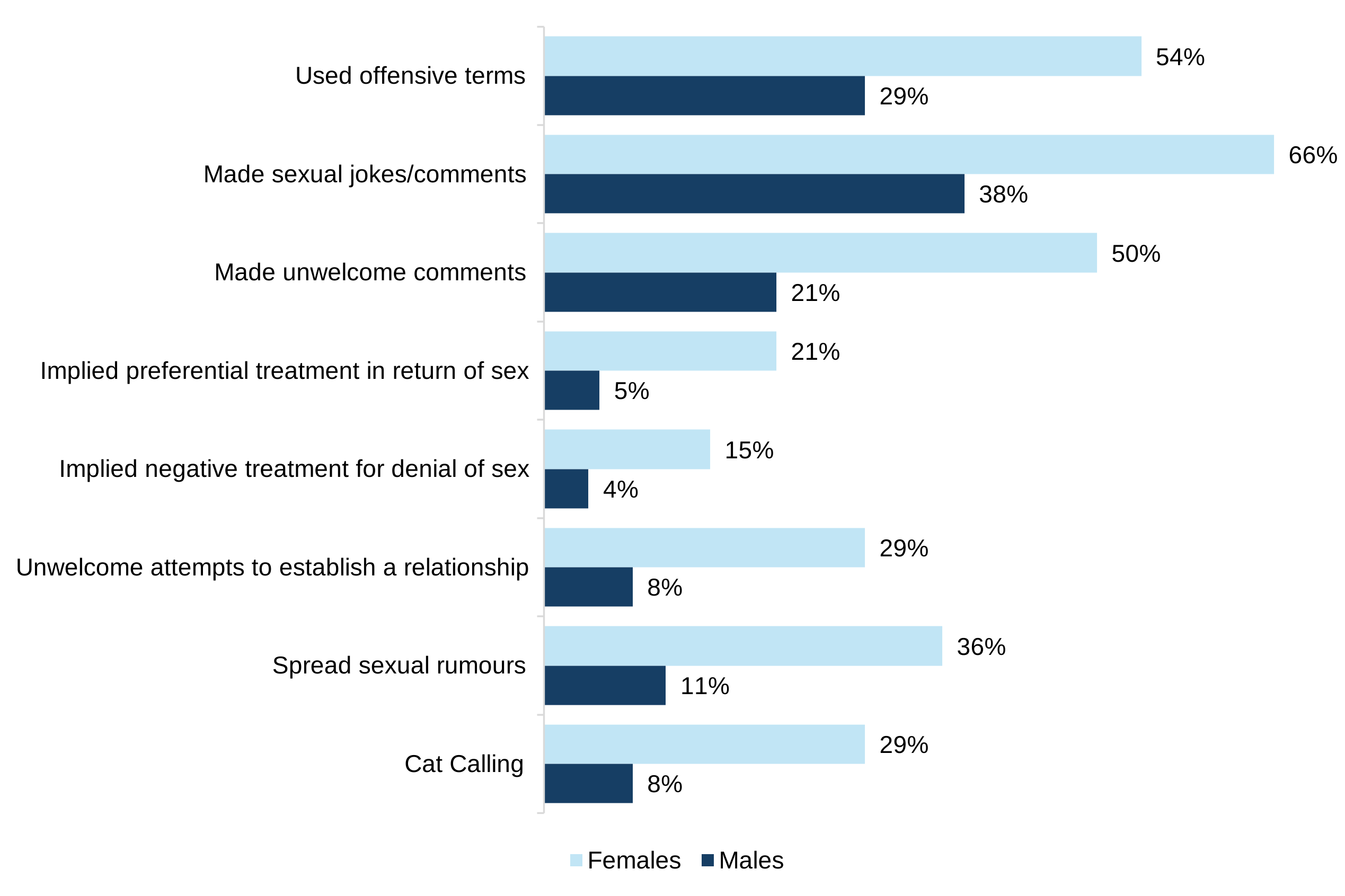
Figure 23 shows that both males and females were most likely to have seen (or had knowledge of) “jokes or comments of a sexual nature” (Females: 66%, Males: 38%).
Around half of females have seen (or had knowledge of) someone “referring to people of any gender in offensive terms” (54%) and/or “making unwelcome comments about someone’s appearance, body, and/or sexual activity” (50%) compared to 29% and 21% of males respectively.
More than a third (36%) of females have seen (or had knowledge of) someone “spreading rumours of a sexual nature” compared to 11% of males.
Almost three in ten (29%) females have seen (or had knowledge of) someone “cat calling” , and/or making “unwelcome attempts to establish a relationship” , compared to fewer than one in ten (8%) males.
17.4 Awareness by behaviour type - Non-Verbal (Regulars by sex)
Figure 24. Regulars’ awareness of ‘Non-Verbal’ sexualised behaviour in the last 12 months, by sex (%).
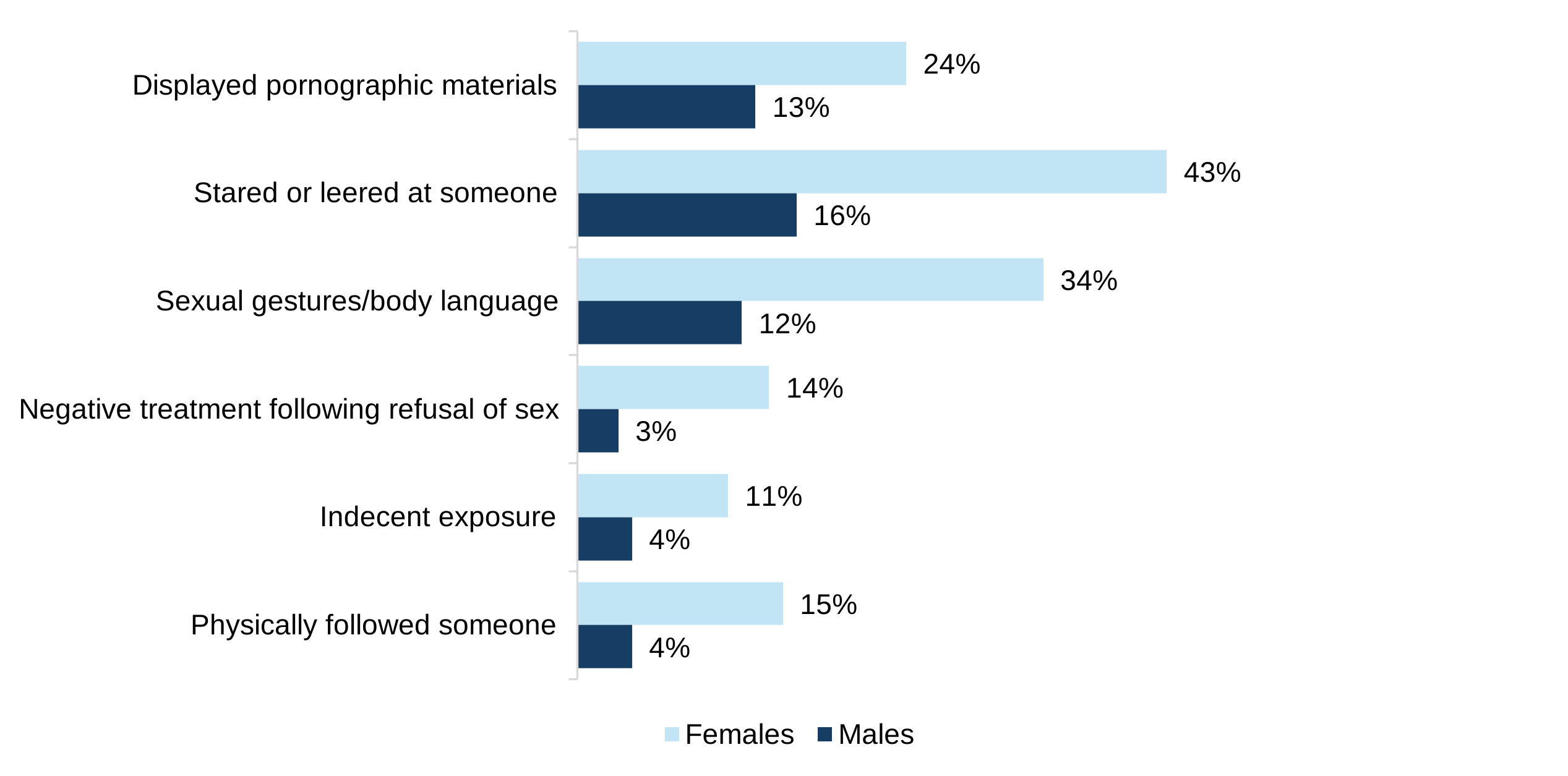
Figure 24 shows that both males and females were most likely to have seen (or had knowledge of) “staring or leering” at another person (Females: 43%, Males: 16%).
Around one third (34%) of females have seen (or had knowledge of) “sexual gestures/body language” and 24% have seen (or had knowledge of) someone having “displayed pornographic materials” compared to 12% and 13% of males respectively.
Between 11% and 15% of females have seen (or had knowledge of) incidents where someone was “physically followed” , experienced “negative treatment following refusal of sex” and/or “indecent exposure” compared to between 3% and 4% of males.
17.5 Awareness by behaviour type – Cyber (Regulars by sex)
Figure 25. Regulars’ awareness of ‘Cyber’ sexualised behaviour in the last 12 months, by sex (%).
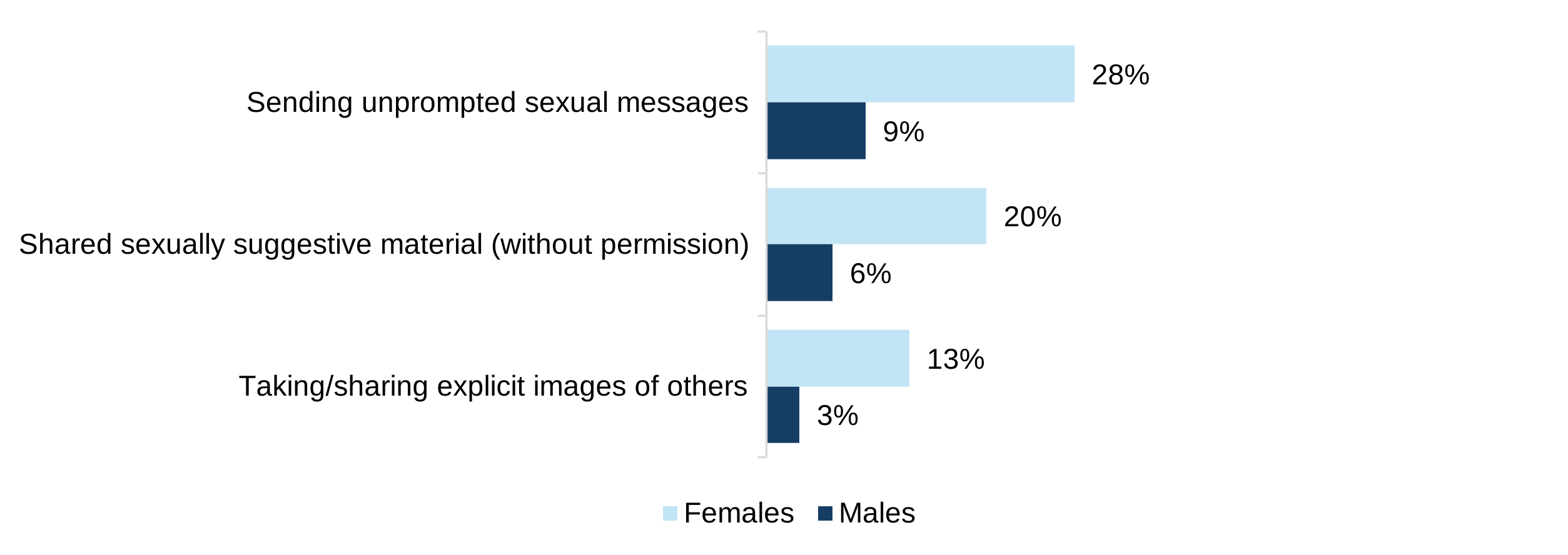
Figure 25 shows that 28% of females reported having seen (or had knowledge of) “unprompted messages of a sexual nature [sent to someone by electronic means]” compared to 9% of males.
Two in ten females (20%) have seen (or had knowledge of) someone “sharing sexually suggestive material about someone [without their permission]” compared to 6% of males, and 13% of females have seen (or had knowledge of someone) “taking/sharing explicit images of others” compared to 3% of males.
17.6 Awareness by behaviour type – Physical (Regulars by sex)
Figure 26. Regulars’ awareness of ‘Physical’ sexualised behaviour in the last 12 months, by sex (%).
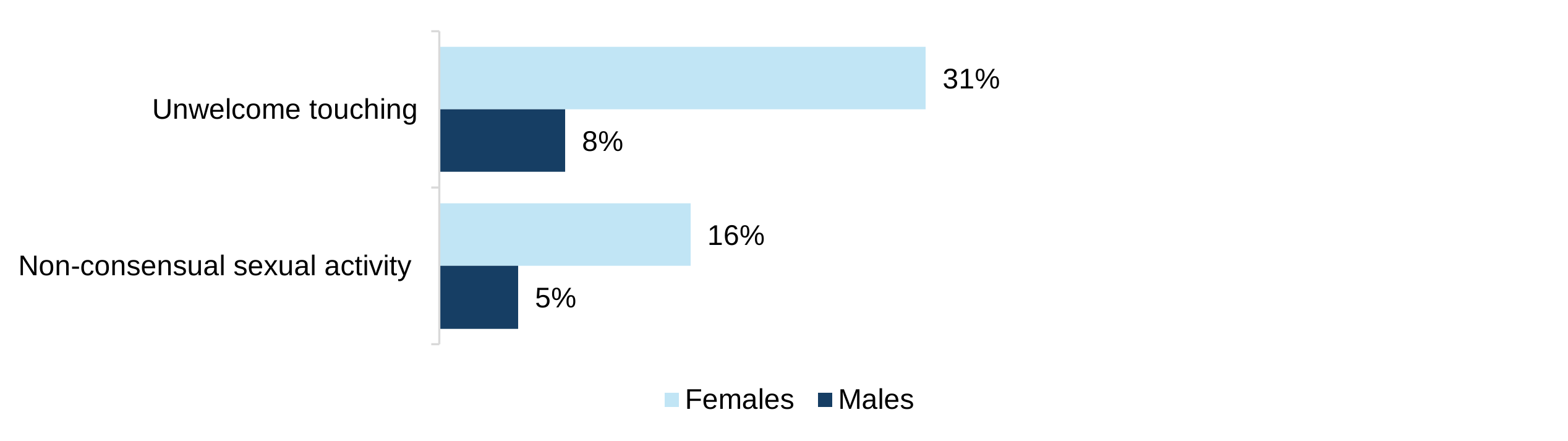
Figure 26 shows that more than three in ten (31%) females have seen (or had knowledge of) someone being “touched in a way that made them feel uncomfortable” compared to 8% of males.
16% of females have seen (or had knowledge of) someone experiencing “non-consensual sexual activity” compared to 5% of males.
17.7 Awareness of sexualised behaviour (Regulars by sex and Service)
Figure 27. Regulars’ awareness of sexualised behaviour in the last 12 months, by Service, by sex (%).
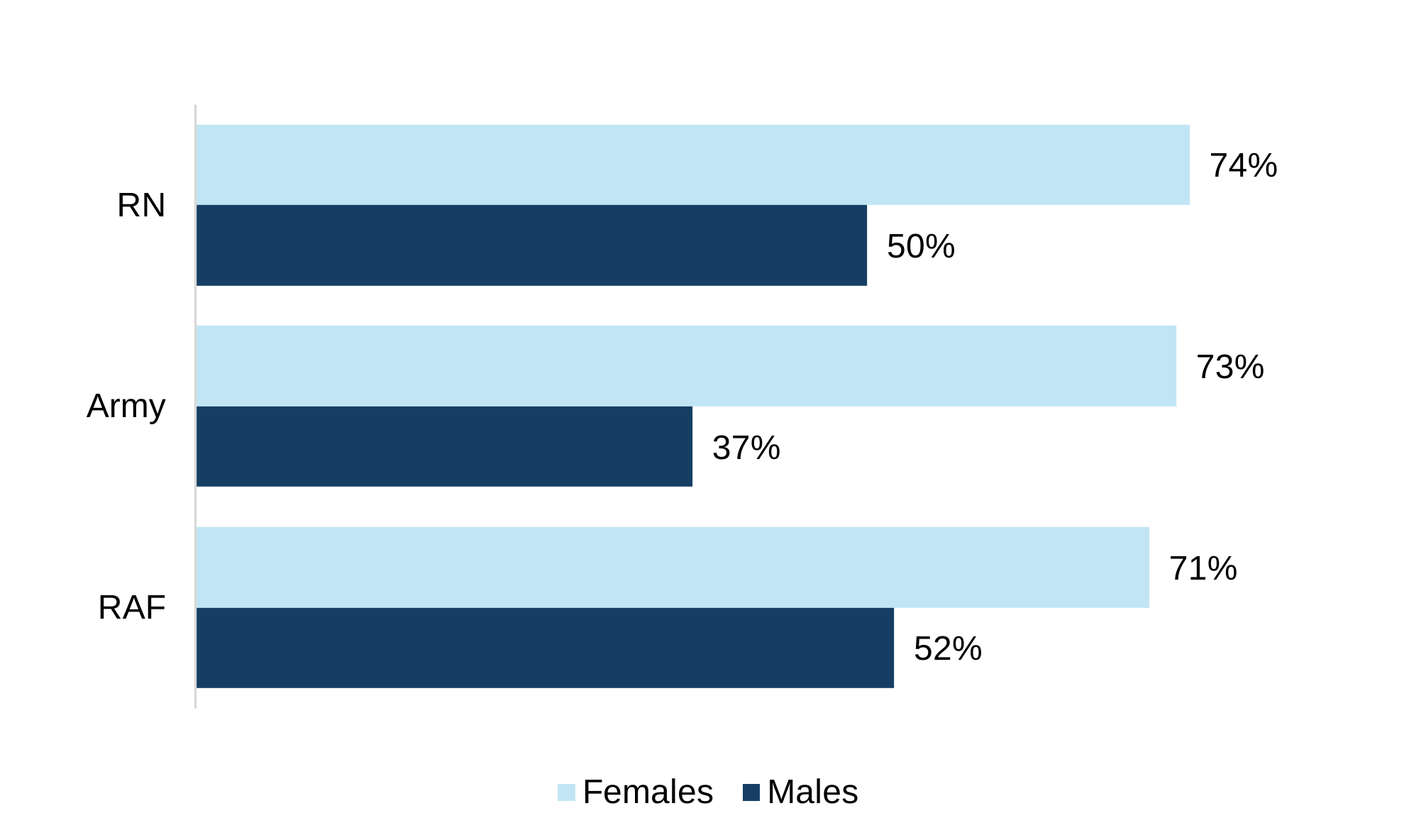
Figure 27 shows Army males (37%) were less likely to have seen (or had knowledge of) sexualised behaviour compared to males of the other Services (RN: 50%, RAF: 52%).
17.8 Awareness by behaviour type (Regulars by sex and Service)
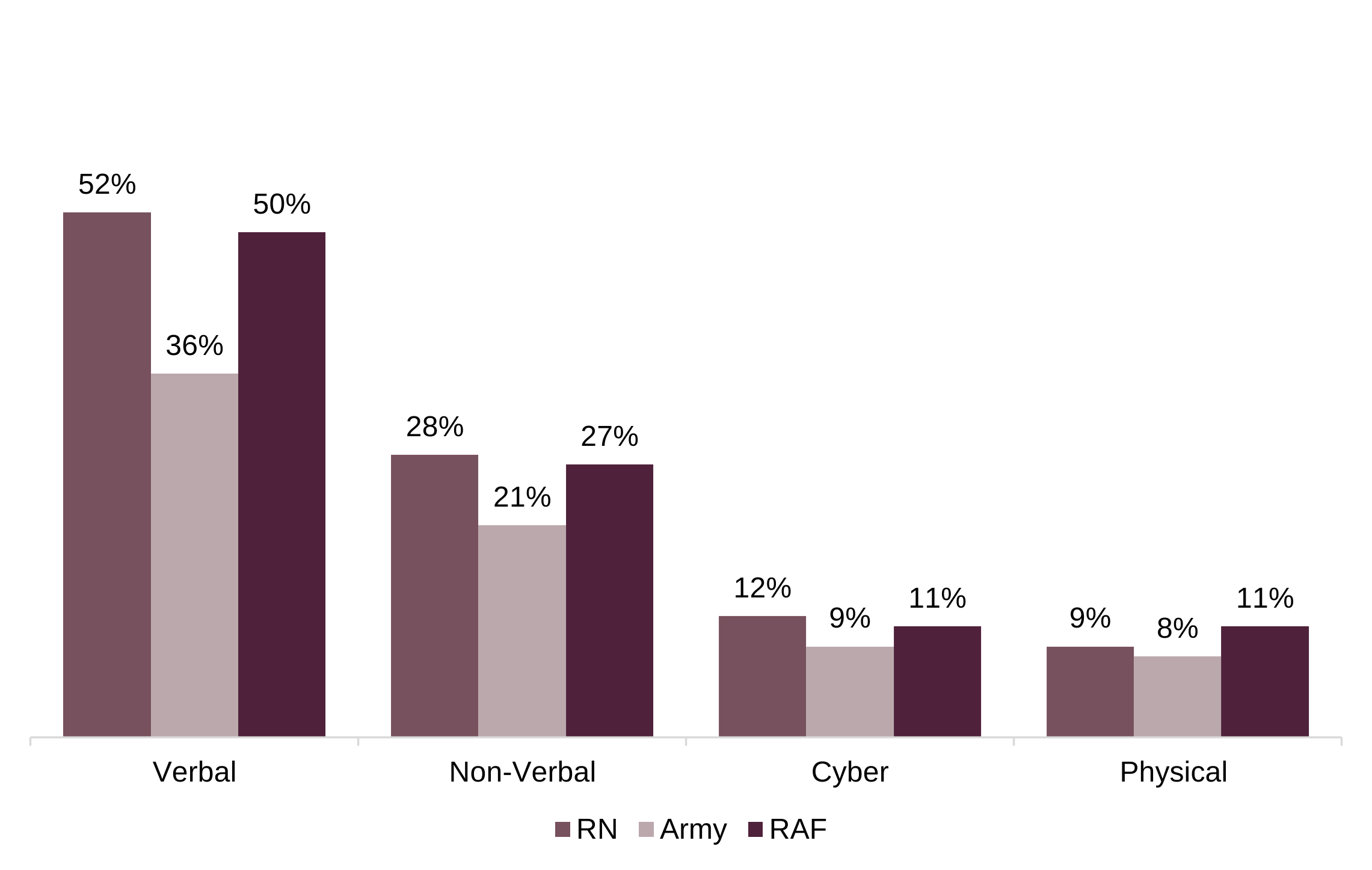
Figure 28. Male Regulars’ awareness of sexualised behaviour in the last 12 months, by Service, by type (%).
To have seen (or had knowledge of) a sexualised behaviour type, personnel had to have seen/had knowledge of at least one of the listed behaviours within its category in the last 12 months.
Figure 28 shows that Army males were less likely to have seen (or had knowledge of) both ‘Non-Verbal’ (Army: 21%, RN: 28% RAF: 27%) and ‘Verbal’ (Army: 36%, RN: 52%, RAF: 50%) sexualised behaviour compared to males from the other Services.
There were no differences in the proportion of females from each of the Services who had seen (or had knowledge of) any of the behaviour types occurring in the last 12 months.
17.9 Awareness of sexualised behaviour (Regulars by sex and rank)
Figure 29. Regulars’ awareness of sexualised behaviour in the last 12 months, by Sex, by Rank Group (%).
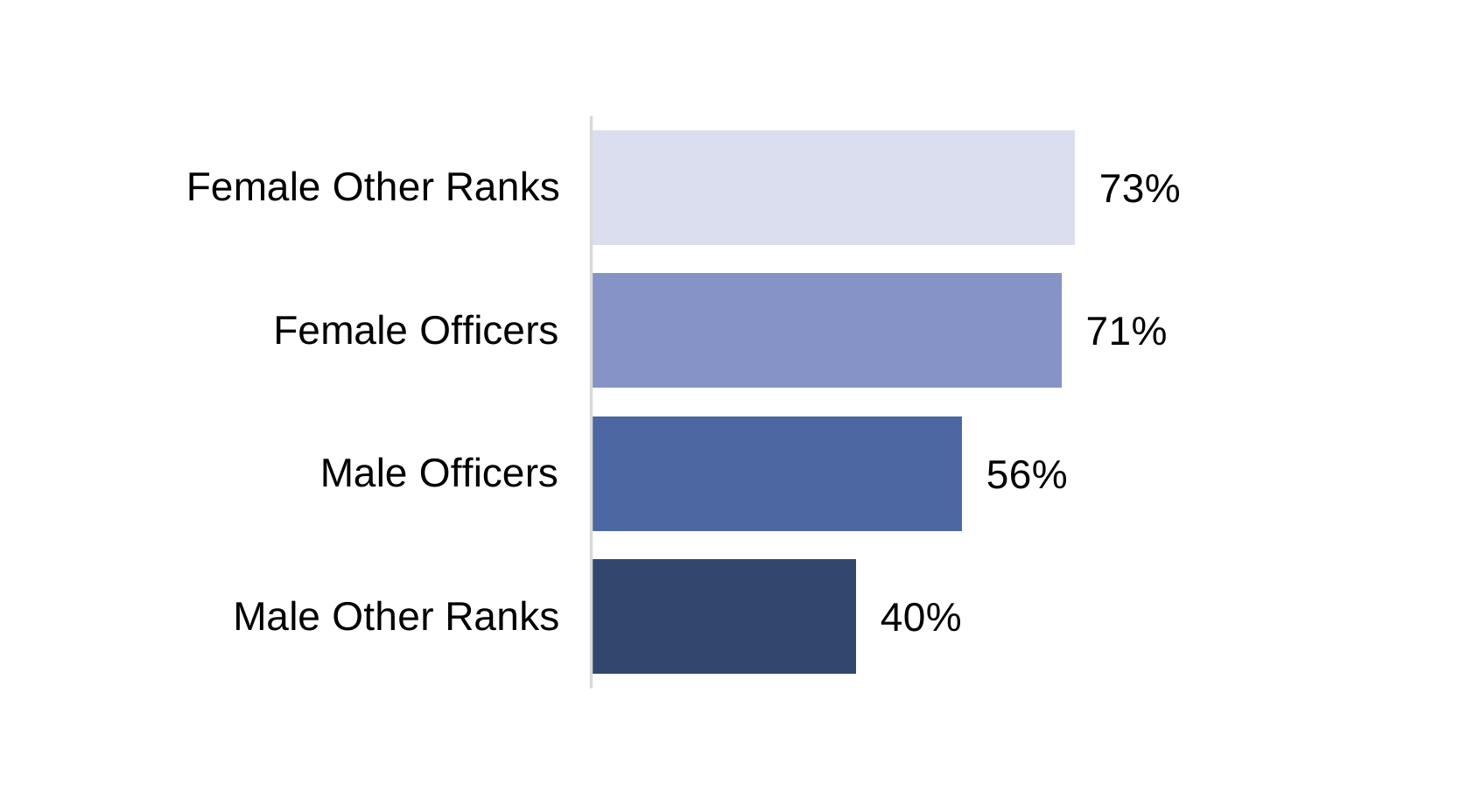
Figure 29 shows male Other Ranks (40%) were less likely to have seen (or had knowledge of) sexualised behaviour compared to male Officers (56%).
17.10 Awareness by behaviour type (Regulars by sex and rank)
Figure 30. Regulars’ awareness of sexualised behaviour in the last 12 months, by Sex, by Rank Group, by type (%).
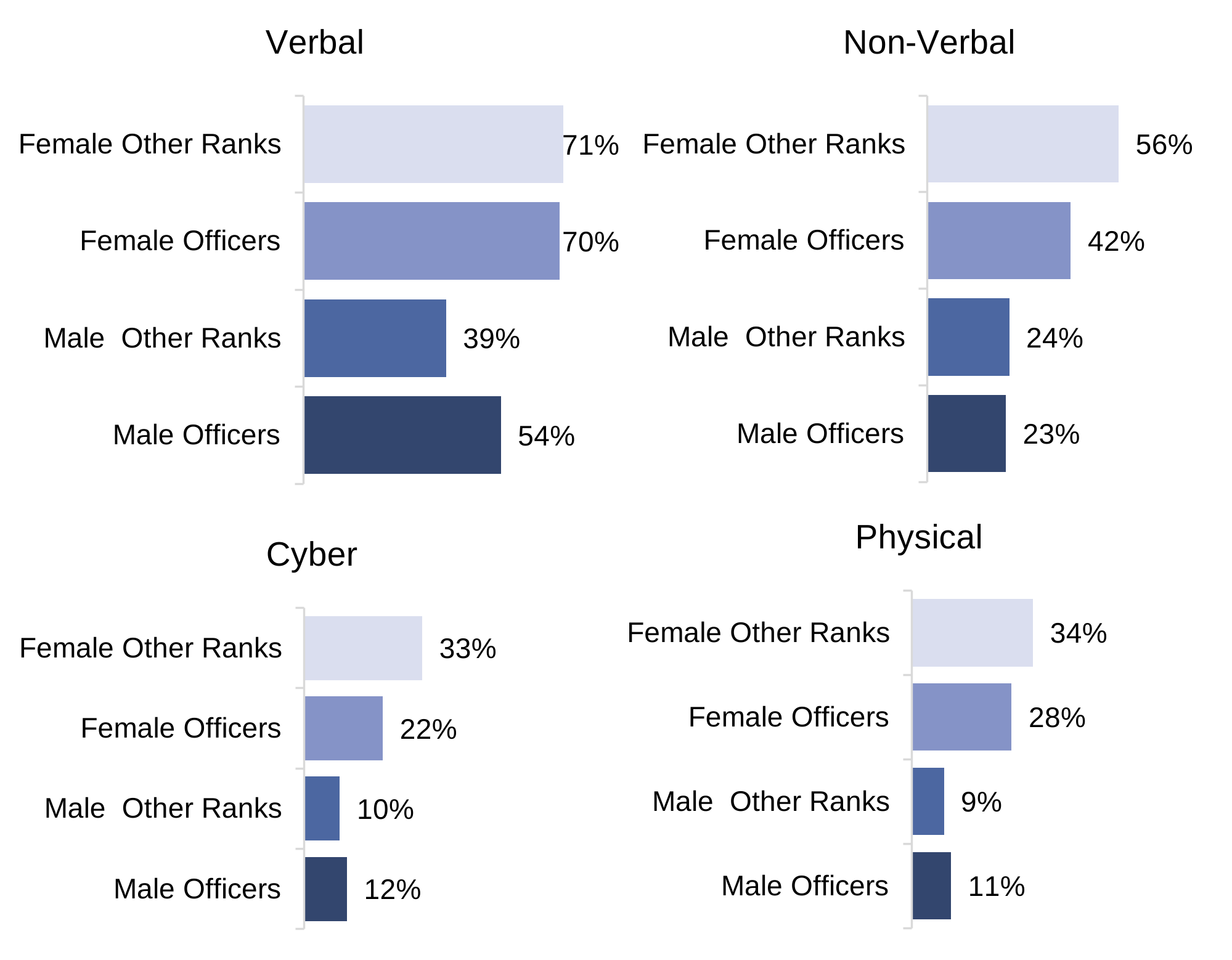
To have seen (or had knowledge of) a sexualised behaviour type, personnel had to have seen/had knowledge of at least one of the listed behaviours within its category in the last 12 months.
Figure 30 shows that female Other Ranks were most likely to have seen (or had knowledge of) ‘Non-Verbal’, ‘Cyber’ and ‘Physical’ behaviour. Both female Other Ranks and female Officers were more likely than male Officer and Other Ranks to have seen (or had knowledge of) ‘Verbal’ behaviour.
18. Preventing sexual harassment in the Armed Forces (Regulars)
Personnel were asked to what extent they believe their Service tries to prevent sexual harassment. Their response options were: “Not at all”, “Small extent”, “Moderate extent”, “Large extent”, “Very large extent”, and “I’m not sure”.
For the purpose of this report, “Large extent” and “Very large extent” are grouped together.
By sex, males (68%) were more likely to believe their Service tries to prevent sexual harassment to a “large-very large extent” compared to females (42%).
By Service, RAF (69%) were more likely than the other Services (RN: 65%, Army: 64%) to believe their Service tries to prevent sexual harassment to a “large-very large extent”.
By Rank, male Officers (82%) were more likely to believe their Service tries to prevent sexual harassment to a “large-very large extent” compared to male Other Ranks (65%).
Female Officers (54%) were more likely to believe their Service tries to prevent sexual harassment to a “large-very large extent” compared to female Other Ranks (38%).
19. Supporting those who have been sexually harassed (Regulars by sex)
Males (57%) are more likely to think their Service supports those who have been harassed to a “large-very large extent” compared to females (32%).
20. Reserves Armed Forces personnel
21. Experience of sexualised behaviours (Reserves)
This section is based on Reserves who have experienced at least one sexualised behaviour in the last 12 months
Personnel were asked to indicate whether they had, in the previous 12 months, experienced sexualised behaviour directed towards themselves personally. Personnel were presented with a list of the 19 sexualised behaviours and asked how often they had experienced these behaviours in the last 12 months.
Due to the unequal ratio of male to female personnel within the Reserves, weighting for representativeness will result in ‘overall figures’ appearing closer to the estimates for ‘male personnel’.
You can find overall figures in the Supplementary Tables.
As there are differences in the experiences of female and male personnel, this report will primarily report findings split by sex.
21.1 Experience of sexualised behaviour (Reserves by sex)
Female Reserve personnel were more likely (55%) than male Reserve personnel (34%) to have experienced at least one sexualised behaviour in the last 12 months.
21.2 Experience by behaviour type (Reserves by sex)
Figure 31. Reserves’ experience of sexualised behaviour in the last 12 months, by type, by sex (%).
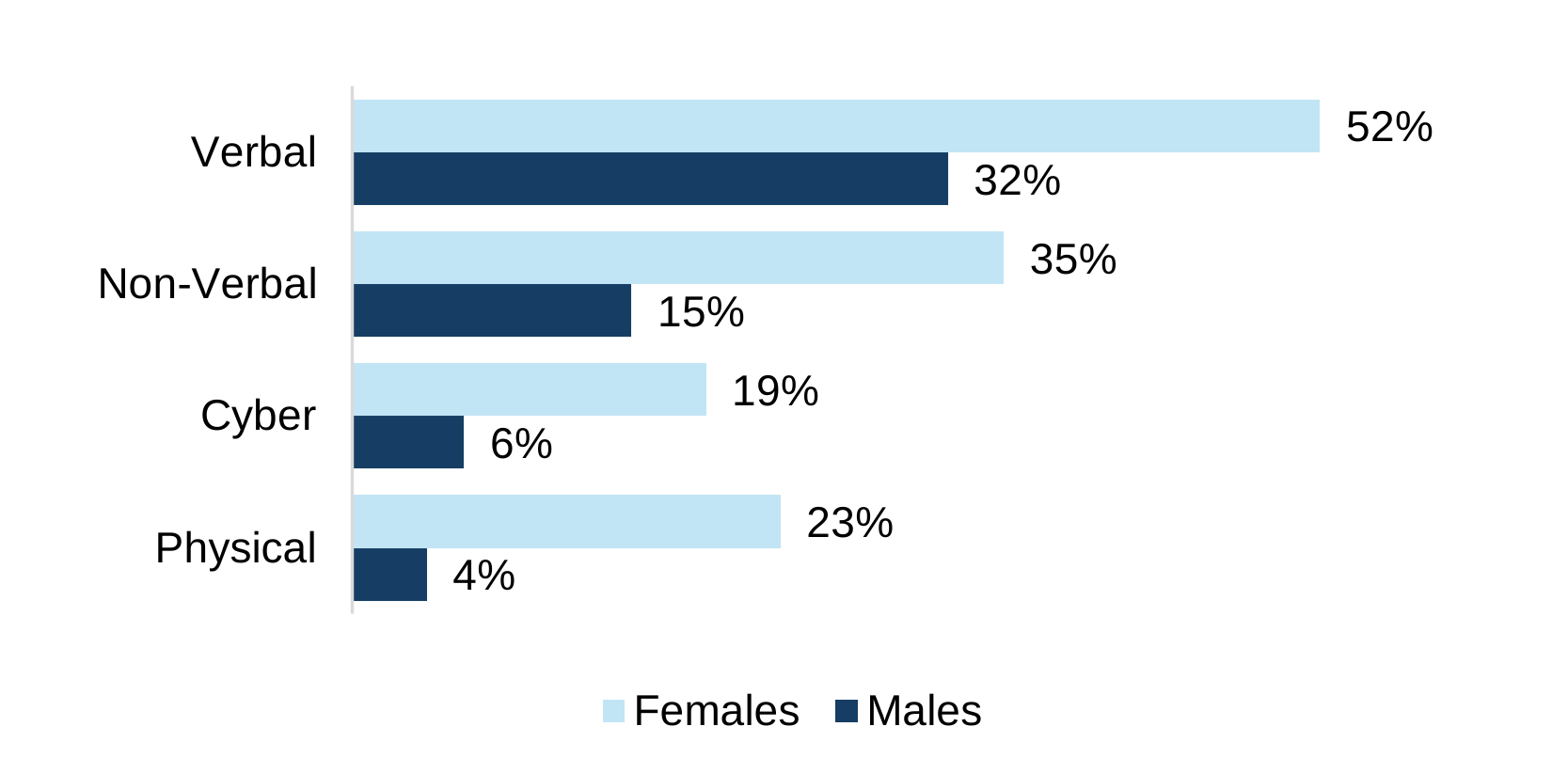
To have experienced a sexualised behaviour type, personnel had to have experienced at least one of the listed behaviours within its category in the last 12 months.
Figure 31 shows females were more likely to have experienced all four types of sexualised behaviour (‘Verbal’, ‘Non-Verbal’, ‘Cyber’ and ‘Physical’) compared to males.
Females were more likely to have experienced all of the individual sexualised behaviours compared to males.
21.3 Experience by individual behaviour – Verbal (Reserves by sex)
Figure 32. Reserves’ experience of ‘Verbal’ sexualised behaviour in the last 12 months, by sex (%).
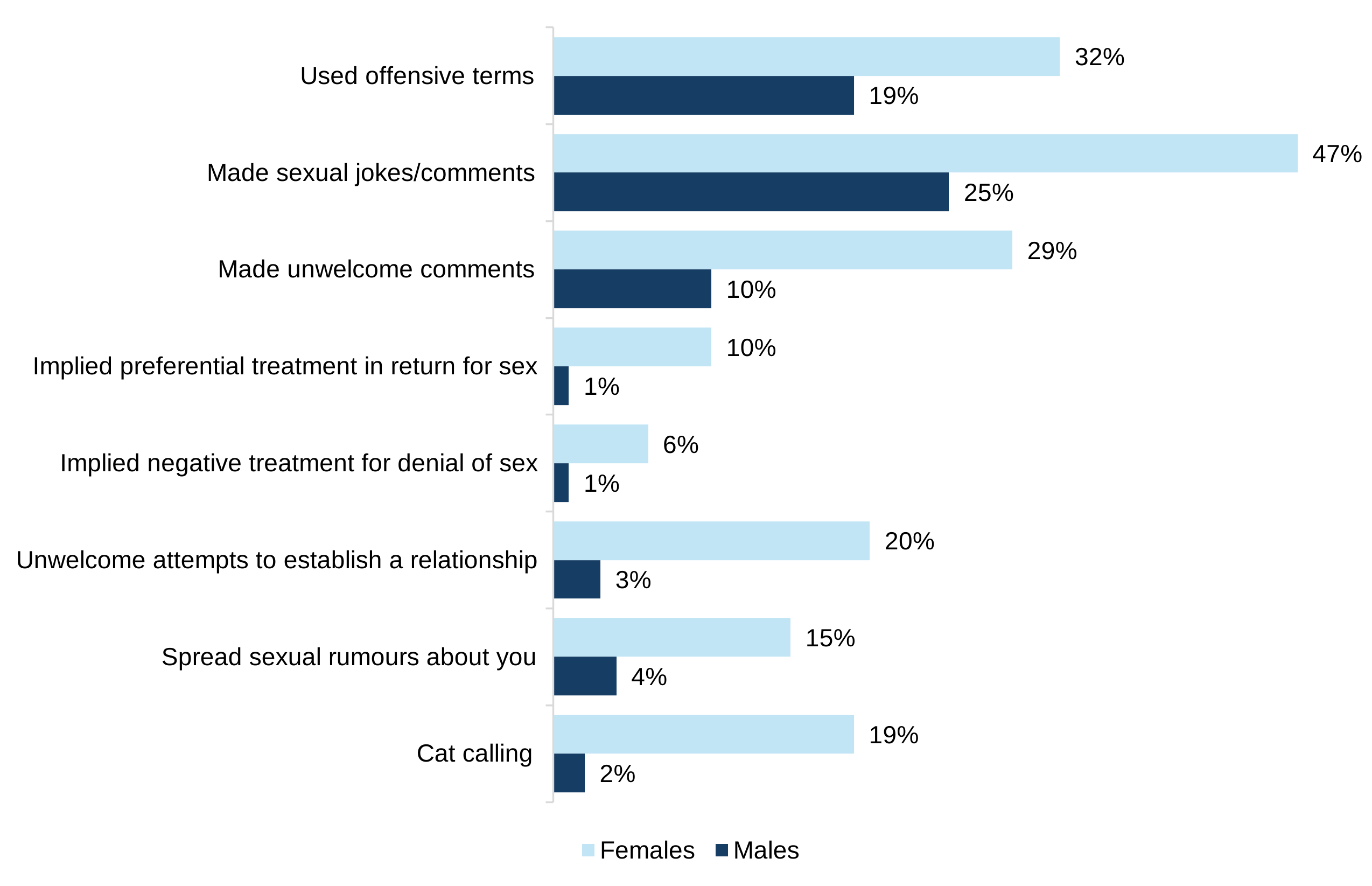
Figure 32 shows both females and males most commonly experienced “jokes or comments of a sexual nature” (Females: 47%, Males: 25%).
Around three in ten females experienced being “referred to in offensive terms” (32%) and had “unwelcome comments [made] about [their] appearance, body, and/or sexual activity” (29%) compared to 19% and 10% of males respectively.
Around one in five females experienced “unwelcome attempts to establish a romantic/sexual relationship with them” (20%), and/or “cat calling, wolf whistling or other provocative sounds” (19%) compared to 3% and 2% of males respectively.
21.4 Experience by individual behaviour – Non-Verbal (Reserves by sex)
Figure 33. Reserves’ experience of ‘Non-Verbal’ sexualised behaviour in the last 12 months, by sex (%).
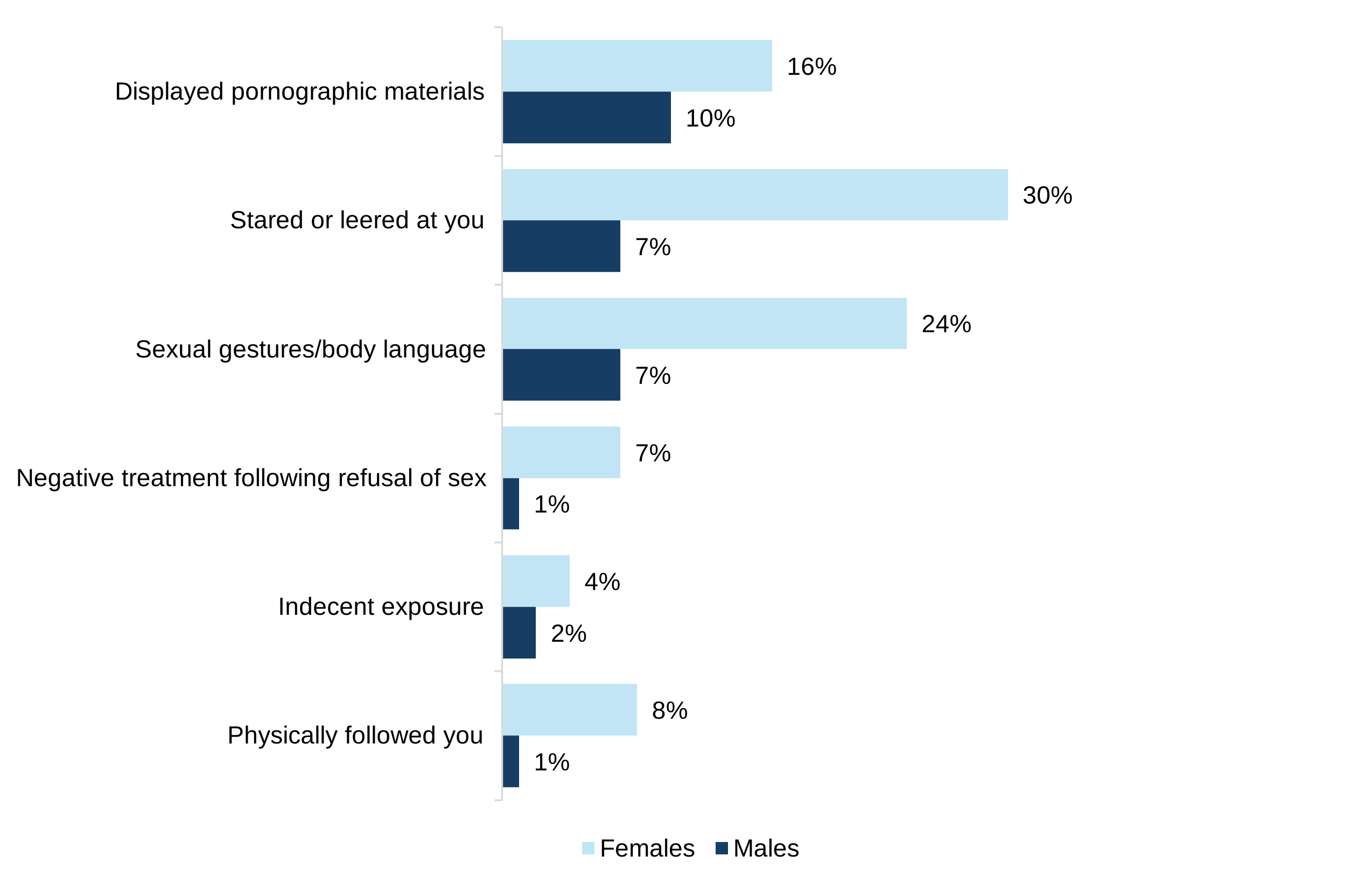
Figure 33 shows three in ten (30%) females were “stared or leered at” and around one in four (24%) experienced “sexual gestures and/or sexual body language” compared to 7% of males for both behaviours.
8% of females experienced being “physically followed, making [them] feel sexually threatened”, and 7% had been “treated negatively for refusing to engage in sexual activity”, compared to 1% of males for both behaviours.
21.5 Experience by individual behaviour – Cyber (Reserves by sex)
Figure 34. Reserves’ experience of ‘Cyber’ sexualised behaviour in the last 12 months, by sex (%).
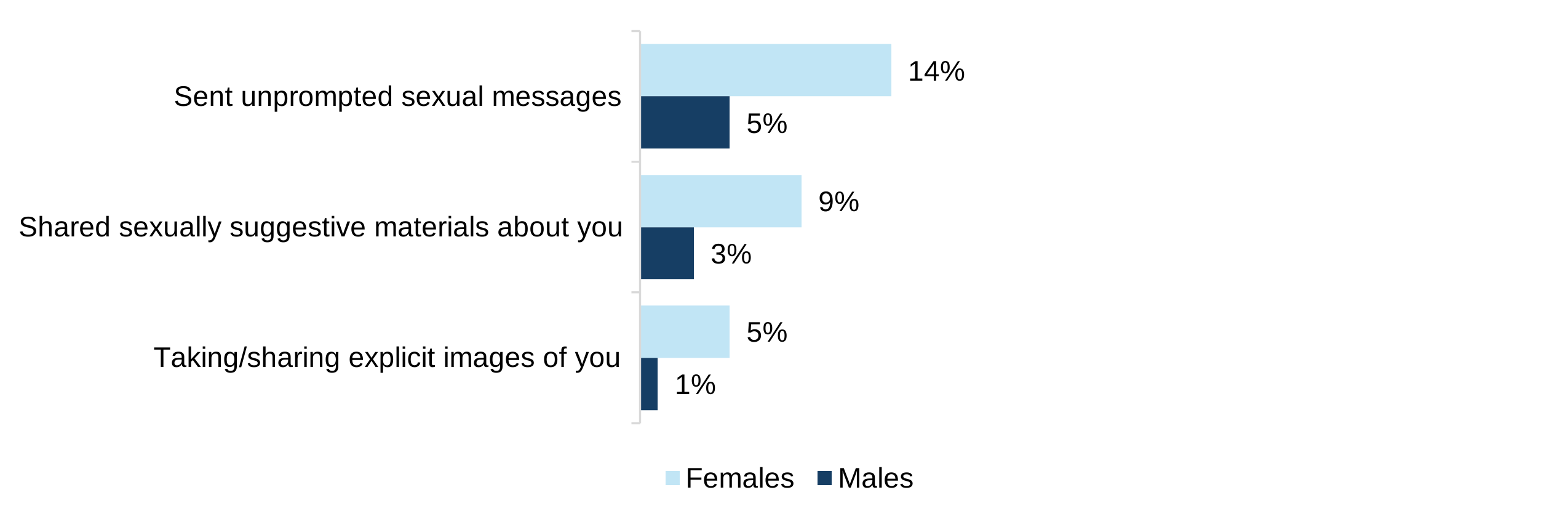
Figure 34 shows 14% of females were sent “unprompted messages of a sexual nature via text, email, social media or group messaging platform” compared to 5% of males.
Females (9%) were also more likely than males (3%) to have had “sexually suggestive material [shared] about [them] via text, email, social media or group messaging platform without their permission”.
5% of females had “sexual pictures or videos of [them] taken and/or shared without [their] permission”, compared to 1% of males.
21.6 Experience by individual behaviour – Physical (Reserves by sex)
Figure 35. Reserves’ experience of ‘Physical’ sexualised behaviour in the last 12 months, by sex (%).
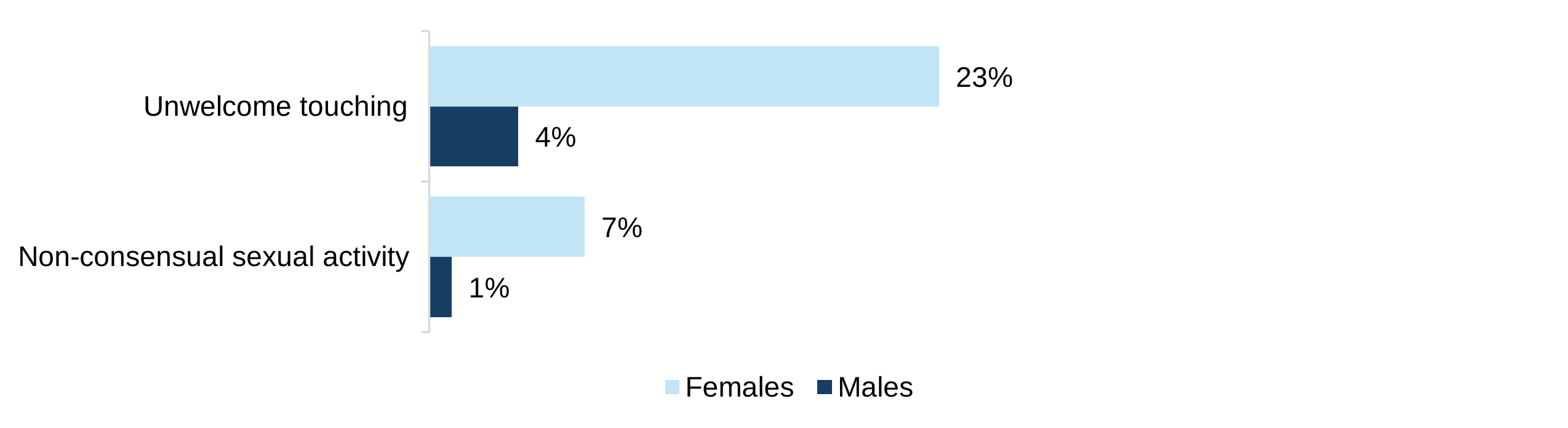
Figure 35 shows just under a quarter (23%) of females were “touched in a way that made [them] feel uncomfortable” compared to 4% of males.
7% of females were “subjected to sexual activity which [they] did not consent to” compared to 1% of males.
21.7 Experience of sexualised behaviour (Reserves by Service)
Due to the lower number of responses from Reserves, only percentages at an overall single Service level have been reported.
Army (39%) were more likely to have experienced a sexualised behaviour compared to Maritime (31%) and RAF (29%).
21.8 Experience of sexualised behaviour (Reserves by sex and rank)
Figure 36. Reserves’ experience of sexualised behaviour in the last 12 months, by Sex, by rank group (%).
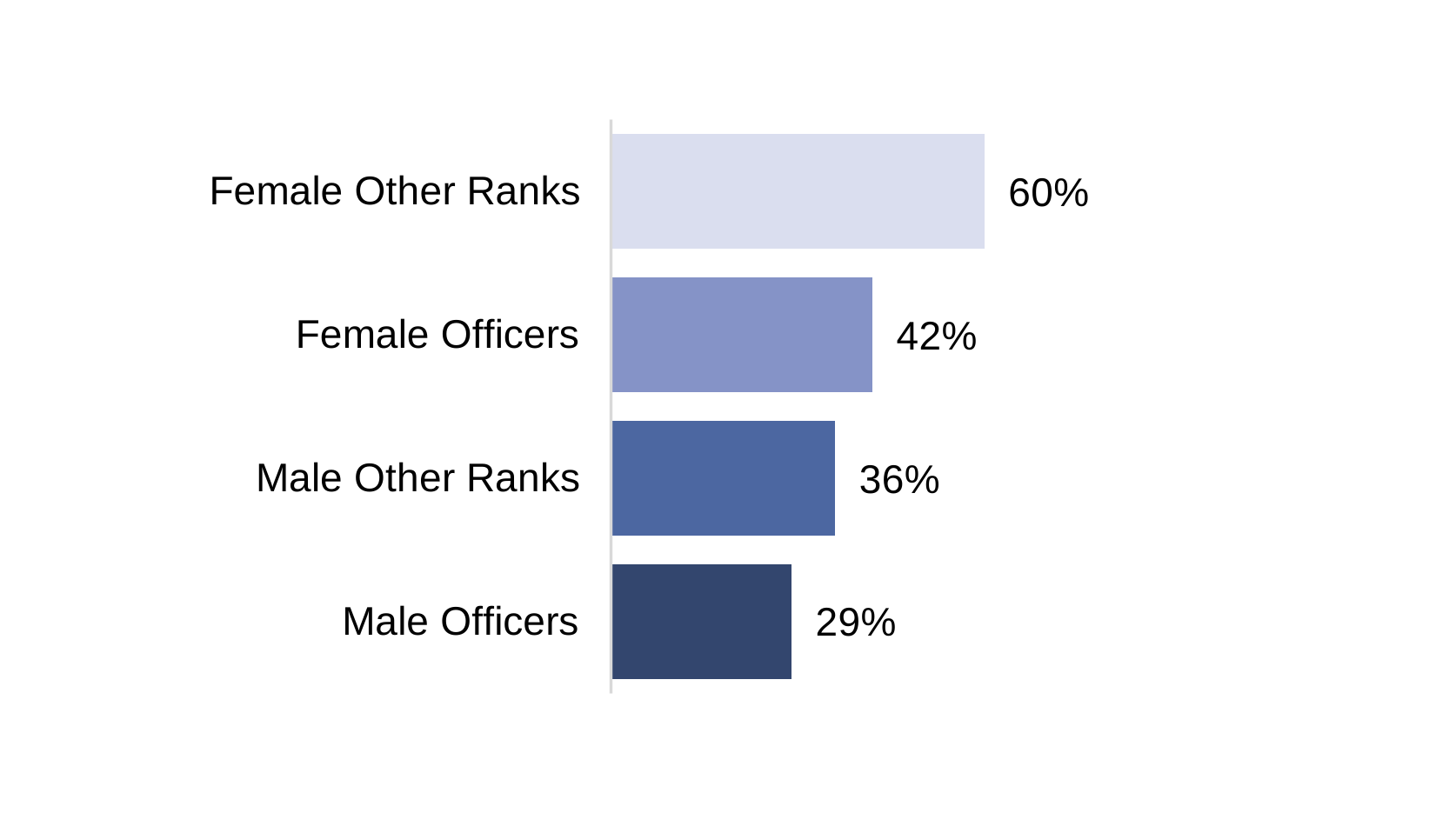
Figure 36 shows female Other Ranks were more likely to have experienced sexualised behaviour compared all other sex/rank groups.
Female Officers were more likely to experience sexualised behaviour compared to male Officers.
21.9 Experience by behaviour type (Reserves by sex and rank)
Figure 37. Reserves’ experience of sexualised behaviour in the last 12 months, by Sex, by rank group, by type (%).
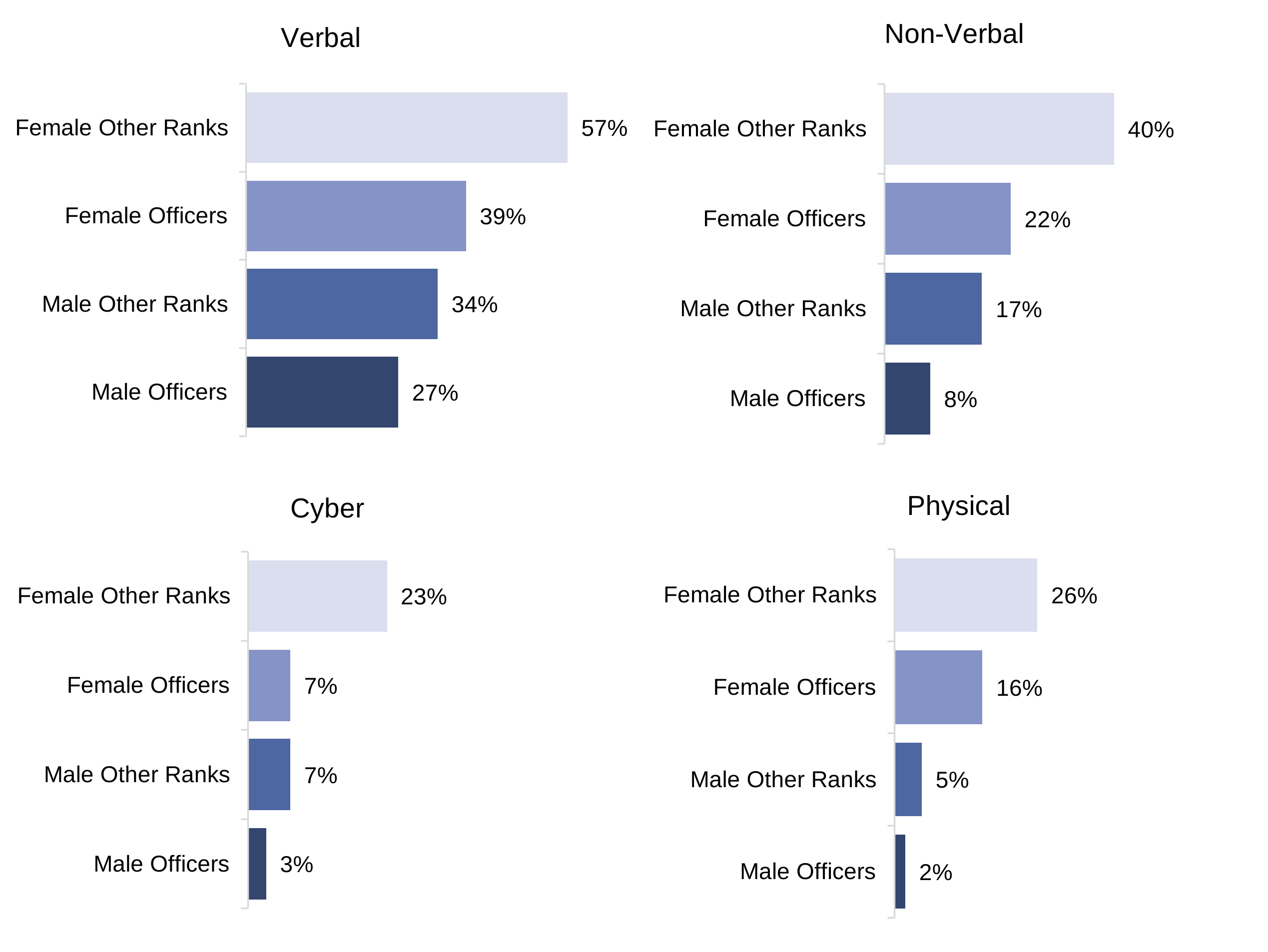
To have experienced a sexualised behaviour type, personnel had to have experienced at least one of the listed behaviours within its category in the last 12 months.
Figure 37 shows that female Other Ranks were the most likely to have experienced behaviours classified as ‘Verbal’, ‘Non-Verbal’ and ‘Cyber’ compared to other sex/rank groups.
22. Contextual information on the experiences of sexualised behaviour (Reserves)
This section is only based on the responses from Reserves who had experienced at least one of any sexualised behaviour at least once in the last 12 months. Personnel who have been targeted by sexualised behaviour were subsequently asked to provide details of the incident(s).
Personnel were asked to answer questions based on all behaviours they may have experienced. As personnel may have experienced more than one of the sexualised behaviours, it is not possible to determine which behaviour personnel were referring to, as they may have responded to each in different ways.
23. Location of experienced sexualised behaviour (Reserves)
Figure 38. Locations where Reserves experienced sexualised behaviour in the last 12 months (%).
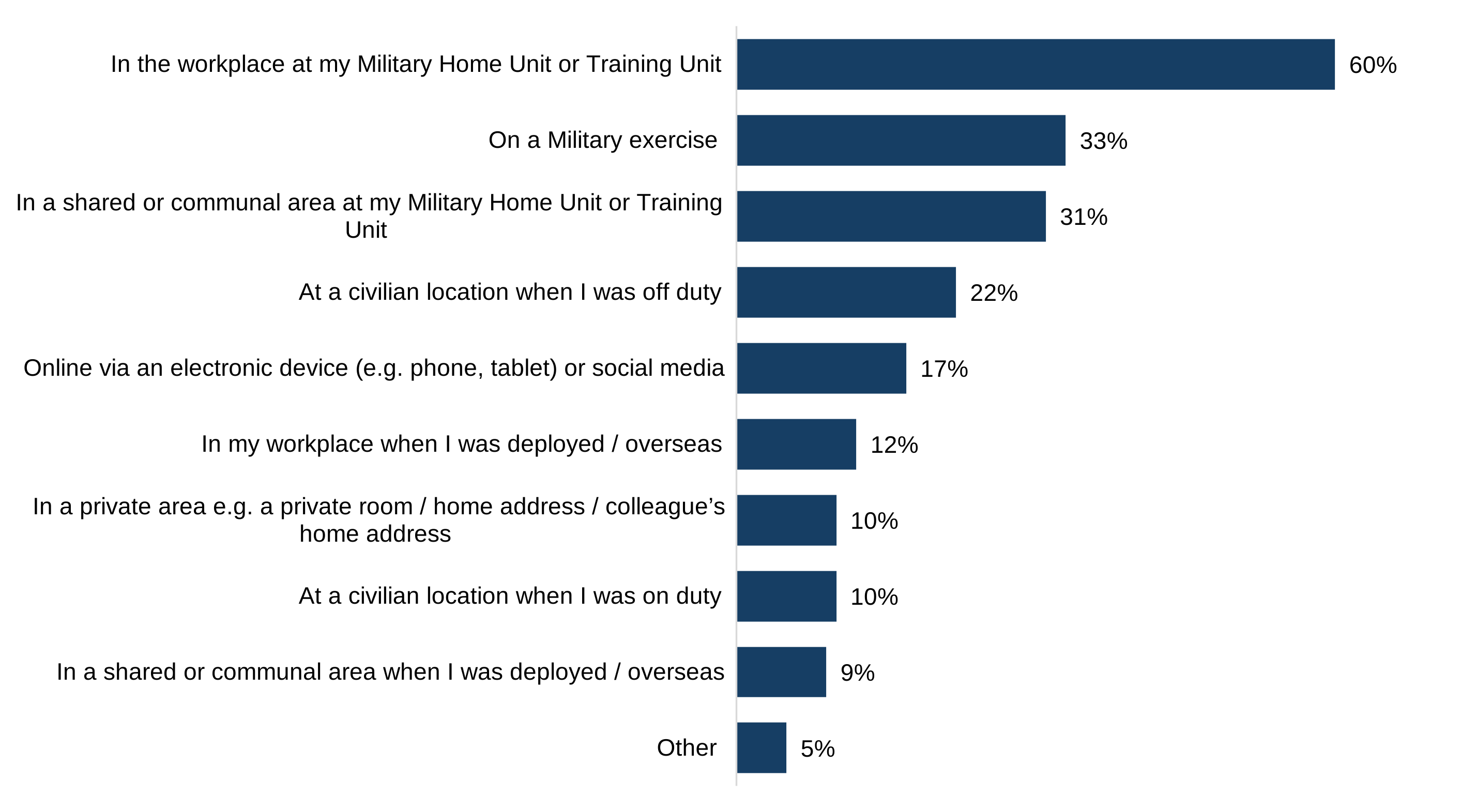
Figure 38 shows that 60% of sexualised behaviour happened “in the workplace at my military home unit or training unit”.
Around one third of incidents of sexualised behaviour happened “on a military exercise” (33%) or “in a shared or communal area at my military home unit or training unit” (31%).
24. Number of perpetrators (Reserves)
Personnel were asked to specify how many different individuals perpetrated the sexualised behaviour(s) that they experienced: “1”, “2-3”, “4-10”, “More than 10” or if they were “not sure”.
As personnel were asked to answer questions based on all the experienced sexualised behaviours, it is not possible to determine whether a singular behaviour, or multiple different behaviours was perpetrated by one or more individual.
Figure 39. Number of individuals responsible for sexualised behaviour experienced by Reserves, in the last 12 months (%).
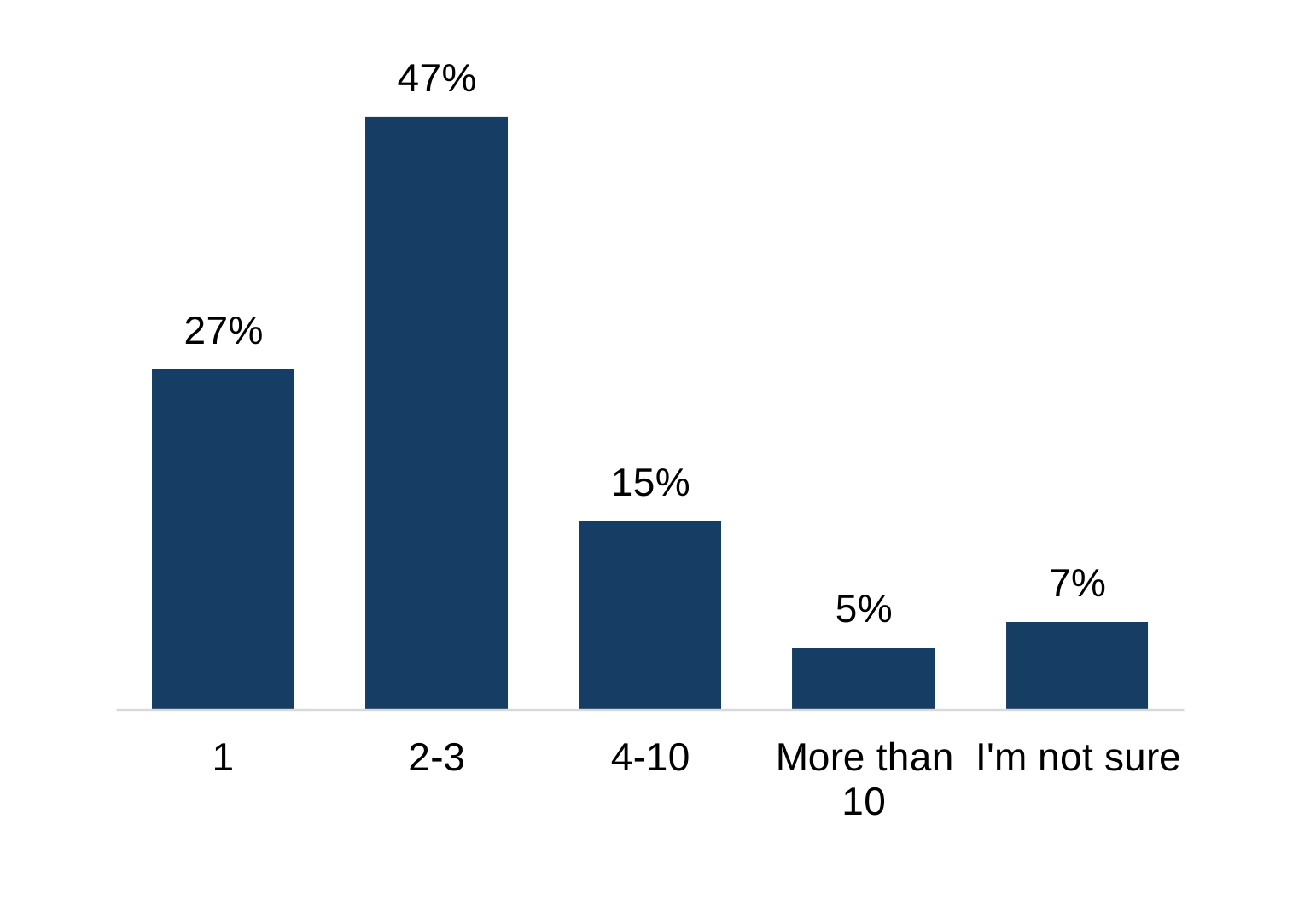
Figure 39 shows almost half of all Reserves (47%) indicated that the sexualised behaviour they experienced was perpetrated by “2-3” different individuals, with the second most common number being “1” (27%).
This pattern of responses is also seen for both sexes and both rank groups.
25. Rank of perpetrator(s) (Reserves)
Reserves were asked state the rank(s) of the perpetrator(s) of the sexualised behaviour they experienced.
Perpetrator rank is therefore ‘perceived by’ the individual that experienced the sexualised behaviour.
As personnel were asked to comment on all behaviours they had experienced and could select more than one response to the questions, it is not possible to specify which behaviour(s) were perpetrated by which rank(s). Respondents may have had multiple experiences of sexualised behaviours perpetrated by different ranks, therefore percentages may not sum to 100%.
“Junior Ranks” and “Senior non-commissioned Officers (NCO) / Warrant Officers” are junior and senior ‘levels’ of the rank group ‘Other Ranks’ as mentioned elsewhere in the report. Junior Officers, Senior Officers and 1* and above ranks make up the rank group ‘Officers’.
Overall percentages will be affected by the number of Reserves personnel within each rank population (i.e. low estimates associated with “1* and above” ranks, may be attributed to the low population of Reserves with these ranks).
25.1 Rank of perpetrator(s) (Reserves by sex)
Figure 40. Ranks of the individuals that were responsible for the sexualised behaviour experienced by Reserves, in the last 12 months, by sex (%).
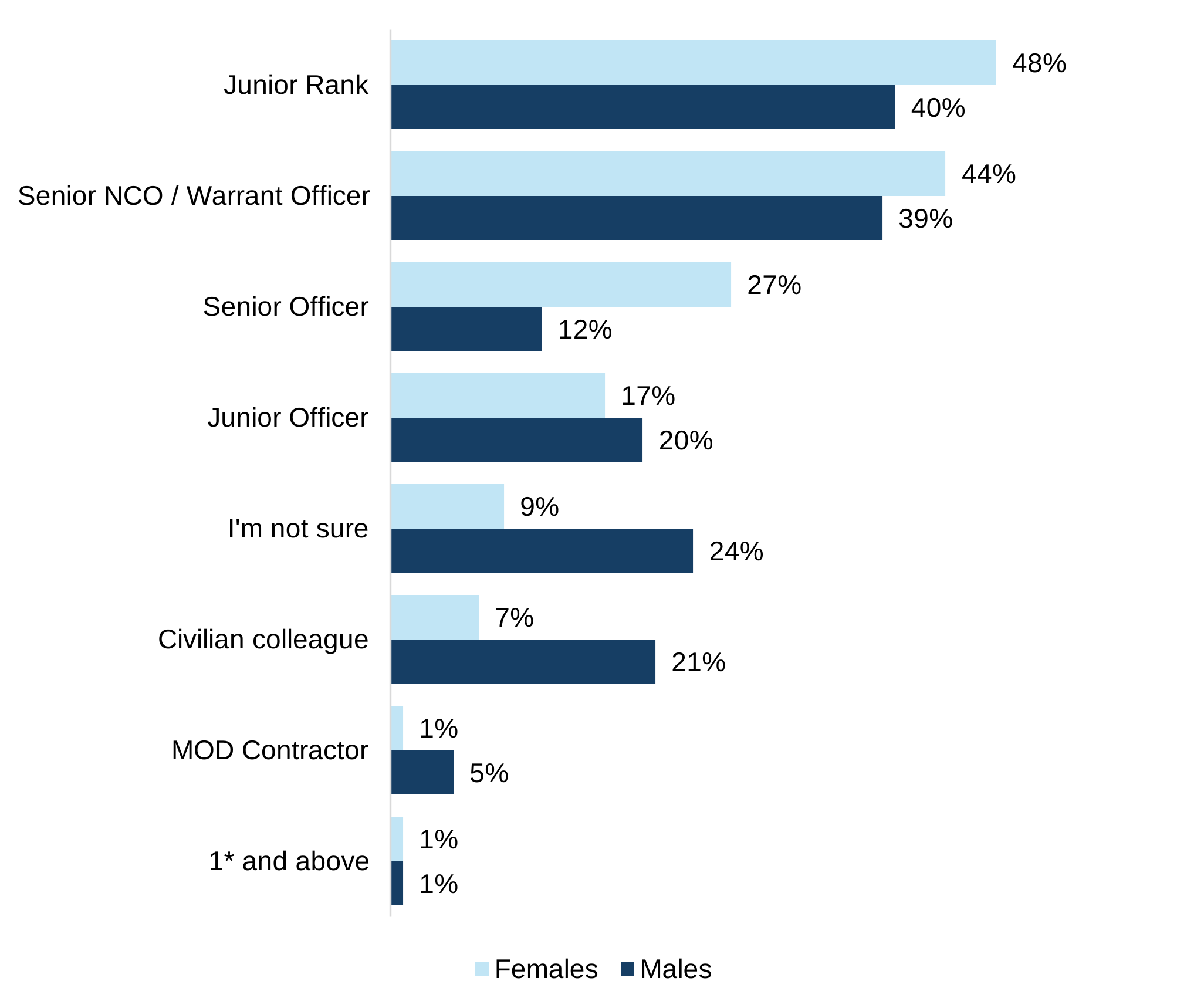
Figure 40 shows females (27%) were more likely than males (12%) to have experienced sexualised behaviour by “Senior Officer[s]”.
Males experienced sexualised behaviour perpetrated by “Civilian colleague[s]” (21%) more than females (7%).
25.2 Rank of perpetrator(s) (Reserves by rank)
Figure 41. Rank of the individuals that were responsible for the sexualised behaviour experienced by Reserves, in the last 12 months, by rank (%).
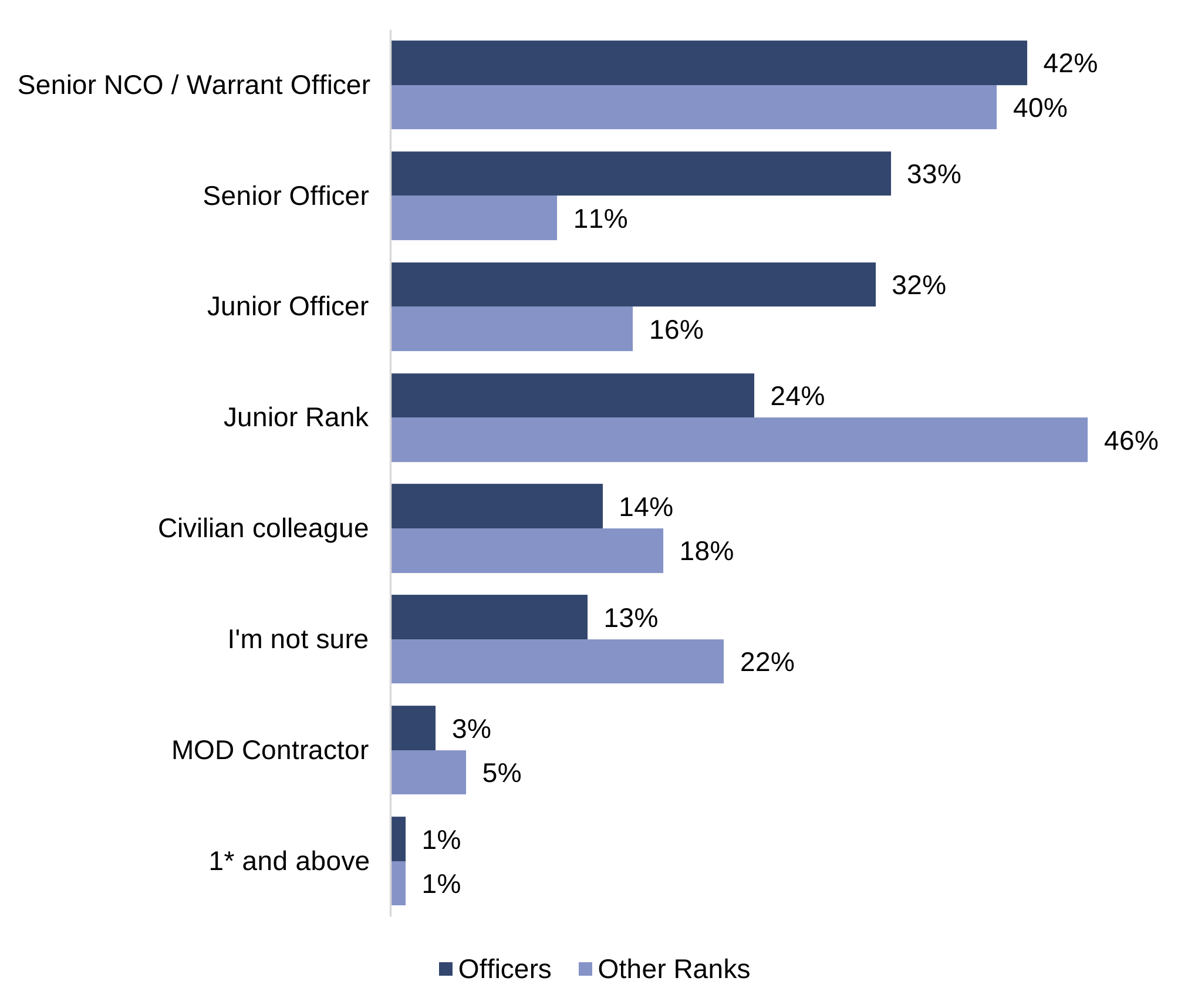
Figure 41 shows that Officers were more likely than Other Ranks to experience sexualised behaviour by other Officers (“Junior Officer”, “Senior Officer”, “1* and above”).
Other Ranks were more likely than Officers to experience sexualised behaviour by “Junior Ranks” (Other Ranks: 46%, Officers 24%).
26. Relationship of perpetrator(s) (Reserves)
Reserves that have experienced sexualised behaviour were most likely to identify the relationship of the perpetrator as their “Work Colleague” (55%), regardless of sex, rank or Service.
26.1 Relationship of perpetrator(s) (Reserves by rank)
Figure 42. Relationship of the individuals responsible for the sexualised behaviour experienced by Reserves, in the last 12 months, by rank (%).
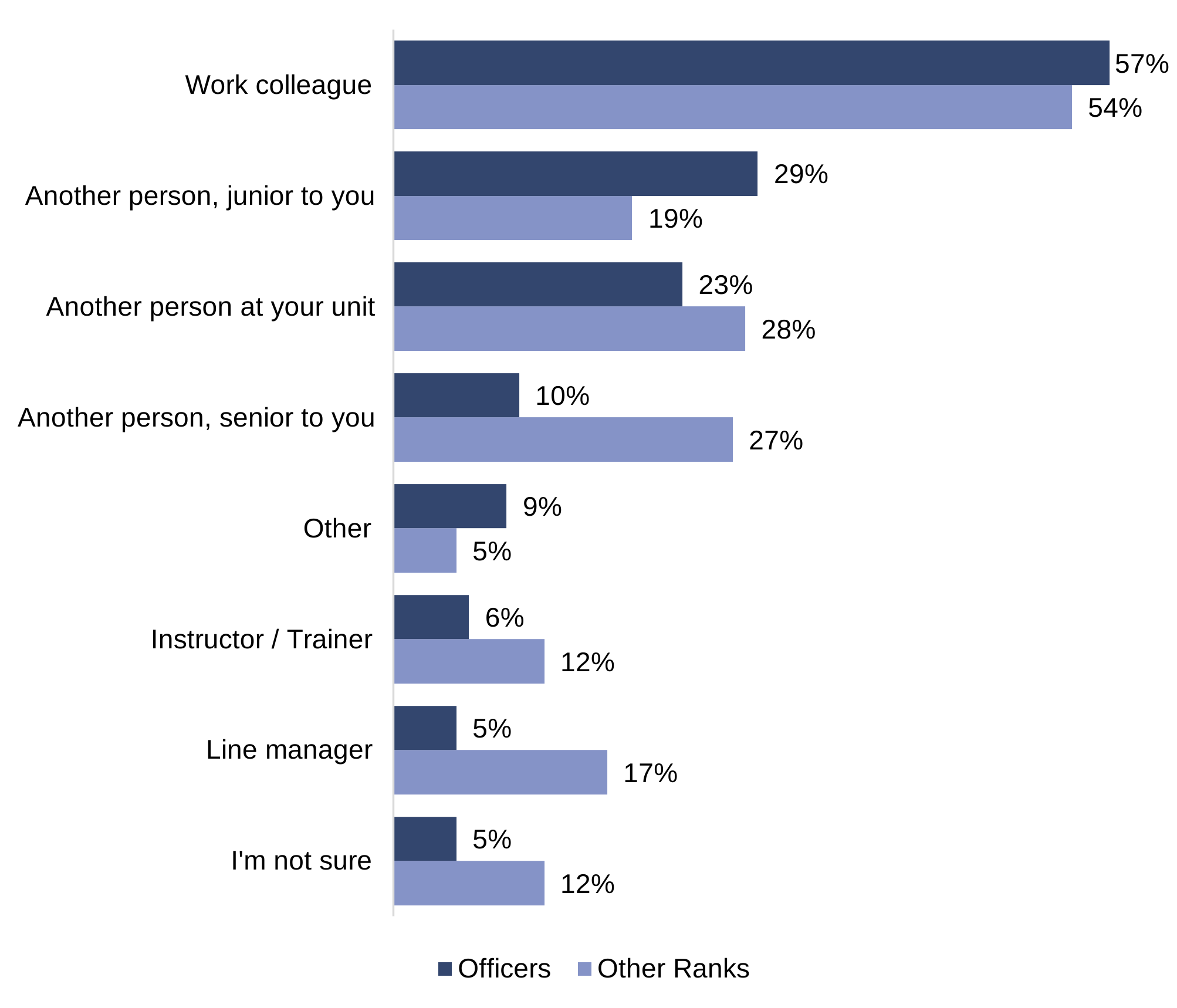
Figure 42 shows Other Ranks were more likely than Officers to experience sexualised behaviour by “Another person, more senior to [them]” (Other Ranks: 27%, Officers: 10%) and/or by a “Line manager” (Other Ranks: 17%, Officers: 5%).
27. Impact of experienced sexualised behaviour (Reserves)
27.1 Impact of experienced sexualised behaviour (Reserves by sex)
Figure 43. Impact on Reserves who experienced Sexualised Behaviour, by sex (%).
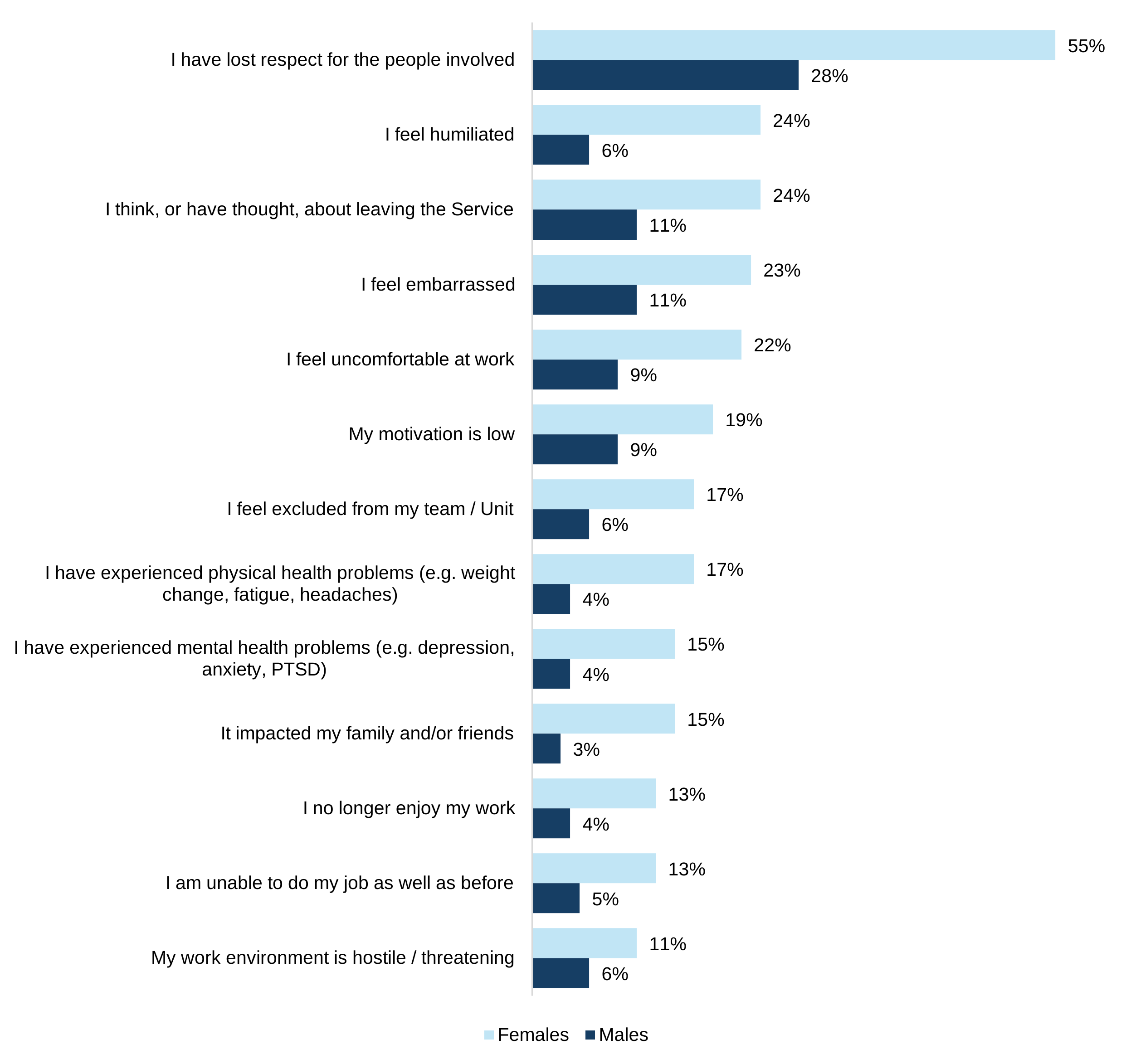
Figure 43 shows “[losing] respect for the people involved” was the most common impact on both females (55%) and males (28%) who experienced sexualised behaviour.
Females were more likely to report experiencing all of the impacts listed when compared to males, apart from “I no longer enjoy my work” and “my work environment is hostile / threatening”.
27.2 Impact of experienced sexualised behaviour (Reserves by rank)
Other Ranks were more likely to “feel uncomfortable at work” (Other Ranks: 13%, Officers: 6%), feel like their “motivation is low” (Other Ranks: 13%, Officers: 5%) and/or experience “physical health problems” (Other Ranks: 8%, Officers: 3%) compared to Officers.
28. Perceived effectiveness of the response(s) (Reserves)
Personnel were asked which one of their responses (if applicable) to experiencing a sexualised behaviour they deemed as most effective at stopping the behaviour(s).
The perceived effectiveness of a response is the percentage of personnel who attempted the response and stated it was the most effective method they had tried.
Due to low response rates and suppression rules, this report is unable to measure the perceived effectiveness of response options: “Making a formal complaint”, “making an informal complaint”, “reporting it to the police/MOD police”, and “asking to be moved somewhere else”.
28.1 Perceived effectiveness of response(s) (Reserves by sex)
Of those that had tried the response method, both males and females identified that “asking the person/people to stop” was the most effective response to stopping the sexualised behaviour (males: 78%, females: 51%). Males were more likely to report this as being most effective compared to females.
Males were also more likely (62%) than females (38%) to find” ignoring the behaviour” most effective.
28.2 Perceived effectiveness of responses (Reserves by rank)
Officers (87%) were more likely than Other Ranks (66%) to perceive that the most effective response they used at stopping the sexualised behaviour was “asking the person/people to stop”.
29. Who personnel told about their experience(s) of sexualised behaviour (Reserves)
29.1 Who personnel told about their experience(s) of sexualised behaviour (Reserves by sex)
Females (44%) are more likely to tell someone that they had experienced sexualised behaviour compared to males (21%).
Figure 44. Reasons Reserves did not tell anyone about their experience of sexualised behaviour, in the last 12 months, by sex (%).
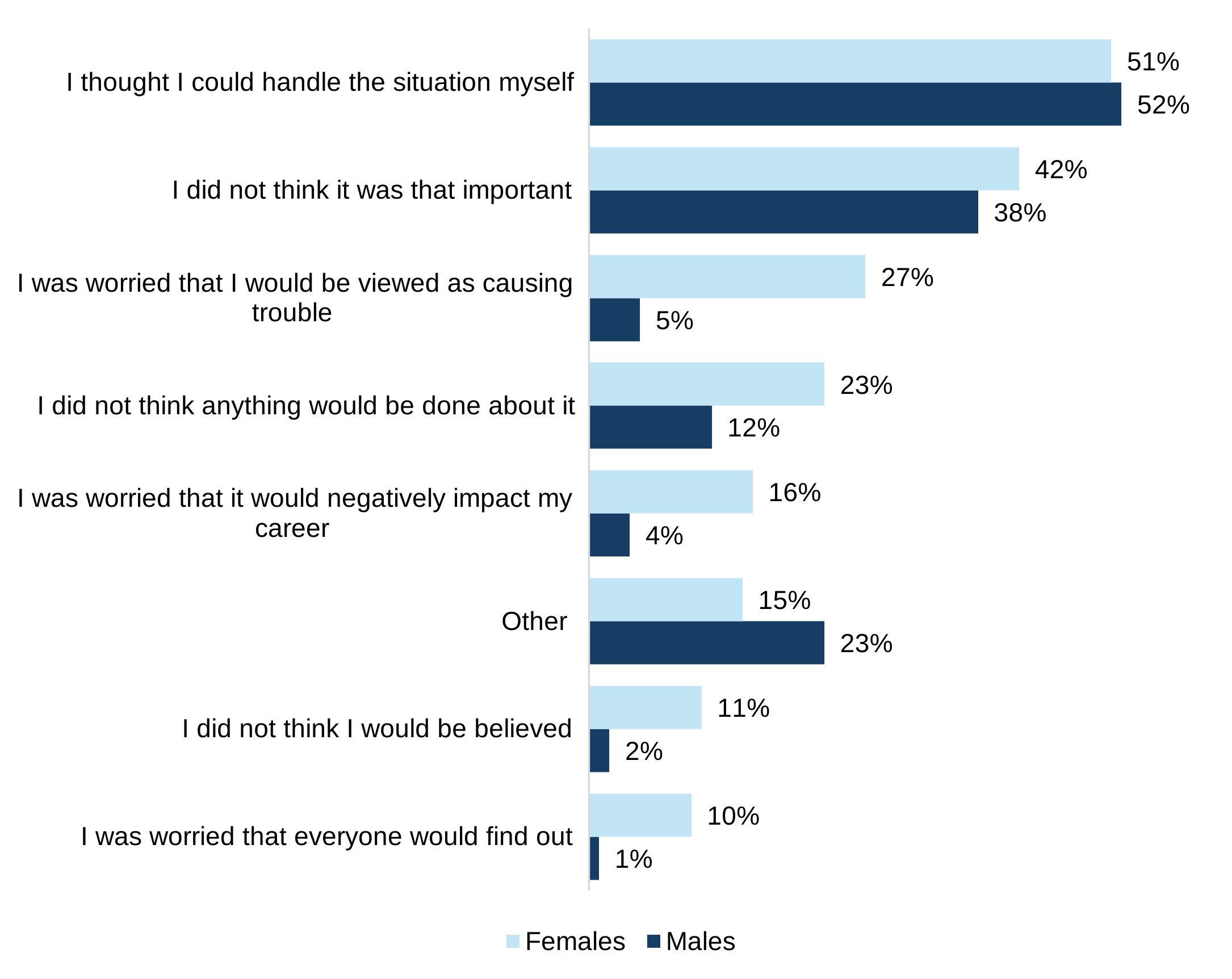
Figure 44 shows around a quarter of females decided not to tell anyone about their experience because they were “worried that [they] would be viewed as causing trouble” (27%), or they “did not think anything would be done about it” (23%) compared to 5% and 12% of males respectively.
Females were also more likely than males to not tell anyone because they were “worried that it would negatively impact [their] career” (Females: 16%, Males: 4%).
29.2 Was the sexualised behaviour perceived as sexual harassment (Reserves)
Perceptions of sexual harassment are calculated based on whether personnel have experienced a given sexualised behaviour, that they would classify as sexual harassment.
The SBSHS asks whether personnel believed each of the 19 sexualised behaviours is sexual harassment. Should personnel believe that a given behaviour constitutes sexual harassment and also recorded having experienced this behaviour, it is presumed that they perceived their experience to be sexual harassment.
Of those Reserves who had experienced at least one of the targeted sexualised behaviours, 92% of females, and 82% of males believed at least one sexualised behaviour they experienced was sexual harassment.
29.3 Perceived sexual harassment (Reserves by sex)
Figure 45. Types of sexualised behaviours that Reserves experienced and defined as sexual harassment, in the last 12 months, by sex (%).
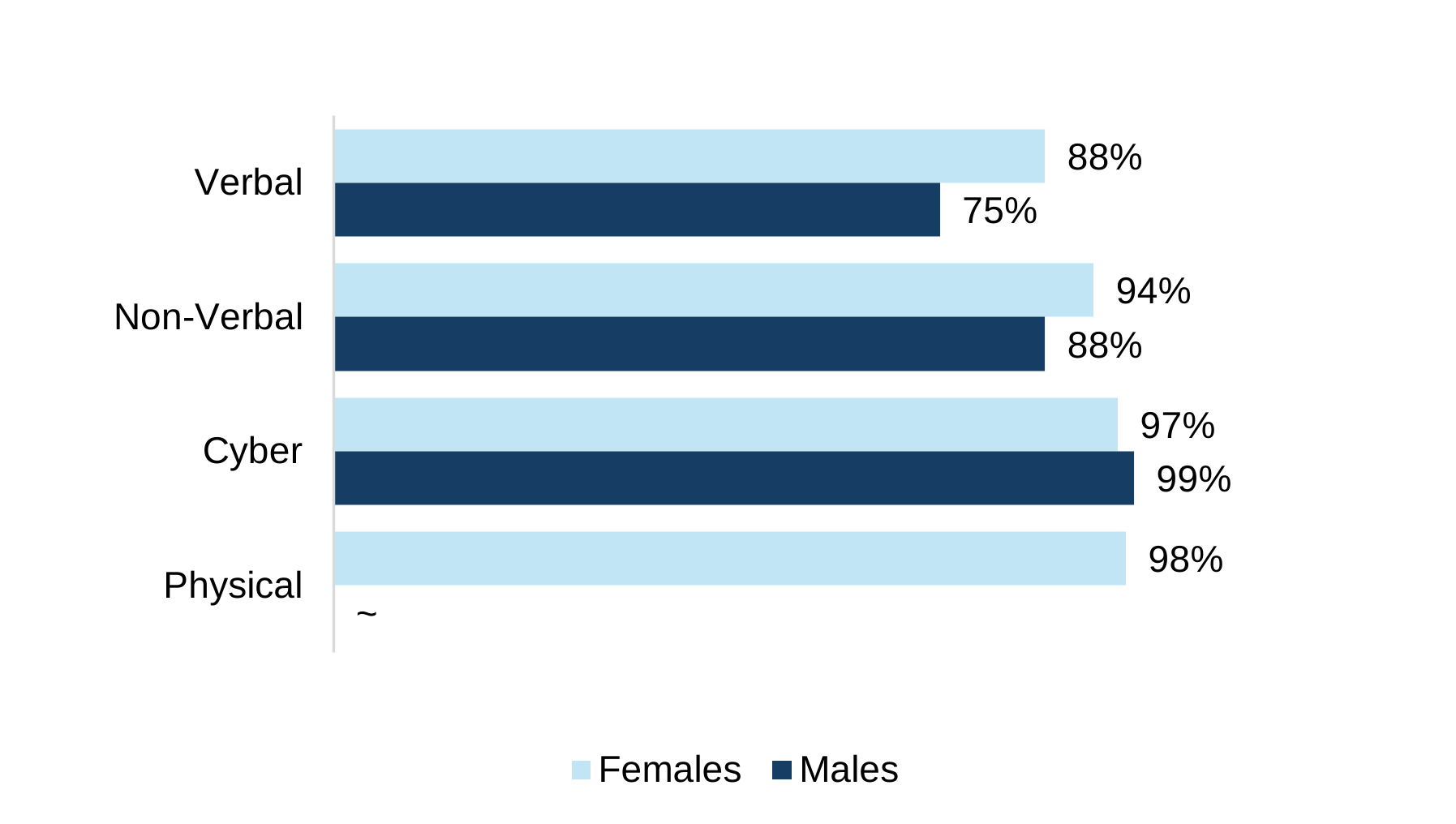
~ denotes that estimates were based on fewer than 30 respondents and therefore supressed.
Figure 45 shows more females compared to males felt the sexualised behaviour they experienced was sexual harassment for ‘Verbal’ behaviour (Female: 88%, Male: 75%).
30. Definitions of sexual harassment (Reserves)
This section is based on all responses from Reserves regardless of whether or not they have experienced sexualised behaviour in the last 12 months
To assess how members of the Reserves may define behaviours that constitute sexual harassment, they were asked to indicate whether they viewed each of the 19 investigated behaviours as sexual harassment.
17 of the 19 behaviours were classified as sexual harassment by at least 89% of Reserves. The two remaining behaviours were “referring to people of any gender in offensive terms” and “jokes or comments of a sexual nature” where 73% and 74% (respectively) classified them as sexual harassment.
30.1 Definitions of sexual harassment (Reserves by sex)
Figure 46. Sexualised behaviour types where Reserves defined all behaviours as sexual harassment, by sex (%).
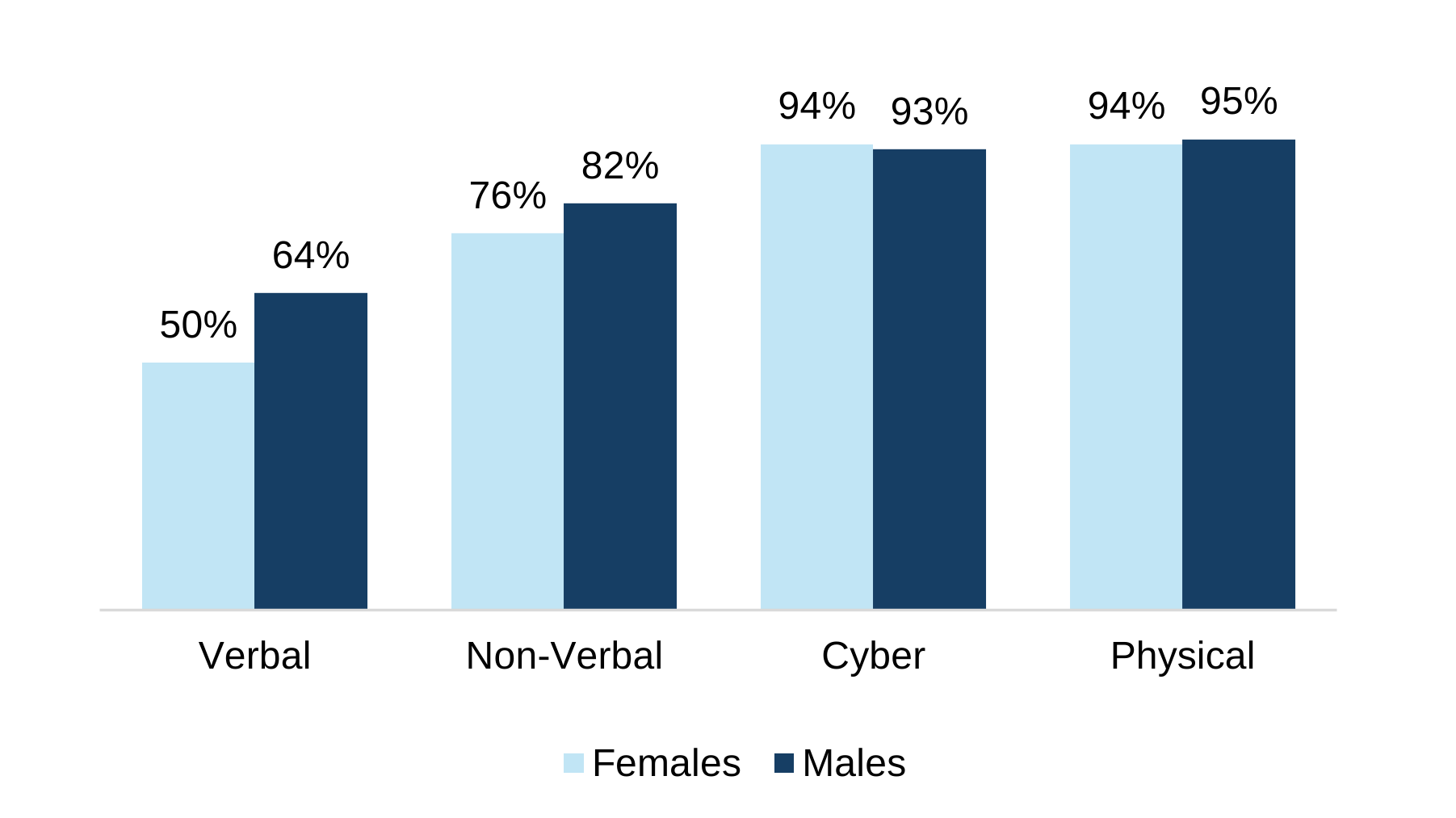
Figure 46 shows ‘Verbal’ is the only sexualised behaviour type where females were less likely to define all sexualised behaviours in the category as sexual harassment compared to males (Males: 64%, Females: 50%).
30.2 Definitions of sexual harassment (Reserves by rank)
Figure 47. Sexualised behaviour types where Reserves defined all behaviours as sexual harassment, by rank (%).
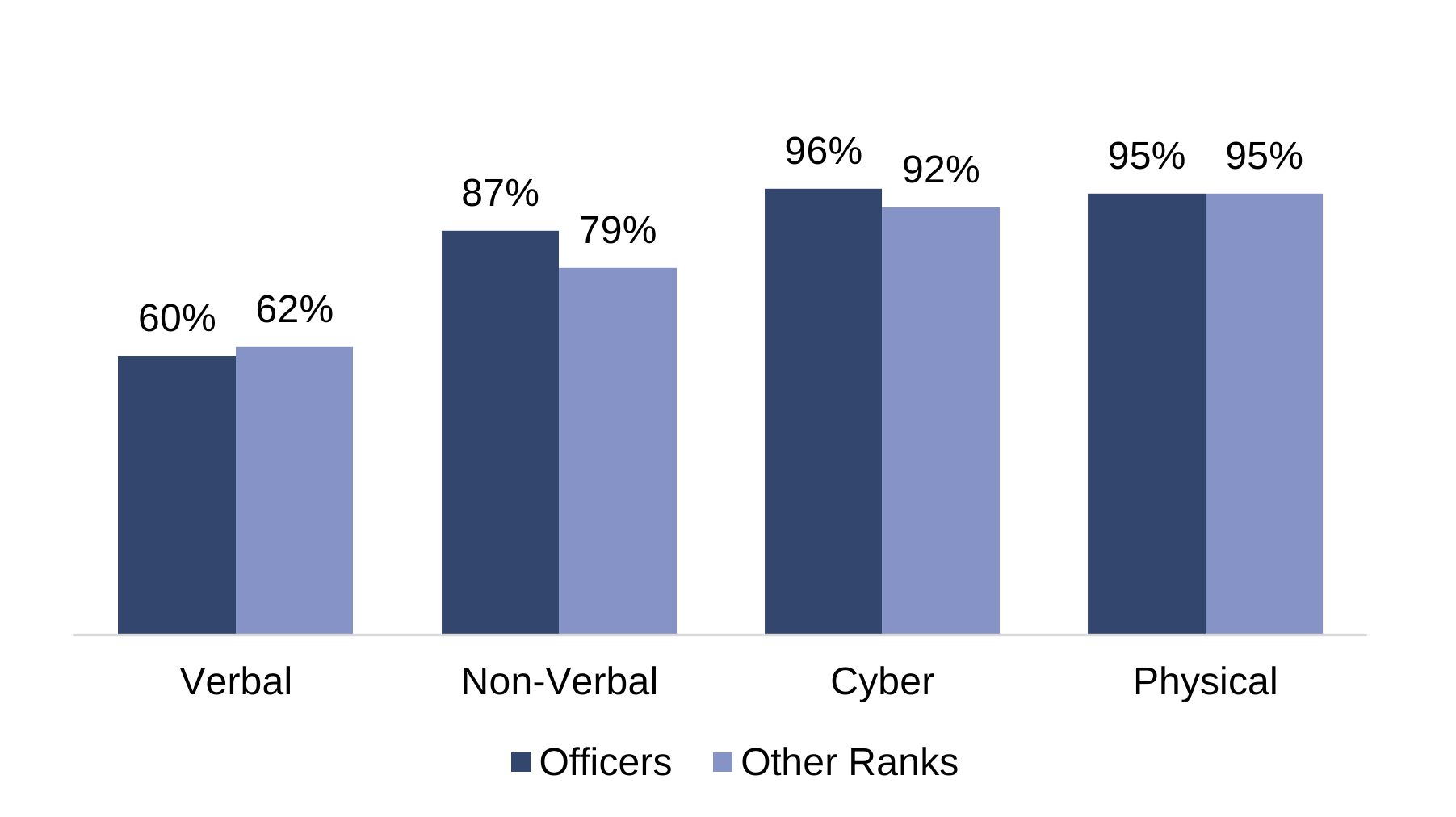
Figure 47 showsOfficers were more likely than Other Ranks to define all ‘Cyber’ (Officers: 96%, Other Ranks: 92%) and ‘Non-Verbal’ (Officers: 87%, Other Ranks: 79%) behaviours as sexual harassment.
31. Awareness of sexualised Behaviour (Reserves by sex)
Reserves were asked to indicate whether they had, in the previous 12 months, seen, or had knowledge of, UK Military personnel and/or Civilian colleagues directing any of the 19 sexualised behaviours towards other people at work. Personnel were presented with a list of the 19 sexualised behaviours and asked how often they had seen/had knowledge of them having occurred.
Due to the unequal ratio of male to female personnel within the Reserves, weighting for representativeness will result in ‘overall figures’ appearing closer to the estimates for ‘male personnel’.
As there are differences in the experiences of female and male personnel, this report will primarily report findings split by sex.
62% of females have seen (or had knowledge of) at least one sexualised behaviour in the last 12 months, compared to 44% of males.
31.1 Awareness by behaviour type (Reserves by sex)
Figure 48. Reserves’ awareness of sexualised behaviour, in the last 12 months, by type, by sex (%).
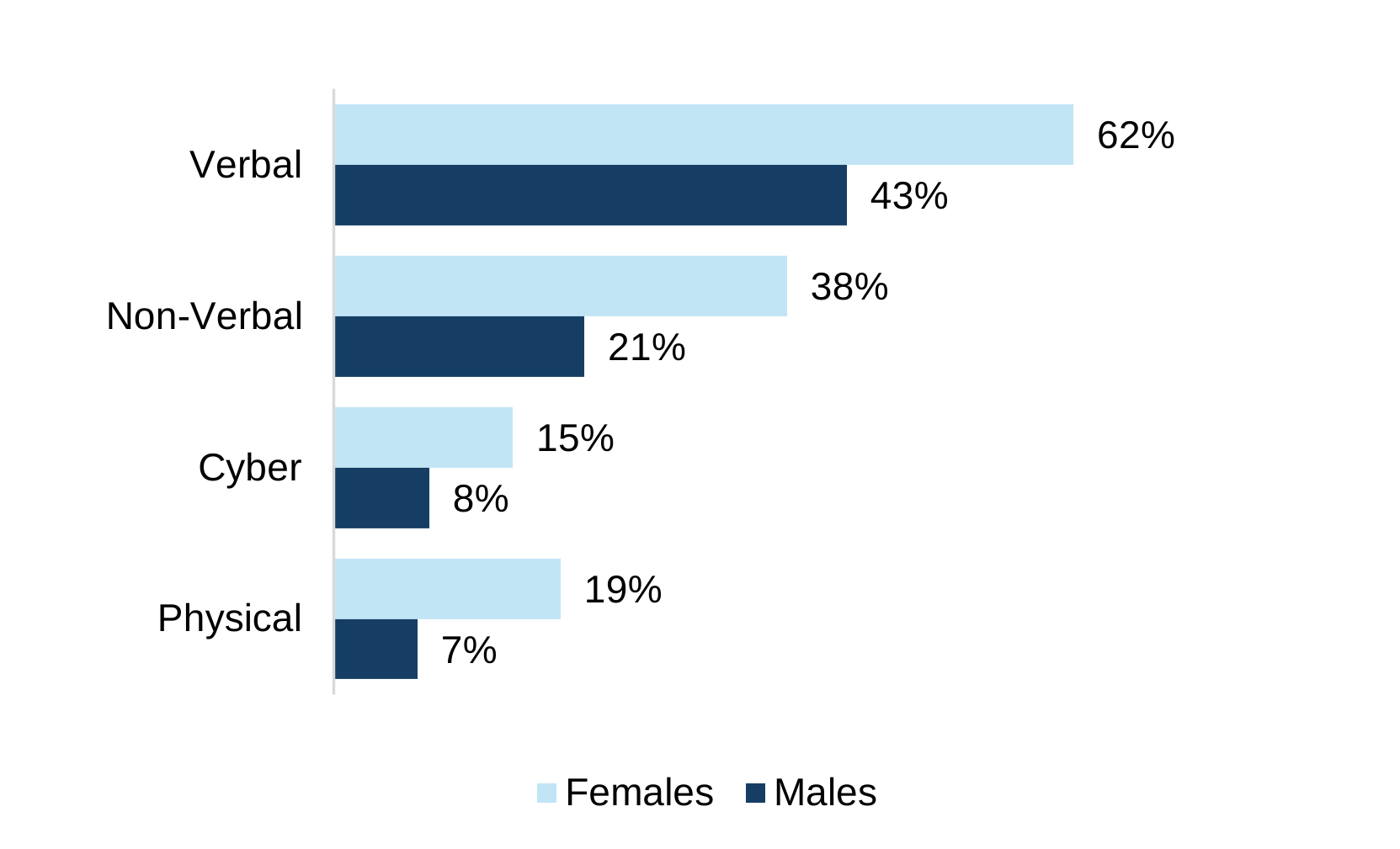
To have seen (or had knowledge of) a sexualised behaviour type, personnel had to have seen/had knowledge of at least one of the listed behaviours within its category in the last 12 months.
Figure 48 shows that females were more likely to have seen (or had knowledge of) all four types of sexualised behaviour compared to males.
Females were more likely to have seen (or had knowledge of) all the individual sexualised behaviours compared to males.
31.2 Awareness by behaviour type – Verbal (Reserves by sex)
Figure 49. Reserves’ awareness of ‘Verbal’ sexualised behaviour, in the last 12 months, by sex (%).
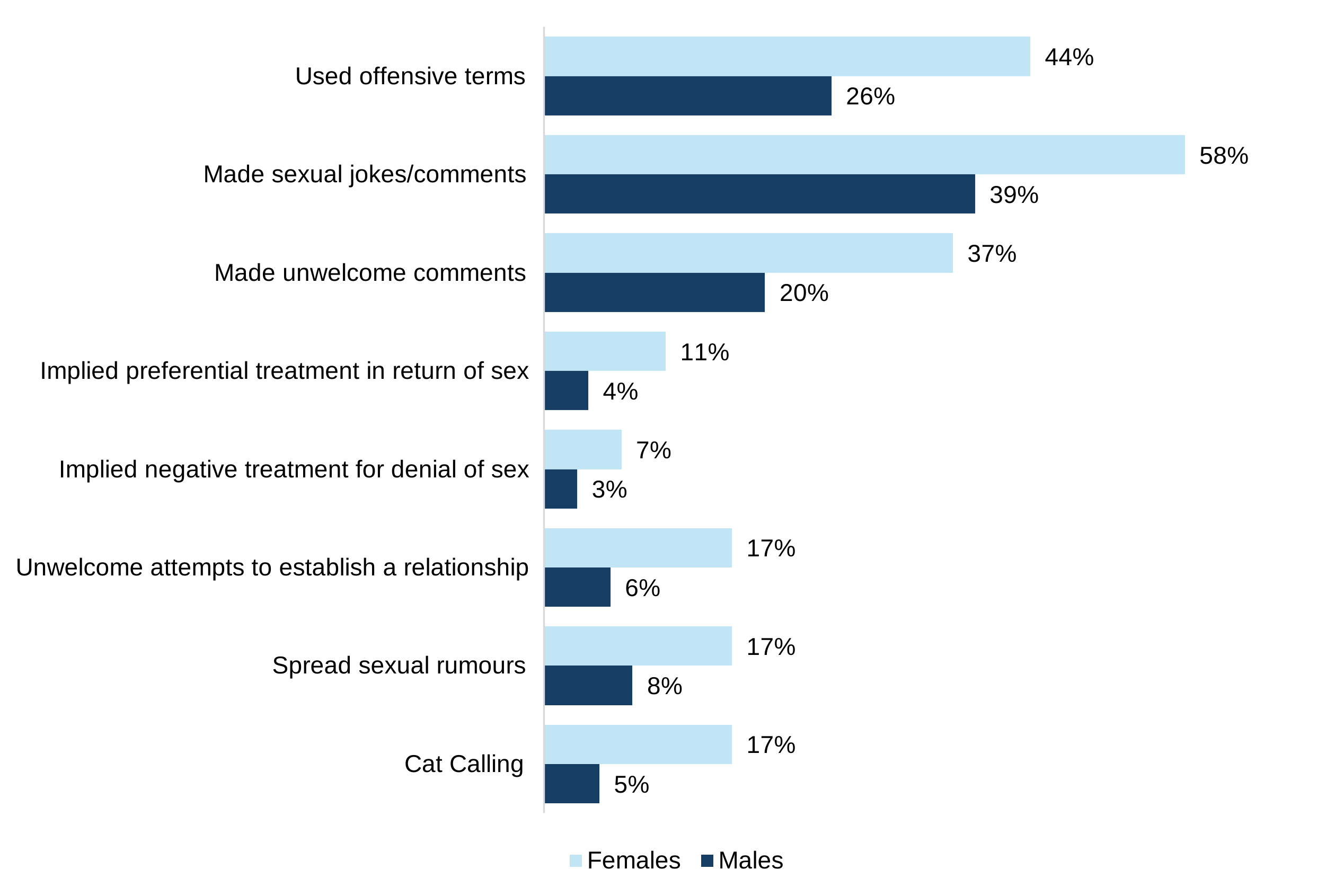
Figure 49 shows that both males and females were most likely to have seen (or had knowledge of) “jokes or comments of a sexual nature” (Females: 58%, Males: 39%).
More than four in ten females (44%) have seen (or had knowledge of), someone being “[referred to] in offensive terms,” compared to around a quarter (26%) of males.
Females were also more likely to have seen (or had knowledge of) someone “making unwelcome comments about someone’s appearance, body, and/or sexual activity” compared to males (Females: 37%, Males: 20%).
17% of females have seen (or had knowledge of) someone “making unwelcome attempts to establish a romantic or sexual relationship with someone”, someone “spreading rumours of a sexual nature”, and/or someone “cat calling, wolf whistling or [making] other provocative sounds”, compared to between 5% and 8% of males.
31.3 Awareness by behaviour type – Non-Verbal (Reserves by sex)
Figure 50. Reserves’ awareness of ‘Non-Verbal’ sexualised behaviour in the last 12 months, by sex (%).
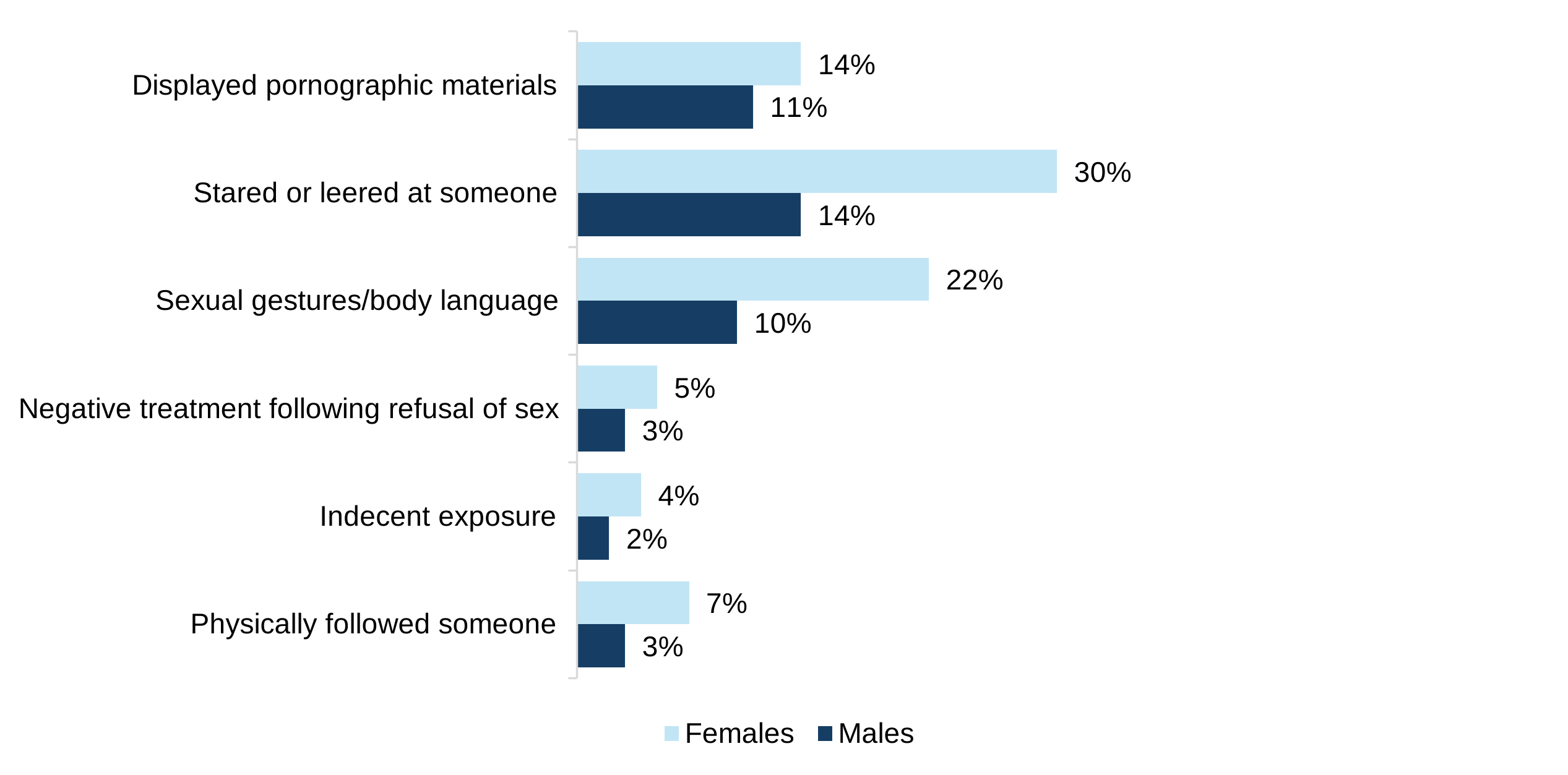
Figure 50 shows that females were more likely than males to have seen (or have knowledge of) someone “staring or leering” at another person (Females: 30%, Males 14%) and using “sexual gestures/body language” (Females: 22%, Males: 10%).
31.4 Awareness by behaviour type – Cyber (Reserves by sex)
Figure 51. Reserves’ awareness of ‘Cyber’ sexualised behaviour, in the last 12 months, by sex (%).
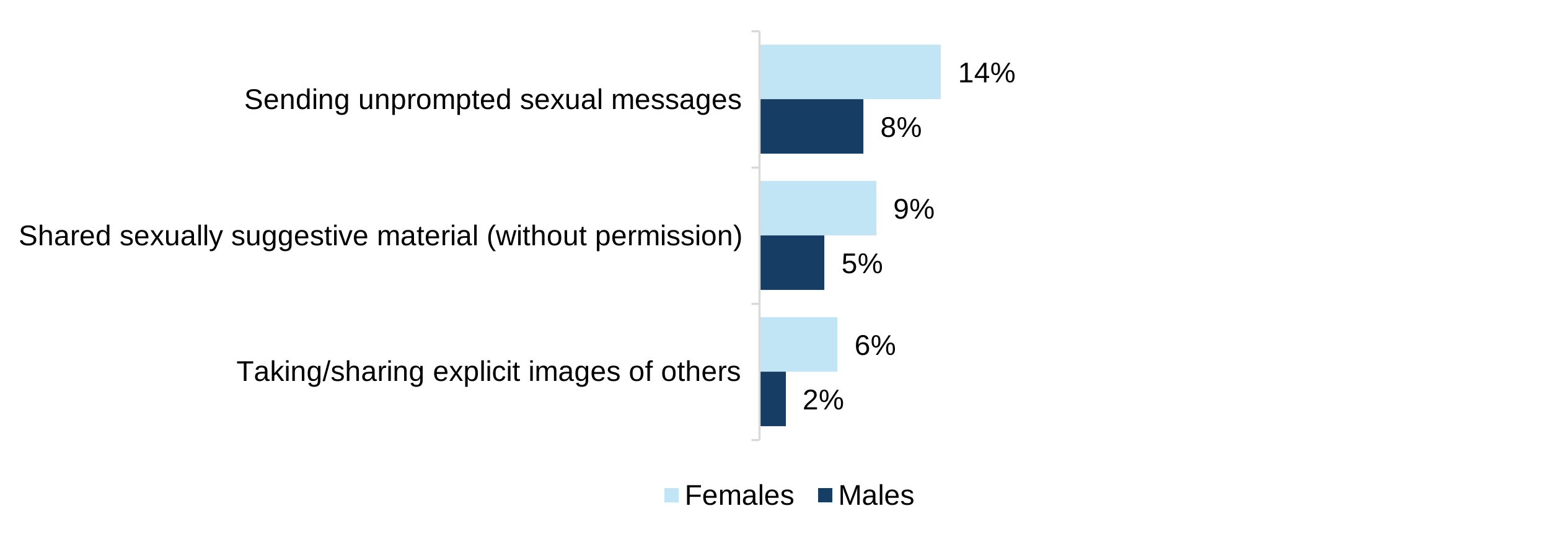
Figure 51 shows that more females (14%) than males (8%), reported having seen (or had knowledge of) someone sending “unprompted messages of a sexual nature [sent to someone by electronic means]”.
More females reported having seen (or had knowledge of) someone “taking/sharing explicit images of others” (6%) compared to males (2%).
9% of females have seen (or had knowledge of) someone “taking/sharing explicit images of others” compared to 5% of males.
31.5 Awareness by behaviour type – Physical (Reserves by sex)
Figure 52. Reserves’ awareness of ‘Physical’ sexualised behaviour in the last 12 months, by sex (%).
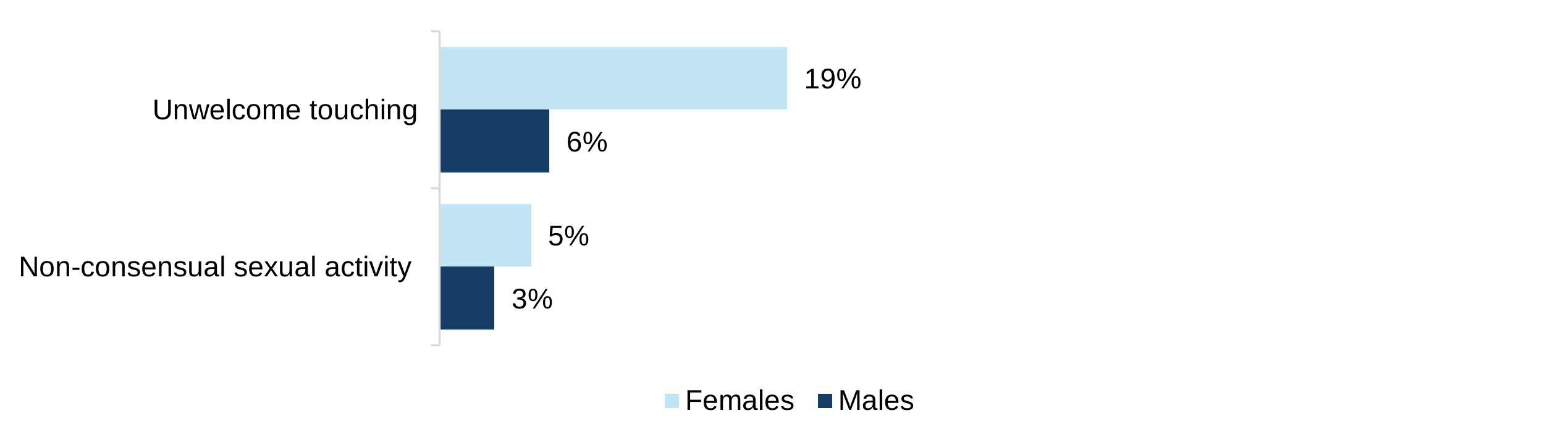
Figure 52 shows that almost one in five females (19%) have seen (or had knowledge of) someone “touching someone in a way that makes them feel uncomfortable”, compared to 6% of males.
31.6 Awareness of sexualised behaviour (Reserves by sex and rank)
Figure 53. Reserves’ awareness of sexualised behaviour, in the last 12 months, by sex, by rank (%).
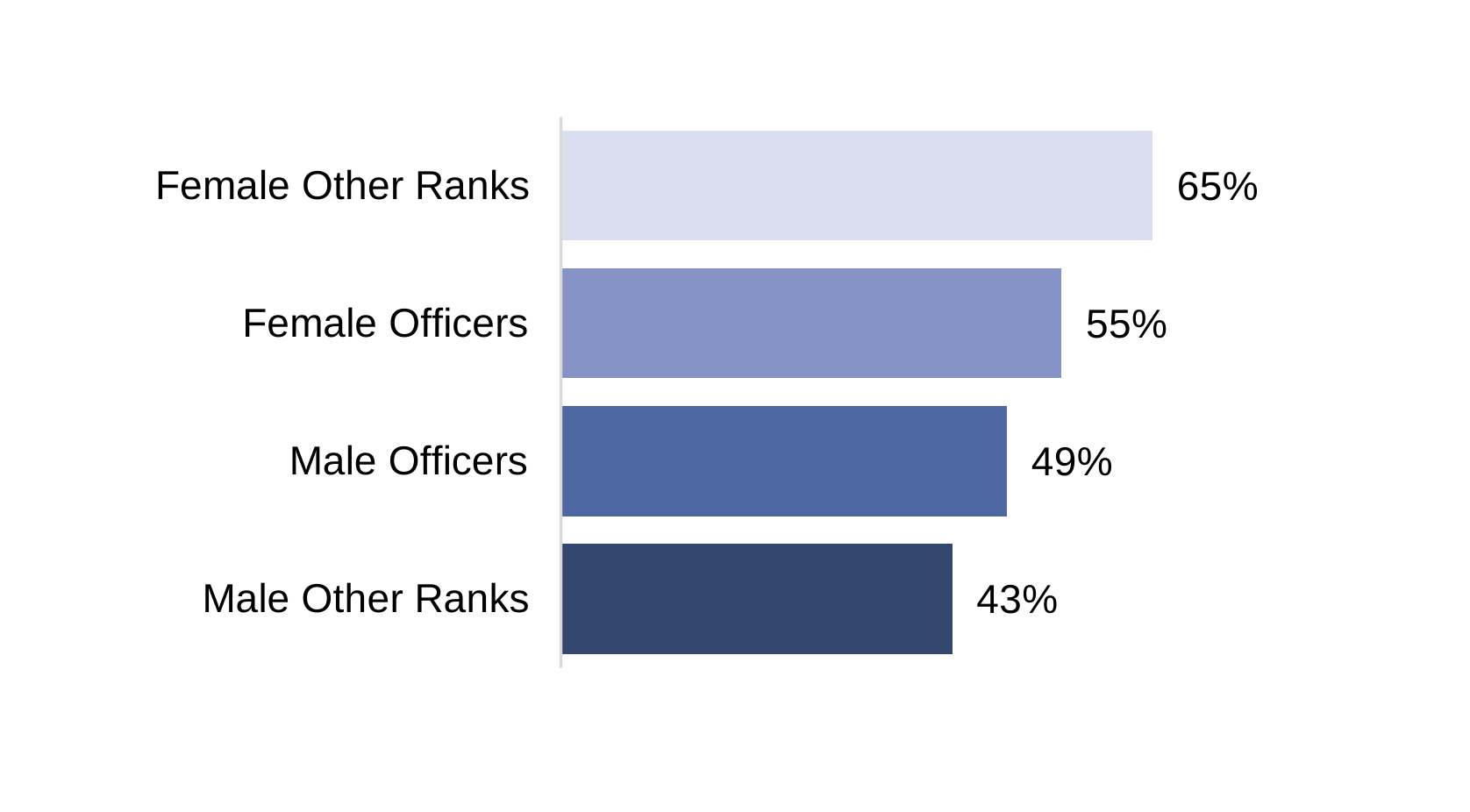
Figure 53 shows that female Other Ranks were more likely to have seen (or have knowledge of) sexualised behaviour (65%) compared to both male Officers (49%) and male Other Ranks (43%).
Female Officers (55%) are more likely than male Other Ranks (43%) to have seen (or had knowledge of) sexualised behaviour.
31.7 Awareness by behaviour type (Reserves by sex and rank)
Figure 54. Reserves’ awareness of sexualised behaviour, in the last 12 months, by sex, rank and type (%).
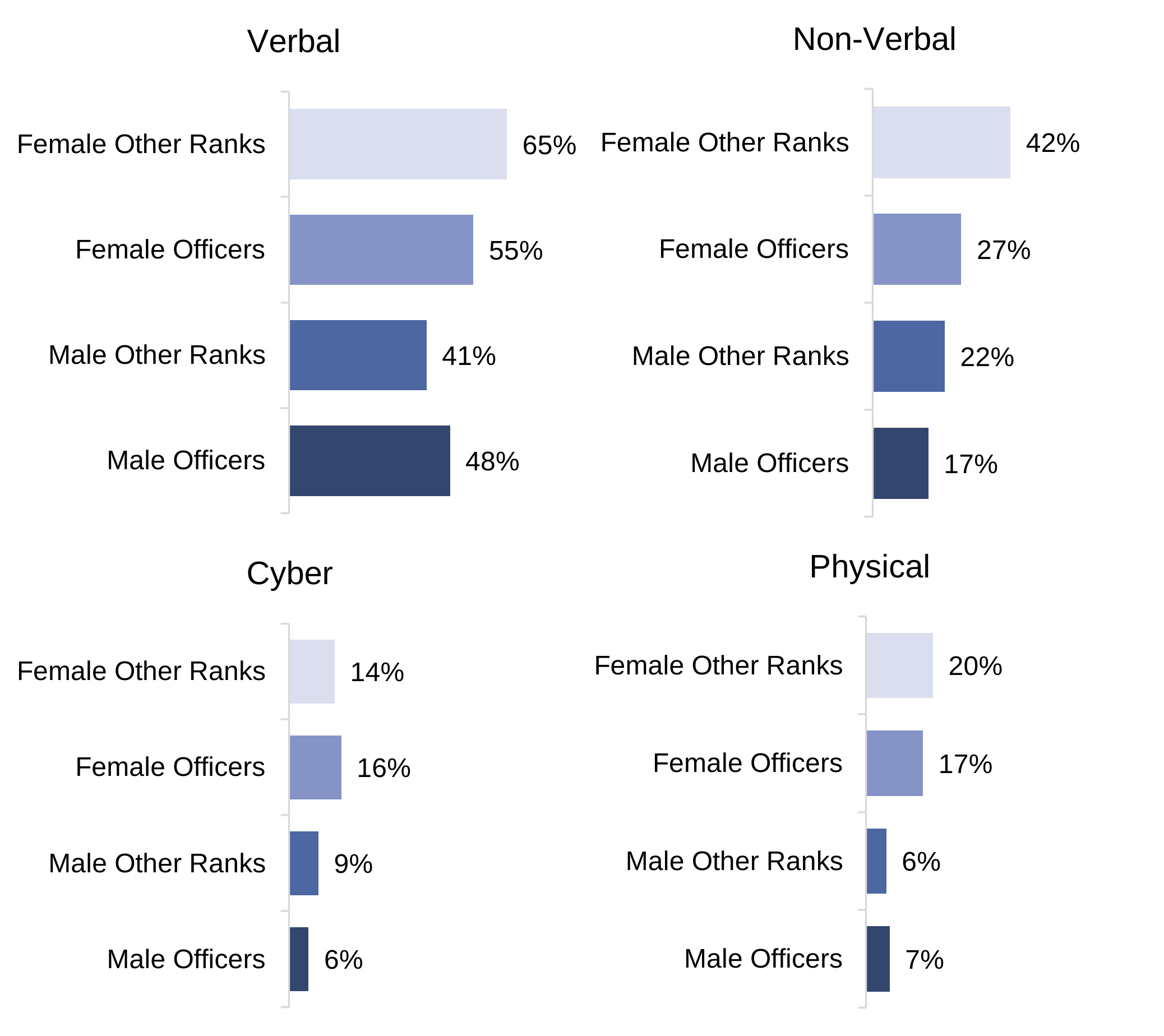
Figure 54 shows female Other Ranks were more likely than the other sex/rank groups to have seen (or had knowledge of) ‘Verbal’ and/or ‘Non-Verbal’ sexualised behaviour.
Female rank groups were both more likely than male Officers to have seen (or had knowledge of) ‘Cyber’, and/or ‘Physical’ sexualised behaviour.
32. Preventing sexual harassment (Reserves by sex and rank)
Reserves were asked to what extent they believe their Service tries to prevent sexual harassment. Their response options were: “Not at all”, “Small extent”, “Moderate extent”, “Large extent”, “Very large extent”, and “I’m not sure”.
For the purpose of this report, “Large extent” and “Very large extent” were grouped together.
Males (76%) were more likely to believe their Service tries to prevent sexual harassment to a “large-very large extent” compared to females (51%).
By rank, male Officers (86%) are more likely than male Other Ranks (73%) to believe their Service tries to prevent sexual harassment to a “large-very large extent”.
33. Supporting those who have been sexually harassed (Reserves by sex and rank)
Males (56%) are more likely than females (33%) to think their Service supports individuals to a “large-very large extent”.
34. Methodology
34.1 Target population
The target population for the SBSHS is split into three main groups: Regulars, Reserves, and Trainees. The inclusion criteria for each group are based on their lived experience in the Armed Forces.
The Regular population includes UK Regular Armed Forces personnel, Gurkhas, Full Time Reserve Service (FTRS), Mobilised Reservists, Warrant Officers Commissioning Programme (WOCP), and Senior Soldier Continuance Programme (SSCP).
The Reserve population includes the UK Part time Reserve Service, Volunteer ex-Regular Reserve (VeRR), Additional Duties Contract (ADC), and the Army Reserve Reinforcement Group (ARRG).
The Trainee population includes Phase 1 and Phase 2 trainees. Trainees are excluded from this report due to low response rates. This is a group which we will investigate how to improve reach and participation through communications in the next edition of the survey.
The inclusion of personnel is at the time the survey sample was drawn from the Joint Personnel Administration (JPA). The rest of the methodology section will only reference Regulars and Reserves.
34.2 The survey
SBSHS is distributed electronically, data collection ran for ten weeks (May to July 2025). The survey is anonymous, personnel were able to join the survey through a link which does not require any personal information.
The individual level data collected was only available to a small group of professional researchers working on analysis and report production.
34.3 The sample and respondents
The Armed Forces SBSHS 2025 sample consisted of 94,275 personnel (65,795 Regular and 28,480 Reserve personnel). SBSHS questionnaires were issued to personnel selected under a (disproportionate) stratified simple random sampling process (those in the sample were directly emailed an invitation link), and through internal Defence communications which allowed those not in the sample to also participate.
Samples were designed to provide sufficient responses to yield estimates with a margin of error of plus or minus 3% for the main comparison groups of Officer/Rank, Sex, and Service. Due to smaller size of groups when broken down by the three variables of interest, a census was taken of all females, Reserves, trainees and Royal Marines (these census populations received the direct email invitation).
Due to a low response rate for Reserves, margins of error around their estimates may be high. Similarly, Royal Marine response rates were low, therefore Royal Marine and Royal Navy are combined into a ‘Royal Navy’ (RN) figure for Regulars and a ‘Maritime’ figure for Reserves.
For Regular personnel, 11,464 responses were used in the SBSHS analysis, giving a response rate of 17.4%.
For Reserves, 1,339 responses were used in analysis, giving a response rate of 4.7%. Sections 17 and 19 in the supplementary tables contains detailed information on the number of questionnaires issued and received, along with corresponding response rates, for each of the Service, rank, sex breakdowns.
See supplementary tables for detailed response rate information.
34.4 Weighting methodology and non-response
Due to the sample design and the differences in prevalence of nonresponse between the Service and rank strata, and the potential self-selection bias introduced by the disparity of sexual harassment experience by sex, the distribution of characteristics amongst the SBSHS respondents did not fully reflect the distribution of the whole Armed Forces population.
Response rates tend to vary by rank and sex; therefore, responses are weighted by sex and rank in order to correct for the bias caused by over- or under-representation.
The Weights were calculated simply by:
Population size within the weighting class (p) / Number of responses within weighting class (r)
Weighting in this way assumes missing data are missing at random (MAR) only within weighting classes. This means we assume that within a single weighting class the views of non-respondents do not differ (on average) to the views of respondents.
There is a risk that this assumption is violated by self-selection bias, this is where personnel are more likely to partake in a survey which impacts them. Due to the targeted and sensitive nature of this survey, those who have been affected by, or have opinions on sexualised behaviours and sexual harassment may be more likely to take part – leading to a less representative sample (see more information in the background quality report).
Please find the SBSHS weight classes in Sections 18 and 20 of the supplementary tables. Please note, the weightings in the tables have been rounded for presentational purposes. Reserves are weighted as ‘Maritime’ due to them being a combined ‘Maritime Reserve’.
34.5 Analysis and statistical tests
Attitudinal questions, where necessary, have been regrouped to assist in analysing results and to aid interpretation. For example, questions asked at a 5-point level (e.g. Strongly agree – Agree – Neither Agree nor Disagree – Disagree – Strongly Disagree) have been regrouped to a 3-point level (e.g. Agree – Neutral – Disagree).
Missing values, where personnel have not provided a response/valid response are not included in the analysis. In addition, some questions are filtered to exclude invalid responses. As a result, the unweighted counts (or ‘n’) will vary from question to question. Please refer to the supplementary tables for this information.
Unless otherwise specified, “Don’t know” and “Not applicable” responses are not included, and percentages are based only on the number of personnel who chose the remaining item response options.
Each estimate carries a margin of error to enable users to observe the level of uncertainty in the estimate. In-year tests between Services are also carried out. A 5% significance level was applied. Non-significant changes are not described as changes in the narrative.
A statistically significant difference means that there is enough evidence that the change observed is unlikely to be due to chance variation (less than a 5% probability that the difference is the result of chance alone).
34.6 Reference tables
Please refer to the supplementary tables on the SBSHS Gov.uk landing page.
Each reference table refers to a question asked in the survey and includes estimates of the percentage of the population by category as well as margins of error associated with those estimates.
Tables are arranged generally in the order in which they were asked in the questionnaires, which is not the same as the order of the sections in the Main Report. The question list is extensive, so not all questions are discussed in the narrative of the Main Report.
| Section | Table Numbers | |
|---|---|---|
| 01 - Personal Definitions of Sexual Harassment (Regulars) | S1.1 - S1.19 | |
| 02 - Personal Experience of Sexualised Behaviours (Regulars) | S2.1 - S2.19 | |
| 03 - Information about Experiences of Sexualised Behaviours (Regulars) | S3.1 - S9.13 | |
| 04 - Reporting the Experience of Sexualised Behaviours (Regulars) | S10.1 - S19.8 | |
| 05 - Awareness of Sexualised Behaviours (Regulars) | S20.1 - S20.19 | |
| 06 - Perception of Sexual Harassment in the Service (Regulars) | P1.1 - P5.7 | |
| 07 - Aggregated responses to SBSHS (Regulars) | A1 - A7.4 | |
| 08 - Additional tables (Regulars) | AD1.1 – AD1.9 | |
| 09 - Personal Definitions of Sexual Harassment (Reserves) | rS1.1 - rS1.19 | |
| 10 - Personal Experience of Sexual Harassment (Reserves) | rS2.1 - rS2.19 | |
| 11 - Information about Experiences of Sexualised Behaviours (Reserves) | rS3.1 - rS9.13 | |
| 12 - Reporting the Experience of Sexualised Behaviours (Reserves) | rS10.1 - rS19.8 | |
| 13 - Awareness of Sexualised Behaviours (Reserves) | rS20.1 - rS20.19 | |
| 14 - Perception of Sexual Harassment in the Service (Reserves) | rP1.1 -rP5.7 | |
| 15 - Aggregated responses to SBSHS (Reserves) | rA1 - rA7.4 | |
| 16 - Additional Tables (Reserves) | rAD1.1 – rAD1.9 | |
| 17 - Response Rates (Regulars) | RR | |
| 18 - Response Rates (Reserves) | YW | |
| 19 - Weights (Regulars) | rRR | |
| 20 - Weights (Reserves) | rYW |
35. Glossary
1* and above (Ranks) and Senior Officer Ranks: These ranks are designated by the NATO code OF-6 through OF10. Ranks of 1-star and above constitute the top tier of military command leadership.
Armed Forces Continuous Attitude Survey (AFCAS): Annual survey of Armed Forces (Regular) personnel to gather information on their views and experiences, published as an accredited official statistic.
Cyber (behaviour): Sexualised behaviours characterised by actions involving the use of electronic means (e.g. mobile devices, social media, messaging platforms).
Margin of Error (MOE): Statistical measure that shows how much the results of a survey or poll are expected to differ from the real-world population.
Missing at Random (MAR): Statistical theory that states that those who did not respond to a question do not differ from those who did respond
Missing values: Refers to the situation where a respondent has not submitted an answer or a valid answer to a question.
MOD: Ministry of Defence
Non-Commissioned Officer (NCO): A military leader who is promoted from the enlisted ranks and holds a position of authority without a formal commission (Junior NCO – OR3 to OR4 / Senior NCO – OR6 to OR9
Non-response: Refers either to a person who although sampled and sent a questionnaire did not reply or to a respondent who did not reply to a question
Non-Verbal (behaviour): Sexualised behaviours characterised by unspoken, physical actions that do not involve actual contact with another person
Officer(s): All Regular trained Officers of NATO Ranks OF1 to OF10
Other Rank(s): Other Ranks are members of the Royal Marines, Army and Royal Air Force who are not Officers. The equivalent group in the Royal Navy is known as “Ratings”. NATO Ranks of OR1 to OR9.
Physical (behaviour): Sexualised behaviours characterised by physical actions that involve actual contact with another person.
RAF: Royal Air Force
Rank/Rank Group: Demographic divided into two. Personnel are identified as either ‘Officers’ (NATO Ranks OF1 to OF10) or ‘Other Ranks’ (NATO Ranks of OR1 to OR9)
Regular (personnel): UK Regular Armed Forces personnel, Gurkhas, Full Time Reserve Service (FTRS), mobilised reservists, Warrant Officers Commissioning Programme (WOCP), and Senior Soldier Continuance Programme (SSCP)
Reserve (personnel): Part time Reserve Service, Volunteer ex-Regular Reserve (VeRR), Additional Duties Contract (ADC), and Army Reserve Reinforcement Group (ARRG)
RM: Royal Marines
RN: Royal Navy
Self-selection Bias (also known as volunteer bias): This occurs in research when individuals decide entirely for themselves whether they want to participate in a study. This can create a non-random, unrepresentative sample because personnel often differ systematically from those who don’t participate
Service(s): Royal Navy, Royal Marines, Army and RAF.
Sex: Demographic divided into two. Personnel are identified as either ‘Male’ or ‘Female’.
Sexual Harassment: Sexual harassment is legally defined as unwanted conduct of a sexual nature that has the purpose or effect of violating a person’s dignity or creating an intimidating, hostile, degrading, humiliating, or offensive environment.
Significant / Statistically significant: Refers to the result of a statistical test in which there is evidence of a change in percentages between years.
Standard Error: A measure derived using weighting factors from the sample percentages and unweighted count in a sampling distribution and used as a benchmark in order to ascertain a range of values within which the true population percentages could lie.
Statistical Tests: Refers to those tests which are carried out to see if any evidence exists for a change in response percentages from one year to another. If not enough evidence exists, these results can be referred to as ‘unchanged’.
Trainee(s): Armed forces personnel still in Phase 1, Phase 2, or Officer Cadet training.
Tri-Service: The combined branches of the UK Armed Forces (Royal Navy/Royal Marines, Army, RAF)
Unit: A sub-organisation of the Service in which personnel are employed.
Unweighted Count: Refers to the actual number who provided a valid response to a question in the survey.
Verbal (behaviour): Sexualised behaviours characterised by spoken actions.
Weighting (Factors): Refers to factors that are applied to the personnel data set by Service and rank group in order to make personnel Service rank groups representative of their population equivalents.
Weighting Class: Refers to those members of a specific rank group to whom a weighting factor is applied.
Z-test: Statistical test based on a standardised distribution which allows comparison between years for populations of different sizes.
36. Disclosure control and rounding
Tables with low unweighted counts and sensitive breakdowns have had their unweighted counts rounded to the nearest 5. Where this rounding policy is applied, sub-totals and totals have been rounded separately so may not equal the sum of their parts
37. Contact us
The Analysis Directorate welcomes feedback on our statistical products. If you have any comments or questions about this publication or about our statistics in general, you can contact us as follows:
Email: Analysis-Publications@mod.gov.uk
If you require information which is not available within this or other available publications, you may wish to submit a request for information under the Freedom of Information Act 2000 to the Ministry of Defence.
If you wish to correspond by mail, our postal address is:
Analysis Surveys, Analysis Directorate
Ministry of Defence, Main Building
Floor 3 Zone M
Whitehall
London
SW1A 2HB