Armed forces continuous working patterns survey 2025/26: main report
Published 30 July 2026

© Crown copyright 2026
This publication is licensed under the terms of the Open Government Licence v3.0 except where otherwise stated. To view this licence, visit nationalarchives.gov.uk/doc/open-government-licence/version/3 or write to the Information Policy Team, The National Archives, Kew, London TW9 4DU, or email: psi@nationalarchives.gov.uk.
Where we have identified any third party copyright information you will need to obtain permission from the copyright holders concerned.
This publication is available at https://www.gov.uk/government/statistics/armed-forces-continuous-working-patterns-survey-202526/armed-forces-continuous-working-patterns-survey-202526-main-report
The Continuous Working Patterns (CWP) Survey is a seven-day diary completed by trained, UK personnel to record the number of hours spent at work, on call, on breaks, and off-duty. The aim of the survey is to measure and describe the working patterns of trained, UK regular personnel.
The publication provides results from the CWP Survey 2025/26 along with results from the previous years by Service, broad location and rank group.
1. Key Points and Trends
1.1 The average weekly hours worked by trained, UK regular personnel is 44.4 hours in 2025/26.
This remains unchanged compared to the previous year (44.1 hours in 2024/25).
1.2 Royal Navy personnel have the highest average weekly hours worked at 46.5 hours.
Similar to last year, Royal Navy personnel reported the highest average weekly hours worked compared to the other services.
Figure 1.1: Average hours worked by Service, 2025/26.
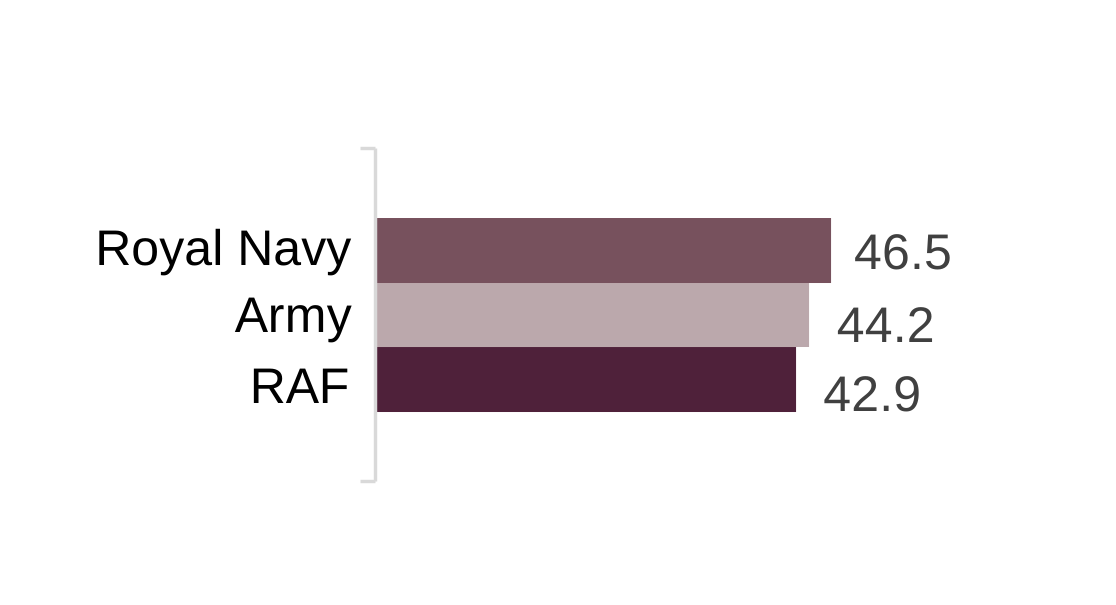
Figure 1.1 is a bar chart that shows the average hours worked by Service, in 2025/26.
1.3 The average weekly hours spent on duty by trained, UK regular personnel continue to increase, averaging 67.4 hours in 2025/26.
A 1.7 hour increase compared to 2024/25 and 5.4 hours compared to 2023/24.
1.4 7% Of trained UK regular personnel worked excessive hours.
A decrease of 1 percentage point compared to 2024/25 (8%). Excessive hours refers to working more than 70 hours during the week surveyed.
1.5 The average weekly unsociable hours worked by trained, UK regular personnel is 6.6 hours in 2025/26.
Similar to hours reported in 2024/25 (6.1 hours). Unsociable hours refer to any hours worked between 18:00 and 06:00, Monday to Friday, and any hours worked on Saturday and Sunday.
Responsible statistician: Surveys Head of Branch Email: Analysis-Surveys-Enquiries@mod.gov.uk
Would you like to be added to our contact list, so that we can inform you about updates to these statistics and consult you if we are thinking of making changes? You can subscribe to updates by emailing Analysis-Publications@mod.gov.uk
1.6 Introduction
About these statistics
The Chief of Defence people (CDP) sponsors the CWP survey under a remit from the Armed Forces Pay Review Body (AFPRB).
The CWP survey 2025/26 was distributed to 27,503 trained, UK Regular personnel between October 2025 to April 2026, using both online and paper questionnaires. Participants were chosen using stratified simple random sampling, designed to ensure sufficient responses from each Service and each rank group within each location.
Overall, 2,788 of the returned surveys were considered valid, which represents a response rate of 10%. This is a two percentage point decrease compared to 2024/25 (12%).
Figure 1.2: response rate by Service, 2024/25.
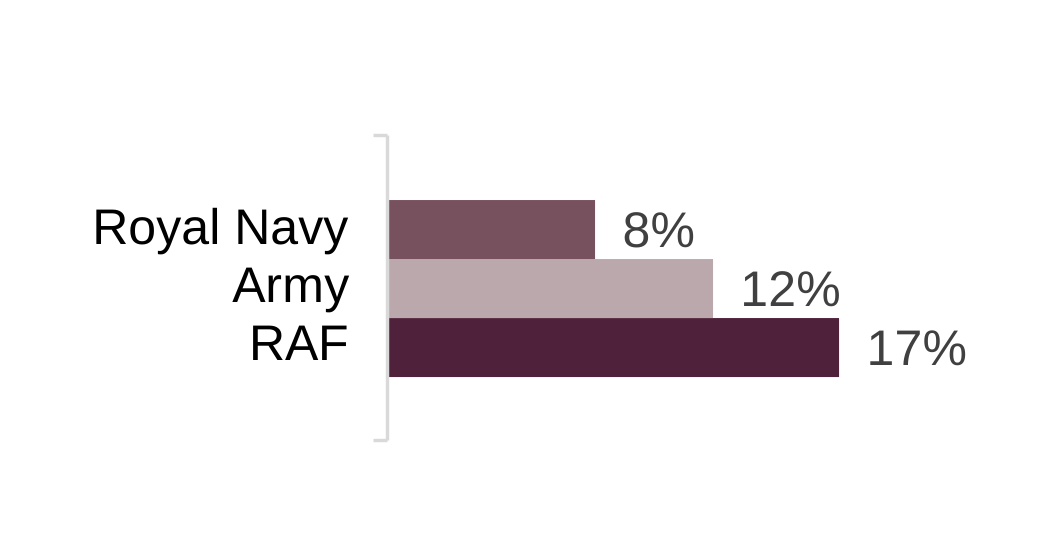
Figure 1.2 is a bar chart that shows the response rate of the CWP survey by Service, in 2025/26.
The response rate, excluding the deployed trial was 12% - accounting for 2,688 of the returned surveys.
Data Quality Note
CWP survey 2020/21 was in field from November 2020 to June 2021, during a time of national restrictions imposed as a result of the COVID-19 pandemic, and two national lockdowns which may have influenced the results. The potential impact of COVID-19 on personnel’s working pattern should still be considered when comparing this years, 2025/26, result with previous years.
An online version of the survey was introduced in the second wave of CWP 2020/21 to improve response rates following feedback on the difficulties distributing paper questionnaires during lockdowns. Since then, the online survey is utilised in both waves and distributed to all personnel in the sample. Moreover, we carried out a trial of sending additional surveys to deployed locations to improve response rates, due to observations and feedback on difficulties in collecting responses from deployed locations. In 2019/20, unnamed batches of the survey were sent to deployed locations for distribution, in addition to the ones sent to identified deployed personnel from the main sample.
From 2022/23, this was done by sending a link for the online survey to contacts based in overseas operational locations for circulation among personnel. We then sent periodic reminders to these named points of contact at these locations to encourage the distribution of the online link, to further boost response rates. In 2025/26, we trialled emailing all personnel that were flagged as deployed and asked them to share a survey link with other deployed personnel. Due to this method of data collection, the overall response rate including the deployed trial may be an over/underestimate as we cannot be sure how many deployed personnel are at each given location at any time or have been provided access to a survey link. The response rate has been calculated based on deployed figures that were provided to us as of April 2026.
Although an improvement in response rate was seen in 2021/22, with the full introduction of the online survey and the introduction of the deployed surveys trial, response rates over the last three years have slowly been declining and returned to levels seen in 2020/21. We are currently working on ways we can improve this and have more personnel represented in the final sample.
Those who responded online may have different working patterns to those who responded on paper; and those who responded to the deployed surveys trial might have different working patterns to the identified deployed personnel from the main sample. Furthermore, this year the RAF transitioned to being paperless, this meant that RAF personnel only received an online invitation to complete the survey and were not provided with paper copies of the survey. Due to difficulties with emailing certain rank groups, a postcard was sent to all sampled RAF personnel informing them that they had been selected to take part in the survey. To better understand the possible effect on results, responses have been analysed and compared separately. The main report and accompanying reference tables to this report provide the combined paper and online results and the combined results from the deployed personnel surveys trial and the main deployed personnel surveys. More detail is provided in the Background Quality Report.
1.7 About this statistical release
The CWP survey consists of a seven-day diary of time spent at work, on break, on call and off-duty. The following definitions are used within the questionnaire and therefore hold within this report:
Work includes:
- Normal work
- Working from home
- Duty personnel, when working
- Exercise / Operations working time
- Compulsory fitness training
- Instruction / training course
- Duty travel
- Ceremonial / hosting duties
- Service representational duties
- Secondary duties (for example Mess Treasurer)
Breaks include:
- Meal and tea breaks
On call includes:
- Held in a specified location
- On call at a place of duty
- Duty personnel, when on standby
- Period of off duty / stand down on exercise or operations
- Held at 48 hours or less Notice to Move (NTM)
Off duty includes:
- Leave (for less than 24 hours)
- Travel between home and place of duty
- Off duty / stand down (except for when on exercise / operations—see on call)
In addition, the following terminology has been used throughout this report: “On duty” refers to time spent at work, on call or on breaks. “Royal Navy” refers to the Royal Navy and the Royal Marines.
Data Quality
The Army Basing Programme aimed to bring all Army units back from Germany to the UK by 2020. The number of personnel based in Germany has greatly reduced since 2019/20 from a few thousand to just a few hundred.
This has greatly reduced the number of responses received from Germany. Therefore, breakdowns of Army results for Germany have not been included in this report since 2019/20. However, Germany responses have been included in the overall Army and Tri-service results.
Excel Reference tables, ODS References tables and CWP 2025/26 questionnaires are published as separate documents and can be found on the CWP webpage.
As well as providing details of the working patterns of the Services, the reference tables also provide details of the three single Service working patterns broken down by rank group and broad locations each year from the 2018/19 survey. This time series data is presented in a series of tables and graphs. Please see the Background Quality Report for full details of the survey methodology, analysis and data quality considerations.
Note: Throughout the publication, where statistical significant tests are applied in order to detect any statistical differences in working patterns between the current year (2025/26) and the previous year seven years (2024/25 – 2018/2019), a series of z-tests were conducted at a 95% confidence interval.
2. Tri Service
2.1 Working patterns 2025/26
In 2025/26, at a Tri-Service level, personnel reported spending on average 44.4 hours per week working. This remains unchanged compared to the previous year (44.1 hours in 2024/25).
Figure 2.1: Working pattens of personnel, 2025/26
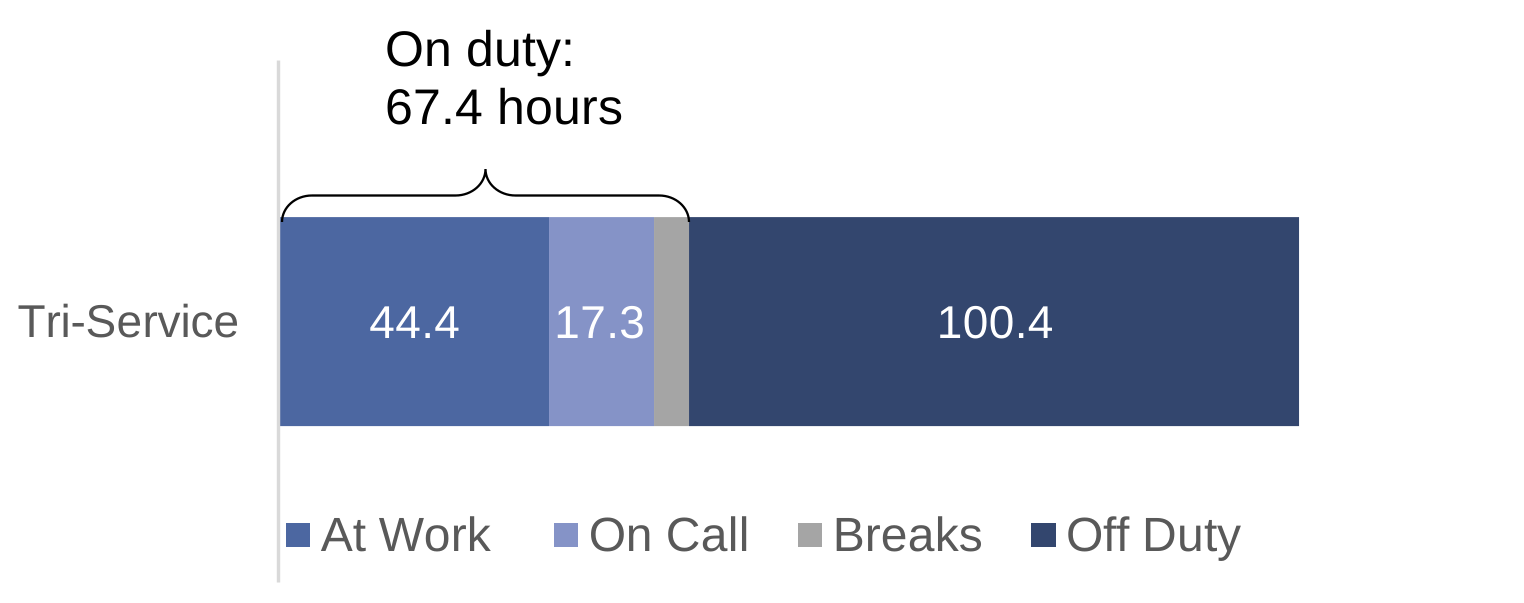
Figure 2.1 is a stacked bar chart that shows the average hours spent at work, on call, breaks and off duty per week by Tri-Service personnel, in 2025/26. The largest proportion of time is spent off duty (100.4 hours).
Hours spent on call saw an increase of 1.8 hours in 2025/26 compared to the previous year (15.5 hours in 2024/25) whilst hours spent on duty saw an increase of 1.7 hours (65.7 hours in 2024/25).
Figure 2.2: Working pattens of all personnel by Service, 2025/26
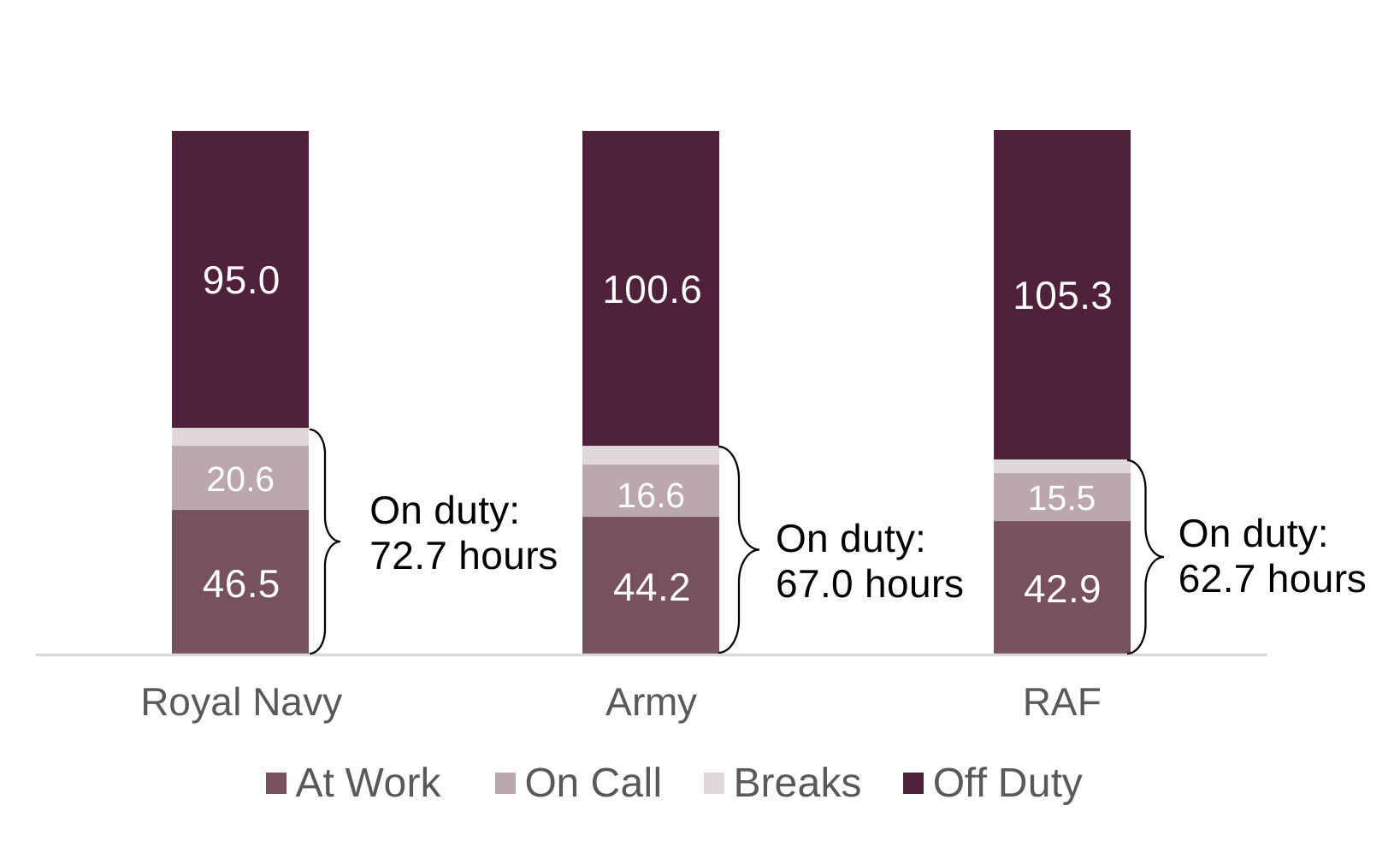
Figure 2.2 is a stacked bar chart that shows the average hours spent at work, on call, breaks and off duty per week by Service, in 2025/26.
As reported in previous years, Royal Navy personnel continue to report working higher hours compared to other services at 46.5 hours. This is followed by Army personnel at 44.2 hours and RAF personnel at 42.9 hours. Furthermore, Royal Navy personnel also reported spending higher hours on duty at 72.7 hours. This was followed by Army personnel (67.0 hours) and RAF personnel (62.7 hours).
This difference is largely due to Royal Navy Sea-based personnel who report considerably higher average hours worked, on call and on duty.
Figure 2.3: Working patterns of all personnel by rank group 2025/26
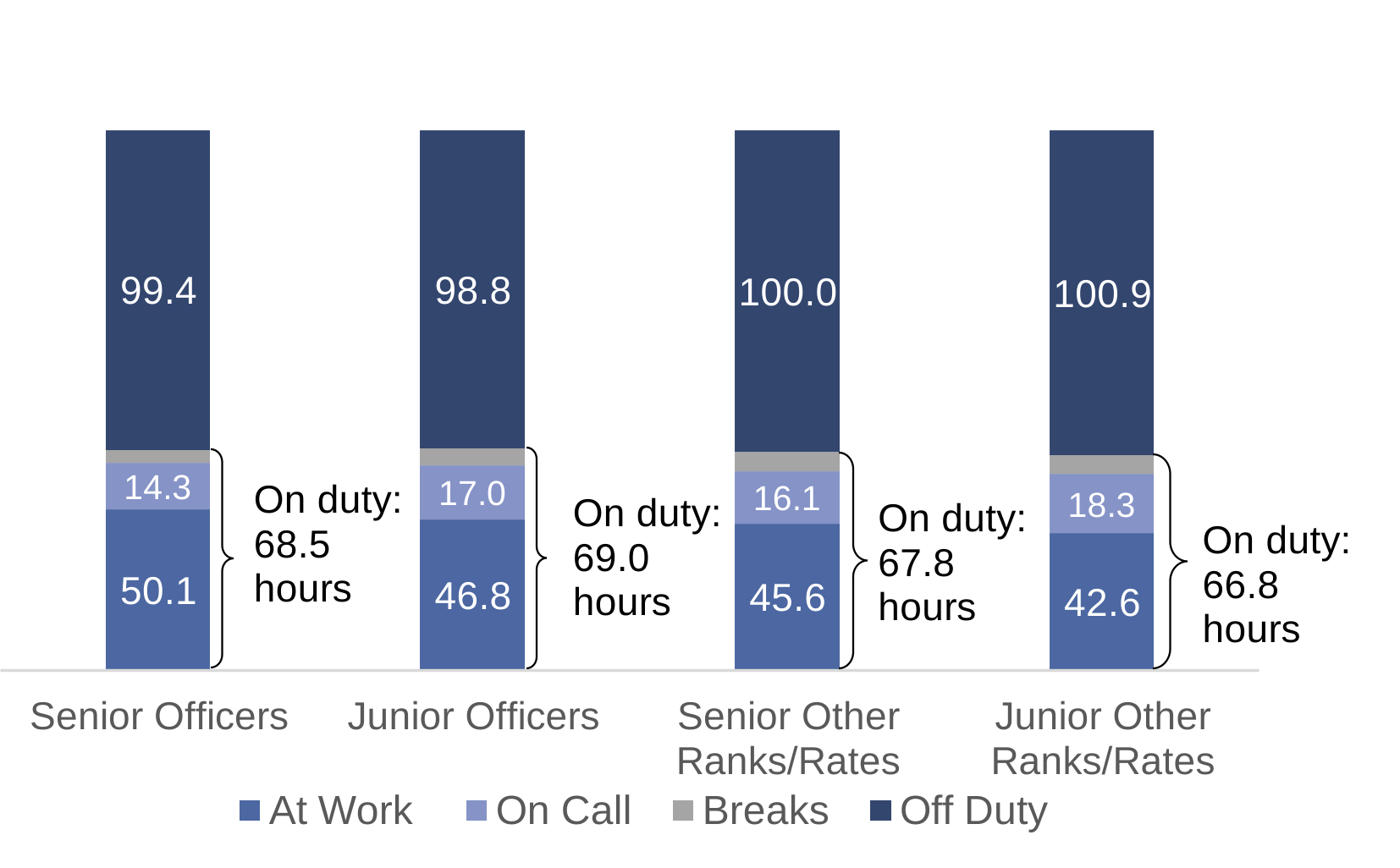
Figure 2.3 is a stacked bar chart that shows average hours spent at work, on call, breaks and off duty per week by rank group, in 2025/26.
Senior Officers reported working more hours this year compared to all other ranks at 50.1 hours per week. This was followed by Junior Officers (46.8 hours) and Senior Other Ranks (45.6 hours). Junior Other Ranks reported working less hours compared to all other ranks at 42.6 hours per week.
Senior Officers also reported spending lower hours on call (14.3 hours) compared to all other ranks. For all ranks there was no difference in the average time spent on duty (ranging from 66.8 hours to 69.0 hours).
Table 2.1 Working Patterns of personnel 2024/25 - 2025/26
| At Work | On Call | On Duty | |||||||
|---|---|---|---|---|---|---|---|---|---|
| 2024/25 | 2025/26 | 2024/25 | 2025/26 | 2024/25 | 2025/26 | ||||
| Tri-service | 44.1 | 44.4 | 15.5 | 17.3 | ▲ | 65.7 | 67.4 | ▲ | |
| Royal Navy | 47.3 | 46.5 | 17.9 | 20.6 | ▲ | 70.5 | 72.7 | ||
| Army | 43.4 | 44.2 | 15.4 | 16.6 | 65.6 | 67.1 | |||
| RAF | 42.8 | 42.9 | 13.5 | 15.5 | ▲ | 61.0 | 62.7 | ||
| Senior Officers | 51.0 | 50.1 | ▼ | 15.2 | 14.3 | 70.6 | 68.4 | ▼ | |
| Junior Officers | 47.5 | 46.8 | 19.5 | 17.0 | ▼ | 71.8 | 69.0 | ▼ | |
| Senior Other Ranks/Rates | 44.6 | 45.6 | ▲ | 14.5 | 16.1 | 65.7 | 67.8 | ▲ | |
| Junior Other Ranks/Rates | 42.2 | 42.6 | 15.3 | 18.3 | ▲ | 63.8 | 66.8 | ▲ |
Key
▲ Significant increase from 2024/25
▼ Significant decrease from 2024/25
At a service level, Royal Navy and RAF personnel reported an increase in hours spent on call, with Royal Navy personnel reporting an increase of 2.8 hours and the RAF of 2.0 hours. This may be driving the overall increase seen at the Tri-Service level.
Within Rank groups, Senior Other Ranks reported an increase in both time spent at work and on duty this year (45.6 and 67.8 hours respectively) compared to the previous year (44.6 hours and 65.7 hours respectively). Furthermore, Junior Other Ranks also reported an increase in time spent on call and on duty. This increase in hours spent on duty by Other Ranks may be causing the overall increase of hours spent on duty at the Tri-Service level. Junior Officers also reported a decrease in hours spent on call and on duty this year compared to the previous, with time spent on call seeing a decrease of 2.5 hours and on duty of 2.9 hours.
2.2 Unsociable hours worked by personnel 2018/19 – 2025/26
Unsociable hours are described as:
- Any hours worked between 18:00 and 06:00, Monday to Friday
- Any hours worked on Saturday and Sunday
In 2025/26 personnel reported working, on average, 6.6 unsociable hours per week. This remains unchanged since 2018/19.
Figure 2.4 Unsociable hours worked by Service, 2018/19 - 2025/26
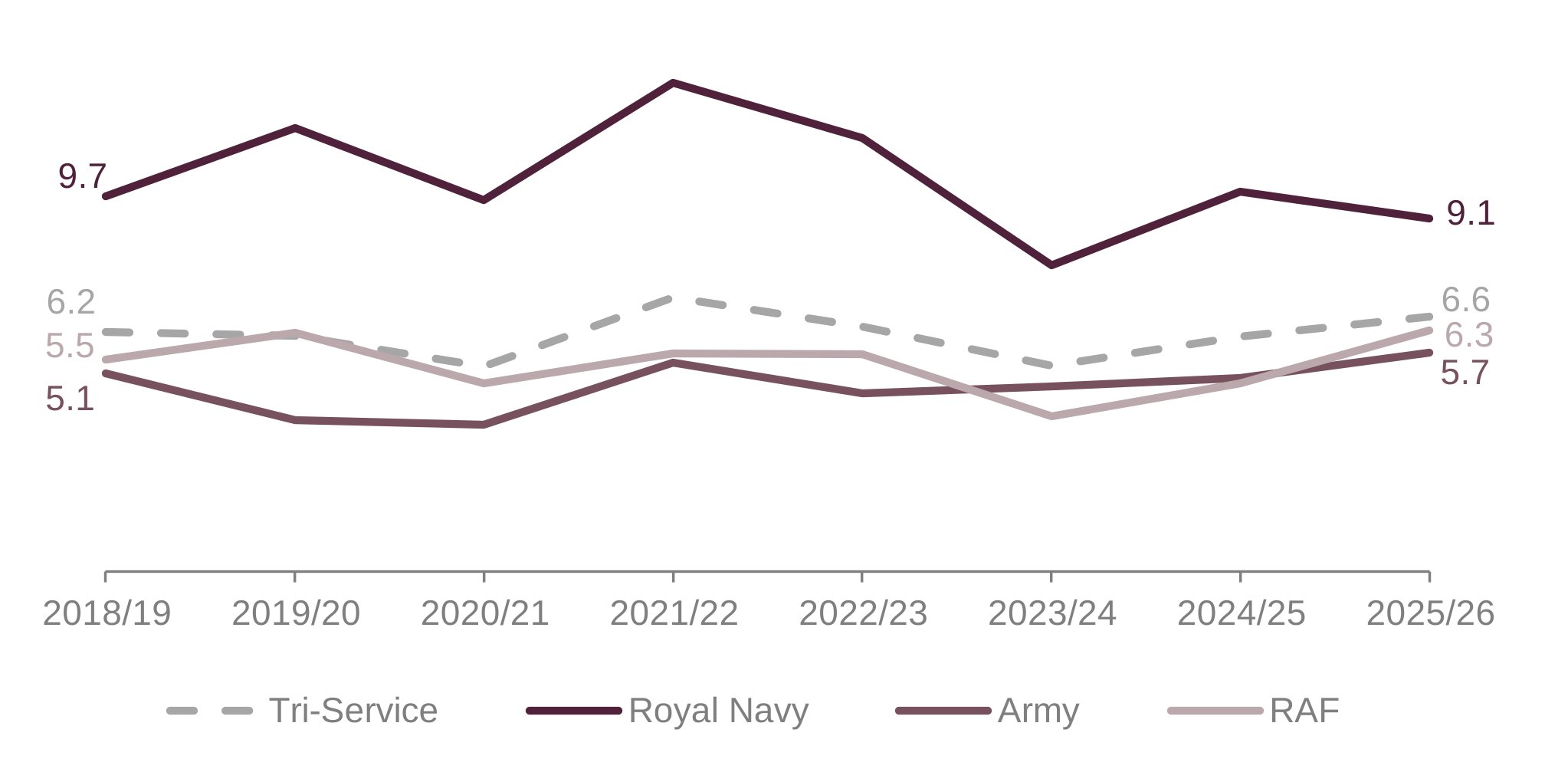
Figure 2.4 is a line chart showing average unsociable hours worked between 2018/19 and 2025/26 by Tri-Service, Royal Navy, Army and RAF personnel.
Royal Navy personnel reported working 9.1 unsociable hours in 2025/26, this remains unchanged compared to the previous year however this is below figures reported in 2018/19 and 2018/19 (12.5 hours and 12.7 hours respectively); when the Royal Navy reported their highest figures for unsociable hours. RAF personnel reported working 6.3 unsociable hours this year, which is a 2.2 hour increase compared to 2023/24 in which they reported their lowest figures.
2.3 Excessive hours worked [footnote 1] and spent on duty, 2025/26
Section 2.3 is based on the 1,481 regular personnel for whom a full week’s data was available in 2025/26 (53% of all responses).
Excessive hours.
The proportion of personnel who worked more than 70 hours during the week surveyed.
Overall, 7% of personnel worked more than 70 hours per week.
The Royal Navy reported 13% of personnel working excessive hours. This was 6% for Army personnel and 2% for RAF.
8% of Senior Officers reported spending excessive hours at work; this was 7% of Junior Officers, Senior Other Ranks and Junior Other Ranks.
Figure 2.5: Proportion of personnel spending more than 70 hours on duty for the week surveyed by service, 2025/26
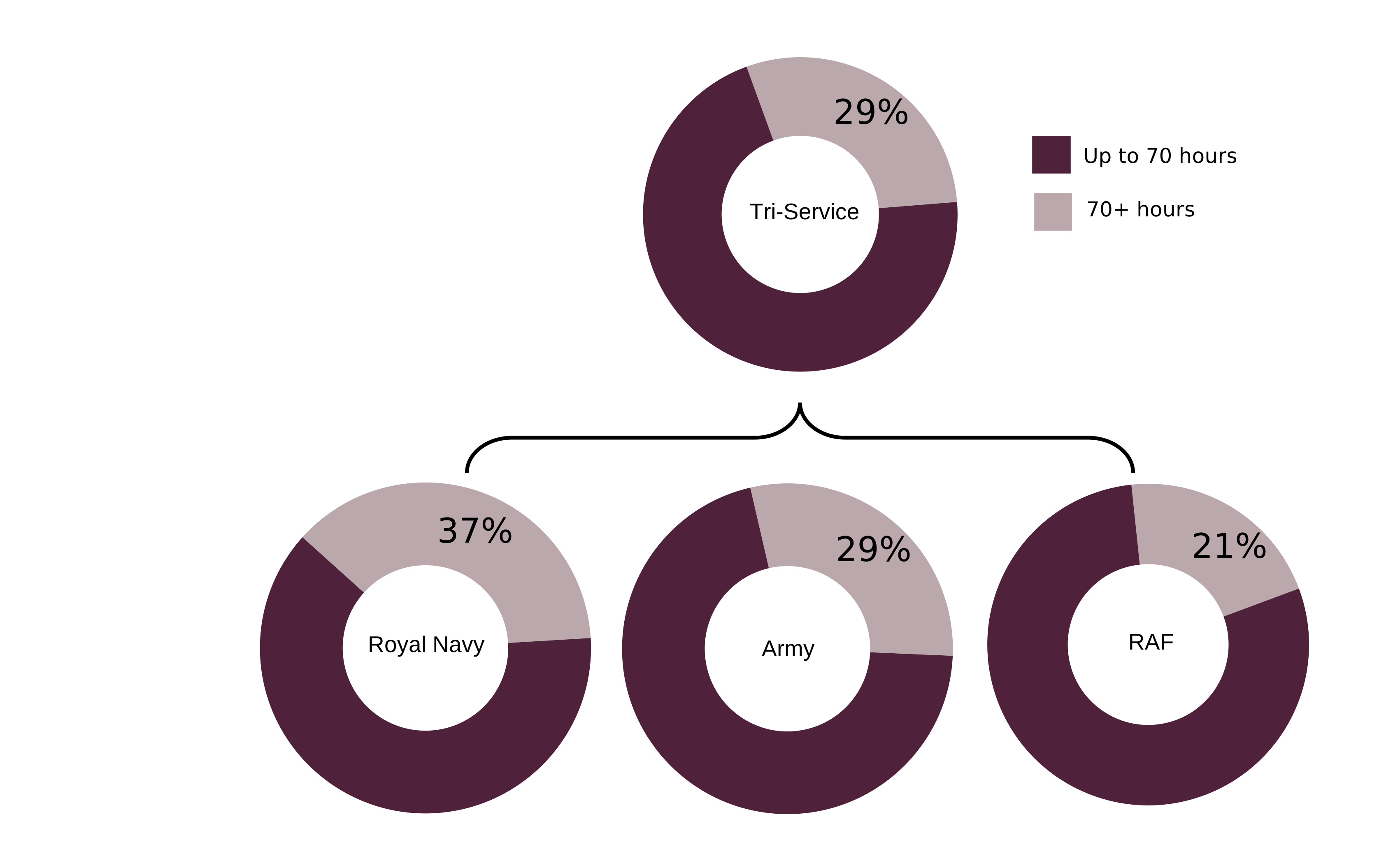
Figure 2.5 consists of 4 doughnut charts split into two segments highlighting proportion of personnel spending more than 70 hours on duty for the week surveyed by service, in 2025/26.
Overall, 29% of personnel reported spending excessive hours on duty. At a single service level, just over a third of Royal Navy personnel (37%) reported excessive hours on duty. This is most likely due to Royal Navy personnel being away at sea and having additional duties.
Data Quality.
The results in this section are based on a subset of respondents. As such, levels of precision are likely to be lower (wider confidence intervals) and are intended as an indication of the average working week.
Figure 2.6: Distribution of hours on duty of personnel by rank group, 2025/26
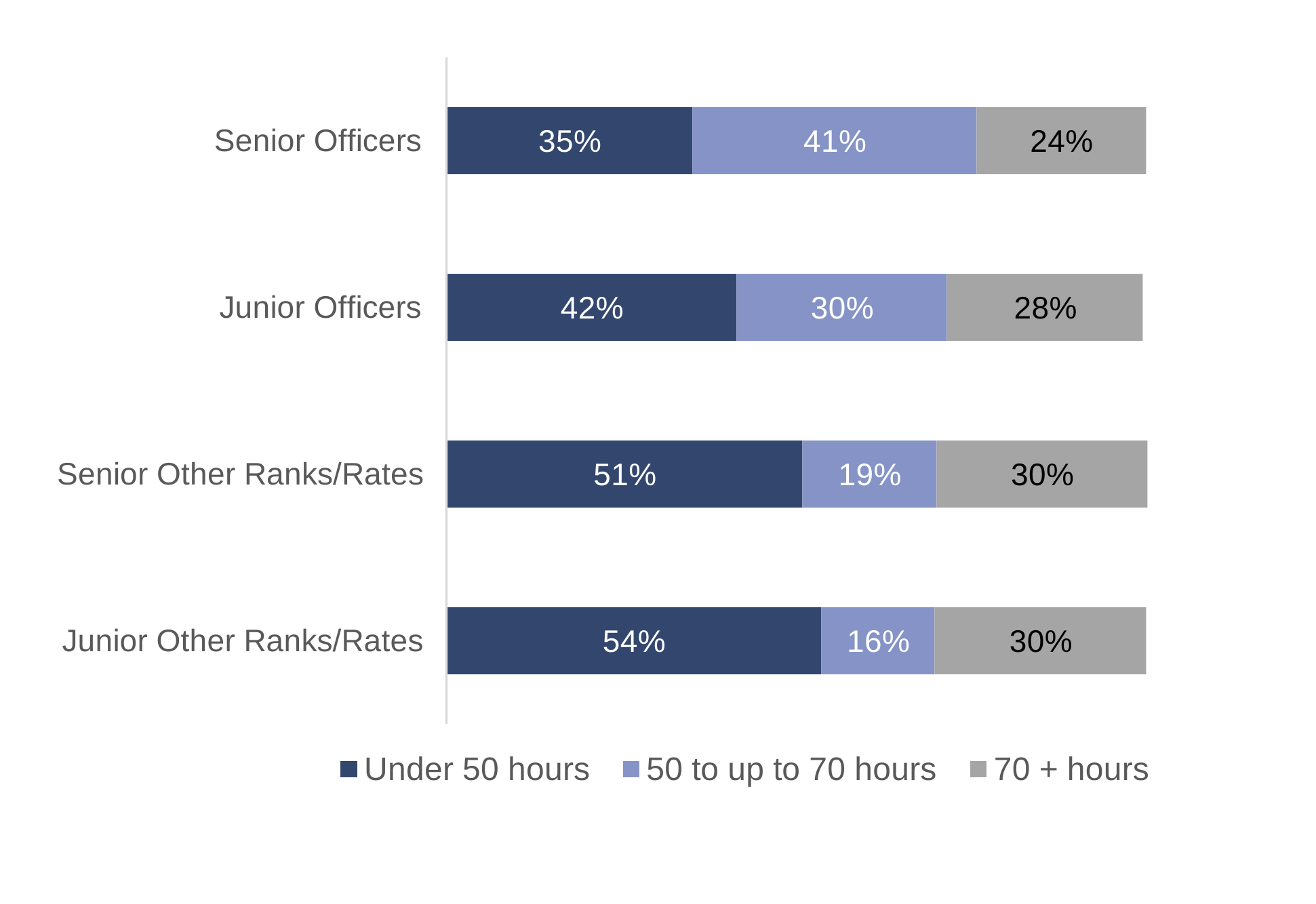
Figure 2.6 is a 100% stacked bar chart showing the distribution of hours on duty for Tri-Service personnel by rank group, in 2025/26.
54% of all Junior Other Ranks reported spending under 50 hours per week on duty, for Senior officers this was 35%.
30% of Other Ranks reported spending over 70 hours per week on duty; this was followed by 28%for Junior Officers and 24% for Senior Officers.
2.4 Time series of working patterns, 2018/19 - 2025/26
At a Tri-Service level, personnel worked on average 44.4 hours per week, this remains unchanged compared to the previous year, however this is a 1.4 hour increase compared to 2023/24. This figure is also in line with what was being reported in 2021/22 and 2022/23 (44.6 hours and 44.3 hours respectively).
Time spent on call at a Tri-Service level this year saw an increase, with personnel spending on average 17.3 hours per week on call. This is a 5 year high with figures returning to 2020/21 levels (19.1 hours).
Furthermore, time spent on duty this year has also seen an increase, at 67.4 hours per week - a 4 year high. With figures now back in line with 2021/22 (66.6 hours).
Figure 2.7: Comparison of average weekly hours spent at work, on call and on duty by Service, 2018/19 - 2025/26
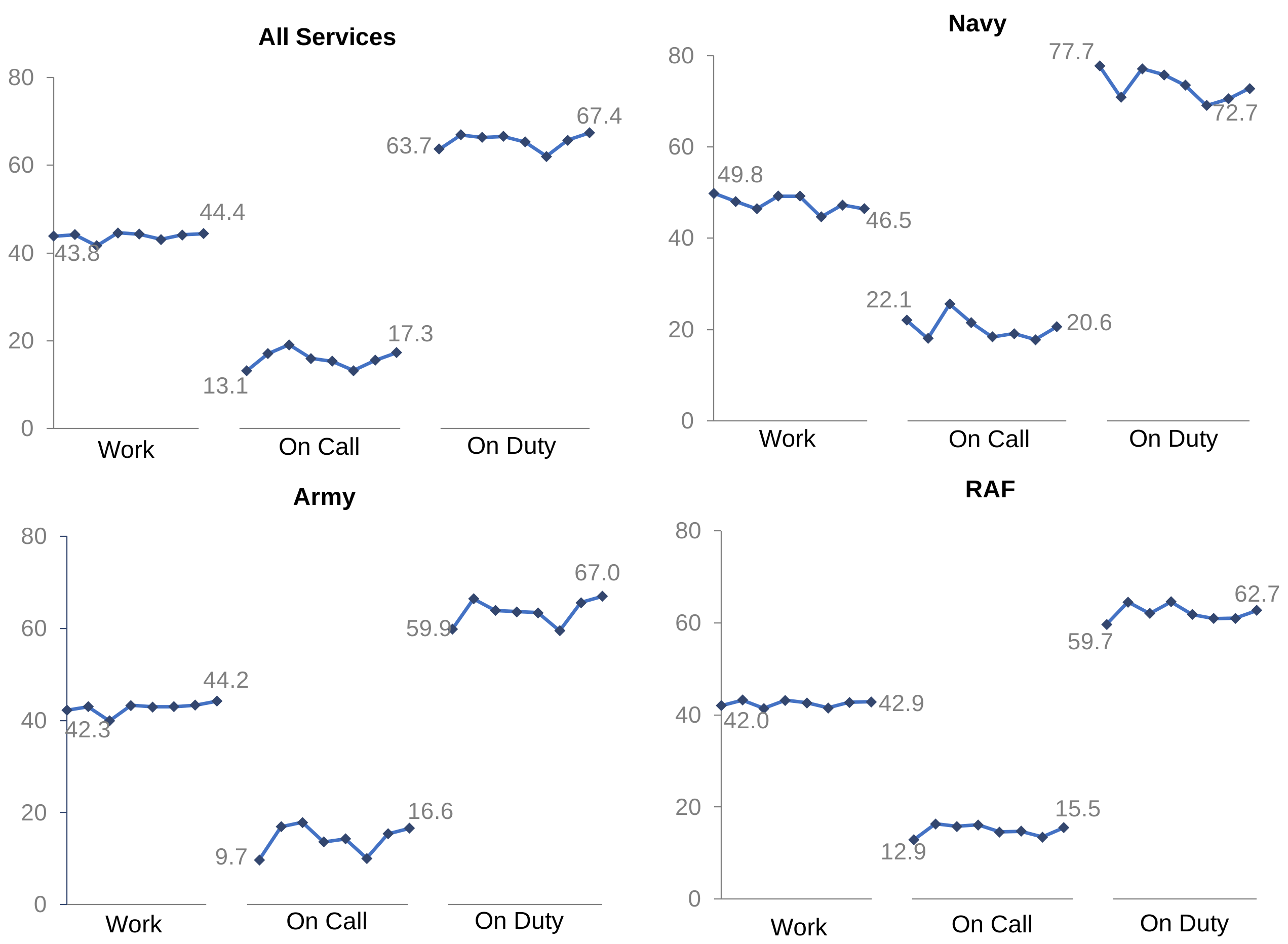
Figure 2.7 consists of 4 line graphs showing the average weekly hours spent at work, on call and on duty for Tri-Service, Royal Navy, Army and RAF personnel between 2018/19 and 2025/26.
Royal Navy personnel reported spending 46.5 hours per week at work in 2025/26. This remains unchanged compared to last year. However, this is lower than 2021/22 (49.2 hours) and 2022/23 (49.2 hours), when Royal Navy personnel were reporting some of their highest hours worked. Army personnel reported working 44.2 hours this year which remains unchanged compared to the previous year. However, this is an increase of 1.2 hours compared to 2022/23 and 2023/24 (43.0 hours). RAF personnel also did not see any changes in hours worked this year (42.9 hours) compared to the previous.
Royal Navy personnel reported spending 20.6 hours per week on call this year, an increase of 2.8 hours compared to the previous year; this now brings the figures back in line with 2023/24 (19.1 hours). Army personnel reported spending 16.6 hours per week on call this year, which remains unchanged compared to the previous year; however, this is higher than 2023/24 when Army personnel had reported their lowest hours worked at 10.1 hours. This is also higher than 2021/22 and 2022/23 (13.6 hours and 14.3 hours respectively). RAF personnel reported spending 15.5 hours per week on call - a 2.1 hour increase compared to 2024/25 (13.5 hours). This now back in line with figures reported between 2019/20 – 2023/24 (ranging between 14.6 – 16.3 hours).
Royal Navy personnel and Army personnel did not see changes to hours spent on duty this year (72.2 hours and 67.1 hours) compared to the previous year. However, this is a increase for both services compared to 2023/24; a 3.6 hour increase for the Royal Navy and 7.5 hour increase for the Army. Furthermore, this is the highest average hours Army personnel have reported spending on duty since 2018/19. Following an increase of 4.8 hours in 2019/20 (64.5 hours), the average hours spent on duty by RAF personnel has remained relatively stable (ranging between 64.6 hours – 61.0 hours), with personnel reporting spending 62.7 hours per week on duty this year.
Figure 2.8: Comparison of average weekly hours spent at work, on call and on duty by rank group, 2018/19 - 2025/26
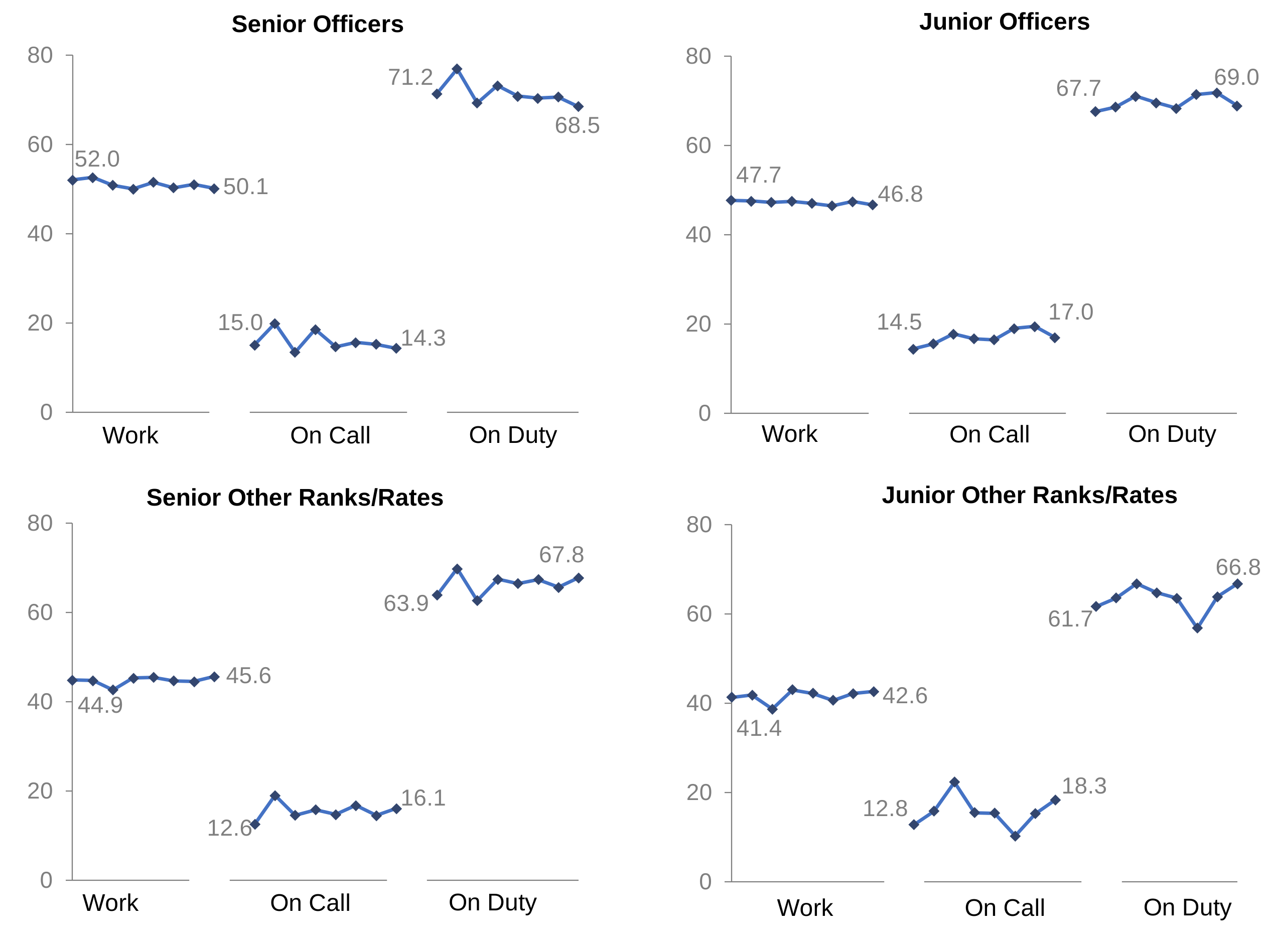
Figure 2.8 consists of 4 line graphs showing the average weekly hours spent at work, on call and on duty for Senior Officers, Junior Officers, Senior Other Ranks/Rates and Junior Other Ranks/Rates between 2018/19 and 2025/26.
Senior Officers spent on average 50.1 hours per week at work this year, this is back in line with 2023/24 and 2021/22, when some of the lowest figures over the last 8 years were being reported. Junior Officers reported spending on average 46.8 hours per week at work, this has remained stable since 2018/19. Senior Other Ranks reported spending 45.6 hours per week at work in 2025/26, this is an increase compared to the previous two years bringing the figures back in line with 2022/23. Junior Other Ranks did not see a difference this year compared to the previous. However, this is a 2.0 hour increase compared to 2023/24 (40.6 hours) and brings the figures in line with 2021/22 and 2022/23 (43.0 hours and 42.2 hours respectively).
Following a decline in 2022/23, hours spent on call for Senior Officers has remained relatively stable, with personnel reporting spending 14.3 hours per week on call. Junior Officers this year reported spending 17.0 hours per week on call, a decrease of 2.5 hours compared to 2024/25 (19.5 hours) and 2.0 hours compared to 2023/24 (19.0 hours). Senior Other Ranks reported spending 16.1 hours on call in 2025/26, this remains unchanged since 2020/21. Junior Other Ranks reported spending 18.3 hours per week on call this year, an increase compared to 2021/22-2024/25 (ranging from 10.3 hours to 15.5 hours).
Senior Officers reported spending 68.5 hours per week on duty this year, this is the lowest figure reported in the last 7 years. Junior Officers also reported a decrease in hours spent on duty at 69.0 hours; a decrease compared to 2023/24 and 2024/25. However, this brings the figure back in line with what was being reported in 2018/19 to 2022/23 (ranging between 67.7 hours to 71.1 hours). Senior Other Ranks reported spending 67.8 hours per week on duty, which is a 2.1 hour increase compared to 2024/25, bringing figures back in line with 2021/22-2023/24. Junior Other Ranks reported spending 66.8 hours on duty, this is the highest the figure has been since 2022/23 and is now back in line with 2021/22.
3. The Royal Navy
The Royal Navy is comprised of the Royal Navy (including Queen Alexandra’s Royal Naval Nursing Service) and the Royal Marines.
3.1 Royal Navy working patterns, 2025/26
In 2025/26 Royal Navy personnel reported working 46.4 hours per week. This remains unchanged compared to figures reported in 2024/25 (47.3 hours).
Figure 3.1: Royal Navy personnel working patterns, 2025/26
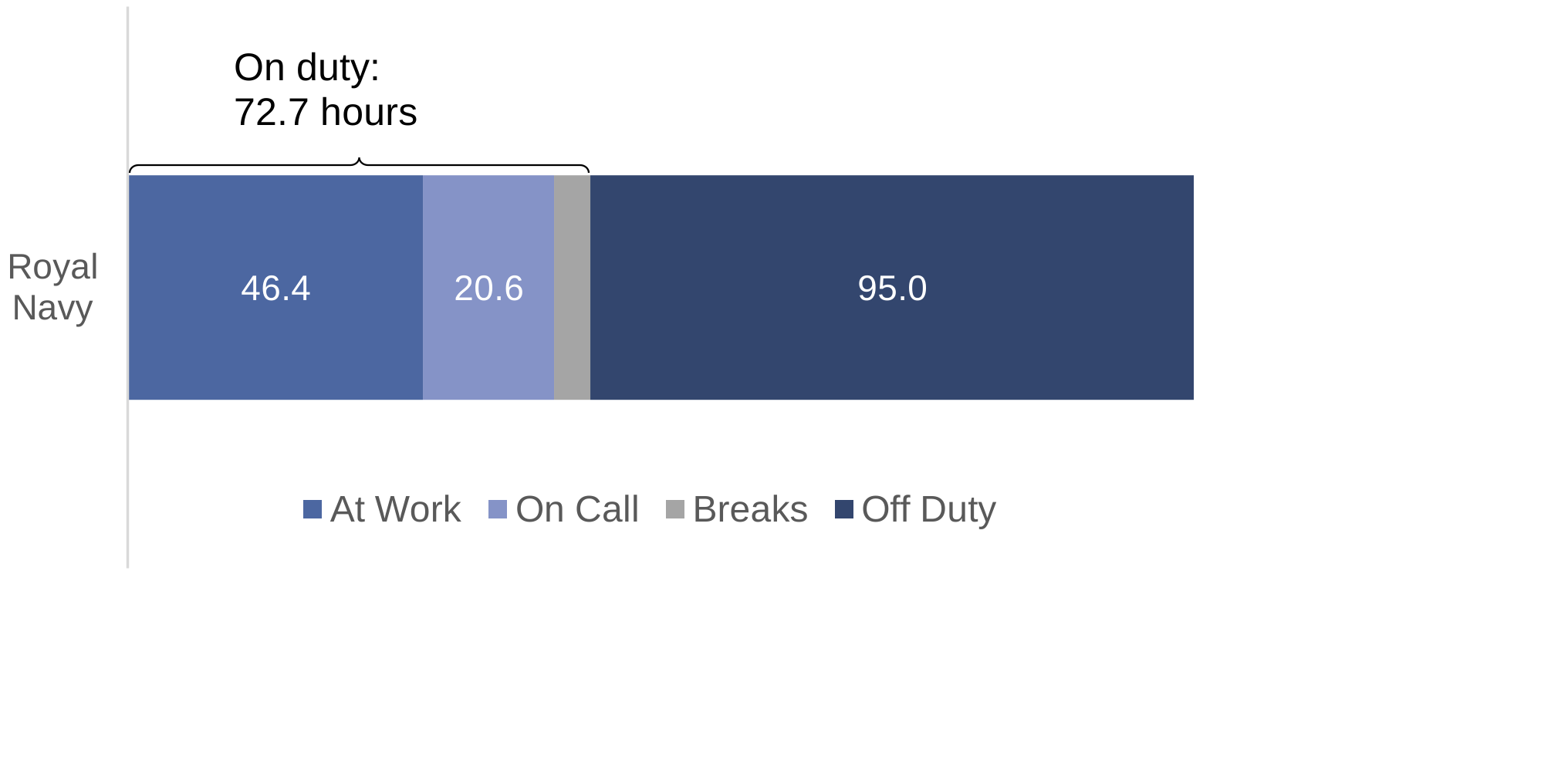
Figure 3.1 is a stacked bar chart that shows average hours spent at work, on call, on breaks and off duty by Royal Navy personnel in 2025/26. The largest proportion of time is spent off duty (95.0 hours).
Furthermore, Royal Navy personnel reported spending 20.6 hours per week on call, an increase of 2.8 hours compared to 2024/25 (17.8 hours) and 72.7 hours per week on duty, this remains unchanged compared to the previous year.
Figure 3.2: Royal Navy personnel working patterns by location, 2025/26
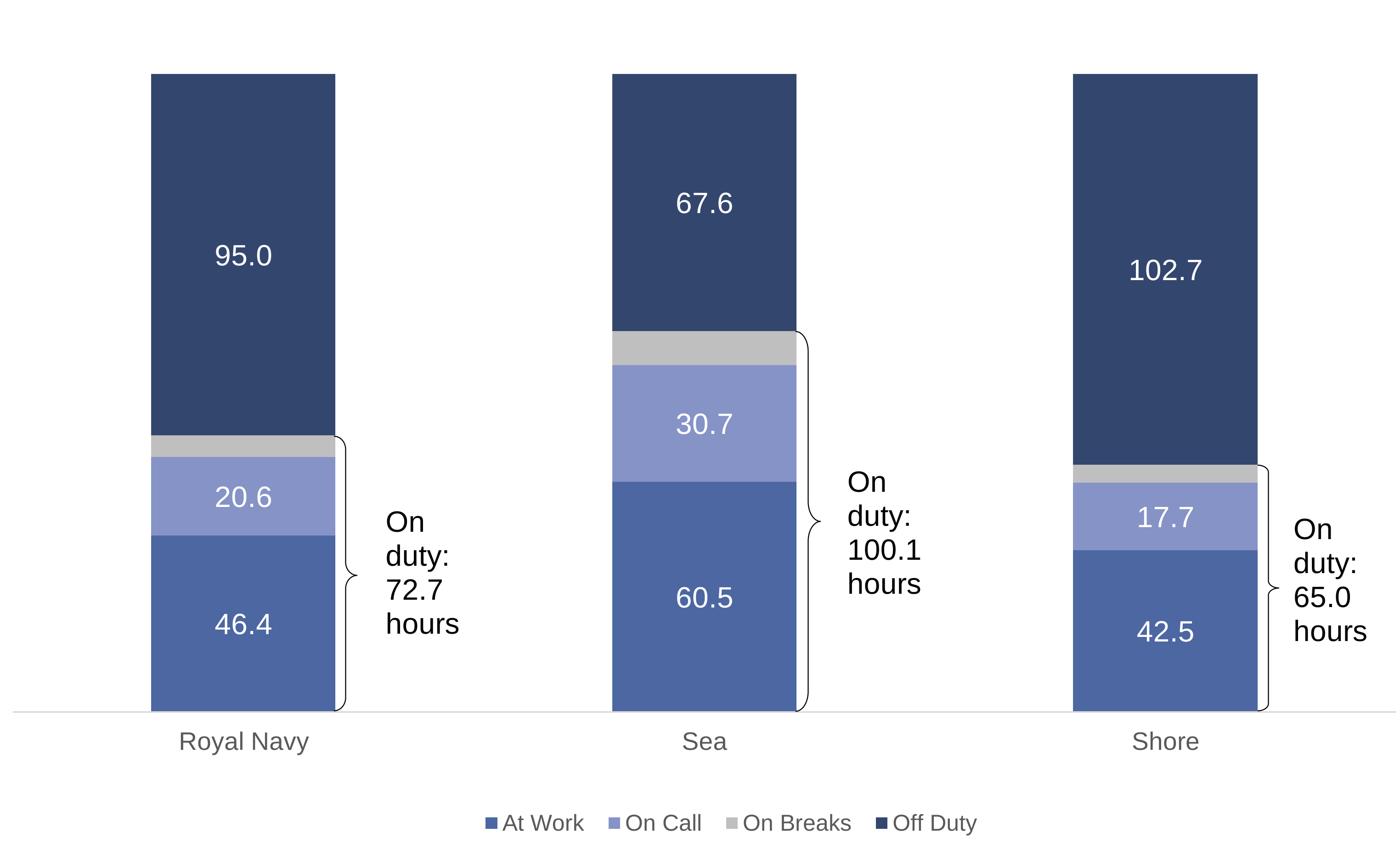
Figure 3.2 shows a stacked bar chart showing the average hours Royal Navy personnel spent at work, on call, on breaks and off duty by location, in 2025/26.
Sea-based personnel reported spending more hours at work, on call and on duty in 2025/26 (60.5 hours, 30.7 hours and 100.1 hours), compared to Shore-based personnel (42.5 hours, 17.7 hours and 65.0 hours). This is similar to what personnel reported last year. This difference may be due to Sea-based personnel having additional duties compared to Shore-based.
Figure 3.3: Royal Navy personnel working patterns by rank group, 2025/26
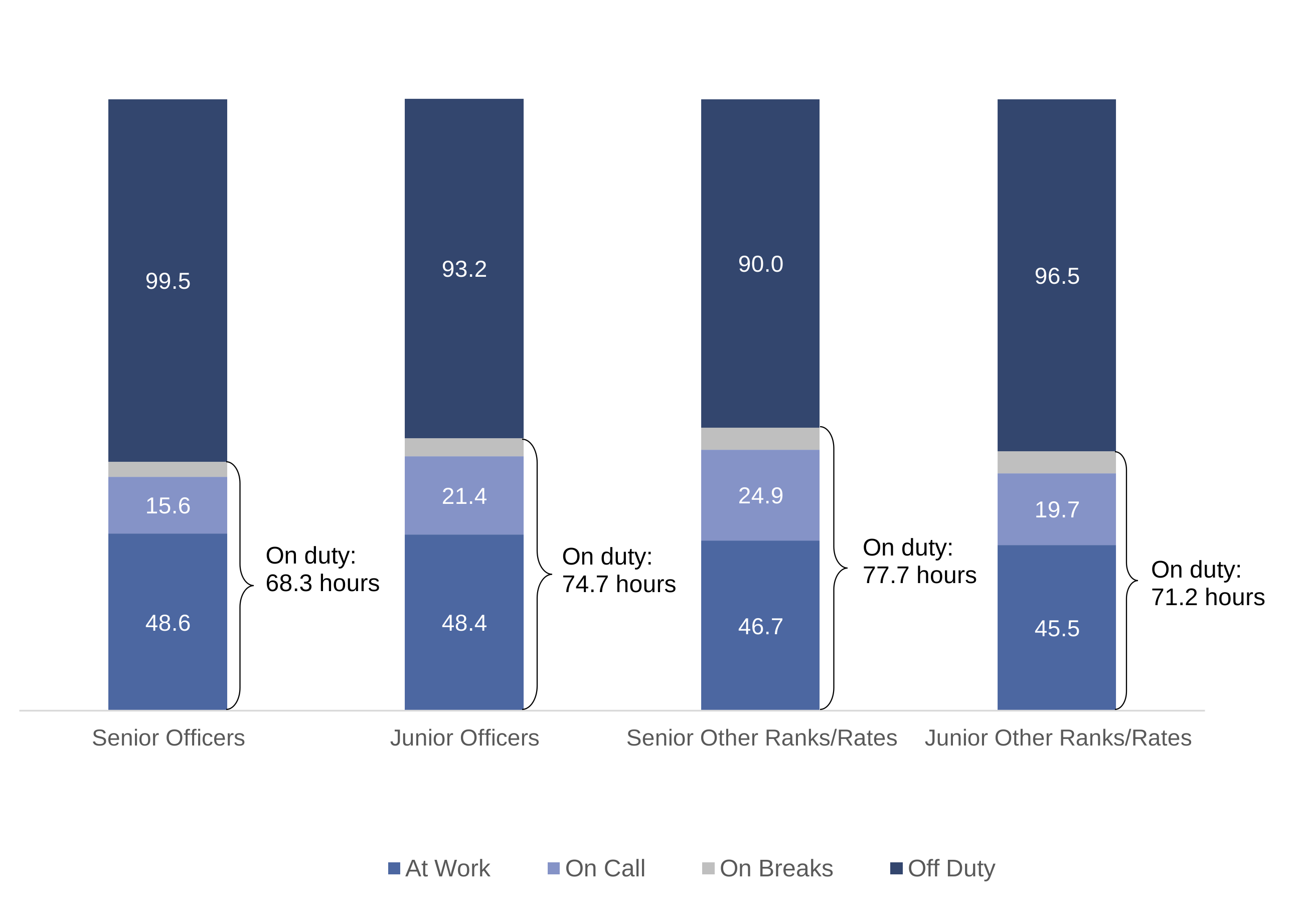
Figure 3.3 shows a stacked bar chart showing the average hours Royal Navy personnel spent at work, on call, on breaks and off duty by rank group, in 2025/26.
Senior Officers reported working 48.6 hours per week this year, this is higher than figures reported by Other Ranks. Furthermore, Junior Officers reported working 48.4 hours per week, this is higher than figures reported by Junior Other Ranks (45.5 hours).
Senior Officers reported spending 15.6 hours per week on call, this is less compared to all other ranks. Senior Other Ranks reported spending 24.9 hours per week on call, this is higher compared to hours reported by Junior Other Ranks (19.7 hours).
Furthermore, Senior Officers reported spending 68.3 hours per week on duty, this is less than hours reported by Junior Officers (74.7 hours) and Senior Other Ranks (77.7 hours). Senior Other Ranks also reported spending more hours on duty than Junior Other Ranks (71.1 hours).
Table 3.1: Working patterns of Royal Navy personnel, 2024/25 - 2025/26
| At Work | On Call | On Duty | |||||||
|---|---|---|---|---|---|---|---|---|---|
| 2024/25 | 2025/26 | 2024/25 | 2025/26 | 2024/25 | 2025/26 | ||||
| Royal Navy | 47.3 | 46.4 | 17.8 | 20.6 | ▲ | 70.5 | 72.7 | ||
| Sea | 62.1 | 60.5 | 31.3 | 30.7 | 100.9 | 100.1 | |||
| Shore | 42.9 | 42.5 | 13.8 | 17.7 | ▲ | 61.6 | 65.0 | ▲ | |
| Senior Officers | 49.5 | 48.6 | 21.7 | 15.6 | ▼ | 76.1 | 68.3 | ▼ | |
| Junior Officers | 48.9 | 48.4 | 23.1 | 21.4 | 76.9 | 74.7 | |||
| Senior Other Ranks/Rates | 46.3 | 46.7 | 18.1 | 24.9 | ▲ | 69.9 | 77.7 | ▲ | |
| Junior Other Ranks/Rates | 46.9 | 45.5 | 15.7 | 19.7 | ▲ | 68.2 | 71.2 |
Key
▲ Significant increase from 2024/25
▼ Significant decrease from 2024/25
Overall Royal Navy personnel reported spending 20.6 hours per week on call, an increase of 2.8 hours compared to the previous year (17.8 hours).
Shore-based personnel reported an increase this year in both time spent on call and on duty. Time spent on call saw an increase of 3.9 hours compared to the previous year with personnel now reporting 17.7 hours, while time on duty saw a 3.4 hour increase with personnel now reporting 65.0 hours. Sea-based personnel did not see any difference in their overall time spent at work, on call or on duty.
Average hours spent at work by all rank groups has remained unchanged in 2025/26 compared to the previous year. Senior Officers reported both a decrease in time spent on call and on duty. Time spent on call saw a decrease of 6.1 hours with personnel now spending 15.6 hours on call while time spent on duty saw a decrease of 7.8 hours, with personnel now spending 68.3 hours per week on duty. Other Ranks reported spending more hours on call this year compared to the previous year, Senior Other Ranks reported an increase of 6.8 hours, and Junior Other Ranks reported a 4.0 hours increase; this may be driving the overall increase in hours spent on call by Royal Navy personnel. Furthermore, Senior Other Ranks reported an increase in hours spent on duty by 7.8 hours, with personnel now reporting spending 77.7 hours per week.
3.2 Royal Navy excessive hours worked [footnote 1] and spent on duty, 2025/26
Section 3.2 is based on 325 Royal Navy personnel for whom a full week’s data was available (49% of all responses).
Excessive hours.
The proportion of personnel who worked 70 hours or more during the week surveyed.
Overall, 13% of Royal Navy personnel worked more than 70 hours per week. Excessive hours worked differs greatly by location with 40% of Sea-based personnel spending excessive hours at work compared to 5% of Shore-based personnel.
15% of Junior Other Ranks reported working excessive hours. For Senior Other Ranks this was 13% and 11% for Junior Officers. 5% of Senior Officers reported working excessive hours.
3.4 Proportion of Royal Navy personnel spending more than 70 hours on duty for the week surveyed by location, 2025/26
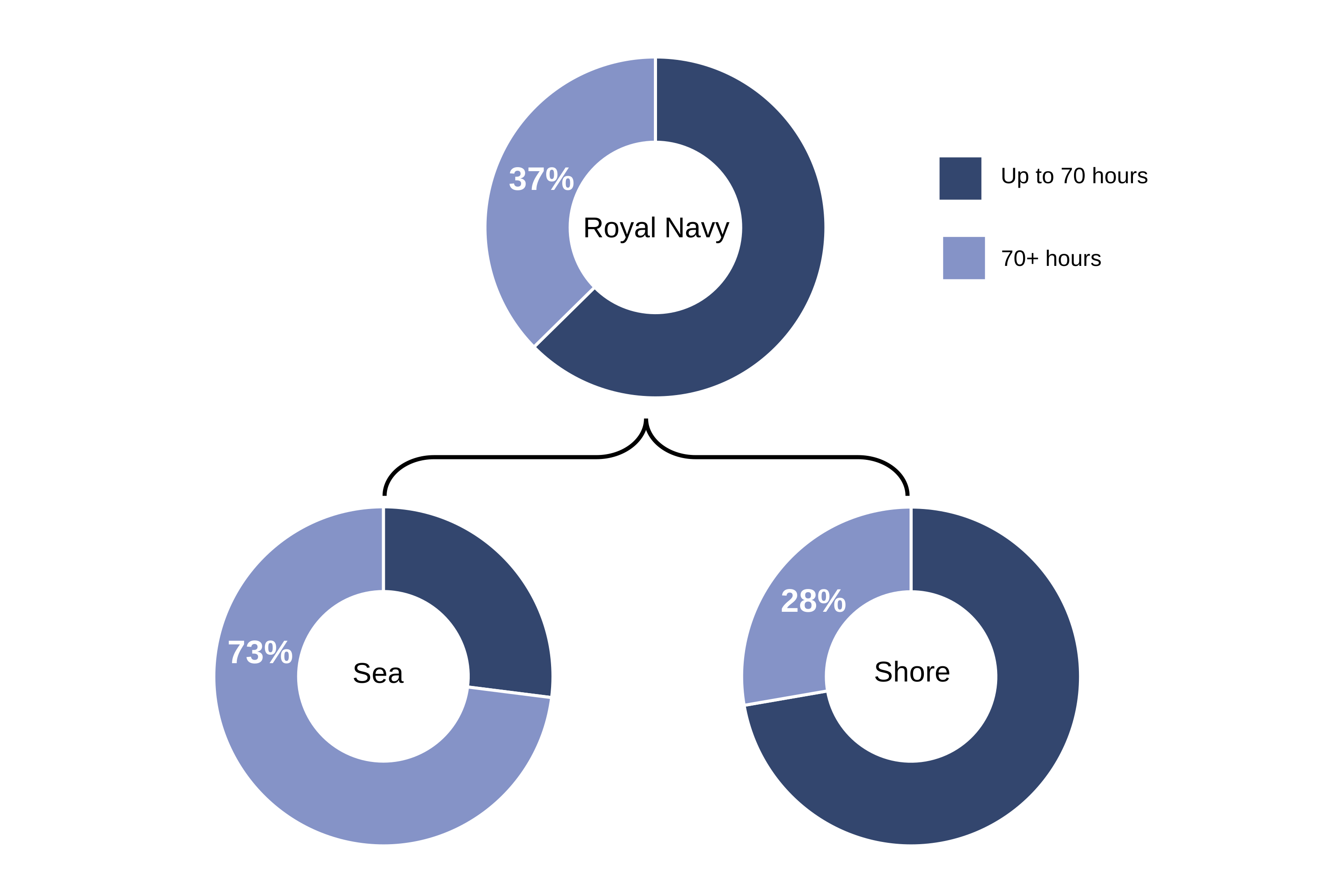
Figure 3.4 consists of 3 doughnut charts split into two segments highlighting proportion of personnel spending more than 70 hours on duty for the week surveyed by location, in 2025/26.
In 2025/26, on average 37% of Royal Navy personnel spent more than 70 hours per week on duty. This differs by location with 73% of Sea-based personnel spending more than 70 hours per week on duty and 28% of Shore-based personnel.
Data Quality. The results in this section are based on a subset of respondents. As such, levels of precision are likely to be lower (wider confidence intervals) and are intended as an indication of the average working week of Royal Navy personnel.
Figure 3.5: Distribution of hours on duty of Royal Navy personnel, 2025/26
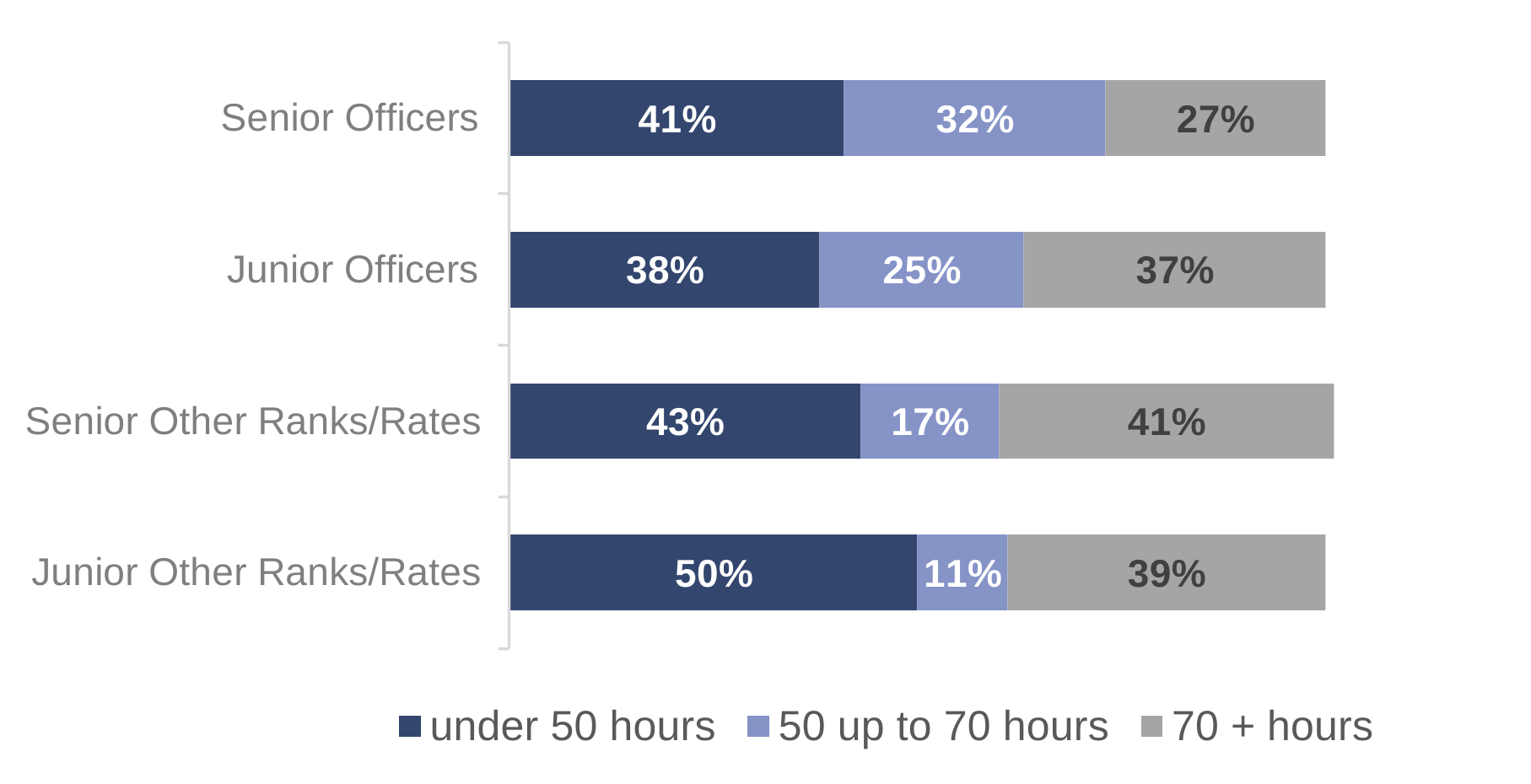
Figure 3.5 is a 100% stacked bar chart showing the distribution of hours on duty for Royal Navy personnel by rank group, in 2025/26
Half of all Junior Other Ranks (50%) reported spending under 50 hours per week on duty. A lower proportion of Junior Officers (38%) reported spending under 50 hours per week on duty. A higher proportion of Senior Other Ranks (41%) reported spending over 70 hours per week on duty, while a lower proportion of Senior Officers (27%) reported the same.
3.3 Time series of Royal Navy working patterns, 2018/19 - 2025/26
Figure 3.6: Average weekly hours Royal Navy personnel spent at work, on call and on duty, 2018/19 - 2025/26
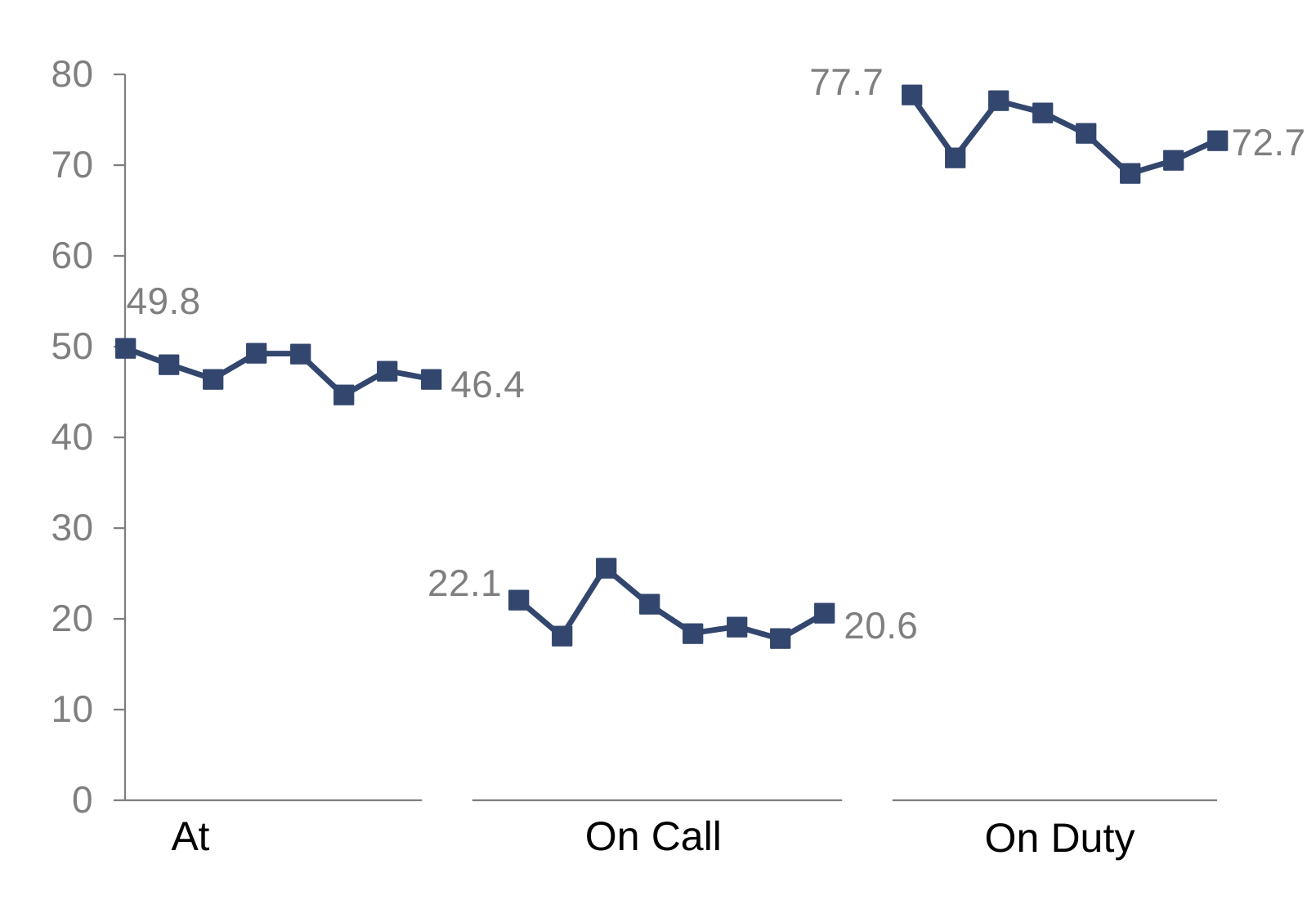
Figure 3.6 is a line chart that shows the average time spent at work, on call and on duty by Royal Navy personnel between 2018/19 and 2025/26
Overall, Royal Navy personnel reported working 46.4 hours per week in 2025/26. This remains unchanged compared to the previous year (47.3 hours). However, this is higher than 2023/24 (44.7 hours), but remains below figures reported in 2021/22 and 2022/23, when personnel were reporting some of their highest figures.
Royal Navy personnel also reported spending 20.6 hours per week on call, this is higher than figures reported in 2024/25 (17.8 hours) and 2022/23 (18.4 hours) and is back in line with figures reported in 2023/24 (19.1 hours) and 2021/22 (21.6 hours).
Royal Navy personnel also reported spending 72.7 hours per week on duty, this remains unchanged compared to the previous year. This is however higher than 2023/24, when personnel reported their lowest hours. This puts figures back in line with 2022/23.
Figure 3.7: Average weekly hours Royal Navy personnel spent at work, on call and on duty by location, 2018/19 - 2025/26
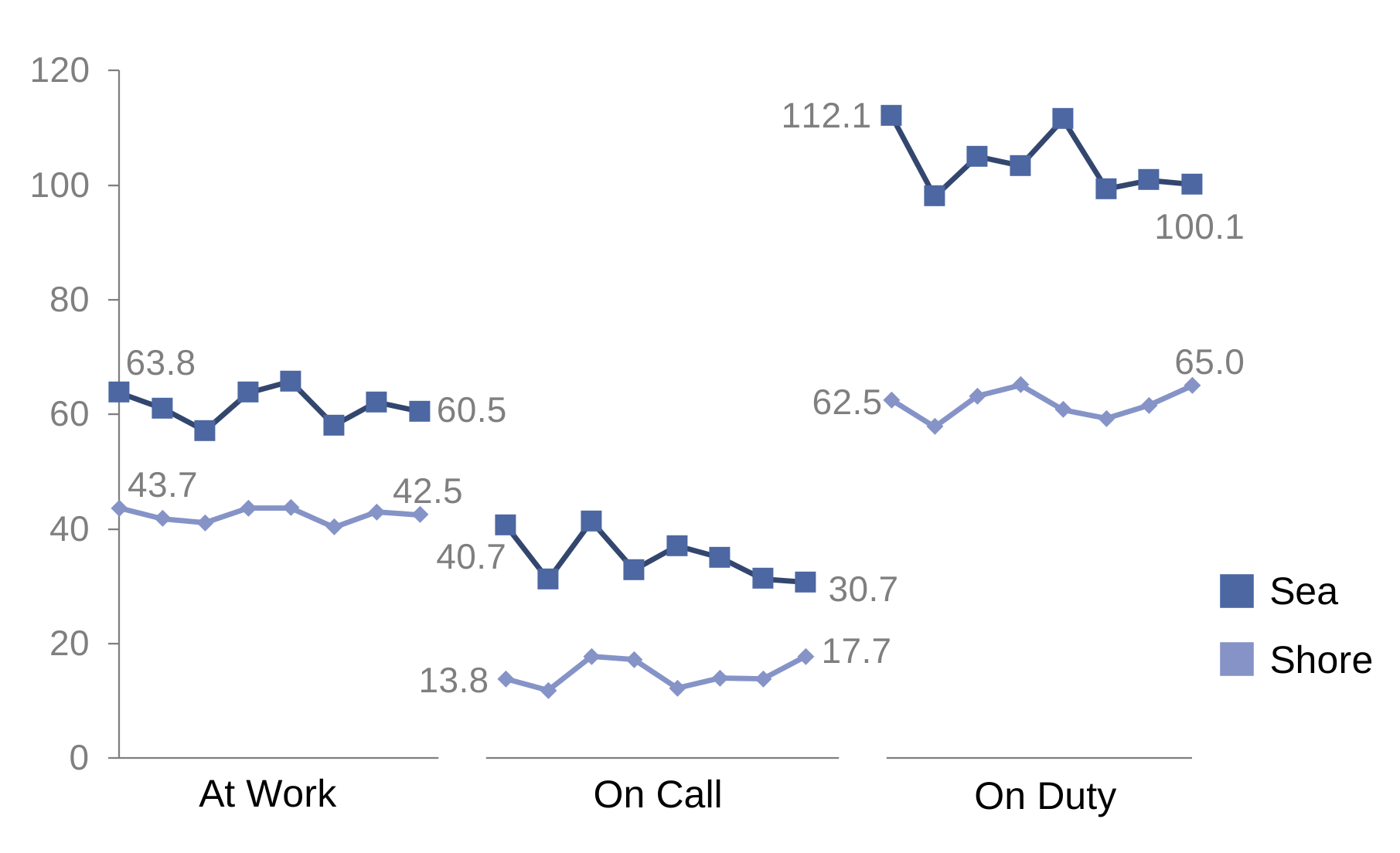
Figure 3.7 is a line chart that shows the average time Royal Navy personnel spent at work, on call and on duty by location between 2018/19 and 2025/26.
Sea-based personnel reported spending 60.5 hours per week at work in 2025/26. This has remained relatively stable over the last seven years with 2018/19 and 2022/23 being the only exceptions; when personnel reported some of their highest hours worked. Similarly, for Shore-based personnel, average hours spent at work have remained relatively stable excluding 2020/21 and 2023/24 when personnel reported their lowest hours worked.
Following a decrease in 2023/24, the average hours reported by Sea-based personnel has remained relatively stable, with personnel spending 30.7 hours per week on call this year. Shore-based personnel reported spending 17.7 hours per week on call this year, this is one of the highest figures reported over the last seven years and is higher than figures reported between 2022/23-2024/25; this is now back in line with 2020/21 and 2021/22.
Sea-based personnel reported spending 100.1 hours per week on duty in 2025/26, this has remained relatively stable since 2019/20, excluding 2022/23 (111.5 hours) when personnel reported their highest figure for hours spent on duty. Shore-based personnel reported spending 65.0 hours on duty, this is a three year high and brings figures back in line with 2021/22.
Figure 3.8: Average weekly hours Royal Navy Officers spent at work, on call and on duty by rank group, 2018/19 - 2025/26
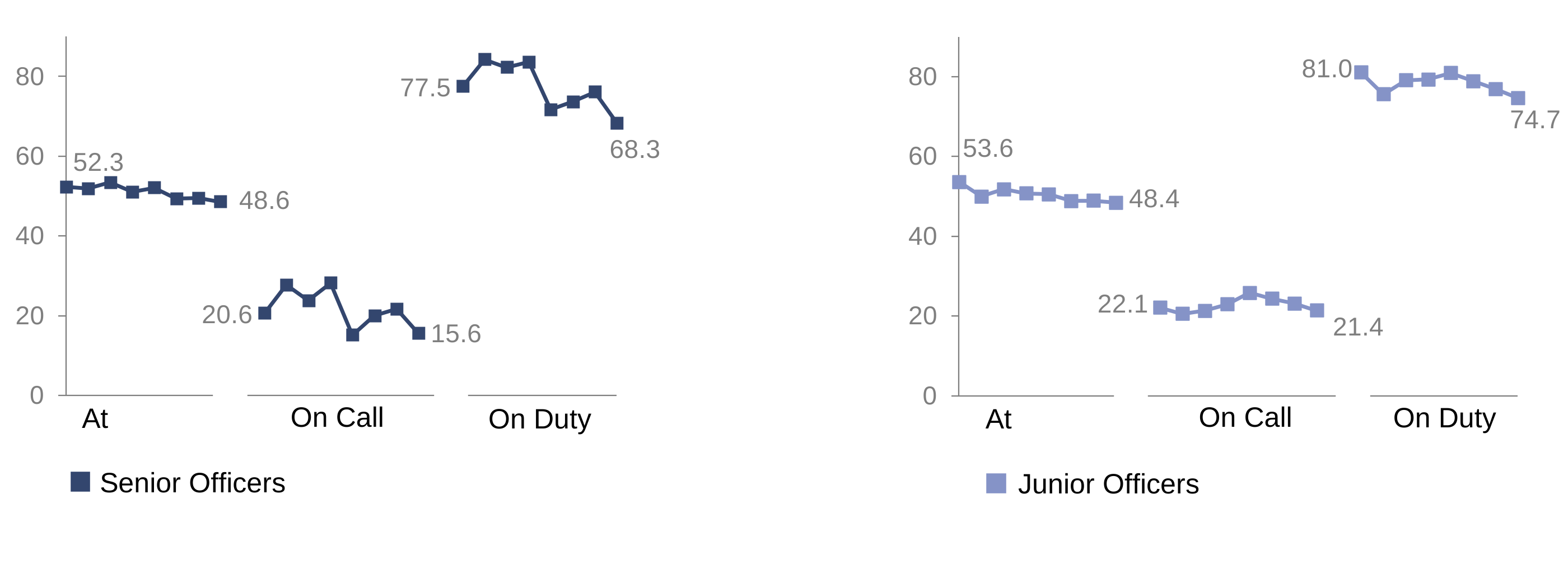
Figure 3.8 is a line chart that shows the average time Royal Navy personnel spent at work, on call and on duty for Senior Officers and Junior Officers between 2018/19 and 2025/26.
In 2025/26, Senior Officers reported spending 48.6 hours per week working, this has remained stable since 2023/24. However, this is the lowest the figure has been since 2018/19 and is less compared to hours reported between 2018/19 and 2022/23. Hours spent at work by Junior Officers has also remained stable since 2023/24, however in 2025/26 they also reported one of their lowest figures for hours spent working over the last seven years.
Senior Officers reported spending 15.6 hours on call this year, this is one of the lowest figures reported since 2018/19 and is back in line with 2022/23 (15.2hours). Time spent on call by Junior Officers has remained relatively stable since 2018/19; excluding 2022/23 in which personnel reported their highest figure.
Furthermore, Senior Officers reported their lowest hours for time spent on duty at 68.3 hours, this is back in line with figures reported in 2022/23 (71.7 hours). Following a decrease in 2023/24, the average hours spent on duty by Junior Officers has remained relatively stable.
Figure 3.9: Average weekly hours Royal Navy Other Ranks/Rates spent at work, on call and on duty by rank group, 2018/19 - 2025/26
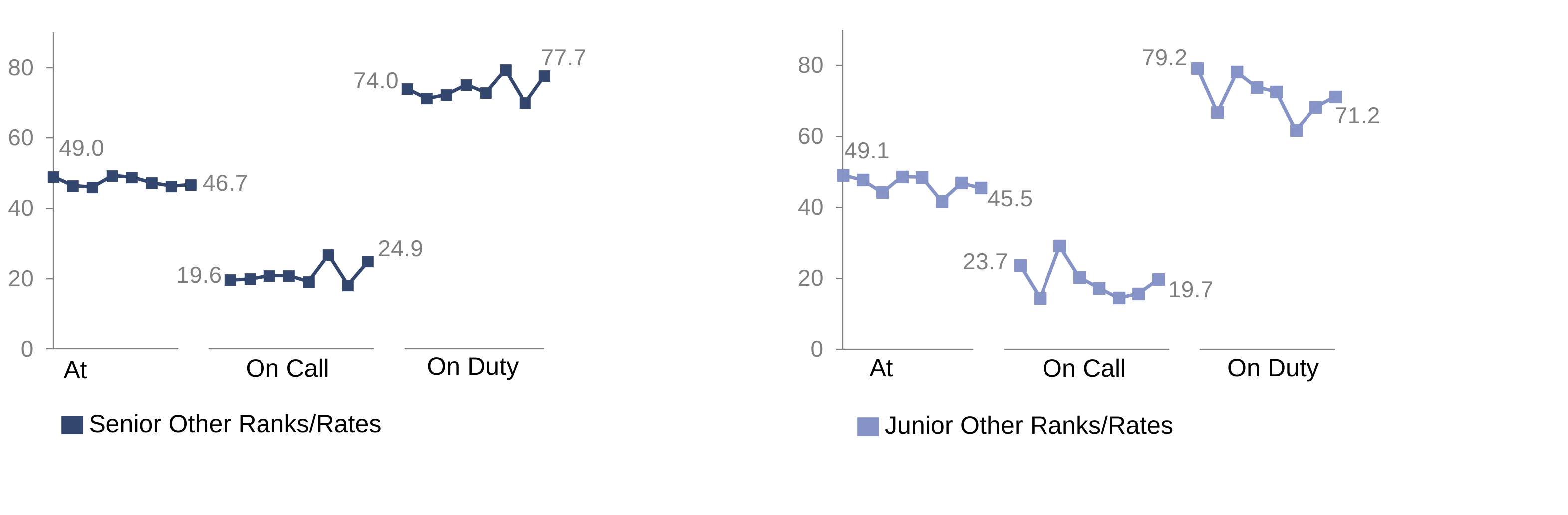
Figure 3.9 is a line chart that shows the average time Royal Navy personnel spent at work, on call and on duty for Senior Other Ranks/Rates and Junior Other Ranks/Rates between 2018/19 and 2025/26.
Following a decrease in 2023/24, the average hours spent at work by Senior Other Ranks has remained stable, this is also back in line with figures reported in 2019/20 and 2020/21. Junior Other Ranks reported working 45.5 hours per week, this remains unchanged compared to the previous year; however, this is below hours reported between 2021/22 to 2023/24 and is back in line with 2019/20 and 2020/21.
Senior Other Ranks also reported spending 24.9 hours on call, this is higher than figures reported between 2018/19 to 2022/23 and is back in line with 2023/24 (26.8 hours). Junior other Ranks reported an increase in hours on call this year compared to 2023/24 and 2024/25 bringing figures in line with 2021/22 and 2022/23. This however remains below the peak reported in 2020/21 (29.2 hours).
Senior Other Ranks reported spending more hours on duty this year compared to the previous. This is back in line with figures that were reported in 2023/24. Junior Other Ranks reported spending 71.1 hours per week on duty, this remains unchanged compared to the previous year (68.2 hours) but is higher than 2023/24 and brings figures back in line with 2021/22 and 2022/23.
4. The Army
4.1 Army working pattens, 2025/26
In 2025/26, Army personnel reported spending 44.3 hours per week working; this remains unchanged compared to the previous year (43.3 hours in 2024/25).
Figure 4.1: Army personnel working patterns, 2025/26
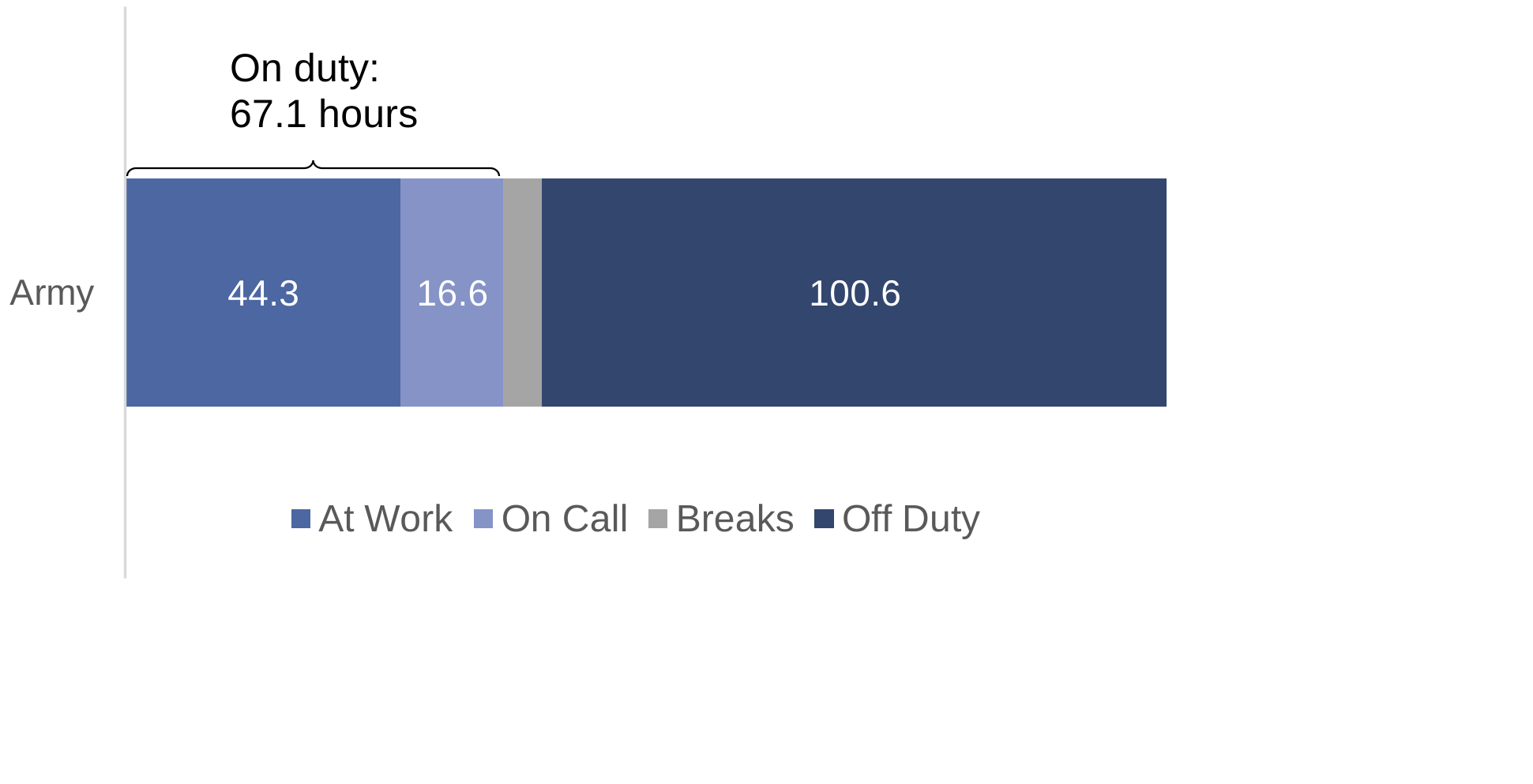
Figure 4.1 is a stacked bar chart that shows average hours spent at work, on call, on breaks and off duty by Army personnel in 2025/26. The largest proportion of time is spent off duty (100.6 hours).
Furthermore, personnel also reported spending on average 16.6 hours per week on call and 67.1 hours on duty in 2025/26. These figures remain unchanged compared to 2024/25 (15.4 hours and 65.6 hours respectively).
Figure 4.2: Army personnel working patterns by location, 2025/26
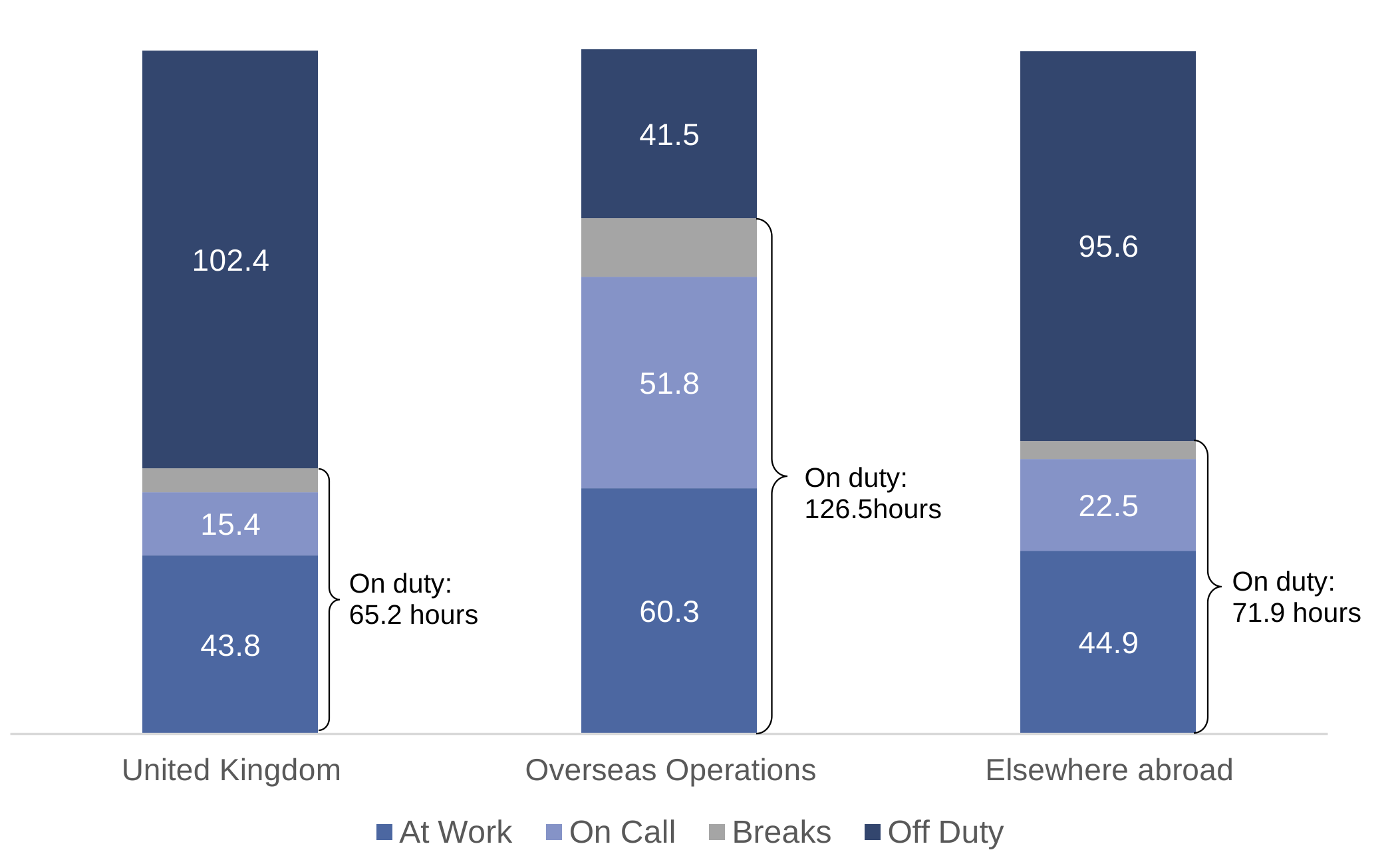
Figure 4.2 is a bar chart that shows average hours Army personnel spent at work, on call, on breaks and off duty by location in 2025/26.
Personnel on Overseas Operations reported working 60.3 hours per week; this was followed by personnel based Elsewhere abroad (44.9 hours) and personnel based in the United Kingdom (43.8 hours).
Furthermore, personnel on Overseas Operations reported spending the highest number of hours on duty 126.5 hours per week. This was followed by personnel based Elsewhere abroad (71.9 hours), with those based in the United Kingdom reporting the lowest figures (65.2 hours). This difference may be due to personnel on Overseas Operations spending the highest average hours on call (51.8 hours). This was followed by personnel based elsewhere abroad (22.5 hours) and those in the UK (15.4 hours).
Germany.
The Army Basing Programme led to a reduction of personnel in Germany in 2020. As a result, breakdowns for Germany have not been included in this report since 2019/20. However, Germany responses are still included in the overall Army figures.
Figure 4.3: Army personnel working patterns by rank group, 2025/26
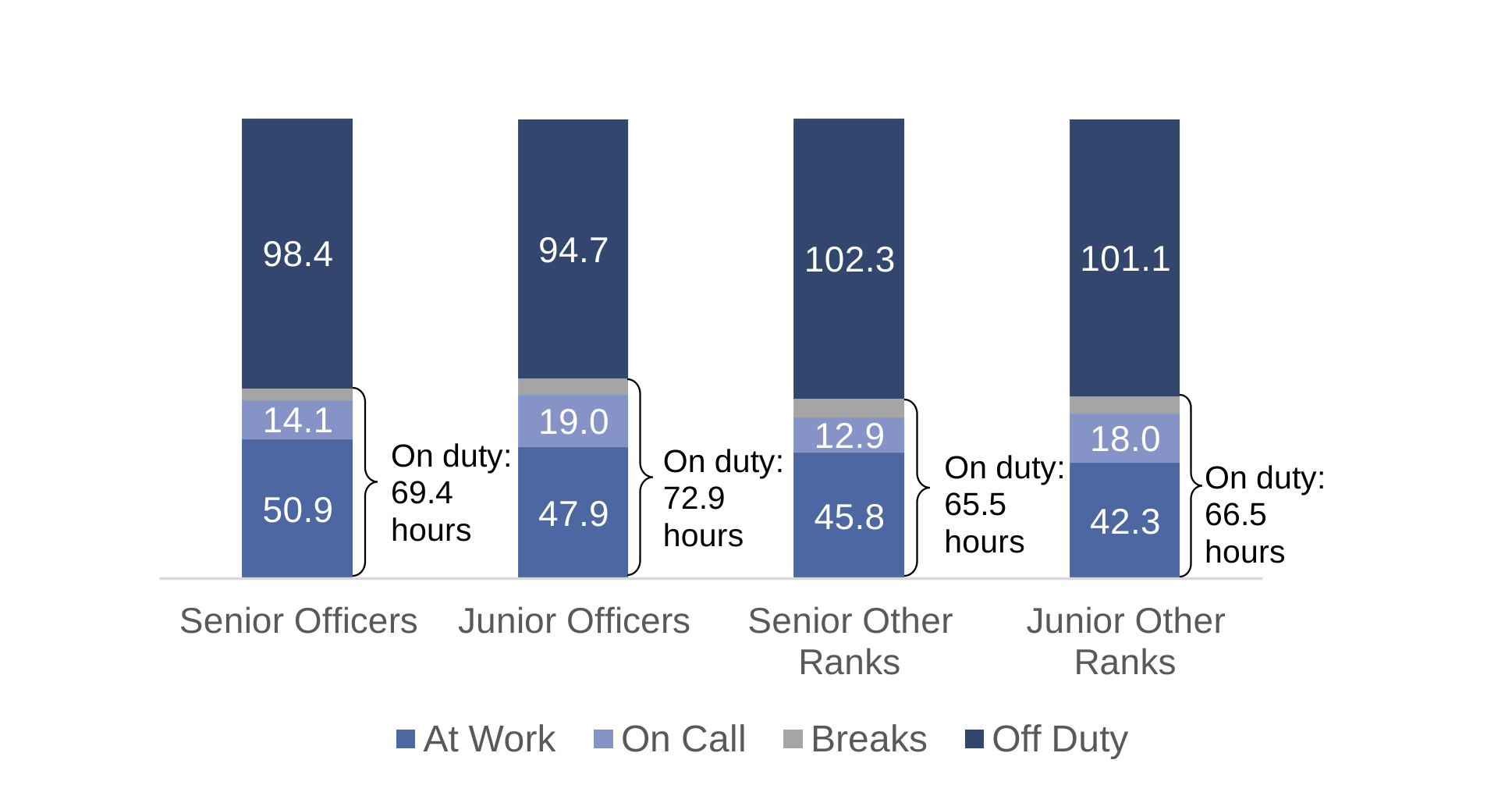
Figure 4.3 is a bar chart that shows average hours Army personnel spent at work, on call, on breaks and off duty by rank group in 2024/25.
Senior Officers reported spending higher hours at work compared to all other rank groups at 50.9 hours. This was followed by Junior Officers at 47.9 hours and Senior Other Ranks at 45.8 hours. Junior Other Ranks reported spending the least amount of hours at (42.3 hours).
Junior Officers and Junior Other Ranks reported spending more hours on call (19.0 hours and 18.0 hours) compared to Senior Officer and Senior Other Ranks (14.1 hours and 12.9 hours respectively).
Junior Officers also reported spending higher hours on duty compared to all other ranks at 72.9 hours per week. This was followed by Senior Officers (69.4 hours) who spent more hours on duty compared to Senior Other Ranks (65.5 hours). Junior Other Ranks spent 66.5 hours per week on duty.
Table 4.1: Working patterns of Army personnel, 2024/25 - 2025/26
| At Work | On Call | On Duty | |||||||
|---|---|---|---|---|---|---|---|---|---|
| 2024/25 | 2025/26 | 2024/25 | 2025/26 | 2024/25 | 2025/26 | ||||
| Army | 43.4 | 43.3 | 15.4 | 16.6 | 65.6 | 67.1 | |||
| United Kingdom | 43.0 | 43.8 | 14.5 | 15.4 | 64.6 | 65.2 | |||
| Overseas Operations | 55.5 | 60.3 | ▲ | 55.8 | 51.8 | 119.8 | 126.5 | ▲ | |
| Elsewhere Abroad | 43.3 | 44.9 | 13.3 | 22.5 | ▲ | 62.1 | 71.9 | ▲ | |
| Senior Officers | 52.6 | 50.9 | ▼ | 12.7 | 14.1 | 69.9 | 69.4 | ||
| Junior Officers | 49.5 | 47.9 | 21.1 | 19.0 | 75.8 | 72.9 | |||
| Senior Other Ranks | 44.0 | 45.8 | ▲ | 14.8 | 12.9 | 66.7 | 65.5 | ||
| Junior Other Ranks | 41.1 | 42.3 | 15.2 | 18.0 | 63.3 | 66.5 | ▲ |
Key
▲ Significant increase from 2024/25
▼ Significant decrease from 2024/25
Army personnel reported spending 44.3 hours per week at work, 16.6 hours on call and 67.1 hours on duty. This remains unchanged compared to the previous year.
Personnel on Overseas Operations reported an increase this year in their overall average hours spent at work and on duty. Working hours saw an increase of 4.8 hours compared to the previous year while on duty saw an increase of 6.7 hours. Personnel based Elsewhere abroad also reported an increase this year with time spent on call increasing by 9.2 hours and on duty by 9.8 hours this year.
Senior Officers saw a decrease this year in average working hours going from 52.6 hours in 2024/25 to 50.9 hours in 2025/26. Whist Senior Other Ranks reported an increase in hours spent working going from 44.0 hours to 45.8 hours; an increase of 1.8 hours. Furthermore, Junior Other Ranks in 2025/26 reported spending 66.5 hours per week duty, this is up from 63.3 hours reported in 2024/25; an increase of 3.3 hours.
4.2 Army excessive hours worked [footnote 1] and spent on duty, 2025/26.
Section 4.2 is based on the 593 Army personnel for whom a full week’s data was available (52% of all responses).
Excessive hours. Personnel who worked 70 hours or more during the week surveyed.
Overall, 6% of personnel spent more than 70 hours per week at work.
30% of personnel on Overseas Operations reported working excessive hours. This was 5% for personnel based in the United Kingdom and 3% for personnel based Elsewhere abroad.
10% of Senior Officers reported working excessive hours. This was 8% for Junior Officers, 7% for Senior Other Ranks and 5% for Junior Other Ranks.
Figure 4.4: Proportion of Army personnel spending more than 70 hours on duty for the week surveyed by location, 2025/26
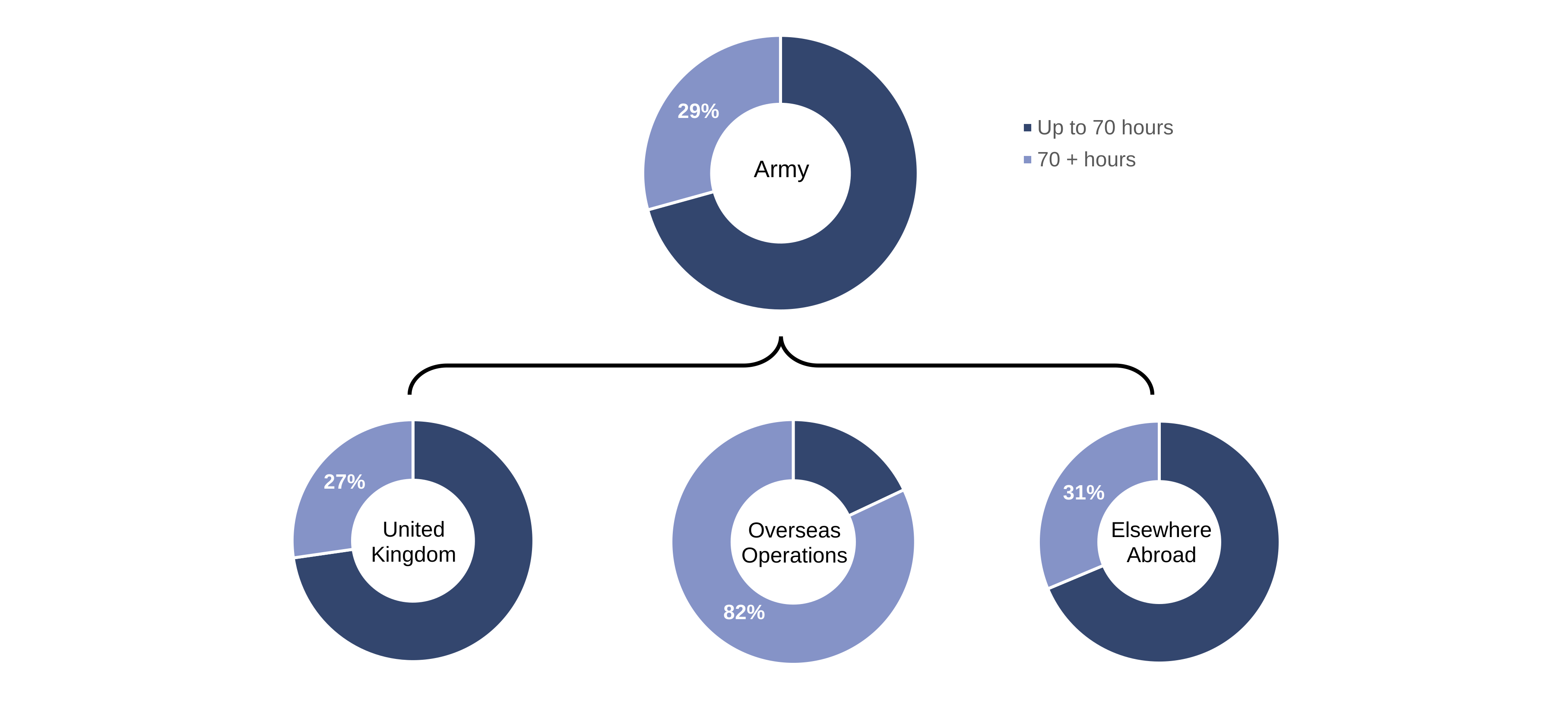
Figure 4.4 consists of 4 doughnut charts split into two segments highlighting proportion of personnel spending more than 70 hours on duty for the week surveyed by location, in 2025/26.
Overall, 29% of Army personnel reported spending 70 or more hours per week on duty. For personnel on Overseas Operations this was 82%, for those based Elsewhere abroad this was 31% and for UK based personnel it was 27%.
Differences in time spent on duty may be partly due to the greater amount of time deployed personnel spend on call. Periods of off duty/stand down when on exercise or Operation are defined as time on call.
Data Quality Note. The results in this section are based on a subset of respondents. As such, levels of precision are likely to be lower (wider confidence intervals) and are an indication of the working week of Army personnel.
Figure 4.5: Distribution of hours on duty for Army personnel by rank group, 2025/26
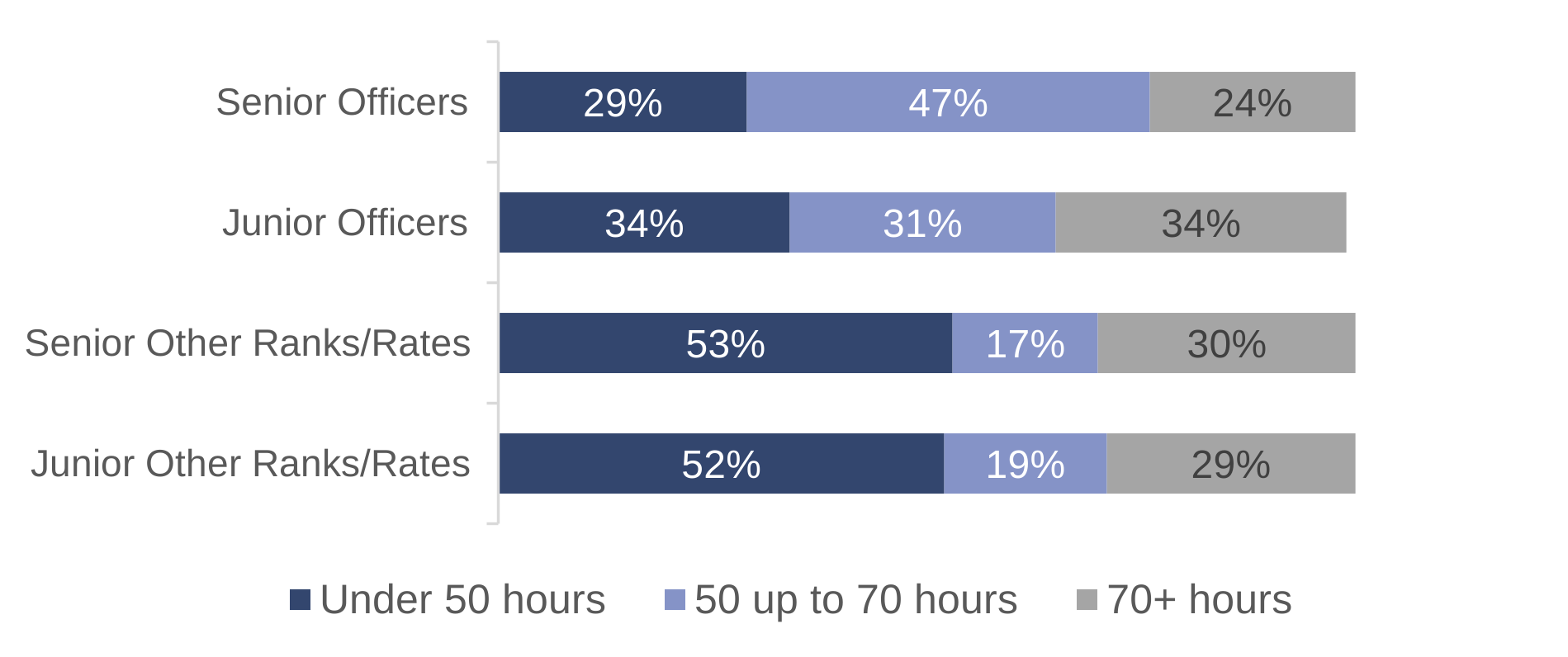
Figure 4.5 is a 100% stacked bar chart showing the distribution of hours on duty for Army personnel by rank group, in 2025/26.
A higher proportion of Other Ranks reported spending up to 50 hours per week on duty compared to Officers. Senior Other Ranks reported the highest figure at 53% while Senior Officers reported the lowest at 29%.
Junior Officers had the highest proportion of personnel report spending over 70 hours per week on duty (34%); this is similar to last year. Senior Officers had the lowest proportion at 24%.
4.3 Time series of Army working patterns 2018/19 - 2025/26
Figure 4.6: Average weekly hours Army personnel spent at work, on call and on duty, 2018/19 - 2025/26
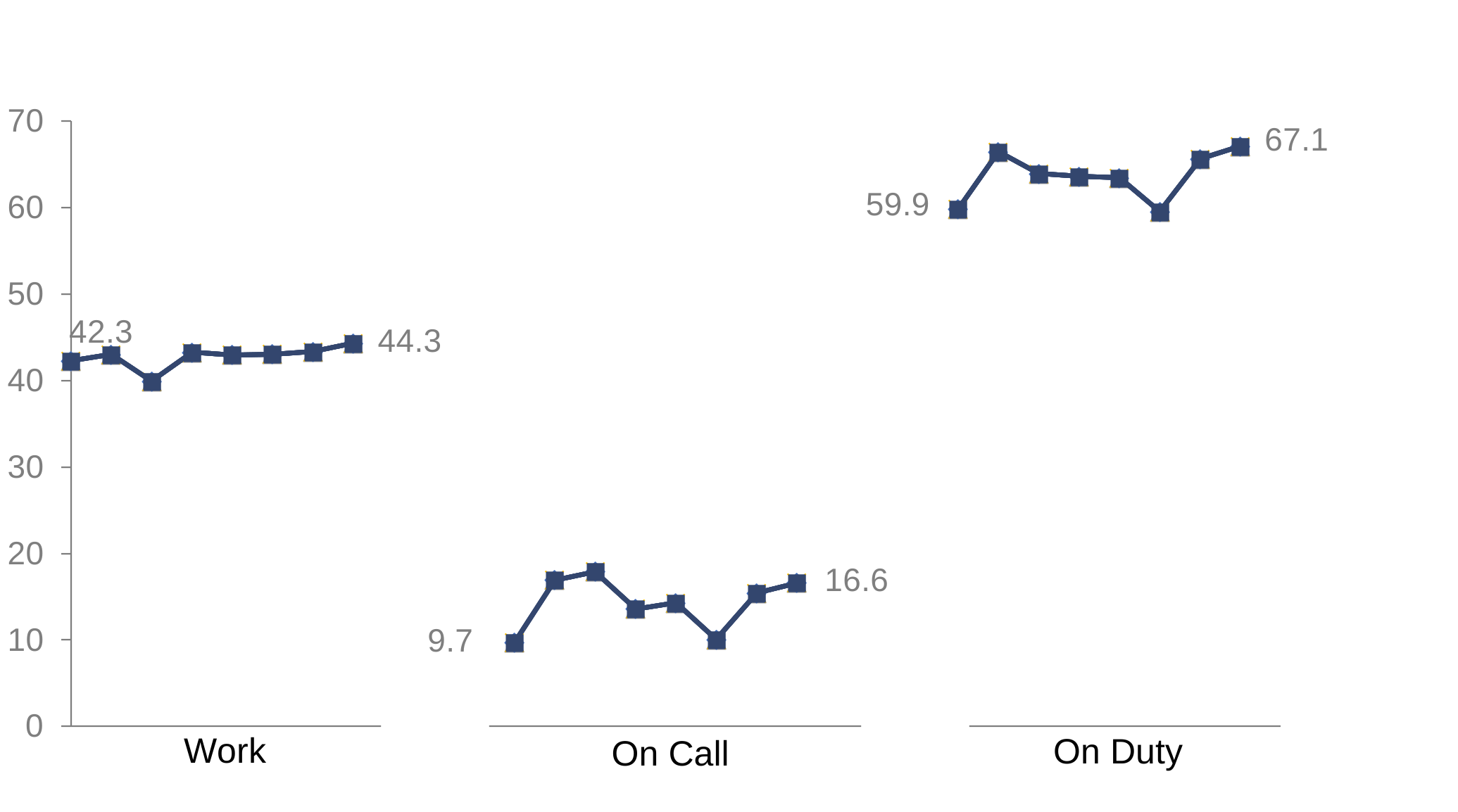
Figure 4.6 is a line chart that shows the average time spent at work, on call and on duty by Army personnel between 2018/19 and 2025/26
Overall, Army personnel reported spending 44.3 hours per week at work this year. This remains unchanged compared to the previous year. However, this is higher than figures that were reported in 2022/23 and 2023/24. Hours spent on call this year also remain unchanged compared to the previous year (16.6 hours and 15.4 hours respectively). This is also higher than hours reported between 2021/22 - 2023/24; bringing the figure back in line with 2019/20 and 2020/21. Hours spent on duty also remain unchanged this year compared to the previous (67.1 hours and 65.6 hours respectively). However, similar to hours spent on call, this is higher than figures reported between 2021/22 to 2023/24.
Figure 4.7 : Army average weekly hours spent at work, on call and on duty, 2018/19 - 2025/26
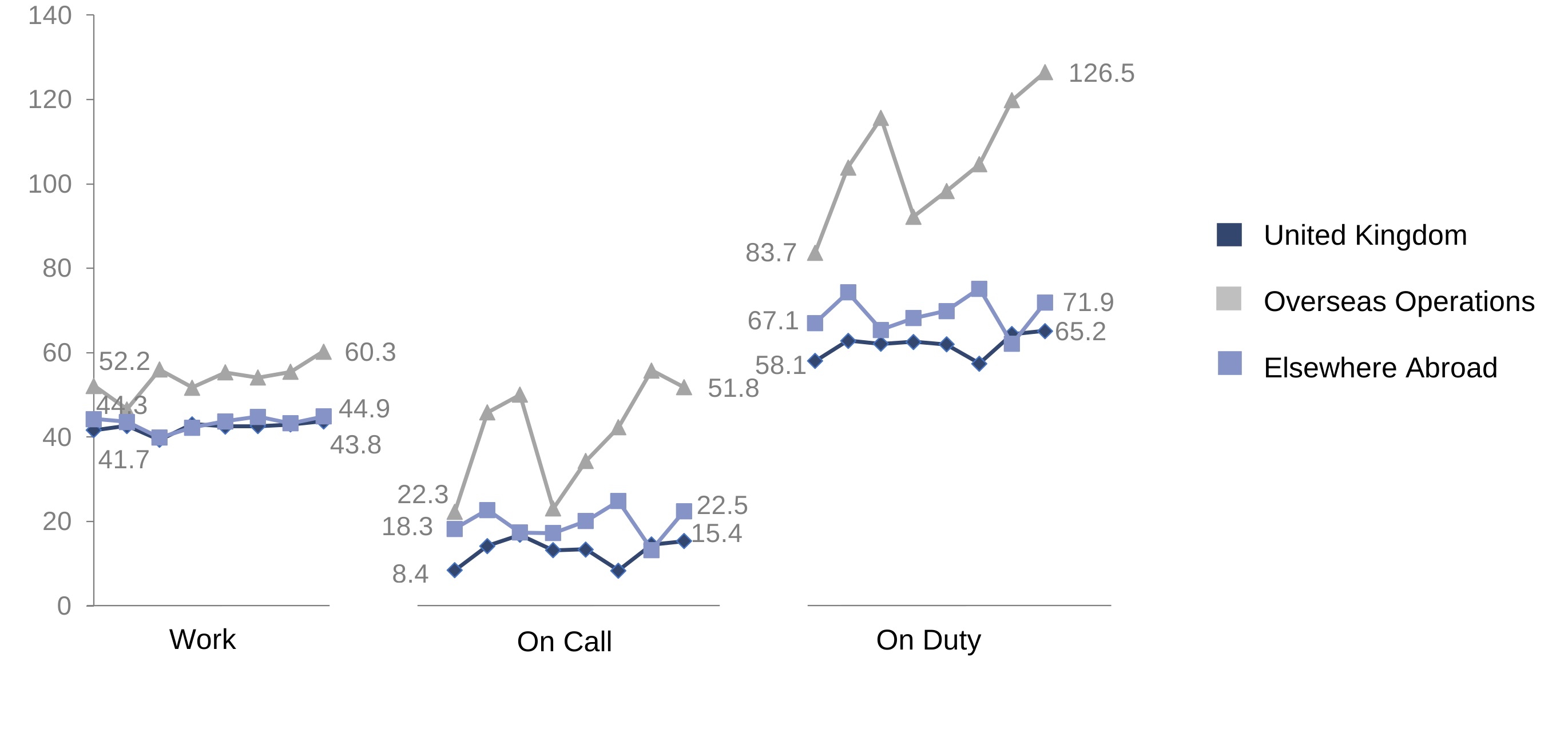
Figure 4.7 is a line chart that shows the average time spent at work, on call and on duty by Army personnel between 2018/19 and 2025/26.
Average hours spent at work for personnel based in the United Kingdom this year (43.8 hours) remains unchanged compared to the previous year (43.0 hours); this is a 1.3 hour increase compared to 2022/23 and 2023/24. This is back in line with figures reported in 2021/22 (43.1 hours). For personnel on Overseas Operations time spent at work has reached a seven-year high, with personnel reporting spending 60.3 hours per week at work. Following an increase in 2022/23, average hours reported by personnel based Elsewhere abroad remains unchanged since; with personnel reporting spending 44.9 hours per week this year.
Furthermore, average hours on call for personnel based in the United Kingdom remain unchanged compared to the previous year (15.4 hours and 14.5 hours respectively). This is a 7.0-hour increase compared to 2023/24; when personnel reported some of their lowest hours spent on call. For personnel on Overseas Operations, average hours spent on call has remained unchanged since 2023/24, with personnel reporting spending 51.8 hours per week on call. This is higher than figures reported in 2021/22 and 2022/23 (23.1 hours and 34.3 hours respectively); these figures may have been influenced by the survey being in-field during COVID-19. Following 2024/25 when personnel based Elsewhere abroad reported some of the lowest hours spent on call (13.3 hours), this year has seen an increase of 9.2 hours. This brings the figure back in line with hours reported in 2022/23 and 2023/24.
Average hours spent on duty by personnel based in the United Kingdom in 2025/26 (65.2 hours) remains unchanged compared to 2024/23. However, this is higher than hours reported between 2021/22 and 2023/24. Personnel on Overseas Operations reported their highest figure for hours spent on duty this year (126.5 hours) over the last seven years, this may be due to personnel reporting high number of hours spent at work. Personnel based Elsewhere abroad reported spending 9.8 additional hours on duty this year compared to the previous. This brings figures back in line with what was reported between 2021/22 – 2023/24 (ranging between 65.5 hours – 75.2 hours).
Figure 4.8: Army average weekly hours spent at work, on call and on duty by Officers, 2018/19 -2025/26
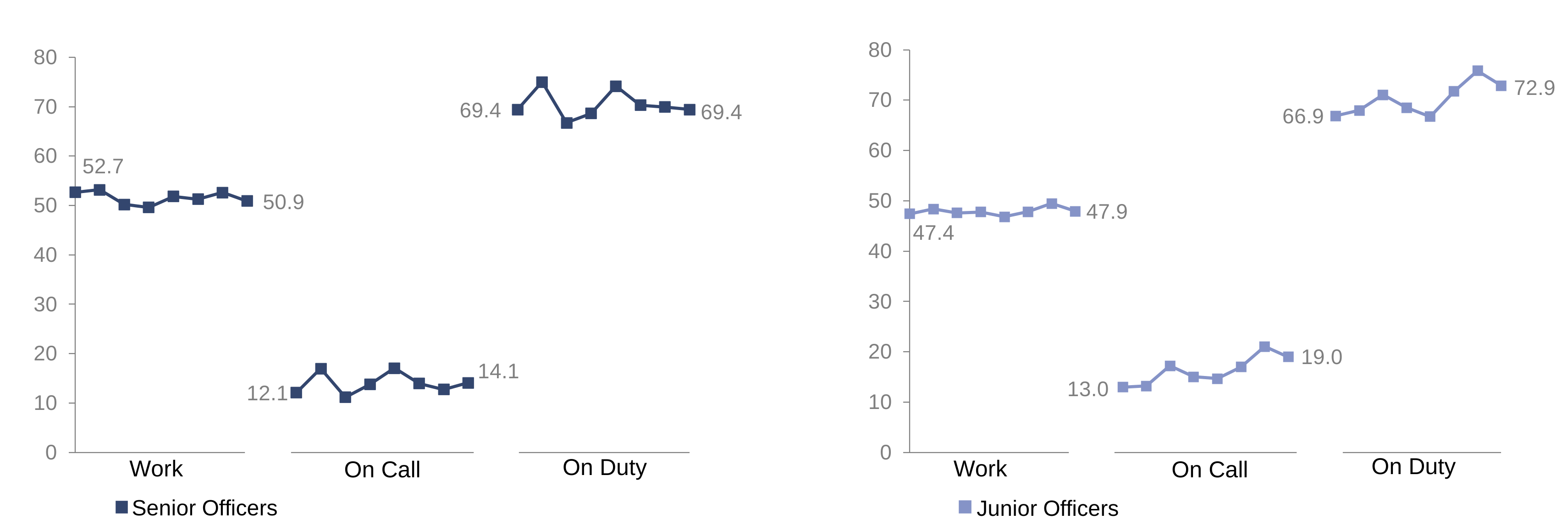
Figure 4.8 is a line chart that shows the average time Army personnel spent at work, on call and on duty for Senior Officers and Junior Officers between 2018/19 and 2025/26.
Average hours spent at work by Senior Officers fell by 1.7 hours this year compared to the previous year (50.9 hours and 52.6 hours). This is back in line with figures that were being reported between 2020/21 – 2023/24. Junior Officers reported spending 47.9 hours per week working this year, this remains unchanged since 2018/19.
Senior Officers reported spending 14.1 hours per week on call in 2025/26, this remains unchanged since 2021/22 (ranging between 11.2 hours – 17.1 hours). Junior Officers reported spending 19.0 hours per week on call in 2025/26; this remains unchanged since 2023/24.
Senior Officers reported spending 69.4 hours per week on duty in 2025/26, this remains unchanged compared to the previous two years. However, this is lower than figures reported in 2022/23 (74.2 hours), this brings the figures back in line with 2020/21 and 2021/22. Following an increase of 5.0 hours in 2022/23 the average hours reported by Junior Officers has remained unchanged since, with personnel reporting spending 72.9 hours per week on duty in 2025/26.
Figure 4.9: Army average weekly hours spent at work, on call and on duty by Other Ranks, 2018/19 - 2025/26
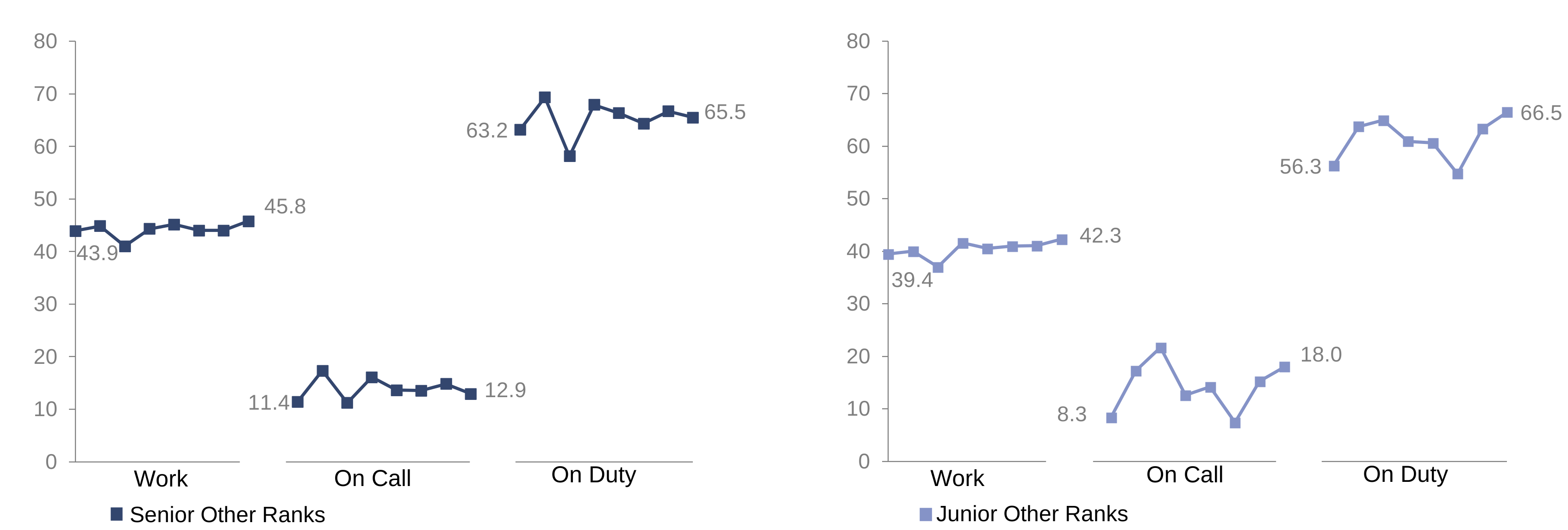
Figure 4.9 is a line chart that shows the average time Army personnel spent at work, on call and on duty for Senior Other Ranks and Junior Other Ranks between 2018/19 and 2025/26.
Senior Other Ranks reported spending more hours this year working (45.8 hours) compared to 2023/24 and 2024/25 (44.0 hours). This is back in line with figures reported in 2021/22 and 2022/23. Junior Other Ranks reported working 42.3 hours per week this year, this is a seven-year high.
Senior Other ranks reported spending 12.9 hours per week on call this year, this remains unchanged since 2022/23. Whilst Junior Other Ranks reported spending 18.0 hours per week on call, this remains unchanged compared to the previous year however, this is a seven year high.
The average time spent on duty by Senior Other Ranks remains unchanged since 2021/22, with personnel reporting spending 65.5 hours per week on duty this year. Meanwhile, Junior Other Ranks reported another seven-year high for their time spent on duty (66.5 hours). This may be due to personnel reporting higher average number of hours spent at work and on call.
5. The RAF
5.1 RAF working patterns 2025/26
In 2025/26, RAF personnel reported spending 42.9 hours per week working. This remains unchanged compared to 2024/25, however this is a 1.3 hour increase compared to 2023/24.
Figure 5.1: RAF working patterns, 2025/26
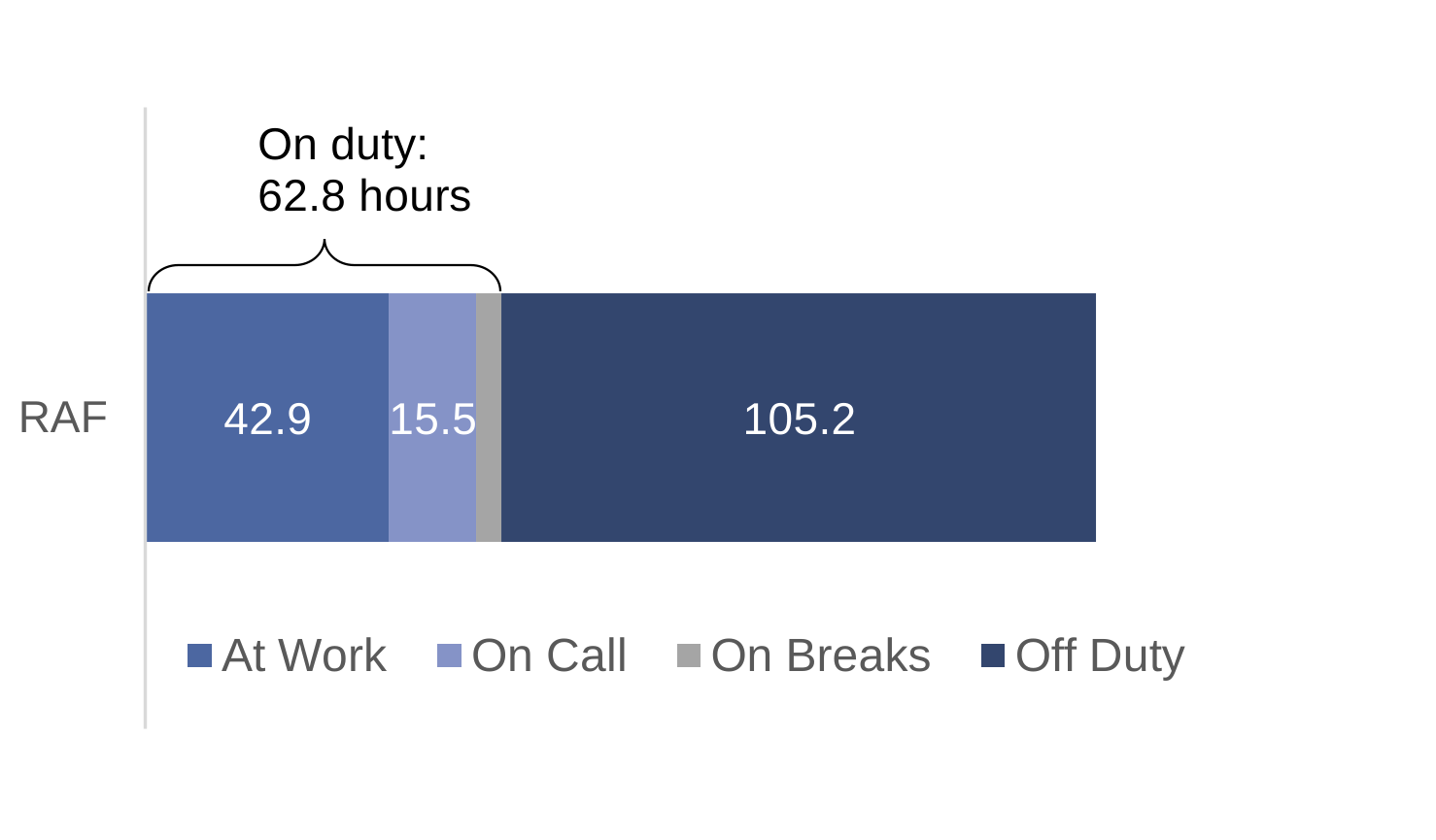
Figure 5.1 is a stacked bar chart that shows the average hours spent at work, on call, breaks and off duty per week by RAF personnel, in 2025/26. The largest proportion of time is spent off duty (105.2 hours).
Similarly, average hours spent on duty this year remains unchanged compared to the previous year (62.7 hours and 61.0 hours respectively). Average hours spent on call saw an increase in 2025/26 compared to the previous year (15.5 hours and 13.5 hours respectively).
Figure 5.2: RAF working patterns by location, 2025/26
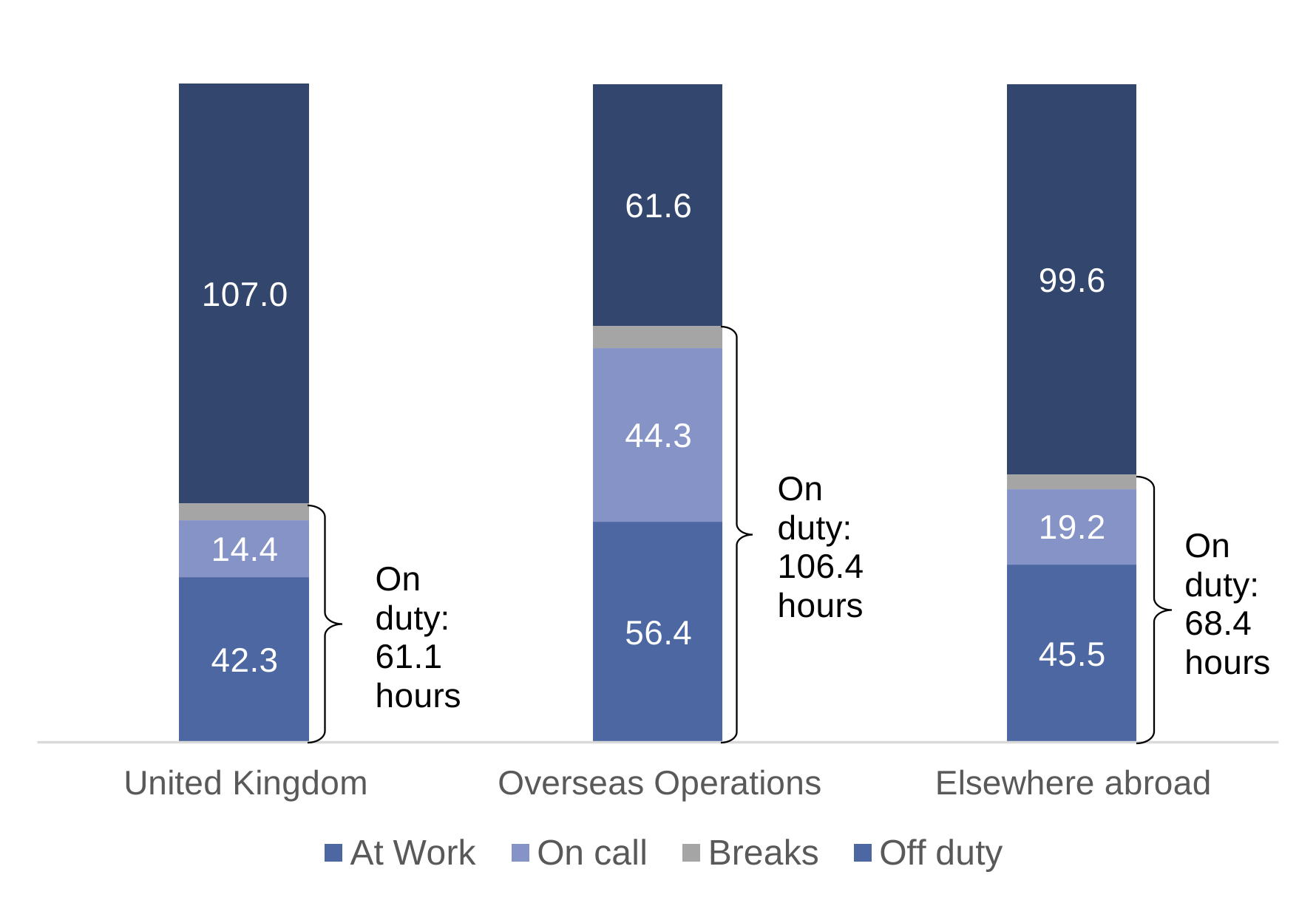
Figure 5.2 is a stacked bar chart that shows average hours spent at work, on call, breaks and off duty per week by location for RAF personnel, in 2025/26.
Personnel based on Overseas Operations reported spending the highest amount of hours per week at work (56.4 hours), this was followed by personnel based Elsewhere abroad (45.5 hours). UK-based personnel reported spending the lowest amount of hours per week at work (42.3 hours). This is the same for hours spent on call and on duty.
Figure 5.3: RAF working patterns by rank group, 2025/26
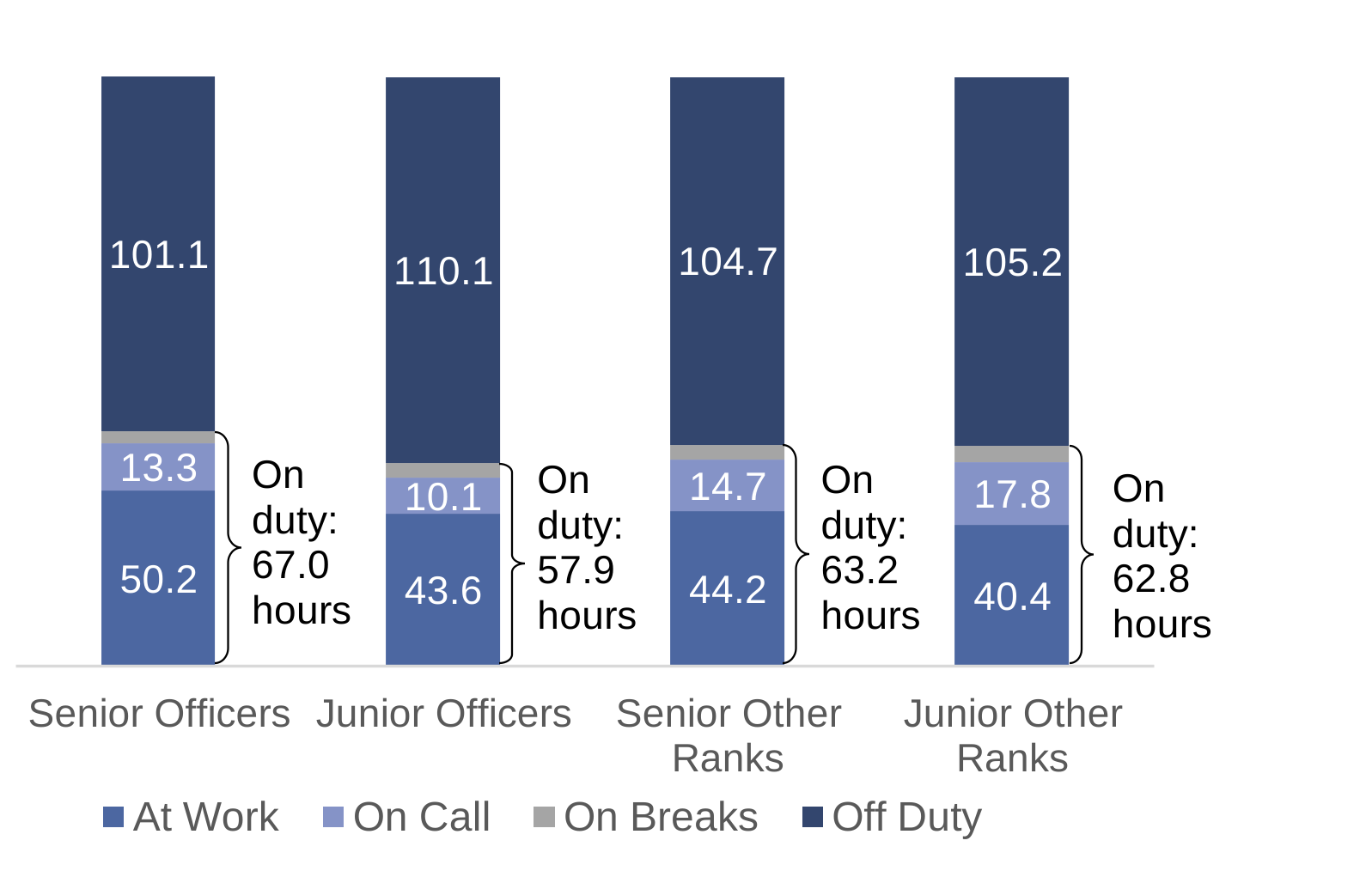
Figure 5.3 is a stacked bar chart that shows average hours spent at work, on call, breaks and off duty per week by rank group for RAF personnel, in 2025/26.
Senior Officers reported spending the highest amount of hours at work (50.2 hours) whilst Junior Other Ranks reported the lowest (40.4 hours). Junior Officers reported spending the lowest amount of hours on call (10.1 hours) compared to other groups. Whilst Senior Officers reported spending more hours on duty compared to all other rank groups (66.9 hours); whilst Junior Officers reported the lowest (57.9 hours).
Overall, Other ranks reported an increase on hours spent on call this year, with Senior Other Ranks spending an additional 4.4 hours per week on call (14.7 hours) and Junior Other Ranks 2.9 hours (17.8 hour). Junior Officers reported a decrease this year, with personnel spending on average 10.1 hours per week on call and 57.9 hours on duty; a decrease of 3.9 hours and 3.6 hours compared to the previous year.
Table 5.1 Working patterns of RAF personnel by rank group, 2024/25 - 2025/26
| At Work | On Call | On Duty | |||||||
|---|---|---|---|---|---|---|---|---|---|
| 2024/25 | 2025/26 | 2024/25 | 2025/26 | 2024/25 | 2025/26 | ||||
| RAF | 42.8 | 42.9 | 13.5 | 15.5 | ▲ | 61.0 | 62.8 | ||
| United Kingdom | 42.2 | 42.3 | 12.0 | 14.4 | ▲ | 58.9 | 61.1 | ▲ | |
| Overseas Operations | 55.4 | 55.4 | 55.0 | 44.3 | ▼ | 115.3 | 106.4 | ▼ | |
| Elsewhere Abroad | 45.4 | 45.5 | 16.9 | 16.9 | 68.7 | 68.4 | |||
| Senior Officers | 49.5 | 50.2 | 13.1 | 13.3 | 66.3 | 67.0 | |||
| Junior Officers | 43.3 | 43.6 | 14.0 | 10.1 | ▼ | 61.5 | 57.9 | ▼ | |
| Senior Other Ranks | 44.1 | 44.2 | 10.3 | 14.7 | ▲ | 59.1 | 63.2 | ▲ | |
| Junior Other Ranks | 40.4 | 40.4 | 14.9 | 17.8 | ▲ | 60.6 | 62.8 |
Key
▲ Significant increase from 2024/25
▼ Significant decrease from 2024/25
Overall, the average hours spent at work and on duty for RAF has remained stable this year (42.9 and 62.8 hours respectively) compared to the previous. Average hours spent on call has seen an increase this year by 2.0 hours.
For all locations; United Kingdom, Overseas Operations and Elsewhere abroad the amount of hours spent working has remained stable compared to the previous year. For personnel based in the United Kingdom time spent on call and on duty has seen an increase this year, with personnel reporting spending on average 2.4 hours more on call this year compared to the previous and 2.1 hours on duty. For personnel based on Overseas Operations time spent on call and on duty saw a decrease with personnel now spending 10.7 hours less on call and 8.9 hours less on duty.
All ranks this year saw their average hours spent at work remain stable compared to the previous year. Junior Officers reported both a decrease in average hours spent on call and on duty this year. Whilst Other Ranks saw an increase in time spent on call with Senior Other Ranks seeing an increase of 4.4 hours and Junior Other Ranks by 2.9 hours. Senior Other Ranks also reported an increase in average hours spent on duty, with personnel spending an additional 4.2 hours per week in 2025/26.
5.2 RAF excessive hours worked [footnote 1] and spent on duty, 2025/26
Section 5.2 is based on the 563 RAF personnel for whom a full week’s data was available (59% of all responses).
Excessive hours. Personnel who worked 70 hours or more during the week surveyed.
Overall, 2% of RAF personnel worked excessive hours in 2025/26.
Excessive hours worked differs by location with 19% of personnel on Overseas Operations reporting working excessive hours. This was 5% for personnel based Elsewhere abroad and 2% for personal based in the United Kingdom
8% of Senior Officers reported working excessive hours. This was 2% for Junior Other Ranks and 1% for Junior Officers and Senior Other Ranks.
Figure 5.4: Proportion of RAF personnel spending more than 70 hours on duty for the week surveyed by location in 2025/26
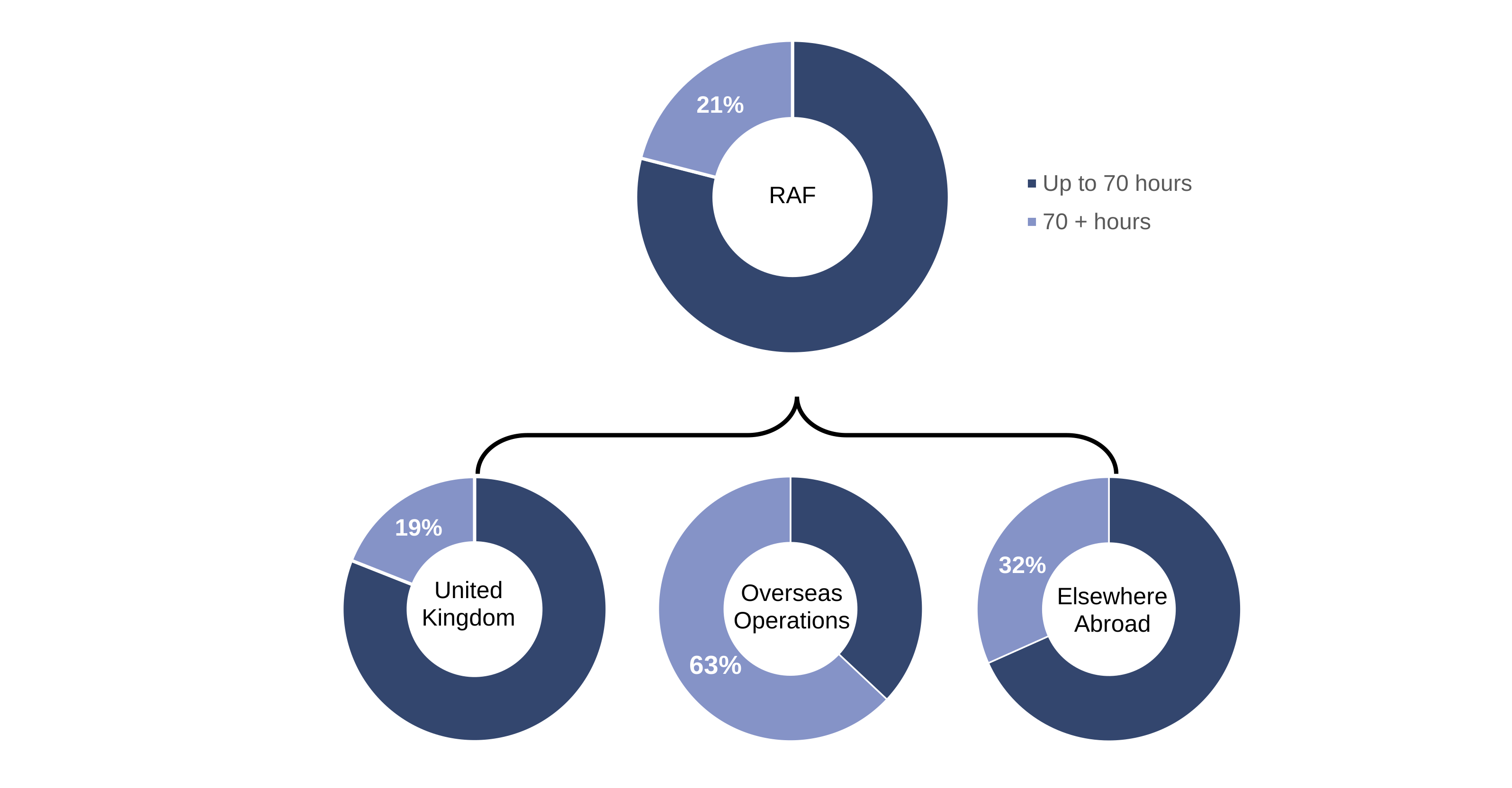
Figure 5.4 consists of 4 doughnut charts split into two segments highlighting the proportion of personnel spending more than 70 hours on duty for the week surveyed by location, in 2025/26.
A higher proportion of personnel based on Overseas Operations report spending excessive hours on duty (63%). For personnel based Elsewhere abroad this is 32% and for the UK this is 19%.
This difference may be due to personnel deployed on Overseas Operations spending more time on call (44.3 hours) compared to other locations. Periods of off duty/stand down when on exercise or operation are defined as time on call.
Data Quality Note. The results in this section are based on a subset of respondents. As such, levels of precision are likely to be lower (wider confidence intervals) and are an indication of the working week of RAF personnel
Figure 5.5 Distribution of hours on duty of RAF personnel by rank group, 2025/26
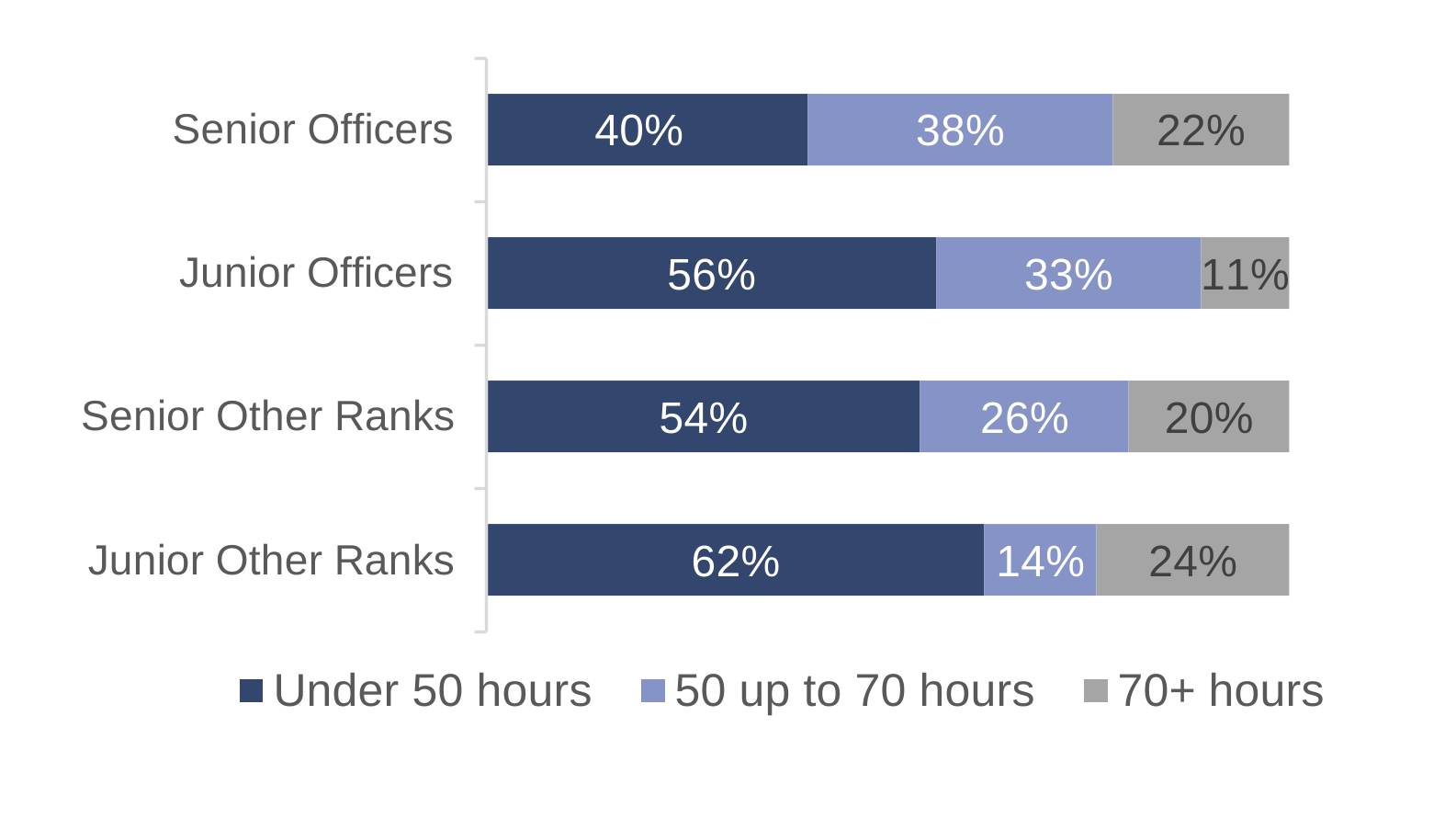
Figure 5.5 is a 100% stacked bar chart showing the distribution of hours on duty for RAF personnel by rank group, in 2025/26.
Junior Other Ranks reported the highest proportions of personnel spending under 50 hours per week on duty at 62%. Senior Officers reported the lowest proportion at 40%.
Junior Other Ranks and Senior Officers had the highest proportions of personnel spending over 70 hours per week on duty (24% and 22% respectively), followed by Senior Other Ranks (20%). Junior Officers had the lowest proportion (11%).
5.3 Time series of RAF working patterns, 2018/19 - 2025/26
Figure 5.6: RAF average weekly hours spent at work, on call and on duty, 2018/19 - 2025/26
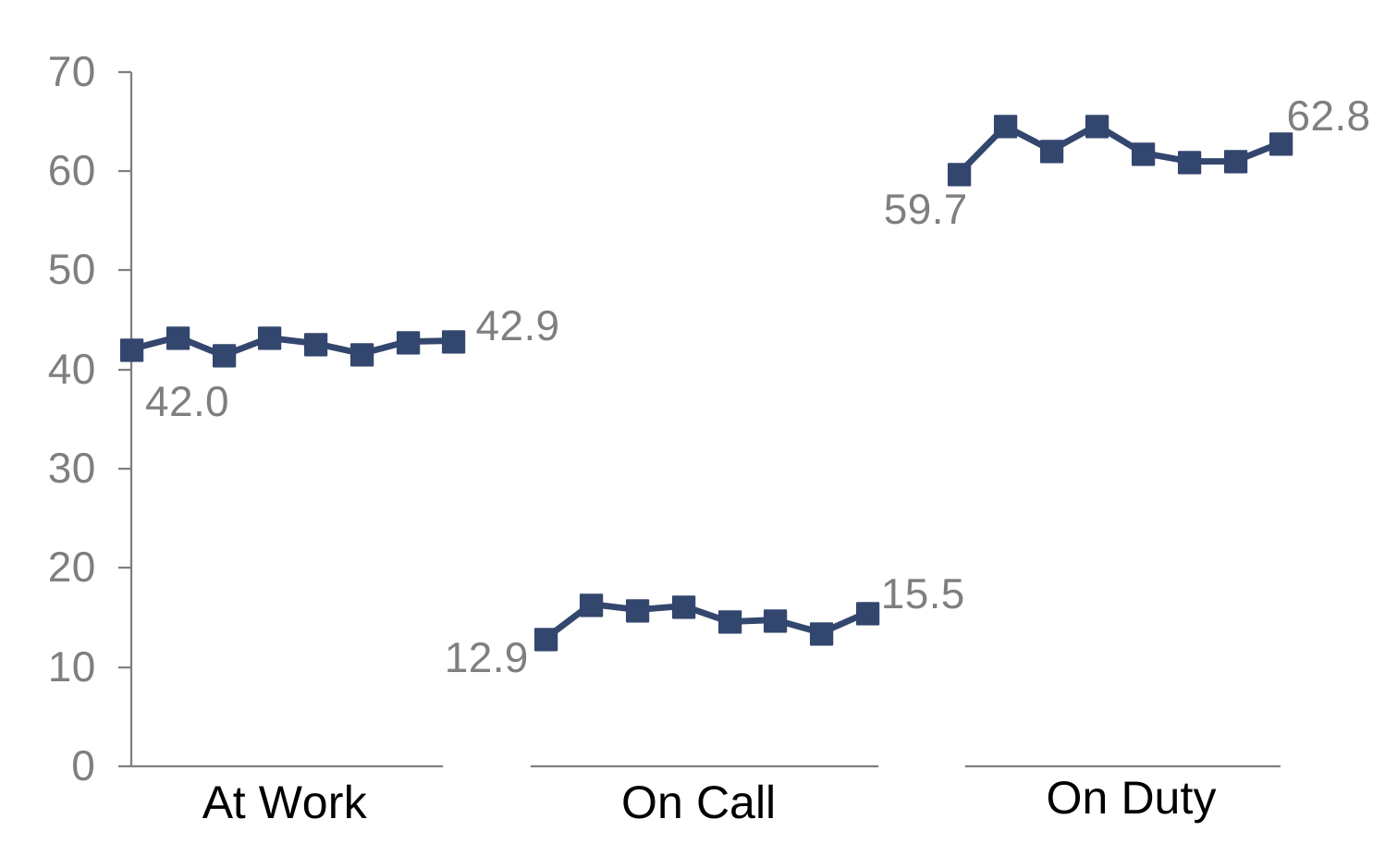
Figure 5.6 is a line chart that shows the average time spent at work, on call and on duty by RAF personnel between 2018/19 and 2025/26.
Following a 3.0 hour increase in 2019/20, the average hours reported by RAF personnel spent working has remained stable, with personnel reporting spending 42.9 hours in 2025/26. Average hours spent on call this year saw an increase of 2.0 hours. This is back in line with figures reported between 2019/20 - 2023/24. Average hours spent on duty have remained unchanged since 2019/20.
Figure 5.7: RAF average weekly hours spent at work, on call and on duty by location, 2018/19 - 2025/26
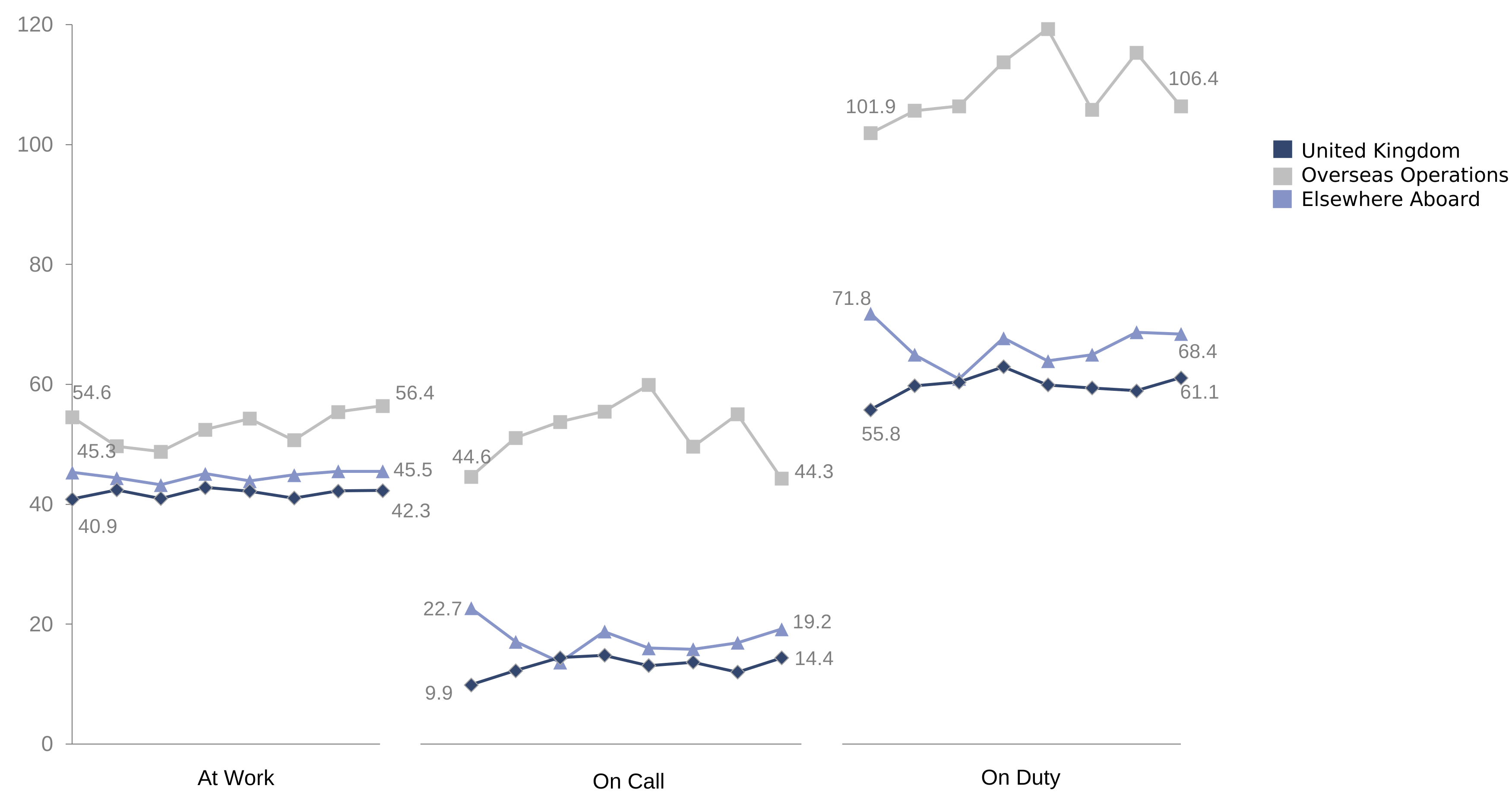
Figure 5.7 is a line chart that shows the average time RAF personnel spent at work, on call and on duty by location between 2018/19 and 2025/26.
UK based personnel reported spending 42.3 hours per week at work; this remains unchanged since 2024/25. This is higher than 2023/24 (41.0 hours) and brings the figures back in line with 2021/22 and 2022/23. Deployed personnel reported spending 56.4 hours per week in 2025/26, this is one of the highest figures reported over the last seven years and is more than hours reported between 2019/20 to 2021/22 and 2023/24 (ranging between 48.8 hours - 52.5 hours). For personnel based Elsewhere abroad average hours spent at work has remained relatively stable since 2018/19; with 2020/21 as the exception when personnel reported some of their lowest hours.
In 2025/26 personnel based in the UK reported spending 14.4 hours per week on call an increase of 2.4 hours. This is back in line with figures reported between 2019/20 to 2023/24. Deployed personnel reported spending 44.3 hours per week on call, this is the lowest the figure has been over the last seven years and is lower than figures reported between 2019/20 to 2022/23. For personnel based Elsewhere abroad, average hours on call has remained relatively stable since 2018/19; with 2020/21 being the exception when personnel reported their lowest figures.
UK based personnel reported an increase in 2025/26 for average hours spent on duty; this is back in line with figures reported between 2019/20 to 2023/24. Deployed personnel reported spending an average of 106.4 hours per week on duty, this is less than the previous years, however this is back in line with figures reported between 2018/19 to 2020/21 and 2023/24. Following an increase in 2023/24, the average hours spent on duty by personnel based Elsewhere abroad has remained relatively stable. This is also in line with figures that were being reported in 2018/19 and 2019/20.
Figure 5.8: RAF average weekly hours spent at work, on call and on duty by Officers, 2018/19 - 2025/26
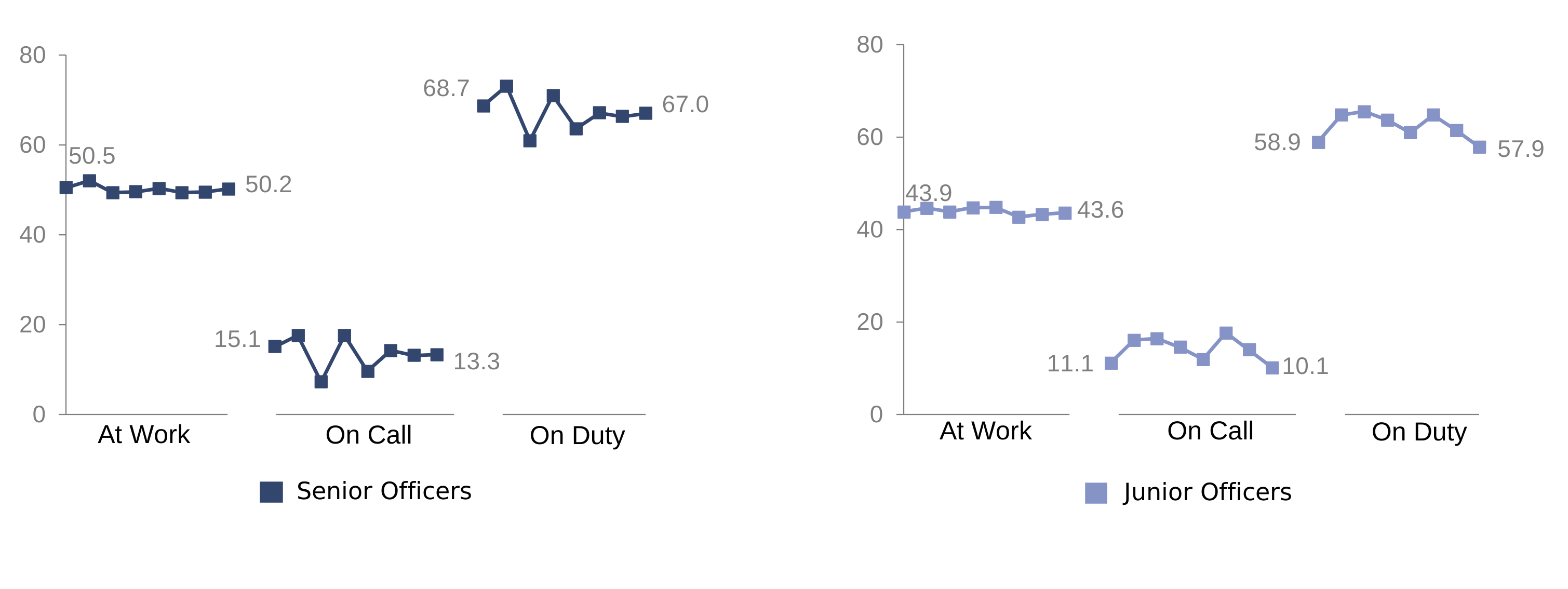
Figure 5.8 is a line chart that shows the average time RAF personnel spent at work, on call and on duty for Senior Officers and Junior Officers between 2018/19 and 2025/26.
Senior Officers reported working on average 50.2 hours per week. This has remained relatively stable since 2018/19. With 2019/20 being the only exception when personnel reported their highest average hours. Similarly, for Junior Officers average hours worked has remained relatively stable since 2018/19 (ranging between 42.7 hours to 44.8 hours).
Following an increase in 2023/24, the average hours spent on call by Senior Officers has remained relatively stable since; with personnel reporting spending 13.3 hours per week on call in 2025/26. This is also back in line with figures reported in 2018/19 (15.1 hours). Junior Officers reported spending 10.1 hours per week on call this year, this is the lowest the figure has been over the last seven years. This is now back in line with figures reported in 2018/19 and 2022/23 (11.1 hours and 11.9 hours respectively).
Following an increase in 2022/23, the average hours spent on duty by Senior Officers has remained relatively stable (ranging between 66.3 hours to 67.1 hours). Whilst Junior Officers reported their lowest hours spent on duty over the last seven years; this is back in line with figures reported in 2018/19 (58.9 hours).
Figure 5.9: RAF average weekly hours spent at work, on call and on duty by Other Ranks, 2018/19 - 2025/26
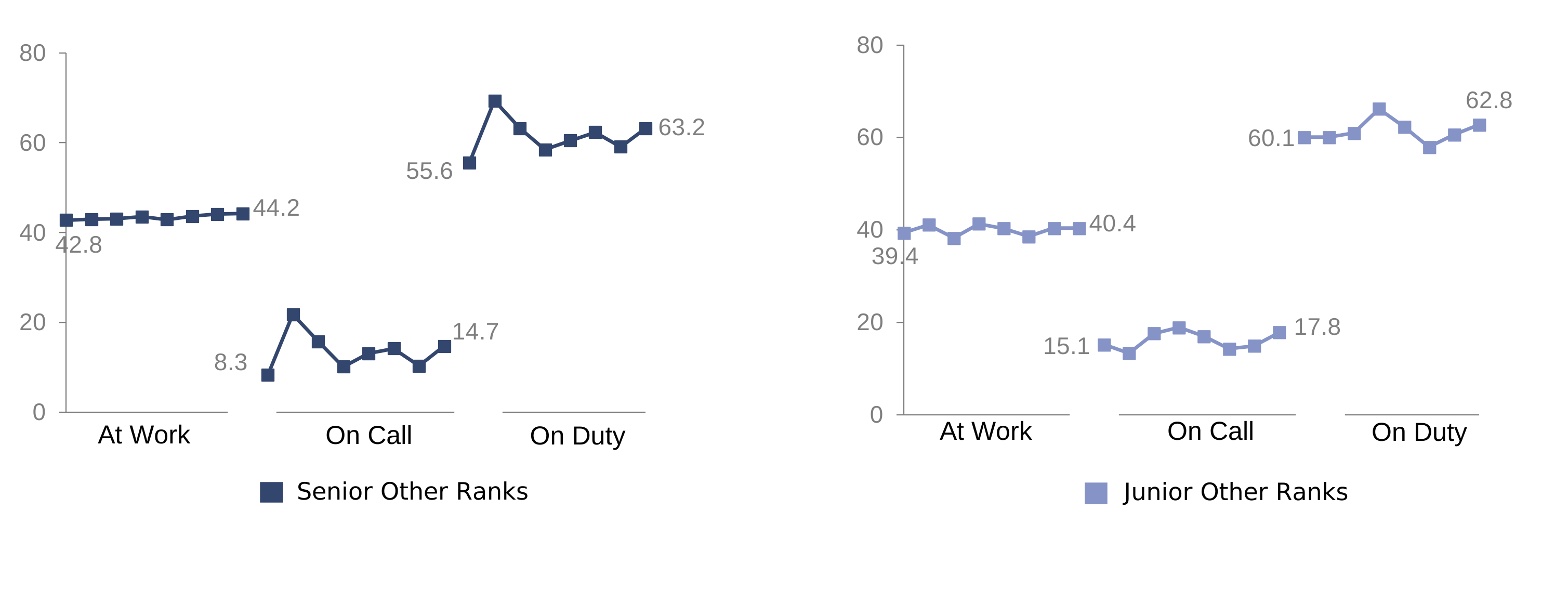
Figure 5.9 is a line chart that shows the average time RAF personnel spent at work, on call and on duty for Senior Other Ranks and Junior Other Ranks between 2018/19 and 2025/26.
Senior Other Ranks reported working 44.2 hours per week; this has remains unchanged since 2018/19. Junior Other Ranks reported an average of 40.2 hours per week; this is similar to figures reported in the previous year, however, this is higher than figures reported in 2023/24 (38.5 hours). This is also back in line with figures reported in 2021/22 and 2022/23.
Senior Other Ranks reported spending 14.7 hours per week on call in 2025/26; this is higher than the previous year and brings figures back in line with 2023/24 and 2022/23. This also remains higher than figures reported in 2021/22. Junior Other Ranks reported 17.8 hours per week on call this year; this is higher than figures reported in the previous two years and is now back in line with figures from 2020/21 to 2022/23.
Senior Other Ranks reported an increase in average hours spent on duty this year compared to the previous year. This brings figures back in line with 2022/23 and 2023/24 (60.5 hours and 62.4 hours respectively). Average hours spent on duty by Junior Other Ranks remains relatively unchanged since 2018/19; with 2023/24 being the exception when personnel reported their lowest hours (57.9 hours).
6. Methodology
6.1 The questionnaire
In addition to the CWP paper survey, an online version of CWP was introduced in the later phase of the second wave of 2020/21 to collect responses from service personnel. Since then, paper and online survey were both used to collect responses throughout the two waves of data collection. Approximately half the personnel in the sample were sent a questionnaire in October 2025, the other half were sent a questionnaire in January 2026. Royal Navy and Army personnel received both paper and online survey were offered to personnel from the same sample, some points of contacts had requested for an online option only, relevant personnel were only sent an online survey. In 2025/26, RAF personnel only received an online copy of the survey, this was part of a trial to eliminate the use of paper surveys. Data collection for the survey ran from October 2025 up to April 2026.
The CWP survey includes a seven day diary; each day is divided into four periods of six hours. Respondents were asked to indicate time spent at ‘work’, ‘on breaks’, ‘on call’ and ‘off duty’ for each of these periods. Personnel were provided with guidance on how different activities should be recorded. The survey is confidential rather than anonymous. An individual’s unique Service number is used to allow responses to be linked to demographic data held on the Joint Personnel Administration System (JPA). Personally identifiable data are only available to a small group of civilian researchers working on the analysis and report production.
6.2 The sample and respondents
The target population are UK regular personnel who are full-time, trained strength. It excludes untrained personnel, those on long term absence, Special Forces, Gurkhas, reservists and personnel ranked above OF6. There were a number of other minor exclusions arising from the practicalities of running the survey e.g. those with invalid address data. Address data for personnel in the sample were obtained from the JPA.
Response rates by Service 2025/26
| Sample size | All responses | Response rate | |
|---|---|---|---|
| Tri-service | 27,503 | 2,788 | 10% |
| Royal Navy | 8,342 | 661 | 8% |
| Army | 8,626 | 1,071 | 12% |
| RAF | 5,546 | 956 | 17% |
| Deployed surveys trial | 4,929 | 100 | 2% |
| Paper responses | Online responses | |
|---|---|---|
| Tri-service | 214 | 2,830 |
| Royal Navy | 68 | 593 |
| Army | 146 | 985 |
| RAF | - | 996 |
A ‘response’ refers to a returned questionnaire with at least one usable day within the 7 day diary.
The total CWP sample consisted of 27,503 personnel. A stratified simple random sampling process was used to select the sample. Stratification was by Service (Royal Navy, Army and RAF), rank group (Senior Officers, Junior Officers, Senior Ranks/Rates and Junior Ranks/Rates) and broad location. For the Royal Navy, the locations were at Sea and Shore. For the Army, the locations were United Kingdom, Germany, Overseas Operations, and Elsewhere abroad. For the RAF, the locations were United Kingdom, Overseas Operations and Elsewhere abroad. 2,788 responses were received from the online survey. Combining the responses from the online and paper surveys, the response rate this year (10%) has is two percentage points decrease compared to last year (12%). The response rate excluding the deployed trial is 12%. The deployed surveys trial response rate may be an over/under-estimate due to continual circulation of online links. We cannot be sure how many personnel are at a given location at any time or have received the link therefore the sample size for the deployed trial has been calculated from the initial known sample size provided to us.
6.3 Full introduction of online survey
An online version of the survey was introduced in the second wave of CWP 2020/21 to improve response rates following feedback on the difficulties distributing paper questionnaires during lockdowns. This year, the online survey is utilised in both waves and distributed to all personnel in the sample. The difference in the mode of survey instrument might have an impact on the responses we captured. Considering that, results from paper survey and online survey were analysed both separately and as a combined dataset. This report focuses on the combined results of both paper and online responses. More detail is provided in the Background Quality Report.
RAF personnel in 2025/26 only received an online copy of the survey. This was done as part of a trial to phase out the use of paper surveys. Results were analysed both separately and using previous years paper responses.
6.4 Germany
In line with the announcement of the Strategic Defence and Security Review (SDSR) of 2010, the Army Basing Programme (ABP) was established to rebase the British Army from Germany to the UK by 2020. Large numbers of personnel moved from Germany back to the UK over the summer of 2019. This led to very low levels of response from Germany. As a result, reports since 2019/20 do not include any breakdowns for Germany, although responses are included in the overall Army and Rank group averages.
6.5 Personnel deployed overseas on operations
For the Army and RAF, the CWP survey measures the working patterns of personnel deployed on Overseas Operations. During 2014, the UK Armed Forces reduced its military presence in Afghanistan from over 5,000 personnel to less than 500. In recent years, deployments have been more dispersed over a wider range of locations. For more information please see the MOD Annual Report and Accounts. The survey process to select samples, print and dispatch questionnaires can take several months. This, coupled with the high mobility of deployed personnel means many will have moved locations by the time the questionnaires arrive.
Number of personnel deployed on Overseas Operations returning a Continuous Working Patterns questionnaire, broken down by Service
| 2018/19 | 2019/20 | 2020/21 | 2021/22 | 2022/23 | 2023/24 | 2024/25 | 2025/26 | |
|---|---|---|---|---|---|---|---|---|
| Army | 55 | 85 | 205 | 190 | 87 | 50 | 7 | 60 |
| RAF | 38 | 147 | 78 | 120 | 27 | 6 | 12 | 40 |
| Total | 93 | 222 | 283 | 310 | 114 | 56 | 19 | 100 |
The reduction in the number of personnel deployed and the difficulties making contact with those who are, has led to a reduction in the number of responses from deployed personnel in recent years. Following a large decrease in responses from those deployed on Overseas Operations in 2018/19, we have trialled sending batches of unnamed questionnaires to points of contact in large deployed locations over the past three years. Responses are still relatively low and so estimates for personnel deployed on operations Overseas will have wider confidence intervals.
In 2021/22, a separate questionnaire was created and sent to deployed locations for distribution to increase response rates. The questionnaires were sent unnamed, in batches to deployed locations for distribution, in addition to the ones sent to identified deployed personnel from the main sample. In 2022/23, we trialled sending an online link to access the survey to overseas points of contact to circulate among deployed personnel. Through points of contact, we then periodically recirculated a link for onward distribution for those in a local unit meeting the eligibility criteria. In 2025/26 we asked all deployed personnel to forward a link on to other deployed personnel. Because of this, the deployed response rate may have been over/under-estimated as we cannot be sure of the actual deployed trial sample size.
The difference in the working patterns of respondents in the deployed surveys trial and those deployed selected in the main sample might have an impact on the responses we captured. Considering that, results from deployed personnel were analysed with and without the deployed surveys trial. This report focuses on the combined results of deployed personnel in both the main sample and the trial. More detail is provided in the Background Quality Report.
6.6 Margins of error
The sample was designed to provide sufficient responses to yield estimates with a margin of error of approximately +/- 0.80 hours for each single Service average weekly hours worked. However, the margin of error of hours ranged from +/- 0.57 for RAF to +/-1.01 for the Royal Navy therefore, the levels of precision were lower this year. For the overall total and the three single Services, levels of precision were lower (wider confidence intervals) for on duty and on call averages. Margins of error ranged from +/- 1.25 for RAF On Call averages to +/- 1.67 hours for Royal Navy On Call averages.
6.7 Weighting the data
Due to the sample design and the differences in prevalence of non-response between Service, rank group and broad location, the distribution of characteristics among CWP respondents does not reflect the distribution of the trained, regular UK Armed Forces population. Therefore, responses have been weighted by Service, rank group and broad location in order to correct for the bias caused by over or under representation.
The weights are calculated simply by: Population size of strata (p)/Number of responses within strata (r). Weighting in this way assumes missing data are missing at random (MAR) only within strata. This means we assume that within strata, the working patterns of non-respondents do not differ (on average) to the working patterns of respondents. If those who did not respond have different working patterns to those who did, then the observations in this report will not be representative of the working patterns of trained, regular UK Armed Forces, rather, the observations would only represent the working patterns of the responding population. Non-response that is directly related to individual working patterns will lead to bias within these survey results. For example, those busiest and hence working longer hours may be less likely to complete the survey.
6.8 Analysis
The automated data cleaning rules are set out below: 1. If a respondent has recorded they are on annual leave or sick leave but has also filled in some hours, we ignore the hours and assume the leave marker is true. 2. For Monday to Friday, if a respondent has recorded they are on duty but has not filled out any hours in the boxes, we change the leave marker to show them as being on annual leave. Anyone on annual leave will not be used in the calculations, as we are only interested in people who were working a ‘normal’ week, with no annual leave. 3. On Saturday and Sunday, if a respondent has recorded they are on duty but has not filled out any hours in the boxes, we change the leave marker to show them as being on weekend leave (we feel that this is a reasonable assumption to make). 4. On Saturday and Sunday, if a respondent has recorded they are on weekend leave, we make sure they have 24 hours off duty recorded for that day. 5. If a respondent has recorded they were on weekend leave from Monday to Friday (not a valid option on the questionnaire), we change the leave code to show annual leave. 6. If the total hours for a day add up to between 23 and 25 hours then we allow that day in the calculations without cleansing. We see this as an acceptable margin of error. Any totals that fall outside this margin will not be used in the calculations. Many personnel returned questionnaires which included leave days or days that had to be discarded because of inconsistent or missing data. If analysis was restricted to only those questionnaires that cover a full working week, results would be based on much less data and confidence intervals would be considerably wider. The methodology used is based upon a ‘notional’ week made up of the average Monday, the average Tuesday,…, the average Sunday.
6.9 Rounding
Where rounding has been used, totals and sub-totals have been rounded separately and so may not equal the sums of their rounded parts.
6.10 Revisions
There are no planned revisions of this report nor are there any revisions within the main report. Figures may have been revised in previous reports and so may not match previously published figures.
6.11 Statistical comparisons
In order to detect any statistical differences in working patterns between the current year and the previous year, a series of z-tests were conducted at the 95% confidence level.
If a statistical difference is found it means that the difference between years is unlikely to be the result of random variation and is therefore indicative of a genuine change in hours spent at ‘work’, ‘on duty’ or ‘on call’ when comparing the averages reported in different time periods e.g. 2020/21 vs. 2024/25, 2022/23 vs. 2024/25. It does not mean that the change is necessarily large or substantively “important”.
Non-sampling errors such as non-response, timing of response and the location of respondents within the broad location should also be kept in mind when interpreting the results here.
It is important to note that the absence of a statistically significant difference between years does not necessarily mean that no difference is expected to exist between populations. Simply that, given the number of respondents, the detected difference is too small for us to be confident that a difference of this size could not have arisen due to chance variation in the survey process.
7. Glossary
Armed Forces Pay Review Body (AFPRB) Provides independent advice to the Prime Minister and the Secretary of State for Defence on pay and changes for members of the Naval, Military and Air Forces of the Crown.
Breaks Are meal breaks during periods of work.
Excessive hours Refers to a working week of 70 hours or more.
Joint Personnel Administration (JPA) Is the system used by the Armed Forces to deal with matters of pay, leave and other personal administrative tasks.
Junior Officers Armed Forces personnel with a NATO Rank of OF1 to OF2.
Junior Ranks/Rates Armed Forces personnel with a NATO Rank of OR1 to OR4.
Missing at random (MAR) Statistical theory that states those who did not respond to a question do not differ from those who did respond.
MOD Ministry of Defence.
NATO North Atlantic Treaty Organisation.
Royal Navy Comprises the Royal Navy (including Queen Alexandra’s Royal Naval Nursing Service) and the Royal Marines combined.
Non-response Refers either to a person who although sampled and sent a questionnaire did not provide details of their working patterns, or to a respondent who did not complete a question.
Off duty Not at work, on breaks or on call.
Officers In the CWP survey, this refers to Officers with a NATO Rank of OF1 to OF6.
On call Includes all time when available as necessary, including all time away at sea, time spent on exercise or operations (including periods of off duty / stand down) and fully kitted for immediate call out.
On duty All time spent at work, on breaks and on call.
Ranks/Rates Ranks are members of the Royal Marines, Army and RAF who are not Officers. The equivalent group in the Royal Navy are known as ‘Ratings’.
RAF Royal Air Force.
RM Royal Marines.
RN Royal Navy
Senior Officers Armed Forces personnel with a NATO Rank of OF3 to OF6.
Senior Ranks/Rates Armed Forces personnel with a NATO Rank of OR6 to OR9.
Single Services Royal Navy, Army and RAF.
Statistically significant Refers to the result of a statistical test in which there is evidence of a difference in average weekly hours spent at work, on call or on duty between the averages reported in different time period/Services/ rank groups, that is unlikely to be the result of random variation.
Statistical tests Refers to those tests which are carried out to see if any evidence exists for a difference that is unlikely to be the result of random variation, in working patterns between the averages reported in different time period/Services/ rank groups.
Unsociable hours Are any hours worked between 00:00 and 06:00 Monday to Friday, any hours worked between 18:00 and 24:00 Monday to Friday, and any hours worked on Saturday and Sunday.
Work Includes all time spent on core activities, secondary duties, compulsory fitness training, organised sports and representational activities, but excludes breaks.
Weighting Refers to weights that are applied to the respondent data set (by Service, rank group and broad location) in order to make the data more representative of the population of interest.
Z-test Statistical tests based on a standardised distribution which allows comparison between years for populations of different sizes.
8. Further Information
8.1 Contact us
Defence Statistics welcome feedback on our statistical products. If you have any comments or questions about this publication or about our statistics in general, you can contact us as follows:
Analysis Surveys, Analysis Directorate Email: Analysis-Surveys-Enquiries@mod.gov.uk
If you require information which is not available within this or other available publications, you may wish to submit a Request for Information under the Freedom of Information Act 2000 to the Ministry of Defence. For more information, see: https://www.gov.uk/make-a-freedom-of-information-request/the-freedom-ofinformation-act
If you wish to correspond by mail, our postal address is:
Analysis Surveys, Analysis Directorate
Ministry of Defence, Main Building
Floor 3, Zone M
Whitehall
London
SW1A 2HB