Service use and barriers to accessing care
Updated 17 December 2025
Applies to England

© Crown copyright 2025
This publication is licensed under the terms of the Open Government Licence v3.0 except where otherwise stated. To view this licence, visit nationalarchives.gov.uk/doc/open-government-licence/version/3 or write to the Information Policy Team, The National Archives, Kew, London TW9 4DU, or email: psi@nationalarchives.gov.uk.
Where we have identified any third party copyright information you will need to obtain permission from the copyright holders concerned.
This publication is available at https://www.gov.uk/government/statistics/adult-oral-health-survey-2023/service-use-and-barriers-to-accessing-care
Introduction
The adult oral health survey (AOHS) 2023 was conducted between June 2023 and April 2024 following a sustained period of external impact on health services associated with the COVID-19 pandemic. Because of this, the pressure on health services at the time of AOHS 2023 data collection was unlike any of the circumstances during former surveys. The oral health workforce was under severe pressure and services had not recovered to their pre-COVID-19 levels of NHS care (see references 1, 2 and 3). Furthermore, the balance between private and public sector care appears to be changing. Consequently, these system changes may reflect on how regularly adults are able to access dental check-ups and services required.
Questions in the AOHS 2023 followed a similar approach to the 2021 online survey, but the interview was shorter than in the 2009 survey. The questions covered the following topics:
- patterns of dental attendance behaviour (usual patterns, usual frequency and time since last visit)
- what motivates adults to attend the dentist
- types of care used at their most recent visit
- experiences of NHS and private dentistry
- experience of dental anxiety
- other barriers and facilitators to receiving dental care
As explained in greater detail below, when exploring dental attendance patterns, the survey took account of the National Institute for Health and Care Excellence (NICE) guidance on dental recalls which recommends that adults should have a check-up at least once every 2 years, with the attendance pattern based on their risk of oral disease. Two years is, therefore, the longest interval between check-ups and only for adults at lowest risk. Others will need to attend more often. As such, this chapter presents estimates for those who attend at least once every 2 years and for those who attend less frequently than this.
This report presents adults’ (16 years and older) use of, and interactions with, all types of dental health services. In interpreting the data, it is important to recognise that some adults are exempt from contributing to NHS dental charges (for example, in England, adults aged 16 to 18 years are eligible for free - at the point of delivery - NHS dental appointments and treatment), while others make co-payments for NHS dental care.
The data tables for this chapter present estimates by sociodemographic characteristics:
- sex
- age group
- NHS region
- equivalised household income
- area deprivation
Breakdowns by ethnic group have not been included in this report due to small sample sizes in some groups. Findings based on fewer than 5 participants were not reported on. Where differences are commented on in this report, these differences are statistically significant. This implies at least a 95% chance that any reported difference is a real one and not a consequence of sampling error. Please note that estimates in this report are rounded, however in the data tables they are presented to one decimal place. See the technical report for more detail on survey estimates.
Trends in the usual pattern of dental attendance have also been presented. Monitoring trends in the nation’s oral health are of importance not only to health care professionals but also a range of stakeholders including policy makers and the general public. As the AOHS 2023 is an England-only survey, trends and comparisons presented here relate only to England - this includes any data presented from former adult dental health surveys (ADHSs). It is important to note that tests for statistical significance were only conducted between the 2009 and 2023 survey years, restricting the ability to demonstrate statistically significant differences between time points over the series of surveys. More detail on the trends analysis can be found in the technical report.
Main findings
Fifty-one per cent of adults reported that the usual reason they attended the dentist (whether NHS, privately funded or mixed provision) was for a regular check-up and 10% attended for an occasional check-up, while 35% reported that they only visited the dentist when having trouble with their mouth, teeth or dentures. Four per cent reported never having been to the dentist.
Attending the dentist varied by sociodemographic characteristics, with those with lower household incomes and those living in more deprived areas less likely to report attending the dentist for a regular check-up (41% and 32% respectively). In comparison, 62% of those with the highest incomes and 69% of those living in the least deprived areas attended the dentist for a regular check-up.
The proportion of dentate adults (those with one or more natural teeth) who reported attending the dentist for a regular check-up was gradually increasing until 1998 and remained stable at around 61% of adults in 2009. However, there was a drop of 9 percentage points in 2023 when only 52% of adults reported visiting for a regular dental check-up. The proportion reporting that they only attended the dentist when having trouble with their mouth, teeth or dentures increased by 8 percentage points from 27% in 2009 to 35% in 2023.
Almost two-thirds of adults reported going to the dentist at least once in a 2-year period (65%). One-third (35%) reported going less frequently or only when they had trouble with their teeth or dentures. The most common reasons for infrequent attendance were:
- being unable to find a dentist (40%)
- being unable to afford the charges (31%)
- not perceiving a need to do so (27%)
Almost two-thirds of adults (65%) received NHS care to some extent on their most recent visit:
- 36% received NHS care for which they made a co-payment
- 25% received free NHS care
- 4% received mixed NHS and private care
Twenty-nine per cent used private care exclusively.
Reported barriers to dental care among adults include cost and anxiety. Three in 10 (30%) adults indicated that the type of care they had opted to have in the past had been influenced by its cost, while around 2 in 10 (23%) indicated that this factor had led them to delay their treatment. Forty per cent of dentate adults reported having moderate dental anxiety and a further 15% reported having extreme dental anxiety.
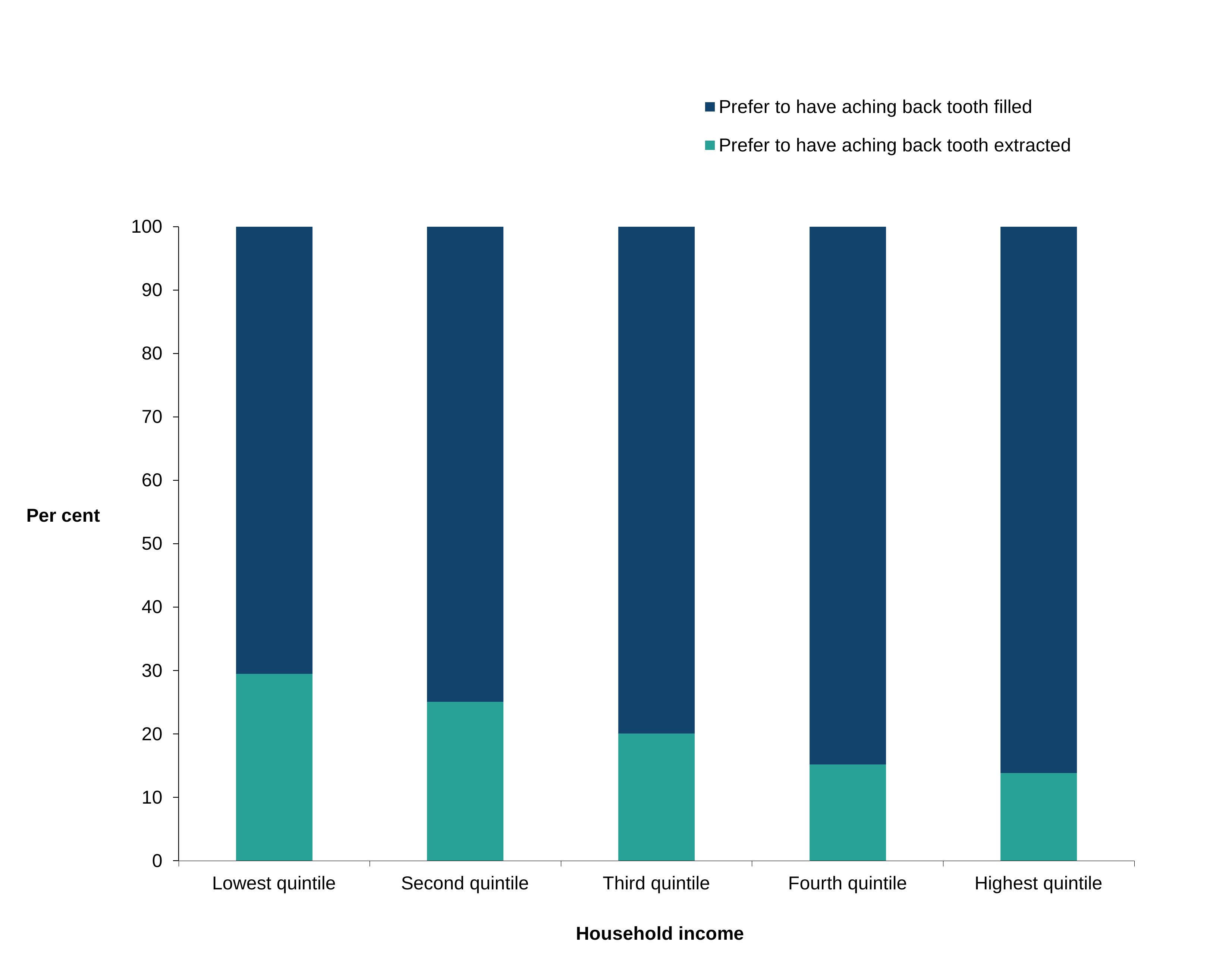
There was a strong preference for having a tooth filled (79%) rather than extracted (21%).
Two-thirds (67%) of adults reported having received advice about at least one health-related behaviour, most commonly about cleaning teeth or gums (59%) followed by advice on how frequently to visit a dentist (32%). Those who reported going to the dentist less frequently were more likely to have received advice on stopping smoking (14% compared with 7%) and cutting down or giving up alcohol (7% compared with 4%) than regular attenders.
Adults who went to the dentist less frequently were more likely to have problems with the condition of their teeth and mouth, compared with those who visited more often. Those who visited more than 5 years ago were significantly more likely to have tooth decay, one or more teeth with pulpal involvement, one or more PUFA signs (pulpal involvement, ulceration, fistula and/or abscess) and one or more potentially urgent conditions than those who had last visited in the previous 12 months.
Usual pattern of attendance
The source data for the following findings can be found in table 1 of the associated data tables.
Since the first ADHS in 1968, a question has been included asking participants to indicate if they attend the dentist for a regular check-up, an occasional check-up or only when they are having trouble with their teeth. This question aims to identify the usual reason why the individual attends the dentist and as such is considered to reflect motivation towards attending rather than the frequency of attendance. How often individuals attend the dentist is also an important consideration, although not necessarily related to a person’s usual reason for attendance. Because of this, estimates of the frequency of attendance will also be presented.
Around half of adults (51%) reported that the usual reason they attended the dentist (whether NHS, privately funded or mixed provision) was for a regular check-up, with 1 in 10 (10%) reporting that they attended for an occasional check-up only. Of the remaining participants, around one-third (35%) reported that they only visited the dentist when having trouble with their mouth, teeth or dentures. Four per cent of adults reported that they had never been to the dentist.
Sex
Women were more likely than men to report attending the dentist for a regular check-up (55% compared with 46%) and less likely to report only attending when there was a problem with their teeth (31% compared with 40%).
Age group
Patterns of dental attendance varied by age group. The proportion attending for a regular check-up tended to increase with age, from 38% of those aged 16 to 24 and 33% of those aged 25 to 34, to 71% of those aged 65 to 74 and 66% of those aged 75 and older.
Conversely, the proportion who only visited the dentist when having trouble with their teeth declined with age from 49% of those aged 25 to 34 to 21% of those aged 65 to 74 and 28% of those aged 75 and older. The proportions who attended for an occasional check-up or who had never attended the dentist also declined with age. These attendance patterns across the age groups are shown in the stacked bar chart in figure 1 below.
Figure 1: usual pattern of dental attendance by age group

Base (respondent group): all adults.
Source: table 1 in ‘Data tables: service use and barriers to accessing care’.
NHS region
Visiting the dentist for regular check-ups varied by region. Around 6 in 10 (62%) adults who lived in the South West reported visiting the dentist for regular check-ups, compared with fewer than 4 in 10 (38%) living in the Midlands.
Adults living in the Midlands were also more likely to report having never been to the dentist, 10% compared with between 1% and 5% for other regions. (Note that some regions were not included in this comparison due to small base sizes.)
Household income
Household income was analysed in quintiles (fifths) and was adjusted (equivalised) to take account of the number of adults and dependent children in the household.
Usual pattern of attendance also varied by household income with a clear social gradient. Visiting the dentist for regular check-ups rose as household income increased, while reported rates of only visiting because of a problem declined:
- 41% of those with the lowest household income reported visiting the dentist for regular check-ups, compared with 62% of those with the highest income
- 46% of those in households with the lowest income only visited the dentist when they had problems with their teeth, compared with 22% of those with the highest income
Area deprivation
Area deprivation was analysed in quintiles, based on the 2019 English Index of Multiple Deprivation (IMD). IMD is based on 37 indicators across 7 domains of deprivation. IMD is a measure of the overall deprivation experienced by people living in an area, although not everyone who lives in a deprived area will be deprived themselves.
Similar social gradients were observed by area deprivation. Compared with those living in the least deprived areas, those living in more deprived areas were:
- less likely to report attending for regular check-ups (32% compared with 69%)
- more likely to only visit the dentist when they had problems with their teeth (49% compared with 22%)
Trends in usual pattern of dental attendance
The source data for the following findings can be found in table 13 of the associated data tables.
Since 1968, participants have been asked to indicate whether they attend the dentist (whether NHS, privately funded or mixed provision) for a regular check-up, an occasional check-up, or only when they are having trouble with their mouth, teeth or dentures. The response category ‘I have never been to the dentist’ was introduced for the first time in the 2009 ADHS. The trend data for dentate adults living in England only is presented here. Consequently, data from the 1968 ADHS has been excluded due to available estimates combining both England and Wales.
The proportion of dentate adults who reported attending the dentist for a regular check-up was:
- 44% in 1978
- 50% in 1988
- 60% in 1998
- 61% in 2009
The proportion of those who attended the dentist only when having trouble with their mouth, teeth or dentures was:
- 42% in 1978
- 35% in 1988
- 30% in 1998
- 27% in 2009
Between 2009 and 2023, the proportion of those who reported attending for a regular check-up decreased by 9 percentage points from 61% to 52%. Conversely, the proportion reporting that they only attended the dentist when having trouble with their mouth, teeth or dentures increased by 8 percentage points from 27% in 2009 to 35% in 2023. It is unknown what impact the COVID-19 pandemic had on access to check-up appointments, and what role this played in the reported attendance patterns of adults. These dental attendance trends are illustrated in the line graph below in figure 2.
Figure 2: usual pattern of dental attendance in England 1978 to 2023

Base: dentate adults (self-reported).
Source: table 13 in ‘Data tables: service use and barriers to accessing care’.
Frequency of attendance
See table 2 of the associated data tables for the source data for the following findings.
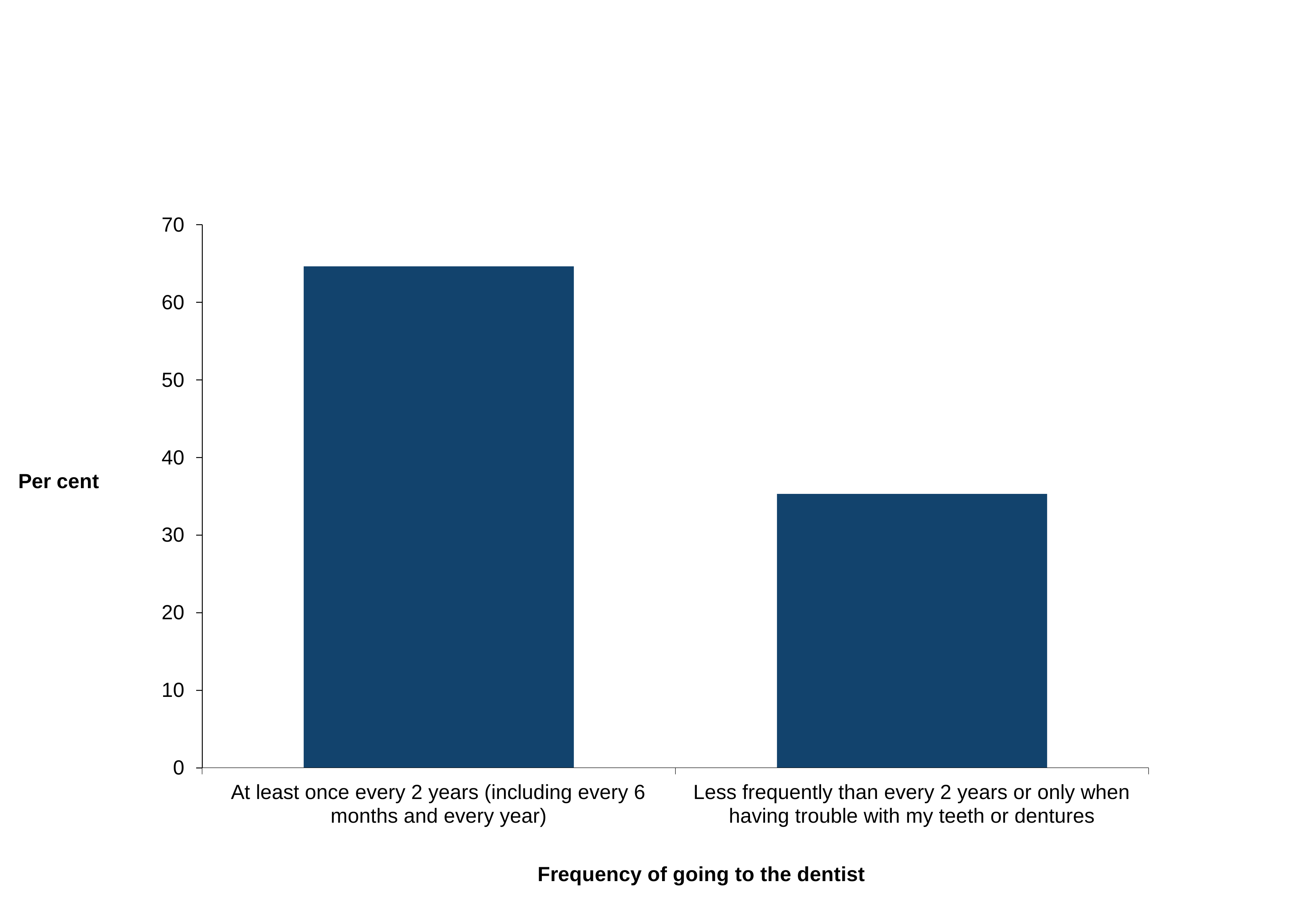
Self-reporting attendance for a regular check-up does not necessarily relate to attending at a particular frequency and consequently all adults who had ever been to a dentist were asked how often they usually visited. Almost two-thirds of adults reported going to the dentist at least once in a 2-year period (65%) and a third (35%) reported going less frequently than every 2 years, or only when they had trouble with their teeth or dentures. These observations are shown in the bar chart in figure 3 below.
Figure 3: frequency of going to the dentist
Base: adults who have ever been to the dentist.
Source: table 2 in ‘Data tables: service use and barriers to accessing care’.
There were variations by sex, age group, household income and area deprivation - these are reported below. There were no differences by NHS region.
Sex
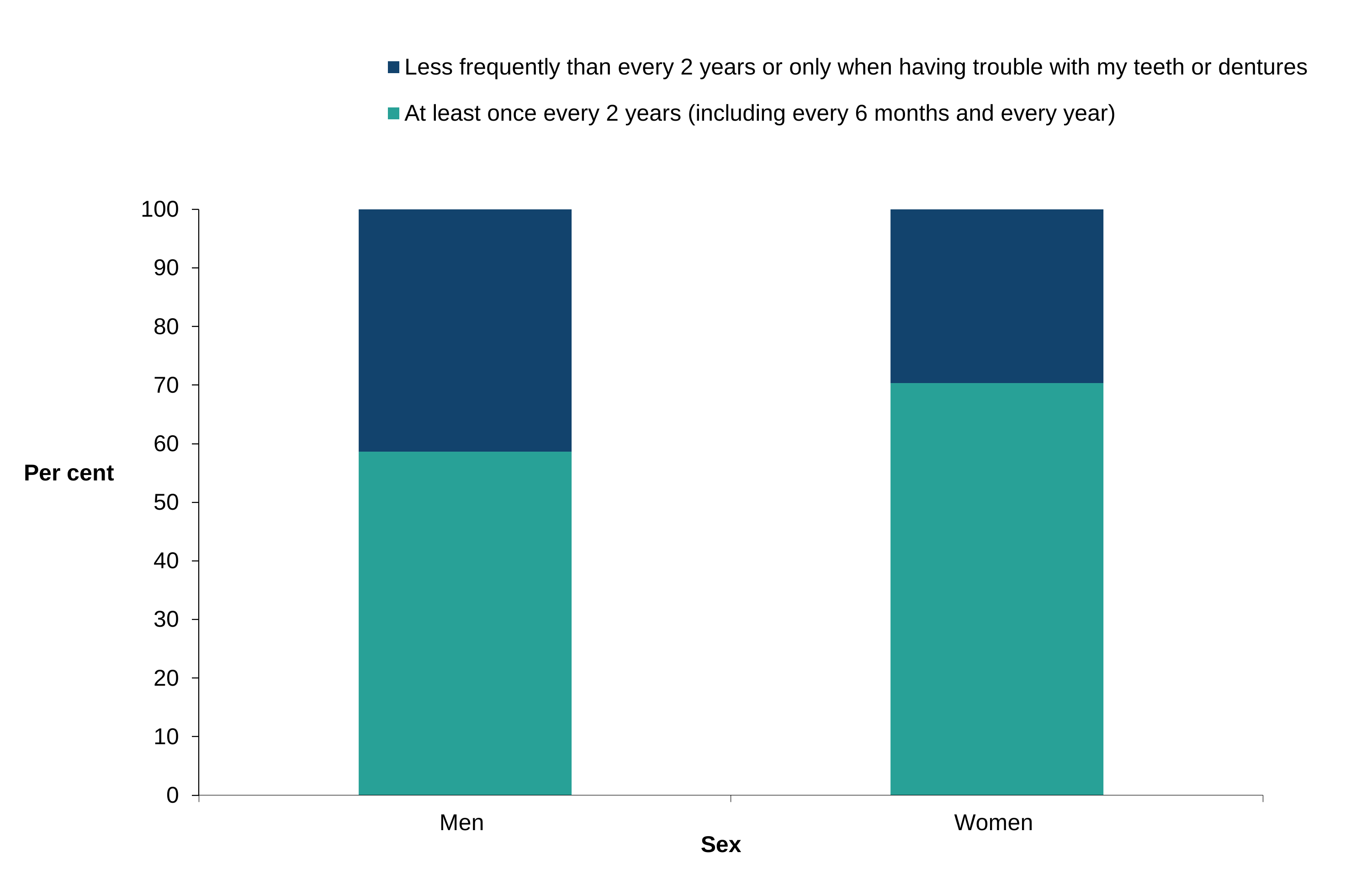
Usual frequency of going to the dentist varied by sex, with women more likely than men to report visiting the dentist at least once every 2 years (70% compared with 59%). Conversely, 41% of men reported going to the dentist less frequently than 2 years or only when they had trouble with their teeth, compared with 30% of women. These differences in dental attendance frequency by sex are shown in the bar chart in figure 4 below.
Figure 4: frequency of going to the dentist by sex
Base: adults who have ever been to the dentist.
Source: table 2 in ‘Data tables: service use and barriers to accessing care’.
Age group
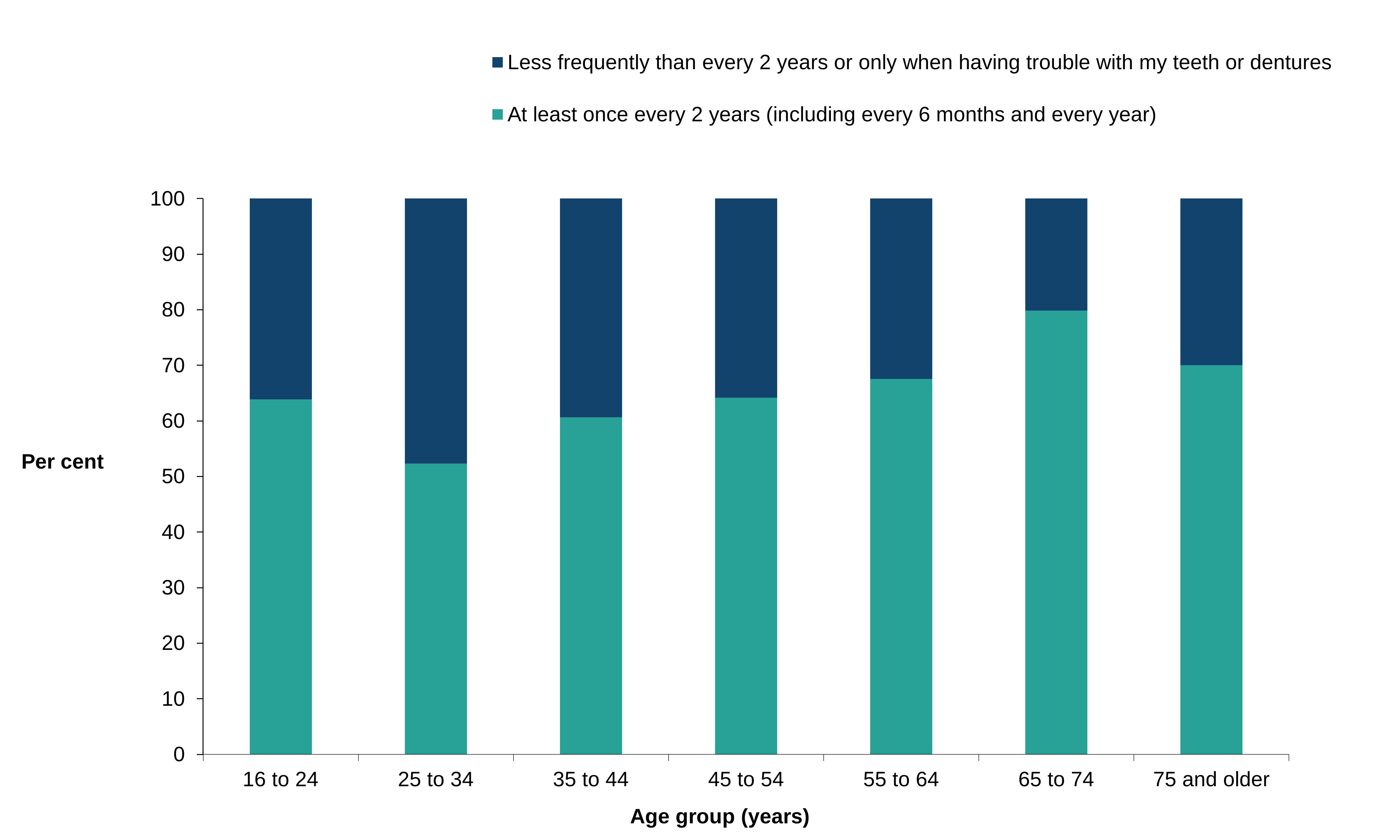
Going to the dentist at least once every 2 years varied by age group. Adults aged 65 to 74 years (80%) were more likely to report doing so than those aged 25 to 34 (52%) who were least likely to do so. However, 64% of the youngest age group (those aged 16 to 24) visited the dentist at least once every 2 years. This may be due to 16 to 18 year olds being eligible for free NHS dental check-ups and care.
The proportions who visited the dentist less frequently than every 2 years, or only when having problems with their teeth, were higher in the middle age groups, particularly among those aged 25 to 34 (48%), and were lower in the oldest age groups (20% of 65 to 74 year olds and 30% of those aged 75 and older). These observations of dental attendance frequency by age group are shown in the stacked bar chart below in figure 5.
Figure 5: frequency of going to the dentist by age group
Base: adults who have ever been to the dentist.
Source: table 2 in ‘Data tables: service use and barriers to accessing care’.
Household income
There was a social gradient with adults living in the lowest household income quintiles being least likely to report going to the dentist every 2 years (53% compared with 76% of those living in the highest household income quintile). They were also the most likely to report going to the dentist less often than every 2 years or only when they were having trouble with their teeth (47% in the lowest income quintile compared with 24% in the highest).
Area deprivation
There was a similar social gradient, with adults living in more deprived areas less likely to report visiting the dentist frequently (48% visited at least once every 2 years), compared with those living in less deprived areas (79% visited at least once every 2 years). Conversely, 53% of those in the most deprived areas reported going to the dentist less frequently than every 2 years or only when having problems with their teeth, compared with 21% of those in the least deprived areas.
Reasons for infrequent attendance
The source data for the following findings can be found in table 3 of the associated data tables.
Adults who had not visited the dentist for at least 2 years, or who reported never having done so (36% of all adults), were asked about their reasons for not visiting the dentist. Multiple responses were possible.
The most common reasons given by those who had infrequent attendance was as follows:
- being unable to find a dentist (40%)
- being unable to afford the charges (31%)
- having no perceived need to go to the dentist (27%)
Other factors included:
- being afraid to go to the dentist (17%)
- forgetting or not getting round to it (17%)
- having had a bad experience with a dentist (14%)
- not having time to go (9%)
- that it would be difficult to get to or from the dentist (6%)
Sex
Reasons for infrequent attendance varied by sex. While men were more likely than women to say that there was no need for them to attend the dentist (32% compared with 22%), women were more likely than men to indicate that they could not afford the charges (36% compared with 27%) or that they were afraid of going to the dentist (22% compared with 13%). These reasons for not visiting the dentist regularly are illustrated in the bar chart in figure 6 below.
Figure 6: reasons for not seeing a dentist regularly by sex

Base: adults who have never been to the dentist or who have not been for more than 2 years.
Source: table 3 in ‘Data tables: service use and barriers to accessing care’.
Age group
Adults in different age groups who had not visited the dentist in the past 2 years or had never done so reported different reasons for this.
Adults in the oldest age groups were most likely to report infrequent attendance at the dentist because it was difficult to get to and from the dentist (22% of those aged 75 and older, compared with 6% of those aged 25 to 34 and 35 to 44). However, they were the least likely to indicate that they kept forgetting to visit the dentist (9% of those aged 65 to 74 compared with 26% of those aged 25 to 34).
Adults aged 16 to 24 were the most likely to state that they felt no need to go to the dentist (43%).
The youngest and oldest age groups (those aged 16 to 24 and those aged 75 and older) were less likely to report that they could not afford the charges (22% and 15% respectively) than those aged between 25 and 74 (from 26% to 42% of these adults reporting being unable to afford the charges as the reason for infrequent attendance).
NHS region
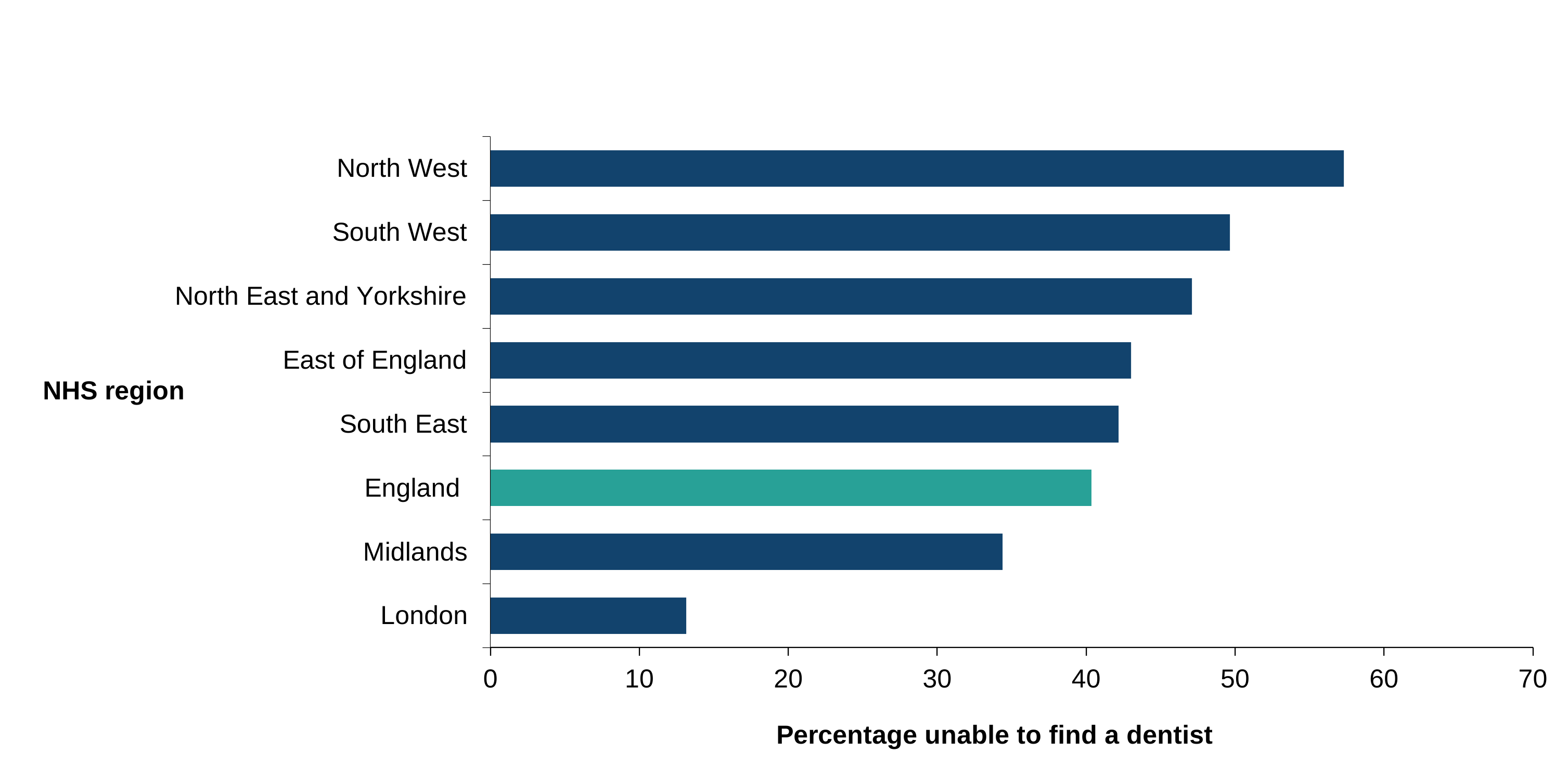
Adults living in London were less likely to indicate that they could not find a dentist (13% compared with between 34% and 57% in other regions). The bar chart in figure 7 below illustrates these differences for infrequent dental attendance across the NHS regions.
Figure 7: proportion unable to find a dentist by NHS region, with the England average for comparison
Base: adults who have never been to the dentist or who have not been for more than 2 years.
Source: table 3 in ‘Data tables: service use and barriers to accessing care’.
This question was not specific to accessing NHS dental services, but to being able to find any dentist. Other reasons for infrequent attendance did not vary significantly by NHS region.
Household income
Adults living in the highest household income quintile were more likely to indicate that they did not have the time to attend the dentist than those living in the lowest household income quintile (22% compared with 7%). There were no significant differences by household income for other reasons.
Area deprivation
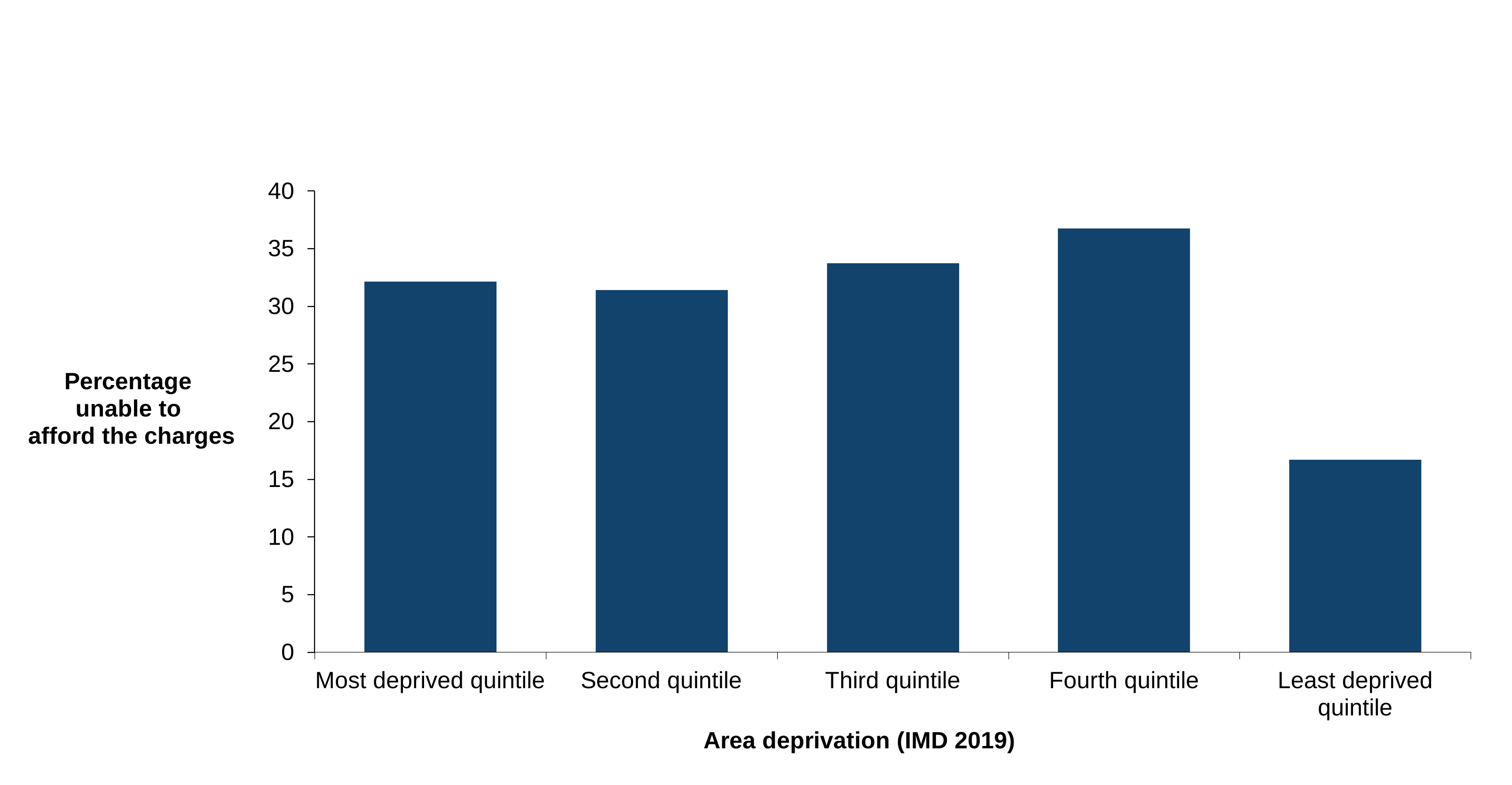
Adults living in the least deprived areas were less likely to indicate that they could not afford the charges than adults living in the more deprived areas (17% of adults living in the least deprived quintile compared with 31% to 37% across the other quintiles). There were no significant differences by area deprivation for other reasons for non-attendance. These observations by area deprivation are illustrated in the bar chart in figure 8 below.
Figure 8: proportion unable to afford the charges by area deprivation
Base: adults who have never been to the dentist or who have not been for more than 2 years.
Source: table 3 in ‘Data tables: service use and barriers to accessing care’.
Type of care received
The source data for the following findings can be found in table 4 of the associated data tables.
All adults who reported that they do visit the dentist were asked about the type of dental care that they had used for their most recent visit:
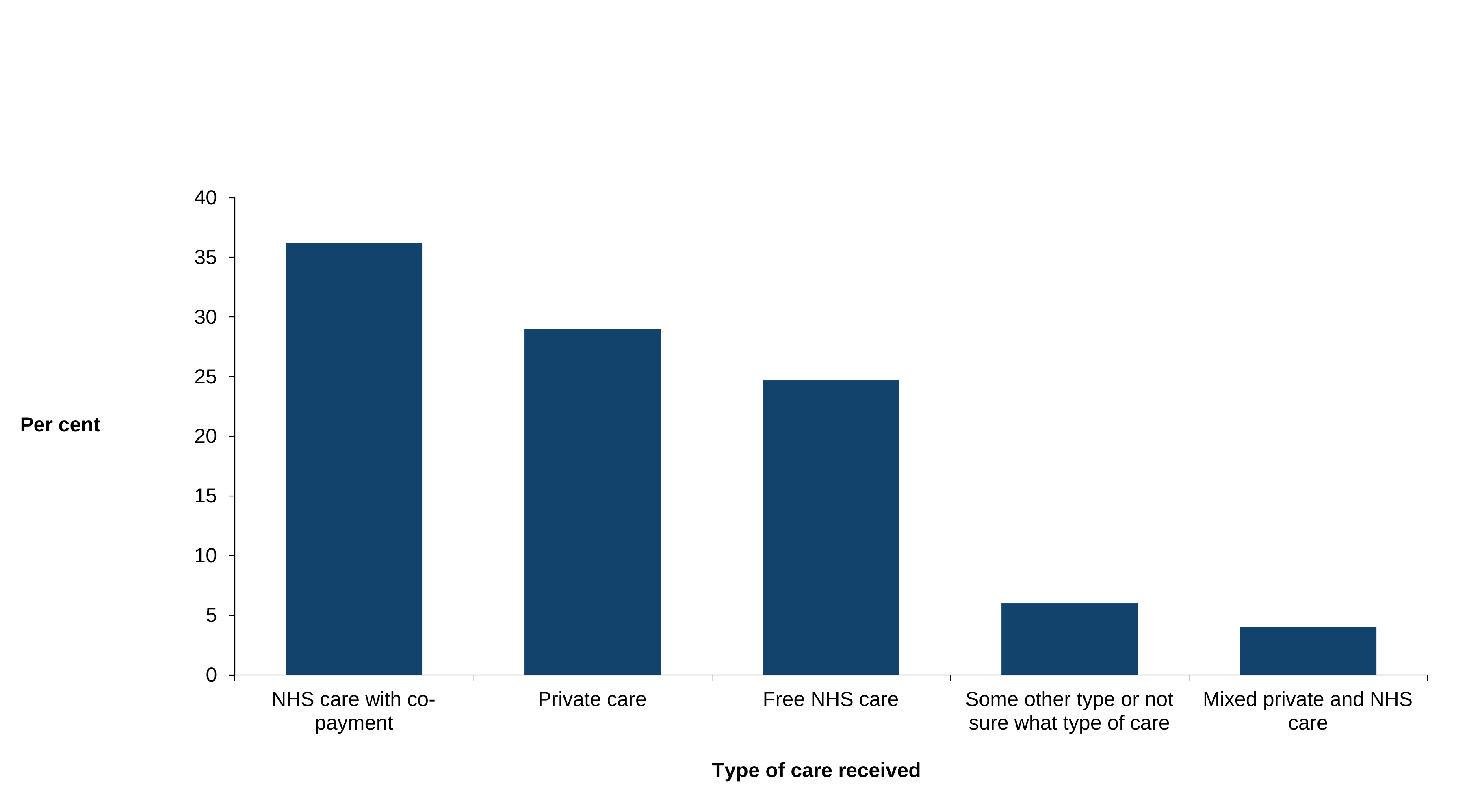
- 65% of adults reported that they had received NHS care
- 36% received NHS care for which they made a co-payment (a co-payment is a financial contribution that patients make towards their NHS dental care)
- 25% accessed free NHS care (at the point of delivery)
- around 3 in 10 (29%) reported having used private care
Small proportions reported using mixed NHS and private care (4%) or some other type of care or not being sure about the type of care that they had received (6%). These observations about the type of dental care received are shown in the bar chart in figure 9 below.
Figure 9: type of care received on most recent visit to the dentist
Base: adults who have ever been to the dentist.
Source: table 4 in ‘Data tables: service use and barriers to accessing care’.
There were significant differences by age group, NHS region, household income and area deprivation as outlined below. There were no significant differences by sex in the type of dental care received.
Age group
The type of care adults reported receiving varied by age group, with younger adults being more likely to receive free NHS care and less likely to receive NHS care that involved a co-payment or private care. The results should be considered in line with NHS policies on those who are exempt from charges including young adults aged under 18 years, those under 19 and in full time education, those who are pregnant or have had a baby in the past 12 months and people (or their partners) receiving certain benefits.
Fifty-six per cent of those aged 16 to 24 reported receiving free NHS care, compared with 15% of those aged 65 to 74 and 20% of those aged 75 and older. Conversely, 17% of the youngest age group reported using NHS care with a co-payment, compared with 47% and 42% of the 2 oldest age groups respectively. Sixteen per cent of those aged 16 to 24 had received private care, compared with between 26% and 35% of other age groups.
NHS region
There was regional variation in the type of care adults accessed. Those in the East of England (47%), and the North East and Yorkshire (43%) were most likely to report accessing NHS care for which they made a co-payment, with those in London the least likely to do so (26%). Conversely, adults were more likely to report having used private care in London (38%) and the South West (37%), and were the least likely to report having done this in the North West (24%) and in the North East and Yorkshire (22%).
Household income
Types of dental care used varied by household income, with those in the lowest household income quintile more likely to report having accessed free NHS care (41% compared with 10% of those in the highest household income quintile). Those in households with the lowest income were less likely to report having used NHS care that involved a co-payment (23% compared with 37% in the highest income quintile) or private care (22% compared with 47% in the highest income quintile).
Area deprivation
The type of dental care used also varied by area deprivation. Compared with those living in the least deprived areas, adults living in the most deprived areas were more likely to report having accessed free NHS care (41% compared with 14%), and less likely to have accessed NHS care for which they made a co-payment (29% compared with 41%) or private care (18% compared with 38%). These differences in the type of dental care provided across the area deprivation quintiles are illustrated in the bar chart in figure 10 below.
Figure 10: type of care received on most recent visit to the dentist by area deprivation

Base: adults who have ever been to the dentist.
Source: table 4 in ‘Data tables: service use and barriers to accessing care’.
Reported reasons for use of private dental care
The source data for the following findings can be found in table 5 of the associated data tables.
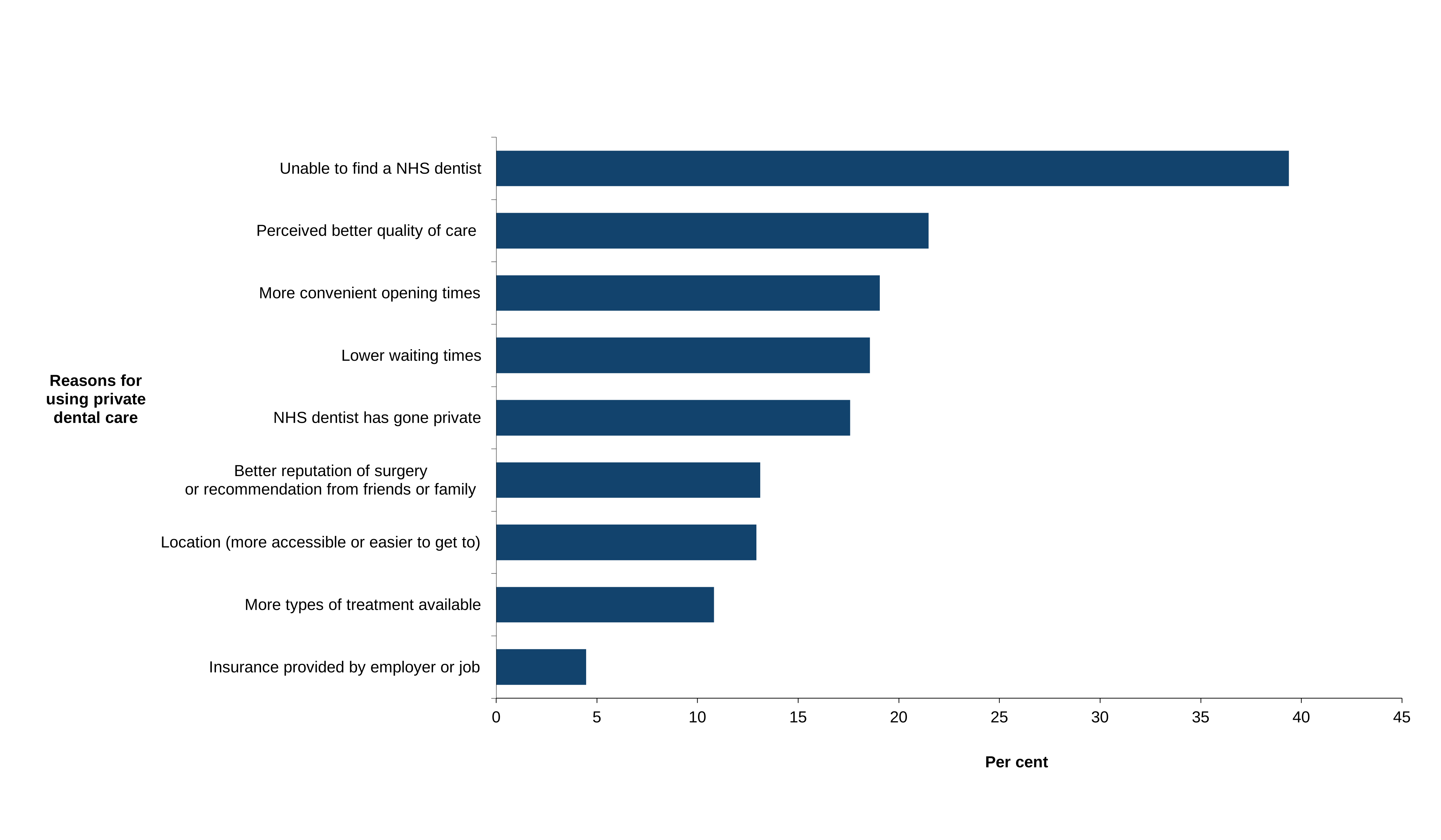
Adults who reported using private dental care on their most recent visit were asked why they used this type of service, with multiple responses possible. The most common reason, reported by almost 4 in 10 (39%), was being unable to find an NHS dentist. Around 2 in 10 adults reported using private dental care because of the following reasons:
- the perceived better quality of care received (22%)
- more convenient opening times (19%)
- lower waiting times (19%)
- because their NHS dentist had gone private (18%)
Around 1 in 10 adults reported using private dental care because of the following reasons:
- better reputation of the surgery or a recommendation from family or friends (13%)
- the location being more accessible or easier to get to (13%)
- more types of treatment were available (11%)
- insurance provided by their employer or job (5%)
These reasons for using private dental care are shown in the bar chart below in figure 11.
Figure 11: reasons for using private dental care on most recent visit to the dentist
Base: adults who received private dental care on their most recent visit to the dentist.
Source: table 5 in ‘Data tables: service use and barriers to accessing care’.
Sex
Women were more likely than men to say that they chose private dental care because of the better reputation of the surgery or a recommendation from friends (16% compared with 10%), that there were more types of treatment available (14% compared with 8%), and that their NHS dentist had gone private (20% compared with 15%).
Age group
Younger age groups were more likely than older age groups to report lower waiting times being one of the reasons they used private care (35% of those aged 25 to 34 compared with 13% of those aged 75 and older). Conversely, older adults were more likely to report using private dental care because their NHS dentist had moved to the private sector (28% of those aged 75 and older, compared with 6% of those aged 25 to 34).
NHS region
Adults in London (22%) and the North West (21%) were more likely to explain their decision to use private dental care on the basis that private dentists were more accessible (compared with between 5% and 14% of adults in other regions). There were no other regional differences.
Household income
Those with the highest household incomes were more likely to refer to lower waiting times as the reason for choosing private dental care than those in the lowest quintile of household incomes (25% compared with 6%). Other reasons did not vary significantly by household income.
Area deprivation
Those living in the most deprived areas were more likely to state that they could not find an NHS dentist compared with those living in the least deprived areas (59% compared with 30%) as the reason why they used private dental care. Other reasons did not vary significantly by area deprivation.
Influence of cost on dental treatment
The source data for the following findings can be found in table 6 of the associated data tables.
All participants were asked about the influence of cost on their decisions regarding the type of dental care or treatment they had received in the past and whether they had to delay any dental care or treatment due to the cost. Costs may include direct and indirect costs of care and concerns about costs. Three in 10 (30%) adults indicated that the type of care they had opted to have in the past had been influenced by its cost, while around 2 in 10 (23%) indicated that this factor had led them to delay their treatment. There was overlap whereby 19% of all adults identified that costs have both influenced what type of care they opted for and delayed their treatment.
Whether cost had influenced the type of care or treatment they had received, and whether care or treatment had been delayed due to cost, did not vary by sex or by NHS region.
Age group
Age was associated with the influence of cost on decisions regarding dental treatment. The middle age groups were more likely to report cost as an influence on their decision making, compared with those in the youngest and oldest age groups. Between 29% and 38% of adults aged between 25 and 64 years old reported that the type of care they had opted for in the past had been influenced by cost, compared with 25% of those aged 16 to 24 and those aged 65 to 74, and 15% of those aged 75 and older. Note that the estimates for 16 to 24 year olds may be influenced by 16 to 18 year olds being exempt from NHS dental charges.
Similarly, those in the middle age groups were more likely to report that cost had led them to delay their dental treatment in the past (between 23% and 31% compared with 11% of the oldest adults).
Household income
The influence of cost on dental care was associated with household income. Adults living in the middle household income quintile were most likely to report that cost influenced their decision-making regarding the type of dental care or treatment they had received in the past (37%), followed by those living in the lowest 2 household income quintiles (33% and 34%). This is in comparison with between 21% and 27% of those living in the higher household incomes.
Similarly, those in the lowest and middle household income quintiles were more likely to report that cost had led them to delay their dental treatment (28% in the lowest household income quintile and 25% in the second lowest quintile, compared with 15% and 19% of those in the 2 highest household income quintiles). The bar chart below in figure 12 shows these influences of cost on dental treatment across the household income quintiles.
Figure 12: influence of cost on dental treatment by household income

Base: all adults.
Source: table 6 in ‘Data tables: service use and barriers to accessing care’.
Area deprivation
A similar pattern was observed for area deprivation. Forty per cent of those living in the most deprived areas reported that the type of dental care they had opted for in the past had been influenced by cost, while 33% indicated that cost had led them to delay their dental treatment. These views were expressed less frequently by those living in the least deprived areas (21% and 13% respectively). The bar chart in figure 13 below illustrates these influences of cost on dental treatment by area deprivation quintile.
Figure 13: influence of cost on dental treatment by area deprivation

Base: all adults.
Source: table 6 in ‘Data tables: service use and barriers to accessing care’.
Dental anxiety
The source data for the following findings can be found in table 7 of the associated data tables.
First introduced in the 2009 survey, dental anxiety was assessed by the Modified Dental Anxiety Scale (MDAS), which is a modified version of Corah’s Dental Anxiety Scale (see reference 4). The scale includes a question assessing fears associated with local anaesthesia as well as 4 other scenarios about which participants are asked to report the extent of their anxiety. These 4 additional scenarios include:
- anticipated anxiety in relation to going to the dentist tomorrow
- sitting in a dentist’s waiting room
- having a tooth drilled
- having a scale and polish
The level of anxiety was assessed by asking participants to choose from the following 5 categories:
- not anxious
- slightly anxious
- fairly anxious
- very anxious
- extremely anxious
Each response score had a value from 1 (not anxious) to 5 (extremely anxious). The lowest possible overall score is 5, indicating no anxiety at all. The maximum possible overall score on the MDAS is 25, with scores of 19 and above indicating extreme dental anxiety, which may be indicative of dental phobia.
The MDAS was asked of all participants who reported that they have one or more natural teeth.
Prevalence of dental anxiety
Fifteen per cent of adults had a score of 19 or more, suggesting extreme dental anxiety which may be indicative of dental phobia. Around 4 in 10 (40%) had an MDAS score of between 10 and 18, indicating moderate or severe dental anxiety, and almost half of adults (45%) had an MDAS score ranging from 5 to 9, indicating no or low dental anxiety.
The 2 items on the MDAS questionnaire that most frequently elicited anxiety were both associated with receiving dental treatment. Thirty-seven per cent of adults reported that having a tooth drilled would make them very or extremely anxious, with 32% anticipating similar levels of anxiety about having a local anaesthetic injection. Smaller proportions of adults were very or extremely anxious about sitting in the dentist’s waiting room (16%), about having to go to the dentist tomorrow (16%) and having a scale and polish (13%).
There was variation in dental anxiety by sex, age group, household income and area deprivation. There were no significant differences by NHS region in levels of dental anxiety.
Sex
Women reported higher MDAS scores than men, indicating higher levels of dental anxiety. They were less likely to express no or low levels (MDAS score of 5 to 9) of dental anxiety (36% compared with 55%) and more likely to express moderate (MDAS score of 10 to 18) (44% compared with 36%), or high levels (MDAS score of 19 or more) of anxiety (20% compared with 9%). Across each of the 5 scenarios, women were more likely to express extreme anxiety than men. For example, 45% of women thought they would feel very or extremely anxious about having a tooth drilled, compared with 28% of men. These experiences of dental anxiety by sex are shown in the stacked bar chart below in figure 14.
Figure 14: experience of dental anxiety by sex

Base: dentate adults (self-reported).
Source: table 7 in ‘Data tables: service use and barriers to accessing care’.
Age group
Although levels of extreme dental anxiety were similar across different age groups, levels of no or low and moderate dental anxiety varied by age. Compared with older age groups, younger age groups were more likely to have moderate anxiety and less likely to have no or low anxiety. Fifty-four per cent of those aged 16 to 24 had moderate dental anxiety, compared with 29% of the oldest age group. Conversely, 29% of adults aged 16 to 24 had no or low dental anxiety, compared with 63% of those aged 75 or older. These observations are shown below in the stacked bar chart in figure 15.
Figure 15: experience of dental anxiety by age group

Base: dentate adults (self-reported).
Source: table 7 in ‘Data tables: service use and barriers to accessing care’.
Younger adults were more likely to indicate extreme anxiety in the following 2 scenarios:
- in relation to having a tooth drilled (50% compared with 23% of those aged 75 and older)
- in relation to having an injection (48% compared with 17%)
Household income
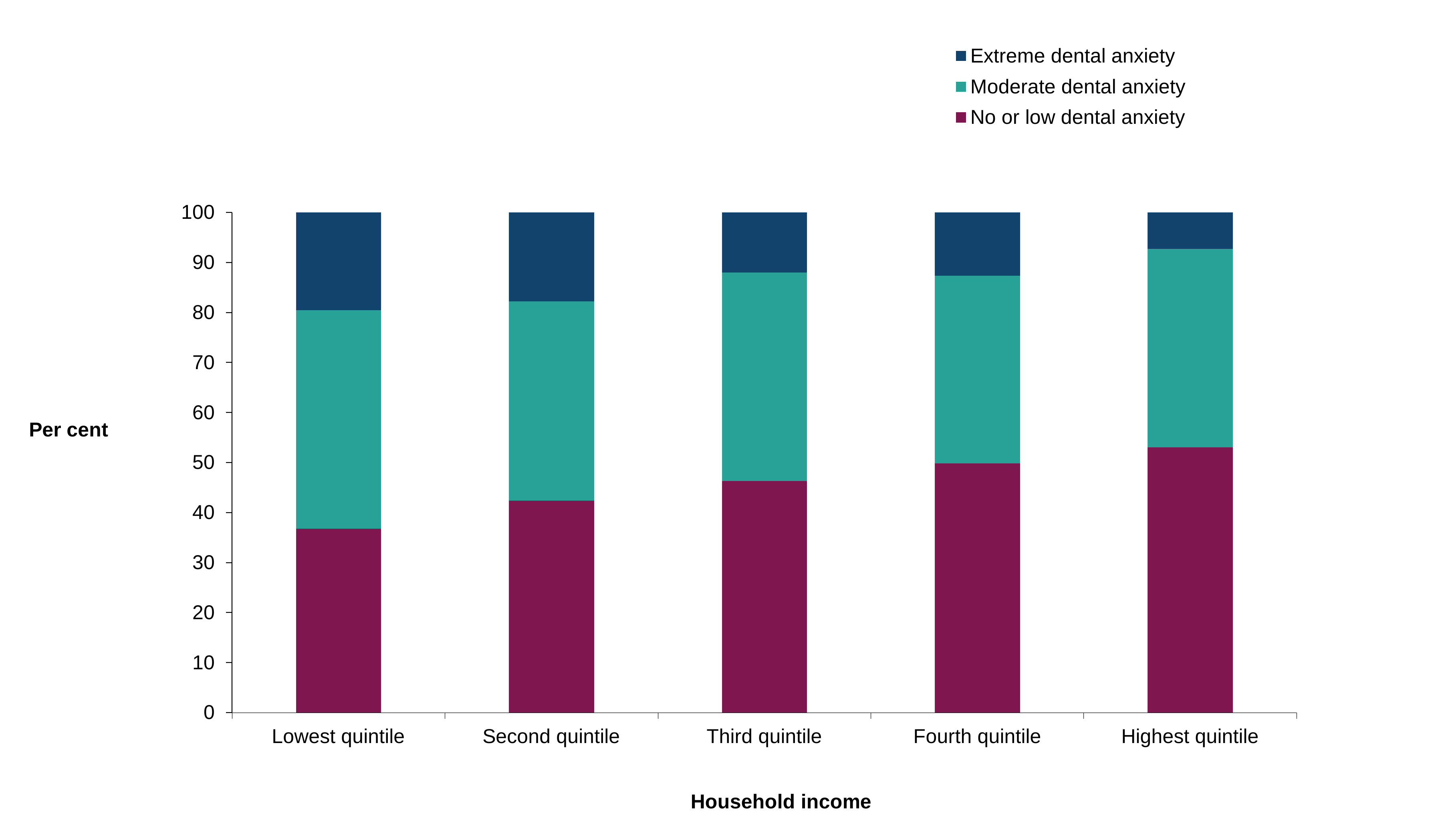
Dental anxiety varied by household income with a clear social gradient. Adults with the lowest household income were more likely to express extreme dental anxiety and were less likely to have no or low levels of dental anxiety, compared with those with the highest household income. One in 5 (20%) of those with the lowest household incomes had extreme dental anxiety (compared with 7% with the highest incomes), and 2 in 5 (37%) had no or low anxiety (compared with 53% with the highest incomes).
Across all 5 scenarios, those from the lowest income households were more likely to express extreme anxiety than those from higher income households. For example, 23% felt very or extremely anxious about being in the waiting room, compared with 8% living in the highest income households. The stacked bar chart below in figure 16 illustrates these dental anxiety experiences across the household income quintiles.
Figure 16: experience of dental anxiety by household income
Base: dentate adults (self-reported).
Source: table 7 in ‘Data tables: service use and barriers to accessing care’.
Area deprivation
A similar social gradient was observed for area deprivation, with those in more deprived areas more likely to experience extreme anxiety, and less likely to experience no or low anxiety, compared with those in less deprived areas. Seventeen per cent of adults living in the most deprived areas reported extreme dental anxiety, compared with 11% of those living in the least deprived areas. Conversely, 38% of those in the most deprived areas were identified as having no or low dental anxiety, compared with 49% of those living in the least deprived areas. These differences in dental anxiety experience by area deprivation quintiles are shown in the stacked bar chart below in figure 17.
Figure 17: experience of dental anxiety by area deprivation

Base: dentate adults (self-reported).
Source: table 7 in ‘Data tables: service use and barriers to accessing care’.
Across all 5 scenarios, those living in the more deprived areas were more likely to express extreme anxiety than those living in the less deprived areas. For example, 22% felt very or extremely anxious about going for treatment tomorrow, and 20% felt very or extremely anxious being in the waiting room, compared with 11% (for both) among those in the least deprived areas.
Preference for extraction or filling for aching back tooth
See table 8 of the associated data tables for the source data for the following findings.
Participants were asked whether they would prefer to have an aching back tooth extracted or filled. There was a strong preference for having the tooth filled (79%) compared with having it extracted (21%).
Preferences for extraction or filling varied by NHS region, household income and area deprivation. It did not vary significantly by sex or age group.
NHS region
Preference for having a painful back tooth extracted or filled varied by NHS region. Adults living in London were more in favour of having a tooth filled (90%, compared with a range of 71% to 82% across all other regions) and, conversely, less inclined to have the tooth extracted (10%, compared with a range of 18% to 25% across all other regions).
Household income
Those with the lowest household incomes were more likely to prefer tooth extraction over having a tooth filled (29% compared with 14% with the highest incomes). These observations are illustrated in the stacked bar chart below in figure 18.
Figure 18: preference for having aching back tooth extracted or filled by household income
Base: dentate adults (self-reported).
Source: table 8 in ‘Data tables: service use and barriers to accessing care’.
Area deprivation
Similarly, 30% of those living in the most deprived areas stated that they would prefer to have a tooth extracted, compared with 13% of those living in the least deprived areas.
Provision of health-related advice
The source data for the following findings can be found in table 9 of the associated data tables.
Participants were asked whether they had ever received advice from a dentist or member of the dental team in relation to 7 different health-related behaviours. They were also asked if they had used a high fluoride toothpaste prescribed to them by a dentist in the past 2 years.
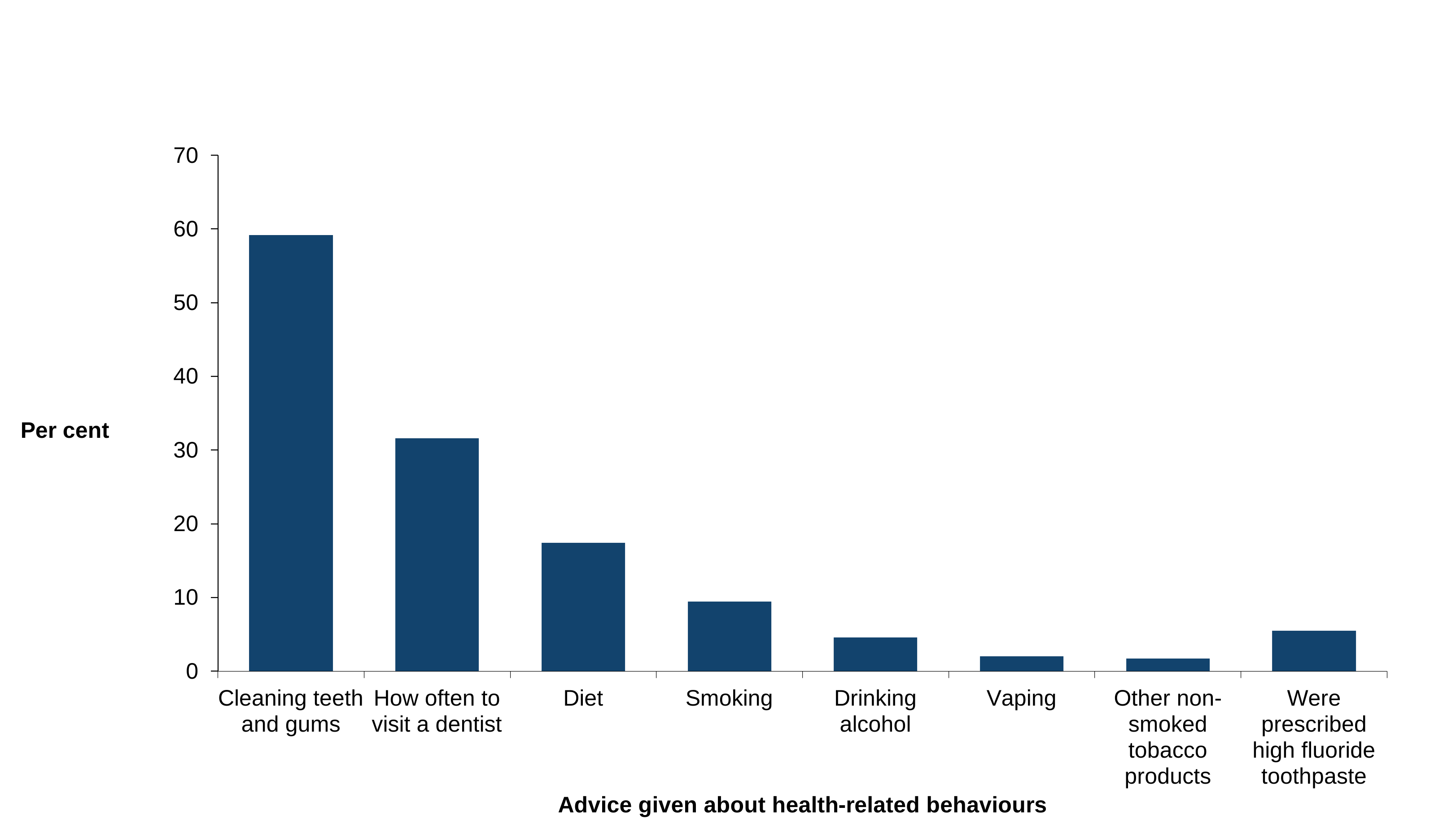
Two-thirds (67%) of adults reported having received advice about at least one health-related behaviour. The most commonly reported advice was about cleaning teeth or gums (59%) followed by advice on how frequently to visit a dentist (32%).
Advice on other health-related behaviours was less common:
- 17% had ever been provided with advice in relation to their diet
- 9% in relation to smoking
- 5% about drinking alcohol
- 2% about vaping
- 2% about other non-smoked tobacco products
One in 20 (5%) adults reported that they had used a high fluoride toothpaste that had been prescribed to them by a dentist in the past 2 years. These observations regarding health-related behaviours advice by the dental team are shown in the bar chart in figure 19 below.
Figure 19: advice given by dentist or member of the dental team about health-related behaviours
Base: all adults.
Source: table 9 in ‘Data tables: service use and barriers to accessing care’.
Having received advice varied by sex, age group, household income and area deprivation. There was no significant regional variation in advice given for health-related behaviours. Being prescribed a high fluoride toothpaste in the past 2 years did not vary by any of the sociodemographic characteristics.
Sex
Men were more likely than women to report having been given advice by their dentist on smoking (12% compared with 7%) or drinking alcohol (7% compared with 3%).
Age group
Advice received about health-related behaviours varied by age group. The youngest and oldest age groups were the most likely to report not having been given advice about oral health-related behaviours (40% of those aged 16 to 24 and 47% of those aged 75 and older, compared with between 26% and 34% of other age groups).
Fifty-four per cent of those aged 16 to 24 and 47% of those aged 75 and older had been given advice about cleaning their teeth or gums, compared with between 58% and 67% of other age groups. Twenty-two per cent of those aged 16 to 24 had been given advice about how frequently they should visit the dentist, compared with 26% to 38% of other age groups. Younger adults were more likely to have received advice from dentists in relation to their diet with advice reported by 25% of those aged 16 to 24 and 25 to 34, compared with 4% of those aged 75 and older.
Household income
Being offered advice on health-related behaviours varied by household income, with those on the lowest incomes more likely to not have received advice than those on higher incomes (40% compared with 17%). Compared with those with lower incomes, those with the highest incomes were more likely to be offered advice about cleaning their teeth or gums (74% compared with 50%) or about how often to visit the dentist (51% compared with 28%). Conversely, those with the lowest household incomes were more likely to have been offered advice about smoking (13% compared with 9% of those with the highest incomes).
Area deprivation
Adults living in the most deprived areas were more likely than those in the least deprived areas to have been given advice by a dentist about smoking (16% compared with 5%) or drinking alcohol (7% compared with 2%). Receiving advice on other health-related behaviours was not significant by area deprivation.
Type of care received and influence of cost on care by patterns of attendance
The source data for the following findings can be found in table 10 of the associated data tables.
The following section looks at the differences in the type of care received at the most recent visit to the dentist, and the influence of cost on care, by patterns of dental attendance, including frequency of going to the dentist and how long ago the last visit was.
Three types of attendance pattern are analysed in this section:
- ‘usual pattern of dental attendance’ refers to whether attendance is regular, occasional or only when experiencing trouble with the mouth, teeth or dentures. This is a question that has been used in previous ADHSs
- ‘usual frequency of going to the dentist’ compares those who meet NICE guidance on attendance (which suggests that adults should have a check-up at least once every 2 years, or sooner if they are at higher risk of oral conditions) with those who do not do so
- ‘last visit to the dentist’ provides insight into differences between those who last attended before, during or after the COVID-19 pandemic
Usual pattern of dental attendance
Receipt of free NHS care was most commonly reported among adults whose usual pattern of dental attendance was that they only attended when there were issues with their mouth, teeth or dentures (37%) compared with those who went for regular (18%) or occasional (16%) check-ups.
NHS care that involved a co-payment was more likely to be reported by those attending for regular (42%) or occasional (36%) check-ups, compared with those who only attended when there was an issue (28%). The same pattern was observed for private care, which was used more commonly by those attending for regular (33%) or occasional (34%) check-ups, compared with those who only attended when there was an issue (21%). These observations about type of dental care received by usual pattern of dental attendance are illustrated in the bar chart below in figure 20.
Figure 20: type of care received by usual pattern of dental attendance

Base: adults who have ever been to the dentist.
Source: table 10 in ‘Data tables: service use and barriers to accessing care’.
There was no significant difference in use of mixed private and NHS care across patterns of attendance.
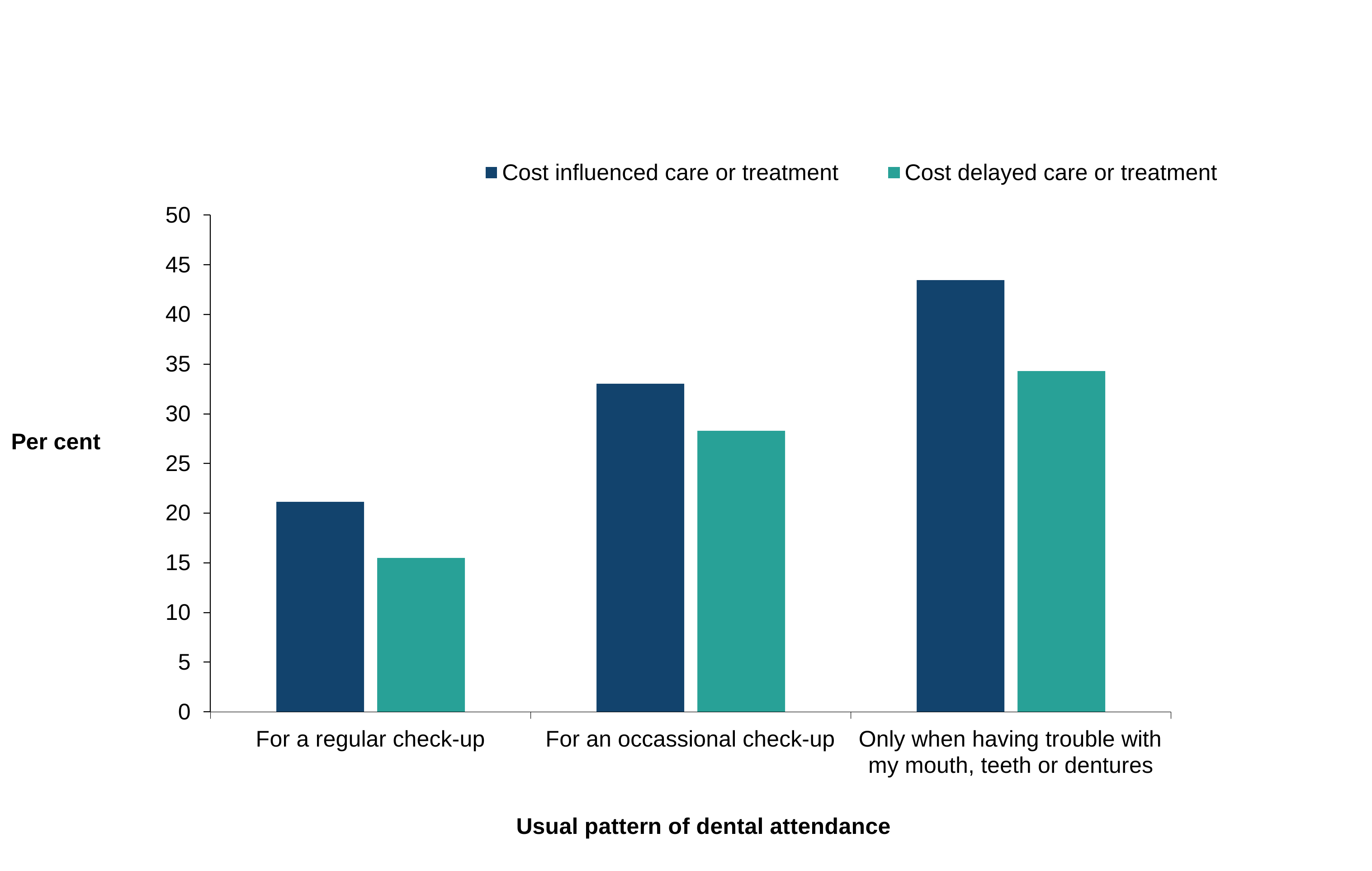
Adults who only went to the dentist when there were issues were more likely to report that cost influenced their past treatment choice (43% compared with 33% of those who had occasional check-ups and 21% of those who had regular check-ups). They were also more likely to report delaying treatment because of the cost (34% compared with 28% and 15%, respectively). These observations are illustrated in the bar chart below in figure 21.
Figure 21: whether cost influenced or delayed care or treatment by usual pattern of dental attendance
Base: adults who have ever been to the dentist.
Source: table 10 in ‘Data tables: service use and barriers to accessing care’.
Usual frequency of going to the dentist
Receipt of free NHS care was more commonly reported among those who went to the dentist less frequently than every 2 years or only when they had trouble with their teeth or dentures. Thirty-seven per cent of these adults were in receipt of free NHS care, compared with 18% who reported attending at least once every 2 years.
Conversely, both NHS care in which a co-payment is made and private care were more commonly reported by those who went to the dentist more often. Forty per cent of those who reported going to the dentist at least once every 2 years received NHS care involving a co-payment, and 34% received private care (compared with 29% and 20% who went less frequently than every 2 years or only went when they had trouble with their teeth or dentures). The bar chart in figure 22 below illustrates these differences in type of dental care received by usual frequency of going to the dentist.
Figure 22: type of care received by usual frequency of going to the dentist

Base: adults who have ever been to the dentist.
Source: table 10 in ‘Data tables: service use and barriers to accessing care’.
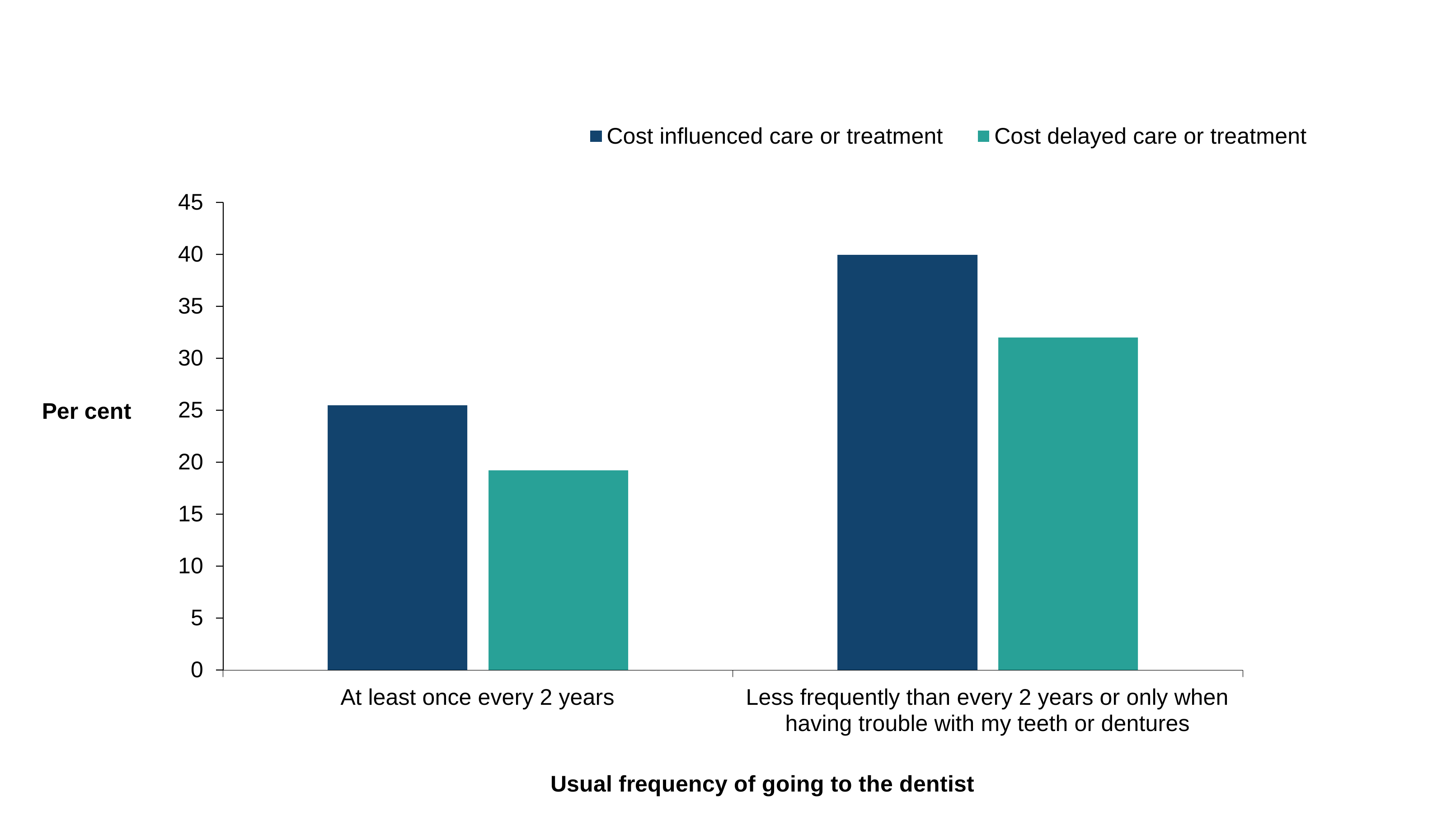
Adults who went to the dentist less frequently were more likely than those who attended regularly to report that the cost of care had influenced or delayed their treatment. Forty per cent of those who went to the dentist less than every 2 years or only when there was an issue reported that cost had influenced their care, compared with 25% who went at least once every 2 years. This group were also the most likely to report that cost had delayed their care or treatment (32% compared with 19%). This is illustrated in the bar chart below in figure 23.
Figure 23: whether cost influenced or delayed care or treatment by usual frequency of going to the dentist
Base: adults who have ever been to the dentist.
Source: table 10 in ‘Data tables: service use and barriers to accessing care’.
Last visit to the dentist
Adults who reported last visiting the dentist 5 years or longer ago were more likely to have received free NHS care than those who last visited more recently. Just under half (46%) of adults who last went to the dentist more than 5 years ago received free NHS care, compared with 17% who went within the past 12 months.
Conversely, those who had last attended more recently were more likely to report receiving NHS care for which a co-payment was made (40% of those who attended within the preceding 12 months, compared with 20% who last attended more than 5 years ago). Attendees who last visited more recently were also more likely to receive private care (36% and 15% respectively). This is shown in the bar chart below in figure 24.
Figure 24: type of care received by last visit to the dentist

Base: adults who have ever been to the dentist.
Source: table 10 in ‘Data tables: service use and barriers to accessing care’.
Provision of health-related advice by patterns of attendance
The source data for the following findings can be found in table 11 of the associated data tables.
The following section looks at advice received from a dentist or a member of the dental team and whether high fluoride toothpaste had been prescribed, by patterns of dental attendance, frequency of going to the dentist and how long ago the last visit was.
Three types of attendance pattern are analysed in this section:
- ‘usual pattern of dental attendance’ refers to whether attendance is regular, occasional or only when experiencing trouble with the mouth, teeth or dentures. This is a question that has been used in previous ADHSs
- ‘usual frequency of going to the dentist’ compares those who meet NICE guidance on attendance (which suggests that adults should have a check-up at least once every 2 years, or sooner if they are at higher risk of oral conditions) with those who don’t do so
- ‘last visit to the dentist’ provides insight into differences between those who last attended before, during or after the COVID-19 pandemic
Usual pattern of dental attendance
Adults who reported going to the dentist for regular check-ups were more likely to report having received advice from the dentist or a member of the dental team (75% compared with 61% of adults who attended the dentist only when they had an issue with their teeth).
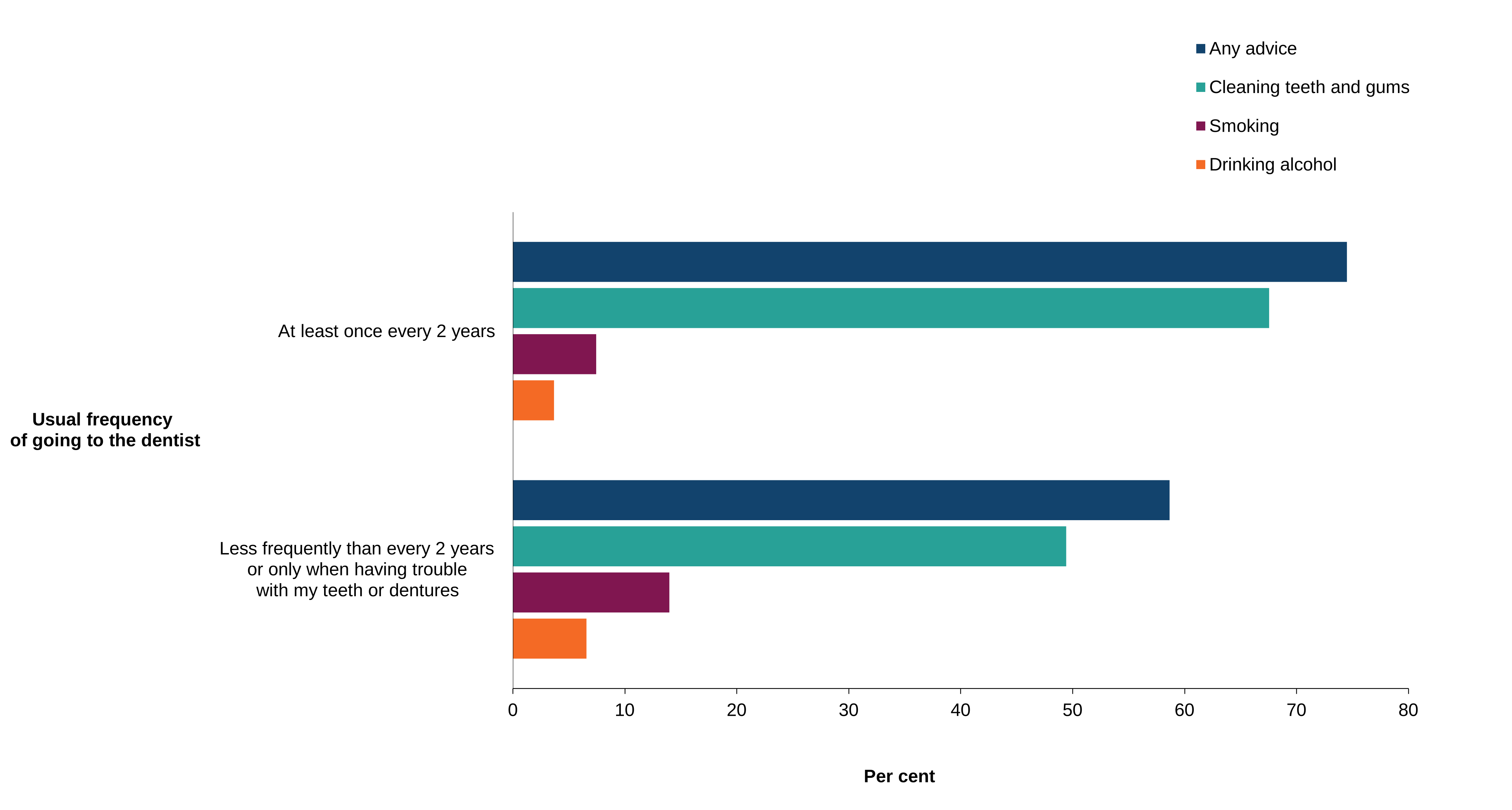
Looking at advice on individual health-related behaviours, there were no differences in receipt of advice by pattern of attendance, with 2 exceptions. Those who attended for regular check-ups were more likely to receive advice on cleaning teeth and gums (69% compared with 51% who only attended when they had an issue). Conversely, those who only attended when they had an issue were more likely to report being given advice on stopping smoking (14% compared with 7%). There was no significance by pattern of attendance and whether a high fluoride toothpaste had been prescribed. Four per cent of adults who attended for a regular check-up received advice about alcohol consumption and this was not significantly different to those who only attended when they had an issue (6%). These observations are shown in the bar chart below in figure 25.
Figure 25: advice given by dentist or member of the dental team about health-related behaviours by usual pattern of attendance

Base: adults who have been to the dentist.
Source: table 11 in ‘Data tables: service use and barriers to accessing care’.
Usual frequency of going to the dentist
Being offered advice by the dentist or dental team was more common among adults who reported that they went to the dentist at greater frequency. Three-quarters (75%) of those who attended at least once every 2 years reported receiving advice about at least one health-related behaviour, compared with just over half (59%) of those who went to the dentist less than every 2 years or only attended when they had an issue with their teeth.
Those who attended the dentist more frequently were more likely to receive advice on cleaning their teeth and gums (68% of those who attended at least once every 2 years, compared with 49% of those who went less than every 2 years or only attended when there was an issue). They were also more likely to report having been prescribed high fluoride toothpaste (7% and 3% respectively). Those who went to the dentist less frequently were more likely to have received advice on stopping smoking (14% compared with 7%) and cutting down or giving up alcohol (7% compared with 4%). The bar chart in figure 26 below illustrates the type of advice given, split by usual frequency of going to the dentist.
Figure 26: advice given by dentist or member of the dental team about health-related behaviours by usual frequency of going to the dentist
Base: adults who have ever been to the dentist.
Source: table 11 in ‘Data tables: service use and barriers to accessing care’.
Last visit to the dentist
Adults who had last visited the dentist recently were more likely to have received advice from the dentist or dental team than those who had visited longer ago. Seventy-five per cent of those who had last been to the dentist within the preceding 12 months had received advice, compared with 47% who had last been more than 5 years ago.
Those who had last visited the dentist within the preceding 12 months were more likely to have received advice on cleaning their teeth and gums (68%) and how often to visit the dentist (36%) compared with those who had last visited more than 5 years ago (41% and 20% respectively). Adults who had last visited the dentist within the preceding 12 months were also more likely to have been prescribed a high fluoride toothpaste (7% compared with 3% of those who had last visited the dentist more than 2 years ago but less than 5). It should be noted that individuals who visited the dentist more recently may have been more likely to recall being given advice than those who visited the dentist less recently.
Condition of teeth and mouth by patterns of attendance
See table 12 of the associated data tables for the source data for the following findings.
The following section looks at the condition of teeth and mouth, including the number of teeth, any decayed teeth, any PUFA index signs, current dental pain and potentially urgent conditions, by patterns of dental attendance.
Three types of attendance pattern are analysed in this section:
- ‘usual pattern of dental attendance’ refers to whether attendance is regular, occasional or only when experiencing trouble with the mouth, teeth or dentures. This is a question that has been used in previous ADHSs
- ‘usual frequency of going to the dentist’ compares those who meet NICE guidance on attendance (which suggests that adults should have a check-up at least once every 2 years, or sooner if they are at higher risk of oral conditions) with those who don’t do so
- ‘last visit to the dentist’ provides insight into differences between those who have last attended before, during or after the COVID-19 pandemic
PUFA is an index of the clinical consequences of dental decay and records the following conditions:
- pulpal involvement (as evidenced by a visibly open pulp chamber or when the coronal tissues have been destroyed by the carious process and only roots or root fragments are left) (‘P)
- ulceration (due to decayed teeth or roots) (‘U’)
- fistula (‘F’)
- abscess (‘A’)
A glossary of all clinical terms can be found in the technical report.
Usual pattern of dental attendance
The condition of the teeth and mouth of those who attended the dentist for regular check-ups was generally better than those who only attended when they were having issues with their teeth. Those who only attended when they were having trouble with their teeth were more likely to:
- have any decayed teeth (78% compared with 54% who went for regular check-ups)
- have one or more teeth with decay with pulpal involvement (18% compared with 6%)
- have one or more PUFA signs (17% compared with 6%)
- have one or more potentially urgent conditions (30% compared with 12%)
These adults were also more likely to report:
- current pain in their mouth (13% compared with 5%)
- painful teeth, fillings, crowns or fixed bridges (21% compared with 9%)
Usual frequency of going to the dentist
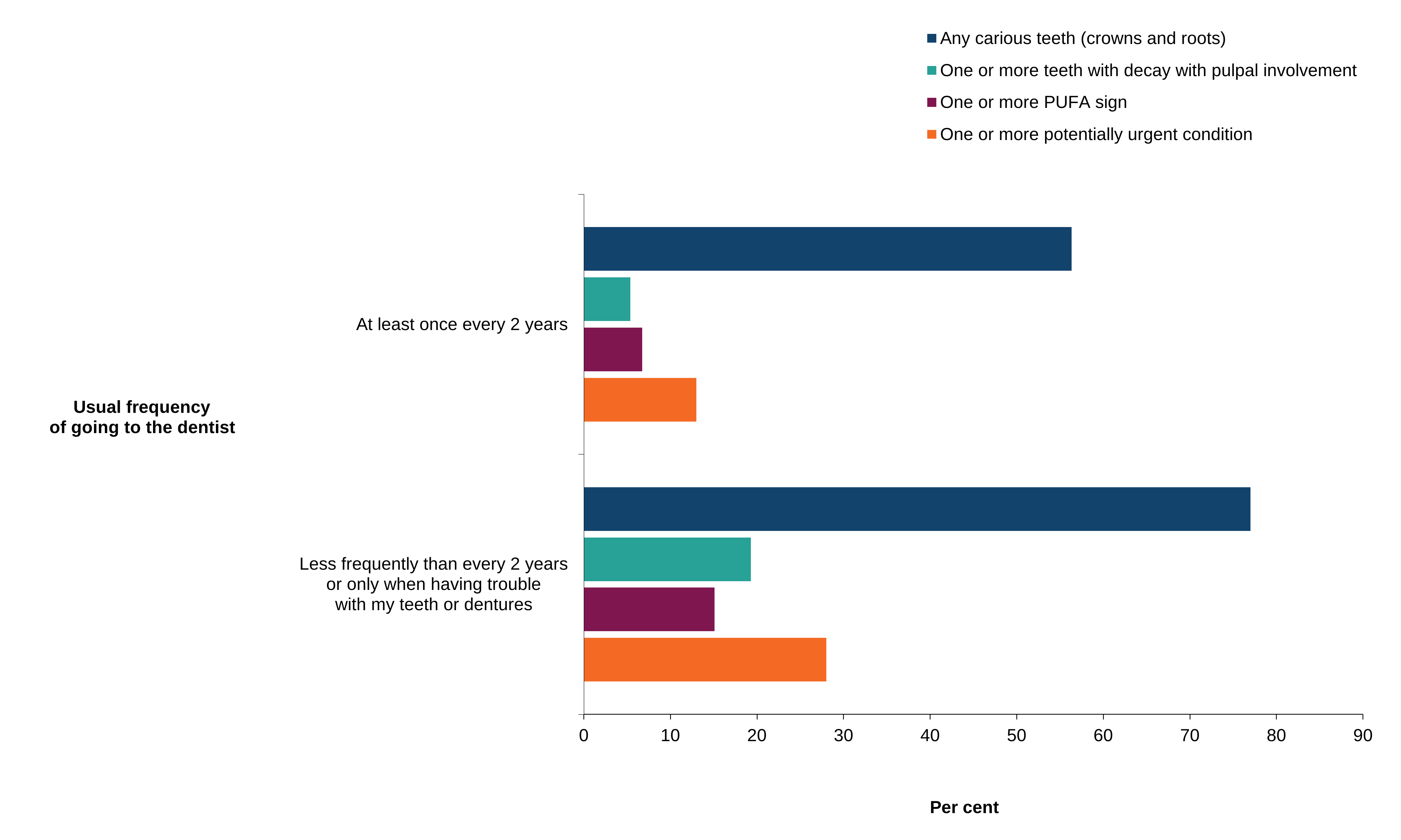
Adults who went to the dentist less frequently than once every 2 years were more likely to have problems with the condition of their teeth and mouth, compared with those who visited more often. Compared with adults who went to the dentist at least once every 2 years, those who went less frequently or only when they had issues were more likely to:
- have any decayed teeth (77% compared with 56%)
- have one or more teeth with pulpal involvement (19% compared with 5%)
- have one or more PUFA signs (15% compared with 7%)
- have one or more potentially urgent conditions (28% compared with 13%)
These comparisons are illustrated in the bar chart in figure 27 below.
Figure 27: condition of teeth and mouth by usual frequency of going to the dentist
Base: dentate adults (observed).
Source: table 12 in ‘Data tables: service use and barriers to accessing care’.
Last visit to the dentist
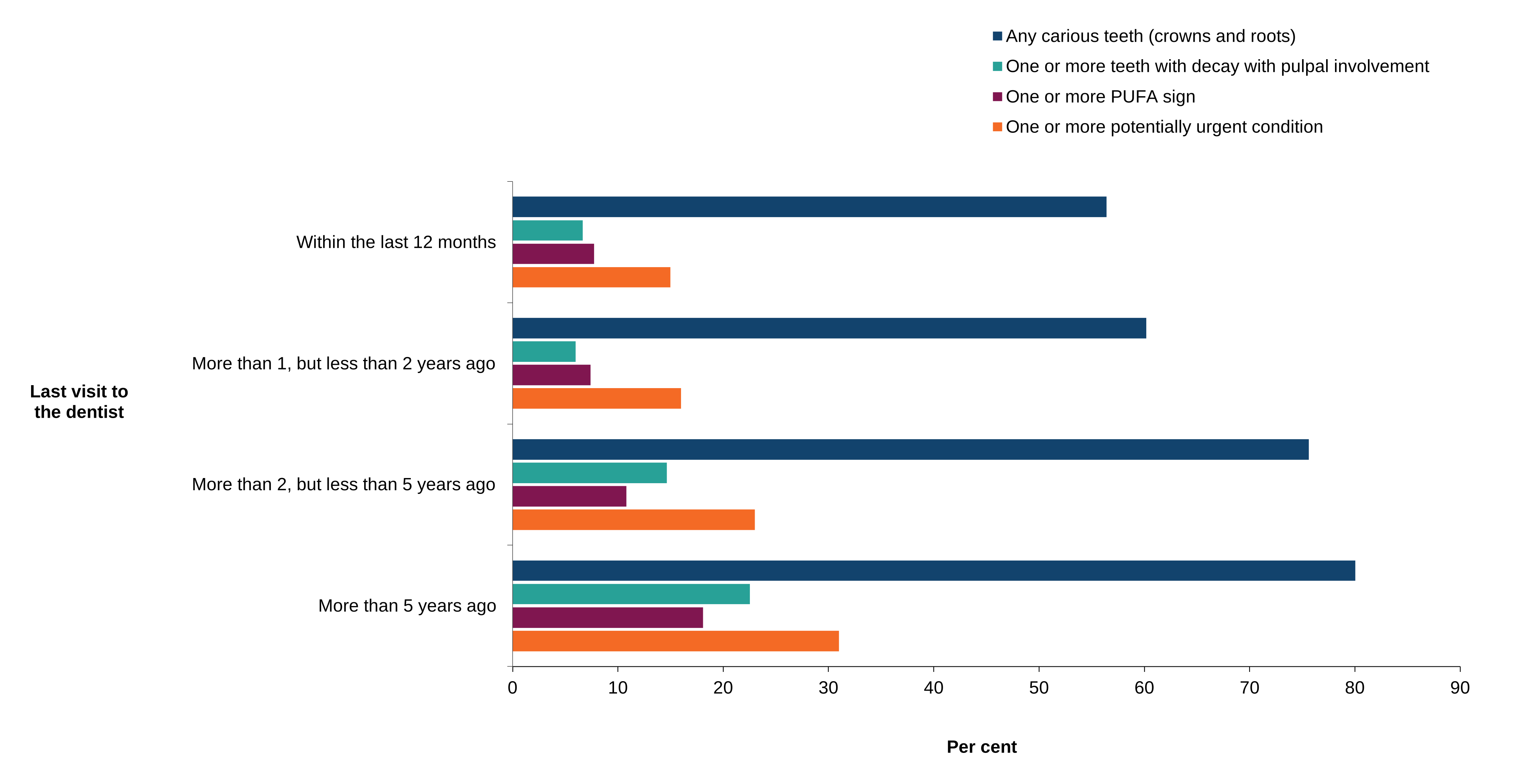
Similar patterns to the above were observed based on last visit to the dentist, with adults who had been to the dentist more than 5 years ago more likely to have problems with their teeth than those whose last attendance had been within the preceding 12 months. Compared with those who visited the dentist within the preceding 12 months, those who last visited more than 5 years ago were more likely to:
- have decayed teeth (80% compared with 56%)
- have one or more teeth with pulpal involvement (23% compared with 7%)
- have one or more PUFA signs (18% compared with 8%)
- have one or more potentially urgent conditions (31% compared with 15%)
The bar chart in figure 28 below shows these comparisons of the condition of teeth and mouth by frequency of the last visit to the dentist.
Figure 28: condition of teeth and mouth by last visit to the dentist
Base: dentate adults (observed).
Source: table 12 in ‘Data tables: service use and barriers to accessing care’.
There were no significant differences, however, in the experience of pain between groups.
Summary
Just over half of the adults surveyed reported a regular pattern of dental attendance. This represents a reduction of 9 percentage points from the last survey in 2009, while the proportion of adults who reported that they attended only when having trouble with their mouth, teeth or dentures increased. A small minority (4%) reported never having visited a dentist. Regular attenders were more likely to have received preventive advice and less likely to have disease present than those who attend only when they have issues with their teeth and mouth. Adults who only went to the dentist when there were issues were more likely to access NHS care, report that cost influenced their past treatment choice and more likely to report delaying treatment because of cost.
Almost two-thirds of adults reported that they attended a dentist at least once within the last 2 years, although some may have needed to attend more frequently. It is clear, however, that just over one-third of adults are attending less frequently than recommended in national guidance.
Reported dental attendance patterns varied by age, with regular attendance generally increasing with age from 25 years onwards. The type of care received varied by age-group, with younger adults more likely to have received NHS care generally and without co-payment and less likely to use private care. Middle age groups were more likely to report the effect of cost as a barrier to dental care and to use NHS care with co-payments. Older adults (75 years and older) were more likely to report having difficulty in getting to or from a dentist.
Dental attendance patterns varied by sex, with women more likely than men to report regular dental attendance and having attended within a 2-year period. Women were more likely to consider cost as a barrier, whereas men were more likely to not perceive a need to attend. Men were more likely to have received advice on tobacco and alcohol than women.
Attendance patterns varied by individual and area-based measures of deprivation. There was a clear social gradient in reported dental attendance patterns and frequency of dental visits with lower income groups more likely to report irregular attendance (‘only when in trouble’) and infrequent attendance. There is an overall social gradient in the use of NHS care with co-payments and private dental care from lower to higher income groups. However, when it came to the influence of cost on seeking care or the care received, even with a general social gradient, middle-quintile groups were more likely to perceive cost as a barrier to care. This may be explained by the fact that middle-quintile groups are less likely to receive care that is free at the point of delivery and that they may be more likely to have to make a co-payment. Adults from lower income groups and living in more deprived areas were less likely to receive preventive advice overall, but they were more likely to receive advice on tobacco cessation and alcohol reduction or cessation.
The condition of the teeth and mouth of those who attended the dentist for regular check-ups was generally better than those who only attended when they were having issues with their teeth.
Receipt of preventive advice was more commonly reported by those who attended more regularly or frequently. Advice should be tailored to the individual concerned and it is well accepted that health behaviours are socially patterned. The most common advice relates to toothbrushing and dental attendance, followed by diet. Other forms of advice relating to tobacco, alcohol and high fluoride toothpaste prescription are provided less often and at levels below what is likely to be the risk in society.
The longer people leave it to seek dental care, the more likely they are to have disease present. This means that greater time since last dental visit is associated with greater need. Adults whose last dental visit was over 5 years ago reported having more dental problems than who those who had attended in the previous 12 months. They were also more likely to have used NHS care on their last dental visit.
References
-
Brown N and others. Impact of the Covid pandemic on health care equity in NHS general dental practice. Community Dental Health 2022: volume 39, issue 3, pages 181 to 186
-
O’Connor R and others. Trends and inequalities in realised access to NHS primary care dental services in England before, during and throughout recovery from the COVID-19 pandemic. British Dental Journal 2023: doi.org/10.1038/s41415-023-6032-1
-
Spillane B, Patel R, Gallagher J. NHS dental activity across England: a snapshot pre-pandemic to now. Community Dental Health 2024: volume 41, supplement 2, page S14
-
Corah NL. Development of a dental anxiety scale. Journal of Dental Research 1969: volume 48, issue 4, page 596