Self-reported health and oral impacts
Updated 17 December 2025
Applies to England

© Crown copyright 2025
This publication is licensed under the terms of the Open Government Licence v3.0 except where otherwise stated. To view this licence, visit nationalarchives.gov.uk/doc/open-government-licence/version/3 or write to the Information Policy Team, The National Archives, Kew, London TW9 4DU, or email: psi@nationalarchives.gov.uk.
Where we have identified any third party copyright information you will need to obtain permission from the copyright holders concerned.
This publication is available at https://www.gov.uk/government/statistics/adult-oral-health-survey-2023/self-reported-health-and-oral-impacts
Introduction
People’s perceptions of their oral health are important health outcomes and can also capture the impact of oral conditions on quality of life. They complement clinical indicators of oral health and treatment need and in combination with them, improve understanding of the potential demand for dental services. The adult oral health survey (AOHS) 2023 collected information about participants’ perceptions of their general and oral health through an interviewer-administered questionnaire, using very similar measures to those captured in the adult dental health survey (ADHS) 2009 and the AOHS 2021 online survey. Methodological details of the AOHS 2023 can be found in the technical report.
The first part of this chapter presents results on self-rated general health and self-rated oral health, which are widely used single-item ratings capturing people’s overall perceptions about their general and oral health respectively. This is followed by sections on self-assessed oral symptoms and oral health-related quality of life. For self-assessed oral symptoms, the AOHS 2023 collected self-reported data on pain related to teeth (during the oral examination) and dry mouth (through the questionnaire). Symptom-related questions were also included as part of the oral health-related quality of life measures (also collected through the questionnaire). This chapter reports data collected through the questionnaire, while pain related to teeth can be found in the chapter ‘Conditions potentially requiring urgent care’. As such, the section on self-reported oral symptoms here refers only to dry mouth, an important oral symptom particularly among older adults. Finally, the section on oral health-related quality of life refers to the impact of oral conditions on daily life. Like previous surveys, the AOHS 2023 included 2 widely used indices of oral health-related quality of life: the Oral Health Impact Profile-14 (OHIP-14) and the Oral Impacts on Daily Performances (OIDP). The OHIP-14 measures the frequency of oral impacts, while the OIDP captures their severity. More detailed descriptions of these indices and their measurement are provided in their respective sections below.
The associated data tables for this chapter present a breakdown of these measures by the following sociodemographic characteristics:
- sex
- age group
- NHS region
- equivalised (adjusted) household income
- area deprivation
Breakdowns by ethnic group have not been included in this report due to small sample sizes in some groups. Findings based on fewer than 5 participants were not reported on. Where differences are commented on in this report, these differences are statistically significant. This implies at least a 95% chance that any reported difference is a real one and not a consequence of sampling error. Please note that estimates in this report are rounded, however in the data tables they are presented to one decimal place. More detail on survey estimates can be found in the technical report.
There are also 2 data tables presenting the trends of the OHIP-14 and OIDP over time. Monitoring trends in the nation’s oral health are of importance not only to health care professionals but also a range of people including policymakers and the general public. As the AOHS 2023 is an England-only survey, trends and comparisons presented here relate only to England. This includes any data presented from former ADHSs. It is important to note that tests for statistical significance were only conducted between the 2009 and 2023 survey years, restricting the ability to demonstrate statistically significant differences between time points over the series of surveys. More detail on the trends analysis can be found in the technical report.
Main findings
The main findings are summarised as follows:
- 65% of adults reported that their oral health was good or very good, 24% reported their oral health as fair and 11% reported bad or very bad oral health
- large proportions of adults reported that their oral health negatively impacted on their quality of life. Overall, 49% reported that they had experienced an occasional or more frequent oral impact (using the OHIP-14 measure), while 43% reported that their oral health had negatively impacted on their daily life and 22% experienced a severe oral impact (using the OIDP measure)
- commonly reported oral impacts related to difficulty eating, self-consciousness and embarrassment (such as problems smiling, laughing or showing teeth without embarrassment), painful aching in the mouth and difficulty cleaning teeth or dentures
- adults’ self-reported oral health and oral health-related quality of life were socially patterned, with better oral health and quality of life reported by those who were more socioeconomically advantaged
- considering trends over time, the negative impact of oral conditions on the quality of life affected considerably higher proportions of adults in 2023 compared with 2009, reversing the improvement in the ratings previously seen between 1998 and 2009
Self-rated general health and oral health
The source data for the following findings can be found in table 1 of the associated data tables.
Participants were asked to self-rate their health in general and more specifically their oral health using a 5-point scale:
- very good
- good
- fair
- bad
- very bad
For analysis purposes, those who answered ‘very good’ and ‘good’ have been grouped together and those who answered ‘bad’ and ‘very bad’ have been grouped together.
Three-quarters (75%) of adults said that they had very good or good general health, with 18% reporting fair health and 7% reporting bad or very bad health. This is in comparison with 65% of adults reporting very good or good oral health, 24% with fair oral health and 11% with bad or very bad oral health.
There were variations by age group, NHS region, household income and area deprivation. These are reported below. There were no statistically significant differences between men and women on either self-rated general health or oral health.
Age group
Younger adults were more likely to report having very good or good general health than older adults. Among older adults, the proportion reporting very good or good general health ranged from 64% among those aged 65 to 74 to 56% for those aged 75 years and older, while the proportion was 91% for those aged 16 to 24.
Differences by age group were less pronounced for self-rated oral health. Among older adults, 68% of 65 to 74 year olds and 65% of those aged 75 years and older reported very good or good oral health. Among younger adults, 70% of 16 to 24 year olds and 73% of those aged 25 to 34 rated their oral health as very good or good. This is shown in the bar chart below in figure 1.
Figure 1: self-rated general health and oral health, by age group

Base (respondent group): all adults.
Source: table 1 in ‘Data tables: self-reported health and oral impacts’.
NHS region
There were no statistically significant differences between NHS regions in how participants rated their general health.
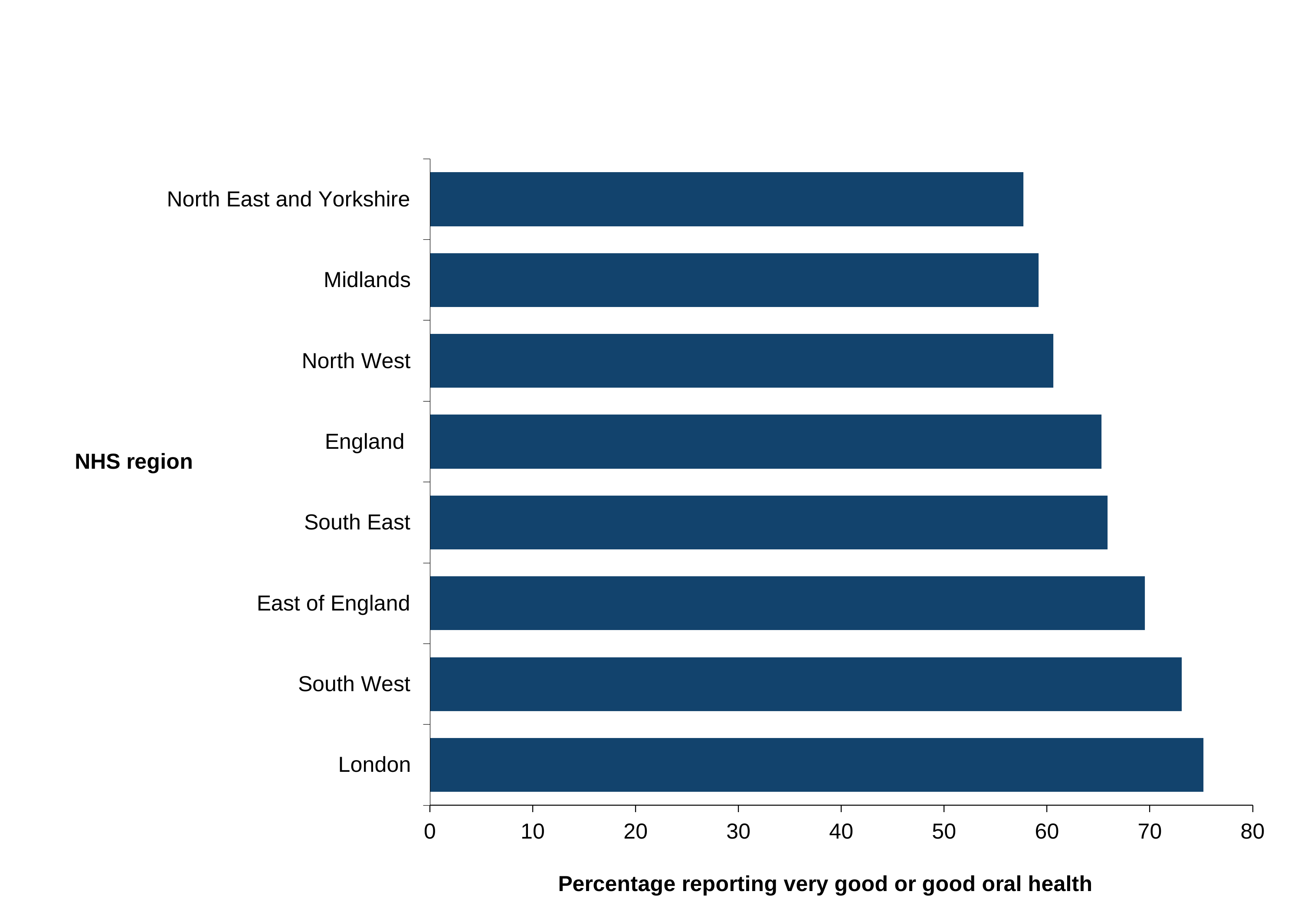
In contrast, self-rated oral health did vary. Adults in London (75%) and the South West (73%) were more likely to report either very good or good oral health than adults living in the Midlands (59%) or the North East and Yorkshire (58%). The bar chart in figure 2 below illustrates these differences in self-rated oral health across the NHS regions.
Figure 2: self-rated very good or good oral health, by NHS region, with the England average for comparison
Base: all adults.
Source: table 1 in ‘Data tables: self-reported health and oral impacts’.
Household income
Household income was analysed in quintiles (fifths) and was adjusted (equivalised) to take account of the number of adults and dependent children in the household.
The proportion of adults reporting their general health as either very good or good was lower among those with lower household income. The proportion of very good or good self-rated general health decreased between the 2 highest and the lowest income quintiles (86% in the highest and 87% in the second highest to 63% in the lowest income quintile).
Similarly, adults reporting very good or good oral health ranged from 73% in the highest income quintile and 78% in the second highest quintile, to 53% in the lowest income quintile. These observations in self-rated general health and oral health across the household income quintiles are shown in the bar chart below in figure 3.
Figure 3: self-rated general health and oral health, by household income

Base: all adults.
Source: table 1 in ‘Data tables: self-reported health and oral impacts’.
Area deprivation
Area deprivation was analysed in quintiles (fifths), based on the 2019 English Index of Multiple Deprivation (IMD). IMD is based on 37 indicators, across 7 domains of deprivation. IMD is a measure of the overall deprivation experienced by people living in an area, although not everyone who lives in a deprived area will be deprived themselves.
Self-rated general health and oral health varied by area deprivation. Adults living in the most deprived areas were least likely to rate their general health as very good or good. In the most deprived areas, 67% of adults reported very good or good general health, compared with 84% in the least deprived areas.
A similar pattern was evident for oral health, with 49% of adults living in the most deprived areas reporting very good or good oral health, compared with 77% of those living in the least deprived areas. These patterns of self-rated general health and oral health are illustrated in the bar chart in figure 4 below.
Figure 4: self-rated general health and oral health, by area deprivation

Base: all adults.
Source: table 1 in ‘Data tables: self-reported health and oral impacts’.
Oral symptoms: self-assessed dry mouth
The source data for the following findings can be found in table 2 of the associated data tables.
Dry mouth (xerostomia) occurs when the salivary glands do not produce enough saliva. Dry mouth may result from multiple different factors, including diseases such as diabetes, stress or as a side effect of some medications. Having a dry mouth increases the risk of tooth decay and mouth infections.
All adults were asked how often their mouth felt dry and:
- 4% said that their mouth always felt dry
- 12% reported that their mouth was frequently dry
- 45% reported occasionally feeling that their mouth was dry
- 38% said that their mouth never felt dry
The proportion of adults experiencing dry mouth varied by age group and household income but did not vary between men and women, across NHS regions or across area deprivation quintiles.
Age group
Adults reporting always or frequently having a dry mouth varied by age group. It was generally more common among older than younger adults. The highest proportion was reported among those aged 75 and older (27%) and the lowest among those aged 25 to 34 (10%). The bar chart in figure 5 below illustrates these dry mouth symptoms by age group.
Figure 5: proportion of adults whose mouth always or frequently felt dry, by age group
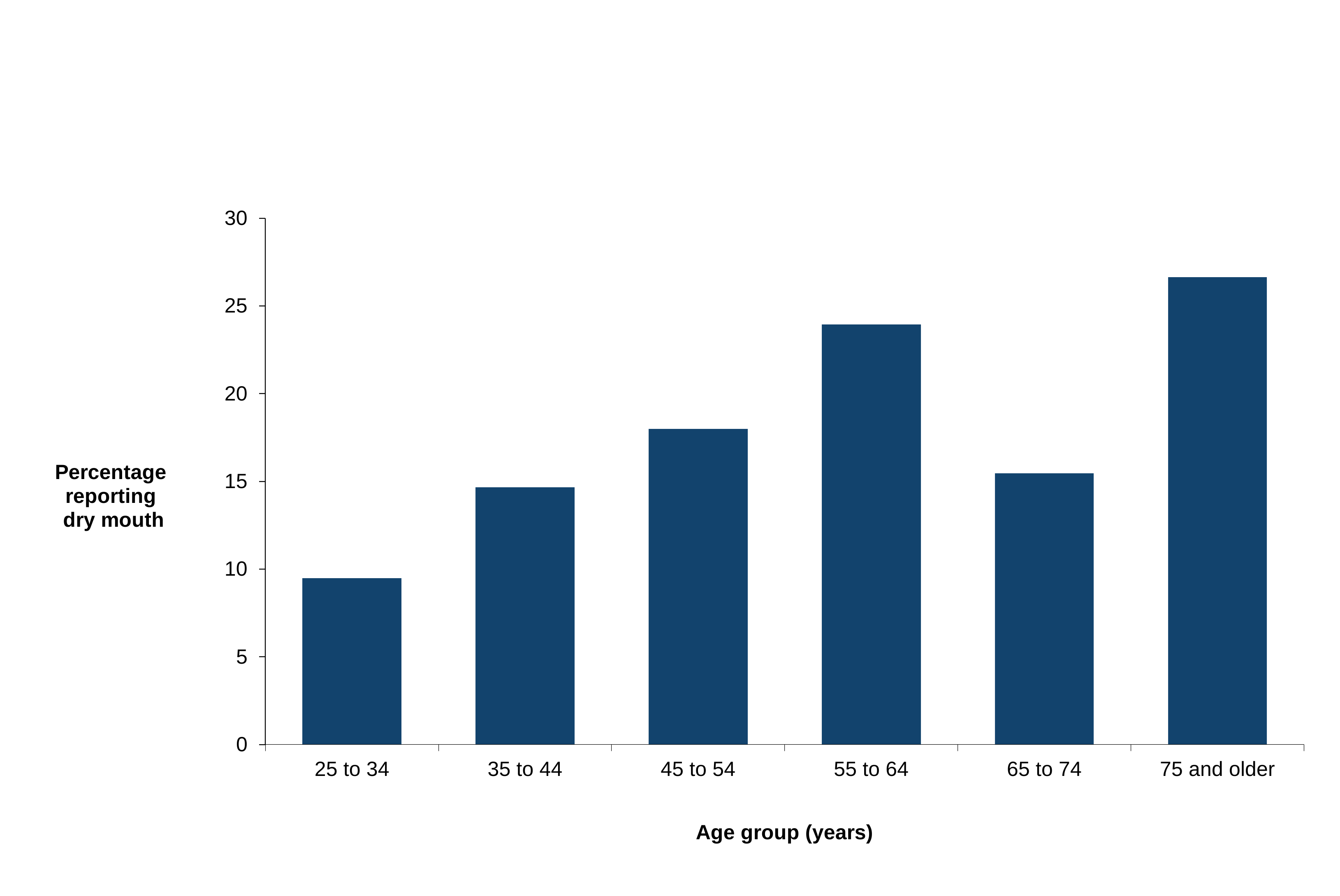
Note: data on 16 to 24 year olds has not been reported in the figure due to low numbers.
Base: all adults.
Source: table 2 in ‘Data tables: self-reported health and oral impacts’.
Household income
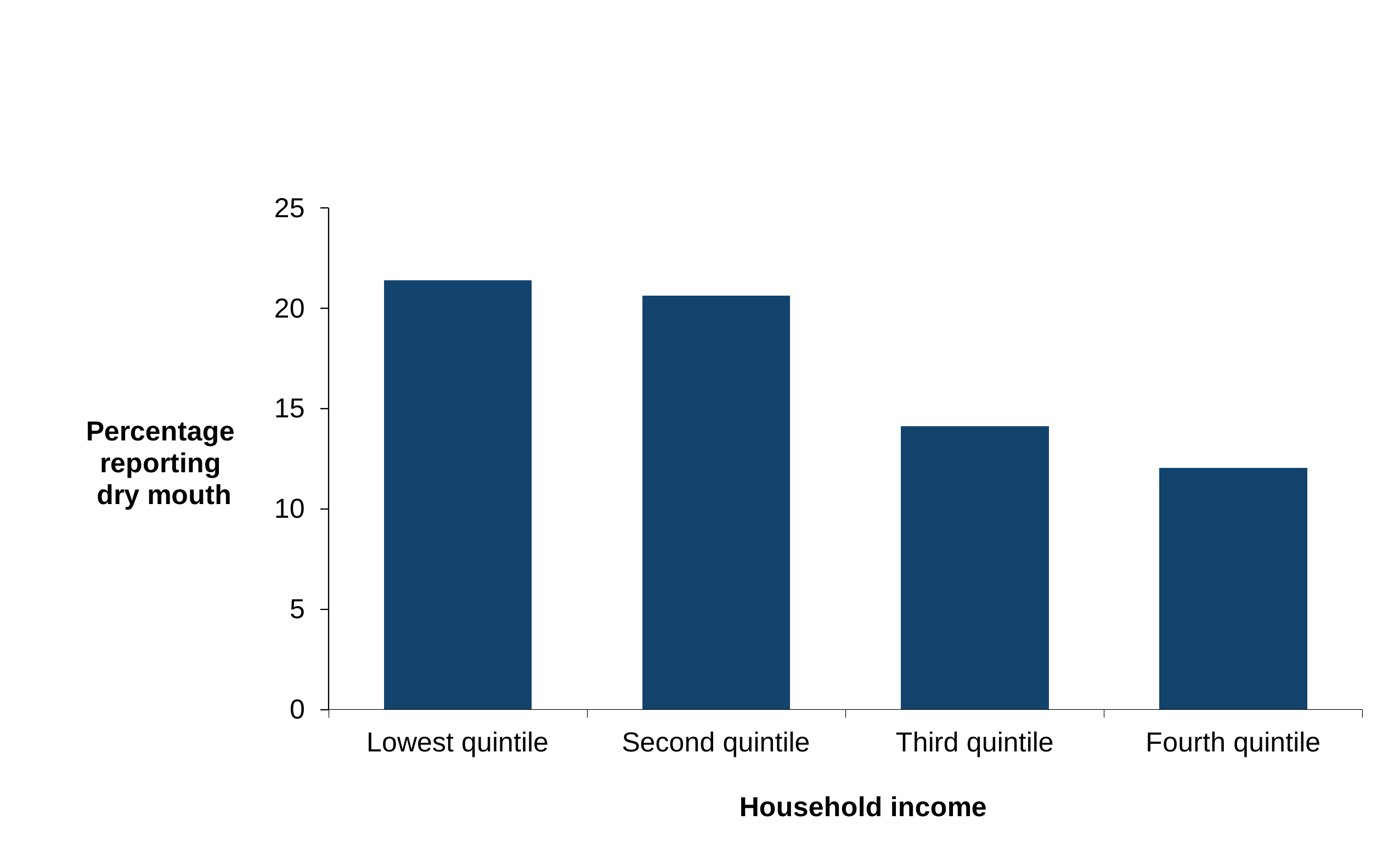
The prevalence of dry mouth varied by household income. Adults in the lowest income quintiles were more likely to report experiencing dry mouth always or frequently (21%) than those in the second highest income quintile (12%). These differences in dry mouth symptoms by household income quintiles are shown in the bar chart in figure 6 below.
Figure 6: proportion of adults whose mouth always or frequently felt dry, by household income
Base: all adults.
Note: data on the fifth income quintile has not been reported in the figure due to low numbers.
Source: table 2 in ‘Data tables: self-reported health and oral impacts’.
Oral health-related quality of life
Oral Health Impact Profile-14 (OHIP-14)
Introduction
The source data for the following findings can be found in tables 3 and 4 of the associated data tables.
The OHIP-14 is a generic oral health-related quality of life measure. The OHIP-14 is intended to measure the impact of a person’s oral health on their life overall, rather than the effects of specific disorders.
Adults were asked 14 questions about how often they experience specific impacts from their teeth, mouth or dentures in the past 12 months. These impacts included:
- trouble pronouncing any words
- worsening sense of taste
- painful aching
- discomfort on eating any foods
- self-consciousness
- feeling tense
- a lack of satisfaction with their diet
- interruption to meals
- difficulty relaxing
- embarrassment
- irritated with other people
- difficulty doing their usual jobs
- a feeling that life in general was less satisfying
- total inability to function
The response options were:
- never
- hardly ever
- occasionally
- fairly often
- very often
If a participant answered occasionally, fairly often or very often to one or more questions, they were coded as having experienced at least one oral impact.
The total OHIP-14 score was calculated by adding the numerical values for participants’ responses on the 14 questions, with higher scores indicating worse oral health-related quality of life. Further details are in the technical report.
Presented in tables and throughout this section are the:
- proportions of adults experiencing at least one of the OHIP-14 impacts (measuring prevalence)
- mean number of impacts experienced (measuring extent)
- mean total OHIP-14 score
Prevalence of reported OHIP-14 impacts and OHIP-14 score
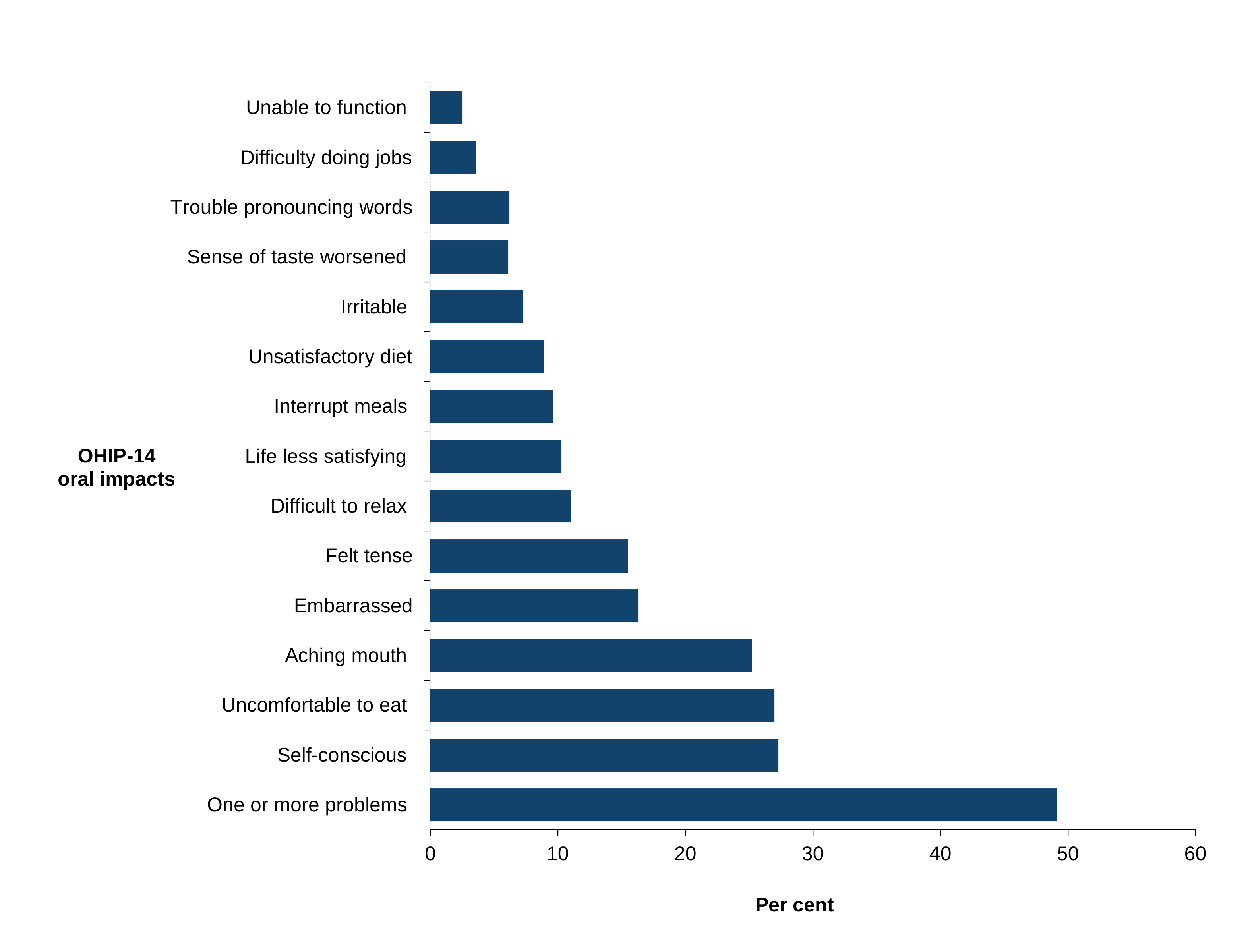
Around half of all adults (49%) experienced one or more impacts relating to oral conditions occasionally, fairly often or very often in the previous 12 months. The most commonly reported impacts were finding it uncomfortable to eat any foods (27%), being self-conscious (27%) and having a painful aching in the mouth (25%). These prevalence estimates indicate that these are frequent concerns for large proportions of the adult population. These oral impacts are shown in the bar chart below in figure 7.
Figure 7: prevalence of reported OHIP-14 oral impacts experienced occasionally or more frequently in the past 12 months
Base: all adults.
Source: table 3 in ‘Data tables: self-reported health and oral impacts’.
On average, adults experienced 1.8 oral impacts occasionally or more frequently and the mean OHIP-14 score was 19.3.
Experiencing OHIP-14 oral impacts varied by age group, NHS region, household income and area deprivation. There were no statistically significant differences between men and women.
Age group
There was no clear relationship between age and proportion of adults experiencing at least one occasional or more frequent oral impact in the previous 12 months.
However, the mean number of oral impacts and total OHIP-14 score varied by age group. Adults aged between 45 and 54 reported experiencing an average of 2.2 occasional or more frequent oral impacts, compared with a mean of 1.3 occasional or more frequent oral impacts reported by older adults aged 75 and older and 1.4 reported by younger adults aged 16 to 24. Similarly, those aged 45 to 54 had a higher mean total OHIP-14 score, compared with those aged 75 and older (20.7 and 17.6 respectively). The bar chart in figure 8 below illustrates these mean numbers of oral impacts across the age groups.
Figure 8: mean number of OHIP-14 oral impacts reported in the past 12 months, by age group

Base: all adults.
Source: table 4 in ‘Data tables: self-reported health and oral impacts’.
NHS region
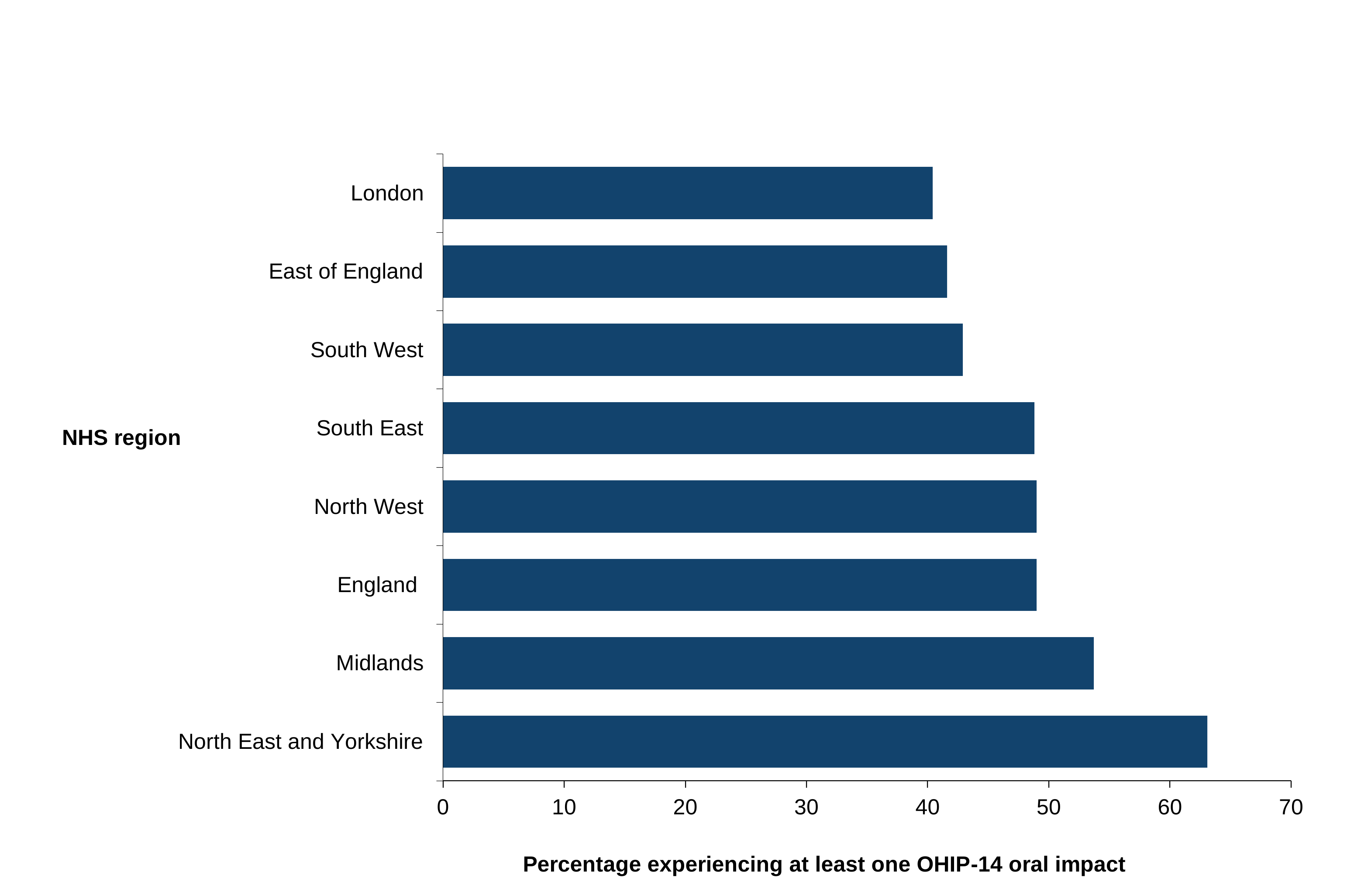
The proportion of adults experiencing at least one oral impact occasionally or more frequently varied by NHS region: 63% of adults in the North East and Yorkshire reported experiencing at least one OHIP-14 impact occasionally or more frequently in the previous 12 months, compared with 40% of adults in London.
The mean number of oral impacts and total OHIP-14 scores also varied by NHS region. The mean number of oral impacts was 2.4 among adults in the North East and Yorkshire, while for adults in London it was 1.3. The mean total OHIP-14 score was 21.2 in the North East and Yorkshire compared with 17.9 in London. This is shown below in the bar chart in figure 9.
Figure 9: prevalence of experiencing at least one OHIP-14 oral impact, by NHS region, with the England average for comparison
Base: all adults.
Source: table 4 in ‘Data tables: self-reported health and oral impacts’.
Household income
There was variation in the oral impacts by household income, with adults living in lower income households reporting higher prevalence and mean number of oral impacts and higher OHIP-14 scores compared with those living in higher income households. The proportion of adults reporting at least one oral impact experienced occasionally or more frequently was higher among adults living in lower income households compared with those in higher income households (62% and 38%, respectively for the lowest and highest income quintiles). This pattern of differences was also observed for the most frequently selected specific oral impacts, namely finding it uncomfortable to eat any foods, being self-conscious and having a painful aching in the mouth.
Similarly, the mean number of oral impacts experienced was lower among those in the highest income quintile (1.3) compared with those in the lowest income quintile (2.4). Adults in the highest income quintile had a lower mean total OHIP-14 score (indicating better oral health-related quality of life) than those in the lowest income quintile: 21.0 in the lowest quintile, compared with 18.1 in the highest quintile. These oral impacts by household income are shown in the bar chart below in figure 10.
Figure 10: prevalence of experiencing at least one OHIP-14 oral impact in the past 12 months, by household income

Base: all adults.
Source: table 4 in ‘Data tables: self-reported health and oral impacts’.
Area deprivation
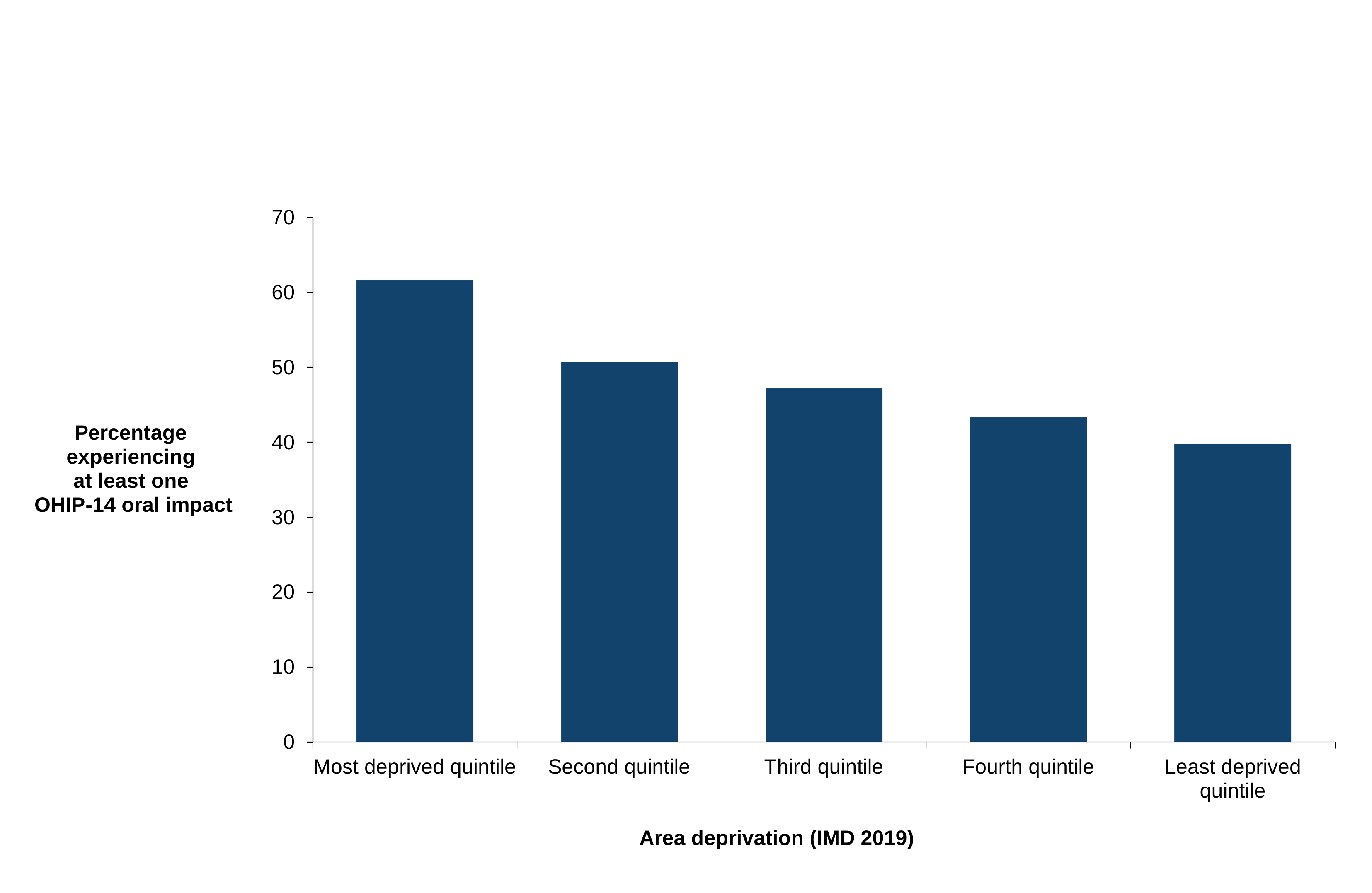
There was similar variation by area deprivation, with adults in more deprived areas having higher prevalence and number of oral impacts experienced occasionally or more frequently in the last 12 months, and higher OHIP-14 scores, compared with those living in less deprived areas. Adults living in the most deprived areas were more likely to report experiencing at least one oral impact than those in the least deprived areas: 62% compared with 40% respectively. The same was also the case for the more frequent oral impacts.
The pattern was similar for the mean number of OHIP-14 impacts experienced and for the mean total OHIP-14 score:
- adults living in the most deprived quintile experienced an average of 2.6 OHIP-14 impacts, compared with 1.1 impacts for those in the least deprived quintile
- those in the most deprived quintiles had a higher mean OHIP-14 score than those in the least deprived quintiles (21.6 and 17.5 respectively)
These observations of oral health impacts by area deprivation are shown in the bar chart below in figure 11.
Figure 11: prevalence of experiencing at least one OHIP-14 oral impact in the past 12 months, by area deprivation
Base: all adults.
Source: table 4 in ‘Data tables: self-reported health and oral impacts’.
Trends in OHIP-14
The source data for the following findings can be found in table 7 of the associated data tables.
The OHIP-14 questions were first included in the 1998 ADHS, when they were only asked of adults who self-reported that they were dentate (meaning that they had at least one natural tooth). The trend data presented here is for England only.
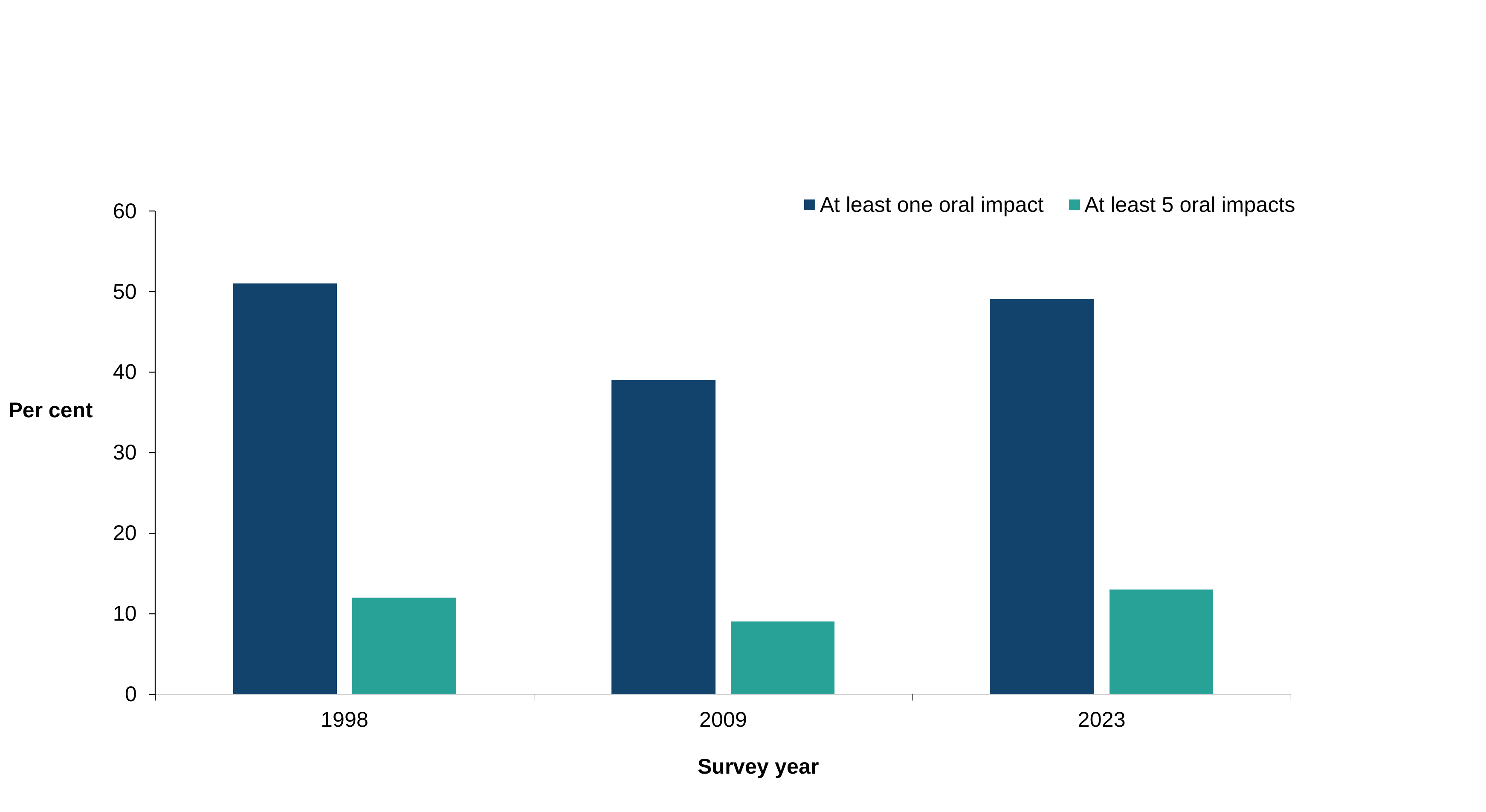
The proportion of dentate adults who reported at least one oral impact on the OHIP-14 scale occasionally, fairly often or very often in the previous 12 months increased by 10 percentage points between 2009 and 2023 from 39% to 49%, reaching levels similar to those observed in 1998 (51%).
The proportion of those who reported at least 5 oral impacts increased from 9% in 2009 to 13% in 2023, again reaching levels similar to those observed in 1998 (12%). These trends in oral impacts are shown in the bar chart below in figure 12.
Figure 12: proportion of adults reporting occasional, fairly often or very often OHIP-14 oral impacts in the past 12 months, England, 1998 to 2023
Base: dentate adults (self-reported).
Source: table 7 in ‘Data tables: self-reported health and oral impacts’.
Oral Impacts on Daily Performances (OIDP)
Introduction
The source data for the following findings can be found in tables 5 and 6 of the associated data tables.
The previous section looked at the frequency of oral impacts. This section looks at how severely these impacts affect a person’s ability to carry out their daily life. The OIDP is an indicator of oral health-related quality of life that measures the severity of the oral problems. The wording of the question was ‘Can you tell us what effect the following difficulties and problems caused by your mouth, teeth or dentures have had on your daily life in the past 12 months?’ The specific oral impacts included were:
- difficulty eating
- difficulty speaking
- cleaning your teeth or dentures
- going out (for example to the shops or visiting someone)
- relaxing (including sleeping)
- problems smiling, laughing or showing your teeth without embarrassment
- difficulty carrying out your major work or role
- problems with emotional instability, for example becoming more easily upset than usual
- problems enjoying the contact of other people, such as relatives, friends or neighbours
Participants were asked to rate the severity of the effect of these oral impacts on their daily life in the past 12 months using a scale from 0 to 5, where 0 was no effect and 5 was a very severe effect.
Adults reporting a score of 1 or higher on the scale in any of the aforementioned items are defined as experiencing an oral impact. Participants who chose an answer of 3 or higher were classified as experiencing a severe oral impact.
The total OIDP score is calculated by adding the numerical values for all responses on the 9 performances, dividing by the maximum score and multiplying by 100. The range of values is therefore from 0 to 100. Higher OIDP scores indicate more severe impacts of oral health on daily life and represent poorer oral health-related quality of life.
Presented in tables and throughout this section are the:
- proportions of adults experiencing at least one oral impact (measuring prevalence of any oral impact)
- proportions of adults experiencing at least one severe oral impact (measuring prevalence of any severe oral impact)
- mean number of oral impacts experienced (measuring extent of oral impacts)
- mean number of severe oral impacts experienced (measuring extent of severe oral impacts)
- mean total OIDP score
Prevalence of oral impacts and OIDP score
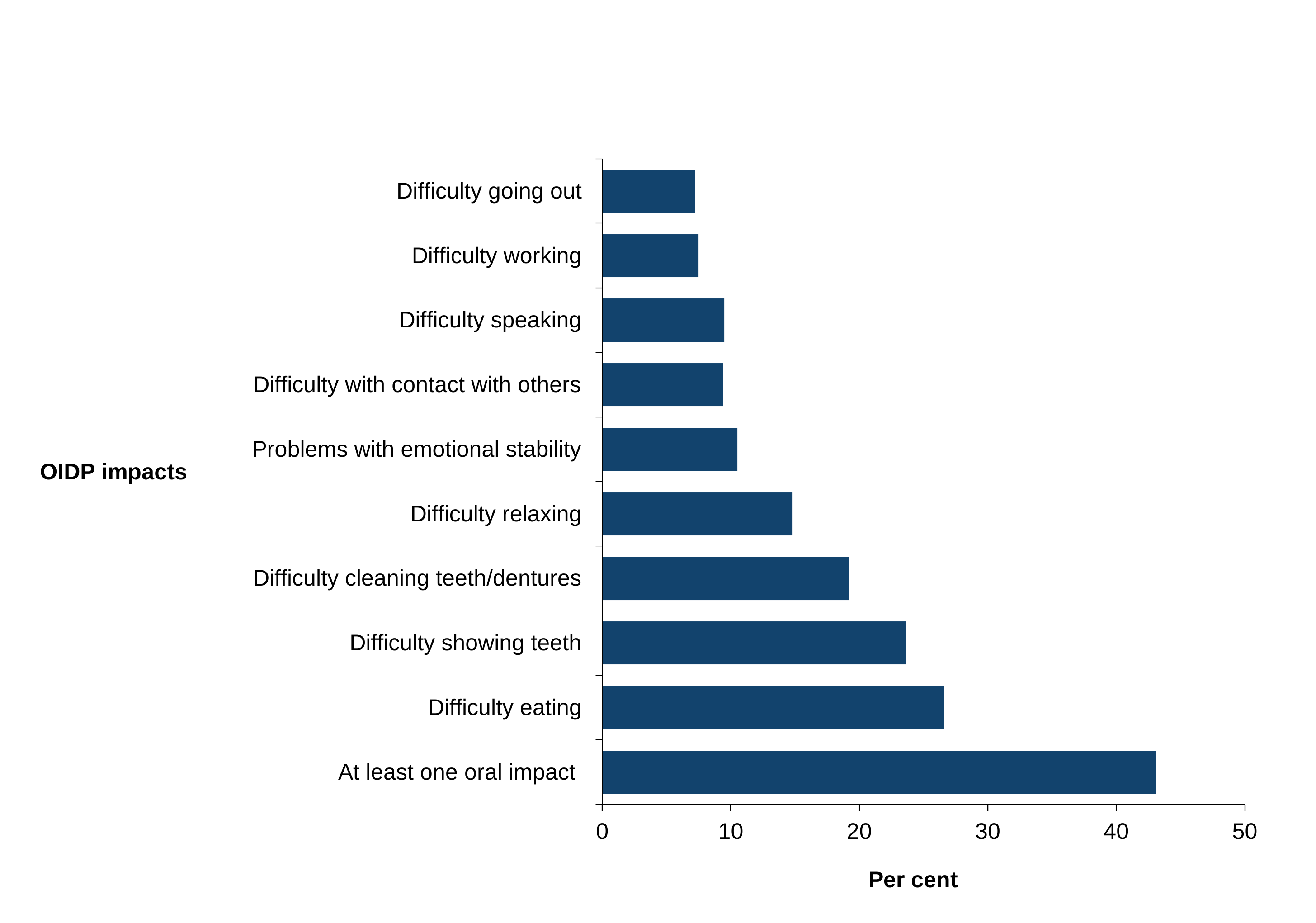
Overall, slightly more than 2 in 5 adults (43%) reported at least one oral impact on the OIDP. The most commonly reported oral impacts were difficulty eating (27%), problems smiling, laughing or showing teeth without embarrassment (24%), and difficulty cleaning teeth or dentures (19%). Difficulty going out, and difficulty working were the least frequently reported oral impacts (7% and 8% respectively). One in 5 adults (22%) reported experiencing at least one severe oral impact. These are illustrated in the bar chart in figure 13 below.
Figure 13: prevalence of oral impacts on daily performance (OIDP) in the past 12 months
Base: all adults.
Source: table 5 in ‘Data tables: self-reported health and oral impacts’.
The mean number of oral impacts reported by adults was 1.3 and the mean number of severe oral impacts was 0.6. The mean total OIDP score was 6.0.
The severity of oral impacts differed by:
- sex
- age group
- NHS region
- household income
- area deprivation
Sex
Although similar proportions of men and women reported experiencing at least one oral impact, women were more likely than men to report experiencing at least one severe oral impact (24%, compared with 19%).
Age group
The proportion of adults reporting at least one oral impact did not vary by age group, and the same was also the case for the prevalence of experiencing at least one severe oral impact. The average number of severe oral impacts experienced, however, was lower in younger and older adults than the middle age groups (0.3 for those aged 75 years and older and 0.4 for 16 to 24 year olds compared with 0.8 for those aged 45 to 54).
There were some variations by age group in the mean total OIDP score. Younger and older adults had lower total OIDP scores than the middle age groups (5.1 for 16 to 24 year olds and 3.6 for 75 years and older, compared with a mean total score of 7.9 for those aged 45 to 54). These mean total OIDP scores by age group are shown in the bar chart below in figure 14.
Figure 14: mean total OIDP score in the past 12 months, by age group

Base: all adults.
Source: table 6 in ‘Data tables: self-reported health and oral impacts’.
NHS region
The proportion of adults reporting oral impacts varied by NHS region as follows:
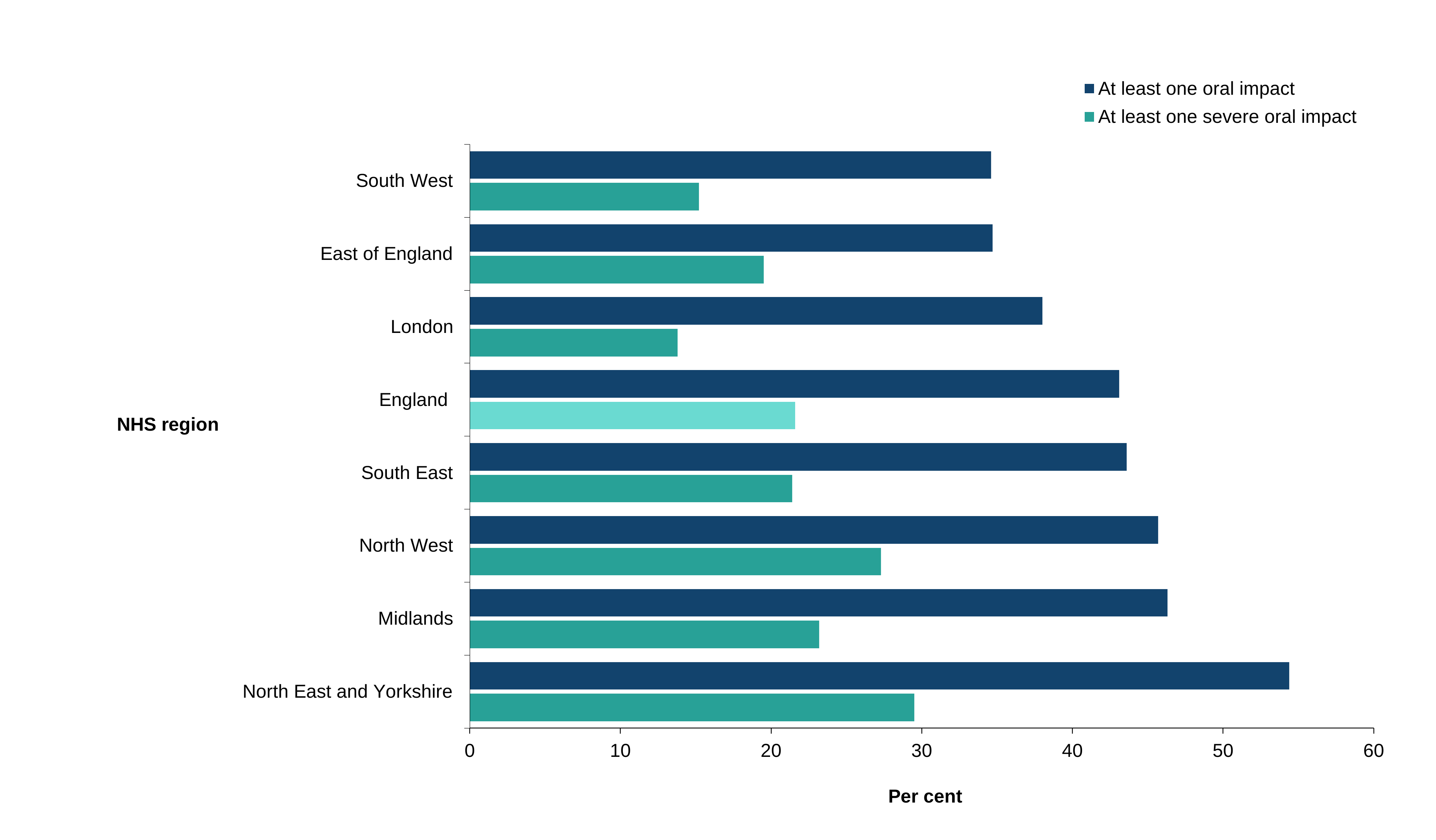
- 35% of adults from the South West and East of England experienced at least one oral impact, compared with 54% from the North East and Yorkshire
- 15% of adults from the South West experienced at least one severe oral impact, compared with 30% from the North East and Yorkshire
These oral impacts across the NHS regions are shown in the bar chart below in figure 15.
Figure 15: prevalence of at least one oral impact and at least one severe oral impact (OIDP) in the past 12 months, by NHS region, with the England average for comparison
Base: all adults.
Source: table 6 in ‘Data tables: self-reported health and oral impacts’.
Household income
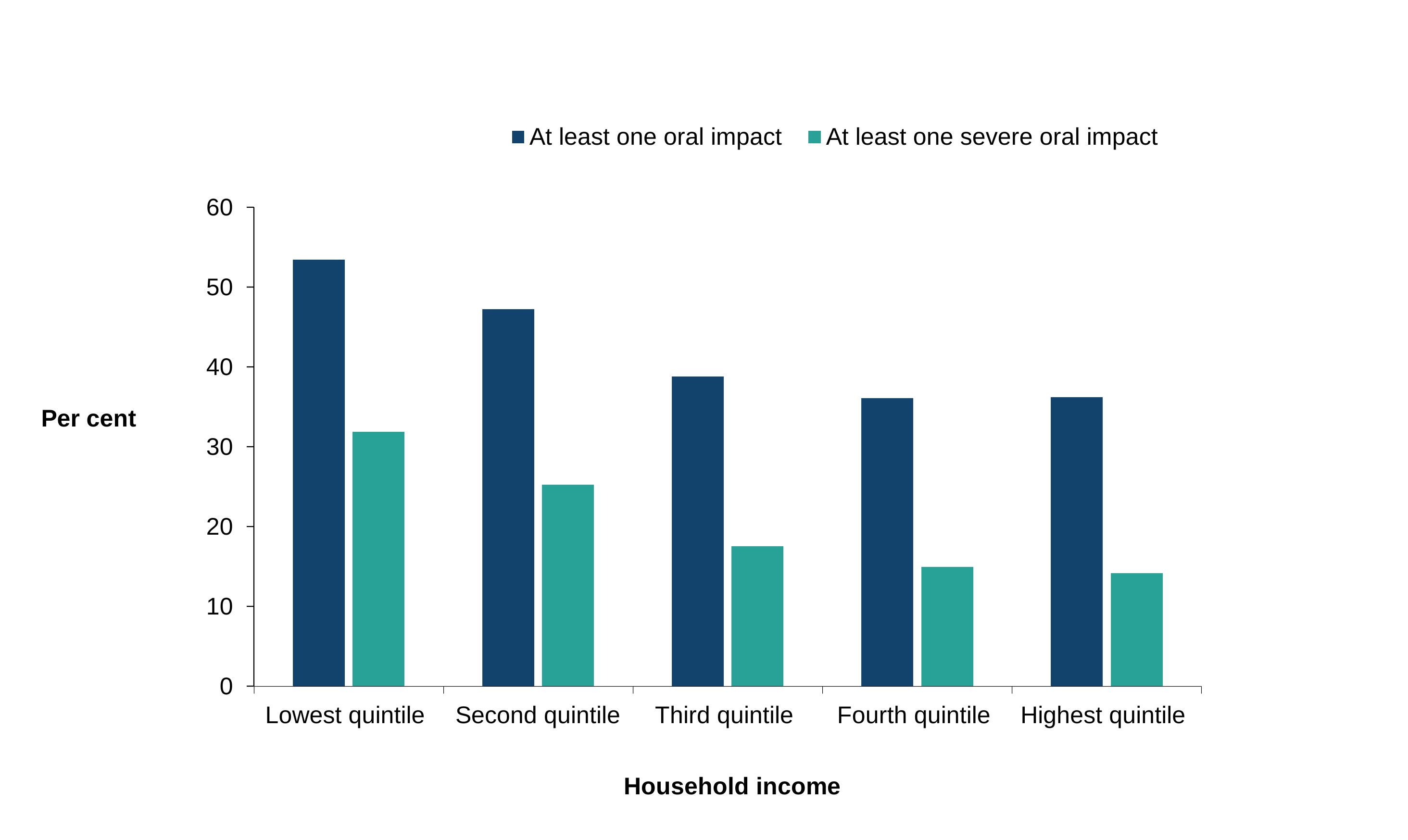
The probability of experiencing oral impacts varied by household income. The prevalence of reporting any oral impacts was socially graded and highest among adults living in households with the lowest incomes. The proportion of adults reporting at least one oral impact was 53% in the lowest income quintile compared with 36% for those in the highest income quintile. These large differences by household income were also seen for the more prevalent oral impacts, which are:
- difficulty eating
- problems smiling, laughing or showing teeth without embarrassment
- difficulty cleaning teeth or dentures
Similar patterns were observed for experiences of at least one severe oral impact: 32% of adults in the lowest income quintile, compared with 14% in the highest quintile experienced severe impacts.
The mean number of oral impacts, severe oral impacts and total OIDP scores also varied by household income:
- in terms of extent, an average of 1.8 oral impacts and of 0.9 severe oral impacts were reported by adults in the lowest income quintile, compared with an average of 1.0 oral impact and 0.4 severe oral impacts for those in the highest income quintile
- similarly, the total OIDP score was considerably higher (indicating worse oral health-related quality of life) among those in the lowest income quintile (9.2), compared with those in the highest income quintile (4.0). The bar chart in figure 16 below illustrates these oral impacts by household income quintile.
Figure 16: prevalence of at least one oral impact and at least one severe oral impact (OIDP) in the past 12 months, by household income
Base: all adults.
Source: table 6 in ‘Data tables: self-reported health and oral impacts’.
Area deprivation
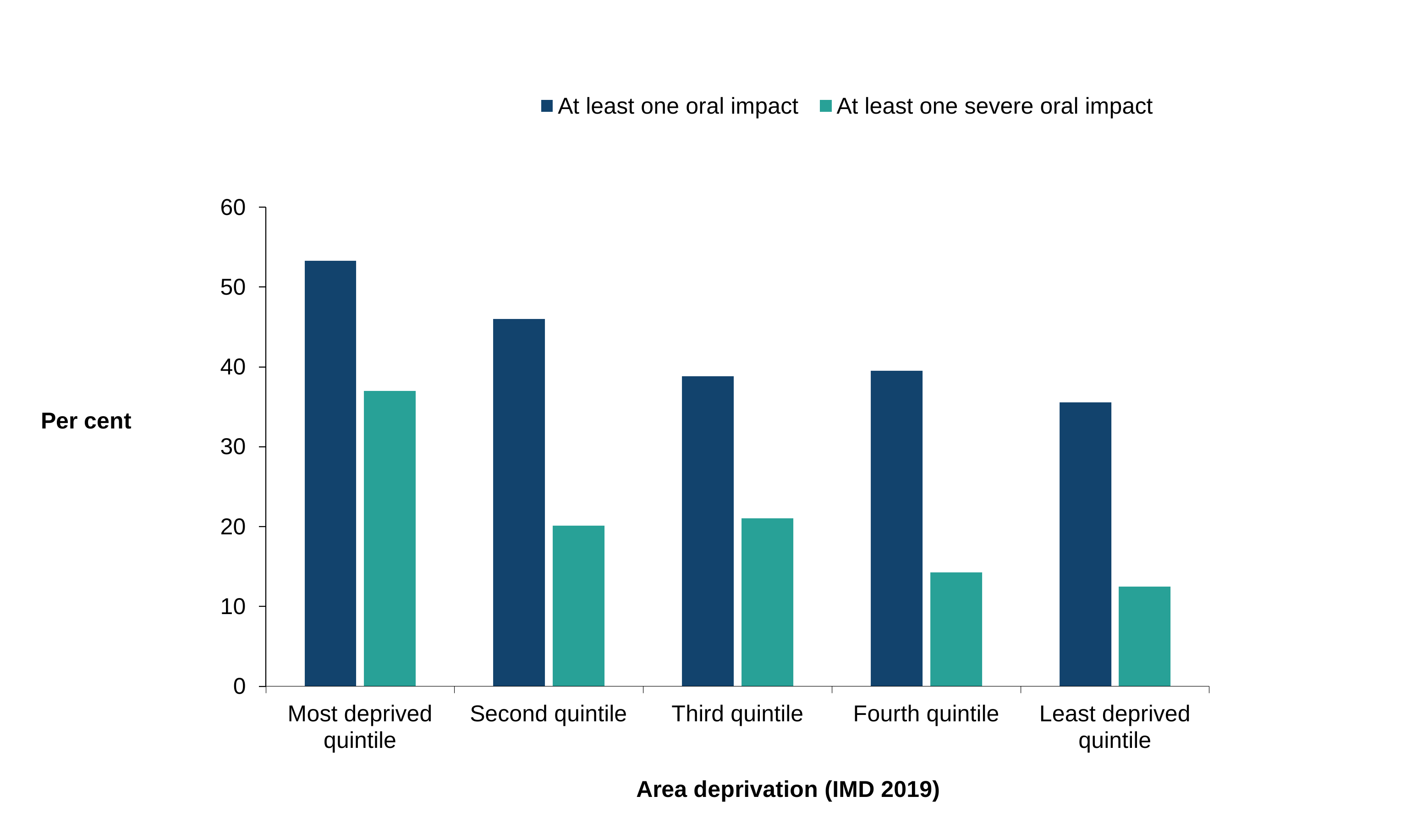
Experiencing oral impacts varied by area deprivation, with higher prevalence of oral impacts, higher extent (that is, the number of oral impacts) and higher total OIDP score (indicating worse oral health-related quality of life) reported for adults living in more deprived areas compared with those living in less deprived areas. Half of adults (53%) living in the most deprived areas reported experiencing oral impacts in the past 12 months, compared with 36% of adults living in the least deprived areas. The pattern was similar for the more prevalent oral impacts, and also for reporting severe oral impacts (experienced by 37% of adults living in the most deprived areas compared with 13% living in the least deprived areas).
Adults living in the more deprived areas also reported a higher number of oral impacts (an average of 1.8 in the most deprived areas, compared with 0.8 in the least deprived areas), and severe oral impacts (an average of 1.0 in the most deprived areas and 0.3 in the least deprived), and had a higher total OIDP score (9.5 in the most deprived and 3.3 in the least deprived). These oral impacts by area deprivation are shown in the bar chart below in figure 17.
Figure 17: prevalence of at least one oral impact and at least one severe oral impact (OIDP) in the past 12 months, by area deprivation
Base: all adults.
Source: table 6 ‘Data tables: self-reported health and oral impacts’.
Trends in OIDP
The source data for the following findings can be found in table 8 of the associated data tables.
The OIDP questions were first introduced in the ADHS 2009 and the same questions were also included in the AOHS 2023, facilitating comparisons across that time period. The prevalence of adults reporting oral impacts through the OIDP was considerably higher in 2023 compared with 2009, indicating that the oral health-related quality of life of the population was worse in the current survey compared with the one in 2009.
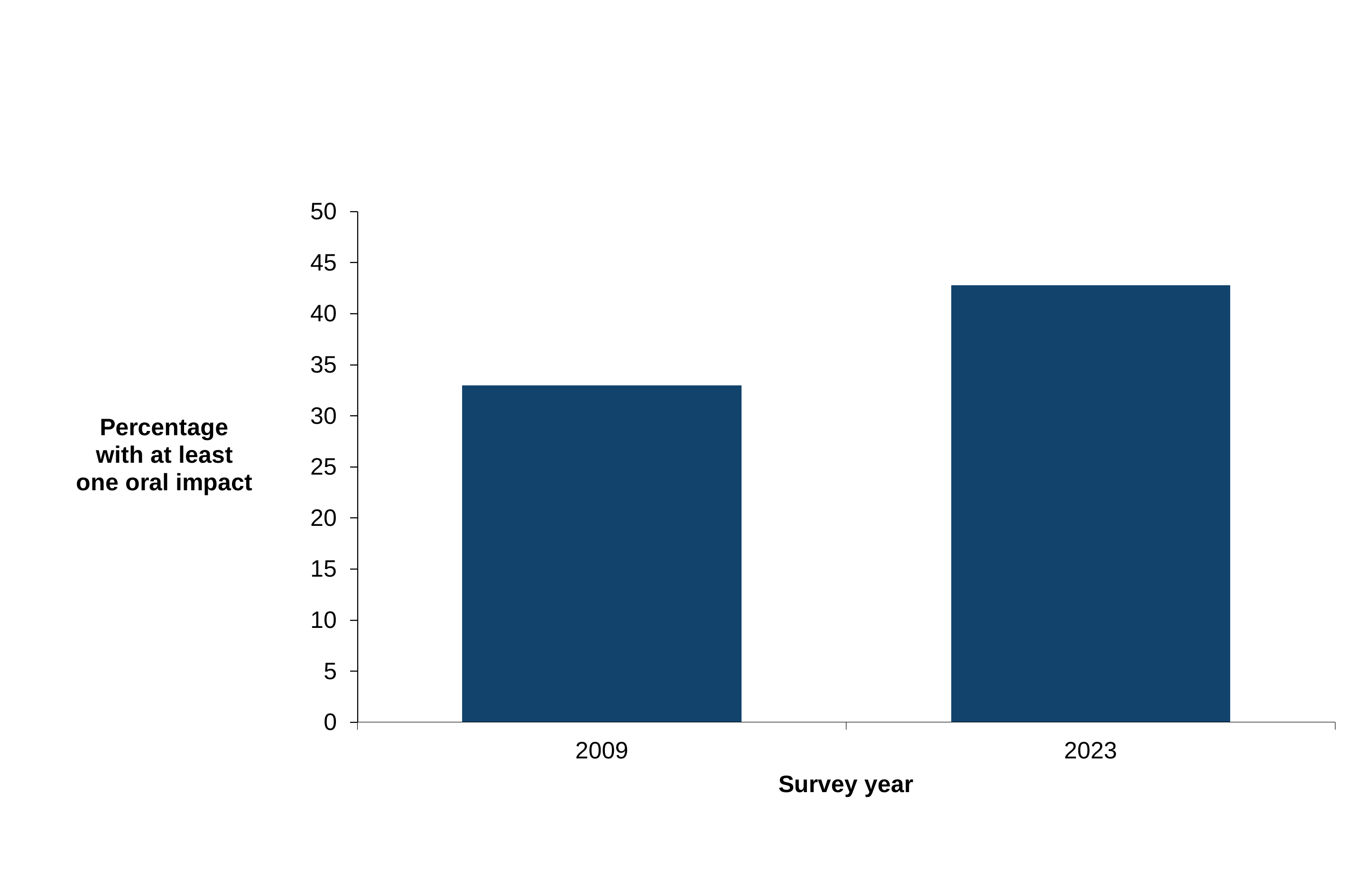
The proportion of dentate adults who reported at least one oral impact increased by 10 percentage points, from 33% in 2009 to 43% in 2023. This is illustrated in the bar chart below in figure 18.
Figure 18: prevalence of at least one oral impact (OIDP) in the past 12 months, England, 2009 to 2023
Base: dentate adults (self-reported).
Source: table 8 in ‘Data tables: self-reported health and oral impacts’.
The prevalence in 2023 was higher than in 2009 for all specific oral impacts, with considerable increases for problems smiling, laughing and showing teeth without embarrassment (16% in 2009 and 24% in 2023, an increase of 8 percentage points), difficulty eating (21% in 2009 and 26% in 2023, an increase of 5 percentage points), and difficulty cleaning teeth (14% in 2009 and 19% in 2023, an increase of 5 percentage points).
Summary
The majority of adults self-rated that their oral health was overall good or very good. However, when specifically asked about the impact of oral health on their quality of life, just under half of adults reported that their oral conditions had negatively affected their quality of life in the past 12 months, and more than 1 in 5 adults had experienced a severe oral impact in the same time period. The most common oral impacts related to difficulty eating, smiling without embarrassment and difficulty cleaning teeth or dentures, thereby affecting important aspects of daily life. Moreover, there were clear and generally large social inequalities, with better oral health and quality of life reported by those who were more socioeconomically advantaged.
Compared with the previous survey in 2009, the prevalence of oral impacts was much higher in 2023, indicating that participants rated their oral health-related quality of life considerably worse than those surveyed 14 years ago.
These main findings should be considered in the planning of services and oral health improvement initiatives.