Women and girls' walking safety
What the government and Active Travel England are doing to make walking safer for women and girls.
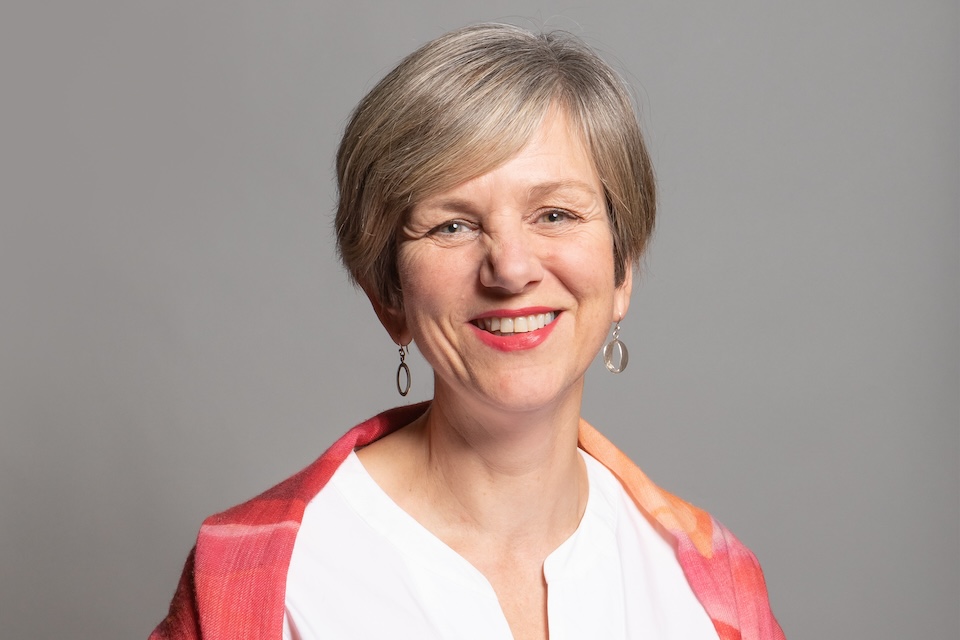
Thank you. It’s a real pleasure to be here. And to be among so many people who are committed to making our streets safer and more welcoming for everyone.
Walking costs nothing.
It needs no special equipment.
It connects us to our communities, to each other, and to the places we live.
And yet, for too many people in this country, walking is not simple or straightforward.
For too many, particularly women and girls, it comes with a calculation – a constant, exhausting mental calculation – about safety, lighting, routes and risk.
Rather than get excited about the destination, too many are forced to fret about the journey.
And, last night, I heard this first hand.
I listened as a group of women and girls in Liverpool shared their personal safety worries when walking, particularly alone after dark.
It cannot be right that women and girls face such barriers – not today, not ever.
So, I want to talk about what we in government, alongside Active Travel England (ATE), are doing to remove them once and for all.
Let’s start with why active travel matters.
It’s rare in my profession for consensus to emerge, but I truly think active travel is the closest you can come to a political no-brainer.
It gets more people physically active. It delivers billions in benefits through reduced mortality and reduced NHS costs. It can reduce demand for GP appointments by millions each year.
The Chief Medical Officer put it plainly in his 2024 report: making walking and cycling more practical and safer could significantly improve the health of England’s population.
Our economic health gets a boost too.
Whether that’s through busier high streets…
Reduced congestion and increased productivity…
Or through the new housing development we want to see, built around people rather than cars.
All this points to the huge national dividends active travel investment can yield.
Yet all this remains out of reach if people don’t feel safe on our streets.
The polling is stark.
Almost 9 in 10 of female respondents reported feeling unsafe when walking alone after dark.
And in the last 12 months, 7 in 10 female respondents changed their route to avoid walking in the dark.
And locally, in the last year, over half of female respondents in the North West experienced unwanted behaviour or harassment when walked alone, 14% higher than the total UK response rate.
These are not small numbers. Nor is this a marginal issue.
This is a systemic barrier preventing millions of women and girls from making journeys they want and need to make.
And the consequences go beyond transport. When women change their routes, avoid going out, or choose a taxi or a car out of fear rather than preference, that has a knock-on effect on their independence and their health. It matters.
So what do we need to do differently?
The answer is not just about adding more CCTV or improving lighting – though those things matter.
It is about fundamentally rethinking how we design streets and other public spaces, and doing so with women and girls at the centre of that design process, not as an afterthought.
Good design considers sightlines.
It considers the placement of trees, benches and bus shelters so that they do not create hidden corners.
It thinks about lighting not just in terms of whether it meets a standard, but whether a woman walking alone at night would feel safe under it, and can see the faces of people around her.
It considers the entire journey – not just the off-road path, but the connection to the high street, the underpass, the car park, the route home from a late-night shift.
And it means listening, really listening, to women and girls, and using that insight to inform design decisions.
Streets and public spaces that work for women and girls work for everyone. That is a principle we need to embed into every scheme, every strategy and plan, and every investment decision.
So, we need to act, and act quickly.
That means raising the standards of design across the country – so that more people, in more places, can choose to walk, wheel and cycle more safely.
So let me turn to the work of ATE – across three broad areas.
First is around guidance.
A new Manual for Streets is in the works.
It’s been a while since it was first published and much has changed since. But its principles remain sound.
Namely that if streets and roads, which make up three quarters of public space, are designed well, we can give people more, and safer, options in how they travel.
I’m also delighted that, in April, ATE is launching new training sessions with authorities and developers on placing the needs of women in girls at the heart of active travel design.
The second area is about listening.
In 5 towns and cities, including here in Liverpool, a safer walking pilot which took place over the winter has already sparked a national conversation about the barriers women and girls face.
This was not a desk exercise. It was about going to those communities and turning conversations into real policy.
And let’s be honest, the talking and listening shouldn’t just end there.
It’s vital that women and girls are consulted at every stage.
Which is why we will not only republish the best practice for community engagement guidance…
But a new technical advisory group will help to ensure new services and guidance genuinely meets the needs of all users.
Finally, the real test is in the infrastructure itself.
We know that higher quality footpaths and street lighting makes journeys safer.
So ATE is increasing its resources to ensure safety and inclusivity are baked into schemes from the start, not bolted on at the end.
And underpinning all of this is a commitment to building capability across the sector.
Because the quality of active travel infrastructure in your area should not depend on whether your local authority happens to have a particularly skilled team.
So ATE will train up elected members and officers across the country, sharing evidence and case studies about what works and why.
Let me end with this.
The scale of violence against women and girls in our country is not just unacceptable – it’s a national emergency.
That’s why we’ve committed to halve violence against women and girls in the next 10 years.
A cross-government strategy has been published, and – right across our public transport network – the Department for Transport is playing its part.
But let me bring it back to active travel. Millions of people have participated in ATE projects – from walk to school programmes to cycle training.
We know there is a nation of walkers and cyclists out there who are willing to make different travel choices, if given the chance.
My job is to give them the confidence to do so.
For me, a large part of our future success will be measured in the life experiences of women and girls.
Whether they have changed for the better. Whether journeys home from a late shift, or a night out, can be made with less plan Bs and plan Cs, less contingencies, and, ultimately, less fear.
That’s the ambition. And that is what we will deliver.
Thank you.