We call on all parties to conflict to protect civilians: UK statement at the UN Security Council
Statement by Ambassador James Kariuki, UK Chargé d’Affaires to the UN, at the UN Security Council meeting on Protection of civilians in armed conflict.
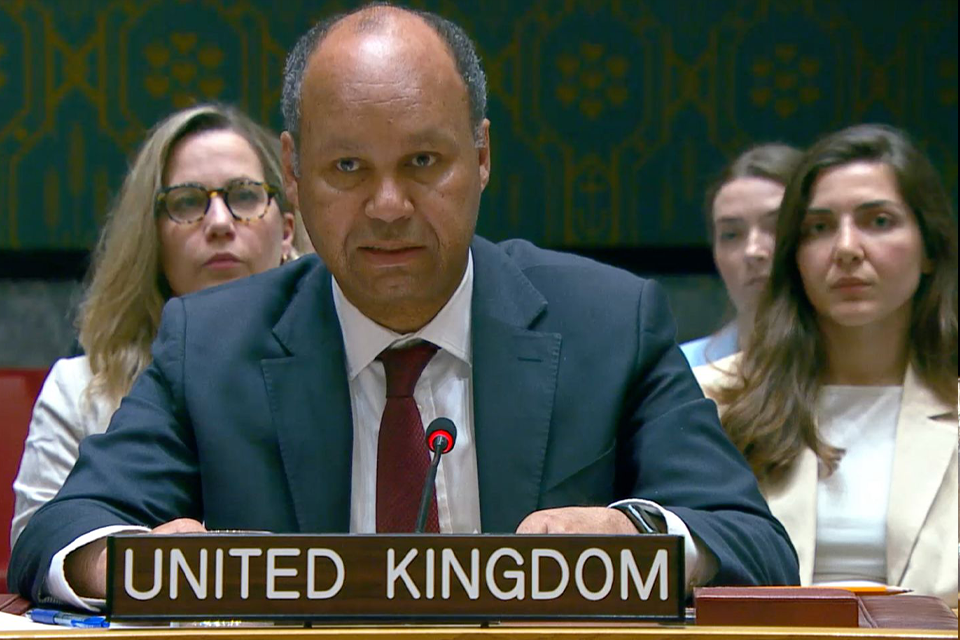
First, it is critical that we press all parties to conflict to not only uphold their legal obligations, but to do all they can to protect civilians and minimise harm.
We are deeply concerned at the Secretary-General’s reporting of 37,000 civilian deaths in conflicts in 2025, with Gaza and Sudan suffering the highest toll.
The scale of reported attacks on medical personnel and facilities is alarming.
This is all the more horrifying as we mark the ten-year anniversary of Security Council resolution 2286, which demanded an end to these attacks.
We call on all parties to conflict to comply with their obligations under international law, including international humanitarian law and international human rights law, to protect civilians.
Second, as conflicts become increasingly complex, we need to hone our tools and evolve our approaches to best protect civilians.
Technological advances, including AI, are changing the way conflicts are fought.
As the Secretary-General made clear, we are witnessing a rapid expansion in the use of weaponised UAVs in conflicts, including in Ukraine, Sudan, Lebanon and the DRC, with reports of the targeting of civilians and civilian infrastructure.
And having listened to the extraordinary intervention of our Russian colleague today, I feel compelled to respond to the hypocrisy. As part of its war of aggression in Ukraine, it has killed over 150 civilians this month alone. Russia is on track to fire more drones into Ukraine this month than any other since the start of the war. Killing dozens, injuring hundreds, and striking homes and civilian infrastructure, including pre-schools.
But technological advances can also support the protection of civilians.
For example, UN peacekeeping missions are harnessing technology to improve situational awareness and protection, and we should continue to support this.
Finally, the protection of civilians depends on our collective action.
All member states, regional organisations, and the UN play a critical role.
We should continue using our diplomatic channels to press parties to conflict for humanitarian access and the protection of aid workers, including by supporting the ICRC Global Initiative.
The United Kingdom will continue using its role in the Council to advance the protection of civilians and accountability.
And we are also proud to have launched, with international partners, the Coalition for Atrocity Prevention and Justice for Sudan to support civilians in one of the most destructive conflicts.
We look forward to continuing this international coordination to support civilians in conflict wherever they are.