Speech for UN-Association 80th anniversary of United Nations General Assembly meeting
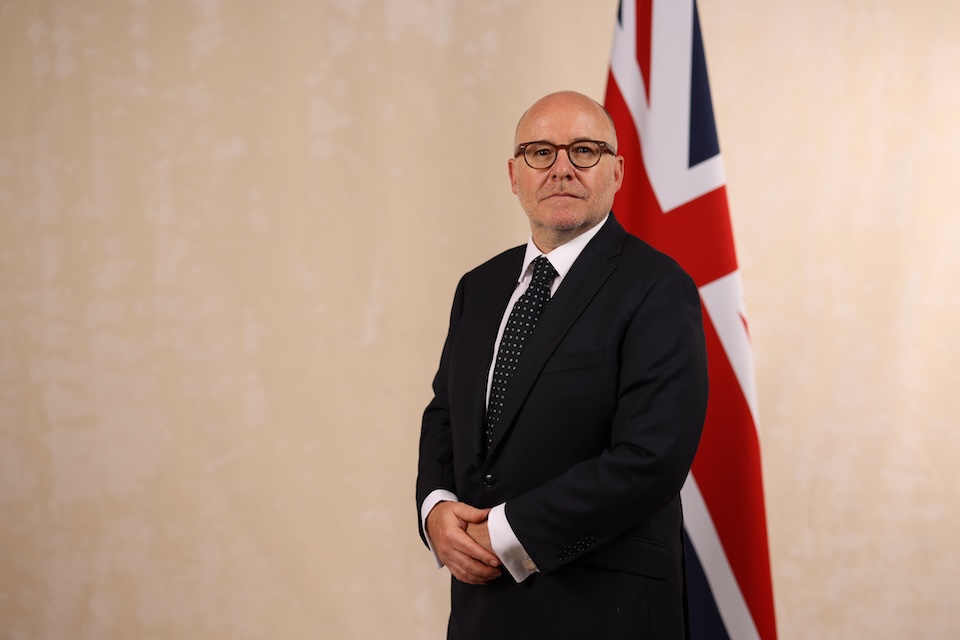
The Attorney General Lord Hermer KC delivered a speech at the meeting marking the UN-Association's 80th anniversary of the United Nations General Assembly
Your Royal Highness, Secretary-General, Madam President, Excellencies, and our wonderful hosts at UNA UK.
Secretary-General, Madam President, welcome to the United Kingdom. Welcome to London, to our wonderful city, and thank you for your powerful remarks.
At the U.N. General Assembly in New York last September, the Deputy Prime Minister offered a personal message of congratulations to the U.N. on its eightieth anniversary from His Majesty The King.
“The King recalled that, on the eve of the first U.N. General Assembly, His Majesty’s grandfather, King George VI, told the delegates gathered in London this:
in the long course of our history, no more important meeting has ever taken place within its boundaries.
Eighty years on, the King observed that:
millions of people across the United Kingdom, the Commonwealth and the wider international community share the view that the UN’s founding principles and the work of its Organisations remain essential, particularly as the world must face new and pressing challenges.
His Majesty said:
Let us reaffirm these principles as the United Nations responds to today’s realities and evolves for tomorrow’s challenges.
Respectfully echoing His Majesty’s words, it is a real honour to be here with you all today, in the very room where, eighty years ago, delegates gathered for the first meeting of the United Nations General Assembly.
At the time, the Trustee of this great hall took some persuading that this was the right venue. The then Foreign Secretary Ernest Bevin prevailed upon them, telling them that for this historic first gathering, “there could be no better place than a House of God, with the atmosphere of a prayer already there”.
Having attended the thanksgiving service this morning, I think he was right.
It is instructive to remind ourselves is that January gathering here in London in 1946 came just five months after the end of the Second World War.
Out of the chaos and bloodshed came a bold new organisation, built on a shared determination to save future generations from the scourge of war, …
…to reaffirm faith in fundamental human rights, to uphold justice and international law, …
…and to promote social progress and better standards of life for all human beings.
It was in the pursuit of that vision that the Charter was forged, and the Universal Declaration of Human Rights was born. Foundational documents that make plain the principles of our modern world.
Their essential insight is this - that the recognition of the inherent dignity of the equal and inalienable rights of all members of the human family is the foundation of freedom, justice and peace in this world.
It was a clarion call, with human dignity and equality at its core.
A declaration that freedom is a right.
That every person, by virtue of their humanity, has protected universal rights.
It is an example of what the United Nations can achieve at its very best.
When we are not measured as big nations or small nations.
Nor wealthy nations or poor nations.
Nor powerful nations, or weak nations.
Instead, stronger, together, nations united as the United Nations.
And for eight decades, the UN Charter has stood alongside that vision.
As a source of inspiration, of course, but as a framework for translating these values into action too.
…
And so, for eighty years, the United Nations has been a beacon of hope.
An organisation founded on the belief that we are stronger when we work together.
It has prevented conflicts, resolved conflicts, delivered lifesaving humanitarian aid, helped countries grow stronger, fairer, and more resilient.
No international body has lifted more people out of poverty, protected more lives from deadly disease, responded to more natural disasters, or done more to uphold human rights.
Today, Blue Helmets stand watch across the world, in Cyprus, the DRC, and the Central African Republic.
Brave UN aid workers continue their work in the rubble and dust in Gaza, in Myanmar, in Sudan, and in so many other places where people are in desperate need of help, where humanity cries out.
And every day, UN agencies make all our lives simpler and safer.
From the aviation standards that keep our skies safe to the telecommunications systems that keep our phones connected.
To addressing emerging technologies like AI and cyber and helping countries prepare for and manage pandemics and other global health threats.
There is simply no other organisation like the UN.
The United Kingdom’s commitment to the UN is as strong today as it was eighty years ago.
An aspect of that commitment is demonstrated through our support for the International Court of Justice, by accepting its compulsory jurisdiction.
The ICJ, as the world’s apex court, demonstrates how international law can help states address the defining challenges of our era, challenging disputes that would have once been settled on the battlefield into a court of law.
But the multilateral system from which we have all benefited so much is under greater strain than at any point since 1945.
The world has become more complex and unpredictable.
Levels of conflict are the highest they have been in decades.
More than 800 million people remain trapped in extreme poverty.
Only a third of the Sustainable Development Goals are on track.
And climate change, once spoken of as a distant threat, is now destroying lives, homes, and livelihoods.
This is not a moment to turn away from multilateralism.
In a deeply interconnected world, our security and our prosperity depend on our willingness to work together.
Global peace, security, and prosperity still depend on a strong United Nations at the heart of that multilateral system.
And it is heartening to know that the overwhelming majority of people in the Global North and Global South want their government to co-operate across borders, because we all recognise the value of interdependence in a globalised world.
But we must face the world as it is, even as we seek to change it for the better.
So, an anniversary like this of course invites celebration, but also reflection.
Eighty years on, we must ask whether the UN is ready for the challenges of today and tomorrow.
We can’t expect the UN to do everything, everywhere, all at once.
At times, many of us have asked too much of it.
What we need is a UN focused on the tasks only the UN can carry out.
We need a UN capable of delivering those more effectively and more efficiently.
As Dag Hammarskjold reminded the world, “the UN was not created to take mankind to heaven, but to save humanity from hell.”
Those words carry as much weight now as they did then.
They remind us that the UN was never meant to be perfect, but it was meant to be indispensable.
And today, more than ever, we must work together to ensure it can rise to that task, whilst remaining true to the timeless values that inspired its foundation.
Reform has been spoken about since the early days of the UN.
But, at this historic inflection point for all international institutions, the time has come for ambitious change – nothing less than a collective vision of UN renewal.
Change that safeguards this organisation we value so deeply and ensures not only that it can survive the many challenges it faces, but emerges stronger, more resilient and more effective in giving practical effect to our shared values.
And we congratulate you on your leadership, Secretary-General, and fully support your reform initiative.
And in line with your vision, the UK wants to see a UN that is more coherent and more streamlined and focused, to achieve yet greater impact.
We want the UN to work as one team on the ground, not as a collection of separate agencies.
And we want the UN to restore its role as the world’s principal mediator and peacekeeper, supported by a modern early warning system that helps prevent conflict before it erupts.
We want a UN developing, promoting, and ensuring compliance with humanitarian law and norms, and supporting local organisations – who know their communities best – to reach those most in need.
And we want a UN that stands firm, always, in the defence of universal human rights.
Eighty years ago, Britain helped build the United Nations.
Today, we stand ready to help renew it, working with the United Nations, with governments around the world, with civil society, and with all of you.
Reinvigorating the timeless shared values on which the UN was founded, by interpreting them in ways which meet the different challenges of today.
Let us not simply ask the UN to do more.
Let us help the UN do what only it can do, and do it even better.
Let us help shape the United Nations ready for the next eighty years.
Let us commit ourselves once again to delivering peace, prosperity, and dignity for all.
As Atlee said there 80 years ago, we can and must succeed.
Thank you.