PM speech at UNGA: 22 September 2026
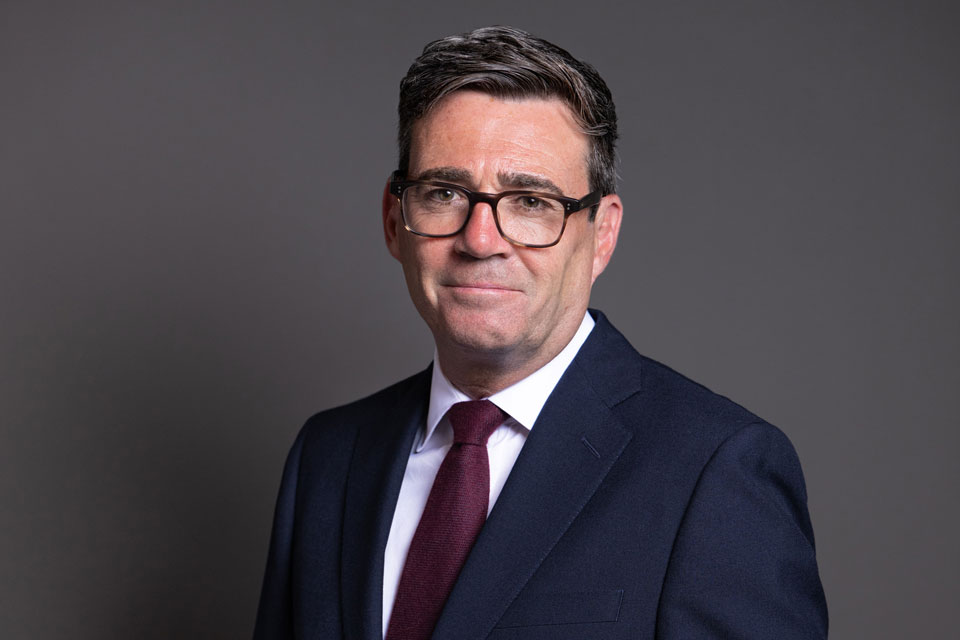
Prime Minister Andy Burnham delivered a speech at the UN General Assembly last night.
Madame President, your excellencies, ladies and gentlemen,
As the new British Prime Minister, I am here today to tell you how Britain will deliver leadership in a changing world for the decade that lies ahead – learning from our experience of the last one.
It is now 10 years since Brexit.
My country has lived through the disruption it brought.
And it has given us a unique perspective that I want to share with you today.
Britain is back.
We are restoring our stability. Building a more dynamic economy – a nation that wants to trade with the world and work together to solve the shared problems we face.
But we have also learned that we need to adapt to meet the challenge of these times.
We need to rebalance power in our country, and bring it closer to the people.
We need to work harder to fight the forces of division and instability which threaten.
Not just through hard power, but through softer, slower means that sow fear and despair.
We need to do more to help people with the everyday cost of living and seize the opportunities that give them hope for the future.
And we need to embrace the incredible potential of technology to improve people’s lives.
That’s what I want to talk to you about this evening – how the world can come through the turbulence of today, to reach towards something better in the decade ahead.
Overcoming the forces of division and instability starts with national security.
So we will keep investing in our defence – meeting our NATO commitments and strengthening European capabilities.
We will be relentless in building up our hard power and deterrence.
But we will not play Russia’s game of trading escalatory rhetoric.
Unlike Russia, we do not seek confrontation.
Instead, we will be prepared, but not panicked. Clear-eyed, but cool headed. And unflinching in defending our people and our allies.
True resilience depends on this military strength.
But the last 10 years also tells us that it is about something deeper as well.
It’s about the strength of the social fabric that binds us together.
There is no national security without a strong, cohesive society.
That’s the starting point for everything we hold dear and everything we want to achieve.
But the fact is that it has been under attack.
In recent years we have seen an industrial-scale assault by hostile actors on the information environment in the UK and that of many of our allies.
Russian agencies have used every means at their disposal to spread lies and disinformation and prey on people’s fears.
They’ve used bots and fake websites.
Falsified newspaper articles.
Forged the branding of 28 British organisations – including universities and the BBC.
They’ve amplified far right narratives.
And we have evidence that they tried to interfere with the 2019 General Election.
We also know that they have tried to stoke tensions and unrest in the wake of horrific events.
The idea that anyone would try to use such things to their advantage is just repulsive – but it is what they do.
The Kremlin spends around £1.3 billion each year on manipulating information.
We’re talking about an insidious campaign that reaches into people’s homes and twists what they feel about their own country and community – creating a narrative of decline, stoking division and sowing despair.
On top of that we have seen cyber-attacks on our companies and institutions.
And we know that AI will multiply the threat.
We have tiptoed around this for too long.
Over the last decade we have given too much ground to those who want to run a negative, corrosive narrative about life in Britain, which bears no resemblance to reality.
Well, no more.
We are going to face the new decade in a different way – with our eyes wide open.
We are going to be much prouder in standing up for our values and the rule of law.
And we are going to help our people to strengthen their resilience – because faced with this information warfare, security starts in every home.
If you’re struggling with the cost of living and your life is not improving – or if you’re a young person not in employment, education or training – then you are going to be much more vulnerable to this kind of influence.
So part of the challenge is to lift our people up and create the opportunities they need.
When inequalities grow too wide, our societies are at greater risk.
So we will work to make life more affordable.
That will be at the heart of a new 10-year Plan for Britain that we will bring forward later in the year.
And we will put in place the architecture we need to stem this poisonous tide.
Today I am tasking our security chiefs to begin work on a new National Centre for Information Defence – to detect, attribute and disrupt these kinds of hostile state information attacks. To support and defend our democracy.
And I know this is a shared challenge.
So we are going to use our experience in the UK – and the fact that we have already been through this shock – to help other countries.
We have already supported Moldova to protect its elections from Russian interference.
As more elections approach across Europe, more nations are grappling with these issues – some for the first time.
So we’re ready to share our understanding of how these actors work, and how we can respond – because this is vital for our collective security and resilience.
To overcome division and instability, we must also find new ways to bring countries together.
We know that we are at our strongest when we unite with others – when we reach across borders to solve shared problems.
Standing here today, I am reminded of the huge human progress that this organisation has led – like the eradication of smallpox or the Universal Declaration of Human Rights.
That is the kind of promise and hope that led Britain to host the first meeting of this General Assembly in London – and led the world to create this institution, these United Nations, our United Nations.
That is the level of ambition that we need now, to renew the UN for our times:
To tackle challenges like improving global health and preventing future pandemics.
To end the wars that are causing so much suffering and instability – including the terrible conflict in Sudan.
And to tackle climate change.
The climate crisis is now a national security threat for countries around the world – as this summer of extreme heat, wildfires and floods has proved beyond doubt.
Britain will continue to lead with others to fight this threat:
To protect our children and grandchildren.
To protect the natural world.
And also to seize the benefits for jobs, growth and reindustrialisation that the clean energy transition can bring.
So we must raise our sights.
And I believe the UK has a unique position as an honest broker to help drive this forward.
We are America’s closest ally.
We have deep ties with our friends in the European Union and will deepen them further.
We work with China and emerging powers like India and Brazil.
We sit on the Security Council. In the Commonwealth. In the CPTPP.
In a divided world, we have the ability to bring people together – and we will.
We are going to step into that role.
And we are going to start with one of the most significant challenges and opportunities of our age – Frontier AI.
AI brings together so many of the most pressing issues before us.
It is already speeding up cancer diagnosis in the UK. But AI has the potential to go further – not just to help prevent and treat cancer but to help cure it.
AI will also be the key to economic growth.
The route to transforming education.
And it will be a vital tool to keep us safe.
I am announcing today that we are developing a new AI defence partnership with the US to protect our critical national infrastructure.
But we know that AI will also be a source of disruption to the way we live and work – and a multiplier of risk.
We’ve all heard the warnings – which we must heed. I know how worried people are.
So we have to rise to this moment.
Fundamental decisions on this technology are too important to be left to chance.
They must be taken by elected governments who serve working people.
And we need to give people the support they need through this change – ensuring that it becomes an engine for reindustrialisation and opportunity as well.
There is a lesson in the first industrial revolution, which started in Northern England two centuries ago.
It was a time of incredible technological progress.
But for workers the disruption brought huge suffering and exploitation. Things got a lot worse before they got better.
So this time we need to get it right.
I believe we’re more than equal to the task.
The UK has some of the best tech and AI talent anywhere in the world.
And when it comes to guarding against the risks, we have our world-leading AI Security Institute – working hand in glove with the US and the leading labs on AI safety.
But we need to go further.
Building on the meeting convened by His Majesty King Charles last week, I can announce today that I am going to put AI at the heart of the UK’s G20 Presidency next year.
I look back at how we responded to the financial crisis back in 2008.
We moved quickly in the G20 and smaller groups to deliver an urgent, practical response.
We came together to agree principles – which everyone implemented at home in a way that was right for them. And it worked.
That is the kind of approach we need now.
So we will bring the right people together on the key issues: delivering on the potential of AI for good, and dealing with the risks.
And we will work towards agreeing a single set of global principles and standards to ensure the transparency and access we need to increase our preparedness – and to ensure that AI development is safe.
This will bring together welcome initiatives from others – like that proposed by Norway this week.
As His Majesty said, the task before us “is not merely to advance technology, but to ensure that it remains firmly in the service of humanity.”
And I want to reassure the British people that ultimately we will do whatever is necessary to protect them – including bringing forward new laws if that is what is needed.
They need to know that we will protect their interests – and we will.
But on its own, that’s not enough, is it?
In this dangerous, turbulent age, it is more important than ever that we give people the power to build their own resilience and do more for themselves.
And give them the platform to stand up for what they believe in.
I am working to rebalance power across all regions of the UK.
And as part of that I have set up a second Downing Street office in Manchester – we call it No10 North.
Outside that office stands a statue of Abraham Lincoln.
It marks the personal connection he made with Manchester, and the bond between our two nations. A bond which he described in a letter to working people of the city as “perpetual.”
This was not due to some military or material support.
There was no quid pro quo.
It was because Manchester’s humble mill workers took a principled stand.
During the American civil war, despite the hardships it brought them, they refused to touch raw cotton that had been picked by slaves.
In 1862, people with little power used it to help those with none on the other side of the world.
The best change is change like that, bottom-up change led by people.
And whatever distorted view social media offers today, the world is still full of good and decent people who are ready stand up for what is right.
I see that shining through all the time.
Nothing brings the British people together across age, race and class more than their hatred of injustice – the misuse of power against the powerless.
We will always stand for the underdog against the bully.
That’s why we are so united behind Ukraine.
And let me say, we salute the Ukrainian people.
They are showing depths of resilience and courage that is an inspiration to the whole world.
I was in Kyiv last month, and it gave me a glimpse of life under Russian attack.
I went to a bustling market – just a normal scene from any European city – the traders singing the praises of their products, pushing into my hands peaches and plums from Odesa.
But their stalls were out on the street because the market hall had been destroyed.
In the background there were burned out cars.
Behind us was a building that had taken a direct hit just a few weeks before.
I met people riding the metro home from work – people just getting on with their lives.
But at night those same metro stations double as shelters for thousands for people – from the elderly to little kids, some who have known nothing but war.
People told me about the freezing conditions in the stations last winter, when temperatures dropped below minus 20 degrees outside.
Meanwhile Russia was targeting their energy infrastructure, trying to make them suffer even more.
We can’t let them do that again this winter.
So we’re working to help Ukraine protect their skies and civilians.
We’re leading the charge in raising the cost for Russia of continuing this senseless and illegal war.
The Graham Bill which President Trump signed last week will make a huge difference to that effort.
And we will support Ukraine to repair and protect the heat and power plants that Kyiv will depend on this winter.
It is right we provide that support. But we should call Russia out – this time and every time.
Everyone in this room knows that strikes on civilian infrastructure are explicitly forbidden by international law.
Yet we stand here in the UN, announcing funding to mitigate the effects of these war crimes, which we reliably expect to be perpetrated – yet again – by a permanent member of the Security Council.
It must end.
Russia could choose a different course tomorrow: accept a ceasefire, come to the negotiating table.
I urge them to do so.
But until then, we will stand with Ukraine – stronger than ever, for as long as it takes.
This is about upholding the UN Charter and the rule of law.
We will stand firm in the face of any threats and challenges to the rule of law.
Not just from Russia, but also from others, including where they threaten the rights of British territories to remain British – such as the Falkland Islands.
That’s why we’re also working with France and other partners to support freedom of navigation in the Gulf.
And that’s why I have acted on the Middle East.
Just eight weeks into becoming Prime Minister, working with my Foreign Secretary Ed Miliband, I comprehensively reset our position. And we built an international coalition of countries to come with us.
The terrorist attack on Israel on 7th October 2023 was utterly horrific. I have condemned it in the strongest possible terms.
We continue to condemn Hamas. And we stand with Israel in the face of the ongoing threats – including from Iran, against Israel and Jewish people around the world.
But this does not justify the Israeli government’s actions in Gaza or the West Bank.
Far too many people have died – including so many children.
Far too little aid is getting in.
And it has gone on for far too long.
We will not stand by as the horrific suffering continues to grow and the prospect of a two-state solution – the best hope for peace and stability for both nations – comes under attack.
Last month, Israel issued tenders for the construction of the E1 mega settlement – which would drive a wedge through the West Bank and threaten to put a viable Palestinian state beyond reach.
It cannot be allowed to happen.
So we have acted:
By banning trade in goods with illegal settlements.
Recognising that the Israeli occupation of Palestinian territory is unlawful.
And sanctioning those taking part in the construction of illegal settlements.
We want to see the suffering and death finally come to an end.
We want to see Israeli and Palestinian people living side by side in peace and security.
And we will do all we can to keep that can keep that possibility alive.
And look – we live in an age of low trust in politics.
If we were to continue to talk about the two-state solution, but fail to back those words with deeds, that trust will fall even lower – and our enemies will seek to exploit the alienation that follows from that.
We won’t let that happen.
So, Your Excellencies, ladies and gentlemen,
This is the kind of leadership Britain is here to bring.
We need to recommit together to make the decade ahead of us better than the last.
My message to our partners around the world is this:
You can count on us.
Count on us to stand up for those long-standing British values of fairness and justice – our shared values – and for the UN Charter.
Count on us to fight racism, discrimination and the abuse of power wherever we see it.
Just as those Manchester cotton workers did in the nineteenth century, and the country did in the fight against fascism in the twentieth century.
Count on us to bring people together.
Not to point towards old problems, but to work towards new solutions for the 21st century.
Count on us to meet fear and division with unity and hope.
Thank you very much indeed.