PM statement on international affairs and cost of living issues: 19 January 2026
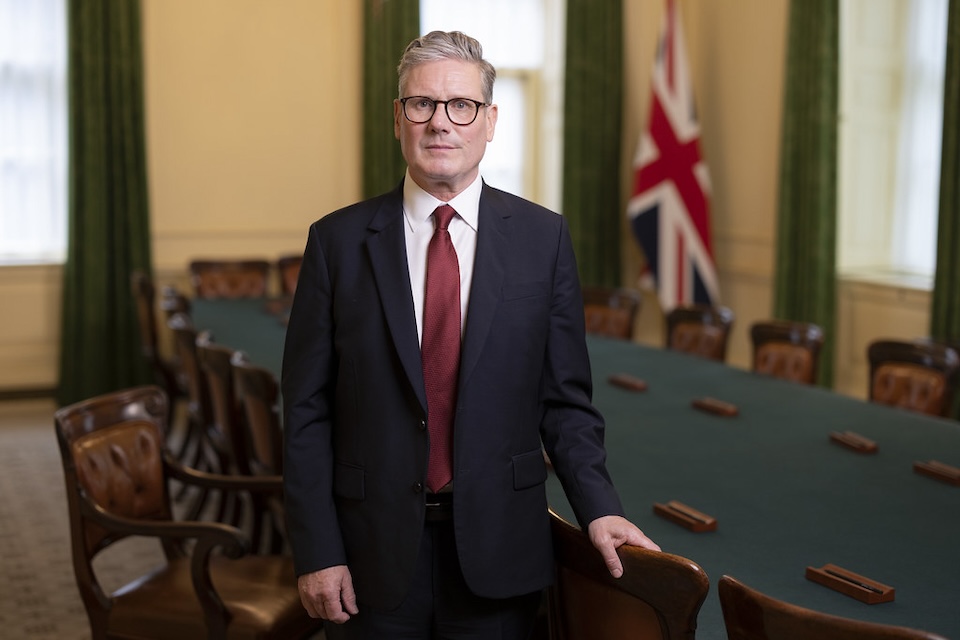
Prime Minister Keir Starmer's remarks at the press conference in 9 Downing Street this morning (Monday 19 January).
The world has become markedly more turbulent in recent weeks.
Events are moving fast, and in moments like this, what matters most is being clear about the values and the interests that guide us, even as circumstances change.
The United Kingdom has a long history. Our values were not improvised - they were built patiently over time.
And while we are pragmatic in how we pursue our interests, we are resolute in defending those values when it matters.
So let me begin with the United States.
The UK and the US are close allies and close partners. That relationship matters profoundly - not just to our security, but to the prosperity and the stability that people here at home depend on.
Under President Trump, as under previous Presidents, we are determined to keep that relationship strong, constructive, and focused on results.
And that approach is delivering.
Through sustained engagement, we have seen significant US investment into the UK economy, running into the hundreds of billions of pounds, supporting growth, skills and jobs right across the country.
And our cooperation on defence, nuclear capability, and intelligence remains as close and effective as anywhere in the world - keeping Britain safe in an increasingly dangerous environment.
We have secured good trading terms in key sectors, including cars, steel, aerospace and life sciences - protecting British jobs and manufacturers.
That is why we take the approach that we do. Because it delivers concrete outcomes in the national interest.
I talk regularly with President Trump. My team is in daily contact with all the key figures in his administration. These relationships matter, they deliver concrete outcomes in the national interest.
Mature alliances are not about pretending differences don’t exist; they are about addressing them directly, respectfully, and with a focus on results.
On Greenland, the right way to approach an issue of this serious is through calm discussion between allies. Let’s be clear, the security of Greenland matters and it will matter more as climate change reshapes the Arctic.
As sea routes open and strategic competition intensifies, the High North will require greater attention, greater investment, and stronger collective defence.
The United States will be central to that effort, and the UK stands ready to contribute fully alongside our allies through NATO.
But there is a principle here that cannot be set aside because it goes to the heart of how stable and trusted international cooperation works.
And so, any decision about the future status of Greenland belongs to the people of Greenland and the Kingdom of Denmark alone. That right is fundamental, and we will support it.
Denmark is a close ally of the United Kingdom and of the United States - a proud NATO member that has stood shoulder to shoulder with us, including at real human cost, in recent decades. Alliances endure because they are built on respect, and partnership, not pressure.
That is why I say the use of tariffs against allies is completely wrong. It is not the right way to resolve differences within an alliance. Nor is it helpful to frame efforts to strengthen Greenland’s security as a justification for economic pressure.
Such measures hurt British workers, British business and the British economy and that’s why I’ve been so clear on this issue.
A trade war is in no one’s interest and my job is to act always in the UK’s national interest. That is why yesterday I spoke to President Trump, to European leaders and to the Secretary General of NATO, to find a solution rooted in partnership, facts and mutual respect.
Because that is how strong alliances protect shared interests.
The same is true on other issues. In the Middle East, we welcome President Trump’s focus on sustaining the ceasefire in Gaza and moving onto Phase 2. We are open to participating constructively in such efforts.
On Ukraine, I will be brief. We strongly support efforts to bring the killing to an end and to secure a ceasefire as soon as possible.
We recognise President Trump’s role in pushing that process forward, and we will work closely with the United States, Ukraine, and our other allies to apply pressure where it belongs: on Putin.
Finally, let me say why all of this matters so directly to people here at home.
In today’s world, geopolitics is not something that happens somewhere else.
It shapes the cost of energy, the price of food, the security of jobs, and the stability that families rely on to plan their lives.
When war drives up fuel prices, it is households who feel it first.
When supply chains fracture, it is small businesses and working people who absorb the shock.
And when instability grows, it is rarely those with the most power who pay the price.
That is why this Government’s approach is rooted in a simple belief: that we must use every tool of government - domestic and international - to fight for the interests of ordinary people.
At home, that means active government.
It means taking responsibility for economic stability so that inflation is controlled, interest rates come down, and family budgets are protected.
It means stepping in where markets fail, strengthening resilience, and ensuring that global shocks do not always land on the same people, in the same places.
The people least able to withstand them. That is why we’ve taken action to reduce energy bills, to freeze rail and prescription charges.
But tackling the cost of living today also means engagement beyond our borders.
It requires shaping the world around us, not retreating from it.
It requires strong alliances, steady diplomacy, and rules that reduce uncertainty rather than amplify it.
That is why our commitment to international law and to alliances founded on trust is not abstract or ideological.
It is practical.
It is about stability, predictability, and fairness - the conditions that keep prices down, jobs secure, and economies resilient.
This is what active government looks like in an age of uncertainty: steady at home, engaged abroad, and always focused on protecting the people that we serve.
Britain is a pragmatic country. We look for agreement. We believe in partnership. We prefer solutions to slogans.
And we will not indulge in commentary and gesture politics that harm the British people.
But being pragmatic does not mean being passive.
And partnership does not mean abandoning principle.
That is why it’s important to be clear about who we stand with, what we stand for, and where our interests lie.
Now this is a moment for the whole country to pull together.
So I warmly welcome the support we have had with regards to Greenland and the proposed tariffs from the Leader of the Opposition. I thank her for her support.
And moments like this, there will always be people who reach for the performative, who think an angry social media post, or grandstanding is a substitute for hard work.
That’s an understandable instinct. But it’s not effective, it never has been.
It may make politicians feel good, but it does nothing for working people whose jobs, livelihoods and security rely on the relationships we build across the world.
So to conclude:
We will work with our allies – in Europe, across NATO, and with the United States.
We will keep dialogue open.
We will defend international law.
And we will use the full strength of government - at home and abroad - to protect the security, living standards, and future of the British people.
That is the approach I will take as Prime Minister.
And that is the responsibility this moment demands.
Thank you.