Minister for Defence Readiness and Industry, Luke Pollard MP, keynote speech at AGF Defence Summit, Farnborough International Air show.
Minister Pollard highlighting record spending on air power, drones, and innovation, and publishing a new SME Action Plan to grow Britain's defence industry.
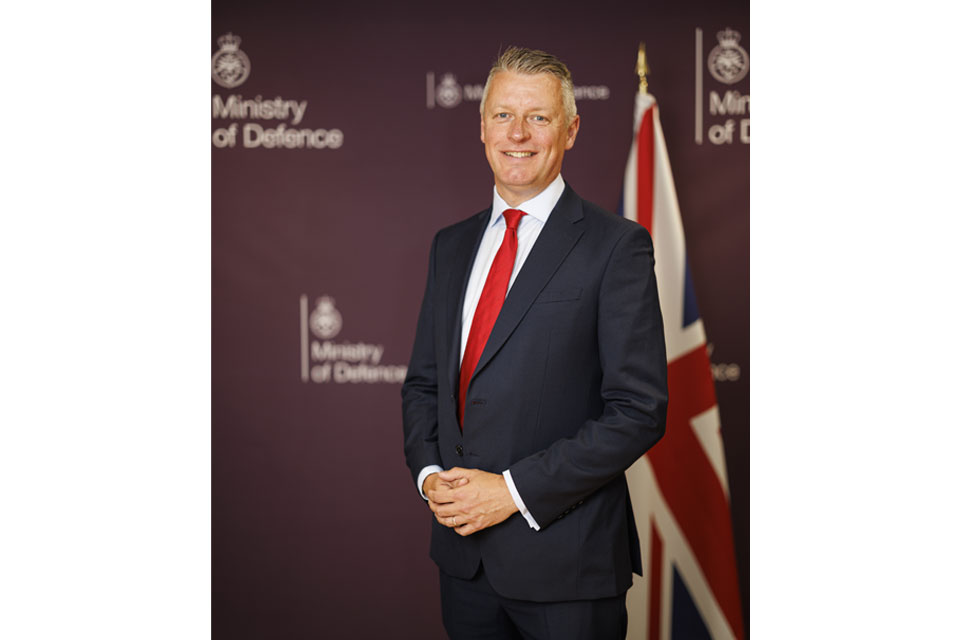
It’s always nice when there’s a reshuffle on — that Kevin still hasn’t got my job title quite right after a year in the job, but thank you.
Colleagues, allies, partners, friends, good morning. It is good to see you all here today and thank you to everyone at AGF for the chance to address you, and apologies for giving you the fright, as you have a minister who has not yet been confirmed in his place speaking on a platform, and so I appreciate it. I’ve left my phone on loud at the back of the room, so if the PM rings, you’ll all be able to hear it. Don’t worry.
So yesterday in Downing Street, our new Prime Minister set out his commitment of honouring our commitment to defence and our international partners. Our NATO commitments top that list for good reason and I’m confident I won’t be the last person today to refer to the Eastern Flank as the front line of our security here in the United Kingdom, which is why as we speak the United Kingdom has troops stationed in Estonia, Typhoon aircrew in Romania, and a carrier strike group in the North Atlantic providing deterrence alongside our NATO allies against the evolving threat from Russia. And I thank each and every one of our armed forces for their professionalism and their service to our country.
Now, today I want to briefly set out how the Defence Investment Plan is boosting our warfighting readiness and enabling us to build Europe’s first sixth generation air force which will be more capable of protecting NATO’s borders for decades to come. I’ll also set out what we are doing to support other front lines that is critical to our security, that’s the front line of innovation and production of edge and mass that runs through our offices, our labs and our factory floors to our defence and aerospace sector’s ability to deliver for our armed forces.
Now, you will have seen the DIP was backed by £298 billion pound down payment over the next four years to deliver the 62 recommendations of the Strategic Defence Review. It will transform our armed forces for the future of warfighting, and it provides a clear long-term demand signal for industry and importantly for investors as well.
And as the son of a submariner and a very proud Navy brat, can I also say proudly that the Royal Air Force and the aerospace sector were big winners from the Defence Investment Plan as well. The RAF has been strengthened by our £31 billion pound investment into air and space over the next four years and that investment will upgrade and sustain our RAF Typhoon fleet well into the 2040s. It will lay the ground for our first F-35As, which will be compatible with NATO’s nuclear mission and provide a long overdue additional rung on our escalation ladder, and it will also propel the design and test phase of GCAP. And spoiler alert, there’s some good news coming on GCAP later today.
Our DIP investment will also sustain our transporter fleet of A400Ms, Voyagers and C-17s. And the DIP will fully recapitalise our jet training system that will ultimately deliver brand new aircraft for our Red Arrows.
And as I unveiled last week at the Global Air and Space Chief Conference, our Defence Investment Plan will also deliver Europe’s first uncrewed combat jets through our StormFighter Collaborative Combat Aircraft programme. StormFighter autonomous jets will act as both a guardian angel and an attack dog for our Typhoons, F-35s and future Tempest jets, providing them with new levels of lethality and survivability. And I know the new Defence Secretary will have an exciting announcement to make on that tomorrow about the timeline for that programme, but no spoilers from me I’m afraid.
Now in total across the Defence Investment Plan, we’re investing £5 billion in drones and other advanced uncrewed systems, that’s an increase of £1 billion on our previous plans.
Now in parallel we are also backing defence innovation because to maintain our edge we need to make sure that we’re investing in the latest capabilities, and that’s why we have a new ring-fenced annual budget for defence innovation of £400 million a year and an additional target to spend at least 10 percent of the annual equipment budget on novel technologies. Now these investments and policies are helping to nourish our defence innovation ecosystem putting UK aerospace at the leading edge of autonomous combat air power.
Now we want to create a virtuous circle for our security and our economy with more innovative platforms attracting more orders from our allies and a more resilient UK defence industrial base delivering more defence jobs. Defence is an engine for growth. It’s also the ability to reindustrialise, providing good careers for young people in every single nation and region of our country. It really does act as an engine for growth and we should be proud of that, and all of you should be proud of your contribution that you make.
Now I want to double down on that commitment to invest in the best and brightest British companies and precisely because of that we’ll need to be spending more on new novel technologies and filling the capability gaps that we inherited. That’s why today we’re awarding a £20 million pound contract to Lockheed Martin UK and their collaboration with SMEs to rebuild Britain’s sovereign hypersonic target capability, filling a gap of more than a decade. This investment in advanced capabilities will need to test and strengthen our air defences. It will support our small businesses and around 60 skilled jobs in Bedfordshire and inject £2 million pounds into the supply chain including into multiple UK SMEs that will benefit.
Now it’s a further signal that defence is returning to some of the more demanding frontiers of aerospace technology, and we want British businesses of every size to be part of that journey. There are around 12,000 SMEs involved in defence in some form, there should be many more that don’t yet know they’re defence companies able to sell into defence. Over the coming years I want our SMEs to provide the agility defence needs to be warfighting ready, to be mission ready by 2030, spreading jobs, opportunity and wealth across all parts of the UK, and this government is on a mission to help them grow.
I want the UK to be the best place to start and grow a defence company. And today I’m proud that we’re publishing our Defence SME Action Plan, delivering on the government’s industrial strategy commitment to do such a thing, our defence industrial strategy, and living up to the commitments to publish one that we announced in the DIP. Our action plan is a blueprint to remove barriers, open up supply chains and increase spend with SMEs. And it will be delivered by a newly launched Defence Office for Small Business Growth.
This government has set out an ambitious target to increase MOD spending with SMEs by £2.5 billion by May 2028. We won’t achieve that by doing the same things as we did before. We will achieve that by innovating and reforming our processes, and that action plan will set out the steps to help us get there.
Taken together, our record defence investment, our determination to spend more of a rising defence budget with UK-based firms, and our tailored support for SMEs, innovation and exports, in an era where defence spending is growing globally, makes this a golden age for UK defence industry.
So, my challenge today to business and investors is pretty straightforward. Defence knows where it’s going. The demand signal is now very clear, and we want you to come on a journey with us, because we must be honest with ourselves that we can’t deliver the industrial resilience that this dangerous age demands through more UK government contracts alone. Our ambition for the defence and aerospace industries is much greater than that.
We need a shared commitment to developing warfighting capabilities, winning more export campaigns together and delivering growth. We’re backing British with 94 percent of the major defence contracts awarded since we came to office going to UK-based firms and we’re investing £182 million pounds in defence skills. We’ve published our investment plans for the next decade and we’re driving forward some of the most cutting-edge capability partnerships with our allies, with more to come, so that you can invest alongside us with confidence and turning a domestic opportunity into a global defence success story.
The UK will continue to innovate for UK armed forces but will continue to drive new innovations in joint projects with our friends. Through new initiatives like our Defence Industrial Joint Council, we will be forging new partnerships to accelerate the flow of information from the front line to the drawing board to the production line, partnerships that are compressing innovation and procurement cycles, because it currently takes too long to procure. We’re targeting reduced contracting times in the defence industrial strategy and we’re going after that with everything we’ve got.
And all around us here at Farnborough, we can see UK defence innovation. UK defence companies, large and small, are mobilising, proof that we can build a sector that is more innovative and more resilient and better prepared for the challenges of a more dangerous world, whether that’s on NATO’s Eastern Flank, whether that is defending the UK homeland, or anywhere else.
We stand ready to support our allies, grow our economy and keep Britain safe. Thank you.