Baroness Chapman's speech on transforming scientific discovery at the Global Partnerships Conference: 20 May 2026
Speech by Baroness Chapman on transforming scientific discovery on Day 2 of the Global Partnerships Conference
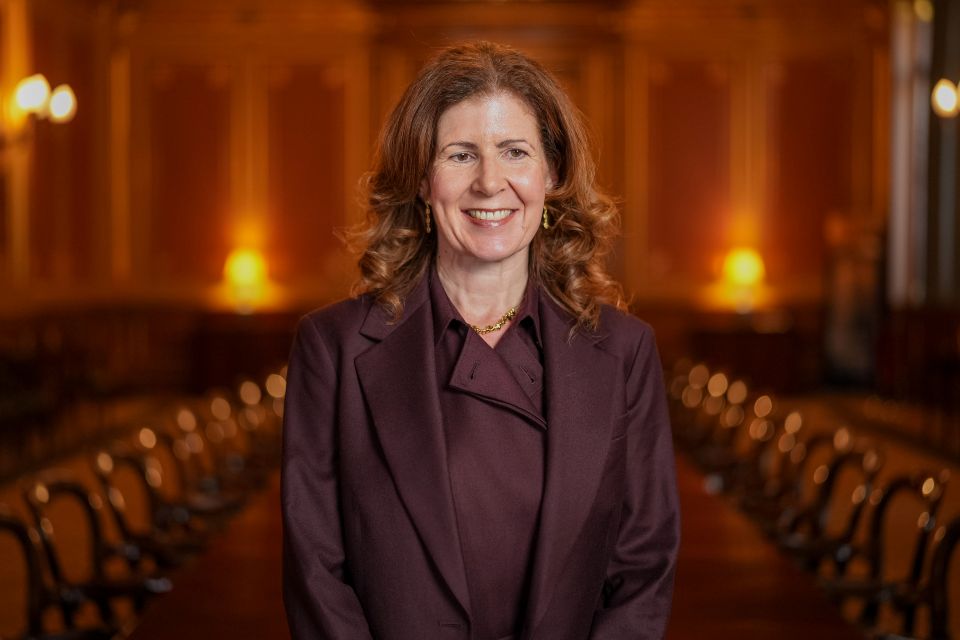
It’s great to be here to talk about such a fascinating and transformational issue. Today you’ll hear from people who understand this better than I do. It’s clear there are opportunities. But I worry about the digital divide and whether AI will be utilised for the benefit of everyone. The decisions we make now will determine what is possible, or whether AI increases the divisions we have now.
We have heard how international development efforts are grappling with a paradigm shift in aid, escalating interconnected global challenges, and a revolution in technology.
Artificial intelligence is not a silver bullet. But it is opening up a world of possibilities.
AI is transforming science and accelerating breakthroughs, with enormous potential for improving the lives of people in poverty.
New drugs. More accurate weather predictions and early warning of hazards. More resilient crops. Cleaner, more affordable energy.
This is genuinely exciting stuff.
New solutions are within reach, and we’ll hear shortly from our partners at the cutting edge of these efforts.
But we know that technology alone is only ever a part of the solution.
To make a real difference, it needs to come together. With inspiration from collaborating across borders and disciplines. With ingenuity and persistence in compiling data. And with targeted resources and expertise to supply the right infrastructure.
All of this means working in diverse partnerships – between countries, policymakers, researchers and the private sector.
And that’s why we are proud to be collaborating with some of the brightest minds across Africa and Asia since launching our ‘AI for Development’ programme at the AI Safety Summit in Bletchley Park.
Working with Canada’s International Development Research Centre and a wide range of partners, we are supporting locally-led AI ecosystems, championing responsible, inclusive AI – and crowding in partners to coordinate scarce resources and channel them to where the evidence demonstrates real impact.
These partnerships are already producing fantastic innovations.
Millions of women in Kenya can safely manage the risk of their pregnancies thanks to Jacaranda Health’s AI-enabled chatbot. You can go and see the work they are doing demonstrated at a stand we have here at the Global Partnerships Conference.
Pupils with visual impairments in Nigeria can access education through assistive technologies.
Farmers in Uganda can get advice in their local languages on how to protect their crops and boost their yields.
These are potentially life-changing developments.
But as we begin to see AI bring about transformative strides at the cutting edge of science, we must widen our partnerships to answer new questions:
How will we ensure these breakthroughs aren’t limited to only the most commercially lucrative areas of enquiry?
How can we ensure AI helps us cure diseases for everyone, and that it doesn’t just create more so-called ‘diseases of poverty’?
And how can we create an inclusive conversation about which global challenges matter most for humanity?
I hope we can approach today’s discussions with these questions in mind.
But before we do, I am delighted to announce today a new programme on AI for Development Science Breakthroughs – a collaboration between the Foreign, Commonwealth and Development Office, and the UK’s Department for Science, Innovation and Technology.
We are announcing new research which will rigorously test new AI approaches to unlock breakthroughs – from weather prediction for hazard warning, to crop engineering for food security, to drug discovery for better health outcomes.
With this modest investment, we hope to plant the seeds that will blossom into new trees of knowledge (that could have been written by Chat GPT that one – I’m sure it wasn’t… but it might have been!).
But to realise this potential we need to work together to build inclusive partnerships on harnessing AI’s potential to accelerate breakthroughs on global challenges.
This is only the beginning of an exciting new era of scientific discovery.
Whichever country you are from – whether you represent a government, a university, a startup, non-profit or major corporation – we’ve got to work better together to make today’s scientific revolution one that serves all humanity.