Young Futures Hubs and Transformation Programme: Co-creation guidance for local authorities
Published 16 September 2026
Applies to England

© Crown copyright 2026
This publication is licensed under the terms of the Open Government Licence v3.0 except where otherwise stated. To view this licence, visit nationalarchives.gov.uk/doc/open-government-licence/version/3 or write to the Information Policy Team, The National Archives, Kew, London TW9 4DU, or email: psi@nationalarchives.gov.uk.
Where we have identified any third party copyright information you will need to obtain permission from the copyright holders concerned.
This publication is available at https://www.gov.uk/government/publications/young-futures-hubs-and-transformation-programme-guidance-for-local-authorities/young-futures-hubs-and-transformation-programme-co-creation-guidance-for-local-authorities
Introduction
Co-creation involves active collaboration between an organisation and its stakeholders to design or redesign services.
At its core, co-creation acknowledges the agency of those who use services and wider stakeholders as experts in their own lived experiences. By directly involving community stakeholders in the creation of public services, decision-making power shifts away from central government to service users at a local level. To support this process, service designers (meaning local authorities) can facilitate environments where users connect with one another and with staff to communicate, innovate, share insights, and test new concepts.
Effective co-creation draws on a wide range of professional and lived expertise to make decisions on a project from the outset, resulting in higher-quality services, sustainable outcomes, and strengthened public trust in these services.
The Young Futures Hubs and Youth Transformation Programme will help deliver many of the actions and fundamental shifts set out in Youth Matters: Your National Youth Strategy. Our approach is defined by the three core shifts outlined in Youth Matters, which are grounded in co-creation practice:
- From national to local: We are empowering local communities to design and deliver programmes in line with their own unique priorities and needs.
- From fragmented to collaborative: We are transforming a disjointed landscape into a collaborative ecosystem, where services for young people—from mental health and careers support to youth clubs—work together to ensure young people thrive.
- From excluded to empowered: By co-creating every Young Futures Hub and Local Youth Transformation plan with young people, we are ensuring they are the architects of their own future.
Through meaningful co-creation, local authorities can gain profound insights into lived experiences and collaborate with a range of partners, and innovative ideas can be developed on how to deliver youth services jointly that are informed by the needs and views of young people.
By embedding co-creation into Local Youth Transformation, local authorities ensure that commissioning and/or service delivery are inherently youth-driven, drawing on the collaborative expertise of young people, statutory and non-statutory bodies and the VCSE (Voluntary, Community and Social Enterprise) sector. For Young Futures Hubs, this ecosystem is further supported through strategic partnerships with young people, and justice, health, and employment specialist partners, anchoring project development, design and ways of working in a holistic, multi-agency approach.
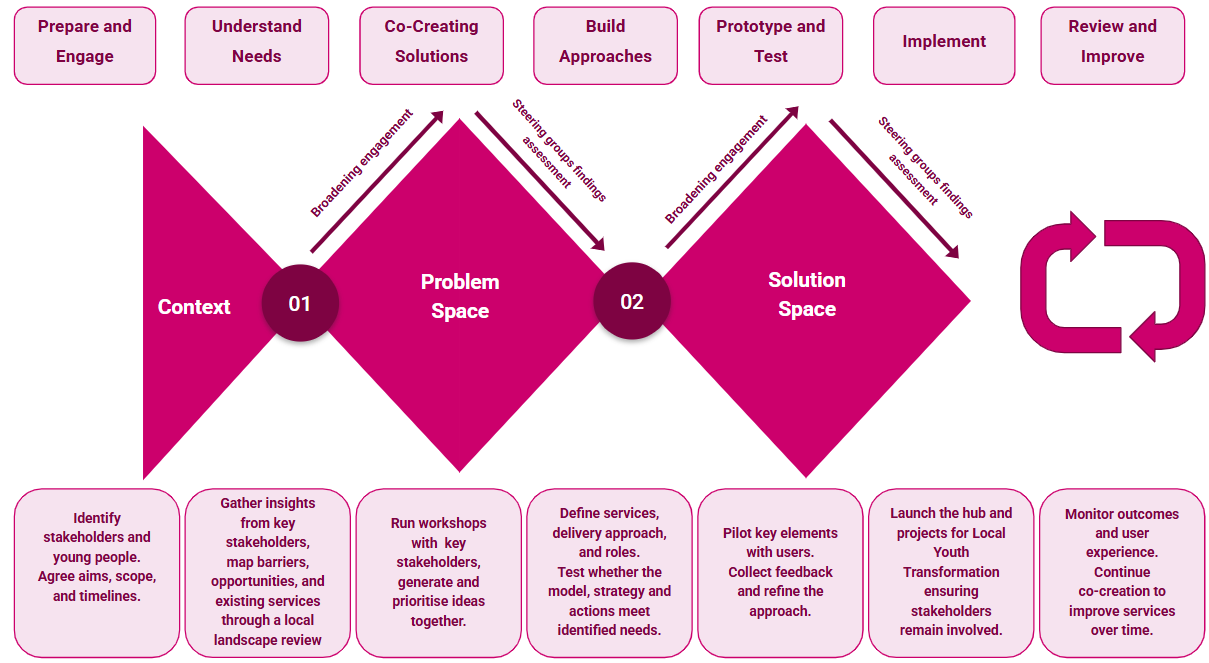
The diagram below suggests how co-creation can be used throughout the whole life of the programme.
Use zoom on your browser to view.
The Double Diamond model[footnote 1]
Full text description
Diamond diagram showing a multi step design process.
Context phase
Represented by a triangle with a downwards edge which leads into node 01 (where the context phase meets the problem space). Context is helping to narrow focus and establish project scope before moving forward.
Problem space
Diamond shape starting from node 01 and connecting to node 02 (where the problem space meets the solution space. Broadening engagement (divergent phase) is shown on the upwards edge of the diamond and is followed by steering groups finding assessments (convergent phase) on the downwards edge. The process has expanded explore broader insights before narrowing down to core problem definitions.
Solution space
A second diamond starting from node 02 points towards the implementation phase. Again, broadening engagement (divergent phase) is shown on the upwards edge of the diamond and is followed by steering groups finding assessments (convergent phase) on the downwards edge. Multiple solutions are co-created and tested before selecting and refining the final approach for launch.
Continuous loop
A circular icon shows ongoing iteration and feedback.
This table shows the key objectives and actions at each phase of the process.
| Phase area | Key objectives and actions |
|---|---|
| 1. Prepare and engage (context) | Identify stakeholders and young people. Agree on aims, scope, and timelines. |
| 2. Understand needs (problem space- divergent) | Gather insights from key stakeholders; map barriers, opportunities, and existing services through a local landscape review. |
| 3. Co-creating solutions (problem space- convergent) | Run workshops with key stakeholders; generate and prioritise ideas together. |
| 4. Build approaches (node 02- transition) | Define services, delivery approach, and roles. Test whether the model, strategy, and actions meet identified needs. |
| 5. Prototype and test (solution space- divergent) | Pilot key elements with users. Collect feedback and refine the approach. |
| 6. Implement (solution space- convergent) | Launch the hub and projects for Local Youth Transformation, ensuring stakeholders remain involved. |
| 7. Review and improve (continuous iteration) | Monitor outcomes and user experience. Continue co-creation to improve services over time. |
A detailed list of some relevant groups and partners to engage for the Young Futures Hubs and Transformation programme is provided in Annex A.
Some helpful resources are listed in Annex B and a diagram summarising the principles of co-creation is listed in Annex C.
Early adopter example: Bristol
Full Circle Docklands led a co-creation initiative to shape the delivery of the Young Futures Hub in East Central Bristol. The project prioritised the voices of the community by involving over 100 young people (ages 10 to 18) across 12 sessions involving various youth organisations in the East Central Area. To establish new governance structures and build collaborative partnerships, joint workshops and a multi-agency steering group were established with statutory and non-statutory partners.
Recruitment
- Young adults (aged 16 to 25) were actively recruited into paid positions to help run the newly commissioned ‘Young People Led Digital Offer’, a platform designed to provide up to date information about local youth provision and support.
Co-creation activities
- Over 100 young people aged 10 to 18 participated in-person sessions to help shape the delivery of the Young Futures Hub.
- To ensure diverse community voices were heard, sessions were delivered across eight different locations in East Central Bristol in partnership with various local organisations.
- Young people provided feedback and insights through the Local Youth Transformation survey and a focus group review process, highlighting challenges like finding out what activities are available in their local areas.
- Young people were given direct decision-making power by reading applications, interviewing candidates, and selecting the Voluntary and Community Sector (VCSE) providers for this project.
Engagement with young people and other stakeholders
- Core statutory partners include Bristol City Council teams across Youth, Early Help, Public Health, Post-16/NEET (Not in Education, Employment, or Training), and Community Safety, alongside the police, Youth Justice Service, and Safer Connections (Harm Outside the Home (HOtH) service).
- Health and education integration: Health oversight involves public health, CAMHS (Child and Adolescent Mental Health Services), school nursing teams, and Off The Record Counselling, supplemented by formal and informal education providers.
- Through the co-design process, a spoke organisation proposed appointing a young person to lead the development of the Young Futures Hub Young People’s Steering Group, creating a valuable development opportunity while strengthening youth voice and participation across the hub and spokes programme and contributing to governance through active involvement in the Strategy Group and Young Futures Hub Implementation Group.
- Strategic oversight is managed by the Bristol Play and Youth Strategy Group, which ensures alignment between the Play and Youth Strategy, the Local Youth Transformation, and the Young Futures Hubs.
- Dedicated task and finish groups: The governance framework operationalises its objectives through three specialised task and finish groups focused on key youth pathways:
- Reducing vulnerability to crime.
- Improving mental health and wellbeing.
- Improving access to opportunities (including careers).
- Operational feedback loop: These groups actively feed their developments and pathways back into the core group responsible for implementing the Young Futures Hub, ensuring strategy directly informs day-to-day operations.
All co-creation partners: core principles
1. Open and honest
Local authorities should approach co-creation as professional work by setting clear expectations from the outset of the process, setting agreed timelines, and providing preparation materials.
Prior to commencing, they should communicate why young people and other key stakeholders are being engaged, the specific problems or decisions under consideration, which aspects can be influenced versus what remains fixed, who holds final decision-making authority, and how all input will be applied.
Local authorities should be mindful of power imbalances in the co-creation process by avoiding technical jargon and recognising stakeholders as equal partners.
Essential:
- Allocate a dedicated budget and sufficient time for participation and engagement activity from the outset.
2. Representative
Local authorities should implement an engagement strategy that reaches a broad and diverse range of stakeholders (suggestions in Annex A), tailored appropriately to the local context, to achieve successful co-creation across the programmes.
Aligning the volume and demographics of participating young people with the scale and makeup of the local youth population is critical. For Young Futures Hubs, engagement should target young people aged 10 to18 (up to 25 for those with SEND (Special Educational Needs and/or Disabilities)) and meet risk indicators (page 5 to 6 of the Young Futures Hubs Guidance document) related to crime, opportunity, mental health, or who are otherwise hard to reach.
Local Youth Transformation encompasses wider youth services across the entire local area—rather than focusing solely on a hub—the young people engaged for that must be representative of the local authority as a whole.
We suggest recruiting individuals from communities based on shared lived experiences, interests, identities, or service usage that will be directly affected by decisions, using accessible recruitment processes without tokenising individuals.
Further guidance on recruitment of young people for co-creation can be found in DCMS’ Getting ready to involve young people in policy guidance.
Essential:
- Engage broadly across a wide range of partners, including statutory, non-statutory, VCSE, crime prevention, employment and health partners (suggestions in Annex A)
- Develop and deliver opportunities for a broad group of young people to feedback on Young Futures Hub and Youth Transformation project development, scaled appropriately to reflect the diversity and size of the local youth population.
- Proactively reach out to previously unengaged young people aged 10 to 18 (up to 25 for those with SEND) for Young Futures Hubs, engaging those who have representative lived experience and face risk factors in mental health, opportunity, and crime.
- Consider using existing youth groups and structures to avoid duplication (whilst also ensuring previously unengaged young people are also engaged).
3. Decision-making power
Co-creation should inform the development of a youth-driven offer for Local Youth Transformation, including the needs assessment, strategy development, and implementation plan (see the Local Youth Transformation guidance). For Young Futures Hubs, co-creation should specifically influence the types of services provided, referral mechanisms and workforce development (see Young Futures Hubs guidance. Decisions around the design of physical spaces, hub location(s), and design of signage and branding including the style and colour, should be determined locally through co-creation activities with all partners (see the Young Futures Hubs guidance).
True co-creation avoids tokenistic practices such as consulting people after decisions are made, using their attendance as simple endorsement, or consulting once and not following up with outcomes.
For this programme, it is important that partners and young people are engaged early in the decision-making process, so they really shape options and decisions, rather than simply being given the opportunity to sense check proposals where the local authority already knows what it wants to do. Partners, including young people, can help widen thinking, identify more options, test assumptions, challenge and refine proposals, and spot problems around accessibility/incentives etc.
Essential:
- Establish cross-sector steering groups involving operational, strategic, commissioning, VCSE, and community stakeholders.
- Establish a youth governance panel.
- Establish clear routes for steering groups and the youth governance panel to influence senior decision-making.
- Partners, including young people, must sign off the Implementation Plan for the Young Futures Hub and the plans for Local Youth Transformation projects and activities.
Go further:
- Involve partners, including young people, in decisions around other important activities such as recruitment, commissioning or service design.
- Provide opportunities for intergenerational dialogue and partnership among young residents, parents, youth workers, voluntary organisations, local authorities, and decision-makers without diluting young people’s distinct rights.
4.Continuous engagement
Participation of key stakeholders should span design, delivery, implementation, governance, evaluation, and improvement, rather than ending after a single initial event.
In particular, the ‘You Said It - You Check It’ principle is effective. This provides participants with summaries, so misunderstandings can be corrected before finalising outputs. When using this approach, distinguish direct quotes from interpretation, obtain specific consent for quotes, and do not imply endorsement if disagreement remains.
Partners, especially young people, are most likely to be encouraged to continue engaging with co-creation when they can see how their input leads to visible change. For this programme this might include sharing with them how their views have shaped decisions on topics such as new youth strategies, implementation plans, Hub spaces, activity design, youth advisory structures, branding, employment support, and access routes into services.
Consider how to continue capturing feedback in the delivery/operational stage of the hub and local transformation, to enable continuous iteration and improvements.
Particularly for young people, this doesn’t have to always be through formal feedback mechanisms; ideas for less formal mechanisms include encouraging staff working on the project to capture views as they come up in conversation and (for hubs) having physical boards where young people can write up ideas and views.
Essential:
- Ensure ongoing engagement is planned so that partners, including young people, can feed in at key decision points, both at design and delivery stage.
- Establish a continuous feedback loop to demonstrate what has changed because of co-creation input. When decisions are made that are not in line with partners’ views, explain why. This approach should help build transparency, accountability, and mutual trust.
Go further:
- Maintain flexibility to revisit long-term outcomes after one year.
5. Evaluation and accountability
The success of co-creation must be evaluated by the depth and quality of impact achieved, rather than merely counting participant attendance or partner numbers. A structured monitoring and evaluation cycle should be established to assess whether the co-creation process in the programmes are operating as intended and meeting essential requirements. The following components of the Lundy Model outline a recommended approach:
Space: Who participated, and who was missing
Support regular review through:
- total partners and young people engaged
- respondent diversity across key demographic groups (SEND, care-experienced, NEET, young carers)
- participation levels from underrepresented groups
- engagement patterns to identify gaps for targeted activity
Voice: What support and choices helped partners and young people express their views
Support regular review through:
- methodology used
- engagement frequency and repeat participation with partners and young people in co-creation
- experience of the people engaged (did they feel valued, safe and influential?)
Influence: What changed (or didn’t), and were partners and young people told why
Support regular review through:
- scheduled partner/stakeholder progress events
- VCSE involvement to reach non-formally connected young people
- partner feedback on engagement effectiveness and adjustments
Audience: Who with decision-making responsibility heard their contribution
Support regular review through:
- how young people informed decision making
- integration of feedback into governance and co-creation activity
- how steering groups and youth governance had a role in shaping proposals and testing outcomes
It should be recognised that receiving honest feedback from young people is in itself an indication that the service has created a relationship where their views are genuinely welcomed and young people feel safe enough to share what could be better and are invested in helping the programme continuously improve. Staff should be encouraged to see this as an opportunity for learning and improvement, rather than a negative.
Essential:
- Lead on delivering a co-creation case study highlighting impact, lessons learned, and engagement photos.
- Regularly collect quantitative and qualitative data from all co-creation activities.
Go further:
- Give partners (including young people) the chance to inform the design of the evaluation.
Pathfinder example: Hartlepool
The Local Youth Transformation Pilot led to the delivery of steering group workshops held by Hartlepool Youth Services in early 2026. The steering group was established to involve young people (aged 13 to 19) in shaping the future of youth services. A total of 16 young people registered their interest, with 14 attending on the day of the workshops.
The project aimed to:
- influence the direction of the Local Youth Transformation Fund
- collaborate on a new Youth Service app
- co-create branding, promotional, and social media guidelines
Recruitment
- Participation in the steering group was promoted across Hartlepool Youth Service as well as within the VCSE sector.
- A digital promotional poster was created and shared across the various youth projects to advertise the opportunity.
- The organisers relied on youth workers within each project to share the opportunity directly with the young people they supported. Workers were encouraged to identify and invite individuals who were interested, had taken on additional responsibilities, demonstrated leadership interest, or had relevant knowledge and experience.
- When discussing their involvement, most of the attendees noted that they ultimately joined because someone they already knew was involved in the service.
- In addition to being paid for their time they were provided with refreshments and lunch.
Co-creation activities
The young people were engaged across three creative and collaborative workshop sessions using a variety of interactive, group-based methods:
Session 1: App development and promotion marketing
- Introductory activities: Participants established collective ground rules and completed ice-breakers to build cohesion.
- App consultation (online): Young people collaborated with professional designers from This is Focus to shape a new youth service app, proposing names like “Huddle” and “Youthy” and exploring visual branding.
- Poster consultation: Small groups reviewed existing promotional materials, evaluating their tone, visual appeal, and accessibility.
- Social media consultation: Groups co-created a list of ‘Do’s and Don’ts’ to define preferred youth-led content formats and avoid over-sharing or overly serious tones.
Session 2: Guidelines review and campaign planning
- Energiser: A brief team activity opened the session.
- Collaborative review: The group refined their drafted poster and social media guidelines to ensure unanimous agreement.
- Feedback challenge: Participants reviewed active social media posts and applied their guidelines by creating project-specific content.
- Open conversations and campaign tasks: Young people shared personal journeys within the youth service and were tasked with consulting peers on representative colours and taglines for their projects.
Session 3: Curriculum development
-
Creative mapping and reflections: Facilitated by the pilot delivery partner NYA participants mapped safe spaces, dislikes, and desired improvements to help design a youth work curriculum for Hartlepool.
-
Future planning discussions: The group discussed the value of youth work and how the service can support their future personal goals.
Session 4: Quality framework
- Young people took part in a creative road map activity to explore what an ideal youth work journey should look like for a young person accessing the service. Through discussion and collaborative activities, they identified key themes and priorities to help shape the development of the quality framework.
Session 5: Youth charter
- Young people attended an introductory session on the youth charter, delivered by NYA Associate. Through discussions around the concept of Ubuntu and the idea that “it takes a village to raise a child,” they explored how young people should be treated within services, reflected on their own experiences, and considered what a youth charter could achieve in promoting positive relationships, rights, and expectations.
Session 6: App development
- Young people shared feedback on features, accessibility, branding, and content, highlighting the importance of customisation, easy access to information, notifications, interactive elements, and age-appropriate resources. Young people also suggested ways to improve user engagement through quizzes, competitions, peer testing, and opportunities to connect with youth services and local activities.
Session 7: Youth Charter
- Young people reflected on how the Youth Charter principles could be used to assess organisations fairly, exploring the importance of gathering information, considering different perspectives, and understanding wider contexts. They also helped shape the proposed assessment process by developing ideas and a draft timeline, ensuring the approach is transparent, effective, and youth-led.
Session 8: Youth Charter
- Young people prepared to present their Youth Charter proposal to local business leaders and senior local authority representatives. They invited questions, feedback, and challenges to help refine their ideas and ensure the charter was informed by a range of perspectives and practical considerations.
Session 9: Youth Charter
- Young people reviewed and confirmed the content of the Youth Charter, explored examples from other local authorities, and discussed how it could be promoted to organisations and stakeholders. They also began developing ideas and content for an information leaflet to raise awareness of the project and encourage engagement.
Session 10: Youth Charter
- Young people reviewed and agreed the criteria for the Youth Charter bronze, silver, and gold awards, considering how organisations can demonstrate they meet the required standards. They also explored the assessment tool and provided feedback on branding designs, including the Youth Charter logo, peer assessor certificates, badges, and promotional materials, to ensure they are engaging and fit for purpose.
Key outcomes and activities
Across three sessions, participants provided significant input:
- Promotional and social media guidelines: Participants agreed that promotional materials should be vibrant, concise, and welcoming, featuring clear information and QR codes. Social media content should be authentic, fun, and youth-led, avoiding overly formal tones or personal identifiers like school uniforms.
- Project identity: To improve brand cohesion, each project will adopt a unique identifying colour.
- Curriculum development: The third session, led by the National Youth Agency, focused on designing a youth work curriculum by reflecting on participants’ experiences, safety, and personal goals.
Lessons learned and how co-creation could go further
- Engagement: Sessions saw high attendance and full participation, with an average satisfaction rating of 8.4/10.
- Concerns: Before discussing the Local Youth Transformation programme, participants identified a need for better awareness of the full service offer, as many members only knew about their specific project. They also noted that entering new groups can feel intimidating and suggested providing more ‘what to expect’ information to reduce barriers.
- Preferences: Young people expressed a strong preference for in-person co-creation sessions over online formats, which were found to be impersonal.
Co-creation with young people
Youth Transformation Task and Finish Group foreword
Young people know when they are genuinely being listened to – and when they are only being asked because somebody needs to tick a box.
As the Youth Transformation Task and Finish Group, we have shared our experiences of co-creation: the good experiences where our ideas have helped something change, and the bad experiences where we have been invited into a room, asked for our views and then never heard what happened next.
For us, good co-creation means recognising that young people and adults are on the same team.
It means making sure young people can actually take part in the first place. That includes accessible venues, travel, expenses, different ways to join in, enough breaks and support that meets people’s individual needs.
It means recognising lived experience as expertise. No two young people have exactly the same experiences, so organisations need to hear from a range of young people including people who may not usually be asked.
It also means giving us the information and support we need to contribute. Young people should be able to speak, write, create, work together, contribute online or take the lead. There should not be one “right” way to participate.
Most importantly, our voices need to reach people who can actually make decisions.
We liked the Lundy Model of participation because its four ideas – space, voice, audience and influence – reflect many of the things we said good co-creation needs.
- Space means making sure we can be there and feel included.
- Voice means giving us meaningful and accessible ways to share what we think.
- Audience means making sure the people with the power to make decisions genuinely hear us.
- Influence means showing us what happened because we spoke up.
Influence is especially important. Asking for our views is only the beginning.
- Tell us what you did with them.
- Show us what changed.
- If something cannot change, explain why.
- And keep us involved afterwards.
Young people should not be invited into a project only once. If Young Futures Hubs and Local Youth Transformation are going to belong to their communities, young people should continue helping to shape them – through their design, delivery, recruitment, governance, evaluation and improvement.
Co-creation also does not mean young people have to run everything immediately. Give us opportunities to build our skills, confidence and experience so that we can take on more responsibility and leadership over time.
Be clear about what we can influence. Do not overpromise. Treat our time professionally. Give us feedback. Make participation accessible. Let us step out if we need to without missing out. And do not describe something as co-created if our views did not have a genuine opportunity to affect the result.
Good co-creation should leave young people knowing:
- Why was I involved?
- Who heard me?
- What happened because I took part?
If we can answer those questions, then young people’s voices have not just been heard – they have had influence.
Co-creation with young people: core principles
Young people are one of the most important stakeholder groups to engage across the programme, as experts by experience. Their input should be seen as a substantive form of evidence alongside professional, service, and research data.
Trusted relationships remain the foundation of meaningful participation. Young people are more likely to share honest views and access support when youth workers provide consistent, relational, and non-judgemental engagement.
Essential:
- Co-creation with young people should be informed by evidenced participation models such as the Lundy Model of participation, Roger Hart’s Ladder of Youth Participation or the Youth Futures’ Participation Wheel.
- Young people should never be expected to recount personal trauma to justify or establish their credibility.
- Young people should have the opportunity to shape the co-creation process itself, as well as the wider programme.
6. Safeguarding of young people
All involvement with the co-creation process from young people must be entirely voluntary, require informed consent, and follow the National Youth Agency safeguarding standards and government legislation when engaging with young people. Before any engagement begins, clearly explain what confidentiality means, what is recorded, who sees the information, safeguarding limits, and how young people can safely step out or raise concerns. Build individual relationships tailored to each participant’s support needs, preferences, and emotional safety.
DCMS’ Getting ready to involve young people in policy guidance has further detail on setting up safeguarding procedures and protecting young people’s personal data.
Essential:
- Establish comprehensive safeguarding measures aligned with government guidance.
7. Accessibility-by-design
Accessibility must be embedded in the co-creation process. An ‘inclusive-by-design’ strategy should be implemented to remove practical barriers through scheduling meetings around school/work, including structured breaks, providing meals and travel reimbursements, and involving young people with lived experience in designing these setups from the beginning.
Varied engagement methods are critical for all young people but especially neurodivergent participants and those navigating mental health difficulties. Offering mixed face-to-face and digital opportunities alongside creative, visual, anonymous, or youth-only methods prioritises emotional safety and meaningful influence. Consistent involvement relies on long-term, relationship-driven support.
A ‘pause and return’ feature with flexible contribution options and recap resources can enable young people who temporarily step out so they can continue to shape decisions.
Essential:
- Employ a mix of methods (for example, creative activities, peer recruitment, alumni networks) and leverage digital tools to enhance reach without replacing in-person contact.
- Provide reasonable adjustments, step-free access when required, travel costs, and food to remove engagement barriers.
Go further:
- Provide training for staff on the Lundy Model of Participation, Roger Hart’s Ladder of Youth Participation or Youth Futures’ Participation Wheel to ensure these practices are fully embedded in the co-creation process.
- Guarantee equitable remuneration and/or paid roles for participating young people.
8. Progression pathways for young people
Progressively build skills and confidence to move young people from being informed to contributing, collaborating, co-designing, leading, and governance at their own pace, rather than immediately placing them unsupported into complex roles. All young people are equal partners in co-creation, but some may need support and training to recognise that and feel confident in this role.
Giving young people time to get to know each other and to build a collaborative atmosphere at the start will help those with less confidence to engage more fully with co-creation. It’s a good idea to ask young people themselves for ideas for fun activities, ice breakers etc. Not every activity needs to have an output. Something as simple as ordering in food to enjoy together can be a good start. There’s a balance to be struck between making co-creation accessible, engaging and supportive and acknowledging the seriousness of the decisions being made.
You may need to take a different approach (at least to start with) to engage young people in decisions than when working with professional partners. For example, with recruitment, you might simply ask partners for views on what qualities are desirable in staff. With young people, you might use a collaborative tool like Miro to brainstorm what qualities you are looking for, group these ideas into categories, and consider what questions to ask for each category.
Essential:
- Upskill young people through training to ensure they can confidently collaborate and feel comfortable contributing as equal partners with professionals.
Go further:
- Tailor co-creation opportunities to the interests of young participants, offering the necessary training, flexibility, and cultural support for them to succeed.
Annex A: Key stakeholders for engagement
Cross-sector conversations and early engagement with these bodies will be vital to maximising the impact of Young Futures Hubs and Transformation Programmes. This engagement should ensure joint ownership of outcomes and ensure widespread buy-in from across sectors. Working closely with these stakeholders and identifying existing services will also avoid duplication of effort. Please note that the list set out below is non-exhaustive.
Public health, wellbeing and specialist clinical services
- Health and clinical leads: Integrated Care Boards (ICBs), NHSE Mental Health Regional Health Leads, public health, school nursing, multisystemic therapy providers, NHS Mental Health Services, Mental Health Support Teams, Health and Justice Vanguard sites.
- Specialist and target support: Youth Information, Advice, Counselling and Support (YIACS) partners, Early Support Hubs, and specialist charities (neurodiversity support, domestic abuse, mental health).
Safety, justice and multi-agency safeguarding
- Policing and community safety: Local police, Youth Justice Services (YOTs and YOT management boards), Violence Reduction Units, Serious Violence Duty Partnerships, probation services, prisons, Community Safety Partnerships, Young Futures Panels (where applicable)
- Safeguarding hubs: Multi-Agency Safeguarding Hubs (MASH) and Multi-Agency Support Teams (MAST).
Education, employment and enterprises
- Education providers: Schools, academies, colleges, alternative provision, holiday activities and food programmes.
- Skills and employment: Jobcentres, DWP Youth Hubs, Youth Employment Hubs, careers services (careers advisers, National Careers Service, Local Enterprise Partnerships Careers Hubs).
- Enterprise: Local businesses.
Family, housing and systems transformation
- Social Care and housing: Housing associations, Care Leavers Services, SEND services/teams.
- Family support: Best Start Family Hubs, Healthy Babies services, Family Help teams, children’s social care, Multi-Agency Child Protection Teams, Lead Child Protection Practitioners.
- Transformation projects: Council transformation teams and project officers (for example, Family First, Child First, SEND reforms).
Community, voluntary and peer support projects
- VCSE and local partners: Youth charities, voluntary organisations, local sports, arts, and cultural organisations.
- Parents, carers and families
- Outreach and mentoring: Faith-based organisations with youth outreach, mentoring and peer-support providers (aligned to Mentoring Quality Framework).
- Community hubs: Local VCSE stakeholders, Youth Hubs, and broader community partners.
- Young people
Annex B: Helpful resources
These external resources may be useful to consult when beginning your co-creation process. These are not mandatory.
- Sunlight Foundation’s guide to co-design
- Greater London Authority (GLA) - Commissioning Co-design
- NPC’s Co-design Guidance
- NYEB Co-design Guide
- Co-designing techniques for your practice framework
- NYA and Local Government Group, 2010. Valuing youth voices, strengthening democracy
- Centre for Youth Voice, 2023. How to engage parents and other practitioners when supporting young people in youth activities.
- Mind Participation toolkit
- Participation People Youth Power
- Luke Billingham and Hanna Jones of The Open University and MCPin Foundation have identified the predicted benefits of co-design in YF Hubs within their guide, co-designing Young Futures Hubs in local areas
- Youth Access Quality Framework
- Participation in Children and Young People’s Mental Health: An Essential Guide by Hannah Sharp
- Young People’s Perspectives on Participatory Ethics: Agency, Power and Impact in Domestic Abuse Research and Policy-Making by Clare Houghton
Examples of co-creation practice
- Blackpool (Youth Advisors Model)
- Connected Futures programme
- Time for Young People (Newham)
- Space to Grow
- Hull (The Recruitables)
- Youth Power: The Current of Change, produced by Connected Futures Ambassadors in Brent, Hull, and the East Midlands
Annex C: One page summary of co-creation principles
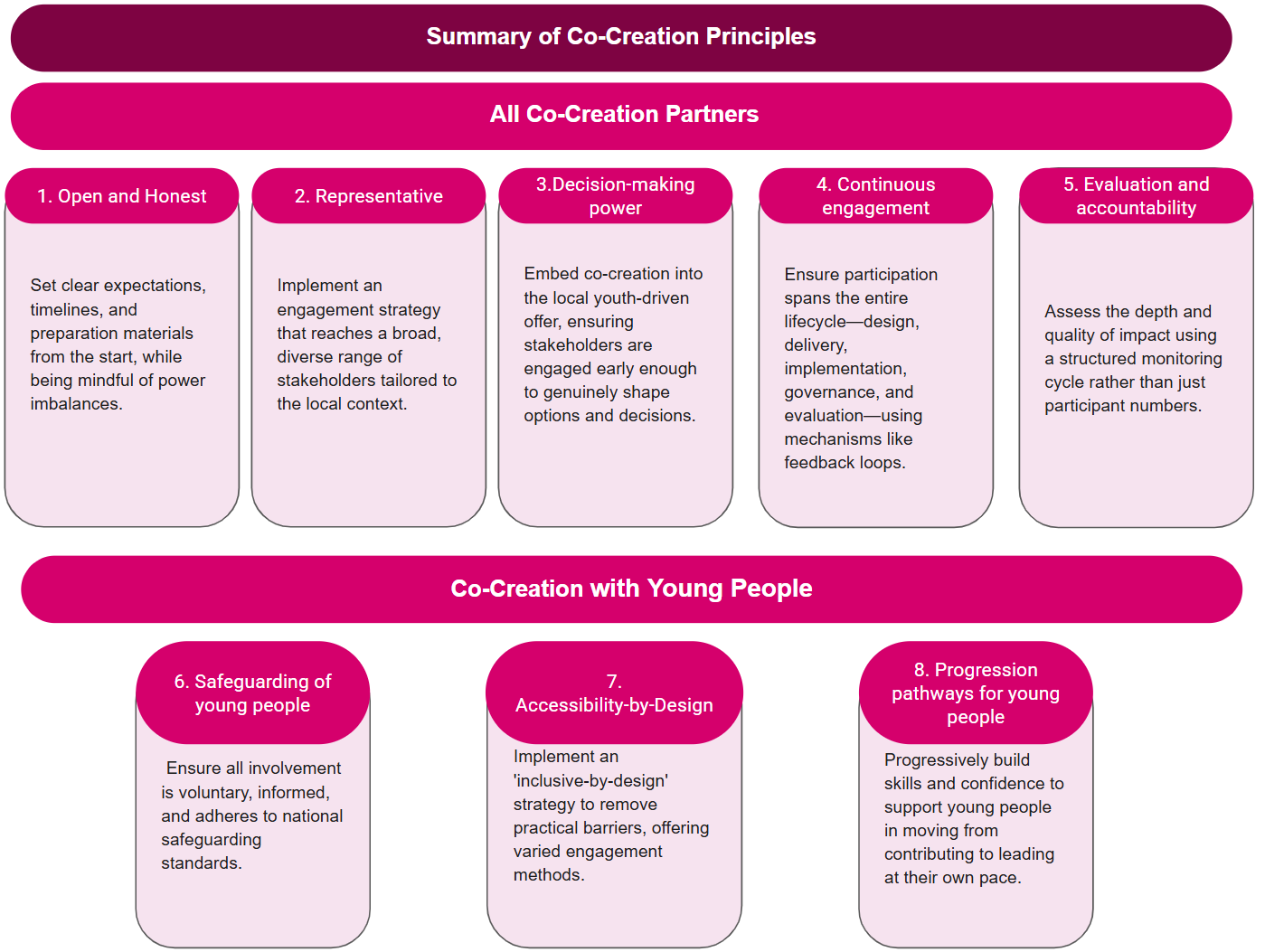
The following diagram provides a high-level overview of our core principles, serving as a prompt for local authorities as they design their co-creation frameworks. For a comprehensive understanding, these should be reviewed alongside the complete guidance and all essential requirements.
Use zoom in your browser to view.
Full text description
All co-creation partners
1. Open and honest: Set clear expectations, timelines, and preparation materials from the start, while being mindful of power imbalances.
2. Representative: Implement an engagement strategy that reaches a broad, diverse range of stakeholders tailored to the local context.
3. Decision-making power: Embed co-creation into the local youth-driven offer, ensuring stakeholders are engaged early enough to genuinely shape options and decisions.
4. Continuous engagement: Ensure participation spans the entire lifecycle, design, delivery, implementation, governance, and evaluation, using mechanisms like feedback loops.
5. Evaluation and accountability: Assess the depth and quality of impact using a structured monitoring cycle rather than just participant numbers.
Co-creation with young people
6. Safeguarding of young people: Ensure all involvement is voluntary, informed, and adheres to national safeguarding standards.
7. Accessibility-by-design: Implement an ‘inclusive-by-design’ strategy to remove practical barriers, offering varied engagement methods.
8. Progression pathways for young people: Progressively build skills and confidence to support young people in moving from contributing to leading at their own pace.
-
Diagram adapted version of the Double Diamond model, Design Council. (2005). The Double Diamond: A universally accepted depiction of the design process. British Design Council. ↩