Violence Reduction Units year ending March 2025 evaluation report
Published 2 April 2026
Applies to England and Wales

© Crown copyright 2026
This publication is licensed under the terms of the Open Government Licence v3.0 except where otherwise stated. To view this licence, visit nationalarchives.gov.uk/doc/open-government-licence/version/3 or write to the Information Policy Team, The National Archives, Kew, London TW9 4DU, or email: psi@nationalarchives.gov.uk.
Where we have identified any third party copyright information you will need to obtain permission from the copyright holders concerned.
This publication is available at https://www.gov.uk/government/publications/violence-reduction-units-year-ending-march-2025-evaluation-report/violence-reduction-units-year-ending-march-2025-evaluation-report
Acknowledgements
The evaluation has been made possible with the support and valuable insight from 20 Violence Reduction Units (VRUs) across England and Wales, and their Local Authority and Community Safety Partnership partners. We are grateful for their participation in the evaluation. We are also thankful to those delivering VRU-funded activities and the young people who took part and shared their experiences with us.
Thanks go to the evaluation team: Amy Humphreys, Daniel Latus, Gabriela de Freitas, Harriet Tucker, Jaya Bagla, Jude Maher, Kay Robinson, Lucy Newman, Martin Manuch, Olivia Petie, Polly Clowes, Robert Spence, Sarah Corrigan, Shikha Chopra, Sophie Hayes (of Ecorys) and Catherine Fenton, Ellie Keeble, Hattie Moyes, Maddy Pickles, Maryam Hamedi, Seps Sharafi, Waseem Meghjee, Wiktor Magdziarz, and Zoe Williams (of Ipsos).
The evaluation was managed by George Horton and Jo Llewellyn, and directed by Matthew Cutmore (of Ecorys), in partnership with Stephen Mallet, Yannick Vuylsteke, and Caroline Paskell (of Ipsos).
We give special thanks to our academic partners, Professor Iain Brennan and Professor Mark Kelson, for their guidance and expertise throughout.
Finally, we thank colleagues at the Home Office, in particular, Rebecca Channing, Katy Horrocks, John Harper, and James Mulcahy for their ongoing support and management.
This report was written by Matthew Cutmore, George Horton, Professor Iain Brennan and Professor Mark Kelson.
Executive summary
Background
Violence Reduction Units (VRUs) were established in 2019 under the Serious Violence (SV) Fund to support evidence-led and multi‑agency approaches to violence prevention. The VRU model has evolved over time from an initial focus on ‘public health’ principles towards a more embedded whole‑systems approach.
This 2024 to 2025 evaluation report is the final in the programme‑level evaluation series. It is intended to bring together learning accumulated across multiple years of evaluation, and to provide an up‑to‑date assessment of the programme’s outcomes and emerging impacts as VRUs were in a period where the anticipated longer‑term effects were more plausible to observe.
Methods overview
The evaluation was guided by the programme Theory of Change (ToC), which frames VRUs’ core functions as: data‑driven decision‑making, whole‑systems leadership and coordination, and intervention commissioning. The combined longer‑term outcome is a reduction in violence through sustained systems change and more effective prevention activity.
In line with the evaluation’s purpose at this stage of the programme, the 2024 to 2025 approach placed greater emphasis on outcomes and impact rather than detailed process and implementation learning. The latter was covered extensively in the first 4 years of reporting.
The methodology triangulated evidence from:
- quasi‑experimental impact evaluation using generalised synthetic control methods, which involved comparing trends in VRU areas for hospital admissions and other outcomes of interest to a weighted average of non-VRU areas; impacts are estimated for the broader SV funding, as VRU funding operated concurrently with funded hotspot policing in the same areas and periods
- whole‑systems research including interviews (n=78) with VRU teams and local authority (LA) and Community Safety Partnership (CSP) stakeholders, structured around key ‘elements’ of system response, which included incident response, and identification and support for at‑risk individuals
- intervention‑focused research, including in-depth case studies (n=9 interventions across 8 VRU areas) and a review of local evaluation reports to assess delivery themes, outcomes, and evidence strength
Key findings
Quantitative impact: reductions in violence‑related hospital admissions
Over nearly 6 years of SV funding (April 2019 to December 2024), the analysis found the strongest evidence to date of an overall SV funding effect on serious violence; seen most clearly in hospital admissions for violent injury (the most reliable measure used in this evaluation).
SV funding is associated with fewer hospital admissions for:
- assault by sharp object among aged 24 and under
- assault by any violence among aged 24 and under and across all ages
When scaled to the population covered by VRU areas, this equates to an estimated:
- around 550 fewer (or an estimated -8.5%) sharp‑object assault admissions among aged 24 and under
- around 3,750 (or -12%) fewer admissions for violent assault among aged 24 and under, or around 7,140 (or -7.2%) fewer across all ages, over the full funding period analysed
Impacts appear gradual and cumulative, aligning with the programme’s longer-term whole-systems logic (that is, not expected to deliver immediate, short‑term changes).
Results for homicides and police-recorded crime were not conclusive in this analysis, largely due to low counts (homicide) and volatility/data quality constraints (police-recorded measures). Importantly, they did not provide strong counter-evidence against the hospital admission data findings.
Full statistical outputs (including confidence intervals and model specifications) are provided in the Quantitative impact evaluation chapter.
VRUs’ roles within whole‑systems approaches
Interviews with VRUs and LA/CSP stakeholders explored VRUs’ roles within the whole-systems approaches to prevent violence under 2 broad categories: responding to incidents of SV (and those with the potential to escalate) and identifying and supporting (potentially) at-risk individuals.
Incident response: incident response was reportedly typically police‑led tactically, with LAs and CSPs coordinating wider place‑based actions; for incidents likely to escalate, LAs/CSPs more often led proactive multi‑agency de‑escalation.
Although prevention was the primary VRU focus, the evaluation evidence indicated that VRUs have developed a clear strategic role in strengthening the system response by:
- convening partners for oversight, reviews and shared accountability
- improving information sharing through data sharing agreements, analysis, and in some areas shared tools
- commissioning rapid, targeted support such as detached youth work, community‑led support, accident and emergency department (A&E) and custody navigators, and in some areas, flexible critical incident funds
Persistent constraints reported by stakeholders include information‑sharing frictions (timeliness/redaction), capacity and short‑term funding pressures, inconsistent processes across geographies, and community trust challenges that can limit effectiveness.
Identifying and supporting those at risk: stakeholders described a graduated system with early identification commonly via schools, Early Help, or Voluntary and Community Sector Enterprises (VCSEs) for those potentially at risk, through to more formal multi‑agency support for those known to services, and structured management for known offenders
VRUs’ contribution was consistently described by stakeholders as strengthening the system through:
- neutral convening and coordination across agencies
- funding/commissioning across the risk continuum, with navigators widely established for higher‑risk cohorts
- tools, training and data pipelines to improve early identification, referral and trauma‑informed practice
As with incident response, reported system‑wide barriers remained: data sharing (including those aged 18 and over ‘cliff edge’), service capacity, engagement and continuity (workforce churn undermining trusted relationships), and postcode variation in thresholds and pathways.
Intervention commissioning, reach and outcomes
VRUs continued to fund a broad intervention portfolio in 2024 to 2025. Monitoring data indicated that VRUs commissioned or funded over 300 interventions directly supporting young people/young adults (aged 24 and under). These interventions were reported to have reached over 300,000 young people in total. Common approaches included sports programmes, mentoring, social skills training and accident and emergency (A&E) navigators.
Case study evidence and the review of local evaluations indicated that VRU‑funded interventions were commonly perceived to be implemented effectively and to achieve short‑ and medium‑term outcomes, particularly where delivery is flexible, person‑centred, trauma‑informed, and integrated with partner referral pathways. Outcomes most frequently reported included improved trusted relationships, educational engagement, improved wellbeing and attitudes.
As in previous years, the evidence base remains constrained by common monitoring and evaluation challenges, including limited baselines, limited comparator designs, short timeframes to observe impacts, and capacity constraints, particularly for smaller providers.
Recommendations
The following recommendations are intended to be considered where feasible:
- prioritise multi‑year funding settlements and reduce in‑year uncertainty to align with the ToC timeframes, and protect system capacity (especially for VCSEs) and workforce
- preserve or increase the proportion of funding flowing to interventions, and continue to back evidence‑based and ‘promising’ models while allowing local tailoring
- target specific system ‘friction points’ in the system:
- school to services pathway: standardise referral routes/thresholds and feedback loops for attendance, behaviour, exclusion and safeguarding flags
- data flows: prioritise practical data sharing agreements (DSAs) and data pipelines between key partners (schools, A&E, Probation / Youth Justice services (YJS), VCSE), including templates for 16- to 25-year-olds to address adult data barriers
- incident response consistency: adopt minimum standards for rapid multi‑agency debriefs with VRUs as neutral facilitators, and ring‑fence flexible incident response funds
- deepen trauma‑informed, child‑first practice across the system, with joint training, supervision and practical tools to counter ‘adultification’ and improve engagement, especially for groups with low trust in statutory services
- strengthen evaluation and monitoring without over‑burdening providers, which could include defining a core outcomes set and light, standardised templates (baselines, engagement/dosage, short‑term outcomes)
- maintain universal/early‑intervention reach while ensuring adequate intensity for known‑risk and offender cohorts
- enhance community engagement and legitimacy by co‑producing interventions with young people/lived‑experience groups and carefully managing perceptions where police are visible partners – use VRU communications to reassure communities post‑incident
1. Introduction
1.1 Policy background
Violence Reduction Units (VRUs) originated from the Government’s 2018 Serious Violence (SV) Strategy (Home Office, 2018), which emphasised early intervention and prevention to address the underlying root causes of violence. The Treasury announced the £100 million SV Fund in March 2019, dedicating £35 million to support multi-agency, local approaches to violence reduction and prevention. VRU funding was allocated to 18 (and later, 20) Police Force Areas (PFAs) experiencing the highest levels of SV, primarily measured by hospital admissions for assaults with a sharp object. The SV Fund also included additional funding for hotspot policing activity to the same PFAs, which was previously referred to as Grip or Surge funding.
In their initial iteration in 2019, the vision for VRUs was to provide leadership and strategic coordination amongst all relevant agencies to support a ‘public health’ approach (PHA)[footnote 1] to tackle SV and its root causes. This core function drew heavily on the models used by the Scottish VRU and the World Health Organisation (WHO)[footnote 2], focusing on addressing risk factors for violence. VRUs were mandated to produce 2 products: a Problem Profile or Strategic Needs Assessment (SNA) to identify local drivers of violence; and a Response Strategy outlining the multi-agency response.
Over time, the focus of VRUs evolved, building upon a PHA towards a whole-systems approach. The whole-systems approach integrates the public health principles of viewing SV as symptomatic of several root causes, while expanding to emphasise multi-agency working, data sharing and analysis, engaging young people and communities, and commissioning evidence-based interventions. Here, the whole-systems approach can be understood as the cross-system collaboration and partnership working to meaningfully implement the practices of a PHA and WHO model (Wirrmann Gadsby and Wilding, 2024). VRUs also broadened their focus beyond the initial scope (knife and gun crime for aged 24 and under) to address interrelated issues like domestic violence or sexual exploitation.
Funding changes to the VRU programme included a transition from annual funding (2019 to 2021) to a 3-year funding commitment commencing in 2022, enabling longer-term strategic planning, and a return to annual funding in 2024. The programme also expanded from 18 to 20 PFAs in 2022. To encourage sustainability, a requirement for local partners to match at least 10% of funding was introduced in 2022, with the requirement set to increase in later years. Specific requirements were implemented for intervention funding, including allocating a minimum percentage of the budget to interventions deemed ‘high impact’ by the Youth Endowment Fund (YEF) (at 20% in the year ending March 2023 and 30% in the year ending March 2024).
The introduction of the SV Duty in 2023, as part of the Police, Crime, Sentencing and Courts Act, placed a legal requirement on all specified authorities to work together in partnership to tackle serious violence, further embedding whole-systems approaches. As detailed in the evaluation of VRUs for 2023 to 2024 (Home Office, 2025), their role within the whole system has been to convene, facilitate, and strategically guide partnership working and collaboration while promoting an evidence-based, public health approach to violence prevention.
1.2 Evaluation aims
The overarching aim of the evaluation is to assess the overall implementation and impact of the VRU programme. The specific objectives are to:
- estimate the quantitative impact of the VRU programme on (serious) violence outcomes, using synthetic control methods and triangulating with other sources of evidence
- map and understand VRUs’ contributions to whole-systems working to prevent violence
- explore VRU intervention commissioning, delivery, and outcomes
- provide insights and recommendations for the sustainability and legacy of the VRU programme, and its implications for policy and practice
Recognising this was the final year of the VRU evaluation, there was a specific focus on what difference the VRUs had made (that is, outcome-focused). Prior evaluation reports cover the implementation and can be referred to for further detail around the specific activities VRUs, such as data sharing and analysis (Home Office, 2020a; 2022; 2023a; 2023b; 2025).
1.3 Methodological approach
This section provides an overview of the methodological approach, which was guided by a Theory of Change (ToC) framework, and included interviews with VRU team and local authority (LA) and Community Safety Partnership (CSP) representatives, a survey of wider partners, case-study research with VRU-funded interventions, and a quasi-experimental impact evaluation.
1.3.1 Theory of Change
The programme-level ToC for VRUs was refined by the evaluation team for the 2023 to 2024 evaluation and is presented below. There were no changes to the ToC for the 2024 to 2025 evaluation. The ToC articulates the core functions, activities, and outcomes of VRUs, as well as the assumptions and contextual factors that underpin them.
VRU inputs include Home Office funding and, increasingly, match funding from partners, and VRU teams to support and implement all activity. Other inputs include existing resources that support specific activities.
Activities (and associated outcomes) in the ToC are presented as 3 distinct but interconnected VRU core functions:
- Data-driven decision-makers: The VRUs collect and analyse data and undertake research to improve the local understanding of violence patterns and trends, risk and protective factors, and the current system response. This supports a shared understanding of violence and its drivers amongst partners, identification of at-risk cohorts and system gaps/opportunities. With this improved understanding, it is assumed VRUs (and partners) will allocate resources (interventions or developing the whole-system approach) based on identified local needs and context, which in turn enables an efficient and adaptive response. Data-driven decision-making can be considered the foundation to other activities.
- Whole-systems approach leads/co-ordinators: The VRUs engage, support and lead partners to develop and implement a whole-system approach to prevent violence. Importantly, partners include VRU core members (partner agencies) and local communities (representatives) to ensure all have a voice and are a part of the response.
- engage: VRUs engage with a diverse range of partners to facilitate data sharing (to and from the VRU, and between partners) and co-develop the vision and objectives of the VRU; this enables a shared vision and objectives amongst partners, where their views have been considered and roles within the response recognised; as a result, there is shared ownership of the response across partners
- support and equip: VRUs support and equip partners with the (shorter-term) resources (financial or otherwise) and (longer-term) capacity-building (skills, knowledge, capability); in the shorter-term, this provides partners with additional resources, (which further supports their engagement with the VRU), and capacity-building efforts are initiated; this leads to partners being better equipped to deliver on their roles within the whole-system response
- lead and co-ordinate: VRUs lead, co-ordinate and monitor the implementation of the whole-systems response; in the shorter-term, VRUs are recognised by partners as system leaders and supporting the required changes; over time, effective strategies, processes and systems are embedded and upscaled
The longer-term outcome of the above activities is effective and self-sustaining inter-partner (systems) working to prevent violence.
- Intervention commissioners: Aligned to identified local needs, VRUs develop and/or commission interventions. Interventions should be evidence-based and/or show promise in supporting identified local needs. In the short-term, commissioned interventions reach the identified at-risk cohorts and are monitored/evaluated to assess their effectiveness. This leads to risk factors being effectively supported, contributing to the evidence base, and effective interventions being upscaled.
The combined longer-term outcome/impact of all VRU activities is the prevention and reduction of violence.
Figure 1.1: VRU Programme Theory of Change

For an accessible version see Violence Reduction Units year ending March 2025 evaluation report: Theory of Change (accessible version)
The ToC provided the foundation for the evaluation framework, which mapped the research questions, indicators and methods for each component of the evaluation. The evaluation framework ensured that the evaluation was comprehensive, coherent and consistent across the different VRU areas and activities.
Table 1.1 summarises how the key ToC domains/pathways were explored through the evaluation.
Table 1.1: How ToC was operationalised (outcome-focused)
| ToC domain | Evaluation approach | Where reported |
|---|---|---|
| Data-driven decision-making | Only explored as a supporting activity to whole-systems approach and intervention commissioning Primary sources: Interviews with VRUs and partners; prior VRU evaluation reports |
Chapter 3: VRU data-related contributions to whole-systems approach. Chapter 4: Commissioning and targeting of interventions |
| Whole-systems approach | Explored through 5 key elements (see section 1.3.2) with a focus on VRU contributions Primary sources: Interviews with VRUs and partners; online survey of VRU partners |
Chapter 3: Throughout |
| Intervention commissioning | Explored commissioning and delivery Primary sources: VRU Monitoring Returns; interviews with VRUs and Partners; case studies with select interventions; review of local evaluation reports |
Chapter 4: Throughout |
| Longer-term violence reduction outcome | Estimated using quantitative impact evaluation and contextualised using meta-regression and VRU and partner perceptions Primary sources: Quantitative impact evaluation |
Chapter 2: Throughout |
To ensure analytical rigour, particularly of the primary data collection and analysis:
- common semi-structured topic guides and interview structure were used across VRU areas
- analytical frameworks were aligned with the ToC and evaluation aims
- triangulation across:
- VRU interviews, partner interviews, partner survey and prior evaluation reports (whole-systems approach)
- case studies, monitoring data, local evaluation reports and VRU/partner interviews (intervention commissioning)
- attention to divergence/variation across areas where relevant
1.3.2 Whole-system focused research
The approach to mapping and understanding the VRU contribution to whole-systems working locally to prevent violence built on the 2023 to 2024 evaluation, which focused on: what are the (key) local needs the VRU is seeking to address; the extent to which the VRU’s whole-systems approach aligned to identified (key) local needs; and what roles do (key) partners have in addressing these needs. The findings provided key context and direction for the 2024 to 2025 approach.
The primary evidence source was semi-structured interviews with VRUs (target: 2 interviews per VRU) and LA and/or CSP representatives (target: 2 interviews across 2 LAs per VRU) to understand current whole-system responses, their effectiveness and experienced challenges, and, crucially for this 2024 to 2025 evaluation, VRUs’ contributions. Researchers conducted 78 interviews with VRU teams (n=35) and LA/CSPs (n=43). Due to the variation in local models and contexts, the evaluation was designed flexibly to allow for group interviews and, in hub and spoke areas, additional LA/CSP interviews with fewer VRU team interviews. VRU team interviews typically included VRU directors and data and/or evaluation leads, partnership leads/co-ordinators, intervention commissioning leads, while LA/CSP interviews involved senior stakeholders and leads of services (for example, violence prevention or youth services).
Recognising the complexity of whole-systems approaches to prevent violence, evaluators developed 5 key elements to help maximise insights and provide structure to the interviews. The elements, which were shared ahead of interviews for stakeholders to prepare for, included:
- response to specific incidents of serious violence: the multi-agency response to completed acts of SV
- response to incidents with the potential to escalate: proactive measures taken to de-escalate situations with a high risk of violence
- individuals potentially at risk: early identification and intervention for those with initial risk factors
- individuals known to services: coordinated support for those with more pronounced risk factors already engaged with services
- known offenders: management and support for individuals who have already committed offences to prevent re-offending
Research questions focused on stakeholders’ understanding of the nature and effectiveness of local responses to the elements above (including how the whole system reportedly works in practice, what works well, and limitations), and how VRUs contributed towards and improved responses.
Researchers conducted thematic analysis to identify emergent patterns, commonalities, and divergence across VRU areas in relation to each of the key elements. To ensure analytical rigour when researching multiple, complex local approaches, researchers used the 5 key elements as a framework through which to organise and code data with a level of consistency across all VRUs. The analysis was deductive (in using the pre-determined elements as a basis); however, researchers also took an inductive approach to explore emergent themes and participants’ perceptions.
A desk review, largely focused on previous years’ evaluation notes for context and framing, and an online survey to triangulate perceptions from a wider range of partners, were also undertaken. The survey aligned with the topic guides with primarily Likert-style questions. The survey was shared with VRUs to share with all their partners / core members. A total of 57 responses from across 15 VRUs were received.
To best illustrate the common principles and overlapping strategies that characterise the whole-systems approach, these elements were consolidated for reporting into 2 broader thematic subsections: ‘Responding to incidents’ and ‘Identifying and supporting at-risk individuals’.
1.3.3 Intervention-focused research
In-depth case study visits offered an insight into implementing interventions, their place within the whole system, and their observed outcomes. Case studies included observations and/or interviews with intervention staff and, where appropriate, wider partners and beneficiaries, depending on participant availability. The selection criteria for intervention research included involvement from multiple partners in the design or delivery and VRU and intervention capacity (to minimise research burden).
In-depth research was conducted with 9 interventions in total (across 8 VRU areas). Researchers took a flexible approach, considering intervention capacity and participant consent when scheduling case study visits. Of the 9 intervention case studies, 6 were conducted in-person, and 3 were conducted online. Researchers conducted semi-structured interviews with intervention staff (n=23), VRU staff and wider partners (n=7), young people engaged in the intervention (n=23), and parents/carers (n=3).
The in-depth case study visits were designed to:
- assess intervention design and delivery, including the local context in which interventions operated and their target groups for engagement
- explore the experiences of intervention staff and beneficiaries, including what worked well and less well in delivery, and the outcomes and impact of interventions for professionals, young people and communities and, where appropriate, the whole system
- understand how local whole-systems approaches functioned in practice, including the contribution of VRUs, involvement from multiple partners, and the potential for sustainability
Detailed case study write-ups (based on visit and interview notes) were developed by the lead researchers against the above to ensure consistency for cross-case analysis. Recognising the small number of case studies, the emphasis of the analysis was depth and key commonalities, rather than a comparative assessment.
To provide further insight into intervention delivery and outcomes and to position case study visits within the broader landscape of VRU-commissioned interventions, the research also included a meta-review of existing local evaluation reports. This included reviewing an existing Home Office database of evaluation reports, alongside searching for additional recently published evaluation reports. Researchers then systematically reviewed the included evaluation reports, making note of:
- recurring themes and common challenges and facilitators across VRU-funded interventions
- signs of programme effectiveness, including qualitative and, where appropriate, quantitative insights on outcomes
1.3.4 Quantitative impact evaluation
The quasi-experimental impact evaluation aimed to estimate the impact of SV funding, which supported the establishment and operation of VRUs, on the key outcome of reductions in violence. It is not possible to estimate just the impact attributable to VRUs owing to hotspot policing activity also being funded in the same areas and time periods. However, the potential contributions of each are discussed. The evaluation involved the following methods:
- generalised synthetic control groups: where trends on key measures in VRU areas were compared to a statistically constructed synthetic control group, which is a weighted average of non-VRU areas; non-VRU areas with similar (pre-VRU) trends received a higher weighting to improve comparability
- meta-regression: explored the variation in impact estimates between VRUs, and the potential factors that could explain this variation, such as the total VRU funding, total intervention spend, and per capita measures
The primary outcome measures included:
- NHS hospital admissions resulting from violent injury with a sharp object
- homicides (sourced from the Homicides Index)
Secondary outcome measures included:
- NHS hospital admissions resulting from any violent injury
- police-recorded violence and weapon-carrying offences
The generalised synthetic control method is a valuable tool for evaluating the impact of programmes, especially when dealing with observational data where traditional methods such as difference-in-differences or simple time-series analysis may fall short. In particular, it relaxes the parallel trends assumption by explicitly constructing the synthetic control group for each treated unit (primarily, LAs in the data available) based on outcome trends leading up to the intervention (the establishment of VRUs). Some of the key considerations that can affect the reliability of the synthetic control group method, and how they were (as far as possible) addressed for this evaluation, included:
- how the synthetic control groups were constructed: in earlier years of the evaluation, different model specifications, which included constructing the synthetic control groups based on prior outcome trends and other factors, such as population and deprivation levels, were tested; it was determined that using only prior outcomes to construct the synthetic control group was sufficient and yielded similar and reliable results
- availability of suitable comparator groups: the evaluation leveraged the availability of suitable comparator groups by, where possible, focusing on LAs as the unit of analysis; VRU funding was allocated to PFAs with the highest levels of violence and while VRU areas tended to cover a greater number of LAs and/or the LAs had higher counts of violence, non-VRU areas still included LAs with similar levels of violence that could be drawn on to construct appropriate synthetic control groups
- volatility in the underlying data: outcomes were aggregated at the LA-level and quarterly time points to reduce volatility in the data, which created smoother trends, helping identify potential impacts amidst the natural fluctuations in violence rates, which proved successful for hospital admissions and homicide outcomes, but police-recorded violence outcomes data remained relatively volatile – this volatility is likely explained by issues with consistency and quality of police data over time that are well recognised (OSR, 2024)
- low-count outcomes: these are homicides and hospital admissions resulting from violent injury from a sharp object; this can make it difficult to detect statistically significant changes
- anticipation and interference effects: the potential for anticipation effects, where individuals might change their behaviour in expectation of an intervention, is limited in the context of VRUs; the assumption of no interference, meaning that the intervention in one area does not influence outcomes in another, is addressed – while spillover effects are possible, they would likely lead to an underestimation of the true impact of the VRUs, making the results more conservative
Although a technical note, the precise approach used was the gsynth package in R, which utilises a bootstrap procedure for statistical inference. This means that the reported confidence intervals (CIs) may not always align with the reported standard errors but are still valid.
Further details on the approach are provided in the technical appendix.
1.3.5 Limitations
The evaluation was designed to ensure as robust and comprehensive approach as possible, combining multiple methods of data collection and analysis. However, there are some limitations to consider when reading the evaluation findings in this report:
- while VRUs are now within the 5- to 10-year timeframe anticipated for observing outcomes and impacts, the longer-term outcomes and impacts outlined in the ToC are likely still materialising, As such, the report may not capture the full potential impact of VRUs
- linked to the above, Cleveland and Humberside VRUs had only been operational for 3 years
- the primary evidence source for the whole-systems focused research was the interviews with VRU teams and LA (or CSP) partners; while the key elements were captured, the research does not capture every aspect or perspective of the complex on-the-ground whole-systems approaches in place
- while not necessarily a limitation, the case studies of interventions provided in-depth insights to a selection of VRU interventions but were not intended to represent or compare all VRU-commissioned or funded interventions
- police-recorded crime (PRC) data for Greater Manchester were not included in the quasi-experimental design (QED) because of missing or inconsistent data submissions to the Home Office; as such, the results cannot be directly compared to those detailed in previous years’ evaluation reports
- a cost-benefit assessment was not conducted because there was no nationally recognised unit cost for hospital admissions related to violent assaults; where there were statistically significant impacts, total admissions avoided or prevented were calculated, which would enable a future cost-benefit analysis
1. 4 Report structure
The report is structured as follows:
- Chapter 2 provides the results from the quasi-experimental impact evaluation, which includes the synthetic control group analysis, meta-regression, and partner perceptions of VRU impact/contribution
- Chapter 3 details the findings from the whole-systems focused research
- Chapter 4 covers intervention commissioning and outcomes
- Chapter 5 presents conclusions and potential recommendations
2. Quantitative impact evaluation
This chapter presents findings from the QED, which quantitatively assesses the influence of VRUs on SV outcomes. Aligned with the ToC (Figure 1.1), this chapter covers the longer-term (or, ultimate impact) of reductions in violence, whereas chapters 3 and 4 relate more to the outcomes that are theorised to support this. It is important to note that VRU funding occurred concurrently with hotspot policing funding under the broader SV Fund. The results reported here estimate the overall impact of SV funding, encompassing both VRUs and other initiatives. Where possible, (external) evidence relating to hotspots and qualitative insights seek to differentiate the specific contributions of the VRU programme.
The chapter also considers findings from previous years to build a timeline and narrative of the potential impacts of the funding.
Section 1.3.4 summarises the methodological approach, and the technical appendix provides additional detail and outputs.
2.1 Quantitative impact on violence outcomes
As outlined in section 1.3.4, impacts were estimated using generalised synthetic control groups, consistent with previous evaluations. Since the SV Fund was expanded to Cleveland and Humberside, which served as both ‘treated’ and ‘comparator’ groups, their inclusion required careful analysis. To address this, the following treatment specifications were tested to maximise insights:
- Model 1: Cleveland and Humberside initially in the comparison group but then switching to treatment group in 2022 to 2023 financial year; this model aligned to VRU programme initiation dates in each PFA
- Model 2: Cleveland and Humberside in the comparison group only; this specification was used in previous years’ evaluations because it reflected the early stage these areas were at, where the direct interventions with young people and wider activity that could be expected to impact on violence outcomes were limited[footnote 3]
- Model 3: Cleveland and Humberside excluded from the data to test for any potential contamination of estimates resulting from either of the above models
Prior to analysis, Model 1 was selected as the most appropriate and fair reflection of the current VRU programme status. Cleveland and Humberside have been operational for 3 years (within the data). For most outcome measures, differences in impact estimates between models were limited. While some of the central impact estimates differed between models, the overlapping CIs (see explanation below) indicate that these differences are not statistically significant. As such, this chapter only presents results for Model 1. The technical appendix contains the results from all models.
Table 2.1 provides programme-level cumulative impact estimates for all outcomes of interest following 5 years and 9 months (6 months for homicides) of SV funding (the ‘treatment period’, which covered from April 2019 to December 2024). All outcomes were analysed as quarterly rates per 100,000 persons using LA or broadly equivalent CSP-level data. The exception to this was homicides data, which were PFA-level quarterly rates per one million persons.
Outcomes and, where applicable, any subgroupings explored are detailed in Table 2.1. This provides a broader view of the impact of SV funding, which includes both VRU and hotspot policing activity. VRUs often targeted people aged 24 and under as both potential perpetrators and victims of violence, but the impact of these activities is likely to extend beyond this age group. Hotspot policing activities, which concentrate on police enforcement in violence hotspots, are less age-specific, further reinforcing that the total population metric may capture the effects of these combined efforts more comprehensively.
In any statistical model, there is some uncertainty around the (impact) estimates due to variability in the measured outcome. CI provided a range of plausible values for the sample mean that were consistent with the observed data. If the CI range included zero (admitting both positive and negative impacts), the impact estimates were not considered statistically significant (at the 5% level).
Table 2.1: Cumulative impact estimates (bold indicates statistically significant at the 5% level)
| Outcome | Subgroup | Est. | S.E. | Lower CI | Upper CI | P.value |
|---|---|---|---|---|---|---|
| Hospital admissions - Assault by sharp object | Aged 24 and under | -4.27 | 1.45 | -7.03 | -1.28 | 0.004 |
| Hospital admissions - Assault by sharp object | All | -1.52 | 0.83 | -3.05 | 0.20 | 0.086 |
| Hospital admissions - Assault by any violence | Aged 24 and under | -29.21 | 8.22 | -47.46 | -16.78 | 0.000 |
| Hospital admissions - Assault by any violence | All | -16.63 | 6.67 | -27.62 | -1.71 | 0.026 |
| Homicides | All | -0.41 | 3.76 | -8.21 | 6.48 | 0.824 |
| Homicides | Non-domestic | -0.35 | 3.33 | -6.85 | 6.08 | 0.832 |
| Police-recorded violence with injury | NA | -9.58 | 105.87 | -217.33 | 198.17 | 0.928 |
| Police-recorded violence without injury | NA | -463.96 | 373.42 | -1,196.74 | 268.83 | 0.214 |
| Police-recorded possession of weapons | NA | -47.92 | 25.94 | -98.82 | 2.98 | 0.065 |
Key observations from Table 2.1 are:
- there were statistically significant reductions in hospital admissions resulting from assaults with a sharp object (aged 24 and under) and any violence (all ages and aged 24 and under)
- to estimate the total admissions avoided or prevented, the per 100,000 estimates in Table 2.1 can be multiplied up by the respective populations in VRU areas:[footnote 4]
- hospital admissions for sharp object assaults (aged 24 and under): An estimated total of 547 (95% CI [-902, -164]) admissions were avoided or prevented over the course of SV funding
- hospital admissions for any violent assaults (aged 24 and under): An estimated total of 3,746 (95% CI [-6,086, -2,152]) admissions were avoided or prevented
- hospital admissions for any violent assaults (all ages): An estimated total of 7,136 (95% CI [-11,850, -734]) admissions were avoided or prevented
- to further help with interpretation, approximate percentage changes in outcomes were calculated by subtracting the post-intervention differences between the VRU and synthetic control group (that is, what we estimate would have happened in the absence of SV funding) trends and dividing by the synthetic control group (post-intervention) total (see Figure 2.1 for illustration); for aged 24 and under, the calculated percentage reductions were 8.5% for sharp object and 12% for any violent admissions – the estimated reduction for any violent admissions across all ages was 7.2%
- while results for other outcomes were not statistically significant at the 95% level, their general direction (or lack of) and pattern do not provide strong evidence against the hospital admissions findings
- regarding homicides outcomes, the lack of statistical significance was likely due to this being a low-count (or rare-instance) outcome
- results from PRC outcomes indicate high variability in the data; while the central estimates generally indicate reductions, the large standard errors and resulting CIs should be considered when interpreting these outcomes
The charts and discussion that follows focus on hospital admissions, where statistical significance (at the 95% level) was detected, and were a key focus for VRUs (and a primary outcome for the evaluation).
Figure 2.1 shows the VRU and synthetic control group trends for hospital admissions for sharp object assaults (aged 24 and under), over time. Following the introduction of SV funding (and the volatility associated with COVID-19 lockdowns shortly after) the average trend in VRU areas tended to track below the synthetic control group constructed. Prior to funding, the trends tracked closely, which indicates that a good comparison was formed.
Figure 2.1: Hospital admissions for sharp object assaults (aged 24 and under), VRU and synthetic control group trends (Model 1)
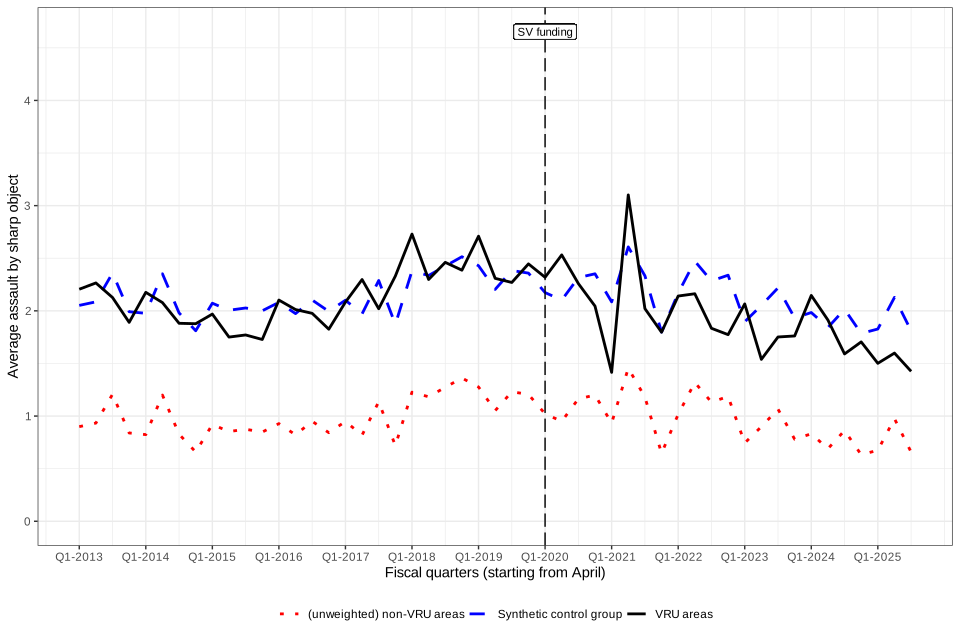
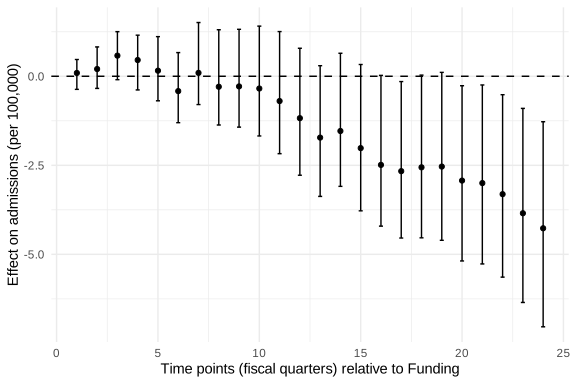
Figure 2.2 shows the estimated cumulative impact (difference between VRU areas and the synthetic control) with CIs, plotted over fiscal quarters since VRUs began. These cumulative estimates reflect the summed average effects after funding and illustrate that consistent reductions can yield statistically significant outcomes. The figure also supports the view that VRUs are a long-term intervention, with impacts often emerging after 5 to 10 years.
Figure 2.2: Hospital admissions for sharp object assaults (aged 24 and under), estimated cumulative effect (Model 1)
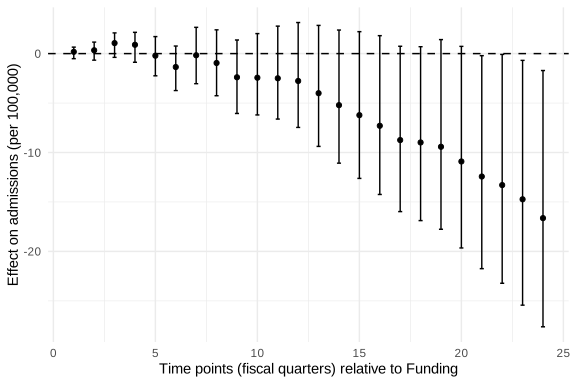
Figures 2.3 and 2.4 present corresponding data for hospital admissions resulting from any violent assault, both for individuals aged 24 and under and across all age groups. These figures demonstrate incremental impacts similar to those previously discussed. The observed trends between the VRUs and the synthetic control groups align with those shown in Figure 2.1, exhibiting close tracking prior to funding (which indicates a reliable counterfactual) and consistently lower levels following the receipt of funding. The seemingly stronger effects for aged 24 and under, aligned to VRUs focus, can be noted but with the caveat that if side-by-side with the estimates for all ages, the CIs would overlap (that is, they are not stronger effects in a statistically significant sense).
Figure 2.3: Hospital admissions for any violent assaults (aged 24 and under), estimated cumulative effect (Model 1)
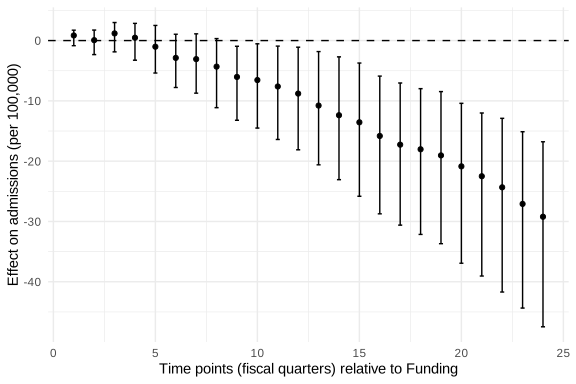
Figure 2.4: Hospital admissions for sharp object assaults (all ages), estimated cumulative effect (Model 1)
Overall, the results on hospital admissions – consistently the most reliable measure of SV for this evaluation – are the strongest evidence to date of a potential SV funding effect. These results are strengthened further when considered against past evaluation results, where there have been consistent indications (although not always statistically significant at the 5%) of potential reductions, and the VRU programme logic. The latter relates to the longer-term public health approach that underpinned the VRUs’ formation and subsequent direction. From the outset, it was understood that VRUs would not have an impact overnight. Drawing on other relevant programmes (for example, the Cardiff Model and the Scottish VRU), impacts were envisaged after 5 to 10 years. With approximately 6 years of post-VRU data, the analysis has added weight to this argument that impacts are gradual and cumulative.
2.2 Exploring differences in impact and approaches
Meta-regression was used to determine whether there was any significant variation in the impact seen across the VRUs. The meta-regression explored whether different levels of VRU funding or approaches on how the funding was used could explain differences in impacts between VRUs. This used the impact estimates generated using synthetic controls for each VRU and then treating these as individual studies. Analysis focused on the impact estimates for hospital admissions outcomes, as these are less prone to the limitations (for example, differences in recording) of police-recorded outcomes, the low counts associated with homicide outcomes, and were statistically significant at the programme-level.
Significant variation between VRU-level impact estimates was detected for the effect on hospital admissions, both from sharp objects and any violence. Table 2.2 shows which potential explanatory variables showed a statistically significant (at the 95% level) result.
This shows that impact estimates for VRUs with higher total (Core) funding and spend on interventions (Core and match funding) were more likely to indicate a reduction in hospital admissions from both sharp objects and any violence. Per capita funding was also associated with reductions in hospital admissions from any violence admissions.
Table 2.2: Models that returned a statistically significant result for different types of hospital admissions
| Explanatory variable tested | Sharp object (aged 24 and under) | Any violence (aged 24 and under) |
|---|---|---|
| Total VRU funding | X | X |
| VRU intervention spend | X | X |
| VRU and match funding intervention spend | X | X |
| VRU funding per capita | ||
| VRU intervention spend per capita | X | |
| VRU and match funding intervention spend per capita | X |
Impact of hotspot policing – contextual evidence
Hotspot policing funding was provided to all VRU areas. While VRUs also target activities towards areas with high levels of violence and risk factors associated with this, it was not their sole focus.
The Home Office’s published bespoke analysis provides important insights to help frame the SV funding (VRUs and hotspot policing) impacts set out in section 2.1. The analysis focused on comparing instances of violence in areas on days with hotspot patrols and days without. The first published report covered up until March 2022 and the second to March 2023. The first report concluded that the funded hotspot policing resulted in an average 7% reduction in violence against the person and robbery. This statistically significant effect equated to an estimated 1,100 violence against the person and robbery crimes prevented, and £36 million in societal benefits (Jeffery et al, 2024). While the results from the second report did not see the same statistically significant effects, it did evidence significant numbers of additional patrols and impacts on crime outcomes (the proportion of certain crime types solved). Considered together, the findings from these reports indicate that hotspot policing was likely having an effect alongside VRUs and highlight the importance of not attributing the impacts discussed in prior sections solely to VRUs.
Previous years’ evaluations included primary analysis of assumed hotspots, focusing on lower layer super output areas (LSOAs) in each area with the highest levels of historical violence. However, this analysis reported mixed results owing to a mixture of very high variability in the LSOA-level PRC data and changes in the availability of data from different police forces over time. This meant that the models and results from the synthetic control group analysis of this data had become increasingly volatile and not robust.
2.3 VRU partner perceptions of impact
This section reports the results from an online survey of VRU partners. It focuses only on their overall perceptions of VRU impact and contribution. Chapters 3 and 4 provide the detail on how VRUs have contributed.
In total, 57 responses from across 15 VRUs were received. Key points included:
- approximately 80% of respondents either strongly agreed or agreed that the VRU has had a positive impact on reducing violence in their area
- more than 90% either strongly agreed or agreed that the VRU has improved inter-partner working
- four-fifths either strongly agreed or agreed that VRUs have contributed to the coordination and support of system-wide response to SV instances
- similarly, 76% either strongly agreed or agreed that VRUs have contributed to the coordination and support of system-wide response to instances with the potential to escalate to violence
- around 70% or more strongly agreed or agreed that VRUs have contributed to the identification, referral and coordination of support for different at-risk groups. Although a higher proportion (20%) of ‘neutral’ responses for those potentially at risk but not known to statutory services
3. Whole-systems approach to violence prevention
This chapter explores the evolution and current application of the whole-systems approach to violence prevention across VRU areas, as reported by VRUs and partners. It begins by tracing the journey of VRUs since their inception in 2019, examining how the initial concept of a ‘public health approach’ has matured into a more sophisticated, embedded whole-systems model. Drawing on learning from previous evaluations, it outlines the key successes and persistent challenges that have shaped this evolution. The chapter then presents analysis of the current reported whole-systems approach, to explore how partners respond to both critical incidents and individuals at risk, based on interviews with VRUs and partners. This includes considerations of the effectiveness of these responses, their limitations, and, crucially, the perceived contribution of VRUs in strengthening the system and driving a more coordinated and preventative approach.
3.1 The evolution of the whole-systems approach
Since their establishment in 2019, the VRUs across England and Wales aimed to implement a whole-systems approach to preventing violence. This approach, rooted in public health principles, marked a strategic shift away from reactive, enforcement-led responses towards a preventative model focused on the underlying causes of violence. This section presents a retrospective analysis drawing on previous years’ evaluation reports, outlining how the new approach was conceptualised and implemented over time.
3.1.1 Initial conceptualisation and implementation
VRUs were mandated by the Home Office to provide local leadership and strategic coordination for a ‘public health approach’ to violence prevention. This was heavily influenced by established models from the Scottish VRU and the WHO, which treat violence as a preventable epidemic rather than an inevitability. The core principle was to systematically identify and mitigate the risk factors that increase an individual’s likelihood of becoming a victim or perpetrator of violence. Crucially, the VRU model was designed not to replace existing statutory efforts but to act as a catalyst, providing the strategic direction to enhance and co-ordinate the local multi-agency response, which could be fragmented and operating in silos.
A mandatory core function for each VRU was the development of a comprehensive SNA. This data-driven analysis, combining police data with intelligence from health, education, and social care, was intended to create a shared and detailed picture of the specific local drivers of SV and the cohorts most affected. In turn, the SNA would inform a multi-agency Response Strategy outlining a coordinated plan. Initially, driven by the definition and key monitoring metrics set by the Home Office, many VRUs focused their efforts on reducing SV (particularly knife crime) among those aged 24 and under. However, it was a key contribution of the VRU model that nearly half of the areas broadened this scope from the outset. Using data, they linked interconnected issues such as domestic abuse, sexual violence, and exploitation. This demonstrated an early recognition that violence is multifaceted and complex. The dedicated funding and vision enabled VRUs to convene partners to foster a more joined-up and preventative way of working.
While VRUs initially adopted either centralised or ‘hub and spoke’ operational structures, the programme saw a widespread evolution towards a more effective hybrid model. This refers to a model where a central VRU team covers the whole PFA while coordinating with and devolving funding and responsibility to local entities (for example, CSPs). This approach was developed to better leverage the expertise and infrastructure of existing local partnerships, particularly those within LAs and CSPs. The key advantage of this model was its ability to blend the VRU’s central strategic coordination with local delivery, which stakeholders believed created a more efficient and effective multi-agency response aligned to (varying) local needs.
3.1.2 Embedding a whole-systems approach
Over time, evaluation findings suggested that the conceptualisation and implementation of the whole-systems approach demonstrated significant maturation. A key development was the shift from different agencies implementing public health principles in their individual practices to a more collaborative, unified whole-systems approach. This reflected a growing understanding across partner agencies that preventing violence was a shared responsibility.
VRUs moved from an initial focus on establishing structures and relationships to becoming more deeply embedded within the local strategic landscape, with their analysis helping inform mainstream commissioning and strategic planning. While there was variability across VRUs, the overall direction was positive. The introduction of multi-year funding from 2022 onwards was a critical enabler, allowing VRUs to move beyond reactive, short-term planning. This stability fostered greater commitment from partners and enabled the commissioning of longer-term, evidence-based interventions that required time to demonstrate impact.
Furthermore, the introduction of the statutory SV Duty in 2023 helped to validate and formalise the work VRUs were already leading. For most areas, the VRU provided a ready-made architecture to deliver on the Duty, providing a legislative backbone for their existing whole-systems model, strengthening governance, and enhancing partner accountability. Consequently, the VRU’s role evolved from being primarily a funder or coordinator to that of a strategic convenor and facilitator. VRUs were guiding the multi-agency system, brokering complex data sharing agreements (DSAs), commissioning joint training and identifying systemic gaps in provision for which no single agency was responsible. VRUs also supported partnership working and communication, which, alongside the SV Duty, helped to streamline efforts and reduce duplicative activity. A notable area of development over time was in community engagement. While initial progress in meaningfully involving young people and the wider communities was limited, by 2023, this had become a more explicit and sophisticated element of the VRU model, with a recognised need to co-develop activities with those with lived experience to ensure legitimacy and effectiveness.
3.1.3 Key challenges in embedding a whole-systems approach
The journey towards a whole-systems approach has faced significant challenges, consistently reported since the VRUs’ inception, which provide key learning for future policy and practice. A primary and persistent reported challenge was securing consistent and meaningful engagement from all necessary partners. While collaboration was a core strength, sectors such as health and education often faced competing priorities and resource constraints, making it difficult to fully embed violence prevention into their core activities. This was sometimes compounded by the initial branding of the programme; the ‘Violence Reduction Unit’ name, with its perceived focus on enforcement, occasionally acted as a barrier to engagement for partners, like schools, who were wary of being associated with a police-led agenda.
Data, key to an evidence-led approach, presented another significant obstacle. Despite progress in developing SNAs and data dashboards, VRUs consistently struggled to access the granular, high-quality data needed for sophisticated analysis and targeting of activities. Accessing timely, individual-level data from health, probation, and education partners proved to be a persistent and complex issue, often hampered by legislative barriers and incompatible IT systems.
Finally, evaluation findings often highlighted structural and cultural challenges. Embedding a preventative approach requires a long-term cultural shift across multiple organisations, which takes significantly longer than typical government funding cycles. The initial reliance on short-term funding settlements hindered long-term strategic planning and the sustainability of interventions, as well as uncertainty for partners and staff. Furthermore, VRUs had to navigate a complex and sometimes crowded landscape of existing local partnerships and overlapping national initiatives, which could lead to duplication of effort and confusion over roles and responsibilities. Overcoming these challenges required strong local leadership, and a continuous effort to build trust and demonstrate the value of the VRU’s role.
3.1.4 Identifying risks and key partners
Recognising the insights and expertise developed by VRUs, the 2024 evaluation report synthesised learning from across the programme to identify a set of common risk and protective factors that VRUs and their partners were prioritising. This analysis was intended to contribute to the evidence base by sharing where VRUs could best target their efforts and interventions.
The most pressing risk factors identified were interrelated, spanning individual, family, and community levels and creating cumulative risk. These included: adverse childhood experiences (ACEs) and trauma; educational factors such as school exclusion and persistent absenteeism; criminal exploitation, including involvement in gangs and county lines; and wider contextual factors such as deprivation and inequality. This interconnectedness underscored the necessity of a multi-agency response. VRUs and partners often framed protective factors as the inverse of these risks, emphasising the importance of not just mitigating harm but actively building resilience by fostering educational engagement, strengthening positive family and peer relationships, and ensuring access to support services and alternative pathways.
The 2024 evaluation also highlighted the central role of specific statutory partners in addressing these risk and protective factors:
- the police provided critical data and intelligence, combining preventative activities with proactive enforcement such as hotspot policing
- health services contributed by sharing data on violence-related injuries, guiding the public health approach, and delivering interventions in clinical settings
- the role of education was pivotal, focusing on school-based prevention and developing trauma-informed practices, though often constrained by competing priorities
- LAs and their CSPs were the drivers of local governance and delivery, responsible for embedding referral pathways and engaging communities
Communities and the voluntary sector were identified as equal partners, essential for engaging residents, informing the VRU’s work, and co-producing interventions, with statutory agencies playing distinct but complementary roles alongside them.
3.2 Whole-system approaches and the VRU contribution
This section draws upon data from interviews with VRUs, LA and CSP stakeholders to explore current whole-system responses, their perceived effectiveness and experienced challenges, and, linking to the ToC, VRUs’ contributions to the approach. To provide a detailed and structured analysis, the system was initially examined through 5 key elements based on the findings of the 2023 to 2024 evaluation:
- response to specific incidents of serious violence: the multi-agency response to completed acts of SV
- response to incidents with the potential to escalate: proactive measures taken to de-escalate situations with a high risk of violence
- individuals potentially at risk: early identification and intervention for those with initial risk factors
- individuals known to services: coordinated support for those with more pronounced risk factors already engaged with services
- known offenders: management and support for individuals who have already committed offences to prevent re-offending
To best illustrate the common principles and overlapping strategies that characterise the whole-systems approach, these elements have been consolidated for reporting into two broader thematic subsections: ‘Responding to incidents’ and ‘Identifying and supporting at-risk individuals’. This structure allows for a clearer and more coherent narrative, while still highlighting the key distinctions in approach and intensity that apply at different stages of risk.
3.2.1 Responding to specific incidents
Findings suggested that the whole-systems approach to both specific incidents of SV and incidents with the potential to escalate to (serious) violence was reportedly broadly similar. This involved a core group of multi-agency partners, with the primary distinction being the threshold of violence, which determines the urgency and formality of the response. Generally, during interviews, incident response was considered a secondary function to VRU’s primary focus on early intervention and prevention. While much of the VRUs’ contributions to reducing the likelihood of SV incidents have stemmed from wider, upstream work (discussed in section 3.2.2), they have demonstrated a significant role in strengthening and shaping the multi-agency response when incidents do occur.
The current whole-system approach
Across VRU areas, the response to incidents was multi-agency and built on established partnerships that often pre-dated the formation of VRUs. The reported process for dealing with an SV incident was most commonly police-led, including the immediate tactical response and focusing on investigation, intelligence gathering and ensuring public safety. Often, relevant statutory agencies (for example LAs, Social Care, Youth Justice) would then work in conjunction with the police on multi-agency panels and strategic incidents meetings (commonly, ‘Gold Groups’) to co-ordinate the wider system’s resources, agree on public messaging, and set the strategic direction for the medium-term response. For incidents with the potential to escalate, such as rising community tensions or disputes identified through intelligence, LAs or CSPs were reported to take the lead more commonly. This included coordinating a proactive approach through established multi-agency forums, which review intelligence from various sources to co-ordinate efforts to de-escalate the situation before violence occurs.
The key partners involved were largely consistent across VRU areas, comprising police, LAs and CSPs, social care, youth justice, health services (particularly A&E departments), and increasingly, the VCSE sector. Stakeholders highlighted that the roles were generally well-defined: police investigating; LAs reassuring and managing community impact; social care leading on safeguarding; and VCSE partners providing grassroots intelligence and delivering community-based interventions, often acting as a vital bridge between communities and statutory agencies.
However, despite this established framework, the whole-systems approach reportedly faced several limitations that hindered its effectiveness, which can be traced back to the wider challenges reported in previous evaluation reports.
The most frequently cited challenge amongst VRU, LA and CSP stakeholders was information sharing. For incident response, this could manifest as police intelligence arriving too late for partners to act pre-emptively, or being so heavily redacted that it offers little actionable insight. Differing definitions of what constituted a ‘critical incident’, and the absence of integrated data systems created barriers, leading to a fragmented view of risk and duplicated effort.
Secondly, the system has reportedly consistently been constrained by resources and funding. Limited capacity within partner agencies was a commonly reported issue, exacerbated by short-term, uncertain funding cycles. This instability particularly affected the VCSE sector, making it difficult to retain experienced staff needed for a credible and consistent response.
Thirdly, a lack of process clarity and consistency was reported, which can result in a ‘postcode lottery’, where the quality and speed of the multi-agency response depend more on local relationships than on systemic design. Many stakeholders reflected difficulty in the complex task of aligning the different priorities and operational cultures of multiple organisations during a critical incident or crisis.
Finally, several stakeholders noted barriers to community trust hindering the effectiveness of the whole-system response to violent incidents, including historical mistrust for the police and other agencies, risking inflaming tensions.
The VRU contribution
While VRUs rarely took on the operational lead following an incident, stakeholders reported that they have generally established a significant strategic role in strengthening the system around the response. Their contribution has been one of facilitation, enhancement and, to varying degrees, strategic investment.
A primary contribution of VRUs, recognised in most cases, was convening and strengthening the multi-agency partnerships which form the backbone of the incident response. By providing a neutral and strategic forum, VRUs often improved coordination and streamlined communication during critical situations. This typically involved bringing key partners together for strategic oversight and incident reviews to understand the root causes of incidents, better prevent future escalation, and ensure the response included support and additional resource if needed. In most cases, a member from the VRU team sat on strategic boards, offering a public health understanding to the planned response. Some VRUs have reportedly provided analysis and research to inform partners’ understandings of incidents, hold statutory services accountable for their role in violence reduction, and foster reflective practice.
“This [response] is [about] community impact, lessons to be learned for agencies, and what our response to prevent these incidents will be in the future.”
VRU director
Many VRUs articulated their role in tackling the issue of information sharing within the system response. A common approach was to support the development of information-sharing protocols (or data sharing agreements (DSAs)) between partners for timely and actionable data, as well as provide insights through SNAs to create a stronger, shared understanding of where and when incidents are most likely to occur. A smaller number of VRUs also developed shared data platforms and analytical tools, which can help with incident response and resource deployment, for example, deploying youth work teams to an emerging hotspot for the weekend.
A contribution recognised across all VRUs was funding and commissioning targeted interventions to fill critical gaps in the immediate response. Examples included funding detached youth work teams and community-led organisations to be deployed into hotspot areas following an incident to de-escalate tensions and prevent retaliation. The commissioning of A&E (or custody) navigators also aims to seize the ‘reachable moment’ immediately following a violent incident when a young person may be more receptive to offers of help. Some VRUs have innovated further by ring-fencing dedicated funds for critical incidents. Reportedly, these funds have enabled a timely response, providing LAs and partners with flexible resources to launch bespoke interventions, such as community reassurance or trauma support.
Case study example: formalised, flexible incident response
A VRU designated a Critical Incident Fund to allow for the deployment of immediate community support in the aftermath of an SV incident. The Fund was designed to bypass time-consuming support procurement, channelling resource directly to grassroots organisations for trauma support, community engagement and mentoring, and de-escalation. Decisions on how to allocate the funding were devolved to LAs, allowing for flexible, community-centric immediate responses.
Another VRU developed a rapid response toolkit to guide partners through defined, trauma-informed responses to serious incidents. This allowed for consistent, de-escalation focused response models to be adopted across the area.
Increasingly, VRUs were also reported to be contributing directly to improving the response. This included supporting the development of toolkits and frameworks for rapid debriefing to ensure learning from one incident is captured and used to improve the response to the next. Supporting trauma-informed approaches within the response is also a core activity for many, focusing on the care provided to victims, witnesses, and even perpetrators in the aftermath of violence. In many cases, communications by VRUs sought to reassure and raise awareness within affected communities.
3.2.2 Identifying and supporting at-risk individuals
This section outlines qualitative findings on the whole-system approach for identifying and supporting individuals at various stages of involvement in violence, from those with early risk factors to known offenders. Findings suggested that the response can be thought of as a graduated system, with the formality, intensity, and lead agencies shifting as an individual’s risk level increases. This approach recognises that the drivers of violence are complex and that effective support must be proportionate to the needs and risks presented. VRUs reportedly played a crucial role in strengthening this system by funding key interventions and fostering the multi-agency collaboration that underpins it.
The current whole-system approach
The whole-system approach to support was described by stakeholders as a graduated response. At the earliest stage, for individuals potentially at risk, the system was geared towards early identification and intervention. Schools were frequently cited as the primary point of identification, flagging concerns through attendance data, behavioural changes, or direct referrals. LA Early Help teams, VCSE partners, and (in some areas) police (prevention teams) then managed referrals and delivered community-based support, often focused on building protective factors. The process was often described as less formal, relying on multi-agency meetings like Multi-agency Safeguarding Hubs (MASH) to share initial concerns and co-ordinate lighter-touch support.
As risk factors became more pronounced and individuals became known to services, the response became more structured and intensive. Stakeholders noted that social care often took a leading role, convening formal panels such as Complex Strategy or Contextual Safeguarding meetings where statutory and non-statutory partners coordinated bespoke support packages designed to address identified needs. Finally, for known offenders, the system was reportedly led by probation (managing adults) and youth justice services (managing aged 17 and under). The response was described as highly formalised through structures like Integrated Offender Management (IOM), which focused on managing the risk of harm and preventing re-offending through a combination of support and enforcement.
Despite this graduated approach, a set of limitations that hindered effectiveness at every stage were consistently highlighted:
- information sharing: described as the most pervasive challenge, stakeholders frequently raised issues with navigating legal frameworks like GDPR, which particularly limited data sharing for the aged 18 and over cohort, creating a cliff edge where holistic support became harder to co-ordinate; high staff turnover in partner agencies was also said to hinder the embedding of consistent information-sharing practices, while a lack of integrated IT systems created persistent technical barriers that forced reliance on manual workarounds
- resources and capacity: limited funding was cited as a universal constraint, which reportedly led to long waiting lists for specialist services, such as for mental health assessments, leaving individuals without timely support; a lack of universal youth provision was also noted as a key gap, removing a vital preventative layer of support – the reliance on short-term funding cycles created significant challenges in sustaining effective interventions and retaining experienced staff
- engagement and continuity: a constant struggle reported by many was the difficulty in engaging individuals, particularly those aged 18 and over or from communities with historical mistrust of services; this challenge was said to be exacerbated by high staff turnover in key roles like social work – this ‘churn’ prevented the building of trusted, long-term relationships, which were viewed as fundamental for effective support and without which interventions were unlikely to succeed
- process inconsistency: many interviewees reported the existence of unclear referral pathways, ambiguous thresholds for support, and inconsistent application of processes across different LAs, often described as creating a ‘postcode lottery’ of provision, where the support an individual received depended heavily on their location and the knowledge of individual practitioners, rather than on a clear, system-wide entitlement
The VRU contribution
While not directly providing support to individuals, VRUs’ strategic and more operational role (relative to incident response) in these elements reflected their core focus on early intervention and prevention. Their reported contributions can be categorised as improving coordination and information sharing, funding key gaps in provision, and developing more effective processes.
A key contribution attributed to VRUs was their role in facilitating the multi-agency cooperation that underpinned the entire system. Functioning as a neutral convenor, VRUs provided a crucial space for partners to overcome the operational silos and differing priorities that can create friction in a multi-agency environment. For example, they helped bridge the gap between a police focus on enforcement and a social care focus on safeguarding. At the early intervention stage, this involved building trusted relationships with schools and community groups to improve the flow of intelligence. For higher-risk individuals and offenders, VRUs convened or supported strategic meetings, established DSAs, and facilitated joint working between key partners like police, probation and youth justice services. This was said to have provided a crucial neutral space for partners to develop a shared understanding of risk and a more coordinated approach to its management, ensuring that individuals did not fall through the cracks between services.
Case study example: Strengthening the school-to-service pathway
Through evidence-based targeting and commissioning embedded roles and protocols within schools, a VRU was able to bridge the gap between education and other services, ensuring that early indications of risk (for example, behavioural change, low attendance, or risk of exclusion) triggered early support and referral decisions. The VRU targeted interventions at schools within identified violence hotspot areas, commissioning Student Support Champions to work with a caseload of young people within secondary schools. This included preventative 1:1 and group work within schools, as well as signposting to other statutory or community sector services. The VRU also developed a Transitions Project to work with identified children prior to them moving to secondary school, particularly those whom the data suggested could be at risk of involvement in violence during the transition (for example, with a history of familial violence). This was supported by a universal knife protocol across schools in all LAs in the area, which equipped schools with information and defined referral routes into services for pupils who carried knives. As the central coordinating function, the VRU worked to ensure that support was embedded within schools to prevent escalated risk. Interventions also ensured that schools were not isolated when risk did escalate, and that there were options in place to stop young people falling out of school without a coordinated handover into support services.
“[school champions] identify cohorts of young people to do some very targeted case work with to hopefully reduce their risk of being excluded from school- to support them to stay in school- but [also] identify any other vulnerabilities and risks that might need to be addressed beyond the school gate as well.”
VRU director
All VRUs provided funding for interventions across the different levels of risk, commissioning services to fill gaps that statutory provision could not meet. For those potentially at risk, VRUs widely commissioned preventative interventions such as community mentoring, sports programmes, and educational workshops. Some VRUs funded more intensive, place-based models to embed community voice and experience into local support. For individuals known to services, funding was described as more bespoke, supporting targeted group work and specialist counselling. For known offenders, the most common initiatives funded were custody (and A&E) navigators to provide immediate support during ‘reachable moments’. Some VRUs also reported funding mentoring programmes that leveraged lived experience, which they considered as vital for building credibility with this cohort.
For early identification, some VRUs had developed intelligence forms for schools, universal risk assessment tools, and sophisticated data dashboards. These tools helped partners move beyond anecdotal evidence to a more objective, data-driven approach to targeting resources. To support those already known to services, most VRUs delivered trauma-informed training to frontline professionals. This involved equipping staff with the skills to recognise the signs of trauma and adapt their approach, which was seen as key to building trust. For the offender cohort, VRUs supported developing new interventions, such as prison-based group work or multi-agency co-located teams, to provide a more holistic and seamless response.
Case study examples: Data pipelines to proactively manage risk
A habitual knife carriers index based on police-reported crime and intelligence worked to bridge the gap between identification and support provision. Police used the index to reach out to individuals via letter with signposting to organisations for lifestyle change and support offers. Analysts maintained the index, collating data on various risk factors (for example, mental health issues or previous involvement in violence), and the VRU convened involved partners to ensure a proactive support offer for at-risk individuals.
3.3 Lessons learned and potential future focus
Findings indicate that the journey from the initial public health concept towards a mature whole-systems approach to prevent violence has been one of significant progress. However, identified consistent and systemic barriers limit its full potential. The analysis in this chapter shows that the same key partners (police, health, education, LAs and the VCSE sector) are consistently central to addressing the most pressing risk factors at different levels. Therefore, to maximise impact, especially with finite resources, future efforts could be guided by the following key lessons:
- lead as a strategic convenor, not just a funder: the VRU’s core value is providing neutral leadership that bridges a fragmented system; its greatest strength lies in facilitating collaboration, brokering agreements and fostering a shared vision that no single agency can achieve alone
-
target specific ‘friction’ points within the system: the most significant gains will come from fixing the critical connection points where the existing system is less effective or consistent – this requires a pragmatic focus on:
- the school-to-service pathway: given that educational factors like changes in behaviour and exclusion are key (early) risk factors and schools are uniquely positioned to identify these, resources should be focused on simplifying and standardising the referral process from schools
- data flows and processes: while a common data platform remains a long-term ideal, the persistent challenges suggest a more targeted approach is needed now, which means supporting specific DSAs and referral processes between the key partners most involved at different levels of risk
- commission for continuity: the system can fail at points of transition and where trusted relationships are broken by staff turnover; if supported by central government with multi-year commitments, VRU funding can counter this by prioritising multi-year contracts with providers to ensure stability, and by funding roles that support individuals through critical transitions (for example, from youth to adult services)
- post-incident learning: while not a core focus for VRUs, formalising their role as the neutral facilitator of rapid multi-agency debriefs after serious incidents can improve consistency and further solidify their value amongst partners
- drive the development of a more sophisticated, needs-led system: there was a shared view that VRUs could drive the development of more sophisticated, needs-led interventions; for offenders, this meant a greater focus on robust exit strategies that provided meaningful employment and alternative social networks; for all individuals, it meant a continued push to embed trauma-informed, person-centred approaches and to genuinely co-produce services with communities and individuals with lived experience – all seen as essential to build the trust and legitimacy necessary for effective engagement and lasting change
4. VRU interventions
This chapter sets out the programme-level findings on the VRU-funded interventions. Recognising the variance in VRU-commissioned interventions, this chapter does not intend to compare local approaches. Rather, the intention is to contribute to understanding how interventions fit into the whole-systems approach, the effectiveness of VRUs and whole-systems approaches locally, inter-partner collaboration, and outcomes. This chapter covers the ToC domain of intervention commissioning and delivery.
The chapter begins by describing, at a national level, how commissioning (numbers and focus) evolved over the duration of the VRU programme, and the eventual portfolio of interventions in 2024 to 2025. It then reflects on how VRU intervention delivery and outcomes changed over the years and draws upon qualitative data from in-depth case study visits in 2024 to 2025. These findings are then complemented by key insights from an evidence review of local evaluation reports to situate case study findings within the broader landscape of VRU-funded interventions. Finally, this chapter concludes with lessons learned on intervention commissioning, delivery and outcomes.
4.1 Intervention commissioning
4.1.1 Intervention commissioning and delivery over time
Over the past 6 years, evaluations have demonstrated how VRUs have progressively refined their intervention strategies in response to emerging needs and a maturing understanding of local issues. A retrospective assessment of programme-level VRU evaluations demonstrates that, since inception, VRU approaches to commissioning interventions have grown more strategic, evidence-based and collaborative over time. The overall number of interventions has generally increased since the programme’s inception.
Initially, VRUs established a mixed portfolio of interventions targeting a range of risk levels. Evaluations suggest that during the formative years of VRUs (2019 to 2021) and amidst the COVID-19 pandemic, VRUs’ commissioning of interventions tended to be reactive and targeted mostly towards universal provision. Most often during this time, intervention commissioning was undertaken prior to the development of SNAs and Response Strategies due to the short timescales of the initial one-year funding cycle. VRUs often directed funding towards existing interventions to enhance capacity or scale up activities.
The onset of the pandemic marked a clear pivot towards universal support, designed to reach a broad population during a period of widespread disruption. The aftermath of the pandemic, however, saw a strategic shift in VRU commissioning. As the programme matured post-pandemic, a more targeted approach emerged, with decisions becoming more strategic and evidence-based than in year one. VRUs used SNAs and Response Strategies to inform decisions based on local data and need, increasingly targeting interventions for ‘potentially high risk’ and ‘known risk’ groups, with a reduction in universal support compared to year one. While universal interventions continued to form a significant part of the portfolio and reached the largest number of people, the strategic focus on higher-risk groups became more pronounced.
Introducing the 3-year funding cycle (in 2022) and the SV Duty (2023) offered a more stable funding environment with increased involvement from partners across the whole system. Between 2022 and 2024, evaluation findings demonstrated a maturation of VRUs’ evidence-based approaches to intervention commissioning. Notably, the provision of 3-year funding enabled VRUs to commission through more structured processes with a view to longer-term delivery and impact. This included utilising a broader range of data insights (including SNAs and intervention monitoring) and increased confidence amongst VRUs to test innovative interventions while recommissioning based on local needs and existing evidence (for example, YEF Toolkit). A key development contributing to evidence-based commissioning was the Home Office requirement for VRUs to spend at least 20% (and later 30%) of their intervention budget on interventions identified as ‘high impact’ by the YEF Toolkit. The development of more robust monitoring and evaluation processes allowed VRUs to use data and local evaluation insights more often to upscale or discontinue interventions depending on their effectiveness. There was evidence across evaluations of increasingly collaborative – although varying in levels of partner engagement – commissioning decisions. Evaluation findings also indicated an increased emphasis on co-design with young people and communities, particularly in shaping intervention activities.
This evolution is also reflected in the delivery models. After an initial focus on a mix of prevention and desistance, there was a significant shift towards ‘early intervention’ models from the third year onwards. This indicated a strategic move to engage with at-risk individuals sooner to divert them from pathways into violence.
However, challenges relating to intervention commissioning, delivery, and outcomes have remained since the onset of VRUs. While there has been a growing body of evidence to suggest that VRU-commissioned interventions have, for the most part, successfully led to their intended early outcomes for young people, interventions have consistently faced challenges relating to monitoring and evaluation. Recurring challenges include attributing and measuring impact with a lack of baseline data and infeasibility of impact evaluations (for example, randomised control trials), and the capacity for monitoring and evaluation amongst relatively small organisations facing high demand with constrained resources. Concerns about intervention sustainability beyond VRU funding have also remained.
4.1.2 Intervention commissioning in 2024 to 2025
Analysis of self-reported monitoring data (quarter 4, January to March, returns) showed that VRUs commissioned or funded a total of 338 interventions directly supporting young people or young adults (aged 24 and under) in the year ending March 2025. Common intervention approaches included sports programmes (43), mentoring (35), social skills training (34), and A&E navigators (30). Like previous years, a large number (108) of interventions were recorded as ‘other’ approach, which often combined different approaches.
Table 5.1 shows the primary target group of interventions against delivery model, reported by VRUs. Interventions targeting known risk groups were most common (136), indicating VRUs targeting their commissioning at those most in need. In line with the VRUs’ public health approach, early intervention and prevention were the dominant delivery models. Interventions for universal or potentially high-risk groups typically use prevention or early intervention models. In contrast, those with known risk factors or involvement in violence or crime are more commonly supported by therapeutic or desistance-focused delivery models.
Table 5.1: Intervention target groups and delivery models
| Target group | Prevention | Early intervention | Therapeutic | Desistence | Total |
|---|---|---|---|---|---|
| Universal | 31 | 32 | 11 | 0 | 74 |
| Potentially high risk | 30 | 39 | 8 | 3 | 80 |
| Known risk | 35 | 51 | 36 | 14 | 136 |
| Involved in violence | 0 | 5 | 6 | 27 | 38 |
| Total | 96 | 127 | 61 | 44 | 328 |
Notes:
- Ten interventions did not specify a target group.
Table 5.2 summarises the number of people supported and VRU funding by intervention target group. In 2024 to 2025, interventions for young people or adults reached 304,777 individuals, with £32,599,592 spent across VRUs (core and match funding). As expected, and in line with previous years, the numbers of individuals supported and average intervention funding appeared to be correlated with target groups. Interventions targeting universal and potentially high-risk groups reached substantial numbers of individuals and were, on average, lower cost. Whereas those interventions focused on those with known risks or involved in violence or crime tended to cost more but still supported substantial numbers (from a more limited pool). It should be noted that almost half of the total number of known risk individuals supported were accounted for by a single crime prevention fund dispersed across all LAs within one VRU.
| Target group | Number of interventions | Number of individuals supported | Mean funding | Median funding |
|---|---|---|---|---|
| Universal | 74 | 131,567 | £77,097 | £27,724 |
| Potentially high risk | 80 | 77,852 | £76,965 | £36,000 |
| Known risk | 136 | 82,241 | £92,312 | £31,126 |
| Involved in violence | 38 | 13,117 | £215,339 | £110,842 |
| Total | 328 | 304,777 | £99,389 | £34,000 |
Notes:
- Ten interventions did not specify a target group.
4.2 Intervention delivery and outcomes
4.2.1 Insights from case study visits
The following section provides more detailed insights from the case study visits conducted in 2024 to 2025. Case study visits offered insight into how whole-systems approaches functioned in practice during the third year of the 3-year funding cycle ending in March 2025. Researchers explored the perceived effectiveness of intervention implementation, the extent to which interventions were delivered with involvement from multiple local partners, and interventions’ observed outcomes.
Intervention implementation and reaching target groups
Evidence suggested that commissioned interventions were perceived to be implemented effectively. This related to reaching their intended target groups and delivering activities as planned. Interventions employed flexible and person-centred approaches, tailoring support to the needs and preferences of those engaged. Reportedly, consent-based models wherein young people could opt-in, express their preferences, and relate to professionals with lived experience were particularly effective in sustaining engagement and reaching positive outcomes. Researchers observed inclusive and supportive environments during case study visits; staff were demonstrably skilled at creating dynamics in which the young people could express themselves while being held accountable for making positive choices. This was commonly allied to a blend of formal (for example, some using a structured timetable for activities or regular feedback and monitoring forms) and informal (including non-uniformed staff and non-hierarchical relationships) approaches.
However, several practical and wider challenges limited the perceived effectiveness of implementation. Several intervention staff expressed difficulty in meeting the demand for support locally; both in the sense of operating in localities lacking in youth activities and services, and amidst high mental health and other complex additional needs of young people. Lacking activities for young people locally emerged as an issue across several visited interventions, meaning that some young people had to travel a distance to the intervention (sometimes affecting their continued engagement). Difficulties in sustaining young people’s engagement were also attributed to their multiple complex needs, which could often lead to them de-prioritising the intervention (for example, experiences of homelessness or inconsistent contact details, trauma, mental health difficulties, or addiction). Open-door policies and trusting relationships between young people and professionals were particularly important for supporting engagement.
Evidence indicated that interventions took varying approaches to engaging target groups. There was a broad range of referral pathways across interventions, including statutory and non-statutory services, and family or self-referrals. For interventions engaging those already involved in violence/crime or with known risk factors, the approach tended to be systematic and formal. This often included approaching the young people with the support offer after referrals or intel had been passed on by agencies (for example, notification of a parent in prison via data sharing between prisons and police, or intervention staff being notified of a young person being in custody or hospital). Other interventions, particularly universal or those for potentially at-risk service users, commonly adopted a wider eligibility criterion (including sometimes accepting referrals on a case-by-case basis, with a broader age range or large geographical catchment area). In some of these cases, young people reported having self-referred to interventions through word of mouth (for example, via friends or detached youth workers).
“[friend] was telling me about the place and the [music] studio and everything, so I just came and like I said, I just got along with the workers and then from there, yeah, just been coming consistent.”
Young person
While most intervention staff agreed that they were meeting their target groups well, some expressed difficulties around referrals and eligibility criteria for supporting those at risk, particularly amid the aforementioned high demand for support across localities. Some stakeholders reported a desire to expand support, suggesting that formal cut-offs (based on age or duration of support) and lack of post-intervention support risked missing opportunities for violence prevention. This would, however, require additional capacity and funding. This year’s findings reflected the challenges outlined in the 2023 to 2024 evaluation, where establishing a shared understanding of those at risk among a wide range of referring bodies could prove difficult. It emerged from interviews with intervention staff that successful implementation of interventions often relied on sufficient resource and capacity within the wider whole system. Some intervention delivery staff from the voluntary and community sector felt that systemic challenges relating to the funding and capacity of statutory services resulted in an over-reliance on their services for a wide range of needs (for example, where statutory services did not have the capacity to cater to lower levels of need, including CAMHS or schools). Additionally, some stakeholders outlined that the multifaceted needs of the young people required close collaboration between the intervention and external services whose functioning and capacity was out of the VRUs’ and interventions’ control (for example, long waitlists for housing or mental health support).
Partner involvement
Evidence indicated that interventions were generally operating as an integral element of the whole-systems approach[footnote 5], providing access points to complex networks of partnerships locally. While the extent to which diverse stakeholders were engaged in delivery varied by intervention, all stakeholders reported some level of synergy between intervention staff and wider partners. A key distinction was that some interventions had direct roles for multiple partners (for example, the core intervention team focused on delivery while police and other statutory services focused on referrals) while others relied on ad hoc referrals and sought out contact with agencies (for example, CAMHS, educational psychologists, addiction or domestic abuse support services) where necessary for the individual young person. Also, some intervention staff directly interacted with other agencies as part of delivery (for example, custody navigators attending social service or school appointments and court proceedings with the young person) while others signposted young people to other activities and services depending on their needs. The latter included making connections with housing assistance, mental health services, employment support, or activities based on hobbies and interests. There was a sense amongst stakeholders that VRU-funded interventions represent one part of the whole system, and that successful implementation necessitates a holistic, cross-partner approach. Most intervention staff displayed a good knowledge of local provision, drawing upon either tacit knowledge or using local service directories in order to signpost young people.
Moreover, fieldwork visits observed a complementary partnership between interventions and statutory services in most cases. Young people and professional stakeholders reported that successful implementation and achievement of planned outcomes were underpinned by a community- or young person-led ethos. For many, the visited interventions reportedly represented a different approach to police-led, top-down interventions and prior negative experiences within education and criminal justice systems. Some interventions were embedded within statutory services, for example schools or pupil referral units, hospitals, or safeguarding or custody units within the police. Others were community-based but had dedicated revision and homework spaces, which was reportedly a useful form of wrap-around support to encourage a young person’s educational attainment and aspirations. A vast majority of young people reflected the sense that intervention staff listened to them and treated them with empathy in a way which other professionals had not always done. Intervention delivery staff from the voluntary and community sector could act as a conduit between young people and statutory services, offering alternative viewpoints and accompanying them to appointments.
“I didn’t know that I was gonna get that kind of [navigator] service while in custody. So, when I found out that someone was coming in to speak to me and I could leave my cell and go talk to the person- it’s a good feeling that goes through your body… And also, I don’t like speaking to police, so [it was good] not having to speak to them and letting out what’s on my mind.”
Young person
At the same time, the perception among young people that interventions were police-led (for example, those which involved the police as a key delivery partner) was reported to negatively affect young people’s and community engagement. Also, some intervention delivery staff expressed concern that police involvement could risk undermining the trust built up with young people. Several VRUs and interventions were working to improve public perceptions of the police.
An emergent theme across case study visits was that VRU-funded interventions were perceived to be bridging gaps between partners (by referring or signposting young people to services) or directly offering provision that would not otherwise be available locally. In some cases, mapping exercises or SNAs worked to highlight local gaps in provision. For some interventions visited, VRUs and interventions worked together to address a lack in capacity for intensive support locally (for example, employment support for young people with highly complex needs) or to improve ways to reach previously missed target groups (for example, data-driven work between the police, VRU, and interventions to identify children with a parent in prison). In other cases, particularly custody or A&E navigator interventions, timely contact at a ‘reachable moment’ with ongoing support where it would not have otherwise been available (for example, in the months between custody and court hearings) was the intention.
Related to this, evidence from intervention visits highlighted mutual, positive working relationships between intervention delivery organisations and VRUs. Consistently, VRUs rarely influenced service design and implementation but often leveraged their influence and connections within the whole system to increase referrals, facilitate engagement and data sharing between interventions and wider partners, and work towards whole-system change (for example, through trauma-informed or ‘child first’ training and approaches). Young people and communities supported by interventions were rarely aware of the VRU. However, this was commonly related to the ways in which VRUs trusted interventions to work independently, adapting and delivering their services in accordance with their local contexts. In the majority of cases, this meant that VRUs were understood to enhance and support local whole-systems approaches in a proportionate way to interventions and partners’ needs.
“I think the support that we receive from the VRU is as much or as little as you want it to be.”
Intervention staff
The outcomes of VRU-funded interventions
While operating for different target groups and with different formats, all visited interventions aimed to reduce violence and achieve various positive outcomes for young people and communities. Findings from intervention visits reflected those in previous years’ evaluations. Immediate and short-term outcomes varied, with strong evidence for VRU-funded interventions leading to the achievement of at least some outcomes relating to:
- connection: trust in services and trusted adults, being signposted or referred to other services
- education, employment and training: increased educational engagement or reduced risk of school exclusion, access to or engagement with employment, technical or other skills, achievements or awards
- social: attitudes to violence, self-confidence, leadership and teamwork skills, feelings of safety and belonging, respect for others, sense of resilience, and self-regulation
- wellbeing: mental health, drug use, housing, including access to support
- offending: reduced engagement in re-offending and/or antisocial behaviour, proximity to gang involvement, risk of criminal exploitation and engagement in risk-taking behaviours (Home Office, 2025)
The mix of reported outcomes typically required consistent engagement and the time taken for trusting relationships between young people and intervention staff to form. However, particularly for navigator interventions whose support came at ‘reachable moments’, feelings of relief and awareness of alternative life choices were reportedly immediate for the young people. Also, there was strong evidence for VRU-funded interventions leading to outcomes, which could have a long-term impact on a young person’s life, transcending intervention involvement. Young people reported having experienced a range of outcomes relating to avoiding conflict and violence, accessing training or employment, or pursuing hobbies and interests. Many reported having an improved outlook on life and newly found self-esteem. They often attributed this to the intervention staff being positive role models, particularly those with lived experience of violence or the criminal justice system. An emergent theme in some interventions was a sense of family-like belonging and community.
“They were fully my father figure truthfully. Like I don’t see [him] as my youth worker. I see him as like someone I can talk to.”
Young person
“… it takes a village to raise a child, and that’s what we’re doing.”
Parent
An empathic, trauma-informed approach was particularly helpful in encouraging young people to understand and reflect on their behaviour, reducing their risk of retaliation or re-offending. For example, one young person reported that they were non-verbal and uncomfortable in social settings after being attacked previously, suffering from extreme poor mental health. Through the intervention, they began to enjoy being around people, became more confident, and reported that the support from a dedicated youth worker and the social aspect of the intervention were their favourite aspects of the intervention.
“I was getting reassurance. I was getting good advice not to do stuff like that because it’s just going to extend there and it’s going to get bigger and bigger where I can’t control it.”
Young person
“Here, you work on your communication. You meet new people, you’re socialised. It’s a social space. That’s one sick thing about it - it’s social, no one’s on the phone here.”
Young person
Young people expressed very positive views about the intervention staff and other young people attending. In most interventions visited, the young people spoke of a sense of community and friendship, which led to feelings of belonging and improved mental health. One intervention brought together two young people who had previously been involved in conflict towards each other, but they had been encouraged by staff to talk, which led to discovering mutual interests and developing friendships.
Intervention staff and professionals reported evolving and improved relationships with local partners throughout intervention delivery. Improved ways of working and cultural shifts included embedded trauma-informed approaches and reduced ‘adultification’ of children and young people involved in violence.
4.3 Reviewing local evaluations of VRU-funded interventions
Researchers reviewed 93 published (or completed) local evaluation reports of a wide range of intervention types. Among the most prominently evaluated intervention types were A&E/hospital/custody navigators and mentoring and diversionary activities, with parenting/whole family and trauma-informed approaches also being evaluated quite frequently. Local evaluations of focused deterrence and educational interventions appeared less commonly.
The review found common evaluation methodologies and consistent challenges, which limited the ability to draw firm conclusions about the impact of interventions. Findings are similar to those in previous VRU programme-level evaluation reports. Most local evaluations were mixed-methods process evaluations aiming to understand how interventions were being delivered, identify barriers and enablers, and assess alignment with objectives. Evaluation approaches commonly relied on qualitative data to understand intervention implementation and perceived outcomes. Many used quantitative data, including referral numbers, engagement rates and PRC data, to measure outputs and outcomes, but often lacked the rigour for definitive impact attribution. Reports often included caveats that quantitative data could be limited by small sample sizes and a lack of comparison groups. The robustness of evaluations varied, with some RCTs and QEDs conducted. Common challenges consistently emerged throughout the reports, particularly relating to:
- difficulty attributing observed outcomes to the intervention, due to a lack of control or comparator groups in most evaluations
- lacking standardised monitoring data, making aggregation and longitudinal tracking of outcomes difficult
- evaluation being conducted within short timeframes, during early implementation or within short funding cycles, making it difficult to observe long-term impacts on violence, which can take years to manifest
- engaging participants in feedback and intervention design, including practical and ethical barriers to conducting research with young people involved or at risk of being involved in violence
Facilitators and challenges relating to intervention delivery detailed across local evaluation reports reflected those outlined in section 5.2.2 and within previous VRU programme-level evaluation reports. Successful intervention implementation has consistently been linked to:
- flexible, person-centred approaches through which provision can be tailored to the individual
- the development of trusting relationships and strong rapports between intervention delivery staff (often with lived experience) and the intervention participants
- effective multi-agency collaboration, often underpinned by the VRUs’ whole-system, public health approach, which has facilitated cross-partner data sharing and communication
At the same time, local evaluations frequently cited interventions’ recurring challenges, identified across VRU programme-level reports. These included the above challenges surrounding data collection, monitoring and evaluation, maintaining participant engagement, and staff recruitment and retention being impeded by insufficient funding and short funding cycles (in turn, affecting the extent to which effective delivery could be sustained). Interventions have also reportedly struggled to integrate entirely into the whole system, often due to a lack of awareness from partner agencies or difficulties integrating into existing workflows amidst lacking resource and high demand for statutory services.
Despite the noted limitations relating to evaluation methodologies, local evaluations demonstrated evidence of outcomes in several areas. This was mainly based on qualitative data. Outcomes aligned closely to those identified in case study visits, with the strongest evidence for improvements relating to mental health, wellbeing, and positive influences on young people’s attitudes. While evidence relating to outcomes around violence/crime reduction was more limited, some reports indicated a reduced risk in repeat offending/victimisation based on qualitative data.
4.3.1 Lessons learned
Since introducing VRUs, evaluation findings have indicated a shift from VRUs’ initial, reactive intervention commissioning to a more strategic, evidence-based approach. Over time, decisions have become increasingly collaborative between local partners and led by data and SNAs. Interventions have generally effectively met their target groups and achieved varying positive short- and medium-term outcomes. However, evidence from case study visits and a review of local evaluations suggested that longstanding challenges around capacity, attributing impact, and short-term funding have persisted. Effectively targeting and meeting the needs of young people involved or at risk of being involved in violence necessitates a cross-partner approach, which is heavily reliant on the capacity and funding of various agencies within the whole system. VRUs have worked well with interventions to facilitate multi-agency working and synergy between statutory and non-statutory agencies, adding capacity and encouraging systems change. However, increasing demand and lacking provision and capacity locally have risked undermining potential for violence prevention, with concerns for sustainability amidst short-term funding persisting.
5. Conclusions and recommendations
This chapter provides conclusions based on the evaluation findings, and potentially actionable recommendations for VRUs and the Home Office to consider.
5.1 Conclusions
Impact of serious violence (SV) funding
SV funding is associated with substantial reductions in SV-related hospital admissions, with statistically significant cumulative decreases in assaults by sharp object for aged 24 and under, and assaults by any violence for aged 24 and under and all ages. This is the strongest quantitative evidence to date for the longer-term ToC outcome of reduced violence. The reductions appear gradual and cumulative over 6 years, which is consistent with the programme logic. Effects on homicides and PRC were not statistically significant, likely reflecting rarity or volatility and data quality constraints rather than clear counter-evidence.
Based on the population in VRU areas, the estimated admissions avoided or prevented over the entire funding period include about 547 for sharp object (aged 24 and under), and about 3,746 (aged 24 and under) or about 7,136 (all ages) for any violent assaults. While unit costs were not available for a cost-benefit analysis, these estimates indicate substantial health and policing benefits. It should be noted that hotspot policing contributed measurable effects alongside VRUs, so the observed programme-level benefits should not be attributed to VRUs alone.
Higher levels of funding and funding directed at interventions appear to be associated with larger reductions in violence, potentially suggesting a dose-response, but this should be considered with some caution. Funding was allocated based on levels of violence (pre-VRU) so it is feasible that there was more ‘room’ for reductions in some areas.
Whole-systems approaches
The VRU model has matured from ‘public health’ principles to an embedded whole-systems approach, with VRUs increasingly acting as strategic conveners and facilitators across partners. The multi-year funding (2022 to 2025) and the SV Duty (from 2023) accelerated and embedded VRUs’ work. VRUs add value by convening, enabling data-driven decisions, and commissioning targeted responses. The latter extends beyond interventions, where navigators and other programmes filled key gaps, to trauma-informed practice and community engagement. These contributions are consistent with the ToC outcomes related to engaging with, supporting, and coordinating partners.
There were persistent system frictions that potentially limit VRUs, and the systems they work in, from reaching their full potential. These commonly included information-sharing barriers (for example, timeliness, redaction, adult data ‘cliff edge’ at 18, non‑integrated systems), constrained capacity and/or funding (especially for VCSEs), process inconsistency across complex and wide areas. The return to annual funding for VRUs had increased uncertainty and risks staff churn and partner engagement.
Intervention commissioning
In 2024 to 2025, VRUs continued to fund a broad portfolio of interventions, reaching an estimated 305,000 individuals at different levels of risk. Higher-risk cohorts attracted higher per-intervention costs.
The case studies of VRU-funded interventions (and review of local evaluation reports) indicated short- and medium-term outcomes were being realised, which was consistent with previous years’ findings and the ToC. Example outcomes included trusted relationships, educational engagement, improved wellbeing and attitudes. Intervention delivery was reported to be most effective where approaches were flexible, person-centred, trauma-informed, and well integrated with partners.
5.2 Recommendations
The following recommendations are based on where VRUs could potentially maximise their contributions and are intended to be considered where feasible:
- prioritise multi‑year funding settlements and reduce in‑year uncertainty to align with the ToC timeframes, and protect system capacity (especially VCSE) and workforce
- preserve or increase the proportion of funding flowing to interventions, and continue to back evidence‑based and ‘promising’ models while allowing local tailoring
- target specific system ‘friction points’:
- school to services pathway: standardise referral routes/thresholds and feedback loops for attendance, behaviour, exclusion and safeguarding flags
- data flows: prioritise practical DSAs and data pipelines between key partners (schools, A&E, probation/YJS, VCSE), including templates for 16- to 25-year-olds to address adult data barriers
- incident response consistency: adopt minimum standards for rapid multi‑agency debriefs with VRUs as neutral facilitators, and ring‑fence flexible incident response funds
- deepen trauma‑informed, child‑first practice across the system, with joint training, supervision, and practical tools to counter ‘adultification’ and improve engagement, especially for groups with low trust in statutory services
- strengthen evaluation and monitoring without over‑burdening providers, which could include defining a core outcomes set and light, standardised templates (baselines, engagement/dosage, short‑term outcomes)
- maintain universal/early‑intervention reach while ensuring adequate intensity for known‑risk and offender cohorts
- enhance community engagement and legitimacy by co‑producing interventions with young people and lived‑experience groups and carefully managing perceptions where police are visible partners – use VRU communications to reassure communities post‑incident
Technical appendix
This technical appendix provides details on the data sources and analytical approach for the quasi-experimental designs implemented as part of the 2024 to 2025 evaluation of Violence Reduction Units (VRUs). Additional outputs from the synthetic control group analysis are also provided.
Data sources and analytical approach
Data sources
This section details the outcomes data accessed for the evaluation. This includes the geographical coverage and level of data, and key decisions taken when preparing data for analysis.
Hospital admissions data
Hospital admissions represent the most serious non-fatal violence, which is characterised by a violent injury that could not be treated in an emergency department. One study has found that approximately 30% of attendances to emergency departments for violent injury are admitted to hospital (Quigg et al., 2012). When a patient is admitted, their reason for admission is recorded using the ICD-10 set of indicators. These appear in the NHS Digital records in several forms; ‘finished admissions episode’ is the most suitable way to identify these admissions. The admission is recorded against the month in which it concluded (as opposed to the admission date or the incident that led to the admission). Therefore, it may not capture the small number of prolonged admissions that may have begun but not concluded during the data collection period, and some admissions may have begun before funding was introduced but concluded afterwards.
In the NHS Digital dataset, admissions are attributed to hospitals located within a PFA and LA, and the month in which the admission concluded is recorded. Accordingly, admissions for violence in those hospitals are attributed to that PFA/LA, which allows the data to be used to examine differences in admission for violence in VRU and non-VRU areas and the timing of the admission closure (before or after SV funding) allows pre-post trends and a synthetic control group approach to be employed.
The analysis incorporated all hospital admissions for violent injury (ICD-10 codes: X92-Y09) and a subgroup, ‘Hospital admission for violent injury with a sharp object’ (ICD-10 code: X99).
Hospital admissions for any injury incurred in violence were not a primary outcome of the VRU programme, but given the range of VRU activities, it is theoretically plausible and very likely that the VRU activity could have impacted all violence. There are 16 categories of violent admissions in the ICD-10 catalogue. This includes varied mechanisms such as assault by bodily force; assault by different types of firearm; assault by drowning; assault by smoke, fire and flames; and two groups of ‘Other’ (specified and unspecified) assault mechanisms. We considered limiting the categories to assault mechanisms that could reasonably fit within a theoretical framework of VRU activity. However, because the range of activities by VRUs tend to aim to affect behaviour rather than the mechanism of violence, we could not confidently limit the data via theory. We also considered using objective statistical techniques, identifying the point of maximum curvature using the data set of admissions before SV funding (2012 to 2018), to limit the data set to the most common types of violence.
Using this analysis, we identified a set of 6 admission injury mechanisms, which included ‘Other unspecified’ but excluded theoretically relevant mechanisms such as handguns and rifles. This was unsatisfying as it was not theoretically sensible. In addition, such a statistical approach would create limits for the generalisability of findings beyond England and Wales. Accordingly, we opted to include all admissions for violent injury within the ICD-10 catalogue.
Homicides data
The Home Office provided homicides data at the PFA level. The specific data source was quarterly Homicide Index (HI) data covering fiscal quarter 1 (April to June) 2015 to 2016 to quarter 3 (October to December) 2024 to 2025.
The HI is continually updated (as police investigations and court cases progress) and is the primary data source for national publications on homicides.
To avoid biasing the impact estimates, the team removed homicides related to the following events from both data sources:
- in the financial year ending March 2017, 96 victims of the Hillsborough disaster and 4 victims of the Westminster Bridge attack
- in the financial year ending March 2018, 31 victims of the terrorist attacks that involved multiple victims, including the Manchester Arena bombing, and the London Bridge attack and 11 victims of the Shoreham air crash
- in the financial year ending March 2020, 39 victims whose bodies were found in a lorry in Essex
Police-recorded crime data
The Home Office provided monthly data of police-recorded violence at the CSP-level. Each PFA comprises multiple CSPs, which are broadly aligned to LAs. At the time of data collection, all police forces submit these data to the Home Office. Monthly counts for the following offence types were provided:
- violence with injury
- violence without injury
- possession of weapons offences
While Greater Manchester Police provided data for the first time since their systems change, the evaluators did not include these in the analysis. This was because of known under-reporting, which was clearly visible in the data and risked compromising the models.
Constructing the counterfactual
To estimate the impact of SV funding, a counterfactual (what would have likely happened in the absence of funding) was constructed through:
- where available data allowed, conducting analysis at the LA or CSP-level, where treated (VRU) and untreated (non-VRU) areas are more comparable in population size and outcomes of interest
- population adjusting outcomes data to make treated (VRU) and untreated (non-VRU) areas to improve comparability
- forming synthetic control groups (a weighted average of CSPs in non-VRU areas) that followed a similar pre-SV funding trend in (population-adjusted) police-recorded violence to CSPs in VRU areas
The first 2 points are discussed and illustrated below using police-recorded crime (PRC) data. Focusing on LA-level data and population adjustment improved the comparability of hospital admissions data. Homicides data were only available at the PFA level, but population adjustment could still improve comparability.
Analysis at CSP-level
PFAs were selected for SV funding based on levels of SV. The 18 PFAs experiencing the highest levels of SV received SV funding and established VRUs (this was later extended to 2 more PFAs). However, these higher levels of violence are (at least in part) driven by the larger populations in VRU areas.
Funded PFAs typically cover large geographical areas and/or have more densely populated urban centres (relative to non-funded PFAs). The box-and-whisker diagram below (Figure A.1) shows that the population distributions in funded (VRU) and non-funded (non-VRU) PFAs are not very comparable (that is, limited overlap between the distributions).
Figure A.1: Distribution of PFA populations (excludes outlier Metropolitan Police (population 8.9 million))
However, if smaller and more similar-sized funded and non-funded geographical units are used (in this case, CSPs), comparability is improved. This is evident in Figure A.2, where there is greater overlap between VRU and non-VRU CSP population distributions than was observed in Figure A.1. It is still worth noting that CSP populations within funded areas were, on average, larger (reflecting a concentration of cities/large towns) than those in non-funded areas.
Figure A.2: Distribution of CSP populations
Population adjustment
Figure A.3 shows how population adjusting the outcomes can further support the construction of an appropriate counterfactual. The left-hand panel shows the average monthly count of police-recorded violence with injury offences in funded and non-funded CSPs. Note that the left-hand panel very closely mirrors Figure A.2, highlighting the association between population size and outcomes of interest. The right-hand panel shows the same outcome but after population adjustment (average monthly rate per 100,000 persons), where comparability between funded and non-funded CSPs is substantially improved.
Figure A.3: Comparison of average violence and violence rates in VRU and non-VRU CSPs
Synthetic control method (SCM)
SCMs seek to construct an appropriate counterfactual by creating a synthetic control group, which is a weighted average of potential comparator areas. Comparator (non-VRU) areas (PFAs/LAs/CSPs) that are more similar to the treated (VRU) areas on pre-intervention (population-adjusted) outcome trends receive a heavier weighting than those that are less similar.
As well as providing reliable impact estimates (O’Neill et al., 2020), SCMs can provide overall/average impact estimates for the entire treatment period, and average/cumulative impact estimates for each individual treatment period (for example, months, quarters). The latter is particularly useful for VRUs where it is anticipated impacts will be gradual and accumulate over time.
The precise approach was generalised synthetic control groups (Xu, 2017), which allows for the inclusion of multiple treated areas (and constructing a synthetic control group for each) and staggered treatment starts. Diagnostic plots were assessed to ensure there was sufficient overlap between treated and comparator areas for impact estimates to be considered reliable – this is referred to as the ‘common support’ assumption.
Consideration for the new VRUs
A key consideration since 2022 was the 2 new VRUs, Cleveland and Humberside, moving from the comparator group to the treatment group. To navigate this and provide maximum insights, the evaluators tested the following treatment specifications in the synthetic control group analysis:
- Model 1: Cleveland and Humberside initially in the comparison group but then switching to treatment group in 2022 to 2023 financial year; this model aligns with the VRU programme initiation dates in each PFA
- Model 2: Cleveland and Humberside in the comparison group only – the justification for this is that the 2 new VRUs were in a setup phase in 2022 to 2023, where direct interventions with young people and wider activity that could be expected to impact on violence outcomes were limited; this is consistent with the VRU Impact Feasibility Report, which recommended only testing for impacts on the original 18 VRUs after 18 months of programme delivery to allow sufficient time for the anticipated longer-term preventative effects of VRUs to materialise
- Model 3: Cleveland and Humberside excluded from the data to test for any potential contamination of estimates resulting from either of the above models
Assumptions and limitations
A key consideration for the synthetic control group analysis was the impact of COVID-19 on violence. Specifically, the impact of lockdowns/restrictions on violence outcomes. It was theorised that restrictions on people’s movement reduced the opportunity for violence. To test this theory, Google mobility data was examined.
Figure A.4 shows that on average the LAs in VRU and non-VRU areas followed a very similar trend in residential movement (time spent at home) between February 2020 and December 2021. Regression analysis, which tested the interaction between VRU status and time on movement, confirmed there was no statistically significant difference between LAs in VRU and non-VRU areas (estimate = 0.00009, p-value = 0.89).
Figure A.4: Percentage change in residential movement in VRU and non-VRU areas
Recognising the above, the impact estimates (which are the differences between VRU areas and the synthetic control group constructed from non-VRU areas) can be considered net of any effects on violence resulting from changes in movement related to COVID-19. In other words, it was not necessary to adjust the synthetic control group analysis for changes in movement because VRU and non-VRU areas experienced very similar (and not statistically significantly different) trends in movement.
Another consideration was the level of analysis conducted to understand changes in violence trends. While monthly data were provided, the main analysis presented included aggregating the data to fiscal quarters. The team took this decision to better capture underlying trends in violence, which were less clear (owing to volatility) in the monthly data.
It is important to note the 2 main potential limitations of the police-recorded violence data:
- not all violence is reported to the police by the public, and this is not captured in the data; similarly, the police do not detect all violence – increased levels of reporting and/or detection do not necessarily reflect a real increase in the levels of violence an area is experiencing; possibly VRU activity (for example, building relationships with communities affected by violence, better use of data) and Grip activity (additional enforcement) could affect the reporting and/or detection of violence
- changes in how the police record violence, which can include changes to and/or improvements over time in data capture systems
The police-recorded violence data results should be interpreted with the above points in mind.
There are some limitations to using hospital admissions data as an indicator of SV in a PFA. Firstly, the catchment areas of emergency departments are not necessarily co-terminus with PFAs. As patients typically travel to their closest emergency department for treatment (Haas et al., 2015), the hospital in which they were treated may not be in the PFA where the violent incident occurred. Similarly, patients injured in more rural areas – which are also likely to have lower levels of violence and therefore less likely to receive SV funding – have to travel to population centres such as towns and cities for treatment meaning that violence captured by the hospital(s) in a PFA may not have occurred in that area. Hospital admissions are also susceptible to resourcing issues that may affect their validity. For example, hospitals with fewer resources and staff may be less likely to admit a patient for a violent injury than a hospital with more resources. In addition, the availability of a minor injury treatment centre within the hospital’s catchment area may reduce the number of patients attending (Rudge et al., 2013).
Additional outputs
The table below shows the estimates and inference across all outcomes and model specifications.
Table A.1: Cumulative effects for all outcomes and model specifications
| Model | Outcome | Subgroup | Total cumulative effect | S.E. | Lower CI | Upper CI | P.value |
|---|---|---|---|---|---|---|---|
| 1 | Hospital admissions - assault by sharp object | Aged 24 and under | -4.27 | 1.45 | -7.03 | -1.28 | 0.004 |
| 1 | Hospital admissions - assault by sharp object | All | -1.52 | 0.83 | -3.05 | 0.20 | 0.086 |
| 1 | Hospital admissions - assault by any violence | Aged 24 and under | -29.21 | 8.22 | -47.46 | -16.78 | 0.000 |
| 1 | Hospital admissions - assault by any violence | All | -16.63 | 6.67 | -27.62 | -1.71 | 0.026 |
| 1 | Homicides | All | -0.41 | 3.76 | -8.21 | 6.48 | 0.824 |
| 1 | Homicides | Non-domestic | -0.35 | 3.33 | -6.85 | 6.08 | 0.832 |
| 1 | Police-recorded violence with injury | NA | -9.58 | 105.87 | -217.33 | 198.17 | 0.928 |
| 1 | Police-recorded violence without injury | NA | -463.96 | 373.42 | -1196.74 | 268.83 | 0.214 |
| 1 | Police-recorded possession of weapons | NA | -47.92 | 25.94 | -98.82 | 2.98 | 0.065 |
| 2 | Hospital admissions - assault by sharp object | Aged 24 and under | -4.69 | 1.56 | -7.88 | -1.80 | 0.000 |
| 2 | Hospital admissions - assault by sharp object | All | -2.31 | 0.90 | -4.04 | -0.47 | 0.018 |
| 2 | Hospital admissions - assault by any violence | Aged 24 and under | -29.56 | 8.71 | -47.81 | -12.79 | 0.000 |
| 2 | Hospital admissions - assault by any violence | All | -16.95 | 6.36 | -27.31 | -2.55 | 0.022 |
| 2 | Homicides | All | -0.34 | 0.59 | -1.50 | 0.81 | 0.558 |
| 2 | Homicides | Non-domestic | -0.30 | 0.51 | -1.30 | 0.69 | 0.550 |
| 2 | Police-recorded violence with injury | NA | 41.29 | 108.09 | -170.82 | 253.41 | 0.703 |
| 2 | Police-recorded violence without injury | NA | -698.20 | 417.31 | -1517.10 | 120.70 | 0.095 |
| 2 | Police-recorded possession of weapons | NA | -67.63 | 33.30 | -132.97 | -2.29 | 0.043 |
| 3 | Hospital admissions - assault by sharp object | Aged 24 and under | -4.30 | 1.48 | -7.04 | -1.14 | 0.004 |
| 3 | Hospital admissions - assault by sharp object | All | -1.68 | 0.81 | -3.02 | 0.13 | 0.074 |
| 3 | Hospital admissions - assault by any violence | Aged 24 and under | -29.76 | 8.56 | -49.11 | -15.85 | 0.000 |
| 3 | Hospital admissions - assault by any violence | All | -17.27 | 6.69 | -28.74 | -2.30 | 0.020 |
| 3 | Homicides | All | -0.49 | 0.58 | -1.62 | 0.64 | 0.398 |
| 3 | Homicides | Non-domestic | -0.34 | 0.49 | -1.30 | 0.62 | 0.490 |
| 3 | Police-recorded violence with injury | NA | -9.27 | 107.94 | -221.08 | 202.55 | 0.932 |
| 3 | Police-recorded violence without injury | NA | -460.67 | 381.62 | -1209.55 | 288.20 | 0.228 |
| 3 | Police-recorded possession of weapons | NA | -49.29 | 25.47 | -99.27 | 0.69 | 0.053 |
The figures below show the synthetic control group outputs (Model 1) for primary outcomes not presented in the main report.
Figure A.5: Hospital admissions for sharp object assaults (all ages), VRU and synthetic control group trends (Model 1)
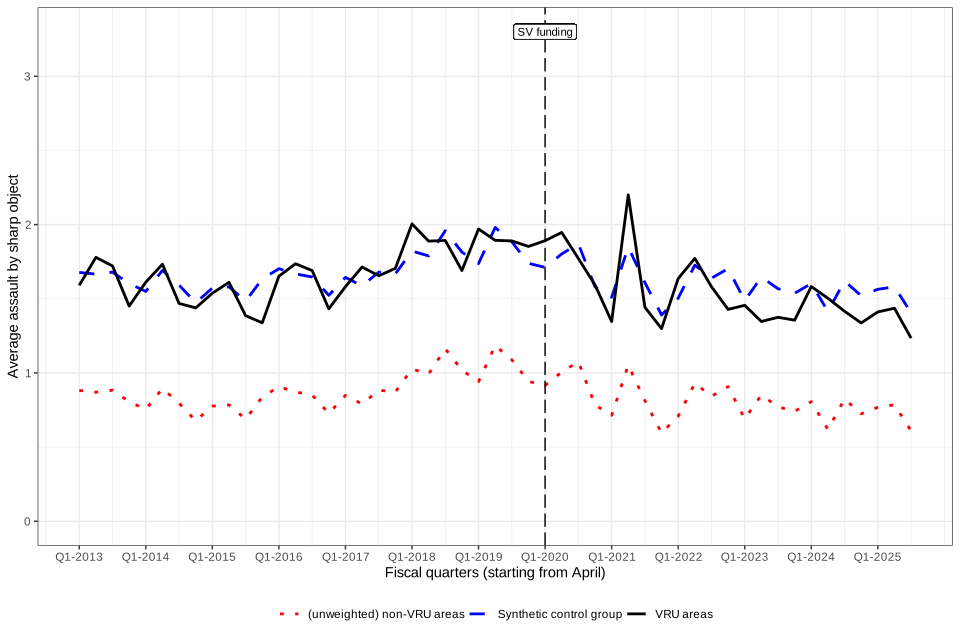
Figure A.6: Hospital admissions for any violent assaults (aged 24 and under), VRU and synthetic control group trends (Model 1)
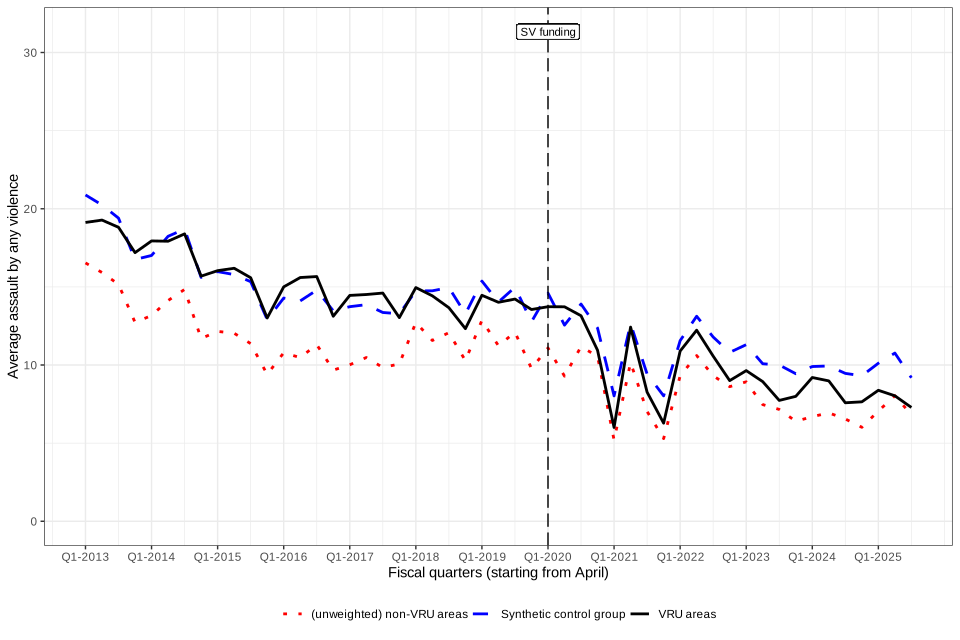
Figure A.7: Hospital admissions for any violent assaults (all ages), VRU and synthetic control group trends (Model 1)
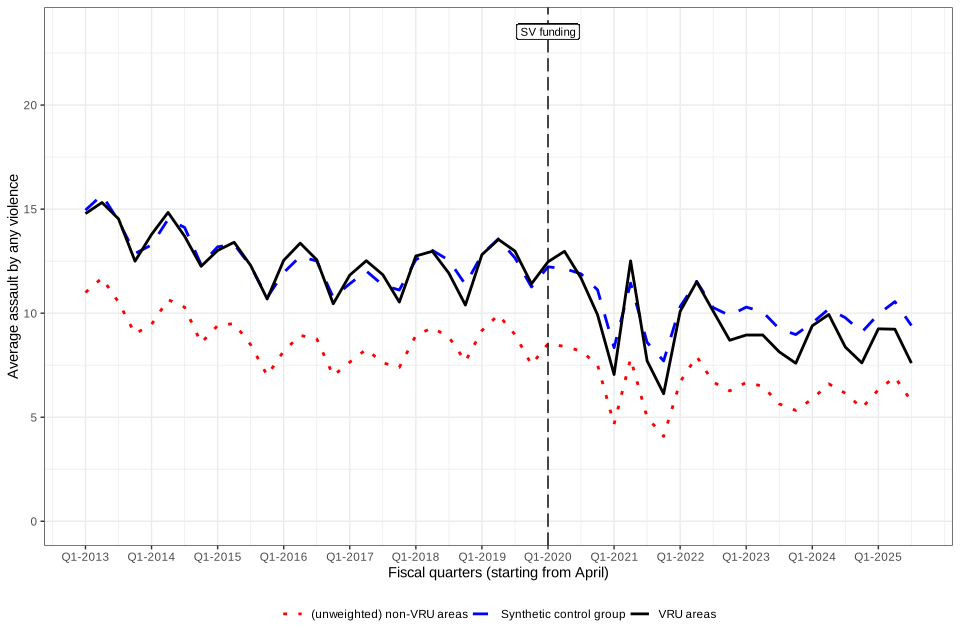
Figure A.8: Homicides, VRU and synthetic control group trends (Model 1)
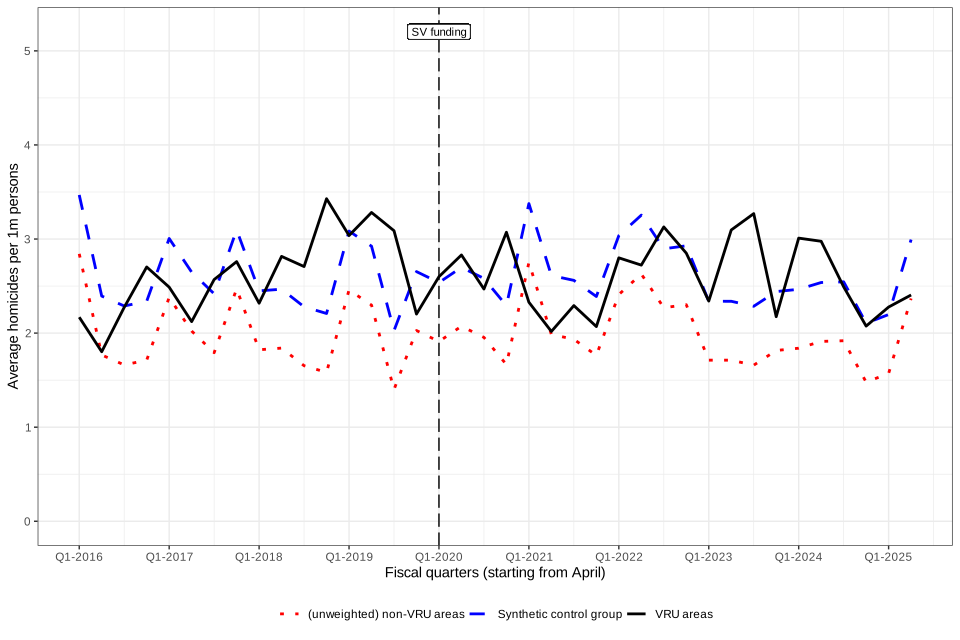
Figure A.9: Homicides (non-domestic), VRU and synthetic control group trends (Model 1)
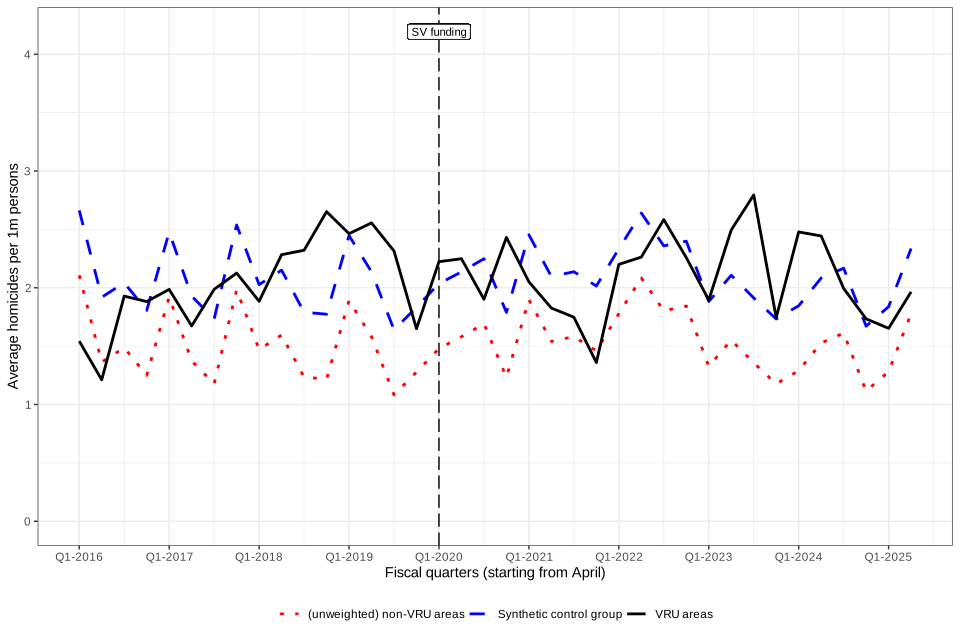
References
Bellis MA, Hughes K, Perkins C and Bennett A (2012) ‘Protecting people, Promoting health – A public health approach to violence prevention for England’. North West Public Health Observatory at the Centre for Public Health, Liverpool John Moores University.
Haas, B., Doumouras, A. G., Gomez, D., de Mestral, C., Boyes, D. M., Morrison, L., & Nathens, A. B. (2015). Close to home: an analysis of the relationship between location of residence and location of injury. The journal of trauma and acute care surgery, 78(4), 860–865.
Home Office (2018) ‘Serious Violence Strategy’.
Home Office (2020a) ‘Violence Reduction Unit evaluation, 2019 to 2020’.
Home Office (2020b) ‘Violence Reduction Units – Impact evaluation feasibility study, Summary report for VRUs and wider stakeholders’. Research Report 117.
Home Office (2021) ‘Violence Reduction Units, year ending March 2021 evaluation report’.
Home Office (2023b) ‘Violence Reduction Units, year ending March 2022 evaluation report’.
Home Office (2023b) ‘Violence Reduction Units, year ending March 2023 evaluation report’.
Home Office (2025) ‘Violence Reduction Units year ending March 2024 evaluation report’.
O’Neill, S., Kreif, N., Sutton, M. and Grieve, R. (2020) ‘A comparison of methods for health policy evaluation with controlled pre-post designs’. Health Services Research, vol. 55(2), pp.328 to 338.
OSR (2024) ‘The quality of police recorded crime statistics for England and Wales’. Office for Statistics Regulation.
Quigg, Z., Hughes, K. and Bellis, M.A. (2012) ‘Data sharing for prevention: a case study in the development of comprehensive emergency department injury surveillance system ad its use in preventing violence and alcohol-related harms’. Injury Prevention, vol. 18(5), pp.315 to 320.
Rudge, G.M., Mohammed, M.A., Fillingham, S.C., Girling, A., Sidhu, K. and Stevens, A.J. (2013) ‘The combined influence of distance and neighbourhood deprivation on emergency department attendance in a large English population: a retrospective database study’. PloS one, vol. 8(7), e67943.
WHO (2022) ‘Approach, Objectives and Activities, 2022-2026’. World Health Organization Violence Prevention Unit.
Wirrmann Gadsby E and Wilding H (2024) ‘Systems thinking in, and for, public health: a call for a broader path’. Health Promotion International, Volume 39(4).
Xu, Y. (2017) ‘Generalized synthetic control method: Causal inference with interactive fixed effects models’. Political Analysis, vol. 25(1), pp.57 to 76.
-
A public health approach to violence prevention can be defined as an evidence-based approach, rooted in the principle that violence is not inevitable but preventable. It focuses on the primary prevention of violence by using data to understand risk and protective factors, targeting interventions at those most at risk, and reducing both the occurrence and harms of violence (see Bellis et al, 2012). ↩
-
The WHO’s 4-step public health approach to reducing violence aims to improve health and safety by addressing the risk factors that make someone more likely to experience or use violence. It does so by defining the problem through data collection, identifying risk and protective factors through research, developing and evaluating interventions, and then implementing effective approaches while monitoring their impact and cost-effectiveness (see WHO, 2022). ↩
-
This was consistent with the VRU Impact Feasibility Report, which highlighted the anticipated gradual and cumulative effect of violence prevention (Home Office, 2020b). ↩
-
Aged 24 and under population in VRU areas in 2024 was 12,823,224; all ages was 42,899,753. ↩
-
The 2023 to 2024 VRU evaluation report defines the whole-systems approach for VRUs as one which integrates public health principles, focusing on data-driven early intervention in collaboration with diverse stakeholders. It aims to reduce and prevent violence by identifying and addressing its root causes, through co-ordinated efforts among partner agencies, communities and young people. The approach aims to share critical information, co-ordinate and streamline resources, and enhance protective measures for individuals and communities, ensuring a comprehensive and unified response to violence. ↩