UKHSA safeguarding annual report 2024 to 2025
Published 9 February 2026

© Crown copyright 2026
This publication is licensed under the terms of the Open Government Licence v3.0 except where otherwise stated. To view this licence, visit nationalarchives.gov.uk/doc/open-government-licence/version/3 or write to the Information Policy Team, The National Archives, Kew, London TW9 4DU, or email: psi@nationalarchives.gov.uk.
Where we have identified any third party copyright information you will need to obtain permission from the copyright holders concerned.
This publication is available at https://www.gov.uk/government/publications/ukhsa-safeguarding-annual-report-2024-to-2025/ukhsa-safeguarding-annual-report-2024-to-2025
Executive summary
The past year has marked a significant strengthening of safeguarding practices across the UK Health Security Agency (UKHSA) where a proactive, informed, and inclusive safeguarding culture is ensuring that staff are empowered and equipped to protect those most at risk.
This report provides a 12-month overview of safeguarding activity across UKHSA and sets out the priorities to support the organisation’s vision to become a high-performing agency.
Main points:
- UKHSA expects all staff to have an awareness of safeguarding and to understand the circumstances in which the reporting of safeguarding concerns to the relevant bodies is necessary
- this year has seen significant investment in the UKHSA safeguarding team with recruitment to a full time Safeguarding Manager and Lead Nurse to work alongside the Head of Safeguarding and Safeguarding Officer
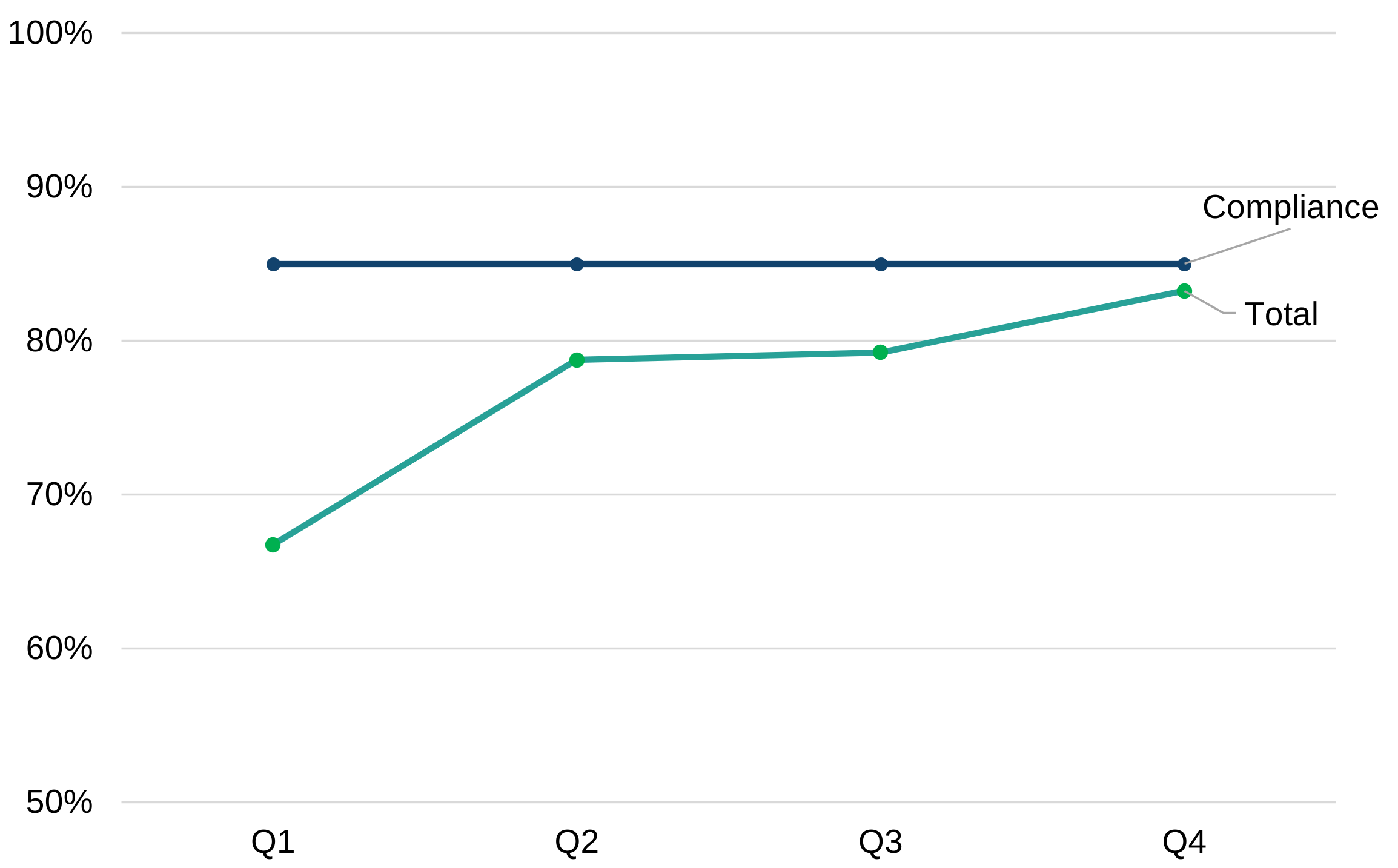
- mandatory safeguarding training compliance has increased by 16% from 67% to 83% – in addition UKHSA have provided subject matter expertise into the revision of the Civil Service Learning (CSL) Level 1 safeguarding module
- improved engagement and increased awareness of safeguarding processes has led to an increase in staff reporting and seeking supervision for potential safeguarding concerns
- safeguarding incident reporting has increased by 22% in the past 12 months, with 135 incidents registered via the incident platform
- there were 88 requests for safeguarding supervision received from staff across the organisation
- neglect and domestic abuse continue to be key themes identified in reported concerns
- level 3 safeguarding training was developed and delivered across regional health protection teams
- UKHSA has updated its safeguarding assurance framework using an adapted assurance toolkit which documents 11 indicators aligned to the NHS Safeguarding Accountability Assurance Framework (SAAF) on key areas, this is completed annually and reported through the Safeguarding Committee
- partnership working and external engagement continues to be an area of focus with the safeguarding team collaborating and presenting on a variety of work streams including policy developments and revisions
- the safeguarding leads and champions continue to embed learning and support staff from across the organisation
Figure 1. Safeguarding key progress 2024 to 2025 flowchart

Description of Figure 1
This figure shows 4 columns, one for each quarter showing progress made in 3 areas, Assurance, Training and Partnership working.
Assurance
In quarter 1 the safeguarding assurance framework was updated, in quarter 2 a supervision review was undertaken and KPIs implemented, in quarter 3 the 2023 to 2024 annual report was published internally, and in quarter 4 a safeguarding audit keeping audit was completed.
Training
In quarter 1 the Level 3 safeguarding training plan was agreed, in quarter 2 bespoke safeguarding champions training was delivered, in quarter 3 an all staff Learning Lite on Domestic Abuse was presented, and in quarter 4 bespoke safeguarding training was commissioned for senior leaders.
Partnership working
In quarter 1 a cross-government safeguarding forum was established in conjunction with the Office for Health Improvement and Disparities (OHID), in quarter 2 there was an organisation-wide collaboration to underpin policy and guidance development, in quarter 3 a joint presentation was given at the National Network of Designate Health Professional (NNDHP) on lead poisoning in children, and in quarter 4 a collaboration with NHS England was initiated to implement the Child Protection Information Sharing service in UKHSA.
Safeguarding in UKHSA
UKHSA is an executive agency of the Department of Health and Social Care (DHSC) and in performing its role, UKHSA fulfils the Secretary of State for Health and Social Care’s statutory duty to protect the nation’s health and address inequalities, as detailed in the framework document between the DHSC and the UKHSA (2022).
UKHSA is dedicated to upholding the highest standards of safeguarding across the organisation by providing clear governance, policies and robust processes. We are committed to equipping staff with the knowledge, tools, and support to identify and respond to risks of harm and abuse, ensuring the health, safety, and the dignity of individuals and communities remains at the heart of everything we do.
Safeguarding as ‘everyone’s responsibility’ is a core principle of safeguarding policy in all sectors, not least the public sector and civil service.
The responsibility to safeguard adults, young people and children and promote their welfare is more comprehensive than protection. To be effective, this requires staff members to recognise their individual responsibility to safeguard and promote the welfare of vulnerable people at risk in so far as this may apply to their role.
This approach to safeguarding aligns with UKHSA’s mission statement in the UKHSA strategic plan 2023 to 2026 “to prepare for, prevent and respond to health threats, save lives and protect livelihoods.”
The internal UKHSA Health Protection Governance and Quality Strategy has a clear vision in which UKHSA will demonstrate that all its services are safe and there will be a culture of continuous improvement. Within this strategy there are 5 quality aims – safeguarding is an integral factor of them all.
- A culture of high quality, safe service delivery.
- Continuous improvement and use of standards.
- Managing service risk.
- Using data, information, and research for quality.
- Developing partnerships for quality.
UKHSA teams operate in a range of environments and with several partners including police, local authority, and primary health, secondary and social care settings. It is vital that staff are clear about UKHSA’s safeguarding arrangements and how these align with those of partners to enable consistency and, where relevant, a multi-agency response to safeguarding concerns. Safeguarding is a complex area of practice; abuse can happen in any context and takes many forms. Therefore, it is essential that the organisation continues to promote the importance of safeguarding across the whole organisation recognising the wide variety of contact we have with the public including our own workforce.
Definitions
Safeguarding children
A child is an individual under the age of 18 years.
The Children Act (1989, 2004) states that the welfare of the child is paramount and that all practitioners are required to protect children, prevent the impairment of health and development, and ensure they are provided with safe and effective care to fulfil their potential and to keep safe from harm.
Safeguarding adults
An adult is an individual aged 18 years or over.
The Care Act 2014 sets out a definition of those adults that should be provided support and care to protect them from abuse and neglect as “an adult with care and support needs”. It is noted that not all adults with care and support needs are at risk.
Assurance and governance
The Safeguarding Committee is responsible for overseeing the UKHSA policy on the safeguarding of adults and children at risk of harm and abuse. The committee is a sub-group of the Clinical Safety and Assurance Committee (CSAC) which reports into the Clinical Quality Oversight Committee (CQOC) which reports into the Executive Committee (ExCo). The Terms of Reference for the safeguarding committee have been revised to ensure there is cross organisational representation with a clear escalation process identified as illustrated in Figure 2.
Figure 2. Governance structure

Safeguarding assurance framework
UKHSA uses a safeguarding assurance framework to ensure robust governance and clear accountability. The framework provides a structured approach to consistent, high-quality practice and offers transparency and assurance to stakeholders.
The UKHSA safeguarding assurance framework is reviewed annually, any recommendations from the review are presented through and overseen by the safeguarding committee. The Framework covers 6 key organisational safeguarding elements:
- Leadership and organisational accountability
- Training
- Safer recruitment/HR
- Information sharing, communication, and confidentiality
- Implementation (sharing and learning good practice)
- Public engagement
Data compliance review
In February 2024 the safeguarding team undertook a data compliance review, as part of a wider UKHSA programme of data compliance reviews to highlight best practice and the opportunities to improve compliance with both the UK General Data Protection Regulation (GDPR) and Data Protection Act 2018.
This review identified 2 medium impact recommendations:
-
To undertake a Data Protection Impact Assessment (DPIA) in respect of how UKHSA manages safeguarding data. The team worked with colleagues from Information Management and Privacy and data release teams to address this recommendation, and a DPIA has now been established.
-
To undertake a safeguarding data sharing mapping exercise across UKHSA. Following this exercise, it was identified that whilst UKHSA may be subject to pre-existing or future information sharing arrangements instigated by external parties, the UKHSA Safeguarding team do not need individual Data Sharing Agreements (DSAs) with each partner.
The safeguarding team undertake an annual review of data compliance to ensure any changes in practice are considered.
Key performance indicators
Safeguarding incident data
Safeguarding incident reporting through our contact with the public has continued to increase, rising by 22% over the last financial year. Following a safeguarding record keeping audit in 2023 to 2024, the safeguarding reporting platform was updated.
During the financial year 2023 to 2024 there were 111 safeguarding incidents reported of which 52 were for adults and 59 for children. During financial year 2024 to 2025 this increased with 135 safeguarding incidents reported of which 75 were for adults and 60 for children, as shown in Figure 3.
Figure 3. Number of safeguarding incidents reported financial years 2023 to 2025
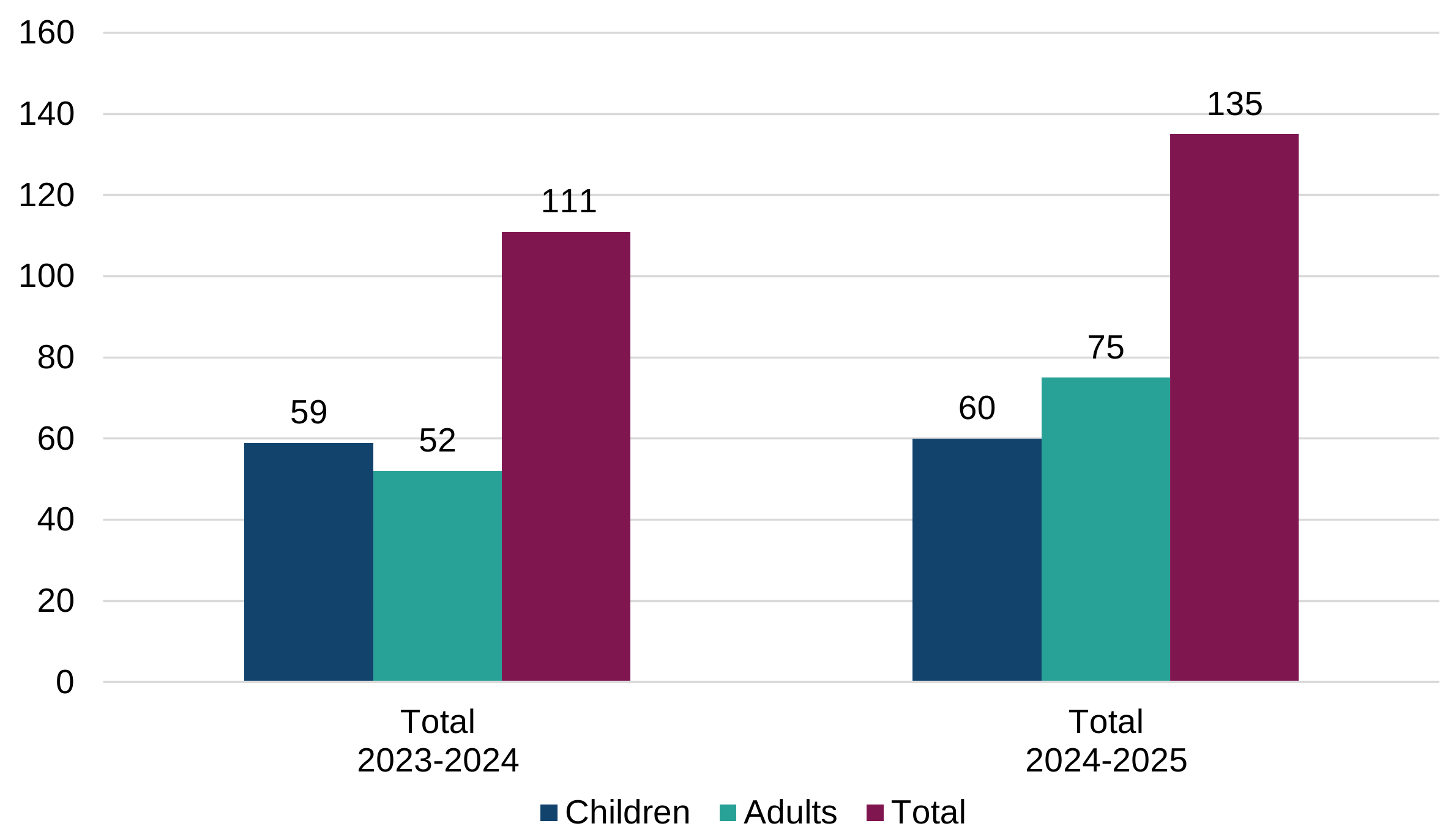
Table 1. Number of safeguarding incidents reported: financial years 2023 to 2025
| 2023 to 2024 | 2024 to 2025 | |
|---|---|---|
| Children | 59 | 60 |
| Adults | 52 | 75 |
| Total | 111 | 135 |
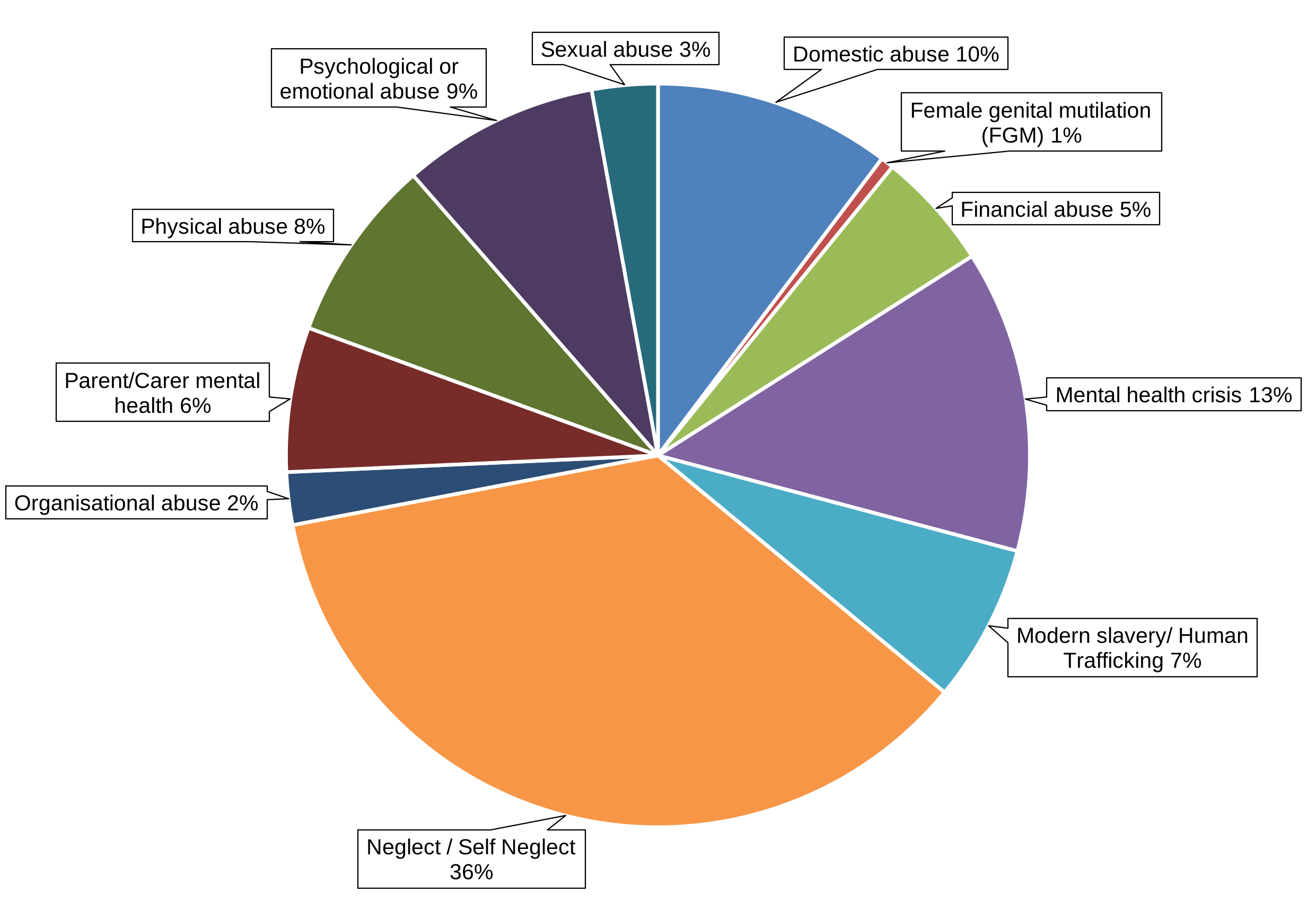
During the financial year 2024 to 2025, incidents reported were linked to 11 different areas including physical abuse, psychological or emotional abuse and sexual abuse as shown in Figure 4.
Figure 4. Safeguarding activity: financial year 2024 to 2025
It is worth noting that the majority of safeguarding incidents are raised by regional health protection teams. The safeguarding team have presented at a number of forums across UKHSA and this has led to an increased awareness of safeguarding processes across the organisation, leading to better reporting of safeguarding concerns from across the whole of UKHSA.
Themes identified from 2024 to 2025
A review of all the safeguarding incidents entered over the last 12 months identified the following themes:
- neglect or self-neglect
- domestic abuse reported to workplace colleagues or line managers
- lead poisoning in children
- many incidents also include mental health concerns
- external care provider concerns
Where themes are identified, specific resources are developed by the team to support staff across the organisation in understanding these types of incidents, as well as signposting them to further support.
Safeguarding supervision
Safeguarding supervision is an essential component of safeguarding practice, as it allows for critical reflection when looking to identify and protect children and adults.
Group safeguarding supervision has been provided to the safeguarding leads with positive feedback. In addition to the group sessions the team offer daily support and can provide more in-depth supervision as needed.
Safeguarding training
Mandatory training level 1
The current expected compliance rate for safeguarding training across the organisation is 85%. Over the last 12 months we have seen this rate increase from 67% to 83% as seen in Figure 5.
Figure 5. Safeguarding training quarterly totals financial year 2024 to 2025
The Civil Service Learning platform (CSL) level 1 training was updated and launched in 2024. UKHSA provided safeguarding and health protection subject matter expertise to this.
During 2024 the safeguarding team presented a training plan, proposing the delivery of level 3 safeguarding training over 24 months to ensure all heath protection practitioners and consultants in health protection were trained at the appropriate level. To meet this ambition, an interactive and bespoke level 3 public health training package built on lessons learned following safeguarding incidents has been developed in-house. The interactive package aligns with the Intercollegiate Documents (ICD) for Safeguarding Adults and Children.
Two safeguarding Learning Lite sessions were offered to all UKHSA staff in 2024 to 2025. One was around Professional Curiosity with over 100 attendees, the other featured a guest speaker who delivered a session on domestic abuse in the workplace.
Partnership working
Enhancing the visibility of the Safeguarding Team within UKHSA remains a central priority. Efforts to strengthen relationships across the broader system (including with external safeguarding partners) are ongoing and continue to evolve. Figure 6 highlights the wide scope of partnership working over the past 12 months, both within UKHSA and with our safeguarding partners.
Figure 6. Partnership working

Description of Figure 6
Figure 6 is a visual representation of types of partnership working, including:
- all hands meetings
- attendance at national safeguarding forums
- CPD sessions
- CP-IS Programme Board
- Domestic Abuse Steering Group
- face-to-face regional visits
- group supervision
- Learning Lite
- line managers forum
- Lunch and Learn
- national safeguarding forums
- One to one supervision
- PDU sessions
- policy development
- Pulse articles
- regional integrated care board (ICB) meetings
- single point of contact
- team meetings
- training
UKHSA continues to participate in national safeguarding forums to ensure UKHSA’s systems and procedures remain aligned with national developments, while also elevating the profile of public health within the safeguarding landscape.
“UKHSA has made huge progress in relation to statutory safeguarding assurance and compliance across its services and specifically supporting professional registrants to prevent harm to children and vulnerable adults they come into contact with.
This is exemplified in the UKHSA drive to introduce the Child Protection Information System so that all registrants can see which children are on a child protection plan, which children are looked after and who their lead social worker is.”
Kenny Gibson, Deputy Director for NHS Safeguarding
UKHSA safeguarding leads
The public reach of the organisation is wide ranging, and to support the safeguarding agenda, there are 27 safeguarding leads across UKHSA. The leads cover the 9 regional Health protection offices, port health, and field services and work closely with our global operations colleagues. The safeguarding leads undertake additional safeguarding training to support the role and are offered group safeguarding supervision. Many regional teams also have safeguarding champions to support the lead role.
UKHSA safeguarding champions
UKHSA has committed to developing a cohort of safeguarding champions across the whole organisation, supporting safeguarding leads alongside raising safeguarding awareness. There are 40 safeguarding champions embedded across the organisation, with an intention to ensure that all directorates identify a safeguarding champion over the next 12 months.
Priorities for financial year 2025 to 2026
The safeguarding team has identified the following strategic priorities for financial year 2025 to 2026; these are agreed through the Safeguarding Committee.
- Build Safeguarding Expertise: improve skills and knowledge in safeguarding across all age groups.
- Leverage Digital Tools: use digital platforms to analyse and monitor safeguarding data effectively.
- Strengthen Oversight: enhance governance and assurance of safeguarding practices within UKHSA.
- Responsive Safeguarding Model: apply a proportionate approach (both reactive and preventative) based on assessed needs.
- Strategic Leadership: position UKHSA as a key safeguarding partner across government and health or social care sectors.
- Preparedness and Learning: engage in national pandemic preparedness exercises and act on any resulting recommendations.
Conclusion
The past year has marked a significant strengthening of safeguarding practices across UKHSA, underpinned by the principle that safeguarding is everyone’s responsibility. Strategic investment in dedicated safeguarding roles has enhanced capacity and expertise, enabling more robust responses to increasing incident reports and supervision requests.
UKHSA is embedding a culture of safeguarding that is proactive, informed, and inclusive ensuring that staff are empowered and equipped to protect those most at risk, supporting the organisational vision of becoming a high performing agency.