UK Town of Culture 2028 Expression of Interest: Guidance for bidders
Updated 13 March 2026

© Crown copyright 2026
This publication is licensed under the terms of the Open Government Licence v3.0 except where otherwise stated. To view this licence, visit nationalarchives.gov.uk/doc/open-government-licence/version/3 or write to the Information Policy Team, The National Archives, Kew, London TW9 4DU, or email: psi@nationalarchives.gov.uk.
Where we have identified any third party copyright information you will need to obtain permission from the copyright holders concerned.
This publication is available at https://www.gov.uk/government/publications/uk-town-of-culture-2028-expression-of-interest/uk-town-of-culture-2028-expression-of-interest-guidance-for-bidders
Ministerial foreword
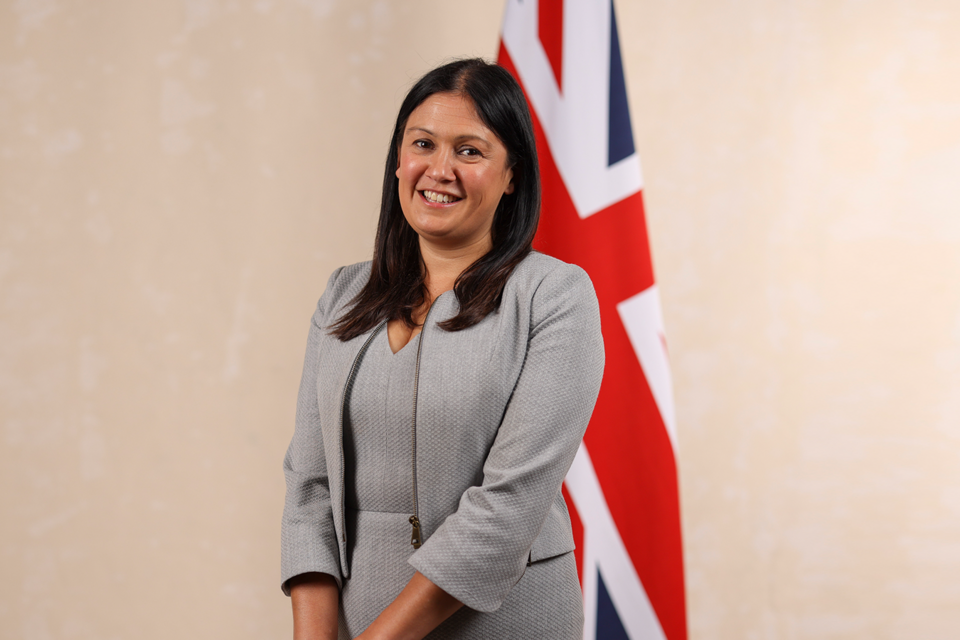
I am proud that the last Labour government launched the UK City of Culture competition in 2009 to celebrate the enormous contribution people and places across the UK have made to our cultural life. Since its launch, the programme has gone from strength to strength and now has a firm footing in the UK’s culture calendar. Four incredible cities - Derry/Londonderry, Hull, Coventry and now Bradford - have delivered a year of rich cultural activity rooted in their unique identities and drawing on local strengths and stories. In each place, being the UK City of Culture has been a transformative experience, with the impacts for places and people extending well beyond the title year.
Now, we are building on that success by launching the search for the UK’s first Town of Culture.
Great culture is not confined to our largest metropolitan centres; it is everywhere, rooted in communities across the country. But for too long that talent and contribution has gone unrecognised. In my town, Wigan, we are fiercely proud of the contribution we have and continue to make to the UK’s cultural life, from brass bands and Northern Soul to the Verve and Ian McKellan. Every town has its own story and unique contribution. Our government believes it should be seen and valued, and reflected in the story we tell ourselves about ourselves as a nation.
Everybody deserves the chance to share their pride in the place they call home and to have access to quality art, music, dance and drama wherever they live. That is why we are launching the UK Town of Culture. To celebrate towns and help to create a lasting cultural legacy. We will select the best small, medium and large towns from the full applications we receive. One of these will be named UK Town of Culture 2028 and receive £3 million, while the other two finalists will each receive £250,000 to deliver an ambitious programme of cultural activity in 2028. This is in addition to development grants for shortlisted places to work up their full bids.
I hope you will consider bidding to become the first UK Town of Culture, and showing the whole country what makes your town unique.
Lisa Nandy
Secretary of State for Culture, Media and Sport
Introduction
This guidance has been produced by the Department for Culture, Media & Sport (DCMS) to assist towns that wish to bid for the title of UK Town of Culture 2028. This guidance outlines the aims of the competition and details the requirements for the initial Expression of Interest (EOI) stage. This guidance also sets out the bidding and selection process for the later stages of the competition to support planning.
Places wishing to apply for the UK Town of Culture 2028 competition are advised to read the guidance in full.
A Welsh language version of this guidance will follow.
UK Town of Culture explained
UK Town of Culture is a brand new DCMS competition. For the first time, DCMS is inviting towns across the UK to enter the competition to showcase original storytelling, and empowering, accessible culture. The competition is targeted at all towns, whether small, medium or large. Please refer to the ‘Who can bid?’ section of this guidance, any town that can fulfil these requirements will be considered. Inspired by the success of the flagship UK City of Culture, which is a proven model for cultural placemaking, this competition aims to spotlight the cultural contribution of towns to our national story. In order to ensure we are able to showcase towns of different sizes, we will be introducing small, medium and large-size category winners and from these three designations, an overall UK Town of Culture winner will be selected.
The winning town will be awarded £3 million to deliver a cultural programme in 2028 of around six months. Additionally, the two finalists from their category will receive £250,000 each to deliver elements of their bid.
It is a UK-wide programme, developed in collaboration with the devolved governments in Northern Ireland, Scotland and Wales.
Aims
The UK Town of Culture competition aims to celebrate the significant contributions of towns to our national story. The competition focuses on building a more socially cohesive country where communities feel proud of their place and empowered to celebrate it. The UK Town of Culture is an opportunity for places and communities to use culture and creativity to tell their story and why they are proud of their community.
Benefits of winning
In addition to the £3 million main prize and £250,000 finalist prizes, we anticipate that winning will lead to significant, demonstrable outcomes, including a boost in civic pride, greater participation in cultural activities, and the formation of enduring community partnerships. These partnerships will help build a strong sense of place and champion grassroots arts and culture, mirroring the proven impact of the UK City of Culture programme. Research has shown that for the UK City of Culture programme more than 70% of attendees to UK City of Culture events feel a greater sense of pride. We also know that the benefits for places extend well beyond their title period, leading to a lasting legacy of social and cultural change. We expect to see similar benefits for the UK Town of Culture.
Benefits of bidding
Competing for the title, irrespective of whether or not a place wins, can have a hugely positive impact on the local community. It fosters a sense of local pride and strengthens collaboration among local partners. Previous bidders for the UK City of Culture report that the process brought the community together to develop strategic and cohesive cultural leadership. In turn, this enabled them to showcase – and open up access to – local heritage, art, and culture.
We want as many places as possible from across the UK to have the opportunity to draw on the benefits of bidding. We have designed the competition with this in mind: with an initial EOI stage and funding to support bidders in the later stage of the competition.
Funding
We are pleased to announce a guaranteed £3.5 million prize fund for the UK Town of Culture competition. The panel will select the best small, medium and large towns from the full applications we receive. One of these will be named UK Town of Culture 2028 and receive £3 million, while the other two finalists will each receive £250,000 to ensure they are able to take forward key parts of their bids. We recognise that commitment of funding up front can provide places with the confidence and security to engage with the competition and launch ambitious bids.
We also recognise that there are costs associated with developing and submitting a bid and we want places to feel able to bid and to benefit from the bidding process. There is a simple EOI phase and has been designed to keep costs to a minimum at the outset. DCMS will award bid development grants of £60,000 to each of the shortlisted places which are invited to submit a full application.
You need to outline in your EOI how you would spend this £60,000 grant. It is a flexible source of funding to strengthen your full application and help to develop a scalable plan, for example on:
- Research & Development
- Consultation
- Human resources
- Data gathering
- Commercial expertise for capital plans
Competition criteria
The UK Town of Culture 2028 criteria sets out the strategic objectives of the programme and should be used by bidding places to inform their bids. They will be used by the Expert Advisory Panel to assess bids at all stages of the competition.
To be successful, EOIs must demonstrate how they meet the criteria and show potential to make a significant contribution to the aims of the UK Town of Culture programme.
Please note: If a large number of applications are received, an initial sift will take place on the first criterion, ‘Your Story’ only.
Table 1: UK Town of Culture 2028 competition aims and criteria
| Aims | Criteria |
|---|---|
| 1. Your story: tell us about the unique story and culture of your town. |
1. Vision: A strong, compelling local story that uses culture to bring people together, reflecting place, pride, and contribution to the national story. 2. Local Need: How your programme builds on local strengths while addressing specific local priorities. 3. Empower: Commitment to involving communities, grassroots artists, creatives, and local leaders in shaping the bid, programme, and legacy, devolving decision‑making where possible. |
| 2. Culture for Everyone: how you will design a cultural programme that provides visible, accessible culture and boosts your town’s profile. |
4. Quality and Innovation: A high‑quality, bold programme drawing on arts, heritage, and creative industries, demonstrating excellence, creativity, innovation, and use of technology to widen access. 5. Opportunity: Expanding opportunities for those who currently do not access cultural infrastructure, especially young people, while creating new opportunities for existing participants. 6. Accessibility: Ensuring the programme is accessible to all ages and underserved communities, providing a safe, supportive, non‑discriminatory environment. 7. Communication: A well‑resourced communications plan that reaches multiple audiences and shines a spotlight on the town’s contribution to national life. |
| 3. Making it happen: how you will deliver a successful programme. |
8. Partnerships: Strong, collaborative leadership with clear commitment from local authorities, community organisations, and cultural/heritage partners, including pursuit of new opportunities and lasting connections. 9. Programme Management: Evidence of capacity, capability, and effective processes to deliver the programme successfully. 10. Financial Management: A realistic, viable budget representing value for money, with clear monitoring processes and plans to attract appropriate funding. 11. Monitoring, Evaluation & Legacy: A clear plan for evaluating impact (including environmental sustainability), sharing insights, and strengthening or rejuvenating cultural and heritage infrastructure with realistic expectations. |
Who can bid?
We welcome bids from places across the UK. To be eligible, bidding places must demonstrate the capability to successfully manage, fund, and deliver a programme that clearly meets the established criteria. Bidders will be required to show their confidence in, and readiness for, programme delivery both in the EOI application and, in greater detail, during the full application stage. For the largest towns, the UK City of Culture competition may be more suitable and these towns should consider applying to UK City of Culture 2029.
The only areas precluded from bidding are any parts of Greater London, but we would encourage these areas or London-based organisations being partners in a bid for an area outside London.
We want to ensure that towns of all different sizes are showcased when applying for the competition, therefore, we have introduced three prize categories. We will be introducing small, medium and large-size category winners and from these three finalists, an overall UK Town of Culture winner will be selected. We will be using the Office of National Statistics definitions for towns/urban areas based on population size to determine categories and you will not be expected to apply to a specific category.
| Category | Population Size |
|---|---|
| Small Town | Under 20,000 people |
| Medium Town | 20,000 - 75,000 |
| Large Town | Over 75,000 |
Which organisations can bid?
We expect bids to be from a partnership for your bidding place and include the relevant local authorities. This partnership may be well-established, but it does not need to be and we welcome bids from newly formed place partnerships. Bids will need to specify a single organisation to be ‘Lead applicant’ for information and communication purposes during the competition process. The Lead applicant must be a formally constituted accountable organisation; they do not need to be a local authority, but the relevant local authority will need to be in a dedicated role in the bid partnership.
The partnership should demonstrate commitment to work collaboratively and could include a range of community and cross-sector partners such as: local businesses, industry and civic leaders, cultural bodies, local library services, voluntary, community and social enterprise organisations. It should also demonstrate commitment to actively including local communities in decision-making and supporting them to directly shape what happens in their area. This commitment to community collaboration should be demonstrated at all stages of the competition.
Accountability for the programme
If successful, the winning places will be required to specify a chosen ‘Accountable Body’ and ‘Delivery Body’ for their programme (which may be the same organisation but does not need to be). You will need to set out your plan for this at the EOI stage, in reference to the below definitions.
Accountable Body: A place’s chosen party, who are the recognised Accountable Body in relation to a planned UK Town of Culture programme e.g. the relevant local or regional public authority. If successful, the Accountable Body will have overall responsibility and ownership for the programme. The responsibilities of the Accountable Body may include, but are not limited to:
- Ensuring the safe and successful delivery of a UK Town of Culture programme;
- Managing the financial and legal requirements associated with the delivery of a UK Town of Culture programme;
- Taking responsibility for the organisation of a UK Town of Culture programme, including leading on the necessary coordination between relevant partners;
- Taking responsibility for any grant funding associated with a UK Town of Culture programme, for which the Accountable Body is the recipient organisation; and
- Monitoring delivery of a UK Town of Culture programme and undertaking relevant reporting as may be required by DCMS.
Delivery Body: A place’s chosen party who will be responsible for the planning, procuring, commissioning and delivery of a planned UK Town of Culture programme.
What do we mean by culture?
Culture means different things to different places and communities, and we want local stories and the unique character of places to shine through in bids. We expect bidders to showcase the strengths of the cultural offer in the area, acknowledge its weaknesses, and its ambition and potential to improve. It will be up to you to make the case for which activities are included in your proposed cultural programme and articulate the step change you aim to achieve. We expect programmes to be able to appeal to a wide range of audiences and to increase participation in cultural activities, especially amongst young people, as well as contributing to community cohesion and wellbeing.
Applicants are encouraged to include activities encompassing a broad definition of culture and its creative industries and how it relates to the town’s history, story and community. This includes but is not limited to: visual arts; literature; music; theatre; dance; combined arts; architecture; crafts; design; heritage and the historic and natural environment; museums and galleries; libraries and archives; film; broadcasting and media; video games; animation; visual and special effects; photography; and publishing.
Alignment with UK government missions & priorities
The UK Town of Culture, along with the UK City of Culture competition complements other UK government initiatives to support culture to thrive, such as the £270 million Arts Everywhere Fund, which will ensure that everyone, everywhere has the opportunity to experience great culture and access to high quality institutions in the places they call home.
Local government is foundational to the sharing of cultural opportunity across the UK, and to the successful delivery of UK Town of Culture. Local authorities should work with local people to ensure that their bid and creative vision is reflective of their communities. In this way, the UK Town of Culture competition embodies the principles set out in the English Devolution White Paper, the biggest transfer of power out of Westminster to England’s regions this century.
It further complements other UK government place-based initiatives, notably the Pride in Place Strategy which sets out a plan to create safer, healthier neighbourhoods where communities can thrive. The Pride in Place Programme represents one of the largest investments in deprived neighbourhoods for a generation - up to £5 billion over 10 years to support up to 250 places.
We encourage bidders to think about how their bid aligns with, builds on or prepares for other funds and initiatives as well as how it is integrated in wider local and regional inclusive growth plans. This will be assessed in a light touch way at this EOI stage and bidders will be expected to demonstrate this in more detail at the full application stage.
Bids should actively complement, rather than duplicate or compete with funding already delivering or set to deliver in their areas. Areas should not consider the UK Town of Culture competition as an opportunity to plug any gap in funding not realised by other government funds. Nor should places that did or do not receive support through other funds feel that they are at a disadvantage in applying to the UK Town of Culture competition. We want to support all bidders to realise culture’s contribution to transformational step change
Environmental considerations
One of the UK government’s missions is to make Britain a clean energy superpower and accelerate to net zero by 2050. Tackling climate change is the one of the most urgent shared endeavours of our lifetimes, demanding bold action from us all. Our towns and cities are on the front line of climate change and culture is a powerful tool in tackling environmental challenges. Bids for UK Town of Culture 2028 should consider embedding environmentally sustainable practices into their plans, demonstrating contribution to the UK’s net zero and nature protection objectives, and promote and inspire environmental responsibility.
Support during bidding process
DCMS plans to host an online information session for all interested bidders on 21 January 2026. Details will follow, please contact uktownofculture2028-competition@dcms.gov.uk with any questions and to register interest.
We would encourage interested bidders to attend this information session to access information from experts. DCMS, other government departments, and arms-length bodies will not be available to provide further support for bidders at the EOI stage of the competition. Shortlisted places will have access to further expertise, support and advice during the preparation of their full applications, and we will provide further guidance on this in due course.
Competition stages
The competition selection process for UK Town of Culture 2028 is designed to identify and designate places from across the UK that offer the best possible bids. Bidders must not only present an ambitious and unique vision for its 2028 programme, but also demonstrate credible and realistic plans to successfully turn that vision into a reality.
There are three main stages to the competition.
Stage 1 - Expression of Interest (EOI)
1. The EOI phase is an opportunity for bidding places to succinctly articulate their vision, key elements of their proposed programme, and readiness to deliver. The EOI form asks for responses to the three criteria with prompts. We recognise the challenge on resources at this early stage, so do not expect detailed economic data, research, or in depth delivery plans. For more information on how to apply, see the ‘How to make an Expression of Interest (EOI)’ section below. The deadline for EOIs will be 31 March 2026.
2. The Expert Advisory Panel will assess the EOIs against the relevant competition criteria and select a shortlist of places. DCMS intends to announce the shortlist of places that will proceed to the next stage of the competition in Spring 2026.
Stage 2 - Shortlisted places make a full application
3. The shortlisted places will be awarded a grant of £60,000 each to support them with developing and strengthening their full application. We intend to publish detailed full application guidance in Spring 2026, including our expectations for data submission. Applicants will have up to five months to complete the full application.
4. The full application will ask questions in more depth and will expect you to set out a detailed plan for how you will deliver your vision, including a programme plan and narrative, partnerships and budget. We will require information about your local context, priority needs and challenges and how you will use UK Town of Culture to address them. We may require applicants to undertake research, present data relating to expected impact, as well as delivery, fundraising and governance plans. We will also require applicants to consider how they will deliver digital content for wider public engagement through the competition.
Stage 3 - Shortlisted places host and present to the panel
5. The panel will visit the shortlisted places, who will be invited to present to the panel and engage in detailed discussions about their plans.
6. The panel will assess the full applications and presentations of the shortlisted places including any outcomes of public engagement and communications, and against the competition criteria.
7. The panel will submit their recommendation for the finalists and overall winner of UK Town of Culture 2028 to the Secretary of State for DCMS, who will make the final decision. We will provide feedback to all the shortlisted places.
8. DCMS aims to announce the UK Town of Culture 2028 winners in early 2027.
Key milestones and dates
Table 2: Key competition milestones
| Milestone | Dates |
|---|---|
| Expressions of Interest (EOI) | Opens: 14 Jan 2026 Deadline: 31 March 2026 |
| Information event for bidders | 21 January 2026 |
| Shortlisted places announced | Spring 2026 |
| Full application period | Spring 2026 – Autumn 2026 |
| Panel visits | Autumn 2026 |
| Finalists and winner announced | Early 2027 |
| Delivery Period | 2028 |
How to make an Expression of Interest (EOI)
Register as a bidder
The first step is to register as a bidder for the UK Town of Culture 2028 title by emailing uktownofculture2028-competition@dcms.gov.uk and providing the following information which will allow us to contact you quickly if we need to, send the branding guidelines and share information about the information workshop for prospective bidders:
- Place name of bidding place
- Brief geographical description of bidding place
- Named contact and contact details for the bidding team
EOI form
Bidders should download and complete the EOI form template and return by email to uktownofculture2028-competition@dcms.gov.uk
Download the EOI form template
The EOI form comprises three sections which each require a statement response:
-
Your story: tell us about the unique story and culture of your town
-
Culture for everyone: tell us how you will design a cultural programme which will provide visible, accessible culture that boosts the profile of your town
-
Making it happen: tell us how you will deliver a successful programme
Further instructions, including word limits and prompts to use as a guide in your responses, are detailed in the EOI form template. Please note, where a large number of applicants are received, bids will be sifted on the second section only ‘Your Story’.
The deadline to submit the EOI form is 31 March 2026. DCMS will not accept EOIs received after this date.
‘UK Town of Culture 2028’ title, trade mark and branding
The competition winner will be designated as “UK Town of Culture 2028”. We will issue branding guidance to all registered bidders to outline how bidding, winning and legacy places are able to use the title and trade mark in the years running up to and after 2028.
Media and publicity
We expect there to be significant publicity associated with the selection process, with coverage at a local and national level. We will issue press releases on the results of the shortlisting and final selection processes. All the bidding places will be listed on the DCMS website (with links to their respective bid website if applicable) and may be referenced in press releases. The DCMS communications team will be in touch with communications teams in bidding locations as needed to update on plans and embargos.
Data sharing and transparency
The UK Town of Culture programme and its evaluation will be crucial to our developing understanding of the social and economic impacts of cultural investment. We expect to receive an incredible volume of information and data as part of the application process. Once the 2028 title has been awarded, we plan to deposit all bids (initial EOIs and full applications) in the National Archives, the official public archive of the UK government, to allow researchers and the public free access to this wealth of detail. We understand that some data may be commercially sensitive, so we will work with all bidders to provide redacted versions as necessary.
Data protection
DCMS is committed to using any personal information we collect on a lawful, fair and transparent basis, respecting your legal rights as an individual in accordance with the UK General Data Protection Regulation, the UK Data Protection Act 2018 and other applicable laws that regulate the use and privacy of personal data (Data Protection Law).
As part of us meeting this requirement, we have published our General Privacy Notice for you to refer to. For further information about our obligations and your rights under Data Protection Law, as well as how to report a concern if you believe that your personal data is being collected or used illegally, please also see the Information Commissioner’s Office.
Contact
For further information please contact uktownofculture2028-competition@dcms.gov.uk