UK Export Finance's small and medium-sized enterprise (SME) action plan: 2025 to 2028
Updated 30 September 2026

© Crown copyright 2026
This publication is licensed under the terms of the Open Government Licence v3.0 except where otherwise stated. To view this licence, visit nationalarchives.gov.uk/doc/open-government-licence/version/3 or write to the Information Policy Team, The National Archives, Kew, London TW9 4DU, or email: psi@nationalarchives.gov.uk.
Where we have identified any third party copyright information you will need to obtain permission from the copyright holders concerned.
This publication is available at https://www.gov.uk/government/publications/uk-export-finances-small-and-medium-sized-enterprise-sme-action-plan-2025-to-2028/uk-export-finances-small-and-medium-sized-enterprise-sme-action-plan-2025-to-2028
How we are backing your business
Through Backing your business: our plan for small and medium-sized businesses, we are delivering the most comprehensive package of support for small and medium-sized enterprises (SMEs) in a generation.
Growth is this government’s number one mission and SMEs are the engine room. Our plan is to make the UK the best place to start and grow a business, with a culture that supports entrepreneurship in every community and high street.
We’re delivering:
- the most significant legislation to tackle late payments in over 25 years, giving the UK the strongest legal framework on late payments in the G7
- a new Business Growth Service to simplify finding advice and support, including a new streamlined digital offer – Business.gov.uk, ending the chop and change of previous government business support programmes
- a package of support tailored to high streets to make it easier for SMEs to set up shop, ranging from a new licensing framework to targeted funding for places
- a massive £4 billion finance boost to increase access to finance for entrepreneurs – to inspire the next generation of small business owners, make the UK the best place to start and grow a business, and build a culture that celebrates and champions entrepreneurs
We also committed to making SMEs a national priority, ensuring they have a fair opportunity to win public contracts and setting ambitious SME targets for each department. Each departmental SME action plan sets the steps government departments are taking to maximise SME and start-up spend across their department and wider agencies. These plans also include departmental targets for direct spend with SMEs and the actions being taken to remove and reduce barriers to SMEs bidding for government contracts.
The Procurement Act 2023 creates a more simple and transparent procurement regime, making it easier for SMEs to do business with the government. This action plan sets out why SMEs should work with us, where to find opportunities, and the actions we are taking to reduce barriers for SMEs in bidding for work.
The plan is monitored through an annual publication (as a minimum) of our direct spend with SMEs as a percentage of our total procurement spend.
SMEs are suppliers that have fewer than 250 staff, and have a turnover of an amount less than or equal to £44 million or a balance sheet total of an amount less than or equal to £38 million. For more information, see Clause 123 of the Procurement Act 2023.
Foreword
As someone who sees first-hand the ingenuity and resilience of the UK’s SMEs, I cannot overstate their importance to the UK’s prosperity. SMEs are the backbone of UK business, making up more than 99% of all enterprises and it’s our duty, and my personal commitment, to champion their success at every turn. At UKEF, we don’t just talk about supporting SMEs; we act. This plan sets out, in clear terms, how we’re making contract opportunities and procurement processes genuinely accessible - so that every SME, no matter their size or background, has a fair shot at winning new business through our procurements.
Working with SMEs isn’t just the right thing to do; it’s the smart thing to do. Their fresh ideas and agility help us build stronger, more resilient supply chains and drive growth across the UK economy. The introduction of the Procurement Act 2023 marks a real step-change - simplifying public procurement and making it crystal clear how organisations like ours must back SMEs. The National Procurement Policy and the supporting Ministerial statement reinforce this, ensuring that national priorities - like giving SMEs a level playing field - are at the heart of everything we do.
I’m proud to present this SME Action Plan. It builds on our ongoing commitment to SMEs, showing how we’re dedicated to reducing the barriers often faced by SMEs, continuously improving processes, being transparent in procurements and opening more opportunities for SMEs to win UKEF contracts. My promise is that we’ll keep listening, keep learning, and keep pushing to make UKEF a place where SME suppliers can thrive and grow.
Tim Reid,
Chief Executive Officer, UK Export Finance
As UKEF’s Interim Commercial Director, it is my pleasure to lead the Commercial Function and present UKEF’s first SME Action Plan. This represents an exciting opportunity for SMEs to understand how we can work better together to deliver UKEF services and improve efficiency and value for money in public sector spending.
This Plan explains how we will work to consolidate our procurement spend with SMEs, by removing barriers and improve access to opportunities for doing business with UKEF. It addresses behavioural, policy and process change. It also includes information about our department, how we procure and most importantly where to find our opportunities.
The actions in this plan are just our starting point, one we will build upon each year by reviewing our actions, to help us achieve our intended SME spend target and grow how we support SMEs to engage with our commercial opportunities.
Your feedback is vitally important to help us achieve this, so we want to hear about your experiences in bidding for contracts or working with UKEF as a current SME supplier.
Carl Jarvis,
UKEF Interim Commercial Director
Department Overview
UK Export Finance (UKEF) is a UK government ministerial department and the nation’s export credit agency (ECA). We help exporters access working capital and manage the risk of not getting paid by offering a government guarantee. We partner with private sector finance providers to grow UK exports and international trade.
We help UK companies of all sizes and sectors:
- win export contracts by guaranteeing finance to buyers so they can source from the UK
- fulfil more orders by unlocking working capital to take on new or higher value contracts
- get paid for products and services with insurance against buyer default
Each year, UKEF provides billions of pounds of financial support allowing UK firms – large and small – to grow by tapping into the enormous opportunities that global markets provide. This is at the core of our mandate, but the real-world effect of our work is much wider: from supporting quality jobs in local communities in the UK and driving place-based growth, to financing clean energy technologies that are needed for the global low-carbon transition and helping build much needed infrastructure in emerging economies. Through delivering our business UKEF actively support SMEs; specific detail on our objective to support SMEs export can be found within UKEF’s Business Plan 2024-29.
This SME action plan defines further, separate ambitions on how UKEF will also support SMEs through our commercial activity. Helping reduce barriers in procurement and ensuring SMEs have a fair chance at winning contracts. We want to consolidate our SME spend through investment and opportunity in our commercial environment and want to award 12% of contract spend to SMEs by March 2028 by implementing this action plan.
Why SMEs should work with us
UKEF understands the vital role SMEs offer in fulfilling government contracts. We want to contract responsibly with suppliers and identify opportunities for innovation offered by SMEs, to ensure we are always challenging our contract requirements before they go to market. We want to consider all solutions available to enable the best solution for UKEF requirements to be identified, providing the best value for the taxpayer.
With a relatively newly established Commercial Function (launched July 2023), UKEF has already made positive steps towards improving opportunities for SMEs, and our ambition is to do more:
-
Taking pride in acting as a Responsible Contracting Authority, ensuring we align fully to the Procurement Act 2023 and have regard to SME participation including working closely with our incumbent SME suppliers to recognise the value they bring.
-
Implementation of a new eProcurement platform to standardise the UKEF procurement process, creating a consistent experience for all suppliers participating in tenders, and the registration process for the platform gives us the insight into which suppliers we contract with are SMEs.
-
Accurate and transparent Commercial Data to improve market engagement and commercial outcomes. Providing greater opportunity for earlier engagement with SMEs and understanding of departmental requirements.
-
Established an ambitious and experienced Commercial Function, bringing years of commercial best practice and market knowledge together under one high performing team.
-
Proactively seeking SME feedback and taking action, to continuously improve our processes and build on our plan each year by reviewing our actions,
UKEF wants to keep lowering barriers for SMEs and ensure SME suppliers want to work with us. This Plan is intended to support SMEs to better understand how to work with us, improve visibility of our opportunities and encourage SME participation in our commercial activity.
In 2025, UKEF Commercial contracts show:
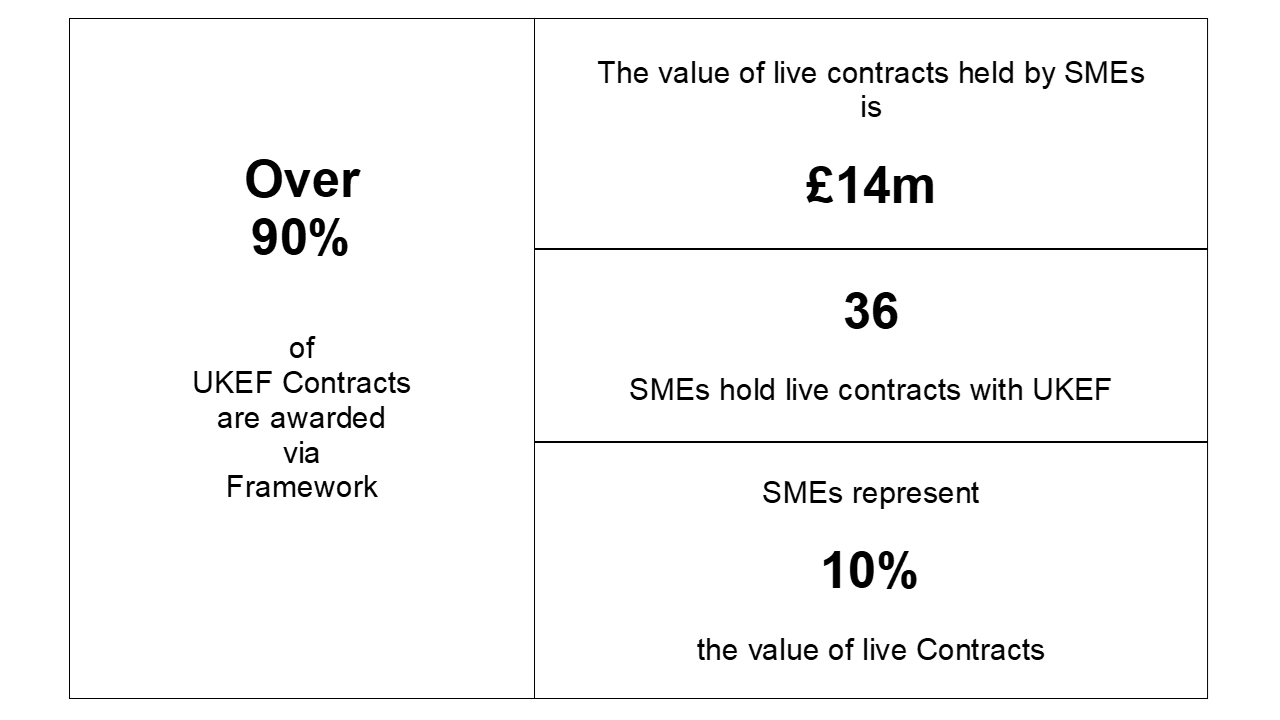
The use of commercial tools such as Public Sector Frameworks and Dynamic Markets (previously Dynamic Purchasing Systems) has been enhanced through PA23 and offers prime opportunities for SMEs to actively participate in and easily access pre-established procurement solutions. In UKEF, 90% of all sourcing is currently via such Frameworks (primarily through Crown Commercial Service - CCS) and this is crucial for SMEs to note. It means an SME’s easiest route to being able to bid for UKEF contract opportunities, is through considering frameworks and applying for these at the appropriate time (this will depend on each framework) – details on how to find the CCS commercial agreement pipeline is below.
Links to departmental commercial opportunities
Direct Opportunities
One of the most important things contracting authorities can do is to provide the market with information about current and future public contract opportunities by publishing a forward-looking procurement pipeline. The Procurement Act 2023 achieves this by requiring the publication of pipeline notices in certain circumstances. This is of particular benefit to SMEs, as it provides them with time to plan for future work, ensuring a competitive and diverse market.
Pipeline notices (UK1) for any intended requirement over £2 million are published on Find a Tender.
Our pipeline notices are a forward look for 18 months and are reviewed and updated every 6 months, or as necessary.
Read about how to look at the notices, notifications and the use of data
Search and apply for contract opportunities
Joining Frameworks / DPS
Joining a commercial agreement, such as a framework or Dynamic Purchasing System (DPS), can put SMEs in front of buyers actively seeking their services.
- Framework agreements establish terms for future contracts, providing a pool of pre-selected suppliers from which public sector buyers can call off orders.
- DPSs are an “always open” electronic list of pre-qualified suppliers that public sector buyers use to quickly and flexibly purchase goods, services, or works.
Search the Crown Commercial Service commercial agreement pipeline for upcoming agreements
As noted above, over 90% of all UKEF sourcing is via Frameworks, meaning this is the most likely way that any supplier can access our contract opportunities.
Joining a Supply Chain
Here you can find further information on how to do business with our department.
Departmental supplier events
The UKEF Commercial Function will host supplier and market events as part of pre-market engagement, where this is applies to a procurement.
Typically, these take the form of online engagement sessions, to help reduce barriers to access (by reducing both cost and travel expectations).
When UKEF engages the market, this will be advertised via the central digital platform for public procurement, Find a Tender, as required by procurement legislation.
The Crown Commercial Service (CCS) also has an events page for frameworks which can be found here.
Our actions and milestones
All UKEF actions are targeted to reduce the particular barriers for SME involvement, identified by small businesses.
The following represent UKEF’s intended actions to complete in year 1 of this Action Plan. Investment in P2P systems has recently been approved; however, it is expected to fall into future financial years.
These actions will be reviewed in subsequent action plans and updated based on feedback to show additional actions identified to support SMEs, alongside an update on progress made for actions set in the year preceding.
| Improvement action | Benefit to SMEs | Milestones |
|---|---|---|
| Improve prompt payment performance for SMEs | Reducing barriers on: Unnecessary risk allocation; By prioritising UKEF’s work on this area and enhancing payment processes, SMEs will benefit from improved cash flow stability. With timely payments, SMEs can bid on contracts confidently, knowing they will be paid promptly. This will reduce financial strain and unnecessary risk allocation in SMEs waiting for contract payment. | Reduce bottlenecks in our payment processing by looking at potential efficiencies around invoicing, approvals and/or internal process |
| Expedite payments by implementing short term changes and additional resource investment to improve current payment performance. | ||
| Invest in our payment systems over the long term. We will conduct a full review of our payment processes, before implementing a significantly enhanced payment system with the process expected to begin towards the end of the calendar year (2025). | ||
| All staff have regard to SMEs | Reducing barriers on: Complexity of procurement process; Lack of innovation; Too specific or vague requirements; By speaking to our teams about the barriers SMEs face when contracting with the Public Sector, we ensure that SMEs benefit from more inclusive and effective procurement practices. This awareness encourages a more thoughtful approach to defining requirements and sourcing contracts, ultimately simplifying the procurement process for SMEs. Clarity in requirements promotes innovation in the market and creates opportunities for diverse suppliers to participate. | Engage with other public sector organisations to share ideas and work together where possible. |
| Champion SMEs through establishing an SME champion role within the Commercial Function. This role will support peers throughout the Procurement lifecycle to have greater regard to SMEs. | ||
| Provide commercial training to highlight opportunities to engage SMEs and contract responsibly. | ||
| Create an SME Dashboard to consolidate our data and put a visible emphasis on performance, enabling our SME Champion to showcase best practise. | ||
| Conduct preliminary market engagement | Reducing barriers on: Lack of market engagement; Suppliers are given the opportunity to give views, exchange ideas, give clarity, and, if necessary, address concerns. | Identify and understand frameworks UKEF has historically used to award contracts and map this against future pipelines to understand where SMEs are available as part of each sourcing strategy. Engage the market ahead of running a Procurement competition by using preliminary market engagement to allow input from the market including SMEs. Consider lengthening bidder response times where SMEs might bid. |
| Signpost suppliers to Commercial tools (such as Frameworks) used by UKEF to place contracts, to encourage SMEs to consider applying for such opportunities with central procurement authorities (such as CCS). | ||
| Working with Crown Representatives, Cabinet Office Small Business Team and department SME Champions when preliminary market engagement is used, to ensure it is inclusive of SME participation. |
Case studies
As a government department we know that SME case studies give confidence to other SMEs in taking the step to bid for future opportunities.
As a recently established commercial function, UKEF is currently building case study examples for future updates to this action plan. We welcome our SME suppliers to use the Contact us section below if you’d like to be considered for this.
UKEF currently uses various Frameworks / Dynamic Markets, particularly those provided by CCS. For examples of successful SME awards under these types of agreements by other contracting authorities please see the news section of the CCS website (filters can be applied on the ‘type of article’ to view only case studies).
Our spend with SMEs
To set our direct spend SME target for March 2028, we considered the value of live contracts held with SMEs (in lieu of having actual spend data). This provided the strongest indication of what our future spend may look like, as contracts are typically awarded with terms of multiple years and are forward looking.
SMEs currently represent 10% of the value of live contracts. Therefore, our SME target of 12% is stretching as it could require an increase in the overall number of contracts awarded to SMEs over the next three years.
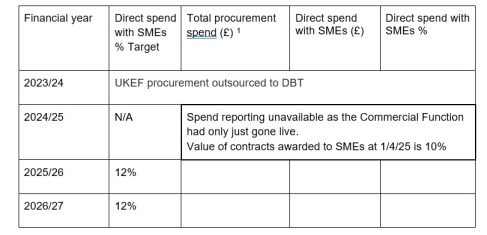
[1] UKEF Total procurement spend reflects commercial agreements over £10,000 excluding VAT. UKEF does not measure / report on indirect spend with SMEs.
UKEF’s first tracking of SME spend was 24/25, with full year data being confirmed at time of publication. Prior to that, data was captured under DBT who carried out procurements on behalf of UKEF.
View historical central government spend with SMEs
Our payment performance
Government is leading by example and paying our suppliers promptly. Late payment is an issue for businesses, especially smaller businesses, as it can adversely affect their cash flow and jeopardise their ability to trade. The government recognises that the public sector should set a strong example by paying promptly. The public sector is required to pay their suppliers in 30 days and report on their performance on an annual basis. 30-day terms also apply in public sector supply chains. Our department’s latest payment performance is set out below.
Latest report covering Q3 of FY23/24 shows:
- 10% Percent of invoices were paid within 5 days
- 98% Percent of invoices were paid within 30 days
View further information on government’s payment policy and legislation
SME Hub
The small and medium business hub is a dedicated space for SMEs looking to work with the government. Here you will find links to other departmental action plans and centralised guidance on bidding for government work.
Contact us
Share your SME feedback - whether you’re a current supplier or interested in working with us, your input is valuable.