Evaluation of the accommodation for ex-offenders programme
Published 11 December 2025
Applies to England

© Crown copyright 2025
This publication is licensed under the terms of the Open Government Licence v3.0 except where otherwise stated. To view this licence, visit nationalarchives.gov.uk/doc/open-government-licence/version/3 or write to the Information Policy Team, The National Archives, Kew, London TW9 4DU, or email: psi@nationalarchives.gov.uk.
Where we have identified any third party copyright information you will need to obtain permission from the copyright holders concerned.
This publication is available at https://www.gov.uk/government/publications/systems-wide-evaluation-of-homelessness-and-rough-sleeping/evaluation-of-the-accommodation-for-ex-offenders-programme
1. Executive summary
1.1 Background and methodology
RSM UK Consulting LLP have been appointed as part of a Centre for Homelessness Impact led consortium, alongside Cordis Bright, to conduct a deep-dive research study on the interaction of the criminal justice system and the homelessness and rough sleeping systems. As part of this deep dive, a light-touch evaluation of the Accommodation for Ex-Offenders programme (‘the programme’) was undertaken.
The evaluation was guided by the following research questions:
- How well is the Accommodation for Ex-Offenders programme being delivered and how does this vary by area?
- What are the key enablers and barriers to successful delivery?
- How effective is the Accommodation for Ex-Offenders programme in improving outcomes for people who are homeless or sleeping rough?
- How is the success of the Accommodation for Ex-Offenders programme constrained or enabled by other elements of the criminal justice and homelessness and rough sleeping systems?
- What, if any, unintended consequences were realised through the Accommodation for Ex-Offenders programme delivery and to what extent were indirect impacts realised in other areas of the system?
Five areas were selected for the deep dive research, four of which had an Accommodation for Ex-Offenders programme: Lambeth, Brent, Bromley, and Sefton. The programme in Sefton was coordinated by the Liverpool City Region Combined Authority, and evidence in this report drew on data gathered by the combined authority. The fifth area, Liverpool City, did not have its own programme and was intended as a control site to compare outcomes with areas that had an Accommodation for Ex-Offenders programme. However, the fieldwork revealed that Liverpool City was not a strong control site for this research as the local authority had commissioned a similar intervention using their own funds.
The research had several limitations, shaping how its findings should be understood. The deep dive approach, based on interviews across the five local areas, provided rich qualitative insights but could not fully capture the diversity of experiences across England. By engaging multiple stakeholders in each area, the study revealed a broad range of perspectives, but this very breadth made it difficult to pinpoint distinct regional differences or directly compare local approaches.
1.2 Delivery of the programme
Six facets of the programme delivery were evaluated. These included funding, staffing, engagement and support provision, partnerships, awareness of the programme, data monitoring.
In relation to funding, in Phase 1 of the programme £11.5m was spent, which was 74% of the allocated budget. For Phase 2, which was ongoing during the time of the research, the total budget was expanded to £23.7m out of which 59% had been spent at the time of the analysis. Any reported underspending was adjusted by the Ministry of Housing, Communities and Local Government (MHCLG) through future payment cycles, rather than being allocated to activities outside of the programme, in line with agreed funding conditions.
With reference to staffing, each local authority sampled for this research had recruited dedicated staff to lead and/or deliver the programme. These staff were reported to be essential for the programme’s success, as they provided crucial support for people leaving prison to find housing and manage their tenancies. However, local authorities reported facing challenges in recruiting staff due to perceptions around working with people who have an offending history.
Linked to engagement, the support offered was holistic and person-centred, including direct support with housing needs, links to other services such as job centres, and aftercare support to ensure successful tenancy sustainment.
Staff from the programme built foundational partnerships with His Majesty’s Prison and Probation Service , private landlords, and community support agencies. These improved communication between teams and helped resolve issues as they arose, particularly when services could be co-located in the same venue.
To raise awareness of the programme, local authorities conducted workshops and training presentations with system partners, although the impact varied based on the partners’ capacity to engage.
There were some challenges around data collection relating to the programme. While the programme was underpinned by a theory of change, it was not possible to evidence the contribution of the programme to the intended outcomes. This was due to the absence of specific targets and challenges in data monitoring for long-term outcomes.
1.3 Outcomes of the programme
Seven outcomes and impacts associated with the programme were investigated as part of this evaluation. These were: referrals into the programme, private rented sector tenancies secured for people leaving prison, sustainment of tenancies, successful exits from tenancies supported by the programme, reduction in homelessness and rough sleeping among people leaving prison, lower levels of reoffending and higher levels of rehabilitation after serving custodial sentences.
It is important to note that local or national targets were not specified for most of the outcomes. The one exception was the targets for the number of tenancies per local authority to be secured during the programme duration. For all other outcomes, it was not possible to conclude whether the reported performance and outcomes were in line with expectations. The lack of setting of targets was by design to allow local authorities flexibility to implement the programme as needed in local areas. This is in line with how MHCLG manage un-ringfenced grants as local authorities are trusted to use the funding effectively.
Nationally, referrals to the programme increased by about 30% following the expansion of the programme from Phase 1 (from July 2021 to March 2023) to Phase 2 (first quarter of 2023-24 to the first quarter of 2024-25). While the overall national trend showed an increase, some local authorities experienced a decline in referrals. The reasons for this variation were unclear, but it may be linked to local housing market conditions, including the limited availability of affordable housing options in the private rental sector.
In Phase 2 of the programme (at the time of the data analysis), 2,562 private rented sector tenancies were secured which was an increase of about 12% from Phase 1. However, there was large variability in the percentage of target tenancies secured across the sampled local authorities, and none had met their targets at the time of reporting. Representatives from the sampled local authorities reflected that the lack of affordable, suitable housing options in the private rented sector was one of the key barriers to meeting their targets for the number of tenancies secured.
Nationally, 65% of individuals supported into tenancies in the private rented sector as part of the programme maintained their accommodation for more than six months as of the end of the first quarter of the financial year 2024-25. About 60% of the exits from the programme were reported to be successful graduations (e.g. move-on to independent housing either in the same or other property).
The data indicated that the programme may have positively contributed to reduced homelessness and rough sleeping among people leaving prison, but this was not possible to evidence due to absence of data tracking long-term outcomes for people supported by the programme. There appeared to be a reduction in recall rates among those accommodated by the programme compared to the national average. While this may suggest a contribution of the programme to the reoffending rates, data limitations did not allow this conclusion. Finally, anecdotal evidence suggested that community rehabilitation was supported through mediation and mentorship programmes, although systematic tracking of these outcomes was not available.
1.4 Unintended consequences
The fieldwork highlighted several positive unintended consequences of the programme, including stronger local and regional partnerships improved local authority communication and collaboration with probation, prisons, and employment support services. This facilitated a deeper understanding of local needs, enabling teams to recognise and provide more effective support to vulnerable groups, improve pathways and address systemic challenges.
In terms of negative unintended consequences, the focus on assisting individuals leaving prison who were below the statutory priority need threshold for housing created tension. This was because of other vulnerable individuals who were waiting to be housed, particularly in areas with challenging housing market conditions. There were limited referrals for women to the programme, with their higher support needs (including histories of trauma and substance use) often not addressed during shorter prison sentences meaning the offer was not suitable. The programme allowed housing and support to be provided to a wide cohort of people who had left custody within the past 12 months, which goes beyond only those seeking move-on support from Community Accommodation Service Tier 3 (CAS3).
Research participants expressed concern that this created a limitation in the space and funding available specifically for those from CAS3, although staff did aim to support them to find other options. Lastly, regional disparities in access to accommodation due to the lack of a national rollout and a lack of standardisation in the use of funding across local authorities resulted in inconsistent implementation and outcomes.
1.5 Enablers and barriers of the programme
There were seven factors raised by research participants that were said to enable the successful delivery of the programme. These were:
- dedicated staff who were passionate and engaged individuals within local authorities who lead the programme
- co-location of housing teams within prisons, which enables effective collaboration with Probation colleagues
- one-to-one tenancy sustainment support, which helps individuals maintain their tenancies
- managing and setting realistic expectations, including informing individuals about what is achievable and affordable
- continuity in engagement pre- and post-release, to maintain consistency for the individual in their support journey
- multi-agency forums or meetings, which involve various partners to facilitate efficient collaboration and information sharing
- transfer of learning across authorities, through the involvement of regional or sub-regional oversight bodies or combined authorities
Additionally, some barriers were identified through the fieldwork which created hurdles to achieving the outcomes of the programme. These included:
- limited availability and affordability of private sector accommodation
- limited options for people under 35 due to local housing allowance rates
- cross-departmental competition for properties between Home Office and MHCLG was said to be adding pressure in the housing market
- delays in tenancy preparation, particularly when individuals struggled with obtaining essential documents
- unwieldy local authority systems to submit referrals, which could be onerous for professionals
- discrimination and stigma from landlords due to the offending histories of people leaving prison
- uncertainty around funding and whether it will be continued, which inhibited the local authorities from making strategic informed decisions
2. Introduction and methodology
2.1 Introduction
RSM UK Consulting LLP have been appointed as part of a Centre for Homelessness Impact led consortium, alongside Cordis Bright, to conduct a deep-dive research study on the interaction of the criminal justice system and the homelessness and rough sleeping systems. The overall aim of the deep dive was to enhance the Ministry of Housing, Communities and Local Government’s (MHCLG) understanding of how interactions with the criminal justice system affect the likelihood of experiencing homelessness or rough sleeping. Additionally, the research aimed to identify what works well and less well in supporting individuals who have interacted with the criminal justice system and are at risk of homelessness.
As part of this deep dive, a light-touch evaluation of the Accommodation for Ex-Offenders programme (‘the programme’) was undertaken, which is outlined in this Technical Report.
2.2 Overview of the Accommodation for Ex-Offenders programme
The Accommodation for Ex-Offenders programme was established by MHCLG to support individuals leaving prison to secure and maintain stable housing in the private rental sector. As stated in the MHCLG prospectus for the programme, the aim of the programme was “to build a pathway [for individuals released] from prison, through the Ministry of Justice’s Community Accommodation Service Tier 3 (CAS3) provision, before moving on to their own private rented sector tenancy through the schemes this funding will unlock.” The CAS3 service offers people leaving prison temporary housing and support for the first 84 nights following release, with the intention of providing them with the time and assistance needed to enable them to move into settled accommodation, including via the Accommodation for Ex-Offenders programme.
This section of the report details the programme’s funding scale and structure, scope of interventions and intended outcomes.
2.2.1 Funding scale and structure
The programme launched Phase 1 in July 2021 and ran until March 2023, backed by £15.6 million in funding distributed across 88 local authorities. The programme entered Phase 2 in April 2023, and was scheduled to run until March 2025, with an increased budget of £23.7 million allocated across 81 local authorities.
The programme was not open to all local or combined authorities. A list of local authorities (174 for Phase 1, 144 for Phase 2) was developed by MHCLG to include those with the perceived highest needs.[footnote 1],[footnote 2] In Phase 1, areas were included from the CAS3 vanguard regions as well as 33 other areas identified as having high demand from the target population. In Phase 2, the focus was on areas of high demand only (as CAS3 was rolled out nationally). The level of demand associated with an area was based on an analysis of the latest Homelessness Case Level Collection (H-CLIC) data (including number of those leaving custody at risk of homelessness who need prevention duty or experiencing homelessness who need relief duty) and rough sleeping management information data (including information on those who previously had a custodial sentence). These local authorities were invited to place bids for funding at the start of each phase. MHCLG encouraged cross-authority bids from combined authorities. In such cases, the nominated lead authority was required to be on the list of invited local authorities but the remainder of the authorities in the combined bid did not.
As part of the bidding process, local authorities were required to complete an application form, including setting out their proposed intervention, timeline and costs. The bids were co-produced with MHCLG specialist advisers to support quality bids and share best practice. Once granted, the local authorities were required to deliver the programme in line with the funded offer made by MHCLG, and to return monitoring data regularly (monthly basis in Phase 1, bi-monthly in Phase 2). The monitoring data included a series of metrics, including the number of new tenancies secured, tenancy sustainment, exits, spending and referrals. As part of the conditions of the offer, if local authorities were deemed to be underspending, their subsequent allocations were reduced.
2.2.2 Scope of interventions
The interventions delivered as part of the programme could include a variety of activities, such as recruiting and/or assigning staff to support individuals in securing and maintaining tenancies; providing incentives for landlords to participate in the programme; offering rent deposit assistance; employing additional support workers to liaise with key partners, such as the Probation Service, Department for Work and Pensions, and other relevant agencies.
The programme was established with clear eligibility criteria that potential beneficiaries had to meet to be supported. Key criteria included being over the age of eighteen, presenting with a history of offending, being assessed as ready to take on a tenancy, experiencing, or at risk of, homelessness or rough sleeping, having served a custodial sentence within the last 12 months, and not being assessed as in priority need and eligible for statutory homelessness assistance from the local authority. [footnote 3]
2.2.3 Intended outcomes
The overall ambition of the programmes was to support people into sustainable privately rented accommodation with an expected tenancy length of 12 months, wherever possible. It was launched by MHCLG to work alongside the Ministry of Justice’s CAS3 programme, which offers 84 days of accommodation immediately after people are released from prison. Therefore, the programme was intended to complement the CAS3 provision by extending housing stability beyond this initial period. However, the programme was not formulated to have coverage across all local areas, so this was only available as a pathway in some areas.
The areas included as part of the Accommodation for Ex-Offenders programme were based on the data demonstrating high need. The rationale was that areas excluded from the programme had lower demand and could be supported through alternative funding such as the Homelessness Prevention Grant or Rough Sleeping Initiative.
Key outcomes for the programme included the number of private rented sector tenancies assisted or secured for people leaving prisons, decreasing rates of reoffending, and reducing instances of rough sleeping. These were elaborated in a log frame (short for logical framework) as provided in Table 1. A log frame is a table that lists the intended activities of a programme, and short-term outputs, medium-term outcomes and long-term impact goals. The same has been detailed for the Accommodation for Ex-Offenders programme in the table below.
Table 1: A copy of the log frame supporting the monitoring framework of the programme, as shared by MHCLG
| Inputs | Activities | Outputs | Outcomes | Impact |
|---|---|---|---|---|
| Money provided by MHCLG to LAs Staff resources Monitoring data and evaluation plans |
LA recruitment (support workers, case workers, liaison officers etc.) Landlord incentives (e.g. financial) Development of insurance schemes Financial support for service users (e.g. funds for security deposits) Training for service users (e.g. workshops before leaving prison) |
# of staff hired £ spent on financial support # of landlords engaged # of workshops/ training courses conducted with service users # of insurance schemes set up |
Outcome 1: # of referrals Outcome 2: Higher number of ex-offenders into PRS tenancies within 12 months of release from prisons (or CAS3 accommodation) # of tenancies Outcome 3: Higher levels of sustaining PRS tenancies # <1, 1-2, 6+ months Outcome 4: Higher levels of ex-offenders in settled accommodation 3 months post-release (Ministry of Justice)[footnote 4] Outcome 5: Lower levels of ex-offenders sleeping rough # of rough sleeping |
Outcome 5 (continued): Lower numbers of rough sleeping overall Outcome 6: Lower levels of reoffending Outcome 7: Higher level of rehabilitation after custodial sentence (e.g. securing employment, setting up a bank, more integrated) |
Please note that the numbering of outcomes (in italics) has been added as part of this research to clarify the outcomes reported as part of this research. No specific outcomes or indicators were added or removed from this table.
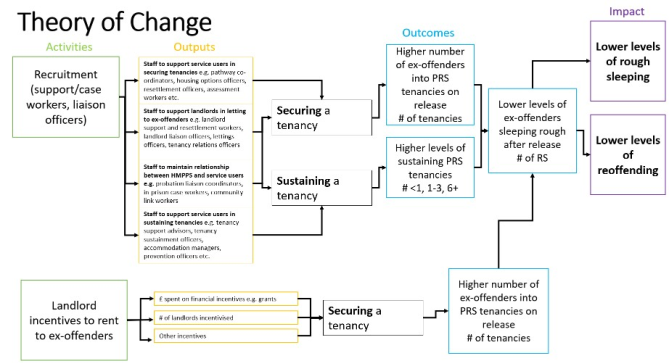
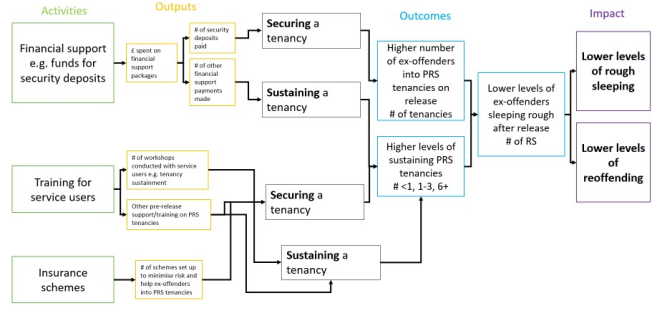
The log frame was supported by a set of two Theory of Change diagrams for the programme. These illustrated how the programme was expected to lead to specific outcomes and impacts, drawing on causal lines of change presented by one-sided arrows. These Theory of Change diagrams are provided in Figure 1 below.
Figure 1: A copy of the two Theory of Change diagrams supporting the monitoring framework of the programme, as shared by MHCLG
2.3 Research questions
This report focuses on evaluating the Accommodation for Ex-Offenders programme and how that is working in practice. The evaluation was guided by the following research questions:
- How well is the programme being delivered and how does this vary by area?
- What are the key enablers and barriers to successful delivery?
- How effective is the programme in improving outcomes for people who are homeless or sleeping rough?
- How is the success of the programme constrained or enabled by other elements of the criminal justice and homelessness and rough sleeping systems?
- What, if any, unintended consequences were realised through the programme’s delivery and to what extent were indirect impacts realised in other areas of the system?
2.4 Summary of the methods
Five areas were selected for the deep dive research, four out of which had an Accommodation for Ex-Offenders programme: Lambeth, Brent, Bromley, and Sefton. The programme in Sefton was coordinated by the Liverpool City Region Combined Authority, and evidence in this report drew on data gathered by the combined authority. Please note that evidence reported by the combined authority also included data from the other areas in which it operated. This does not impact on research findings; however, comparisons of outcomes between the sampled authorities would not be appropriate.
The fifth area, Liverpool City, did not have its own programme and was intended as a control site to compare outcomes with areas that had an Accommodation for Ex-Offenders programme. However, fieldwork revealed that the delivery provider commissioned by the combined authority to cover surrounding areas also included Liverpool City in its remit. Additionally, the local authority in Liverpool City quickly adopted learnings from the successful programme across the region. In response, they appointed specialist staff to manage housing options for people leaving prisons who were referred to them directly.
As such, Liverpool City was not regarded as a valid control site for this research, as it did not provide a true comparison of the programme. As explained in section 2.5, other data limitations also did not allow the inclusion of this control site. For the report, data from the four areas was analysed and reported (as there was no data available from the control site).
Four group interviews were conducted, one with each of the sampled local or combined authorities. Each interview was attended by one to two programme representatives from the respective area. This report also drew on evidence gathered from 30 further group interviews with 63 local, regional and national stakeholders who supported people leaving prison across statutory and voluntary services. The topic guides for the interviews were co-designed with the Centre for Homelessness Impact and MHCLG. Each interview was conducted via MS Teams and lasted up to 90 minutes. Automatic transcripts were created using the in-built Teams function and validated by a member of the research team.
Insights from the qualitative fieldwork from the four sampled authorities were triangulated with management information data at the national level. Monitoring data on referrals and outcomes were assessed and included where possible in the results.
Finally, please note that any analysis reported in terms of percentages has been rounded to the nearest whole number to improve the readability of the report. It has been ensured that any rounding off error does not impact the conclusions of the analysis.
For the full methodology, please see the main report on the interaction between the criminal justice system and the homeless and rough sleeping system.
2.5 Limitations of the methods
The fieldwork was based on a small sample of four local areas. These areas were selected to be diverse in terms of geography, type and size of local authority. Previous evidence has shown that these are factors known to impact the risk of homelessness and rough sleeping. This variety helped minimise the risk of the results being biased due to potential confounding variables. To ensure coverage across the key issues within the homelessness and rough sleeping system, multiple stakeholders were included per interview. Some of the local authorities’ representatives described struggles with staff capacity challenges and this reduced the availability of all relevant staff to take part in this research. To mitigate, findings from the key local authority interviews were supplemented by evidence gathered from wider local, regional and national interviews, and were monitored to ensure saturation of salient points. However, given the small sample size, the insights should be understood as indicative, with transferability requiring careful consideration of the context in which the programme has been implemented.
The targets for the programme were not well defined. This approach to targets is in line with MHCLG grant funding to local authorities so that the latter are responsible for their own effective delivery. However, this made it challenging to evaluate the outcomes as positive or negative. Similarly, some local authorities were unable to share with us detailed delivery plans either because they were sensitive or because they did not exist. In the absence of delivery plans, there was limited information on whether the programme was being delivered as intended.
Several limitations within the programme management information were noted as part of the research. Firstly, there is no standardised definition of “homeless” provided within the guidance provided to local authorities relating to the programme data return, leaving it open to interpretation. Qualitative explanations in the data suggest that some areas record moving in with friends or family as “other” rather than “homeless”, limiting the comparability of data between areas. Secondly, there are challenges with data granularity. For instance, it was not possible to track referrals into the Accommodation for Ex-Offenders programme based on someone’s previous accommodation status (e.g.: whether they were coming from accommodation provided as part of the Community Accommodation Service Tier 3 (CAS3) programme).[footnote 5] Thirdly, there was no provision to track long-term outcomes, such as reoffending or going on to experience homelessness or rough sleeping, for individuals who exited the programme.
The inclusion of Liverpool City as a control area did not enable meaningful conclusions when comparing outcomes in areas with and without the programme. As explained in section 2.4, the area was effectively implementing a service like the Accommodation for Ex-Offenders programme (drawing on learnings from the combined authority). Notwithstanding this limitation, it was also not possible to compare outcomes between the programme and control area because of the lack of recording of specific outcome data. For instance, data on recalls and accommodation on release (or three months post release) was only available at the regional level, making it difficult to compare different local areas. Additionally, data from Homeless Case Level Collection Data (H-CLIC) and the Rough Sleeping Outcomes Framework did not allow tracking of a person from prison release to homelessness or private rented sector tenancies.
Another limitation of this research is that it cannot provide viewpoints and perspectives specific to each regional area because multiple stakeholders were interviewed within each area. By engaging with a variety of local stakeholders the research was able to gather diverse insights based on their different roles and experiences. Whilst this approach provided a broad view of the interactions between the criminal justice and homelessness and rough sleeping systems, it also introduced variability, making it difficult to capture a singular perspective for each area. This means the research cannot compare differences between areas and approaches. However, this provided the research with a level of depth and richness in experiences that would otherwise not have been captured.
2.6 Structure of the report
The remainder of this report is structured as follows:
- Chapter 3 provides the findings and analysis with the following sections:
- Section 3.1 provides an evaluation of the programme delivery
- Section 3.2 provides an evaluation of the outcomes and impacts of the programme
- Section 3.3 reports the unintended consequences of the programme
- Section 3.4 details the enablers and barriers associated with the programme delivery
- Chapter 4 offers conclusions in reference to the research questions
3. Findings and analysis
In this chapter, we provide the results of the evaluation, describing findings related to the delivery of the programme (section 3.1), the outcomes and impacts of the programme (section 3.2), the unintended consequences of the programme (section 3.3), and the enablers and barriers associated with the programme (section 3.4).
3.1 Evaluation of programme delivery
3.1.1 Introduction
This section provides a summary of how the programme has been delivered across the four local areas as part of the evaluation sample. These included three areas in London, namely Brent, Bromley, and Lambeth, and one combined authority of Liverpool City Region, which delivered services for this programme across a large area including Halton, Knowsley, Liverpool City, Sefton and St. Helens.
Table 2 provides an overview of the interventions across the four areas, in terms of the target number of people to be supported. While there were targets for the number of people to be supported, the individual targets for number of new tenancies, % sustainment over 1 month, 6 months and 12 months, and % positive exits were absent. For each area, the table also specifies the number of dedicated staff for the programme and whether landlord incentives, tenancy sustainment packages or personalised budgets were used as part of the intervention in each area.
Table 2: Interventions for the programme across four local areas for Phase 2
| Target N supported | Dedicated staff | Landlord incentives | Tenancy sustainment packages | Personalised budget | |
|---|---|---|---|---|---|
| Brent | 80 | 3 | Yes | ||
| Bromley | 60 | 2 | Yes | Yes | |
| Lambeth | 144 | 2 | Yes | ||
| Liverpool City Region Combined Authority | 200 | 9.2 | Yes | Yes |
3.1.2 Funding
Overall, in Phase 1 of the programme, £11.5m was spent which is 73.8% of the total allocated budget of £15.6m. This suggested that there was 26% underspending at the end of Phase 1.
Phase 2 was in progress at the time of reporting, and £13.9m had been spent to date (end of the first quarter of the financial year 2024-25). This was 58.5% of the allocated budget of £23.7m, which suggested that the authorities were on track to meeting their allocated spending targets. The picture was similar for the specific local authorities as part of our sample. Most reported an underspend in Phase 2 at the time of writing but explained that the gap in spending would cover the remainder of the time in Phase 2.
Importantly, the underspend was not being allocated to activities outside of the programme. Where there was reported underspending in Phase 1 or early months of Phase 2, this shortfall was adjusted in the allocations by MHCLG meaning that the local authority was granted less funding in the next payment cycle.
3.1.3 Staffing
As can be seen in Table 2 above, all four sampled local authorities recruited dedicated staff for the programme. This was based on learning generated from Phase 1 of the programme, which showed that while financial support for incentives, rental payments and floating support was useful, designated staff were “absolutely essential”. As one national stakeholder explained:
It [takes] real tenacity to find housing out of prison. For a [person in prison] to do that themselves and navigate the system and repeatedly go back when there are refusals [is challenging]…[instead] to have somebody to help manage that [journey] and to almost to set [people leaving prison] up for the future [so that they can] deal with some of [the ongoing challenges] has been really important.
Local authority representatives agreed that the dedicated case workers were the cornerstone of the programme delivery. In fact, the support of the case worker was often “cited as [the] key to [people] beginning to turn things around”. They also shared that they struggled with the recruitment of staff because of the perceptions around working in this sector. As one local authority representative shared “I think that might be because sometimes people are worried or nervous, anxious about working with [people who have an offending history]”.
3.1.4 Engagement of eligible people and support provided
According to the interviews with local authority representatives and commissioned providers, the support offered to people who were eligible for the programme tended to be holistic and person-centred. It could be broadly categorised into three types of support, as described below.
3.1.4.1 Housing support
Referrals for the programme were typically received as part of the general Duty to Refer lists, although some local authorities mentioned setting up separate systems to receive referrals to make the process more efficient. For example, staff receiving direct notifications from partners (e.g. Probation Service or prison) rather than just the official Duty to Refer notice. Once the people for whom the referrals were made were deemed eligible, they were directly notified. The local authority case worker set up a personal housing plan and explained details and support available in terms of setting up and attending viewings for housing, securing a tenancy, organising benefits and any other community support required.
Local authority representatives also shared that their support did not stop once the accommodation was confirmed. For example, one local authority reflected putting together “starter packs” for people in new tenancies to help them set up their first home after release from prison. These packs were tailored to the person’s essential needs, and typically included bedding, pots and pans, and some access to furniture such as a bed or white goods.
3.1.4.2 Links to other services
In addition, the case workers were responsible for supporting people with training and employment options, such as supporting them to obtain proof of training (for example, Construction Skills Certification Scheme cards) if they had completed courses while in prison. This support was essential for people to engage with the job centre, and over the longer term, to find employment to support rehabilitation into the community.
3.1.4.3 Aftercare support
The research participants did not share much information about the support provided to people once they were settled into the tenancy. Anecdotal information shared by MHCLG staff commissioning the programme suggested aftercare support was fundamental in ensuring the long-term outcomes for a person. However, local authority stakeholders from this research suggested that they “step down the support” once the tenancy is established, and the person is supported with links with the community. The appointed case workers may continue to occasionally check-in to ensure that there are no problems with the tenancy and are available in case support is sought by the tenant. This could include financial support, such as overcoming rent arrears or bill payments. It could also be other domains of support, and the case workers would aim to signpost to relevant services or directly intervene where possible.
3.1.5 Partnerships
The delivery of the programme involved several partners across the system. Three key groups of partners were considered vital, including prison and Probation teams, private landlords and community support agencies.
The local authority staff worked closely with prison housing workers and Probation teams to build foundational relationships and ways of working. This enabled clarity on both sides about the information required for the referrals and homelessness application forms, which in turn avoided delays. Strong working relationships with prison resettlement teams helped pre-empt or resolve bureaucratic issues, such as challenges getting correct ID documents.
Probation Services were also said to be essential in supporting the local authority staff to liaise with people to be released from prison. This could be in terms of making them aware of the steps required to obtain a tenancy, supporting them with viewings and managing expectations about housing options available to them. Other specific teams and forums within the remit of prison and Probation services that the local authority staff identified as useful from the perspective of delivery included the Integrated Offender Management teams and the Multi-agency Public Protection Arrangements meetings.
Staff within local authorities also developed strategic relationships with landlords who were able and willing to accommodate people recently released from prison. Local authority representatives shared that it was time-consuming to identify landlords that had relevant accommodation:
So, it took a while to get off the ground with the project…[but] after a few months we started to get our groove.
Local authority representatives reflected that it was useful to work alongside staff from Job Centre Plus (or similar in-house council teams) to refer people for additional support. For example, this could include help with budgeting from a Money Advice team, assistance with benefit applications or advice on previous debts. To a smaller extent, but equally useful, local authority representatives also mentioned building connections with staff in GP surgeries or community support groups. This was particularly useful if the person being supported was experiencing challenges with their mental health or substance use. Participants described that it was helpful for housing teams to be co-located in the same venue as other services, such as Probation Services, substance use or mental health services.
One representative from a local authority described how they have worked to develop a “close working relationship” with landlords, so they have a shared goal of supporting the tenants sustain the tenancy long-term. The interviewee reported that if the landlord suspected an issue that could risk the tenancy:
They will phone the relevant housing officer who…[would] contact the probation officer.
With everyone jointly committed to the same aim, risks could be identified and mitigated with early intervention.
A common theme across the interviews was that strong communication and collaborative working between partners ensures that referrals are suitable. As a local provider stated:
…a key thing…in partnerships is the relational working…You understand each other, you understand what each other’s trying to achieve and how we might be able to support each other.
This was not just in terms of referrals pre-release, but also referrals post-release when someone is in the community and would still qualify for the programme. This was particularly useful as workloads and resourcing pressures within Probation Services could mean that referrals are delayed. In such cases, people may get released from prison, not present to local authority housing teams immediately, and need to be referred for the programme by a community support team or service.
3.1.6 Raising awareness of the programme
In addition to recruiting staff, setting up partnerships and procuring rental properties in the private sector, the local authorities undertook additional activities as part of the programme. For instance, they conducted workshops and training presentations with partners when they were rolling out the programme.
As one local authority representative reflected:
…initially in the first few months of [receiving the programme funding], we had a lot of meetings with partner agencies to roll out the [programme], to explain how the [programme] works and [now] pretty much everybody knows about it.
This could involve meeting with the Probation Services and prison resettlement teams to discuss the move-on pathways from existing provision into the programme. The local authority reflected on how this activity helped ensure that they were able to:
Pick up anybody that’s coming out of CAS3 that may qualify for the [programme] as well.
However, these opportunities were not always impactful or well-received. According to one local authority:
It’s all very well delivering programme and workshop to agencies …But if the cohort [of system partners] you’re delivering it to…doesn’t know how it works, it’s very hard to manage the expectations as well. [Staff in other services] are not prepared for it, but it’s all down to constraints and budgets [within those services] as well. So how much can you deliver, you know?
This suggests that these additional activities to raise awareness and increase knowledge across system partners had positive benefits only when other services had time and capacity to engage with the activities.
3.1.7 Data monitoring
The programme was underpinned by a theory of change that discussed how the intended outcomes were anticipated to occur via the intervention activities and outputs. The theory of change was supported by a log frame detailing the outputs and outcomes of the programme and aligning them to the metrics part of the routine monitoring data collection. In addition, the programme leads at MHCLG reported that they had collected feedback as part of Phase 1 and improved data collection processes for Phase 2. These improvements including making the data return form more robust, streamlined and less resource intensive for ease of completion. These factors together suggested that the evidence base for the programme was reliable, and this provided the basis for the outcome evaluation reported in section 3.2.
There were a few ways in which data monitoring for the programme could be improved. First, the outputs and outcomes detailed in the log frame could be strengthened by measuring them against specific targets. Each local area had proposed a target number of people they anticipated supporting via the programme. However, it was unclear if this target described the number of people expected to be assisted into new tenancies, or the number of people expected to be successful sustaining or independently managing their tenancy following initial support from the programme. Additionally, targets for anticipated reduction in re-offending rates, community rehabilitation or subsequent risk of homelessness or rough sleeping were not specified. Having such targets would make the programme’s aims more specific and timebound, and this would help assess to what extent the programme was meeting its aims.
Another area for improvement in data monitoring is tracking long-term outcomes. The programme would benefit from tracking outcomes on a case-by-case basis over time to understand the longer-term impact on an individual’s offending behaviour and the risk of homelessness and rough sleeping. Without such tracking, it was challenging to determine if the people supported by the programme continued to maintain their tenancies, gain employment, and integrate into local communities.
Additional data monitoring may risk increasing the burden on local authorities and impose too many targets for them to strive towards. There is thus a need to keep monitoring proportionate to the scale of the programme, while accepting that it may reduce the availability of data to take evidence-informed decisions for the future.
3.2 Evaluation of programme outcomes and impacts
This section details the evidence associated with the intended outcomes and impacts of the programme, as detailed in the log frame. This includes number of referrals into the programme (timing and source were also analysed for completeness), the number of new tenancies, sustainment of tenancies (over one, six+, and 12+ months), successful move-on from tenancies, reduced homelessness and rough sleeping, reduced reoffending, and improved community rehabilitation. For each outcome, data from the four sampled authorities is presented as well as national data (where available). Data from the final sampled authority (Liverpool City) was not included as they did not have a funded Accommodation for Ex-Offenders programme.
3.2.1 Referrals into the programme
At the national level, referrals to the programme increased by 32% (from N=9,824 in Phase 1 to N=12,980 in Phase 2 to date). This is likely indicative of the expansion of the programme in terms of the overall level of funding granted to local authorities and the focus on areas with high need. It may also indicate the rising awareness about the programme across the system, for instance Probation teams and charities supporting people leaving prisons at risk of homelessness.
This pattern at the national level matched that in some of the sampled authorities but not others. For instance, Liverpool City Region Combined Authority reported an increase in referrals by 76% between Phase 1 (N=694) and Phase 2 (N=1,220 to date). This trend did not extend to the three sampled areas in London. Two of the three local authorities in London, namely Bromley and Lambeth, had a similar level of referrals between Phase 1 and Phase 2 (an increase of 11% in Lambeth and a decrease of 1% in Bromley). Brent, however, reported a substantial 71% reduction in referrals, decreasing from 161 in Phase 1 to 47 in Phase 2.
The reason for the variability in referrals across the sampled areas is unclear. The three areas in London showed a different trend compared to that observed at the national level. This may reflect the challenging conditions in the London private housing market. For instance, it could indicate that authorities in London preferred to send referrals to non-London areas with more affordable options. It may also reflect how Liverpool Combined Authority designed their intervention for Phase 2, recruiting dedicated staff to be based within the prison to build relationships and increase referrals.
3.2.2.1 Timing of the referrals
Figure 2 illustrates the distribution of pre-release and post-release referrals for each sampled area and the national level across Phases 1 and 2. Across both phases, at the national level, 39% of the referrals were made pre-release, while 61% occurred post-release. This means that across the country, there were more people referred after they had already been released from prison, rather than while they were still in prison. For Liverpool City Region Combined Authority, the pattern was similar, with 28% accounting for referrals pre-release in both phases. However, the three London areas reported a decrease in the percentage of pre-release referrals from Phase 1 to Phase 2 (ranging from 52% in Brent, 23% in Lambeth and 13% in Bromley).
Figure 2: Referrals: Pre-Release vs Post-Release
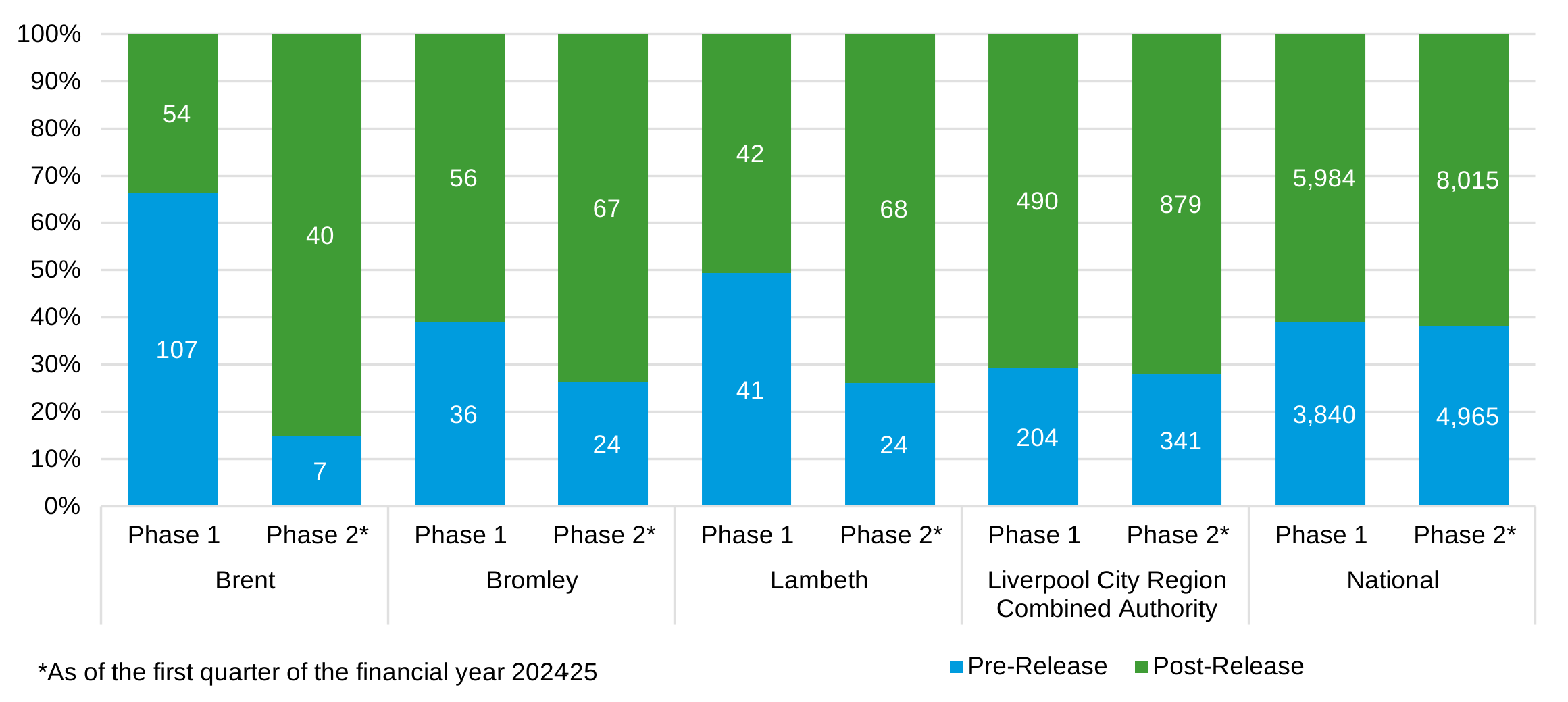
There were no specifications about whether referrals should be before or after release. It should be noted that the referral to the programme is open for people up to 12 months after release. Therefore, post-release referrals do not necessarily indicate that the programme is not working well. What is unclear from the data is whether the post-release referrals were because of delays in the system, shortage of suitable/affordable housing or because the housing need presented itself only after a person was released from prison. However, a representative from a local authority speculated that “perhaps with CAS3 being available the pressure to find accommodation [via the programme] for people leaving prison is not so urgent.”
In other words, the option of CAS3 housing reduced the urgency for referrals to come in early as provisions were made to meet a person’s needs for housing immediately following release from prison. At the same time, another local authority representative continued to emphasise the benefits of pre-release referrals. They stated that early referrals “…[give] the housing options officer a lot more time to work with landlords…direct [people leaving prison] on to the most appropriate pathway [and] looking at any support that was needed and directing [people] on from there.”
3.2.1.2 Source of the referrals
The programme monitoring data showed that most of the referrals were from Probation services in both phases of the programme. The national average of Phase 2 referrals from Probation Services was 72% (ranging from 71% to 91% across the four sampled areas). Housing Options teams were the second most common source of referrals (17% nationally).
While the data from Phase 1 allows the tracking of referrals from the CAS3 programme, this Phase 1 dataset was unreliable as it required manual entry and contained several inconsistencies.
In Phase 2, the monitoring data requirements were changed. As part of this change, it was not possible to disaggregate referral data to track programme referrals directly from CAS3 as part of the data collected by MCHLG. However, some of the local authorities were able to estimate the percentage of referrals from CAS3. A representative from Liverpool City Region Combined Authority estimated 30% of referrals from Probation Services originated directly from CAS3. The same for Lambeth Council was estimated to be 16% and for Bromley Council was estimated to be 12%. Brent Council was unable to share this level of detail.
3.2.2 New tenancies
In addition to referrals, another key outcome of the programme is to source new tenancies for people leaving prison. Table 2 provides a snapshot of this outcome for the four sampled areas. There was large variability across the sampled local authorities regarding new tenancies secured in Phase 2, when compared with their respective targets. For this discussion, we assume that the ‘target’ for each local authority was in reference to the number of private rental tenancies secured for people leaving prison using programme funded supports. Please note that this includes data up to the first quarter of the financial year 2024-25 as this was the latest data available from MHCLG at the time of the analysis.
Table 2: Monitoring data for outcomes of the programme Phase 2 (up to the first quarter of the financial year 2024-25)
| Target N supported | Suitable referrals | New tenancies | New tenancies as % of target | New tenancies as % suitable referrals | |
|---|---|---|---|---|---|
| Brent | 80 | 47 | 10 | 13% | 21% |
| Bromley | 60 | 88 | 21 | 35% | 24% |
| Lambeth | 144 | 85 | 51 | 35% | 60% |
| Liverpool CA | 200 | 596 | 112 | 56% | 19% |
| National | n/a | 10,503 | 2,562 | n/a | 24% |
The data from Brent showed 10 new tenancies secured in this period, which was 13% of their target. Lambeth and Bromley authorities reported securing 21 and 51 new tenancies respectively, which were 35% of their respective targets. Finally, Liverpool Combined Authority reported securing 112 new tenancies, which was 56% of their target. It should be noted that these were Phase 2 targets, and the local authorities were mid-way through the programme at the time of reporting. The programme funding is available until the end of March 2025, allowing local authorities more time to secure further tenancies.
The data indicated a disparity between the target and actual performance, which was acknowledged by local authority representatives. For instance, representatives from two local authorities in London attributed their relatively low number of new tenancies to the sharp decline in the availability of affordable private rental properties within their area since the bid was submitted. One representative from a London local authority acknowledged:
We were quite optimistic back in 2021 [when the bid was submitted] … [in terms of] what we could deliver, but obviously that’s changed quite drastically…We’re not being able to deliver this now.” The representative also said, “We [have] not been meeting our targets due to market conditions and have now requested for a final tranche payment to be made to cover our fixed salary costs. We do not anticipate delivering this project after March 2025.
This difference in outcomes across authorities was also evident when assessing the new tenancies as a percentage of suitable referrals for the programme, ranging from 19% in Liverpool Combined Authority to 60% in Lambeth. This variation does not necessarily reflect the effectiveness of the authorities, as factors such as resourcing could also play a significant role.
National data suggests that 24% of all suitable referrals resulted in a new tenancy being secured. For those who were referred to the programme but were not housed, the alternative routes to housing or outcomes were unclear due to data limitations.
3.2.3 Sustainment of tenancies
While the number of new tenancies were falling short of meeting anticipated targets, the data for the sampled local authorities showed positive outcomes in terms of tenancy sustainment. Figure 3 below illustrates the duration of tenancies for programme participants at the local and national levels, highlighting the programme’s success in fostering longer-term housing stability. For each area, the number and percentage of people who sustained their tenancies over four time-periods is specified: for less than one month, between one and six months, between six and twelve months, and over one year.
Figure 3: Phase 2 Tenancy Sustainment (as of the first quarter of the financial year 2024-25)
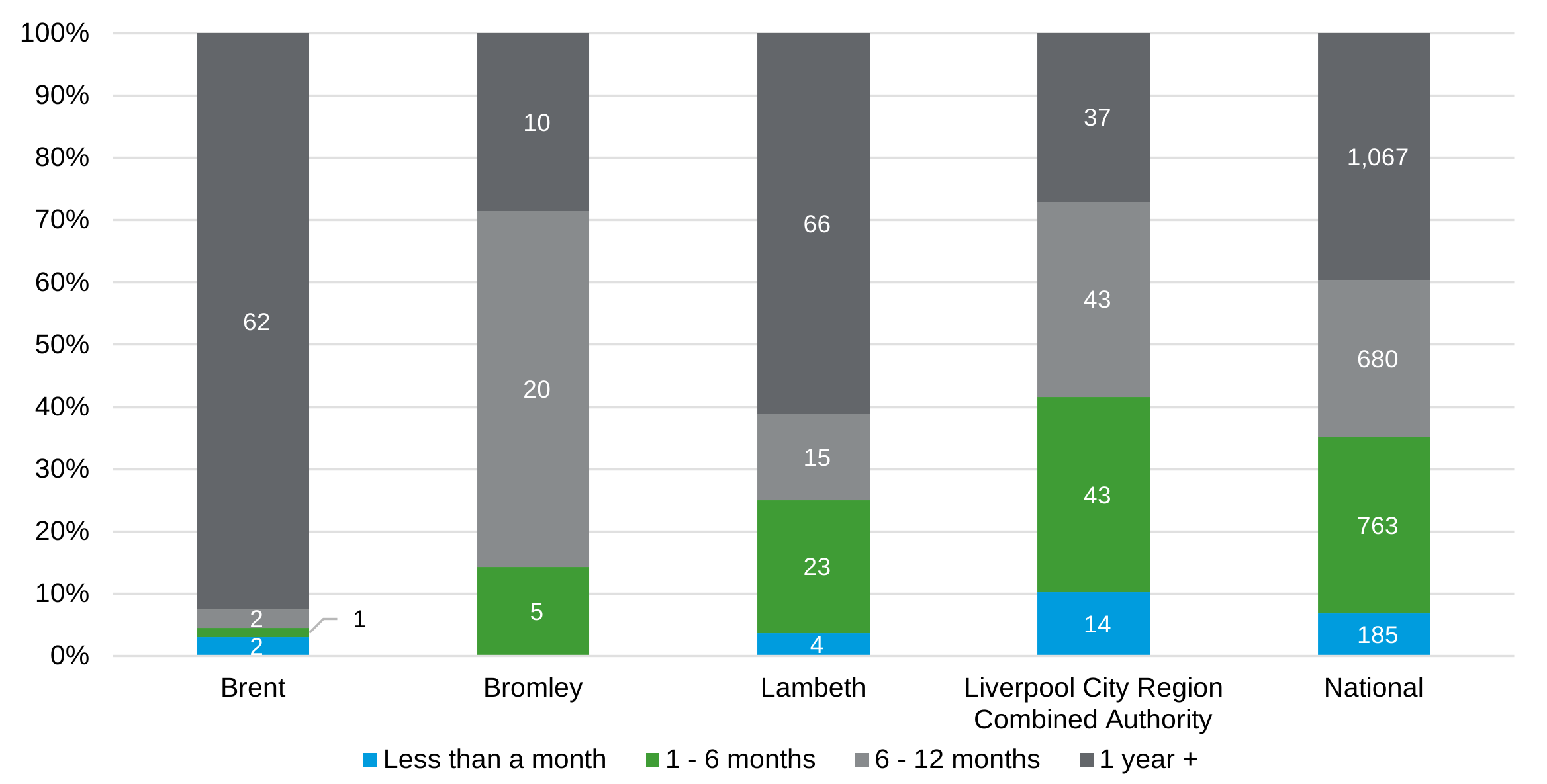
Across all four sampled local authorities and nationally, most individuals in private tenancies maintained their tenancies for more than six months by the end of the first quarter of the financial year 2024-25 (65% national average and ranging from 58% to 96% in the sampled areas). In two out of four areas, most tenants held their tenancies for over a year (N= 62 out of 67 in Brent; N=66 out of 108 in Lambeth). Notwithstanding the absence of clear local targets for the programme, these outcomes demonstrating relatively strong stability over the longer term. The data for Liverpool Combined Authority showed the lowest levels of sustainment of six months or more relative to the other sampled local authorities (58%, N=80 out of 137). This may reflect a pattern of data reporting rather than reflect relative sustainment of tenancies. For further explanation, see discussion in section 3.2.4.
3.2.4 Successful move on from the programme
A longer-term outcome of the programme was to increase the re-integration of people leaving prison into an independent life, no longer requiring housing support from the local authority. One way to measure this, as specified in the logframe (Table 1), was to determine the levels of people leaving prison who were in settled accommodation three months post-release. However, the relevant data for this was not available at the level of local authorities and thus could not be used for the research.
Another way to measure this outcome was in terms of exits from the properties for each sampled local authority. A person supported by the programme could exit a tenancy for a number of reasons. These included graduations (i.e. the successful move to self-funded independent living in the same property), other positive reasons to exit tenancy (which could include finding housing independently or moving with family/friends), moves to supported or alternative settled accommodation by the local authorities, eviction, recall to prison, return to homelessness, tenancy abandonments, and other reasons.
Figure 4 provides an overview of the exits from Phase 2 of the programme for each of the sample areas as well as across the nation. For each area, the number and percentage of exits are detailed in the figure.
Figure 4: Phase 2 Exits (as of the first quarter of the financial year 2024-25)
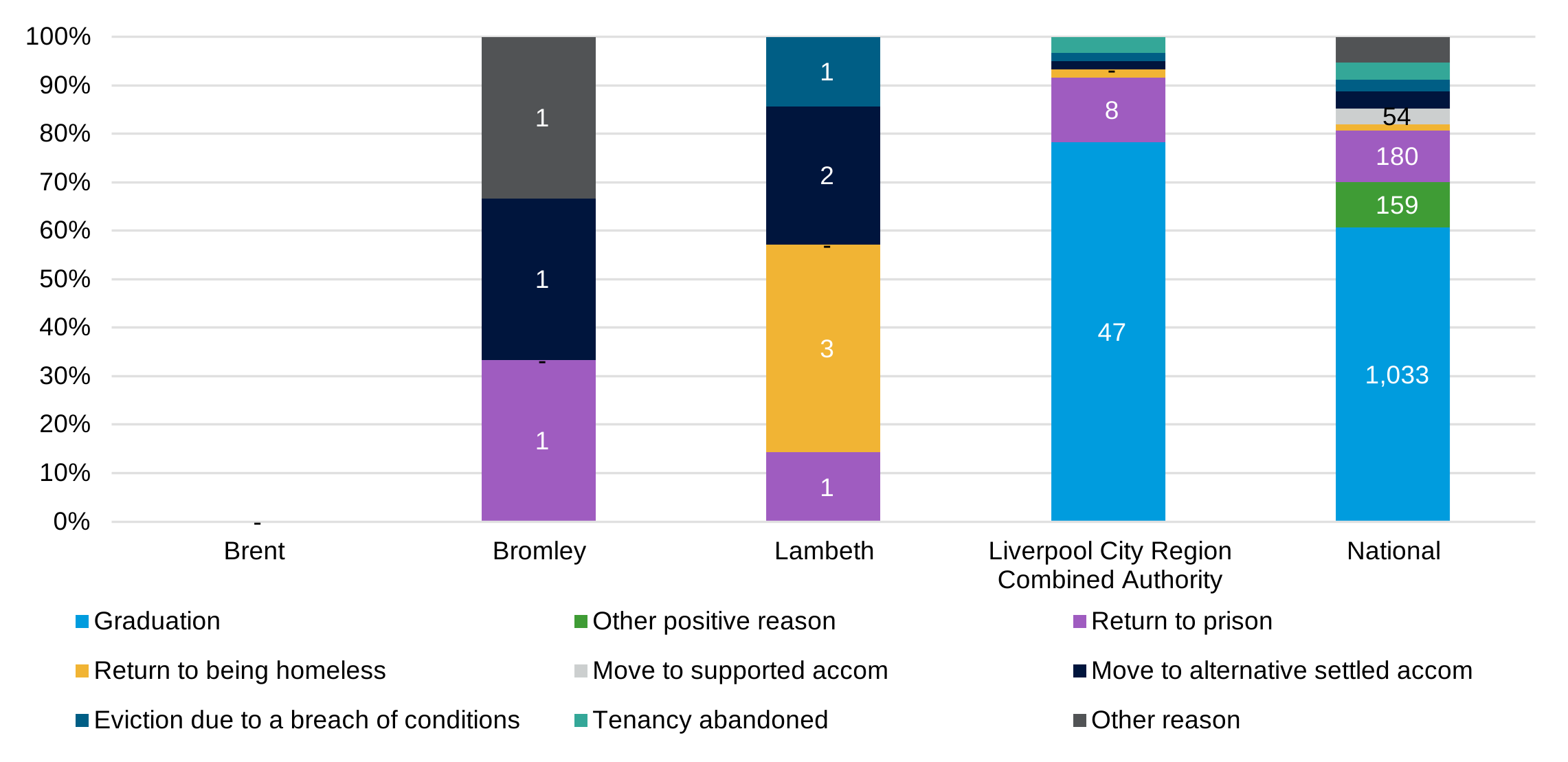
As can be seen in the figure above, on average 60% of all exits from Phase 2 (as of the first quarter of the financial year 2024-25) at the national level were due to graduations, while other positive reasons accounted for a further 9% of exits. For Liverpool Combined Authority, 78% of exits during the same period resulted in successful graduations, exceeding the national average. Individuals in these exits were able to secure and/or maintain private rented sector tenancies independently. This achievement highlights the programme’s effectiveness in this region in promoting long-term housing stability in terms of independently holding tenancies.
In contrast, the data from Brent, Bromley, and Lambeth local authorities revealed smaller number of exits in total, limiting the ability to draw robust conclusions. Specifically, Brent authority reported zero exits, Bromley authority recorded three exits, and Lambeth authority noted seven exits. Across these areas, there were no graduations or other positive reasons underpinning these exits.
One local authority representative explained that:
At the moment we do not officially exit anyone they can always contact us if they require support. We record the lost tenancies that we are aware of when either the landlord/ agent or tenant contacts us.
This means that these authorities have successfully enabled people to sustain independent housing long-term (in the same property they were originally set up in) but have not labelled them as graduations in their data submissions to MHCLG. It is possible that this is being practiced in other areas too, as it explains why three out of four authorities report minimal exits.
3.2.5 Reduced homelessness and rough sleeping
The incidence of subsequent homelessness and rough sleeping amongst those who benefited from the programme was not monitored. However, taking together the data on sustainment and exits suggests that people supported by the programme have been protected from experiencing homelessness or rough sleeping. As outlined above, the outcomes suggest that the programme may contribute to stable housing for periods of one year or longer and contribute to a reduction in recalls back into prison and promote reintegration in local communities for people leaving prisons. Based on the previously published literature in the evidence base, it is likely that the programme supported a reduction in homelessness and rough sleeping amongst people released from prison following custodial sentences.
One local authority representative said:
The [programme] has contributed towards reducing the number of people who may have ended up [experiencing] rough sleeping. It has also contributed towards reducing the number of [people leaving prisons] who would have ended up in unstable accommodation, increasing the risk of reoffending.
3.2.6 Reduced reoffending
According to the latest Ministry of Justice data from the first quarter of the financial year 2024-25, over 50% of those released from prison on a licence were recalled to prison.[footnote 6] 24% of these recall cases were due to reoffending, while the remainder included recalls for all other reasons, such as not complying with probation requirements. In contrast to this, 10% of those people released from prison on a licence nationally and accommodated via the programme were recalled (however, we do not know the proportion of these were due to reoffending).[footnote 7] The recall rate for the programme is about one-fifth of those leaving prison overall.[footnote 8] This suggests that the programme does contribute to reduction in recall rates.
Within the programme data, it is unclear whether people were recalled to prison because of offending behaviour or other reasons. However, if the reduction in reoffending was somewhat consistent with the national figures above, we would also expect to see a reduction in re-offending rates. So, while this data suggests a positive impact in terms of recalls (and likely reoffending), additional data would be required to provide conclusive evidence on reoffending rates.
Amongst the sampled authorities, there were minimal reports of recalls to prison, ranging from 0% (Brent) to 7% (Liverpool Combined Authority). This is line with the narratives shared by representatives of the local authorities interviewed as part of this research.
For instance, one local authority representative said:
…you’ve got to think about what would have happened to these people if they hadn’t given been given accommodation [via the programme] because I used to hear stories all the time… [I would be told] ‘Oh, I’m staying with a friend’…but in turn for staying there…rent free…people [were] getting dragged back into crime again because these so-called friends would expect them to be doing something for actually staying in their property.
3.2.7 Community rehabilitation
There was no monitoring data to track the level of change in terms of rehabilitation after custodial sentences. However, findings from the interviews with the local authority representatives provide anecdotal evidence to support this outcome. The interviewees with local authority representatives suggested that people who were accommodated by the programme were being supported to reconnect and integrate with local communities. For instance, one local authority representative reflected on how they successfully utilised mediation and mentorship programmes as part of their programme provision to support individuals released from prison. These programmes linked participants to their communities and provided continuous support to reduce relapse into negative behaviours. Additionally, the authority reported that many participants accessed employment opportunities as a result of their interventions. Similarly, a representative from a different local authority highlighted how the programme funds for personalised budgets have been occasionally used for “more creative” enterprises. One example cited was the use of the monies to support people to get gym memberships to enable them to settle into the community in which they were placed. However, as local authorities were not tracking outcomes for these individuals, it is not possible to determine the extent to which reintegration efforts were successful.
3.3 Unintended consequences of the programme
In addition to the intended outcomes of the programme described in section 3.2, the fieldwork also highlighted several consequences, both positive and negative, that were not anticipated when the programme was established. This section outlines these unintended consequences.
3.3.1 Strengthened partnerships at local and regional levels
The programme funding was used to increase capacity within local authorities. The dedicated programme leads were instrumental in driving relationship building and partnership working with local and regional partners across the system, including Probation Services, prisons, employment support etc. One of the local authority representatives reflected on how the strengthened cooperation has helped them address systemic challenges and improve pathways for all individuals leaving prison. Knowing the people working in other services has improved communication and collaboration when needed to address challenging cases, including those not directly involved in the programmes. A national government representative also emphasised this point:
I think where I’ve seen [the programme] working at its best is when it’s really collaborative and kind of co-location [of teams in prison] … everybody’s more engaged in it and more supportive of it and it just that definitely makes a big impact.
Another local authority representative added,
as well as delivering positive outcomes for the targeted cohort - both in securing settled accommodation and also reducing reoffending - it has enabled the [authority] to open up wider accommodation and support pathways for [people leaving prison] and brought partners together to address systemic issues.
3.3.2 Better understanding of local needs
Improved channels of communication and collaboration between Housing Options and Probation Services has also helped strengthen the understanding of the needs of individuals released from prison. This has made teams better able to recognise vulnerable groups, not just in terms of their housing needs but wider needs and access to services. For instance, in one area, the Probation team was aware of the presence of a relatively high proportion of people from a particular minority group. As the representative from this area reflected:
Traditionally that group is quite marginalised from levels of support and access, which means tracking those levels of homelessness are quite difficult. But having additional eyes on the Probation caseload has enabled us to extract some [insights about] those particular vulnerable groups and what we can do to engage that population in a better way.
3.3.3 Conflict between the programme target population and those in priority need groups
One of the programme’s strengths is its ability to assist individuals who fall below the statutory threshold for priority need. This has allowed the programme to address gaps in access to accommodation for an often-underserved group. However, this focus has at times created tension for local authorities, as there are other individuals who do not meet priority need but are subjectively more vulnerable than the target population of the Accommodation for Ex-Offenders programme. These people remain on waiting lists for support to access the private rented sector or housed in temporary accommodation while others with relatively lower needs are being supported to secure housing.
At least two out of four local authorities reflected struggling with this moral conflict. One representative said:
Every person’s house is a good thing. But the unintended consequence is hierarchy …because there’s not enough to go around to accommodate everyone. And [the programme] is targeting a group who are beneath that threshold…and so, though there have been people who have gone into accommodation [via the programme], that accommodation could have gone to someone with a higher need [who meets the] statutory threshold… but I’ve still got very vulnerable people living in a B&B, who…should be in self-contained accommodation with perhaps floating support.
3.3.4 Gender differences in accessing support
Monitoring data from the programme at the national level suggests that 6% of the new tenancies set up through the programme were for women. This is marginally lower than the total percentage of women released from prison (7.5% in 2023/24). Primary research with local authority representatives suggested that there were limited referrals for women who met the eligibility criteria of the programme. Interviewees explained that a majority of the women who interact with the criminal justice system (particularly in terms of serving prison sentences) have higher support needs. They typically require supported housing rather than being able to demonstrate the ability to maintain a tenancy in the private rented sector. This limits their inclusion in the programme.
Longer term tracking of outcomes, such as tenancy sustainment or exits from the programme, split by gender is not routinely monitored by local/combined authorities or MHCLG. One authority was able to share partial data for 13 out of 18 women supported over the lifetime of the project. This data suggested that 6 out of 7 women who had exited from the programme were still in tenancies after the support was withdrawn (one woman was recalled to prison). While this suggested that women placed through the programme were able to maintain housing stability beyond the programme, it was not systematically tracked. Hence, it was not possible to determine if women have relatively higher or lower success rates compared with men over time.
3.3.5 The programme goes beyond being a move-on pathway from CAS3
The programme allowed housing and support to be provided to individuals who had left custody within the past 12 months. This enabled local authorities to assist people who developed housing needs some time after their release from prison. One regional stakeholder from a Probation Service reported:
What we did find happened, certainly anecdotally, […] is that some local authorities…took people who have been in their temporary accommodation who were released eight months ago and [used] the programme funding to get them to move on into something more settled.
While one of the aims of the programme was to provide move-on services for CAS3, the broader eligibility criteria of the programme sometimes led to funding being used for individuals who had left prison any time within the past year. Consequently, there was limited space and funding available for those seeking move-on support from CAS3. Local authorities estimated that 13-30% of referrals were specifically from CAS3, indicating a potential missed opportunity for the programme to serve as move-on support for CAS3. This suggests that while the programme has shown successes, the intention to complement CAS3 in areas with both programmes, was not always achieved in practice.
3.3.6 Regional disparities in access
The absence of a national rollout of the programme has resulted in regional disparities in provision and access, particularly in terms of using the programme as a move-on option from CAS3. As one stakeholder reflected:
I think the [one of the] challenges with [the programme] … is that one, there isn’t enough funding for it to be spread universally across the country where the need is…So then you’ve got some places with a pathway out of CAS3 and other places without a pathway out of CAS3, which is challenging in and of itself.
Another common theme was the lack of standardisation across local authorities in the operation of the programme. This was particularly noted by stakeholders working at the national or regional level who had oversight over more than one area. For instance, one person from regional government shared:
It works differently with different local authorities, and a more consistent approach would be better. Some local authorities have assigned housing workers to work with prison leavers, and that’s more successful than others who just offer a pot of money for first month rent and deposit.
The stakeholders reflected that such a “postcode lottery” was disruptive and suggested that “a more consistent approach would be better” and “standardisation…needs a review”. This may need to be balanced against the need to tailor to local housing markets. For instance, the programme ambitions, in terms of number of people assisted into tenancies, would need to be informed by considerations around deliverability and mobilisation.
3.4 Enablers and barriers of the programme
3.4.1 Enablers
Seven enabling factors that support the successful implementation of the programme were identified through the fieldwork.
3.4.1.1 Dedicated staff
Dedicated staff within local authorities appointed to lead the programme were described as “absolutely essential” to the success of the programme. They were passionate and engaged individuals who were able to take the time to understand individual needs and deliver holistic, tailored support. As one local authority representative shared, the Project Officer was effective at:
Making people feel unique and that they had another chance. It wasn’t just about offering them accommodation. It was about that personalised approach and holistic support.
The staff were equally effective at interfacing with other services, such as the Probation service, being able to establish relevant connections and identify eligible cases efficiently from the referral lists.
3.4.1.2 Co-location of housing teams
Co-location of housing teams within prisons to enable effective interface with Probation colleagues. For example, one local authority representative shared that their dedicated case worker:
Went into the Probation office one day a week and talk to [staff] and build referrals… [which has enabled] a really good working relationship.
Similarly, a regional stakeholder described a few examples of case workers who were working closely with the Probation officers when they were in the same office. For example, the case worker could go through “the generic duty to refer email inbox and [pull] out all the [cases] that they thought would be [suitable for] support.”
This enabled the Probation teams to clear out their inbox quicker. It also diverted the demand into private rented housing at an early stage rather than requiring the local authority to go through all the housing options in an area with little affordable housing. An added advantage of this was that local authority staff were able to tap into experience and knowledge within Probation teams and identify private landlords that would be able to offer suitable accommodation.
Finally, co-location allowed case workers to establish a relationship and provide support to people in prison, so that there was continuity in support post-release when the same people required housing support in the community.
3.4.1.3 One-to-one tenancy sustainment support
Supporting individuals to sustain their tenancies with one-to-one advice and guidance. Local authority representatives who had operational expertise emphasised that it was not enough to just provide financial support in terms of rent deposits or landlord incentive packages. People housed via the programme benefited from ongoing support from the staff to help them maintain the tenancy. This could include sharing and clarifying the guidance on the rules of the tenancy such as the guest policy, supporting the tenants to access and manage benefits, and ensuring a clear understanding of responsibilities such as paying rent.
3.4.1.4 Managing and setting realistic expectations
Setting realistic expectations about available housing options was also essential. Interviewees representing local authorities and commissioned providers suggested that people may not know what is achievable or affordable following their release from prison. From their perspective, it was helpful to inform people about their realistic options, enabling them to make informed decisions and prepare for potential challenges. For instance, one stakeholder from a London authority shared that they often need to myth bust and adjust expectations:
You do have to kind of set an expectation for some of the [people]…if [they] are going into private rented [housing], [they] are not going to get a flat in Kensington…the fund will not stretch to do that.”. Similarly, another interviewee said that “…the vast majority of people come up for [a funded tenancy] and they will say ‘No, I’m not sharing. I’ve been in prison and have been sharing for X number of months or years. I want my own place’…but affordability-wise it’s not going to happen. So shared accommodation is what is realistic for the overwhelming majority. [Our delivery partners] are very good at sort of putting those into real terms and helping people find good, shared accommodation.
3.4.1.5 Continuity in engagement pre and post release
Establishing and maintaining positive and consistent engagement both before and after release between support staff and individuals being supported was helpful. It helped to build a relationship of trust and ensured that people feel supported throughout the process of transition from prison to community. It enabled people to draw on the support where necessary, laying the foundation for long-term stability and success. One local authority attributed their success to those “people that do engage, attend viewings, secure accommodation and enable us to pretty much try and guide them as best as we can.”
3.4.1.6 Multi-agency forums or meetings
Strategic prison leavers meetings provide a “forum for bringing all of the partners together” including representation from Probation Services, prison, local authorities, custody and commissioned services. Such meetings help discuss issues, risks, allocation options and restrictions allow partners to “come together and work quite quickly and efficiently…to share information, look at several pathways, identify accommodation and support provision.” Another authority mentioned convening a prison resettlement panel which was described as:
a regular meeting between Probation, the local authority and the commissioned providers so that we can review people who are coming towards the end of their sentence, who don’t have an address to go to and then we can get everyone on the actions required and be jointly managing. So, it’s a good way of making sure we’re all working together.
3.4.1.7 Transfer of learning across authorities
Interviewees suggested that there might be advantages in terms of strategic oversight or transfer of learning when there is join up at a sub-regional level or where the programme is implemented by a combined authority. This could benefit the effectiveness of the programme delivery because of the partnership, cross-agency working and understanding of the population need across the region. For instance, a combined authority representative reflected on the inbuilt flexibility that their programme allowed different models (commissioned provider versus designated local authority staff) in different areas while drawing on the same pool of resource. They also noted that even though one area within their remit was not funded by the programme, the relevant local authority recognised the importance of the model and recruited specialist staff to support people leaving prisons.
3.4.2 Barriers
Nine barriers were shown to create significant hurdles to achieving the outcomes of the programme and supporting individuals in securing long-term housing, as elaborated below.
3.4.2.1 Limited availability of private sector accommodation
Availability and affordability of suitable housing in the private rented sector was a major challenge. It was one of the key factors that caused the authorities to struggle with the procurement and allocation of properties, particularly in expensive areas such as London. Affordability was a common theme across interviewees. The rising cost of living contributed to this challenge, increasing the costs of private rentals while local housing allowance rates and wages have not matched to this. As one local authority representative shared:
When you’ve got somebody who’s already capped on their benefits and the rents are high…they can’t top up from their living allowance, so literally most properties are unaffordable”. Another local authority representative explained that while people “are encouraged to look for properties themselves and they might be able to find a one bedroom which they would like in a desired area…the [local housing allowance] rate doesn’t match what they’re charging for the rent.
They went on to explain that while the programme funding could be used to “reduce those rents or cover the shortfall”, the local authority or the person “cannot afford to keep that on…it’s just that we don’t want to set them up to fall over…we would be putting them back in the same position they started.”
3.4.2.2 Limited options for people under 35 due to local housing allowance rates
Housing options and allowance for people under 35 was another common challenge faced by local authorities. People within that age category are entitled to receive only the local housing allowance rate for shared accommodation, but in many cases their history of offending precluded them from landlords being willing to accept them in shared housing. As one local authority representative mentioned:
We get quite a lot of [people under 35 years of age] …there are no [indications of] vulnerabilities…they show and display all the signs of [being able to] manage a tenancy… [and are] very, very engaging. But because of their offending history… we can’t put them in [shared] rooms. So, it’s been a very, very big challenge for us.
3.4.2.3 Cross-departmental competition for properties
Inter-department competition for properties was said to be adding pressure in the housing market. Both MHCLG and Home Office were said to be attempting to procure from the same pool of limited properties. One national government representative reflected:
It does seem a bit daft that we’re competing with [another government department] … A local authority said they had a house with four places available, and someone from the [other government department] went in and said they could give more money for that property—exactly the same property, but for a different cohort.
Without joint prioritisation, such competing demand appeared to be leading to cost inflation of the same properties and overall increasing costs for the government.
3.4.2.4 Delays in tenancy preparation
Preparing a person for tenancy was sometimes delayed when individuals struggled with obtaining essential documents, such as identification or evidence of physical or mental health conditions. This was particularly the case for those who are digitally or socially excluded. For instance, one authority representative explained that:
They might find that everything is online…and some people who are not techie and have access to the Internet…might have to wait until they can go to Probation, which [meant] their appointments [are] later.
Similar barriers existed for those who did not have a phone, and the subsequent delays prevented timely access to housing and prolonged instability post release. The timing of housing assessment influenced the success of getting people housed. This was because if the intervention was too late post release, people were said to fall back into unhelpful patterns of behaviour.
3.4.2.5 Inefficient systems to submit referrals
Systems to submit referrals could be onerous for professionals, which could deter them from being used particularly for pre-release notifications. For example, one local authority reflected on their own online system as being a barrier:
It’s not the greatest, so I know professionals will try…[but] they’ve only got limited time, especially Probation are really stretched to complete our online form and when there are errors or they can’t get to the next stage, then it probably gets left.
In such instances, the referrals are emailed instead of collected via a centralised system, which in turn leads to delays for the local authority to pick up the cases.
3.4.2.6 Discrimination and stigma from landlords
Discrimination and stigma from landlords due to the offending histories of people leaving prison presented another barrier for the effectiveness of the programme. A local authority representative highlighted that:
[if a landlord has] got two options…somebody who [is at risk of homelessness because of] a normal relationship breakdown [and] somebody who is coming [from] prison… [it is more likely] the landlord may take the person who’s had the relationship breakdown.
Some local authorities attempted to prevent such discrimination by not disclosing a person’s history or details of the offence committed but explained that this was not always successful.
There was nothing to actually stop [the landlords] from [searching online] once they know their name and finding out information [about the person’s history].
Some landlords also demanded higher incentive payments to accept tenants with previous histories of interacting with the justice system, placing additional strain on local authority budgets.
3.4.2.7 Uncertainty around funding
Uncertainty around funding and whether it will be continued inhibited the local authorities from making strategic informed decisions about their staff, housing stock portfolio and programme provision. As one regional authority surmised:
The funding point is really important as well, because even now I’ll speak to boroughs and they’ll go, oh, we have got no idea if we’ve got the funding next year or whenever this round finishes and what that…means [is] they can’t recruit staff because they’re two-year fixed term contracts and no one wants that fixed term contract. So, the vast majority of staff that have been hired for the programme it took over a year for them to be able to put them [in place], some local authorities have only just hired staff for the programme now.
4. Conclusions
This technical report provided a focused evaluation of the Accommodation for Ex-Offenders programme, exploring the evidence underpinning the following research questions from four sampled areas. These included Brent, Bromley, Lambeth, Liverpool and Sefton (the latter two covered by Liverpool Combined Authority). National level data was also analysed where available.
In Phase 2 of the programme (at the time of the data analysis), 2,562 private rented sector tenancies were secured which was an increase of about 12% from Phase 1. However, there was large variability in the percentage of target tenancies secured across the sampled local authorities, and none had met their targets at the time of reporting as the programme was still ongoing.
Nationally, 65% of individuals supported into tenancies in the private rented sector as part of the programme maintained their accommodation for more than six months as of the end of the first quarter of the financial year 2024-25. About 60% of the exits from the programme were reported to be successful graduations (e.g. move-on to independent housing either in the same or other property).
The data indicated that the programme may have positively contributed to reduced homelessness and rough sleeping among people leaving prison, but this was not possible to evidence due to absence of data tracking long-term outcomes for people supported by the programme. There appeared to be a reduction in recall rates among those accommodated by the programme compared to the national average. While this may suggest a possible contribution of the programme to the reoffending rates, data limitations did not allow this conclusion. Finally, anecdotal evidence suggested that community rehabilitation was supported through mediation and mentorship programmes, although systematic tracking of these outcomes was not available.
In addition to the anticipated outcomes, other positive consequences of the programme, including stronger local and regional partnerships improved local authority communication and collaboration with probation, prisons, and employment support services. This facilitated a deeper understanding of local needs, enabling teams to recognise and provide more effective support to vulnerable groups, improve pathways and address systemic challenges.
A few unintended negative consequences were highlighted included the tension perceived by local authorities to assist people leaving prison with relatively lower needs compared to others who were thought to be more vulnerable but also needing to access private sector accommodation. The programme allowed housing and support to be provided to a wide cohort of people who had left custody within the past 12 months, which goes beyond only those seeking move-on support from CAS3. Research participants expressed concern that this created a limitation in the space and funding available specifically for those from CAS3, although staff did aim to support them to find other options. Lastly, regional disparities in access to accommodation due to the lack of a national rollout and a lack of standardisation in the use of funding across local authorities resulted in inconsistent implementation and outcomes.
The delivery of the programme was supported by a number of enabling factors, including the recruitment of dedicated, passionate staff, co-location of housing teams within prisons, provision of one-to-one tenancy sustainment support and managing expectations for people leaving prison about what is achievable and affordable. On the other hand, some factors created hurdles to achieving the outcomes of the programmes. These barriers included the limited availability of affordable private sector accommodation, limited options for people under 35 due to local housing allowance rates, delays in obtaining essential documents to prepare tenancies, and unwieldy systems to submit referrals to local authorities.
-
From a document online published by Hull Council regarding the details about the Accommodation for Ex-Offenders programme. ↩
-
Accommodation for Ex-Offenders Phase 2 prospectus shared by MHCLG. ↩
-
This term refers to eligibility criteria of the programme outlined in the prospectus, whereby people are assessed as ready to take on an Assured Shorthold Tenancy. ↩
-
Data for this specific outcome as it is specified was only available at regional level, but not at the level of local authorities. In this report, this outcome is reported in terms of successful move-on into independent accommodation following an exit from the programme. ↩
-
Please note that this data was collected by MHCLG in Phase 2 of the Accommodation for Ex-Offenders Programme. However, it was removed in Phase 2 because of poor data quality and to reduce burden on local authorities. ↩
-
Data on recalls includes data for both England and Wales due to data aggregation. ↩
-
Please note there are caveats in the interpretation of the programme data. Firstly, the number of recalls to prison from the programme is based on exits from the accommodation. It is not based on case-by-case tracking those who exited the programme for a different reason and then went on to be recalled. Secondly, it should be noted that the reasons underlying these recall rates were not specified. ↩
-
It is not possible to calculate an exact recall rate as the publicly available data on recalls is not linked to when individuals were released and, therefore, this cannot be tracked on a quarterly basis. ↩