Survey of Employees and Self-Employed Workers, 2024 to 2025
Published 20 January 2026
Applies to England, Scotland and Wales

© Crown copyright 2026
This publication is licensed under the terms of the Open Government Licence v3.0 except where otherwise stated. To view this licence, visit nationalarchives.gov.uk/doc/open-government-licence/version/3 or write to the Information Policy Team, The National Archives, Kew, London TW9 4DU, or email: psi@nationalarchives.gov.uk.
Where we have identified any third party copyright information you will need to obtain permission from the copyright holders concerned.
This publication is available at https://www.gov.uk/government/publications/survey-of-employees-and-self-employed-workers-2024-to-2025/survey-of-employees-and-self-employed-workers-2024-to-2025
DWP research report no. 1117
A report of research carried out by IFF Research on behalf of the Department for Work and Pensions.
Crown copyright 2025.
You may re-use this information (not including logos) free of charge in any format or medium, under the terms of the Open Government Licence.
Or write to:
Information Policy Team
The National Archives
Kew
London
TW9 4DU
Email: psi@nationalarchives.gov.uk
This document/publication is also available on the GOV.UK website.
If you would like to know more about DWP research, email socialresearch@dwp.gov.uk
First published January 2026
ISBN 978-1-78659-917-9
Views expressed in this report are not necessarily those of the Department for Work and Pensions or any other government department.
Executive summary
This report presents findings from a quantitative survey of 4,234 workers aged 16 to 75 living in Great Britain, including 3,763 employees and 471 self-employed individuals.
The data collected was weighted to population figures supplied from the Office for National Statistics (ONS) Annual Population Survey (APS) to ensure the data were representative of the working population of individuals in Great Britain aged 16 to 75 years (this included a step to determine the profile of unpaid carers).
The research explored how workers manage their health and wellbeing at work. Key findings included:
-
two thirds (66%) of workers rated their mental and physical health as ‘good.’ Around 1 in 5 (19%) of those describing their health as ‘good’ had a long-term health condition lasting 12 months or more
-
around one third (32%) of workers reported a long-term health condition. Among those with a long-term health condition, 77% had a physical condition, 43% a mental health condition and 11% a cognitive condition; 30% reported having a combination of physical, mental or cognitive conditions
-
nearly half (49%) of all workers had taken a sickness absence in the past year, while 58% had worked despite not feeling well enough to do so. A small proportion (7%) had cumulatively taken more than four weeks off in the past 12 months, with a similar proportion (8%) having taken a continuous absence of four weeks or more
-
among employees that had taken a sickness absence in the past 12 months, 60% received Occupational or Company Sick Pay (OSP) only, 10% received Statutory Sick Pay (SSP) only, 4% received a combination of OSP and SSP, while 17% received neither (this could be, for example, because they were off sick for less than 4 days in a row or earned less than £125 per week, making them ineligible for SSP)
-
among employees that had a sickness absence in the past year, around half (52%) were required to provide a fit note after day 7 of a sickness absence, while 18% did not need to provide any medical evidence. Around a quarter (27%) had received a fit note in the past year
-
most employees that had taken a period of sickness absence in the past year (74%) returned to work when they felt recovered and ready to do so. Among self-employed workers, reasons were more varied, though they were also most likely to cite feeling recovered and ready to return to work (56%), alongside returning due to financial necessity (50%)
-
awareness of Occupational Health (OH) services was high (75% of all workers) and just over half (52%) had access to OH services through their current employed or self-employed role. Around 1 in 6 (16%) had used OH services. Awareness and access to OH services were much more common among employees when compared with self-employed workers
-
around three fifths (58%) of employees with a long-term health condition that were currently working had discussed their condition with their employer. The vast majority of those that had discussed their condition (89%) felt their employer had been supportive
-
awareness of Access to Work was low among workers with a long-term health condition (73% had not heard of the scheme) and only 4% had received support through it
-
most employees (79%) had access to flexible working arrangements, primarily flexible hours (54%), hybrid working (40%), and part-time arrangements (39%)
-
around 1 in 7 workers (15%) provided unpaid care to at least one other person. Among working unpaid carers, around a third (35%) reported that their caring responsibilities had worsened their own physical health to at least some extent while 63% said it had negatively affected their mental health to at least some extent
Voluntary statement of compliance with the Code of Practice for Statistics
The Code of Practice for Statistics (the Code) is built around 3 main concepts, or pillars, trustworthiness, quality and value:
- trustworthiness – is about having confidence in the people and organisations that publish statistics
- quality – is about using data and methods that produce assured statistics
- value – is about publishing statistics that support society’s needs for information
The following explains how we have applied the pillars of the Code in a proportionate way.
Trustworthiness
This survey fieldwork and analysis was carried out by IFF Research, and the key drivers analysis conducted by QI Statistics. Fieldwork and analysis were carried out impartially and in compliance with the Market Research Society code of conduct and Government Social Research code of practice. This report was written by the research team at IFF Research and has been checked thoroughly by analysts at the Department for Work and Pensions (DWP) to ensure it meets the highest standards of analysis and drafting.
Quality
The survey was carried out using established quantitative research methodology and statistical methods. Details of these methods are in Appendix A: Data and methodology. The research has been quality assured using IFF Research internal quality checking processes, which have been shared with DWP. The analysis of findings and report writing has been quality assured by analysts at the DWP.
Value
This survey provides insight to better understand employee and self-employed workers’ experiences of managing their health and wellbeing at work, support policy development and monitor progress against key DWP objectives.
Glossary of terms
| Key term | Explanation |
|---|---|
| Worker | All respondents that took part in the survey (employees and self-employed individuals combined). |
| Employee | An individual working for an employer under an employment contract, working either full-time (30 or more hours per week) or part-time (fewer than 30 hours per week). |
| Self-employed | An individual not in paid employment. Self-employed workers are not paid through Pay As You Earn (PAYE) and do not have the rights and responsibilities of employees. |
| Occupational Sick Pay | Occupational or Company Sick Pay (OSP) is a scheme provided by employers to offer enhanced financial support to employees who are unable to work due to illness. |
| Statutory Sick Pay | By law employers must pay Statutory Sick Pay (SSP) to employees if they meet the eligibility criteria. Since April 2025, SSP has been £118.75 per week[footnote 1]. It can be paid for up to 28 weeks. If an employee is eligible, they are entitled to SSP for the days they would have worked, except for the first three[footnote 2]. |
| Fit note | Fit notes are used to assess whether someone ‘may be fit for work’ or ‘not fit for work’. Also known colloquially as sick notes, fit notes are usually administered by a GP, although they may also be issued by another type of healthcare professional. If someone is assessed as ‘may be fit for work’, the healthcare professional will detail what adjustments might better help them return to work. |
| Occupational Health services | Occupational Health services provide advisory and support services to employees, employers and the self-employed, such as providing advice on workplace adjustments, developing written return to work plans, conducting risk assessments in the workplace, promoting healthy eating and exercise, providing physiotherapy treatment, or providing counselling sessions to support return to work. |
| Access to Work | The Access to Work scheme is a publicly funded programme that aims to help employees and the self-employed get, or stay in, work if they have a physical or mental health condition or disability. Support offered through the programme can include a grant to help pay for specialist equipment and assistive software in the workplace, or support with travel costs if public transport cannot be used. |
| Unpaid carers | People who provide any help or support to anyone because they have long-term physical or mental health conditions or illnesses, or problems related to old age. Alongside support with practical tasks and personal care, caring for someone could also include things like providing emotional support, managing finances and organisation or advocating for someone’s rights. This does not include any work undertaken as part of someone’s paid employment. |
Abbreviations
| Key term | Explanation |
|---|---|
| APS | Annual Population Survey |
| CATI | Computer Assisted Telephone Interviewing |
| DHSC | Department of Health and Social Care |
| DWP | Department of Work and Pensions |
| EAP | Employee Assistance Programmes |
| FRS | Family Resources Survey |
| IMD | Indices of Multiple Deprivation |
| JWHD | Joint Work and Health Directorate |
| OH | Occupational Health |
| ONS | Office for National Statistics |
| OSP | Occupational Sick Pay |
| PAF | Postcode Address File |
| RIM | Random Iterative Method |
| SOC | Standard Occupational Classification |
| SSP | Statutory Sick Pay |
Summary
Introduction
This report provides insight from research looking at how employees and self-employed individuals manage their health and wellbeing at work. The research comprised of two phases: a quantitative survey and qualitative in-depth interviews with employees that had taken part in the survey. This report focuses on findings from the quantitative survey. The survey broadly follows an approach taken in two previous research studies conducted in 2014[footnote 3] and 2021[footnote 4].
The aim of the research in 2024/25 was to provide up-to-date evidence on workers’ attitudes towards health and to better understand workers’ experiences of managing their health and wellbeing at work. In total, 4,234 workers took part in the survey, including 3,763 employees and 471 self-employed workers.
The population for the survey comprised of working people aged 16 to 75 in Great Britain (England, Scotland and Wales) who were either employed or self-employed at the time of survey. Fieldwork took place between 7th November 2024 and 16th March 2025.
Data were weighted to population figures supplied from the Office for National Statistics (ONS) Annual Population Survey (APS) to ensure the data were representative of the working population of individuals in Great Britain aged 16 to 75. Data supplied from the ONS reflected the period October 2023 to September 2024. The variables used in weighting the data were employment status, age, gender, ethnicity, occupational grouping, whether the worker had a long-term health condition, region, and deprivation level (based on Index of Multiple Deprivation (IMD)). The weighting process included a step to determine the profile of unpaid carers. Further detail can be found in the Weighting section of Appendix A: Data and methodology. However, it is worth noting that the population totals used for the APS estimates are projected growth rates from Real-Time Information (RTI) data for EU and non-EU populations, based on 2021 patterns. The total population used for the APS therefore does not take into account any changes in migration, birth rates or death rates since June 2021. Therefore, it is possible that these estimates may under or overestimate the true values.
Workers’ health
Most workers (66%) described their general mental and physical health as ‘good’[footnote 5]. Around 1 in 5 (19%) of those describing their health as ‘good’ had a long-term physical or mental health condition or illness lasting, or expected to last, 12 months or more. Those with a physical health condition were twice as likely to describe their health as ‘good’ (42%) compared with those with a mental health condition (21%).
Around a third of workers (32%) reported having a long-term health condition[footnote 6], Among those with a long-term health condition, 77% reported having a physical health condition, 43% a mental health condition and 11% a cognitive health condition. Three in 10 workers with a long-term health condition (30%) had a combination of physical, mental or cognitive health conditions; this included 4% who had a physical, mental, and cognitive health condition, 21% who had a physical and mental health condition only, 2% who had a physical and cognitive health condition only, and 4% who had a mental and cognitive health condition only.
Younger workers were more likely to report mental or cognitive health conditions, while older workers were more likely to report physical health conditions. When assessing their own health, workers aged 65 to 75 were more likely to report ‘good’ general physical and mental health compared with workers aged 16 to 24 (73% and 60% respectively). As noted above, those with physical health conditions were twice as likely to report ‘good’ physical and mental health compared to those with mental health conditions (42% vs. 21%), which perhaps explains older workers’ tendency to be more positive when evaluating their own physical and mental health.
Sickness absence and sick pay
Around half of all workers (49%) had taken a period of sickness absence in the past 12 months. Nearly three fifths (58%) of workers had worked in the past 12 months when they did not feel well enough to do so.
A small proportion (7%) had cumulatively taken more than 4 weeks of sickness absence in the past 12 months, with this most likely to be the case among workers with a long-term mental (20%) or physical (17%) health condition. A similar proportion (8%) had taken a continuous absence of 4 weeks or more, with this again being most common among workers with a mental (22%), cognitive (18%) or physical (18%) health condition.
Among employees that had a sickness absence in the last year, three fifths (60%) reported receiving Occupational or Company Sick Pay (OSP), while just 1 in 10 (10%) said they received Statutory Sick Pay (SSP) only. A small proportion (4%) received SSP some of the time and OSP some of the time, while 17% reported receiving neither SSP nor OSP (this could be, for example, because they were off sick for less than 4 days in a row or earned less than £125 per week, making them ineligible for SSP)[footnote 7].
Fit notes
In terms of evidence that employees were required to provide during a sickness absence, around half (52%) of those that had a sickness absence in the past 12 months reported they had to provide a fit note after day 7 of an absence, while 12% reported they had to provide a fit note on or before day 7[footnote 8]. Around 1 in 5 (18%) reported they did not have to provide a fit note or any other medical evidence.
Around a quarter of employees that had taken a sickness absence (27%) had received a fit note in the past 12 months from a doctor or healthcare professional. A fifth (18%) of those that had taken a sickness absence had provided their employer with a fit note saying they ‘may be fit for work’ at some point in their career. Among employees that had received a ‘may be fit for work’ note, around 7 in 10 (72%) said the suggestions provided detailing how they could continue to work were ‘helpful’.
Returning to work
The majority of employees who had taken a period of sickness absence returned to work when they felt they had recovered and were ready to go back (74%). This was also the most common reason for returning to work among self-employed workers (56%), although half (50%) of self-employed workers also cited having to go back to work for financial reasons.
Among employees that had a continuous period of sickness absence of 4 weeks or more in the last 12 months, most (73%) had either had, or were planning to have, a meeting with their employer to discuss their return. Those that had been provided any form of support to return by their employer were split as to whether it had helped facilitate a quicker return (46% yes and 47% no).
Occupational health
Most workers (75%) were aware of Occupational Health (OH) services. This comprised of 24% that were aware and knew a lot, 33% that were aware with a little knowledge, and 18% who were aware but had no knowledge of OH services.
Around half (52%) of all workers had access to OH services through their current employer or self-employed role. Take up of OH services was less common, with 30% of those that had access to OH having used these services (equivalent to 16% of all workers). Among employees specifically, most (83%) reported they would be ‘likely’ to agree to a voluntary OH assessment if it was offered by their employer.
Adjustments and Access to Work
Around three fifths (58%) of employees with a long-term health condition that were currently working had discussed their condition with their employer. The vast majority of those that had discussed their condition (89%) felt their employer had been supportive.
Just over two thirds (69%) of employees with a long-term health condition that were working at the time of survey had had some form of support or adjustment put in place at work to help manage their health condition. The most common forms of adjustment cited were permission for time off at short notice (44%) and meetings about managing their health condition at work (34%). Around three fifths (59%) would like to see further adjustments made by their employer to provide support.
Most workers with a long-term health condition (73%) had not heard of the Access to Work scheme[footnote 9]. Among the 24% that had, around 1 in 6 (18%) had undergone an Access to Work holistic assessment or received an Access to Work grant (equivalent to just 4% of those with a long-term health condition).
Flexible working
Employees were asked about their access to, and usage of, flexible working arrangements. Most employees (79%) had at least one form of flexible working available to them, with flexibility in working hours (cited by 54% of those with arrangements available), hybrid working options (40%)[footnote 10] and part-time working (39%) being the most commonly available.
When looking at the most commonly used forms of flexible working, around three fifths of employees that had access to flexible working used flexible working hours (60%) or worked in a hybrid way (57%).
Unpaid carers
Around 1 in 7 (15%) of workers provided unpaid care to at least one other person. Around a third (35%) of working unpaid carers reported that their caring responsibilities had worsened their own physical health to at least some extent while a majority (63%) said their caring responsibilities had negatively affected their mental health to at least some extent. Around a fifth (21%) of working unpaid carers had reduced their own working hours in the past 12 months in order to provide care and support to someone.
Four in 10 (40%) employed unpaid carers had discussed their caring responsibilities with their employer, with the vast majority of this group (94%) feeling that their employer had been at least slightly supportive about their caring situation.
1. Introduction
Background and research aims
The Joint Work and Health Directorate (JWHD), funded by the Department for Work and Pensions (DWP) and Department for Health and Social Care (DHSC), was set up in recognition of the significant link between work and health and to improve employment opportunities for disabled people and people with health conditions. The goal of the JWHD is to open up opportunities to good work and to support a healthier, more productive and inclusive nation, by helping more disabled people and people with health conditions to: get good work, get on in that work, and to return to work as quickly as possible if they leave it.
Previous research focusing on how workers manage their health and wellbeing at work was conducted with employees in 2014[footnote 11] and with both employees and self-employed workers in 2021[footnote 12]. The JWHD commissioned IFF Research to carry out this research to provide more recent information and evidence on worker’s experiences of managing their health and wellbeing at work.
This report focuses on findings from the quantitative survey conducted with employees and self-employed workers as part of this research. A qualitative phase also took place involving in-depth interviews with employees who had taken part in the quantitative survey to further explore individuals’ experiences.
Methodology
Sampling
The population for the survey comprised of working people aged 16 to 75 in Great Britain (England, Scotland and Wales) who were either employed or self-employed at the time of survey. The sampling sources and approach in 2024 to 2025 differed from those in both 2014 and 2021; as such direct comparisons to the previous surveys are not made in this report.
The sample for this survey was derived from two sources:
- the Royal Mail Postcode Address File (PAF)
- the DWP Family Resources Survey (FRS) recontact sample
Using the PAF database increased the ability to replicate the approach in any further research, as this source is not reliant on any proprietary databases or panels. On the other hand, using the FRS sample helped with response rates, as FRS respondents had previously taken part in DWP research and indicated they were willing to participate in other research studies. This was reflected in the fact that FRS respondents had a higher response rate than PAF respondents (24% and 12% respectively). While the FRS sample had a higher proportion of older workers, this was addressed with weighting.
Questionnaire
Much of the questionnaire was retained from previous research conducted in 2014 and 2021 as core areas of interest remain relevant. Additional, new topics of interest included the impact of the menopause on workers, awareness and usage of the Access to Work scheme, and the impact of unpaid caring responsibilities on workers.
As the research was mixed mode (both online and telephone), the initial survey design made efforts to reduce mode effects by, for example, in some cases using “read out” lists, rather than “prompted/unprompted” in the telephone script, which better reflects how the lists are viewed online.
The full questionnaire can be found in Appendix C: Questionnaire.
Fieldwork
A pilot fieldwork phase of 31 Computer Assisted Telephone Interviewing (CATI) interviews was conducted between 7 and 11 November 2024. Mainstage fieldwork was carried out between 28 November 2024 and 16 March 2025 with 1,260 CATI interviews and 2,943 online surveys completed in this period. Overall, 4,234 interviews were completed. On average, online interviews took 12 minutes to complete, while CATI interviews took 23 minutes.
Certain sections of the questionnaire were modularised to ensure a sufficient base size was achieved for each topic while still maintaining a manageable interview length. Respondents were randomly assigned to one of two modules following completion of the section on ‘worker health’ (see Appendix A: Data and methodology for more information).
Weighting
The data collected was weighted to population figures supplied from the ONS APS to ensure the data were representative of the working population of individuals in Great Britain aged 16 to 75 years. The variables used in weighting the data were employment status, age, gender, ethnicity, occupational grouping, whether workers had a long-term health condition, region, and deprivation level (based on IMD). The weighting process included a step to determine the profile of unpaid carer.
Further information on the various steps involved in the weighting of the data and other elements of the research methodology can be found in Appendix A: Data and methodology.
Reporting conventions
The term ‘worker’ is used throughout this report to denote all respondents that took part in the survey (employees and self-employed individuals combined).
Throughout the report unweighted base figures are shown on tables and charts to give an indication of the statistical reliability of the figures. These figures are always based on the number of respondents answering a question, as this is the information required to determine statistical reliability. Data is often compared to the ‘average’ throughout this report. The ‘average’ refers to the total base of workers asked a particular question.
The analysis is generally bivariate, so it is not possible to determine whether differences between groups are due solely to the factor mentioned (e.g. age) or might be the result of another factor. It is likely that many variables are interrelated (e.g. type of health condition and age).
In several places logistic regression (Key Drivers Analysis) models have been run to reveal associations between factors (e.g. type of health condition and age), and allow us to understand which are most closely associated with particular outcomes (e.g. having sickness absence). However, other factors which could not be observed or measured via this survey may have greater effect. For more detailed information refer to the ‘Key Drivers Analysis’ section in Appendix A: Data and methodology.
The findings presented in this report reflect a descriptive exploration of the data. All differences referred to in the text are statistically significant at the 95% level of confidence. We do not use the word ‘significant’ when describing differences in this report as the reader can safely assume that if the difference is reported, it is because that difference is statistically significant. Significance testing on all measures uses the unweighted respondent base. The phrasing “most likely”, “more likely than average” or “particularly likely”, etc. is used as a shorthand for this. Not all statistically significant differences between subgroups are reported; as a general rule this report looks at differences of more than 5 percentage points.
Unless explicitly noted, all findings are based on weighted data. Unweighted bases (the number of responses from which the findings are derived) are displayed with tables and charts as appropriate to give an indication of the robustness of results. Please note that, unless explicitly stated, the minimum base size for reporting was n=100.
For single-coded questions (i.e. where respondents can only choose one response), figures in charts and tables may not always sum to 100%, due to rounding or the exclusion of ‘don’t know’ or ‘prefer not to say’ responses. This may also be the case where results are aggregated as single-coded questions for analysis purposes.
Groups of interest
Analysis in this report focuses on the following key subgroups (where base sizes allow):
- Employment status (employees vs. self-employed workers)
- Age groups
- Gender
- English region
- Level of deprivation
- Whether workers have a long-term health condition
- Broad type of health condition
- Ethnicity
- Pay
- Occupational group
- Size of employer
- Organisation type
In some places English regions have been combined into summary groups: North (combining North East and North West regions), South (combining East of England, London, South East and South West) and Midlands (combining East Midlands and West Midlands). Please note that country-level comparisons between England, Scotland and Wales were not made in this report, due to lower numbers of interviews being achieved in Wales, and no significant differences being observed between England and Scotland.
Levels of deprivation have been calculated using the 2019 IMD data in England[footnote 13], 2020 data in Scotland[footnote 14], and 2019 data in Wales[footnote 15], matched to workers’ postcodes as recorded on the PAF database or given during the survey for the FRS sample. This data is divided into quintiles, with those in the first quintile being in the ‘most deprived areas’, those in the second quintile being ‘more deprived’, those in the third quintile being ‘average’, those in the fourth quintile being ‘less deprived’ and those in the fifth quintile being the ‘least deprived’.
Occupations discussed in this report have been coded from open-ended survey responses to Standard Occupational Classification (SOC) 2020 codes[footnote 16]. Usually, survey data on occupations are discussed at one-digit standard occupational classification (SOC) level. However, on occasion to aid analysis, the report discusses occupations at a broader classification of high-skill, middle-skill, service-intensive and labour-intensive roles, as shown in Table 1.1.
Table 1.1 Specific occupation type and broader occupational group
| Specific occupation | Broad occupational group |
|---|---|
| Managers, Professionals, Associate Professionals | High-skill |
| Administrative and Secretarial, Skilled Trades | Middle-skill |
| Caring, Leisure and Other Services, Sales and Customer Services | Service-intensive |
| Machine Operatives. Elementary Occupations | Labour-intensive |
Throughout, this report refers to ‘workers with a long-term health condition’. This refers to all those reporting at least one health condition or illness lasting, or expected to last, 12 months or more. Broad types of long-term health conditions have been defined as ‘physical’, ‘mental’ and ‘cognitive’ health conditions. Specific conditions in these broad groupings can be seen in Table 1.2.
Table 1.2 Broad types of long-term health condition
| Specific type of health condition | Broad type of health condition |
|---|---|
| Problems or disabilities connected with your arms, hands, legs, feet, back or neck (including arthritis or rheumatism), Difficulty in seeing (while wearing spectacles or contact lenses), Difficulty in hearing, A speech impediment, Severe disfigurements, skin conditions, allergies, Chest or breathing problems, asthma, bronchitis, Heart, blood pressure or blood circulation problems, Stomach, liver, kidney or digestive problems, Diabetes, Epilepsy, Progressive illness not included elsewhere (e.g. cancer not included elsewhere, multiple sclerosis, symptomatic HIV, Parkinson’s disease, Muscular Dystrophy), Reproductive health issues including menopause, Thyroid issues, Chronic pain including Headaches/Migraines/Fibromyalgia, etc. | Physical health conditions |
| Depression, bad nerves or anxiety, Mental illness (including phobias, panics or other nervous disorders) | Mental health conditions |
| Autism (including autism spectrum condition and Asperger’s syndrome), Severe or specific learning difficulties, Other neurodiverse conditions, e.g. ADHD | Cognitive health conditions |
Structure of the report
The report follows the structure outlined below:
- Chapter 2: Profile of workers. This chapter provides a brief overview of the profile of workers surveyed, focusing on key demographic and employment characteristics
- Chapter 3: Worker health. This chapter provides an overview of the health of workers, focusing on general physical and mental wellbeing, the prevalence and impact of long-term health conditions, and the experience of managing menopause at work
- Chapter 4: Sickness absence and sick pay. This chapter provides an overview of sickness absence among workers, including the frequency and length of time taken off due to health issues, and the type of sick pay received. It also explores differences in sickness absence patterns and sick pay entitlement
- Chapter 5: Fit notes. This chapter looks at the types of evidence that employees were required to give their employer during periods of sickness absence
- Chapter 6: Return to work. This chapter looks at the reasoning behind workers returning to work following their longest sickness absence in the past 12 months, and the support they may have received
- Chapter 7: Occupational health (OH). This chapter looks at the awareness of OH services that employees had and whether there was an appetite for these services.
- Chapter 8: Adjustments and Access to Work. This chapter covers employees’ health-related support and adjustments in the workplace, further desired adjustments, self-employed workers’ adjustments, and the Access to Work scheme
- Chapter 9: Flexible Working. This chapter looks at the flexible working options that were available to employees in the past 12 months, and those that they have personally used
- Chapter 10: Unpaid Carers. The penultimate chapter gives an overview of workers’ unpaid caring responsibilities, if applicable, and how these were managed alongside work
- Chapter 11: Conclusions. The final chapter summarises the key themes emerging from the survey and considers their implications
2. Profile of workers
The population for this research was employed or self-employed workers aged 16 to 75 years old in Great Britain. In this report, ‘workers’ refers to both employed and self-employed individuals combined. This section outlines the weighted profile of workers surveyed, looking at demographic and employment characteristics. The groups outlined in this chapter are those used for subgroup analysis throughout this report, unless stated otherwise in the Reporting conventions section. Unweighted base sizes for these key groups of interest can be found in Appendix B
Employment status
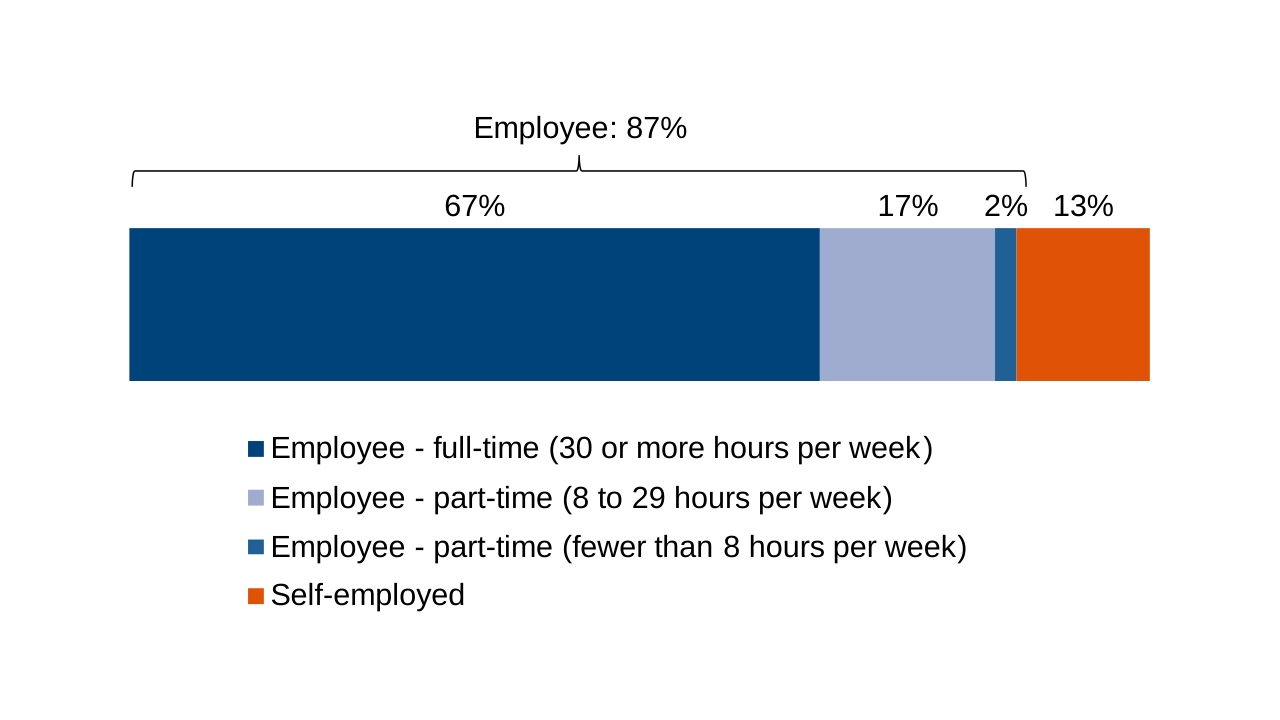
The majority of workers (87%) were employed, with 13% self-employed. Two thirds of workers (67%) were employed full-time (30 or more hours per week), with 17% employed part-time and working 8 to 29 hours per week, and a small minority (2%) employed and working fewer than 8 hours per week. A breakdown of workers’ employment status can be seen in Figure 2.1.
Figure 2.1 The current employment status of workers
S4. What is your current employment status? If you are doing more than one job please select your main job, that is the one where you earn the most money. Base: All workers (n=4,234).
Demographics
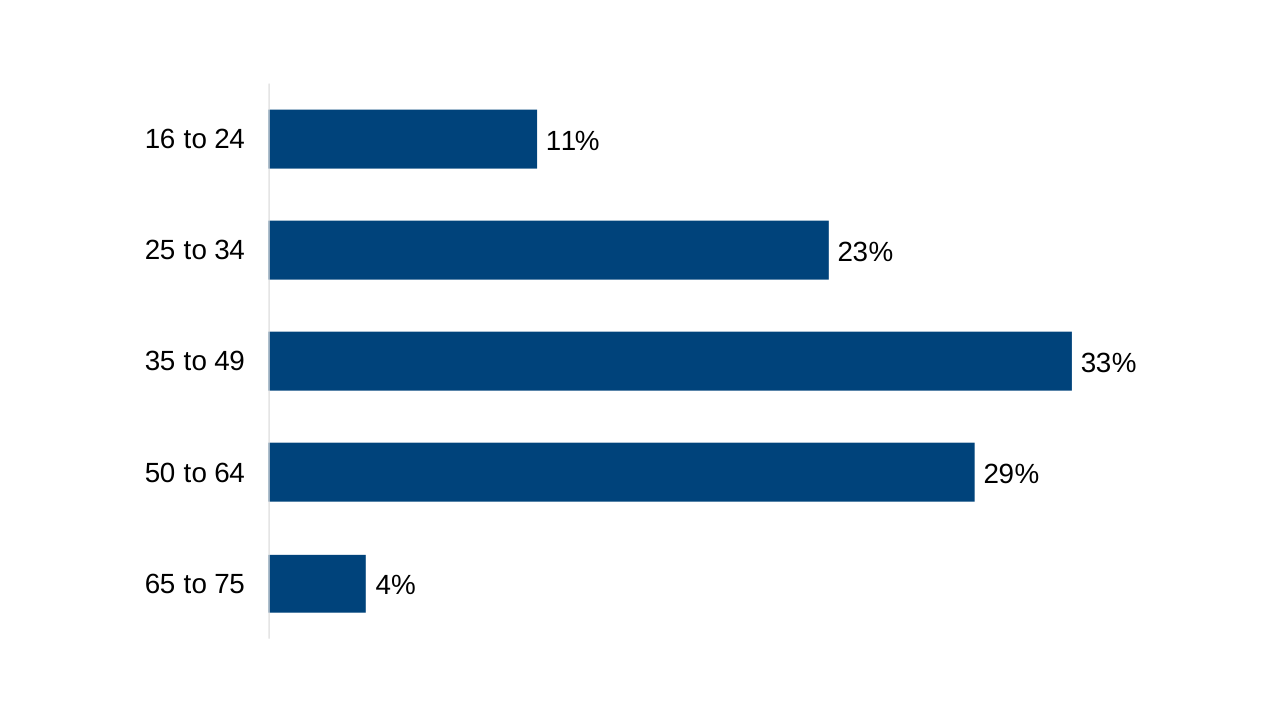
Workers were most commonly aged between 35 to 49 (33%) or 50 to 64 (29%)[footnote 17]. Around a quarter (23%) were aged 25 to 34, around 1 in 10 (11%) were 16 to 24, and a minority (4%) were 65 to 75. A breakdown of workers’ ages can be seen in Figure 2.2.
Figure 2.2 Age of workers
AGEBAND. Base: All workers (n=4,234).
The gender profile of workers was fairly balanced, with 52% of workers identifying as male, and 48% female; fewer than 0.5% identified themselves in another way.
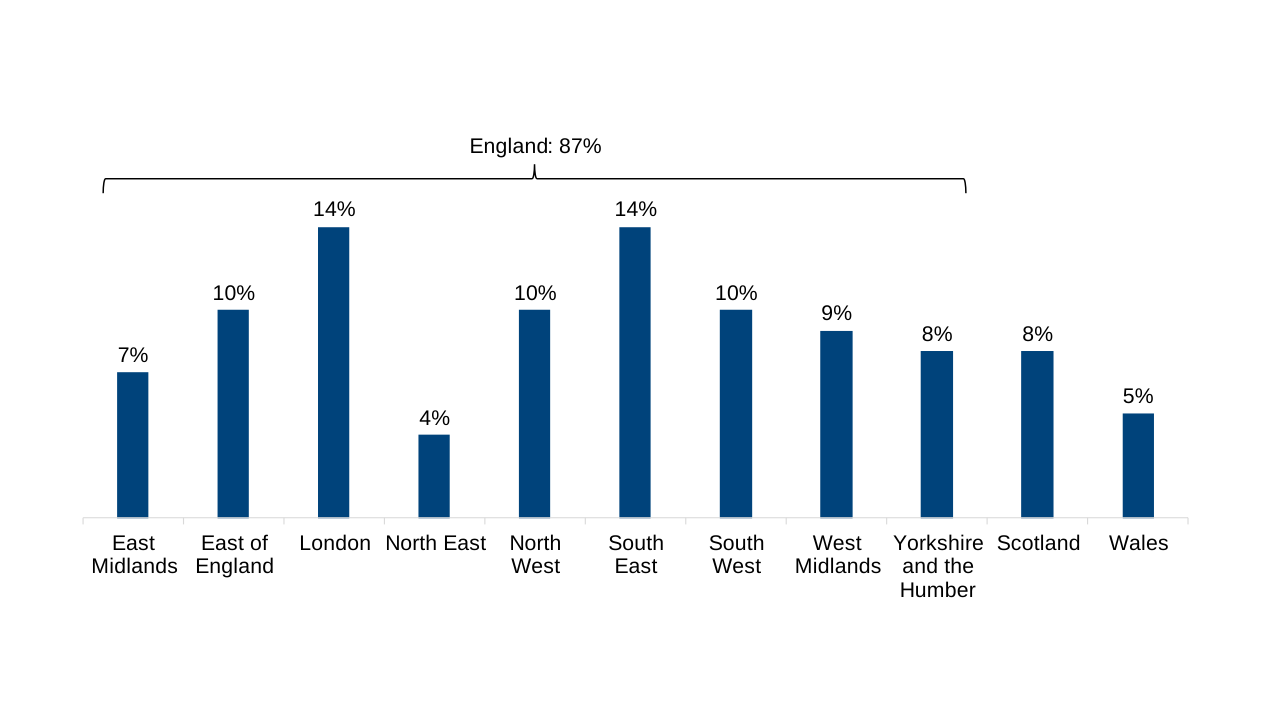
The majority of workers lived in England (87%), just under 1 in 10 (8%) living in Scotland and 1 in 20 living in Wales (5%). Looking specifically at English regions, 14% of the worker population lived in London, with the same proportion (14%) based in the South East. The English regions where the fewest workers were based were the North East (4%) and East Midlands (7%). A full breakdown of where workers were based can be seen in Figure 2.3 Region of workers.
Figure 2.3 Region of workers[footnote 18]
REGION. Base: All workers (n=4,234).
Most workers described their ethnicity as White (83%). A further 8% described their ethnicity as Asian or Asian British; 4% as Black, Black British, Caribbean or African; 2% as being from mixed or multiple ethnic groups; and 2% as belonging to any other ethnic group.
Around a third of workers (32%) reported having a long-term physical or mental health condition or illness lasting, or expected to last, 12 months or more. Among this group, 77% had a physical health condition, 43% had a mental health condition and 11% had a cognitive health condition. Three in 10 workers with a long-term health condition (30%) had a combination of physical, mental or cognitive health conditions; this included 4% who had a physical, mental, and cognitive health condition, 21% who had a physical and mental health condition only, 2% who had a physical and cognitive health condition only, and 4% who had a mental and cognitive health condition only.
Employment characteristics
Looking at yearly gross pay, employees were most likely to be earning either £30,000 to £49,999 per year (27%) or £17,500 to £29,999 per year (25%). Around 1 in 5 (21%) were earning £50,000 or more per year, while 16% were earning less than £17,500 per year.
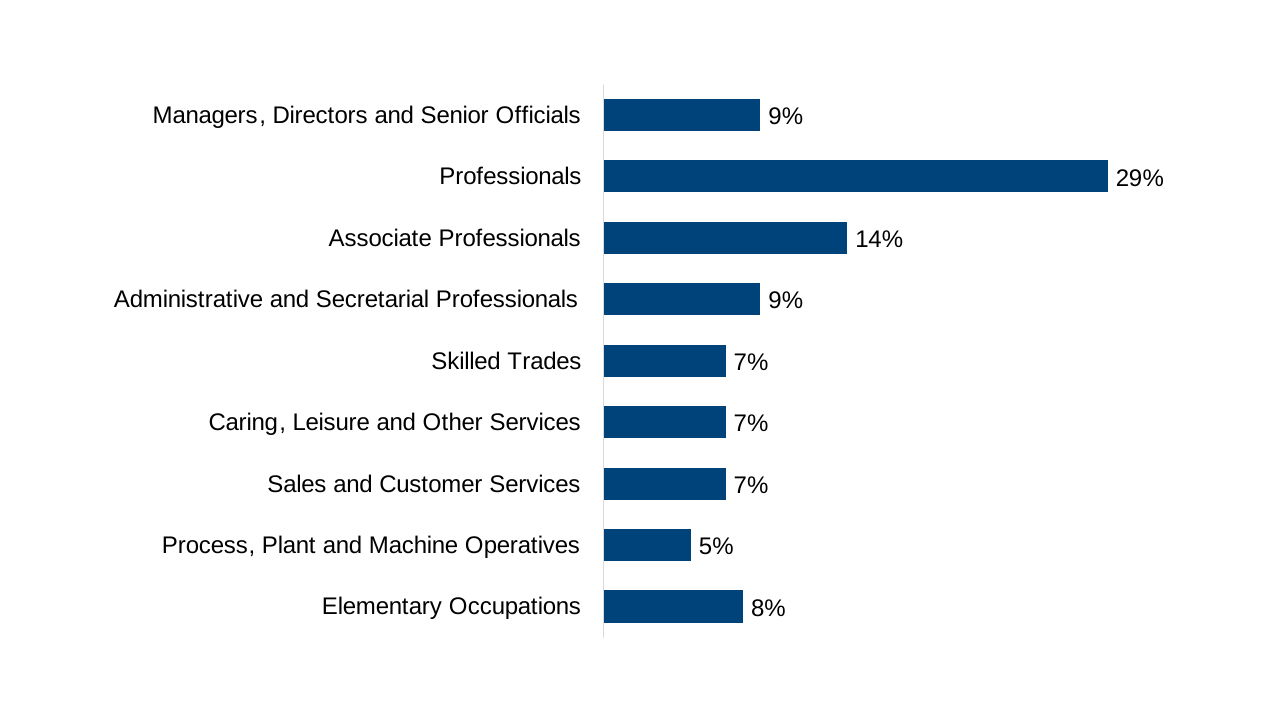
Workers were most commonly in Professional occupations (29%). A further 14% of workers were in Associate Professional occupations; 9% were Managers, Directors and Senior Officials; and the same proportion (9%) were in Administrative and Secretarial occupations. Figure 2.4 outlines the full breakdown of occupational groupings among workers.
Figure 2.4 Occupational grouping of workers
A3. How would you describe your occupation? Base: All workers (n=4,234).
More than half (56%) of employees worked for large organisations (with 250 or more staff). One in 5 (20%) worked for small employers (with 2 to 49 staff) and 14% were employed by medium-sized employers (with 50 to 249 staff).
Around 3 in 5 (59%) employees worked for private sector employers, 32% worked for public sector organisations (either central or local-government funded), while a minority (5%) worked for charity or voluntary organisations.
3. Workers’ health
This chapter provides an overview of the health of workers, focusing on general physical and mental wellbeing, the prevalence of long-term health conditions and the impact of these conditions on daily life and work. It also examines female and non-binary workers’ experiences of menopause or peri-menopause and its impact on their ability to work.
Key findings
- Most workers (96%) were in work at the time of survey, with just 3% absent from work due to a physical or mental health condition
- Two thirds (66%) of workers described their general physical and mental health as ‘good’. Around 1 in 5 (19%) of those describing their health as ‘good’ had a long-term health condition
- Around a third of workers (32%) reported having a long-term physical or mental health condition or illness lasting, or expected to last, 12 months or more
- Among those with a long-term health condition, physical conditions were most common (77%). Around 4 in 10 (43%) of those with a long-term health condition had a mental health condition, while 11% had a cognitive health condition. Three in 10 workers with a long-term health condition (30%) had a combination of physical, mental or cognitive health conditions
- Around two thirds (65%) of those with a long-term health condition reported that it impacted their ability to carry out day-to-day activities
- Among all female and non-binary workers, 36% reported that they were either currently experiencing, or had experienced, symptoms of menopause or peri-menopause. Within this group, 82% reported that it had an impact on their ability to work
Health in general
Current working status
The vast majority of workers (96%) reported that they were currently working, while 3% said they were absent from work due to a physical or mental health condition.
Physical and mental health in general
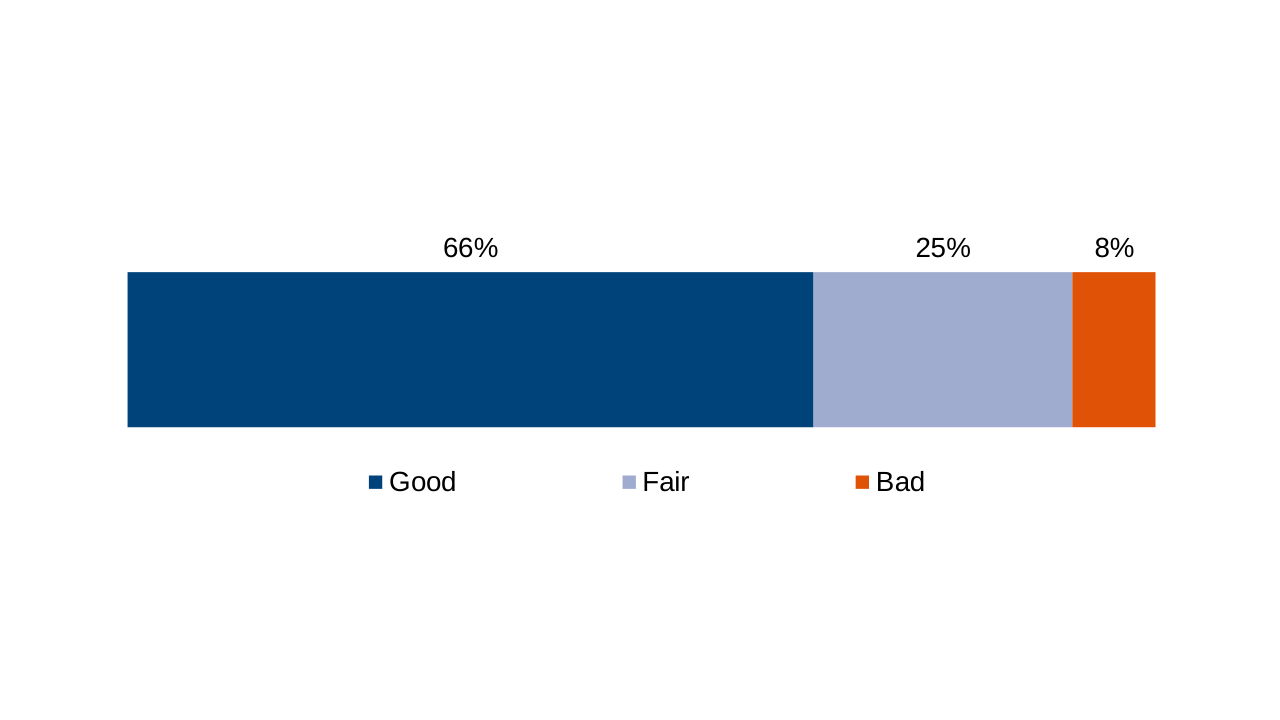
Overall, two thirds (66%) of workers reported that their general physical or mental health was ‘good’, while a quarter (25%) described it as ‘fair’. A minority (8%) rated their general health as ‘bad’, as shown in Figure 3.1. Around 1 in 5 (19%) of those describing their health as ‘good’ had a long-term health condition.
Figure 3.1 The state of workers’ physical and mental health in general
B1. How is your physical and mental health in general? Base: All workers (n=4,234).
When looking at employment status, those in part-time employment (62%) were notably less likely to report ‘good’ general health when compared with full-time employees (67%). There was no difference between employees overall and self-employed workers.
Looking at English regions, workers in the North West were the least likely to report ‘good’ general physical and mental health (61% vs. 66% in England overall).
In terms of deprivation level, those living in the most deprived areas were the least likely to report ‘good’ general physical and mental health compared to the average (60% vs 66%). In contrast, those living in the least deprived areas were much more likely to report ‘good’ general physical and mental health levels (73%).
Perhaps unsurprisingly, those reporting that they had a long-term health condition or illness were much less likely to report ‘good’ general physical and mental health compared with workers that did not (40% and 80% respectively).
Among those with a long-term health condition, workers with a long-term physical health condition (42%) were twice as likely to report ‘good’ general physical and mental health when compared with those who had a long-term mental health condition (21%). Three in 10 (30%) of those that had a long-term cognitive health condition reported that they were in ‘good’ general physical and mental health.
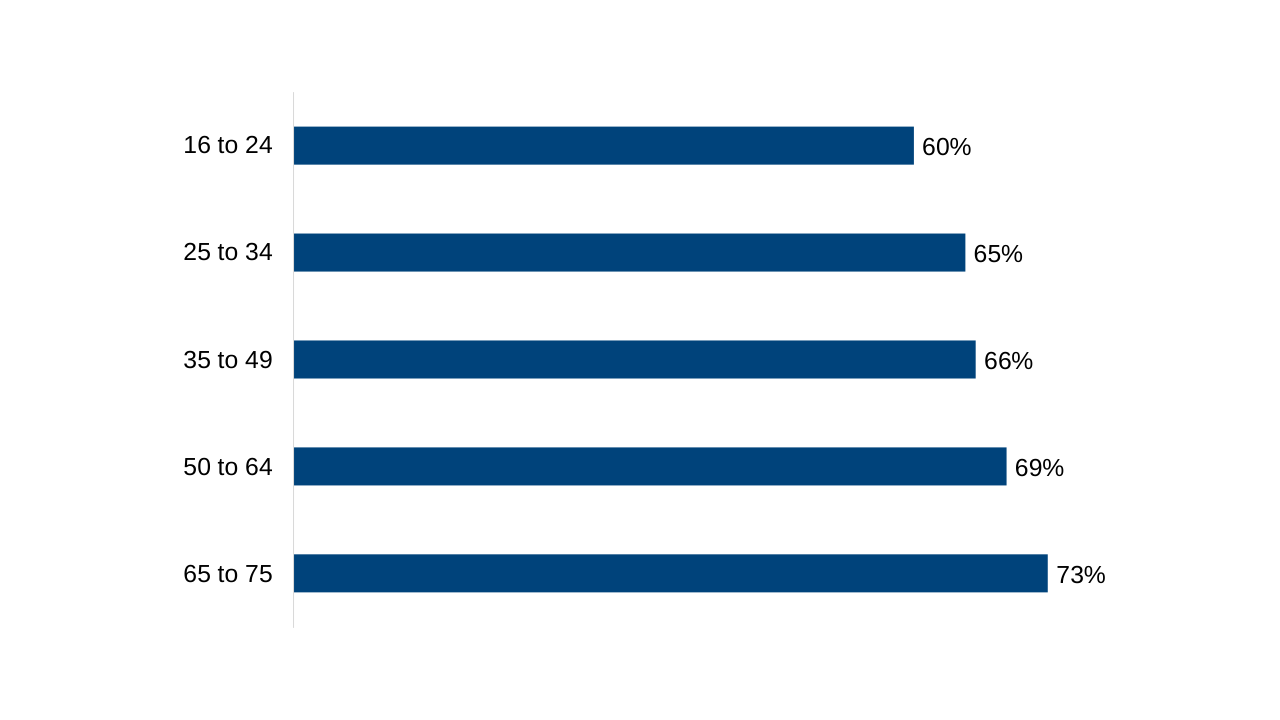
When looking at age groups, older workers were more likely to report ‘good’ general physical and mental health compared to younger workers. Around three quarters (73%) of workers aged 65 to 75 reported that they were generally in ‘good’ physical and mental health, compared with around three fifths (60%) of those aged 16 to 24 (the breakdown of likelihood to report ‘good’ health by age can be found in Figure 3.2 below). This may be explained by younger workers being more likely to report having mental health conditions relative to older workers; as noted above, those with mental health conditions were half as likely to report ‘good’ physical and mental health compared to those with physical health conditions[footnote 19].
Figure 3.2 Likelihood of reporting ‘good’ general physical and mental health by age
B1. How is your physical and mental health in general? Base: All workers (n=4,234). Age bases range from 220 aged 65 to 75 to 1,569 aged 35 to 49.
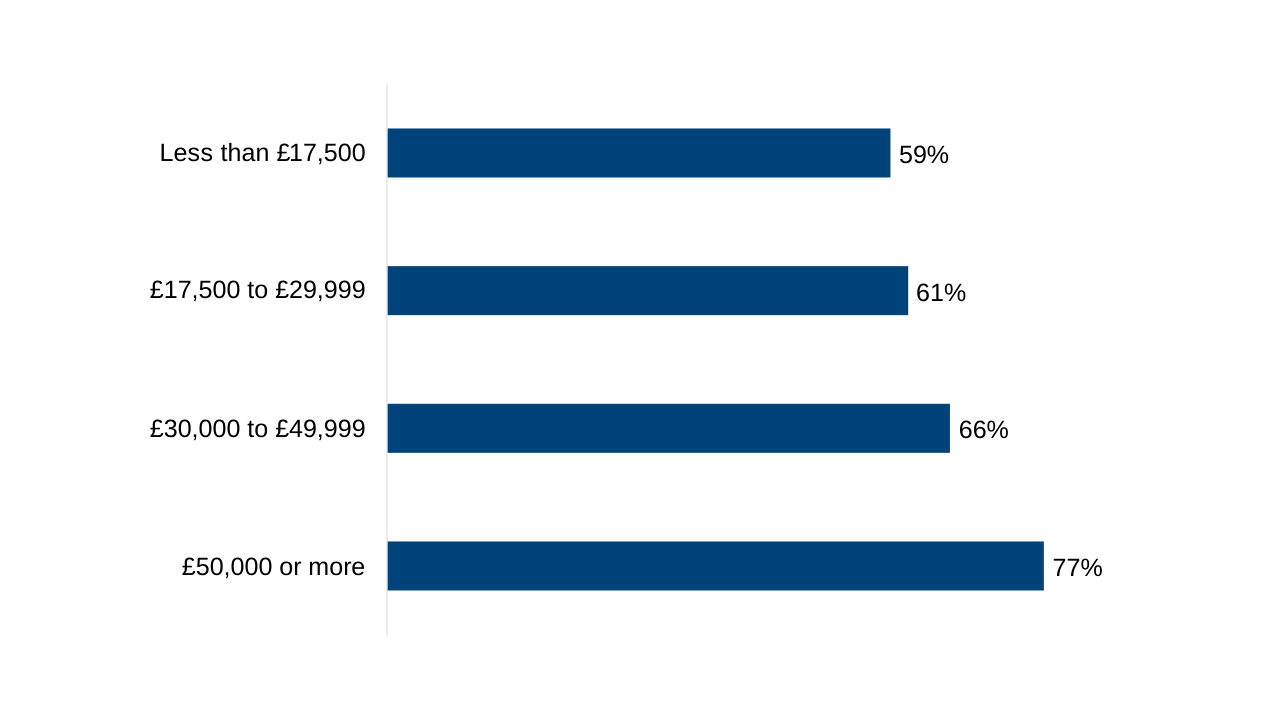
When looking at gross yearly pay, higher-earning employees were more likely to report ‘good’ general physical and mental health relative to lower-earning employees. Just over three quarters (77%) of those earning £50,000 or more reported ‘good’ general health compared with just under three fifths of those earning less than £17,500 (59%). The breakdown of likelihood to report ‘good’ health by yearly gross pay can be found in Figure 3.3.
Figure 3.3 Likelihood of reporting ‘good’ general physical and mental health by yearly gross pay
B1. How is your physical and mental health in general? Base: All employees (n=3,763). Yearly gross pay bases range from 576 earning less than £17,500 to 1,059 earning £30,000 to £49,999.
In terms of workers’ occupational groups, those working in Sales and Customer Service occupations (57%) and Caring, Leisure and Other Services occupations (60%) were least likely to report ‘good’ health (compared with 66% on average).
Long-term health conditions
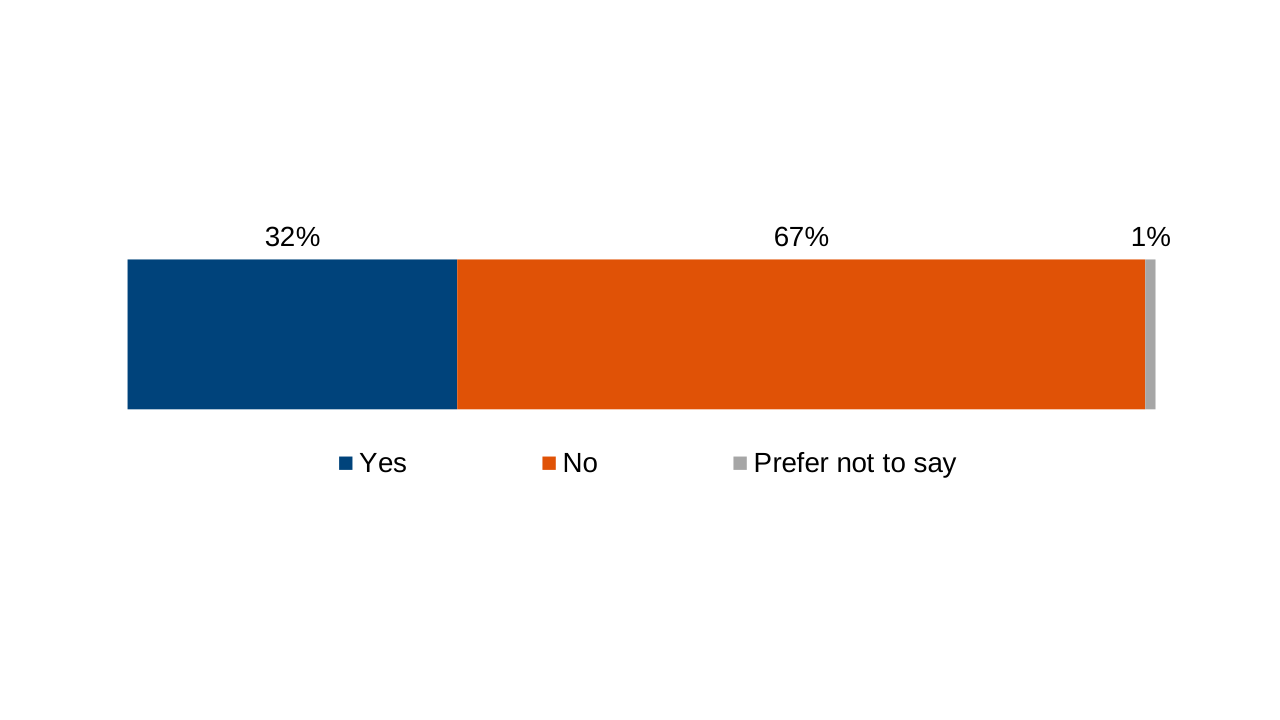
Around a third of workers (32%) reported having a long-term physical or mental health condition or illness lasting, or expected to last, 12 months or more, as seen in Figure 3.4[footnote 20].
Figure 3.4 Whether workers have a long-term health condition
B3. Do you have any physical or mental health conditions or illnesses lasting, or expected to last, 12 months or more? Base: All workers (n=4,234).
By age, older workers were more likely to report having a long-term health condition than their younger peers. Around two fifths (39%) of workers aged 50 to 75 reported having a health condition compared with just over a quarter (27%) of workers aged 16 to 34.
Female workers were more likely than their male peers to report having a long-term health condition (36% vs. 28%). Looking at ethnicity, Asian or Asian British workers were least likely to report long-term health conditions (19% vs. 32% average).
Within England, workers living in the South West were most likely to report having a long-term health condition (37% vs. 32%). In terms of deprivation level, workers in the least deprived areas were least likely to report having a long-term health condition (26% vs. 36% in the most deprived areas).
Lower paid employees were more likely to report having a long-term health condition when compared with those that earned more. More than a third (37%) of employees earning less than £17,500 per year reported having a long-term health condition compared with 28% of those earning £50,000 or more.
Among occupational groups, those working in Administrative and Secretarial (42%) and Sales and Customer Service (41%) occupations were most likely to report having a long-term health condition.
In terms of organisation types, employees working for voluntary or charity sector employers (38%) and public sector employers (36%) were more likely to report having a long-term health condition compared with those employed in the private sector (30%).
Types of long-term health conditions
Among workers reporting that they had a long-term health condition, depression, bad nerves or anxiety was the most frequently cited condition, with close to two fifths (39%) reporting this. Of those reporting more than one condition, 17% said this was their main condition. The second most commonly cited condition related to problems or disabilities connected with the arms, hands, legs, feet, back, or neck; with 33% of workers reporting this condition and 20% of those with more than one citing it as their main long-term health condition. A breakdown of the most commonly cited long-term health conditions is shown in Figure 3.5.
Figure 3.5 Most common types of long-term health conditions among workers
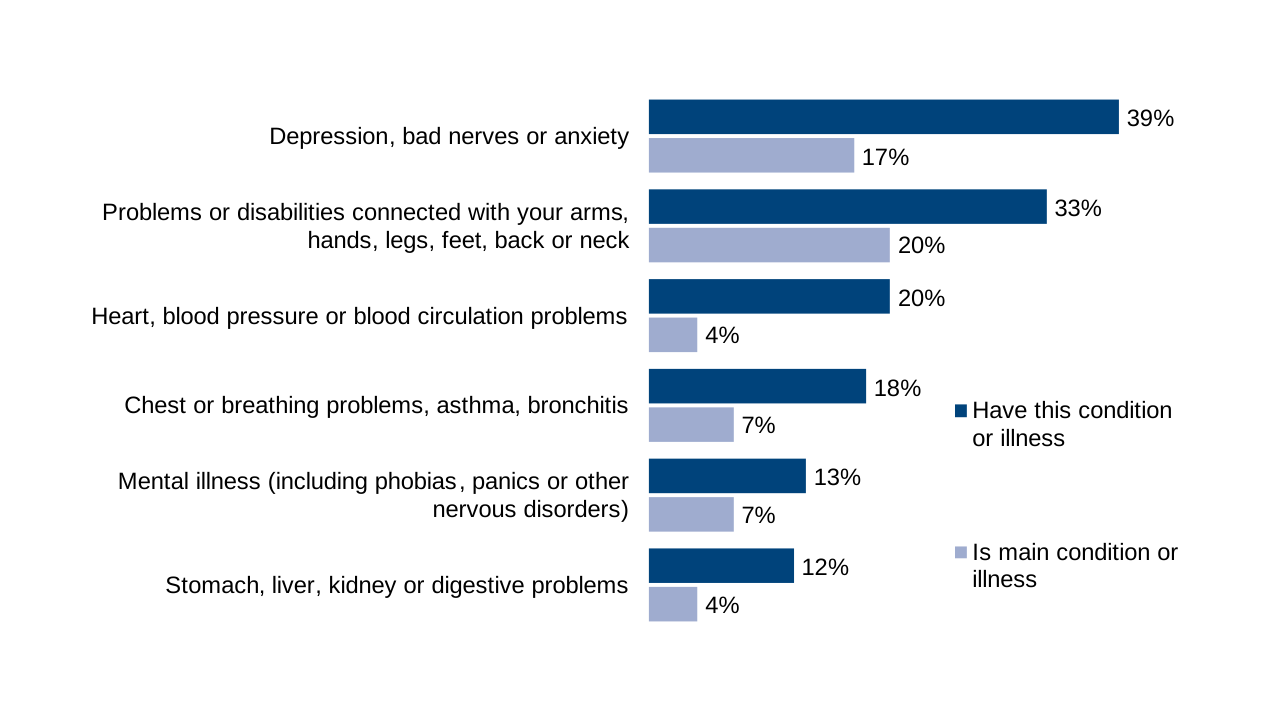
B4. Do you have…? Base: Workers with a long-term health condition (n=1,279). B4a. Which of these would you consider to be your main long-term health condition or illness? Base: Those with more than one health condition (n=647). Top six cited health conditions or illnesses shown.
Grouping all health conditions together (see Table 1.2), the majority of those with a long-term health condition reported having a physical health condition (77%). Around 4 in 10 (43%) had a mental health condition, while around 1 in 10 (11%) had a cognitive health condition. Three in 10 workers with a long-term health condition (30%) had a combination of physical, mental or cognitive health conditions; this included 4% who had a physical, mental and cognitive health condition, 21% who had a physical and mental health condition only, 2% who had a physical and cognitive health condition only, and 4% who had a mental and cognitive health condition only.
Self-employed workers with a long-term health condition were most likely to have a physical health condition (85% vs. 76% of employees). Part-time employees were most likely to report having a mental health condition (50% vs. 41% of full-time employees and 37% of self-employed workers).
By age, younger workers were more likely to report having a long-term mental or cognitive health condition, while older workers were more likely to report having a physical health condition. Around 6 in 10 workers (60%) aged 16 to 34 with a long-term health condition reported having a mental health condition while around a fifth (22%) said they had a cognitive health condition. In comparison, among those aged 50 to 75, 26% and 3% reported having mental and cognitive health conditions respectively. Conversely, 92% of workers with a long-term health condition aged 50 to 75 had a physical health condition, compared with 60% of those aged 16 to 34. The full breakdown by age can be seen in Figure 3.6.
Figure 3.6 Broad types of workers’ reported long-term health conditions, by age
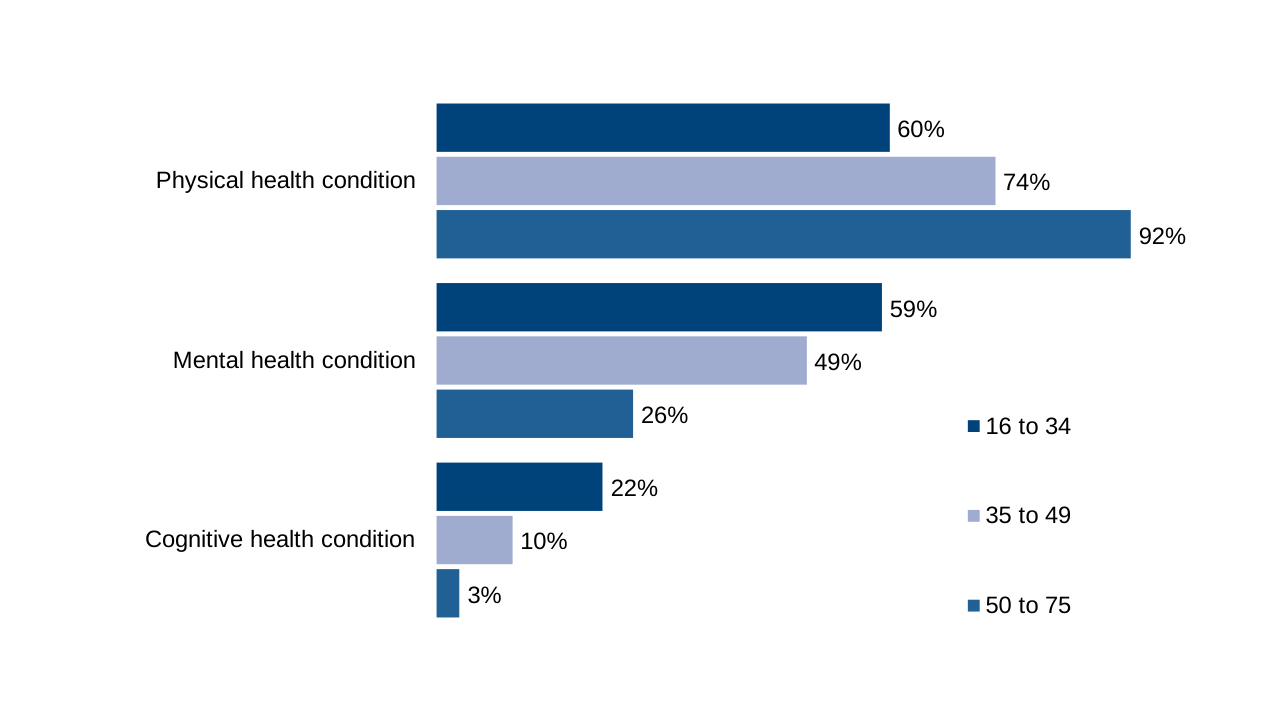
B4. Do you have…? Base: Workers with a long-term health condition: 16 to 34 (n=307); 35 to 49 (n=452); 50 to 75 (n=520).
Those in the most deprived areas (52%) were most likely to report having a mental health condition, while those in less, or the least, deprived areas were least likely (38%).
Female workers were more likely than their male counterparts with long-term health conditions to report having a mental health condition (48% vs. 36% of male workers).
The likelihood of reporting a mental health condition was correlated with pay. Just over half (51%) of employees with a long-term health condition earning less than £17,500 a year reported that they had a mental health condition, compared with around 3 in 10 (29%) of those earning £50,000 or more per year.
Among employees with a long-term health condition, those working for smaller employers (with 2 to 49 staff) were least likely to report having a physical health condition (71% vs. 76% of all employees).
Impact on daily activities and work
Around two thirds (65%) of workers with a long-term health condition reported that it impacted their ability to carry out day-to-day activities, as shown in Figure 3.7.
Figure 3.7 Whether long-term health condition(s) or illnesses has reduced ability to carry out day-to-day activities
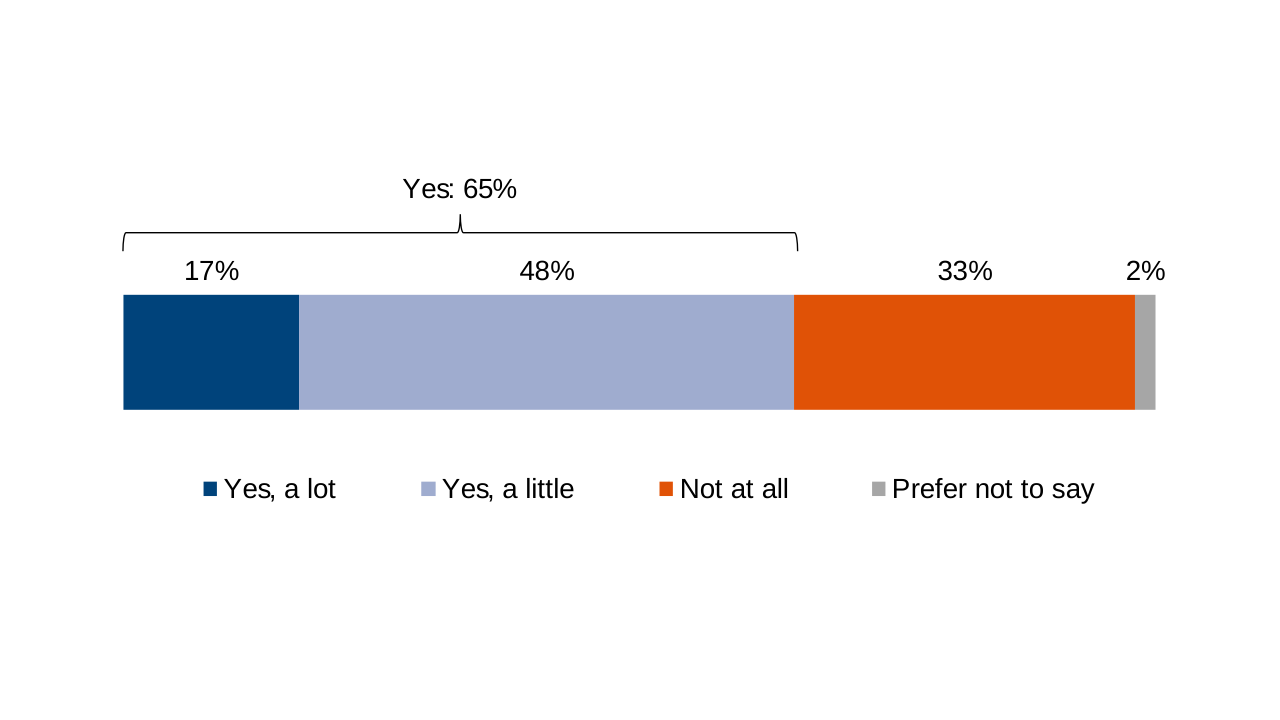
B5. Do your physical or mental health conditions or illnesses reduce your ability to carry out day-to-day activities? Base: If has long-term health condition (n= 1,279).
Among those with a long-term health condition, groups more likely to report that their ability to carry out day-to-day activities was reduced by their health condition (65% average) were:
- Workers with a cognitive (84%) or mental (80%) health condition, compared with workers with a physical condition (65%)
- Part-time employees (74% vs. 62% of full-time employees)
- The lowest paid employees earning less than £17,500 per year (75% vs. 49% earning £50,000 or more per year)
- Workers in the most deprived areas (74% vs. 57% in the least deprived areas)
- Younger workers aged 16 to 34 (70% vs. 61% aged 50 to 75)
- Female workers (68% vs. 61% of male workers)
Groups with a long-term health condition who were less likely to report that their ability to carry out day-to-day activities was reduced by their health condition (65% average) were:
- Professionals (56% vs. 65% average)
- Those working for medium-sized employers (with 50 to 249 staff) compared to smaller (2 to 49 staff) and larger employers (250 or more) (54% vs. 68% and 65% respectively)
- Workers in the South East (55% vs. 65% average)
Length of time day-to-day activities have been impacted
For most workers with health conditions, these were long-standing. Nearly two thirds (65%) of workers reported that their long-term health condition had reduced their ability to carry out day-to-day activities for more than 2 years. A further 13% indicated their condition had impacted them for more than 1 year, up to 2; 8% for 6 months, up to 1 year; 6% for more than 3 months, up to 6; and 4% for less than 3 months. One in twenty (5%) were unsure how long their condition had reduced their ability to carry out their daily activities. The full breakdown can be seen in Figure 3.8.
Figure 3.8 Length of time that ability to carry out day-to-day activities has been reduced by long-term health condition
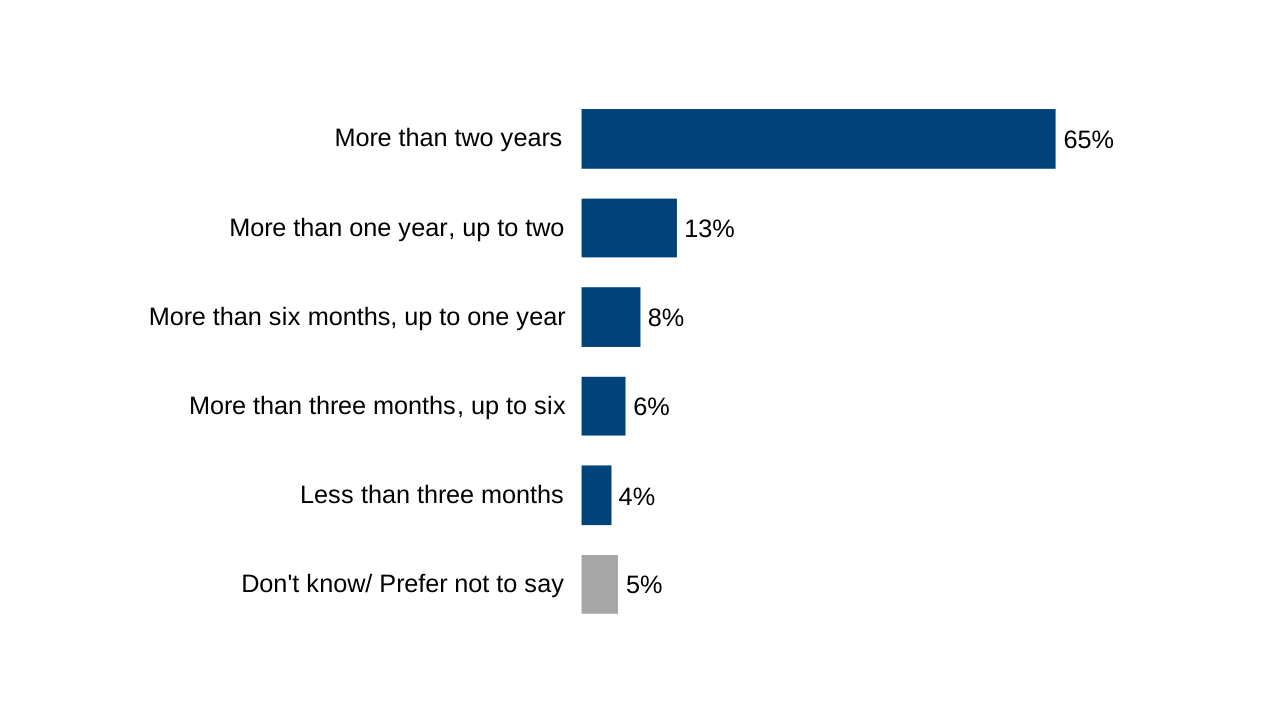
B6. For how long has your ability to carry out day-to-day activities been reduced? Base: If long-term health condition reduces ability to carry out day-to-day activities (n= 819).
Impact on ability to work
Around 1 in 7 workers (14%) indicated that their long-term health condition affected their ability to work ‘a great deal’. Around 3 in 10 (31%) felt it affected their ability to work ‘to some extent’; a slightly smaller proportion said it did not affect their ability ‘very much’; while a quarter (25%) said it did not affect them at all in relation to their work. This breakdown can be found in Figure 3.9.
Figure 3.9 Extent to which long-term health condition affects ability to work
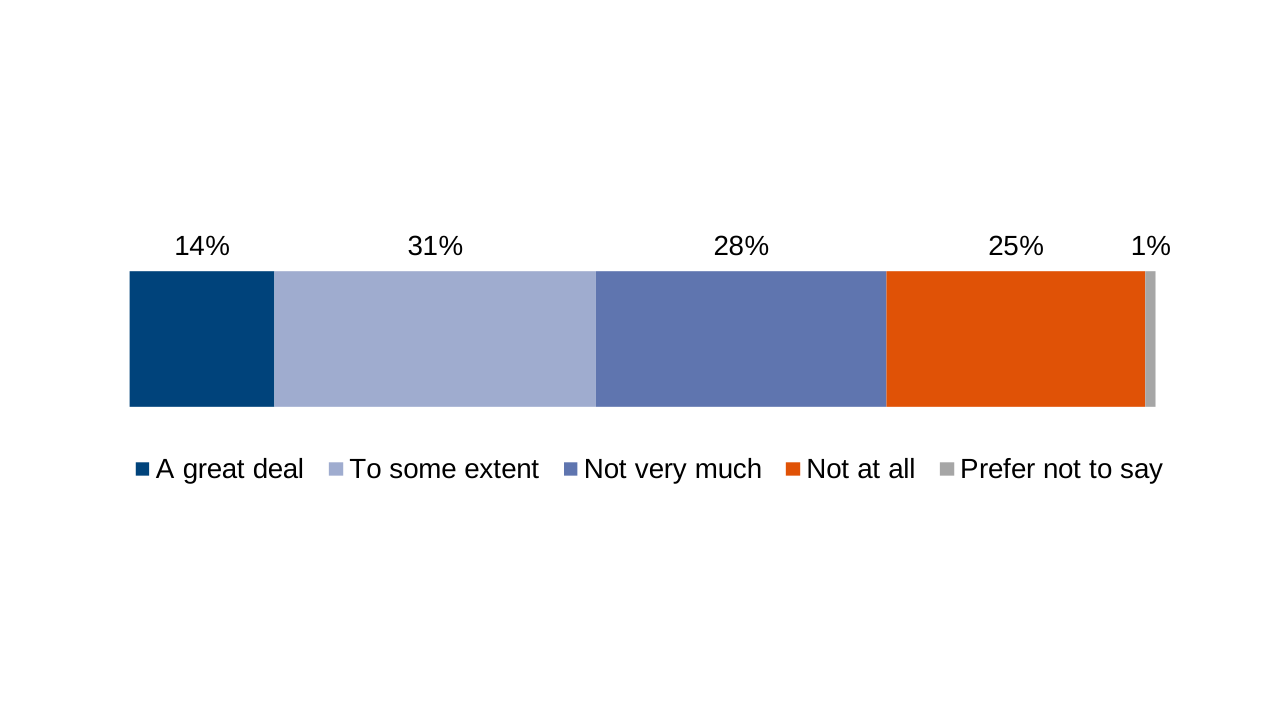
B7. Extent to which long-term health condition affects the amount, or type, of work you can do in your current job. Base: If has a long-term health condition (n= 1,279).
Part-time employees with a long-term health condition were more likely to report that their condition affected their ability to work a great deal (22% vs. 14% average).
Long-term mental and cognitive health conditions were more likely to have had an impact on the amount or type of work individuals were able to do (see Figure 3.10 below). Around a fifth of those with a cognitive health condition (22%), and a similar proportion of those with a mental health condition (20%), said their condition affected their capacity for work ‘a great deal’, compared with 15% of those with a physical condition. Around a quarter (26%) of those with a physical condition said their condition had no impact, compared with just 14% of those with a mental health condition and 9% of those with a cognitive health condition.
Figure 3.10 Impact of long-term health condition on the amount, or type, of work workers can do, by broad type of health condition
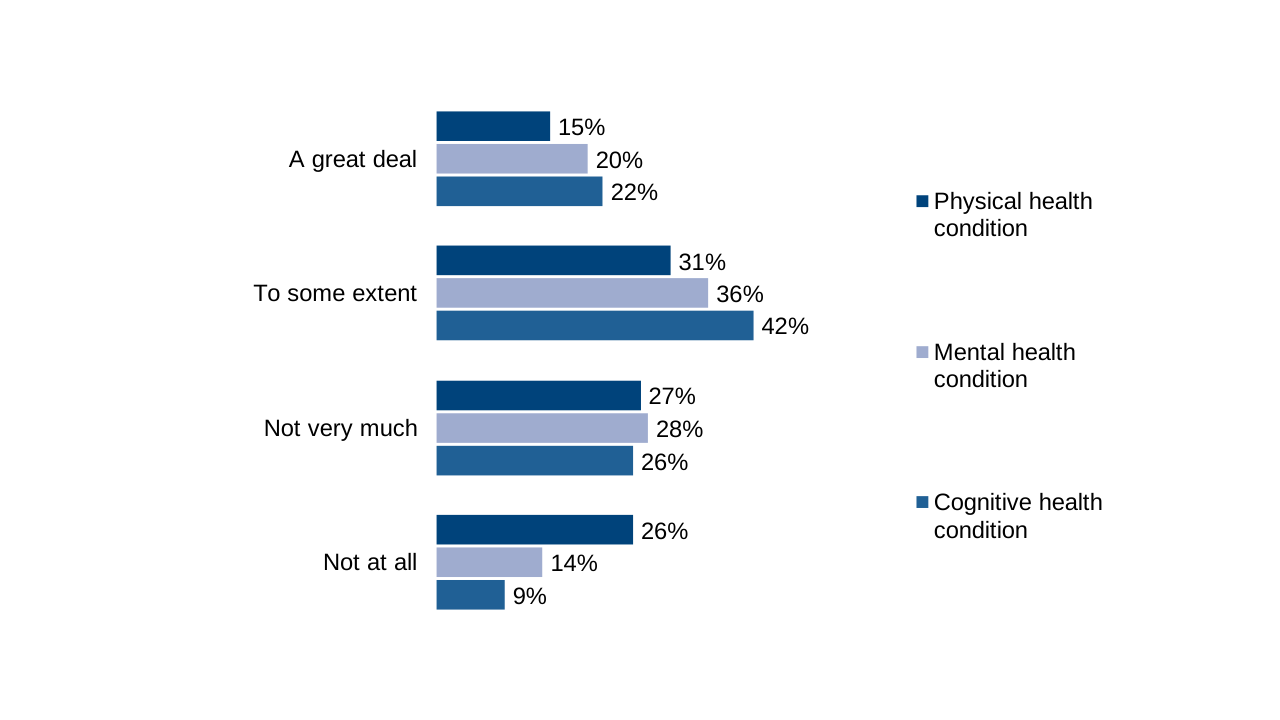
B7. Extent to which long-term health condition affects the amount, or type, of work you can do in your current job. Base: If has a long-term health condition (n= 1,279).
Workers with a long-term health condition living in the most deprived areas were most likely to say their condition impacted their ability to work to at least some extent (53% vs. 35% of those in the least deprived areas). Just 15% of those in the most deprived areas said their condition did not have an impact at all, in contrast with the 25% average.
Among those with a long-term health condition, other groups more likely to report that their health condition limited the amount, or type, of work they could do to at least some extent (45% average) were:
- Workers in labour-intensive occupations (62% vs. 38% in high-skill roles)
- Workers from all other ethnic groups combined (59% vs. 44% of White workers)
- Those in London (56% vs. 45% average)
- Lower paid employees earning less than £17,500 per year (52% vs. 28% of those earning £50,000 or more per year)
- Female workers (48% vs. 41% of their male counterparts)
Menopause and its impact
Among all female and non-binary workers, 36% reported that they were either currently experiencing, or had experienced, symptoms of menopause or peri-menopause.
Among those who had experienced, or were experiencing, symptoms of menopause or peri-menopause, around 3 in 5 (61%) reported feeling less able to concentrate, while just over half (53%) felt more stressed. Nearly half (47%) said they felt less confident in their abilities and a similar proportion felt less patient with others (44%). Around 8 in 10 (82%) reported it had at least some impact on their ability to work. A full breakdown of the effects of the menopause or peri-menopause can be seen in Figure 3.11.
Figure 3.11 Effects of menopause or peri-menopause symptoms on ability to work
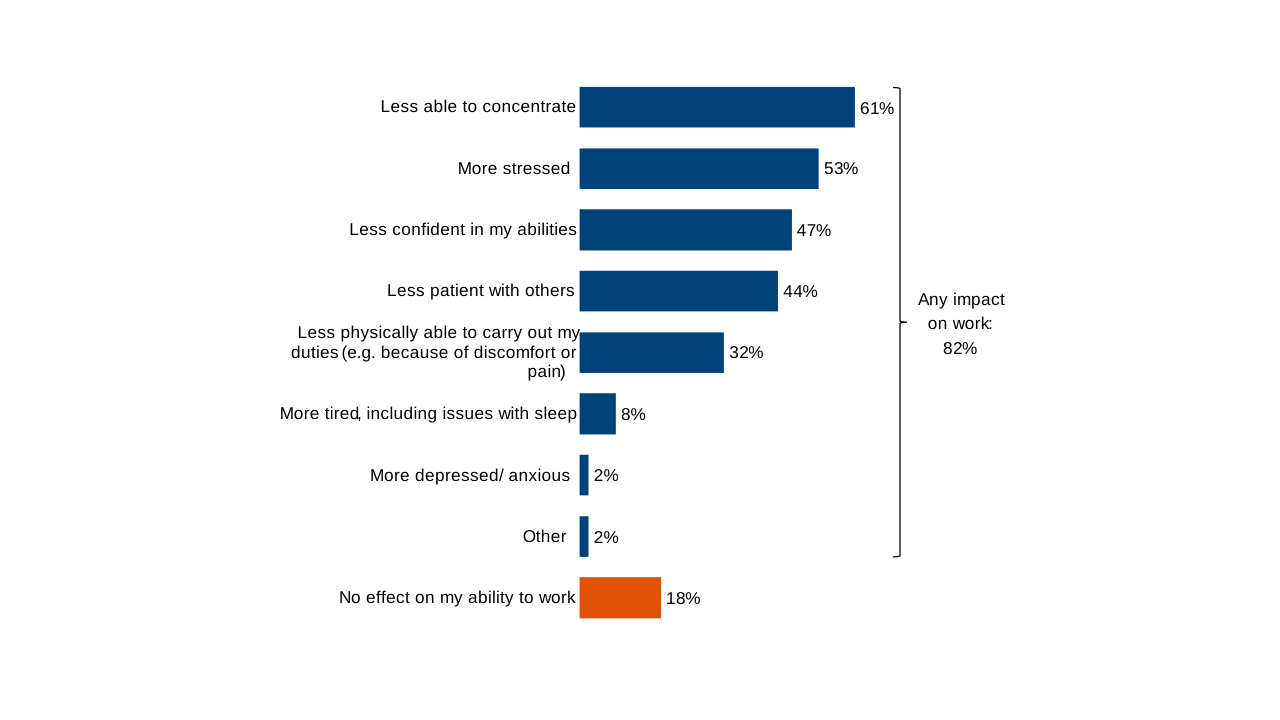
B10. In what way, if any, have your menopause or peri-menopause symptoms affected your ability to work? Base: If experiencing or experienced menopause or peri-menopause (n=937).
Those more likely to be impacted in any way by their menopause or peri-menopause symptoms were those aged 35 to 49 (88% vs. 78% aged 50 to 75) and those with a long-term mental health condition (85% vs. 82% average).
4. Sickness absence and sick pay
This chapter explores the extent to which workers had time off work (a sickness absence) due to illness, a health condition, an injury, or a disability in the past 12 months. This analysis includes the number of occasions of sickness absence that workers had in the last 12 months, the cumulative time taken off work across this period, and whether they had a continuous period of more than 4 weeks off work in this time. The chapter then goes on to look at presenteeism (whether workers went to work when they did not feel well enough to so) and the reasons why. It concludes by exploring sick pay eligibility and, among those that had a sickness absence, the sick pay they received during a sickness absence.
Key findings
- Around half of all workers (49%) had taken a sickness absence in the past 12 months, most commonly taking a sickness absence due to illness (e.g. a cold, the flu, a migraine, etc.) (39%)
- Cumulatively across the last 12 months, around a fifth (22%) of all workers were absent for up to 1 week. Just under 1 in 12 (8%) had taken more than 1 week off, up to 2; 4% had taken more than 2 weeks, up to 3; 1% had taken more than 3 weeks, up to 4; while 7% of workers had taken more than 4 weeks off work
- Around 1 in 10 workers (8%) had been off work for a continuous period of 4 weeks or more in the past 12 months
- Nearly three fifths of workers (58%) reported having worked while unwell in the past 12 months. Among those that did, around half (46%) had done so because they did not want to add to their colleagues’ workload
- Among employees that had a sickness absence in the last year, three fifths (60%) reported receiving Occupational or Company Sick Pay (OSP) only, while 1 in 10 (10%) said they received Statutory Sick Pay (SSP) only. A small proportion (4%) received SSP some of the time and OSP some of the time, while 17% reported receiving neither SSP nor OSP (this could be, for example, because they were off sick for less than 4 days in a row or earned less than £125 per week, making them ineligible for SSP)
- Around 4 in 5 (79%) self-employed workers who had taken a period of sickness absence in the past 12 months, or since becoming self-employed, reported not receiving any income during this period
Sickness absence
Whether workers had taken a sickness absence
Just under half of all workers (49%) reported taking time off work (a sickness absence) due to illness, a health condition, an injury, or a disability in the past 12 months. Workers most commonly took a sickness absence due to illness (e.g. a cold, the flu, a migraine, etc.) (39%). Smaller proportions reported taking time off due to a long-term health condition (7%), an injury (6%) or a disability (2%). A breakdown of sickness absence can be seen in Figure 4.1.
Figure 4.1 Whether time taken off in the last 12 months due to a sickness absence
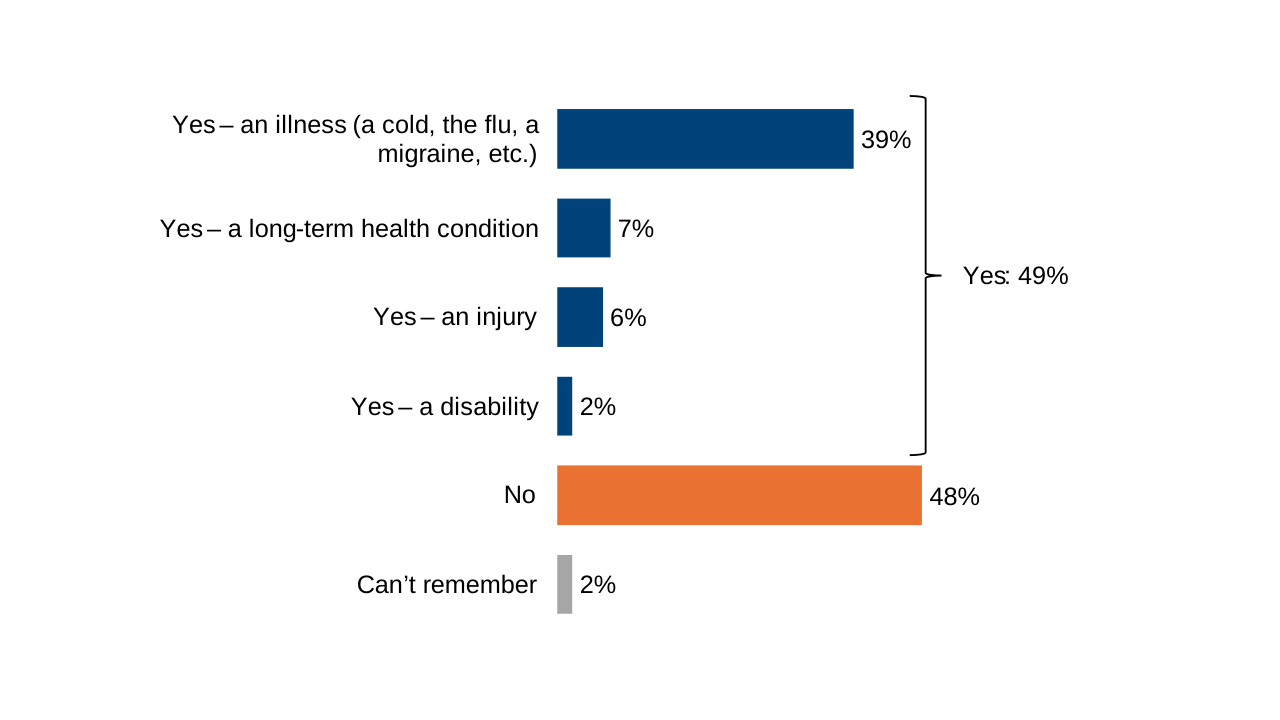
C4. In the past 12 months, have you taken any time off work due to an illness, a health condition, an injury or a disability that affected you personally? Base: All workers in module 1 (n= 2,153).
Self-employed workers were less likely than employees to have taken time off due to a sickness absence (41% vs. 50% of employees). This was broadly driven by self-employed workers being less likely to have taken time off due to an illness (30% vs. 41% of employees).
Other groups more likely to have had a sickness absence in the past 12 months (49% average) included:
- Those with a long-term health condition (66% vs. 41% of those without)
- Employees in the public sector (55% vs. 48% in the private sector)
Among workers that had a sickness absence in the previous 12 months and had moved into a new employed role or become self-employed, just over half (55%) had taken this time off since beginning their new job, and 45% had done so before their move[footnote 21].
Occasions of sickness absence in the past 12 months
As shown in Figure 4.2, among workers who took a sickness absence in the past 12 months, just over a third (34%) took time off on a single occasion[footnote 22]. Around two fifths (39%) reported 2 to 3 occasions of absence. Smaller proportions experienced more frequent sickness absences: 8% took 4 to 5 occasions, 5% took 6 to 10 and 2% took time off on more than 11 separate occasions. Around 1 in 8 (12%) workers could not recall the number of occasions they had taken off work in the past 12 months due to a sickness absence.
Figure 4.2 Number of occasions of sickness absence of 1 day or more in the past 12 months
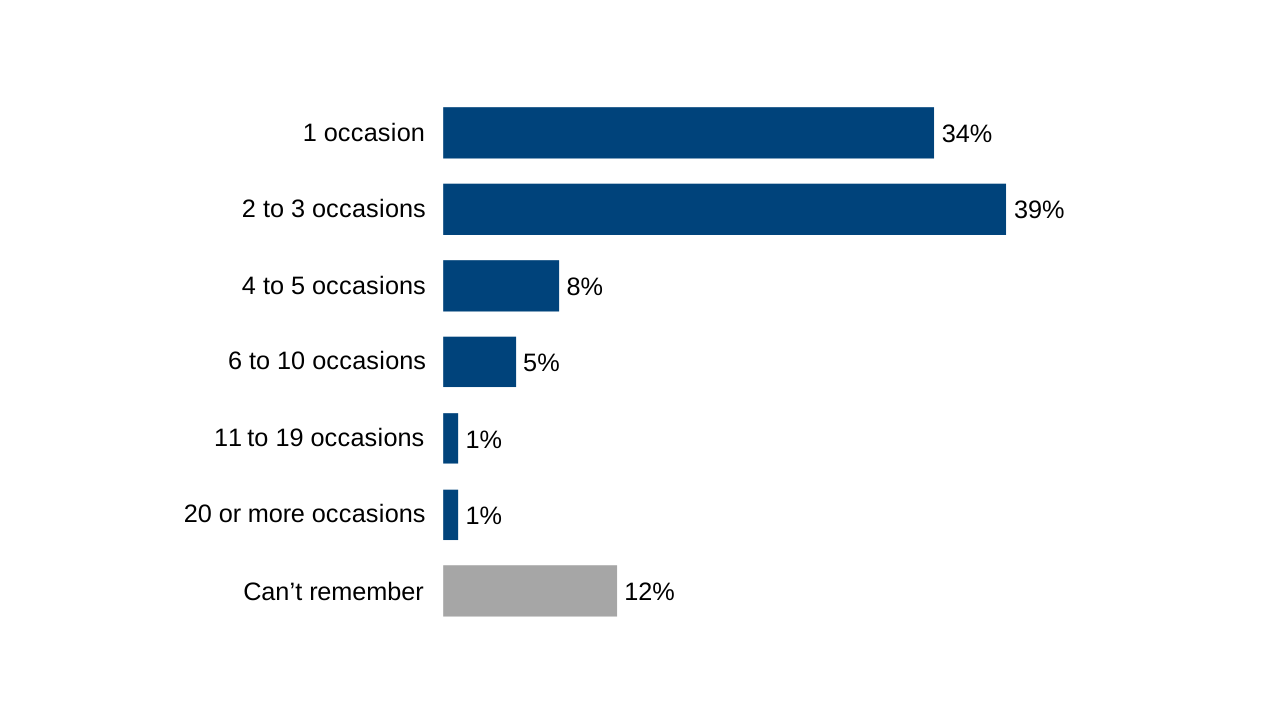
C5. In the past 12 months, have you taken any time off work due to an illness, a health condition, an injury or a disability that affected you personally? Base: If had a sickness absence in past 12 months (n=1,067)
Cumulative length of sickness absence in the last 12 months
As shown in Figure 4.3, around a fifth (22%) of workers were absent for up to 1 week[footnote 23]. Just under 1 in 10 (8%) had taken more than 1 week off, up to 2; 4% had taken more than 2 weeks, up to 3; 1% had taken more than 3 weeks, up to 4; while 7% of workers had cumulatively taken more than 4 weeks off work in the past 12 months due to a sickness absence. Overall, workers took an average of 7.3 days off work in the past 12 months due to sickness absence. Nearly half (48%) of all workers reported no time off due to a sickness absence.
Figure 4.3 Total days of sickness absence in the past 12 months
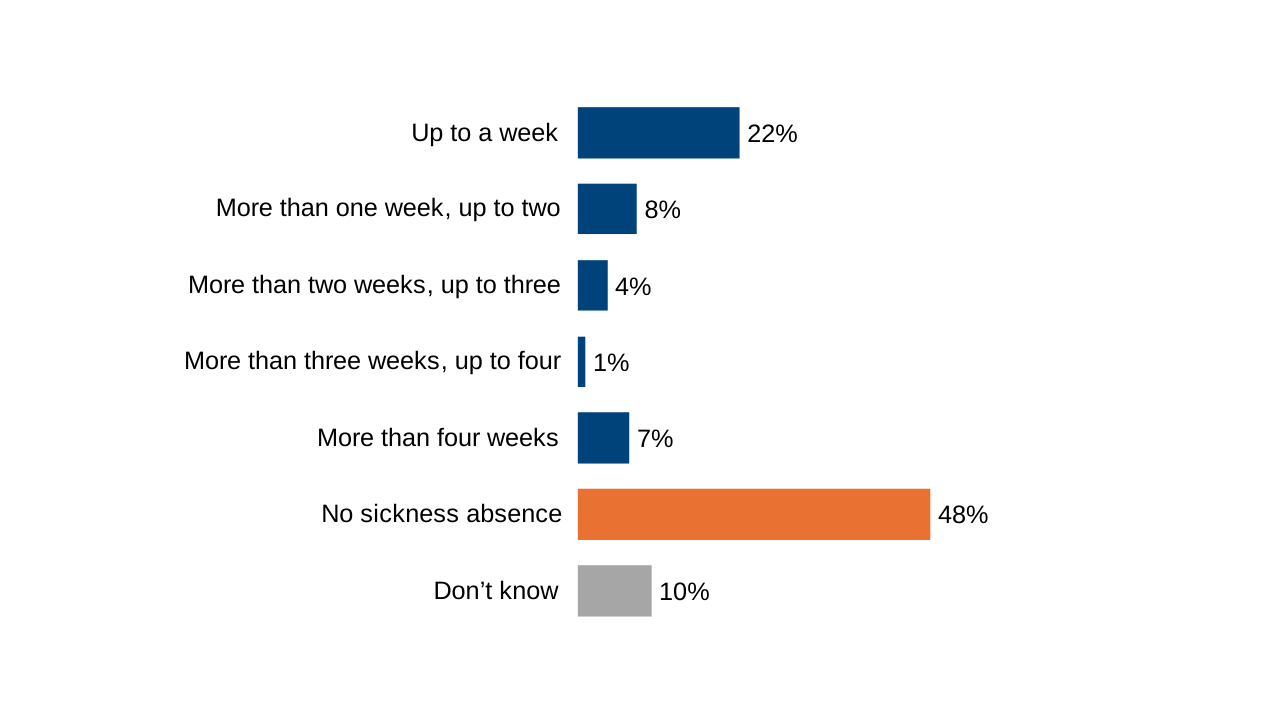
Total days of sickness absence in the past 12 months. Base: All workers in module 1 (n= 2,153)
Groups most likely to have cumulatively taken more than 4 weeks off work in the past 12 months due to sickness absence were:
- Those with a long-term mental health condition (20%) or physical health condition (17%) vs. 3% with no long-term health condition
- Administrative and Secretarial occupations (14% vs. 7% average)
- Employees working at large employers with 250 or more staff (9% vs. 2% of those at smaller employers with 2 to 49 staff)
Logistic regression
To further understand the association of particular variables (also known as factors) with the likelihood of an employee having taken more than 4 weeks of cumulative sickness absence over the past 12 months, a logistic regression model was run[footnote 24].
Logistic regression aids understanding of the association of various selected predictor variables (such as demographic, employer or job characteristics) with a binary dependent (i.e. outcome) variable. In this logistic regression model, the outcome variable was whether employees cumulatively had more than 4 weeks off work due to sickness absence in the past 12 months. The key benefit of analysing the data in this way is that logistic regression controls for the other selected predictor variables. In other words, we can assess the contribution of each predictor variable, holding all others constant. For example, there may be an assumed or known association with both age and yearly gross pay with having cumulatively had more than 4 weeks off work, but it may be that these independent variables are closely associated with each other. Logistic regression accounts for associations between predictor variables when estimating their effect on the dependent variable. This therefore allows us to understand which of the selected predictor variables are most closely associated with, in this instance, having cumulatively had more than 4 weeks off work due to sickness absence[footnote 25]. In other words, to use an example outlined below, we could say that if two employees are identical but one has a long-term physical health condition and the other does not, the probability of the employee with a long-term physical health condition cumulatively having had more than 4 weeks off work due to sickness absence increases by 7.2 percentage points when compared with the employee that does not have a long-term physical health condition.
The logistic regression model identified predictors that were statistically significantly related to employees having cumulatively had more than 4 weeks sickness absence within the past 12 months, while taking into account the influence of all other factors in the analysis. To do this, and understand the strength of association, we look at the Average Marginal Effects (AMEs). AMEs reflect the average change in predicted probability across all respondents in the data when a variable changes, holding all other variables at their observed values. The analysis below refers to positive and negative AMEs; a positive AME is seen when a category within a variable increases the likelihood of employees having cumulatively had more than 4 weeks sickness absence within the past 12 months in comparison with the reference level, while the opposite is true for negative AMEs.
In order of positive AMEs, the below describes statistically significant findings at the 95% confidence level when looking at whether employees had a cumulative sickness absence of more than 4 weeks[footnote 26]:
- Employees eligible for Occupational or Company Sick Pay (OSP) some of the time and Statutory Sick Pay (SSP) some of the time, compared with those eligible for SSP only
- The average probability of cumulatively having had more than 4 weeks off work due to sickness absence among employees eligible for SSP only was 3.8%
- The average probability of cumulatively having had more than 4 weeks off work due to sickness absence among employees eligible for SSP some of the time and OSP some of the time was 10.0%
- Therefore, holding the other variables included in the model at their observed levels, on average, being eligible for both SSP some of the time and OSP some of the time increased the probability of an employee cumulatively having had more than 4 weeks off work due to sickness absence by 6.2 percentage points when compared with being eligible for SSP only
In order of negative AMEs, the below describes statistically significant findings at the 95% confidence level when looking at whether employees had a cumulative sickness absence of more than 4 weeks:
- Employees educated to undergraduate degree level or higher, compared with employees whose highest educational qualification was fewer than 5 GCSEs at grade A*-C / 9-4 or equivalent
- The average probability of cumulatively having had more than 4 weeks off work due to sickness absence among employees with fewer than 5 GCSEs at grade A*-C / 9-4 or equivalent was 14.9%
- The average probability of cumulatively having had more than 4 weeks off work due to sickness absence among employees educated to undergraduate degree level or higher was 5.2%
- Therefore, holding the other variables included in the model at their observed levels, on average, being educated to undergraduate degree level or higher decreased the probability of an employee cumulatively having had more than 4 weeks off work due to sickness absence by 9.8 percentage points when compared with having fewer than 5 GCSEs at grade A*-C / 9-4 or equivalent
- Employees without a long-term physical health condition, compared with those with a long-term physical health condition
- The average probability of cumulatively having had more than 4 weeks off work due to sickness absence among employees with a long-term physical health condition was 12.1%
- The average probability of cumulatively having had more than 4 weeks off work due to sickness absence among employees without a long-term physical health condition was 4.9%
- Therefore, holding the other variables included in the model at their observed levels, on average, not having a long-term physical health condition decreased the probability of an employee cumulatively having had more than 4 weeks off work due to sickness absence by 7.2 percentage points when compared with having a long-term physical health condition
- Employees without a long-term mental health condition, compared with those with a long-term mental health condition
- The average probability of cumulatively having had more than 4 weeks off work due to sickness absence among employees with a long-term mental health condition was 12.9%
- The average probability of cumulatively having had more than 4 weeks off work due to sickness absence among employees without a long-term mental health condition was 5.8%
- Therefore, holding the other variables included in the model at their observed levels, on average, not having a long-term mental health condition decreased the probability of an employee cumulatively having had more than 4 weeks off work due to sickness absence by 7.1 percentage points when compared with having a long-term mental health condition
It should be noted that due to the relatively low incidence rate across the survey population of having cumulatively had more than 4 weeks sickness absence within the past 12 months (7%), there is some uncertainty in these results and therefore any conclusions drawn should take this into account.
Continuous sickness absence of more than 4 weeks
Around 1 in 12 workers (8%) had been off work for a continuous period of 4 weeks or more in the past 12 months. The groups most likely to have had a continuous sickness absence of 4 weeks or more were:
- Workers with a long-term mental health condition (22%), cognitive health condition (18%) or physical health condition (18%) vs. 5% with no health condition
- Workers in the most deprived areas (11% vs 4% in the least deprived areas)
- Lower paid employees earning less than £17,500 per year (11% vs. 5% of those earning £50,000 or more per year).
Logistic regression
To further understand the association of particular variables with the likelihood of an employee having had a continuous sickness absence of 4 or more weeks in the past 12 months, a logistic regression model was run[footnote 27].
In order of positive AMEs, the below describes statistically significant findings at the 95% confidence level when looking at whether employees had a continuous sickness absence of 4 or more weeks in the past 12 months[footnote 28]:
- Employees eligible for Statutory Sick Pay (SSP) some of the time and Occupational / Company Sick Pay (OSP) some of the time, compared with those eligible for SSP only
- The average probability of having had a continuous sickness absence of 4 or more weeks among employees eligible for SSP only was 6.0%
- The average probability of having had a continuous sickness absence of 4 or more weeks among employees eligible for SSP some of the time and OSP some of the time was 11.9%
- Therefore, holding the other variables included in the model at their observed levels, on average, being eligible for both SSP some of the time and OSP some of the time increased the probability of an employee having had a continuous sickness absence of 4 or more weeks by 5.9 percentage points when compared with being eligible for SSP only
In order of negative AMEs, the below describes statistically significant findings at the 95% confidence level when looking at whether employees had a continuous sickness absence of 4 or more weeks:
- Employees without a long-term mental health condition, compared with those with a long-term mental health condition
- The average probability of having had a continuous sickness absence of 4 or more weeks among employees with a long-term mental health condition was 16.3%
- The average probability of cumulatively having had more than 4 weeks off work due to sickness absence among employees without a long-term mental health condition was 6.7%
- Therefore, holding the other variables included in the model at their observed levels, on average, not having a long-term mental health condition decreased the probability of an employee having had a continuous sickness absence of 4 or more weeks by 9.6 percentage points when compared with having a long-term mental health condition
- Employees educated to undergraduate degree level or higher, compared with employees whose highest educational qualification was fewer than 5 GCSEs at grade A*-C / 9-4 or equivalent
- The average probability of having had a continuous sickness absence of 4 or more weeks among employees with fewer than 5 GCSEs at grade A*-C / 9-4 or equivalent was 15.1%
- The average probability of having had a continuous sickness absence of 4 or more weeks among employees educated to undergraduate degree level or higher was 6.6%
- Therefore, holding the other variables included in the model at their observed levels, on average, being educated to undergraduate degree level or higher decreased the probability of an employee having had a continuous sickness absence of 4 or more weeks by 8.5 percentage points when compared with having fewer than 5 GCSEs at grade A*-C / 9-4 or equivalent
- Employees without a long-term physical health condition, compared with those with a long-term physical health condition
- The average probability of having had a continuous sickness absence of 4 or more weeks among employees with a long-term physical health condition was 12.0%
- The average probability of having had a continuous sickness absence of 4 or more weeks among employees without a long-term physical health condition was 6.5%
- Therefore, holding the other variables included in the model at their observed levels, on average, not having a long-term physical health condition decreased the probability of an employee having had a continuous sickness absence of 4 or more weeks by 5.5 percentage points when compared with having a long-term physical health condition
It should be noted that due to the relatively low incidence rate across the survey population of having had a continuous sickness absence of 4 or more weeks within the past 12 months (8%), there is some uncertainty in these results and therefore any conclusions drawn should take this into account.
Employee knowledge of employer guidelines or policies on sickness absence
Just over four fifths (81%) of employees thought that their employer had guidelines or policies in place regarding sickness absence, while 6% did not think their employer had such policies in place and 13% were unsure. The groups least likely to think their employer had guidelines in place were:
- Those in Elementary occupations (57% vs. 81% average)
- Employees working for small employers with 2 to 49 staff (60% vs. 89% at large employers with 250 or more staff)
- Lower paid employees earning less than £17,500 per year (69% vs. 90% of higher earners on £50,000 or more per year)
- Part-time employees (72% vs. 84% of full-time employees)
- Employees in London (74% vs. 81% average)
- Those in the most deprived areas (74% vs. 85% in the least deprived areas)
- Younger employees aged 16 to 34 (74% vs. 85% of those aged 35 to 75)
- Private sector employees (76% vs. 91% of public sector and 89% of voluntary or charity sector employees)
- Male workers (76% vs. 86% of female workers)
As shown in Figure 4.4, among those who thought their employer had sickness absence policies in place, the majority found these to be clear (87%), with 55% describing them as very clear and 32% as fairly clear. Conversely, a minority (7%) said they were either not very clear (6%) or not clear at all (1%).
Figure 4.4 Whether sickness absence guidelines are clear to employees
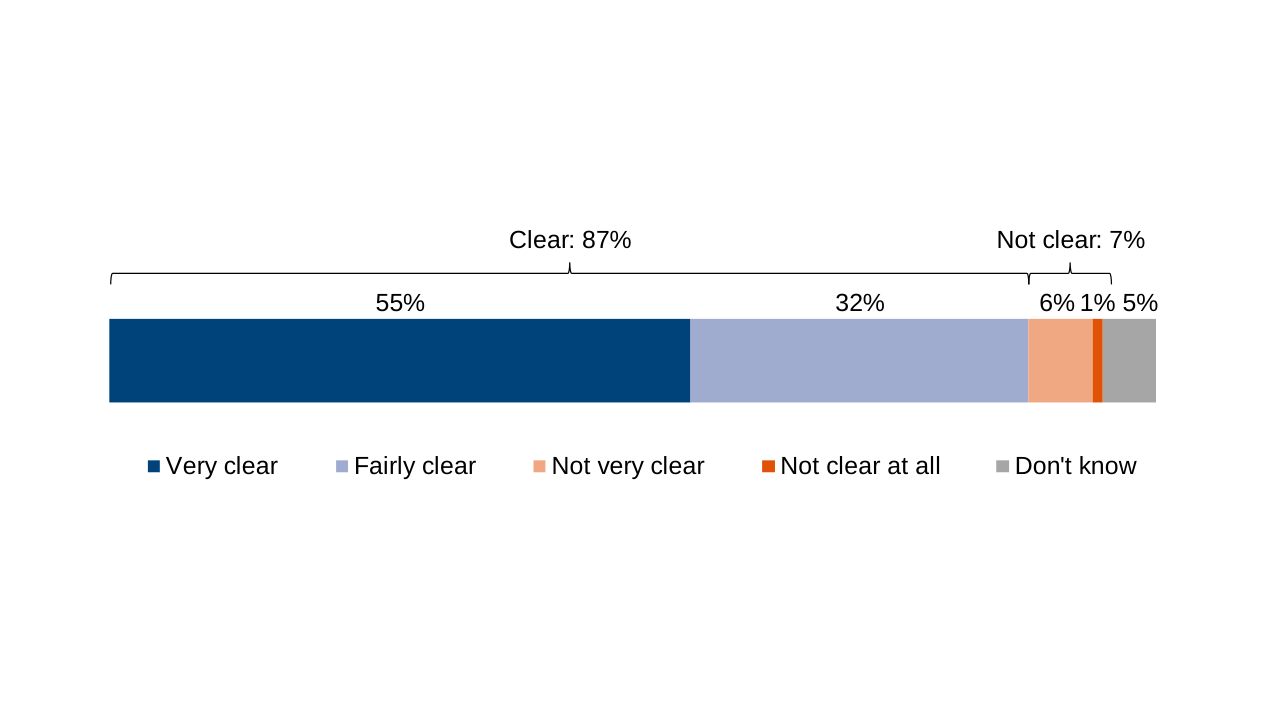
E10. How clear, if at all, are your current employer’s guidelines or policies on how to manage sickness absence? Base: All employees in module 1 whose employer has guidelines or policies (n=1,626).
Presenteeism
Working while unwell
Around three fifths of workers (58%) reported having worked while unwell in the past 12 months, as shown in Figure 4.5.
Figure 4.5 Whether went to work when unwell
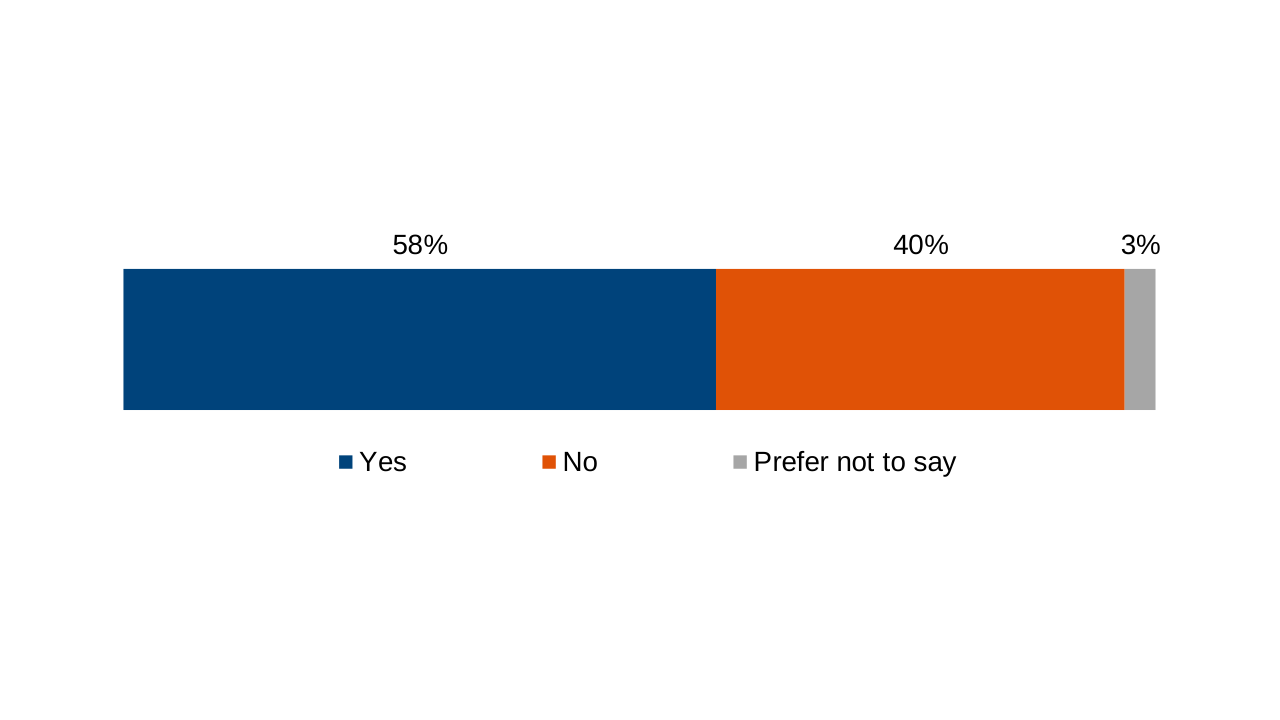
C1. In the past 12 months were there any occasions when you went to work or worked (including working from home) when you didn’t feel well enough to work? Base: All workers in module 1 (n=2,153).
Workers most likely to have worked when not feeling well enough to do so (58% average) included:
- Workers with a long-term mental health condition (80%) or physical health condition (73%) vs. those with no long-term health condition (50%)
- Employees in the public sector (65% vs. 55% in the private sector)
- Workers in service-intensive occupations (64% vs. 56% in high-skill occupations)
- Female workers (63% vs. 53% of male workers)
- Employees earning under £50,000 per year (62% vs. 52% of those earning £50,000 or more)
- Those aged under 50 (60% vs. 53% of those aged 50 to 75)
- Employees working for larger employers with 250 or more staff (60% vs. 52% at smaller organisation with 2 to 49 staff)
Occasions worked when not well
As shown in Figure 4.6, around 1 in 7 (15%) worked when not feeling well did so on 1 occasion, 41% did so on 2 to 3 occasions, 17% on 4 to 5 occasions, and around a quarter (24%) did so on more than 5 occasions.
Figure 4.6 Occasions when workers went to work unwell
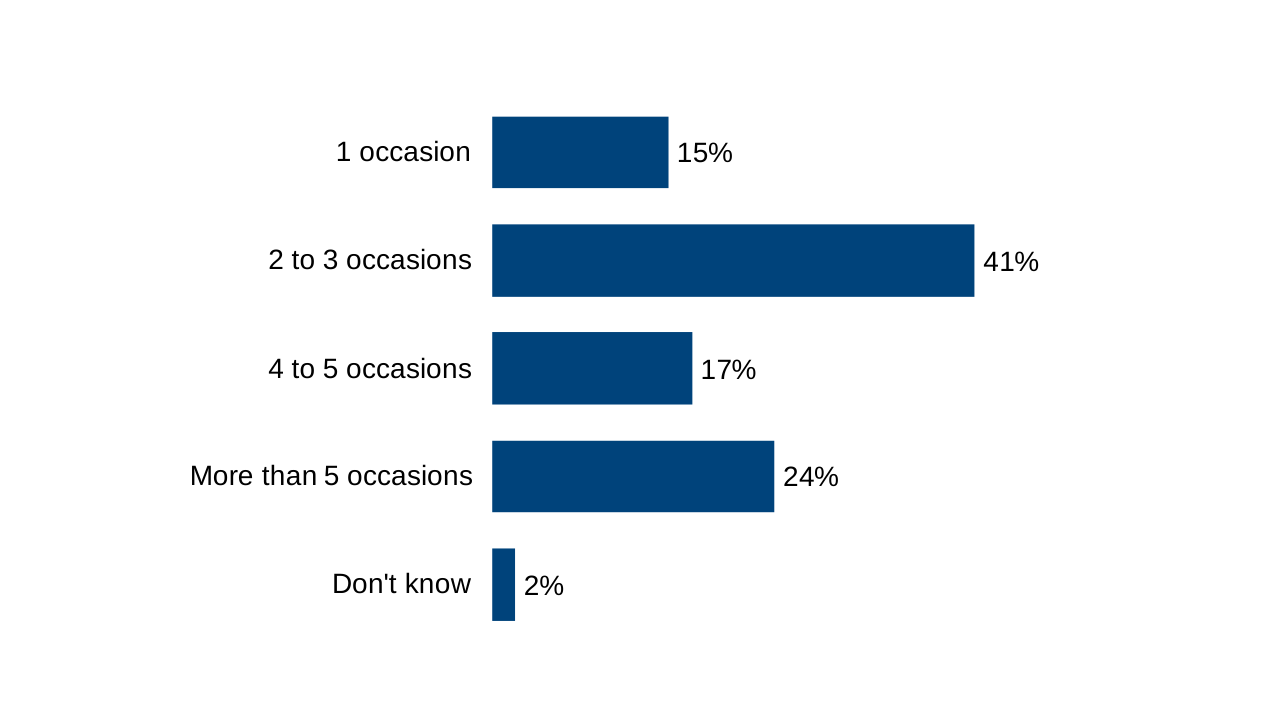
C2. On how many occasions in the past 12 months did you go to work or worked (including working from home) when you didn’t feel well enough to work? Base: If worked when unwell (n=1,252).
Reasons for presenteeism
Workers cited a range of reasons for continuing to work while unwell. The most cited reason was a reluctance to increase the workloads of colleagues (46%), followed by the belief that no one else could take on their tasks (38%) and the need to avoid delays in completing work (36%). A full list of reasons given for presenteeism can be seen in Figure 4.7.
Figure 4.7 Most commonly cited reasons for working while unwell
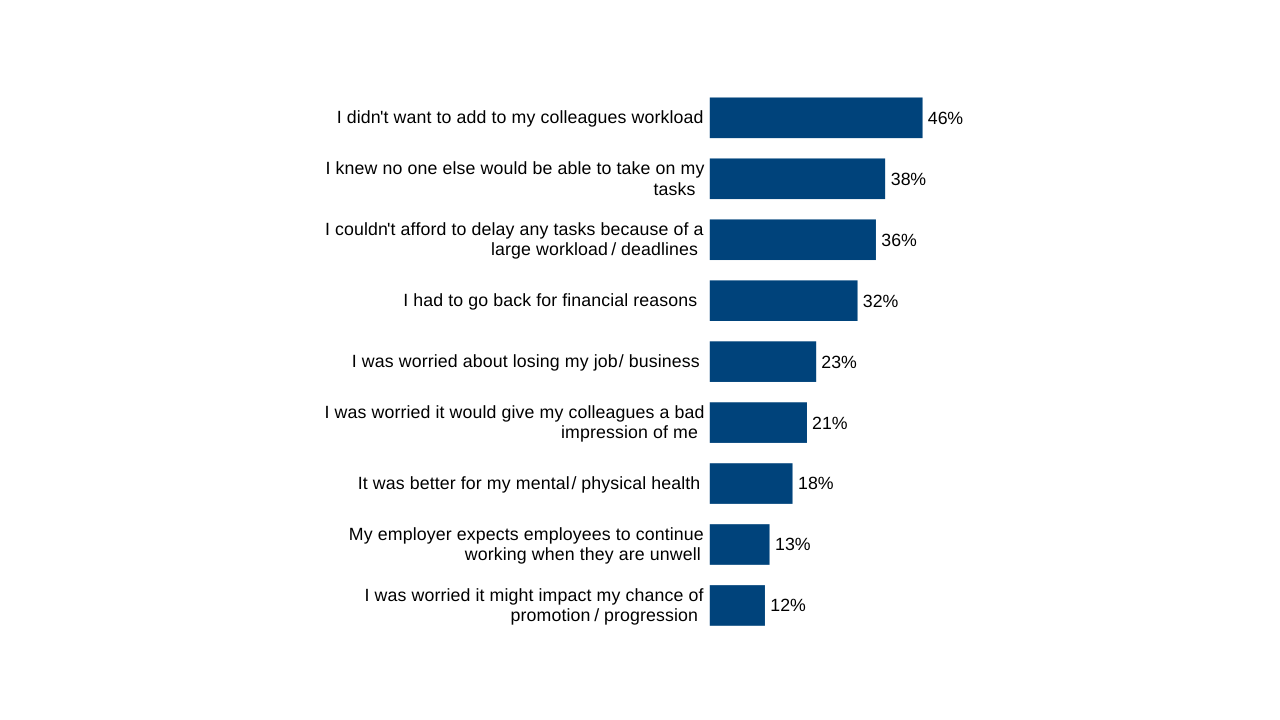
C3. Thinking about the most recent occasion when you worked (including working from home) while not feeling well enough to do so, which, if any, of the following reasons were factors in your decision to do so? Base: All workers in module 1 that worked when not well (n=1,252). Reasons selected by fewer than 5% not shown.
Sick pay – employees
Employee understanding of sick pay eligibility
Statutory Sick Pay (SSP) is available to all employees who earn an average of at least £125 per week and have been ill for more than 3 days in a row. Employers can (and many do) choose to provide a more generous rate of sick pay than SSP, often referred to as Occupational or Company Sick Pay (OSP)[footnote 29].
As shown in Figure 4.8, just under half of employees (48%) thought they would be eligible for OSP only, while around 1 in 5 (22%) thought they would be eligible for SSP only[footnote 30]. A smaller proportion (8%) thought they would receive OSP some of the time and SSP some of the time. A further 9% said they did not think they would be eligible for either SSP or OSP, while 13% were unsure what type of sick pay they would be eligible for during a sickness absence.
Figure 4.8 Types of sick pay employees thought they would be eligible for during a sickness absence of at least a week
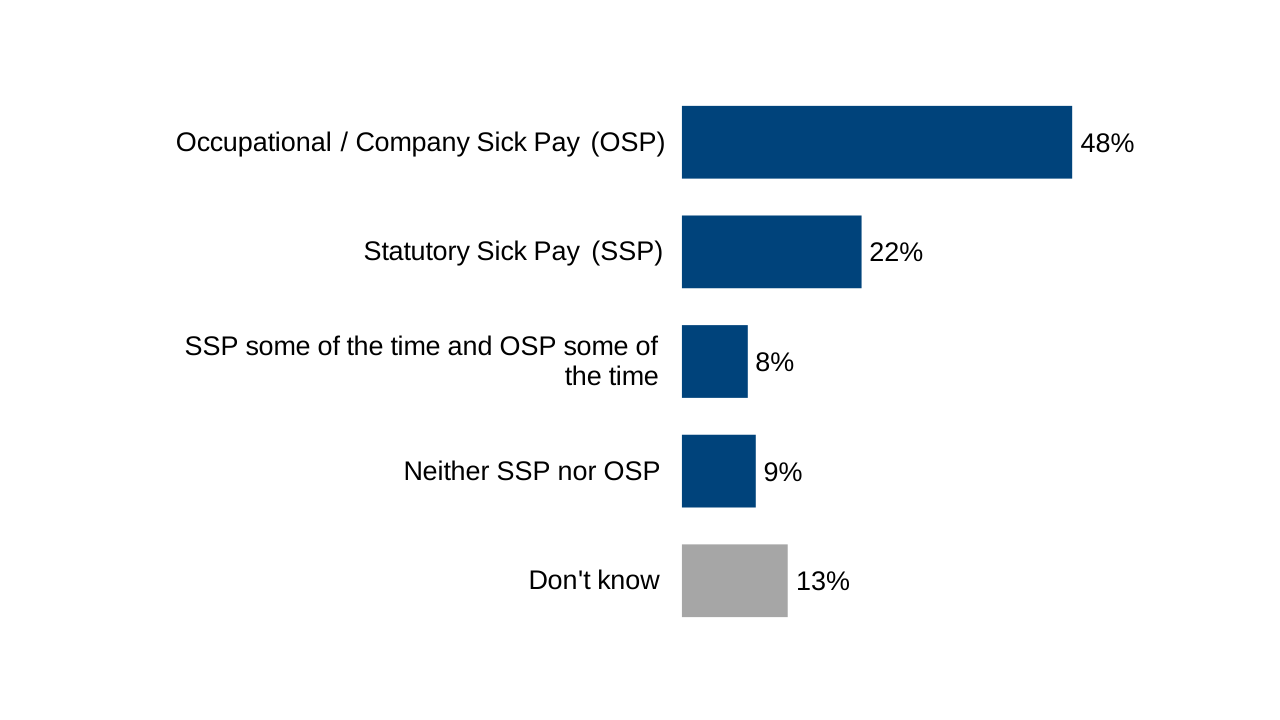
S10. Which of these types of sick pay, if any, would you receive during a sickness absence (of at least one week) at your current main place of work? Base: All employees (n= 3,763)
Groups most likely to think they would be eligible for OSP only (48% average) were:
- Higher paid employees earning £50,000 or more per year (75% vs. 23% earning less than £17,500 per year)
- Those at large employers with 250 or more staff (61% vs. 26% at smaller employers with 2 to 49 staff)
- Male employees (51% vs. 46% of female employees)
- White employees (50% vs. 31% of Black, Black British, African or Caribbean employees and 36% of Asian or Asian British employees)
Groups most likely to be report thinking they would be eligible for SSP only (22% average) were:
- Those at small employers with 2 to 49 staff (36% vs 16% at larger employers with 250 or more staff)
- Lower paid employees earning less than £30,000 per year (30% vs. 8% earning £50,000 per year or more)
- Private sector employees (28% vs. 13% in the public sector and 16% in the charity or voluntary sector)
Groups most likely to think they would be eligible for neither SSP nor OSP (9% average):
- Part-time employees (21% vs. 5% of full-time employees)
- The youngest employees aged 16 to 24 and the oldest employees aged 65 to 75 (21% and 24% respectively vs. 9% average)
- Those in labour-intensive (17%) and service-intensive (15%) occupations, compared with those in high-skill (5%) and middle-skill (6%) roles
Sick pay received
Employees who had taken a period of sickness absence were asked what type of sick pay they received during their longest continuous spell away from work in the past 12 months. As shown in Figure 4.9, three fifths (60%) reported receiving OSP only, while 1 in 10 (10%) said they received SSP only. A small proportion (4%) received OSP some of the time and SSP some of the time, while 17% reported receiving neither SSP nor OSP (this could be, for example, because they were off sick for less than 4 days in a row or earned less than £125 per week, making them ineligible for SSP). A further 9% said they did not know what type of sick pay they had received.
Figure 4.9 Type of sick pay received during longest continuous sickness absence in the past 12 months[footnote 31]
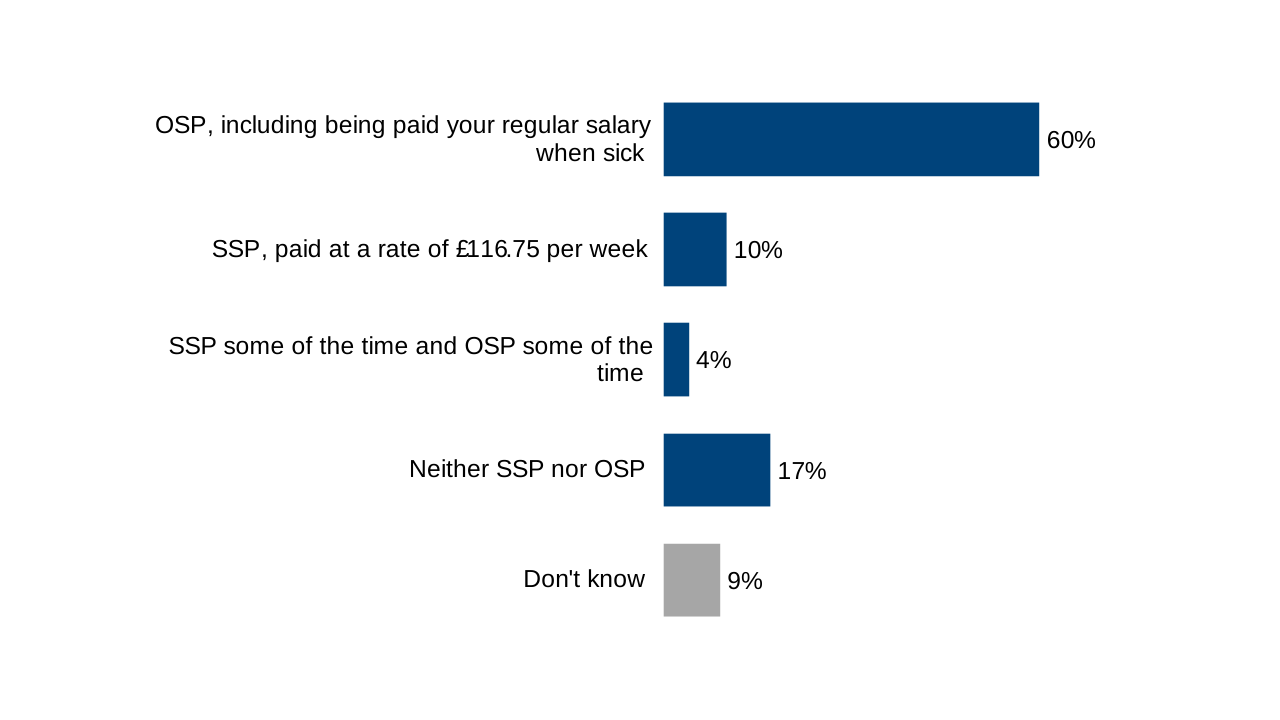
C10 Thinking about your longest continuous spell of sickness absence over the past 12 months, which of these types of sick pay did you receive, if any? Base: All employees in module 1 who had a sickness absence in the past 12 months (n=987).
The groups more likely to have received OSP or SSP, or more likely to have received neither, were broadly aligned with the groups outlined above when discussing eligibility for sick pay. Of note was the lack of a notable difference between male and female employees when looking at sick pay received, compared with when discussing sick pay eligibility.
Amount of sick pay received
Most employees receiving OSP at least some of the time during their sickness absence said they received it for the full period of their absence (92%). A small minority (4%) did not, while a similar proportion (3%) were unsure.
Part-time employees (84%) were less likely to receive OSP for their full sickness absence when compared with full-time employees (94%).
Among those who received OSP during their sickness absence, around three fifths (57%) were paid a fixed percentage of their salary. A further 5% received a percentage that decreased over the course of their absence, while 4% were paid a fixed sum per day. A sizeable proportion, around a third (34%), could not recall the exact arrangement.
Among those receiving a percentage of their salary, most (93%) received 100% of their salary during their sickness absence.
Reasons for not receiving Statutory or Occupational Sick pay
At the time of survey, employees were not entitled to SSP if they earned below the Lower Earnings Threshold (£125 per week). They also did not receive SSP for their sickness absence if it was less than 4 days in a row. When asked why they did not receive SSP nor OSP, 44% of employees that reported not receiving OSP or SSP when off sick said they were not entitled to sick pay, and 33% said they had not been off sick for long enough to qualify. The full list of reasons given can be found in Figure 4.10.
Figure 4.10 Main reasons for not receiving Statutory or Occupational Sick Pay during sickness absence
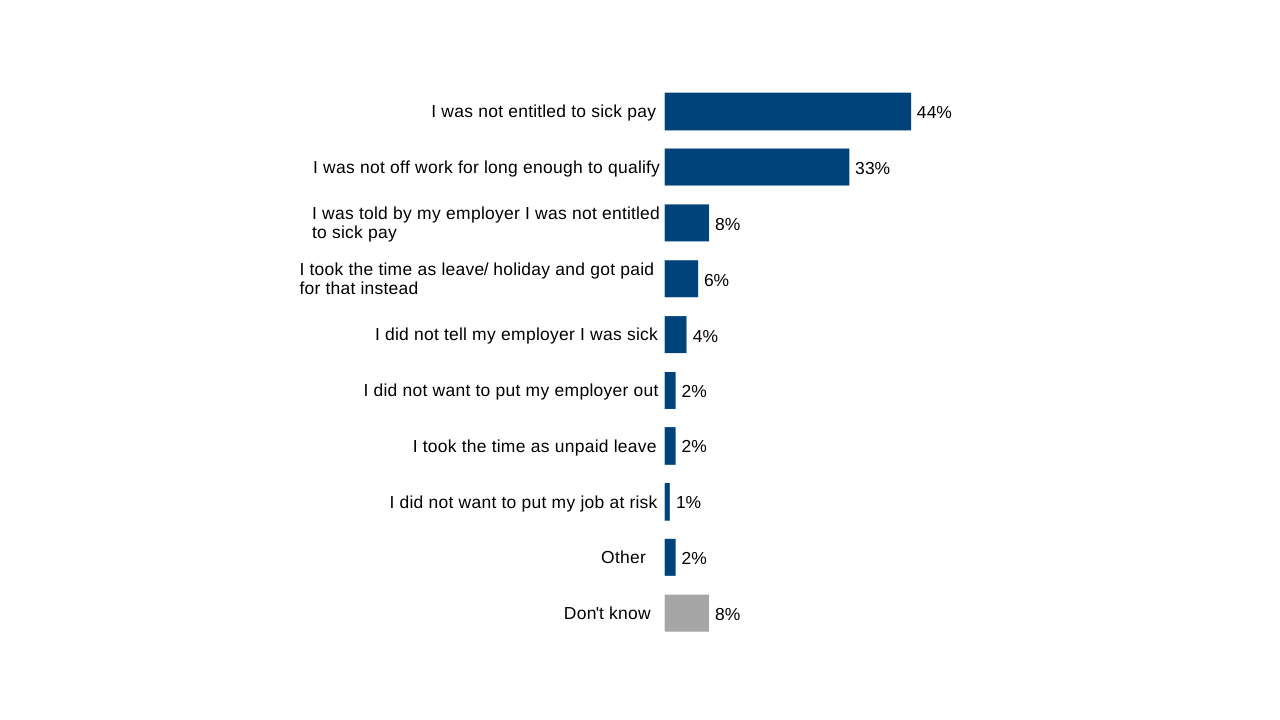
C12. What was the main reason(s) you did not receive either Statutory or Occupational/Company Sick Pay during your sickness absence? Base: Employees in module 1 that did not receive SSP or OSP during a sickness absence (n=148)
Sick pay – Self-employed workers
Among self-employed workers who had taken a period of sickness absence in the past 12 months or since becoming self-employed, around 4 in 5 (79%) reported not receiving any income during this period, as shown in Figure 4.11. A small proportion (7%) claimed income through private self-employment income protection insurance[footnote 32], while 5% received welfare benefits. Additionally, 5% reported receiving income from another source (e.g. their state pension) while 4% did not know.
Figure 4.11 Types of income self-employed workers received during longest continuous period of sickness absence in past 12 months
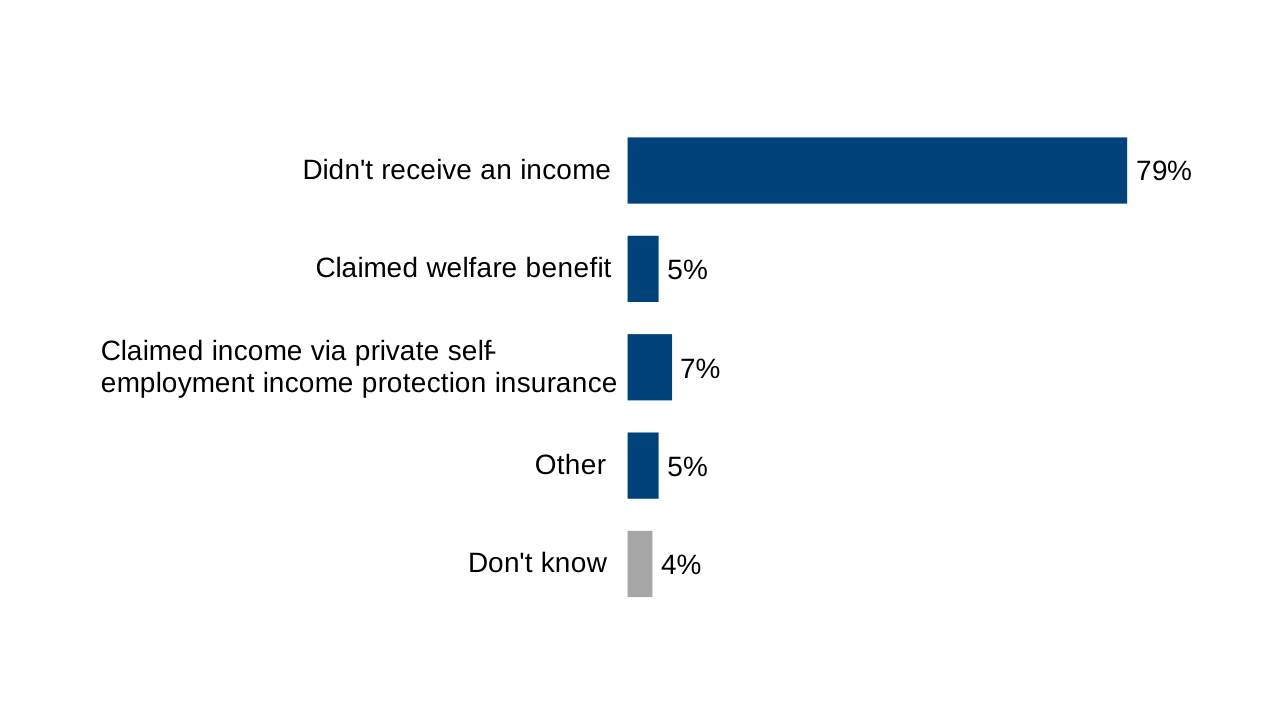
C20. Type of income received during a period of sickness absence. Base: Self-employed workers that had a sickness absence in the past 12 months (n=80).
Among self-employed workers who had not taken any sickness absence in the past 12 months, around three quarters (76%) said they would not receive any income during a period of sickness absence. A small proportion reported they could rely on personal savings (6%) or claim income via private self-employment income protection insurance (5%). A further 2% said they would claim welfare benefits, while 7% said they did not know or preferred not to say.
5. Fit notes
This chapter looks at what evidence employees were required to give during their sickness absence, and whether they received a fit note from a doctor or other healthcare professional. The chapter then goes on to explore whether employees that had a sickness absence had received a ‘may be fit for work’ note, how helpful the suggestions in this note were, and the extent to which they felt employers implemented the suggestions.
Key findings
- Just under 1 in 5 (18%) employees reported not being required to provide a fit note or other medical evidence during a sickness absence, while just over half (52%) were required to provide a fit note after day 7 of a sickness absence
- Among employees that had a sickness absence in the past 12 months, around a quarter (27%) had received a fit note from a doctor or other healthcare professional
- Among employees that had a sickness absence in the past 12 months, around 1 in 5 (18%) had, at some point in their working life, provided their employer with a fit note from a healthcare professional saying that they ‘may be fit for work’
- Among employees that had received a ‘may be fit for work’ note, around 7 in 10 (72%) stated that the suggestions provided were ‘helpful’ and 8 in 10 (80%) stated their employer implemented the suggestions to at least some extent
Evidence employees reported needing to provide during a sickness absence
Fit notes are statements of fitness for work which advises on whether someone ‘may be fit for work’ or ‘not fit for work’. They are usually issued by a GP or doctor, although they may also be issued by other types of healthcare professionals including nurses, occupational therapists, pharmacists, and physiotherapists. An employee can declare to their employer that they are unable to work for a period of up to 7 days (‘self-certification’). After day 7, their employer may require them to provide medical evidence, which can be in the form of a fit note.
As shown in Figure 5.1, among employees that had a sickness absence in the past 12 months, around half (52%) reported they were required to provide a fit note to their employer after day 7 of a sickness absence. Just under 1 in 5 (18%) employees reported not being required to provide a fit note or other medical evidence. Around 1 in 8 (12%) reported they were required to provide a fit note on day 7 or earlier. A sizeable proportion (15%) were unsure or preferred not to say whether they had to provide medical evidence during a sickness absence.
Figure 5.1 Evidence employees reported required by employer during a sickness absence
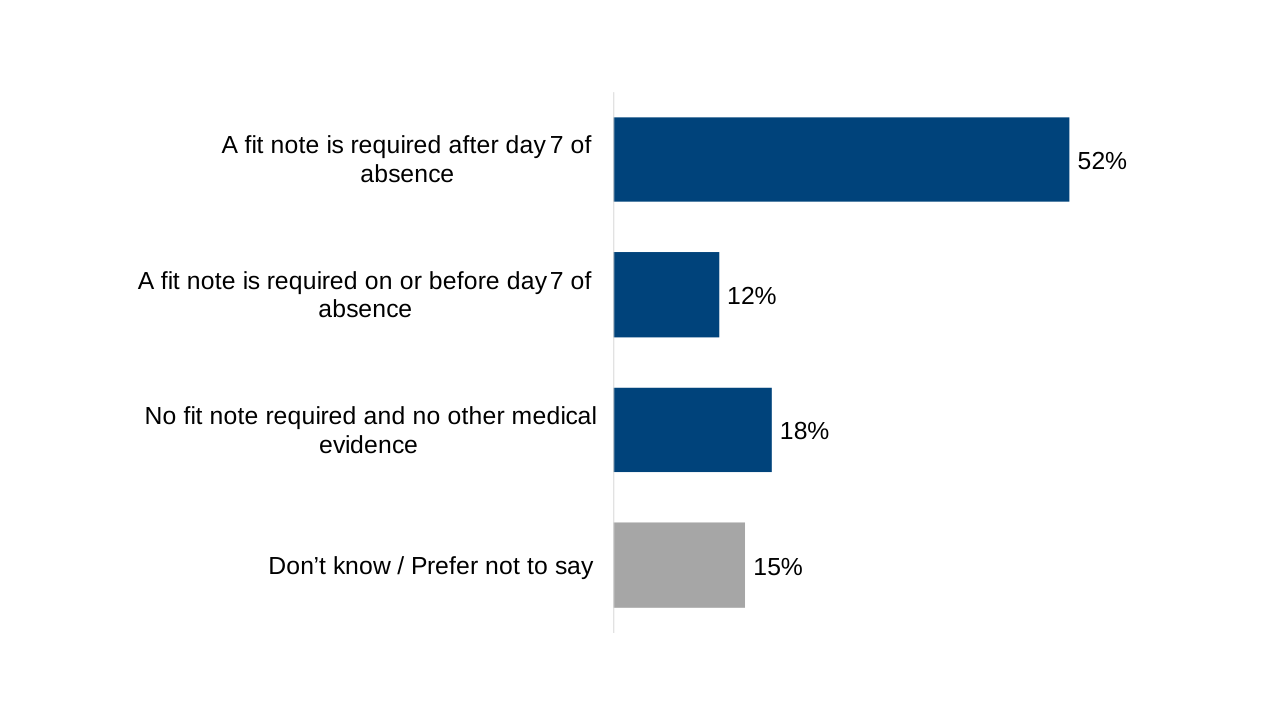
D1. What evidence of sickness, if any, are you currently required to provide to your employer during periods of sickness absence? Base: All employees that had a sickness absence in the past 12 months (module 1) (n=987). Response options with fewer than 4% not shown.
Of those who had a sickness absence in the past 12 months, groups more likely to report being required to provide a fit note after day 7 of a sickness absence (52% average) were:
- Employees working for public sector employers (65% vs. 46% of private sector employees)
- Employees of large organisations with 250 or more staff (60% vs. 39% of those working for smaller organisations with 2 to 49 staff)
- Female employees (58% vs. 46% of male employees)
As noted above, 18% of employees that had a sickness absence reported not being required to provide any medical evidence. Groups more likely to report not needing to provide any evidence at all were:
- Employees of smaller organisations with 2 to 49 staff (33% vs. 14% working for employers with more than 50 staff)
- The lowest paid employees earning less than £17,500 (28% vs. 18% average)
- Private sector employees (23% vs. 9% of those in the public sector)
- Male employees (23% vs. 15% of female employees)
- Those without a long-term health condition (23% vs. 13% of those with a long-term health condition)
Receiving a fit note
Among employees that had a sickness absence in the past 12 months, around a quarter (27%) had received a fit note from a doctor or other healthcare professional, as shown in Figure 5.2.
Figure 5.2 Whether they received a fit note from a doctor or other healthcare professional
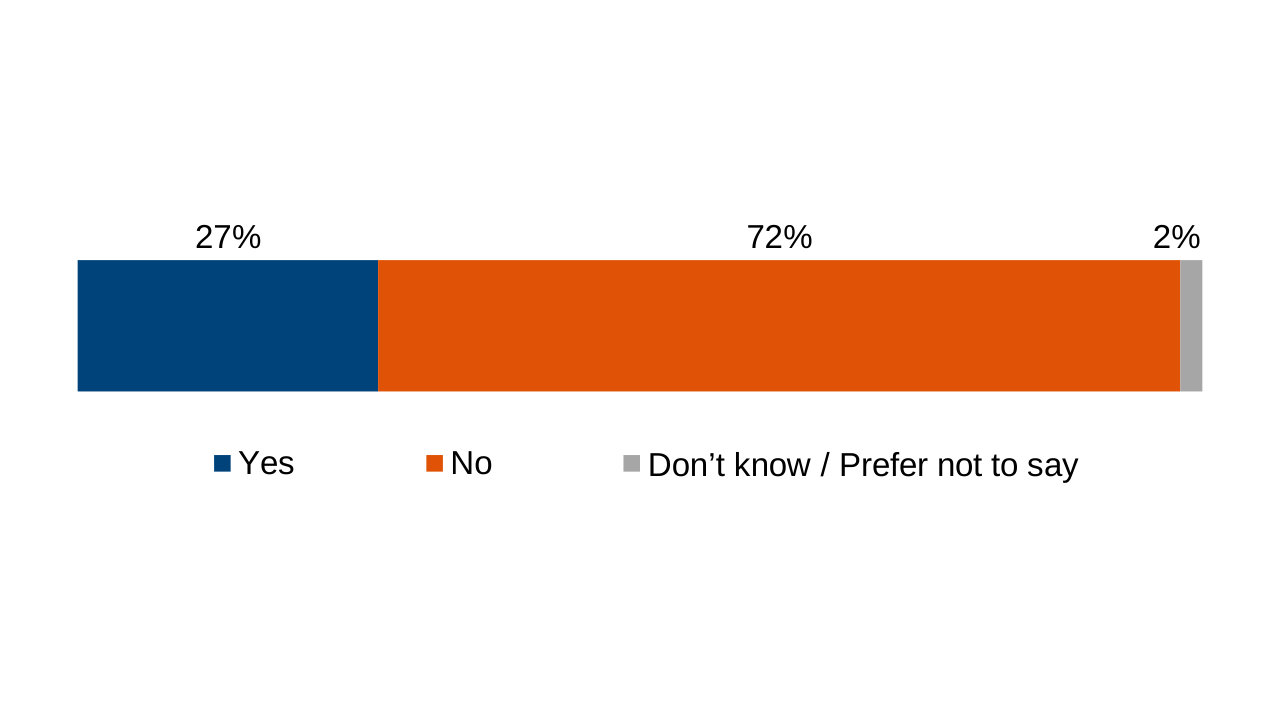
D2. In the last 12 months, have you received a fit note from a doctor or other healthcare professional? Base: All employees that had a sickness absence in the past 12 months (module 1) (n=987).
Of those who had a sickness absence in the past 12 months, groups more likely to have received a fit note from a doctor or healthcare professional (27% average) were:
- Employees with a long-term health condition (41% vs. 16% of those without)
- Employees living in the most deprived areas (40% vs. 16% in the least deprived areas)
- Lower earning employees (35% of those earning less than £17,500 vs. 18% of those earning £50,000 or more per year)
- Those in service-intensive occupations (34% vs. 21% of those in high-skill roles)
- Older employees aged 50 to 75 (33% vs. 22% of 16 to 34 year olds)
- Public sector employees (31% vs 24% in the private sector)
- Female employees (31% vs. 22% male)
- Employees of large organisations with 250 or more staff (30% vs. 17% of those at smaller employers with 2 to 49 staff)
Among employees that had received a fit note, 8 in 10 (80%) stated that a GP provided the most recent one, around 1 in 6 (16%) received their most recent one from another doctor or consultant, with only a small proportion of respondents having received their most recent fit note from a physiotherapist, nurse or occupational therapist (each 1%). No employees reported receiving their most recent fit note from a pharmacist.
‘May be fit for work’
Among employees that had a sickness absence in the past 12 months, close to 1 in 5 (18%) had provided their employer, at some point in their working life, with a fit note from a doctor or other healthcare professional saying that they ‘may be fit for work’. These fit notes suggested the employee could work if employers implemented advice on the specific adjustments or adaptations that would benefit the employee.
Suggestions
Among employees that had received a ‘may be fit for work’ note from a doctor or other healthcare professional, around three quarters (72%) stated that the suggestions provided were ‘helpful’ (either ‘very helpful’ or ‘fairly helpful’), as shown in Figure 5.3. Around 1 in 25 (4%) stated that the ‘may be fit for work’ note ‘did not contain suggested adjustments or adaptations’.
Figure 5.3 Helpfulness of suggestions in the ‘may be fit for work’ note
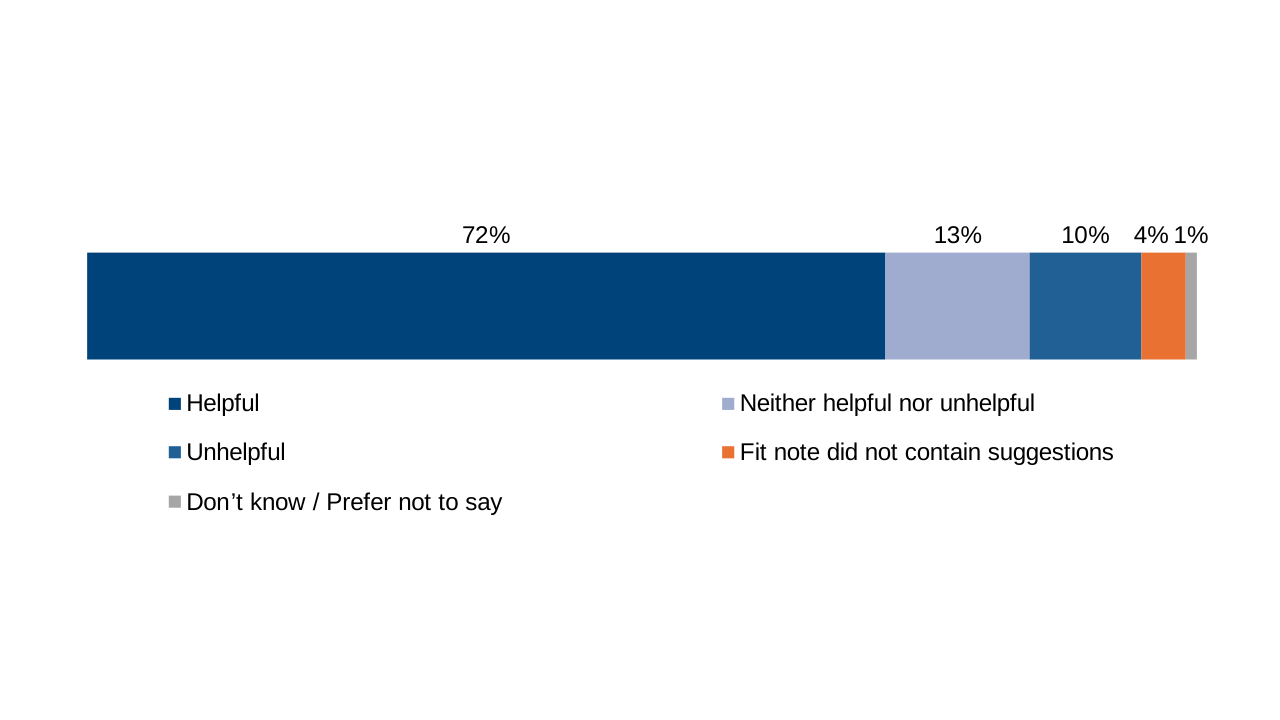
D5. How helpful were the suggestions provided in the most recent fit note saying you ‘may be fit for work’? Base: If employee that received a ‘may be fit for work note’ from a healthcare professional (module 1) (n=165).
Among the employees that had received a ‘may be fit for work’ note that contained suggestions, 8 in 10 (80%) stated their employer implemented the suggestions to at least some extent, as shown in Figure 5.4. Of these employees, half (50%) stated that their employer fully implemented the suggestions provided.
Figure 5.4 Extent to which employer implemented the suggestions provided by healthcare professionals
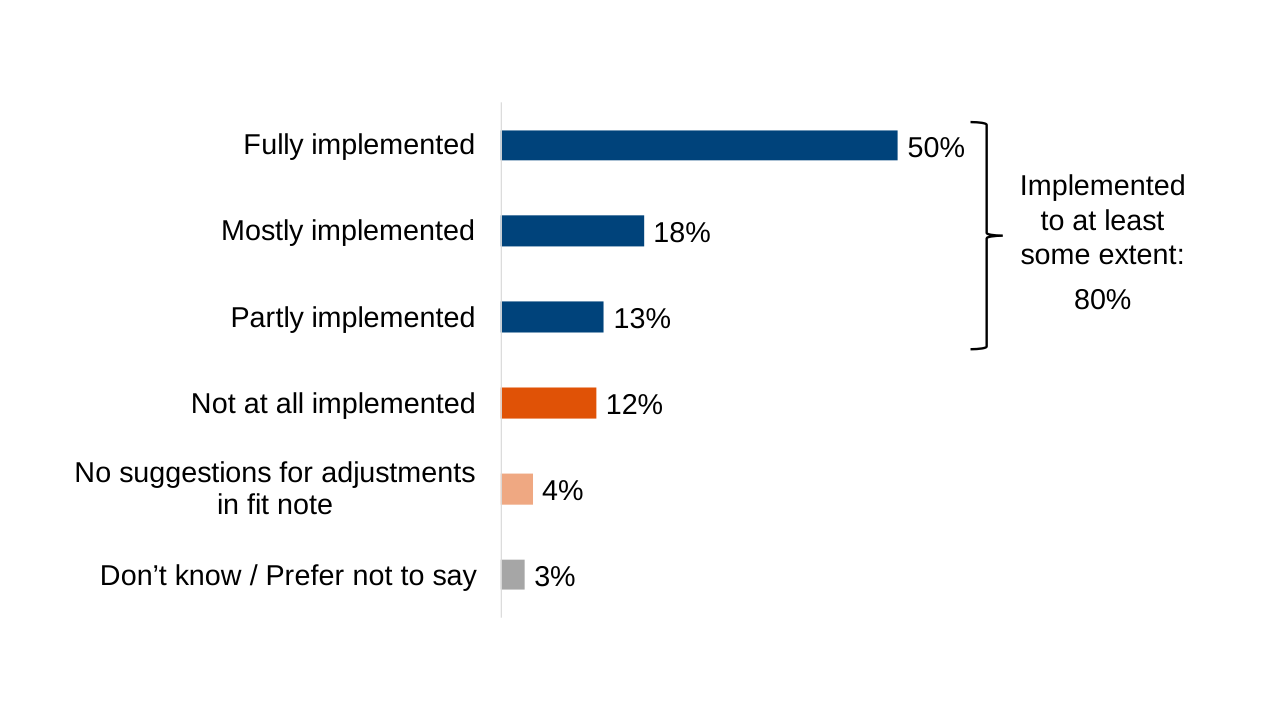
D8. To what extent did your employer implement the suggestions provided by the healthcare professional in your most recent fit note? (module 1) (n=153).
6. Returning to work
This chapter looks at the process by which those who had a period of long-term sickness absence in the past 12 months returned, or were planning to return, to work. It covers the reasons why workers returned to work, any meetings that employees had with their employer, adjustments made by employers to support employees’ returns to work, whether these adjustments supported a quicker return, and other people that employees spoke to about returning to work.
Key findings
- Of employees that had returned to work from the longest spell of sickness absence in the past 12 months and were currently working, most returned because they had recovered and felt ready to do so (74%)
- Among self-employed workers, around half (56%) returned to work because they felt they had recovered and were ready to return and a similar proportion (50%) returned due to financial reasons
- Among employees that had a long-term sickness absence and were either currently working or off sick, around three quarters (73%) had a meeting, or were planning on having a meeting, with their employer to discuss their return to work
- Those that had been provided support to return by their employer were split as to whether it had helped facilitate a quicker return (46% said yes and 47% no)
Reasons for returning from a sickness absence
Employees
Of employees that had returned to work from the longest spell of sickness absence in the past 12 months and were currently working, most returned because they had recovered and felt ready to do so (74%).
Around a fifth (20%) of employees returned to work due to financial reasons. Among all employees, around 1 in 5 (18%) returned because they knew no one would be able to take on their tasks. Further reasons why employees returned to work can be found in Figure 6.1.
Figure 6.1 Main reasons for returning to work for employees
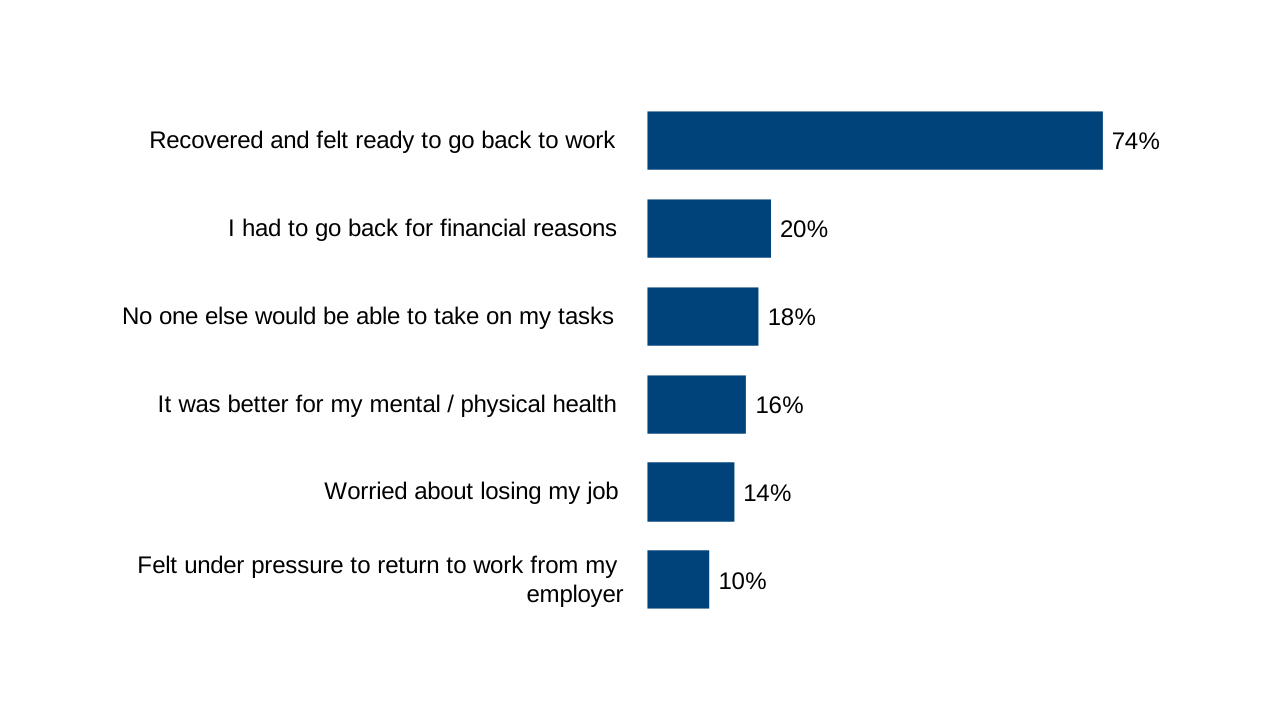
C17. Thinking about your longest spell of sickness absence over the past 12 months, which, if any, of the following reasons were factors in your decision to return to work? Base: All employees that had a sickness absence in the past 12 months and were currently working (module 1) (n=933). Response options selected by 9% or fewer not shown.
Self-employed workers
Among self-employed respondents that had returned to work from their longest spell of sickness absence in the past 12 months and were currently working, around half (56%) returned because they felt they had recovered and were ready to do so. Half (50%) said that they had to return to work due to financial reasons, while around a third (34%) returned to work as they knew no one would be able to take on their tasks. Further reasons why self-employed workers returned to work can be found in Figure 6.2.
Figure 6.2 Main reasons for returning to work among self-employed workers
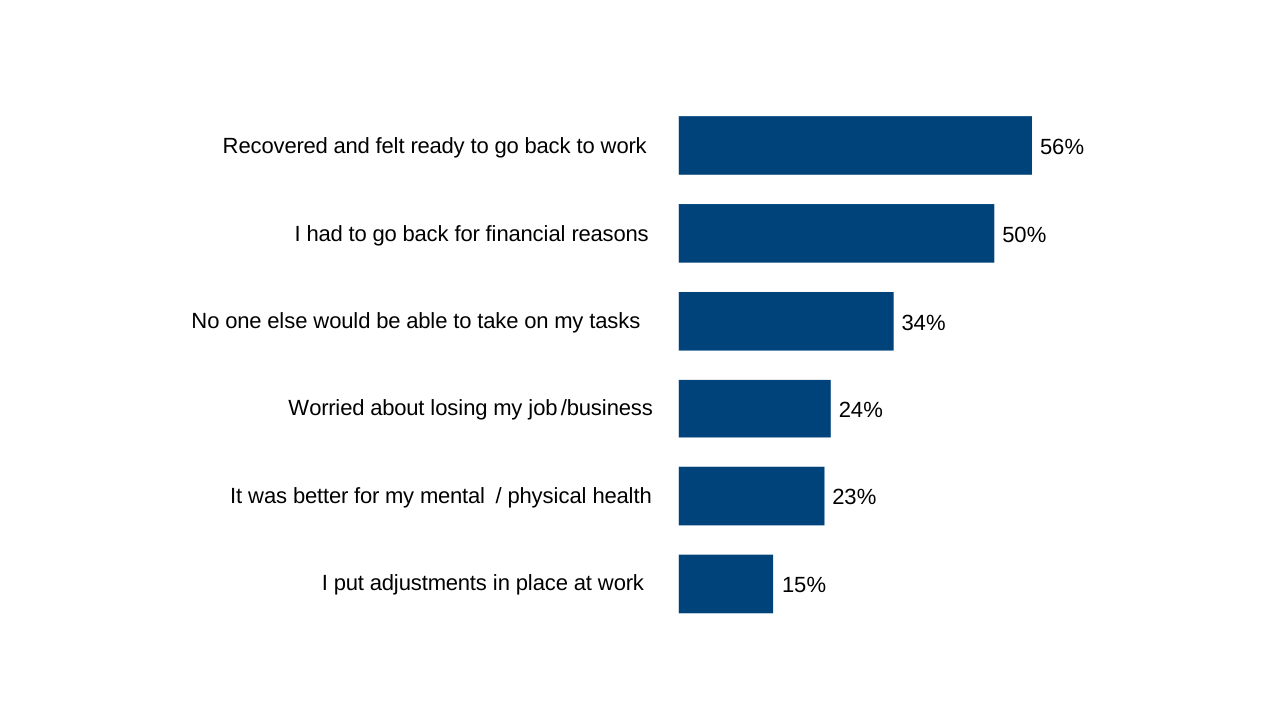
C21. Thinking about your longest spell of sickness absence over the past 12 months which if any, of the following reasons were factors in your decision to return to work? Base: Self-employed people that had a sickness absence in the past 12 months and were currently working (module 1) (n=74). Response options cited by 10% or fewer not shown.
Returning from a long-term sickness absence
Meetings with employer
Among employees that had taken a long-term sickness absence and were either currently working or off sick, around three quarters (73%) had a meeting, or were planning on having a meeting with their employer to discuss their return to work whilst on sickness absence.
Adjustments made by employer to support return
Among employees that had taken a long-term sickness absence and were either currently working or off sick, around half (47%) had discussed, or planned to discuss, putting a phased return to work plan into place with their employer. Around a quarter (24%) said that their employer had not made, or was not planning to make, any adjustments to support their return to work. A full breakdown of the adjustments made, or proposed, by employers to help employees return to work can be seen in Figure 6.3.
Figure 6.3 Adjustments put in place by employer to help return to work
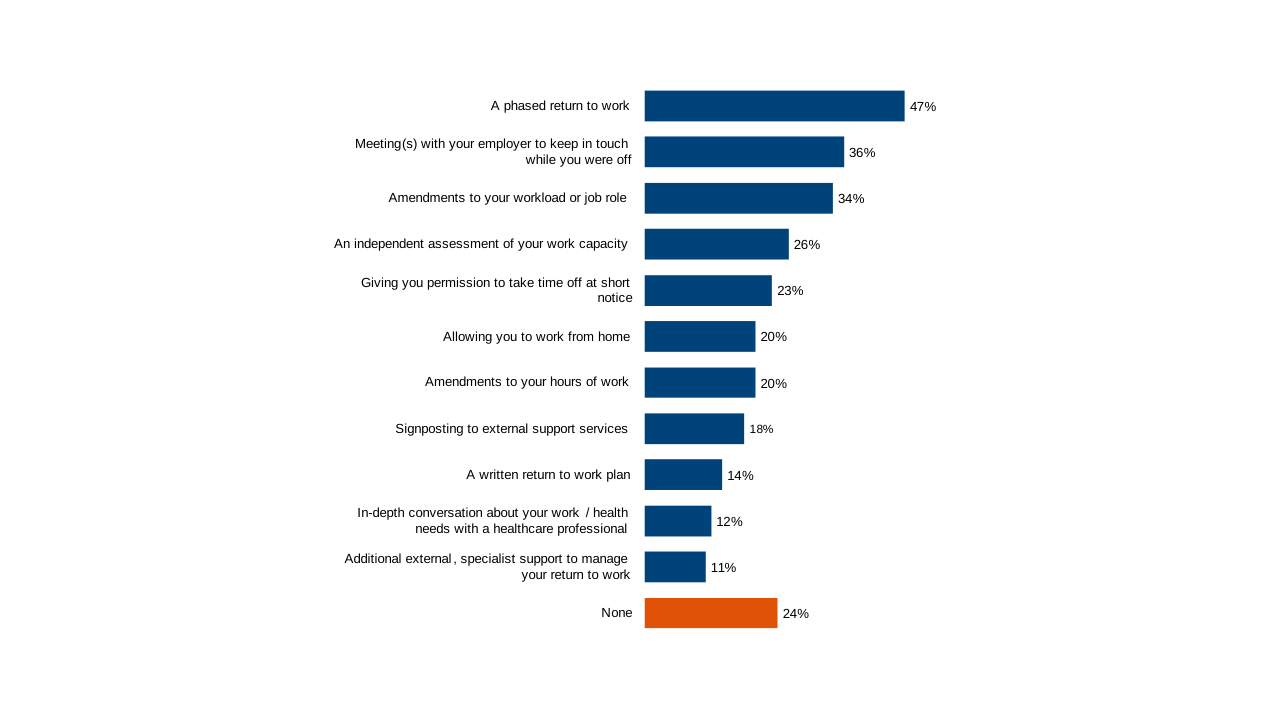
E2. Following your long-term sickness absence, did your employer put in place/has your employer discussed putting in place any of these things to help you return to work? Base: If employee that had a long-term sickness absence and or either currently working or off sick (module 1) (n=162). Response options cited by 10% or fewer not shown.
Whether adjustments supported a quicker return to work
Among employees that had been provided with any form of support by their employer, there was little difference between those that felt the support provided helped them return to work quicker than otherwise (46%), and those that felt it did not (47%).
Other people employees talked to about returning to work
Among employees that had taken a long-term sickness absence in the past 12 months and were either currently working or off sick, around four fifths (81%) had spoken to someone other than their employer about how they could be helped to return to work[footnote 33]. Around half (53%) stated they had spoken to, or planned to speak to, a doctor, nurse or other healthcare professional about how they could be helped to return to work, with a similar proportion (52%) having spoken to family or friends. Around 1 in 6 (18%) had not spoken to anyone else; this comprised 11% that had only spoken to their employer and 6% that had not spoken to anyone. A breakdown of the people workers had spoken to is presented in Figure 6.4.
Figure 6.4 Whether employees talked to someone other than their employer about how they could be helped to return to work
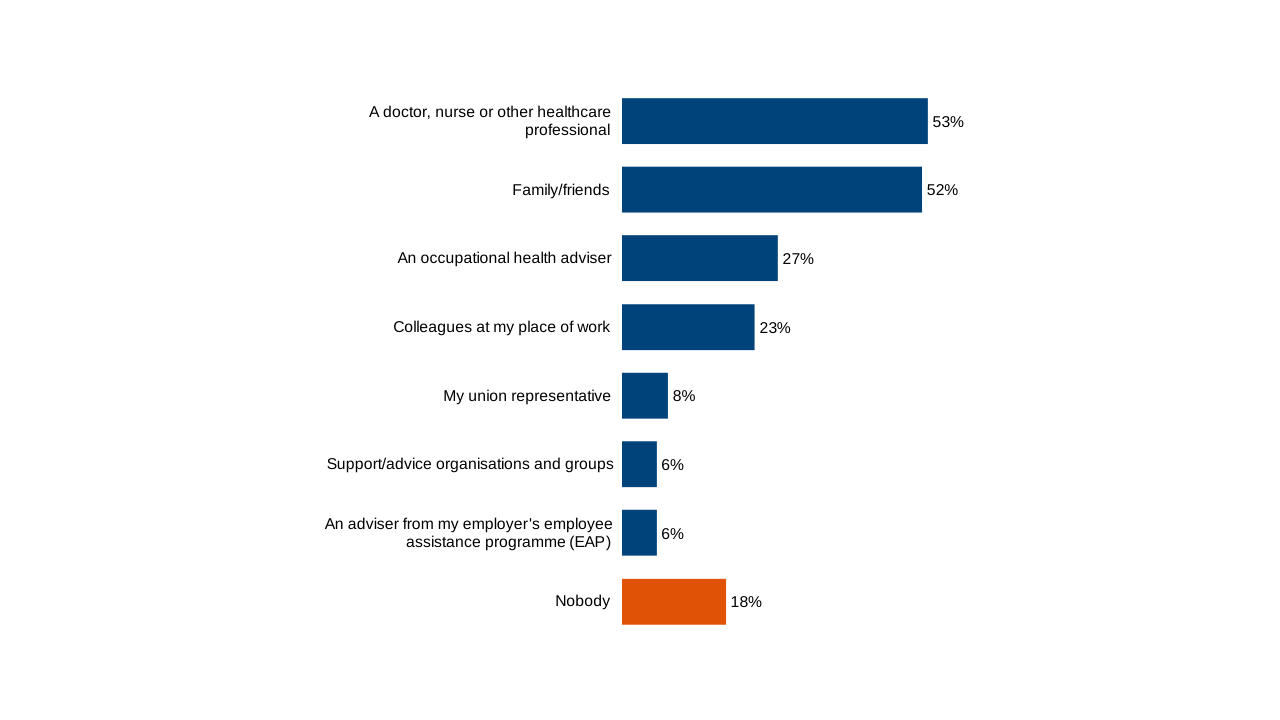
E5. Apart from your employer, who else have you talked to/will you talk to about how you could be helped to return to work? Base: If employee and had a long-term sickness absence and/or were either currently working or off sick (module 1) (n=162). Response options cited by 5% or fewer not shown.
7. Occupational health
This chapter looks at the awareness of Occupational Health (OH) services that employees had, and whether there was an appetite for these services. This chapter also considers employees’ likelihood of agreeing to an OH assessment if offered. The chapter then goes on to assess the access workers had to OH services. The chapter then explores workers’ usage of OH services in the past 12 months, and the advice and outcomes of workers’ most recent OH assessments.
Key findings
- Among all workers, three quarters (75%) had heard about OH Services, including 24% that were aware and knew a lot, 33% that were aware with a little knowledge, and 18% who were aware but had no knowledge
- Among employees, around 8 in 10 (83%) reported they would be ‘likely’ to agree to a voluntary OH assessment if offered by their employer while they were unwell or on sick leave
- Half of all workers (52%) said OH services were available to them in their current role. Employees were more likely to have access to OH services when compared with self-employed workers (59% vs. 9%)
- Three in ten workers (30%) that had OH services available to them had used OH services in the past 12 months, equivalent to 16% of all workers
- Among workers that had an OH assessment in the last 12 months and were given advice, around 8 in 10 (79%) reported they had followed the advice to at least some extent
- Among employees that had an OH assessment, two thirds (67%) stated that their employer followed the advice given to them to at least some extent
Awareness
Among all workers, three quarters (75%) had heard about OH Services, as shown in Figure 7.1. This comprised 24% that were aware and knew a lot, 33% that were aware with a little knowledge, and 18% who were aware but had no knowledge of OH services.
Figure 7.1 Awareness of OH services
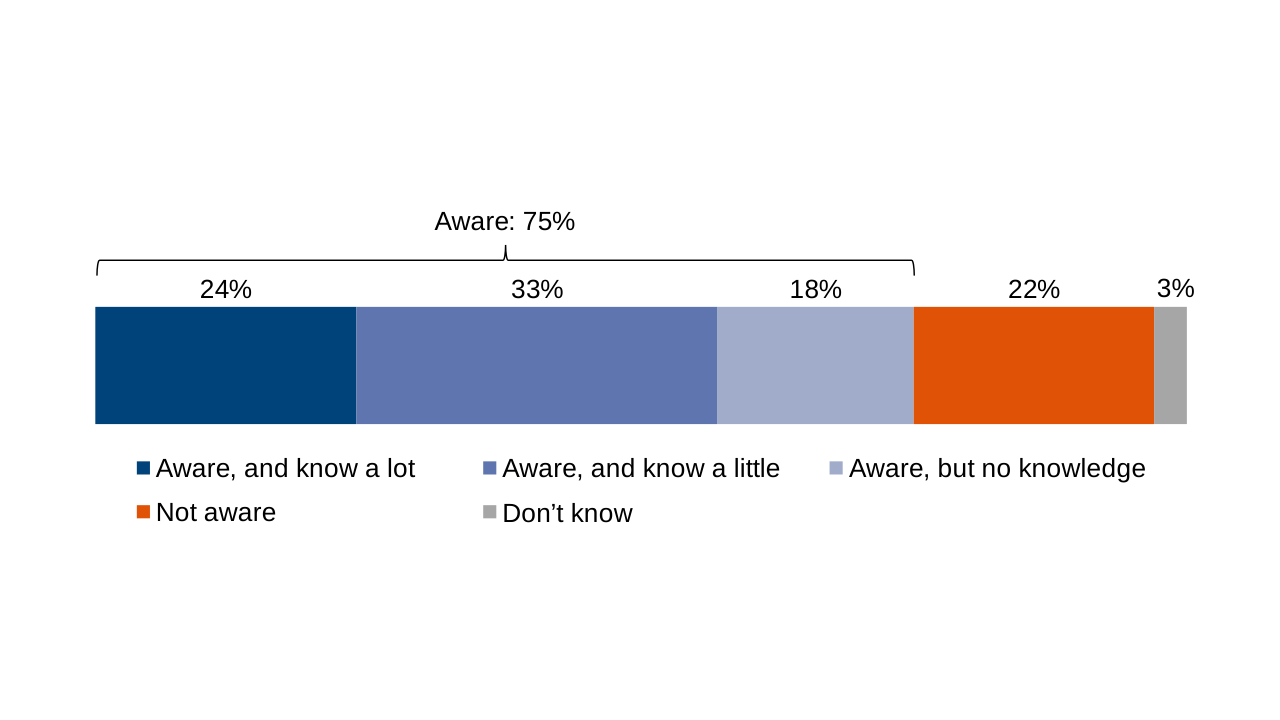
F2. Have you heard of OH services and, if so, how much do you know about them? Base: All workers (module 1) (n=2,153).
Groups more likely to have heard about OH services (75% average) were:
- Public sector (90%) and charity or voluntary sector (87%) employees, compared with 70% in the private sector
- Higher earning employees earning £50,000 per year or more (85% vs. 69% of those earning less than £17,500 per year)
- Employees in Administrative and Secretarial occupations (85%) and Professionals (82%), compared with 63% in Skilled Trades and 63% in Elementary occupations
- Employees at larger organisations with 250 or more staff (84% vs. 63% of those at smaller organisations with 2 to 49 staff)
- Older workers aged 50 to 75 (82% vs. 65% aged 16 to 34)
- Female workers (80% vs. 70% of male workers)
- Workers living in the least deprived areas (79% vs. 69% in the most deprived areas)
- White workers (77% vs. 59% of Asian or Asian British workers)
Self-employed workers were notably less likely to be aware of OH services when compared with employees (58% vs. 77%).
Appetite for OH services
As shown in Figure 7.2, around 8 in 10 (83%) employees said they would be likely to agree to a voluntary OH assessment if offered by their employer while they were unwell or on sick leave, with around 1 in 10 (11%) saying they would be unlikely to do so.
Figure 7.2 Likelihood of agreeing to an OH assessment from their employer
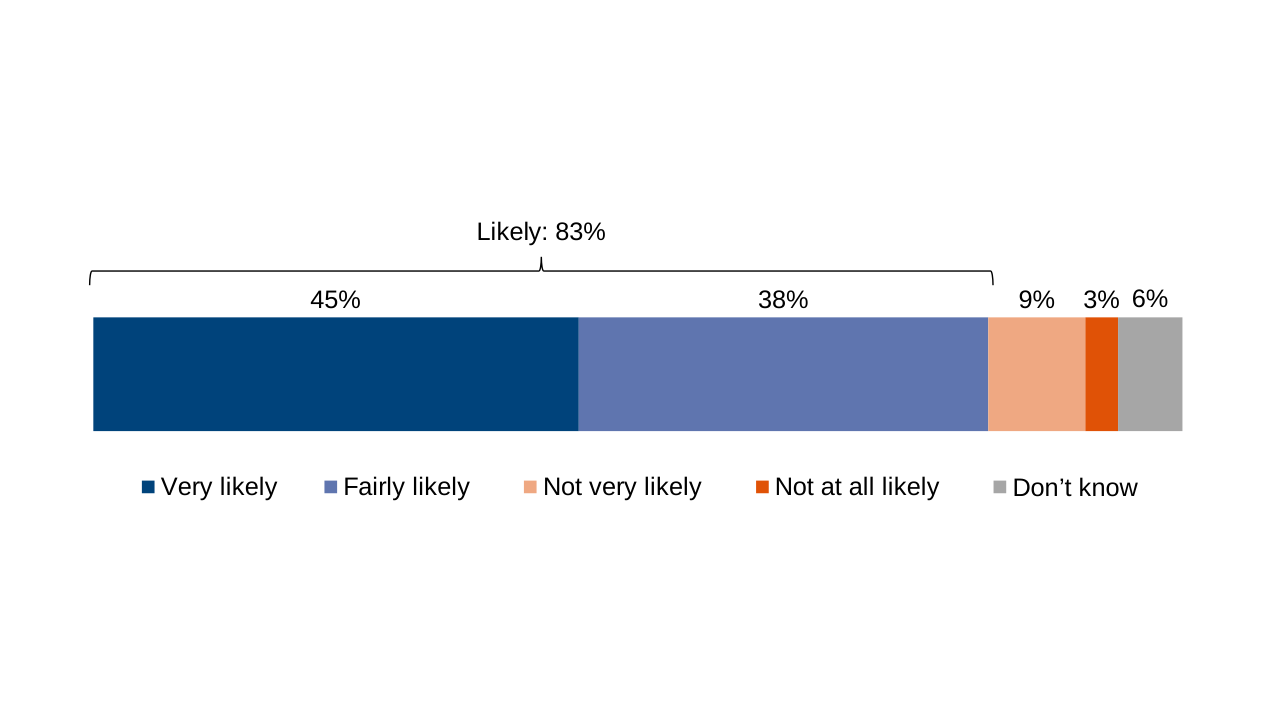
F3. If you were unwell at work or on sick leave, and your employer offered you a voluntary Occupational Health assessment, how likely would you be to agree to this? Base: All employees (module 1) (n=1,949).
Groups more likely to say they would likely agree to a voluntary OH assessment (83% average) were:
- Higher earners (£50,000 or more per year) (90% vs. 80% of lower earners on less than £17,500 per year)
- Public sector employees (89% vs. 80% in the private sector)
- Employees of large organisations (250 or more staff) (88% vs. 75% at smaller employers with 2 to 49 staff)
- Those employed in high-skill occupations (87% vs. 81% in middle-skill roles, 79% in service-intensive occupations and 76% in labour-intensive roles)
- Those aged 50 to 75 (86% vs. 79% of those aged 16 to 34)
Among employees that would be unlikely to agree to a voluntary OH assessment from their employer, around a third (36%) stated it was because they would prefer to go to someone else for advice, such as a GP. This was followed by 29% saying that they did not think that OH could help them. Other reasons cited can be seen in Figure 7.3.
Figure 7.3 Reasons for being unlikely to agree to a voluntary OH assessment
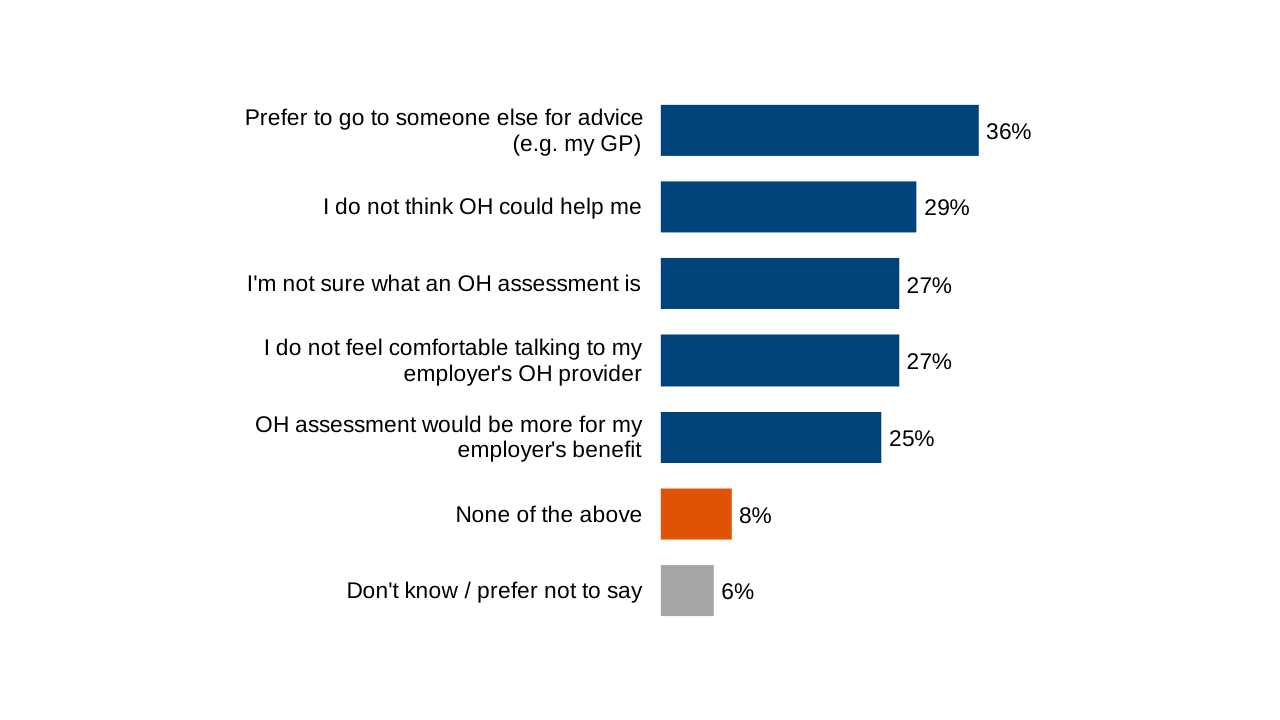
F4. Why would you be unlikely to agree to a voluntary Occupational Health assessment from your employer? Base: Employees that stated they were unlikely to take up an OH assessment (module 1) (n=206). Options cited by fewer than 10% not shown.
Access to OH services
Among all workers, around half (52%) stated they had OH services available to them in their current job or self-employed role, as shown in Figure 7.4. Around 1 in 5 (21%) did not, while a notable proportion (27%) were unsure.
Figure 7.4 Access to OH services in current role
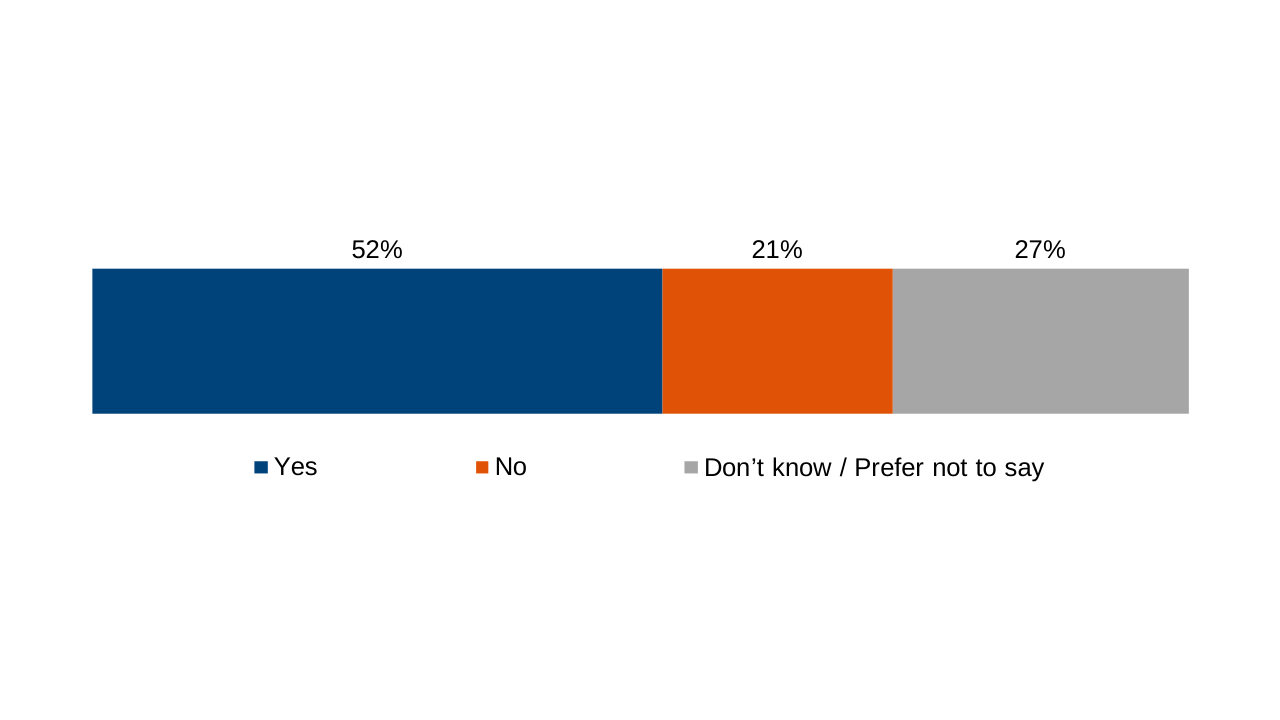
F5. Are Occupational Health services available to you through your current job / self-employed role? Base: All workers (module 1) (n=2,153).
Groups more likely to report that they had OH services available to them (52% average) were:
- Public sector employees (81% vs. 48% in the private sector and 57% in the charity or voluntary sector)
- Higher earners on £50,000 or more per year (76% vs. 40% of those earning less than £17,500 per year)
- Those employed by large employers with 250 or more staff (76% vs. just 23% at small employers with 2 to 49 staff)
- Full-time employees (63% vs. 45% of part-time employees)
- Employees (59% vs. 9% of self-employed workers)
- Workers aged 35 to 64 (56% vs. 46% of younger workers aged 16 to 34 and the oldest workers aged 65 to 75 (39%))
Asian or Asian British workers were notably less likely to say they had access to OH services (40% vs. 52% average), as were those in labour-intensive occupations (36%).
Among self-employed workers who did not have access to OH services, around 3 in 10 (28%) stated it was due to them not being familiar with what OH services could provide, while a quarter (25%) stated it was because they were not sure how to go about getting access to OH services. Other reasons cited can be seen in Figure 7.5.
Figure 7.5 Reasons for self-employed workers not having access to OH services
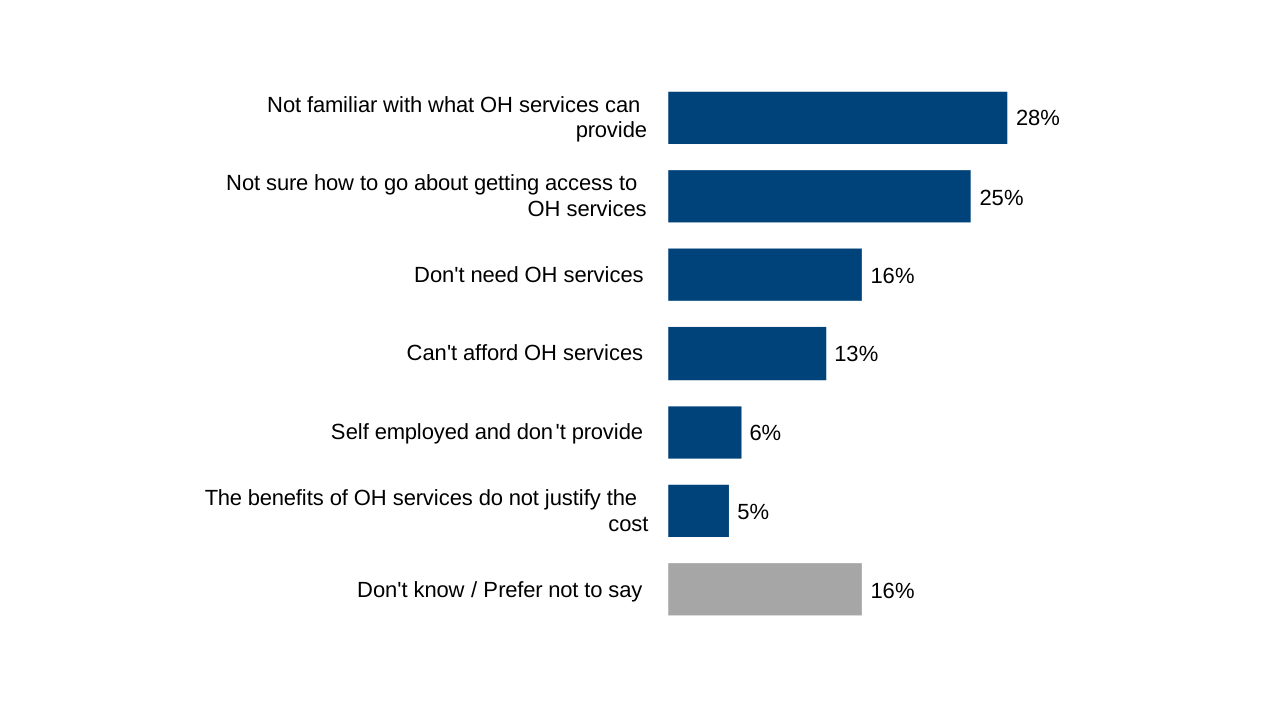
F6. Why don’t you have access to Occupational Health services at work? Base: Self-employed without access to OH services (module 1) (n=124). Response options cited by fewer than 5% not shown.
Usage of OH services
Among workers with OH services available to them, 3 in 10 (30%) had used OH services in the last 12 months (equivalent to just 16% of all workers). Around 1 in 10 (12%) had received an assessment and advice from an OH professional about managing their health at work, with a similar proportion (11%) having had a workplace or risk assessment. Two thirds (66%) had not used any of the OH services available to them in the last 12 months. Other types of OH services used in the past 12 months can be seen in Figure 7.6.
Figure 7.6 Types of OH services used by workers in the past 12 months
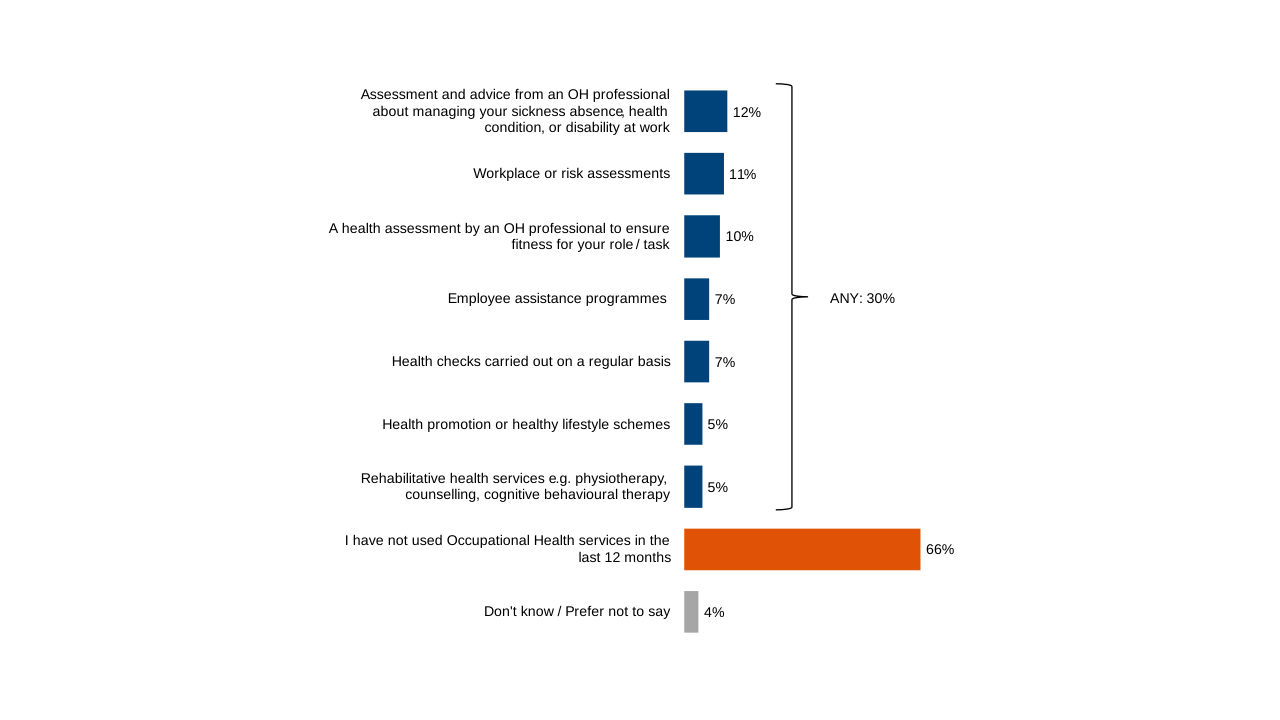
F7. In the last 12 months, have you used Occupational Health services for any of the following…? Base: Workers that had OH services available to them (module 1) (n=1,192). Response options cited by fewer than 5% not shown.
Among workers with OH services available to them, the groups more likely to have used any OH service in the past 12 months (30% average) were:
- Workers with a mental or physical long-term health condition (46% and 40% respectively vs. 30% average)
- Those in the most or more deprived areas (35% vs. 25% in the least or less deprived areas)
- Employees at large organisations with 250 or more staff (32% vs. 20% at smaller employers with 2 to 49 staff)
Recent assessments
Among workers that had an OH assessment in the last 12 months, around 8 in 10 (79%) followed the advice given to them to some extent; this comprised of 51% that fully followed the advice, 22% that mostly followed it, and 7% that partly followed it. Just 2% did not follow the advice at all. Around 1 in 7 (15%) had not been given any advice at all in their most recent OH assessment. This breakdown can be seen in Figure 7.7.
Figure 7.7 Whether the worker followed advice given in the OH assessment
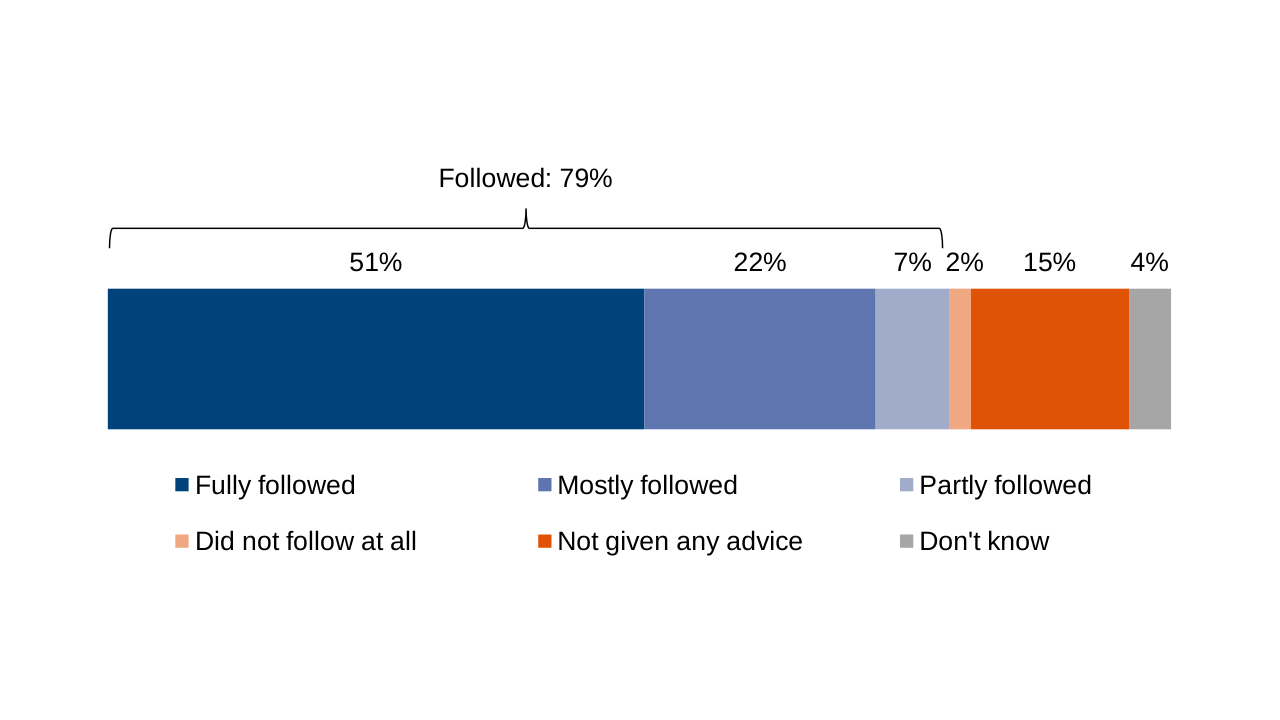
F8. Were you personally given any advice in your most recent Occupational Health assessment, and to what extent did you follow it? Were you given advice that you…. Base: Workers that had an OH assessment (module 1) (n=180).
Among employees that had an OH assessment, around two thirds (67%) stated that their employers followed the advice given to them in their most recent OH assessment. This comprised of 31% that reported their employer fully followed the advice, 24% that reported they mostly followed it and 12% that reported they partly followed it. Around 1 in 10 (9%) reported their employer did not follow the advice at all. A breakdown of the extent to which employers followed the advice can be seen in Figure 7.8.
Figure 7.8 Whether employee reported employer followed the advice given in the OH assessment
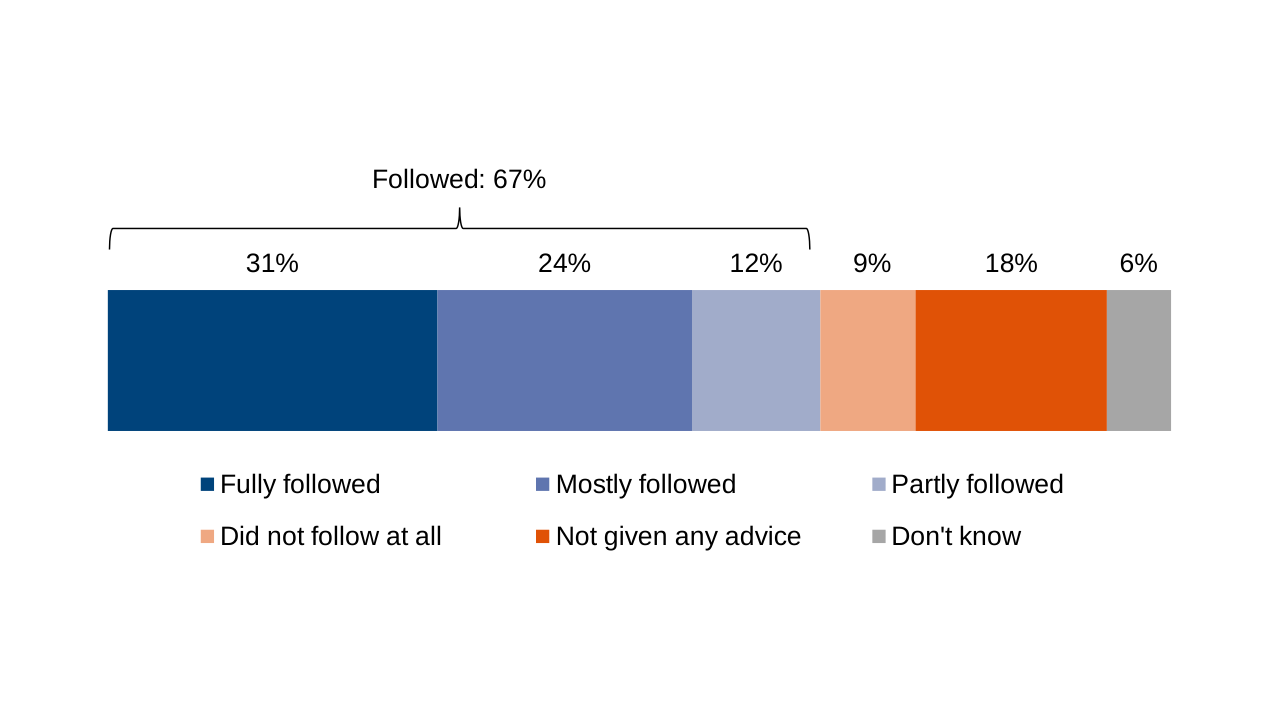
F9. Was your employer provided with any advice in your most recent Occupational Health assessment and to what extent did they follow it? Was your employer advised to make changes and they… Base: Employees that had an OH assessment (module 1) (n=179).
Among workers that had an OH assessment and actions recommended to them, around half reported workplace adaptations (47%) or a phased return to work (45%) were recommended to them. This was followed by around a third of workers (36%) reporting they had had amended duties recommended to them as an action. Other actions recommended can be seen in Figure 7.9.
Figure 7.9 Actions recommended by the OH adviser
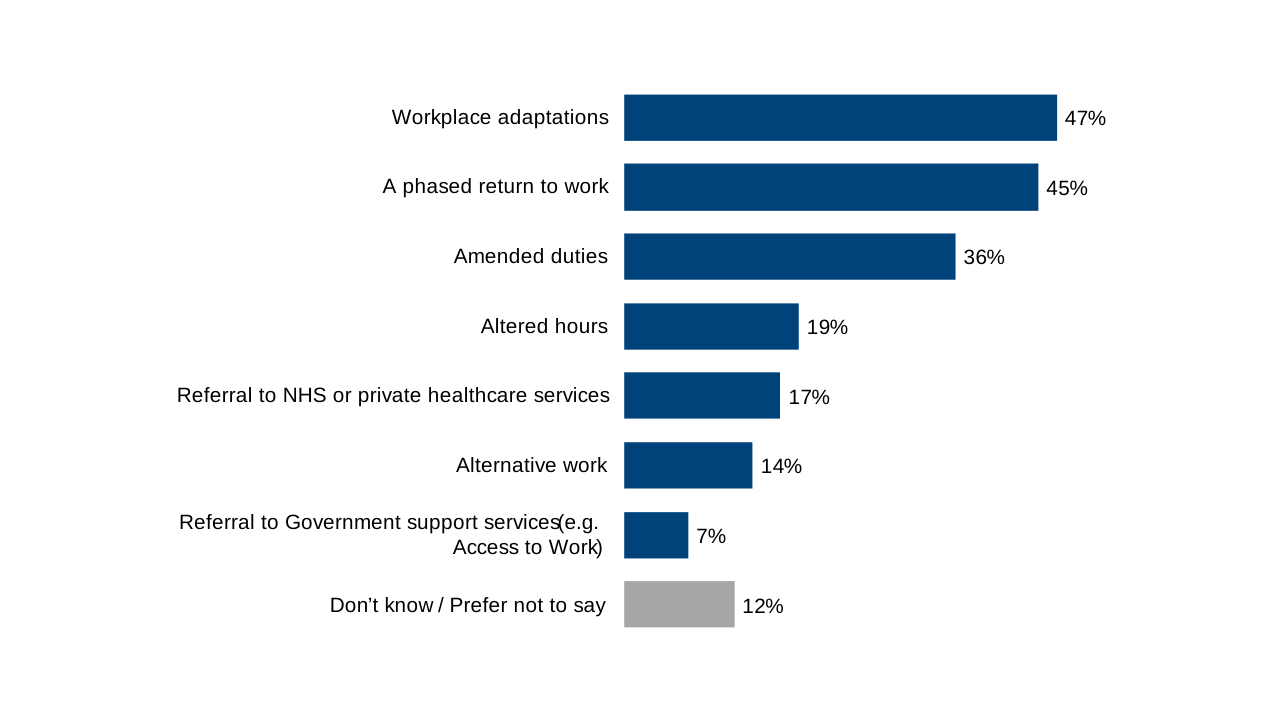
F10. What actions did the Occupational Health adviser recommend in your most recent Occupational Health assessment? Base: Workers that had an OH assessment and actions recommended (module 1) (n=157). Response options cited by fewer than 5% not shown.
8. Adjustments and Access to Work
This chapter covers the ways in which employees may be supported by their employers to manage long-term health conditions at work and identifies further adjustments some respondents would find helpful. It also includes the workplace adjustments self-employed workers have made. Awareness and take up of the Access to Work scheme follows at the end of the chapter.
Key findings
- Over two thirds (69%) of employees with a long-term health condition had some form of support or adjustment at work to help manage their health condition. The likelihood of some adjustments, such as being able to work from home or an external employee assistance programme, varies by earnings, occupation and role, as well as by employer type and size
- Over four fifths (83%) of employees with adjustments found them helpful, however, most employees (59%) with long-term health conditions who had told their employer about their condition would like their employer to provide more adjustments or support
- Permission for time-off at short notice was the adjustment most commonly in place (44%), and most commonly desired (24%) by employees with a long-term health condition. Meetings with employers to talk about managing health conditions at work was the second most commonly cited adjustment in place (34%), and the third most commonly desired (22%)
- Over a third (35%) of employees who had told their employer about their long-term health condition, and wanted additional adjustments, thought their request would be refused; 9% reported this had actually happened. A quarter (24%) of those that had adjustments in place had found the process difficult
- A quarter of workers with a long-term health condition (24%) were aware they could get support through the Access to Work scheme, and 4% had undergone an Access to Work holistic assessment or received an Access to Work grant
Employer support with managing health conditions at work
Discussion of health conditions with employers
In order for employers to make adjustments to better accommodate their employees’ health conditions, it is helpful for employees to disclose their health conditions and have discussions with their employer about their support needs at work. Around 6 in 10 employees (58%) who had long-term health conditions had discussed (or were in the process of discussing) their health condition with their employer. Those more impacted by their health conditions were more likely to have discussed them with their employer.
Younger employees aged 16 to 34 with a long-term health condition were more likely to have discussed their health conditions with employers (69% vs. 56% of those aged 35 to 49 and 49% of those aged 50 to 75).
Logistic regression
A logistic regression was conducted, focusing on employees with a long-term health condition who were working at the time of the survey. The regression’s aim was to further understand the association of particular variables with the likelihood of an employee having discussed their health condition or disability with their current employer[footnote 34].
In order of positive AMEs, the below describes statistically significant findings at the 95% confidence level when looking at whether employees with a health condition had discussed their condition with their current employer[footnote 35]:
- Employees with a long-term health condition whose condition affects the amount or type of work they are able to do to a great deal, compared with those whose condition does not affect their work at all
- The average probability of employees with a long-term health condition having discussed their health condition or disability with their current employer among those whose condition does not affect their work at all was 42.3%
- The average probability of employees with a long-term health condition having discussed their health condition or disability with their current employer among those whose condition affects their work a great deal was 73.8%
- Therefore, holding the other variables included in the model at their observed levels, on average, having a long-term health condition which affects the work someone can do a great deal increased the probability of employees with a health condition having discussed their condition with their current employer by 31.5 percentage points, when compared with having a long-term health condition which does not affect the work someone can do at all
In order of negative AMEs, the below describes statistically significant findings at the 95% confidence level when looking at whether employees with a long-term health condition had discussed their health condition with their current employer:
- Employees working in labour-intensive occupations, compared with those working in high-skill occupations
- The average probability of employees with a long-term health condition having discussed their health condition with their current employer among those working in a high-skill occupations was 60.3%
- The average probability of employees with a long-term health condition having discussed their health condition with their current employer among those working in labour-intensive occupations was 36.3%
- Therefore, holding the other variables included in the model at their observed levels, on average, working in a labour-intensive occupation decreased the probability of employees with a health condition having discussed their condition with their current employer by 24.0 percentage points when compared with working in a high-skill occupation
- Employees aged 50 to 75, compared with those aged 16 to 34
- The average probability of employees with a long-term health condition having discussed their health condition with their current employer among employees aged 16 to 34 was 70.6%
- The average probability of employees with a long-term health condition having discussed their health condition with their current employer among employees aged 50 to 75 was 50.2%
- Therefore, holding the other variables included in the model at their observed levels, on average, being 50 to 75 decreased the probability of employees with a health condition having discussed their condition with their current employer by 20.3 percentage points when compared with being 16 to 34
- Employees without a long-term cognitive health condition, compared with those with a long-term cognitive health condition
- The average probability of employees with a long-term health condition having discussed their health condition with their current employer among employees with a cognitive health condition was 71.4%
- The average probability of employees with a long-term health condition having discussed their health condition with their current employer among employees without a cognitive health condition was 56.2%
- Therefore, holding the other variables included in the model at their observed levels, on average, not having a long-term cognitive health condition decreased the probability of employees with a health condition having discussed their condition with their employer by 15.3 percentage points when compared with having a long-term cognitive health condition
- Employees without a long-term physical health condition, compared with those with a long-term physical health condition
- The average probability of employees with a long-term health condition having discussed their health condition with their current employer among employees with a physical health condition was 60.3%
- The average probability of employees with a long-term health condition having discussed their health condition with their current employer among employees without a physical health condition was 47.3%
- Therefore, holding the other variables included in the model at their observed levels, on average, not having a long-term physical health condition decreased the probability of employees with a health condition having discussed their condition with their employer by 13.0% points when compared with having a long-term physical health condition
It should be noted that due to the relatively low number of respondents (n=503) included in this logistic regression model, there is some uncertainty in these results and therefore any conclusions drawn should take this into account.
Supportiveness of employers after health condition discussions
Nine in ten employees (89%) who had discussed their health conditions with their employers felt they were at least slightly supportive, as shown in Figure 8.1. This includes 45% who felt their employer was very supportive.
Figure 8.1 How supportive employees feel their employer is about their health condition
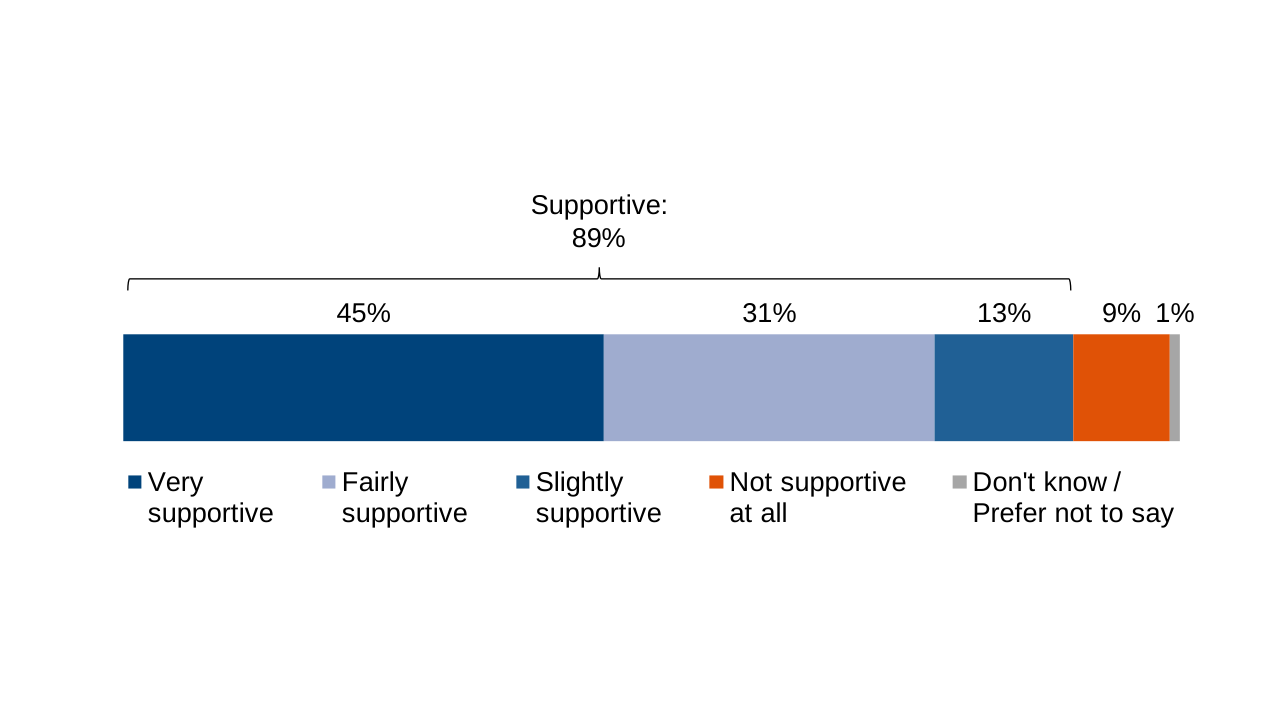
G2. How supportive do you feel your current employer was about your health condition or disability? Base: Employees currently in work who have discussed health condition with employer (n=293).
Adjustments made at work for employees
Whether adjustments have been made by employers
By law, employers are obliged to make reasonable adjustments to remove or reduce a disadvantage faced by an employee related to their disability or health condition.
Over two thirds (69%) of employees with a long-term health condition that were currently working at the time of survey said their employer had put in place adjustments or support to help manage their health conditions at work, as shown in Figure 8.2. Around 1 in 6 (18%) reported that no adjustments had been made, while 13% said they had not told their employer about their health condition[footnote 36].
Figure 8.2 Adjustments and support employers have put in place to help employees manage health condition(s) whilst working
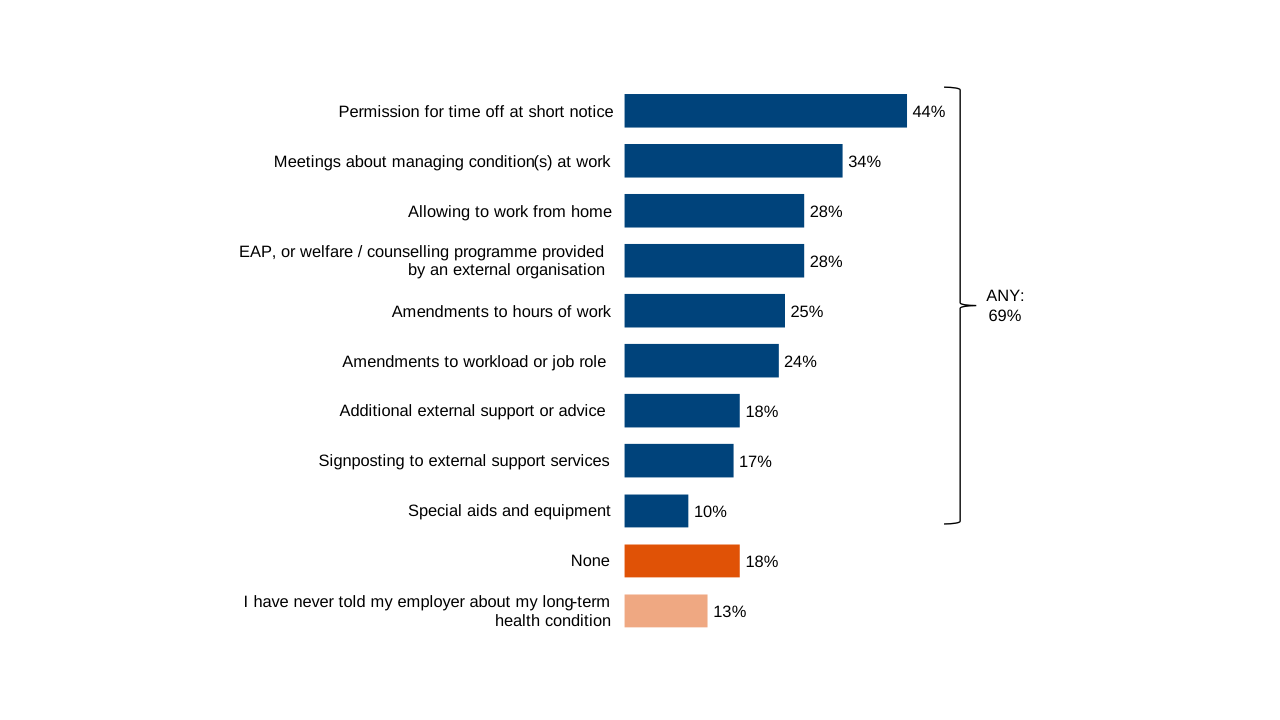
G3. Which of the following work-place adjustments or support, if any, has your current employer put in place to help you manage your health condition(s) whilst working? Base: If employee and currently working and have health condition (n=503). Responses cited by fewer than 5% not shown. EAP refers to ‘Employee Assistance Programmes’.
Employees in service-intensive or labour-intensive occupations were twice as likely to report their employer had made no adjustments (27% vs. 14% in high- or middle-skill occupations).
Types of adjustments made by employers
Employees with a long-term health condition confirmed that a range of different support and adjustment options had been put in place by their employers, as shown in Figure 8.2 (69% said that they had at least one adjustment in place at work).
Permission to take time off at short notice
Employers granting permission to take time off at short notice (for example to attend medical appointments) was the most commonly reported form of support, by 44% of those with long-term health conditions. Short-notice time off was more likely to be reported among the following groups of employees:
- Higher earners (56% of those earning at least £50,000 per annum vs. 39% of those earning less than £30,000)
- Those working over 35 hours a week (48% vs. 44% average)
Meetings with employer
Around a third (34%) received support via meetings with their employer to talk about managing their health condition(s) at work. Such meetings were more likely to be reported by the following types of employees:
- Younger employees (43% of those aged 16 to 34 vs. 24% of those aged 50 to 75)
- Those with long-term conditions which affect the work they can do to at least some extent (43% of those affected a great deal or to some extent vs. 24% not affected at all)
Adjustments to working arrangements
Adjustments to working arrangements were in place for many with long-term health conditions; 28% were allowed to work from home, 25% had had their hours amended (including through flexible working arrangements) and 24% had seen changes to their workload or role (e.g. extra breaks or different duties). While being able to work from home was more likely for higher skilled and better paid employees, amended hours were more likely for those more heavily impacted by their health conditions and for lower earners. In detail, adjustments to working arrangements were more likely to be in place for the following types of employees:
- Those in middle- or high-skill occupations were more likely to be allowed to work from home (38% vs. 10% of those in service-intensive or labour-intensive roles)
- The likelihood of being able to work from home increased with earnings from 16% of those earning less than £30,000 per annum to 48% of those earning £50,000 or more
- The likelihood of being able to work from home was also higher among full-time employees (33% vs. 13% of part-time employees), while amended hours of work were, conversely, more likely amongst part-time employees (38% vs. 21% of full-time)
- Those with conditions which affected the work they could do to at least some extent were more likely to have amended hours (34% vs. 16% not affected at all) or an amended workload or role (36% vs. 15%)
External support or advice
External support or advice was in place for sizeable minorities of those with a long-term health condition – 28% had employee assistance programmes (EAP), or staff welfare or counselling programmes provided by an external organisation. Around 1 in 6 (18%) had additional external support or advice, while a similar proportion (17%) had been signposted to external support services by their employer.
The likelihood of external support was higher for those at larger and public sector employers, as well as for those who earned more, were in high-skill occupations, and were employed full-time. In detail, it was more likely to be in place for the following groups of employees:
- Those working for larger employers with 250 or more staff compared with those at smaller employers with fewer than 250 staff (39% had an EAP, or welfare / counselling programme provided by an external organisation vs. 12%; 23% had additional external support or advice vs. 8%; and 22% had been signposted to external support vs. 9%)
- Higher earners (37% of those earning £50,000 or more per annum had an EAP, or welfare / counselling programme provided by an external organisation vs. 22% of those earning less than £30,000)
- Public sector employees (35% had an EAP, or welfare / counselling programme provided by an external organisation or similar vs. 24% of private sector employees)
- Those in high or middle-skill occupations (33% had an EAP, or welfare / counselling programme provided by an external organisation or similar vs. 17% in service-intensive or labour-intensive roles, while 20% had been signposted to it vs. 9%)
- Full-time employees (32% had an EAP, or welfare / counselling programme provided by an external organisation vs. 16% who worked part-time)
- Younger employees aged 16 to 34 (25% had additional external support or advice vs. 11% of those aged 50 to 75, while 25% had been signposted to it vs. 9%)
Special aids, equipment and adaptations to vehicles or sites
Special aids or equipment were in place for around 1 in 10 of those with a long-term health condition – 10% had special aids or equipment and 4% had adaptations to vehicles or sites.
These adjustments were more likely to be in place for the following groups of employees:
- Those aged 16 to 34 (14% had special aids or equipment vs. 5% of those aged 50 to 75)
- Full-time employees (11% had special aids or equipment vs. 3% of part-time employees)
Support with travel or communications
Small proportions of employees with a long-term health condition had support with travel or communication. A minority (3%) had help getting to and from work and the same proportion (3%) had help with the costs of travelling within work. Two percent had a support worker (for example a job coach, personal assistant or sign language interpreter), and the same proportion (2%) had an interpreter or other support for job interviews.
Respondents were also able to specify any additional adjustment not listed, but fewer than 1% specified any further adjustments.
Helpfulness of adjustments in place
Among employees that had some form of employer-provided support or adjustment in place, the majority (83%) felt it was helpful, as shown in Figure 8.3. Almost half (46%) found the adjustment or support to be very helpful and only 4% found it not helpful at all.
Figure 8.3 Helpfulness of adjustments and support employers have put in place to help employees manage health condition(s) whilst working
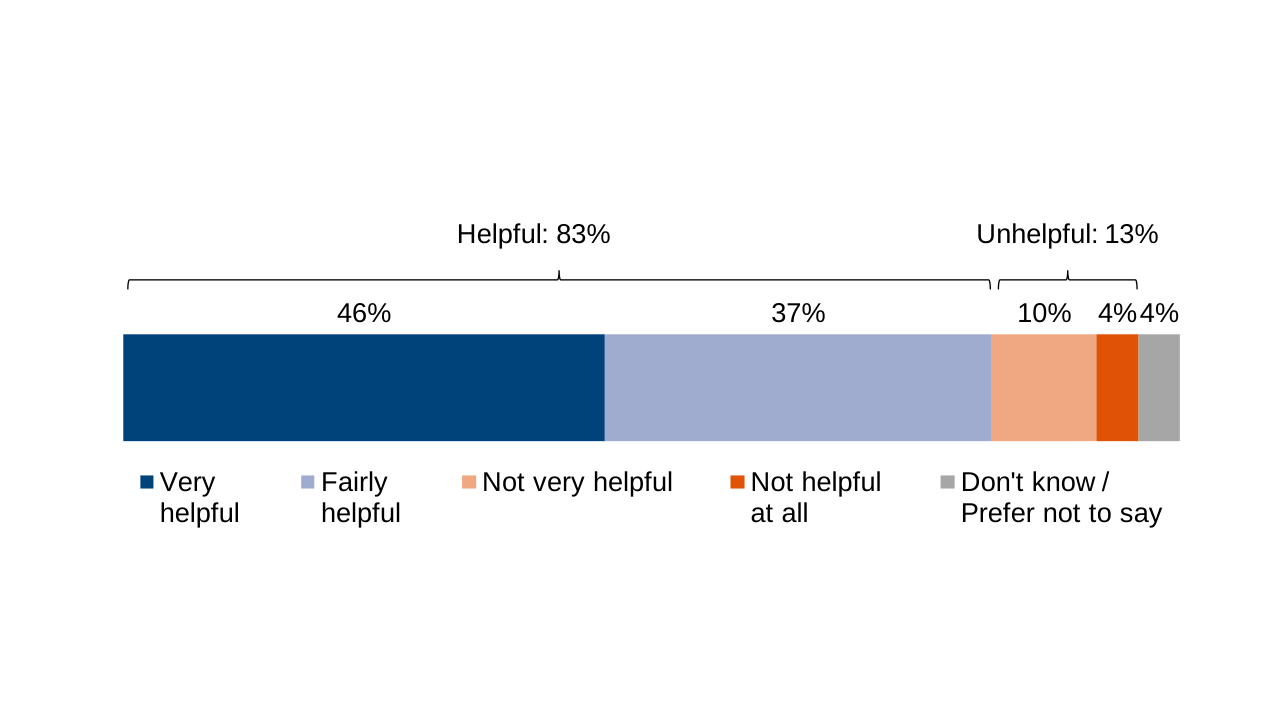
G4. Overall, how helpful were the adjustments your current employer made in allowing you to stay working? Base: If had adjustments put in place by employer (n=350)
Those who had a continuous sickness absence of 4 weeks or more in the last year were more likely to find the adjustments or support unhelpful (24% vs. 12% who did not have such an absence).
Professionals were more likely to find the adjustments or support helpful (91% vs. 83% average). This may reflect the types of support and adjustments this group were more likely to have in place. For example, Professionals were more likely to be able to work from home (39% vs. 28% average).
Desired adjustments (employees)
Whether employees would like more adjustments
Most employees (59%) who had told their employer about their long-term health condition would have liked their employer to provide more adjustments, although two fifths (41%) explicitly stated that they did not want any more.
The following groups were more likely to not want any further adjustments (41% average):
- Those whose condition does not affect the work they can do at all (57% of vs. 30% who it affects to at least some extent)
- Older employees aged 50 to 75 (50% vs. 29% of those aged 16 to 34)
- Professionals (50% vs. 41% average)
Types of adjustments employees would like more of
The types of adjustments employees would like varied, with at most 24% specifying any one adjustment, as shown in Table 8.1 . More permission for time-off at short notice was the most desired (24%), while a similar proportion wanted more meetings with their employer about managing their condition at work (22%). These were the adjustments most likely to already be in place (as reported above). However, the second most desired adjustment, amendments to workload or job role (wanted by 23%) was only the sixth most likely to be in place – making this a desired adjustment that employers are less likely to be providing.
When asked to prioritise (or when three or fewer adjustments were originally cited) employees’ top three priorities largely reflected those most widely desired, as shown in Table 8.1[footnote 37]. However, amendments to their hours of work was the most likely to be prioritised (in the top three for 18%) but was only the fourth most likely adjustment desired overall. In other words, while amendments to hours of work was not as widely desired, it was especially important to those who did want it.
Further help with travel, special aids, equipment and adaptations to vehicles or sites, and support with communications, were less likely to be prioritised by employees. While some would like these adjustments, they would choose other adjustments first (e.g., preferring new working arrangements, time off at short-notice, meetings with employers, and external support and advice).
Table 8.1 Adjustments and support employees would like employers to provide more of to help manage health condition(s) whilst working
| Adjustment | Would like more | Would be in top 3 |
|---|---|---|
| Permission for time off at short notice | 24% | 16% |
| Amendments to workload or job role | 23% | 16% |
| Meetings about managing condition(s) at work | 22% | 16% |
| Amendments to hours of work | 21% | 18% |
| Additional external support or advice | 20% | 13% |
| Being allowed to work from home | 19% | 14% |
| EAP, or welfare / counselling provided externally | 17% | 11% |
| Help with costs of travel within work | 13% | 5% |
| Signposting to external support services | 12% | 3% |
| Help getting to work if not able to use public transport | 11% | 2% |
| Special aids and equipment | 10% | 4% |
| None | 41% | N/A |
G5. And which of the following, if any, would you like your current employer to provide more of to help you manage your health condition(s) whilst working? G5_G5a. And which would be the top three things that your employer could provide more of to help you manage your health condition(s) whilst working? Base: Employees that are currently working, have long-term health condition and have told employer about their condition (n=441). Adjustments desired at all by fewer than 10% not shown.
Permission to take time off at short notice
Employers granting permission to take time off at short notice (for example, to attend medical appointments) was the most commonly desired form of support, cited by 24% of those who had informed their employer about their condition. This was despite it being the adjustment most commonly in place already (for 44% of employees with a long-term health condition, as reported above).
More short-notice time off was more likely to be desired by younger employees aged 16 to 34 (32% vs. 15% of those aged 50 to 75).
Meetings with employer
Just over a fifth (22%) of those who had informed their employer about their long-term health condition would have liked more meetings with their employer to talk about managing their health condition at work. Again, this is despite this already being one of the forms of support most commonly already in place (for 34% of employees with a long-term health condition as reported above). Those with long-term health conditions which affect the work they can do to at least some extent, were more likely to want more such meetings (28% of those affected a great deal or to some extent vs. 17% not affected at all).
As with the desire for short-notice time off, more of such meetings were more likely to be desired by younger employees (30% of those aged 16 to 34 vs. 16% of those aged 50 to 75).
Adjustments to working arrangements
More adjustments to working arrangements were also wanted by sizeable minorities - 23% of those who had informed their employer about their long-term health condition would have liked more changes to their workload or role (for example extra breaks or different duties), while 21% would have liked their hours amended (including flexible working), and 19% would have liked to be allowed to work from home.
Higher earners and employees working full-time, who had informed their employer about their long-term health condition, were more likely to want to be able to work from home more, despite being groups who were more likely to already have this in place. This perhaps indicates it was not a priority (or perhaps not considered a possibility) for those in lower earning or part-time jobs. In detail, the desire for more adjustments to working arrangements was higher for the following types of employees:
- Those with conditions which affected the work they can do a great deal or to some extent (31% wanted more amended hours vs. 12% not affected at all, and 32% wanted more amended workloads or role vs. 17%)
- Higher earners – the likelihood of wanting to be able to work from home more increased with earnings from 14% of those earning less than £30,000 per annum to 25% of those earning £30,000 or more
- Full-time employees were more likely to want to be able to work from home more (21% vs. 10% of part-time)
External support or advice
The forms of external support or advice desired by those who had informed their employer about their long-term health condition were:
- More additional external support or advice (20%)
- More EAP, or staff welfare or counselling programmes (17%)
- More signposting to external support services by their employer (12%)
As with the desire for more short-notice time off and employer meetings, more external support was more likely to be wanted by younger employees (33% of those aged 16 to 34 wanted more additional external support or advice vs. 10% of those aged 50 to 75, while 18% wanted more signposting to external support vs. 7% of those aged 50 to 75).
Support with travel
Around 1 in 8 employees (13%) who had told their employer about their long-term health condition wanted more support with the costs of travelling within work, while 11% wanted more help getting to and from work.
Again, employees aged 16 to 34 were more likely to want travel support (20% wanted more help with the costs of travelling within work vs. 6% of those aged 50 to 75).
Special aids, equipment and adaptations to vehicles or sites
More special aids or equipment were wanted by small proportions of employees who had told their employer about their long-term health conditions. One in ten (10%) wanted more special aids or equipment and 6% wanted more adaptations to vehicles or sites.
Support with communications
Small proportions of employees who had told their employer about their long-term health conditions wanted more support with communication. Eight percent wanted more support in the form of a support worker (for example, a job coach, personal assistant or sign language interpreter) and 6% in the form of an interpreter or other support for job interviews.
Reasons employees think desired adjustments not in place
There was some evidence of employees feeling employers would not be supportive about the provision of adjustments. Over a third (35%) of employees who had told their current employer about their long-term health condition and wanted additional adjustments thought their request would be refused, as shown in Figure 8.4. Just under 1 in 10 (9%) reported this had actually happened, and 7% that the adjustments they would provide would not fully meet their needs. Similarly, feeling uncomfortable about their employer’s reactions deterred 19% of these employees from requesting their desired adjustments.
Among employees who wanted additional adjustments and had already told their employer about their health condition, 21% felt getting the adjustments would be too much hassle and 15% said they would struggle to explain what they needed. Moreover, 27% said that the additional support wasn’t strictly needed, while 14% worried about what their co-workers would think about additional adjustments. There was also some lack of knowledge, with 14% reporting they did not know they could get workplace adjustments.
Figure 8.4 Reasons employees think they do not have adjustments which would be helpful in place
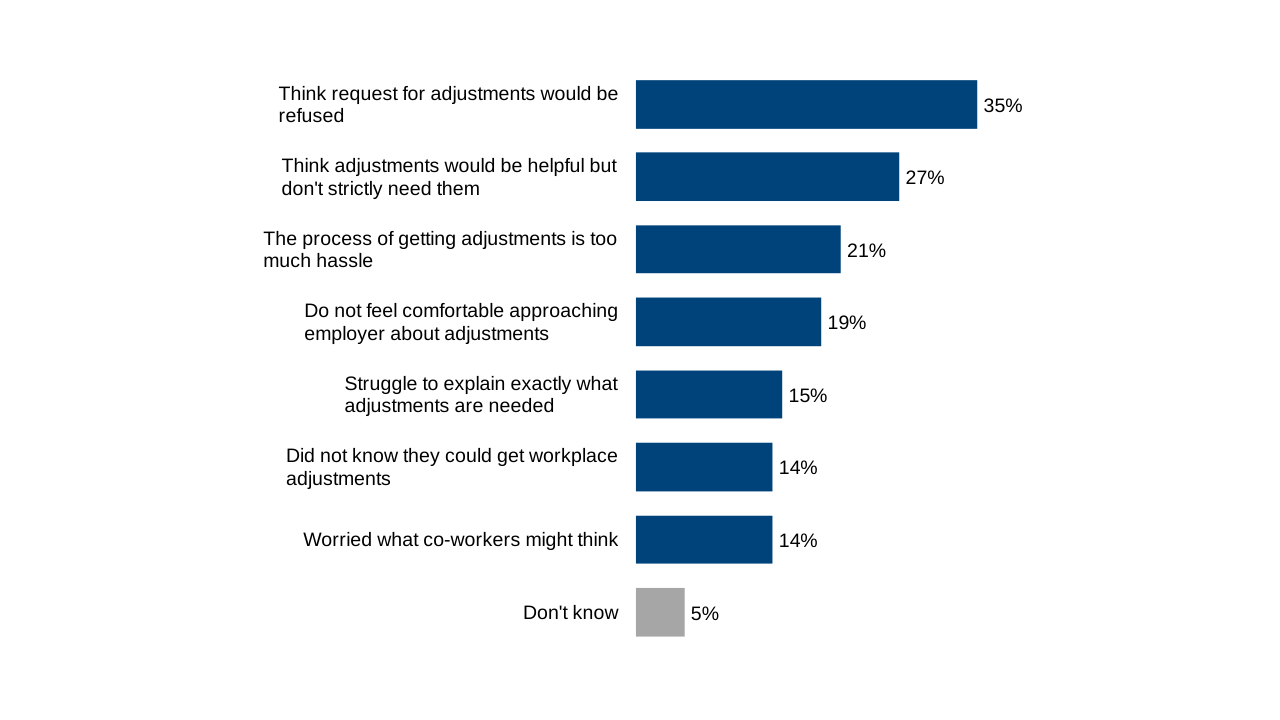
G6. Why don’t you have all of the adjustments that would be helpful to you? Base: Employees that are currently working, have a long-term health condition and have told employer about their condition and would like additional adjustments (n=249). Responses cited by fewer than 10% not shown.
Ease of getting adjustments put in place (employees)
Two thirds (65%) of employees who had adjustments put in place by their employer had found the process easy, including a third (34%) who found it very easy, as shown in Figure 8.5. A quarter (24%) found it difficult.
Figure 8.5 Ease of getting workplace adjustments put in place
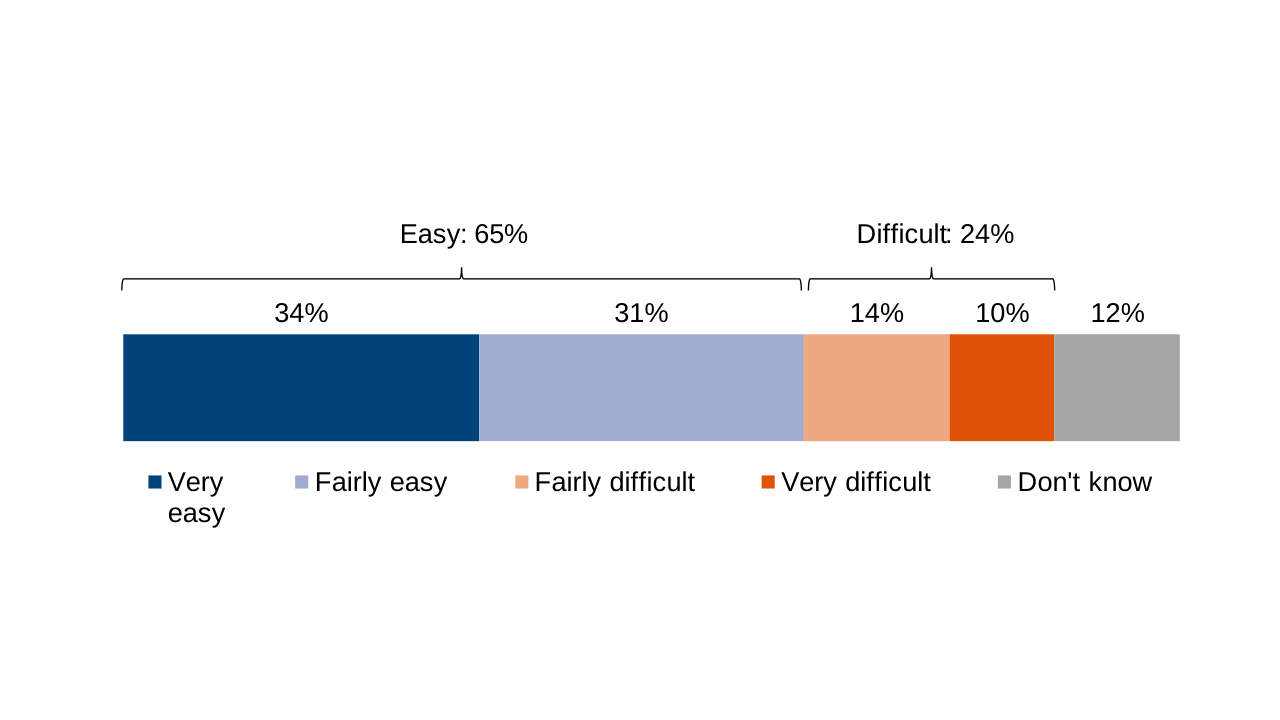
G7. Overall, how easy or difficult was the process of getting workplace adjustments put in place? Base: If had adjustments put in place by employer (n=350).
Adjustments made at work (self-employed)
Two fifths (41%) of those self-employed with long-term health conditions reported they had made no adjustments to manage their health conditions whilst working as none were needed. A small proportion (4%) had not done so though they thought they might help.
The most common adjustments they had made to manage their conditions were to their working arrangements. A third (33%) had changed their working hours, 28% had adjusted the nature of their work and 21% had started working from home, as shown in Figure 8.6.
A fifth (20%) of those self-employed with long-term health conditions had sought external support or advice (e.g. clinical support such as psychological therapy or physiotherapy, Access to Work Mental Health Support Service, or another expert or specialist such as Occupational Health).
Special aids and equipment had been bought by 18%, and 10% had made adaptions to vehicles or workplaces. Around 1 in 10 (9%) had a job coach, support worker or personal assistant (PA) and 6% had brought in other additional resources such as staff or sub-contractors.
Figure 8.6 Adjustments in place to help manage health condition(s) whilst working as self-employed
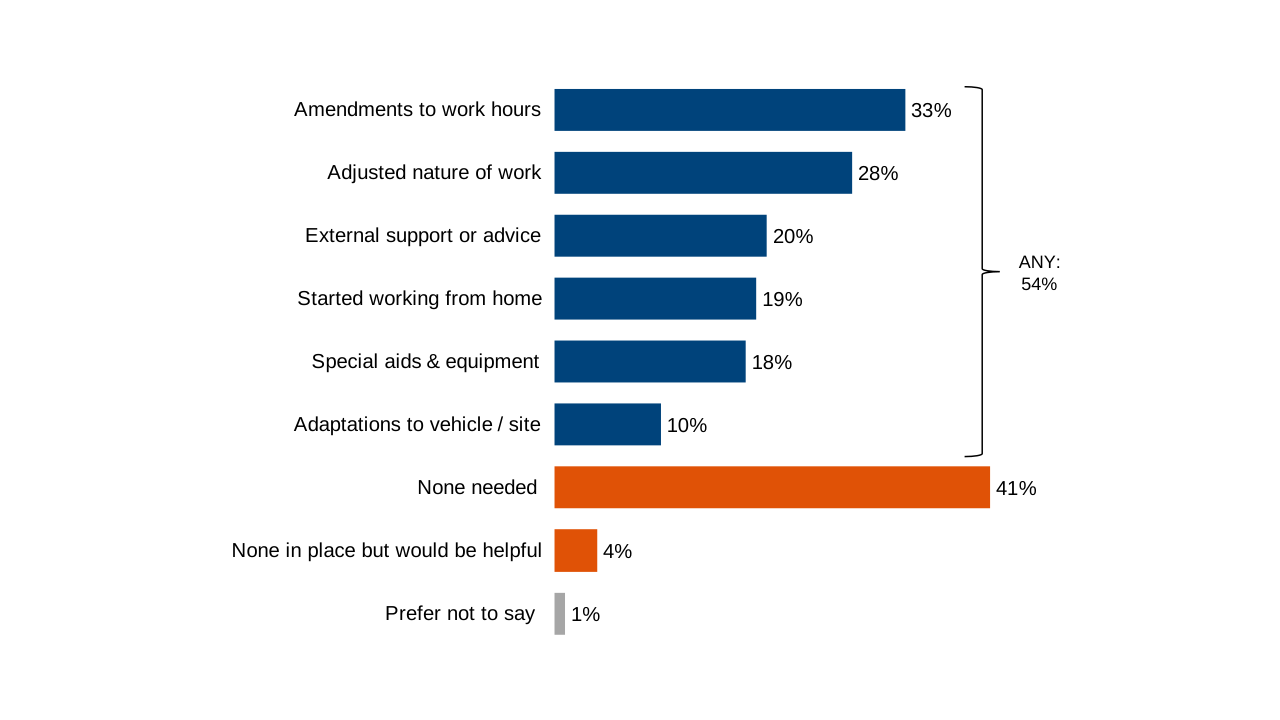
G8. Have you done any of the following to help manage your health condition(s) whilst working? Base: self-employed, currently working and have long-term health condition (n=77). Responses cited by fewer than 10% not shown.
Access to Work
Awareness and use of Access to Work
Access to Work is a publicly funded employment support programme that aims to help more disabled people start or stay in work.
Around a quarter of workers with a long-term health condition (24%) were aware before the survey that they could get support through the Access to Work scheme, while 73% were not aware and 3% were unsure.
Awareness was higher amongst the following groups of workers with a long-term health condition (24% average):
- Those whose condition reduces their ability to carry out day-to-day activities a lot (33% vs. 24% average)
- Public sector (33%) vs. private sector workers (19%)
Among workers with a long-term health condition who were aware of Access to Work, just under a fifth (18%) had undergone an Access to Work holistic assessment or received an Access to Work grant. Around four fifths (81%) had not undergone an assessment or received a grant, and 1% were unsure. This equated to 4% of all workers with a long-term health condition having been assessed or received an Access to Work grant.
Reasons for not receiving Access to Work support
By far the most common reason for not having had an Access to Work holistic assessment or grant was workers with a long-term health condition not feeling they needed any of the support on offer through the scheme (61%).
However, around a fifth (19%) felt they did not know enough about the support on offer. Smaller proportions thought they would not be eligible (7%) or reported a range of other issues including difficulty with the application (2%), employers not wanting to contribute (1%), and the support not meeting their needs (1%). A few (3%) were awaiting decisions on applications while a very small minority (1%) reported that they or their employer had paid in full for the support needed.
9. Flexible working
This chapter looks at the flexible working options that were available to employees in the past 12 months or since having started their current job, regardless of if they had used them or not. The chapter then explores the flexible working options that have been used by employees.
Key findings
- Among employees, around 8 in 10 (79%) had a flexible working option available to them in the past 12 months, regardless of whether they used it or not
- The most common forms of flexible working available to employees were flexible working hours (54%), working in a hybrid way (40%)[footnote 38], and working part-time (39%)
- Among employees with flexible working options available to them, nearly 6 in 10 (60%) used flexible working hours, and a similar proportion (57%) worked some of their time remotely, and some in their organisation’s workspace
Availability
Among employees, around 8 in 10 (79%) had a flexible working option available to them in the past 12 months, regardless of if they used it or not, as shown in Figure 9.1. Around half (54%) cited flexible working hours as an option available to them, followed by 40% having the option to work in a hybrid way and 39% having the option to work part-time.
Figure 9.1 Flexible working options available to employees
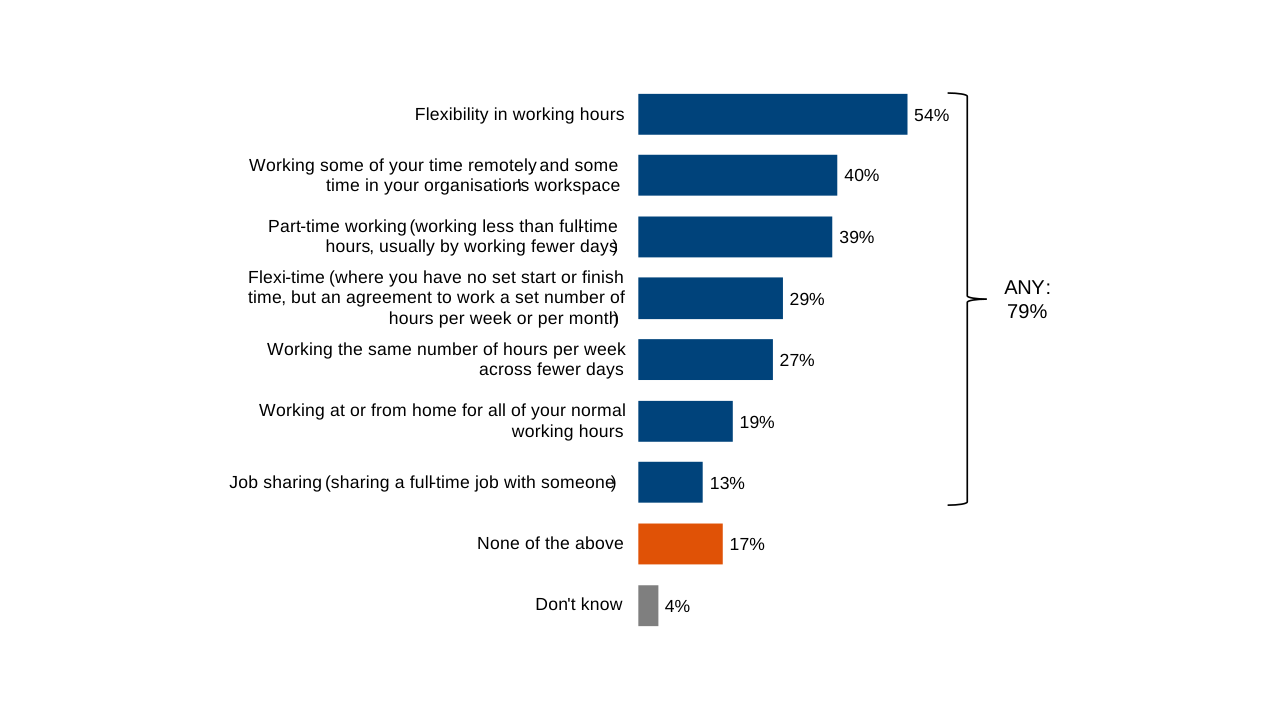
H1. Which of the following flexible working options have been available to you in the past 12 months / since you started your current job, whether you have used them or not? Base: If employee (module 2) (n=1,814). Response options cited by fewer than 10% not shown.
Groups more likely to have any type of flexible working available to them (79% average) were:
- Higher paid employees earning £50,000 or more per year (90% vs. 82% earning less than £17,500, 72% earning £17,500 to £29,999 and 80% earning £30,000 to £49,999)
- Those in high-skill occupations (86% vs. 78% in middle-skills roles, 74% in service-intensive roles and 64% in labour-intensive roles)
- Those at large employers with 250 or more staff (83% vs. 75% working at medium-sized employers with 50 to 249 staff and 77% at small employers with 2 to 49 staff)
Usage
Among employees with flexible working options available to them, 6 in 10 (60%) used flexible working hours, and a similar proportion (57%) used their ability to work in a hybrid fashion. Around a third (34%) of employees with flexible working options available to them used flexi-time. Other ways in which employees were working flexibly can be seen in Figure 9.2.
Figure 9.2 Flexible working options used by employees
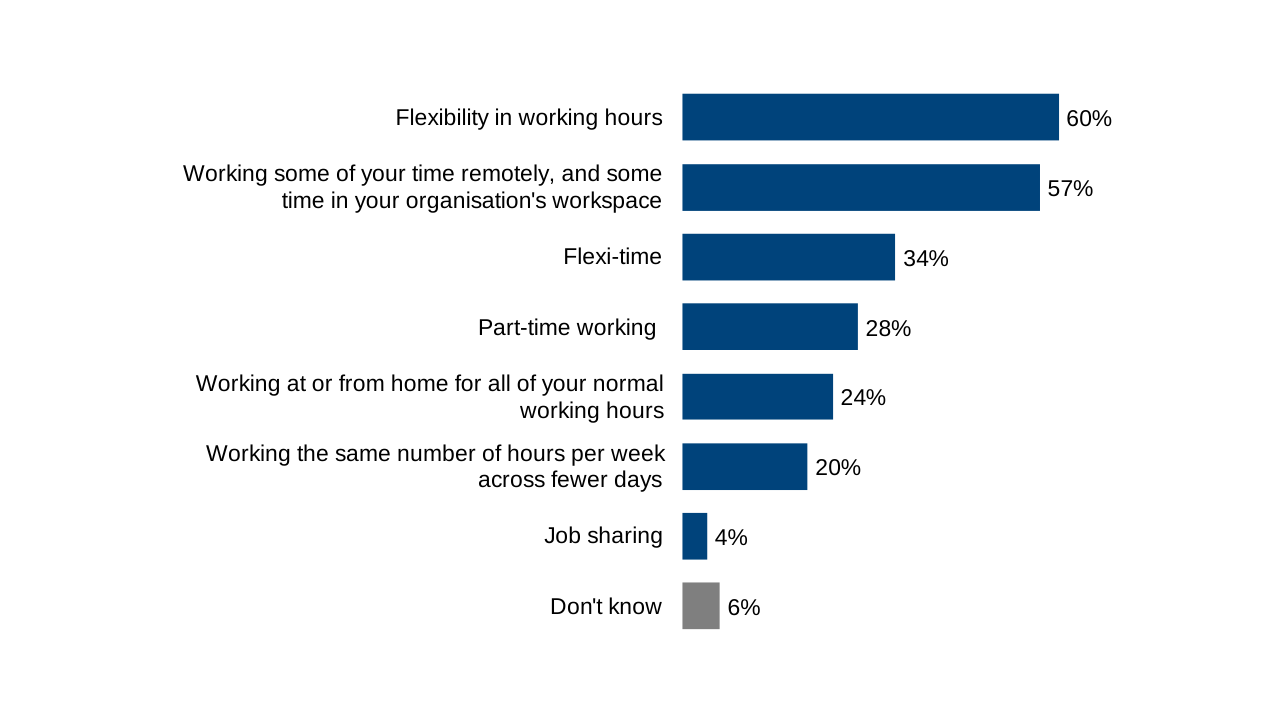
H2. Which of these flexible working options have you personally used? Base: Employees with flexible working options available (module 2) (n=1,002). Response options cited by fewer than 4% not shown.
10. Unpaid carers
This chapter looks at unpaid caregiving responsibilities among workers and provides an overview of workers’ caring responsibilities, the length of time, support and care which is provided, the type of care provided, the impacts of providing care, and employer support. It then focuses on the extent to which workers were aware of and accessed available GOV.UK information on providing unpaid care whilst working. Please note that these insights are focused on working unpaid carers, and do not necessarily reflect the experiences of unpaid carers not in work.
Key findings
- Around 1 in 7 (15%) of workers were engaged in unpaid caregiving roles. Over two fifths (42%) spent 10 or more hours per week on caregiving activities and most (86%) had been working unpaid carers for over a year
- Most working unpaid carers reported their own health had worsened as a result of providing care (63% said their mental health had worsened and 35% said their physical health had worsened)
- Two fifths (40%) of working unpaid carers had discussed their caring situation with their employer. A fifth (21%) had reduced their weekly hours to provide care
- In the last year 10% of working unpaid carers had accessed information online about caring that had implications for their ability to stay in work. This rose to 24% amongst working unpaid carers who were absent from work due to a health condition or illness
- Across all workers, 20% were aware that GOV.UK contained information about managing work while providing help and support to someone else
Overview of caring responsibilities
The majority of workers (82%) did not provide care or support to individuals with long-term physical or mental health conditions, illnesses, or age-related difficulties. However, around 1 in 7 (15%) of workers were engaged in unpaid caregiving roles, as shown in Figure 10.1.
Figure 10.1 Workers that provide unpaid care
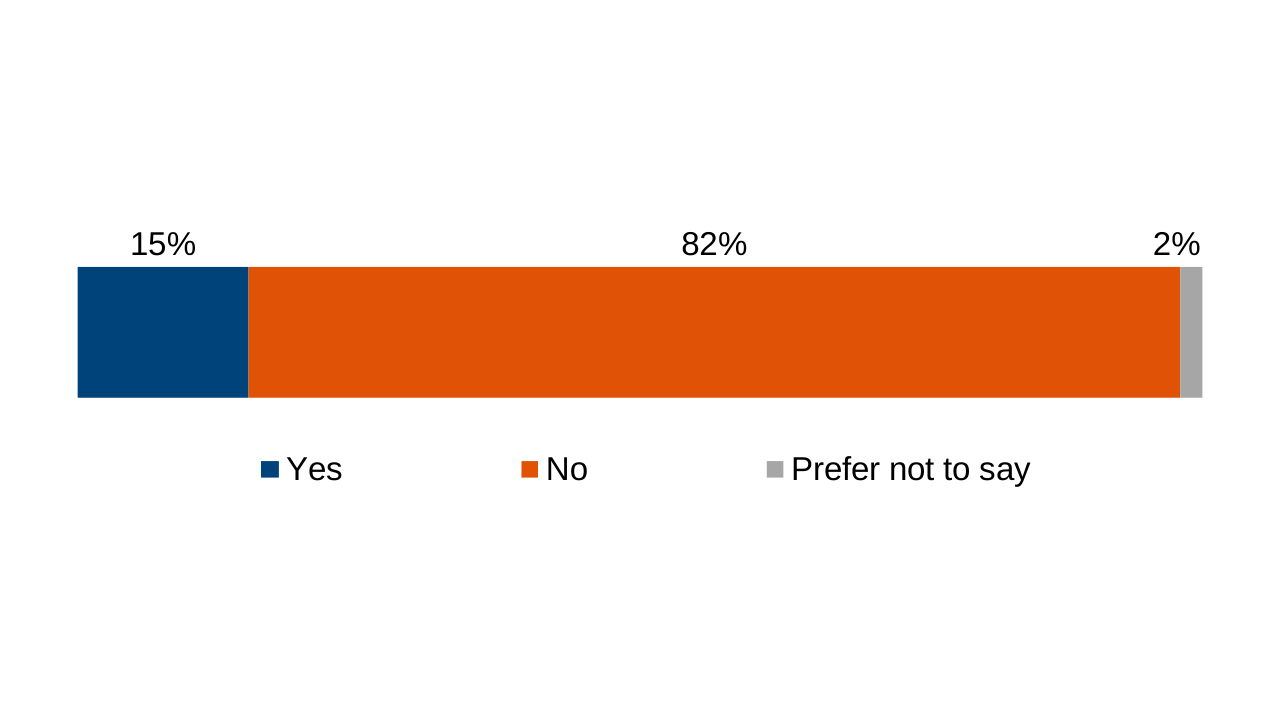
I1. Do you look after, or give any help or support to, anyone because they have long-term physical or mental health conditions or illnesses, or problems related to old age? Base: All workers (n=4,234).
Workers in the public sector or voluntary / charity sector (19% and 22% respectively) were more likely than workers in the private sector (12%) to have unpaid caring responsibilities, as were those with a long-term health condition (20% vs. 13% of those without).
The majority (69%) of these working unpaid carers were caring for 1 person. However, around a fifth (19%) were caring for 2 people and 1 in 10 (10%) were caring for 3 or more individuals.
Length of time providing health and support overall and per week
The majority (86%) of working unpaid carers had been providing care for more than a year. One in ten (10%) had been providing care for between a month and a year, and only 2% had been providing care for less than a month. This aligns with how long respondents said they were aware that the person they help care for has had these care needs.
Working unpaid carers dedicated varying amounts of time weekly to providing care and support to others. As shown in Figure 10.2, over two fifths (45%) of working unpaid carers reported spending 9 hours or less per week on caregiving activities, while around 1 in 6 (16%) allocated between 10 to 19 hours weekly, and 1 in 10 (10%) devoted 20 to 34 hours each week. Additionally, just under 1 in 10 spent 35 to 49 hours per week on care (9%), with 7% spending 50 or more hours a week on caregiving and support tasks.
Around half of all working unpaid carers (48%) confirmed that they provided this care across all 7 days each week.
Figure 10.2 Number of hours of care or support given to others
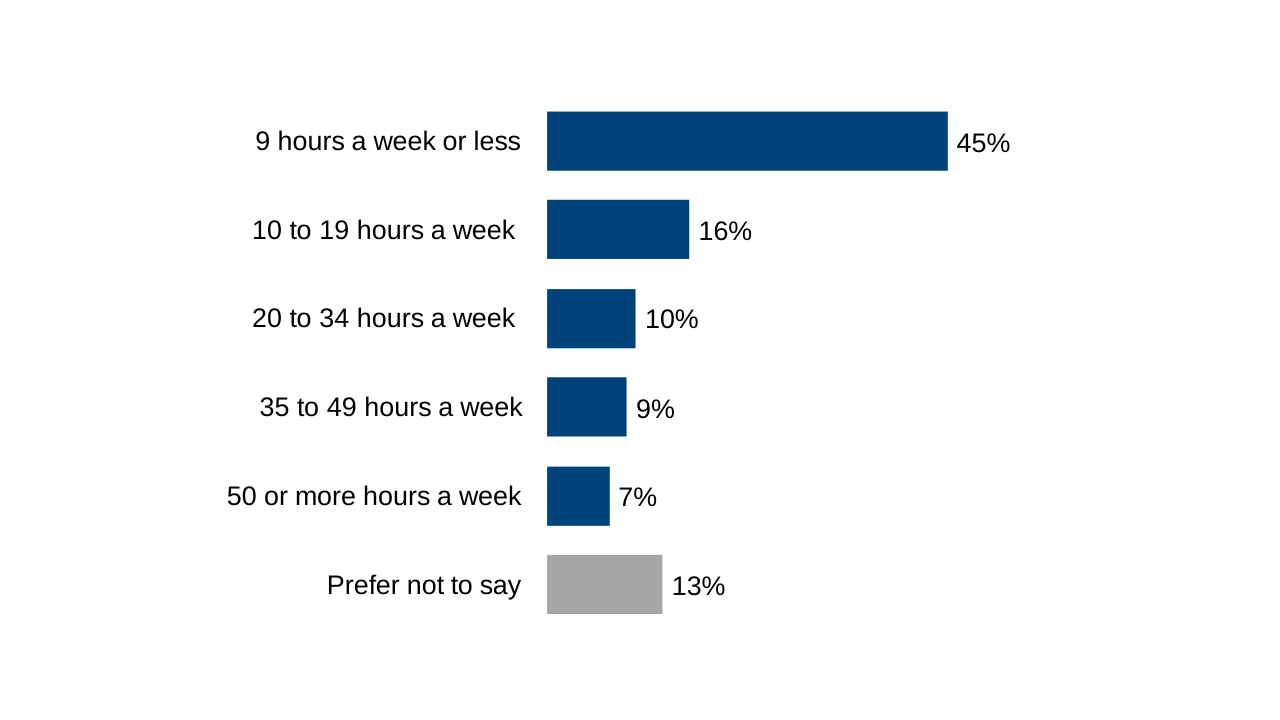
I3. For how many hours a week do you look after, or give any help or support to someone? Base: if unpaid carer (n=781).
Length of time providing different types of support in the previous week
Of those that provided information, the majority (67%) reported that they spent between 1 to 7 hours in the previous week assisting with household activities, while around a third (30%) dedicated 8 to 35 hours, and only 3% devoted more than 35 hours to household activities in the previous week[footnote 39]. However, when looking at all working unpaid carers, it is worth noting that around a quarter (24%) did not disclose this information and selected ‘prefer not to say’.
There were also high proportions of those that chose not to disclose information on how many hours they spent in the previous week helping someone with their personal care[footnote 40]. Nearly two fifths (38%), stated ‘prefer not to say’ at this question. Nearly three quarters (72%) of working unpaid carers that provided information reported spending 1 to 7 hours on this in the previous week and a quarter (26%) spent 8 to 35 hours providing this. A small minority (2%) spent more than 35 hours in the previous week providing this type of care.
When it came to practical support in the previous week, a quarter (25%) did not disclose this information and stated, ‘prefer not to say’[footnote 41]. Of those that provided information, just under four fifths (79%) reported spending 1 to 7 hours on practical support in the previous week and around a fifth (21%) spent 8 to 35 hours on practical support.
Health issue of person being cared for or supported
Working unpaid carers were asked what description best fit the health condition of the person they provide care for, as shown in Figure 10.3. Among those providing care for 1 person, the most common health issues or difficulties were chronic diseases or disabilities (35%) and problems due to ageing (25%). Among those caring for more than 1 person, problems due to ageing was the most commonly cited condition (32%), followed by chronic diseases or disabilities (28%).
Figure 10.3 Health condition of person care is provided for
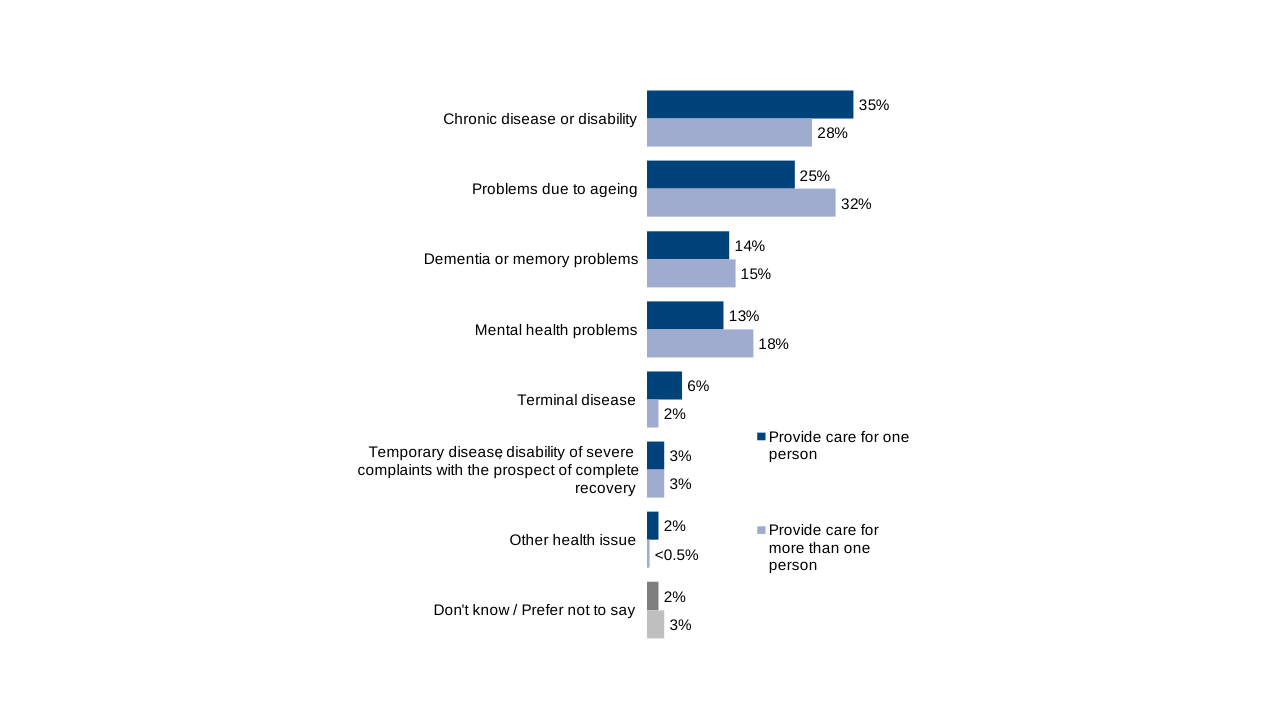
I8. Which description best fits the health issue of the person you provide help or support to? Base: If provide care to one person (n=538). I9. Thinking about the person you spend the most of your time caring for, which description best fits the health issue of this person? Base: If provide care to more than one person (n=227).
Impact upon unpaid carers
This section provides insight into the impact that caring for someone alongside working has had on unpaid carers, including the impact on their physical and mental health, and ability to continue working.
Impact on physical health
The majority (57%) of working unpaid carers reported that providing care had not affected their physical health, as shown in Figure 10.4. However, just over a third (35%) reported that providing care had worsened their own physical health. Conversely, only a small proportion (3%) of working unpaid carers reported an improvement in their physical health as a result of providing care (2% to ‘some extent’ and 1% ‘a great deal’).
Figure 10.4 Extent to which providing care has affected working unpaid carers’ own physical health
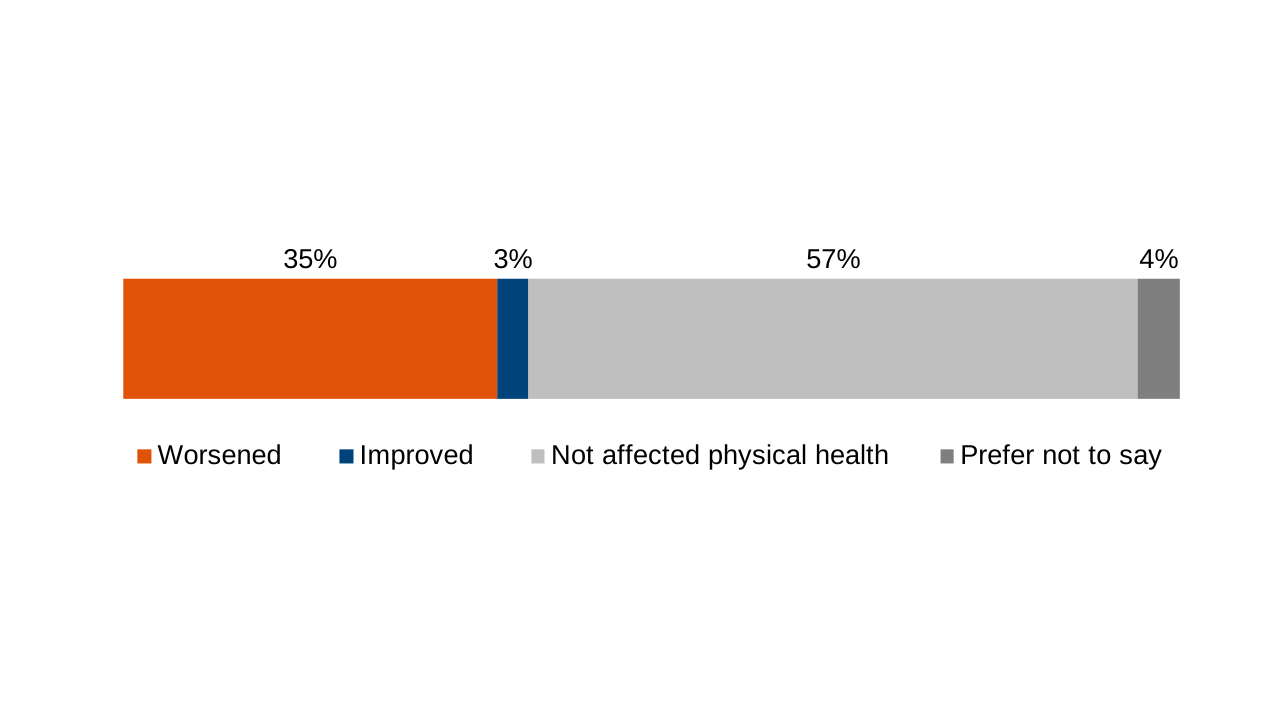
I10. To what extent has providing this help or support to someone/others affected your own physical health? Base: If unpaid carer (n=781).
Working unpaid carers in the most or more deprived areas were more likely to say that providing this support or help to someone else or others had worsened their own physical health (40% vs. 28% of those in less or least deprived areas). Female working unpaid carers were also more likely than their male counterparts to say their physical health had worsened (41% vs. 28%).
Those caring for 10 hours or more per week (51%) were more than twice as likely to report that their physical health had worsened as a result of providing care than those caring for 9 or less hours per week (21%).
Impact on mental health
The majority (63%) of working unpaid carers reported that their mental health had worsened as a result of providing care, as shown in Figure 10.5. Just 7% of working unpaid carers reported that their mental health had improved as a result of providing care. A quarter (25%) of working unpaid carers reported that their mental health had not been impacted by providing care.
Figure 10.5 Extent to which providing care has affected unpaid carers’ own mental health
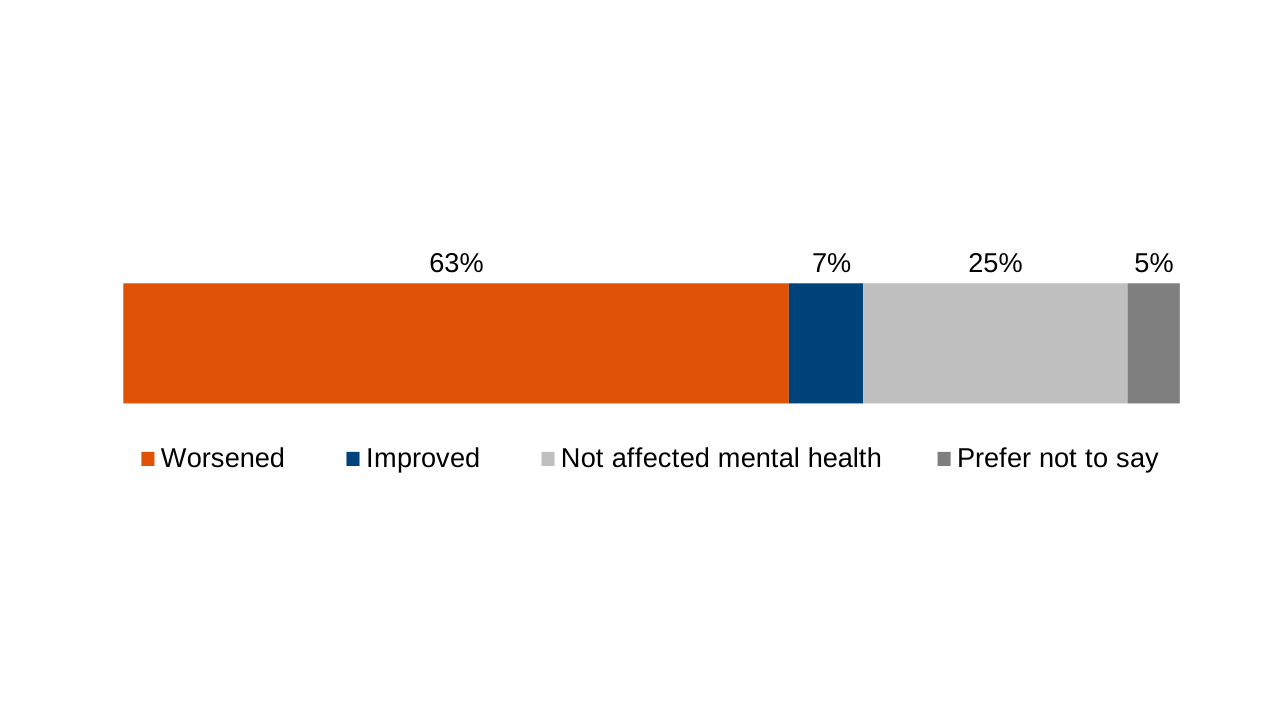
I11. To what extent has providing this help or support to someone/others affected your own mental wellbeing? If unpaid carer (781).
Female working unpaid carers were more likely than their male counterparts to report that their mental health had worsened (69% vs. 54%). Those with a long-term health condition were also more likely than those without to feel that their mental health had worsened (70% vs. 57%).
Impact on weekly hours worked
The majority (74%) of working unpaid carers did not have to reduce the weekly hours they worked in the previous 12 months to be able to provide care and support. However, a fifth (21%) of working unpaid carers confirmed that they had reduced their weekly hours to provide care; 13% reduced their hours by 7 hours or fewer, 3% reduced their hours by 8 to 14 hours, 2% reduced their hours by 15 to 21 hours, and 2% reduced by 22 hours or more. Only 1% of working unpaid carers reported that they stopped working completely.
Self-employed unpaid carers were more likely than employed unpaid carers to have reduced their weekly working hours to provide care (41% vs. 17%).
Unpaid carers were asked how long they would be able to remain working if their care situation remained as it is now. Of those that provided information, four fifths (80%) reported that they would be able to carry on working and providing care for 2 years or more while a fifth (20%) reported they would only be able to continue providing care whilst working for up to 2 years. However, a quarter (25%) of working unpaid carers did not know or preferred not to say how long they would be able to provide care while working.
Employer support
For employees that were working unpaid carers, two fifths (40%) had discussed their caring situation with their employer, however, nearly three fifths (58%) had not.
Unpaid carers working in the public sector were more likely to have discussed their caring situation with their current employer than those working in the private sector (47% vs. 34%). Nearly half (47%) of female working unpaid carers discussed their caring situation with their employer compared with a third (33%) of male working unpaid carers.
The vast majority (94%) of working unpaid carers that had discussed their caring situation with their employer reported that they had been supportive about their situation, with three fifths (61%) reporting their employer had been ‘very supportive’, a quarter (24%) reporting they were ‘fairly supportive’ and a tenth (10%) reporting that their employer was ‘slightly supportive’. Only 5% reported that their employer was ‘not supportive at all’ of their situation. This breakdown can be seen in Figure 10.6.
Figure 10.6 How supportive current employers are of caring situation
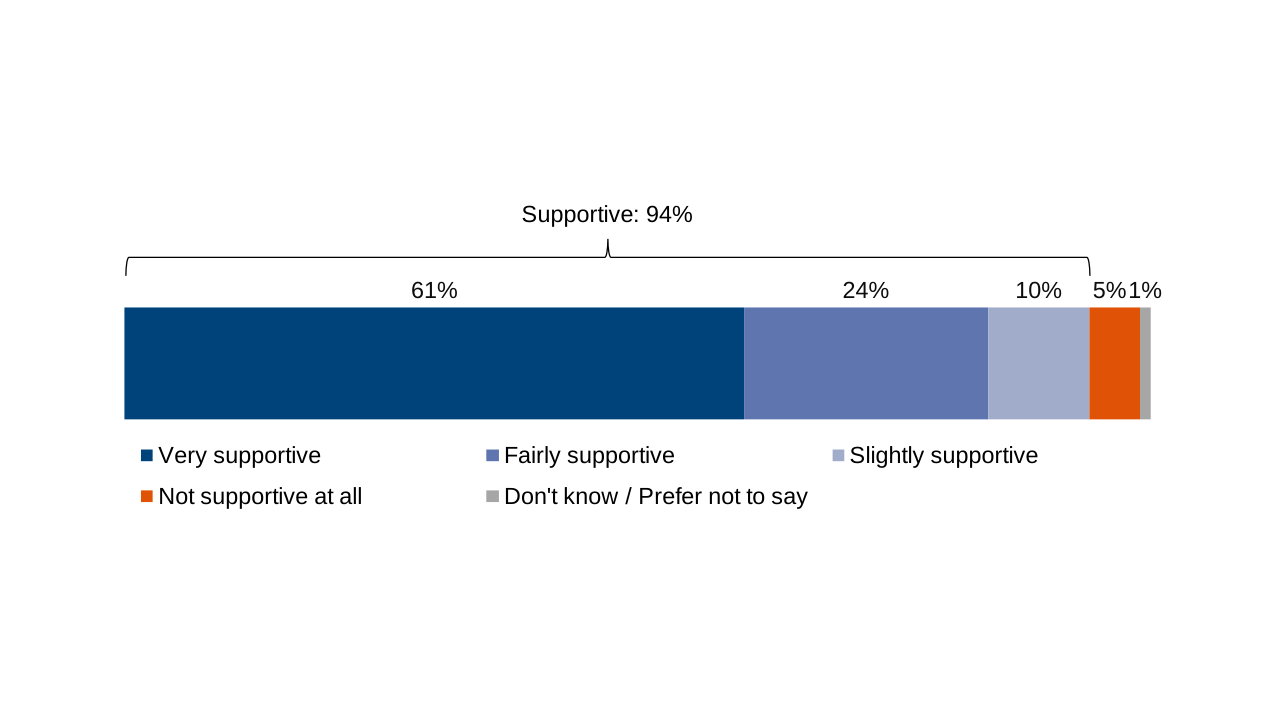
I12b. How supportive do you feel your current employer was about your caring situation? Base: If discussed caring situation (n=282).
Information on GOV.UK
Data were gathered on worker awareness and use of online information resources about providing unpaid care whilst working.
Unpaid carers accessing information
In the last year only 10% of working unpaid carers had accessed information online about caring that had implications for their ability to stay in work. The majority (85%) had not and 5% did not know. Among the 10% that did access this online information, 4% had accessed it in the last month, 2% accessed it in the last three months, 1% accessed it in the last six months and 2% accessed it in the last year.
Working unpaid carers in the most deprived areas were more likely to have accessed this information online than those in the least deprived areas (16% vs. 5%), as were younger working unpaid carers aged 16 to 34 (15% vs. 6% of those aged 50 to 75).
The sources of online information were mixed, but the majority (64%) of those that had searched for information online accessed it on GOV.UK. Additionally, around three fifths (58%) had accessed information on the NHS website, nearly half (47%) had accessed information from charities, 3 in 10 (30%) had accessed information from care providers, and around 1 in 10 (9%) had accessed information from pensions advisors or other financial planners. The full list of sources accessed can be seen in Figure 10.7.
Figure 10.7 Sources of online information accessed
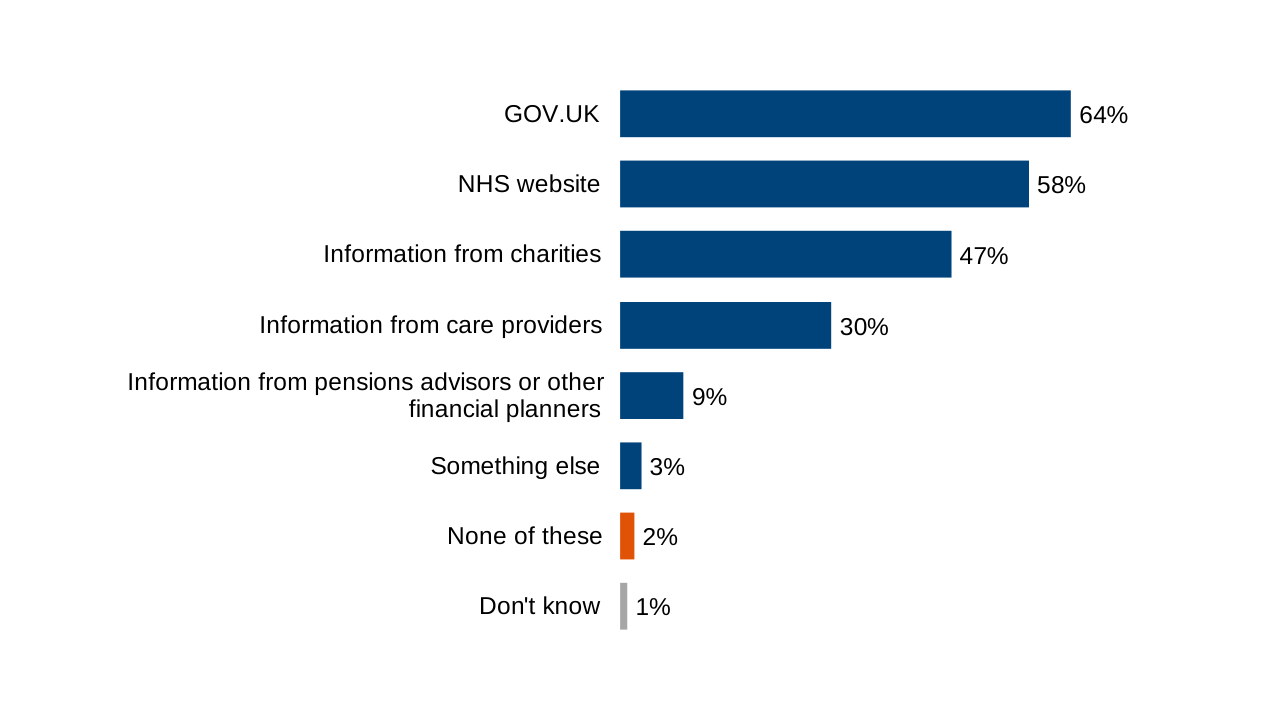
I15. What sources of online information have you accessed? Base: If searched for information online (n=70).
Accessing information about caring online
All workers surveyed (including both workers who were and were not unpaid carers) were asked if they were aware that GOV.UK contained information about managing work while providing help and support to someone else. The majority of workers (76%) were unaware that GOV.UK contained this information and only a fifth (20%) of workers were aware.
Self-employed workers were less likely than employees to be aware of this online information (14% vs. 21%).
For those that had heard of this online information, most heard about it from their own online searching (46%) or their employer (22%). It was less common for workers to have had heard of this online information through word of mouth (8%), a healthcare professional (6%), a charity (2%), or news or other media (2%).
Most that had heard of this online information had found it easy to find on GOV.UK (82%), as shown in Figure 10.8. Only 6% percent did not find it easy to find.
Figure 10.8 Ease of finding information on GOV.UK
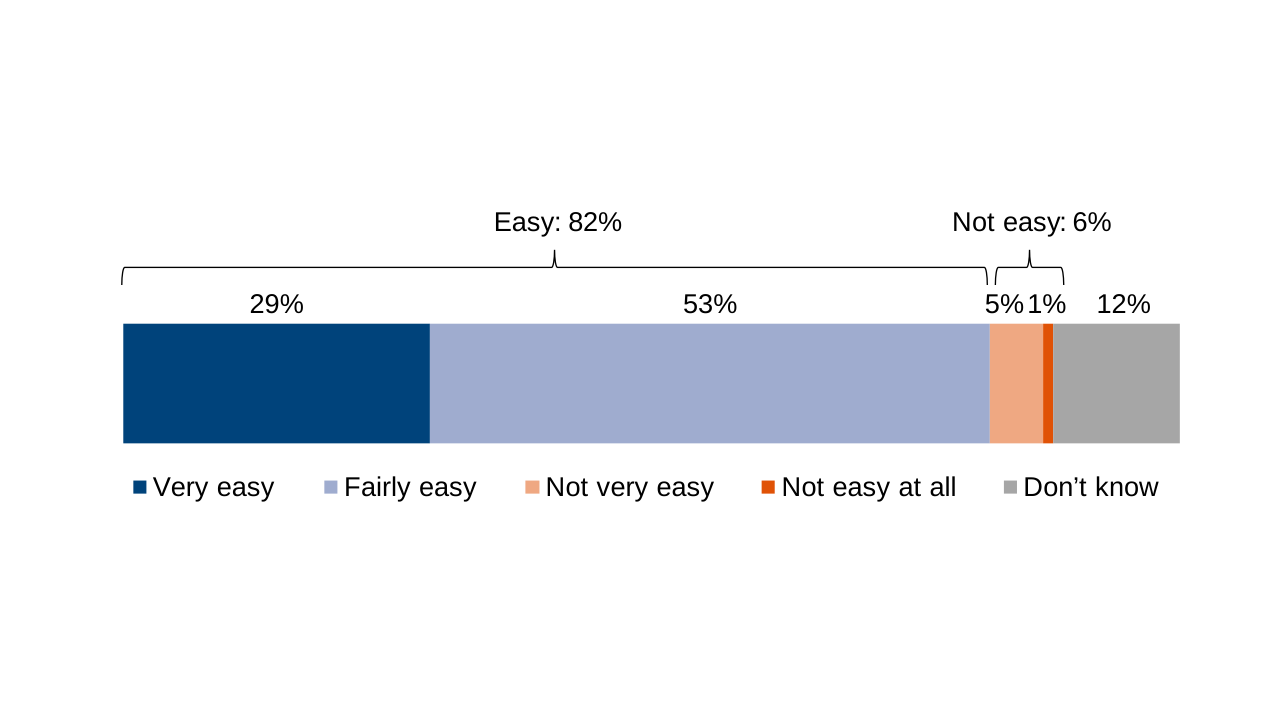
I18. How easy was it to find this information on GOV.UK? Base: If heard of digital solution (n=853).
Most workers (75%) that had heard of the online information available on GOV.UK felt that it was helpful, as shown in Figure 10.9. Around a quarter (24%) of workers that had heard of the online information reported the information was very helpful, and 52% of workers reported that the information they had accessed was fairly helpful. Just 6% of workers that had accessed the information on GOV.UK did not find it helpful.
Figure 10.9 Helpfulness of information on GOV.UK
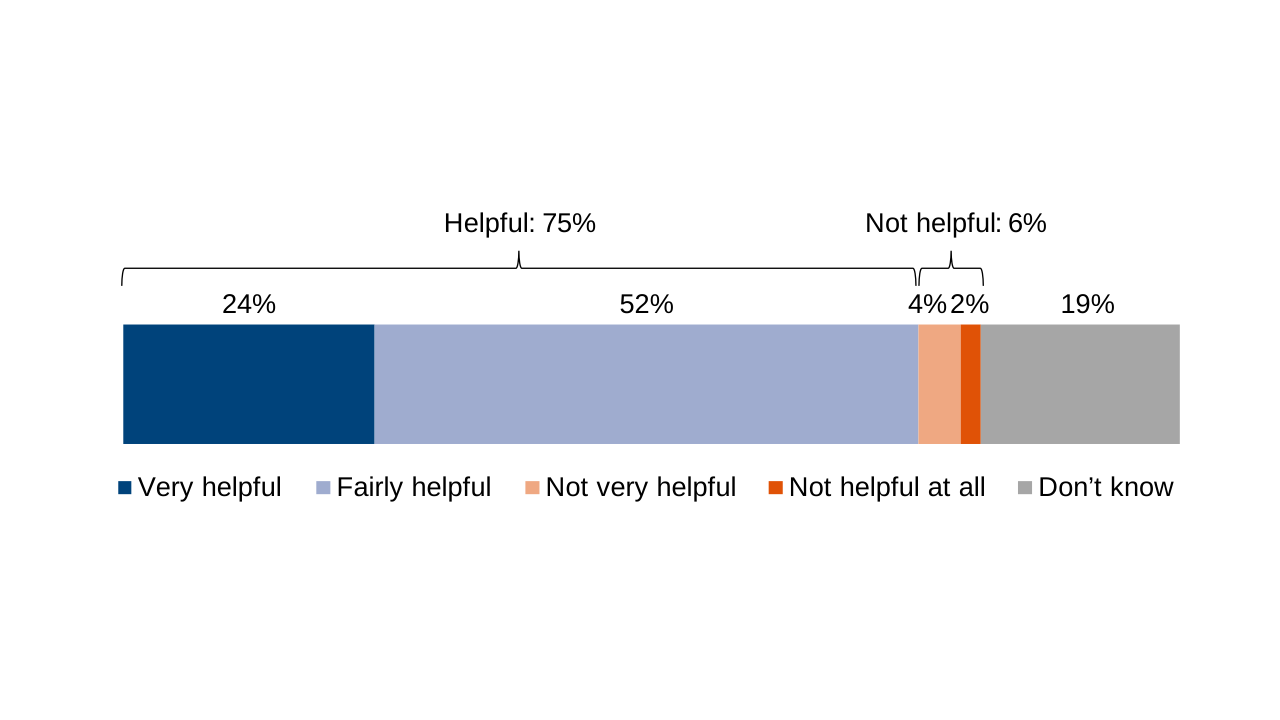
I19. How helpful was the information on the options available to you for managing work while providing help and support to someone else? Base: If heard of digital solution (n=853).
In terms of how the information on GOV.UK affected working unpaid carers’ caring approach, just over a fifth (22%) reported that the information affected how they approached talking to various people about their care situation, including the person with care needs, family, employers or healthcare professionals. A further 16% reported that the information affected how they share care or support with someone else, 15% reported that the information helped them adapt how they provide care or support or combine it with work, and a further 14% reported that the information helped them contact their local authority about adult social care services in their area. Half (51%) stated that the information did not affect how they approached caring and work in any of the ways that were suggested by the survey. The full list of ways in which the information on GOV.UK affected caring approaches can be seen in Figure 10.10.
Figure 10.10 How information on GOV.UK affected caring approach
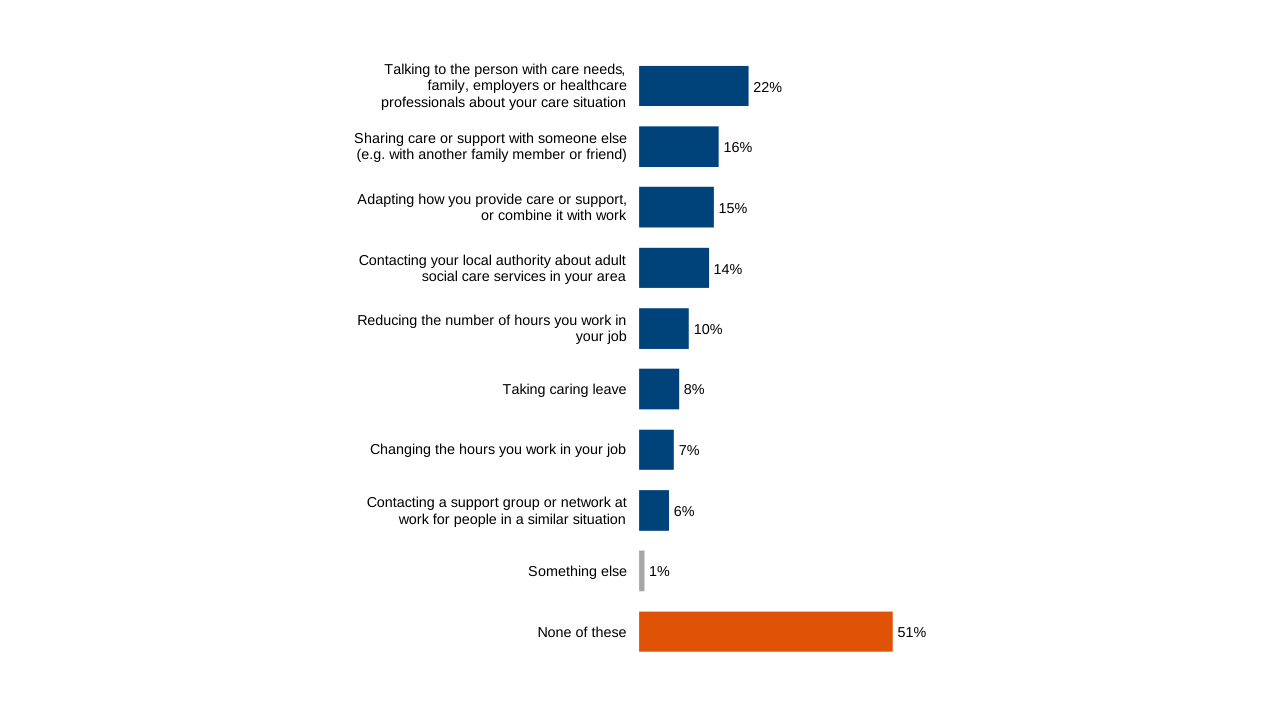
I21. Did the information on these webpages affect how you approach caring and work in any of the following ways? Base: If carer and heard of digital solution (n=161).
When asked how the site could be improved, nearly three quarters (72%) of respondents did not know, and 7% of respondents reported that nothing could be improved. The most commonly reported ways that the website could be improved were better navigation / user experience (5%) and to make the information easy to read / more accessible (5%).
For workers that had not heard of the online information on caring and working from GOV.UK, around half (49%) were interested in learning more about this in the future. However, 3 in 10 (30%) were not very interested, and 16% were not at all interested in hearing more. For those that were not interested in learning more, the most common reason was that it was not needed or relevant to them, with more than half (55%) of workers reporting this.
11. Conclusions
Sickness absence and health
Around half of all workers had taken at least some time off work due to sickness in the past 12 months, while around 3 in 5 had worked while not feeling well enough to do so. Around 1 in 14 had cumulatively taken more than 4 weeks of sickness absence in the past 12 months, while a similar proportion (1 in 13) had taken a continuous absence of 4 weeks or more
Around a third of workers had a long-term health condition. When considering perceptions of their own wellbeing, two thirds of workers described their general physical and mental health as ‘good’, with this being least likely among the youngest workers.
Almost half of all workers with a long-term health condition reported that it affected their ability to work to at least some extent. One in 7 said it affected their ability to work ‘a great deal’, while around 3 in 10 said it did so to ‘some extent’. This was particularly apparent among workers with long-term cognitive or mental health conditions; around a fifth of each group reported that their health condition or disability impacted the amount or type of work they were able to do ‘a great deal’.
Younger workers reported poorer cognitive and mental health, and indicated unmet support needs for how their health affected their work. Younger workers (aged 16 to 34) were less likely to describe their general mental and physical health as ‘good’; were more likely to report having long-term mental or cognitive health conditions; and, relatedly, were more likely to report the amount or type of work they were able to do was impacted ‘a great deal’ by their health condition or disability. Younger workers were more likely than other age groups to have discussed a health condition with their employer; however, they were also more likely, where the employer had put workplace adjustments in place, to have found the process of getting these adjustments put in place difficult, and to deem these adjustments ‘unhelpful’. This group have an appetite for a range of additional adjustments (including short-notice time off, amended hours and adaptations to vehicles or sites). However, these younger employees were more commonly deterred from making requests when compared with older employees, as they expected it would be a hassle to do so, thought they would struggle to explain their needs, or did not know if such adaptations were possible.
Fit notes and returning to work
It was common for employees that had taken a sickness absence to have had to provide their employers with medical evidence during periods of sickness absence. Around half had to provide a fit note to their employer after day 7 of a sickness absence while around 1 in 8 had to provide one on day 7 or before. Just under 1 in 5 employees did not have to provide a fit note or any other medical evidence during a sickness absence.
Employees tended to perceive ‘may be fit for work’ notes’ suggestions about how they could continue to work as ‘helpful’. Around 7 in 10 reported the suggestions given were ‘helpful’.
It was common for employees to return to work from sickness absence when they felt recovered and ready to return, with around three quarters citing this reason for returning. Self-employed workers were also most likely to report returning to work because they had recovered and felt ready to do so, with just over half citing this, but were also likely to say had to go back to work for financial reasons, with exactly half citing this reason.
However, it was also common for workers to report instances of working while unwell. Around three fifths of all workers reported having worked while unwell in the past 12 months. Most commonly, workers continued working while unwell to avoid adding to their colleagues’ workloads.
Sick pay, Occupational Health, workplace adjustments, and Access to Work
Most employees reported receiving OSP, although around 1 in 6 received no sick pay at all. It was much more common for employees to receive OSP only (received by three fifths of those who had experienced a sickness absence in the past 12 months) than SSP only (reported by just over 1 in 10). However, around 1 in 6 employees received neither.
Most workers were aware of OH services, although fewer had access, and fewer still used the services. Three quarters were aware of OH services, but only around half had access and fewer than 1 in 20 workers had used them. Most employees would agree to a voluntary OH assessment if offered one; among the minority that would not, the most common reason given was they would prefer to go to someone else for advice (such as their GP). Other reasons given as to why employees would not agree to a voluntary OH assessment included not thinking OH could help; being unsure what OH assessments were; feeling uncomfortable about the idea of talking to their employer’s OH provider; and thinking that the assessment would be more for their employer’s benefit than theirs.
It was relatively common for employees with a long-term health condition that were currently working not to discuss their condition with their employer, but those that did tended to find their employer supportive. While only three fifths of employees with a long-term health condition had discussed it with their employer, 9 in 10 employees who had done so felt their employer had been at least slightly supportive.
Most employees with long-term health conditions reported that employers had made adjustments for them, and most found these adjustments helpful. Over two thirds of employees with a long-term health condition said their employer had put adjustments or support in place to help manage their health conditions at work, and over 8 in 10 of those who had experienced adjustments found these helpful. Of the most commonly desired adjustments, permission for time-off at short notice and meetings with the employer about managing a health condition at work were among the most likely to already be in place.
Employees with long-term health conditions indicated an interest in adjusting their workload or job roles, although this was less frequently provided by employers. Despite being the second most desired adjustment, amendments to workload or job role was only the sixth most likely adjustment to be in place.
Among employees with adjustments in place, around a quarter found the process difficult. Employees who were more impacted by their condition and younger employees were more likely to report difficulties in getting their adjustments in place.
Worker awareness of Access to Work was relatively low. Nearly three quarters of workers with a long-term health condition had not heard of the Access to Work scheme.
Most employees reported that flexible working arrangements were available to them. Across all employees (including those with and without long-term health conditions), 8 in 10 reported having flexible working arrangements available to them, with flexible working hours and hybrid working options being most commonly offered and most commonly taken up.
Caring responsibilities
A substantial minority of workers had unpaid caring responsibilities but, among employees specifically, only a minority had disclosed this to their employer. Around 1 in 7 workers had unpaid caring responsibilities, with negative effects on physical and mental wellbeing and working hours commonly reported. Only 4 in 10 employees with unpaid caring responsibilities had discussed this with their employer.
Female workers
Female workers were more likely to report challenges in managing their health and wellbeing at work when compared with their male counterparts. Compared to male workers, female workers were less likely to describe their overall health as ‘good’; were more likely to report having a long-term health condition; more likely to report having long-term mental health conditions; and more likely to report that their health conditions affected their day-to-day activities and/or limited the type or amount of work they could do. They were also more likely to have unpaid caring responsibilities, more likely than male workers specifically to have had periods of sickness absence in the past 12 months, and more likely to report having worked while unwell. On the other hand, they were more likely to be aware of OH services and to report these being available to them – perhaps reflecting a higher prevalence of health issues leading to more engagement with the support available.
Differences by employer size and occupation
Support structures were more commonly in place for those working for larger employers. Compared with employees at other sizes of organisation, employees working for larger employers (with 250 or more staff) were most likely to have flexible working options available to them, be aware of OH services, be willing to agree to a voluntary OH assessment, have OH services available to them at work, report having external support or advice and employee assistance programmes in place at work, and say that their employer had written guidelines in place on sickness absence management. There was some evidence to suggest, however, that larger employers provided less helpful or supportive assistance: those with a long-term health condition were least likely to say their employer was ‘very supportive’ about their condition.
Workers in high-skill occupations (Managers, Professionals and Associate Professionals) indicated that a higher level of support was available to them. This group were more likely to report their employer being supportive about a health condition, more likely to have flexible working available to them, more likely to have access to OH services, and more likely to agree to a voluntary OH assessment. Within this group, those in Professional occupations specifically tended to be more positive; they were more likely to be aware of OH services and more likely to report not needing any additional adjustments from their employer when compared with all workers.
Workers in service-intensive occupations (Caring, Leisure and Other Services and Sales and Customer Services roles) indicated that lower levels of support were available to them. They were more likely to be ineligible for both SSP and OSP; less likely to have received OSP for their full sick term; and more likely to have worked when not feeling well enough to do so. They were also less likely to be aware of Access to Work.
Workers in labour-intensive occupations (Machine Operatives and Elementary occupations) also indicated that lower levels of support were available to them. They, like those in service-intensive occupations, were more likely to be ineligible for both SSP and OSP. They were also less likely to report having access to OH services, less likely to say they would agree to a voluntary OH assessment, and least likely to have flexible working options available to them.
Self-employed workers
Self-employed workers suggested that a more precarious financial position impacted their ability to take sickness absence. Compared with employees, self-employed workers were more likely to report having had no income during periods of sickness absence (this was the case for four fifths of self-employed workers who had taken sickness absence in the past 12 months). They were also more likely to have had to return to work from sickness absence for financial reasons. They were less likely to have taken time off work due to illness in the past 12 months, perhaps as a result of these financial pressures. They were much less likely to report having access to OH services and tended to report being unfamiliar with what OH services could provide or how to access them. Adding to this picture of pressure, among those that were unpaid carers, they were more likely than employees to have reduced their working hours to provide unpaid care. One in 14 reported having private self-employment income protection insurance in place.
Conclusion and further research
This report provides reliable and representative quantitative evidence of workers’ attitudes towards health and work, and their experiences of managing their health and wellbeing at work. The data collected around health, ability to work, and sickness absence generally presents a mixed picture. Almost half of all workers had taken at least some time off work due to a sickness absence in the past 12 months, while around 1 in 3 workers had a long-term health condition. Of those with a long-term health condition, just under 6 in 10 had discussed their condition with their employer, suggesting there were barriers in place for a large minority of employees which prevented open discussions with their employers around health and wellbeing. However, many of those who had discussed their health with their employer had adjustments or support in place.
There were notable disparities in workers experiences, both in terms of workers’ own demographic profiles and health as well as the type of employer and role. The accompanying qualitative research provides more in-depth understanding, but further focussed research would be useful in some areas, such as the impact of cognitive and mental health conditions on ability to work (particularly amongst younger people), and how workplaces could be more supportive around sickness absence, enabling discussion of, and adjustments for, long-term health conditions. Finally, consideration should be given to further exploring the experiences of female workers and the self-employed.
Appendices
Appendix A: Data and methodology
Sampling
The population for the 2024 to 2025 survey comprised of working people aged 16 to 75 in Great Britain (England, Scotland and Wales) who were either employed or self-employed at the time of survey.
The sample for the survey was derived from two sources:
- the Royal Mail Postcode Address File (PAF)
- the DWP Family Resources Survey (FRS)
The key reason for using two sample sources for the survey was to combine the ability to replicate the approach in any future research by using the PAF database (a source not reliant on any proprietary databases or panels), with an element of pragmatism by using the FRS sample. Using the FRS database enabled the targeting of those known to be in work as recently as 2022 to 2023 who were likely to be ‘warm leads’ (i.e. those who had previously taken part in DWP research and had indicated a willingness to do so again in the future), allowing for a greater likelihood of response. Further detail on the response rates of each sample source can be found in Table A.5 and Table A.6 below.
PAF sample
The Royal Mail PAF database contains all known residential and commercial addresses in the United Kingdom, including 32 million postal addresses and 1.8 million postcodes[footnote 42]. It is regularly updated to ensure data remains accurate.
The PAF sample was selected from this database at random, with stratification by deprivation level dividing the total population into five equal strata (using the Index of Multiple Deprivation (IMD) measure for each of England, Scotland and Wales). A random sample of addresses were then drawn from each of the five strata, ensuring that 20% of the total sample came from each stratum.
Allowing for exclusions, 22,500 records were drawn from the PAF database to reach the target of 2,700 interviews[footnote 43]. After exclusions, 21,907 households selected from the PAF database were invited to take part in the research. This sample was not named as the PAF database does not hold information about residents living at UK addresses (meaning it was not possible to invite specific individuals to take part).
During fieldwork it became clear that the initial sample of 21,907 would not be sufficient to reach the target number of interviews. Therefore, an additional 3,140 households were drawn from the PAF database and invited to take part in the research to supplement the original sample. This meant that, overall, 25,047 households were invited to take part.
Table A.1 PAF households invited to take part in mainstage fieldwork
| PAF sample type | Households invited |
|---|---|
| PAF – initial | 21,907 |
| PAF – additional | 3,140 |
| Total | 25,047 |
PAF households were invited to take part in the survey via postal letter. The letter included a website link and QR code allowing respondents to complete the survey online[footnote 44]. Each letter contained three access codes to the survey, meaning that up to three eligible individuals in each selected household would be able to take part.
Letters to the initial sample of 21,907 households were sent in three stages: an initial invite and two reminders. The initial invite letter was sent to all 21,907 households. The first reminder was sent to all households that had not either completed the survey, opted out of participating, or informed IFF Research that they were not eligible to take part. The final reminder was targeted at these groups within the most deprived 20% of households (based on IMD) as households in more deprived areas typically have lower response rates.
The additional 3,140 households invited to take part were all sent an invite letter and a reminder letter, unless they had completed the survey, opted out of participating, or informed IFF Research that they were not eligible to take part following the invite letter.
PAF respondents were offered £10 in the form of an e-voucher or PayPal payment as an incentive to take part in the survey.
FRS sample
The Family Resources Survey (FRS) is a continuous household survey which collects information on a representative sample of private households in the United Kingdom. It provides statistics and commentary on, among other things, household income, housing tenure, and employment status[footnote 45].
The FRS sample was supplied directly by DWP and was primarily derived from those who had taken part in the 2022 to 2023 iteration of the FRS and had agreed to be recontacted about other research for DWP. This source also contained an additional ‘boost’ sample of unpaid carers taken from those taking part in the 2020 to 2021 and 2021 to 2022 iterations who had agreed to be recontacted. The file supplied by DWP included individual names and contact details of people known to be eligible for the survey based on their answers to the FRS, as well as other available demographic information, such as age. This could have included multiple individuals from the same household.
The FRS recontact sample was used to provide respondents for the pilot phase of the research. Eight hundred FRS sample records were used from an initial sample batch. It was initially agreed that pilot sample records would not be used for mainstage fieldwork. However, it became clear that additional sample records would be required to meet the initial interview targets, and as such pilot sample records were included for mainstage fieldwork to boost sample numbers.
FRS sample records were excluded from participation if they did not have valid phone numbers or email addresses. After exclusions, 6,362 ‘core’ 2022 to 2023 FRS sample records and 960 ‘boost’ records were included in mainstage fieldwork, meaning a total of 7,322 sample records were invited to take part in the research.
Table A.2 FRS sample individuals invited to take part in mainstage fieldwork
| FRS sample type | Households invited |
|---|---|
| FRS – core | 6,362 |
| FRS – ‘boost’ | 960 |
| Total | 7,322 |
Most FRS sample records were initially invited to take part in the survey via an invite email, which included a link to complete the survey online. These were sent in four stages: an initial invite and three reminders. The third email reminder was accompanied by a text message which included a link to complete the survey online.
FRS sample records who had neither completed the online survey nor opted out, and had a valid telephone number, were followed up by telephone to complete the survey via CATI interview. At this stage, FRS sample without email addresses were invited to take part for the first time.
FRS sample records were offered £5 in the form of an e-voucher or PayPal payment as an incentive to take part in the research. The reason FRS sample respondents were offered a lower incentive amount than PAF sample respondents was due to the reduced effort involved in taking part in the survey; IFF contacted FRS respondents directly (via email, telephone or text message).
Using the PAF database increased the ability to replicate the approach in any further research, as this source is not reliant on any proprietary databases or panels. On the other hand, using the FRS sample helped with response rates, as FRS respondents had previously taken part in DWP research and indicated they were willing to participate in other research studies. This was reflected in the fact that FRS respondents had a higher response rate than PAF respondents (24% and 12% respectively). While the FRS sample had a higher proportion of older workers, this was addressed with weighting.
Questionnaire
Much of the questionnaire was retained from previous research conducted in 2014 and 2021. There were additions, however, reflecting the need to collect information on new topics of interest since earlier iterations were conducted (e.g. the impact of the menopause on workers, awareness and usage of the Access to Work scheme, and the impact of unpaid caring responsibilities on workers).
Certain sections of the questionnaire were modularised to ensure a sufficient base size was achieved for each topic while still maintaining a manageable interview length. This was to mitigate respondent fatigue and therefore ensure the collection of high-quality responses. Respondents were randomly assigned to one of two modules following completion of the section on ‘worker health’. Each module was designed with close attention paid to flow and length.
The questionnaire covered a wide variety of topics for employees and the self-employed, including:
- Employment characteristics, including working hours and pay (asked of all)
- Worker health, including types of health conditions (if any) and their impact (asked of all)
- Sickness absences and Statutory Sick Pay (SSP) (Module 1)
- Fit notes (Module 1)
- Returning to work after a long-term sickness absence (Module 1)
- Occupational Health services, including awareness and usage (Module 1)
- Adjustments at work (Module 2)
- Awareness and experience of the Access to Work scheme (Module 2)
- Flexible working policies for employees (Module 2)
- Experience of unpaid caring responsibilities (asked of unpaid carers only)
- Awareness and experience of online government support for unpaid carers (asked of unpaid careers only)
The full questionnaire can be found in Appendix C: Questionnaire
Cognitive testing
The questionnaire was cognitively tested in full, with follow-up questions throughout the cognitive interviews to gain respondent feedback on new or revised questions compared with the 2021 research. Interviews took place between 18th and 24th April 2024 with employees and self-employed workers who were recruited using a free-find recruitment specialist via a pre-agreed screener.
Quotas were set to ensure a good spread of individuals by employment status, recent experience of (long-term) sickness absence, use of occupational health services, and unpaid carers. Overall, 12 employees and self-employed individuals took part. Cognitive testing respondents were offered £60 as an incentive for taking part and interviews lasted for around 1 hour each.
The breakdown of achieved cognitive interviews can be found in Table A.3.
Table A.3 Profile of achieved cognitive interviews
| Quota group | Achieved (n) |
|---|---|
| Employment status: Working full-time | 7 |
| Employment status: Working part-time | 1 |
| Employment status: Self-employed | 4 |
| Current working status: Currently working | 11 |
| Current working status: Absent from work | 1 |
| Whether has physical or mental health condition: Yes | 6 |
| Whether has physical or mental health condition: No | 6 |
| Whether had long-term sickness absence in last 12 months: Yes | 7 |
| Whether had long-term sickness absence in last 12 months: No | 5 |
| Have Occupational Health services available at work and had an assessment in last 12 months: Yes | 8 |
| Have Occupational Health services available at work and had an assessment in last 12 months: No | 4 |
| Gender: Male | 6 |
| Gender: Female | 6 |
| Age: 16 to 34 | 2 |
| Age: 35 to 49 | 6 |
| Age: 50 and over | 4 |
| Quota group total | 12 |
Fieldwork
Pilot
A pilot fieldwork phase of 31 Computer Assisted Telephone Interviewing (CATI) interviews was conducted between 7th and 11th November 2024. The pilot was conducted with FRS sample, who had previously indicated they were employed or self-employed, and agreed to be recontacted about participating in other DWP research studies.
Table A.4 Profile of achieved pilot interviews
| Quota group | Achieved (n) |
|---|---|
| Employment status: Employee – working full-time (30 or more hours per week) | 20 |
| Employment status: Employee – working part-time (8 to 29 hours per week) | 5 |
| Employment status: Employment status: Employee – working part-time (under 8 hours per week) | 1 |
| Employment status: Self-employed | 5 |
| Module: 1 | 13 |
| Module: 2 | 18 |
| Gender: Male | 11 |
| Gender: Female | 20 |
| Whether has long-term health condition: Yes | 17 |
| Whether has long-term health condition: No | 14 |
| Whether currently working: Yes | 31 |
| Whether currently working: No | 0 |
| Whether unpaid carer: Yes | 10 |
| Whether unpaid carer: No | 21 |
| Quota group total | 31 |
The pilot involved administering the survey as it would be during mainstage fieldwork, with feedback collated from telephone interviewers and recordings to assess the flow and comprehension of the survey questions. This would enable any interviewer instructions or guidance in the survey script to be tweaked accordingly for mainstage fieldwork, if appropriate.
The questionnaire performed well during pilot fieldwork, with no problems due to a lack of understanding. However, the average length of the survey was 28 minutes 36 seconds, around 3.5 minutes longer than budgeted. As a result, the questionnaire was streamlined, with some questions removed while others had pre-coded response options removed or collated for brevity. The final version of the questionnaire used can be found in Appendix C (Questionnaire).
As there were very few minor changes made to the questionnaire following pilot fieldwork, data collected during the 31 interviews in the pilot stage was included in the final dataset.
Mainstage
Mainstage fieldwork was carried out between 28th November 2024 and 16th March 2025 with 1,291 CATI interviews and 2,943 online surveys completed[footnote 46]. Overall, 4,234 interviews were completed, with 2,153 following module 1 and 2,081 following module 2 through the survey.
The PAF sample were invited to take part in the survey via a postal letter and could take part in an online survey[footnote 47]. FRS sample were invited to take part via a combination of phone calls, emails and text messages; FRS sample could take part via CATI interview or online (depending on whether phone numbers, email addresses, or both were held for these workers).
The household response rate among estimated eligible PAF sample was 12%[footnote 48]. A full breakdown of the outcomes for PAF sample can be seen in Table A.5.
Table A.5 Sample outcomes and response rate among PAF sample
| Outcome | Number | % of all households | % of eligible households |
|---|---|---|---|
| Total households invited | 25,047 | 100% | |
| Estimated eligible households (excluding pensioner households and those with no one in work) | 15,780 | 63% | 100% |
| Households contributing one response | 1,319 | 5% | 8% |
| Households contributing two responses | 469 | 2% | 3% |
| Households contributing three responses | 74 | <0.5% | <0.5% |
| Total complete household responses | 1,862 | 7% | 12% |
The overall response rate for FRS sample was 24%. A full breakdown of the outcomes for FRS sample can be seen in Table A.6.
Table A.6 Sample outcomes and response rate among FRS sample
| Outcome | Number of contacts | % of all sample |
|---|---|---|
| Total sample | 7,322 | 100% |
| Uncontactable | 776 | 11% |
| Contactable | 6,546 | 89% |
| Ineligible | 258 | 4% |
| Opt-outs | 10 | <0.5% |
| Refusal | 1,189 | 16% |
| Quit during interview | 45 | 1% |
| Completed online | 464 | 6% |
| Completed over the phone | 1,291 | 18% |
| Total responses | 1,755 | 24% |
On average, online interviews took 12 minutes to complete, while CATI interviews took 23 minutes[footnote 49].
Data processing and coding
Upon fieldwork completion, the data were processed into Excel data tables and an SPSS dataset. The data outputs underwent comprehensive checks against the raw data collected to ensure the accuracy of elements such as labelling and base sizes. Summary variables were defined to summarise scale questions or add banding to numeric questions. Excel tables were produced with z and t tests run at the 95% confidence level. After the weights were run, these were checked to ensure weights were not unreasonably large. A data dictionary was also produced to explain the source of all variables in the SPSS file.
Coded responses were then added to the data. Any verbatim responses that matched pre-codes in the questionnaire were back coded without being added to the base. Verbatim responses from open questions and questions with “other specify” were coded by IFF Research’s in-house coding team. The team started by producing an interim codeframe after a few weeks of fieldwork. The codeframe is reviewed by the research team to ensure it answers the question, the codes are of a usable size, the codes are specific and not redundant with one another. A random selection of verbatim at each question is also reviewed to check the accuracy of the coding. Development proceeded iteratively like this until a codeframe is agreed by both teams.
Where respondents explained their occupation, their response was coded to the Standard Occupational Classification (SOC) 2020 codes.
Data editing
After fieldwork had been completed, the data were checked to ensure that all responses were valid. Two key checks were conducted at this stage: a review of the time taken for online respondents to complete the survey and the proportion of ‘don’t know’ responses. If, after investigation, completed interviews were deemed to not be valid responses, they were removed from the final survey data. Initially, 4,245 completed interviews were achieved. After these checks were conducted, 11 interviews were removed from the final data leaving a final count of 4,234.
As the survey collected numeric data such as working hours, working days and gross pay, the final data underwent extensive checks to remove or edit any non-sensical or implausible data. This included outliers or responses which implied illogical working situations (e.g. the given working hours and working days answers implying that an individual worked 24 hours a day). Where possible, CATI interviews flagged during this process were listened to in order to ascertain the correct data.
Another element of the data editing process included checks to ensure that responses at multi-response questions which should be single-coded (e.g. ‘don’t know’ or ‘none of the above’) were not combined with other responses.
Completed interviews obtained as part of the survey piloting process were included in the final data. Some questions were altered following the pilot. Where this was the case, pilot respondents’ responses were edited to align with the final survey questionnaire.
Finally, the Appendix Bcontained two questions relating to working hours (S4 and A10). Where responses at these questions differed, a global edit was implemented to ensure responses aligned, with A10 responses (which asked workers for the specific number of hours worked per week) prioritised. For example, where the S4 response indicated that the worker was a full-time employee working 30 hours or more per week, but they then indicated that they worked fewer than 30 hours per week at A10, their S4 response was edited accordingly. This edit did not affect self-employed workers.
Missing values
When analysing numeric data collected as part of the survey, certain responses (e.g. ‘don’t know’ or ‘prefer not to say’ responses) were designated as ‘missing values’. This means that these responses are not included when running mean or median values, for example. The numeric data collected as part of this survey included hours worked per week, gross pay information, working days lost to sickness absence, proportions of salary received as part of OSP, and hours spent providing unpaid care.
Mode effects
As the research was mixed-mode (both online and telephone), the initial survey design made efforts to reduce mode effects by, for example, in some cases using “read out” lists, rather than “prompted/unprompted” in the telephone script, which better reflects how the lists are viewed online.
Margin of error
Measuring a margin of error at 50% is referred to as a ‘worst-case scenario’, as the margin of error decreases the closer results approach 0% or 100%.
Table A.7 shows the margin of error for the unweighted sample of workers in Great Britain aged 16 to 75 to demonstrate how it changes by survey responses.
Table A.7 Margins of error at the 95% confidence level
| Outcome | Number of interviews | Margin of error at 50%:50% | Margin of error at 70%:30% | Margin of error at 90%:10% |
|---|---|---|---|---|
| Unweighted sample | 4,234 | +/- 1.5 pp | +/- 1.4 pp | +/- 0.9 pp |
Weighting
The data collected was weighted to population figures supplied from the ONS APS to ensure the data were representative of the working population of individuals in Great Britain aged 16 to 75. Data supplied by the ONS reflected the period October 2023 to September 2024.
The variables used in weighting the data were employment status, age, gender, ethnicity, occupational grouping, whether worker had a long-term health condition, region, and deprivation level (based on IMD).
However, it is worth noting that the population totals used for the APS estimates are projected growth rates from Real-Time Information (RTI) data for EU and non-EU populations, based on 2021 patterns. The total population used for the APS therefore does not take into account any changes in migration, birth rates or death rates since June 2021. Therefore, it is possible that these estimates may under or overestimate the true values.
For some variables used in the weighting process (gender, ethnicity and occupational grouping), population figures did not include data for ‘don’t know’ or ‘prefer not to say’. In these scenarios, the ‘population’ figures used in the weighting process matched the final survey data so that these responses were given a weight of 1. The remaining targets within these weighting categories were then adjusted accordingly.
The weighting process followed four distinct steps. The first step weighted the survey population (minus unpaid carers from the ‘boost’ FRS sample) to the IMD weighting targets using Random Iterative Method (RIM) weighting.
The second step used calibration weights to bring the survey population (minus unpaid carers from the ‘boost’ FRS sample) in line with the population as defined in Table A.8.
The third step involved using the weighted survey data to determine the profile of unpaid carers (since there is no publicly available information on this group within wider the survey population). This meant using the profile of unpaid carers within the weighted survey population to apply a second stage calibration weight to include unpaid carers sampled from the ‘boost’ FRS sample in the weighting scheme. Following this step all survey respondents were included in the weighting.
The fourth and final stage involved the creation of module weights designed to weight responses to modularised questions to the population. To create these module weights, within the survey population of each module the core weight (finalised in stage three) was applied to the data and then a further calibration was added to bring each group in line with the population, again using the variables outlined in Table A.8.
This process resulted in three final weights being produced for use: the core weight, a module 1 weight, and a module 2 weight.
Once produced, the individual weights were examined. The final weighted profile of the data was compared against the population profile to ensure an accurate fit was achieved. No trimming of weights was required.
Table A.8 Profile of the underlying population used for weighting
| Weighting variable | Population % | Final weighted survey responses (core weight) % |
|---|---|---|
| Employment status: Employed | 86.88% | 86.89% |
| Employment status: Self-employed | 13.12% | 13.11% |
| Age: 16 to 17 | 0.99% | 1.11% |
| Age: 18 to 24 | 9.86% | 9.75% |
| Age: 25 to 34 | 23.11% | 23.11% |
| Age: 35 to 49 | 33.34% | 33.33% |
| Age: 50 to 64 | 28.87% | 28.87% |
| Age: 65 to 75 | 3.83% | 3.83% |
| Gender: Male | 51.82% | 51.75% |
| Gender: Female | 47.57% | 47.63% |
| Gender: In another way | 0.37% | 0.36% |
| Gender: Prefer not to say | 0.24% | 0.26% |
| Ethnicity: Asian or Asian British | 8.15% | 8.20% |
| Ethnicity: Black, Black British, Caribbean or African | 4.22% | 3.99% |
| Ethnicity: Mixed or multiple ethnic groups | 1.61% | 1.75% |
| Ethnicity: White | 83.09% | 83.20% |
| Ethnicity: Any other ethnic group | 1.93% | 1.91% |
| Ethnicity: Prefer not to say | 1.00% | 0.96% |
| Occupational group: High skill | 50.50% | 51.63% |
| Occupational group: Middle skill | 16.97% | 16.19% |
| Occupational group: Service intensive | 13.65% | 13.65% |
| Occupational group: Labour intensive | 13.51% | 13.24% |
| Occupational group: Don’t know / Prefer not to say | 5.37% | 5.29% |
| Whether has a long-term health condition: Yes | 32.65% | 32.01% |
| Whether has a long-term health condition: No | 66.79% | 67.15% |
| Whether has a long-term health condition: Don’t know / Prefer not to say | 0.56% | 0.85% |
| Region: Northern England | 22.55% | 22.52% |
| Region: Midlands | 16.28% | 16.44% |
| Region: London | 15.21% | 14.42% |
| Region: Southern England | 33.09% | 33.49% |
| Region: Scotland | 8.32% | 8.48% |
| Region: Wales | 4.56% | 4.64% |
| Deprivation level: Most deprived | 20.00% | 19.26% |
| Deprivation level: More deprived | 20.00% | 19.71% |
| Deprivation level: Average | 20.00% | 20.23% |
| Deprivation level: Less deprived | 20.00% | 20.30% |
| Deprivation level: Least deprived | 20.00% | 20.49% |
Key Drivers Analysis
The analysis presented in this report is generally bivariate, so it is not possible to determine whether differences between groups are due solely to the factor mentioned (e.g. age) or a might be the result of another factor. It is likely that many variables are interrelated (e.g. type of health condition and age could be linked).
To further understand the association of particular variables with the likelihood of certain outcomes relating to employees managing their health and wellbeing at work, three logistic regression models were run. The dependent variables tested in each model were:
- Whether employees had cumulatively had more than four weeks off work due to sickness absence in the past 12 months
- Whether employees had had a continuous sickness absence of four or more weeks in the past 12 months
- Whether employees with a long-term health condition, who were currently working at the time of survey, had discussed their health condition or disability with their current employer
Logistic regression aids understanding of the association of various selected predictor variables (such as demographic, employer or job characteristics) with a binary dependent (i.e. outcome) variable. For example, with the first of our logistic regression models, the outcome variable was whether employees cumulatively had more than four weeks off work due to sickness absence in the past 12 months. The key benefit of analysing the data in this way is that logistic regression controls for the other selected predictor variables. In other words, we can assess the contribution of each predictor variable, holding all others constant. For example, there may be an association with both age and yearly gross pay with having cumulatively had more than four weeks off work, but it may be that these independent variables are closely associated with each other. Logistic regression accounts for associations between predictor variables when estimating their effect on the dependent variable. This therefore allows us to understand which of the selected predictor variables are most closely associated with, in this instance, having cumulatively had more than four weeks off work due to sickness absence. In other words, to use an example outlined in the ‘Sickness absence and sick pay’ chapter, we could say that if two employees are identical but one has a long-term physical health condition and the other does not, the probability of the employee with a long-term physical health condition cumulatively having had more than 4 weeks off work due to sickness absence increases by 7.2 percentage points when compared with the employee that does not have a long-term physical health condition.
The logistic regression models identified predictors that were statistically significantly related to the dependent variables tested, while taking into account the influence of all other factors in the analysis. To do this, and understand the strength of association, we look at the Average Marginal Effects (AMEs). AMEs reflect the average change in predicted probability across all respondents in the data when a variable changes, holding all other variables at their observed values. Logistic regression models typically result in log-odds and odds ratios being reported. Because these can be difficult to interpret, AMEs were calculated instead to provide a more understandable interpretation.
R was used to perform stepwise logistic regression. Stepwise methods help to reduce the number of variables in the model, which help prevent overfitting. Specifically, in stepwise regression a variable selection procedure automatically adds and removes predictors based on a measure of model quality. Multicollinearity, which is a problem when predictors are correlated, was also mitigated.
Table A.9, Table A.10 and Table A.11 below outline the odds ratios, probabilities and AMEs from each model.
Each table shows only the independent variables which were included in each model.
Table A.9 Logistic regression of having had a cumulative sickness absence of more than four weeks in the past 12 months
| Independent variable | Odds ratio | Odds ratio P value | Probability estimate | Average Marginal Effect (AME) | AME Lower Confidence Interval | AME Upper Confidence Interval | AME P value |
|---|---|---|---|---|---|---|---|
| Country: England* | 1.00 | 6.55% | |||||
| Country: Scotland | 1.21 | 0.571 | 7.66% | 1.11% | -0.03 | 0.05 | 0.591 |
| Country: Wales** | 2.55 | 0.006 | 13.50% | 6.95% | 0.01 | 0.13 | 0.029 |
| Level of deprivation (using IMD quintiles): Most deprived* | 1.00 | 5.27% | |||||
| Level of deprivation (using IMD quintiles): More deprived | 1.53 | 0.264 | 7.47% | 2.20% | -0.02 | 0.06 | 0.252 |
| Level of deprivation (using IMD quintiles): Average | 1.62 | 0.191 | 7.79% | 2.52% | -0.01 | 0.06 | 0.172 |
| Level of deprivation (using IMD quintiles): Less deprived** | 2.07 | 0.043 | 9.44% | 4.17% | 0.00 | 0.08 | 0.028 |
| Level of deprivation (using IMD quintiles): Least deprived | 0.93 | 0.857 | 4.96% | -0.31% | -0.04 | 0.03 | 0.858 |
| Gender: Male* | 1.00 | 5.17% | |||||
| Gender: Female** | 1.79 | 0.011 | 8.32% | 3.16% | 0.01 | 0.05 | 0.008 |
| Highest level of qualification: Fewer than 5 GCSEs at grade A* to C / 9 to 4 or equivalent, or no formal qualifications* | 1.00 | 14.93% | |||||
| Highest level of qualification: 5 or more GCSEs at grade A* to C / 9 to 4 or equivalent** | 0.42 | 0.020 | 7.70% | -7.23% | -0.13 | -0.01 | 0.019 |
| Highest level of qualification: 2 or more A levels or equivalent** | 0.47 | 0.017 | 8.49% | -6.43% | -0.12 | -0.01 | 0.025 |
| Highest level of qualification : Undergraduate degree or above** | 0.26 | 0.000 | 5.16% | -9.76% | -0.15 | -0.05 | 0.000 |
| Sick pay eligible for: Statutory Sick Pay (SSP)* | 1.00 | 3.79% | |||||
| Sick pay eligible for: Occupational / Company Sick Pay (OSP)** | 3.11 | 0.000 | 9.65% | 5.85% | 0.03 | 0.09 | 0.000 |
| Sick pay eligible for: SSP some of the time and OSP some of the time** | 3.27 | 0.005 | 10.03% | 6.24% | 0.01 | 0.11 | 0.011 |
| Sick pay eligible for: Neither SSP nor OSP | 1.36 | 0.543 | 4.93% | 1.14% | -0.03 | 0.05 | 0.561 |
| Sick pay eligible for: Don’t know | 0.42 | 0.154 | 1.74% | -2.06% | -0.05 | 0.00 | 0.112 |
| Whether has a long-term physical health condition: Yes* | 1.00 | 12.06% | |||||
| Whether has a long-term physical health condition: No** | 0.34 | 0.000 | 4.88% | -7.18% | -0.10 | -0.04 | 0.000 |
| Whether has a long-term mental health condition: Yes* | 1.00 | 12.91% | |||||
| Whether has a long-term mental health condition: No** | 0.37 | 0.000 | 5.82% | -7.10% | -0.11 | -0.03 | 0.001 |
| Whether has a long-term cognitive health condition: Yes* | 1.00 | 12.64% | |||||
| Whether has a long-term cognitive health condition: No | 0.45 | 0.059 | 6.84% | -5.80% | -0.13 | 0.02 | 0.128 |
| Employment status: Full-time* | 1.00 | 6.09% | |||||
| Employment status: Part-time** | 1.99 | 0.004 | 10.53% | 4.43% | 0.01 | 0.08 | 0.010 |
Base: All employees (module 1) (n=2,153). * denotes reference level. ** indicates a statistically significant difference at the 95% confidence level. P values are shown to a maximum of 3 decimal places.
Table A.10 Logistic regression of having had a continuous sickness absence of four or more weeks in the past 12 months
| Independent variable | Odds ratio | Odds ratio P value | Probability estimate | Average Marginal Effect (AME) | AME Lower Confidence Interval | AME Upper Confidence Interval | AME P value |
|---|---|---|---|---|---|---|---|
| Country: England* | 1.00 | 8.18% | |||||
| Country: Scotland | 0.78 | 0.314 | 6.64% | -1.54% | -0.04 | 0.01 | 0.279 |
| Country: Wales | 1.55 | 0.084 | 11.61% | 3.43% | -0.01 | 0.08 | 0.126 |
| Level of deprivation (using IMD quintiles) | |||||||
| Level of deprivation (using IMD quintiles): Most deprived* | 1.00 | 8.70% | |||||
| Level of deprivation (using IMD quintiles): More deprived | 1.08 | 0.736 | 9.24% | 0.54% | -0.03 | 0.04 | 0.735 |
| Level of deprivation (using IMD quintiles): Average | 0.90 | 0.628 | 7.96% | -0.74% | -0.04 | 0.02 | 0.631 |
| Level of deprivation (using IMD quintiles): Less deprived | 1.19 | 0.412 | 10.03% | 1.33% | -0.02 | 0.04 | 0.406 |
| Level of deprivation (using IMD quintiles): Least deprived** | 0.59 | 0.028 | 5.54% | -3.16% | -0.06 | 0.00 | 0.032 |
| Age: 16 to 24* | 1.00 | 8.84% | |||||
| Age: 25 to 34 | 0.84 | 0.605 | 7.65% | -1.20% | -0.06 | 0.04 | 0.619 |
| Age: 35 to 49 | 0.74 | 0.364 | 6.88% | -1.96% | -0.07 | 0.03 | 0.402 |
| Age: 50 to 75 | 1.15 | 0.662 | 9.94% | 1.10% | -0.04 | 0.06 | 0.650 |
| Gender: Male* | 1.00 | 6.24% | |||||
| Gender: Female** | 1.64 | 0.001 | 9.48% | 3.24% | 0.01 | 0.05 | 0.001 |
| Highest level of qualification | |||||||
| Highest level of qualification: Fewer than 5 GCSEs at grade A* to C / 9 to 4 or equivalent, or no formal qualifications* | 1.00 | 15.09% | |||||
| Highest level of qualification: 5 or more GCSEs at grade A* to C / 9 to 4 or equivalent** | 0.56 | 0.018 | 9.55% | -5.54% | -0.10 | -0.01 | 0.020 |
| Highest level of qualification: 2 or more A levels or equivalent** | 0.50 | 0.002 | 8.81% | -6.28% | -0.11 | -0.02 | 0.004 |
| Highest level of qualification: Undergraduate degree or above** | 0.36 | 0.000 | 6.56% | -8.53% | -0.13 | -0.04 | 0.000 |
| Sick pay eligibility: Statutory Sick Pay (SSP)* | 1.00 | 6.00% | |||||
| Sick pay eligibility: Occupational / Company Sick Pay (OSP)** | 1.77 | 0.004 | 9.67% | 3.67% | 0.01 | 0.06 | 0.002 |
| Sick pay eligibility: SSP some of the time and OSP some of the time** | 2.30 | 0.001 | 11.91% | 5.91% | 0.02 | 0.10 | 0.003 |
| Sick pay eligibility: Neither SSP nor OSP | 1.00 | 0.987 | 5.97% | -0.03% | -0.03 | 0.03 | 0.987 |
| Sick pay eligibility: Don’t know | 0.70 | 0.248 | 4.37% | -1.63% | -0.04 | 0.01 | 0.226 |
| Occupational group: High-skill* | 1.00 | 7.51% | |||||
| Occupational group: Middle-skill | 0.84 | 0.451 | 6.51% | -1.00% | -0.04 | 0.02 | 0.433 |
| Occupational group: Service-intensive** | 1.59 | 0.013 | 10.97% | 3.46% | 0.00 | 0.06 | 0.023 |
| Occupational group: Labour-intensive** | 1.74 | 0.023 | 11.77% | 4.26% | 0.00 | 0.08 | 0.044 |
| Occupational group: Prefer not to say | 0.86 | 0.696 | 6.59% | -0.93% | -0.05 | 0.03 | 0.681 |
| Whether has a long-term physical health condition: Yes* | 1.00 | 12.00% | |||||
| Whether has a long-term physical health condition: No** | 0.48 | 0.000 | 6.53% | -5.47% | -0.08 | -0.03 | 0.000 |
| Whether has a long-term mental health condition: Yes* | 1.00 | 16.34% | |||||
| Whether has a long-term mental health condition: No** | 0.34 | 0.000 | 6.72% | -9.62% | -0.13 | -0.06 | 0.000 |
| Whether an unpaid carer: Yes* | 1.00 | 9.73% | |||||
| Whether an unpaid carer: No | 0.76 | 0.081 | 7.79% | -1.94% | -0.04 | 0.00 | 0.098 |
| Type of Organisation: Private sector* | 1.00 | 6.86% | |||||
| Type of Organisation: Charity or voluntary sector | 1.02 | 0.943 | 6.99% | 0.12% | -0.03 | 0.03 | 0.943 |
| Type of Organisation: Public sector** | 1.63 | 0.001 | 10.26% | 3.40% | 0.01 | 0.06 | 0.002 |
Base: All employees (n=4,234). * denotes reference level. ** indicates a statistically significant difference at the 95% confidence level. P values are shown to a maximum of 3 decimal places.
Table A.11 Logistic regression of having discussed health condition or disability with current employer
| Independent variable | Odds ratio | Odds ratio P value | Probability estimate | Average Marginal Effect (AME) | AME Lower Confidence Interval | AME Upper Confidence Interval | AME P value |
|---|---|---|---|---|---|---|---|
| Country: England* | 1.00 | 57.26% | |||||
| Country: Scotland | 0.70 | 0.317 | 49.76% | -7.50% | -0.22 | 0.07 | 0.318 |
| Country: Wales | 2.26 | 0.078 | 72.81% | 15.54% | 0.00 | 0.31 | 0.052 |
| Age: 16 to 34* | 1.00 | 70.57% | |||||
| Age: 35 to 49** | 0.48 | 0.010 | 56.03% | -14.54% | -0.25 | -0.04 | 0.007 |
| Age: 50 to 75** | 0.37 | 0.001 | 50.23% | -20.34% | -0.32 | -0.09 | 0.000 |
| Occupational group: High-skill* | 1.00 | 60.33% | |||||
| Occupational group: Middle-skill | 0.92 | 0.782 | 58.57% | -1.76% | -0.14 | 0.11 | 0.783 |
| Occupational group: Service-intensive | 0.83 | 0.543 | 56.62% | -3.72% | -0.16 | 0.08 | 0.544 |
| Occupational group: Labour-intensive** | 0.31 | 0.003 | 36.32% | -24.01% | -0.39 | -0.09 | 0.001 |
| Occupational group: Prefer not to say | 1.48 | 0.579 | 67.95% | 7.62% | -0.18 | 0.34 | 0.564 |
| Type of contract: Temporary, casual or zero hours contract* | 1.00 | 48.22% | |||||
| Type of contract: Permanent contract | 1.71 | 0.143 | 59.33% | 11.11% | -0.04 | 0.26 | 0.143 |
| Type of contract: Apprenticeship / training contract or no contract | 0.40 | 0.255 | 29.98% | -18.24% | -0.48 | 0.11 | 0.222 |
| Whether has a long-term physical health condition: Yes* | 1.00 | 60.32% | |||||
| Whether has a long-term physical health condition: No** | 0.53 | 0.020 | 47.31% | -13.01% | -0.24 | -0.02 | 0.018 |
| Whether has a long-term cognitive health condition Yes* | 1.00 | 71.45% | |||||
| Whether has a long-term cognitive health condition No** | 0.46 | 0.061 | 56.19% | -15.26% | -0.30 | -0.01 | 0.042 |
| Extent to which condition affects amount or type of work possible in job: Not at all* | 1.00 | 42.33% | |||||
| Extent to which condition affects amount or type of work possible in job: Not very much | 1.53 | 0.106 | 51.89% | 9.55% | -0.02 | 0.21 | 0.104 |
| Extent to which condition affects amount or type of work possible in job: To some extent** | 3.92 | 0.000 | 71.55% | 29.21% | 0.18 | 0.40 | 0.000 |
| Extent to which condition affects amount or type of work possible in job: A great deal** | 4.46 | 0.000 | 73.85% | 31.52% | 0.17 | 0.46 | 0.000 |
Base: All employees with a long-term health condition (module 2) (n=503). * denotes reference level. ** indicates a statistically significant difference at the 95% confidence level. P values are shown to a maximum of 3 decimal places.
Appendix B: Unweighted base sizes
Table B.1 Unweighted base sizes for key subgroups of interest
| Subgroup | Total | England | Scotland | Wales |
|---|---|---|---|---|
| Total | 4,234 | 3,655 | 380 | 199 |
| Employment status: Employee | 3,763 | 3,242 | 343 | 178 |
| Employment status: Full-time employee | 2,905 | 2,494 | 266 | 145 |
| Employment status: Part-time employee | 858 | 748 | 77 | 33 |
| Employment status: Self-employed | 471 | 413 | 37 | 21 |
| Age: 16 to 24 | 262 | 235 | 20 | 7 |
| Age: 25 to 34 | 986 | 835 | 91 | 60 |
| Age: 35 to 49 | 1,569 | 1,360 | 139 | 70 |
| Age: 50 to 64 | 1,197 | 1,042 | 104 | 51 |
| Age: 65 to 75 | 220 | 183 | 26 | 11 |
| Gender: Male | 1,817 | 1,581 | 162 | 74 |
| Gender: Female | 2,392 | 2,053 | 216 | 123 |
| Gender: In another way | 15 | 12 | 2 | 1 |
| Gender: Prefer not to say | 10 | 9 | 0 | 1 |
| English Region: East Midlands | 323 | 323 | N/A | N/A |
| English Region: East of England | 457 | 457 | N/A | N/A |
| English Region: London | 431 | 431 | N/A | N/A |
| English Region: North East | 157 | 157 | N/A | N/A |
| English Region: North West | 435 | 435 | N/A | N/A |
| English Region: South East | 688 | 688 | N/A | N/A |
| English Region: South West | 429 | 429 | N/A | N/A |
| English Region: West Midlands | 392 | 392 | N/A | N/A |
| English Region: Yorkshire and the Humber | 343 | 343 | N/A | N/A |
| Level of Deprivation: Most deprived | 596 | 516 | 54 | 26 |
| Level of Deprivation: More deprived | 811 | 716 | 58 | 37 |
| Level of Deprivation: Average | 896 | 773 | 78 | 45 |
| Level of Deprivation: Less deprived | 908 | 773 | 95 | 40 |
| Level of Deprivation: Least deprived | 1,023 | 877 | 95 | 51 |
| Yearly gross pay (employees only): Less than £17,500 | 576 | 502 | 48 | 26 |
| Yearly gross pay (employees only): £17,500 to £29,999 | 857 | 730 | 79 | 48 |
| Yearly gross pay (employees only): £30,000 to £49,999 | 1,059 | 895 | 104 | 60 |
| Yearly gross pay (employees only): £50,000 or more | 832 | 730 | 74 | 28 |
| Yearly gross pay (employees only): Don’t know | 439 | 385 | 38 | 16 |
| Occupational group: High-skill | 2,559 | 2,220 | 216 | 123 |
| Occupational group: Managers | 419 | 376 | 26 | 17 |
| Occupational group: Professionals | 1,437 | 1,242 | 125 | 70 |
| Occupational group: Associate Professionals | 703 | 602 | 65 | 36 |
| Occupational group: Middle-skill | 509 | 444 | 39 | 26 |
| Occupational group: Administrative and Secretarial | 325 | 281 | 23 | 21 |
| Occupational group: Skilled Trades | 184 | 163 | 16 | 5 |
| Occupational group: Service-intensive | 544 | 464 | 59 | 21 |
| Occupational group: Caring, Leisure and Other Services | 298 | 256 | 32 | 10 |
| Occupational group: Sales and Customer Services | 246 | 208 | 27 | 11 |
| Occupational group: Labour-intensive | 399 | 338 | 38 | 23 |
| Occupational group: Process, Plant and Machine Operatives | 152 | 132 | 13 | 7 |
| Occupational group: Elementary | 247 | 206 | 25 | 16 |
| Occupational group: Prefer not to say | 223 | 189 | 28 | 6 |
| Size of organisation (employees only): 2 to 49 employees | 725 | 655 | 47 | 23 |
| Size of organisation (employees only): 50 to 249 employees | 542 | 483 | 36 | 23 |
| Size of organisation (employees only): 250 or more employees | 2,134 | 1,802 | 213 | 119 |
| Size of organisation (employees only): Don’t know | 362 | 302 | 47 | 13 |
| Size of organisation (employees only): Type of organisation (employees only) | ||||
| Size of organisation (employees only): Private sector | 2,071 | 1,842 | 156 | 73 |
| Size of organisation (employees only): Public sector | 1,314 | 1,088 | 143 | 83 |
| Size of organisation (employees only): Charity or voluntary sector | 232 | 187 | 32 | 13 |
| Size of organisation (employees only): Don’t know | 146 | 125 | 12 | 9 |
| Whether has long-term health condition: Yes | 1,279 | 1,078 | 119 | 82 |
| Whether has long-term health condition: Physical health condition | 1,001 | 844 | 91 | 66 |
| Whether has long-term health condition: Mental health condition | 533 | 445 | 49 | 39 |
| Whether has long-term health condition: Cognitive health condition | 125 | 101 | 14 | 10 |
| Whether has long-term health condition: No | 2,812 | 2,458 | 244 | 110 |
| Whether has long-term health condition: Don’t know / Prefer not to say | 143 | 119 | 17 | 7 |
Appendix C: Questionnaire
Online Survey: Home Page
Welcome!
Thank you for assisting with this research for the Department for Work and Pensions (DWP). As a reminder, you will be compensated with [IF SAMSOURCE=1: £10; IF SAMSOURCE=2: £5) for your participation and time. We’ll let you know how you can receive this at the end of the survey.
This research is being carried out to help the government understand more about how people manage their health and wellbeing at work and how they are supported with this. The results of the survey will help design and refine policies that promote good workplace practices around health and wellbeing.
For more information on how your data will be used, you can read the survey privacy notice here.
Further information
• The survey is being administered by IFF Research, an independent market research company, on behalf of the DWP
• The survey should take around 20 minutes to complete, depending on your answers, and you can stop and start as many times as you like, without losing your place [IF SAMSOURCE=2: just click on the link in your email; IF SAMSOURCE=1: just reuse the link and access code provided in your letter] to return to the last question you answered
• When completing the survey please only use the ‘previous’ and ‘next’ buttons at the bottom of the page, not the ‘back’ and ‘forward’ buttons in your browser
• Any information you give us during this survey will be treated as strictly confidential, in line with the Code of Conduct of the Market Research Society and General Data Protection Regulation (GDPR). IFF Research will store your personal data in their secure server until the project finishes, and this data will be deleted no later than September 2025
• The only time we will break this confidentiality is if your share something which causes us concern about your physical safety. If this happens, we have a duty to act to make sure you are protected. In this case, we would need to contact the emergency services for assistance and inform the DWP in case they need to take any action to prevent harm. If we feel it is appropriate (i.e., doing so will not put you or someone else at risk of further harm) and there is time to do so (for example, sometimes we would want to act quickly in an emergency), we would tell you before we make that call
• IFF Research will share a copy of your survey data with the DWP for research purposes. This will not include any information that can be used to directly identify you, such as your name or address. At the end of the survey, we will ask you about whether you would be happy for your details to be included in a separate file containing personal information that will be shared with the DWP for the purposes of contacting you about taking part in future, related research. This will only be shared with the DWP if you agree to this
• You have the right to request a copy of your data, change your data, or withdraw from this research at any point. If you’d like to do this, you can consult our website here: Privacy policy IFF Research
• If you have any questions, or would like more information about this research, please email IFF Research on employee_selfemployedsurvey@iffresearch.com
• If you would like to confirm with DWP that this survey is genuine, you can contact their research team at dwp.employeeandself-employedresearchsurvey@dwp.gov.uk
Before you start, please may you confirm the following statement: By agreeing to take part in this survey I understand how my data will be used and I am happy to proceed
-
Yes
-
No – I would not like to participate
S – Telephone screener
ASK IF CATI
S1. Good morning / afternoon / evening. My name is (NAME) and I’m calling from IFF Research on behalf of the Department for Work and Pensions (DWP). [IF NAME ON SAMPLE: I’m looking to speak to (CONTACT) please.]
We have been asked by the DWP to conduct research to help the government understand more about how people manage their health and wellbeing at work and how they are supported with this. The results of the survey will help design and refine policies that promote good workplace practices around health and wellbeing.
It would be helpful to cover these questions together now, please? It should take around 20 minutes and, as a thank you, you will be compensated with [IF SAMSOURCE=1: £10; IF SAMSOURCE=2: £5] for your participation and time.
ADD IF NECESSARY:
The DWP have commissioned IFF Research to conduct this survey with employees and self-employed people aged 16-75 in Great Britain.
You may have recently received [IF SAMSOURCE=1: a letter; IF SAMSOURCE=2: an email] about participating in this research.
1. Respondent answers phone
2. Transferred to respondent
3. Hard appointment
4. Soft Appointment
5. Engaged
6. Refusal
7. Not available in deadline
8. Fax Line
9. No reply / Answer phone
10. Business Number
11. Dead line
12. Request reassurance email
13. Additional accessibility needs – flag to team lead/research team
ASK IF REFUSED TELEPHONE SURVEY (S1=6) OR ACCESSIBILITY NEEDS (S1=13)
S3. It’s also possible to complete this survey online if this would be better for you. Would you like me to send across the details of how to do that?
SINGLE CODE
1. Yes
2. No
ASK ALL AGREEING TO TAKE PART (S2 = 1)
S3a. Before we begin, I need to tell you under data protection law that you have the right to have a copy of your data, change your data, or withdraw from the research at any point. If you’d like to do this, or find out more, you can consult our website at iffresearch.com/gdpr.
IFF Research will share a copy of your survey data with the DWP for research purposes. This will not include any information that can be used to directly identify you.
I also need to confirm that you understand how your data will be used, and that you’re happy to proceed on that basis.
In order to guarantee this, and as part of our quality control procedures, all interviews are recorded. Is that OK?
1. Yes – agree to continue
2. Refuse to continue
ASK ALL BASED IN WALES (CATI AND COUNTRY=4)
S3b. Would you prefer the interview to be carried out in Welsh or English?
1. Welsh
2. English
REASSURANCES TO USE IF NECESSARY:
The interview should take around 20 minutes to complete.
Please note that all data will be reported in aggregate form and your answers will not be reported to the DWP in any way that would allow you to be identified. Any answer you give will be treated in confidence in accordance with the Code of Conduct of the Market Research Society.
The only time we will break this confidentiality is if your share something which causes us concern about your physical safety. If this happens, we have a duty to act to make sure you are protected. In this case, we would need to contact the emergency services for assistance and inform the DWP in case they need to take any action to prevent harm. If we feel it is appropriate (i.e., doing so will not put you or someone else at risk of further harm) and there is time to do so (for example, sometimes we would want to act quickly in an emergency), we would tell you before we make that call.
If the respondent wishes to confirm validity of survey or get more information about aims and objectives, they can contact:
• IFF: XXX on XXX or via email at XXX.
• DWP: the research team at XXX
If respondent wants to check on status of IFF Research:
• MRS: Market Research Society on 0800 975 9596
ASK ALL
S4. What is your current employment status? If you are doing more than one job please select your main job, that is the one where you earn the most money.
READ OUT. SINGLE CODE.
1. In paid employment – working full-time (30+ hours per week)
2. In paid employment – working part-time (8-29 hours per week)
3. In paid employment – working part-time (under 8 hours per week)
4. Self-employed
5. None of the above CATI:
SHOW TO ALL: Thank you for your answers so far. I now have some questions about you which will help us better understand the employment experiences of different types of people.
IF SAMSOURCE=1 OR (SAMSOURCE=2 AND AGE=SYSMIS)
S5. What is your age?
WRITE IN – MAX 75
1. Don’t know
2. Prefer not to say
S5RAN - DS CODE TO RANGE
1. Under 16
2. 16-17
3. 18-20
4. 21-24
5. 25-34
6. 35-49
7. 50-64
8. 65-75
9. 76 and over
ASK ALL
S6. Which of the following best describes how you think of yourself?
READ OUT. SINGLE CODE.
1. Male
2. Female
3. In another way
4. Prefer not to say
ASK IF SAMSOURCE=2
S7. DWP are interested in how work and health is affected by where people live. To help us understand this, please could you share your home postcode?
ADD IF NECESSARY: We will only use your postcode for our anonymised, aggregated survey analysis. We will not share your postcode with DWP or any other organisations, or use this information to send you anything by post.
WRITE IN
1. Don’t know / Prefer not to say
DS: PLEASE CODE S7 POSTCODE ANSWER TO S7A REGION
IF DON’T KNOW / PREFER NOT TO SAY (S7=1)
S7A. Can you tell us which of these areas you live in?
READ OUT. SINGLE CODE.
1. East Midlands
2. East of England
3. London
4. North East
5. North West
6. South East
7. South West
8. West Midlands
9. Yorkshire and the Humber
10. Northern Ireland
11. Scotland
12. Wales
13. DO NOT READ OUT: Don’t know / Prefer not to say
ASK ALL
S8. Which of these is the highest level of qualification that you hold?
READ OUT. SINGLE CODE.
1. Undergraduate degree or above
2. [IF COUNTRY=1/2/4 OR S9A<>11: 2 or more A-Levels or equivalent, NVQ Level 3 or equivalent; IF COUNTRY=3 OR S9A=11: Scottish Highers, SVQ1/ 2,A levels, trade apprenticeship, Cert. of Higher Education]
3. [IF COUNTRY=1/2/4 OR S9A<>11: 1 A-Level or equivalent, 5 or more GCSEs of grade A*-C/9-4 or equivalent, NVQ Level 2 or equivalent; IF COUNTRY=3 OR S9A=11: National 4/ National 5/ Scottish Standard Grades (intermediate), O grades]
4. [IF COUNTRY=1/2/4 OR S9A<>11: Fewer than 5 GCSEs at grade A*-C/9-4 or equivalent, NVQ Level 1 or equivalent; IF COUNTRY=3 OR S9A=11: Qualifications below National 4/ National 5/ Scottish Standard Grades, O grades (Access Courses)]
5. Something else (please specify)
6. No formal qualifications
7. DO NOT READ OUT: Don’t know
ASK ALL
S9. How would you describe your ethnicity?
DO NOT READ OUT. SINGLE CODE.
White
1. White British, English, Welsh, Scottish or Northern Irish
2. White Irish
3. White Gypsy or Irish Traveller
4. Any other White background (please specify)
Mixed or multiple ethnic groups
5. White and Black Caribbean
6. White and Black African
7. White and Asian
8. Any other mixed / multiple ethnic background (please specify)
Asian or Asian British
9. Indian
10. Pakistani
11. Bangladeshi
12. Chinese
13. Any other Asian background (please specify)
Black or Black British
14. African
15. Caribbean
16. Any other Black background (please specify)
Another ethnic group
17. Arab
18. Any other ethnic background (please specify)
19. Prefer not to say
ASK IF IN PAID EMPLOYMENT (S4=1-3)
S10. Which of these types of sick pay, if any, would you receive during a sickness absence (of at least one week) at your current main place of work?
READ OUT. SINGLE CODE.
[CATI: ADD IF NECESSARY] [ONLINE: SHOW ON SCREEN]: If you are paid your regular salary when sick, please select Occupational/Company Sick Pay.
1. Statutory Sick Pay, paid at a rate of £116.75 per week since April 2024
2. Occupational / Company Sick Pay including being paid your regular salary when sick (Occupational/ Company Sick Pay is more than Statutory Sick Pay)
3. Statutory Sick Pay some of the time and Occupational / Company Sick Pay some of the time
4. Neither Statutory Sick Pay nor Occupational / Company Sick Pay
5. DO NOT READ OUT: Don’t know
ASK ALL
S11. In the past 12 months, have you been off sick for a continuous period of 4 weeks or more (including weekends)?
DO NOT READ OUT. SINGLE CODE.
1. Yes
2. No
3. Don’t know / Prefer not to say
A: Employment characteristics
READ TO ALL
Please answer the following questions about your current main job. If you are doing more than one job please think about your main job, that is the one where you earn the most money.
ASK ALL
A1. Are you currently working or are you currently absent from work due to a physical or mental health condition(s) or illness?
ADD IF NECESSARY: If you are on maternity leave, paternity leave, shared parental leave or adoption leave please think about what you were doing before the leave began.
DO NOT READ OUT. SINGLE CODE.
1. Currently working
2. Absent from work due to a physical or mental health condition(s) or illness
3. Prefer not to say
ASK ALL
A2. What is the main activity of the company/organisation you work for?
DO NOT READ OUT. SINGLE CODE.
1. Administration/Office including Public Sector and Human Resources
2. Agriculture and Land Based Services
3. Arts and Media
4. Automotive Industry, Passenger Transport and Logistics
5. Beauty and Therapy
6. Care/Childcare/Social Care
7. Chemical, Oil and Nuclear Industry
8. Customer Service and Retail
9. Education / Teaching
10. Energy & Utilities Industry
11. Electricians and Building Services
12. Facilities Management
13. Food and Drink
14. Financial Services
15. Health Industry
16. Hospitality Leisure and Tourism
17. Information Technology and Telecoms
18. Manufacturing & Engineering
19. Security and Safety
20. Sports & Recreation
21. Voluntary, Charity & Social Enterprise
22. Other public sector
23. Other private sector
24. Other voluntary sector
25. Don’t know
ASK ALL
A3. How would you describe your occupation?
PROMPT FOR FULL DETAILS (E.G. IF ‘MANAGER’ PROBE: WHAT TYPE OF MANAGER?).
CODE TO SOC2020 4 DIGITS
DO NOT READ OUT: Prefer not to say
ASK ALL
A3a. In your job do you have formal responsibility for directly supervising the work of other employees?
ADD IF NECESSARY: This could include responsibilities for assigning tasks, managing workloads, providing guidance and support, and resolving any issues or conflicts that may arise on behalf of one or more employees. Supervising the work of others does not include the supervision of children, animals, or buildings, or security responsibilities.
DO NOT READ OUT. SINGLE CODE.
1. Yes
2. No
3. Don’t know
ASK IF EMPLOYEE (S4=ANY 1-3)
A4. How long have you been with your current employer?
DO NOT READ OUT. SINGLE CODE.
1. Less than 12 weeks
2. 12 weeks to less than 1 year
3. 1 to less than 2 years
4. 2 to less than 5 years
5. 5 to less than 10 years
6. 10 years or more
7. Can’t remember
ASK IF SELF-EMPLOYED (S4=4)
A5. How long have you been self-employed?
DO NOT READ OUT. SINGLE CODE.
1. Less than 12 weeks
2. 12 weeks to less than 1 year
3. 1 to less than 2 years
4. 2 to less than 5 years
5. 5 to less than 10 years
6. 10 years or more
7. Can’t remember
ASK IF WITH CURRENT EMPLOYER <1 YEAR (A4=1 OR 2, OR A5 = 1 OR 2)
A5a. And in the last 12 months, have you worked for [IF EMPLOYED S4=ANY 1-3: another employer before your current one] [IF SELF-EMPLOYED S4=4: an employer before being self-employed]?
DO NOT READ OUT. SINGLE CODE.
1. Yes
2. No
3. Prefer not to say
ASK ALL
A6. Which of the following best describes the contract for your main job?
READ OUT. SINGLE CODE.
1. A zero hours contract
2. A casual / flexible contract
3. A temporary / fixed term or seasonal contract with more than three months remaining
4. A temporary / fixed term or seasonal contract with less than three months remaining
5. A permanent or open-ended job / contract
6. Apprenticeship or other training scheme
7. I do not have a contract
8. DO NOT READ OUT: Not sure
ASK IF EMPLOYEE (S4=ANY 1-3) [TRACKED – RESPONSE OPTIONS ALIGNED WITH ES]
A7. Which of the following best describes the type of organisation you work for?
READ OUT. SINGLE CODE.
1. A private sector business (one MAINLY seeking to make a profit)
2. A charity or voluntary sector organisation or social enterprise
3. A local-government financed body (such as a school or a body delivering leisure, transport, social care, waste or environmental health services)
4. A central government financed body (such as the Civil Service, any part of the NHS, a college or university, the Armed Services, an Executive Agency or non-departmental public bodies)
5. DO NOT READ OUT: Don’t know
ASK IF EMPLOYEE (S4=ANY 1-3) [TRACKED – RESPONSE OPTIONS ALIGNED WITH ES]
A8. Approximately how many people work for the organisation that pays your wages across all of its sites or offices in the UK?
DO NOT READ OUT. SINGLE CODE.
1. 2-4 employees
2. 5-9 employees
3. 10-24 employees
4. 25-49 employees
5. 50-99 employees
6. 100-249 employees
7. 250 or more employees
8. Don’t know
ASK IF SELF-EMPLOYED (S4=4) [TRACKED – RESPONSE OPTIONS ALIGNED WITH ES]
A9. How many people do you employ in the UK?
DO NOT READ OUT. SINGLE CODE.
1. Sole trader (0 employees)
2. 1 employee
3. 2-4 employees
4. 5-9 employees
5. 10-24 employees
6. 25-49 employees
7. 50-99 employees
8. 100-249 employees
9. 250 or more employees
10. Don’t know
ASK ALL
A10. Thinking about your work pattern, how many hours, including overtime or extra hours, do you usually work in your job each week? Please exclude meal breaks and time taken to travel to work. Please enter hours per week to nearest hour. [IF A1=2: Please think about the hours you would be working if you were not currently absent from work due to a physical or mental health condition(s) or illness.]
ENTER HOURS. PERMISSIBLE RANGE: MIN 1 HOUR, MAX 99 HOURS.
1. Don’t know
ASK IF DON’T KNOW HOW MANY HOURS ARE WORKED EACH WEEK (A10=2)
A11. Can you provide an estimate for the number of hours, including overtime or extra hours, you usually work in your job each week?
PROMPT AS NECESSARY. SINGLE CODE.
1. 1 - 7 hours
2. 8 -14 hours
3. 15 - 21 hours
4. 22 - 28 hours
5. 29 - 35 hours
6. 36 - 40 hours
7. 41 - 50 hours
8. 51 hours or more
9. Don’t know
ASK ALL
A12. [If provided answer at A10 and A11]: You have just said that you usually work [[INSERT ANSWER FROM A10] hours each week] [between [INSERT ANSWER FROM A11] each week], over how many days do you usually work these hours?
If the number of days you work varies week by week, please tell us about the number of days you work in an ‘average’ week.
PROMPT AS NECESSARY. SINGLE CODE.
1. 1 day
2. 2 days
3. 3 days
4. 4 days
5. 5 days
6. 6 days
7. 7 days
8. Prefer not to say
ASK IF EMPLOYEE (S4=ANY 1-3)
A14. What is your usual gross salary for your current main job (i.e. your total pay before deductions for tax, National Insurance and pension contributions)? Please include overtime, bonuses, commission, and tips.
As a reminder, responses are reported to DWP anonymously which means they won’t be able to link any responses to you individually, unless you give your explicit permission for them to do so. We’ll ask you about this at the end of the survey.
Please write in your hourly, weekly, monthly or annual salary in pounds. Please only provide one figure.
INTERVIEWER NOTE: GROSS SALARY SHOULD NOT INCLUDE BENEFITS-IN-KIND OR EMPLOYER PENSION CONTRIBUTIONS.
CATI: PARTICIPANT CAN ANSWER HOURLY, WEEKLY, MONTHLY OR YEARLY – ONE ONLY.
MY USUAL GROSS HOURLY PAY IS:
MY USUAL GROSS WEEKLY PAY IS:
MY USUAL GROSS MONTHLY PAY IS:
MY USUAL GROSS YEARLY PAY IS:
5. Prefer not to say
ASK IF PREFER NOT TO SAY GROSS SALARY (A14=5)
A14a. Would you be able to estimate your gross salary by giving an…
READ OUT. SINGLE CODE.
1. Hourly figure
2. Weekly figure
3. Monthly figure
4. Yearly figure
5. DO NOT READ OUT: Can’t remember
6. DO NOT READ OUT: Prefer not to say
ASK IF PREFER NOT TO SAY GROSS SALARY (A14A=1-4)
A15. Which broad band does your gross salary for your current main job (i.e. your total pay before deductions for tax, National Insurance and pension contributions) fall into? Please include overtime, bonuses, commission, and tips.
INTERVIEWER NOTE: GROSS SALARY SHOULD NOT INCLUDE BENEFITS-IN-KIND OR EMPLOYER PENSION CONTRIBUTIONS.
PLEASE PROMPT THE RESPONDENT WITH HOURLY, WEEKLY, MONTHLY OR YEARLY OPTIONS AS APPROPRIATE.
DS: SHOW OPTIONS BASED ON ANSWER AT A14A. KEEP ‘PREFER NOT TO SAY’ OPTION FOR EACH TIME PERIOD.
PROMPT AS NECESSARY. SINGLE CODE.
(A14A=1) HOURLY
1. Less than the National Minimum Wage of £6.40 per hour
2. £6.40 – £7.40 per hour
3. £7.41 - £8.51 per hour
4. £8.52 - £9.60 per hour
5. £9.61 - £13.71 per hour
6. £13.72 - £16.46 per hour
7. £16.47 - £21.97 per hour
8. £21.98 - £27.46 per hour
9. £27.47 - £41.20 per hour
10. £41.21 - £54.99 per hour
11. £55.00 or more per hour
(A14A=2) WEEKLY
12. Less than £120 per week
13. £120 - £149 per week
14. £150 - £182 per week
15. £183 - £221 per week
16. £222 - £259 per week
17. £260 - £298 per week
18. £299 - £336 per week
19. £337 - £480 per week
20. £481 - £576 per week
21. £577 - £769 per week
22. £770 - £961 per week
23. £962 - £1,442 per week
24. £1,443 - £1,923 per week
25. £1,924 or more per week
(A14A=3) MONTHLY
26. Up to £518 per month
27. £519 - 651 per month
28. £652 - £791 per month
29. £792 - £958 per month
30. £959 - £1,124 per month
31. £1,125 - £1,291 per month
32. £1,292 - £1,458 per month
33. £1,459 - £2,083 per month
34. £2,084 - £2,499 per month
35. £2,500 - £3,333 per month
36. £3,334 - £4,166 per month
37. £4,167 - £6,249 per month
38. £6,250 - £8,333 per month
39. £8,334 or more per month
(A14A=4) YEARLY
40. Up to £6,200 per year
41. £6,201 - £7,820 per year
42. £7,821 - £9,499 per year
43. £9,500 - £11,499 per year
44. £11,500 - £13,499 per year
45. £13,500 - £15,499 per year
46. £15,500 - £17,499 per year
47. £17,500 - £24,999 per year
48. £25,000 - £29,999 per year
49. £30,000 - £39,999 per year
50. £40,000 - £49,999 per year
51. £50,000 - £74,999 per year
52. £75,000 - £99,999 per year
53. £100,000 or more per year
54. Prefer not to say
B: Worker health
READ TO ALL
We would now like to ask you a few questions about your health and how this may impact your work
ASK ALL
B1. How is your physical and mental health in general? Would you say it is…?
READ OUT. SINGLE CODE.
1. Very good
2. Good
3. Fair
4. Bad
5. Very bad
6. DO NOT READ OUT: Prefer not to say
ASK ALL
B3. Do you have any physical or mental health conditions or illnesses lasting or expected to last 12 months or more?
Please include any intermittent conditions or illnesses, lasting or expected to last for 12 months or more.
DO NOT READ OUT. SINGLE CODE.
1. Yes
2. No
3. Don’t know / Prefer not to say
IF YES (B3=1)
B4. Do you have…?
READ OUT. MULTI CODE.
1. Problems or disabilities connected with your arms, hands, legs, feet, back or neck (including arthritis or rheumatism)
2. Difficulty in seeing (while wearing spectacles or contact lenses)
3. Difficulty in hearing
4. A speech impediment
5. Severe disfigurements, skin conditions, allergies
6. Chest or breathing problems, asthma, bronchitis
7. Heart, blood pressure or blood circulation problems
8. Stomach, liver, kidney or digestive problems
9. Diabetes
10. Depression, bad nerves or anxiety
11. Epilepsy
12. Autism (including autism spectrum condition and Asperger’s syndrome)
13. Severe or specific learning difficulties
14. Mental illness (including phobias, panics or other nervous disorders)
15. Progressive illness not included elsewhere (e.g. cancer not included elsewhere, multiple sclerosis, symptomatic HIV, Parkinson’s disease, Muscular Dystrophy)
16. Other health problems or disabilities (please specify)
17. DO NOT READ OUT: Prefer not to say
IF SELECTED MORE THAN ONE HEALTH CONDITION (B4=MULTI 1-16)
B4a. Which of these would you consider to be your main long-term health condition or illness? Your main health condition or illness is the one which has the greatest impact on your day-to-day life.
READ OUT. SINGLE CODE.
DATA SERVICES (DS) ONLY SHOW CODES SELECTED AT B3 EXCEPT CODES 17/18 WHICH SHOULD BE SHOWN TO ALL.
1. Problems or disabilities connected with your arms, hands, legs, feet, back or neck (including arthritis or rheumatism)
2. Difficulty in seeing (while wearing spectacles or contact lenses)
3. Difficulty in hearing
4. A speech impediment
5. Severe disfigurements, skin conditions, allergies
6. Chest or breathing problems, asthma, bronchitis
7. Heart, blood pressure or blood circulation problems
8. Stomach, liver, kidney or digestive problems
9. Diabetes
10. Depression, bad nerves or anxiety
11. Epilepsy
12. Autism (including autism spectrum condition and Asperger’s syndrome)
13. Severe or specific learning difficulties
14. Mental illness (including phobias, panics or other nervous disorders)
15. Progressive illness not included elsewhere (e.g. cancer not included elsewhere, multiple sclerosis, symptomatic HIV, Parkinson’s disease, Muscular Dystrophy)
16. [INSERT OTHER RESPONSE AT B3]
17. I do not have a main health condition
18. DO NOT READ OUT: Prefer not to say
IF HAS HEALTH CONDITION (B3=1)
B5. Do your physical or mental health conditions or illnesses reduce your ability to carry out day-to-day activities?
READ OUT. SINGLE CODE.
1. Yes, a lot
2. Yes, a little
3. Not at all
4. DO NOT READ OUT: Don’t know / Prefer not to say
IF REDUCES ABILITY TO CARRY OUT ACTIVITIES (B5=1/2)
B6. For how long has your ability to carry out day-to-day activities been reduced?
PROMPT AS NECESSARY. SINGLE CODE.
1. Less than three months
2. More than three months, up to six months
3. More than six months, up to one year
4. More than one year, up to two
5. More than two years
6. DO NOT READ OUT: Don’t know / Prefer not to say
IF HAS HEALTH CONDITION (B3=1)
B7. Thinking about your health conditions, illnesses or disabilities that have lasted, or are expected to last, for 12 months or more, to what extent do they affect the amount, or type, of work you can do in your current job?
READ OUT. SINGLE CODE.
1. A great deal
2. To some extent
3. Not very much
4. Not at all
5. DO NOT READ OUT: Don’t know / Prefer not to say
IF HAS HEALTH CONDITION (B3=1)
B7a. On balance, do you think your overall physical and mental health and wellbeing is made better or worse by the job you are doing, or does your work make no difference?
READ OUT. SINGLE CODE.
1. Made much better
2. Made slightly better
3. Made slightly worse
4. Made much worse
5. Work makes no difference
6. DO NOT READ OUT: Don’t know / Prefer not to say
SHOW TO ALL IDENTIFYING AS FEMALE, IN ANOTHER WAY, OR PREFER NOT TO SAY (S6=2-3): We have a couple of further questions about the menopause and peri-menopause. This is to allow the Government to better understand how it may affect work for some people.
IF IDENTIFY AS FEMALE, IN ANOTHER WAY OR PNTS (S6=2-4)
B8. Are you currently experiencing, or have you experienced, symptoms of menopause or peri-menopause?
DO NOT READ OUT. SINGLE CODE.
1. Yes
2. No
3. DO NOT READ OUT: Don’t know / Prefer not to say
IF EXPERIENCING MENOPAUSE OR PERIMENOPAUSE (B8=1)
B10. In what way, if any, have your menopause symptoms affected your ability to work?
READ OUT. MULTICODE.
1. I feel / felt less able to concentrate
2. I feel / felt more stressed
3. I feel / felt less confident in my abilities
4. I feel / felt less patient with others
5. I feel / felt less physically able to carry out my duties (e.g., because of discomfort or pain)
6. Other (please specify)
7. Menopause hasn’t / didn’t affect my ability to work
8. Menopause has improved / improved my ability to work
9. DO NOT READ OUT: Don’t know
C: Sickness absence and Statutory Sick Pay (SSP) (Module 1)
READ TO ALL
We have some questions about occasions when you went to work or worked when you didn’t feel well enough to work.
ASK ALL
C1. In the past 12 months were there any occasions when you went to work or worked (including working from home) when you didn’t feel well enough to work?
READ TO ALL
We have some questions about occasions when you went to work or worked when you didn’t feel well enough to work.
ASK ALL
C1. In the past 12 months were there any occasions when you went to work or worked (including working from home) when you didn’t feel well enough to work?
DO NOT READ OUT. SINGLE CODE.
1. Yes
2. No
3. Don’t know
4. Prefer not to say
IF WORKED WHEN UNWELL (C1=1)
C2. On how many occasions in the past 12 months did you go to work or worked (including working from home) when you didn’t feel well enough to work?
By occasion, we mean a day or multiple consecutive working days in a single period. If you are unsure of the exact number of occasions please provide your best estimate.
PROMPT AS NECESSARY. SINGLE CODE.
1. 1 occasion
2. 2-3 occasions
3. 4-5 occasions
4. More than 5 occasions
5. Don’t know
6. Prefer not to say
IF WORKED WHEN UNWELL (C1=1)
C3. Thinking about most recent occasion when you worked (including working from home) while not feeling well enough to do so, which, if any, of the following reasons were factors in your decision to do so?
READ OUT. MULTI CODE.
1. I was worried about losing my job / business
2. I had to go back for financial reasons (e.g. because sick pay received was too low, I was not eligible to receive sick pay)
3. I didn’t want to add to my colleagues’ workload
4. I couldn’t afford to delay any tasks because of a large workload / deadlines
5. I knew no one else would be able to take on my tasks
6. I was worried it might impact my chance of promotion / progression
7. I was worried it would give my colleagues’ a bad impression of me
8. My employer expects employees to continue working when they are unwell
9. It was better for my mental / physical health
10. Something else (please specify)
11. DO NOT READ OUT: Don’t know / Prefer not to say
READ TO ALL
We would now like to ask you some questions about any periods of sickness absence you’ve experienced over the past 12 months (between November 2023 and now).
ASK ALL
C4. In the past 12 months, have you taken any time off work due to an illness, a health condition, an injury or a disability that affected you personally?
DO NOT READ OUT. MULTI CODE. ROTATE CODES 1 TO 4 (KEEP CODES 5-6 TOGETHER).
1. Yes – an illness e.g. cold, flu, migraines
2. Yes – a long-term health condition e.g. cancer, diabetes
3. Yes – an injury
4. Yes – a disability
5. No – I have not taken time off work for any of these reasons
6. Can’t remember
IF WORKED FOR ANOTHER EMPLOYER IN LAST 12 MONTHS AND TAKEN TIME OFF (A5A=1 AND C4=1-4)
C4A. Have you taken any of this time off work due to an illness, a health condition, an injury or a disability [IF EMPLOYED S4=ANY 1-3: while working for your current employer] [IF SELF-EMPLOYED S4=4: since you became self-employed]?
DO NOT READ OUT. SINGLE CODE
1. Yes
2. No
3. Don’t know
ASK IF HAVE HAD ANY SICKNESS ABSENCE IN PAST 12 MONTHS (C4=1-4)
C5. In the past 12 months, on approximately how many occasions did you have a sickness absence of 1 day or more?
By occasion, we mean a day or multiple consecutive working days in a single period. If you are unsure of the exact number of occasions please provide your best estimate.
DS: ALLOW NUMERIC RANGE OF 1-120
WRITE IN
1. Can’t remember
ASK IF SICK ON ONE OCCASION IN PAST 12 MONTHS (C5 WRITE IN=1)
C6. You said you had one sickness absence in the past 12 months. Approximately how many working days did the sickness absence last?
DS: ALLOW NUMERIC RANGE OF 1-120
WRITE IN
1. Can’t remember
IF CAN’T REMEMBER (C6=1)
C6A. Are you able to provide an estimate in weeks instead?
DO NOT READ OUT. SINGLE CODE.
DS: ALLOW NUMERIC RANGE OF 1-52
WRITE IN
1. Can’t remember
ASK IF SICK ON MORE THAN THREE OCCASIONS IN PAST 12 MONTHS (C5 WRITE IN >3)
C7. You said you had [INSERT RESPONSE AT C5] sickness absences in the past 12 months. Approximately how many working days did they last in total? Please provide your best estimate.
DS: ALLOW NUMERIC RANGE OF 1-120
WRITE IN
1. Can’t remember
IF CAN’T REMEMBER (C7=1)
C7A. Are you able to provide an estimate in weeks instead?
DO NOT READ OUT. SINGLE CODE.
DS: ALLOW NUMERIC RANGE OF 1-52
WRITE IN
1. Can’t remember
ASK IF SICK ON MORE THAN ONE OCCASION IN PAST 12 MONTHS (C5 WRITE IN > 1)
C8. C8_1: You said you had [INSERT RESPONSE AT C5] sickness absence(s) in the past 12 months. Thinking now about these absences in order of when they happened, approximately how many working days did the first absence last?
[IF C5>3 OCCASIONS: We’re going to ask you to think about your three longest occasions of sickness absence. We’re currently asking about the first of your three longest sickness absences.]
If you have an irregular work pattern, please give us a best estimate of the number of days you would have worked during your period of sickness absence.
C8_2: Thinking now about your second sickness absence in the past 12 months, approximately how many working days did this last?
[IF C5>3 OCCASIONS: We’re currently asking about the second of your three longest sickness absences.]
If you have an irregular work pattern, please give us a best estimate of the number of days you would have worked during your period of sickness absence.
C8_3: Thinking now about your third sickness absence in the past 12 months, approximately how many working days did this last?
[IF C5>3 OCCASIONS: We’re currently asking about the third of your three longest sickness absences.]
If you have an irregular work pattern, please give us a best estimate of the number of days you would have worked during your period of sickness absence.
AT C8_3 - DS: IF C5>3, TOTAL FOR 1ST, 2ND AND 3RD MUST BE LESS THAN TOTAL AT C7: Please check the number of days you have entered below. You said you have had [INSERT C7 RESPONSE] days sickness absence in total in the past 12 months.
DS: IF C5=2, ONLY SHOW C8_1_LOOP and C8_2_LOOP OPTIONS. SHOW THE BELOW OPTIONS FOR EACH LOOP
FIRST/SECOND/THIRD SICKNESS ABSENCE. PERMISSIBLE RANGE: MIN=1; MAX=240 days.
1. Can’t remember
IF CAN’T REMEMBER (C8=1)
C8A. Are you able to provide an estimate in weeks instead?
DO NOT READ OUT. SINGLE CODE.
DS SHOW FOR EACH ITERATION OF C8=CAN’T REMEMBER
DS: ALLOW NUMERIC RANGE OF 1-52. SHOW FOR EACH ‘CAN’T REMEMBER’ OPTION SELECTED AT C8.
[IF C8_1/2/3 = DK] FIRST/SECOND/THIRD SICKNESS ABSENCE. PERMISSIBLE RANGE: MIN=1; MAX=35 WEEKS
1. Can’t remember
IF WORKED FOR ANOTHER EMPLOYER IN LAST 12 MONTHS AND TAKEN TIME OFF (A5A=1 AND (C8_1<>DK OR C8A_1<>DK))
C8B. Was this first sickness absence of [C8_1 ANSWER OR C8A_1 ANSWER] [IF C8_1=<1: [C8_1 VALUE] days] [IF C8A_1=<1: [C8A_1 VALUE] weeks] taken while [IF EMPLOYED S4=ANY 1-3: working for your current employer] [IF SELF-EMPLOYED S4=4: you have been self-employed]?
DO NOT READ OUT. SINGLE CODE
1. Yes
2. No
3. Don’t know
IF WORKED FOR ANOTHER EMPLOYER IN LAST 12 MONTHS AND TAKEN TIME OFF (A5A=1 AND (C8_2<>DK OR C8A_2<>DK))
C8C. Was this second sickness absence of [IF C8_2=<1: [C8_2 VALUE] days] [IF C8A_2=<1: [C8A_2 VALUE] weeks] taken while [IF EMPLOYED S4=ANY 1-3: working for your current employer] [IF SELF-EMPLOYED S4=4: you have been self-employed]?
DO NOT READ OUT. SINGLE CODE
1. Yes
2. No
3. Don’t know
IF WORKED FOR ANOTHER EMPLOYER IN LAST 12 MONTHS AND TAKEN TIME OFF (A5A=1 AND (C8_3<>DK OR C8A_3<>DK))
C8D. Was this third sickness absence of [IF C8_3=<1: [C8_3 VALUE] days] [IF C8A_3=<1: [C8A_3 VALUE] weeks] taken while [IF EMPLOYED S4=ANY 1-3: working for your current employer] [IF SELF-EMPLOYED S4=4: you have been self-employed]?
DO NOT READ OUT. SINGLE CODE
1. Yes
2. No
3. Don’t know
ASK IF SICK ON MORE THAN ONE OCCASION IN PAST 12 MONTHS (C5 WRITE IN > 1) AND UNABLE TO SAY HOW MANY WORKING DAYS EACH ABSENCE LASTED (CAN’T REMEMBER/CAN’T PROVIDE IN WEEKS FOR C7 AND C8)
C9. Are you able to provide an estimate of the number of working days or weeks your longest period of sickness absence lasted, during the past 12 months?
SINGLE CODE (ONLY ALLOW DAYS OR WEEKS)
ENTER NUMBER OF WORKING DAYS. PERMISSIBLE RANGE: MIN=1; MAX=240 DAYS.
ENTER NUMBER OF WORKING WEEKS. PERMISSIBLE RANGE: MIN=1; MAX=52 WEEKS.
1. Can’t remember
ASK IF EMPLOYEE (S4=ANY 1-3) AND HAVE HAD A SICKNESS ABSENCE IN PAST 12 MONTHS (C4=1-4)
C10. Thinking about your longest continuous spell of sickness absence over the past 12 months, which of these types of sick pay did you receive, if any?
ADD IF NECESSARY: If you’ve had spells of the same length then please consider your most recent.
READ OUT. SINGLE CODE.
1. Statutory Sick Pay paid at a rate of £116.75 per week since April 2024
2. Occupational / Company Sick Pay including being paid your regular salary when sick (Occupational / Company Sick Pay is more than Statutory Sick Pay)
3. Statutory Sick Pay some of the time and Occupational / Company Sick Pay some of the time
4. Neither Statutory nor Occupational / Company Sick Pay
5. DO NOT READ OUT: Don’t know
ASK IF SICK ON MORE THAN ONE OCCASION IN PAST 12 MONTHS (C5 WRITE IN > 1) AND RECEIVED STATUTORY SICK PAY (C10=1 OR 3)
C11. You said you had [INSERT NUMBER FROM C5] sickness absences in the past 12 months. Did any of your absences occur within 8 weeks of each other?
DO NOT READ OUT. SINGLE CODE.
1. Yes
2. No
3. Don’t know / Prefer not to say
ASK IF DIDN’T RECEIVE STATUTORY SICK PAY OR OCCUPATIONAL SICK PAY (C10=4) [TRACKED + NEW OPTIONS]
C12. What was the main reason(s) you did not receive either Statutory or Occupational/Company Sick Pay during your sickness absence?
If you had more than one sickness absence, please think about your longest continuous period over the past 12 months or your most recent if you’ve had periods of the same duration.
DO NOT READ OUT. MULTICODE.
1. I did not tell my employer I was sick
2. I took the time as leave/holiday and got paid for that instead
3. I did not want to put my employer out
4. I did not want to put my job at risk
5. I was not off work sick for long enough to qualify for sick pay
6. I was not entitled to sick pay
7. I was told by my employer I was not entitled to sick pay
8. Other (please specify)
9. Don’t know / Prefer not to say
ASK IF NOT ENTITLED TO SICK PAY (C12=6/7)
C13. Why were you told you were not entitled to sick pay?
DO NOT READ OUT. MULTICODE.
1. I did not provide a sick note in time
2. I had used up all the paid sick days I was entitled to
3. I work variable or part time hours
4. My earnings were too low
5. I was involved in a trade dispute
6. I was working outside of the country
7. I was not entitled for another reason (please specify)
8. Don’t know
9. Prefer not to say
ASK IF RECEIVED OCCUPATIONAL SICK PAY (C10=2 OR 3) AND ABLE TO GIVE LONGEST PERIOD OF SICKNESS ABSENCE (C6/C6A/C8/C8A/C9 <> DK)
C14. Thinking about your longest continuous spell of sickness absence over the past 12 months, did you receive Occupational / Company Sick Pay for the full number of [IF DID NOT ANSWER C6A/C8A OR ANSWERED IN DAYS AT C9: days; IF ANSWERED C6A/C8A OR ANSWERED IN WEEKS AT C9: weeks] that you were off work?
If you’ve had spells of the same length then please consider your most recent period of sickness absence.
DO NOT READ OUT. SINGLE CODE.
DS: IF (CODE 2 > SUM OF C8 LOOP 1, 2, 3) OR (CODE 2 > C9_01)
1. Yes, for the full period
2. IF DID NOT ANSWER C6A/C8A OR ANSWERED IN DAYS AT C9: No – how many days were you paid for? (WRITE IN)
3. IF ANSWERED C6A/C8A OR ANSWERED IN WEEKS AT C9: No – how many weeks were you paid for? (WRITE IN)
4. Don’t know
ASK IF RECEIVED OCCUPATIONAL SICK PAY (C10=2 OR 3) AND ABLE TO GIVE LONGEST PERIOD OF SICKNESS ABSENCE (C6/C6A/C8/C8A/C9 <> DK)
C15. How much Occupational / Company Sick Pay did you receive?
If you had more than one sickness absence, please think about your longest continuous period or your most recent if you’ve had periods of the same duration.
READ OUT. SINGLE CODE.
1. A percentage of my salary – a fixed percentage over the course of the absence
2. A percentage of my salary – but the percentage decreased over the course of the absence
3. A percentage of my salary – but the percentage increased over the course of the absence
4. I was paid a fixed sum per day, regardless of my salary – please specify the amount in pounds
5. Can’t remember
IF RECEIVED PERCENTAGE OF SALARY (C15=1, 2 OR 3)
C16. Please enter the [if percentage changed (C15=2): initial] percentage of your salary you received?
WRITE IN %
1. Can’t remember
ASK EMPLOYEES (S4=1-3) WHO HAD SICKNESS ABSENCE IN PAST 12 MONTHS (C4= ANY 1-4) AND IS CURRENTLY WORKING (A1=1)
C17. Thinking about your longest spell of sickness absence over the past 12 months which, if any, of the following reasons were factors in your decision to return to work?
READ OUT. MULTICODE. ROTATE LIST.
1. I had recovered and felt ready to go back to work
2. I was worried about losing my job
3. I had to go back for financial reasons (e.g., sick pay was too low, not eligible for sick pay)
4. I knew no one else would be able to take on my tasks
5. It was better for my mental / physical health
6. My fit note from a healthcare professional came to an end
7. My fit note from a healthcare professional said I may be fit to return to work if advice
on adaptations are taken into consideration
8. I put adjustments in place at work / Adjustments were put in place at work
9. [SHOW IF S4=1-3]: I felt under pressure to return to work from my employer
10. [SHOW IF S4=1-3]:I was worried it would impact promotion / progression
11. Other (specify)
12. Don’t know
ASK IF EMPLOYEE (S4=1-3) AND HAVE NOT HAD ANY SICKNESS ABSENCE IN PAST 12 MONTHS (C4=5/6) BUT WOULD RECEIVE OCCUPATIONAL SICK PAY (S10=2/3)
C18. You previously said that you would receive Occupational / Company Sick Pay, if you had a sickness absence from your main place of work. How much Occupational / Company Sick Pay would you receive if you were sick?
READ OUT. SINGLE CODE.
1. A percentage of my salary – a fixed percentage over the course of the absence
2. A percentage of my salary – but the percentage decreased over the course of the absence
3. A percentage of my salary – but the percentage increased over the course of the absence
4. I was paid a fixed sum per day, regardless of my salary – please specify the amount in pounds
5. Don’t know / Prefer not to say
IF WOULD RECEIVE PERCENTAGE OF SALARY (C18=1 OR 2)
C19. Please enter the [IF C18=2: initial] percentage of your salary you would receive?
DS: ALLOW RANGE OF 0-100%
WRITE IN
1. Can’t remember
ASK IF SELF-EMPLOYED (S4=4) AND HAD SICKNESS ABSENCE IN PAST 12 MONTHS (C4=1-4)
C20. Thinking about your longest continuous spell of sickness absence [A5=3-7: over the past 12 months; A5=1-2: since becoming self-employed], what income did you receive during your absence?
If you’ve had spells of the same length then please consider your most recent.
DO NOT READ OUT. MULTICODE.
1. Claimed income via private self-employment income protection insurance
2. Claimed welfare benefit
3. Other (please specify)
4. Didn’t receive an income
5. Can’t remember
ASK IF SELF-EMPLOYED (S4=4) AND HAD SICKNESS ABSENCE IN PAST 12 MONTHS (C4=1-4) AND IS CURRENTLY WORKING (A1=1)
C2. Thinking about your longest spell of sickness absence [A5=3-7: over the past 12 months; A5=1-2: since becoming self-employed], which if any, of the following reasons were factors in your decision to return to work?
If you’ve had spells of the same length then please consider your most recent.
READ OUT. MULTICODE. ROTATE LIST, ANCHOR CODES 11 AND 12.
1. I had recovered and felt ready to go back to work
2. I was worried about losing my job/business
3. I had to go back for financial reasons
4. I knew no one else would be able to take on my tasks
5. It was better for my mental / physical health
6. My fit note from a healthcare professional came to an end
7. My fit note from a healthcare professional said I may be fit to return to work if advice on adaptations are taken into consideration
8. I put adjustments in place at work
9. Other (specify)
10. Don’t know
ASK IF SELF-EMPLOYED (S4=4) AND HAVE NOT HAD SICKNESS ABSENCE IN PAST 12 MONTHS (C4=5/6)
C22. What type of income, if any, would you receive during a period of sickness absence from your self-employed work?
READ OUT. MULTICODE.
1. Would claim income via private self-employment income protection insurance
2. Would claim welfare benefit
3. Other (please specify)
4. Wouldn’t receive an income
5. Don’t know / Prefer not to say
D: Fit Note (Module 1)
ASK IF HAD SICKNESS ABSENCE (C4=1-4) AND EMPLOYEE (S4=1-3)
D1. What evidence of sickness, if any, are you currently required to provide to your employer during periods of sickness absence?
READ OUT. SINGLE CODE.
IF RESPONDENT UNSURE OF WHAT FIT NOTE IS WHEN READING ANSWER CODES / EXPAND TEXT (“What is a fit note?”): Fit notes are used to assess whether someone ‘may be fit for work’ or ‘not fit for work’. Also known as sick notes, fit notes are usually administered by a GP, although they may also be issued by another type of healthcare professional. If someone is assessed as ‘may be fit for work’, the healthcare professional will detail what adjustments might better help them return to work.
ADD IF NECESSARY: Occupational Heath comes under ‘other medical evidence required’
1. A fit note is required after day 7 of a sickness absence
2. A fit note is required on day 7 of sickness absence or earlier
3. No fit note but other medical evidence required (please specify)
4. No fit note required and no other medical evidence required
5. Other evidence (please specify)
6. DO NOT READ OUT: Don’t know / Prefer not to say
ASK IF HAD SICKNESS ABSENCE AND EMPLOYEE (C4=1-4) AND S4=1-3)
D2. In the last 12 months, have you received a fit note from a doctor or other healthcare professional?
ADD IF NECESSARY / EXPANDO TEXT (“What is a fit note?”): Fit notes are used to assess whether someone ‘may be fit for work’ or ‘not fit for work’. Also known as sick notes, fit notes are usually administered by a GP, although they may also be issued by another type of healthcare professional. If someone is assessed as ‘may be fit for work’, the healthcare professional will detail what adjustments might better help them return to work.
DO NOT READ OUT. SINGLE CODE.
1. Yes
2. No
3. Don’t know / Prefer not to say
ASK IF RECEIVED FIT NOTE (D2=1)
D3. Thinking about the most recent fit note you received, who provided this to you?
1. READ OUT. SINGLE CODE.
2. A GP
3. Another doctor or consultant
4. A nurse
5. A pharmacist
6. A physiotherapist
7. An occupational therapist
8. DO NOT READ OUT: Don’t know / Prefer not to say
ASK IF HAD SICKNESS ABSENCE AND EMPLOYEE (C4=1-4 AND S4=1-3)
D4. Have you ever provided your employer with a fit note from a healthcare professional saying that you ‘may be fit for work’ if advice on specific adjustments or adaptations you may benefit from were made by your employer?
DO NOT READ OUT. SINGLE CODE.
1. Yes
2. No
3. Don’t know / Prefer not to say
IF RECEIVED A ‘MAY BE FIT FOR WORK’ FIT NOTE (D4=1)
D5. Thinking about the most recent fit note you received saying that you ‘may be fit for work’ if advice on specific adjustments or adaptions were made by your employer, how helpful were the suggestions provided?
READ OUT. SINGLE CODE.
1. Very helpful
2. Fairly helpful
3. Neither helpful nor unhelpful
4. Not very helpful
5. Not at all helpful
6. DO NOT READ OUT: The fit note did not contain suggested adjustments or adaptions
7. DO NOT READ OUT: Don’t know / Prefer not to say
IF SUGGESTIONS HELPFUL (D5=1/2)
D6. Why did you find the suggested adjustments or adaptions helpful?
WRITE IN
1. Don’t know / Prefer not to say
IF RECEIVED A ‘MAY BE FIT FOR WORK’ FIT NOTE AND HAD SUGGESTIONS (D4=1 AND D5=1-5)
D8. To what extent did your employer implement the suggestions provided by the healthcare professional in your most recent fit note?
READ OUT. SINGLE CODE.
1. My employer fully implemented the suggestions
2. My employer mostly implemented the suggestions
3. My employer partly implemented the suggestions
4. My employer did not implement the suggestions at all
5. DO NOT READ OUT: The fit note did not contain suggested adjustments or adaptions
6. DO NOT READ OUT: Don’t know / Prefer not to say
E: Return to work (Module 1)
ASK IF EMPLOYEE (S4=ANY 1-3) AND HAS A LONG TERM SICKNESS ABSENCE (S11=1) AND ARE EITHER CURRENTLY WORKING OR OFF SICK (A1=1 OR 2)
E1. You mentioned that you had been off work for a period of four weeks or more in the past 12 months. Please answer the following questions about the longest continuous period of sick leave in the past 12 months, or the most recent if you’ve had absences of the same duration.
[IF working (A1=1): Did]/[IF sick (A1=2): Will] you have a meeting with your employer to discuss your return to work whilst you [IF working (A1=1): were/[IF sick (A1=2): are] off work?
DO NOT READ OUT. SINGLE CODE.
1. Yes
2. No
3. Can’t remember
ASK IF EMPLOYEE (S4=ANY 1-3) AND HAS A LONG TERM SICKNESS ABSENCE (S11=1) AND WERE EITHER CURRENTLY WORKING OR OFF SICK (A1=1 OR 2)
E2. Following your long-term sickness absence, [if working (A1=1): did your employer put in place]/[If sick (A1=2): has your employer discussed putting in place] any of these things to help you return to work?
READ OUT. MULTI CODE. ROTATE CODES, ANCHOR CODES 16 AND 17.
1. Meeting(s) with your employer to keep in touch while you were off
2. A phased return to work (returning to full duties and hours at work gradually, over a defined time period)
3. A written return to work plan
4. Amendments to your workload or job role (e.g. reduced hours/days, extra breaks, or different duties)
5. Amendments to your hours of work (e.g. permitting flexible working, changes to working hours or shift pattern)
6. Allowing you to work from home
7. Additional external, specialist support to manage your return to work (e.g. providing physiotherapy treatment, counselling sessions etc)
8. An independent assessment of your work capacity (including an Occupational Health assessment)
9. Giving you permission to take time off at short notice (for example, to go to medical appointments)
10. Special aids and equipment
11. Adaptations to your vehicle or workplace site
12. Providing help with getting to and from work if you couldn’t use available public transport
13. A job coach, support worker, or personal assistant
14. Signposting to external support services
15. An in-depth conversation about your work and health needs with a healthcare professional
16. Other (please specify)
17. DO NOT READ OUT: None of the above
ASK IF SUPPORT PROVIDED BY EMPLOYER (E2=ANY 1-16)
E4. Did the support provided by your employer help you to return to work quicker than otherwise?
DO NOT READ OUT. SINGLE CODE.
1. Yes
2. No
3. Don’t know
ASK IF EMPLOYEE (S4=ANY 1-3) AND HAS A LONG TERM SICKNESS ABSENCE (S11=1) AND WERE EITHER CURRENTLY WORKING OR OFF SICK (A1=1 OR 2)
E5. Apart from your employer, [if working (A1=1): who else have you talked to]/[if sick (A1=2): who else will you talk to] about how you could be helped to return to work?
READ OUT. MULTI CODE.
1. A doctor, nurse or other healthcare professional
2. An occupational health adviser
3. Family/friends
4. Colleagues at my place of work
5. Support/advice organisations and groups (please specify)
6. An adviser from my employer’s employee assistance programme (EAP)
7. An adviser at a Job Centre
8. An Access to Work adviser or Mental Health Support Service caseworker
9. My union representative
10. Other (please specify)
11. DO NOT READ OUT: Nobody
12. DO NOT READ OUT: Prefer not to say
ASK IF SELF EMPLOYED (S4=4) AND HAS A LONG-TERM SICKNESS ABSENCE (S11=1) AND WERE EITHER CURRENTLY WORKING OR OFF SICK (A1=1 OR 2)
E6. You mentioned that you had been off work for a period of four weeks or more [IF A5=3-7: in the past 12 months; IF A5=1-2: since you became self-employed]. Please answer the following questions about the longest continuous period of sick leave [IF A5=3-7: in the past 12 months; IF A5=1-2: since you became self-employed] or the most recent if you’ve had absences of the same duration.
[IF WORKING (A1=1): Did; IF SICK (A1=2): Will] you put any of the following workplace adjustments in place to help with your return to work?
READ OUT. MULTI CODE. ROTATE CODES, ANCHORING 11/12.
1. Phased return to work (returning to full duties and hours at work gradually, over a defined time period)
2. Reduced your working hours
3. Changed your working hours
4. Adjusted the nature of your work
5. Started working from home
6. Brought in additional resources (i.e. staff, subcontracted work)
7. Bought special aids and equipment
8. Made adaptations to your vehicle or workplace site
9. Sought specialist advice
10. Sought help with getting to and from work if you couldn’t/can’t use available public transport
11. Other (please specify)
12. DO NOT READ OUT: None of the above
ASK IF NO ADJUSTMENT (E6=12)
E7. Which, if any, of the following things would [IF A1=1: have helped; IF A1=2: help] you to return to work following your long-term sickness absence?
READ OUT. MULTI CODE. ROTATE CODES, ANCHORING 12/13.
1. Phased return to work (returning to full duties and hours at work gradually, over a defined time period)
2. Reduced your working hours
3. Changed your working hours
4. Adjusted the nature of your work
5. Started working from home
6. Brought in additional resources (i.e. staff, subcontracted work)
7. Bought special aids and equipment
8. Made adaptations to your vehicle or workplace site
9. Sought specialist advice
10. Sought help with getting to and from work if you couldn’t/can’t use available public transport
11. An in-depth conversation about your work and health needs with a healthcare professional
12. Other (please specify)
13. DO NOT READ OUT: None of the above
ASK IF MADE ADJUSTMENT (E6=ANY 1-11)
E8. Did the adjustments you put in place help you to return to work quicker than otherwise?
DO NOT READ OUT. SINGLE CODE.
1. Yes
2. No
3. Don’t know
ASK IF EMPLOYEE (S4=ANY 1-3)
E9. Does your current employer have written guidelines or policies on sickness absence management?
DO NOT READ OUT. SINGLE CODE.
1. Yes
2. No
3. Don’t know
ASK IF EMPLOYER HAS WRITTEN GUIDELINES/POLICY ON SICKNESS ABSENCE MANAGEMENT (E9=1)
E10. How clear, if at all, are your current employer’s guidelines or policies on how to manage sickness absence?
READ OUT. SINGLE CODE.
1. Very clear
2. Fairly clear
3. Not very clear
4. Not clear at all
5. DO NOT READ OUT: Don’t know
F: Occupational health (Module 1)
ASK ALL
F2 . Have you heard of Occupational Health services and, if so, how much do you know about them?
ADD IF NECESSARY: Occupational Health services provide advisory and support services to employees, employers and the self-employed, such as providing advice on workplace adjustments, developing written return to work plans, conducting risk assessments in the workplace, promoting healthy eating and exercise, providing physiotherapy treatment, or providing counselling sessions to support return to work.
READ OUT. SINGLE CODE.
1. Yes, I’ve heard of these services and know quite a lot about them
2. Yes, I’ve heard of these services and know a little about them
3. Yes, I’ve heard of these services but I don’t know anything about them
4. No, I’ve not heard of Occupational Health services
5. DO NOT READ OUT: Don’t know / Prefer not to say
IF EMPLOYEE (S4=1-3)
F3. If you are unwell at work or on sick leave, your employer can ask you to take part in an Occupational Health assessment, to help identify how you could be better supported on your return to work.
If you were unwell at work or on sick leave, and your employer offered you a voluntary Occupational Health assessment, how likely would you be to agree to this?
READ OUT. SINGLE CODE.
1. Very likely
2. Fairly likely
3. Not very likely
4. Not at all likely
5. DO NOT READ OUT: Don’t know / Prefer not to say
IF UNLIKELY (F3=3/4)
F4. Why would you be unlikely to agree to a voluntary Occupational Health assessment from your employer?
READ OUT. MULTI CODE.
1. I’m not sure what an Occupational Health assessment is
2. I do not feel comfortable talking to my employer’s Occupational Health provider about my health
3. The Occupational Health assessment would be more for my employer’s benefit than my benefit
4. I do not think Occupational Health could help me
5. I have previously had a negative experience of Occupational Health
6. I may not like the advice provided in the assessment
7. I would prefer to go to someone else for advice (e.g. my GP)
8. DO NOT READ OUT: None of the above
9. DO NOT READ OUT: Don’t know / Prefer not to say
ASK ALL [TRACKED (1 OPTION REMOVED RELATED TO COVID)]
F5. Are Occupational Health services available to you [S4=1-3: through your current job; S4=4: in your self-employed role]?
ADD IF NECESSARY: If you are not sure what Occupational Health services are, please select don’t know.
DO NOT READ OUT. SINGLE CODE.
1. Yes
2. No
3. Don’t know
4. Prefer not to say
IF SELF-EMPLOYED WITHOUT ACCESS TO OH (S4=4 AND F5=2)
F6. Why don’t you have access to Occupational Health services at work?
PROMPT AS NECESSARY. MULTI CODE.
1. Don’t need Occupational Health services
2. Can’t afford Occupational Health services
3. The benefits of Occupational Health services do not justify the cost
4. Not sure how to go about getting access to Occupational Health services
5. Not familiar with what Occupational Health services can provide
6. Other (please specify)
7. Don’t know / Prefer not to say
IF OH SERVICES AVAILABLE (F5=1) [TRACKED – RESPONSE OPTIONS AMENDED]
F7. In the last 12 months, have you used Occupational Health services for any of the following …?
READ OUT. MULTI CODE.
1. Assessment and advice from an Occupational Health professional about managing your sickness absence, health condition, or disability at work (e.g. with return-to-work plans and / or advice about workplace adjustments).
2. A health assessment by an Occupational Health professional to ensure fitness for your role / task
3. Health checks carried out on a regular basis
4. Employee assistance programmes (these are confidential employee counselling and support services, which provide advice about personal and work-related issues)
5. Health promotion or healthy lifestyle schemes
6. Rehabilitative health services e.g. physiotherapy, counselling, cognitive behavioural therapy
7. Workplace or risk assessments
8. Other (please specify)
9. DO NOT READ OUT: I have not used Occupational Health services in the last 12 months
10. DO NOT READ OUT: Don’t know / Prefer not to say
IF HAD AN ASSESSMENT (F7=1/2)
F8. Thinking about the most recent assessment you have received from an Occupational Health adviser in the last 12 months, were you personally given any advice, and to what extent did you follow it? Were you given advice that you…
READ OUT. SINGLE CODE.
1. Fully followed
2. Mostly followed
3. Partly followed
4. Did not follow at all
5. Or were you not given any advice?
6. DO NOT READ OUT: Don’t know / Prefer not to say
IF HAD AN ASSESSMENT AND AN EMPLOYEE (F7=1/2 AND S4=1-3)
F9. Was your employer provided with any advice in your most recent Occupational Health assessment and to what extent did they follow it? Was your employer advised to make changes and they…
READ OUT. SINGLE CODE.
1. Fully followed this advice
2. Mostly followed this advice
3. Partly followed this advice
4. Did not follow this advice at all
5. Or were they not advised to make any changes?
6. DO NOT READ OUT: Don’t know / Prefer not to say
IF HAD AN ASSESSMENT AND ACTIONS RECOMMENDED (F7=1/2 AND (F8=1-4 OR F9=1-4))
F10. Thinking again about the most recent Occupational Health assessment you have received in the last 12 months, what actions did the Occupational Health adviser recommend?
READ OUT. MULTI CODE.
1. A phased return to work
2. Amended duties
3. Altered hours
4. Workplace adaptations
5. Alternative work
6. Referral to NHS or private healthcare services
7. Referral to Government support services (e.g. Access to Work)
8. Referral to other specialist support services (e.g. debt management or financial advice)
9. Another action (please specify)
10. DO NOT READ OUT: Don’t know / Prefer not to say
G: Adjustments and Access to Work (Module 2)
ASK IF EMPLOYEE (S4=ANY 1-3) AND CURRENTLY WORKING (A1=1) AND HAVE A HEALTH CONDITION (B3=1)
G1. Have you discussed (or are you still discussing) your health condition or disability with your current employer?
DO NOT READ OUT. SINGLE CODE.
1. Yes
2. No
3. Don’t know
ASK IF HAVE DISCUSSED HEALTH CONDITION (G1=1)
G2. How supportive do you feel your current employer was about your health condition or disability? Would you say they were…
READ OUT. SINGLE CODE.
1. Very supportive
2. Fairly supportive
3. Slightly supportive
4. Not supportive at all
5. DO NOT READ OUT: Don’t know / Prefer not to say
SHOW TO ALL: I now have some questions about things your current employer may have put in place to help you manage your health conditions in the workplace.
ASK IF EMPLOYEE (S4=ANY 1-3) AND CURRENTLY WORKING (A1=1) AND HAVE A LONG-TERM HEALTH CONDITION (B3=1)
G3. Which of the following work-place adjustments or support, if any, has your current employer put in place to help you manage your health condition(s) whilst working?
READ OUT. MULTI CODE.
1. An employee assistance programme (EAP), or staff welfare/counselling programme provided by an external organisation
2. Meetings with your employer to talk about managing your health condition(s) at work
3. Amendments to your workload or job role (e.g. extra breaks, or different duties)
4. Amendments to your hours of work (e.g. permitting flexible working, changes to working hours or shift pattern)
5. Allowing you to work from home
6. Giving permission for you to take time off at short notice (e.g. to go to medical appointments)
7. Special aids and equipment
8. Adaptations to vehicle or workplace site
9. A job coach, support worker or personal assistant (e.g. a sign-language interpreter for meetings)
10. Additional external support or advice (e.g. clinical support such as psychological therapy or physiotherapy, Access to Work Mental Health Support Service or another expert or specialist such as Occupational Health)
11. Providing help with getting to and from work if you can’t use available public transport
12. Getting help with the costs of travel within work
13. Signposting to external support services
14. An interpreter or other support at a job interview whether there are difficulties in communicating
15. Other (please specify)
16. DO NOT READ OUT: None of the above
17. DO NOT READ OUT: I have never told my employer about my long-term health condition
ASK IF HAD ANY ADJUSTMENT PUT IN PLACE BY EMPLOYER (G3=ANY 1-15)
G4. Overall, how helpful were the adjustments your current employer made in allowing you to stay working?
READ OUT. SINGLE CODE.
1. Very helpful
2. Fairly helpful
3. Not very helpful
4. Not helpful at all
5. DO NOT READ OUT: Don’t know
ASK IF EMPLOYEE (S4=ANY 1-3) AND CURRENTLY WORKING (A1=1) AND HAVE A LONG-TERM HEALTH CONDITION (B3=1) AND HAS TOLD EMPLOYER ABOUT HEALTH CONDITION (G3=NOT 17) [TRACKED – question wording and response options amended]
G5. And which of the following, if any, would you like your current employer to provide more of to help you manage your health condition(s) whilst working?
READ OUT. MULTICODE.
1. An employee assistance programme (EAP), or staff welfare/counselling programme provided by an external organisation
2. Meetings with your employer to talk about managing your health condition(s) at work
3. Amendments to your workload or job role (e.g. extra breaks, or different duties)
4. Amendments to your hours of work (e.g. permitting flexible working, changes to working hours or shift pattern)
5. Allowing you to work from home
6. Giving permission for you to take time off at short notice (e.g. to go to medical appointments)
7. Special aids and equipment
8. Adaptations to vehicle or workplace site
9. A job coach, support worker or personal assistant (e.g. a sign-language interpreter for meetings)
10. Additional external support or advice (e.g. clinical support such as psychological therapy or physiotherapy, Access to Work Mental Health Support Service or another expert or specialist such as Occupational Health)
11. Providing help with getting to and from work if you can’t use available public transport
12. Getting help with the costs of travel within work
13. Signposting to external support services
14. An interpreter or other support at a job interview whether there are difficulties in communicating
15. Other (please specify)
16. DO NOT READ OUT: None of the above
ASK IF MORE THAN THREE OF G5=1-15 SELECTED
G5a. And which would be the top three things that your employer could provide more of to help you manage your health condition(s) whilst working?
DS: ADD REQUIREMENT TO SELECT THREE OPTIONS
1-15. [SHOW OPTIONS SELECTED AT G5]
16. Don’t know / prefer not to say
ASK IF WOULD LIKE ADDITIONAL ADJUSTMENTS (G5=ANY 1-15)
G6. Why don’t you have all of the adjustments that would be helpful to you?
PROMPT AS NECESSARY. MULTI CODE.
1. I didn’t know I could get workplace adjustments
2. I think they would be helpful but I don’t think I strictly need them
3. The process of getting adjustments is too much hassle
4. I struggle to explain exactly what I need
5. I think my request would be refused
6. I don’t feel comfortable approaching my employer
7. I’m worried about what my co-workers might think if I had (more) adjustments
8. I asked for them and my employer didn’t provide them
9. I’m in the process of getting adjustments currently
10. Other (please specify)
11. DO NOT READ OUT: Don’t know
ASK IF HAD ANY ADJUSTMENT PUT IN PLACE BY EMPLOYER (G3=ANY 1-15)
G7. Overall, how easy or difficult was the process of getting workplace adjustments put in place?
READ OUT. SINGLE CODE.
1. Very easy
2. Fairly easy
3. Fairly difficult
4. Very difficult
5. DO NOT READ OUT: Don’t know
ASK IF SELF-EMPLOYED (S4=4) AND CURRENTLY WORKING (A1=1) AND HAVE A LONG-TERM HEALTH CONDITION (B3=1)
G8. Have you done any of the following to help manage your health condition(s) whilst working?
READ OUT. MULTI CODE.
1. Amendments to your hours of work (e.g. permitting flexible working, changes to working hours or shift pattern)
2. Adjusting the nature of your work
3. Started working from home
4. Bringing in additional resources i.e. staff, sub-contracted work
5. Buying special aids and equipment
6. Making adaptations to your vehicle or workplace site
7. A job coach, support worker or personal assistant (e.g. a sign-language interpreter for meetings)
8. External support or advice (e.g. clinical support such as psychological therapy or physiotherapy, Access to Work Mental Health Support Service or another expert or specialist such as Occupational Health)
9. Getting help with getting to and from work if you can’t use available public transport
10. Getting help with the costs of travel within work
11. Other (please specify)
12. DO NOT READ OUT: I haven’t put any adjustments in place, though it would help
13. DO NOT READ OUT: I haven’t put any adjustments in place because I don’t need to
14. DO NOT READ OUT: Prefer not to say
ASK IF MADE ANY ADJUSTMENT (G8=ANY 1-11)
G9. When did you decide to put these adjustments in place?
READ OUT. MULTI CODE.
1. As soon as you became self-employed
2. After your condition started to affect your work
3. After you took time off work because of your health condition
4. When a change was recommended by your GP, doctor or consultant
5. When a change was recommended by Occupational Health services
6. Other (please specify)
7. DO NOT READ OUT: Can’t remember
ASK IF MADE ANY ADJUSTMENT (G8=ANY 1-11)
G10. How helpful [G8 1-11 IS SINGLE CODE: was this adjustment that; G8 1-11 IS MULTI: were the adjustments] you put in place to manage your health condition(s) whilst working?
READ OUT. SINGLE CODE.
1. Very helpful
2. Fairly helpful
3. Not very helpful
4. Not helpful at all
5. DO NOT READ OUT: Don’t know
ASK IF DOESN’T HAVE ADJUSTMENTS BUT THINK ADJUSTMENTS WOULD BE HELPFUL (G8=12)
G11. Which, if any, adjustments would be helpful in managing your health condition(s) whilst working?
READ OUT. MULTI CODE.
1. Amendments to your hours of work (e.g. permitting flexible working, changes to working hours or shift pattern)
2. Adjusting the nature of your work
3. Starting to work from home
4. Bringing in additional resources i.e. staff, sub-contracted work
5. Buying special aids and equipment
6. Making adaptations to your vehicle or workplace site
7. A job coach, support worker or personal assistant (e.g. a sign-language interpreter for meetings)
8. External support or advice (e.g. clinical support such as psychological therapy or physiotherapy, Access to Work Mental Health Support Service or another expert or specialist such as Occupational Health)
9. Getting help with getting to and from work if you can’t use available public transport
10. Getting help with the costs of travel within work
11. Other (please specify)
12. DO NOT READ OUT: Don’t know / Prefer not to say
ASK IF MADE ANY ADJUSTMENT (G8=ANY 1-11)
G12. And which, if any, adjustments would you like more of to help you manage your health condition(s) whilst working?
READ OUT. MULTICODE.
1. Amendments to your hours of work (e.g. permitting flexible working, changes to working hours or shift pattern)
2. Adjusting the nature of your work
3. Working from home
4. Additional resources (i.e. staff, sub-contracted work)
5. Special aids and equipment
6. Adaptations to your vehicle or workplace site
7. A job coach, support worker or personal assistant (e.g. a sign-language interpreter for meetings)
8. External support or advice (e.g. clinical support such as psychological therapy or physiotherapy, Access to Work Mental Health Support Service or another expert or specialist such as Occupational Health)
9. Help with getting to and from work if you can’t use available public transport
10. Help with the costs of travel within work
11. Other (please specify)
12. DO NOT READ OUT: None of the above
ASK IF MORE THAN THREE OF G12=1-11 SELECTED
G12a. And which would be the top three things that you would like more of to help you manage your health condition(s) whilst working?
DS: ADD REQUIREMENT TO SELECT THREE OPTIONS
1- 11. [SHOW OPTIONS SELECTED AT G5]
12. Don’t know / prefer not to say
IF DOESN’T HAVE ADJUSTMENTS BUT THINK ADJUSTMENTS WOULD BE HELPFUL (G8=12)
G13. Why don’t you have all of the adjustments that would be helpful to you?
PROMPT AS NECESSARY. MULTICODE.
1. I think they would be helpful but I don’t think I strictly need them
2. The process of getting adjustments is too much hassle
3. I struggle to explain exactly what I need
4. I’m worried about what my employees might think if I had (more) adjustments
5. I’m in the process of getting adjustments currently
6. Other (please specify)
7. DO NOT READ OUT: Don’t know
READ TO ALL WITH A LONG-TERM HEALTH CONDITION (B3=1)
The Access to Work scheme is a publicly funded programme that aims to help employees and the self-employed get, or stay in, work if they have a physical or mental health condition or disability.
ADD IF NECESSARY: For example, support offered through the programme can include a grant to help pay for specialist equipment and assistive software in the workplace, or support with travel costs if public transport cannot be used.
ASK ALL WITH A LONG-TERM HEALTH CONDITION (B3=1)
G14. Were you aware before today that you can get support through the Access to Work scheme?
DO NOT READ OUT. SINGLE CODE.
1. Yes
2. No
3. Don’t know
ASK IF AWARE OF ACCESS TO WORK (G14=1)
G15. Have you ever undergone an Access to Work holistic assessment or received an Access to Work grant?
DO NOT READ OUT. SINGLE CODE.
1. Yes
2. No
3. Don’t know
ASK IF HAD GRANT/ASSESSMENT (G15=1) AND HAVE ADJUSTMENTS IN PLACE (G3=7-11, 14-15 OR G8=5-9, 11)
G16. Which, if any, of the following adjustments [IF S4=4: you made; IF S4=1-3: your current employer made] to help you manage your health conditions while working were received through the Access to Work Scheme?
READ OUT. MULTI CODE. SHOW ONLY THOSE CORRESPONDING CODES SELECTED AT G3=1-14 OR G8=1-11
1. Special aids and equipment
2. Adaptations to vehicle or workplace site
3. A job coach, support worker or personal assistant (e.g. a sign-language interpreter for meetings)
4. External support or advice (e.g. clinical support such as psychological therapy or physiotherapy, Access to Work Mental Health Support Service, or another expert or specialist such as Occupational Health)
5. Getting help with getting to and from work if you can’t use available public transport
6. [EMPLOYEES ONLY (S4=1-3)]: An interpreter or other support at a job interview whether there are difficulties in communicating
7. VERBATIM FROM G3 / G5
8. DO NOT READ OUT: None of the above
ASK IF NOT UNDERGONE ASSESSMENT OR RECEIVED GRANT (G15=2) OR HAVE NOT RECEIVED SUPPORT WITH ADJUSTMENTS IN PLACE (G16=8)
G17. What are the main reasons you haven’t received support from Access to Work?
DO NOT READ OUT. MULTI CODE.
1. I didn’t need any of the support on offer through Access to Work
2. [S4=1-3: My employer couldn’t afford to part-fund the support on offer]
3. [S4=1-3: My employer didn’t want to part-fund the support on offer]
4. [[S4=1-3: My employer; IF S4=4: I] paid in full for the support I needed]]
5. I am awaiting a decision on my Access to Work application
6. I am not eligible for support through Access to Work
7. I only received advice through Access to Work
8. I don’t know enough about the support on offer
9. Other (please specify)
10. Don’t know
H: Flexible working (Module 2)
READ TO EMPLOYEES (S4=ANY 1-3)
I would now like to find out more about what your organisation offers its employees.
ASK IF EMPLOYEE (S4=ANY 1-3)
H1. Which of the following flexible working options have been available to you [IF A4=3-7: in the past 12 months; IF A4=1-2: since you started your current job], whether you have used them or not?
READ OUT. MULTI CODE.
1. Flexibility in working hours
2. Flexi-time (where you have no set start or finish time, but an agreement to work a set number of hours per week or per month)
3. Job sharing (sharing a full-time job with someone)
4. Part-time working (working less than full-time hours, usually by working fewer days)
5. Working the same number of hours per week across fewer days
6. Working some of your time remotely, and some time in your organisation’s workspace
7. Working at or from home for all of your normal working hours
8. Any other type of flexible working arrangement (please specify)
9. DO NOT READ OUT: None of the above
10. DO NOT READ OUT: Don’t know
ASK IF FLEXIBLE WORKING AVAILABLE (H1=1-8)
H2. And which of these have you personally used [IF A4=3-7: in the past 12 months; IF A4=1-2: since you started your current job]?
READ OUT. MULTI CODE. DS: ONLY SHOW OPTIONS SELECTED AT H1.
1. Flexibility in working hours
2. Flexi-time (where you have no set start or finish time, but an agreement to work a set number of hours per week or per month)
3. Job sharing (sharing a full-time job with someone)
4. Part-time working (working less than full-time hours, usually by working fewer days)
5. Working the same number of hours per week across fewer days
6. Working some of your time remotely, and some time in your organisation’s workspace
7. Working at or from home for all of your normal working hours
8. H1 OTHER SPECIFY TEXT
9. DO NOT READ OUT: I haven’t used any flexible working options
10. DO NOT READ OUT: Don’t know
I: Unpaid carers
READ TO ALL: The next few questions are about the care, help or support you may provide to someone because they have long-term physical or mental health conditions or illnesses, or problems related to old age.
ASK ALL
I1. Do you look after, or give any help or support to, anyone because they have long-term physical or mental health conditions or illnesses, or problems related to old age? Please exclude anything you do as part of your paid employment.
ADD IF NECESSARY: Alongside support with practical tasks and personal care, caring for someone could also include things like providing emotional support, managing finances and organisation or advocating for someone’s rights.
DO NOT READ OUT. SINGLE CODE.
1. Yes
2. No
3. DO NOT READ OUT: Don’t know / Prefer not to say
ASK UNPAID CARERS (I1=1)
I2. How many people do you provide help or support to because they have a long-term physical or mental health condition, or illnesses, or problems related to old age?
WRITE IN
1. DO NOT READ OUT: Prefer not to say
IF I2>1: You have said that you provide help or support to more than one person. Please answer the next set of questions thinking about the person you spend the most of your time caring for.
ASK UNPAID CARERS (I1=1)
I3. For how many hours a week do you look after, or give any help or support to someone, because they have long-term physical or mental health conditions or illnesses, or problems related to old age? Again, please exclude anything you do as part of your paid employment.
PROBE FOR BEST ESTIMATE.
WRITE IN
1. DO NOT READ OUT: Prefer not to say
DS: CODE TO BANDS
1. 9 hours a week or less
2. 10 to 19 hours a week
3. 20 to 34 hours a week
4. 35 to 49 hours a week
5. 50 or more hours a week
ASK UNPAID CARERS (I1=1)
I4. [IF I3 HAS WRITE IN ANSWER]: You previously said that you usually provide help or support to someone for [I3=insert hours] hours each week. Over how many days per week do you usually provide this help or support?
DO NOT READ OUT. SINGLE CODE.
1. 1 day
2. 2 days
3. 3 days
4. 4 days
5. 5 days
6. 6 days
7. 7 days
8. DO NOT READ OUT: Prefer not to say
ASK UNPAID CARERS (I1=1)
I5. When did you first learn that the person you provide help or support to has care needs?
DO NOT READ OUT. SINGLE CODE.
1. Less than a month ago
2. Between a month and a year ago
3. More than a year ago
4. DO NOT READ OUT: Don’t know / Prefer not to say
ASK UNPAID CARERS (I1=1)
I6. How long have you been providing help or support to them?
DO NOT READ OUT. SINGLE CODE.
1. Less than a month
2. Between a month and a year
3. More than a year
4. DO NOT READ OUT: Don’t know / Prefer not to say
READ OUT IF I2>1: Please continue to answer the next set of questions thinking about the person you spend the most of your time caring for.
ASK UNPAID CARERS (I1=1)
I7. [IF I3 HAS WRITE IN ANSWER]: You previously said that you provide help or support to someone for [I3=insert hours] hours each week. How much time during the last week did you spend on:
DS: PLEASE ENSURE THE COMBINATION OF ANSWERS AT I7ADD TO NO MORE THAN I3 ANSWER.
_1_Household activities that would not have had to be performed if the person you provide help or support to was in good health, or if they could have done them? For example, food preparation, cleaning, washing, ironing, sewing, shopping or maintenance work, odd jobs, gardening.
WRITE IN
1. DO NOT READ OUT: Prefer not to say
_2_Personal care for the person you help or support? For example, dressing/undressing, washing, hair care, shaving, going to the toilet, mobility around the house, eating and drinking, medication.
WRITE IN
1. DO NOT READ OUT: Prefer not to say
_3_Practical support that would not have had to be performed if the person you provide help or support to was in good health, or if they could have done it? For example, mobility outside the house including assistance with walking or wheelchair, visiting family or friends, seeing to healthcare contacts (e.g., doctor’s appointments), organising help, physical aids or adaptations, and taking care of financial matters (e.g. insurance).
WRITE IN
1. DO NOT READ OUT: Prefer not to say
ASK IF PROVIDE CARE TO ONE PERSON (I2=1 PERSON)
I8. Which description best fits the health issue of the person you provide help or support to?
READ OUT. SINGLE CODE.
1. Temporary disease, disability of severe complaints with the prospect of complete recovery
2. Chronic disease or disability
3. Dementia or memory problems
4. Mental health problems
5. Problems due to ageing
6. Terminal disease
7. Other health issue (please specify)
8. DO NOT READ OUT: Don’t know / Prefer not to say
ASK IF PROVIDE CARE TO MORE THAN ONE PERSON (I2>1 PERSON)
I9. Thinking about the person you spend the most of your time caring for, which description best fits the health issue of this person?
READ OUT. SINGLE CODE.
1. Temporary disease, disability or severe complaints with the prospect of complete recovery
2. Chronic disease or disability
3. Dementia or memory problems
4. Mental health problems
5. Problems due to ageing
6. Terminal disease
7. Other health issue (please specify)
8. DO NOT READ OUT: Don’t know / Prefer not to say
READ OUT IF I2>1: Now, please answer the next set of questions thinking about all of the people you spend your time caring for, not just the person you spend the most of your time caring for.
ASK UNPAID CARERS (I1=1)
I10. To what extent has providing this help or support to [I2=1: someone; I2>1: others] affected your own physical health? Would you say it has…
READ OUT. SINGLE CODE.
1. Worsened your physical health a great deal
2. Worsened your physical health to some extent
3. Improved your physical health to some extent
4. Improved your physical health a great deal
5. It has not affected your physical health at all
6. DO NOT READ OUT: Prefer not to say
ASK UNPAID CARERS (I1=1)
I11. To what extent has providing this help or support to [I2=1: someone]/[I2>1: others] affected your own mental wellbeing? Would you say it has…
READ OUT. SINGLE CODE.
1. Worsened your mental wellbeing a great deal
2. Worsened your mental wellbeing to some extent
3. Improved your mental wellbeing to some extent
4. Improved your mental wellbeing a great deal
5. It has not affected your mental wellbeing at all
6. DO NOT READ OUT: Prefer not to say
ASK UNPAID CARERS (I1=1)
I12. In the last 12 months, have you had to reduce the weekly hours you usually work in your job to be able to provide this help or support to [I2=1: someone]/[I2>1: others]?
PROMPT AS NECESSARY. SINGLE CODE.
1. No
2. Yes, I’ve reduced my weekly hours by 7 hours or fewer
3. Yes, I’ve reduced my weekly hours by between 8 and 14 hours
4. Yes, I’ve reduced my weekly hours by between 15 and 21 hours
5. Yes, I’ve reduced my weekly hours by 22 hours or more
6. I have stopped working completely
7. Prefer not to say
ASK IF EMPLOYEE (S4=ANY 1-3) AND UNPAID CARERS (I1=1)
I12a. Have you discussed (or are you still discussing) your caring situation with your current employer?
DO NOT READ OUT. SINGLE CODE.
1. Yes
2. No
3. Don’t know
ASK IF HAVE DISCUSSED CARING SITUATION (I12a=1)
I12b. How supportive do you feel your current employer was about your caring situation? Would you say they were…
READ OUT. SINGLE CODE.
1. Very supportive
2. Fairly supportive
3. Slightly supportive
4. Not supportive at all
5. DO NOT READ OUT: Don’t know / Prefer not to say
ASK UNPAID CARERS (I1=1) WHO ARE CURRENTLY WORKING (A1=1)
I13. If the care situation remains as it is now, how long will you be able to carry on giving this help and support while working?
PROMPT AS NECESSARY. SINGLE CODE.
1. Less than one week
2. One week or more, up to one month
3. One month or more, up to six months
4. Six months or more, up to one year
5. One year or more, up to two years
6. Two years or more
7. Don’t know / Prefer not to say
ASK UNPAID CARERS (I1=1)
I14. Have you recently accessed information online about caring that has had implications for your ability to stay in work? If so, when did you access this information?
PROMPT AS NECESSARY. SINGLE CODE.
1. No
2. Yes, in the last month
3. Yes, in the last three months
4. Yes, in the last six months
5. Yes, in the last year
6. Don’t know / Prefer not to say
ASK IF SEARCHED FOR INFORMATION ONLINE (I14=ANY 2-5)
I15. What sources of online information have you accessed?
READ OUT. MULTICODE.
1. NHS website
2. GOV.UK
3. Information from charities
4. Information from care providers
5. Information from pensions advisors or other financial planners
6. Something else (please specify)
7. DO NOT READ OUT: None of these
8. DO NOT READ OUT: Don’t know
ASK ALL
I16. Before today, were you aware that Gov.uk contains information about managing work while providing help and support to someone else called: ‘Working and supporting someone’s health or care’?
DO NOT READ OUT. SINGLECODE.
1. Yes
2. No
3. Don’t know
ASK IF HEARD OF DIGITAL SOLUTION (I16=1)
I17. How did you hear about this information on Gov.uk?
READ OUT. SINGLE CODE.
1. Your own online searching
2. Your employer
3. A charity
4. A healthcare professional
5. A pensions advisor or other financial planner
6. Another way (please specify)
7. DO NOT READ OUT: Don’t know
ASK IF HEARD OF DIGITAL SOLUTION (I16=1)
I18. How easy was it to find this information on Gov.uk? Would you say it was…
READ OUT. SINGLE CODE.
1. Very easy 2. Fairly easy 3. Not very easy 4. Not at all easy 5. DO NOT READ OUT: Don’t know
ASK IF HEARD OF DIGITAL SOLUTION (I16=1)
I19. How helpful was the information on the options available to you for managing work while providing help and support to someone else? Would you say it was…
READ OUT. SINGLE CODE.
1. Very helpful
2. Fairly helpful
3. Not very helpful
4. Not at all helpful
5. DO NOT READ OUT: Don’t know
ASK IF HEARD OF DIGITAL SOLUTION (I16=1)
I20. How could the site be improved for other people who provide help and support to someone else on top of their day-to-day job?
For example, other topics, contacts or advice that could be given to support people to combine work and care.
WRITE IN
1. DO NOT READ OUT: Don’t know
ASK ALL CARERS (I1=1) AND IF HEARD OF DIGITAL SOLUTION (I16=1)
I21. Did the information on these webpages affect how you approach caring and work in any way? Please tell us if you have made any of the following changes.
READ OUT. MULTI CODE.
1. Adapting how you provide care or support, or combine it with work
2. Sharing care or support with someone else (e.g., with another family member or friend)
3. Talking to the person with care needs, family, employers or healthcare professionals about your care situation
4. Reducing the number of hours you work in your job
5. Changing the hours you work in your job
6. Taking caring leave
7. Contacting a support group or network at work for people in a similar situation
8. Contacting your local authority about adult social care services in your area
9. Something else (please specify)
10. DO NOT READ OUT: None of these
ASK IF HAVEN’T HEARD OF THE DIGITAL SOLUTION (I16=2)
I22. The information on Gov.uk is called ‘Working and Supporting Someone’s Health or Care’. It aims to provide information and support for working people to help them make informed decisions about their work and care provision that work for them.
How interested would you be in learning more about this information in the future? Would you say you are…
READ OUT. SINGLE CODE.
1. Very interested
2. Fairly interested
3. Not very interested
4. Not at all interested
5. DO NOT READ OUT: Don’t know
ASK IF NOT INTERESTED IN THE INFORMATION/ACCESSING THE SITE (I22=3 OR 4)
I23. Why would you be uninterested in learning more about this information in future?
Write in
1. DO NOT READ OUT: Don’t know
R: Closing
R2. Thank you very much for taking the time to [IF ONLINE: complete this survey] [IF CATI: speak to me] today. Would you be willing for IFF Research to re-contact you regarding this particular study, if we need to clarify any of the information you provided?
DO NOT READ OUT. SINGLE CODE.
1. Yes
2. No
ASK ALL
R3. This study was commissioned and funded by the Department for Work and Pensions (DWP). The DWP may wish to carry out follow-up research on this topic sometime in the next two years.
Would you be willing for IFF Research to share your name, telephone number and/or email address with the DWP to allow them and their agents or research partners to contact you again for follow-up research?
If you agree that your contact details can be shared with DWP for future research purposes, DWP will retain your details until February 2026, after which time they will be securely deleted.
ADD IF NECESSARY: The DWP may share these details with research agencies appointed to carry out this follow-up research on their behalf. If you agree to be re-contacted by the DWP or their partners, IFF Research will forward your name and telephone number and/or email address. Please be assured that your name and telephone number and/or email address will be held securely by the above organisations and will only be used for research purposes if follow-up research is done. This information will not be used for commercial purposes.
DO NOT READ OUT. SINGLE CODE.
1. Yes
2. No
ASK ALL WHO AGREE TO SHARE CONTACT DETAILS (R3=1)
R4. In order to help ensure we speak to the most relevant people in any follow-up research, the DWP would like to link your survey responses to your personal contact details. Would you be willing for IFF research to share your survey responses with DWP in a way that they may be linked to your personal contact details?
ADD IF NECESSARY: If you agree to share your survey responses and contact details, IFF Research will forward your name and telephone number and/or email address, alongside any relevant survey responses to the DWP. Please be assured that your name, email address and survey responses will be held securely by the above organisations and will only be used for research purposes if follow-up research is done. If you agree that your contact details can be shared with DWP for future research purposes, DWP will retain your details until February 2026, after which time it will be securely deleted. This information will not be used for commercial purposes.
DO NOT READ OUT. SINGLE CODE.
1. Yes
2. No
IF CONSENT TO RECONTACT (R2=1 OR R3=1)
R5. What are the best details to reach you on?
DS ALLOW REFUSAL FOR BOTH.
E-mail address: WRITE IN
Telephone number: WRITE IN
ASK ALL
R6. Thank you again for taking the time to [IF ONLINE: complete this survey] [IF CATI: speak to me] today. To thank you for taking part in this survey, we would like to offer you [IF SAMSOURCE=1: £10; IF SAMSOURCE=2: £5) in the form of either a PayPal transfer or E-voucher. Which option would you prefer?
DO NOT READ OUT. SINGLE CODE
1. PayPal transfer
2. E-voucher
3. I would prefer not to receive either option
IF R6=1 OR 2
R7. Could you provide your full name [IF R5_EMAIL=BLANK: and email address]? This information is required for us to process your [IF R6=1: PayPal transfer; IF R6=2: Evoucher]. Please note that it may take up to two weeks for your [IF R6=1: PayPal transfer; IF R6=2: Evoucher] to be processed.
Full name: WRITE IN
IF R5_EMAIL=BLANK: Email address: WRITE IN
3. Prefer not to say
Finally, I would just like to confirm that this survey has been carried out under IFF instructions and within the rules of the MRS Code of Conduct. Thank you very much for your help today.
Appendix D: Additional data tables
Asterisks to the left of a result are used to indicate that the result in that column is significantly higher or lower than the result for the rest of the dataset (i.e., that the result for that group is significantly above or below average) .
Table D.1 Types of sick pay received during a sickness absence (of at least a week) at current main place of work, across length of time employed and organisation size
| Total | Length of time employed: Less than 1 year | Length of time employed: 1 year to 5 years | Length of time employed: 5 years to 10 years | Length of time employed: 10 years or more | Organisation size: Small (2-49) | Organisation size: Medium (50-249) | Organisation size: Large (250+) | |
|---|---|---|---|---|---|---|---|---|
| Unweighted row | 3763 | 510 | 1407 | 744 | 1093 | 725 | 542 | 2134 |
| Total | 3687 | 575 | 1430 | 704 | 976 | 751 | 523 | 2052 |
| Statutory Sick Pay, paid at a rate of £116.75 per week since April 2024 | 22% | 27% | 25% | 19% | *18% | *36% | *28% | *16% |
| Occupational/Company Sick Pay including being paid your regular salary when sick | 48% | 27% | 42% | *58% | *63% | *25% | *42% | *61% |
| Statutory Sick Pay some of the time and Occupational / Company Sick Pay some of the time | 8% | 5% | 9% | 9% | 9% | 9% | 10% | 9% |
| Neither Statutory Sick Pay nor Occupational / Company Sick Pay | 8% | 16% | 10% | *6% | *4% | *13% | 7% | *5% |
| Don’t know | 13% | 25% | 14% | *9% | *6% | *16% | 12% | *9% |
Base: If in paid employment.
Table D.2 Types of sick pay received during a sickness absence (of at least a week) at current main place of work, across gender, employment status, and sector
| Total | Male | Female | Full time | Part time | Private sector | Public sector | Voluntary sector | |
|---|---|---|---|---|---|---|---|---|
| Unweighted row | 3763 | 1594 | 2145 | 2905 | 858 | 2071 | 1314 | 232 |
| Total | 3687 | 1867 | 1795 | 2865 | 822 | 2155 | 1182 | 203 |
| Statutory Sick Pay, paid at a rate of £116.75 per week since April 2024 | 22% | 21% | 23% | 22% | 24% | *28% | *13% | *17% |
| Occupational/Company Sick Pay including being paid your regular salary when sick | 48% | *51% | *45% | *53% | *29% | *40% | *64% | *55% |
| Statutory Sick Pay some of the time and Occupational / Company Sick Pay some of the time | 8% | 8% | 9% | 9% | 7% | 9% | *7% | *13% |
| Neither Statutory Sick Pay nor Occupational / Company Sick Pay | 8% | 9% | 9% | *5% | *21% | *10% | *5% | 6% |
| Don’t know | 13% | *11% | *15% | *11% | *19% | 12% | *11% | 10% |
Base: If in paid employment
Table D.3 Types of sick pay received during longest continuous spell of sickness absence over the past 12 months, across length of time employed and organisation size
| Total | Length of time employed: Less than 1 year | Length of time employed: 1 year to 5 years | Length of time employed: 5 years to 10 years | Length of time employed: 10 years or more | Organisation size: Small (2-49) | Organisation size: Medium (50-249) | Organisation size: Large (250+) | |
|---|---|---|---|---|---|---|---|---|
| Unweighted row | 987 | 122 | 379 | 199 | 287 | 182 | 129 | 580 |
| Total | 944 | 142 | 375 | 176 | 250 | 183 | 119 | 540 |
| Statutory Sick Pay, paid at a rate of £116.75 per week since April 2024 | 11% | 13% | 15% | 8% | *6% | 14% | 15% | *9% |
| Occupational/Company Sick Pay including being paid your regular salary when sick | 60% | 31% | 53% | *69% | *81% | 46% | 59% | *70% |
| Statutory Sick Pay some of the time and Occupational / Company Sick Pay some of the time | 4% | 4% | 5% | *1% | 4% | 2% | 2% | 4% |
| Neither Statutory Sick Pay nor Occupational / Company Sick Pay | 17% | 30% | 20% | 14% | *6% | *28% | 13% | *11% |
| Don’t know | 9% | 22% | 9% | 8% | *2% | 9% | 11% | *6% |
Base: If employee and have had sickness absence in last 12 months
Table D.4 Types of sick pay received during longest continuous spell of sickness absence over the past 12 months, across gender, employment status, and sector
| Total | Male | Female | Full time | Part time | Private sector | Public sector | Voluntary sector | |
|---|---|---|---|---|---|---|---|---|
| Unweighted row | 987 | 388 | 594 | 757 | 230 | 512 | 376 | 60 |
| Total | 944 | 445 | 489 | 724 | 219 | 528 | 323 | 49 |
| Statutory Sick Pay, paid at a rate of £116.75 per week since April 2024 | 11% | 11% | 10% | *10% | *15% | *14% | *6% | 7% |
| Occupational/Company Sick Pay including being paid your regular salary when sick | 60% | 62% | 59% | *67% | *37% | *55% | *70% | *73% |
| Statutory Sick Pay some of the time and Occupational / Company Sick Pay some of the time | 4% | 3% | 4% | 3% | 5% | 3% | *6% | 4% |
| Neither Statutory Sick Pay nor Occupational / Company Sick Pay | 17% | 15% | 19% | *12% | *33% | *20% | *11% | 13% |
| Don’t know | 9% | 8% | 9% | 9% | 10% | 8% | 8% | 2% |
Base: If employee and have had sickness absence in last 12 months
Table D.5 Total days of sickness absence in the past 12 months
| Total | |
|---|---|
| Unweighted row | 2153 |
| Total | 2153 |
| No sickness absence | 48% |
| Up to a week | 22% |
| More than one week, up to 2 | 8% |
| More than two weeks, up to three | 4% |
| More than three weeks, up to four | 1% |
| More than four weeks | 7% |
| Don’t know | 10% |
Base: All module 1
Table D.6 Whether employer has written guidelines or policies on sickness absence management, across organisation size and sector
| Total | Organisation size: Small (2-49) | Organisation size: Medium (50-249) | Organisation size: Large (250+) | Private Sector | Public Sector | Voluntary Sector | |
|---|---|---|---|---|---|---|---|
| Unweighted row | 1949 | 379 | 280 | 1099 | 1065 | 86 | 113 |
| Total | 1871 | 386 | 264 | 1034 | 1101 | 583 | 96 |
| Yes | 81% | *61% | 84% | *89% | *76% | *91% | 89% |
| No | 6% | *20% | 4% | *2% | *8% | *2% | 3% |
| Don’t know | 13% | *19% | 12% | *9% | *15% | *7% | 8% |
Base: If employee
Table D.7 Whether workers had any occasions in the past 12 months when they went to work or worked (including working from home) when they didn’t feel well enough to work
| Total | Long-term health condition: Yes | Long-term health condition: No | |
|---|---|---|---|
| Unweighted row | 2153 | 664 | 1417 |
| Total | 2153 | 703 | 1438 |
| Yes | 58 | *72 | *50 |
| No | 40 | *25 | *47 |
| Don’t Know | 2% | 1% | 2% |
| Prefer not to say | 1% | 1% | - |
Base: All module 1
Table D.8 Reasons that were factors in decision to work (including working from home) whilst not feeling well enough to do so
| Total | |
|---|---|
| Unweighted row | 1252 |
| Total | 1242 |
| I didn’t want to add to my colleagues’ workload | 47% |
| I knew no one else would be able to take on my tasks | 39% |
| I couldn’t afford to delay any tasks because of a large workload/deadlines | 36% |
| I had to go back for financial reasons (e.g. because sick pay received was too low, I was not eligible to receive sick pay | 32% |
| I was worried about losing my job/business | 23% |
| I was worried it would give my colleagues’ a bad impression of me | 21% |
| It was better for my mental/physical health | 18% |
| My employer expects employees to continue working when unwell | 13% |
| I was worried it might impact my chance of promotion / progression | 12% |
| Sense of duty/personal ethics | 3% |
| I thought I was feeling well enough at the time | 2% |
| Something else | 1% |
| Don’t know/Prefer not to say | 3% |
Base: If worked when unwell
Table D.9 Whether Occupational Health services are available through current job/self-employed role, by organisation size and sector
| Total | Organisation size: Small (2-49) | Organisation size: Medium (50-249) | Organisation size: Large (250+) | Private Sector | Public Sector | Voluntary Sector | |
|---|---|---|---|---|---|---|---|
| Unweighted row | 2153 | 379 | 280 | 1099 | 1065 | 686 | 113 |
| Total | 2153 | 386 | 264 | 1034 | 1101 | 583 | 96 |
| Yes | 52% | *22% | 48% | *76% | *48% | *81% | 56% |
| No | 21% | *37% | 18% | *7% | 20% | *5% | 19% |
| Don’t know | 19% | *30% | 23% | *12% | *23% | *9% | 21% |
| Prefer not to say | 8% | *11% | 11% | *5% | *10% | *6% | 4% |
Base: All module 1
-
In April 2025, SSP was uprated from £116.75 to £118.75. Survey respondents were shown the lower figure of £116.75 when answering questions relating to sick pay, as this was the accurate during the survey fieldwork period (7 November 2024 to 16 March 2025). ↩
-
In March 2025, changes to SSP were announced which means up to 1.3 million employees on low wages who find themselves ill and unable to work will receive 80% of their average weekly earnings or the flat rate of SSP at £118.75 per week – whichever is lower. The waiting day period will also be removed, so SSP will be paid from the first day of sickness absence rather than the fourth. Further detail on the changes announced in March 2025 can be found here: Changes to sick pay will help people stay in work and grow economy – GOV.UK ↩
-
Health and wellbeing at work: survey of employees, 2014 – GOV.UK ↩
-
The term ‘worker’ is used throughout this report to denote all respondents that took part in the survey (employees and self-employed individuals combined). ↩
-
These figures were broadly in line with 2024 official statistics estimates: The employment of disabled people 2024 – GOV.UK ↩
-
At the time of this survey, employees were not entitled to SSP if they earned below the Lower Earnings Threshold (£125 per week). They also did not receive SSP if they were off for less than 4 days in a row. When asked why they didn’t receive SSP nor OSP, 44% of employees that reported not receiving OSP or SSP when off sick were not entitled to it, and 33% said they had not been off sick for long enough. See Figure 4.10 for more information. ↩
-
An employee can declare to their employer that they are unable to work for a period of up to 7 days (‘self-certification’). After day 7, their employer may require them to provide medical evidence, which can be in the form of a fit note. ↩
-
Access to Work: get support if you have a disability or health condition: What Access to Work is – GOV.UK ↩
-
‘Hybrid working’ refers to employees working some of their time remotely and some of their time in their organisation’s workspace. ↩
-
Health and wellbeing at work: survey of employees, 2014 – GOV.UK ↩
-
Scottish Index of Multiple Deprivation 2020v2 local and national share calculator – gov.scot (www.gov.scot) ↩
-
Welsh Index of Multiple Deprivation (full Index update with ranks): 2019 gov.wales ↩
-
Workers’ ages were derived via a combination of sample information (for FRS sample) and survey responses (for PAF sample and FRS sample for which age information was not already held). ↩
-
Data for region was derived by combining sample home postcodes for workers sampled for the survey via the Royal Mail Postcode Address File (PAF) with survey data (home postcodes or broad regional groups) provided by workers sampled via the Family Resources Survey (FRS) re-contact sample. ↩
-
Among workers with long-term health conditions, mental health conditions are more than twice as common among those aged 16 to 34 (59%) compared with those aged 50 to 75 (26%). See Figure 3.6 for more information. ↩
-
The question wording used here aligns with that used by the Office for National Statistics (ONS) in the 2021 Census. Throughout the report these long-term physical or mental health conditions or illnesses lasting, or expected to last, 12 months or more are generally referred to as long-term health conditions. ↩
-
Overall, 15% of workers had moved into a new employee role or become self-employed within the previous 12 months. ↩
-
An occasion was described to workers as: a day or multiple consecutive working days in a single period. If they were unsure, workers were asked to describe a best estimate. ↩
-
‘One week’ refers to the average number of days that an individual works in a 7 day period. ↩
-
Further detail on the logistic regression model and the full details of the results can be found in Table A.9 in the Key Drivers Analysis section. ↩
-
It should be noted that there may be other factors, not observed or measured in this survey, which may have a greater effect. ↩
-
Some predictor variables had multiple categories within them which showed a statistically significant difference when compared with the reference level of each predictor variable. For ease of interpretation, we have only included the categories which had the greatest AME when compared with the reference level. See Table A.9 in the Key Drivers Analysis section for more detail on the reference levels for each predictor variable included in this model. ↩
-
Further detail on the logistic regression model and the full details of the results can be found in Table A.10 in the Key Drivers Analysis section. ↩
-
Some predictor variables had multiple categories within them which showed a statistically significant difference when compared with the reference level of each predictor variable. For ease of interpretation, we have only included the categories which had the greatest AME when compared with the reference level. See Table A.10 in the Key Drivers Analysis section for more detail on the reference levels for each predictor variable included in this model. ↩
-
From April 2026, all employees will be eligible to receive either 80% of their earnings or the flat rate of SSP at £118.75, whichever is lower, when they are off sick. SSP will also be paid from day one of the sickness absence. ↩
-
OSP includes workers being paid their regular salary while sick. ↩
-
In April 2025, SSP was uprated from £116.75 to £118.75. Survey respondents were shown the lower figure of £116.75 when answering questions relating to sick pay, as this was the accurate during the survey fieldwork period (7th November 2024 to 16th March 2025). ↩
-
Private self-employment income protection insurance can provide self-employed workers with cover in the event that they cannot work due to illness or injury. The protection provides self-employed workers with a proportion of their average income for a set period of time. ↩
-
Results in this section include those who had, and had not, spoken to their employer. ↩
-
Further detail on the logistic regression model and the full details of the results can be found in Table A.11 in the Key Drivers Analysis section. ↩
-
Some predictor variables had multiple categories within them which showed a statistically significant difference when compared with the reference level of each predictor variable. For ease of interpretation, we have only included the categories which had the greatest AME when compared with the reference level. See Table A.11 in the Key Drivers Analysis section for more detail on the reference levels for each predictor variable included in this model. ↩
-
It is possible that respondents could have cited adjustments they have in place at work whether or not they had ever discussed their health condition(s) with their employer. ↩
-
Employees who listed more than three desired adjustments were asked to prioritise a top three. These figures were combined with the proportions who listed only three or fewer to show the top three desired adjustments for all employees who had told their current employer about their long-term health condition. ↩
-
‘Hybrid’ refers to employees working some of their time remotely and some of their time in their organisation’s workspace. ↩
-
Household activities could include food preparation; cleaning; washing; ironing; sewing; shopping or maintenance work; odd jobs; and gardening. ↩
-
Personal care could include dressing/undressing; washing; hair care; shaving; going to the toilet; mobility around the house; eating and drinking; and medication. ↩
-
Practical support could include mobility outside the house, including assistance with walking or wheelchair; visiting family or friends; seeing to healthcare contacts (e.g., doctor’s appointments); organising help; physical aids or adaptations; and taking care of financial matters (e.g. insurance). ↩
-
Potential exclusions included invalid addresses, pensioner households (all occupants aged 76 or over) or households with no one in work. ↩
-
The initial invite to the original 21,907 PAF households contained a website link only. All subsequent letters also included a QR code. ↩
-
These figures include the 31 pilot interviews, which were included in the final dataset. ↩
-
Each postal letter contained three survey links, meaning up to three eligible participants could respond per household invited. ↩
-
Estimated eligible PAF sample is based on ONS data from the 2021 census. ↩
-
Online interviews were undertaken by both PAF and FRS sample. ↩