Chapter 4: How have intermediate outcomes changed over time?
Published 18 December 2025

© Crown copyright 2025
This publication is licensed under the terms of the Open Government Licence v3.0 except where otherwise stated. To view this licence, visit nationalarchives.gov.uk/doc/open-government-licence/version/3 or write to the Information Policy Team, The National Archives, Kew, London TW9 4DU, or email: psi@nationalarchives.gov.uk.
Where we have identified any third party copyright information you will need to obtain permission from the copyright holders concerned.
This publication is available at https://www.gov.uk/government/publications/state-of-the-nation-2025-the-evolving-story-of-social-mobility-in-the-uk/chapter-4-how-have-intermediate-outcomes-changed-over-time
Highlights
In this chapter we track changes in intermediate outcomes over the past decade. The educational gap between those who are socio-economically disadvantaged and advantaged has widened on some measures, notably at GCSE level and in the attainment of higher degrees. However, the earnings premium for those who go on to post-secondary education has decreased. This is probably due to the minimum wage pushing up earnings of lower-paid jobs.
Measures of the ‘disadvantage gap’ at age 16 years – that is, the gap in educational attainment between children of high and low socio-economic backgrounds (SEB) – increased during the pandemic and show little sign of closing. This supports the idea that a good school system helps social mobility and disruption to schooling stops it.
The proportion of young people aged 16 to 24 years who are not in education, employment or training (NEET) increased to 14% in 2022 and 2024, a return to pre-COVID-19 levels. Individuals from lower working-class backgrounds are more likely to be NEET – 22% compared with 9% for those from higher professional backgrounds. This gap has remained mostly unchanged since 2014.
The SEB gap in attainment of higher degrees (master’s degrees and PhDs) has widened, from 17.6 to 19.6 percentage points, in the last decade.
Economic activity rates for young people aged 25 to 29 years have improved to 87.5% in 2022 and 2024. The gender gap has halved over the last decade. However, women from lower SEBs continue to face significant barriers. These are shown in much lower economic activity rates than for women from higher SEBs or their male peers.
Between 2022 and 2024, 48% of young people aged 25 to 29 years were in higher and lower professional occupations – up from 36% between 2014 and 2016, but the gap between SEB groups in securing these positions has widened. Individuals from professional backgrounds have benefitted more from increased opportunities.
While higher education (HE) is still associated with higher earnings, the earnings of those with the lowest qualifications have increased relatively quickly in recent years. This means that the earnings premium from HE is less than it was as the hourly wage for people with degrees has remained stable during the same period. This is probably due to increases in the minimum wage.
Table 4.1: Summary of the key findings of the trend analysis of intermediate outcomes.
| Outcome | Finding | Traffic light |
|---|---|---|
| 1.1 to 1.3 Educational attainment (age 5 to 16 years) | Measures of the ‘disadvantage gap’ – that is, the gap in educational attainment between children of high and low socio-economic background (SEB) – jumped up during the pandemic and showed little sign of closing. | 4 |
| 2.1 Destinations after compulsory education (age 16 to 24 years) | The proportion of young people aged 16 to 24 years who are not in education, employment or training (NEET) increased to 14% in 2022 to 2024, reflecting a return to pre-COVID-19 levels. Individuals from lower working-class backgrounds have a NEET rate of 22% compared with 9% for those from higher professional backgrounds. This gap has remained fairly unchanged in 2014 and 2016. | 4 |
| 2.2 Entry to HE (age 18 to 20 years) | Between 2022 and 2024, 37% of young people aged 18 to 20 years were enrolled in HE – a significant increase from 29% between 2014 and 2016 – while the gap in likelihood for HE entry between higher professional and lower working-class backgrounds has narrowed from 28 to 23 percentage points in the last decade. | 1 |
| 2.3 Highest level of qualification (age 25 to 29 years) | Between 2022 and 2024, 52% of young individuals aged 25 to 29 years held higher degrees (first degrees and above) – up from 40% between 2014 and 2016, while those with lower-level qualifications decreased from 13% to 8% in the same period. | 2 |
| 2.3 Highest level of qualification (age 25 to 29 years) | Significant SEB gaps persist, particularly at the highest degree levels where the gap increased from 17.6 to 19.6 percentage points in the last decade. While the gap for first degrees narrowed, and the gap at lower qualification levels decreased from 19 to 12 percentage points, disparities remain. | 5 |
| 3.1 Economic activity (age 25 to 29 years) | Between 2022 and 2024, economic activity rates for young people aged 25 to 29 years improved to 87.5% – up from 85.5% between 2014 and 2016. Women from lower working-class SEBs continue to face significant barriers, but the gender gap has halved over the last decade. | 2 |
| 3.2 Unemployment (age 25 to 29 years) | Between 2022 and 2024, unemployment for young people aged 25 to 29 years fell to 3.8% – down from 5.8% between 2014 and 2016. However, the SEB gap in unemployment rates has remained significant. | 3 |
| 3.3 Occupational level (age 25 to 29 years) | Between 2022 and 2024, 48% of young people aged 25 to 29 years were in higher and lower professional occupations – up from 36% between 2014 and 2016, but the gap between SEB groups in securing these positions has widened. Individuals from professional backgrounds have benefitted more from increased opportunities. | 5 |
| 3.4 Earning (age 25 to 29 years) | The earnings gaps across SEBs have remained roughly constant over the last 10 years. | 3 |
| 3.5 Income returns to education (age 25 to 29 years) | While HE is still associated with higher earnings, the earnings of those with the lowest qualifications have increased relatively quickly in recent years. This means that the earnings premium from HE is less than it was. | 1 |
| 4.1 to 4.3 Career progression (age 25 to 44 years) | After conducting the trend analysis, we have not found any significant difference between the SEB gaps in career progression in the last decade. The patterns are the same as previously reported. | 3 |
Note: In column 3, “1” indicates the most positive outcome and “5” the most negative.
Introduction
Our intermediate outcomes compare a person’s life at a starting point in childhood with an endpoint in their teens, 20s or early 30s. These intermediate endpoints suggest future outcomes because the skills, qualifications and work experiences that young people have will affect their social mobility. The starting points can vary depending on the data available. For example, data on educational performance in England from the Department for Education (DfE) tells us whether a child has been deemed eligible for free school meals (FSM) or not. This is a rough indicator of their family circumstances. Data from the Labour Force Survey (LFS) relies on a person’s recall of the job that their parents did when they were 14 years old.
Understanding how these have been affected by recent events, such as the COVID-19 pandemic, is essential. We report on them annually, since the experiences of each cohort of people leaving school and entering the labour market may change from year to year.
Since we rely mainly on the LFS for our data on these outcomes, and questions on people’s SEB only began in 2014, that is where we’ve started most of our data series. This year, our analysis of intermediate outcomes primarily involves comparing results from between 2014 to 2024.
Compulsory school age (age 5 to 16 years)
Summary
Patterns of attainment at school age remain the same as last year. As an example, GCSE results at age 16 years are shown in figure 4.1, broken down by SEB, then by gender and ethnic background. The widening of the gap shows the importance of a good school system to social mobility – it boosts the upward mobility of those who might not get a fair chance. And when the system is disrupted, as it was by COVID-19, it is those from lower SEBs who are hardest hit.
We see that, unfortunately, the widening of the gap in attainment between those of higher and lower SEB that emerged during COVID-19, has continued. The disadvantage gap index at age 16 years has widened recently and is around the largest gap since the 2010 to 2011 academic year.
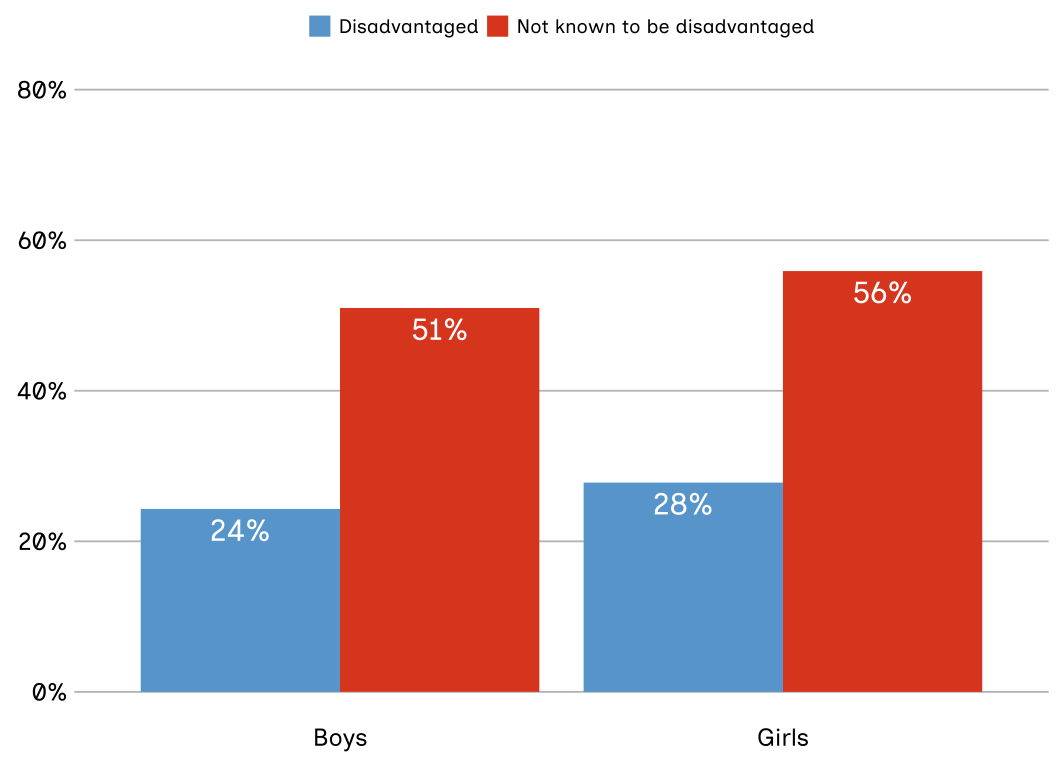
In the 2023 to 2024 school year, girls were more likely than boys to achieve a pass in both GCSE English and maths.
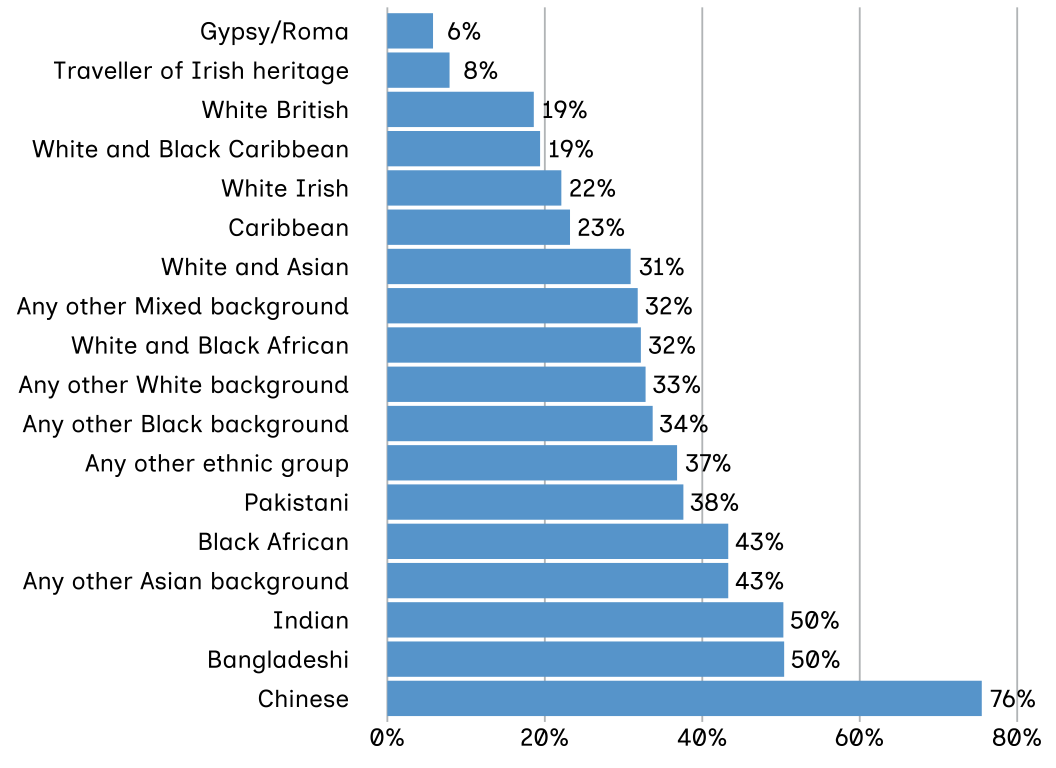
There continues to be huge variation by ethnicity in the performance of socio-economically disadvantaged children, with disadvantaged children of Chinese background performing better than the average for non-disadvantaged children.
Illustrative results
Attainment at age 16 years
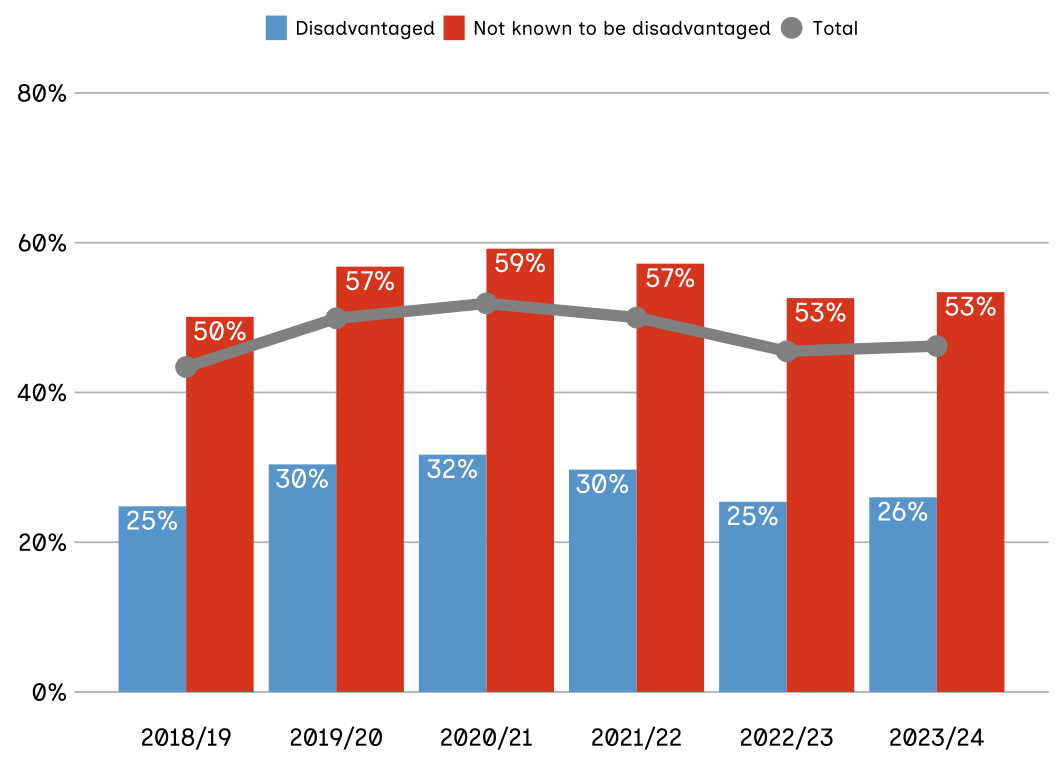
In the 2023 to 2024 school year, 26% of disadvantaged pupils in key stage 4 (KS4) achieved a grade 5 or above in GCSE English and maths, compared with 53% of all other pupils.[footnote 1] This is a gap of 27.2 percentage points, which is similar to the previous 2 years.
Figure 4.1: In the 2023 to 2024 school year, there was no change in the proportion of pupils at key stage 4 (KS4) achieving a grade 5 or above in GCSE English and maths. The gap between disadvantaged and other pupils was similar to previous years.
Percentage of students achieving a pass (grade 5 or above) in both GCSE English and maths by disadvantage status in England, from the 2018 to 2019 academic year to the 2023 to 2024 academic year.
Explore and download the data: Attainment at age 16 (State of the Nation data explorer).
Source: DfE. National curriculum assessments at KS4 in England, 2024.
Notes: Pupils are defined as disadvantaged if they are known to have been eligible for free school meals (FSM) at any point in the past 6 years (from year 6 to year 11), if they are recorded as having been looked after for at least one day or if they are recorded as having been adopted from care. Figures for the school years 2023 to 2024 are based on revised data. Figures for the 2018 to 2019 and 2021 to 2022 school years are based on final data. The 2021 to 2022 year assessment returned to the summer exam series after they had been cancelled in 2020 to 2021 due to the impact of the COVID-19 pandemic. During this time alternative processes were set up to award grades (centre-assessment grades and teacher-assessed grades).
Based on the data up to the 2023 and 2024 academic year, the disadvantage gap index has widened compared to 2019 to 2020 and is around the largest gap since the 2010 to 2011 academic year. This differs slightly from the comparison in figure 4.1, perhaps because the disadvantage gap index considers all results, not just the attainment of grade 5 in English and maths. However, both methods show an increased gap since 2018 to 2019. In 2022, as exams were re-introduced, the gap continued to widen and now stands at its highest level since 2021. As with the findings from last academic year, this widening probably reflects the effects of the disruptions to learning that many pupils experienced during the pandemic.
Figure 4.2: The disadvantage gap index at age 16 years has widened recently, and is around the largest gap since the 2010 to 2011 academic year.
The disadvantage attainment gap index for England at KS4, from the 2010 to 2011 academic year to the 2023 to 2024 academic year.

Explore and download the data: Attainment at age 16 (State of the Nation data explorer).
Source: DfE. National curriculum assessments at KS4 in England, 2024.
Notes: The disadvantage gap index summarises the relative attainment gap (based on the average grades achieved in English and maths GCSEs) between disadvantaged pupils and all other pupils.[footnote 2] The index ranks all pupils in state-funded schools in England and asks whether disadvantaged pupils typically rank lower than non-disadvantaged pupils. A disadvantage gap of 0 would indicate that pupils from disadvantaged backgrounds perform as well as pupils from non-disadvantaged backgrounds. Pupils are defined as disadvantaged if they are known to have been eligible for FSMs at any point in the past 6 years (from year 6 to year 11), if they are recorded as having been looked after for at least one day or if they are recorded as having been adopted from care. Figures for the school years 2023 to 2024 are based on revised data.
Overall both non-disadvantaged and disadvantaged girls have higher rates of passing GCSE English and maths than boys – 56% of non-disadvantaged girls passed both subjects, compared with 51% for boys. Similarly, 28% of disadvantaged girls passed both subjects compared with 24% for boys. At 28 percentage points, the disadvantage gap for girls is fairly similar to that for boys, who have a gap of 27 percentage points.
Figure 4.3: In the 2023 to 2024 school year, girls were more likely than boys to achieve a pass in both GCSE English and maths.
Percentage of pupils achieving a pass (grade 5 or above) in both GCSE English and maths by disadvantage status and gender in England, in the 2023 to 2024 academic year.
Explore and download the data: Attainment at age 16 (State of the Nation data explorer).
Source: DfE. National curriculum assessments at key stage 4 in England, 2024.
Notes: Pupils are defined as disadvantaged if they are known to have been eligible for FSM at any point in the past 6 years (from year 6 to year 11), if they are recorded as having been looked after for at least one day or if they are recorded as having been adopted from care. Figures for 2024 are based on revised data.
There is substantial variation between the most disadvantaged ethnic group (Gypsy or Roma at 6%) and the top-performing ethnic group (Chinese at 76%). Overall, FSM-eligible pupils of South Asian ethnicities (such as Indian and Bangladeshi) have much higher rates of achieving a pass in both subjects compared with White British or Mixed White and Black Caribbean FSM-eligible pupils (19% both groups). This illustrates the importance of considering a range of characteristics where possible, rather than SEB alone. Chinese pupils coming from socio-economic disadvantage in fact outperform the average pupil from a non-disadvantaged background.
Figure 4.4: There is great variation across ethnicities in the attainment of pupils eligible for FSM.
Percentage of FSM-eligible pupils achieving a strong pass (grade 5 or above) in both GCSE English and maths by ethnicity in England, in the 2023 to 2024 academic year.
Explore and download the data: Attainment at age 16 (State of the Nation data explorer).
Source: DfE. National curriculum assessments at KS4 in England, 2024.
Notes: Figures for 2024 are based on revised data. FSM eligibility is defined as collected in the school census which states whether a child’s family have claimed eligibility. Parents are able to claim FSM if they receive certain benefits.[footnote 3]
Routes into work (age 16 to 29 years)
Summary
Overall, the picture has slightly changed over the last decade. The SEB gap in HE enrollment has decreased, mainly because so many more people from a lower working-class background have had the opportunity to attend university. However, if we consider higher degrees, the gap has widened.
The proportion of young people aged 16 to 24 who are NEET increased to 14%, reflecting a return to pre-COVID-19 levels. Individuals from lower-working backgrounds have a NEET rate of 22% compared with 9% for those from higher-professional backgrounds. This gap remained fairly unchanged between 2014 and 2016.
Between 2022 and 2024, 37% of young people aged 18 to 20 years were enrolled in HE – a significant increase from 29% between 2014 and 2016 – while the gap in likelihood for HE entry between higher professional and lower working-class backgrounds has narrowed from 28 to 23 percentage points in the last decade.
Between 2022 and 2024, 52% of young individuals aged 25 to 29 held higher degrees (first degrees and above) – up from 40% between 2014 and 2016 – while those with lower-level (below GCSE) qualifications decreased from 13% to 8% in the same periods.
Significant SEB gaps persist, and are widening at the level of higher degrees (master’s degrees and PhDs). The gap increased from 17.6 to 19.6 percentage points in the last decade.
Illustrative results
Young people not in employment, education or training aged 16 to 24 years
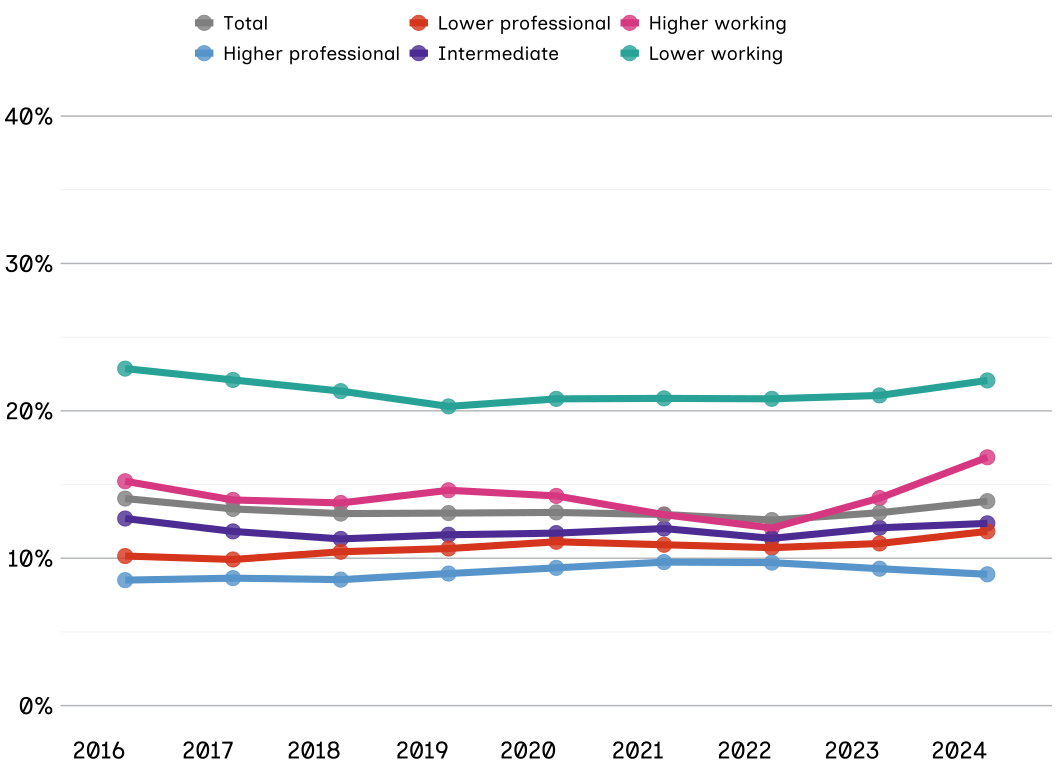
The proportion of young people aged 16 to 24 years who are NEET increased to 14%, a return to pre-COVID-19 levels. Individuals from lower working-class backgrounds have a NEET rate of 22% compared with 9% for those from higher professional backgrounds. This gap has remained fairly unchanged since 2014 and 2016, and the rate for those from lower working-class backgrounds is markedly higher than for any other background group, including higher working class. For further discussion, see our 2023 State of the Nation report.[footnote 4]
Figure 4.5: NEET rates have returned to pre-pandemic levels, and the SEB gap has remained unchanged since 2014 and 2016.
Percentage of young people aged 16 to 24 years who were NEET by SEB (UK, 2014 to 2024, 3-year averages).
Explore and download the data: Destinations following the end of compulsory full-time education (State of the Nation data explorer).
Source: Office for National Statistics (ONS), pooled LFS from 2014 to 2024, respondents aged 25 to 29 years in the UK.
Notes: NEET is defined as ‘not in employment, education or training’ in the week before the survey. SEB refers to the main wage earner’s occupation when the respondent was aged 14 years. Where there was no earner in the family, SEB is included in the lower working class. The data used is weighted using the LFS probability weights. Weighted data adjusts the responses of a survey to better represent the overall population being studied. A formal test was conducted to test for differences in the SEB gap between 2014 and 2024. This was not significant. Data points shown are 3-year moving averages. For instance, ‘2016’ reflects the average of 2014, 2015 and 2016.
Highest qualification of young people aged 25 to 29 years
Overall, there is an upward trend in the proportion of people aged 25 to 29 years with first and higher degrees as their highest level of qualification (52% between 2022 and 2024 – up from 40% between 2014 and 2016).
Administrative data sources highlight similar trends. For example, census data from 2011 and 2021 reveals a significant decrease in the percentage of individuals over 16 years old in England and Wales with no qualifications, alongside an increase in the proportion attaining level 4 (beyond A-levels and equivalents) qualifications and above.[footnote 5] Additionally, data from the DfE covering England for the period from 2015 to 2016 to 2022 to 2023 indicates a 30% rise in enrollments for higher-level (National Qualification Framework level 4 to 8) qualifications among individuals aged 25 to 29 years in England.[footnote 6]
Over the past decade, the SEB gap has narrowed for first degrees but widened for higher degrees. When examining those pursuing higher degrees (master’s degrees and PhDs), the gap between individuals from lower working-class backgrounds and higher professionals has increased slightly, 19.6 percentage points between 2022 and 2024 – up from 17.6 percentage points between 2014 and 2016.
Figure 4.6: More people aged 25 to 29 years hold degrees, yet the socio-economic gap for postgraduate study has increased.
Highest level of qualification achieved by young people aged 25 to 29 years by SEB (UK, 2014 to 2024, 3-year averages).

Explore and download the data: Highest qualification (State of the Nation data explorer).
Source: ONS, pooled LFS from 2014 to 2024, respondents aged 25 to 29 years in the UK.
Notes: The data used is weighted using the LFS probability weights. Due to rounding errors, in some instances, the totals may not add up to 100%. Data points shown are 3-year moving averages. For instance, ‘2016’ reflects the average of 2014, 2015 and 2016. A formal test was conducted to test for absolute differences in the SEB gap of higher degrees between 2014 and 2024. This was not significant for young people aged 25 to 29 years but significant for the whole sample.
Work in early adulthood (age 25 to 29 years)
Summary
Economic activity rates for young people aged 25 to 29 years have improved to 87.5% between 2022 and 2024. The gender gap has halved over the last decade, although women from lower SEBs continue to face significant barriers.
Between 2022 and 2024, unemployment for young people aged 25 to 29 years fell to 3.8% – down from 5.8% between 2014 and 2016. The SEB gap in unemployment rates has remained significant.
Between 2022 and 2024, 48.2% of young people aged 25 to 29 years were in higher and lower professional occupations – up from 36.1% between 2014 and 2016. The gap between SEB groups in securing these positions has widened. Individuals from professional backgrounds benefitted greatly from increased opportunities.
While HE is still associated with higher earnings, the earnings of those with lower qualifications have increased relatively quickly in recent years. This means that the earnings premium from HE is less than it was. This is most likely due to increases in the minimum wage.
Illustrative results
Economic activity of young people aged 25 to 29 years
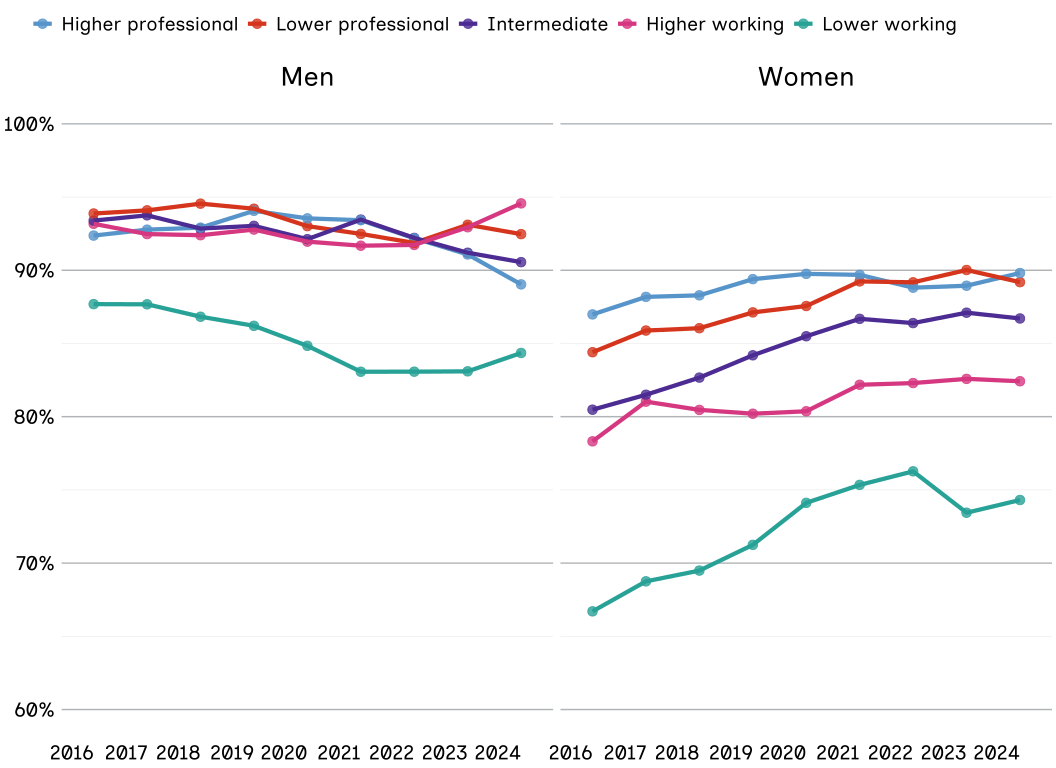
Between 2022 and 2024, economic activity rates for young people aged 25 to 29 years improved to 87.5% – up from 85.5% between 2014 and 2016. However, we observe different trends for men and women, and especially women from a lower working-class SEB.
The stark differences in economic activity rates by gender have halved between 2014 and 2016, and 2022 and 2024. Historical ONS data for the 25 to 34 age group indicates that this gap was 25 percentage points in the early 1990s, 15 percentage points between 2014 and 2016, and 7 percentage points between 2022 and 2024, underscoring progress in narrowing this divide.[footnote 7]
Figure 4.7 shows that when we break down the SEB gap by sex, there are opposite trends for men and women from lower working-class SEBs: the economic activity rate of the former has fallen since 2014 and 2016, while it has risen for the latter.
Figure 4.7. Economic activity for those aged 25 to 29 years is up to 87.5%, and the gender gap has halved. Socio-economic barriers continue, especially for women.
Percentage of young people aged 25 to 29 years who are economically active, by sex and SEB (UK, 2014 to 2024, 3-year averages).
Explore and download the data: Economic activity (State of the Nation data explorer).
Source: ONS, LFS between 2014 to 2024, respondents aged 25 to 29 years in the UK.
Notes: Economically active is defined as either being in work, or available for and actively looking for work. The data used is weighted using the LFS person weights. A formal test was conducted to test for absolute differences in the SEB gap between 2014 and 2024. This was not significant for men or women aged 25 to 29 years, but it was significant for all women. Data points shown are 3-year moving averages. For instance, ‘2016’ reflects the average of 2014, 2015 and 2016.
Occupational level of young people aged 25 to 29 years
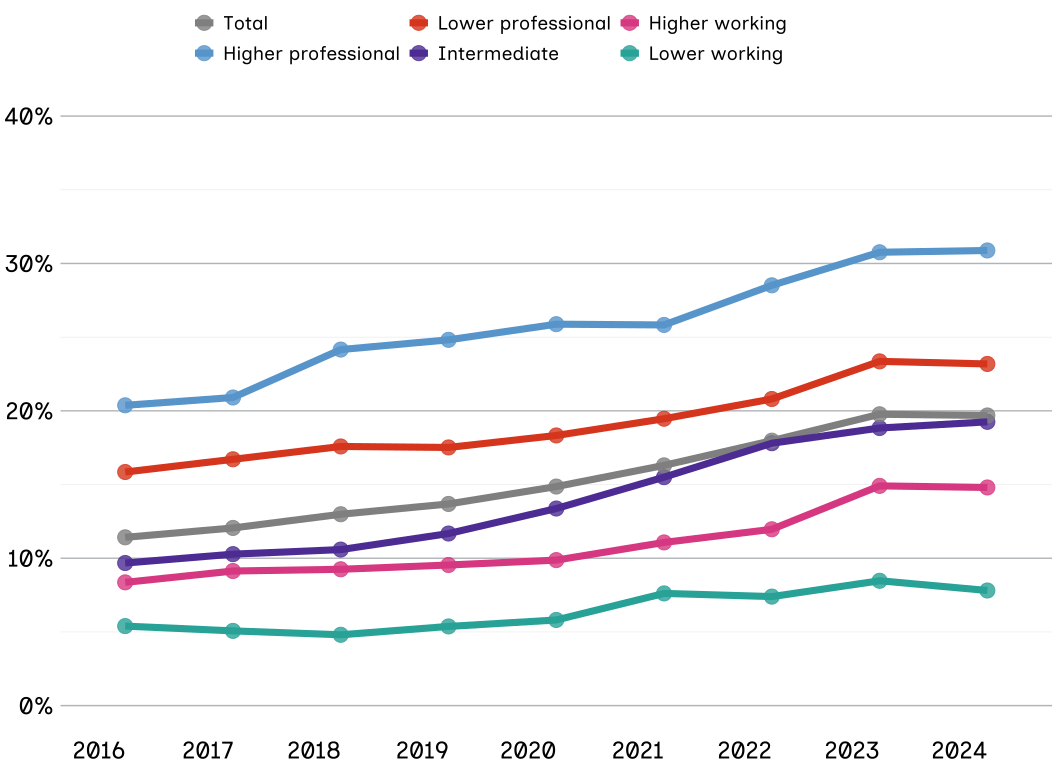
Between 2022 and 2024, 48.2% of young people aged 25 to 29 years were in higher and lower professional occupations – a marked increase from 36.1% between 2014 and 2016. Over the past decade, the expansion of higher-skilled occupations has been the main driver of job growth.[footnote 8]
However, the data shows that there is a widening gap between those from higher professional backgrounds and those from lower working-class backgrounds in securing higher professional roles, from 15 percentage points difference between 2014 and 2016 to 23 percentage points between 2022 and 2024. While the proportion of young people from working-class backgrounds getting professional jobs has seen a modest increase at 7.8% between 2022 and 2024 – up from 5.4% between 2014 and 2016 – the percentage of those from professional backgrounds achieving similar positions has increased even more – 30.9% between 2022 and 2024, up from 20.4% between 2014 and 2016.[footnote 9]
So, while there are more opportunities at the upper end of the occupational range compared with 10 years ago, the distribution of these opportunities has not been even across socio-economic groups. Individuals from professional backgrounds have disproportionately benefitted. These trends in early labour-market outcomes are a leading sign that individuals from higher professional backgrounds are at the front of the line for these new opportunities. We might expect this to give rise to a future improvement in absolute mobility, but a decline in relative mobility.[footnote 10]
Figure 4.8: Over the last decade, the proportion of young individuals in higher professional occupations has notably increased, while the SEB gap has widened.
Percentage of young people aged 25 to 29 years in higher professional positions by SEB (UK, 2014 to 2024, 3-year averages).
Explore and download the data: Occupational level of young people aged 25 to 29 years (State of the Nation data explorer).
Source: ONS, pooled LFS from 2014 to 2024, respondents aged 25 to 29 years in the UK.
Notes: The data used is weighted using the LFS probability weights. Due to rounding errors, in some instances the totals may not add up to 100%. Data points shown are 3-year moving averages. For instance, ‘2016’ reflects the average of 2014, 2015 and 2016. Formal statistical tests did not find the widening SEB gap to be significant, possibly due to limited sample sizes in the later years.
Earnings of young people aged 25 to 29 years
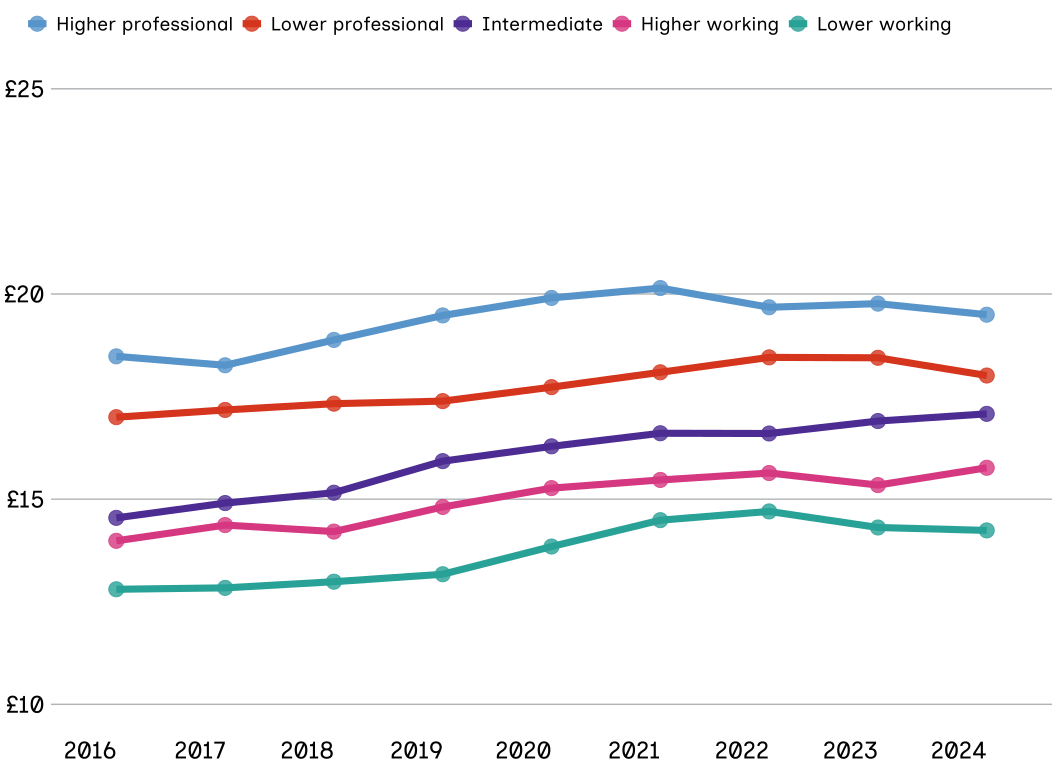
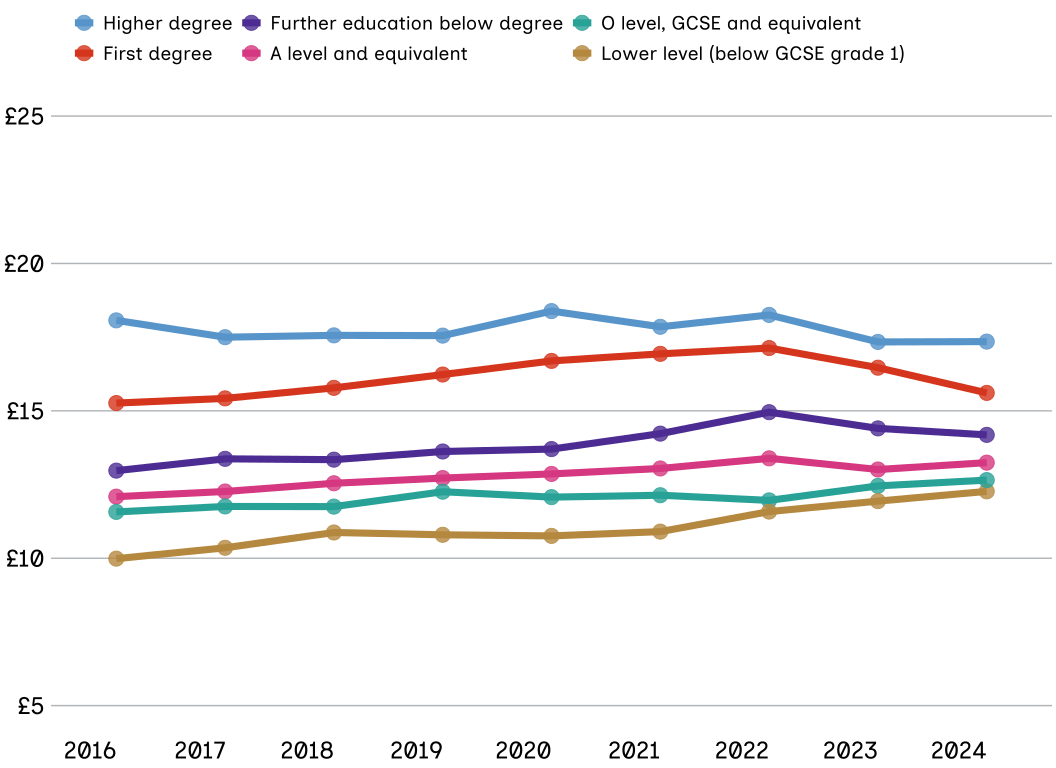
We see from figure 4.9 that there has been no significant change in the relationship between SEB and earnings over the last 10 years. In contrast, there has been a change in the relationship between qualifications and earnings as figure 4.10 shows. The earnings of the least well-qualified have increased faster than those of other groups, leading to a slight closing of the gap. This is likely an effect of the increased minimum wage.
In figure 4.9 we also looked at how income patterns have evolved over the past decade among individuals aged 25 to 29 years. We find a consistent increase in inflation-adjusted mean hourly earnings (accounting for the effect of rising prices). However, the overall increase is small, suggesting that income growth has been modest in the past decade. For instance, mean hourly earnings have increased by just £1 in the last decade for those aged 25 to 29 years.
Findings from the ONS Annual Survey of Hours and Earnings (ASHE) dataset, which we use for labour market earnings of young people, also suggest relatively small increases. This is consistent with the broader trend seen in LFS data.[footnote 11]
Figure 4.9: The earnings gaps across SEBs have remained roughly constant over the last 10 years.
Real hourly earnings in pounds (£) of young people aged 25 to 29 years by SEB (UK, 2014 to 2024, 3-year averages).
Explore and download the data: Earnings of young people aged 25 to 29 years (State of the Nation data explorer).
Source: ONS, pooled LFS from 2014 to 2024, respondents aged 25 to 29 years in the UK.
Notes: Due to slight revisions to the methodology and a change in the inflation base year, the results for this indicator are not directly comparable to last year’s. We adjusted earnings for inflation with a base year of 2024. Each year refers to the last year of the 3-year moving average, for example 2016 refers to the 2014 and 2016 period. The data was weighted using LFS income weights. The results shown here are simply sample averages, but to test changes over time, we estimated log hourly earnings using a linear regression model that controls for educational level and sex. An interaction between SEB and time (pre- versus post-COVID-19) was included, to test whether the pay gap by SEB has changed after the pandemic. This was not significant.
Income returns to education of young people aged 25 to 29 years
Since 2014 and 2016, individuals with lower educational qualifications have experienced a slightly faster increase in income than their more qualified peers as can be seen in figure 4.10. In fact, since the COVID pandemic, the earnings of those with degrees show signs of decreasing. Again, this is consistent with ASHE data which shows that in the past year, the lower-qualification occupations saw the largest increases, such as the “caring, leisure and other service occupations” and “sales and customer service occupations” categories (both 7.7%).
These individuals still earn less on average than those more qualified, but the gap between them has narrowed.[footnote 12] This could suggest that government interventions and labour market adjustments in the aftermath of the pandemic improved opportunities for those with fewer qualifications. For instance, as of 1 April 2024, the National Living Wage rose from £10.42 to £11.44, a 9.8% increase.[footnote 13]
Figure 4.10: Higher qualifications continue to be strongly associated with higher earnings, although the premium for higher degrees has declined slightly post COVID-19.
Real hourly earnings in pounds (£) of young people aged 25 to 29 years by highest qualification (UK, 2014 to 2024, 3-year averages).
Explore and download the data: Income returns to education (State of the Nation data explorer).
Source: ONS, pooled LFS from 2014 to 2024, respondents aged 25 to 29 years in the UK.
Notes: Due to change in the inflation base year, the results for this indicator are not directly comparable to last year’s. We adjusted earnings for inflation with a base year of 2024. Each year refers to the last year of the 3-year moving average, for example 2016 refers to the 2014 and 2016 period. The data was weighted using LFS income weights. The results shown here are for men, aged 27 years, of lower working-class background, estimated using a linear regression model that controls for SEB, age and sex. An interaction between education and time (pre- versus post- COVID-19) was included, to test whether the pay gap by education level has changed after the pandemic. This was significant, indicating that the gap has changed.
Career progression (age 35 to 44 years)
We have analysed trends and updated our results for career progression (for those aged 35 to 44 years). They are available on the SMC Data Explorer website. They do not show any significant change from last year’s results or SEB gap change compared with 2014 and 2016, so are not included in this year’s highlighted results.
-
Key stage 4 covers students aged 14 to 16 years, typically in years 10 and 11, who are usually preparing for their GCSE examinations. ↩
-
GOV.UK, ‘Key stage 4 performance’, 2025. Published on EXPLORE-EDUCATION-STATISTICS.SERVICE.GOV.UK. ↩
-
See DfE guidance for more information on free school meal eligibility, ‘Early years foundation stage profile results’, 2024. Published on EXPLORE-EDUCATION-STATISTICS.SERVICE.GOV.UK. ↩
-
Social Mobility Commission, ‘State of the Nation 2023: people and places’, 2023. Published on GOV.UK. See page 142. ↩
-
ONS, ‘Education, England and Wales: Census 2021’, 2023. Published on ONS.GOV.UK. This increase refers to the number of enrollments for NQF levels 4 to 8 for the age band 25 to 29 years. ↩
-
DfE, ‘‘Age’ from ‘Higher Level Learners in England’, 2025. Published on EXPLORE-EDUCATION-STATISTICS.SERVICE.GOV.UK. ↩
-
ONS, ‘Employment, unemployment and economic inactivity by age group (seasonally adjusted) historical data’, 2025. Employment, unemployment and economic inactivity levels and rates by age group, UK, rolling 3-monthly figures, seasonally adjusted. These are official statistics in development. This analysis includes reweighted LFS estimates incorporating information on the size and composition of the UK population, based on 2022 mid-year estimates. ↩
-
Nye Cominetti, Rui Costa and others, ‘Changing jobs? Change in the UK labour market and the role of worker mobility’, 2022. Published on ECONOMY2030.RESOLUTIONFOUNDATION.ORG. ↩
-
A UNIDIFF test of change in odds ratios reveals a slight but non-significant convergence. In other words, the odds of different groups are getting closer rather than further apart. The discrepancy between the widening percentage point gap and converging odds ratios in SEB access to professional jobs arises because percentage points reflect absolute differences, while odds ratios used in UNIDIFF testing are a type of proportional difference. As a rough parallel, imagine a starting point where group A has a 5% chance and group B has a 40% chance of a certain outcome. As an absolute gap, this is 35 percentage points, but as a proportional difference, group B is 8 times better off. If the numbers change to 10% and 50%, then the absolute gap has now grown, to 40 percentage points, but the proportional difference has now shrunk to 5 times. ↩
-
Absolute occupational mobility measures the percentage of people who are in a different occupational class from their parents, indicating the total number of people who have experienced upward or downward movement. In contrast, relative occupational mobility compares the chances that different social groups have of reaching a particular occupational outcome, reflecting the strength of the link (or ‘stickiness’) between parents’ and adult children’s occupational class. ↩
-
ONS, ‘Employee earnings in the UK: 2024’. Published on ONS.GOV.UK. ↩
-
ONS analysis of median annual incomes for the working-age population from 2007 to 2024 also shows narrowing gaps between postgraduates, graduates and non-graduates over time. See ONS, ‘Graduate labour market statistics’, 2024, section 8. Published on EXPLORE-EDUCATION-STATISTICS.SERVICE.GOV.UK. ↩
-
GOV.UK, ‘National Minimum Wage and National Living Wage rates’, 2024. Published on GOV.UK. ↩